Electronic Health Records LIS 4785 Introduction to Health


- Slides: 37
Electronic Health Records LIS 4785 Introduction to Health Informatics Fall 2015 Week 4 -2 Instructor: Dr. Sanghee Oh
Announcements • Final project proposal (Due 9/22, Tuesday). – Problem statement – Evidence – Potential solutions • Wiki Term Selection (Due 9/24, Thursday)
Final Project 2 -Page Proposal • • Each group needs to submit a 2 page project outline (problem statement, evidence, potential solutions). The problem statement should address the 5 “W”s; – Who does the problem affect? (e. g. , patients, physicians, researchers, organizations, etc. ) – What is the problem? What impact is the issue causing? – When does the problem occur? When does it need to be fixed? – Where does the problem occur? (e. g. , homes, hospitals, health organizations, etc. ) – Why is it important to solve the problem? What will happen when the problem is fixed? What would happen if the problem is not fixed? • • Statistical evidence which shows the critical status of the problem in the field should be included with appropriate citation of resources. 3 or 4 potential solutions that your final project application can offer should be addressed. Your group will develop prototypes of applications, targeting the potential solutions, throughout the semester. Writing/Citation Style: Follow the APA Style Guideline Purdue OWL: APA Format Guideline (Available at: http: //owl. english. purdue. edu/owl/resource/560/01/
Wiki Term Selection (9/24) • Go to healthinformatics. wikispaces. com and review the existing terms. • Retrieve them if a term that you’d like to review is in the library. • You should choose one from the existing terms and one new term related to health IT. – Do not select a name of diseases unless it is related to Health IT. • Once a student decides his/her three terms, post them in Google Drive LIS 4785 Wiki Term Selection by September 24 th, 11: 59 pm. Students will be able to access the list of terms that their classmates choose. • Every student needs to review a different term.
Show and Tell • Matt Farrell
Topics Covered Last Class Session • HL 7 (Health Level 7) • XML (Extensible Markup Language), or eb. XML (Electronic Business XML) • LOINC (Logical Observations, Identifiers, Names, and Codes) • ICD-9 (International Classification of Disease, Version 9) • SNOMED (Systematized Nomenclature of Medicine) • HTTP (Hypertext Transfer Protocol) • FTP (File Transfer Protocol) • HIPPA (Health Insurance Portability and Accountability Act)
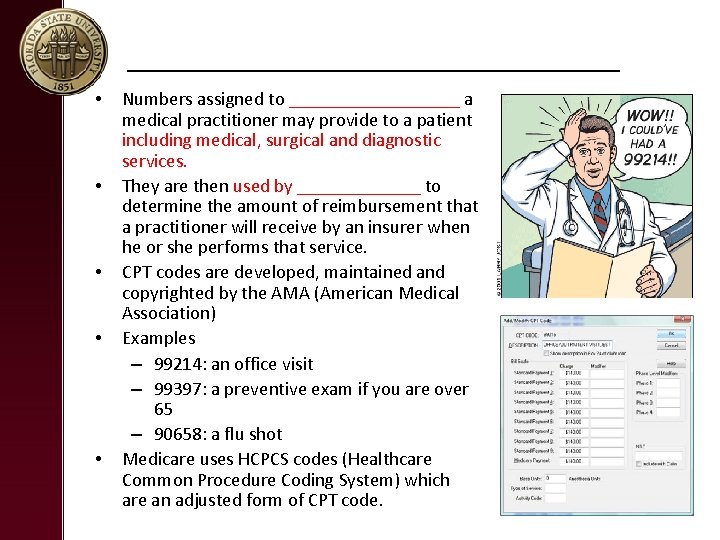
_________________ • • • Numbers assigned to _________ a medical practitioner may provide to a patient including medical, surgical and diagnostic services. They are then used by _______ to determine the amount of reimbursement that a practitioner will receive by an insurer when he or she performs that service. CPT codes are developed, maintained and copyrighted by the AMA (American Medical Association) Examples – 99214: an office visit – 99397: a preventive exam if you are over 65 – 90658: a flu shot Medicare uses HCPCS codes (Healthcare Common Procedure Coding System) which are an adjusted form of CPT code.
Why Do We Need Standards in Healthcare?
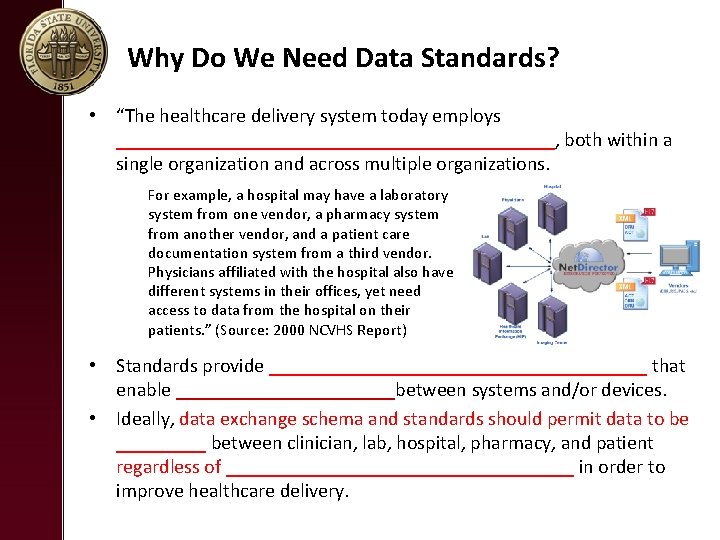
Why Do We Need Data Standards? • “The healthcare delivery system today employs ______________________, both within a single organization and across multiple organizations. For example, a hospital may have a laboratory system from one vendor, a pharmacy system from another vendor, and a patient care documentation system from a third vendor. Physicians affiliated with the hospital also have different systems in their offices, yet need access to data from the hospital on their patients. ” (Source: 2000 NCVHS Report) • Standards provide ___________________ that enable ___________between systems and/or devices. • Ideally, data exchange schema and standards should permit data to be _____ between clinician, lab, hospital, pharmacy, and patient regardless of __________________ in order to improve healthcare delivery.
What are EHRs?
4 Things to Know about EHRs Athena. Health CEO Jonathan Bush talks about electronic health records (USA Today, May 2015: https: //www. youtube. com/watch? v=md. KLc. BG 3 Mz 4)
What are EHRs? • The simplest definition: – ________________________ • ______________, which makes information available instantly, "whenever and wherever it is needed". • Contain information about a patient's medical history, diagnoses, medications, immunization dates, allergies, radiology images, and lab and test results • Offer access to ____________ that providers can use in making decisions about a patient's care • Automate and streamline providers' workflow • Increase organization and accuracy of patient information • Support key market changes in payer requirements and consumer expectations
PHR, EMR, and EHR
EMR and EHR • EMRs: – An electronic record of health-related information on an individual that can be created, gathered, managed, and consulted by authorized clinicians and staff ______________. – An electronic version of the traditional record used by __________. • EHRs: – An electronic record of health-related information on an individual that conforms to nationally recognized interoperability standards and that can be created, managed, and consulted by authorized clinicians and staff ________________. – The availability and use of communication standards, such as nomenclatures, vocabularies, and coding structures, in order to share and exchange patient data across multiple facilities.
EMR, EHR, and PHR • EMRs: – An electronic record of health-related information on an individual that can be created, gathered, managed, and consulted by authorized clinicians and staff ______________. • EHRs: – An electronic record of health-related information on an individual that conforms to nationally recognized interoperability standards and that can be created, managed, and consulted by authorized clinicians and staff ________________. • PHRs: – An electronic record of health-related information on an individual that conforms to nationally recognized interoperability standards and that can be drawn from multiple sources while being ___________________.
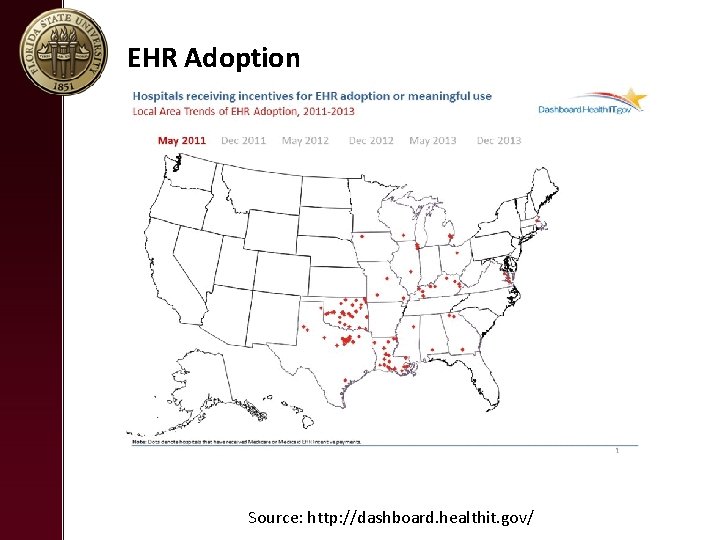
EHR Adoption Source: http: //dashboard. healthit. gov/
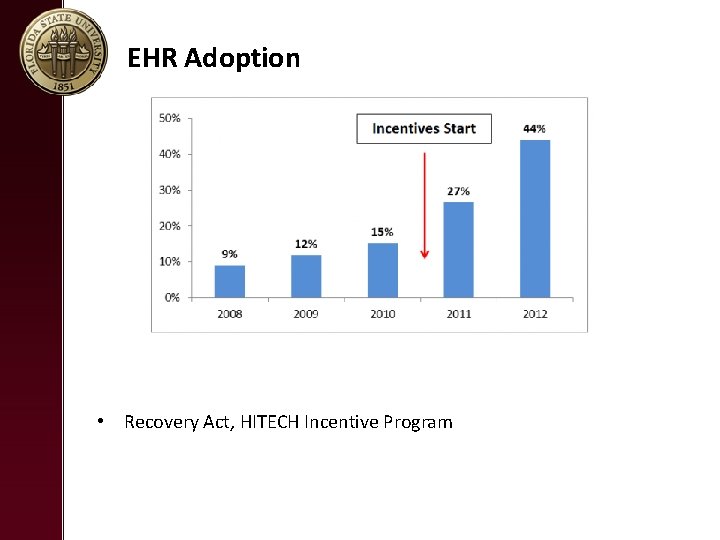
EHR Adoption • Recovery Act, HITECH Incentive Program
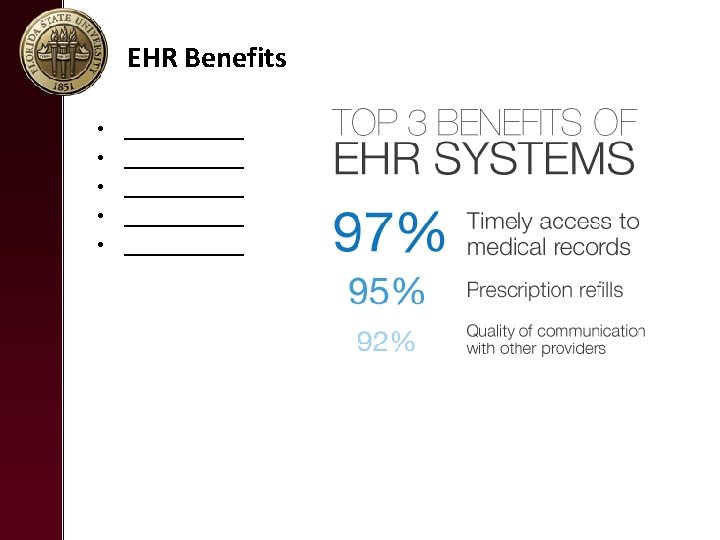
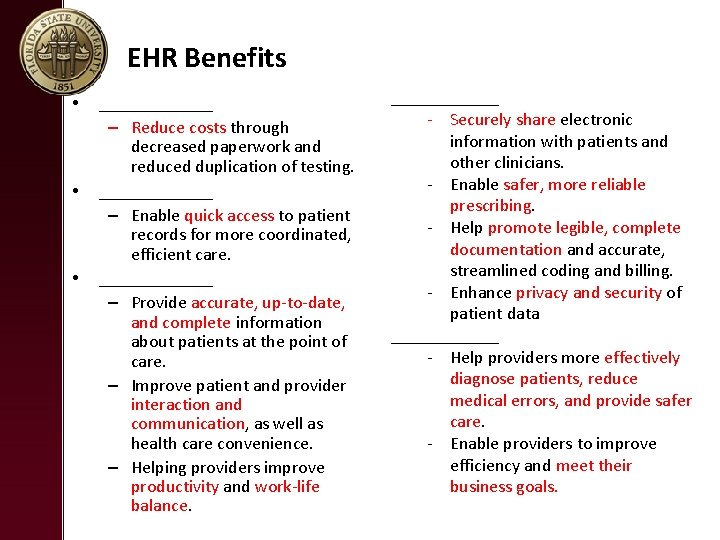
EHR Benefits • ______ – Reduce costs through decreased paperwork and reduced duplication of testing. • ______ – Enable quick access to patient records for more coordinated, efficient care. • ______ – Provide accurate, up-to-date, and complete information about patients at the point of care. – Improve patient and provider interaction and communication, as well as health care convenience. – Helping providers improve productivity and work-life balance. ______ - Securely share electronic information with patients and other clinicians. - Enable safer, more reliable prescribing. - Help promote legible, complete documentation and accurate, streamlined coding and billing. - Enhance privacy and security of patient data ______ - Help providers more effectively diagnose patients, reduce medical errors, and provide safer care. - Enable providers to improve efficiency and meet their business goals.
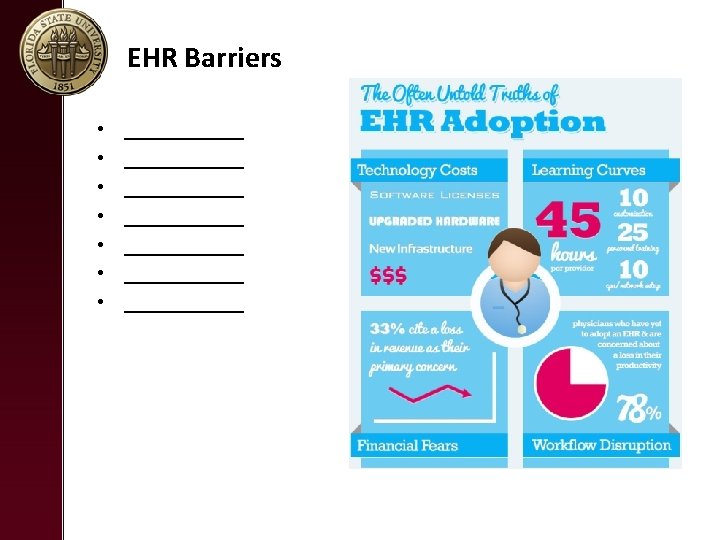
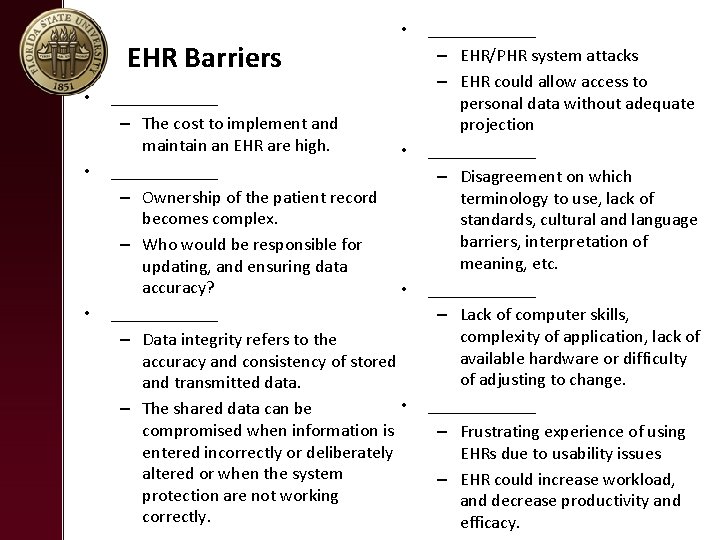
EHR Barriers • • ______ – The cost to implement and maintain an EHR are high. • ______ – Ownership of the patient record becomes complex. – Who would be responsible for updating, and ensuring data accuracy? • ______ – Data integrity refers to the accuracy and consistency of stored and transmitted data. • – The shared data can be compromised when information is entered incorrectly or deliberately altered or when the system protection are not working correctly. ______ – EHR/PHR system attacks – EHR could allow access to personal data without adequate projection ______ – Disagreement on which terminology to use, lack of standards, cultural and language barriers, interpretation of meaning, etc. ______ – Lack of computer skills, complexity of application, lack of available hardware or difficulty of adjusting to change. ______ – Frustrating experience of using EHRs due to usability issues – EHR could increase workload, and decrease productivity and efficacy.
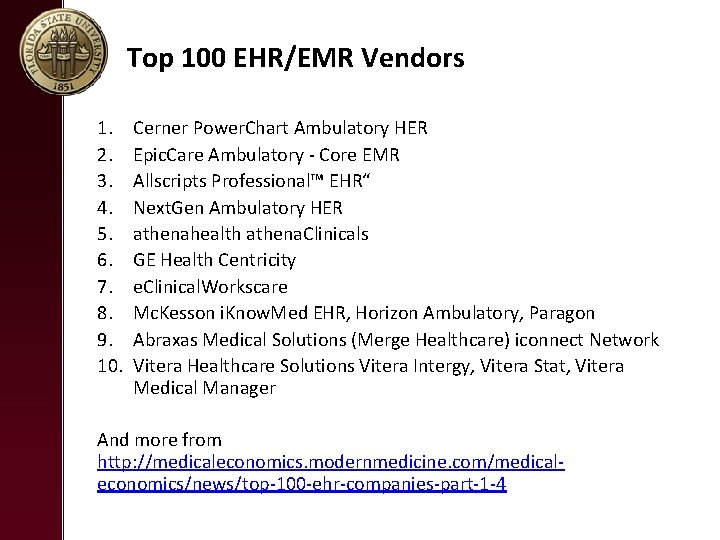
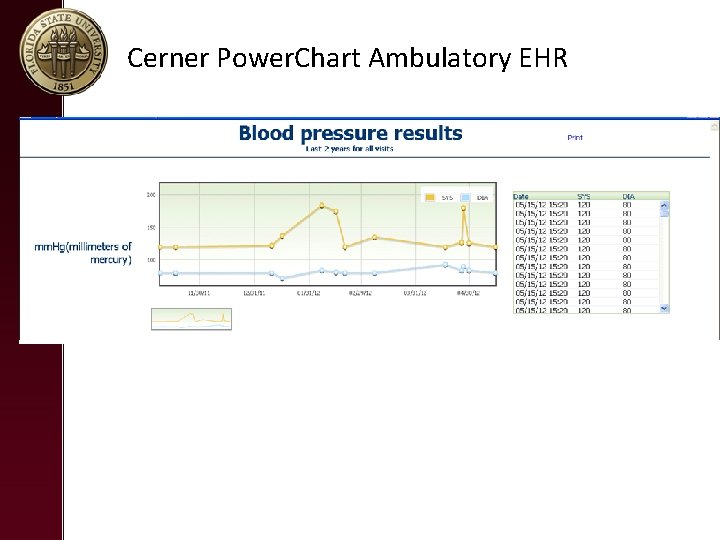
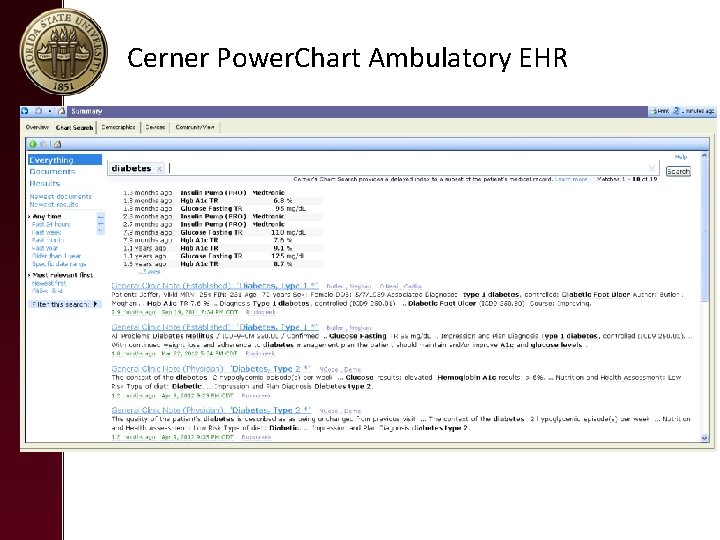
Top 100 EHR/EMR Vendors 1. 2. 3. 4. 5. 6. 7. 8. 9. 10. Cerner Power. Chart Ambulatory HER Epic. Care Ambulatory - Core EMR Allscripts Professional™ EHR“ Next. Gen Ambulatory HER athenahealth athena. Clinicals GE Health Centricity e. Clinical. Workscare Mc. Kesson i. Know. Med EHR, Horizon Ambulatory, Paragon Abraxas Medical Solutions (Merge Healthcare) iconnect Network Vitera Healthcare Solutions Vitera Intergy, Vitera Stat, Vitera Medical Manager And more from http: //medicaleconomics. modernmedicine. com/medicaleconomics/news/top-100 -ehr-companies-part-1 -4
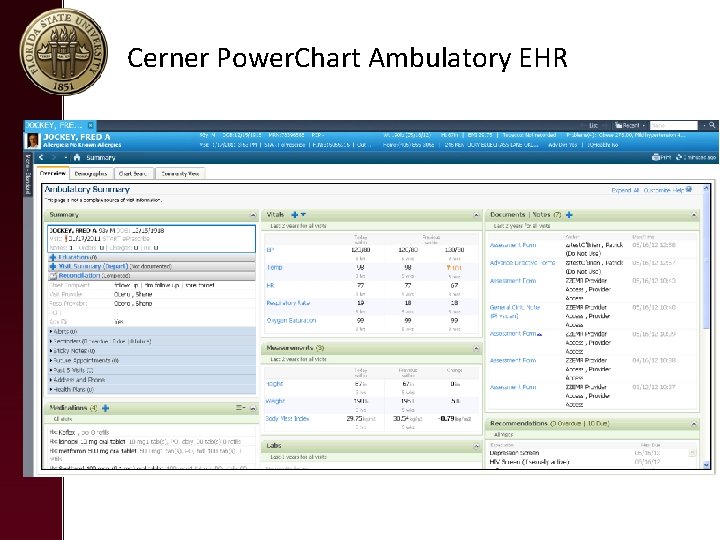
Cerner Power. Chart Ambulatory EHR
Cerner Power. Chart Ambulatory EHR
Cerner Power. Chart Ambulatory EHR
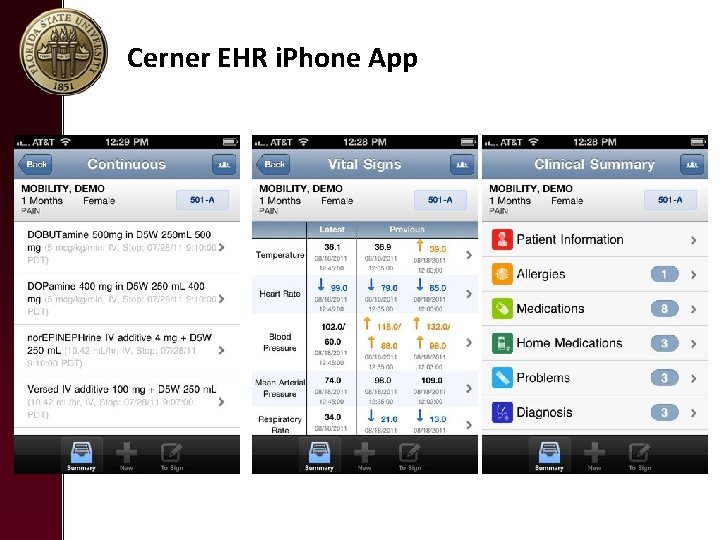
Cerner EHR i. Phone App
More screenshots of EHRs/EMRs • http: //www. ehrscreenshots. com/
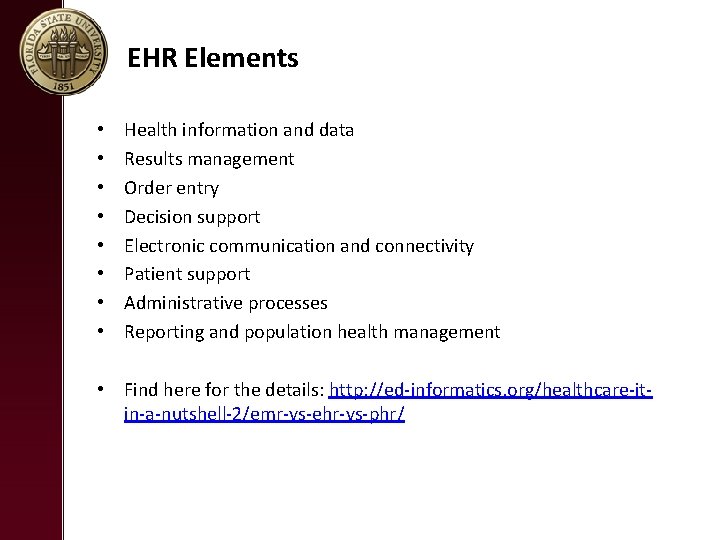
EHR Elements • • Health information and data Results management Order entry Decision support Electronic communication and connectivity Patient support Administrative processes Reporting and population health management • Find here for the details: http: //ed-informatics. org/healthcare-itin-a-nutshell-2/emr-vs-ehr-vs-phr/
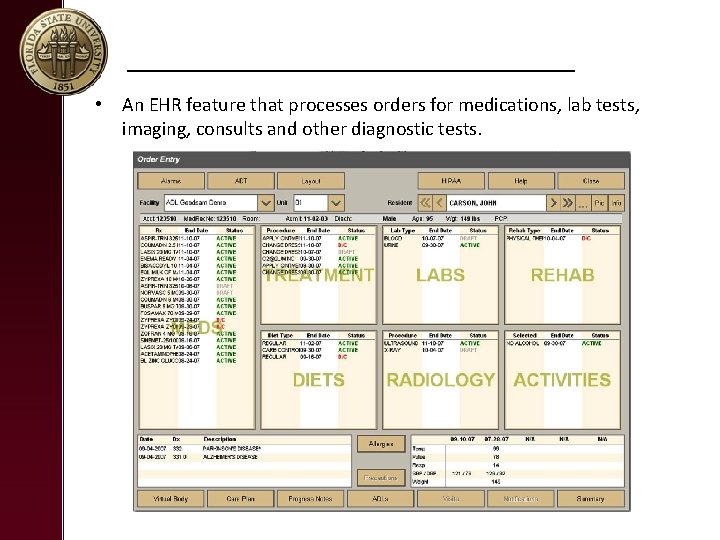
_______________ • An EHR feature that processes orders for medications, lab tests, imaging, consults and other diagnostic tests.
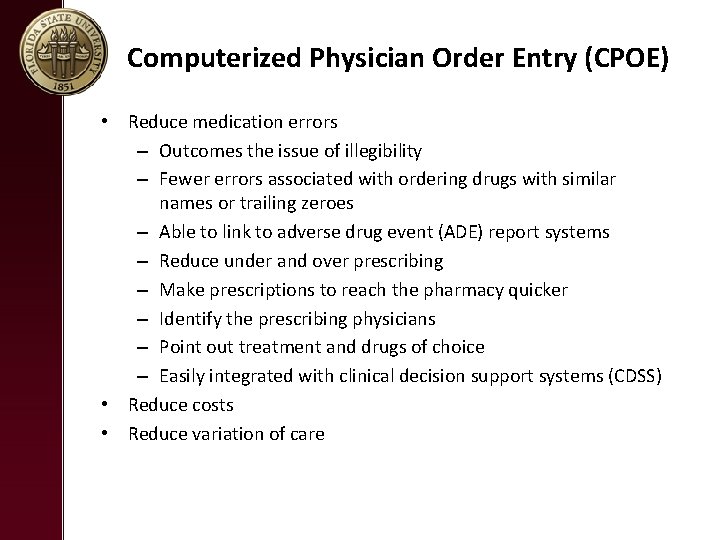
Computerized Physician Order Entry (CPOE) • Reduce medication errors – Outcomes the issue of illegibility – Fewer errors associated with ordering drugs with similar names or trailing zeroes – Able to link to adverse drug event (ADE) report systems – Reduce under and over prescribing – Make prescriptions to reach the pharmacy quicker – Identify the prescribing physicians – Point out treatment and drugs of choice – Easily integrated with clinical decision support systems (CDSS) • Reduce costs • Reduce variation of care
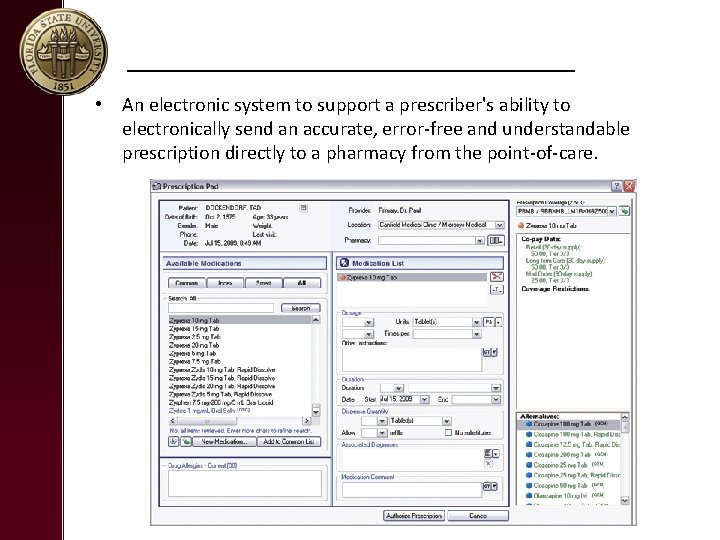
_______________ • An electronic system to support a prescriber's ability to electronically send an accurate, error-free and understandable prescription directly to a pharmacy from the point-of-care.
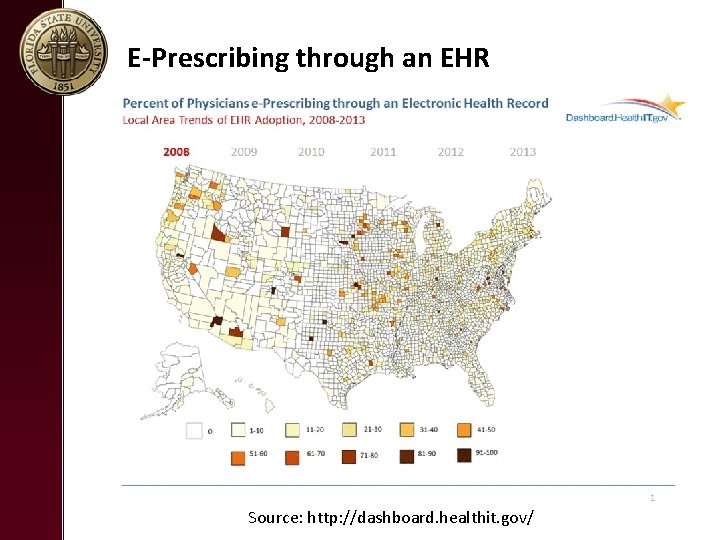
E-Prescribing through an EHR Source: http: //dashboard. healthit. gov/
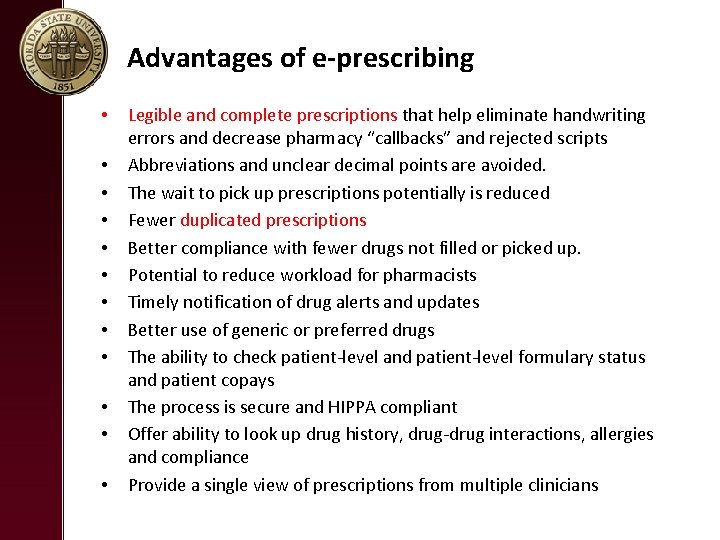
Advantages of e-prescribing • • • Legible and complete prescriptions that help eliminate handwriting errors and decrease pharmacy “callbacks” and rejected scripts Abbreviations and unclear decimal points are avoided. The wait to pick up prescriptions potentially is reduced Fewer duplicated prescriptions Better compliance with fewer drugs not filled or picked up. Potential to reduce workload for pharmacists Timely notification of drug alerts and updates Better use of generic or preferred drugs The ability to check patient-level and patient-level formulary status and patient copays The process is secure and HIPPA compliant Offer ability to look up drug history, drug-drug interactions, allergies and compliance Provide a single view of prescriptions from multiple clinicians
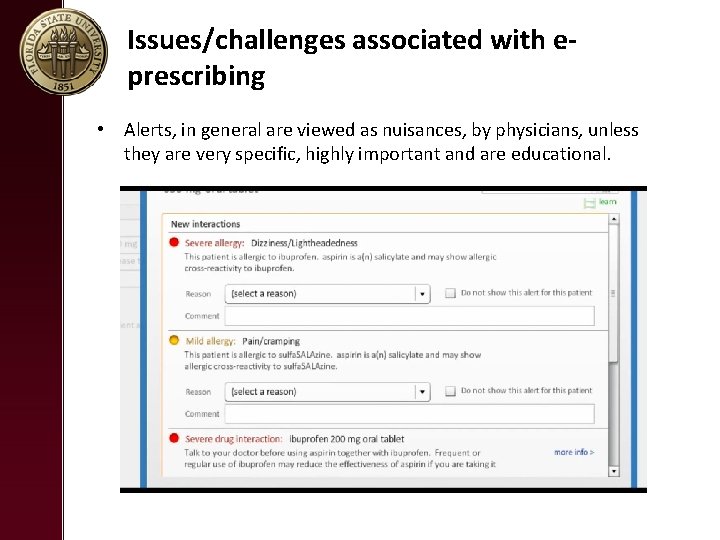
Issues/challenges associated with eprescribing • Alerts, in general are viewed as nuisances, by physicians, unless they are very specific, highly important and are educational.
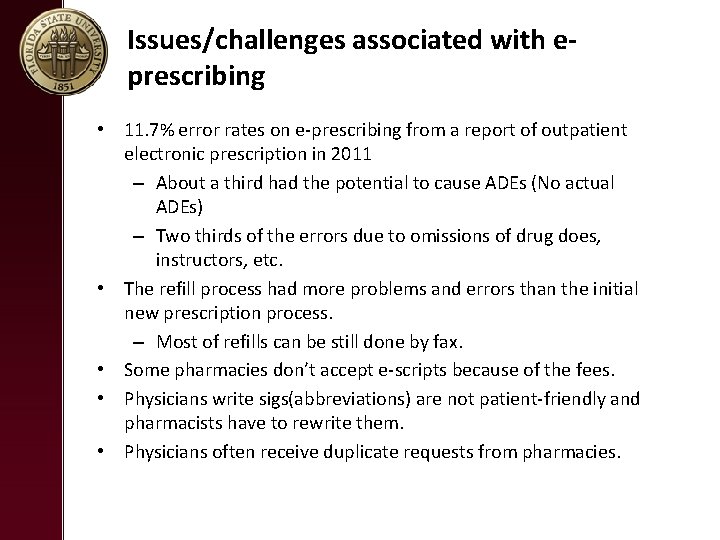
Issues/challenges associated with eprescribing • 11. 7% error rates on e-prescribing from a report of outpatient electronic prescription in 2011 – About a third had the potential to cause ADEs (No actual ADEs) – Two thirds of the errors due to omissions of drug does, instructors, etc. • The refill process had more problems and errors than the initial new prescription process. – Most of refills can be still done by fax. • Some pharmacies don’t accept e-scripts because of the fees. • Physicians write sigs(abbreviations) are not patient-friendly and pharmacists have to rewrite them. • Physicians often receive duplicate requests from pharmacies.
Quiz • Week 5 Quiz will be available on Canvas by this Friday. (An announcement of the quiz release will be provided). • Week 5 Quiz is due 9/22 (3: 35 pm, before the class starts)