
KAME knowledgebased Attention Model for Diagnosis Prediction in
KAME: knowledge-based Attention Model for Diagnosis Prediction in Healthcare Source : CIKM 2018 Advisor : JIA-LING KOH Speaker : YI-CHENG HUNG Date: 2018/12/18
Outline Introduction Method Experiment Conclusion
Outline Introduction Method Experiment Conclusion
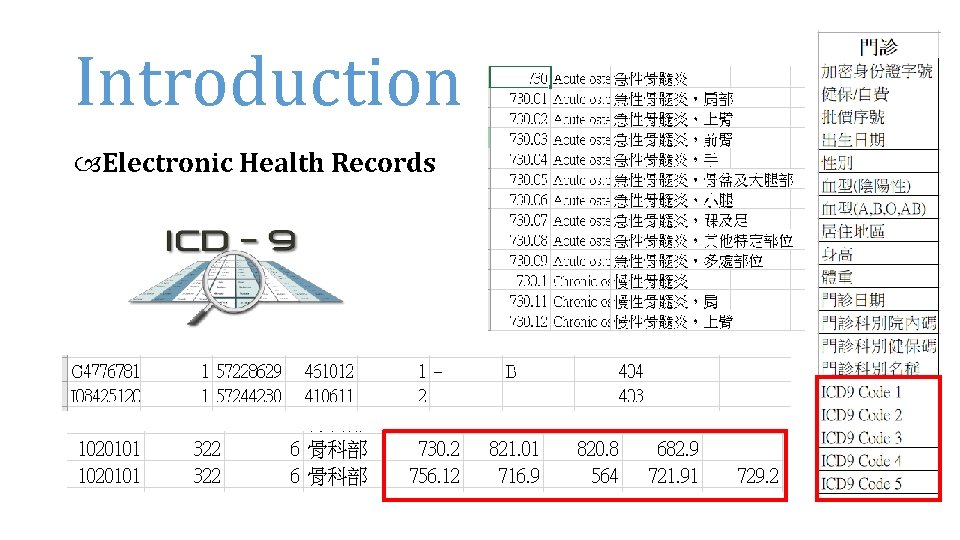
Introduction Electronic Health Records
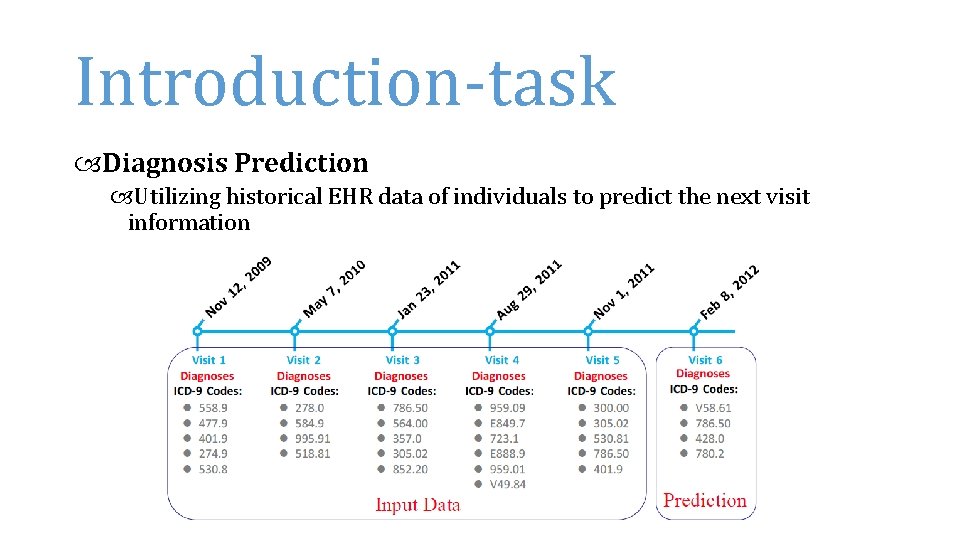
Introduction-task Diagnosis Prediction Utilizing historical EHR data of individuals to predict the next visit information
Outline Introduction Method Experiment Conclusion
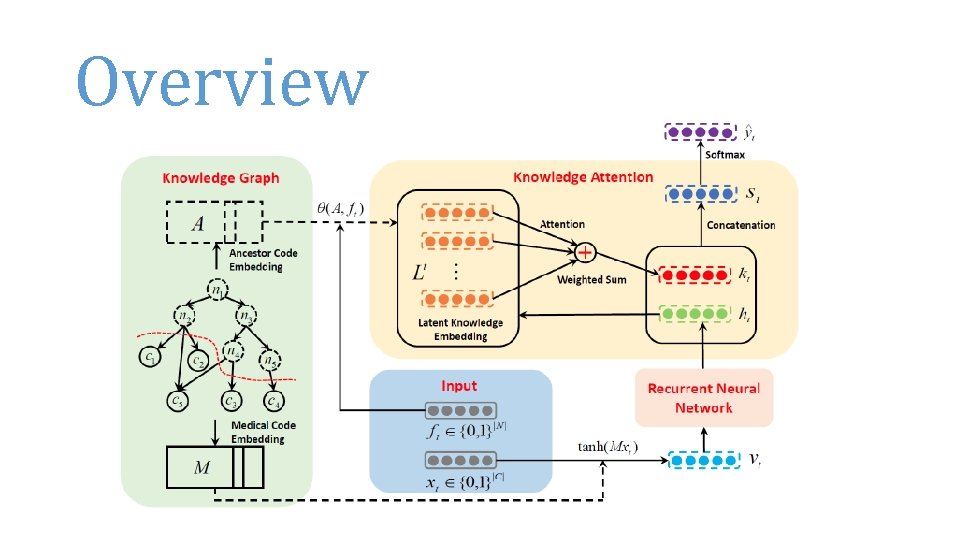
Overview
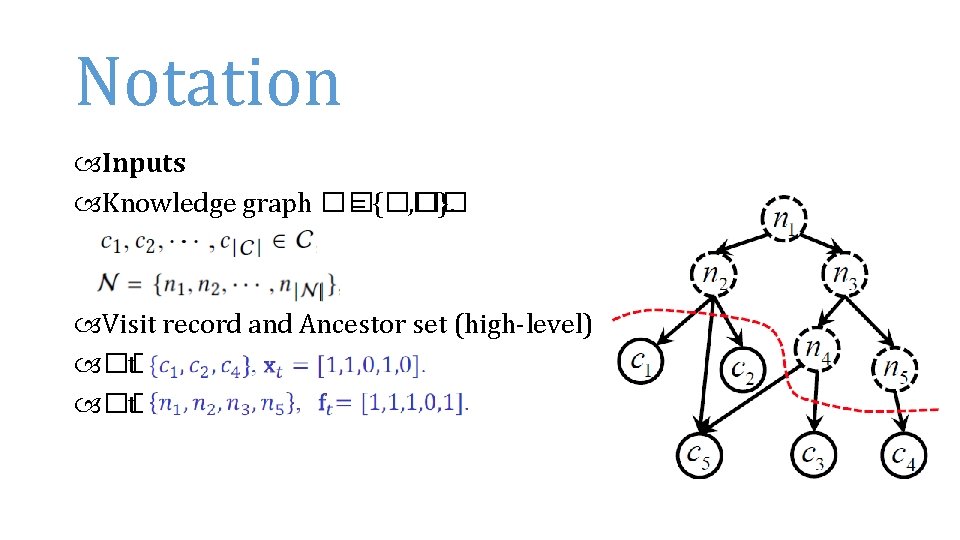
Notation Inputs Knowledge graph �� = {�� , �� }. Visit record and Ancestor set (high-level) �� t=
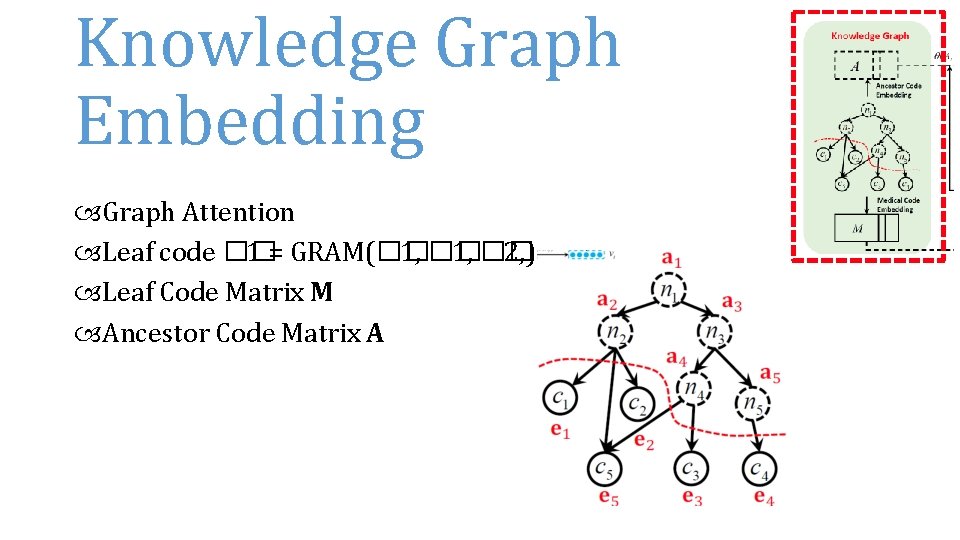
Knowledge Graph Embedding Graph Attention Leaf code �� 1 = GRAM(�� 1, �� 2, ) Leaf Code Matrix M Ancestor Code Matrix A
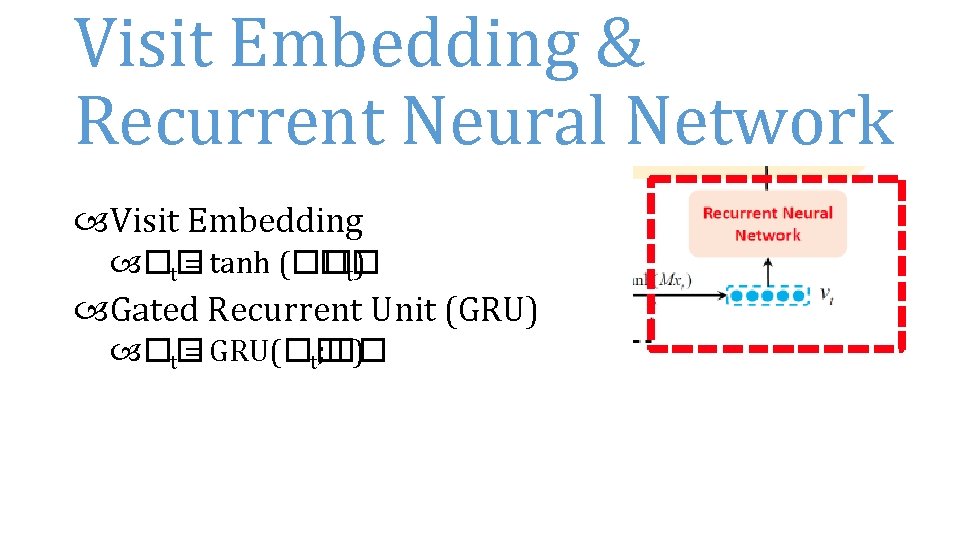
Visit Embedding & Recurrent Neural Network Visit Embedding �� �� t = tanh (�� t) Gated Recurrent Unit (GRU) �� ) t = GRU(�� t; ��
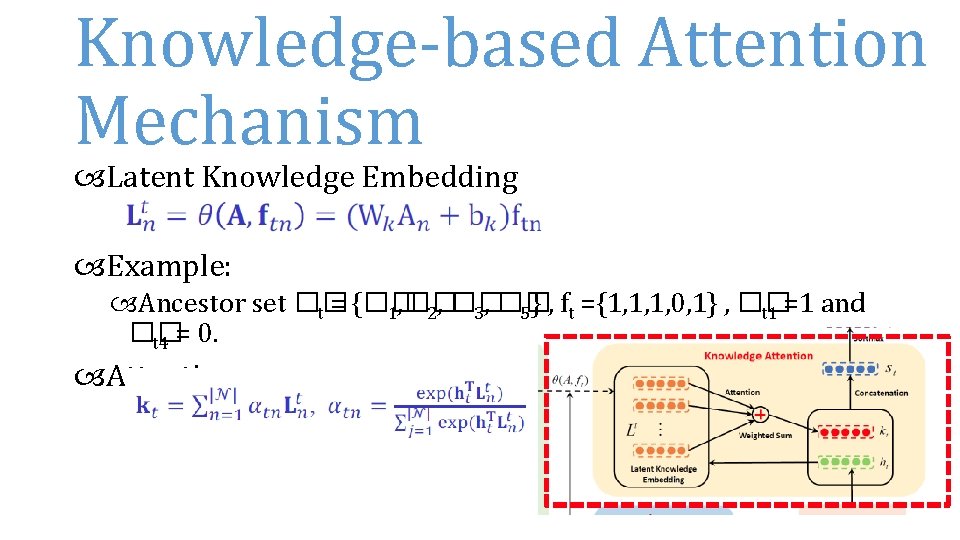
Knowledge-based Attention Mechanism Latent Knowledge Embedding Example: Ancestor set �� t = {�� 1, �� 2, �� 3, �� 5} , ft ={1, 1, 1, 0, 1} , �� t 1 =1 and �� t 4 = 0. Attention
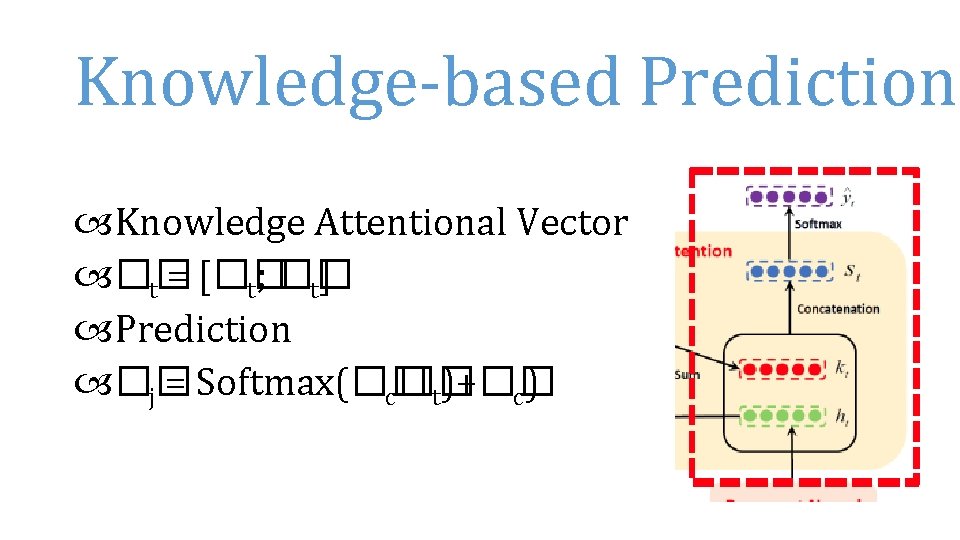
Knowledge-based Prediction Knowledge Attentional Vector �� t = [�� t; �� t] Prediction �� j = Softmax(�� c�� t)+�� c)
Outline Introduction Method Experiment Conclusion
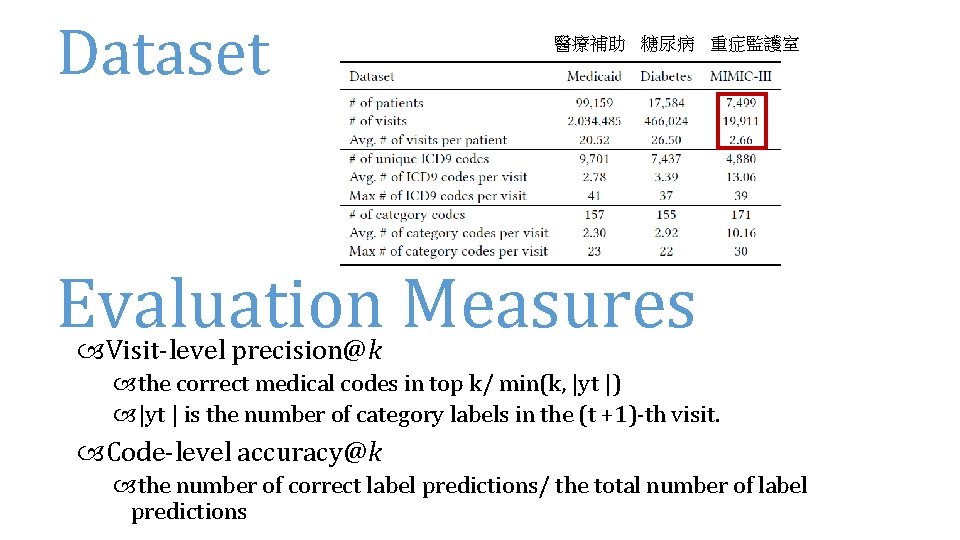
Dataset 醫療補助 糖尿病 重症監護室 Evaluation Measures Visit-level precision@k the correct medical codes in top k/ min(k, |yt |) |yt | is the number of category labels in the (t +1)-th visit. Code-level accuracy@k the number of correct label predictions/ the total number of label predictions
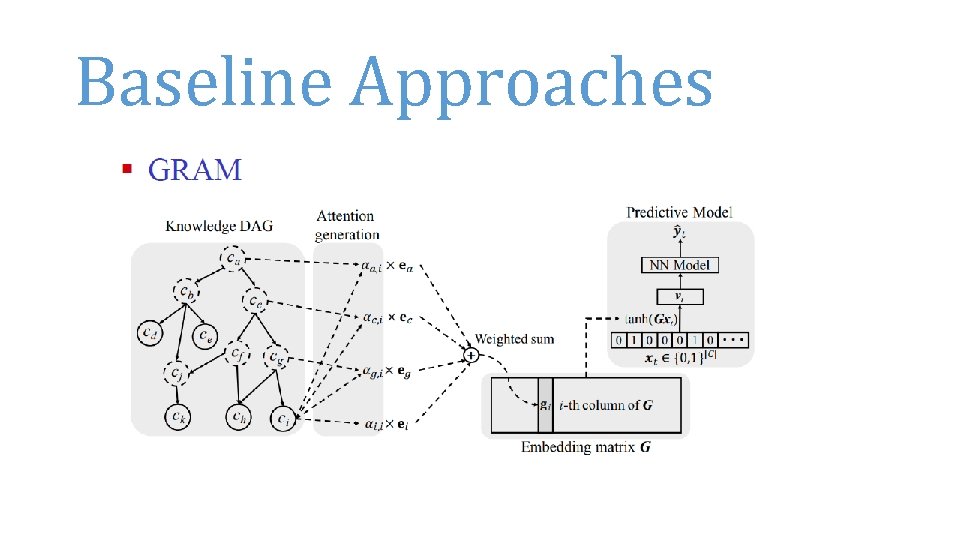
Baseline Approaches
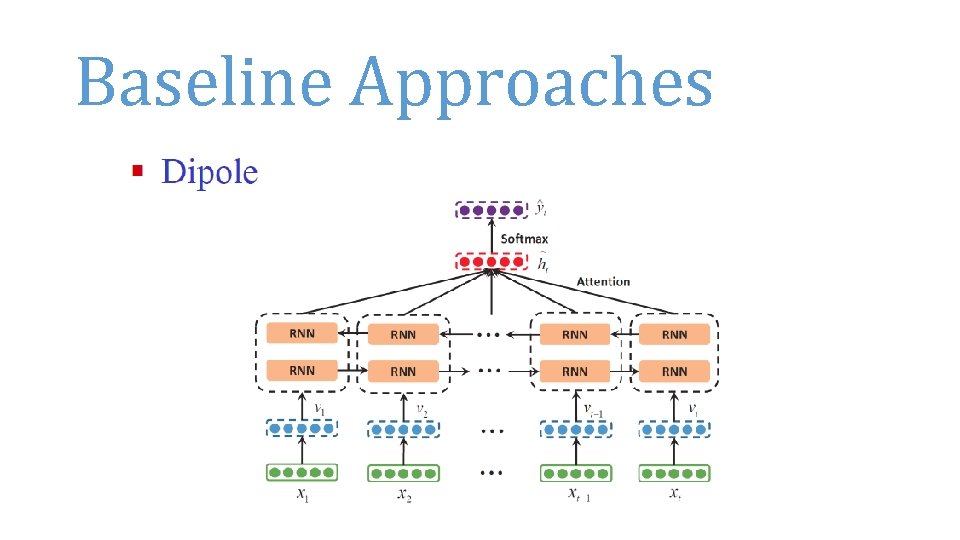
Baseline Approaches
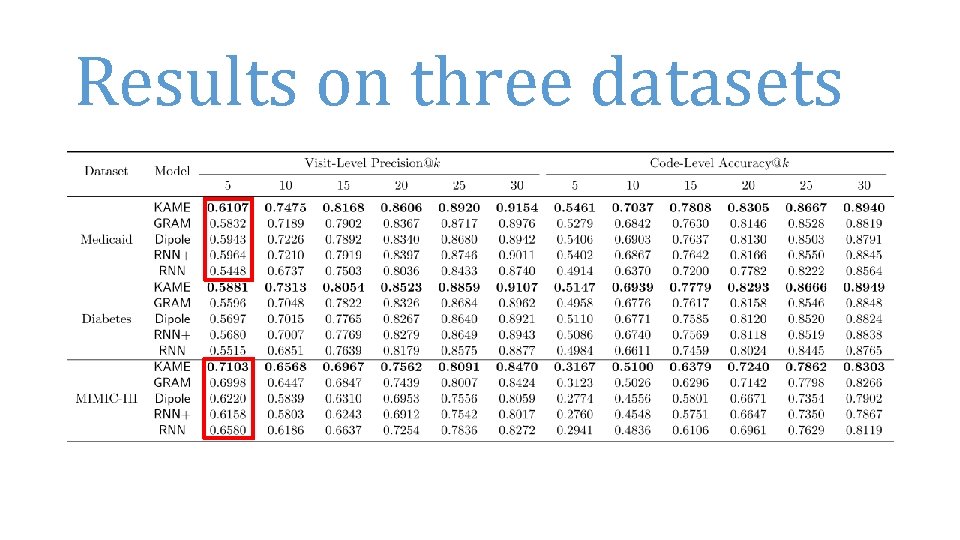
Results on three datasets
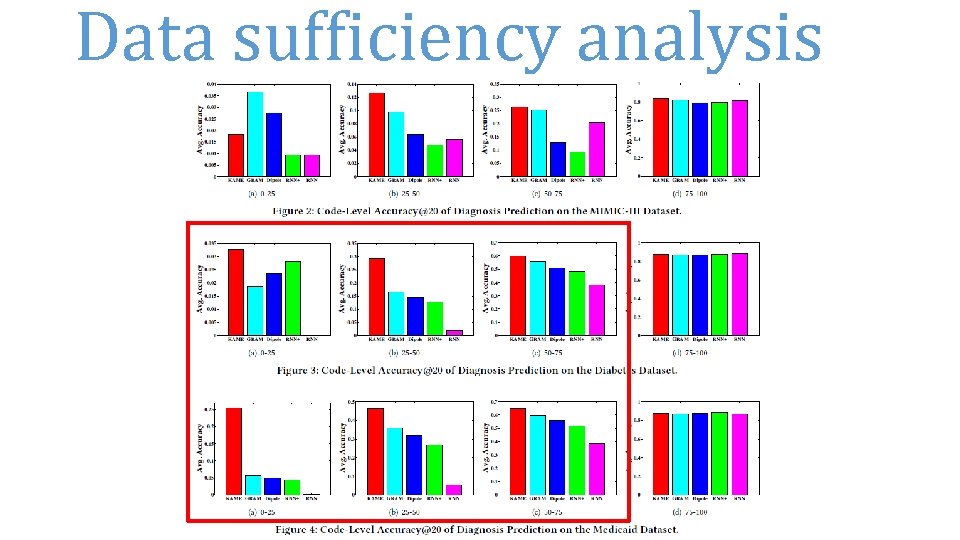
Data sufficiency analysis
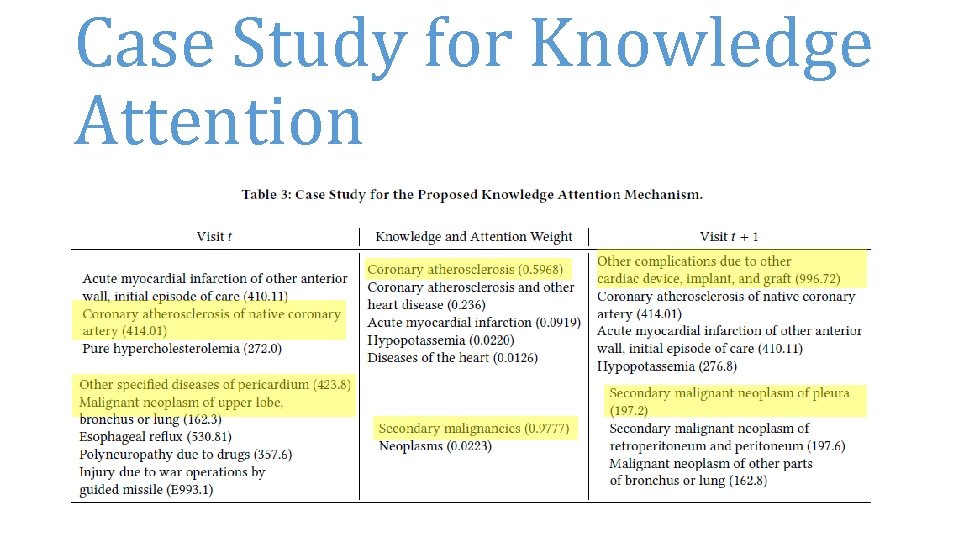
Case Study for Knowledge Attention
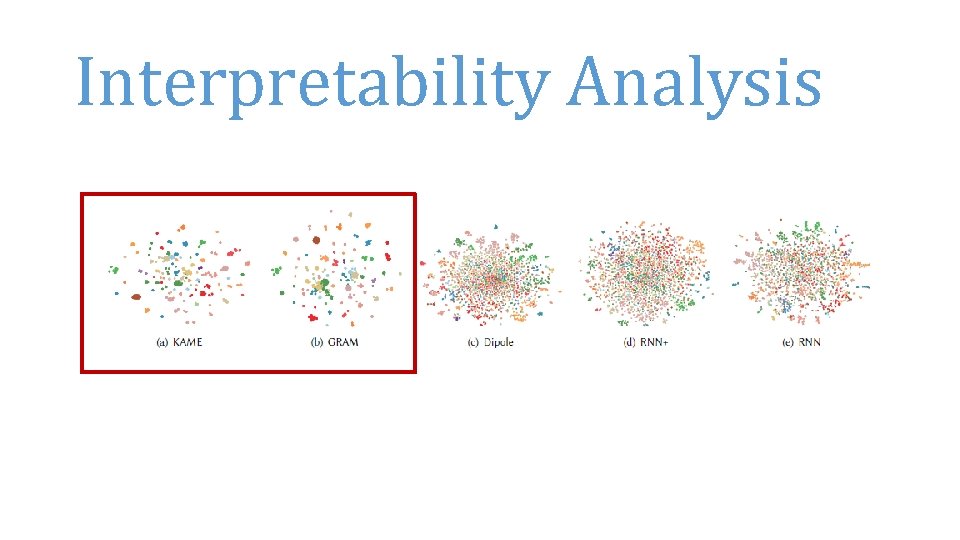
Interpretability Analysis
CONCLUSION We propose KAME, an end-to-end, accurate and robust model to accurately predict patients' future visit information with medical Ontologies. We design a novel knowledge-level attention mechanism, which significantly helps the proposed KAME to improve the predictive performance.
- Slides: 21