DNA and the Genome Key Area 4 a


- Slides: 23
DNA and the Genome Key Area 4 a Cellular Differentiation
Learning Intentions By the end of this topic you should be able to: Cellular differentiation Explain what ‘cellular differentiation’ means Define ‘meristem’ Define ‘stem cell’ Give 3 examples of specialised plant cells and describe the types of genes that are expressed in each Describe the process of differentiation into specialised cells from meristems in plants Describe the process of differentiation into specialised cells from embryonic and tissue (adult) in animals
Cellular Differentiation
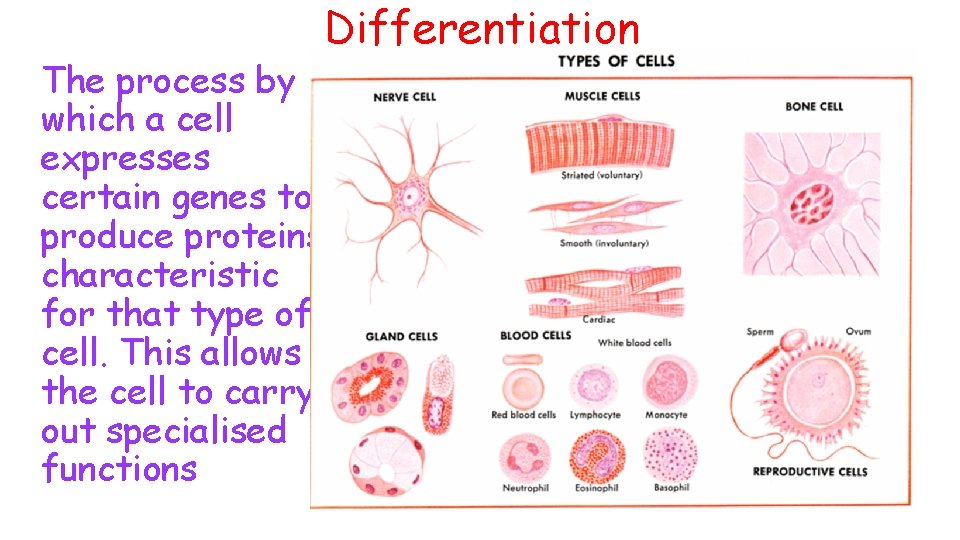
The process by which a cell expresses certain genes to produce proteins characteristic for that type of cell. This allows the cell to carry out specialised functions Differentiation
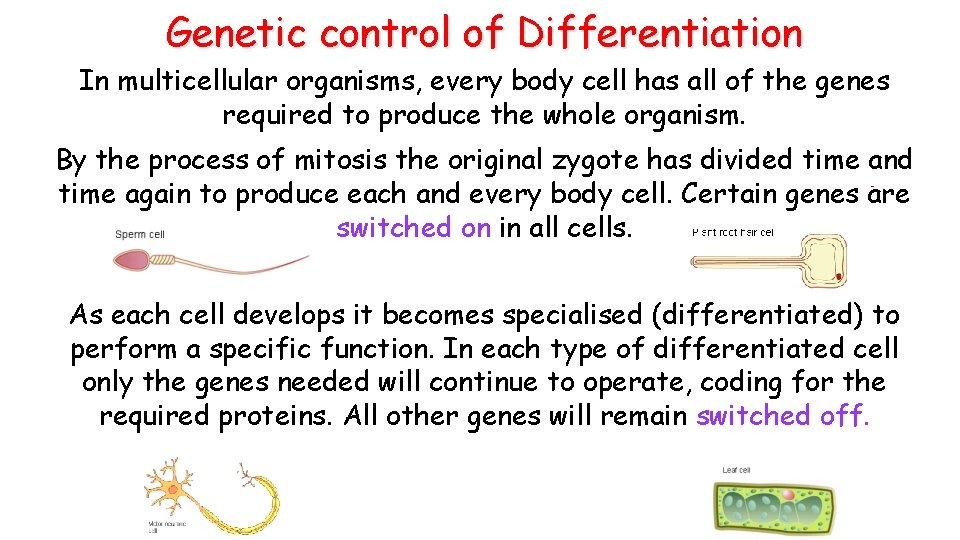
Genetic control of Differentiation In multicellular organisms, every body cell has all of the genes required to produce the whole organism. By the process of mitosis the original zygote has divided time and time again to produce each and every body cell. Certain genes are switched on in all cells. As each cell develops it becomes specialised (differentiated) to perform a specific function. In each type of differentiated cell only the genes needed will continue to operate, coding for the required proteins. All other genes will remain switched off.
Cellular Differentiation Plants
Plant Growth In plants growth only occurs at meristems. Meristems are regions of unspecialised cells in plants that can divide (self-renew) and/or differentiate There are two types of meristem: • apical meristems allows primary growth • lateral meristems allows secondary growth
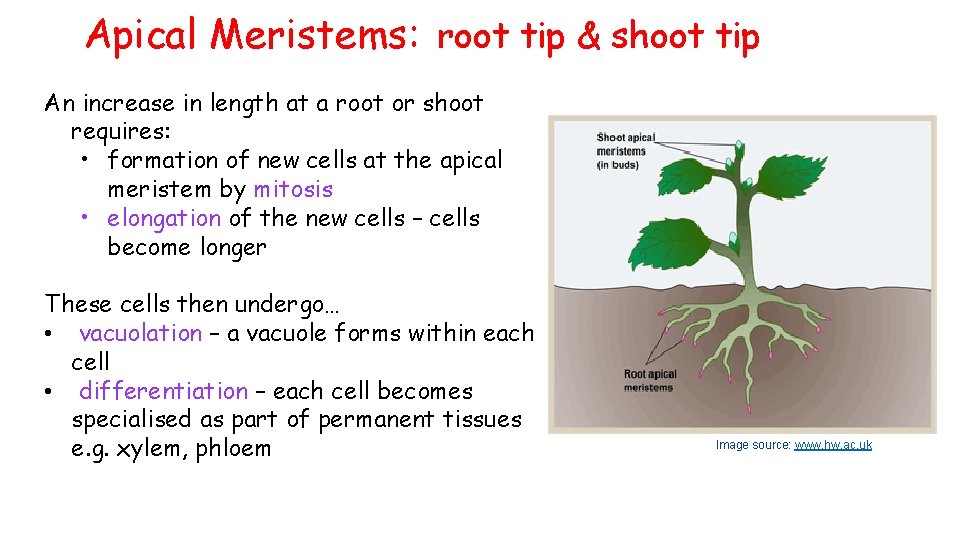
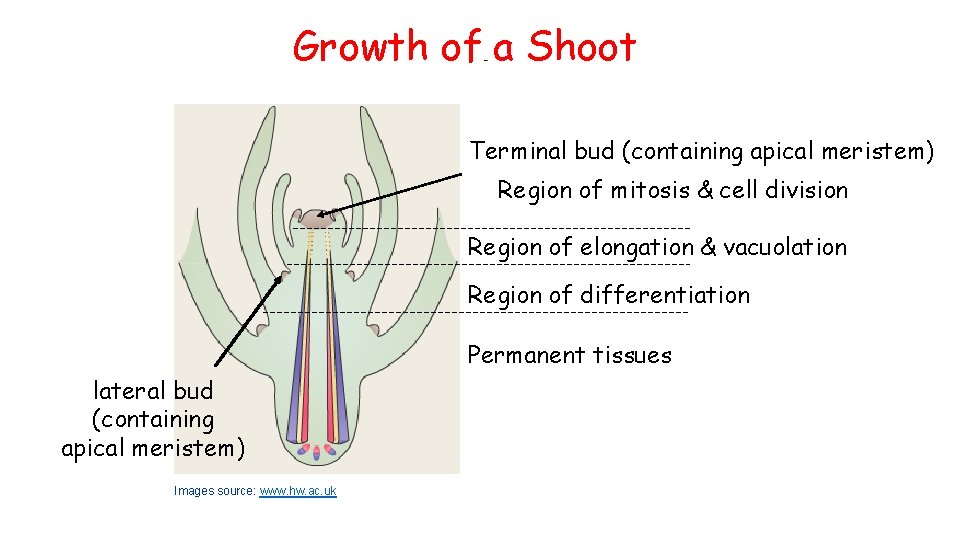
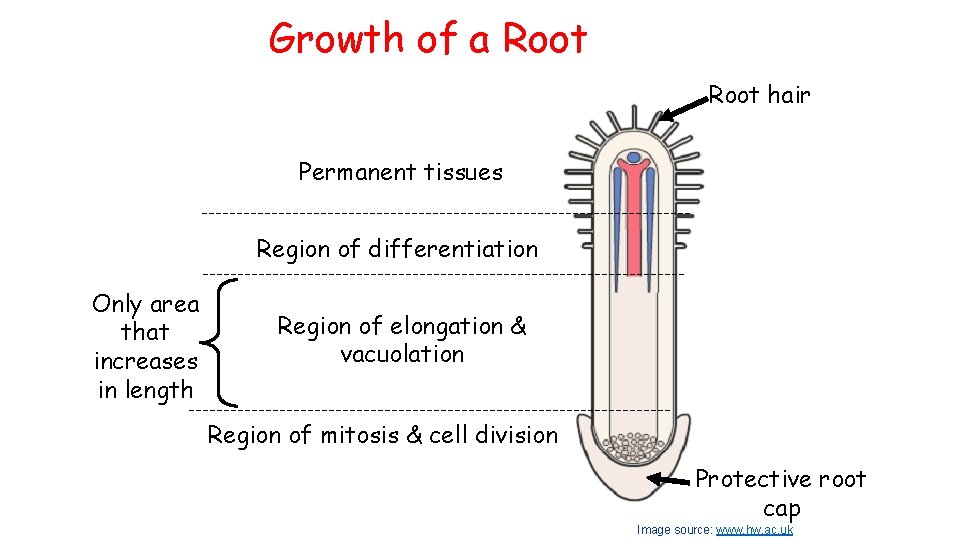
Apical Meristems: root tip & shoot tip An increase in length at a root or shoot requires: • formation of new cells at the apical meristem by mitosis • elongation of the new cells – cells become longer These cells then undergo… • vacuolation – a vacuole forms within each cell • differentiation – each cell becomes specialised as part of permanent tissues e. g. xylem, phloem Image source: www. hw. ac. uk
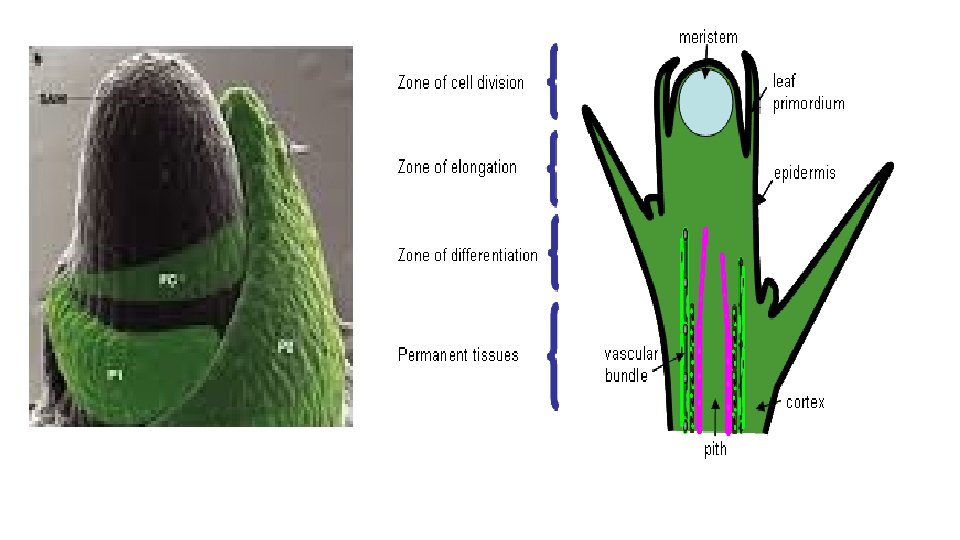
Growth of a Shoot Terminal bud (containing apical meristem) Region of mitosis & cell division Region of elongation & vacuolation Region of differentiation Permanent tissues lateral bud (containing apical meristem) Images source: www. hw. ac. uk
Growth of a Root hair Permanent tissues Region of differentiation Only area that increases in length Region of elongation & vacuolation Region of mitosis & cell division Protective root cap Image source: www. hw. ac. uk
Specialised Plant Cells Xylem Phloem Lignin Xylem vessel Sieve tube Companion cell Hollow tube Images source: www. hw. ac. uk
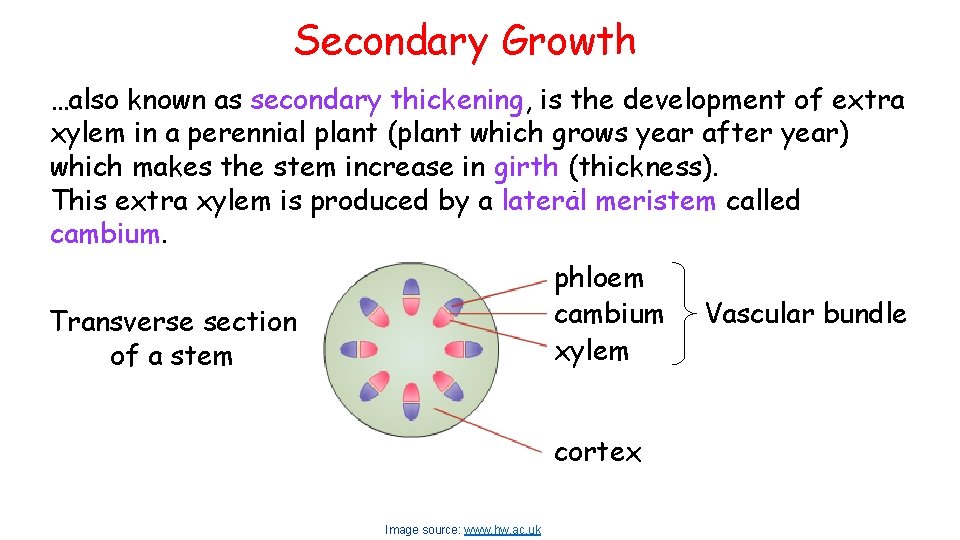
Secondary Growth …also known as secondary thickening, is the development of extra xylem in a perennial plant (plant which grows year after year) which makes the stem increase in girth (thickness). This extra xylem is produced by a lateral meristem called cambium. phloem cambium xylem Transverse section of a stem cortex Image source: www. hw. ac. uk Vascular bundle
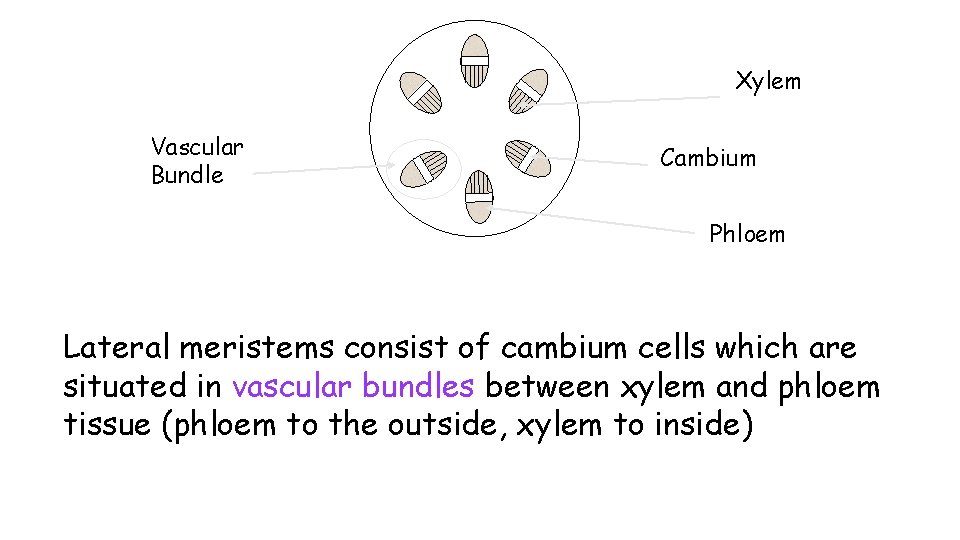
Xylem Vascular Bundle Cambium Phloem Lateral meristems consist of cambium cells which are situated in vascular bundles between xylem and phloem tissue (phloem to the outside, xylem to inside)
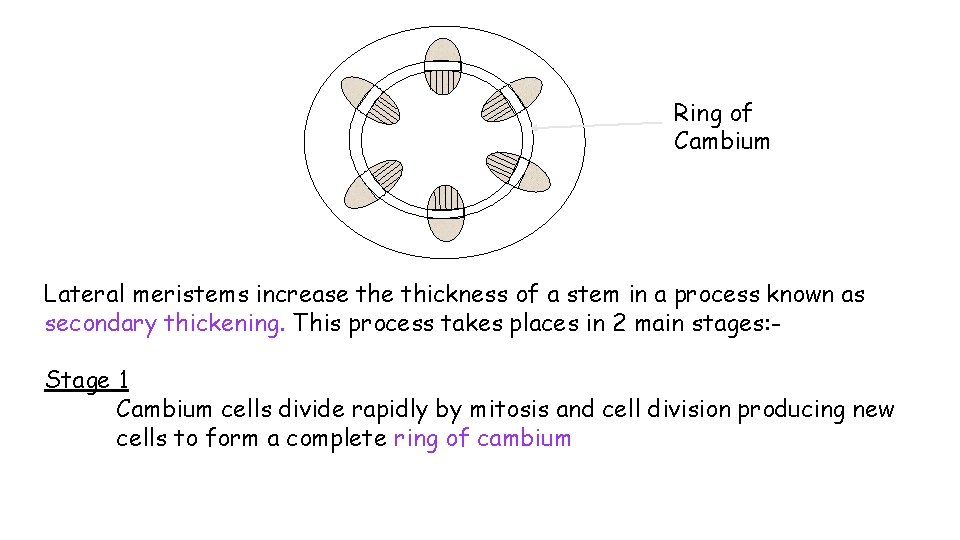
Ring of Cambium Lateral meristems increase thickness of a stem in a process known as secondary thickening. This process takes places in 2 main stages: Stage 1 Cambium cells divide rapidly by mitosis and cell division producing new cells to form a complete ring of cambium
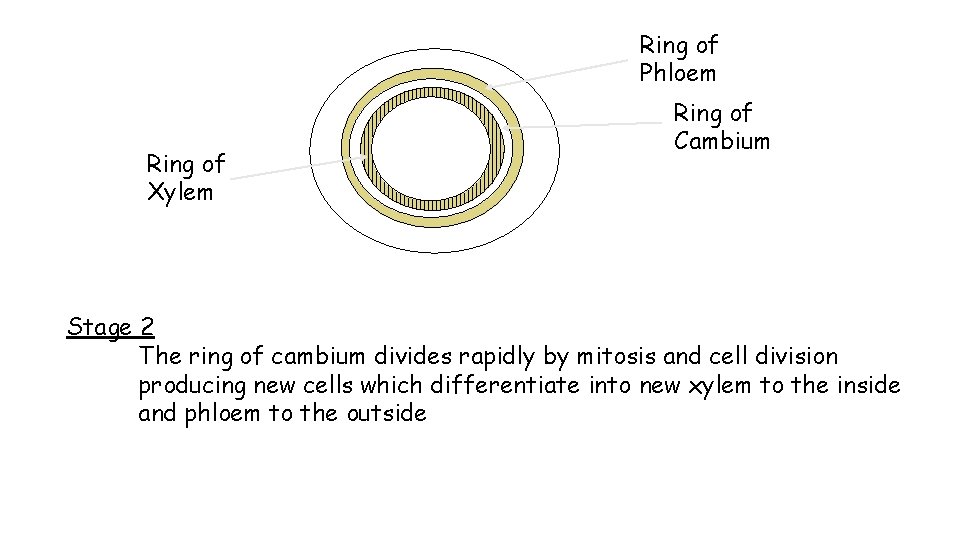
Ring of Phloem Ring of Xylem Ring of Cambium Stage 2 The ring of cambium divides rapidly by mitosis and cell division producing new cells which differentiate into new xylem to the inside and phloem to the outside
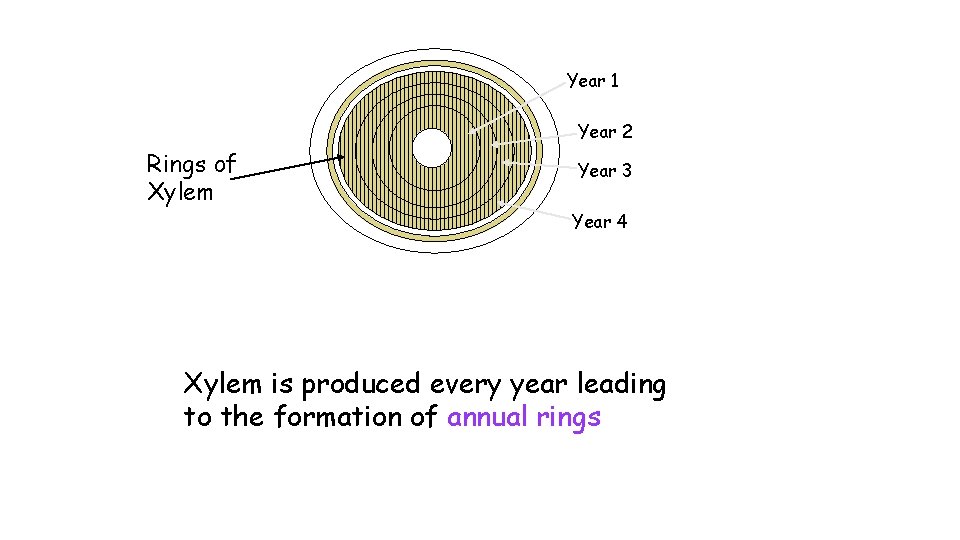
Year 1 Year 2 Rings of Xylem Year 3 Year 4 Xylem is produced every year leading to the formation of annual rings
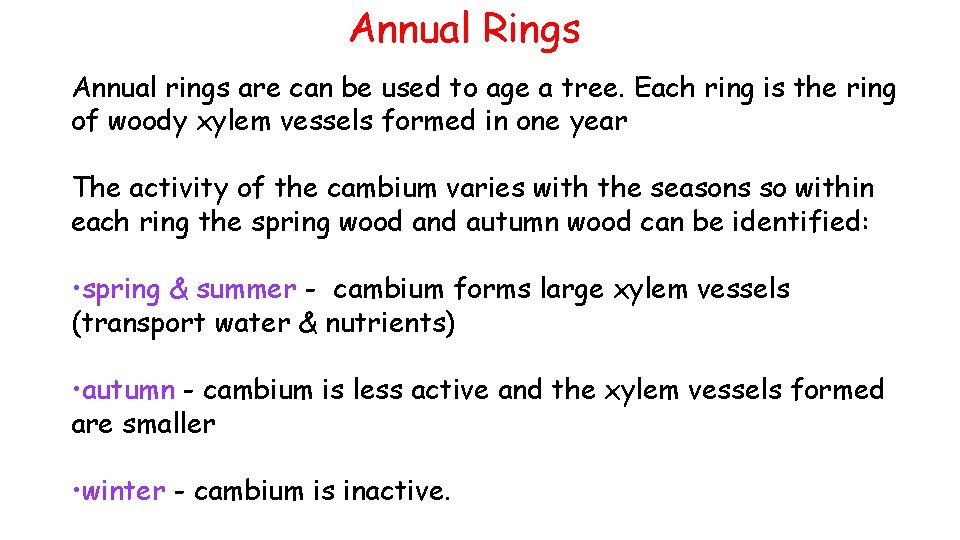
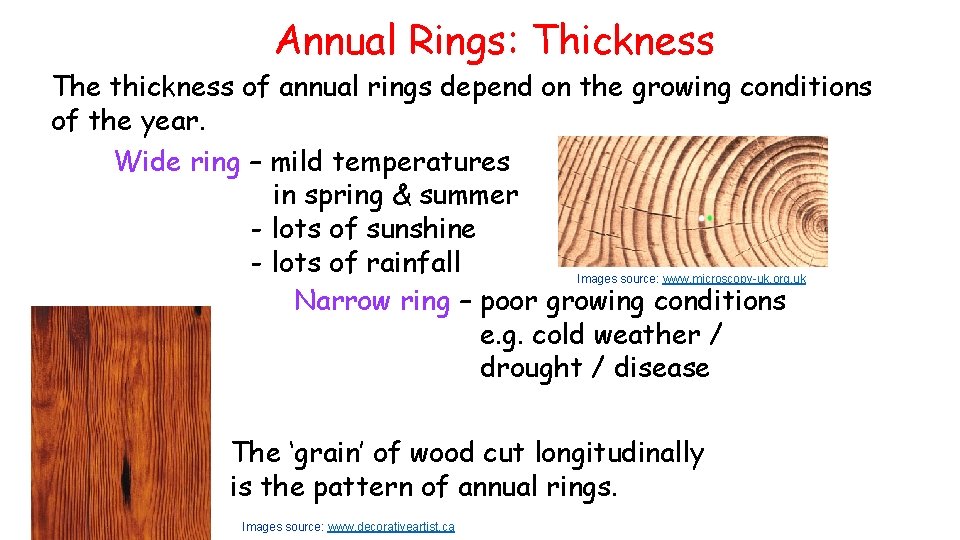
Annual Rings Annual rings are can be used to age a tree. Each ring is the ring of woody xylem vessels formed in one year The activity of the cambium varies with the seasons so within each ring the spring wood and autumn wood can be identified: • spring & summer - cambium forms large xylem vessels (transport water & nutrients) • autumn - cambium is less active and the xylem vessels formed are smaller • winter - cambium is inactive.
Annual Rings: Thickness The thickness of annual rings depend on the growing conditions of the year. Wide ring – mild temperatures in spring & summer - lots of sunshine - lots of rainfall Images source: www. microscopy-uk. org. uk Narrow ring – poor growing conditions e. g. cold weather / drought / disease The ‘grain’ of wood cut longitudinally is the pattern of annual rings. Images source: www. decorativeartist. ca
Stem Cells Differentiation in Animals
Differentiation in animals Each human life begins life as a fertilised egg (zygote) and divides to become approximately 37. 2 trillion cells (37 200 000 000) with almost 200 different cell types. All of these cells originate from STEM CELLS
Stem cells are unspecialised cells in animals that can divide (self-renew) and/or differentiate. This means they can: • Reproduce themselves by repeated mitosis and cell division. • Differentiate into specialised cells when required to do so
Stem cells There are different sources of stem cells in animals, the main 2 being: Embryonic stem cells which have the potential to differentiate into any type of cell found in the human body(pleuripotent) Tissue (adult) stem cells that have a limited power of differentiation (multipotent)