Diplomacy and World War II U S Foreign
- Slides: 39
Diplomacy and World War II U. S. Foreign Policy & Entrance into War 1929 -1945
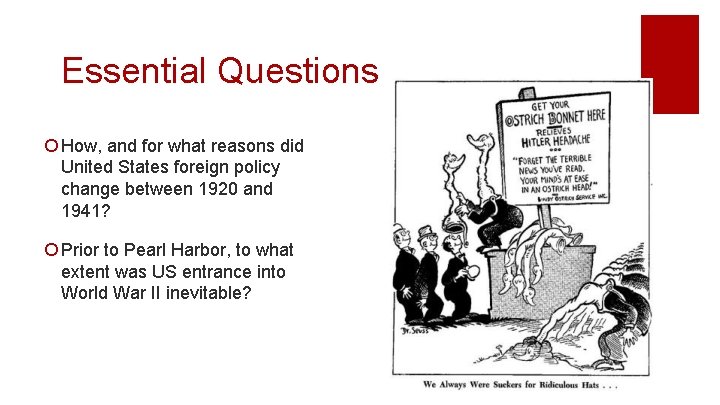
Essential Questions ¡ How, and for what reasons did United States foreign policy change between 1920 and 1941? ¡ Prior to Pearl Harbor, to what extent was US entrance into World War II inevitable?
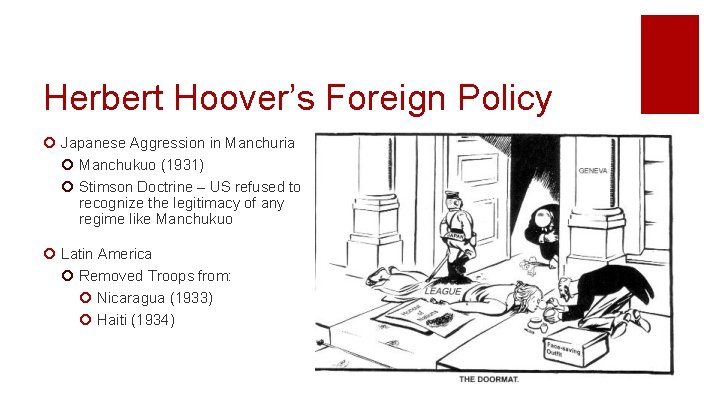
Herbert Hoover’s Foreign Policy ¡ Japanese Aggression in Manchuria ¡ Manchukuo (1931) ¡ Stimson Doctrine – US refused to recognize the legitimacy of any regime like Manchukuo ¡ Latin America ¡ Removed Troops from: ¡ Nicaragua (1933) ¡ Haiti (1934)
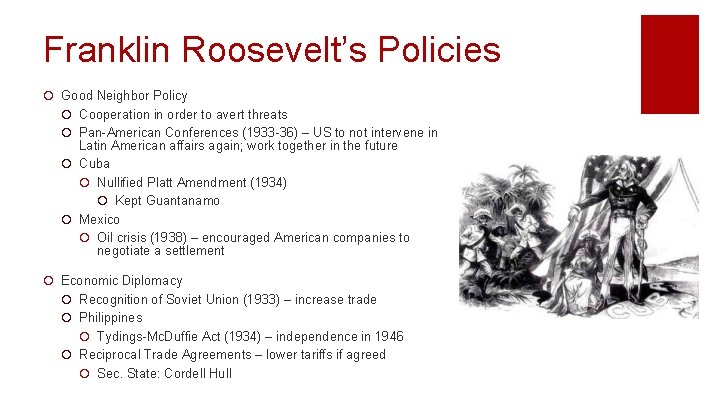
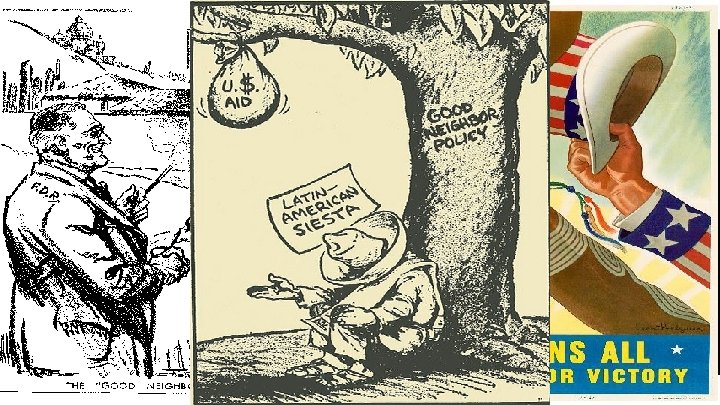
Franklin Roosevelt’s Policies ¡ Good Neighbor Policy ¡ Cooperation in order to avert threats ¡ Pan-American Conferences (1933 -36) – US to not intervene in Latin American affairs again; work together in the future ¡ Cuba ¡ Nullified Platt Amendment (1934) ¡ Kept Guantanamo ¡ Mexico ¡ Oil crisis (1938) – encouraged American companies to negotiate a settlement ¡ Economic Diplomacy ¡ Recognition of Soviet Union (1933) – increase trade ¡ Philippines ¡ Tydings-Mc. Duffie Act (1934) – independence in 1946 ¡ Reciprocal Trade Agreements – lower tariffs if agreed ¡ Sec. State: Cordell Hull
Events Abroad: Fascism & Aggressive Militarism ¡ Italy ¡ Rise of “Il Duce” – Benito Mussolini ¡ Rise of Fascism – people should glorify their nation and race through aggressive show of force ¡ Germany ¡ Rise of “Der Fuhrer” – Adolf Hitler ¡ Seized the opportunity presented by the depression to play upon anti-Semetic hatreds ¡ Japan ¡ Invasion of China for access to raw materials to gain control over what their leaders believed to be the Greater East Asia Co-Prosperity Sphere
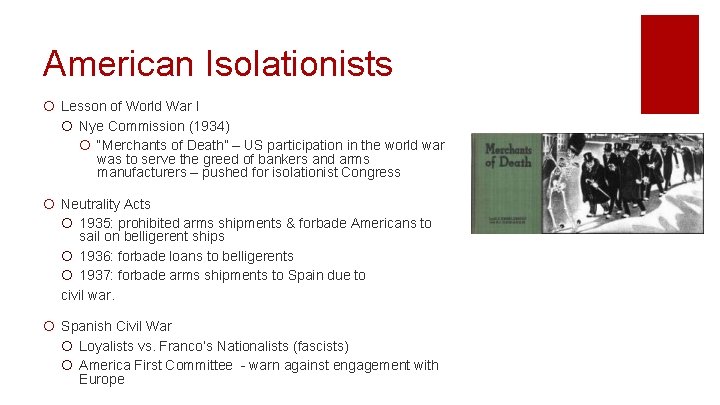
American Isolationists ¡ Lesson of World War I ¡ Nye Commission (1934) ¡ “Merchants of Death” – US participation in the world war was to serve the greed of bankers and arms manufacturers – pushed for isolationist Congress ¡ Neutrality Acts ¡ 1935: prohibited arms shipments & forbade Americans to sail on belligerent ships ¡ 1936: forbade loans to belligerents ¡ 1937: forbade arms shipments to Spain due to civil war. ¡ Spanish Civil War ¡ Loyalists vs. Franco’s Nationalists (fascists) ¡ America First Committee - warn against engagement with Europe
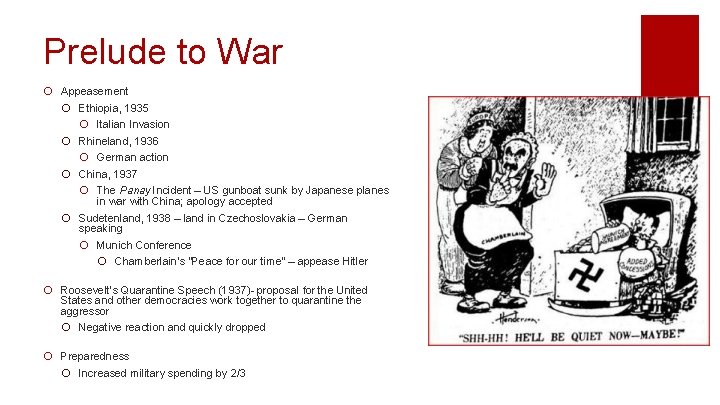
Prelude to War ¡ Appeasement ¡ Ethiopia, 1935 ¡ Italian Invasion ¡ Rhineland, 1936 ¡ German action ¡ China, 1937 ¡ The Panay Incident – US gunboat sunk by Japanese planes in war with China; apology accepted ¡ Sudetenland, 1938 – land in Czechoslovakia – German speaking ¡ Munich Conference ¡ Chamberlain’s “Peace for our time” – appease Hitler ¡ Roosevelt’s Quarantine Speech (1937)- proposal for the United States and other democracies work together to quarantine the aggressor ¡ Negative reaction and quickly dropped ¡ Preparedness ¡ Increased military spending by 2/3
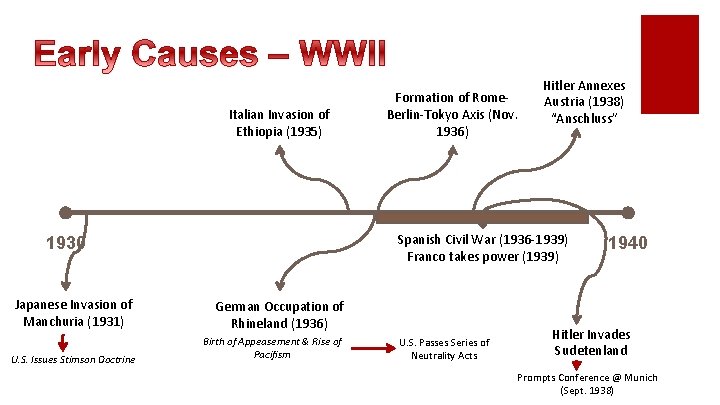
Italian Invasion of Ethiopia (1935) U. S. Issues Stimson Doctrine Hitler Annexes Austria (1938) “Anschluss” Spanish Civil War (1936 -1939) Franco takes power (1939) 1930 Japanese Invasion of Manchuria (1931) Formation of Rome. Berlin-Tokyo Axis (Nov. 1936) German Occupation of Rhineland (1936) Birth of Appeasement & Rise of Pacifism U. S. Passes Series of Neutrality Acts 1940 Hitler Invades Sudetenland Prompts Conference @ Munich (Sept. 1938)
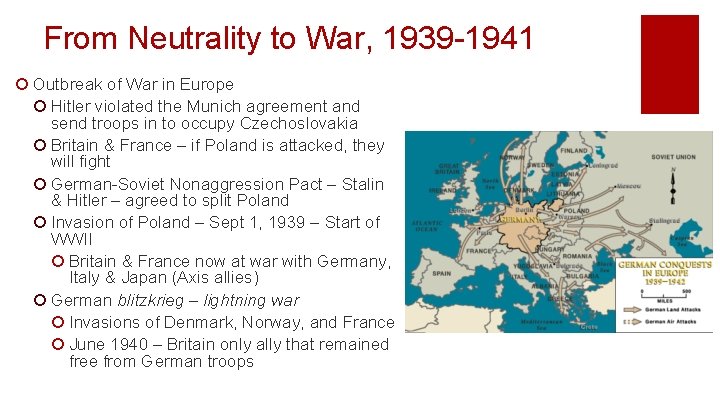
From Neutrality to War, 1939 -1941 ¡ Outbreak of War in Europe ¡ Hitler violated the Munich agreement and send troops in to occupy Czechoslovakia ¡ Britain & France – if Poland is attacked, they will fight ¡ German-Soviet Nonaggression Pact – Stalin & Hitler – agreed to split Poland ¡ Invasion of Poland – Sept 1, 1939 – Start of WWII ¡ Britain & France now at war with Germany, Italy & Japan (Axis allies) ¡ German blitzkrieg – lightning war ¡ Invasions of Denmark, Norway, and France ¡ June 1940 – Britain only ally that remained free from German troops
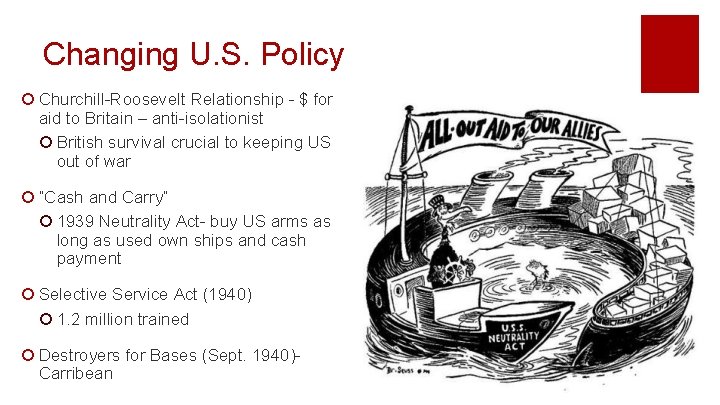
Changing U. S. Policy ¡ Churchill-Roosevelt Relationship - $ for aid to Britain – anti-isolationist ¡ British survival crucial to keeping US out of war ¡ “Cash and Carry” ¡ 1939 Neutrality Act- buy US arms as long as used own ships and cash payment ¡ Selective Service Act (1940) ¡ 1. 2 million trained ¡ Destroyers for Bases (Sept. 1940)Carribean
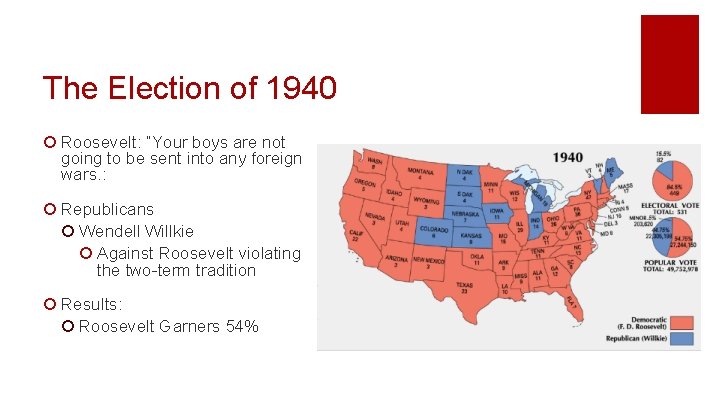
The Election of 1940 ¡ Roosevelt: “Your boys are not going to be sent into any foreign wars. : ¡ Republicans ¡ Wendell Willkie ¡ Against Roosevelt violating the two-term tradition ¡ Results: ¡ Roosevelt Garners 54%
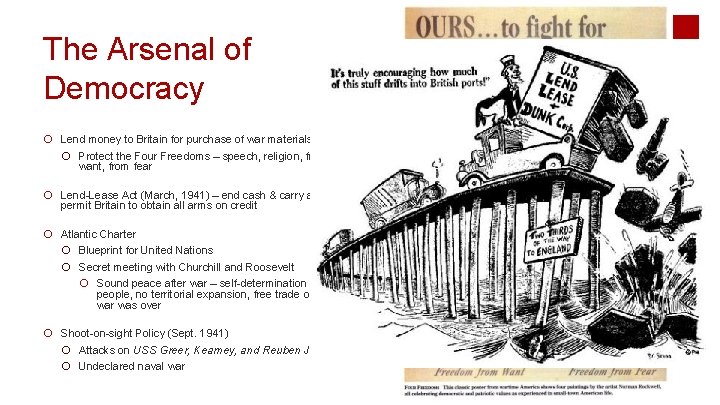
The Arsenal of Democracy ¡ Lend money to Britain for purchase of war materials ¡ Protect the Four Freedoms – speech, religion, from want, from fear ¡ Lend-Lease Act (March, 1941) – end cash & carry and permit Britain to obtain all arms on credit ¡ Atlantic Charter ¡ Blueprint for United Nations ¡ Secret meeting with Churchill and Roosevelt ¡ Sound peace after war – self-determination for all people, no territorial expansion, free trade once war was over ¡ Shoot-on-sight Policy (Sept. 1941) ¡ Attacks on USS Greer, Kearney, and Reuben James ¡ Undeclared naval war
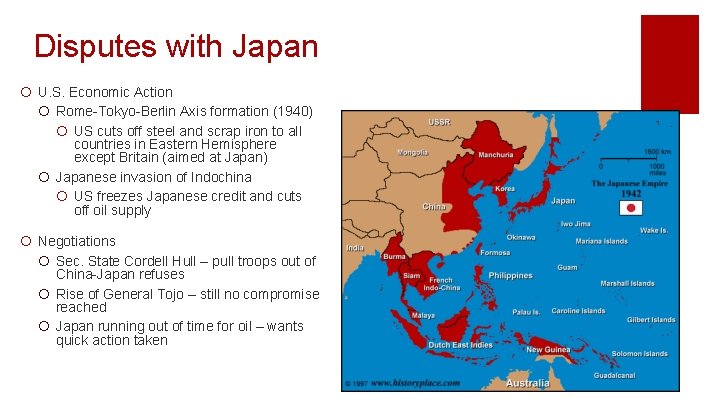
Disputes with Japan ¡ U. S. Economic Action ¡ Rome-Tokyo-Berlin Axis formation (1940) ¡ US cuts off steel and scrap iron to all countries in Eastern Hemisphere except Britain (aimed at Japan) ¡ Japanese invasion of Indochina ¡ US freezes Japanese credit and cuts off oil supply ¡ Negotiations ¡ Sec. State Cordell Hull – pull troops out of China-Japan refuses ¡ Rise of General Tojo – still no compromise reached ¡ Japan running out of time for oil – wants quick action taken
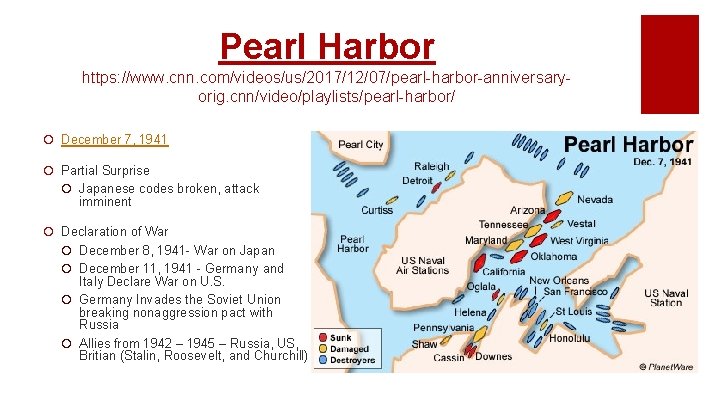
Pearl Harbor https: //www. cnn. com/videos/us/2017/12/07/pearl-harbor-anniversaryorig. cnn/video/playlists/pearl-harbor/ ¡ December 7, 1941 ¡ Partial Surprise ¡ Japanese codes broken, attack imminent ¡ Declaration of War ¡ December 8, 1941 - War on Japan ¡ December 11, 1941 - Germany and Italy Declare War on U. S. ¡ Germany Invades the Soviet Union breaking nonaggression pact with Russia ¡ Allies from 1942 – 1945 – Russia, US, Britian (Stalin, Roosevelt, and Churchill)
World War II: The Home Front America Responds to War
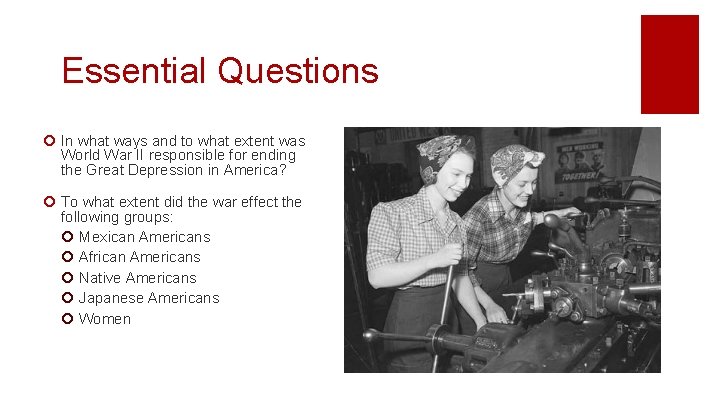
Essential Questions ¡ In what ways and to what extent was World War II responsible for ending the Great Depression in America? ¡ To what extent did the war effect the following groups: ¡ Mexican Americans ¡ African Americans ¡ Native Americans ¡ Japanese Americans ¡ Women
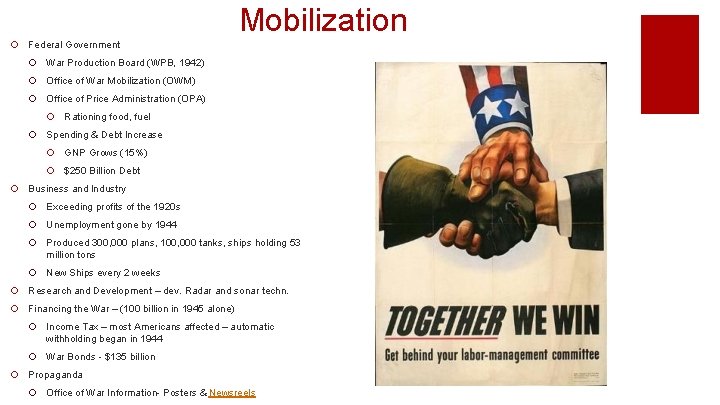
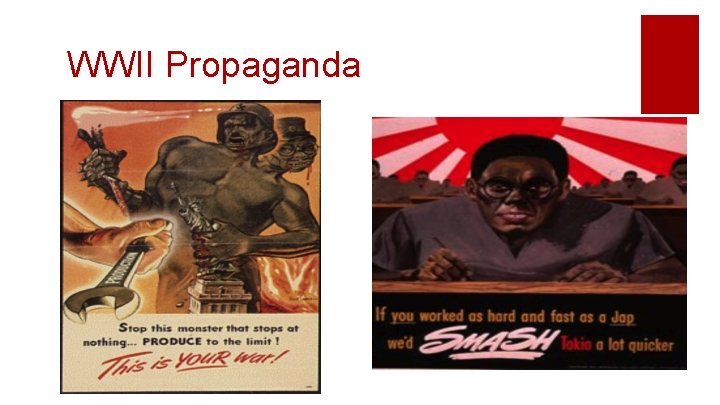
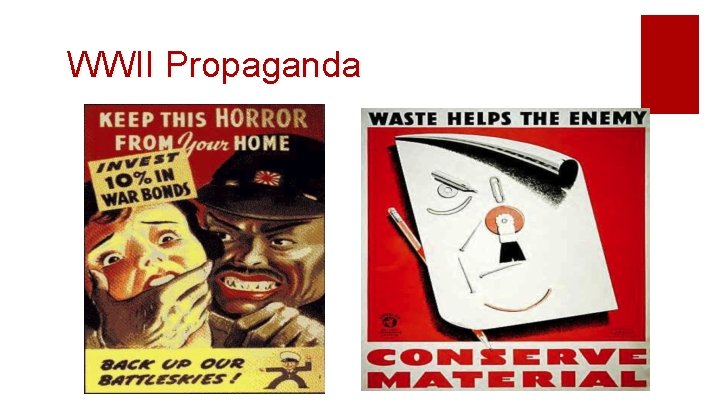
Mobilization ¡ Federal Government ¡ War Production Board (WPB, 1942) ¡ Office of War Mobilization (OWM) ¡ Office of Price Administration (OPA) ¡ Rationing food, fuel ¡ Spending & Debt Increase ¡ GNP Grows (15%) ¡ $250 Billion Debt ¡ Business and Industry ¡ Exceeding profits of the 1920 s ¡ Unemployment gone by 1944 ¡ Produced 300, 000 plans, 100, 000 tanks, ships holding 53 million tons ¡ New Ships every 2 weeks ¡ Research and Development – dev. Radar and sonar techn. ¡ Financing the War – (100 billion in 1945 alone) ¡ Income Tax – most Americans affected – automatic withholding began in 1944 ¡ War Bonds - $135 billion ¡ Propaganda ¡ Office of War Information- Posters & Newsreels
WWII Propaganda
WWII Propaganda
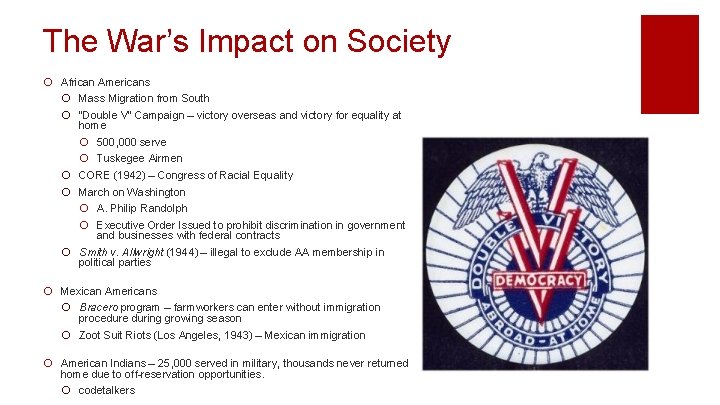
The War’s Impact on Society ¡ African Americans ¡ Mass Migration from South ¡ “Double V” Campaign – victory overseas and victory for equality at home ¡ 500, 000 serve ¡ Tuskegee Airmen ¡ CORE (1942) – Congress of Racial Equality ¡ March on Washington ¡ A. Philip Randolph ¡ Executive Order Issued to prohibit discrimination in government and businesses with federal contracts ¡ Smith v. Allwright (1944) – illegal to exclude AA membership in political parties ¡ Mexican Americans ¡ Bracero program – farmworkers can enter without immigration procedure during growing season ¡ Zoot Suit Riots (Los Angeles, 1943) – Mexican immigration ¡ American Indians – 25, 000 served in military, thousands never returned home due to off-reservation opportunities. ¡ codetalkers
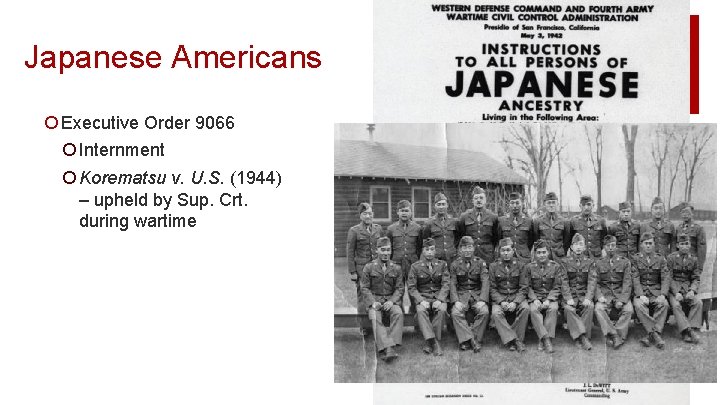
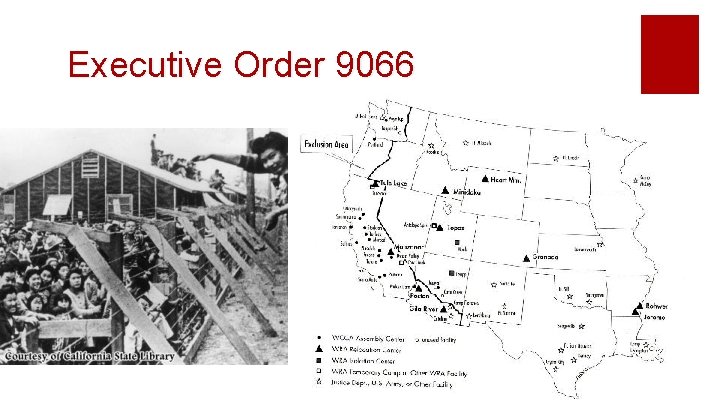
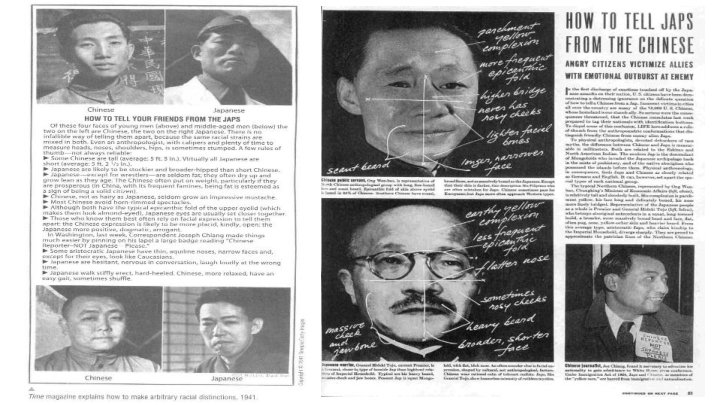
Japanese Americans ¡ Executive Order 9066 ¡ Internment ¡ Korematsu v. U. S. (1944) – upheld by Sup. Crt. during wartime
Executive Order 9066
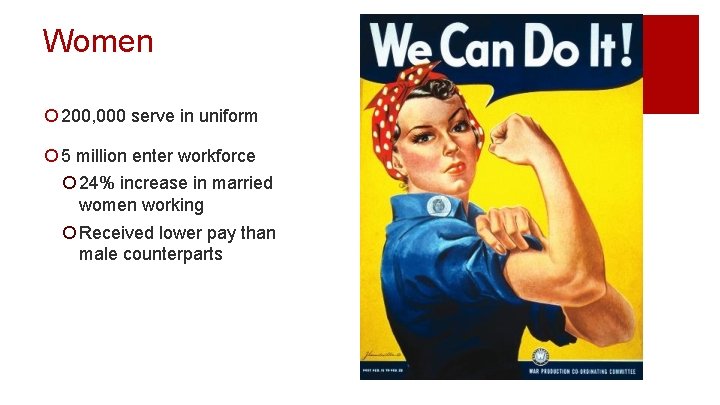
Women ¡ 200, 000 serve in uniform ¡ 5 million enter workforce ¡ 24% increase in married women working ¡ Received lower pay than male counterparts
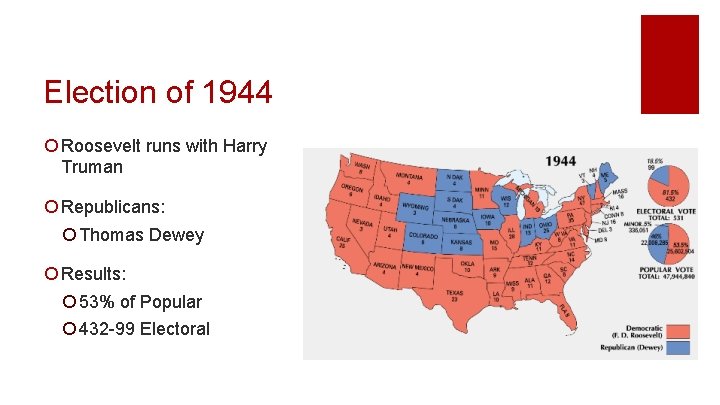
Election of 1944 ¡ Roosevelt runs with Harry Truman ¡ Republicans: ¡ Thomas Dewey ¡ Results: ¡ 53% of Popular ¡ 432 -99 Electoral
World War II: The Battlefronts The War in Europe and the Pacific
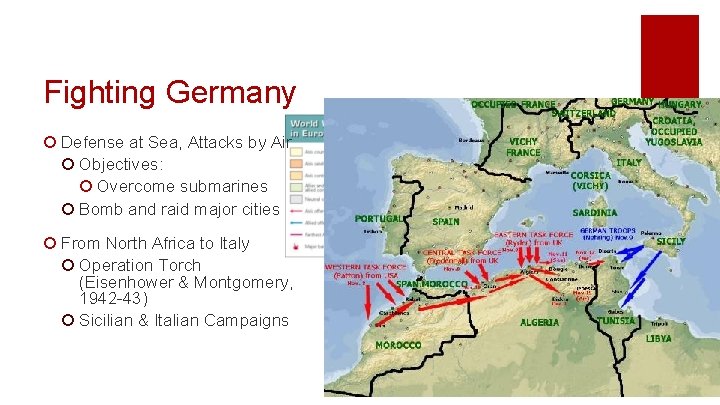
Fighting Germany ¡ Defense at Sea, Attacks by Air ¡ Objectives: ¡ Overcome submarines ¡ Bomb and raid major cities ¡ From North Africa to Italy ¡ Operation Torch (Eisenhower & Montgomery, 1942 -43) ¡ Sicilian & Italian Campaigns
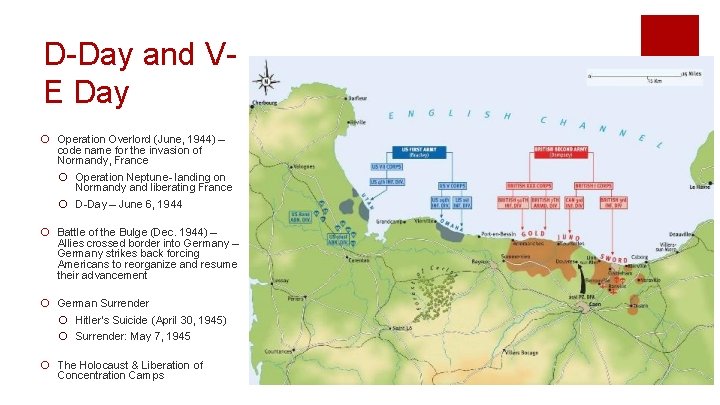
D-Day and VE Day ¡ Operation Overlord (June, 1944) – code name for the invasion of Normandy, France ¡ Operation Neptune- landing on Normandy and liberating France ¡ D-Day – June 6, 1944 ¡ Battle of the Bulge (Dec. 1944) – Allies crossed border into Germany – Germany strikes back forcing Americans to reorganize and resume their advancement ¡ German Surrender ¡ Hitler’s Suicide (April 30, 1945) ¡ Surrender: May 7, 1945 ¡ The Holocaust & Liberation of Concentration Camps
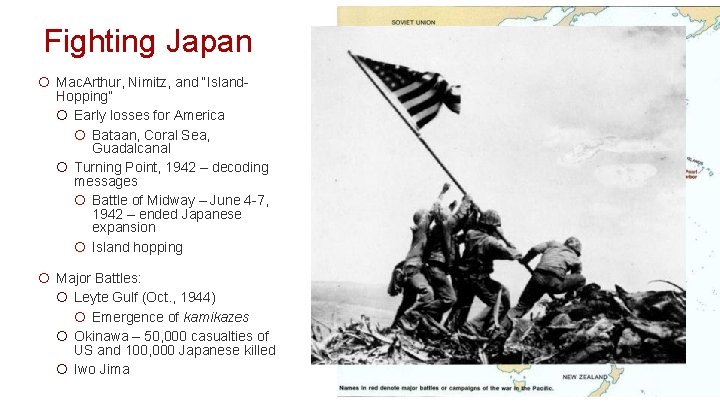
Fighting Japan ¡ Mac. Arthur, Nimitz, and “Island. Hopping” ¡ Early losses for America ¡ Bataan, Coral Sea, Guadalcanal ¡ Turning Point, 1942 – decoding messages ¡ Battle of Midway – June 4 -7, 1942 – ended Japanese expansion ¡ Island hopping ¡ Major Battles: ¡ Leyte Gulf (Oct. , 1944) ¡ Emergence of kamikazes ¡ Okinawa – 50, 000 casualties of US and 100, 000 Japanese killed ¡ Iwo Jima
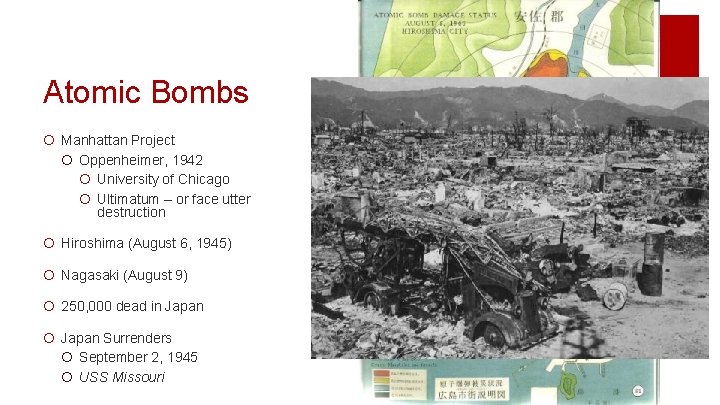
Atomic Bombs ¡ Manhattan Project ¡ Oppenheimer, 1942 ¡ University of Chicago ¡ Ultimatum – or face utter destruction ¡ Hiroshima (August 6, 1945) ¡ Nagasaki (August 9) ¡ 250, 000 dead in Japan ¡ Japan Surrenders ¡ September 2, 1945 ¡ USS Missouri
The Decision to Drop the Bomb Arguments in Favor Arguments Opposed ¡ Target: Japan ¡ Japanese character: bushido & seppuku ¡ Prevent: long war, massive casualties ¡ Pacific front as lesson ¡ Massive casualties & destruction ¡ Target: Soviet Union ¡ Send a message ¡ Prevent: Soviet aggression & expansion ¡ Weapons & the loss of human lives should not be used as diplomatic tools ¡ Violated human rights ¡ Even if Hiroshima warranted, Nagasaki was not
Wartime Conferences Negotiations, Peace Treaties, and the End of War
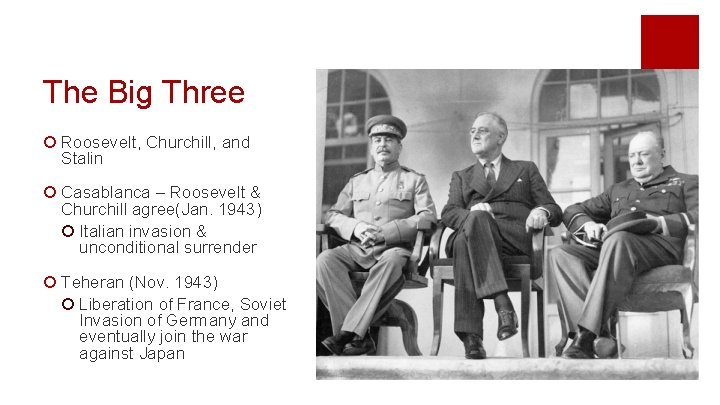
The Big Three ¡ Roosevelt, Churchill, and Stalin ¡ Casablanca – Roosevelt & Churchill agree(Jan. 1943) ¡ Italian invasion & unconditional surrender ¡ Teheran (Nov. 1943) ¡ Liberation of France, Soviet Invasion of Germany and eventually join the war against Japan
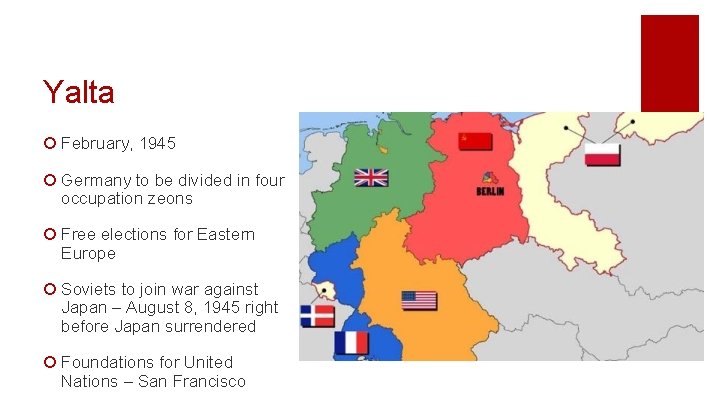
Yalta ¡ February, 1945 ¡ Germany to be divided in four occupation zeons ¡ Free elections for Eastern Europe ¡ Soviets to join war against Japan – August 8, 1945 right before Japan surrendered ¡ Foundations for United Nations – San Francisco
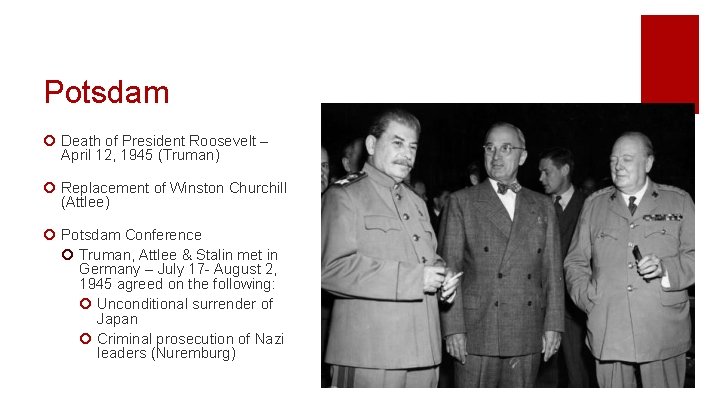
Potsdam ¡ Death of President Roosevelt – April 12, 1945 (Truman) ¡ Replacement of Winston Churchill (Attlee) ¡ Potsdam Conference ¡ Truman, Attlee & Stalin met in Germany – July 17 - August 2, 1945 agreed on the following: ¡ Unconditional surrender of Japan ¡ Criminal prosecution of Nazi leaders (Nuremburg)
The War’s Legacy Results of World War II
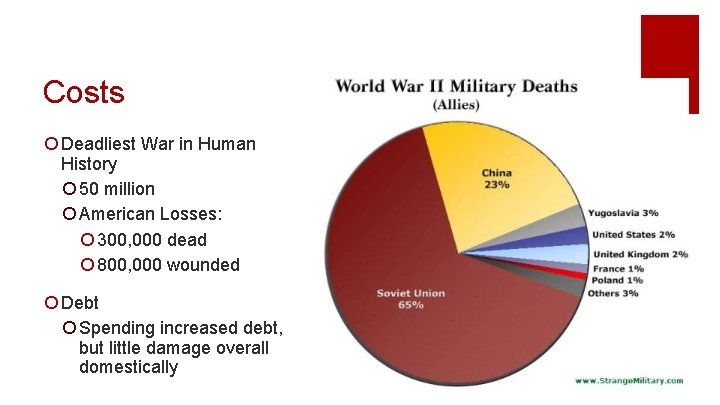
Costs ¡ Deadliest War in Human History ¡ 50 million ¡ American Losses: ¡ 300, 000 dead ¡ 800, 000 wounded ¡ Debt ¡ Spending increased debt, but little damage overall domestically
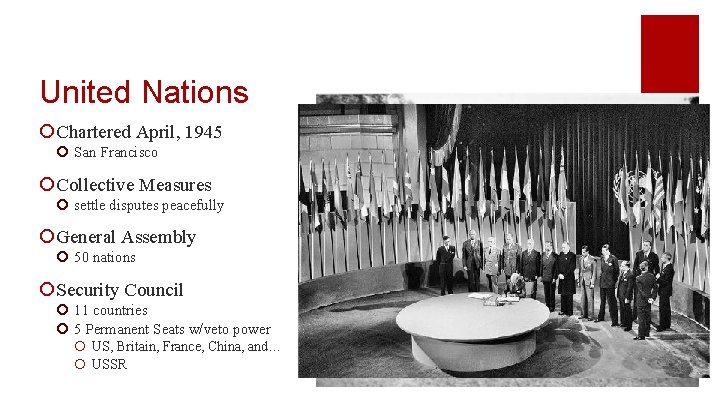
United Nations ¡ Chartered April, 1945 ¡ San Francisco ¡ Collective Measures ¡ settle disputes peacefully ¡ General Assembly ¡ 50 nations ¡ Security Council ¡ 11 countries ¡ 5 Permanent Seats w/veto power ¡ US, Britain, France, China, and… ¡ USSR