
U S INTERVENTION IN MEXICO GUIDING QUESTIONS Was

- Slides: 22
U. S. INTERVENTION IN MEXICO
GUIDING QUESTIONS Was the U. S. justified in intervening in Mexican affairs in 1916? What were some of the unintended consequences for the U. S. army as a result of this expedition?
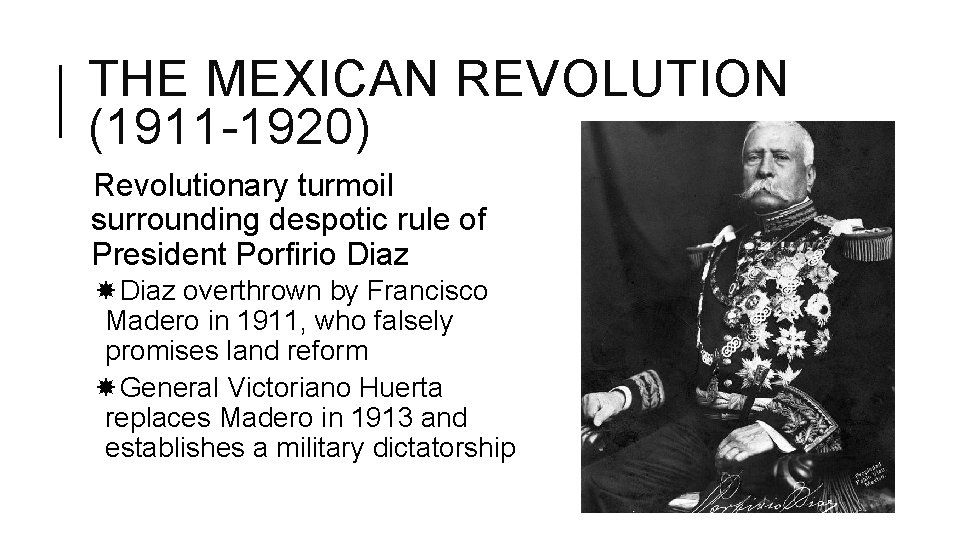
THE MEXICAN REVOLUTION (1911 -1920) Revolutionary turmoil surrounding despotic rule of President Porfirio Diaz overthrown by Francisco Madero in 1911, who falsely promises land reform General Victoriano Huerta replaces Madero in 1913 and establishes a military dictatorship
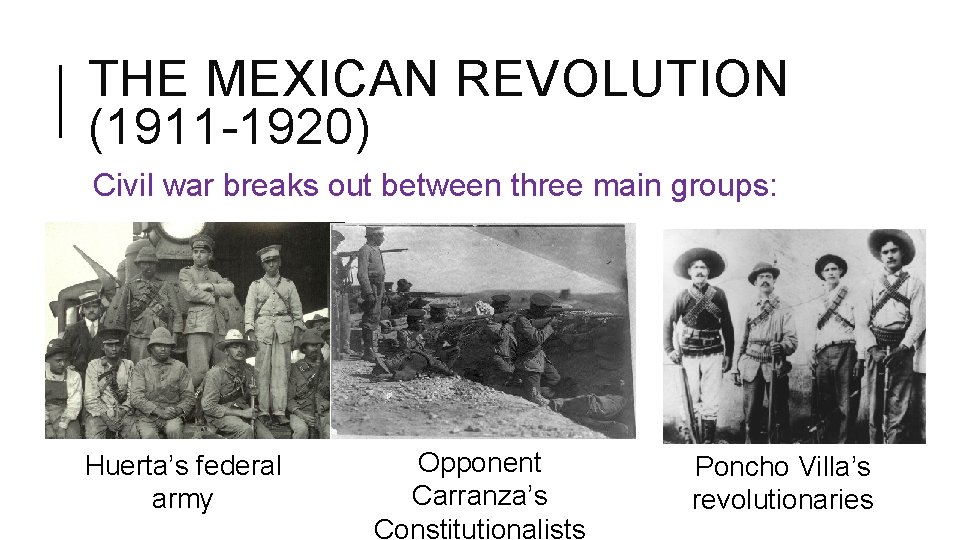
THE MEXICAN REVOLUTION (1911 -1920) Civil war breaks out between three main groups: Huerta’s federal army Opponent Carranza’s Constitutionalists Poncho Villa’s revolutionaries
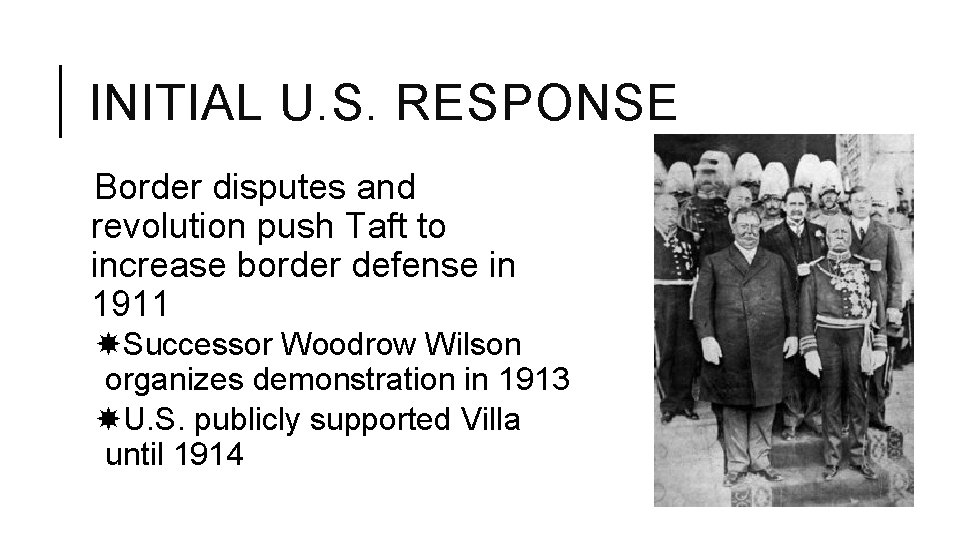
INITIAL U. S. RESPONSE Border disputes and revolution push Taft to increase border defense in 1911 Successor Woodrow Wilson organizes demonstration in 1913 U. S. publicly supported Villa until 1914
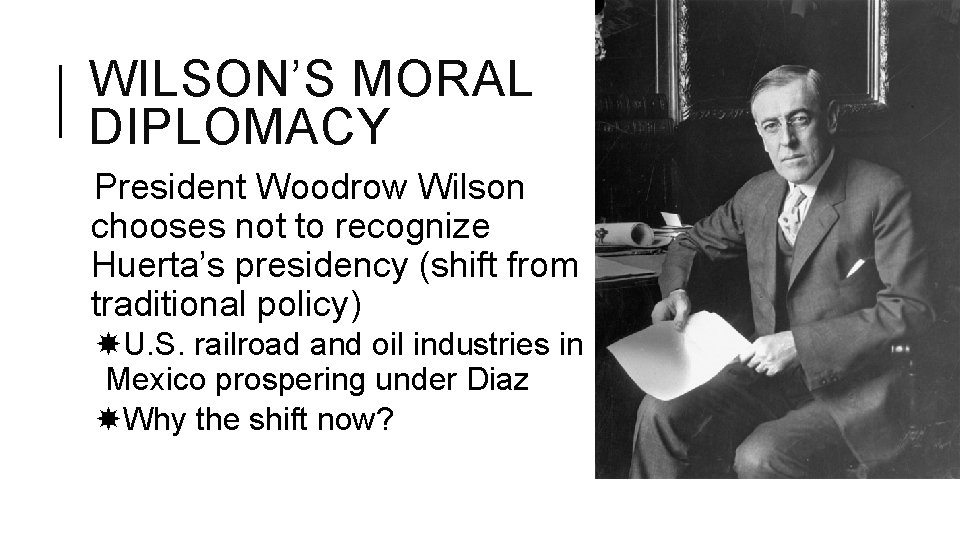
WILSON’S MORAL DIPLOMACY President Woodrow Wilson chooses not to recognize Huerta’s presidency (shift from traditional policy) U. S. railroad and oil industries in Mexico prospering under Diaz Why the shift now?
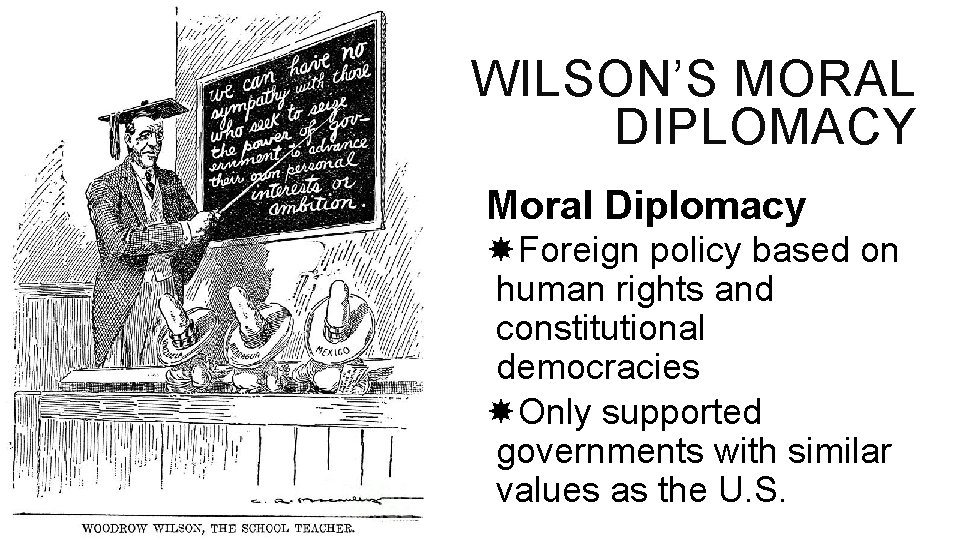
WILSON’S MORAL DIPLOMACY Moral Diplomacy Foreign policy based on human rights and constitutional democracies Only supported governments with similar values as the U. S.
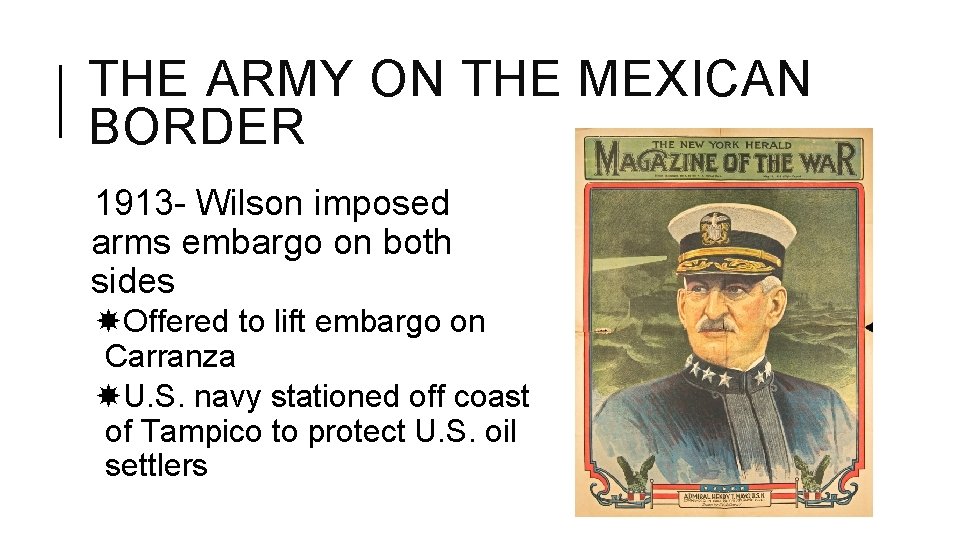
THE ARMY ON THE MEXICAN BORDER 1913 - Wilson imposed arms embargo on both sides Offered to lift embargo on Carranza U. S. navy stationed off coast of Tampico to protect U. S. oil settlers
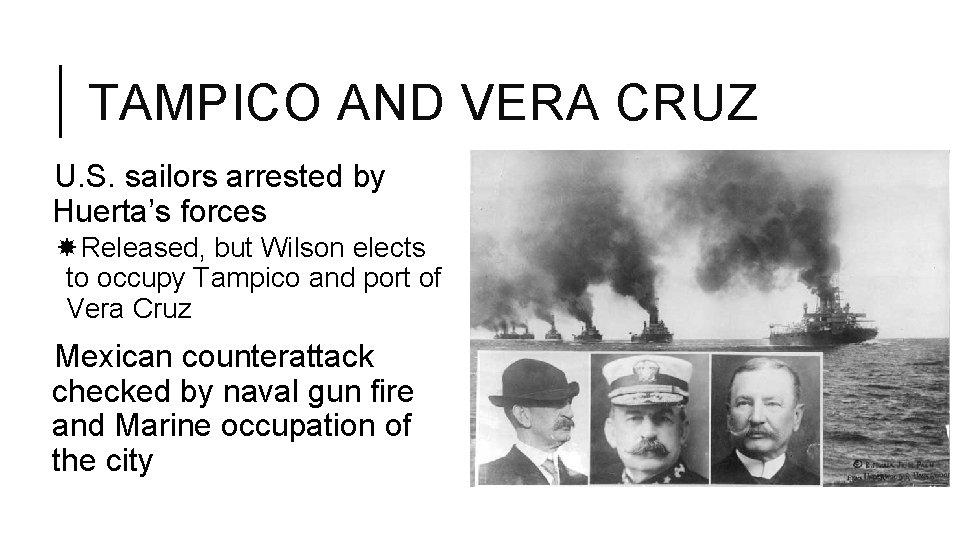
TAMPICO AND VERA CRUZ U. S. sailors arrested by Huerta’s forces Released, but Wilson elects to occupy Tampico and port of Vera Cruz Mexican counterattack checked by naval gun fire and Marine occupation of the city
THE ARMY ON THE MEXICAN BORDER Wilson and Huerta accept mediation from ABC Powers (Argentina, Brazil, Chile) War avoided, but event led to anti-U. S. sentiments Huerta resigned in 1914 and was replaced with Carranza
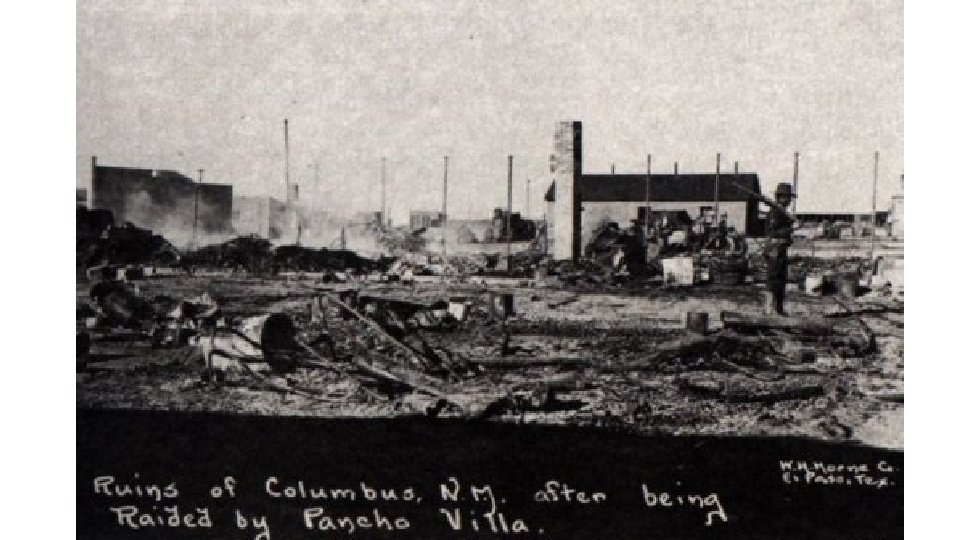
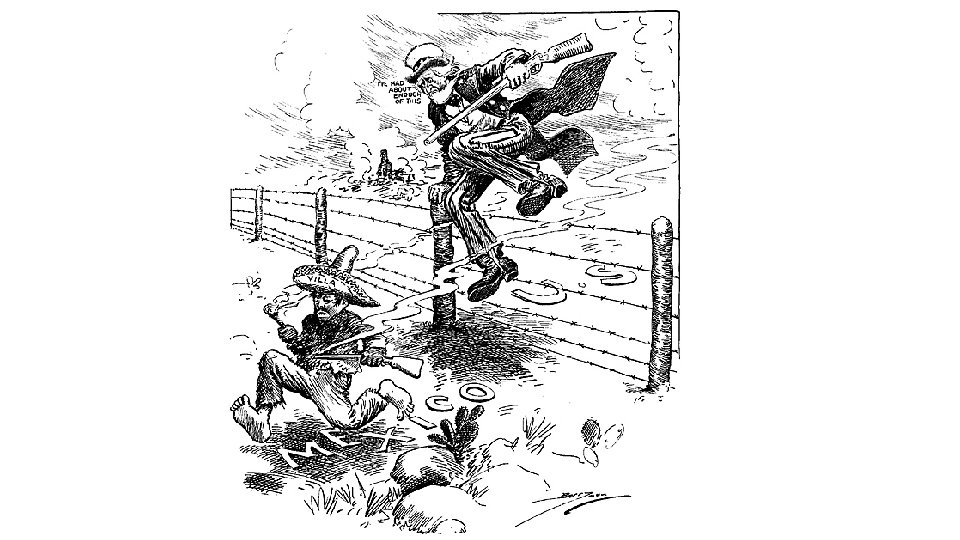
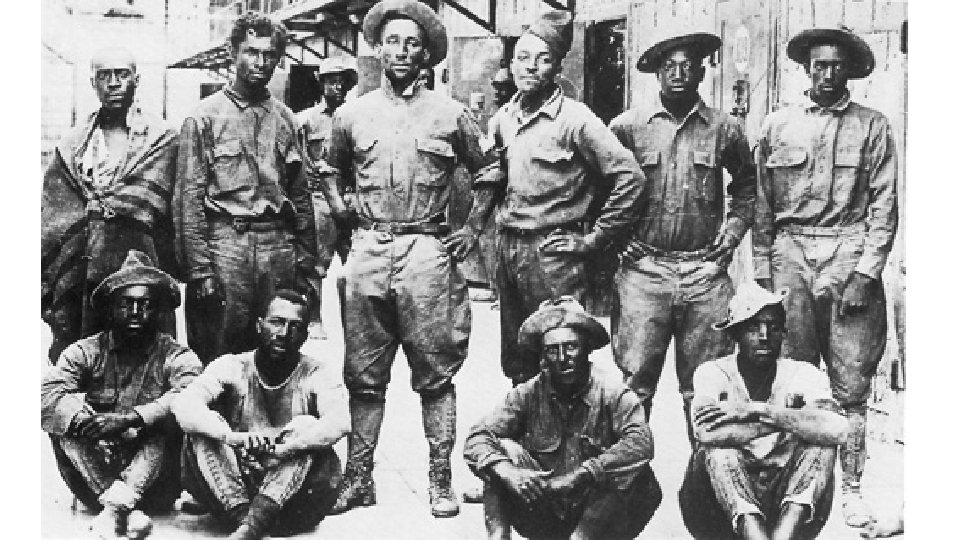
PUNITIVE EXPEDITION (19161917) Pancho Villa rebels against Carranza; Wilson chooses to recognize Carranza’s presidency Villa’s supplies embargoed by U. S. Villistas began launching border raids March 9 - Raid of Columbus, NM led to multiple military and civilian casualties
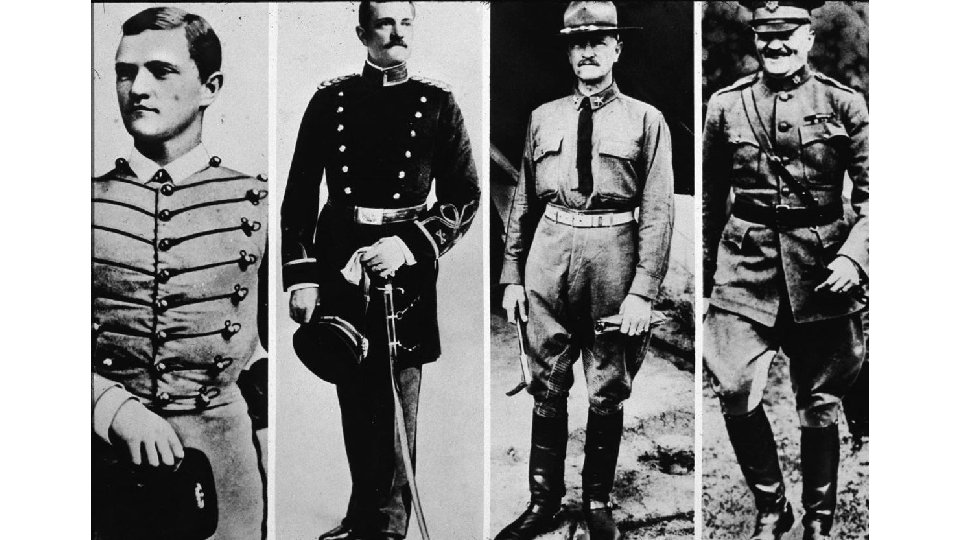
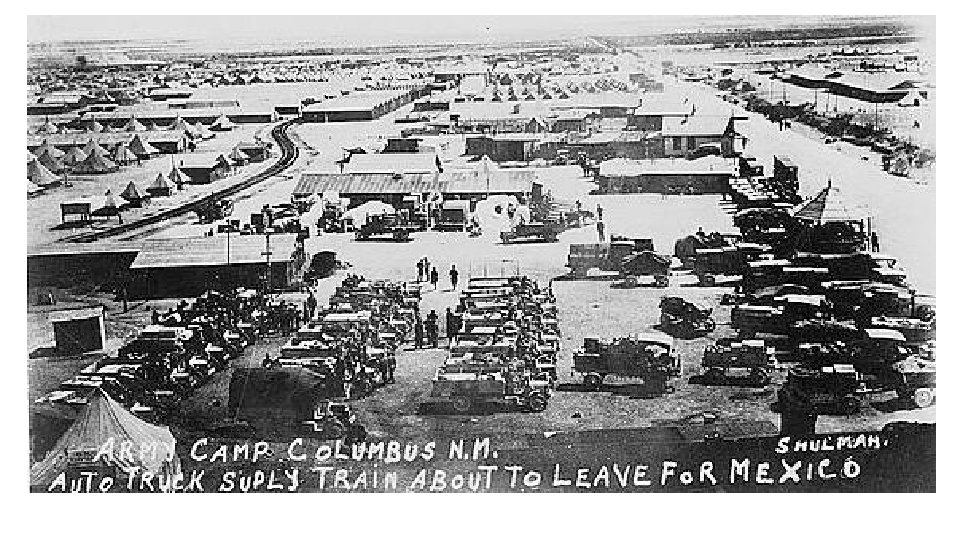
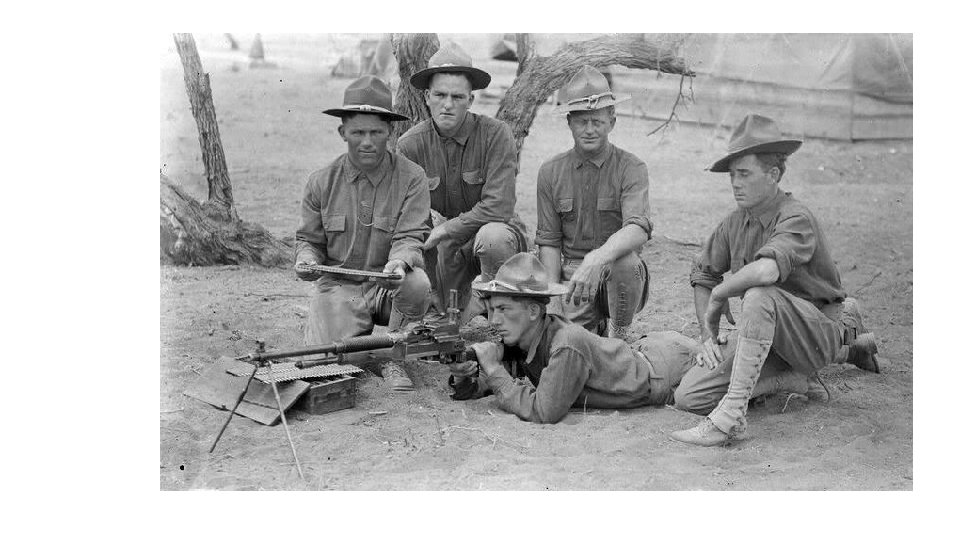
PUNITIVE EXPEDITION (19161917) March 1916 -Feb 1917 Objective: Capture Pancho Villa Wilson elects Gen. John “Black Jack” Pershing to capture Pancho Villa First use of motorized truck convoys to outfit soldiers Replacement of Gatling Gun with M 1909 Machine Gun
PUNITIVE EXPEDITION (19161917) Caranzza’s resistant to U. S. intervention Clashes with Caranzza’s federal troops occur in Chihuahua and Nogales Peasants take up arms against U. S. troops Battle of Carrizal with Caranzza’s forces lead to U. S. to peace negotiations
END OF U. S. OCCUPATION End of 1916 - Majority of Americans desired peaceful solution Wilson agrees to withdrawal troops early 1917 Tensions with Germany at all-time high Gave army practice in mobilization Defects in organization found early enough to apply before WWI
AFTERMATH OF EXPEDITION Pancho Villa failed to be caught Damage to army ended major border incidents Both Regular Army and Nat’l Guard saw intensive field experience and training Issues with mobilization realized and fixed before entrance into WWI
GUIDING QUESTIONS Was the U. S. justified in intervening in Mexican affairs in 1916? What were some of the unintended consequences for the U. S. army as a result of this expedition?