DIJ Forum Androids and Virtual Reality Simulations of











- Slides: 58
DIJ Forum Androids and Virtual Reality― Simulations of the Human in Japanese Theatre (Android section) Mari Boyd Sophia University
Karakuri Puppets 17c-18c • Zashiki Karakuri (collector’s items) • Festival Karakuri • Stage Karakuri Takeda Theatre (1622 -1768), f. Takeda Omi I
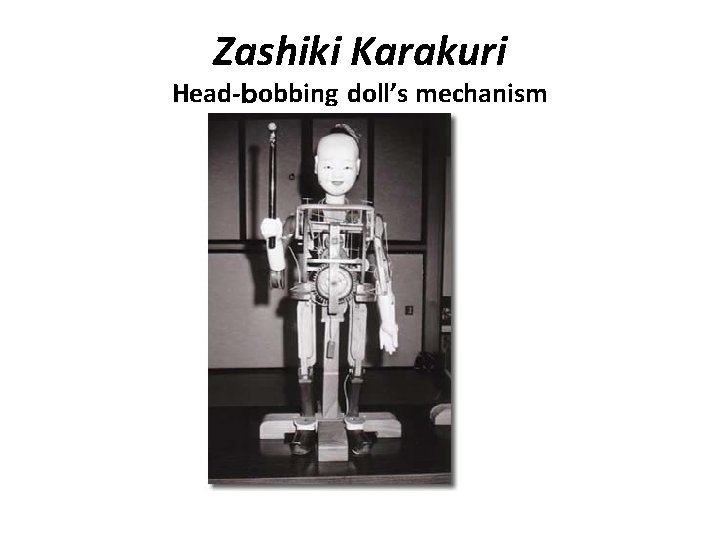
Zashiki Karakuri Head-bobbing doll’s mechanism
Festival Karakuri (1730 -)
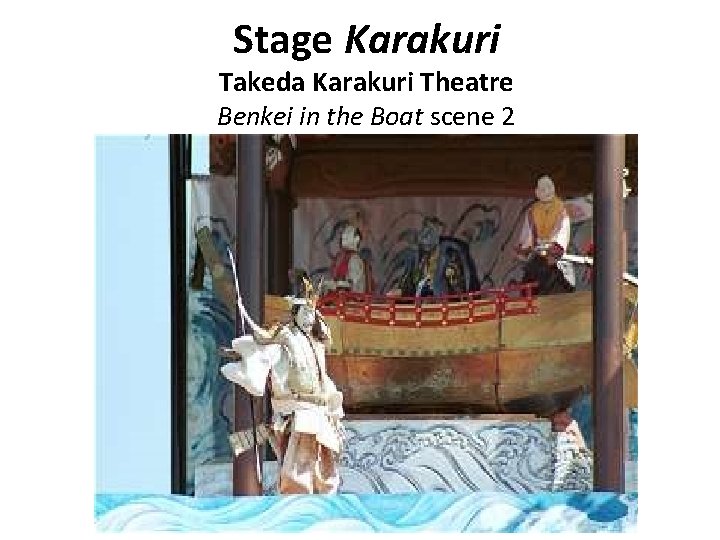
Stage Karakuri Takeda Karakuri Theatre Benkei in the Boat scene 2
Takeda Oumi Karakuri Staging
Rivalry & Connections • Joruri/bunraku theatre Three skills of chanted narration, shamisen accompaniment, puppet manipulation 1. Takemoto Theatre (1685 -1767)joruri f. Takemoto Gidayu; Chikamatsu Monzaemon 2. Toyotake Theatre (1703 -1765) joruri f. former Takemoto member (Toyotake Wakatayu)
How did Karakuri continue to contribute to theatre? 1. Development of small stick puppets to the present large 3 -man puppets from 1716 to 1765. From 1705, Takeda Omi I is TM manager. 1716 Takeda Izumo I (-1747) joined TM. By 1727, TM added eyes and mouth that opened/ closed and hands that moved. 1733 TM made articulated fingers. 1734 TM devised 3 -man puppet. 1736 Toyotake doubled 3 -man puppet’s height to 4 ft. 1765 Joruri reached its present form
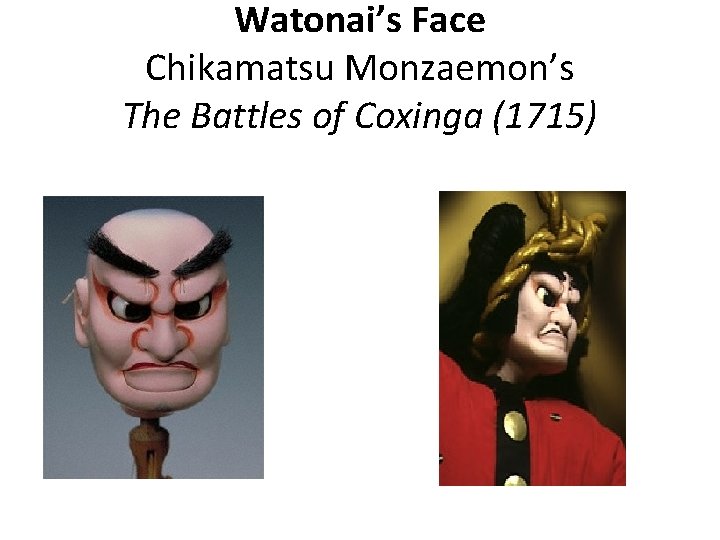
Watonai’s Face Chikamatsu Monzaemon’s The Battles of Coxinga (1715)
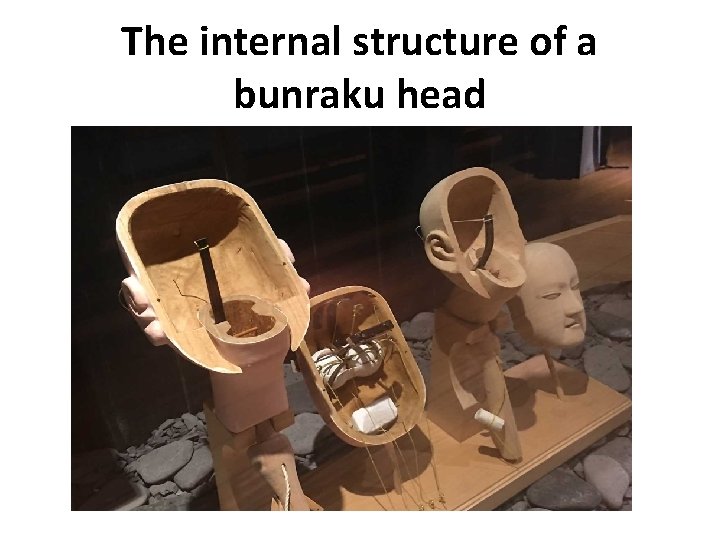
The internal structure of a bunraku head
Samurai and Demon Facial Expressions
Three-man Puppet Manipulation
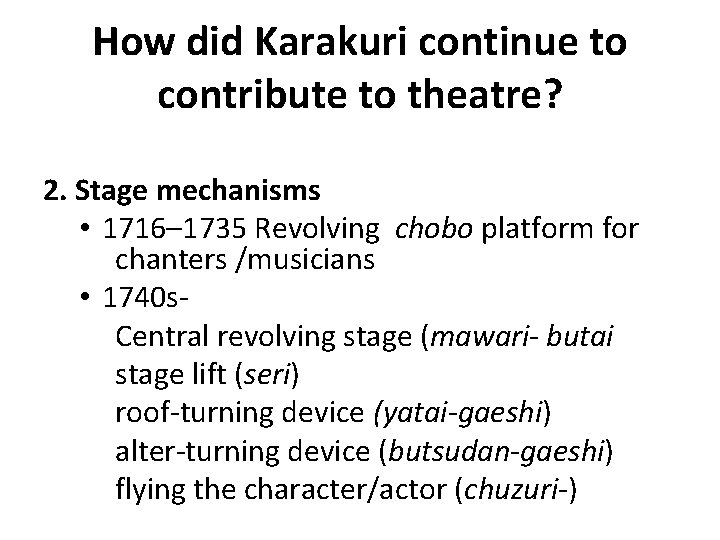
How did Karakuri continue to contribute to theatre? 2. Stage mechanisms • 1716– 1735 Revolving chobo platform for chanters /musicians • 1740 s- Central revolving stage (mawari- butai stage lift (seri) roof-turning device (yatai-gaeshi) alter-turning device (butsudan-gaeshi) flying the character/actor (chuzuri-)
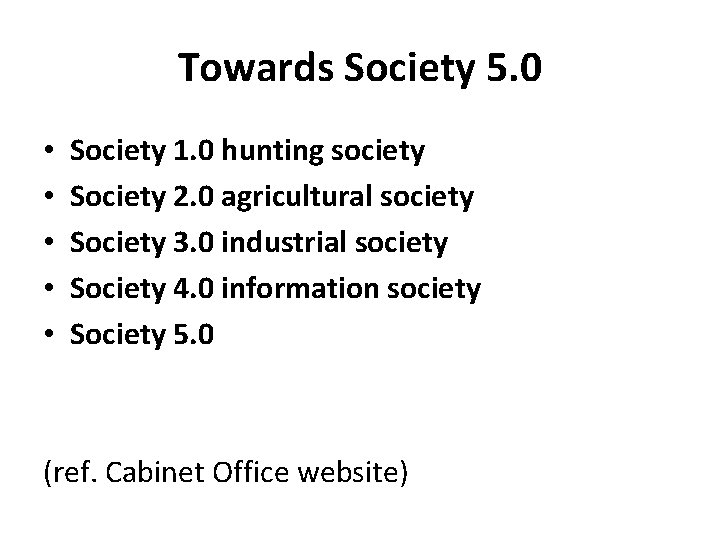
Towards Society 5. 0 • • • Society 1. 0 hunting society Society 2. 0 agricultural society Society 3. 0 industrial society Society 4. 0 information society Society 5. 0 (ref. Cabinet Office website)
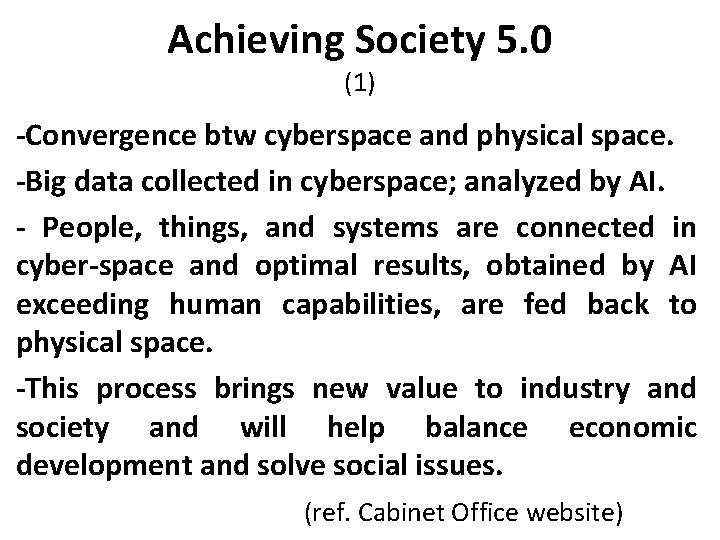
Achieving Society 5. 0 (1) -Convergence btw cyberspace and physical space. -Big data collected in cyberspace; analyzed by AI. - People, things, and systems are connected in cyber-space and optimal results, obtained by AI exceeding human capabilities, are fed back to physical space. -This process brings new value to industry and society and will help balance economic development and solve social issues. (ref. Cabinet Office website)
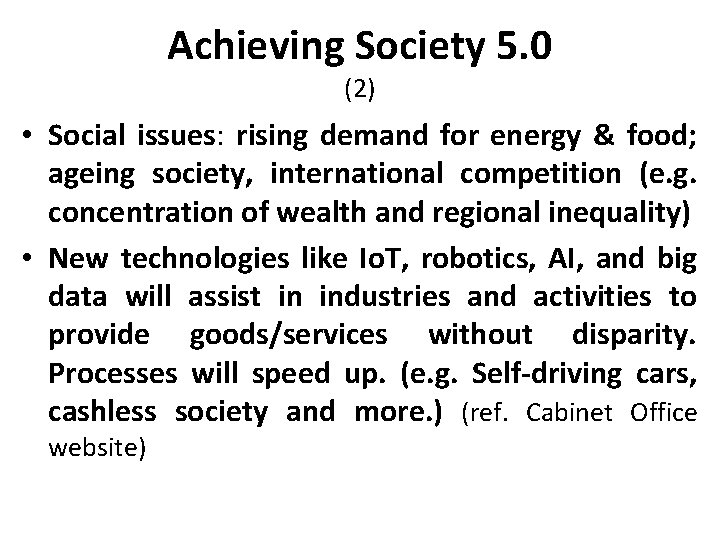
Achieving Society 5. 0 (2) • Social issues: rising demand for energy & food; ageing society, international competition (e. g. concentration of wealth and regional inequality) • New technologies like Io. T, robotics, AI, and big data will assist in industries and activities to provide goods/services without disparity. Processes will speed up. (e. g. Self-driving cars, cashless society and more. ) (ref. Cabinet Office website)
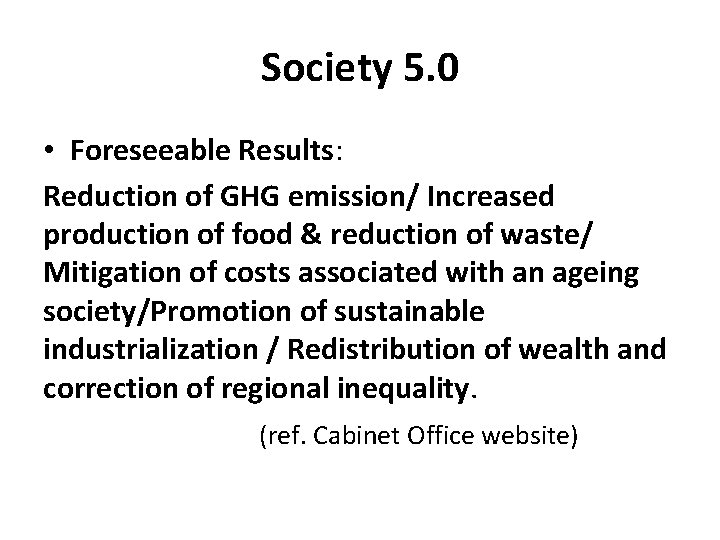
Society 5. 0 • Foreseeable Results: Reduction of GHG emission/ Increased production of food & reduction of waste/ Mitigation of costs associated with an ageing society/Promotion of sustainable industrialization / Redistribution of wealth and correction of regional inequality. (ref. Cabinet Office website)
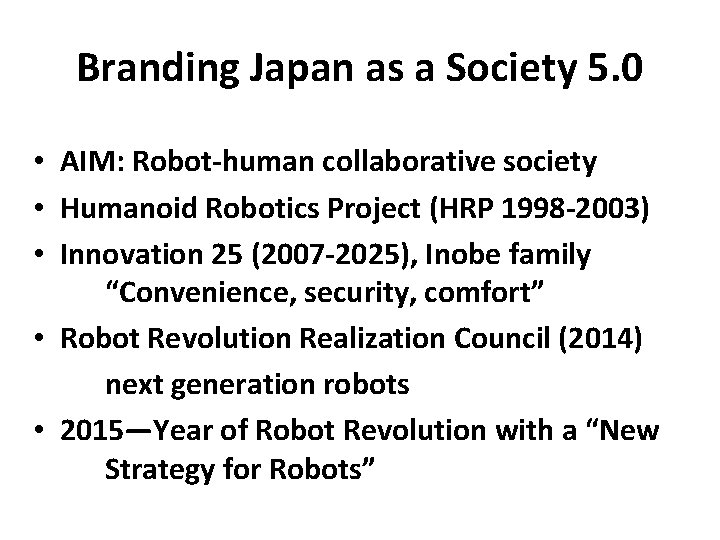
Branding Japan as a Society 5. 0 • AIM: Robot-human collaborative society • Humanoid Robotics Project (HRP 1998 -2003) • Innovation 25 (2007 -2025), Inobe family “Convenience, security, comfort” • Robot Revolution Realization Council (2014) next generation robots • 2015—Year of Robot Revolution with a “New Strategy for Robots”
HRP Robot Technologies • Motion capture • Real time Linux • Voice Recognition • • Degrees of freedom Bipedal movement Robot Simulator Human body dimensions database etc. • User Centered Robot Open Architecture • RT Middleware
Kawada HRP-2 & HRP-4 C
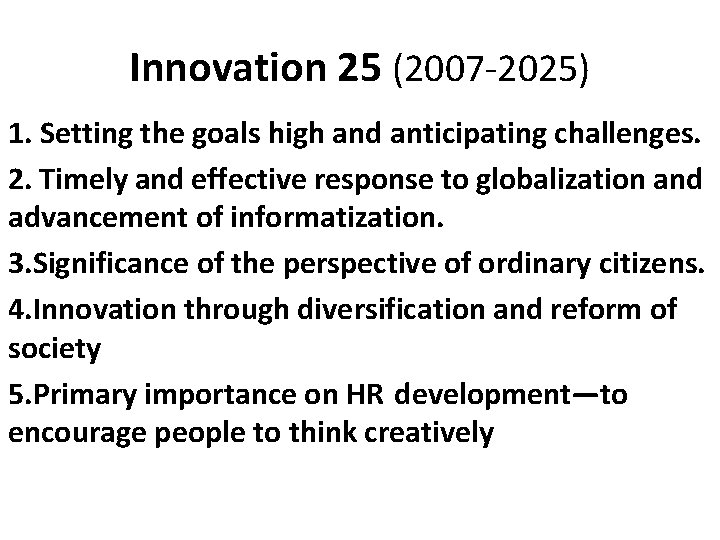
Innovation 25 (2007 -2025) 1. Setting the goals high and anticipating challenges. 2. Timely and effective response to globalization and advancement of informatization. 3. Significance of the perspective of ordinary citizens. 4. Innovation through diversification and reform of society 5. Primary importance on HR development—to encourage people to think creatively
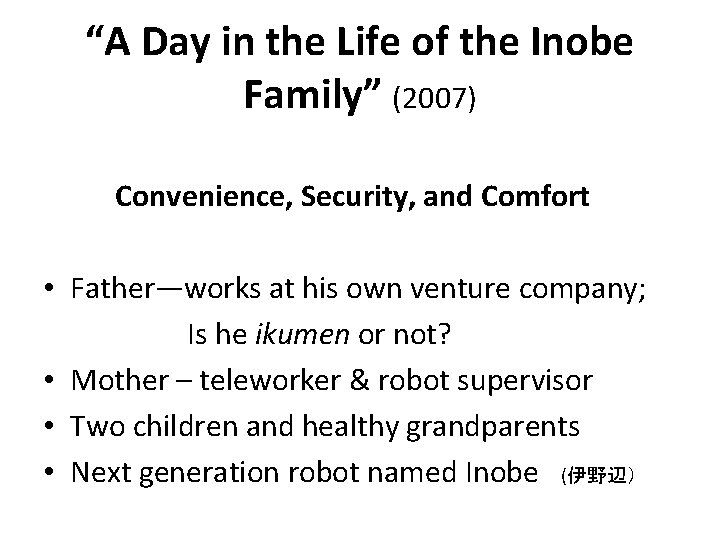
“A Day in the Life of the Inobe Family” (2007) Convenience, Security, and Comfort • Father—works at his own venture company; Is he ikumen or not? • Mother – teleworker & robot supervisor • Two children and healthy grandparents • Next generation robot named Inobe (伊野辺)
Retro-Tech • Anthropologist Jennifer Robertson in her Robo-Sapiens Japonicus (2018) says that Japan’s concept of a robot-human interactive society is a kind of RETRO-TECH or advanced technology in the service of traditionalism.
Seinendan (Youth Group) + Osaka University Robot Theatre Project • Playwright-director Hirata Oriza & Roboticist Ishiguro Hiroshi, both of Osaka University. • Their objective: to explore first “what it means to be human” and second “what human sociality is” by developing better communication between robots and humans through building androids with humanlike expressive abilities rather than highly developed mobility as in industrial robots.
Sayonara (2011) Owlspot Theatre Lobby
Android Theatre Sayonara
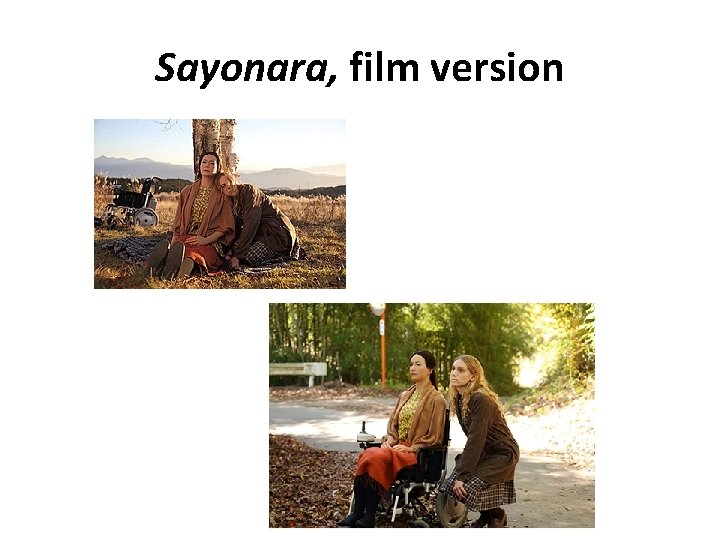
Sayonara, film version
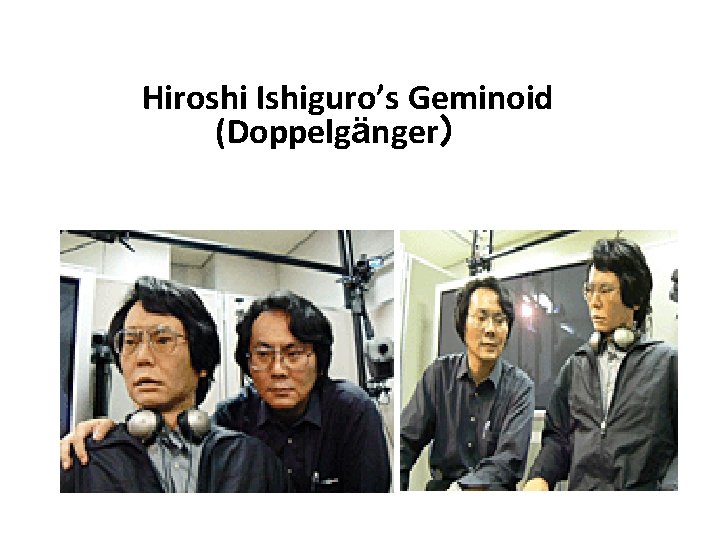
Hiroshi Ishiguro’s Geminoid (Doppelgänger)
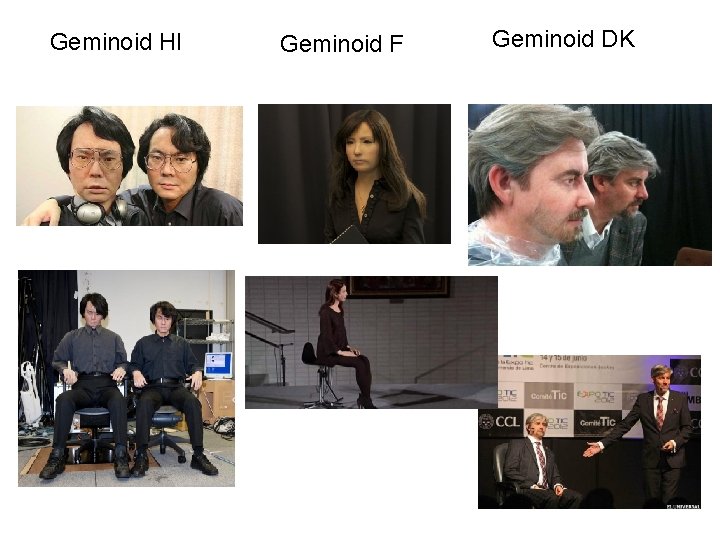
Geminoid HI Geminoid F Geminoid DK
Human Expressivity Engineering Three overlapping considerations can be identified in the application of new technology to human expressivity: 1. The illusion of living presence 2. The cultural construction of kokoro 3. Design methodology
Living presence The most important factor in creating the illusion of living presence is: • TELEOPERATING: We can autonomously control androids by transferring an operator’s movement measured by a motion-capturing system. (Ishiguro) • Timing • Movement • Looks/voice • Lighting
Construction of kokoro 1. Definitions of kokoro Kokoro no longer means heart or soul, but action, consciousness, unconscious, etc. The most prevalent understanding of kokoro today is “as action. ” 2. Identification with androids (tpo)
Identification with Androids
Design Methodology (0) Three Purposes of Design Methodology 1. To enhance expression of positive humanlike qualities in robots 2. To evoke expression of positive humanlike qualities in the interaction between robots and humans. 3. To preempt the uncanny valley effect
Design Methodology 1 • To enhance expression of positive humanlike qualities in robots • Face-tracking for smooth shifts in facial expression • Skin quality―smooth, silky silicone • “Idling” ―yuragi/microslips, ideomotor action (involuntary movement) • The gaze—
Design Methodology 2 2. To evoke expression of positive humanlike qualities in the interaction between robots and humans. ·Kokoro construction: what humans learn through “socialization” can be programmed.
Design Methodology 3 3. To preempt the Uncanny Valley effect What is the Uncanny Valley? What is the uncanny?
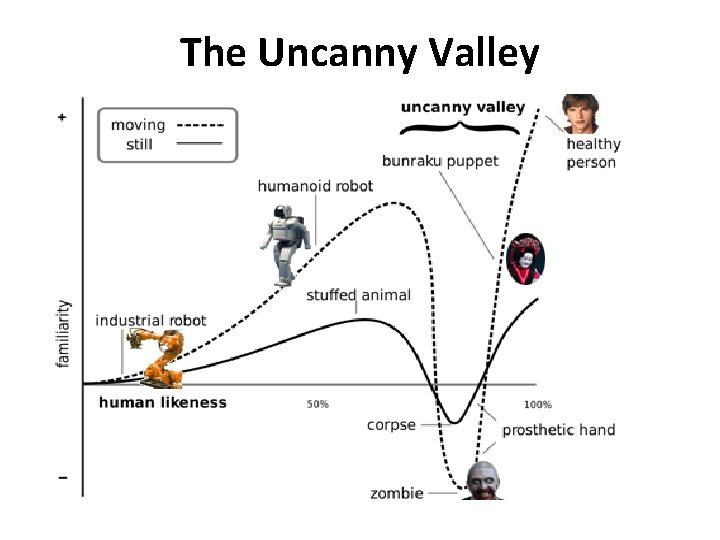
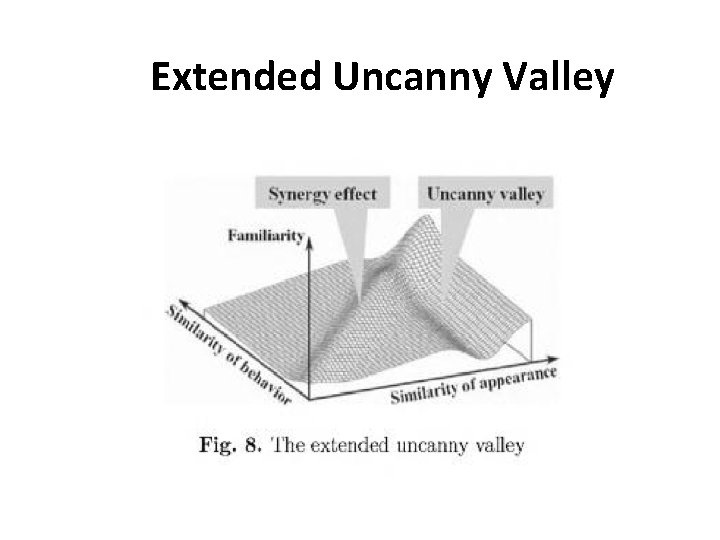
The Uncanny Valley The bukimi no tani derives from Mori Masahiro’s yet-to-be-proven 1970’s hypothesis on how “excessively realistic simulations of living creatures elicit an instinctive revulsion. ”
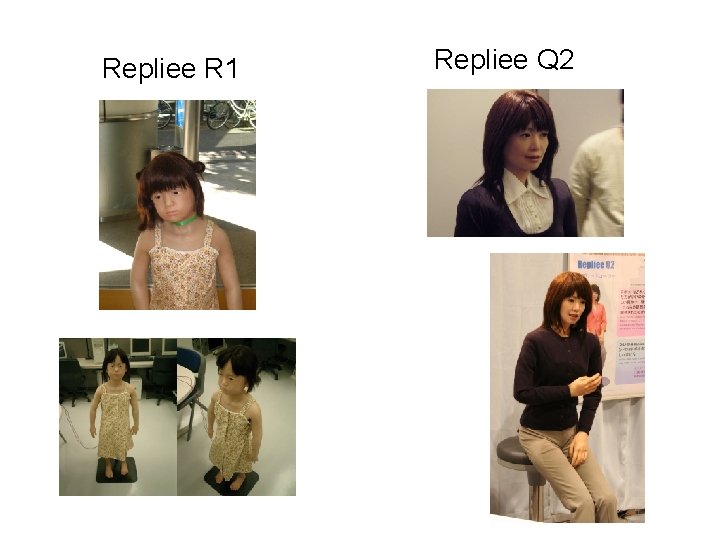
Repliee R 1 Repliee Q 2
The Uncanny Valley
Design Methodology How to preempt the uncanny valley effect • Match movement/voice and appearance. • Provide continual low oscillation (breath, blinking, rocking) that replicates autonomous nervous system (ANS)-centered vibration.
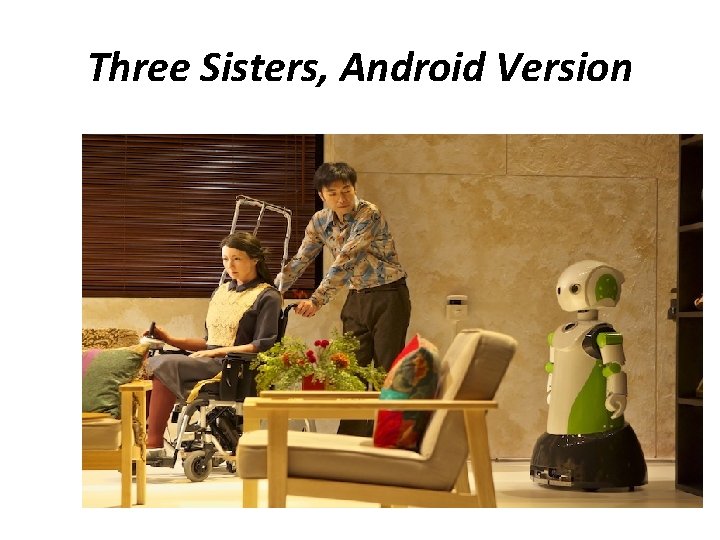
Three Sisters, Android Version
Three Sisters, Android Version Synopsis: The Fukazawa family resides in a declining provincial town with a dwindling robotics industry. Like the Prozorovs of Chekhov’s play, the father is deceased; but he still seems to control his family through his morbid will. When Ikumi became a shut-in, her roboticist father built her a Geminoid F, as a companion, but also mislead the world to believe that she had died. The play begins on the day of a modest farewell party for a young scientist, who is moving to Singapore.
Three Sisters
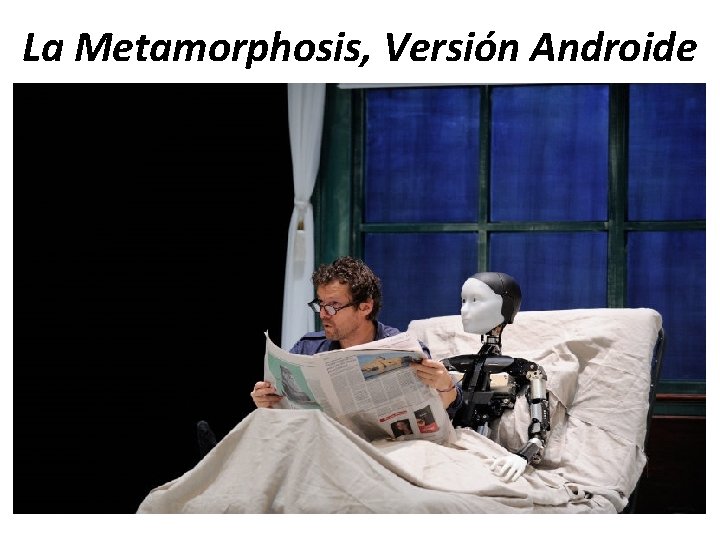
La Metamorphosis, Versión Androide
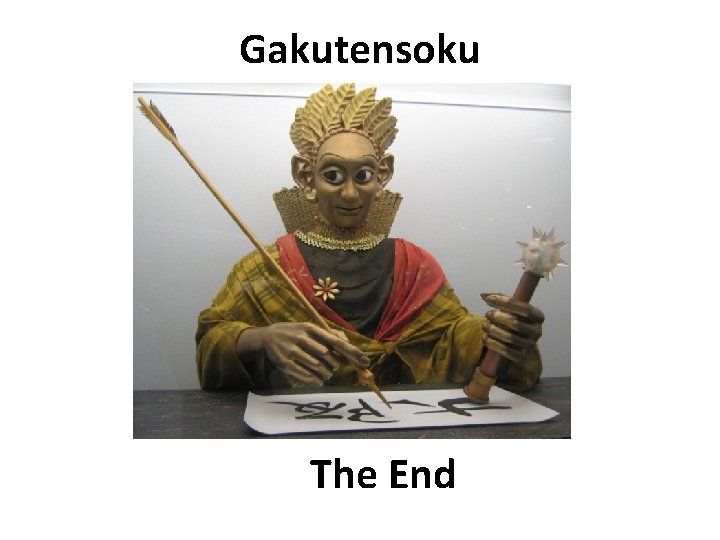
Gakutensoku The End
Hirata’s Contemporary Colloquial Theatre • Characteristics – Discourse of the said, unsayable – Alterity within intimacy – Focus on the quotidian over the sensational – Insider, outsider, intermediary functions – Semi-public setting
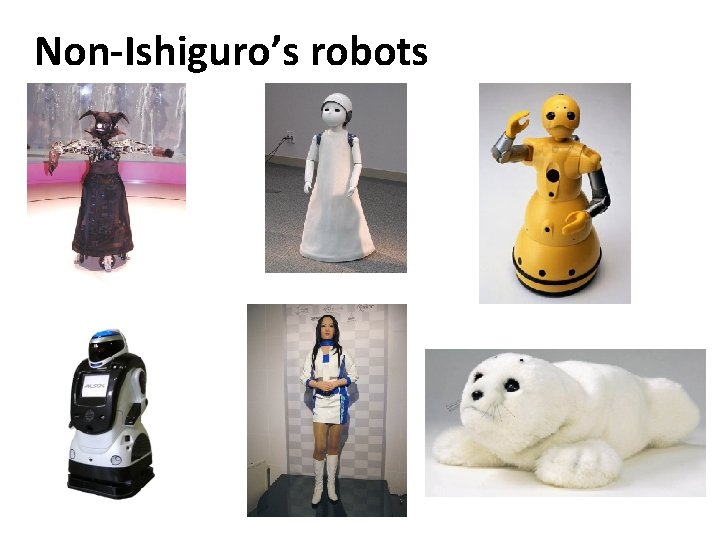
Non-Ishiguro’s robots
Extended Uncanny Valley
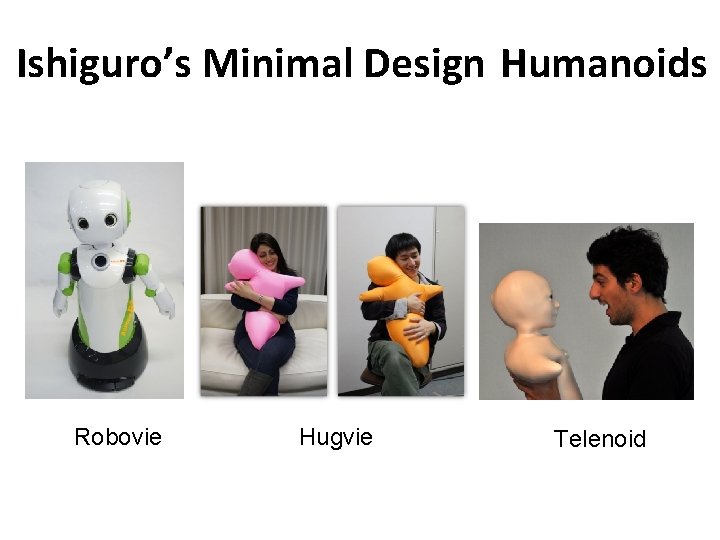
Ishiguro’s Minimal Design Humanoids Robovie Hugvie Telenoid
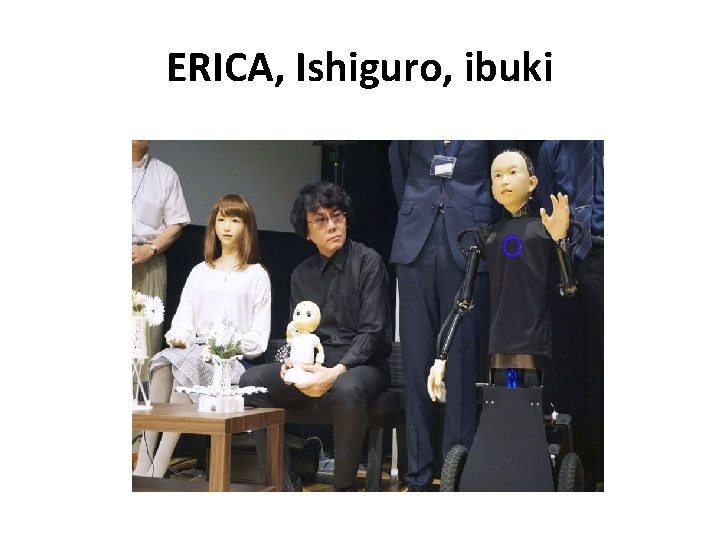
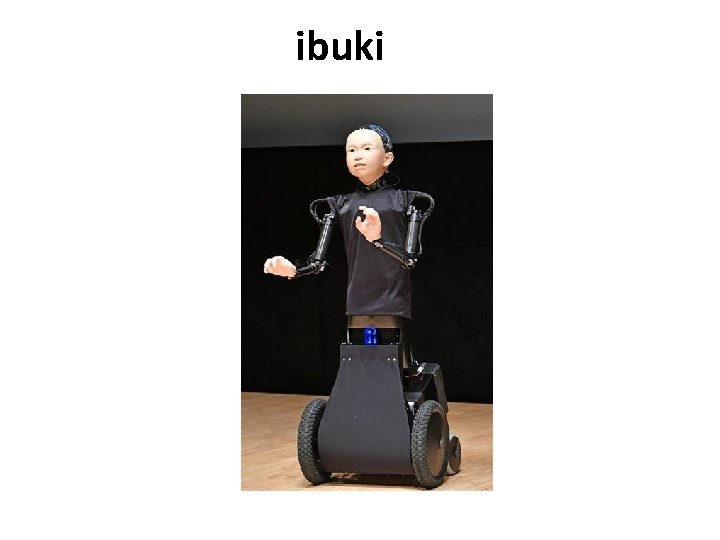
ERICA, Ishiguro, ibuki
Emotional Expression in Conversation
Gakutensoku (1929/ 2008)
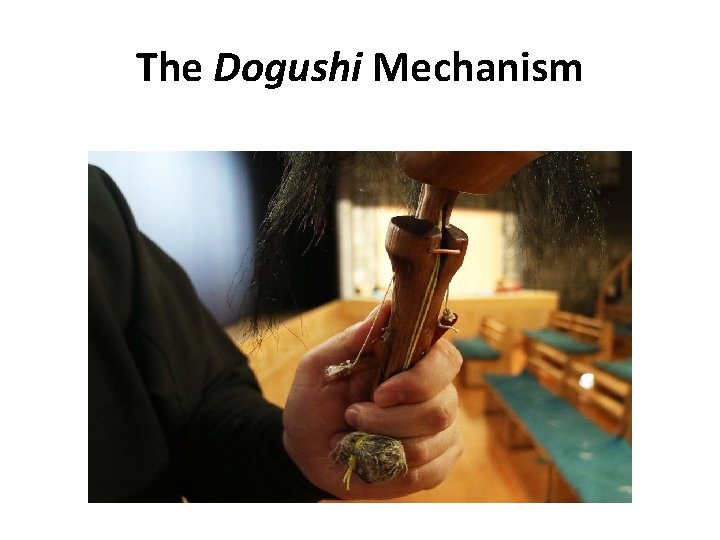
The Dogushi Mechanism
Robot Revolution Realization Council (RRRC, 2014) • “New Strategy for Robots” • to make Japan the world’s most advanced robot showcase and achieve a society in which robots are utilized more than anywhere else in the world, from nursing care and agriculture to small- and medium-sized enterprises. To that end, we are engaged in achieving a ‘robot barrier free’ society through regulatory reform and establishing the highest level of artificial intelligence technologies in the world.