Data and Safety Monitoring in Clinical Trials Harvey



- Slides: 39
Data and Safety Monitoring in Clinical Trials Harvey Murff, M. D. , M. P. H. GCRC, Vanderbilt University Medical Center
Today’s Topics History of DSMP/Bs Who requires what Current requirements I. III. • • Data and Safety Monitoring Plans Data and Safety Monitoring Boards
Today’s Topics History of DSMP/Bs Who requires what Current requirements I. III. • • Data and Safety Monitoring Plans Data and Safety Monitoring Boards
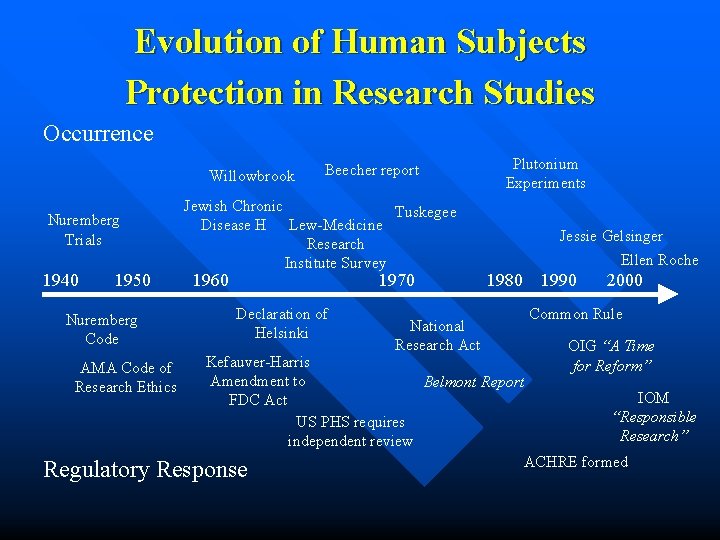
Evolution of Human Subjects Protection in Research Studies Occurrence Willowbrook Nuremberg Trials 1940 1950 Nuremberg Code AMA Code of Research Ethics Beecher report Jewish Chronic Tuskegee Disease H Lew-Medicine Research Institute Survey 1960 1970 Declaration of Helsinki National Research Act Plutonium Experiments Jessie Gelsinger Ellen Roche 1980 1990 2000 Common Rule OIG “A Time for Reform” Kefauver-Harris Amendment to Belmont Report IOM FDC Act “Responsible US PHS requires Research” independent review ACHRE formed Regulatory Response
“What experience and history teach is this -- that people and governments never have learned anything from history” Georg W. F. Hegel (1770 -1831)
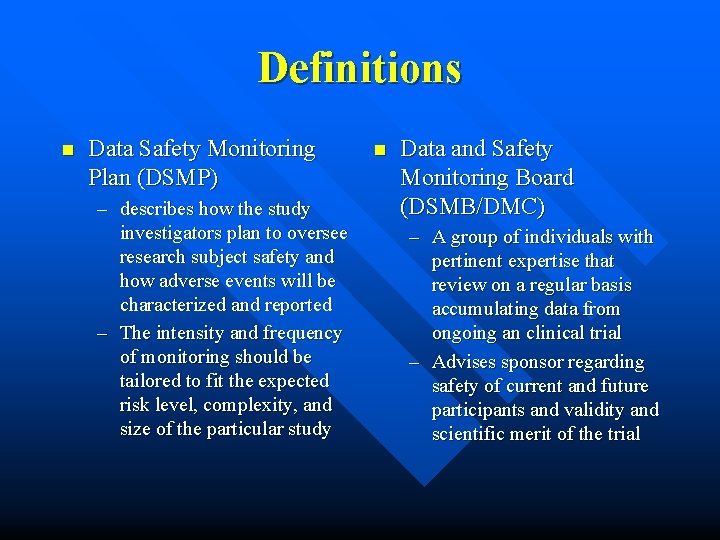
Definitions n Data Safety Monitoring Plan (DSMP) – describes how the study investigators plan to oversee research subject safety and how adverse events will be characterized and reported – The intensity and frequency of monitoring should be tailored to fit the expected risk level, complexity, and size of the particular study n Data and Safety Monitoring Board (DSMB/DMC) – A group of individuals with pertinent expertise that review on a regular basis accumulating data from ongoing an clinical trial – Advises sponsor regarding safety of current and future participants and validity and scientific merit of the trial
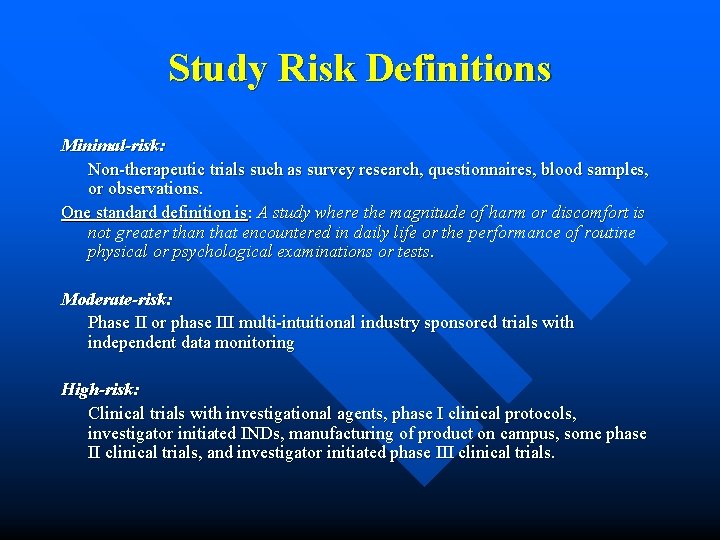
Study Risk Definitions Minimal-risk: Non-therapeutic trials such as survey research, questionnaires, blood samples, or observations. One standard definition is: A study where the magnitude of harm or discomfort is not greater than that encountered in daily life or the performance of routine physical or psychological examinations or tests. Moderate-risk: Phase II or phase III multi-intuitional industry sponsored trials with independent data monitoring High-risk: Clinical trials with investigational agents, phase I clinical protocols, investigator initiated INDs, manufacturing of product on campus, some phase II clinical trials, and investigator initiated phase III clinical trials.
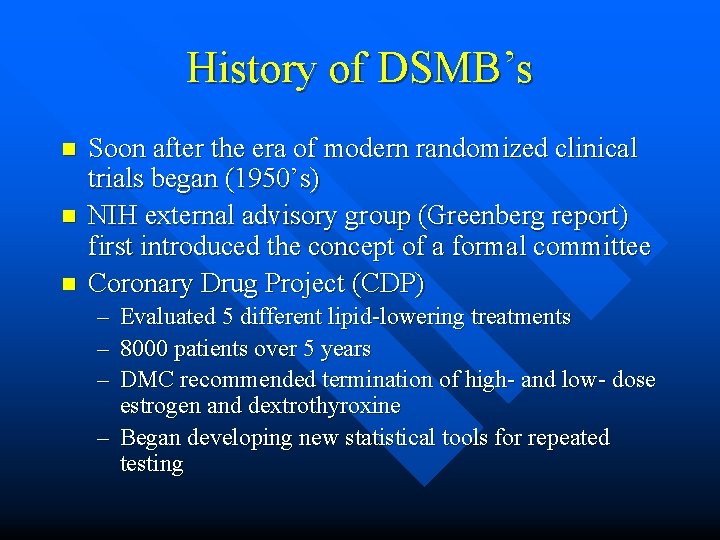
History of DSMB’s n n n Soon after the era of modern randomized clinical trials began (1950’s) NIH external advisory group (Greenberg report) first introduced the concept of a formal committee Coronary Drug Project (CDP) – – – Evaluated 5 different lipid-lowering treatments 8000 patients over 5 years DMC recommended termination of high- and low- dose estrogen and dextrothyroxine – Began developing new statistical tools for repeated testing
History of DSMB’s n n n After the CDP, DSMB became a more frequent component to large, multi-center trials sponsored by NIH VA began to include the use of DMC’s with formal guidelines developed in mid-70’s NCI began adopting DMC’s in early 1980’s – Still considered valuable despite being completely independent and using open therapies n Adopted more frequently by industry in early 1990’s
How Independent DSMB might favor Industry-sponsored trials n Amyotrophic lateral sclerosis trial – Ciliary neurotrophic factor (CNTF) – ALS CNTF Treatment Study (ACTS) » Utilized complete independent DSMB » DMC terminated trial due to adverse effects » Shareholders sued company stating they had been mislead » Sponsors successful defense rested in being blinded to these results
Why the increasing use of DMC’s n n n Growing number of industry-sponsored trials with mortality and major morbidity endpoints Increasing collaboration between industry and government in sponsoring major clinical trials Heightened awareness within scientific community of problems in clinical trial conduct
Today’s Topics History of DSMP/Bs Who requires what Current requirements I. III. • • Data and Safety Monitoring Plans Data and Safety Monitoring Boards
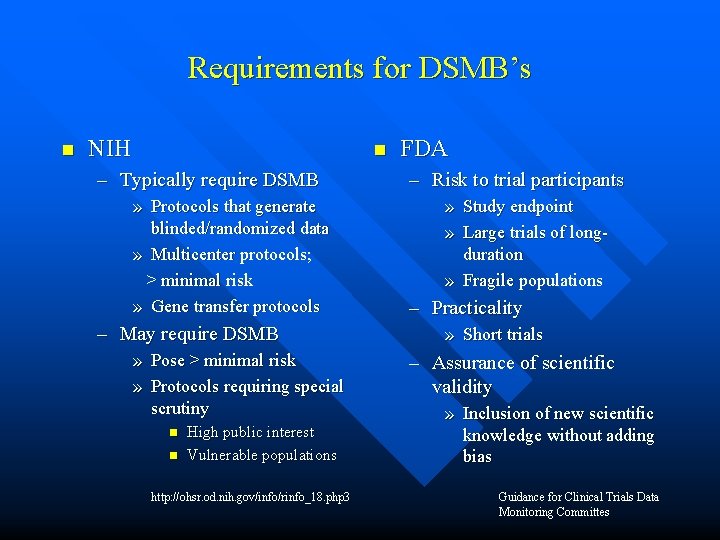
Requirements for DSMB’s n NIH n – Typically require DSMB » Protocols that generate blinded/randomized data » Multicenter protocols; > minimal risk » Gene transfer protocols – May require DSMB » Pose > minimal risk » Protocols requiring special scrutiny n n High public interest Vulnerable populations http: //ohsr. od. nih. gov/info/rinfo_18. php 3 FDA – Risk to trial participants » Study endpoint » Large trials of longduration » Fragile populations – Practicality » Short trials – Assurance of scientific validity » Inclusion of new scientific knowledge without adding bias Guidance for Clinical Trials Data Monitoring Committes
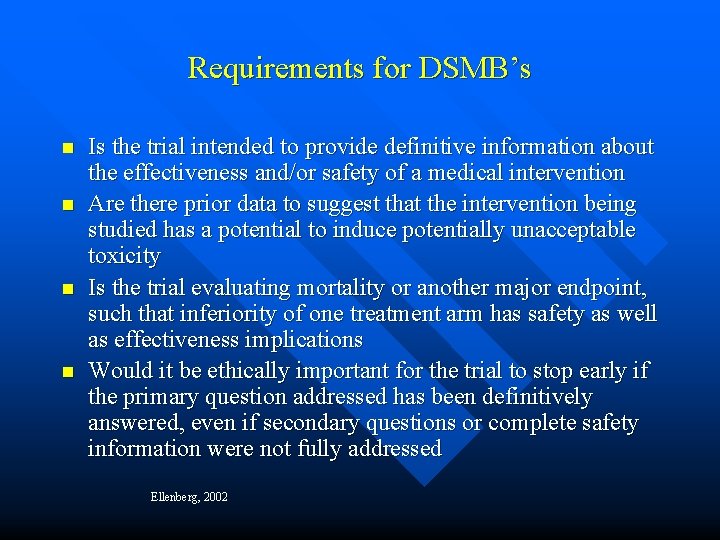
Requirements for DSMB’s n n Is the trial intended to provide definitive information about the effectiveness and/or safety of a medical intervention Are there prior data to suggest that the intervention being studied has a potential to induce potentially unacceptable toxicity Is the trial evaluating mortality or another major endpoint, such that inferiority of one treatment arm has safety as well as effectiveness implications Would it be ethically important for the trial to stop early if the primary question addressed has been definitively answered, even if secondary questions or complete safety information were not fully addressed Ellenberg, 2002
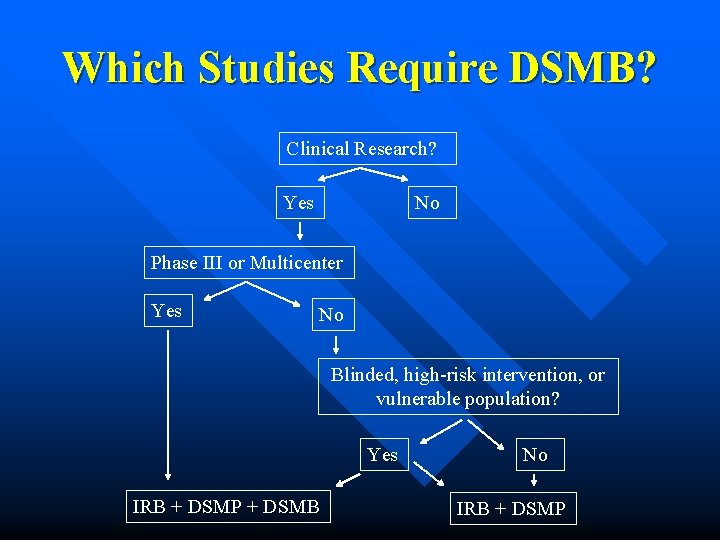
Which Studies Require DSMB? Clinical Research? Yes No Phase III or Multicenter Yes No Blinded, high-risk intervention, or vulnerable population? Yes IRB + DSMP + DSMB No IRB + DSMP
Today’s Topics History of DSMP/Bs Who requires what Current requirements I. III. • • Data and Safety Monitoring Plans Data and Safety Monitoring Boards
What is the best way to monitor your trial?
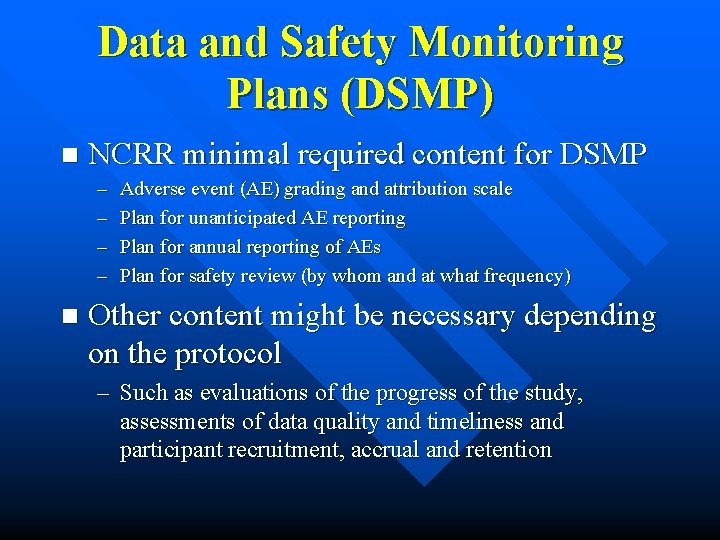
Data and Safety Monitoring Plans (DSMP) n NCRR minimal required content for DSMP – – n Adverse event (AE) grading and attribution scale Plan for unanticipated AE reporting Plan for annual reporting of AEs Plan for safety review (by whom and at what frequency) Other content might be necessary depending on the protocol – Such as evaluations of the progress of the study, assessments of data quality and timeliness and participant recruitment, accrual and retention
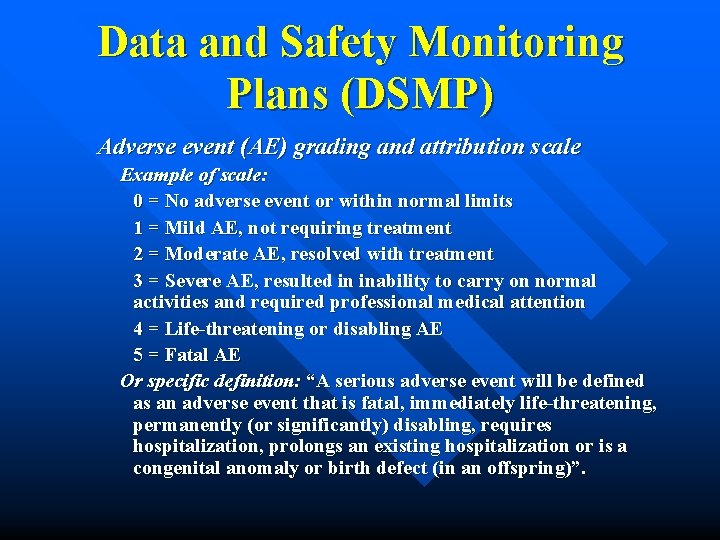
Data and Safety Monitoring Plans (DSMP) Adverse event (AE) grading and attribution scale Example of scale: 0 = No adverse event or within normal limits 1 = Mild AE, not requiring treatment 2 = Moderate AE, resolved with treatment 3 = Severe AE, resulted in inability to carry on normal activities and required professional medical attention 4 = Life-threatening or disabling AE 5 = Fatal AE Or specific definition: “A serious adverse event will be defined as an adverse event that is fatal, immediately life-threatening, permanently (or significantly) disabling, requires hospitalization, prolongs an existing hospitalization or is a congenital anomaly or birth defect (in an offspring)”.
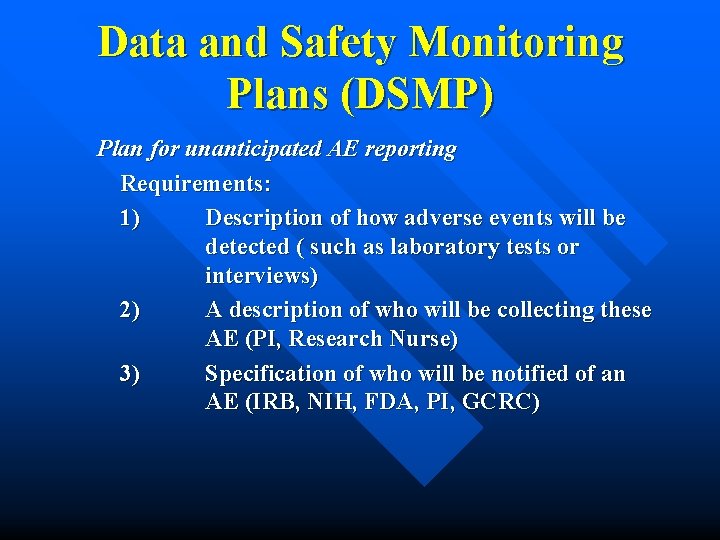
Data and Safety Monitoring Plans (DSMP) Plan for unanticipated AE reporting Requirements: 1) Description of how adverse events will be detected ( such as laboratory tests or interviews) 2) A description of who will be collecting these AE (PI, Research Nurse) 3) Specification of who will be notified of an AE (IRB, NIH, FDA, PI, GCRC)
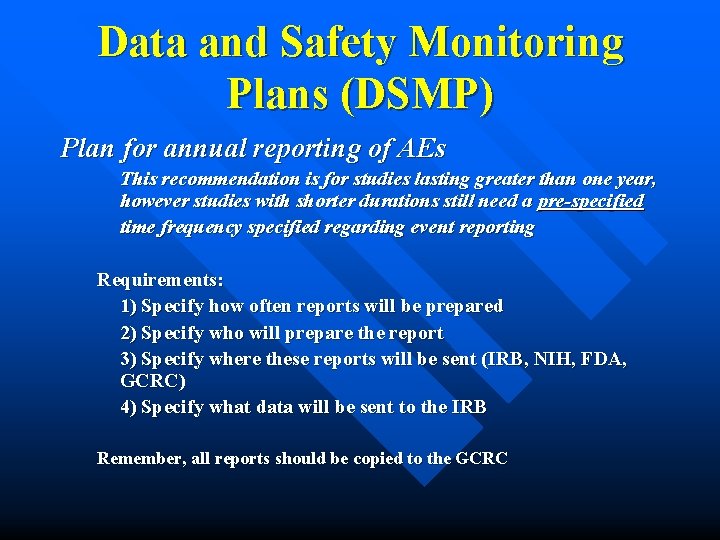
Data and Safety Monitoring Plans (DSMP) Plan for annual reporting of AEs This recommendation is for studies lasting greater than one year, however studies with shorter durations still need a pre-specified time frequency specified regarding event reporting Requirements: 1) Specify how often reports will be prepared 2) Specify who will prepare the report 3) Specify where these reports will be sent (IRB, NIH, FDA, GCRC) 4) Specify what data will be sent to the IRB Remember, all reports should be copied to the GCRC
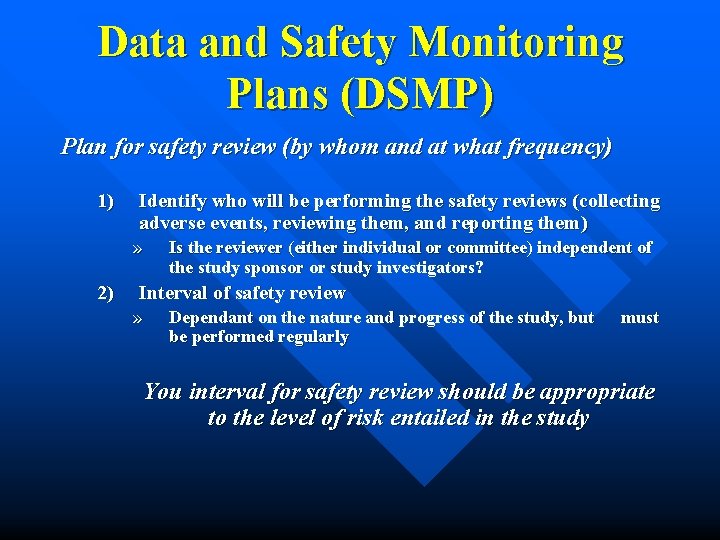
Data and Safety Monitoring Plans (DSMP) Plan for safety review (by whom and at what frequency) 1) Identify who will be performing the safety reviews (collecting adverse events, reviewing them, and reporting them) » 2) Is the reviewer (either individual or committee) independent of the study sponsor or study investigators? Interval of safety review » Dependant on the nature and progress of the study, but must be performed regularly You interval for safety review should be appropriate to the level of risk entailed in the study
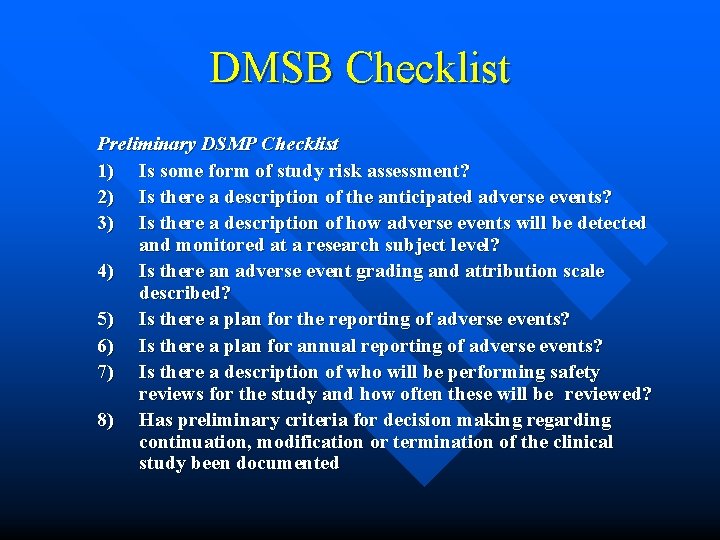
DMSB Checklist Preliminary DSMP Checklist 1) Is some form of study risk assessment? 2) Is there a description of the anticipated adverse events? 3) Is there a description of how adverse events will be detected and monitored at a research subject level? 4) Is there an adverse event grading and attribution scale described? 5) Is there a plan for the reporting of adverse events? 6) Is there a plan for annual reporting of adverse events? 7) Is there a description of who will be performing safety reviews for the study and how often these will be reviewed? 8) Has preliminary criteria for decision making regarding continuation, modification or termination of the clinical study been documented
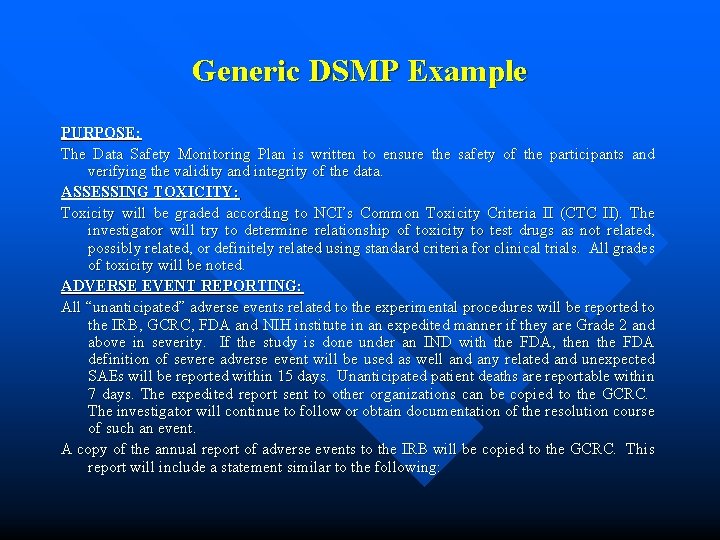
Generic DSMP Example PURPOSE: The Data Safety Monitoring Plan is written to ensure the safety of the participants and verifying the validity and integrity of the data. ASSESSING TOXICITY: Toxicity will be graded according to NCI’s Common Toxicity Criteria II (CTC II). The investigator will try to determine relationship of toxicity to test drugs as not related, possibly related, or definitely related using standard criteria for clinical trials. All grades of toxicity will be noted. ADVERSE EVENT REPORTING: All “unanticipated” adverse events related to the experimental procedures will be reported to the IRB, GCRC, FDA and NIH institute in an expedited manner if they are Grade 2 and above in severity. If the study is done under an IND with the FDA, then the FDA definition of severe adverse event will be used as well and any related and unexpected SAEs will be reported within 15 days. Unanticipated patient deaths are reportable within 7 days. The expedited report sent to other organizations can be copied to the GCRC. The investigator will continue to follow or obtain documentation of the resolution course of such an event. A copy of the annual report of adverse events to the IRB will be copied to the GCRC. This report will include a statement similar to the following:
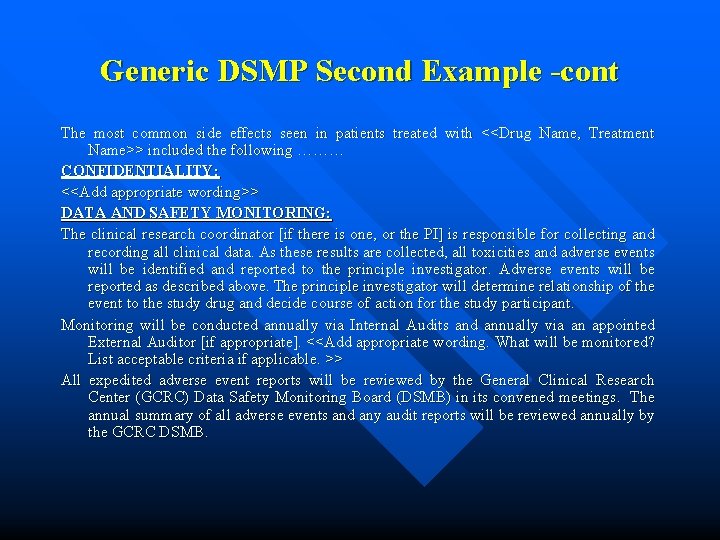
Generic DSMP Second Example -cont The most common side effects seen in patients treated with <<Drug Name, Treatment Name>> included the following ……… CONFIDENTIALITY: <<Add appropriate wording>> DATA AND SAFETY MONITORING: The clinical research coordinator [if there is one, or the PI] is responsible for collecting and recording all clinical data. As these results are collected, all toxicities and adverse events will be identified and reported to the principle investigator. Adverse events will be reported as described above. The principle investigator will determine relationship of the event to the study drug and decide course of action for the study participant. Monitoring will be conducted annually via Internal Audits and annually via an appointed External Auditor [if appropriate]. <<Add appropriate wording. What will be monitored? List acceptable criteria if applicable. >> All expedited adverse event reports will be reviewed by the General Clinical Research Center (GCRC) Data Safety Monitoring Board (DSMB) in its convened meetings. The annual summary of all adverse events and any audit reports will be reviewed annually by the GCRC DSMB.
Data and Safety Monitoring Boards What are they and when are they necessary?
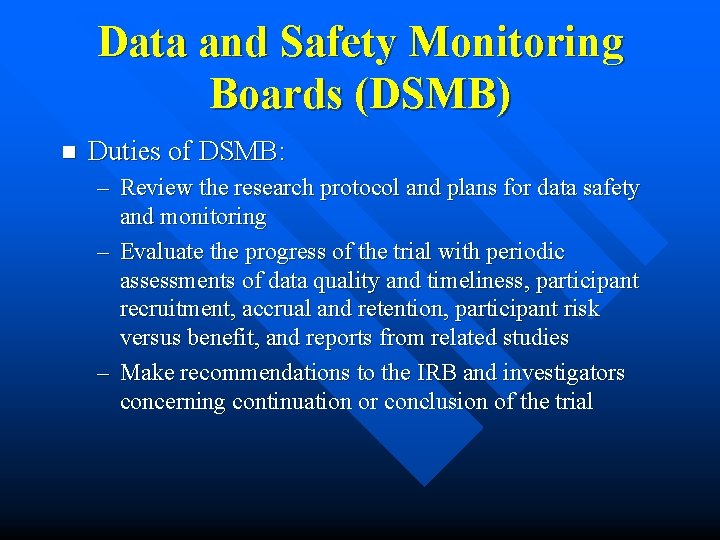
Data and Safety Monitoring Boards (DSMB) n Duties of DSMB: – Review the research protocol and plans for data safety and monitoring – Evaluate the progress of the trial with periodic assessments of data quality and timeliness, participant recruitment, accrual and retention, participant risk versus benefit, and reports from related studies – Make recommendations to the IRB and investigators concerning continuation or conclusion of the trial
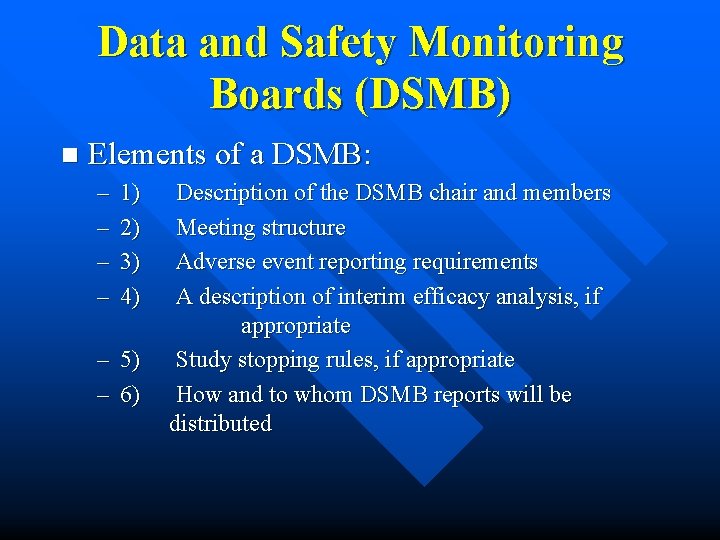
Data and Safety Monitoring Boards (DSMB) n Elements of a DSMB: – – 1) Description of the DSMB chair and members 2) Meeting structure 3) Adverse event reporting requirements 4) A description of interim efficacy analysis, if appropriate – 5) Study stopping rules, if appropriate – 6) How and to whom DSMB reports will be distributed
Data and Safety Monitoring Boards (DSMB) Description of the DSMB chair and members Board membership: • Varying recommendations as to the appropriate number but a minimal number is 3 • For studies with large numbers of patients the DSMB should include a statistician • Should include qualified people knowledgeable about the studies content but not directly involved in the study
Data and Safety Monitoring Boards (DSMB) Describe meeting structure • • • frequency (based on risk and subject accrual rate) character (open, closed, private, public) the PI may participate in open sessions but cannot be present for closed sessions specify that minutes will be recorded and kept confidential method for disseminating DSMB reports and recommendations
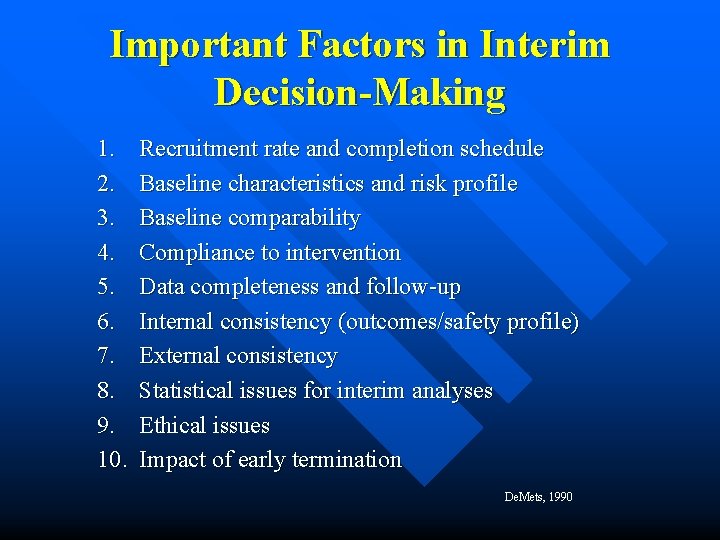
Important Factors in Interim Decision-Making 1. 2. 3. 4. 5. 6. 7. 8. 9. 10. Recruitment rate and completion schedule Baseline characteristics and risk profile Baseline comparability Compliance to intervention Data completeness and follow-up Internal consistency (outcomes/safety profile) External consistency Statistical issues for interim analyses Ethical issues Impact of early termination De. Mets, 1990
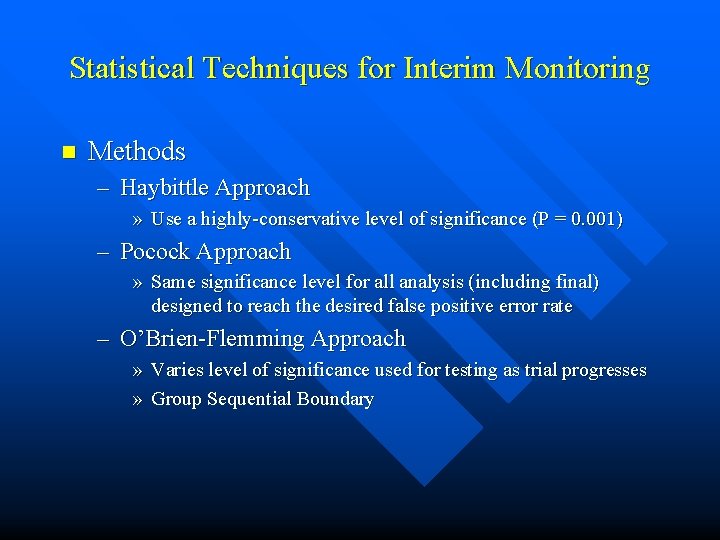
Statistical Techniques for Interim Monitoring n Problem – For one-sided superiority on non-inferiority trial, upper bound on the false positive error rate is 2. 5% – Multiple tests will lead to a false-positive rate substantially higher than this – Interim testing must be performed at a more conservative level
Statistical Techniques for Interim Monitoring n Methods – Haybittle Approach » Use a highly-conservative level of significance (P = 0. 001) – Pocock Approach » Same significance level for all analysis (including final) designed to reach the desired false positive error rate – O’Brien-Flemming Approach » Varies level of significance used for testing as trial progresses » Group Sequential Boundary
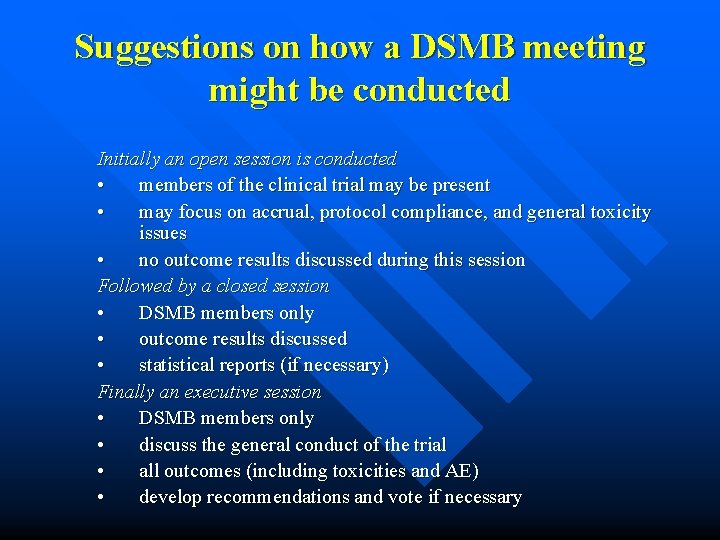
Suggestions on how a DSMB meeting might be conducted Initially an open session is conducted • members of the clinical trial may be present • may focus on accrual, protocol compliance, and general toxicity issues • no outcome results discussed during this session Followed by a closed session • DSMB members only • outcome results discussed • statistical reports (if necessary) Finally an executive session • DSMB members only • discuss the general conduct of the trial • all outcomes (including toxicities and AE) • develop recommendations and vote if necessary
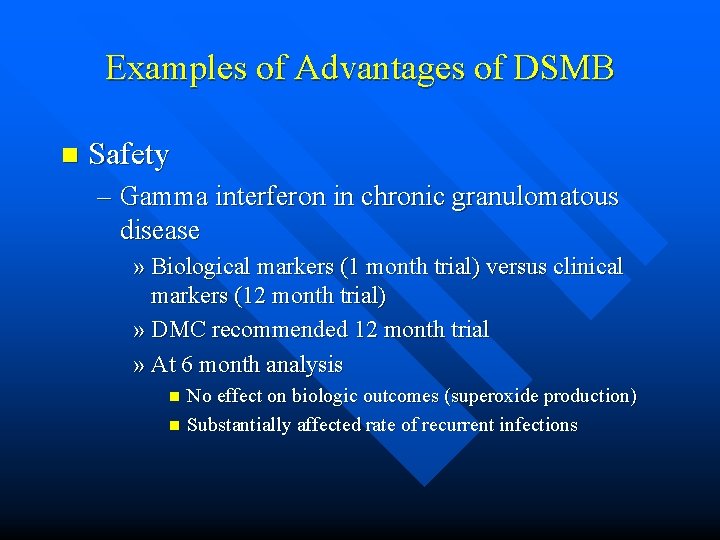
Examples of Advantages of DSMB n Safety – Gamma interferon in chronic granulomatous disease » Biological markers (1 month trial) versus clinical markers (12 month trial) » DMC recommended 12 month trial » At 6 month analysis No effect on biologic outcomes (superoxide production) n Substantially affected rate of recurrent infections n
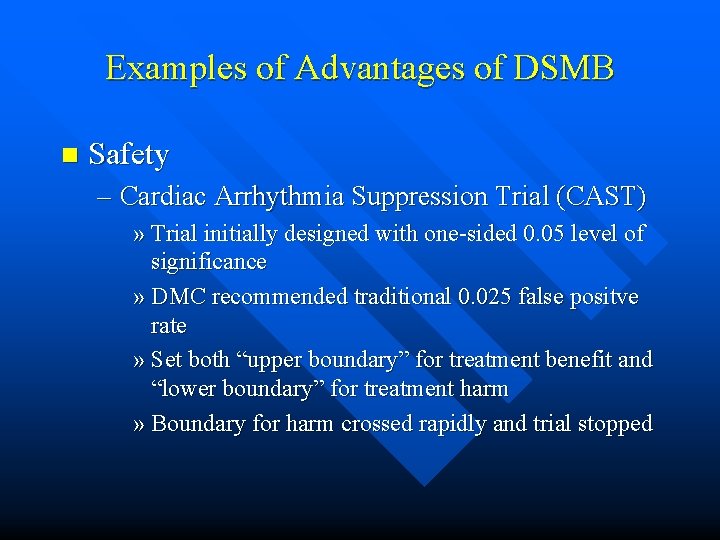
Examples of Advantages of DSMB n Safety – Cardiac Arrhythmia Suppression Trial (CAST) » Trial initially designed with one-sided 0. 05 level of significance » DMC recommended traditional 0. 025 false positve rate » Set both “upper boundary” for treatment benefit and “lower boundary” for treatment harm » Boundary for harm crossed rapidly and trial stopped
Examples of Advantages of DSMB n Study Quality – Nocturnal Oxygen Therapy Trial (NOTT) » Continuous versus nocturnal oxygen supplementation on survival in COPD » During course of trial key subgroup displayed significant effect in favor of continuous O 2 supplementation » Subsequent investigation revealed that two centers were late in filing data reports and only submitted mortality data for nocturnal O 2 therapy » Benefit disappeared as files updated
Examples of Advantages of DSMB n Study Quality – Major, international placebo-controlled trial of intervention in an acute care setting – At interim analysis, primary efficacy endpoint sufficiently negative ruling out any possible treatment benefit – DMC carefully analyzed reported data » Determined that treatment codes had been reversed in data report » Re-analysis demonstrated benefit
Please do not hesitate to contact me with any questions or concerns Harvey Murff (w) 327 -4751 ext-6823 (p) 835 -9617 Email: harvey. murff@med. va. gov Or harvey. j. murff@vanderbilt. edu