Daniel Tarquinio DO Emory University Sarika Peters Ph


- Slides: 29
Daniel Tarquinio, DO Emory University; Sarika Peters, Ph. D. Vanderbilt University Medical Center Picture of Speaker Here A light in the tunnel: Interpreting quality of life in Rett syndrome 6/25/2016 Eaglewood Resort
Why we didn’t call this talk: “The light at the end of the tunnel…” • “we know instinctively as a people that if we are to get through the darkness and back into the light we have to work together. And the truth is, there will always be darkness. And sometimes the light at the end of the tunnel isn’t the promised land. Sometimes it’s just New Jersey. But we do it anyway, together. ” Jon Stewart
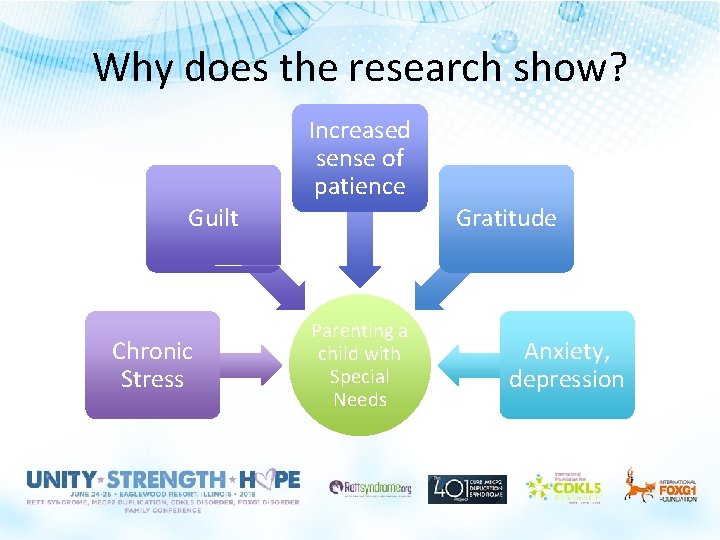
Why does the research show? Increased sense of patience Guilt Chronic Stress Gratitude Parenting a child with Special Needs Anxiety, depression
Research summary – other commons factors? • Frequent fatigue (sleep disruption) – Children often have sleep difficulties • Work disruption – Infections, IEP meetings, lack of caregivers, etc. • Low Cortisol – sign of chronic stress • Less time for themselves • These factors are not static – they are dynamic!
What can we learn from the Natural History Study data? • Child Health Questionnaire – You and Your Family – Emotional worry – Time for your own needs – Types of activities you could do as a family – Everyday family activities – Ability to “pick up and go” – Tension or conflict in your home – Disagreements or arguments in your family – Cancelling or changing plans at the last minute – Family’s ability to get along with one another
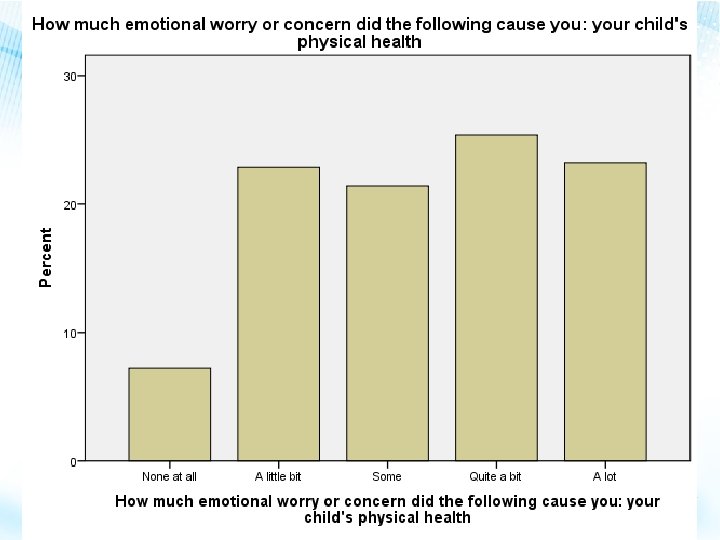
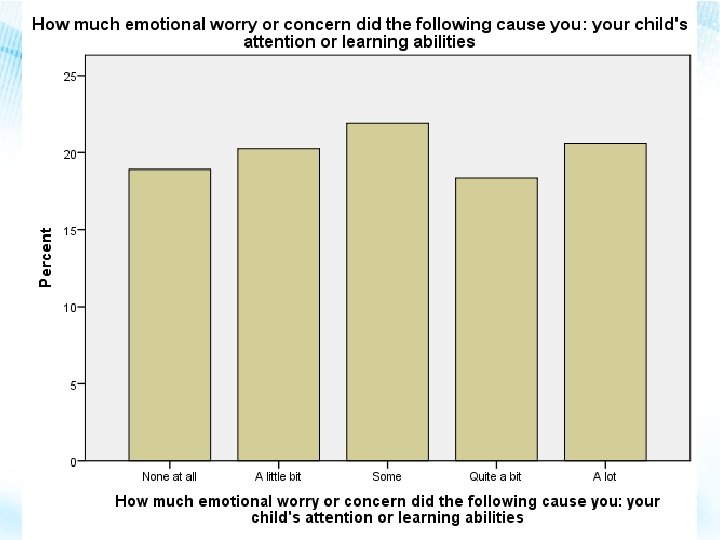
Child Health Questionnaire: You and Your Family • During the past 4 weeks, how MUCH emotional worry or concern did each of the following cause YOU? – Your child’s physical health – Your child’s emotional well-being or behavior – Your child’s attention or learning abilities • • • None at all A little bit Some Quite a lot A lot
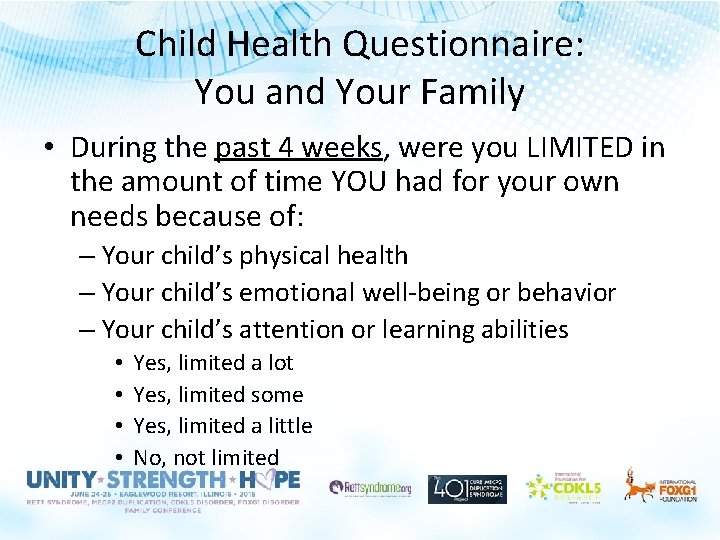
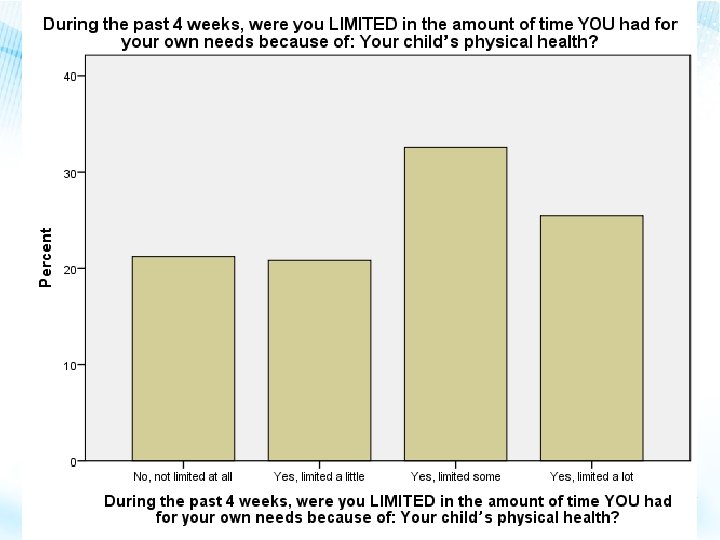
Child Health Questionnaire: You and Your Family • During the past 4 weeks, were you LIMITED in the amount of time YOU had for your own needs because of: – Your child’s physical health – Your child’s emotional well-being or behavior – Your child’s attention or learning abilities • • Yes, limited a lot Yes, limited some Yes, limited a little No, not limited
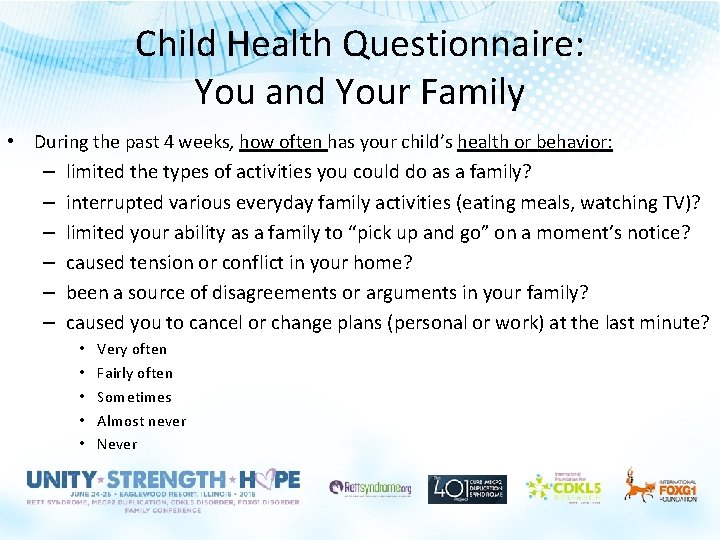
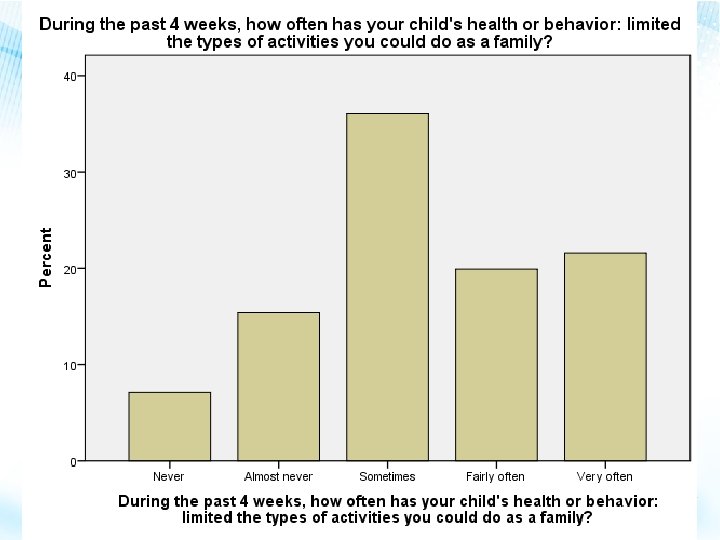
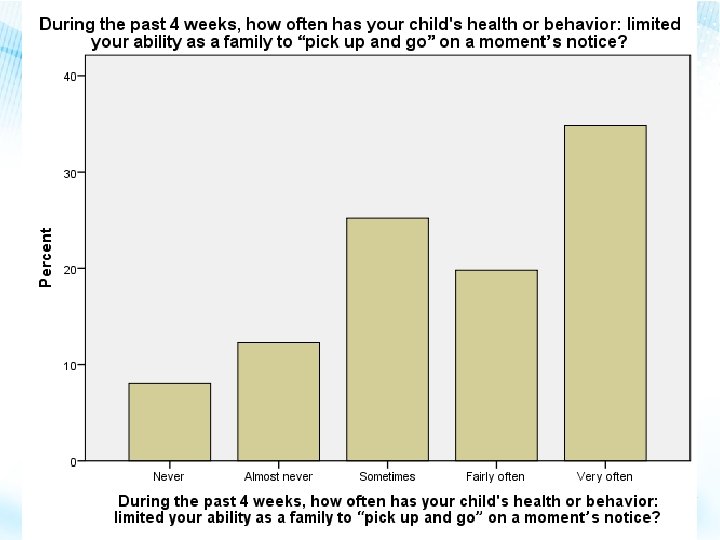
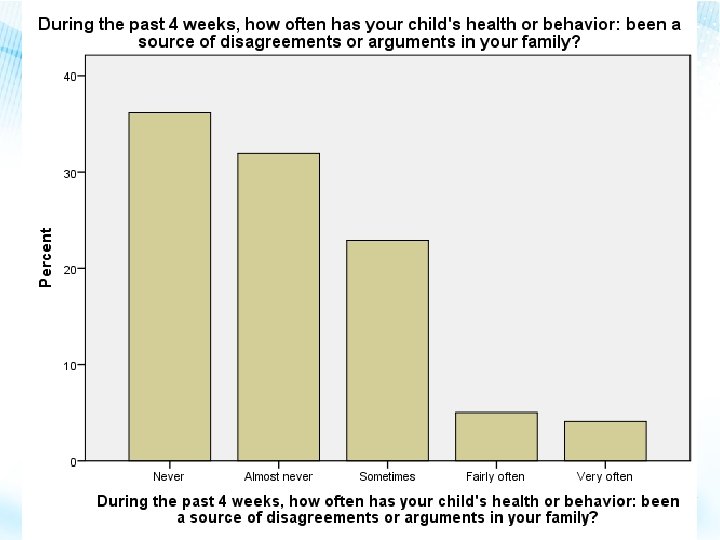
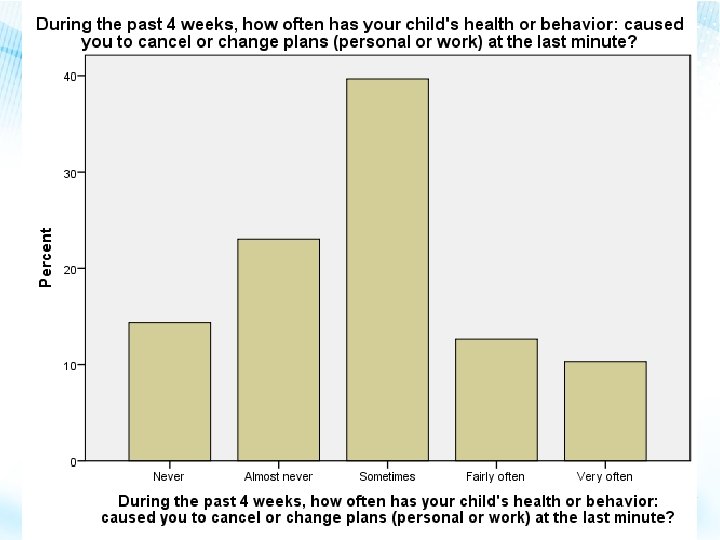
Child Health Questionnaire: You and Your Family • During the past 4 weeks, how often has your child’s health or behavior: – limited the types of activities you could do as a family? – interrupted various everyday family activities (eating meals, watching TV)? – limited your ability as a family to “pick up and go” on a moment’s notice? – caused tension or conflict in your home? – been a source of disagreements or arguments in your family? – caused you to cancel or change plans (personal or work) at the last minute? • • • Very often Fairly often Sometimes Almost never Never
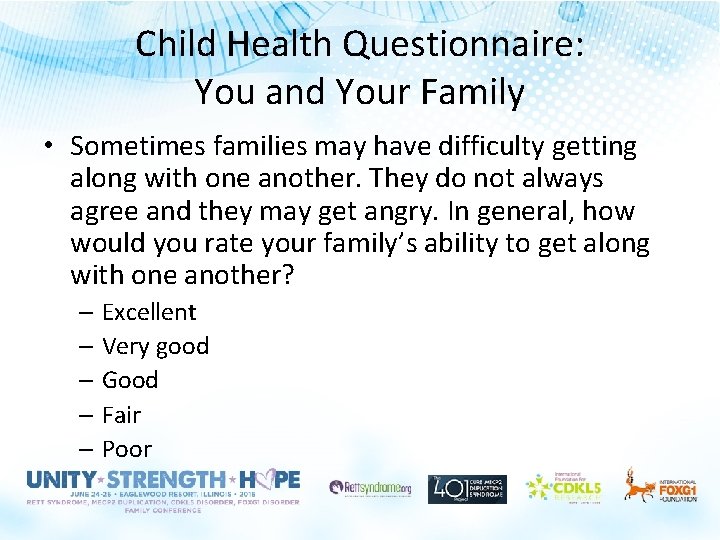
Child Health Questionnaire: You and Your Family • Sometimes families may have difficulty getting along with one another. They do not always agree and they may get angry. In general, how would you rate your family’s ability to get along with one another? – Excellent – Very good – Good – Fair – Poor
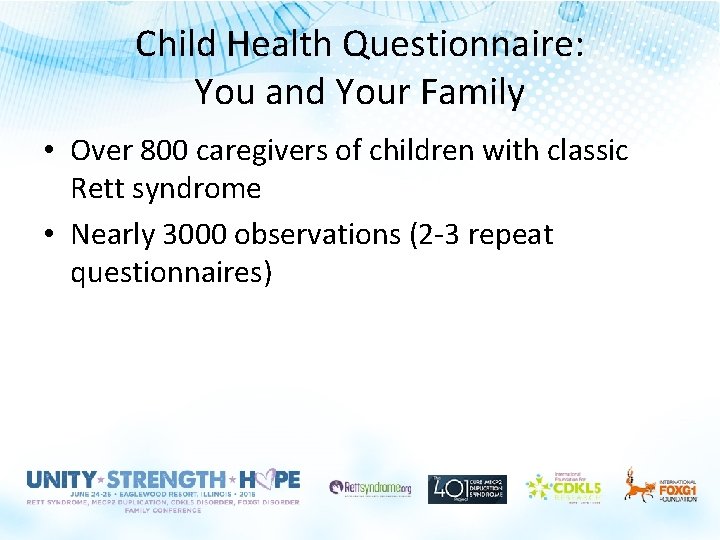
Child Health Questionnaire: You and Your Family • Over 800 caregivers of children with classic Rett syndrome • Nearly 3000 observations (2 -3 repeat questionnaires)
Child Health Questionnaire: You and Your Family
Child Health Questionnaire: You and Your Family
Child Health Questionnaire: You and Your Family
Child Health Questionnaire: You and Your Family
Child Health Questionnaire: You and Your Family
Child Health Questionnaire: You and Your Family
Child Health Questionnaire: You and Your Family
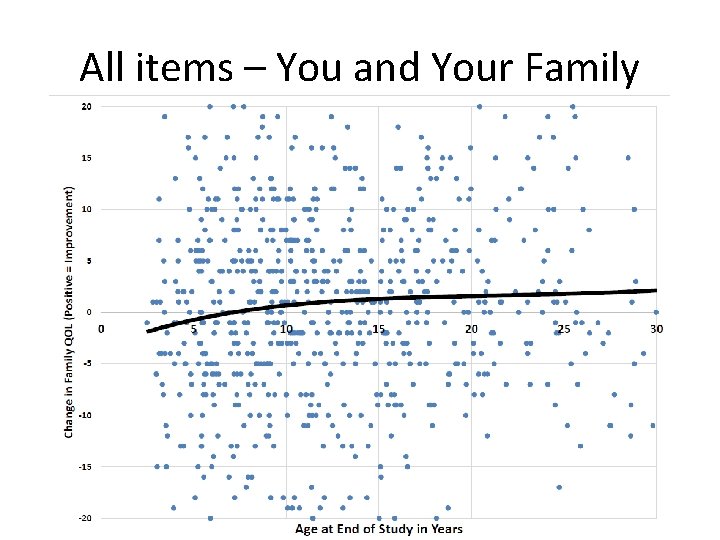
All items – You and Your Family • Considering answers to questions about “you and your family” at the beginning and end of the study: – Is there a change in these answers over time? – Is that change influenced by the age of the child? – Is that change influenced by how “healthy” the child herself is?
All items – You and Your Family
Influence of Global Health
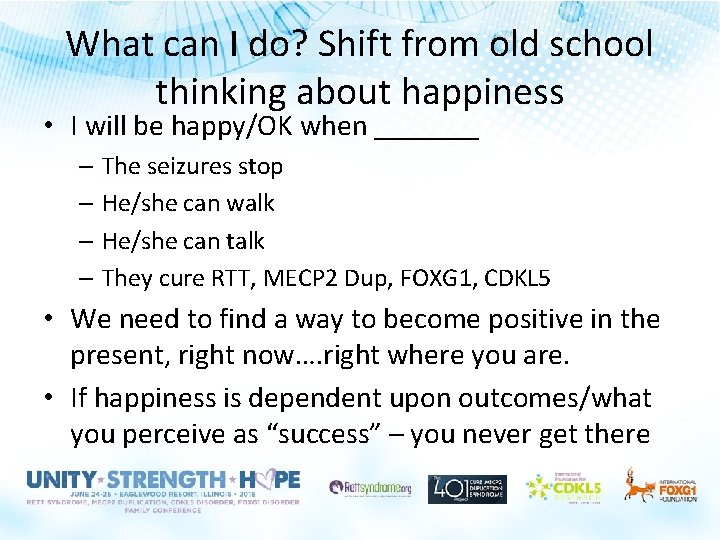
What can I do? Shift from old school thinking about happiness • I will be happy/OK when _______ – The seizures stop – He/she can walk – He/she can talk – They cure RTT, MECP 2 Dup, FOXG 1, CDKL 5 • We need to find a way to become positive in the present, right now…. right where you are. • If happiness is dependent upon outcomes/what you perceive as “success” – you never get there
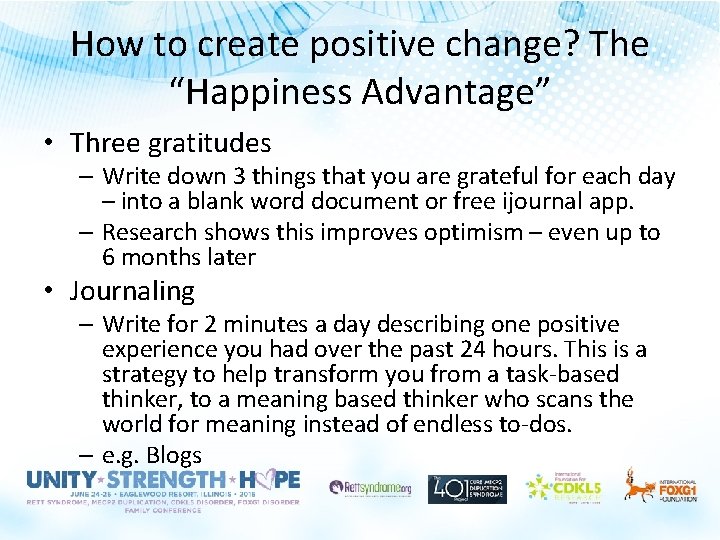
How to create positive change? The “Happiness Advantage” • Three gratitudes – Write down 3 things that you are grateful for each day – into a blank word document or free ijournal app. – Research shows this improves optimism – even up to 6 months later • Journaling – Write for 2 minutes a day describing one positive experience you had over the past 24 hours. This is a strategy to help transform you from a task-based thinker, to a meaning based thinker who scans the world for meaning instead of endless to-dos. – e. g. Blogs
Strategies for coping based on positive psychology • Exercise – Try to exercise for 10 minutes a day. – Releases endorphins – Boosts cortisol
Mindfulness-Based Stress Reduction • Relating directly to whatever is happening in your life. • Jon Kabat-Zinn describes mindfulness as “…moment-to-moment awareness, the complete ‘owning of each moment’ of your experience, good, bad, or ugly”. (Kabat-Zinn, 2005) • When we are mindful, we are in the here and now – present, as opposed to missing in action • Stress Reduction – NOT problem-reduction – this doesn’t take away problems but gives you a way to cope with the daily stressors
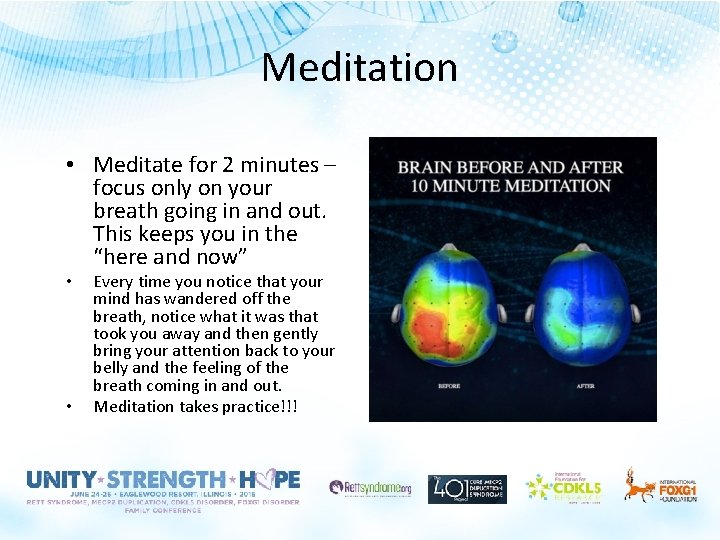
Meditation • Meditate for 2 minutes – focus only on your breath going in and out. This keeps you in the “here and now” • • Every time you notice that your mind has wandered off the breath, notice what it was that took you away and then gently bring your attention back to your belly and the feeling of the breath coming in and out. Meditation takes practice!!!
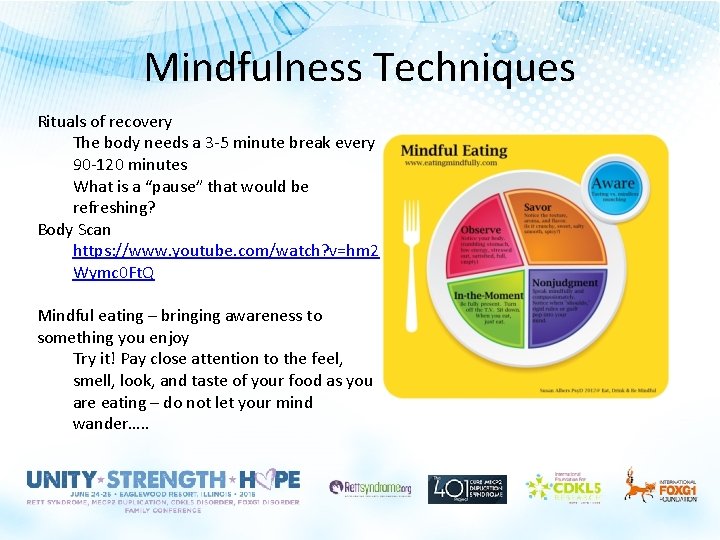
Mindfulness Techniques Rituals of recovery The body needs a 3 -5 minute break every 90 -120 minutes What is a “pause” that would be refreshing? Body Scan https: //www. youtube. com/watch? v=hm 2 Wymc 0 Ft. Q Mindful eating – bringing awareness to something you enjoy Try it! Pay close attention to the feel, smell, look, and taste of your food as you are eating – do not let your mind wander…. .
In summary…… This is an exciting time for research! The real day to day experiences MATTER Access to professional supports to manage/cope How can we help keep your child in the best shape possible so she/he are ready when those treatments become reality • Support from other parents/family/professionals • • – Parents of younger children can learn from older ones and vice versa • Live in the “here and now”
Questions…… • Please send specific questions to: – Email Daniel. Tarquinio@emory. edu (Daniel Tarquinio) – Text 615 -717 -4877 (Sar Peters) • We would like to answer the questions that you want to ask about your children.