
Engaging People in Problem Solving MARIT PETERS IIAT
Engaging People in Problem Solving MARIT PETERS IIAT
a continuous improvement culture
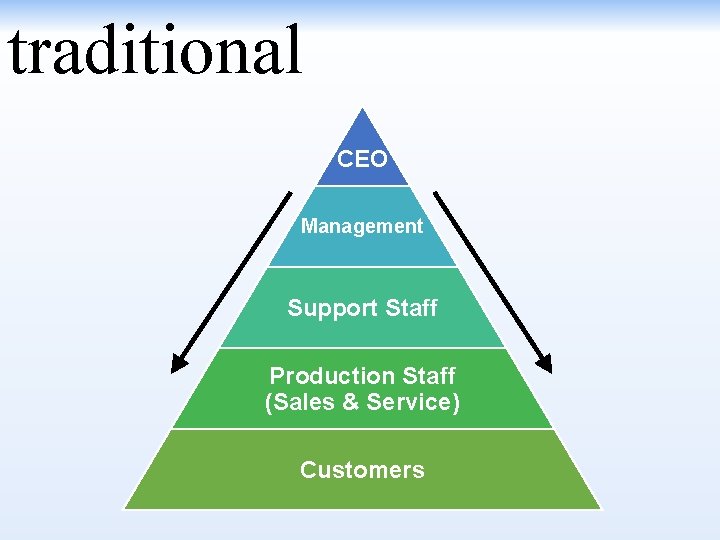
traditional CEO Management Support Staff Production Staff (Sales & Service) Customers
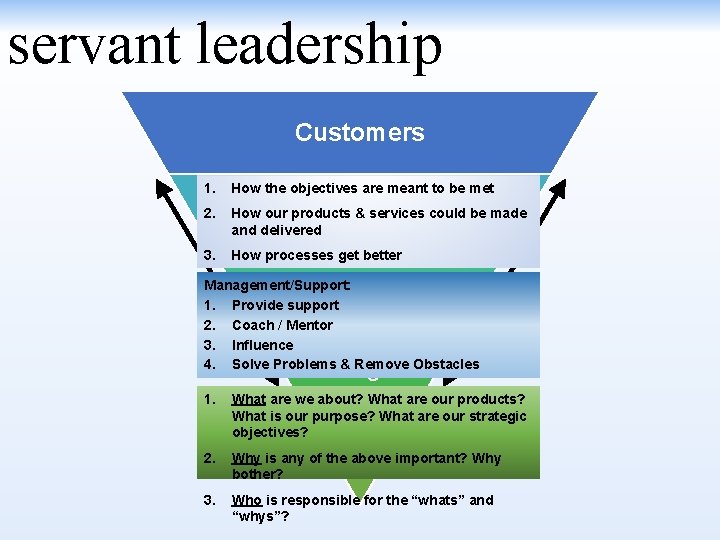
servant leadership Customers 1. How the objectives are meant to be met 2. How our products & services could be made and delivered 3. How processes get better Staff (Sales & Service) Management/Support: 1. Provide support 2. Coach / Mentor 3. Influence 4. Solve Problems & Remove Obstacles Support Staff 1. Managem ent. What are our products? What are we about? What is our purpose? What are our strategic objectives? CEO 2. Why is any of the above important? Why bother? 3. Who is responsible for the “whats” and “whys”?
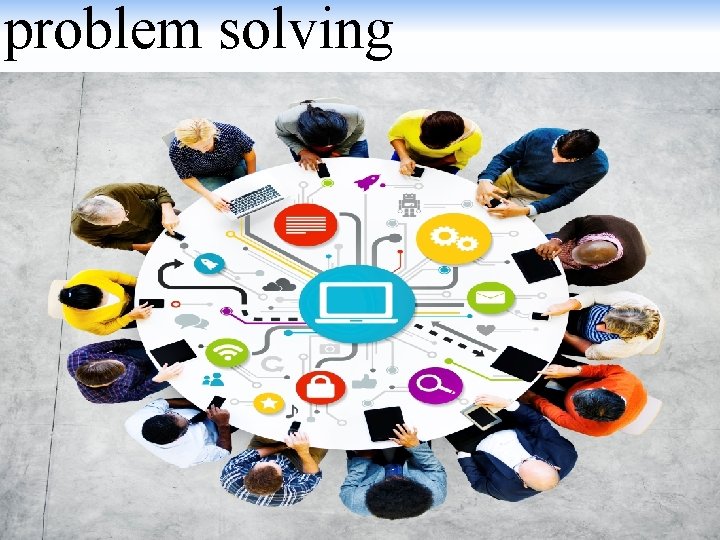
problem solving
what is a problem? • A GAP between the current state and the desired state. • All problems are opportunities for continuous improvement

problem solving? • Solving problems by finding real root causes • Taking action that permanently removes the problem • Involves two main strategies • Data Collection/Analysis • Correction/Prevention
when? • When our customers require it • When we wish to solve recurring problems in a manner that is permanent • As a continuous improvement tool • To satisfy a documentation requirement
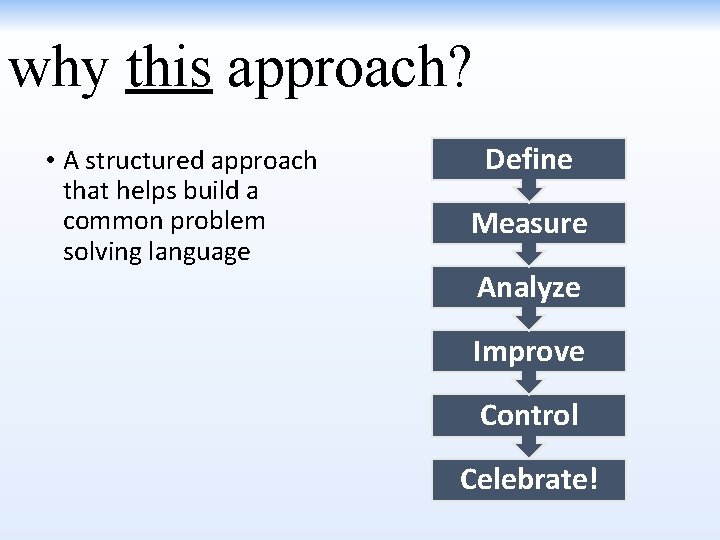
why this approach? • A structured approach that helps build a common problem solving language Define Measure Analyze Improve Control Celebrate!
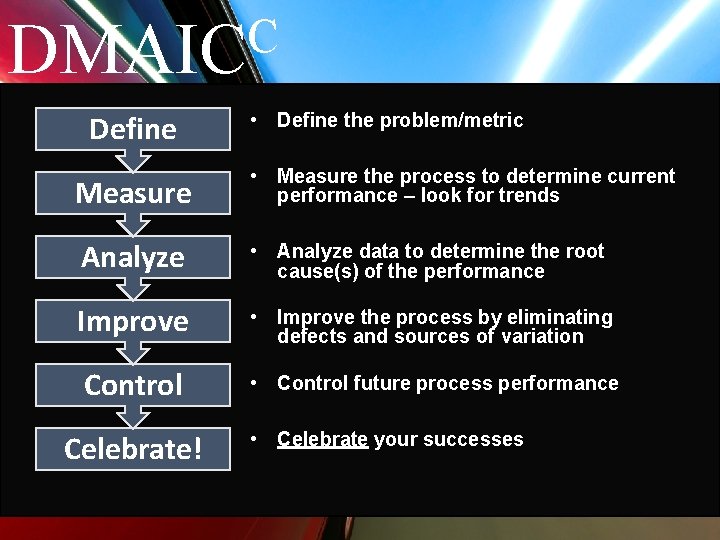
C DMAIC Define Measure • Define the problem/metric • Measure the process to determine current performance – look for trends Analyze • Analyze data to determine the root cause(s) of the performance Improve • Improve the process by eliminating defects and sources of variation Control • Control future process performance Celebrate! • Celebrate your successes
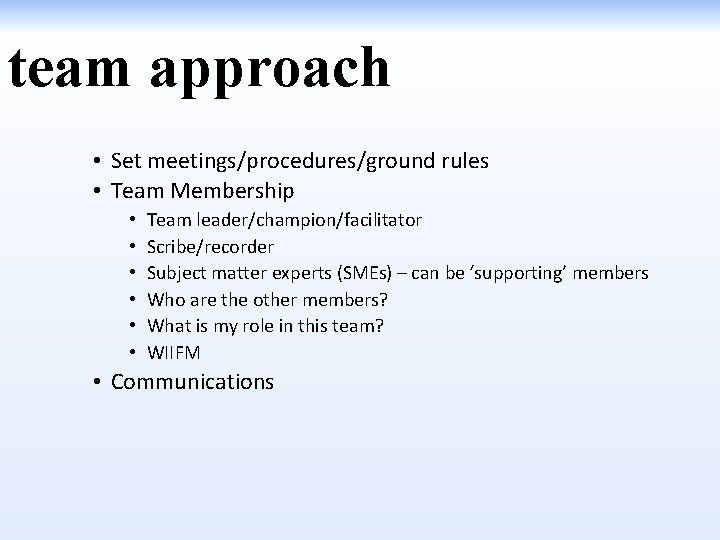
team approach • Set meetings/procedures/ground rules • Team Membership • • • Team leader/champion/facilitator Scribe/recorder Subject matter experts (SMEs) – can be ‘supporting’ members Who are the other members? What is my role in this team? WIIFM • Communications
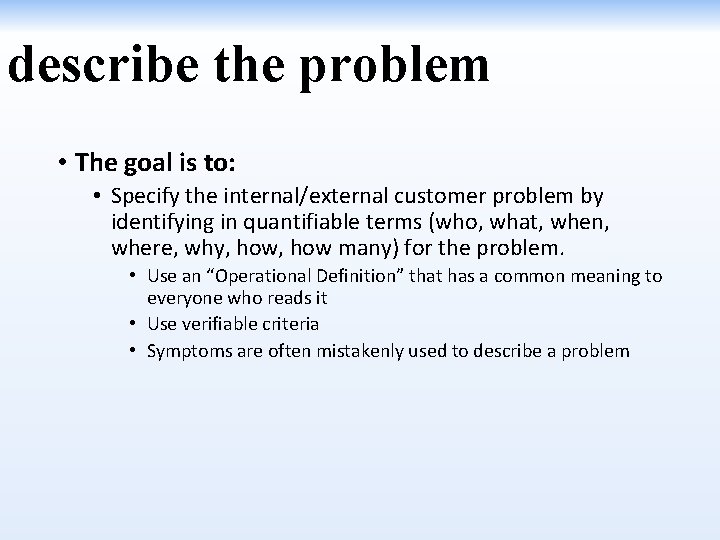
describe the problem • The goal is to: • Specify the internal/external customer problem by identifying in quantifiable terms (who, what, when, where, why, how many) for the problem. • Use an “Operational Definition” that has a common meaning to everyone who reads it • Use verifiable criteria • Symptoms are often mistakenly used to describe a problem
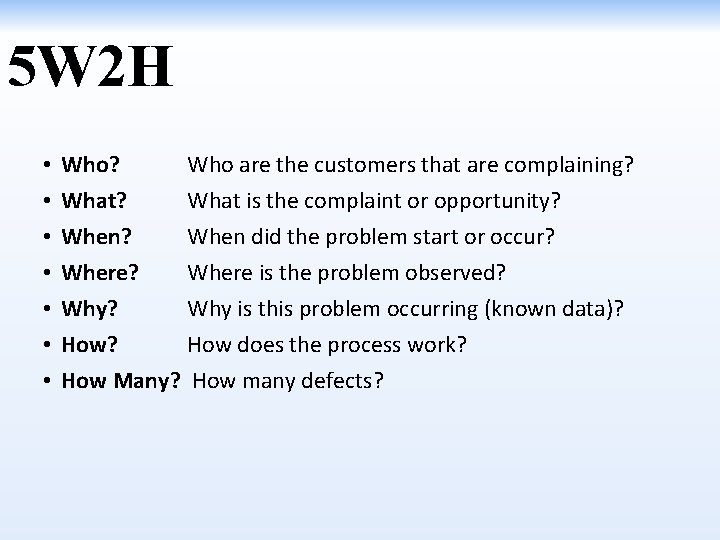
5 W 2 H • • Who? Who are the customers that are complaining? What is the complaint or opportunity? When did the problem start or occur? Where is the problem observed? Why is this problem occurring (known data)? How does the process work? How Many? How many defects?
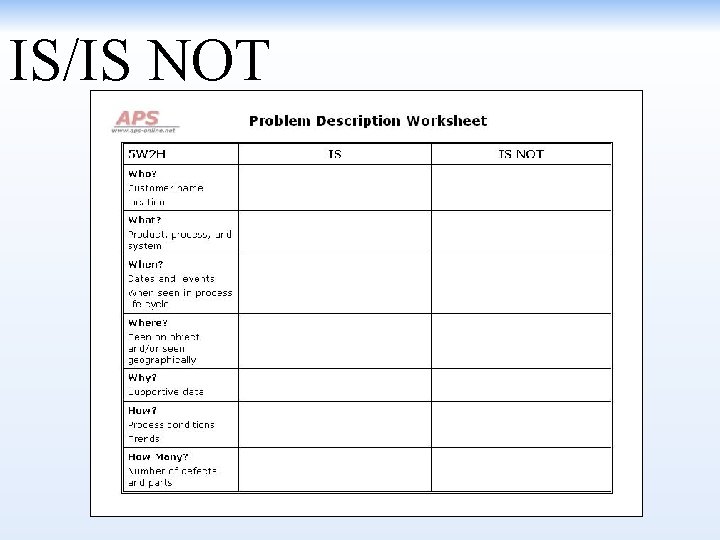
IS/IS NOT
problem statement vs problem description • A Problem Statement Includes: • Problem (Object) • Problem concern • A Problem Description Includes: • • Problem (Object) Problem concern Specific requirements not met The deviation from the requirements Define the current measurements Date of 1 st occurrence Number of rejects/failures/ occurrences Point of Cause
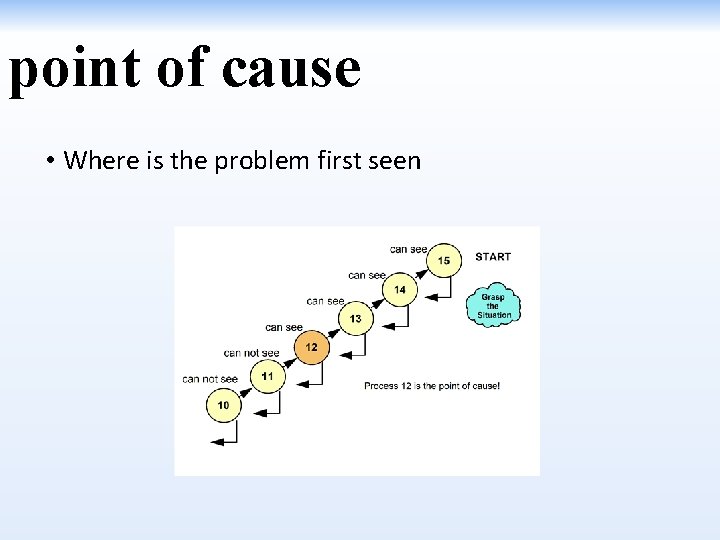
point of cause • Where is the problem first seen
problem descriptions • Poor: Our customers aren’t happy with us lately. • Better: The customer retention rate has declined from 92% to 89% in the last 12 months and is not meeting our goal is 91% or better. • Poor: We need a new phone system. • Better: Our current phone system has capacity for only 50 extensions and we currently have 65 employees who require a phone.
process flowchart • A flow chart/value stream map (VSM) is a tool that helps to identify the actual flow of sequence of events in a process that a product or service follows.
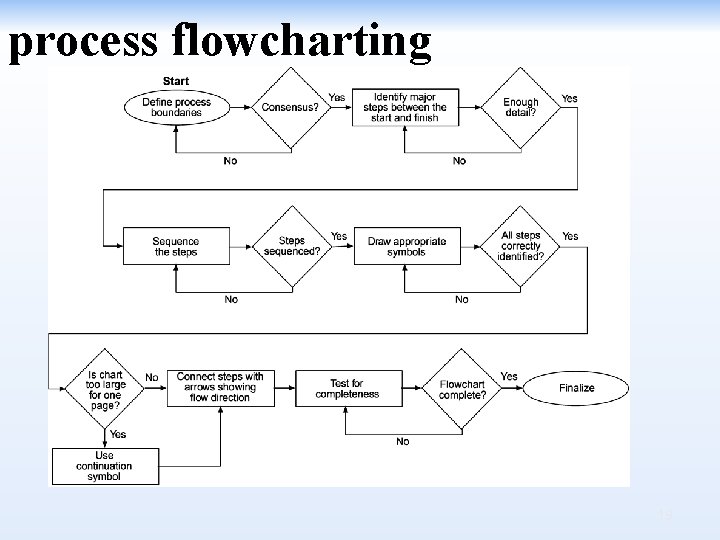
process flowcharting 19
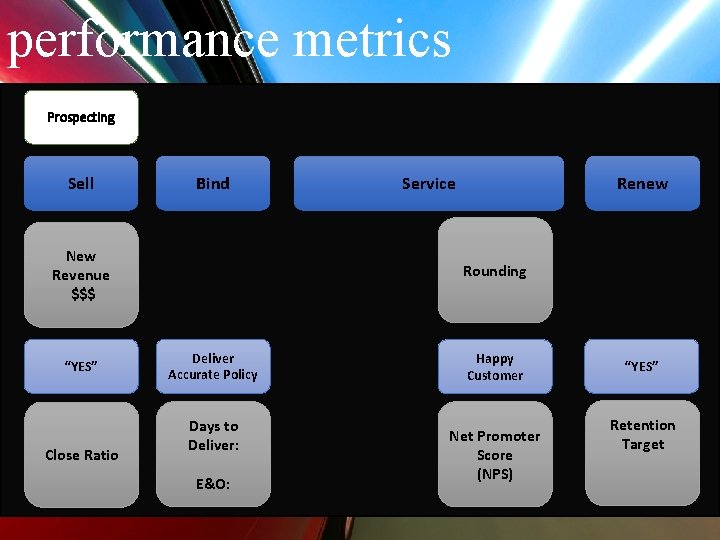
performance metrics Prospecting Sell Bind New Revenue $$$ “YES” Close Ratio Service Renew Rounding Deliver Accurate Policy Days to Deliver: E&O: Happy Customer Net Promoter Score (NPS) “YES” Retention Target
containment • The goal is to: • Define and implement containment actions to isolate the effect of problem from any internal/external customer until corrective action is implemented • Verify the effectiveness of the containment action
containment • Minimize the effect of the problem on the customer by implementing immediate containment actions • 100% sorting/inspection • Quarantine • Temporary SOP’s • Do/Perform/Make in-house vs outsource • Temporary company policies • Additional approvals (signoff) • Single source • Certified people • Additional resources
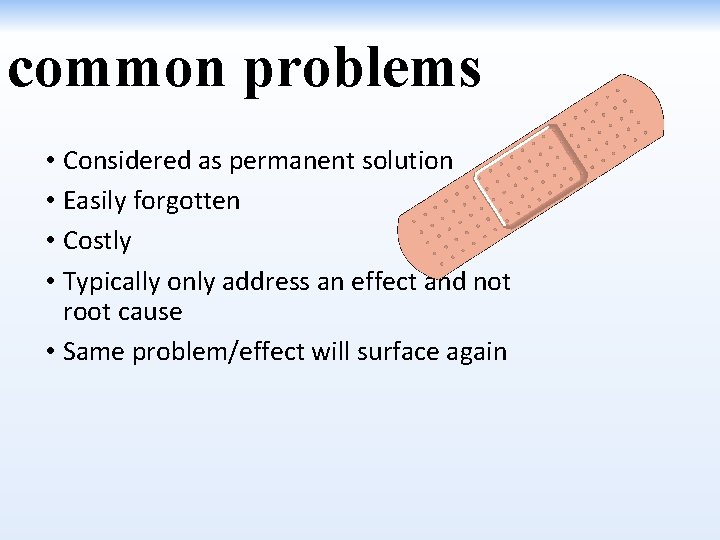
common problems • Considered as permanent solution • Easily forgotten • Costly • Typically only address an effect and not root cause • Same problem/effect will surface again
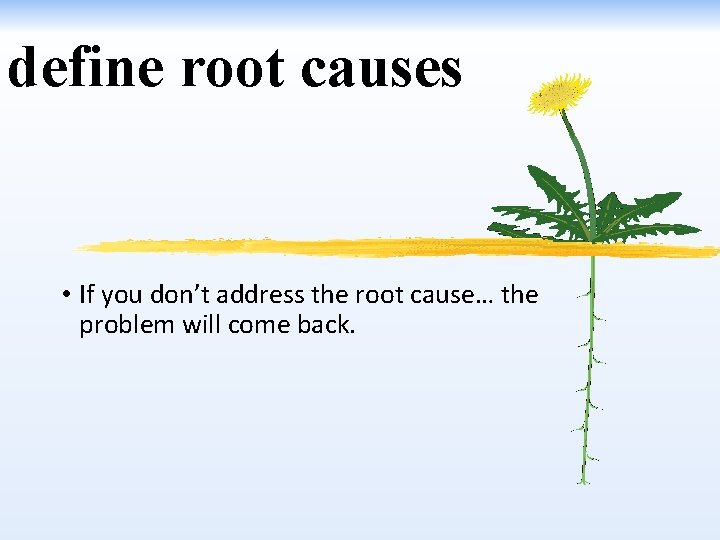
define root causes • If you don’t address the root cause… the problem will come back.
root cause analysis? • Process to arrive at the preliminary causes of a problem • Finding the reason a problem exists and eliminate it with corrective actions • Front-end work • Defining the problem in quantifiable terms • Testing potential root causes • Verifying the root cause
common barriers? • Problem described incorrectly • Problem solving effort expedited • Poor team participation • No logical process • Permanent corrective action not implemented • Over-reliance on experience
define root causes • The goal is to: • Identify all potential causes that could explain why the problem occurred • Isolate and verify the root cause by testing each potential cause against the problem description
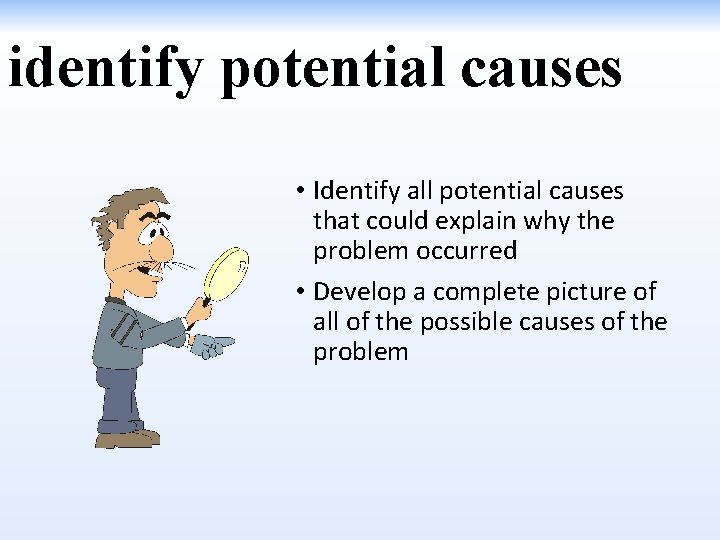
identify potential causes • Identify all potential causes that could explain why the problem occurred • Develop a complete picture of all of the possible causes of the problem
identify potential causes • Continue to ask the repeated “Why” statements • List potential root causes • • Group discussion Formal brainstorming session Cause & Effect diagram (fishbone) FMEA • If the problem is new, develop a time line
brainstorming techniques There are no bad ideas! Brainstorm
Guidelines for Brainstorming • Don’t critique ideas. • Use your imagination! • Build on others’ ideas. • Piggybacking • Aim for QUANTITY. • Record each idea.
Brainstorming Process • Select a facilitator. • Give everyone 1 -2 minutes to silently think about the problem. • Invite everyone to contribute ideas. • Write down all ideas. • Continue until you run out of ideas. • Discuss and narrow down ideas using Nominal Group Technique or Multi-Voting.
cause & effect diagram • A Cause & Effect Diagram is a tool that helps to identify, explore, and display in increasing detail all of the possible causes related to a problem or condition in order to discover its root cause(s).
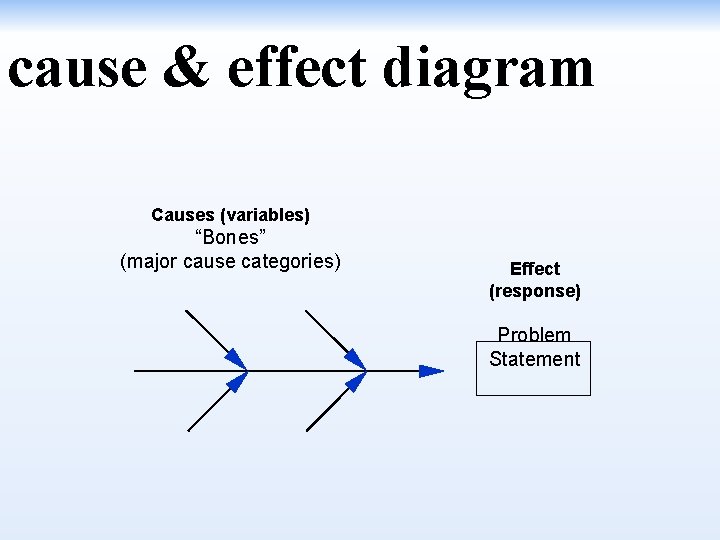
cause & effect diagram Causes (variables) “Bones” (major cause categories) Effect (response) Problem Statement
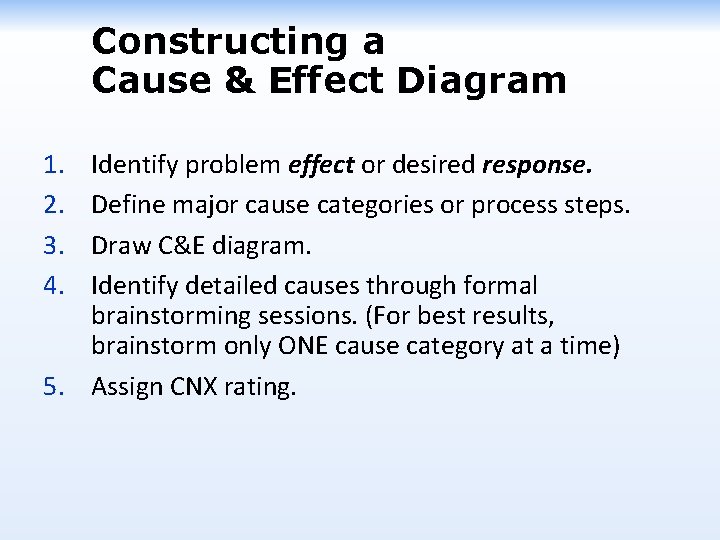
Constructing a Cause & Effect Diagram 1. 2. 3. 4. Identify problem effect or desired response. Define major cause categories or process steps. Draw C&E diagram. Identify detailed causes through formal brainstorming sessions. (For best results, brainstorm only ONE cause category at a time) 5. Assign CNX rating.
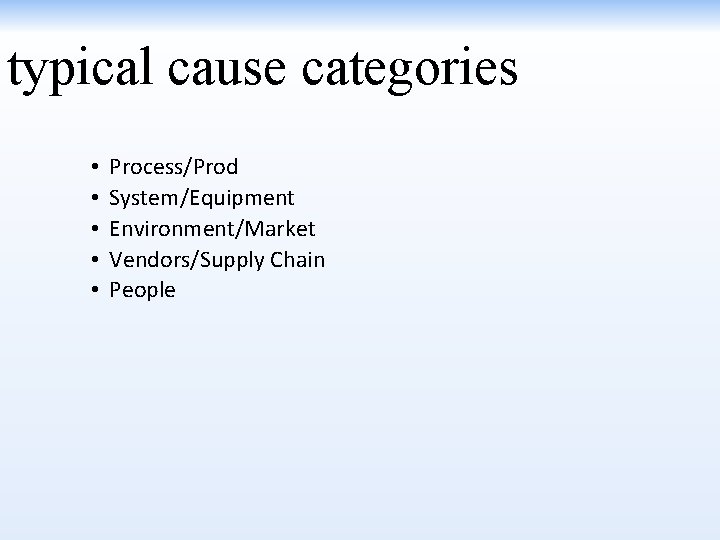
typical cause categories • • • Process/Prod System/Equipment Environment/Market Vendors/Supply Chain People
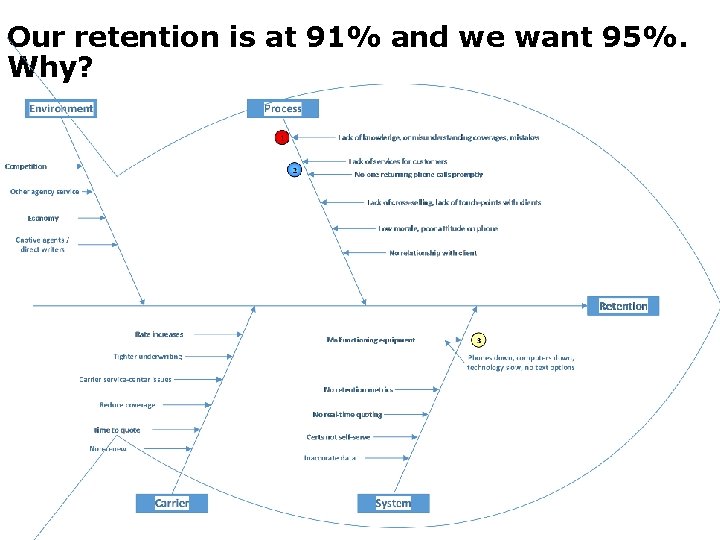
Our retention is at 91% and we want 95%. Why?
develop permanent corrective actions • Define the best permanent corrective actions • Choose on-going controls and measures to ensure the root cause is eliminated
identify solutions • Investigate several methods to fix the problem • Brainstorm solutions • Identify similar problems previously solved and corrective actions • Review FMEAs • Consider new technology for the possible solution
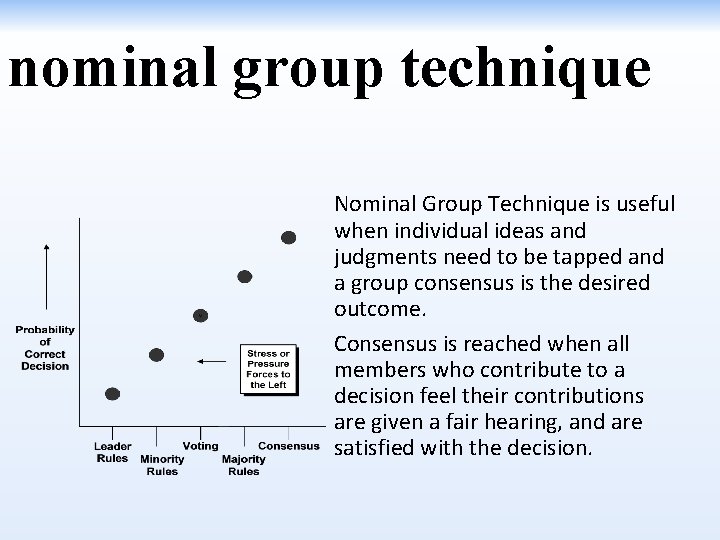
nominal group technique Nominal Group Technique is useful when individual ideas and judgments need to be tapped and a group consensus is the desired outcome. Consensus is reached when all members who contribute to a decision feel their contributions are given a fair hearing, and are satisfied with the decision.
getting to consensus • Consensus means that all members of the team agree upon a single alternative which is: • reached fairly and openly, and • is the best alternative at the time it is made. • Ask, “Is there anyone here who cannot live with this decision? ”
guidelines • Review and clarify the list of ideas. - Eliminate overlap. - Include all ideas. • Rate ideas using three prioritized votes person. • Most important = 3 • Second most important = 2 • Third most important = 1 • Total the scores for each idea. • Rank the ideas and attempt to reach consensus from among the 2 or 3 highest ranked ideas.
improve • Put the action plan into place • Verify corrective actions before the actions are permanently implemented • • • Process capability run Quality data analysis Field test Prototype Rework report • Document verification results • Update quality documents • Verify the solution with customer
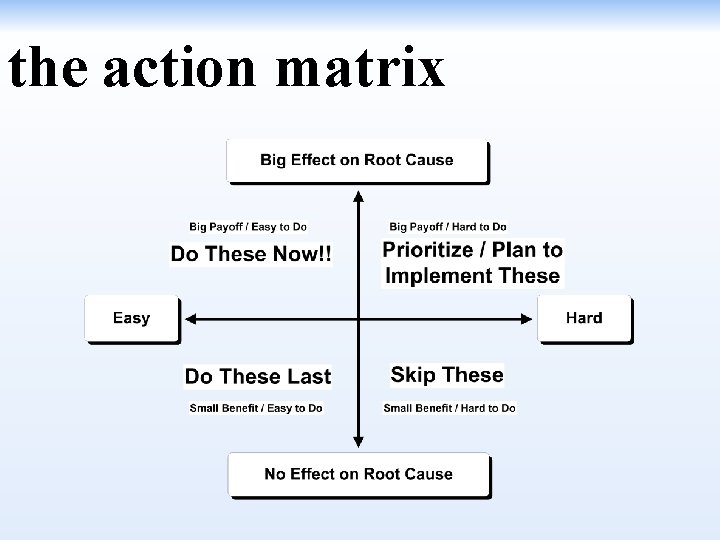
the action matrix
Root Cause: Lack of knowledge & understanding which creates mistakes. Solutions: Processes § Better define customer service standards § Written procedures & guidelines § Fix/Define Accord app reconciliation process § Performance management Learning § Weekly ‘lunch & learn’ topics § Active goals for individuals getting designations § Lessons-learned training (look at trends and why it happened)
prevent recurrence • Identify and agree to long term validation methods • Update quality documents • • Processes Procedures Training Workflow • Identify similar products, product lines, serviced, equipment, and processes that could benefit from these findings and solutions • Leverage the results of your problem solving efforts for maximum ROI
Celebrate! Congratulate Your Team • Remember the WIIFM • Recognize and reward • Celebrate success/accomplishments
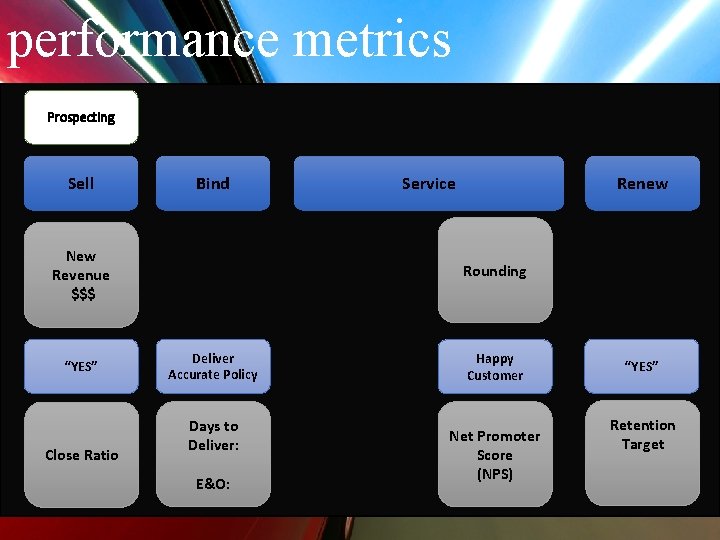
performance metrics Prospecting Sell Bind New Revenue $$$ “YES” Close Ratio Service Renew Rounding Deliver Accurate Policy Days to Deliver: E&O: Happy Customer Net Promoter Score (NPS) “YES” Retention Target
problem solving
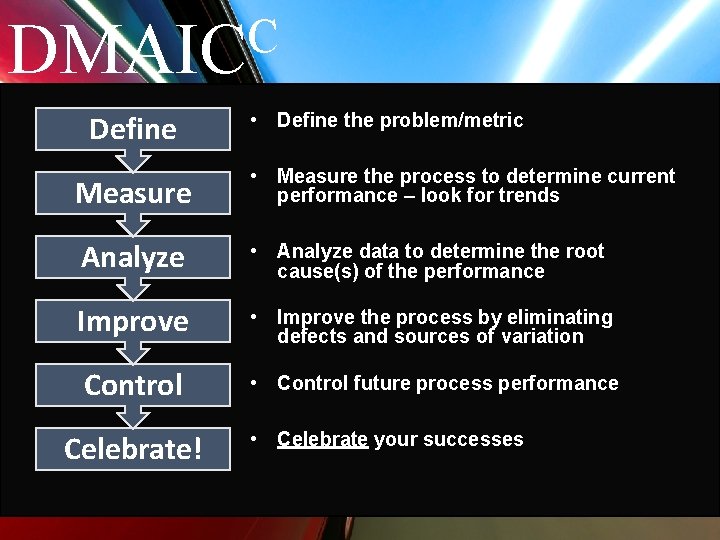
C DMAIC Define Measure • Define the problem/metric • Measure the process to determine current performance – look for trends Analyze • Analyze data to determine the root cause(s) of the performance Improve • Improve the process by eliminating defects and sources of variation Control • Control future process performance Celebrate! • Celebrate your successes
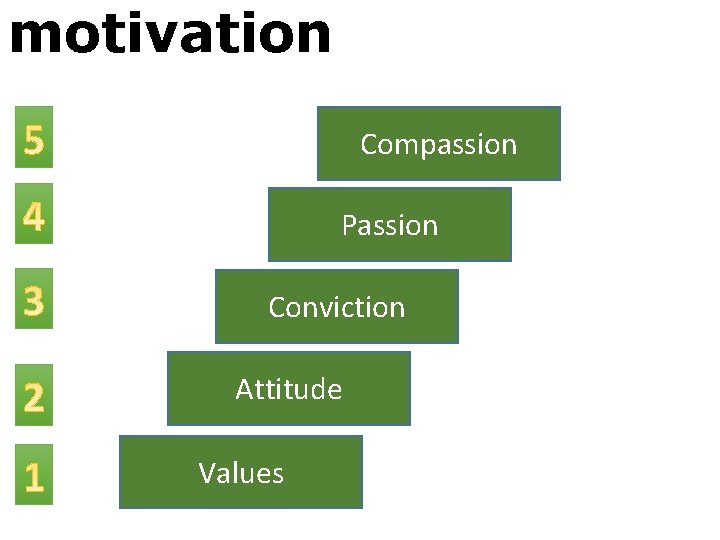
motivation Compassion Passion Conviction Attitude Values
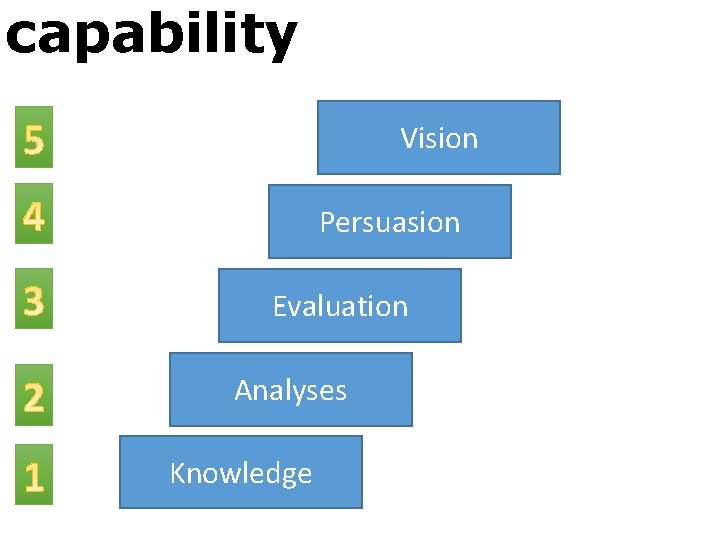
capability Vision Persuasion Evaluation Analyses Knowledge
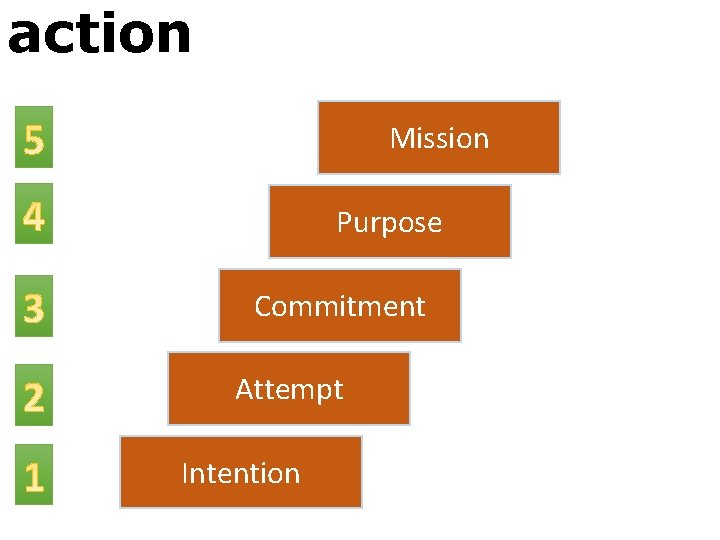
action Mission Purpose Commitment Attempt Intention
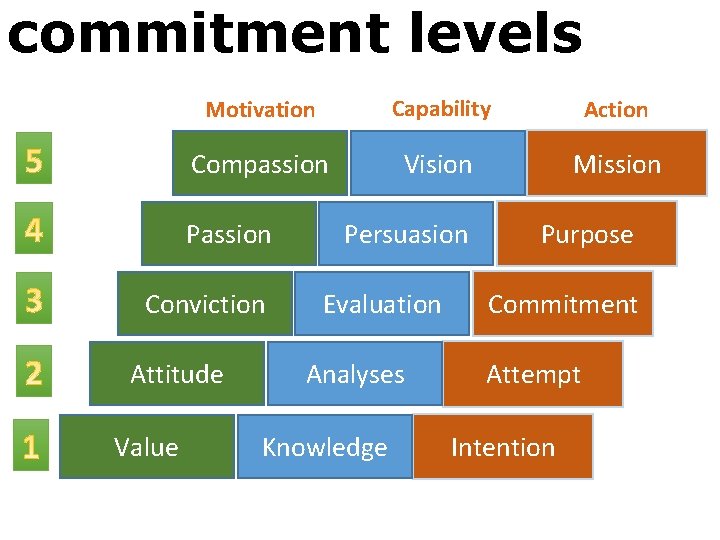
commitment levels Motivation Capability Action Compassion Vision Mission Passion Conviction Attitude Value Persuasion Evaluation Analyses Knowledge Purpose Commitment Attempt Intention
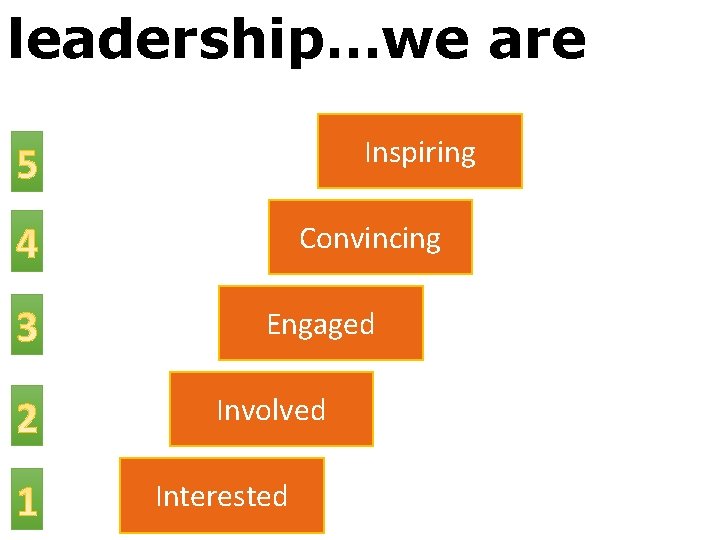
leadership…we are Inspiring Convincing Engaged Involved Interested
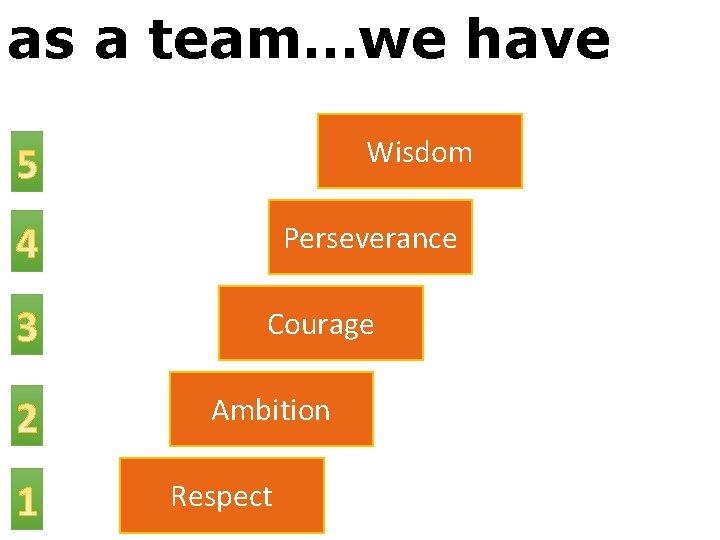
as a team…we have Wisdom Perseverance Courage Ambition Respect
a continuous improvement culture
- Slides: 57