CT 1305 Computer Network Management RMON Dr Mostafa
- Slides: 19
CT 1305 Computer Network Management RMON Dr. Mostafa H. Dahshan Department of Computer Engineering College of Computer and Information Sciences King Saud University mdahshan@ksu. edu. sa
Acknowledgements • Notes are based on slides of: • Network Management: Principles and Practice, 2 E, Mani Subramanian. 2
Overview • Remote network monitoring, RMON • RMON 1: Monitoring Ethernet LAN and token-ring LAN • RMON 2: Monitoring upper protocol layers • Generates and sends statistics close to subnetworks to central NMS • RMON MIBs for RMON group objects 3
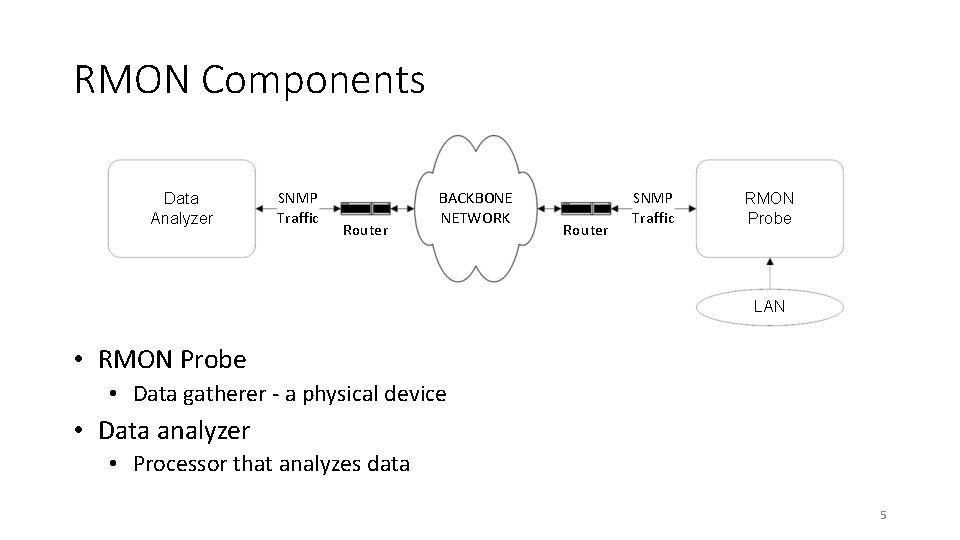
RMON • SNMP poll operation can degrade data rate on large-scale WANs • RMON was designed by IETF to solve this problem • Represents an extension of network manager to distant networks • RMON agents (probes) • intelligent devices that monitor data flowing into remote network • organize data traffic occurring on distant network • reduce info required to be transmitted to mgmt. station for analysis • Uses SMNP as transport mechanism between manager and agent 4
RMON Components Data Analyzer SNMP Traffic Router BACKBONE NETWORK Router SNMP Traffic RMON Probe LAN • RMON Probe • Data gatherer - a physical device • Data analyzer • Processor that analyzes data 5
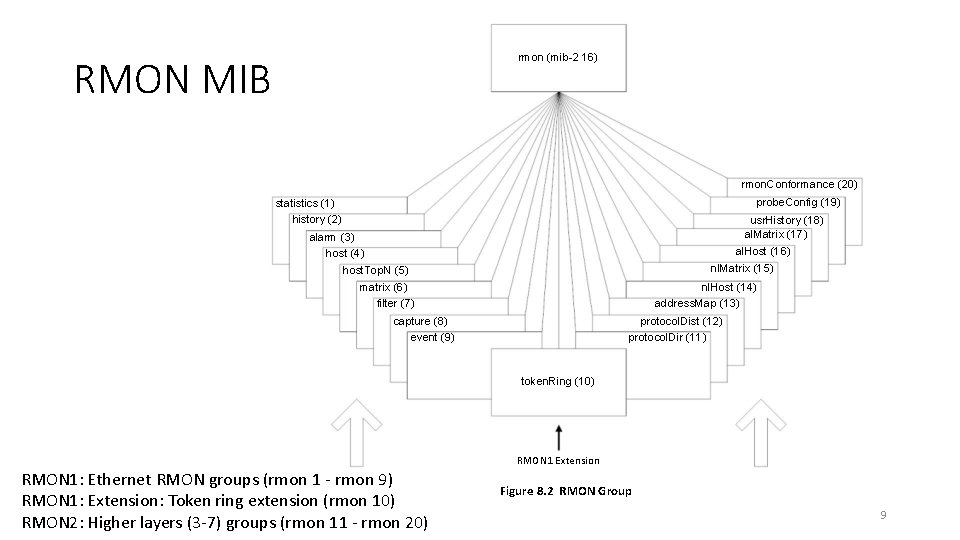
RMON Components • RMON probe includes an MIB defines attributes of monitored objects • RMON MIB is specified in RFC 2819 • Actual value and use of information depends on manager application • RMON delivers information in nine groups of monitoring elements • Some applications support full areas and tasks (groups) • Some applications support only a subset of them 6
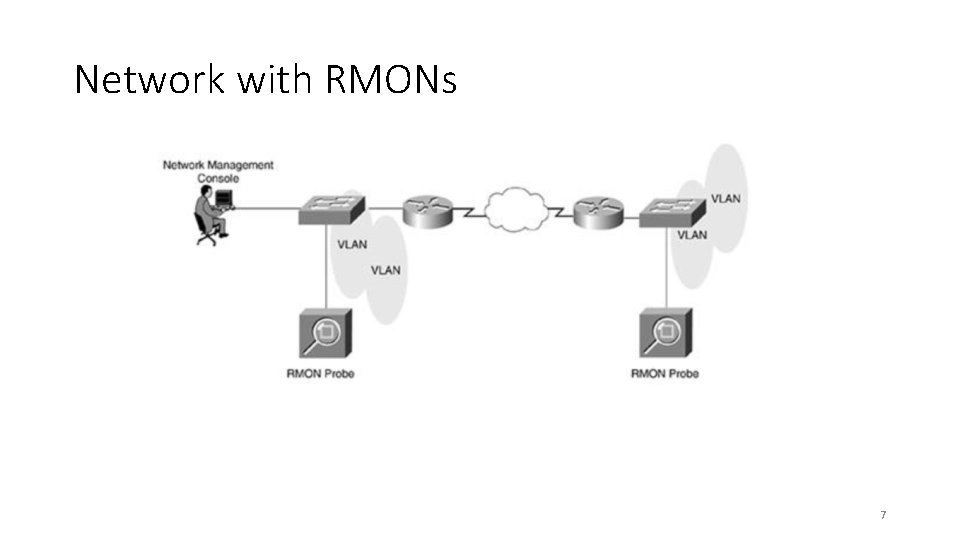
Network with RMONs 7
RMON Benefits • Monitors and analyzes locally and relays data • Less load on the network • Needs no direct visibility by NMS • More reliable information • Permits monitoring on a more frequent basis • faster fault diagnosis • Increases productivity for administrators 8
RMON MIB rmon (mib-2 16) rmon. Conformance (20) probe. Config (19) statistics (1) history (2) usr. History (18) al. Matrix (17) alarm (3) host (4) al. Host (16) nl. Matrix (15) host. Top. N (5) nl. Host (14) matrix (6) filter (7) address. Map (13) capture (8) event (9) protocol. Dist (12) protocol. Dir (11) token. Ring (10) RMON 1 Extension RMON 1: Ethernet RMON groups (rmon 1 - rmon 9) RMON 1: Extension: Token ring extension (rmon 10) RMON 2: Higher layers (3 -7) groups (rmon 11 - rmon 20) Figure 8. 2 RMON Group 9
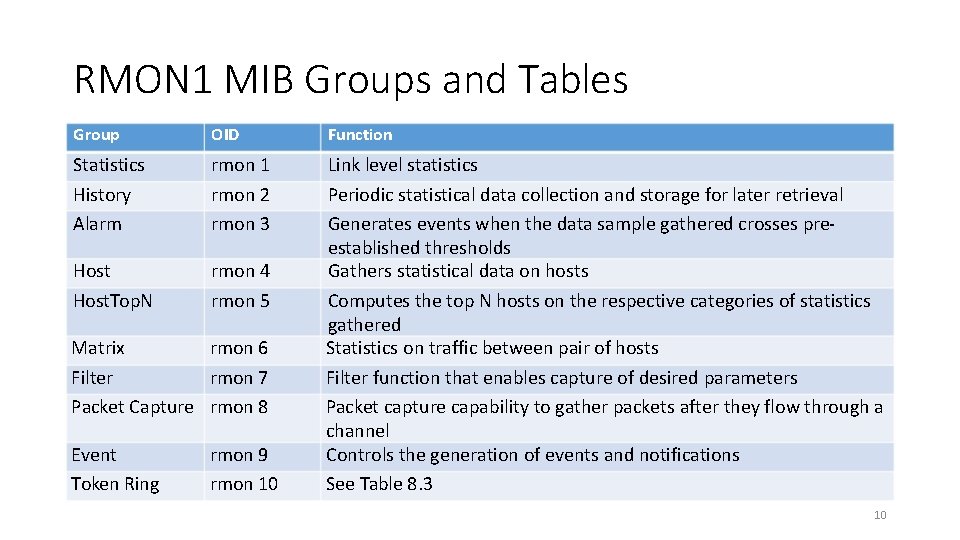
RMON 1 MIB Groups and Tables Group OID Function Statistics History Alarm rmon 1 rmon 2 rmon 3 Host. Top. N rmon 4 rmon 5 Link level statistics Periodic statistical data collection and storage for later retrieval Generates events when the data sample gathered crosses preestablished thresholds Gathers statistical data on hosts Computes the top N hosts on the respective categories of statistics gathered Statistics on traffic between pair of hosts Filter function that enables capture of desired parameters Packet capture capability to gather packets after they flow through a channel Controls the generation of events and notifications See Table 8. 3 Matrix rmon 6 Filter rmon 7 Packet Capture rmon 8 Event Token Ring rmon 9 rmon 10 10
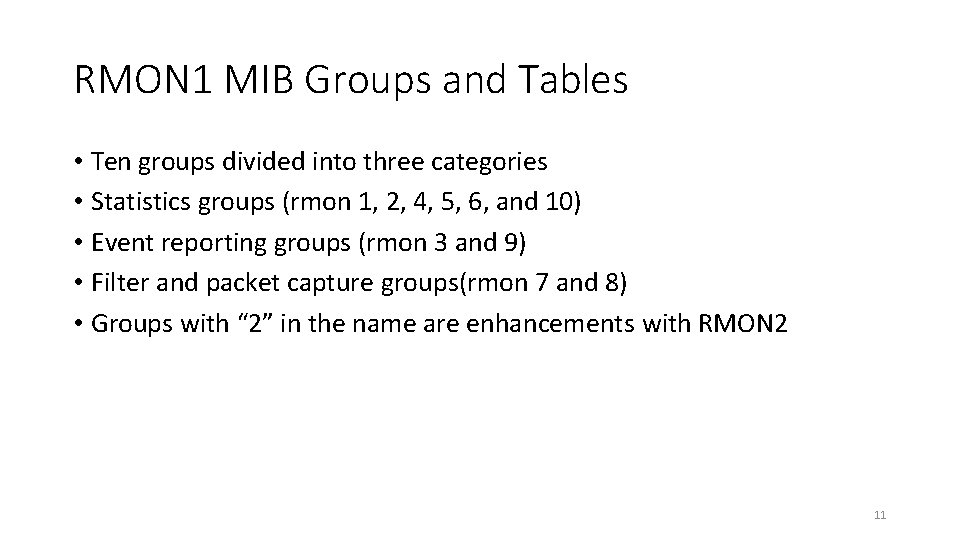
RMON 1 MIB Groups and Tables • Ten groups divided into three categories • Statistics groups (rmon 1, 2, 4, 5, 6, and 10) • Event reporting groups (rmon 3 and 9) • Filter and packet capture groups(rmon 7 and 8) • Groups with “ 2” in the name are enhancements with RMON 2 11
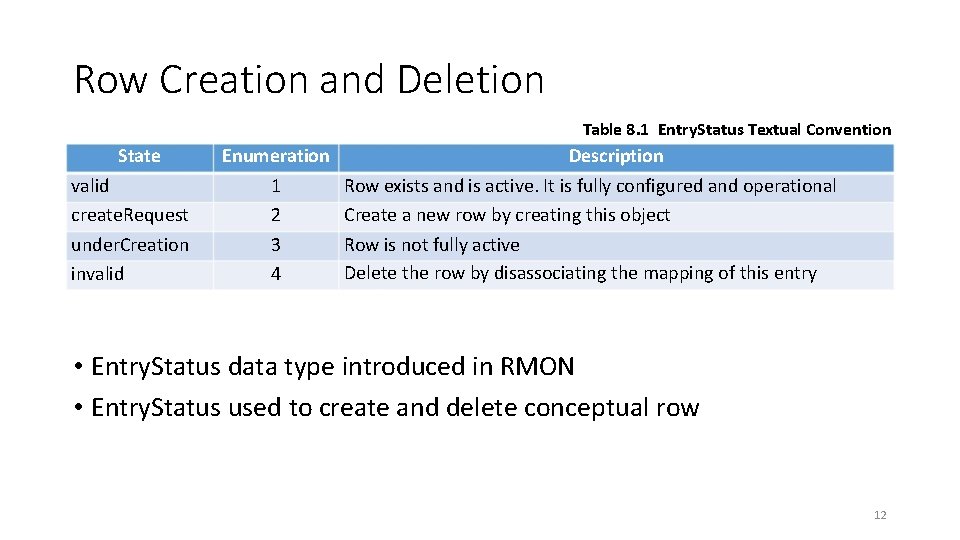
Row Creation and Deletion Table 8. 1 Entry. Status Textual Convention State valid create. Request under. Creation invalid Enumeration 1 2 3 4 Description Row exists and is active. It is fully configured and operational Create a new row by creating this object Row is not fully active Delete the row by disassociating the mapping of this entry • Entry. Status data type introduced in RMON • Entry. Status used to create and delete conceptual row 12
RMON 2 • Adds support for layers above Media Access Control (MAC) • Ability to measure network and application statistics • Additional 10 MIB groups 13
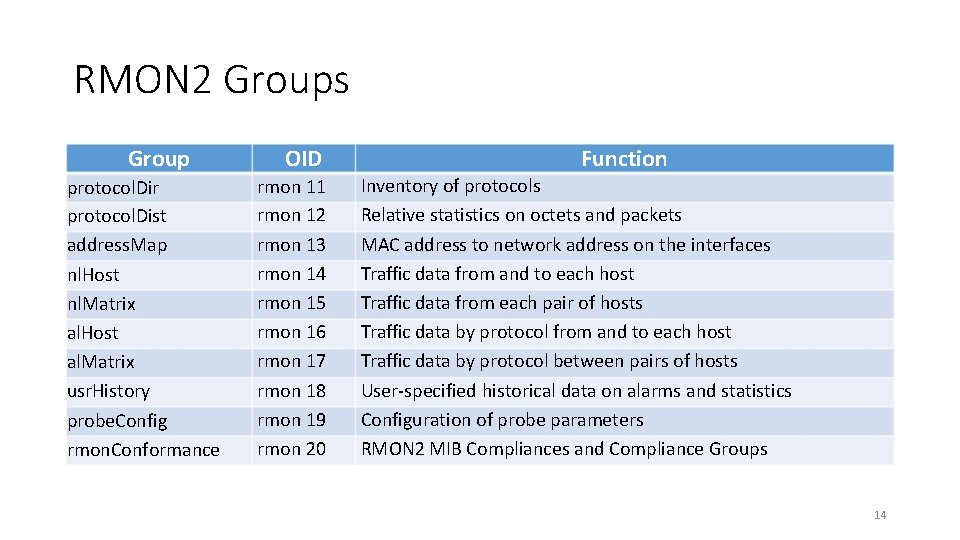
RMON 2 Groups Group protocol. Dir protocol. Dist address. Map nl. Host nl. Matrix al. Host al. Matrix usr. History probe. Config rmon. Conformance OID rmon 11 rmon 12 rmon 13 rmon 14 rmon 15 rmon 16 rmon 17 rmon 18 rmon 19 rmon 20 Function Inventory of protocols Relative statistics on octets and packets MAC address to network address on the interfaces Traffic data from and to each host Traffic data from each pair of hosts Traffic data by protocol from and to each host Traffic data by protocol between pairs of hosts User-specified historical data on alarms and statistics Configuration of probe parameters RMON 2 MIB Compliances and Compliance Groups 14
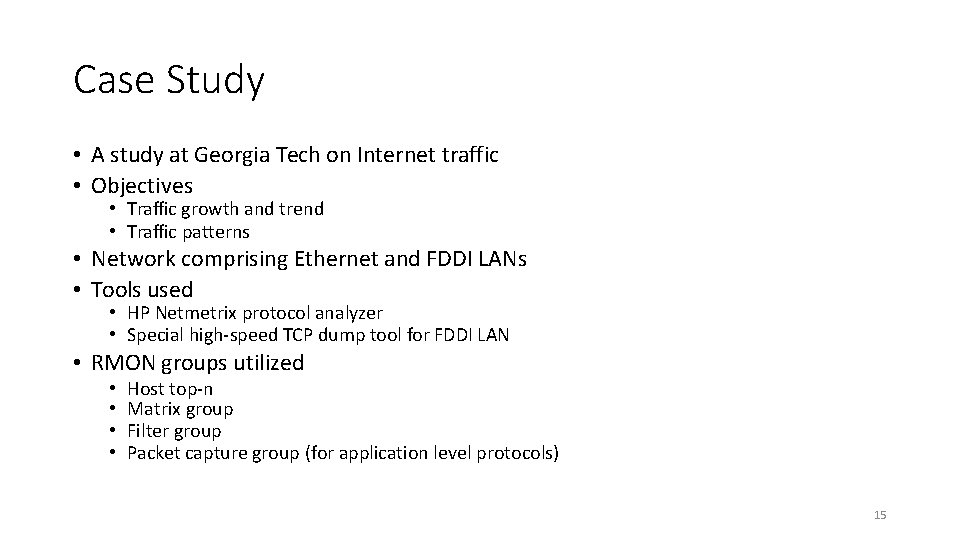
Case Study • A study at Georgia Tech on Internet traffic • Objectives • Traffic growth and trend • Traffic patterns • Network comprising Ethernet and FDDI LANs • Tools used • HP Netmetrix protocol analyzer • Special high-speed TCP dump tool for FDDI LAN • RMON groups utilized • • Host top-n Matrix group Filter group Packet capture group (for application level protocols) 15
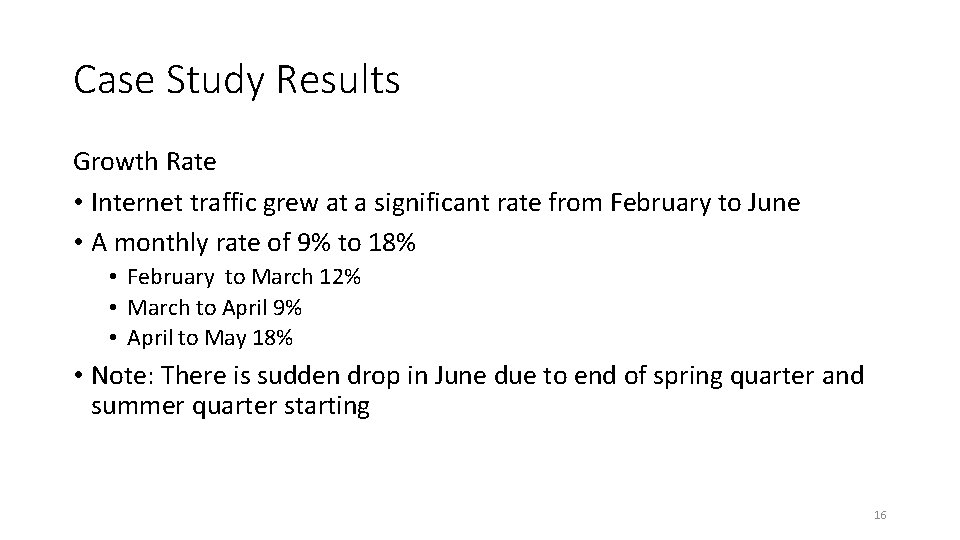
Case Study Results Growth Rate • Internet traffic grew at a significant rate from February to June • A monthly rate of 9% to 18% • February to March 12% • March to April 9% • April to May 18% • Note: There is sudden drop in June due to end of spring quarter and summer quarter starting 16
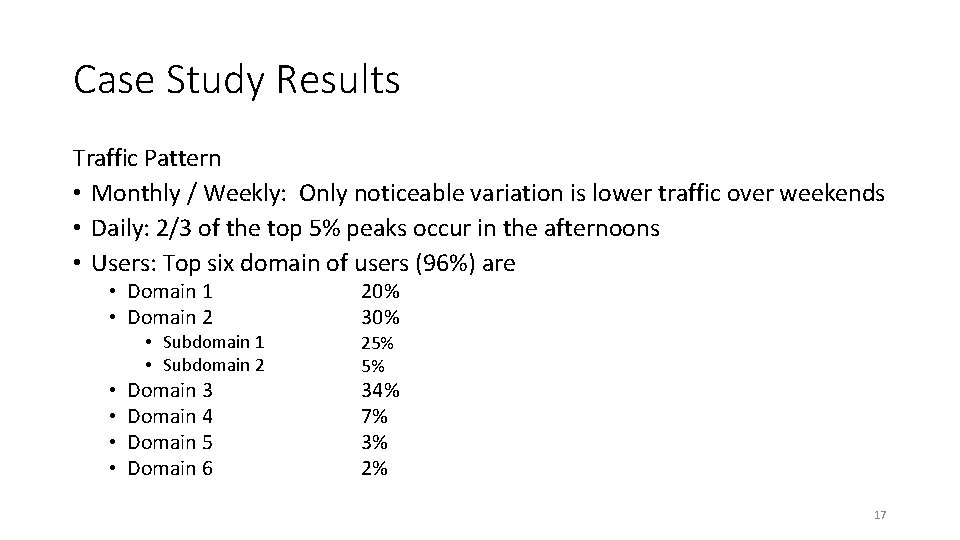
Case Study Results Traffic Pattern • Monthly / Weekly: Only noticeable variation is lower traffic over weekends • Daily: 2/3 of the top 5% peaks occur in the afternoons • Users: Top six domain of users (96%) are • Domain 1 • Domain 2 • Subdomain 1 • Subdomain 2 • • Domain 3 Domain 4 Domain 5 Domain 6 20% 30% 25% 5% 34% 7% 3% 2% 17
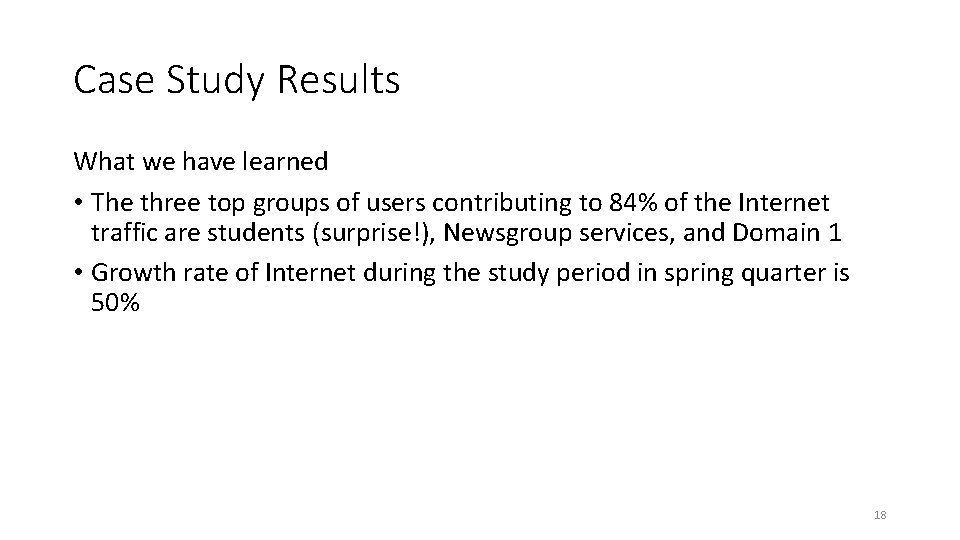
Case Study Results What we have learned • The three top groups of users contributing to 84% of the Internet traffic are students (surprise!), Newsgroup services, and Domain 1 • Growth rate of Internet during the study period in spring quarter is 50% 18
References • James Kurose and Keith Ross, Computer Networking, a top-down approach, Pearson, 6 E, 2013, Chapter 9. • SNMP Technical Reference, Microsoft Tech. Net. • Simple Network Management Protocol, Cisco Unified Communications Manager Managed Services Guide, Chapter 4. • William Stallings, Data and Computer Communications, Pearson, 8 E, 2010, Chapter 22. • SNMP - IT Strategic Template Document Solutions. • Remote Monitoring (RMON), Internetworking Technologies Handbook 2 E, Cisco Press, 2001. • Benoit Claise and Ralf Wolteris, Network Management: Accounting and Performance Strategies, 1 E, Cisco Press, 2007, Chapter 5. 19