CS 246 SearchEngine Scale Junghoo John Cho UCLA

- Slides: 20
CS 246: Search-Engine Scale Junghoo “John” Cho UCLA
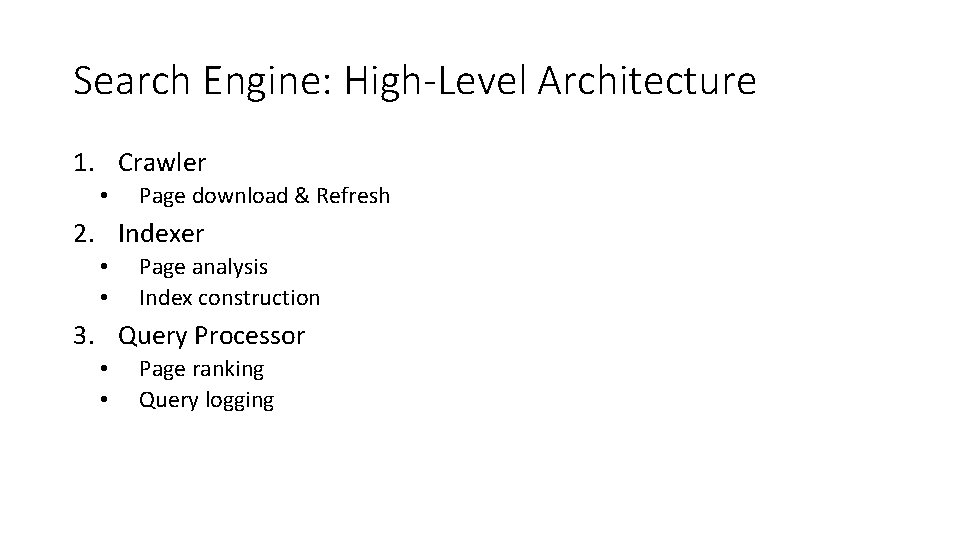
Search Engine: High-Level Architecture 1. Crawler • Page download & Refresh 2. Indexer • • Page analysis Index construction 3. Query Processor • • Page ranking Query logging
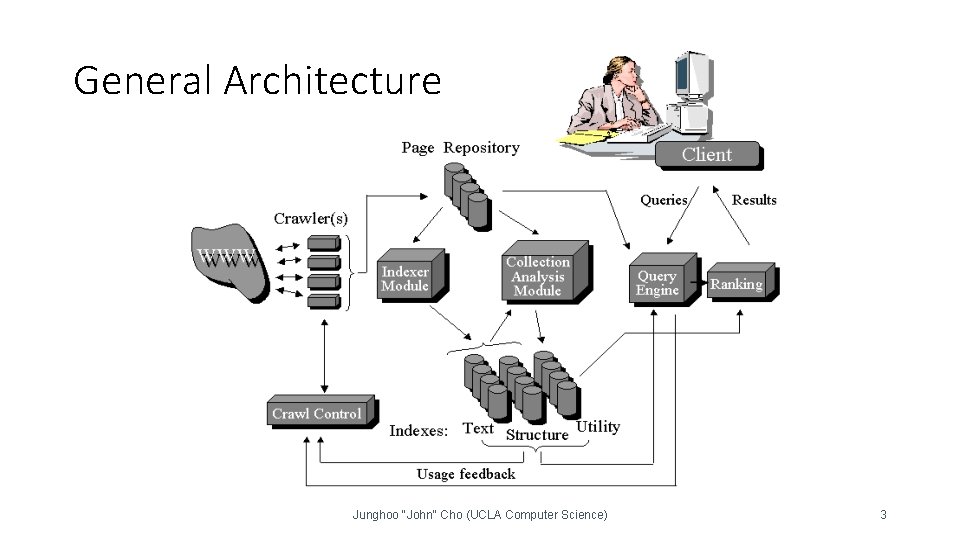
General Architecture Junghoo "John" Cho (UCLA Computer Science) 3
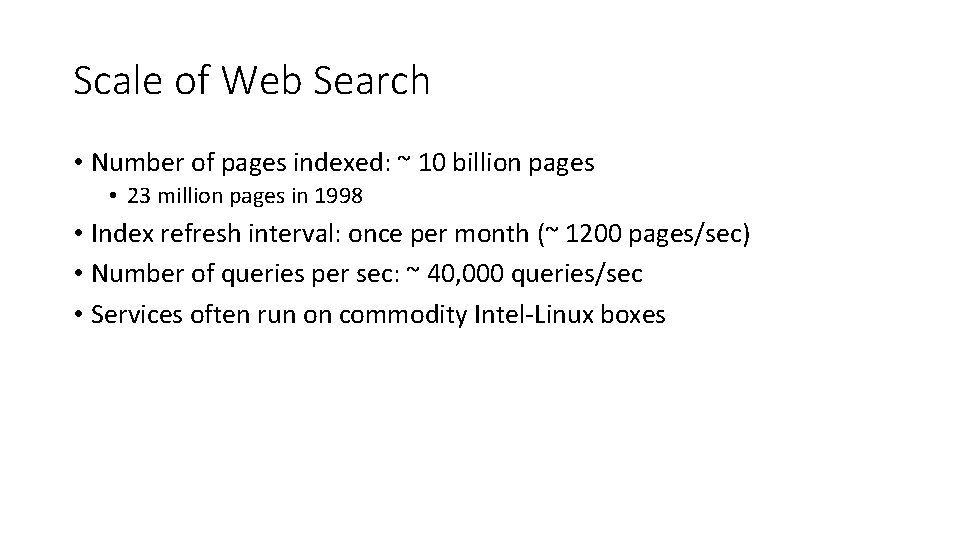
Scale of Web Search • Number of pages indexed: ~ 10 billion pages • 23 million pages in 1998 • Index refresh interval: once per month (~ 1200 pages/sec) • Number of queries per sec: ~ 40, 000 queries/sec • Services often run on commodity Intel-Linux boxes
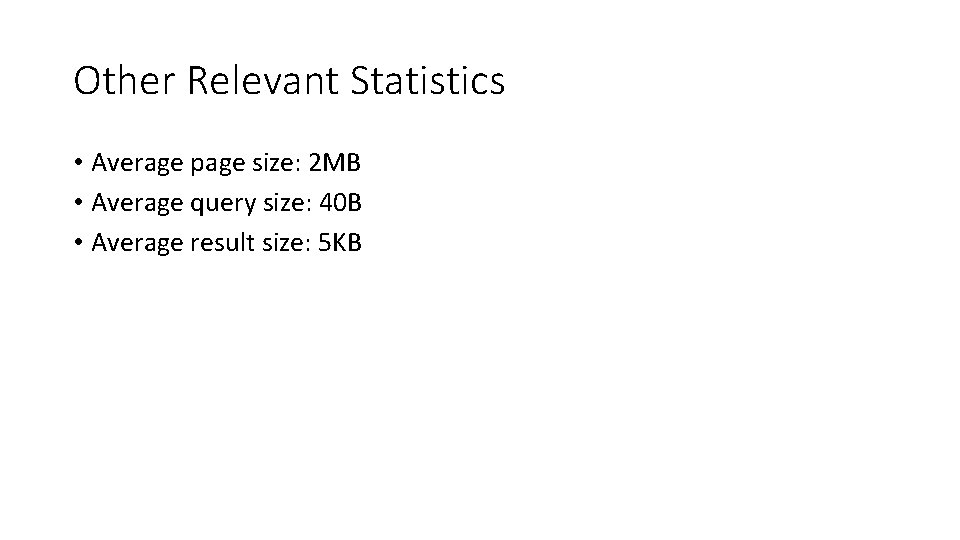
Other Relevant Statistics • Average page size: 2 MB • Average query size: 40 B • Average result size: 5 KB
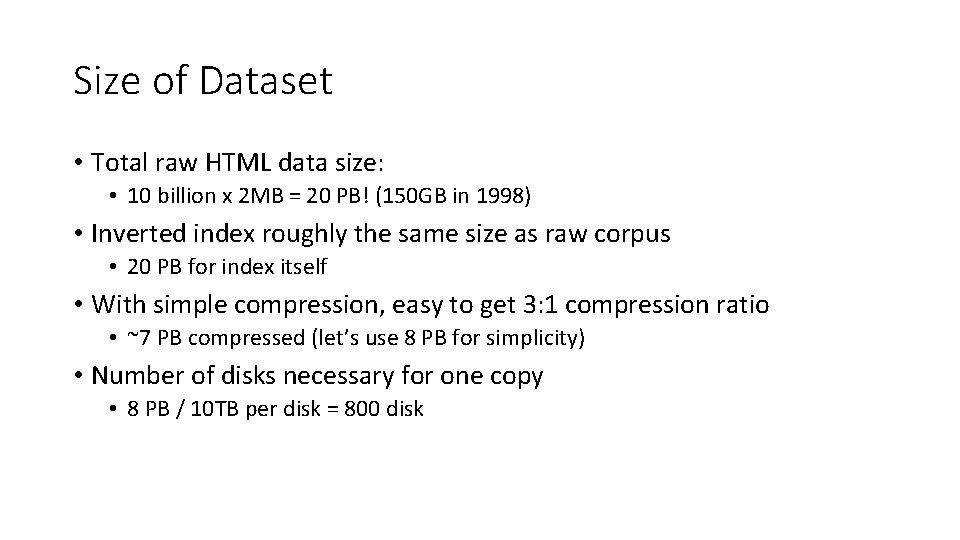
Size of Dataset • Total raw HTML data size: • 10 billion x 2 MB = 20 PB! (150 GB in 1998) • Inverted index roughly the same size as raw corpus • 20 PB for index itself • With simple compression, easy to get 3: 1 compression ratio • ~7 PB compressed (let’s use 8 PB for simplicity) • Number of disks necessary for one copy • 8 PB / 10 TB per disk = 800 disk
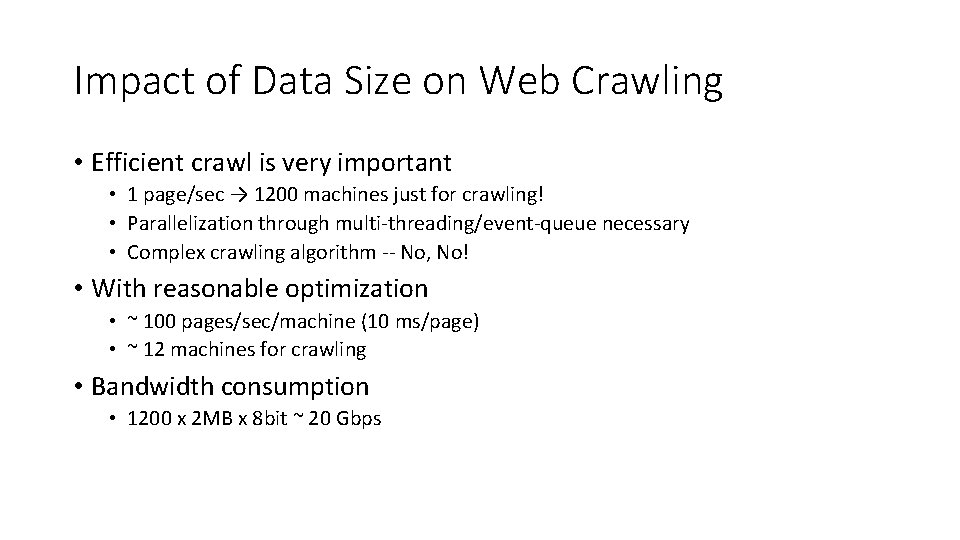
Impact of Data Size on Web Crawling • Efficient crawl is very important • 1 page/sec → 1200 machines just for crawling! • Parallelization through multi-threading/event-queue necessary • Complex crawling algorithm -- No, No! • With reasonable optimization • ~ 100 pages/sec/machine (10 ms/page) • ~ 12 machines for crawling • Bandwidth consumption • 1200 x 2 MB x 8 bit ~ 20 Gbps
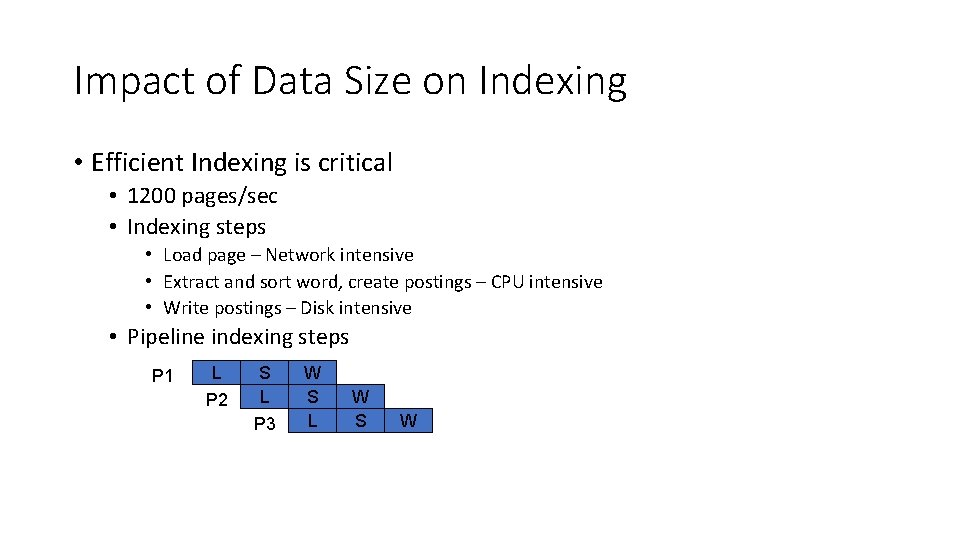
Impact of Data Size on Indexing • Efficient Indexing is critical • 1200 pages/sec • Indexing steps • Load page – Network intensive • Extract and sort word, create postings – CPU intensive • Write postings – Disk intensive • Pipeline indexing steps P 1 L P 2 S L P 3 W S L W S W
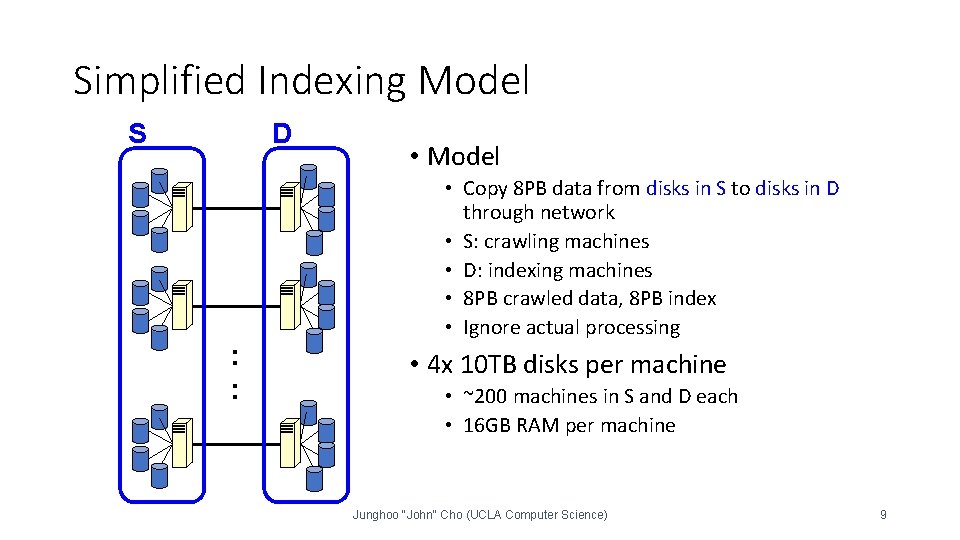
Simplified Indexing Model S D : : • Model • Copy 8 PB data from disks in S to disks in D through network • S: crawling machines • D: indexing machines • 8 PB crawled data, 8 PB index • Ignore actual processing • 4 x 10 TB disks per machine • ~200 machines in S and D each • 16 GB RAM per machine Junghoo "John" Cho (UCLA Computer Science) 9
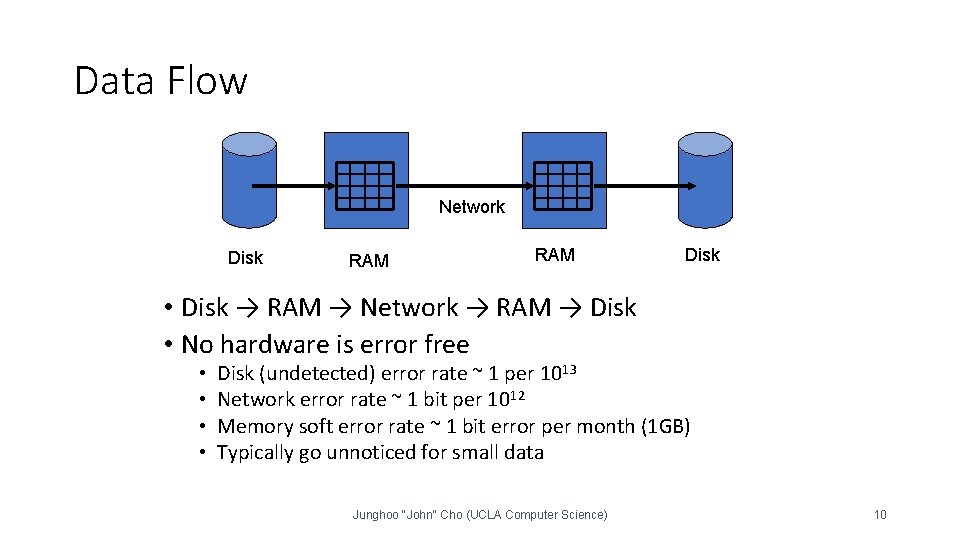
Data Flow Network Disk RAM Disk • Disk → RAM → Network → RAM → Disk • No hardware is error free • • Disk (undetected) error rate ~ 1 per 1013 Network error rate ~ 1 bit per 1012 Memory soft error rate ~ 1 bit error per month (1 GB) Typically go unnoticed for small data Junghoo "John" Cho (UCLA Computer Science) 10
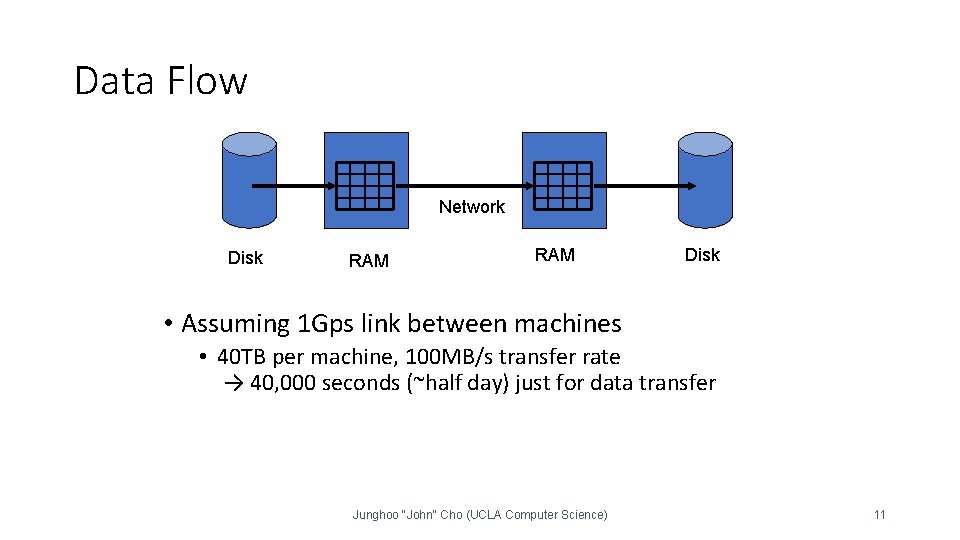
Data Flow Network Disk RAM Disk • Assuming 1 Gps link between machines • 40 TB per machine, 100 MB/s transfer rate → 40, 000 seconds (~half day) just for data transfer Junghoo "John" Cho (UCLA Computer Science) 11
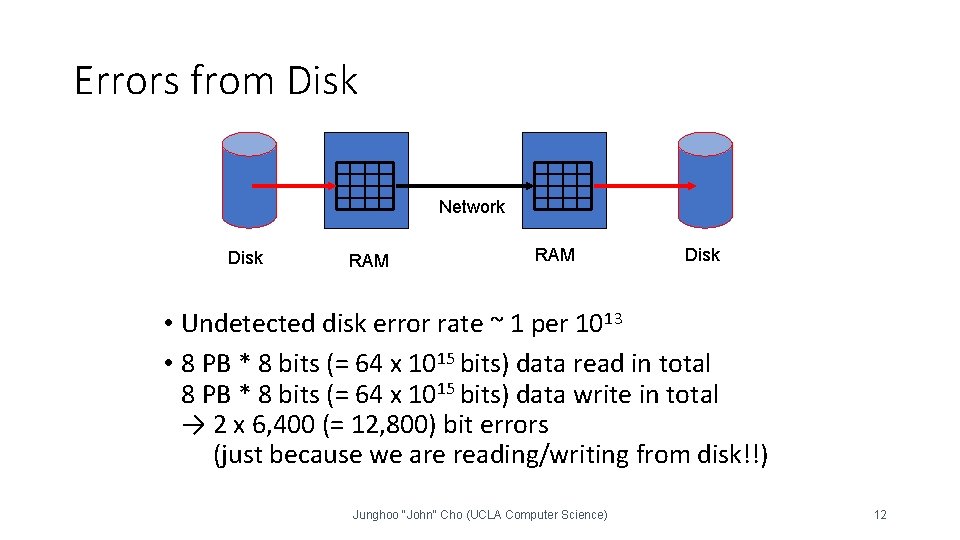
Errors from Disk Network Disk RAM Disk • Undetected disk error rate ~ 1 per 1013 • 8 PB * 8 bits (= 64 x 1015 bits) data read in total 8 PB * 8 bits (= 64 x 1015 bits) data write in total → 2 x 6, 400 (= 12, 800) bit errors (just because we are reading/writing from disk!!) Junghoo "John" Cho (UCLA Computer Science) 12
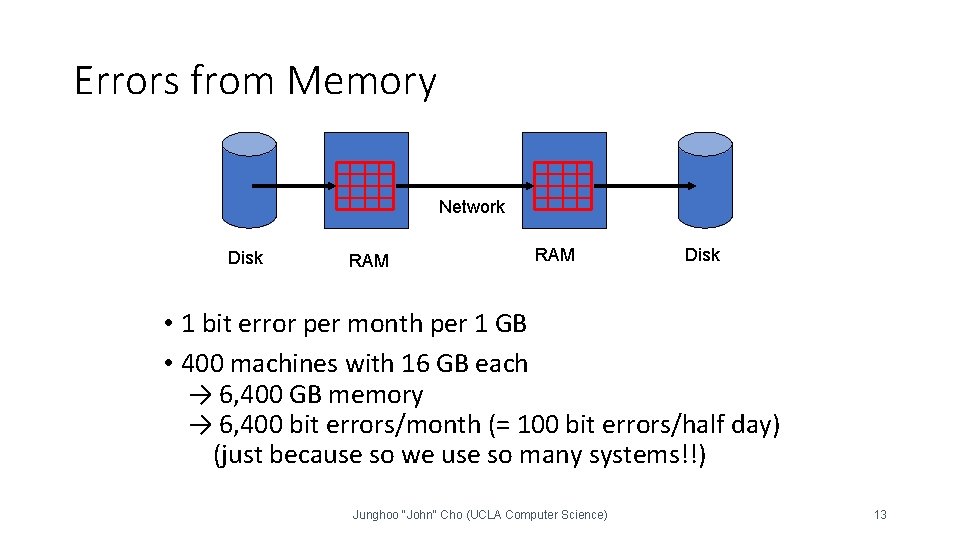
Errors from Memory Network Disk RAM Disk • 1 bit error per month per 1 GB • 400 machines with 16 GB each → 6, 400 GB memory → 6, 400 bit errors/month (= 100 bit errors/half day) (just because so we use so many systems!!) Junghoo "John" Cho (UCLA Computer Science) 13
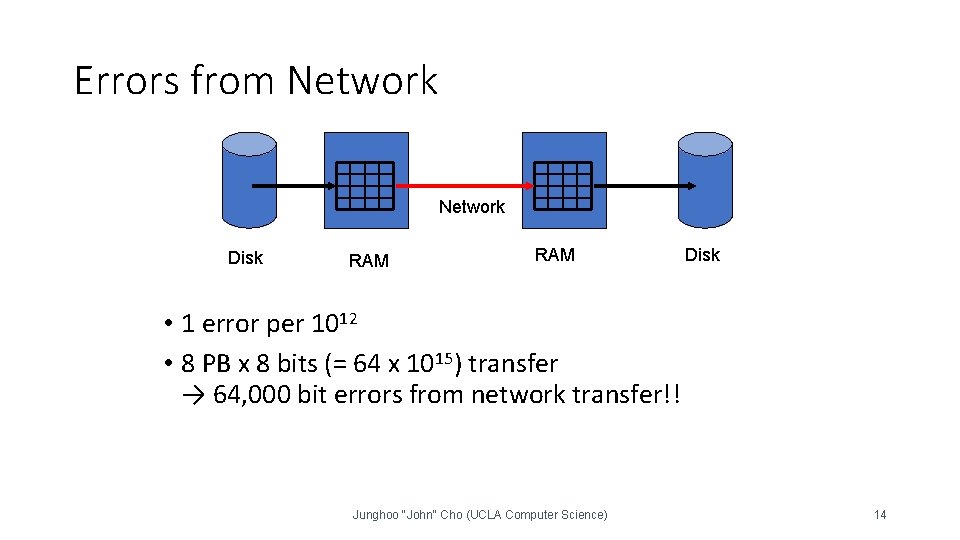
Errors from Network Disk RAM Disk • 1 error per 1012 • 8 PB x 8 bits (= 64 x 1015) transfer → 64, 000 bit errors from network transfer!! Junghoo "John" Cho (UCLA Computer Science) 14
Impact of Data Size on Data Corruption (1) • During indexing, something always goes wrong • 64, 000 bit errors from network • 6, 400 bit errors from disk IO • 100 bit errors from memory • Very difficult to trace and debug • Pure hardware errors, but very difficult to differentiate hardware error and software bug • Software bugs may also cause similar errors • Our “consumer” OS/application is not designed to deal with such errors yet
Impact of Data Size on Data Corruption (2) • Our data pipeline should verify data integrity in every step • Data corruption in the middle of, say, sorting completely screws up the sorting • Need a data-verification step after every operation • Algorithm, data structure must be resilient to data corruption • Check points, etc. • ECC RAM is a must • Can detect most 1 bit errors
Scale of Query Processing • 40, 000 queries / sec • Rule of thumb: 10 requests / sec / CPU • The exact number depends on number of disks, memory size, etc. • ~ 4, 000 machines just to answer queries • 5 KB / answer page • 40, 000 x 5 KB x 8 bit ~ 1. 6 Gbps
Scale of Query Processing • Index size: 8 PB → 800 disks, 200 machines • Potentially 200 -machine cluster to answer a query • If one machine goes down, the cluster may go down • Multi-tier index structure can be helpful • Tier 1: Popular (high Page. Rank) page index • Tier 2: Less popular page index • Answer most queries with tier-1 cluster
Impact of Data Size on System Reliability • Disk mean time to failure: ~ 3 years → (3 x 365 days) / 800 disks ~ 1 day • One disk failure every day!! • Remember, this is just for one copy • Data organization should be very resilient to disk failure • We should never lose data even if we lose a disk
Hardware at Google • ~10 K Intel-Linux cluster • Assuming 99. 9% uptime (8 hour downtime per year) • 10 machines are always down • Nightmare for system administrators • Assuming 3 -year hardware replacement • Set up, replace and dump 10 machines every day • Heterogeneity is unavoidable ¨ Job posting at Google Position Requirements: • Able to lift/move 20 -30 lbs equipment on a daily basis.