CS 246 Page Rank Junghoo John Cho UCLA

- Slides: 27
CS 246: Page. Rank Junghoo “John” Cho UCLA
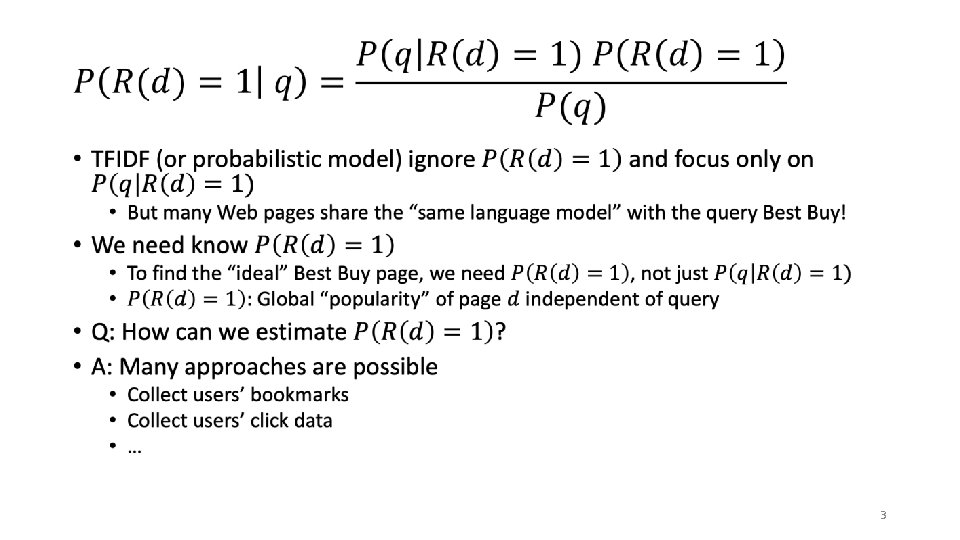
Problems of TFIDF • Q: Using TFIDF, what pages are likely to be returned for the query “Best Buy”? • TFIDF works well on small controlled corpus, but not on the Web • Do users really want to see pages that contain the word “Best Buy” many times for the query Best Buy? • Easy to spam • Ranking purely based on page content • Authors can manipulate page content to get high ranking • Q: How can search engine figure out the pages that users truly have in mind? 2
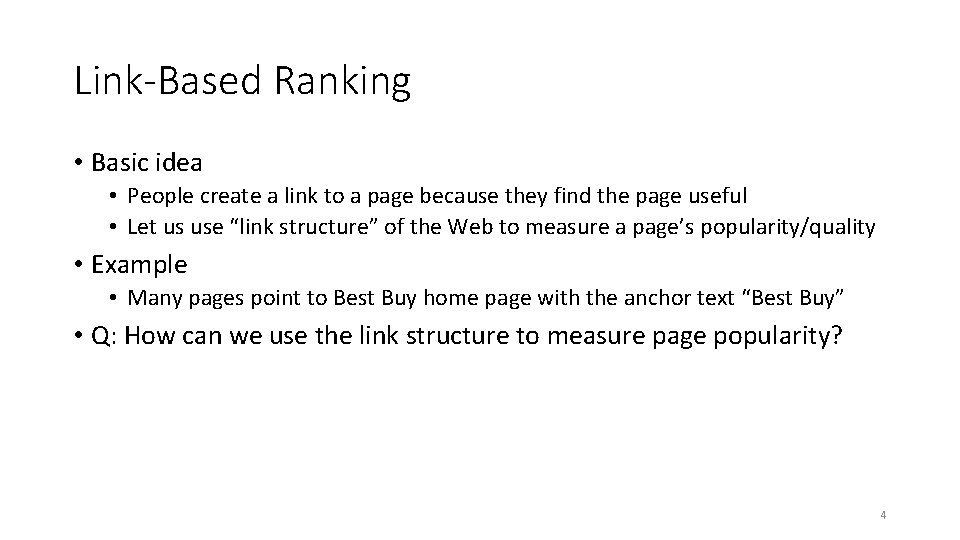
Link-Based Ranking • Basic idea • People create a link to a page because they find the page useful • Let us use “link structure” of the Web to measure a page’s popularity/quality • Example • Many pages point to Best Buy home page with the anchor text “Best Buy” • Q: How can we use the link structure to measure page popularity? 4
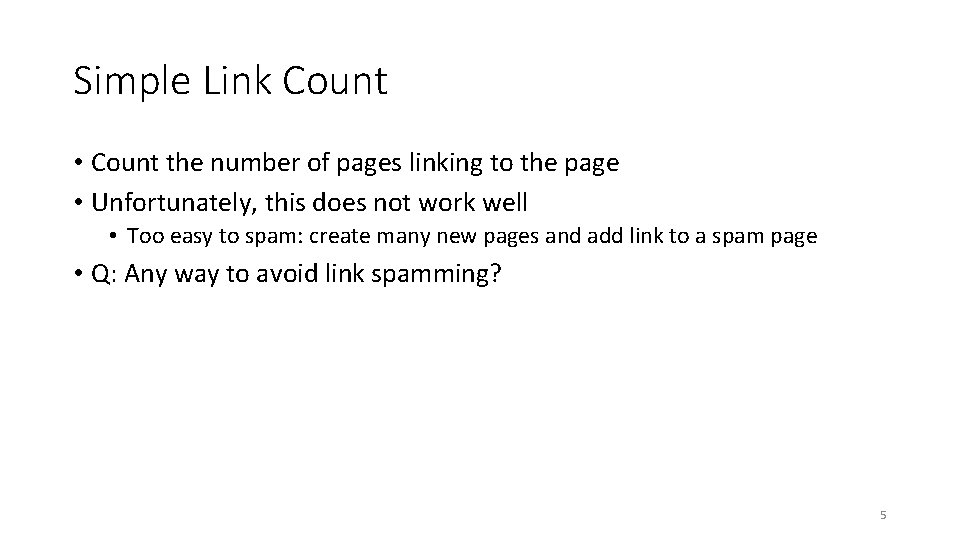
Simple Link Count • Count the number of pages linking to the page • Unfortunately, this does not work well • Too easy to spam: create many new pages and add link to a spam page • Q: Any way to avoid link spamming? 5
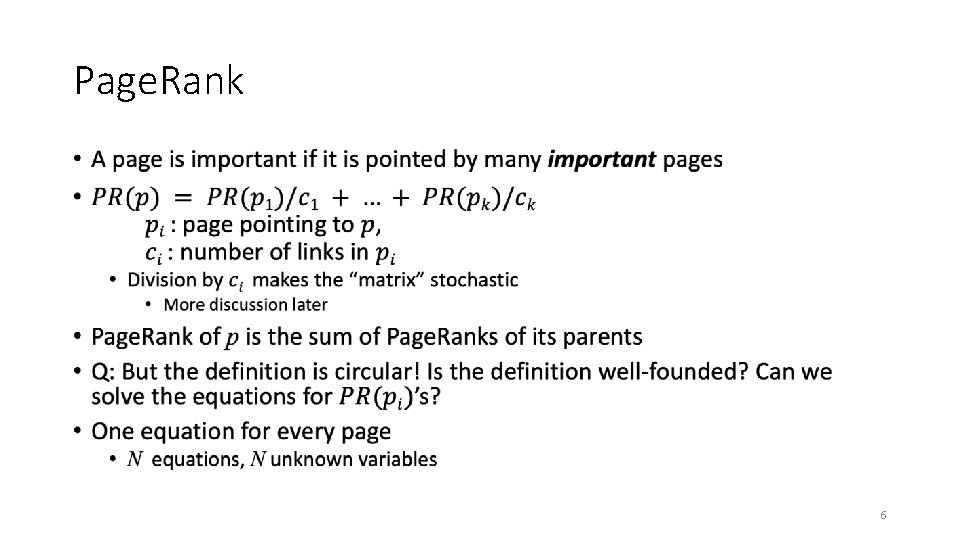
Page. Rank • 6
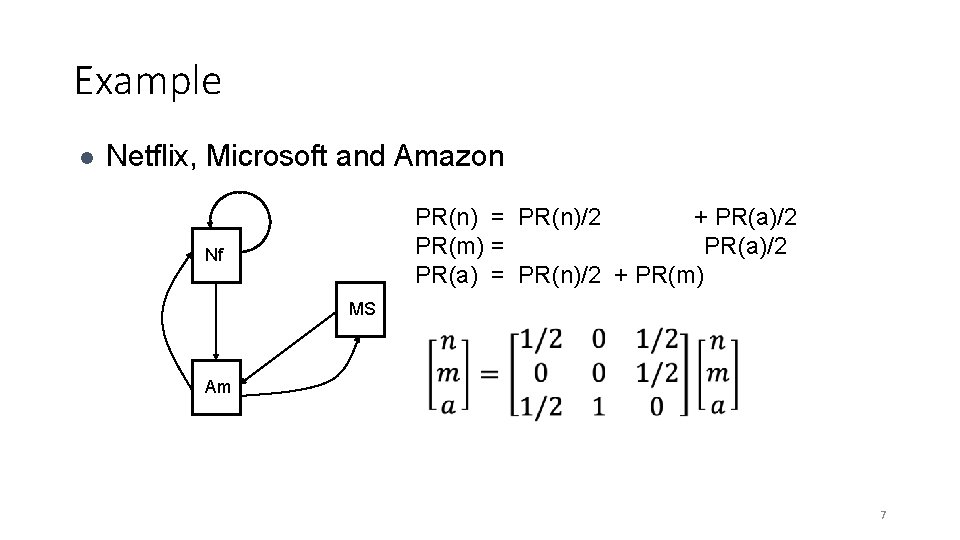
Example l Netflix, Microsoft and Amazon PR(n) = PR(n)/2 + PR(a)/2 PR(m) = PR(a)/2 PR(a) = PR(n)/2 + PR(m) Nf MS Am 7
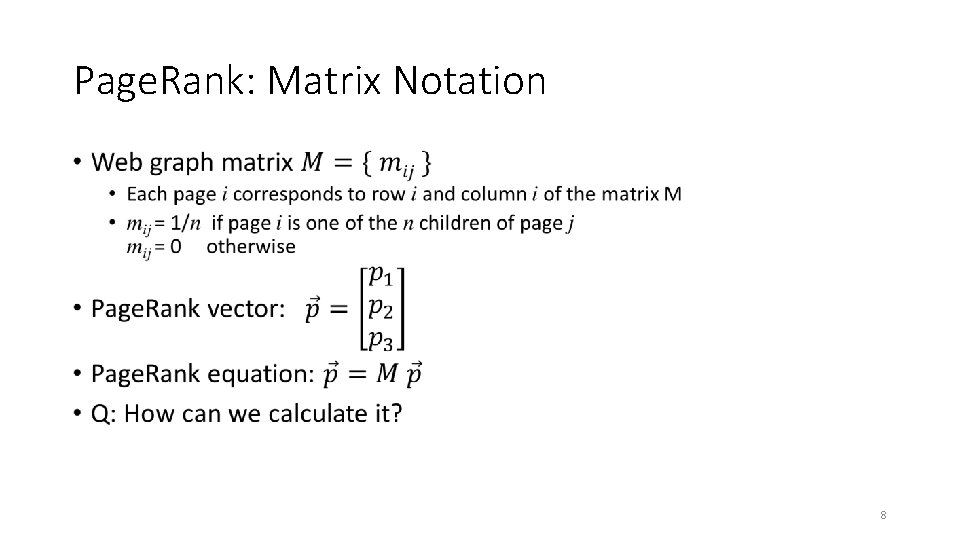
Page. Rank: Matrix Notation • 8
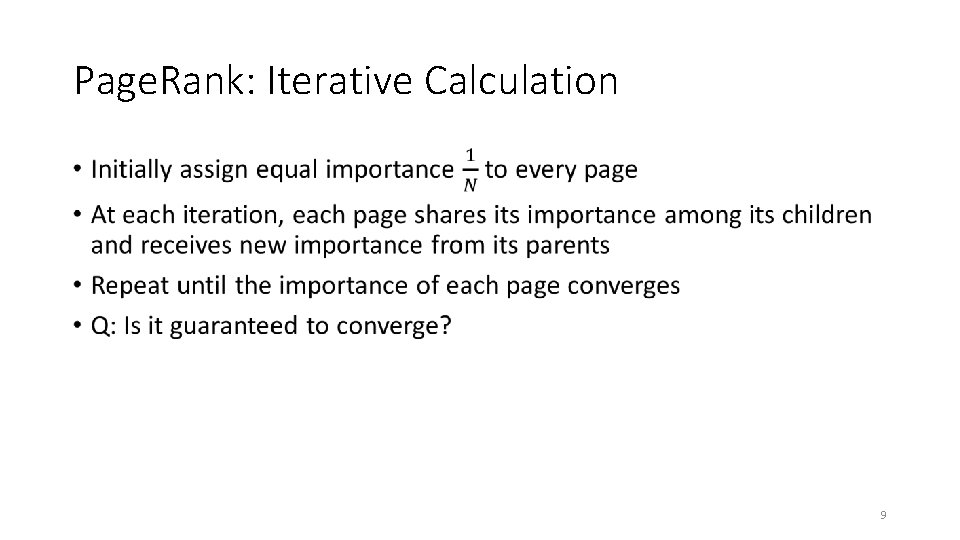
Page. Rank: Iterative Calculation • 9
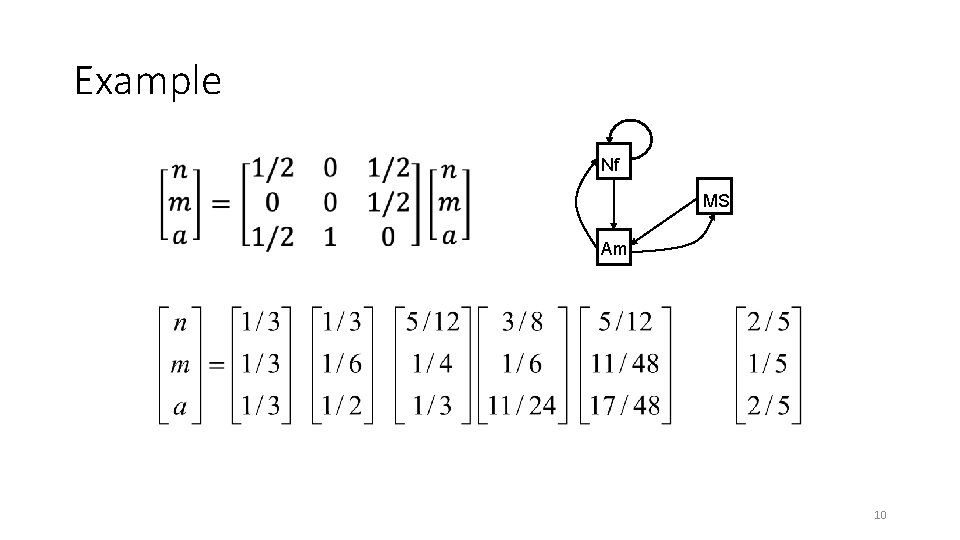
Example Nf MS Am 10
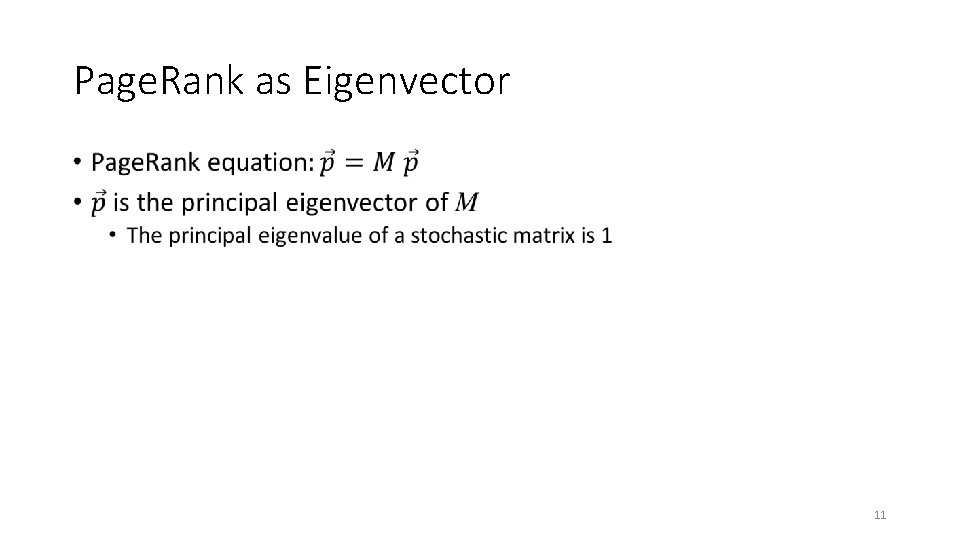
Page. Rank as Eigenvector • 11
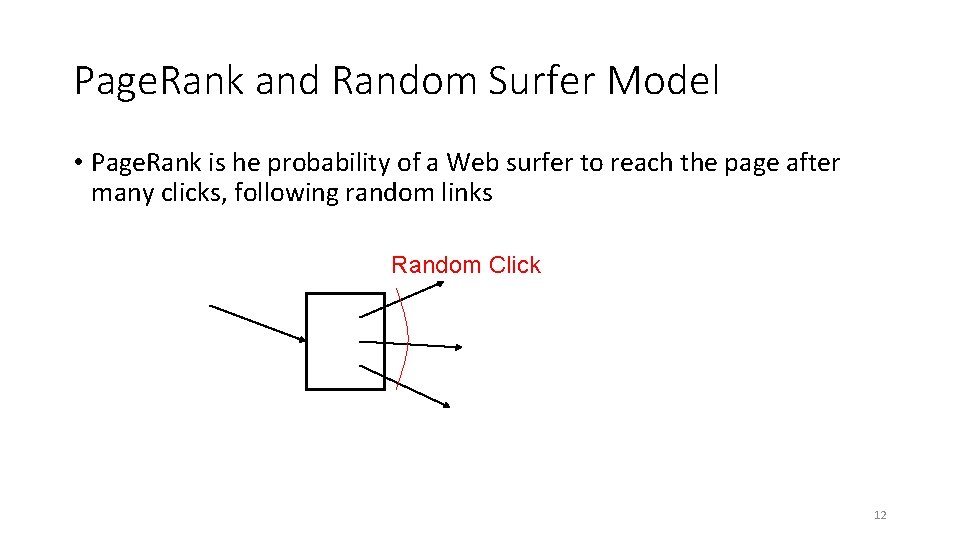
Page. Rank and Random Surfer Model • Page. Rank is he probability of a Web surfer to reach the page after many clicks, following random links Random Click 12
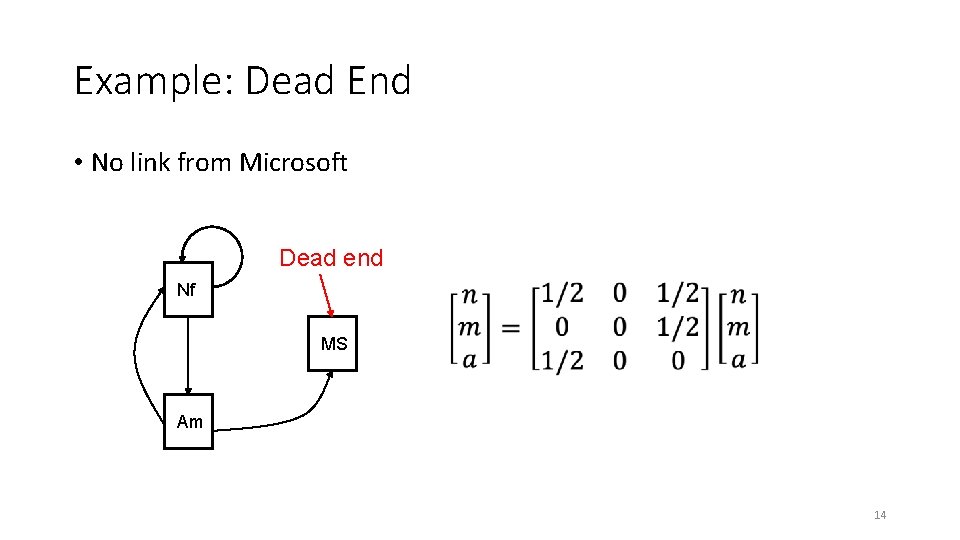
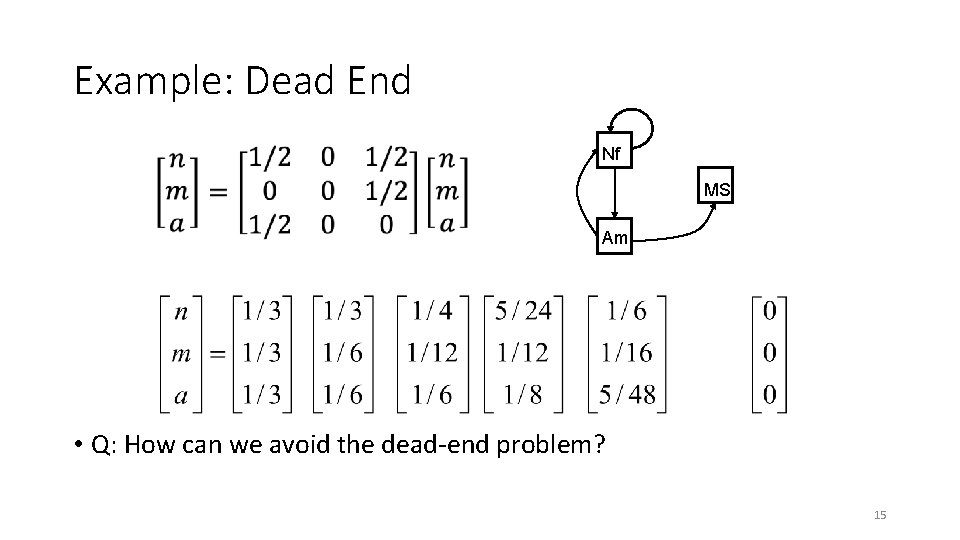
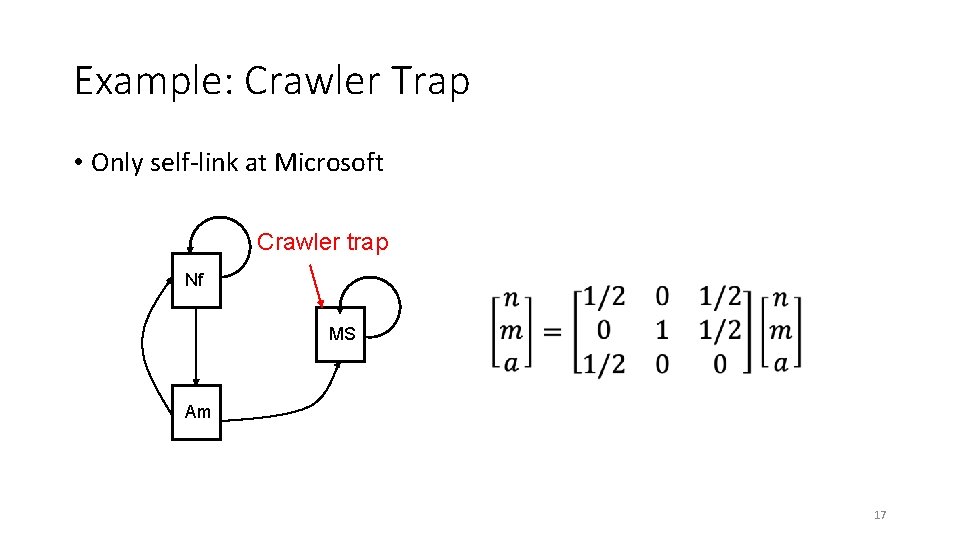
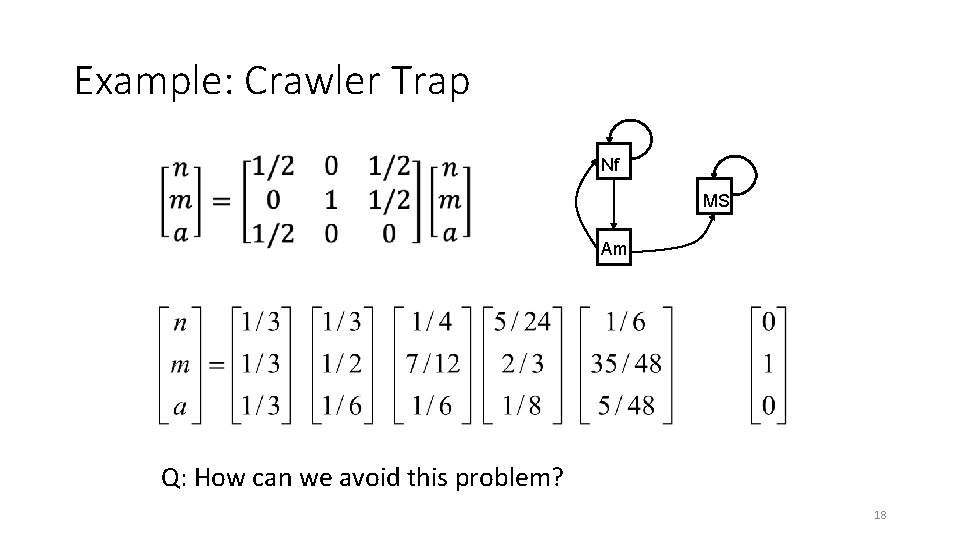
Problems on the Real Web • Dead end • A page with no links to send importance • All importance “leaks out of” the Web • Crawler trap • A group of one or more pages that have no links out of the group • Accumulate all the importance of the Web 13
Example: Dead End • No link from Microsoft Dead end Nf MS Am 14
Example: Dead End Nf MS Am • Q: How can we avoid the dead-end problem? 15
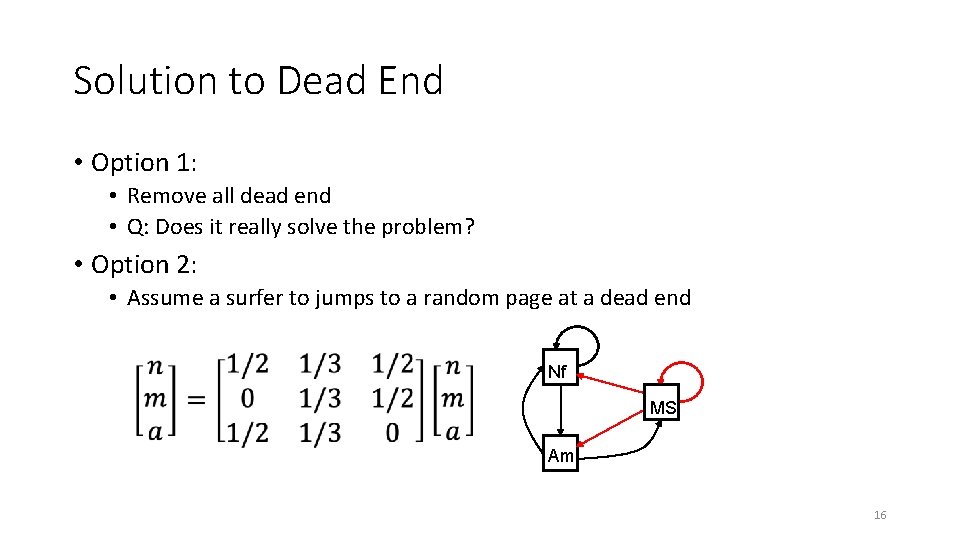
Solution to Dead End • Option 1: • Remove all dead end • Q: Does it really solve the problem? • Option 2: • Assume a surfer to jumps to a random page at a dead end Nf MS Am 16
Example: Crawler Trap • Only self-link at Microsoft Crawler trap Nf MS Am 17
Example: Crawler Trap Nf MS Am Q: How can we avoid this problem? 18
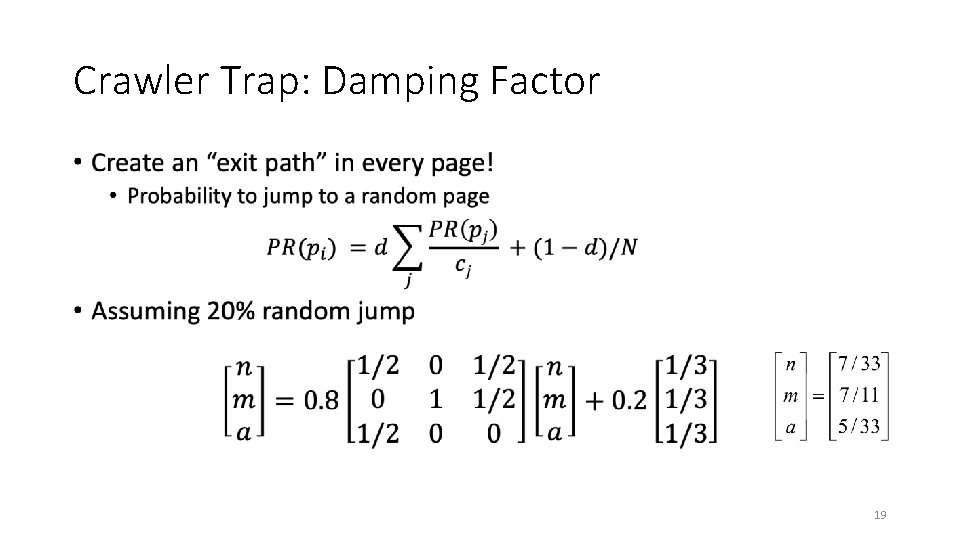
Crawler Trap: Damping Factor • 19
Crawler Trap: Damping Factor • Random surfer interpretation • A surfer gets “bored” after a few clicks and randomly jumps to another page • Damping factor makes the graph a fully-connected graph • Ensures convergence from iterative computation method 20
Link-Spam Problem • Q: What if a spammer creates a lot of pages and create a link to a single spam page? • Page. Rank better than simple link count, but still vulnerable to link spam • Q: Any way to avoid link spam? 21
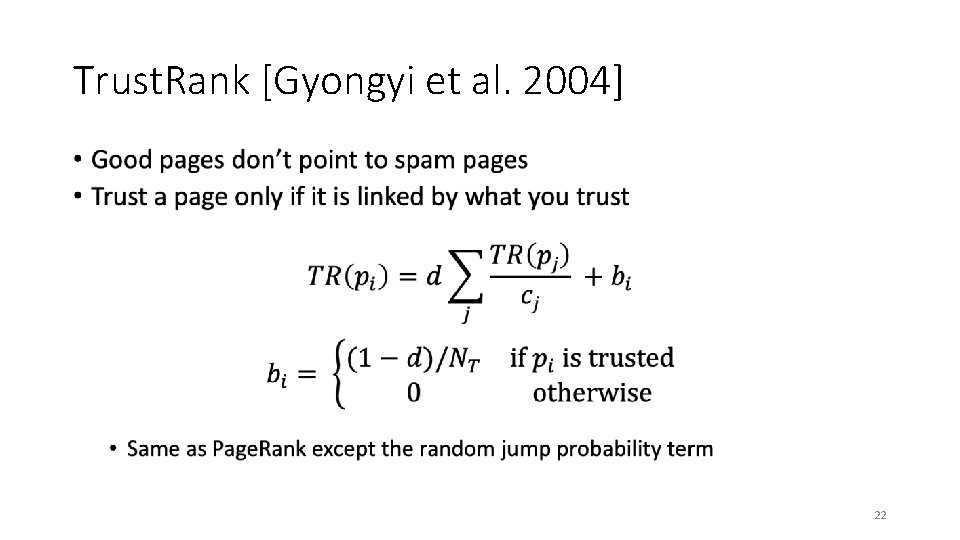
Trust. Rank [Gyongyi et al. 2004] • 22
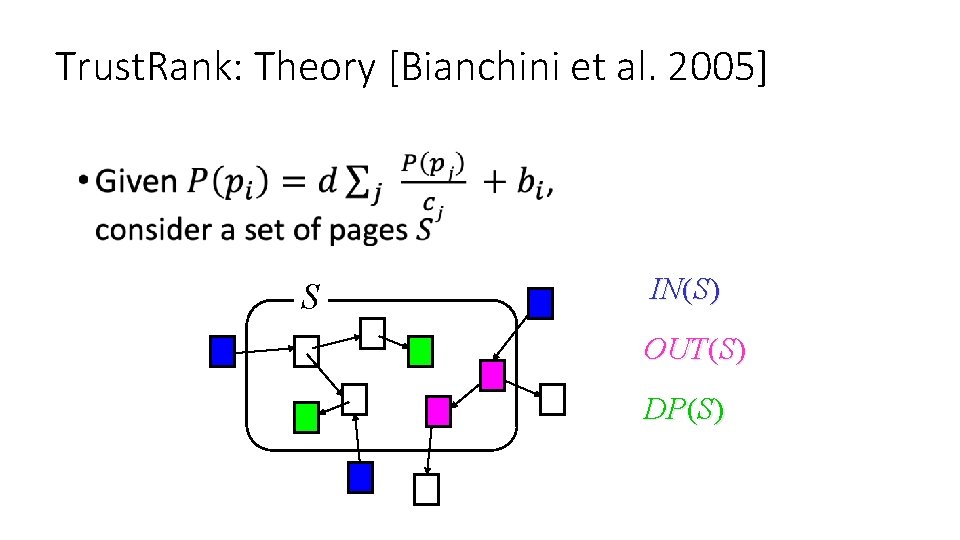
Trust. Rank: Theory [Bianchini et al. 2005] • S IN(S) OUT(S) DP(S)
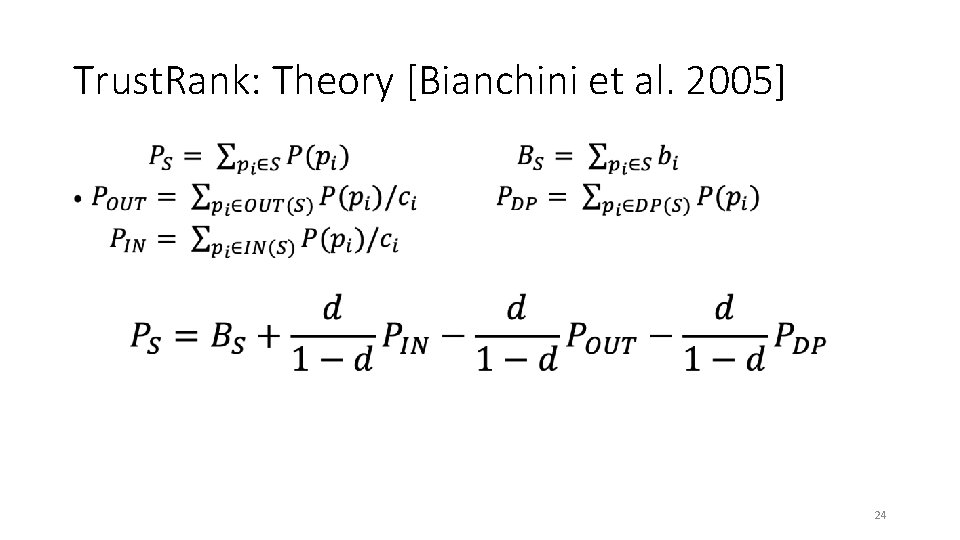
Trust. Rank: Theory [Bianchini et al. 2005] • 24
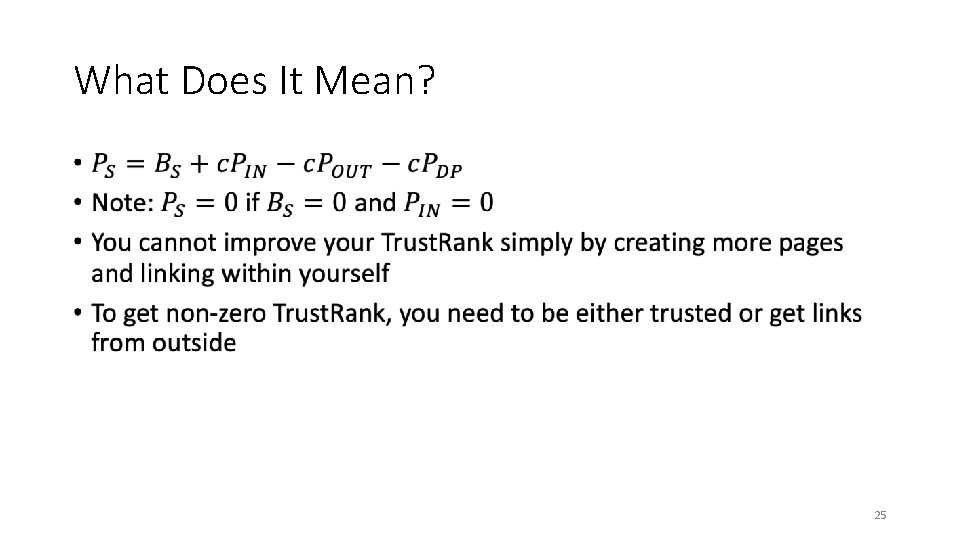
What Does It Mean? • 25
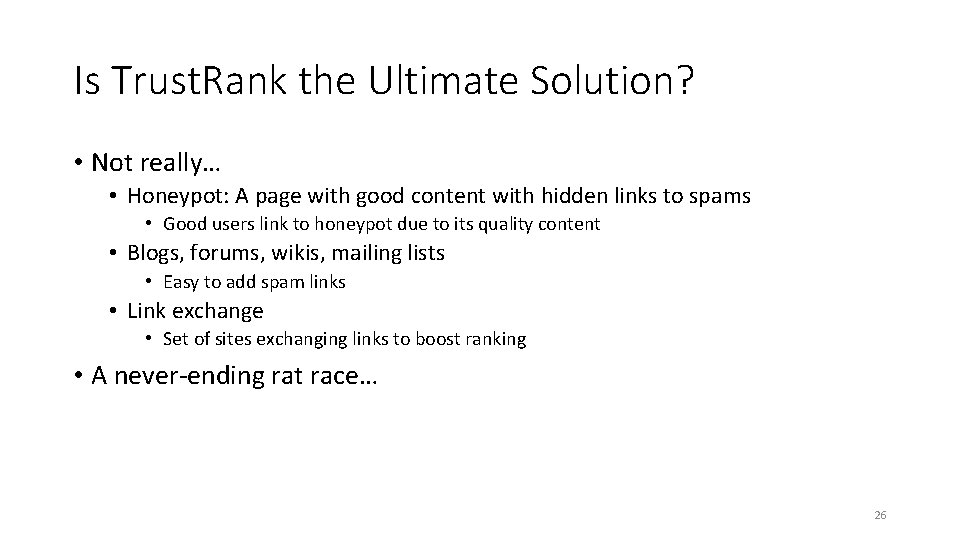
Is Trust. Rank the Ultimate Solution? • Not really… • Honeypot: A page with good content with hidden links to spams • Good users link to honeypot due to its quality content • Blogs, forums, wikis, mailing lists • Easy to add spam links • Link exchange • Set of sites exchanging links to boost ranking • A never-ending rat race… 26
References • [Gyongyi et al. 2004] Z. Gyöngyi, H. Garcia-Molina, J. Pedersen: Combating Web Spam with Trust. Rank, VLDB Conference 2004 • [Bianchini et al. 2005] Monica Bianchini, Marco Gori, and Franco Scarselli: Inside Page. Rank, ACM Transactions on Internet Technology 5(1), February 2005 27