Community Actions Resources Empowering Seniors CARES Utilization of




- Slides: 63
Community Actions & Resources Empowering Seniors (CARES) Utilization of the Assessment tools: Translating numbers and data into ACTION Dr. Pamela Thornton Geriatrician November, 2016
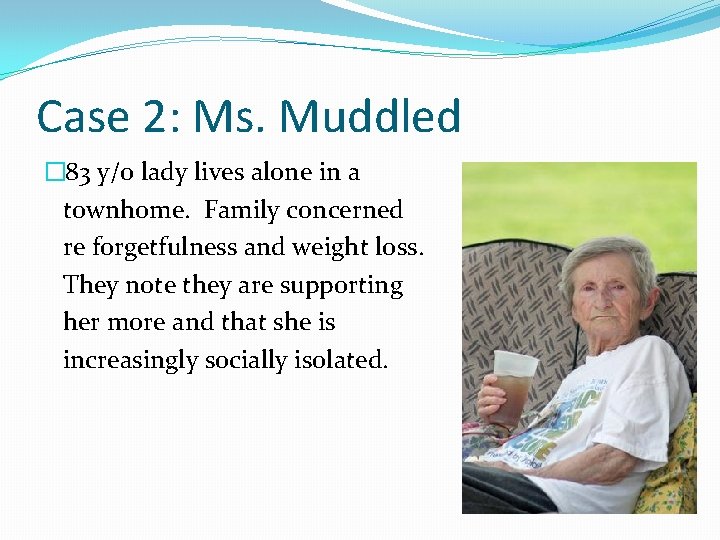
A couple cases to keep in mind �Case 1: Mr. Slip � 79 y/o male lives alone in 3 rd floor condo comes in with complaints of feeling ‘fuzzy headed’ and having fallen outside while gardening at his son’s. �Case 2: Ms. Muddled � 83 y/o lady lives alone in a townhome. Family concerned re forgetfulness and weight loss. They note they are supporting her more and that she is increasingly socially isolated.
Community Comprehensive Geriatric Assessment Form All information is important to the senior and their health. Only useful if used to make positive change for the patient!
Tools used in the Comprehensive Geriatric Assessment (CGA) �Montreal Cognitive Assessment (Mo. CA) �Mini-Cog �Functional Assessment Staging Test (FAST) �Five Times Sit to Stand Test �Rockwood Clinical Frailty Scale
Montreal Cognitive Assessment (Mo. CA) �Screening test for abnormal cognition (MCI, early dementia) �Tests the various cognitive functions affected by AD and MCI �High sensitivity (80 -90%) for MCI �High specificity (80 -87%) �Further clinical assessment is necessary to assess the etiology of cognitive impairment and to make a diagnosis of dementia
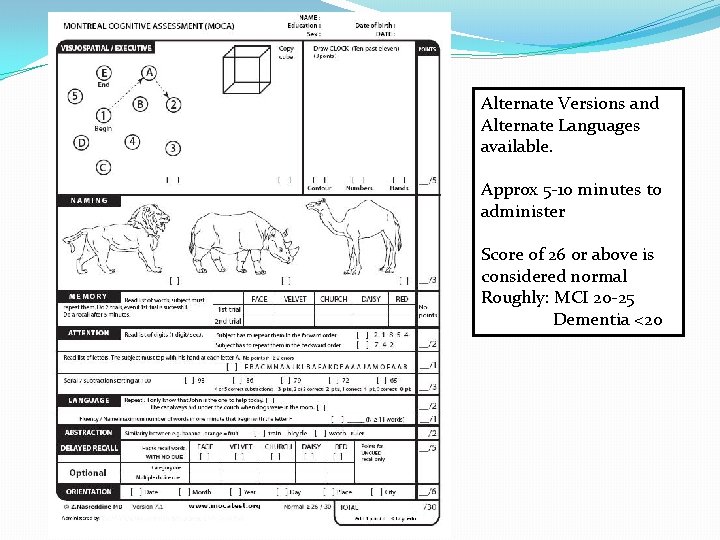
Alternate Versions and Alternate Languages available. Approx 5 -10 minutes to administer Score of 26 or above is considered normal Roughly: MCI 20 -25 Dementia <20
Mo. CA: Scoring and Tips �Out of 30; additional point if < 12 years of education. �Cube and Similarities: often failed if less education �Attention, Digit Span: usually preserved in mild AD. �Memory: �Not usually improved with cuing in AD �Can improve with cuing in those with anxiety, depression, or frontal subcortical vascular disease
Mini-Cog �Three Word Registration �Clock Drawing �Three Word Recall (no score) 0 or 2 points (N or not) 0 -3 points ___________ Total 0 -5 points Cut-off: <3 for dementia screening
Mini-Cog �Validation study showed the Mini-Cog to have comparable psychometric properties to the MMSE with a sensitivity of 76% (versus 79%) and a specificity of 89% (versus 88%) for dementia (Borson et al. , 2003). �The Mini-Cog was found to be equal or better than the MMSE in detecting dementia in multi-ethnic elderly individuals, easier to administer to non. English speakers, and was less biased by low education and literacy (Borson et al. , 2005)
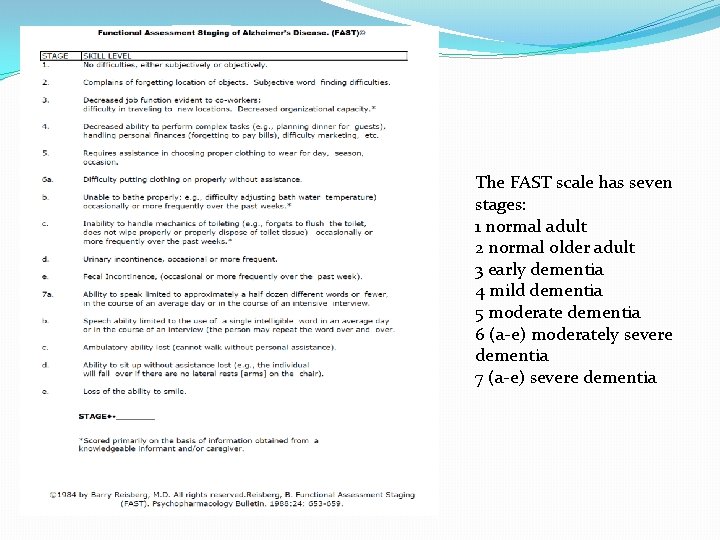
Functional Assessment Staging of Alzheimer’s Disease (FAST) �The FAST scale is a functional scale designed to evaluate patients at the more moderate-severe stages of dementia when the MMSE no longer can reflect changes in a meaningful clinical way. �In the early stages the patient may be able to participate in the FAST administration but usually the information should be collected from a caregiver.
The FAST scale has seven stages: 1 normal adult 2 normal older adult 3 early dementia 4 mild dementia 5 moderate dementia 6 (a-e) moderately severe dementia 7 (a-e) severe dementia
Five Times Sit to Stand Test �Performance measure of functional mobility and strength of the lower extremities. �An individual is asked to rise from sitting to standing with arms crossed and repeat 5 x. �Timing begins at GO and ends when the buttocks touch the seat at the last repetition. �Practice trial may be given (or demonstrated if you feel the patient may be too fatigued to practice first).
Five Times Sit to Stand Test in Community Dwelling Elderly �Test is timed and score is ZERO if patient cannot complete. �For community-dwelling elderly, cut off of > 12 -15 sec to identify need for further assessment of falls risk. �https: //www. youtube. com/watch? v=4 N 4 Ph. Zly. YGM �Estimate value for normal performance: � 60 -69 y/o = 11. 4 sec � 70 -79 y/o = 12. 6 sec � 80 -89 y/o = 14. 8 sec
Frailty in Seniors �Frail elderly are often NOT included in research trials. �Older adults who are frail have limited global physiologic reserve and are not able to withstand stressors. �They are associated with increased susceptibility to disability and poor health care outcomes. �Frailty is easier to recognize than define.
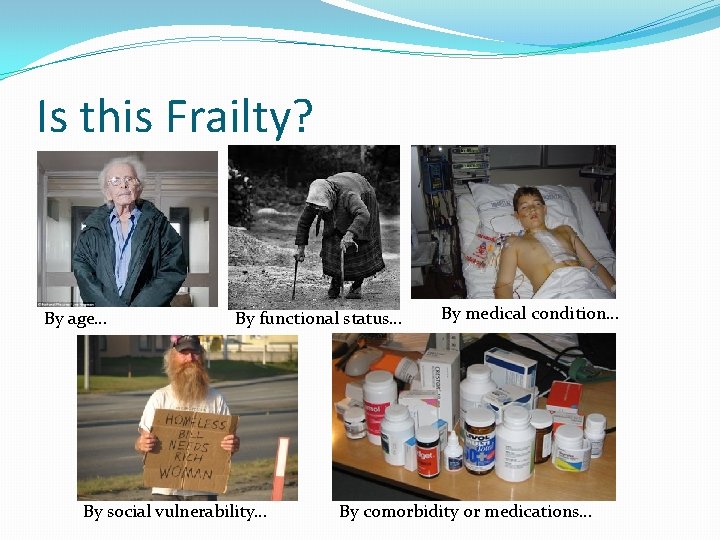
Is this Frailty? By age… By functional status… By social vulnerability… By medical condition… By comorbidity or medications…
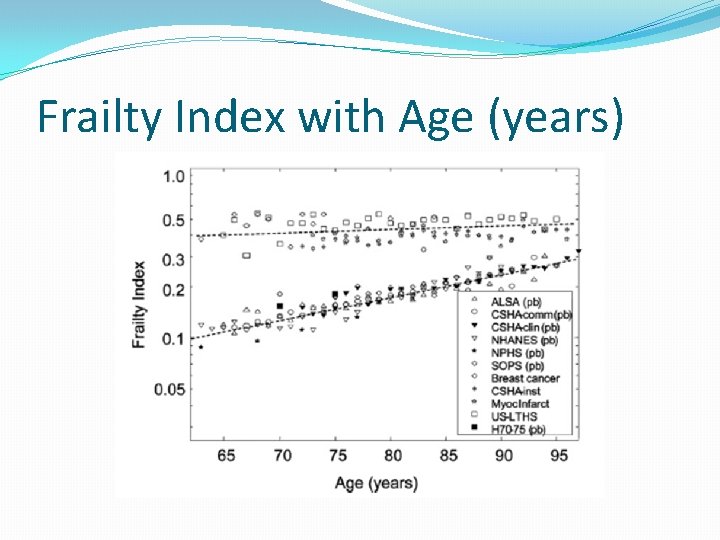
Frailty Index �Considers the cumulative effect of multiple factors indicating physical and cognitive decline �Predicts survival, risk of disease progression, need for institutionalization and use of healthcare services. �As we age, we begin to accumulate deficits. �Those with less deficits are more fit; those with more deficits are more frail. �Minimum 30 items which cover a range of health indicators, including chronic conditions, physical/cognitive limitations, and general health.
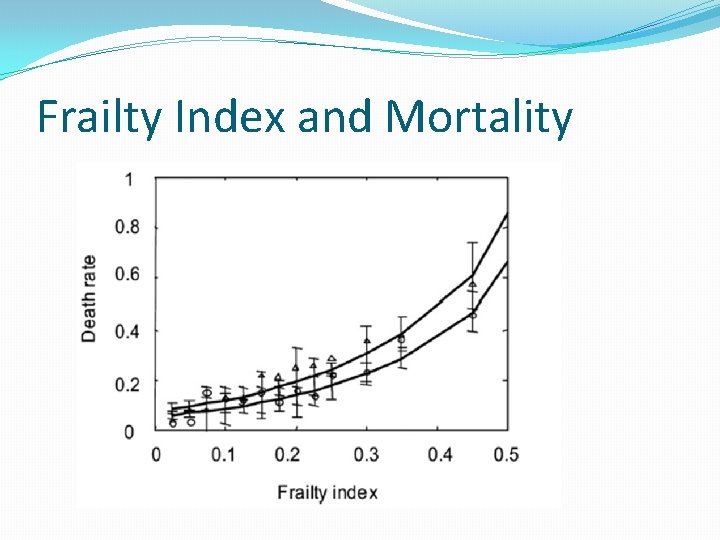
Frailty Index �FI is the Ratio of Number of Deficits present / Total Possible Deficits looked at. �Expressed as a 0 (lowest) to 1 (highest level of frailty) score �No universally agreed upon scoring. �Generally: 0 – 0. 08 = Non-frail 0. 09 – 0. 24 = Pre-frail 0. 25 or higher = Frail �Those with FI of > 0. 5 have near 100% mortality at 20 months (useful for end of life discussions). �FI >0. 7 usually not compatible with living.
Frailty Index with Age (years)
Frailty Index and Mortality
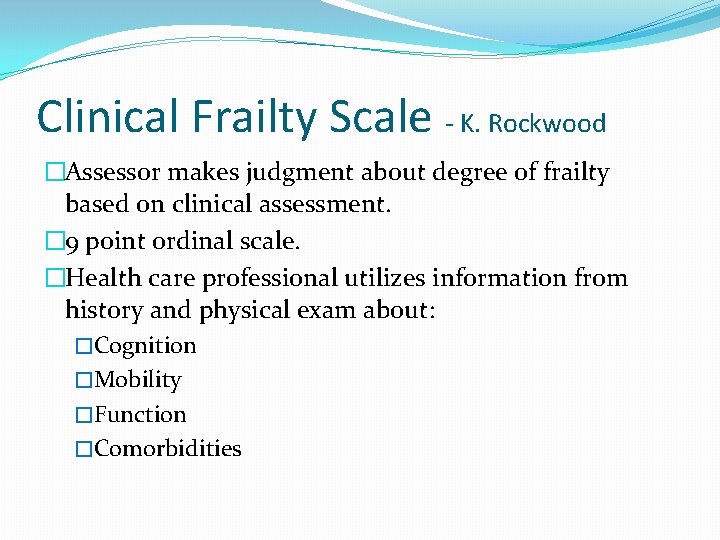
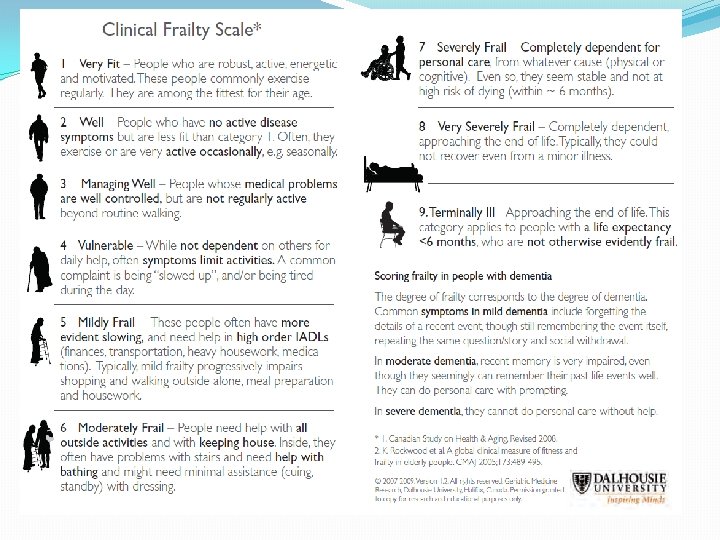
Clinical Frailty Scale - K. Rockwood �Assessor makes judgment about degree of frailty based on clinical assessment. � 9 point ordinal scale. �Health care professional utilizes information from history and physical exam about: �Cognition �Mobility �Function �Comorbidities
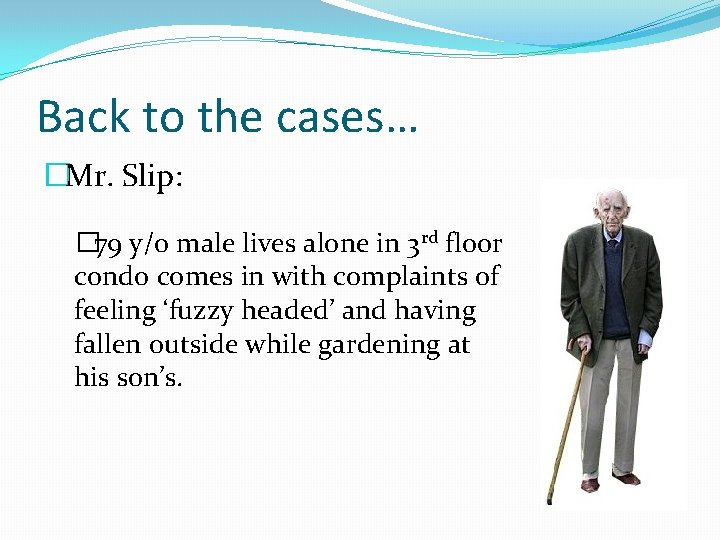
Back to the cases… �Mr. Slip: � 79 y/o male lives alone in 3 rd floor condo comes in with complaints of feeling ‘fuzzy headed’ and having fallen outside while gardening at his son’s.
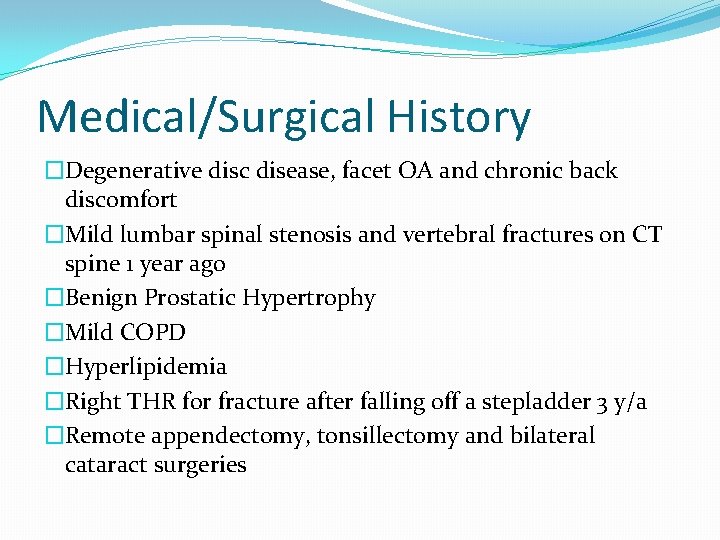
Medical/Surgical History �Degenerative disc disease, facet OA and chronic back discomfort �Mild lumbar spinal stenosis and vertebral fractures on CT spine 1 year ago �Benign Prostatic Hypertrophy �Mild COPD �Hyperlipidemia �Right THR for fracture after falling off a stepladder 3 y/a �Remote appendectomy, tonsillectomy and bilateral cataract surgeries
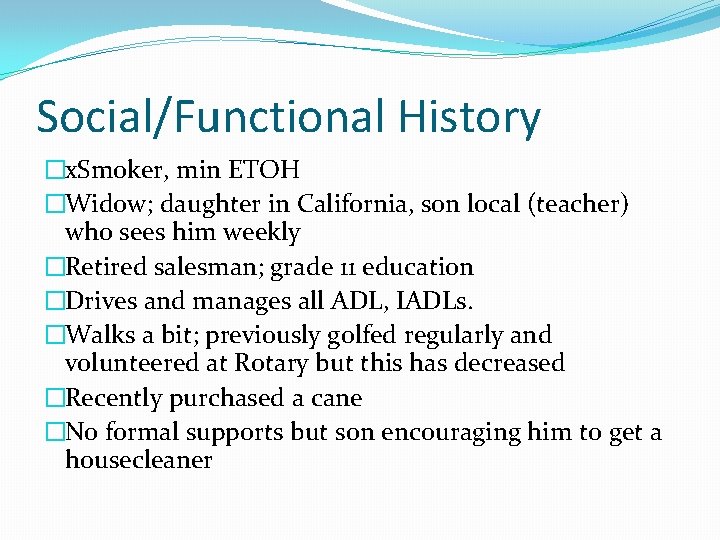
Social/Functional History �x. Smoker, min ETOH �Widow; daughter in California, son local (teacher) who sees him weekly �Retired salesman; grade 11 education �Drives and manages all ADL, IADLs. �Walks a bit; previously golfed regularly and volunteered at Rotary but this has decreased �Recently purchased a cane �No formal supports but son encouraging him to get a housecleaner
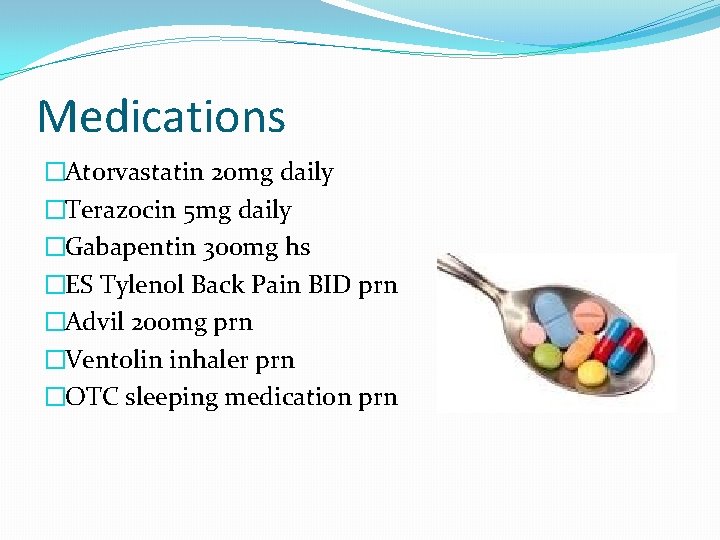
Medications �Atorvastatin 20 mg daily �Terazocin 5 mg daily �Gabapentin 300 mg hs �ES Tylenol Back Pain BID prn �Advil 200 mg prn �Ventolin inhaler prn �OTC sleeping medication prn
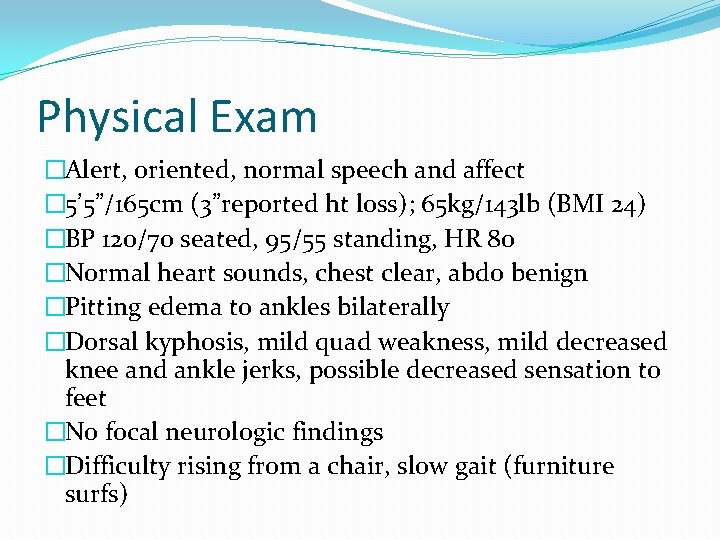
Physical Exam �Alert, oriented, normal speech and affect � 5’ 5”/165 cm (3”reported ht loss); 65 kg/143 lb (BMI 24) �BP 120/70 seated, 95/55 standing, HR 80 �Normal heart sounds, chest clear, abdo benign �Pitting edema to ankles bilaterally �Dorsal kyphosis, mild quad weakness, mild decreased knee and ankle jerks, possible decreased sensation to feet �No focal neurologic findings �Difficulty rising from a chair, slow gait (furniture surfs)
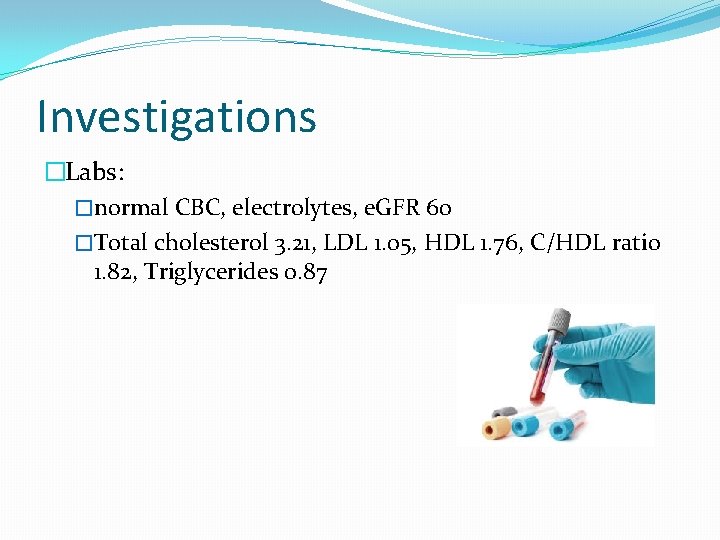
Investigations �Labs: �normal CBC, electrolytes, e. GFR 60 �Total cholesterol 3. 21, LDL 1. 05, HDL 1. 76, C/HDL ratio 1. 82, Triglycerides 0. 87
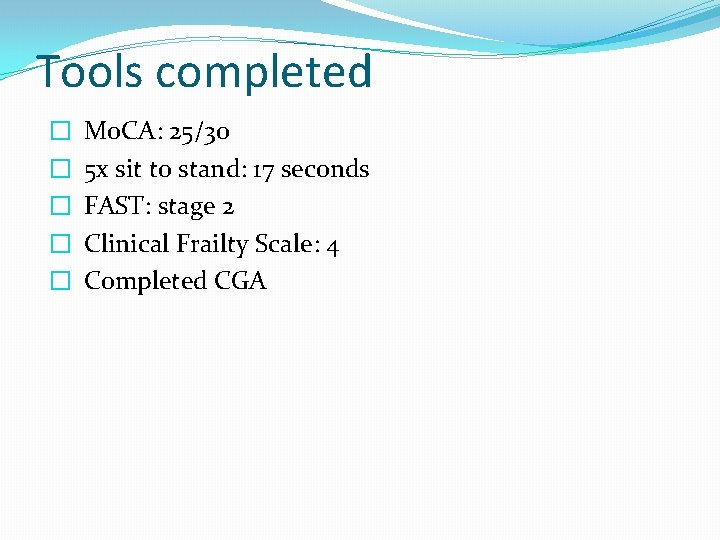
Tools completed � � � Mo. CA: 25/30 5 x sit to stand: 17 seconds FAST: stage 2 Clinical Frailty Scale: 4 Completed CGA
The Comprehensive Geriatric Assessment (CGA) forms �What are the issues? �What can be done about them? �Who is going to do it?
The Problem List
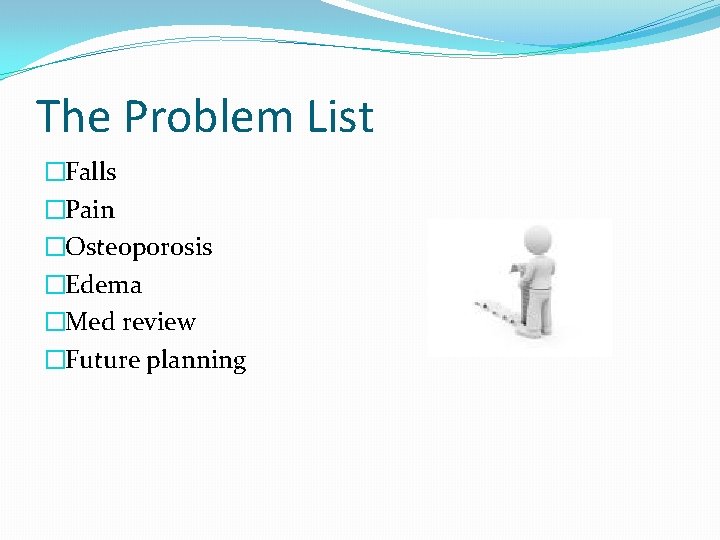
The Problem List �Falls �Pain �Osteoporosis �Edema �Med review �Future planning
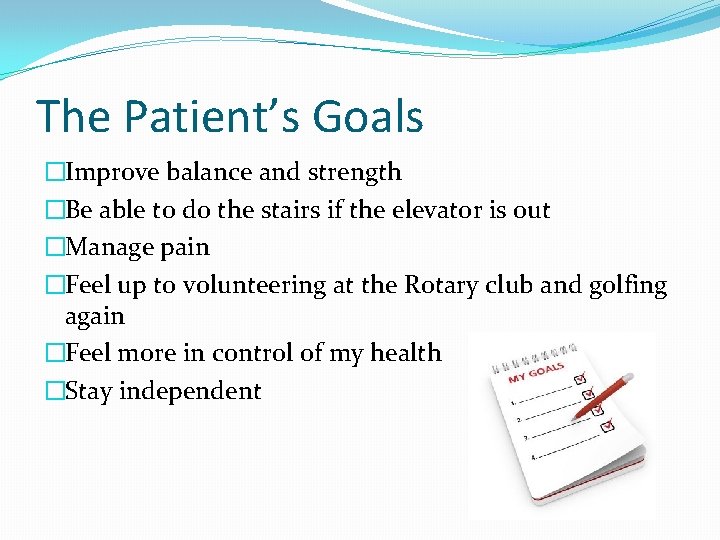
The Patient’s Goals �Improve balance and strength �Be able to do the stairs if the elevator is out �Manage pain �Feel up to volunteering at the Rotary club and golfing again �Feel more in control of my health �Stay independent
Case 2: Ms. Muddled � 83 y/o lady lives alone in a townhome. Family concerned re forgetfulness and weight loss. They note they are supporting her more and that she is increasingly socially isolated.
Medical/Surgical History �Hypertension �Diet controlled type II Diabetes Mellitus �Hypothyroidism �GERD �Remote Peptic Ulcer; H pylori treated �Childhood left ankle fracture �Few Basal Cell carcinomas removed from face/neck
Social/Functional History �Lives alone in townhome with her cat �Grade 12 education plus 1 year university courses �Worked as a bank teller �Divorced (since widowed) � 2 daughters nearby who see her most days. �Independent with ADLs, doing less laundry, eating more pre-prepared meals or daughters bring in, late on bill payments and less organized. �No formal supports. �Non-smoker; no alcohol
Medications �Ramipril 5 mg po BID �Hydrochlorothiazide 25 mg po daily �Amlodipine 10 mg po daily �Levothyroxine 100 mcg po daily �Pantoprazole 40 mg po daily �Multivitamin daily
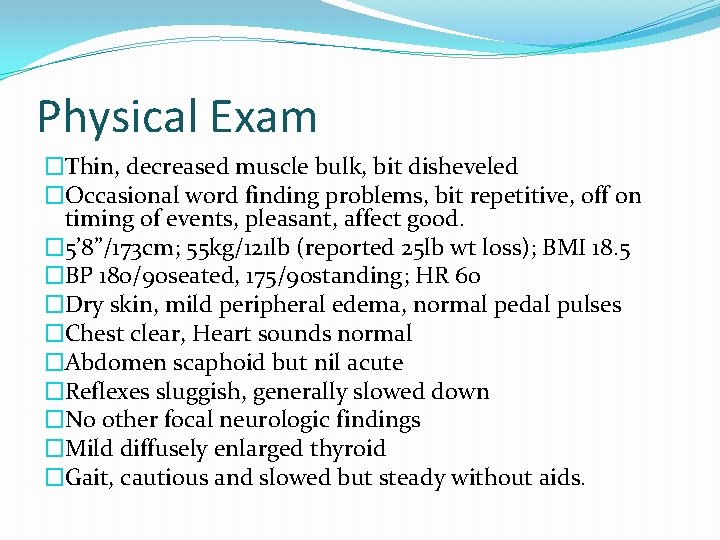
Physical Exam �Thin, decreased muscle bulk, bit disheveled �Occasional word finding problems, bit repetitive, off on timing of events, pleasant, affect good. � 5’ 8”/173 cm; 55 kg/121 lb (reported 25 lb wt loss); BMI 18. 5 �BP 180/90 seated, 175/90 standing; HR 60 �Dry skin, mild peripheral edema, normal pedal pulses �Chest clear, Heart sounds normal �Abdomen scaphoid but nil acute �Reflexes sluggish, generally slowed down �No other focal neurologic findings �Mild diffusely enlarged thyroid �Gait, cautious and slowed but steady without aids.
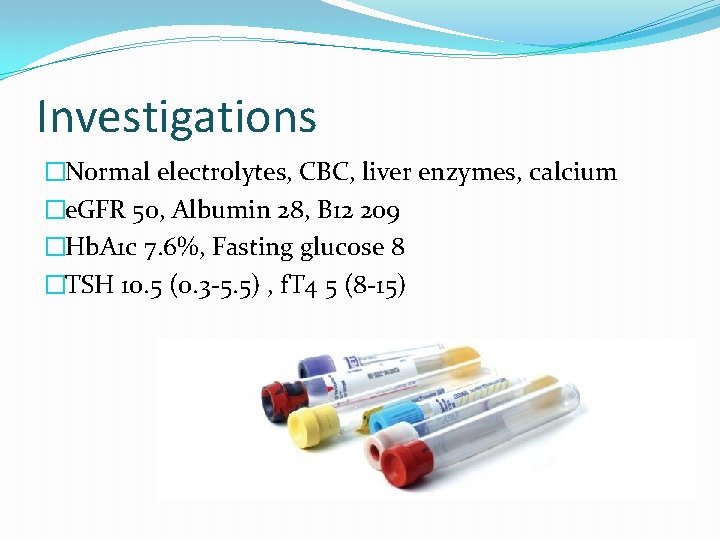
Investigations �Normal electrolytes, CBC, liver enzymes, calcium �e. GFR 50, Albumin 28, B 12 209 �Hb. A 1 c 7. 6%, Fasting glucose 8 �TSH 10. 5 (0. 3 -5. 5) , f. T 4 5 (8 -15)
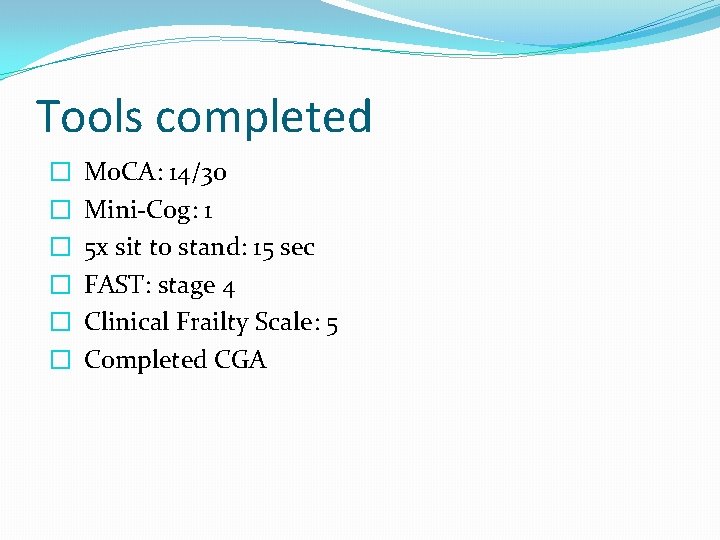
Tools completed � � � Mo. CA: 14/30 Mini-Cog: 1 5 x sit to stand: 15 sec FAST: stage 4 Clinical Frailty Scale: 5 Completed CGA
The Comprehensive Geriatric Assessment (CGA) forms �What are the issues? �What can be done about them? �Who is going to do it?
The Problem List
The Problem List �Medication Compliance �Cognition �Weight loss/poor nutrition �Hypothyroidism �Diabetes �Edema �Socialization �Future planning �Caregiver stress
The Patient’s Goals �Stay at home �Maintain independence �Not be a burden on the children �Not feel so lonely
Dementia �“progressive, irreversible brain disease leading to a decline in memory and other cognitive functions sufficient to impact activities of daily living” �Estimated 70, 000 persons in BC have dementia; 60% female �Approx 5% of people between the ages of 65– 74 have dementia; 47% of people over the age of 85 have some form of dementia. �BC Guidelines for Cognitive Impairment: Recognition, Diagnosis and Management in Primary Care (Jn 2016; Doctors of BC and Ministry of Health): http: //www 2. gov. bc. ca/gov/content/health/practitionerprofessional-resources/bc-guidelines/cognitive-impairment
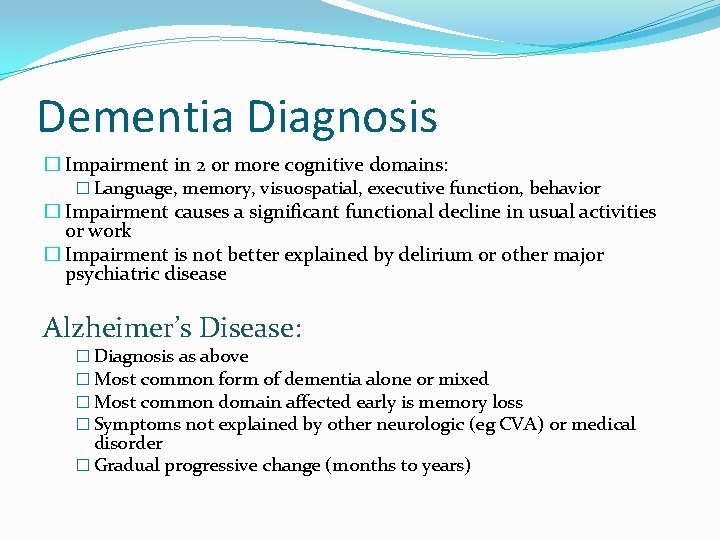
Dementia Diagnosis � Impairment in 2 or more cognitive domains: � Language, memory, visuospatial, executive function, behavior � Impairment causes a significant functional decline in usual activities or work � Impairment is not better explained by delirium or other major psychiatric disease Alzheimer’s Disease: � Diagnosis as above � Most common form of dementia alone or mixed � Most common domain affected early is memory loss � Symptoms not explained by other neurologic (eg CVA) or medical disorder � Gradual progressive change (months to years)
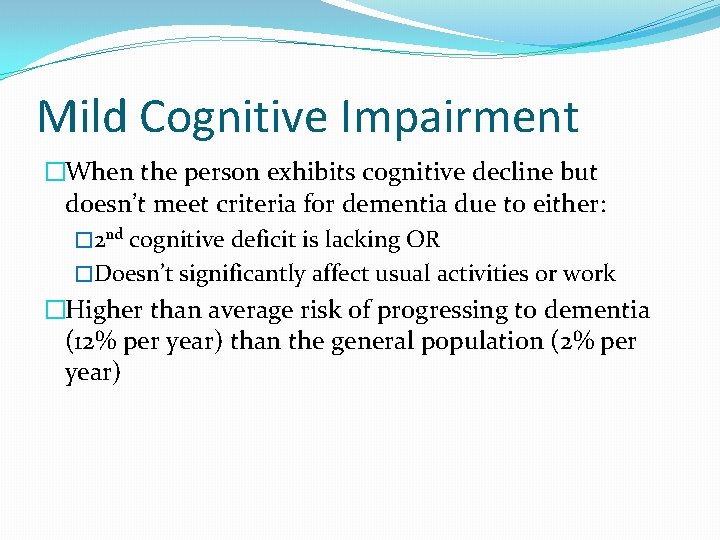
Mild Cognitive Impairment �When the person exhibits cognitive decline but doesn’t meet criteria for dementia due to either: � 2 nd cognitive deficit is lacking OR �Doesn’t significantly affect usual activities or work �Higher than average risk of progressing to dementia (12% per year) than the general population (2% per year)
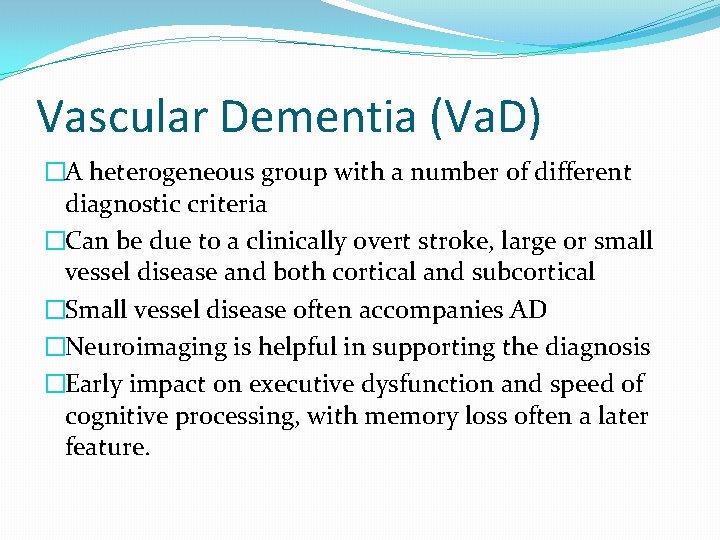
Vascular Dementia (Va. D) �A heterogeneous group with a number of different diagnostic criteria �Can be due to a clinically overt stroke, large or small vessel disease and both cortical and subcortical �Small vessel disease often accompanies AD �Neuroimaging is helpful in supporting the diagnosis �Early impact on executive dysfunction and speed of cognitive processing, with memory loss often a later feature.
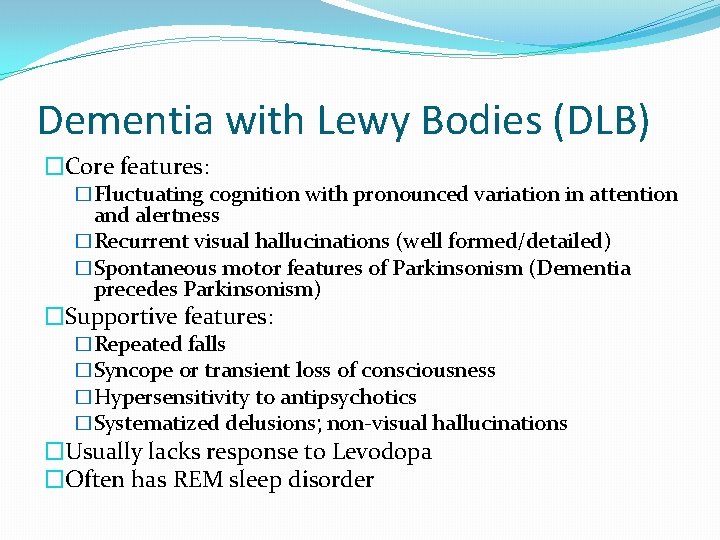
Dementia with Lewy Bodies (DLB) �Core features: �Fluctuating cognition with pronounced variation in attention and alertness �Recurrent visual hallucinations (well formed/detailed) �Spontaneous motor features of Parkinsonism (Dementia precedes Parkinsonism) �Supportive features: �Repeated falls �Syncope or transient loss of consciousness �Hypersensitivity to antipsychotics �Systematized delusions; non-visual hallucinations �Usually lacks response to Levodopa �Often has REM sleep disorder
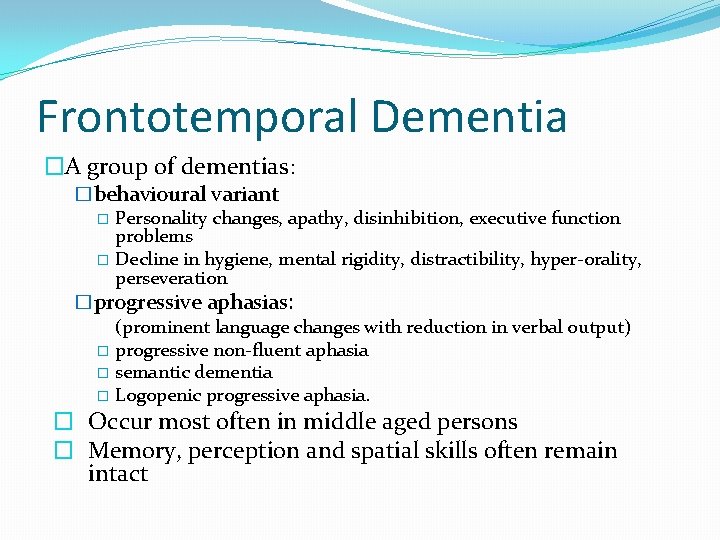
Frontotemporal Dementia �A group of dementias: �behavioural variant � Personality changes, apathy, disinhibition, executive function problems � Decline in hygiene, mental rigidity, distractibility, hyper-orality, perseveration �progressive aphasias: (prominent language changes with reduction in verbal output) � progressive non-fluent aphasia � semantic dementia � Logopenic progressive aphasia. � Occur most often in middle aged persons � Memory, perception and spatial skills often remain intact
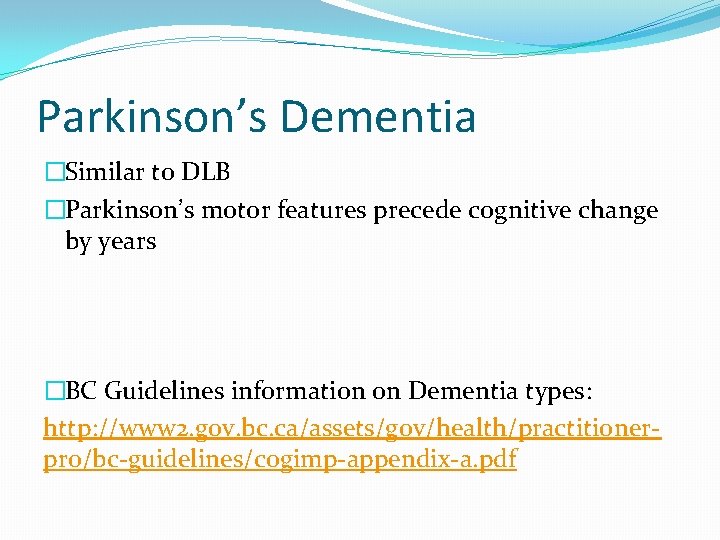
Parkinson’s Dementia �Similar to DLB �Parkinson’s motor features precede cognitive change by years �BC Guidelines information on Dementia types: http: //www 2. gov. bc. ca/assets/gov/health/practitionerpro/bc-guidelines/cogimp-appendix-a. pdf
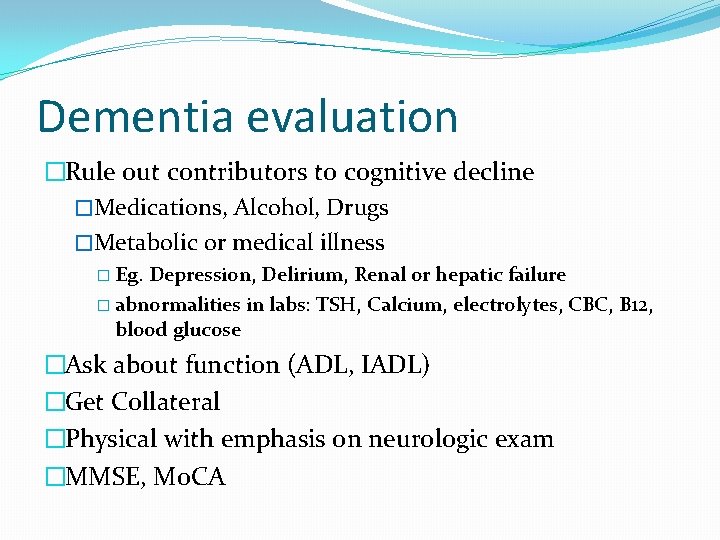
Dementia evaluation �Rule out contributors to cognitive decline �Medications, Alcohol, Drugs �Metabolic or medical illness � Eg. Depression, Delirium, Renal or hepatic failure � abnormalities in labs: TSH, Calcium, electrolytes, CBC, B 12, blood glucose �Ask about function (ADL, IADL) �Get Collateral �Physical with emphasis on neurologic exam �MMSE, Mo. CA
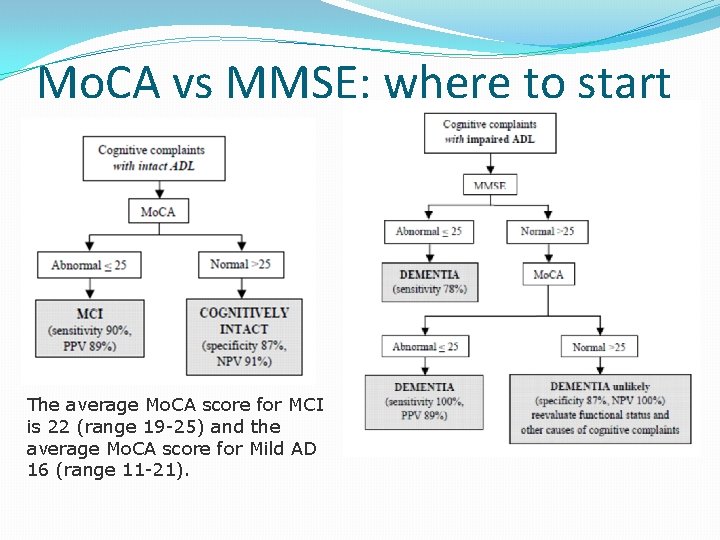
Mo. CA vs MMSE: where to start The average Mo. CA score for MCI is 22 (range 19 -25) and the average Mo. CA score for Mild AD 16 (range 11 -21).
Should I do a CT scan? �Recommended indications for head CT scan: �Age <60 y/o �Onset is abrupt or progress rapid �History of recent head injury �Atypical presentation/uncertain diagnosis �Cancer history (esp breast, lung) �New localizing neurologic signs/symptoms �Suspect cerebrovascular disease �On anticoagulants or has a bleeding disorder �Combination of early cognitive impairment with urinary incontinence and gait disorder (r/o NPH)
General Care and Supportive Management of Dementia �Focus on Brain Health �Body Maintenance � Exercise (aerobic and resistance) � Protect your brain (helmets, drugs, meds) � Sleep � Vascular risks (smoking, BP, Cholesterol, blood sugar) �Proper nutrition � Whole foods (not processed), foods rich in antioxidants, fish � Don’t overindulge on alcohol �Mind � Brain stimulation, try something new � Mood management �Spirit � Stay socially active
General Care and Supportive Management of Dementia �Safety: � Living alone � Stove use � Medication management � Risk of getting lost � Driving � Self neglect, Neglect, Abuse �Caregiver Stress & Education �Future planning: � Will � Power of Attorney � Representation Agreement � Advanced Directives � Living Situation
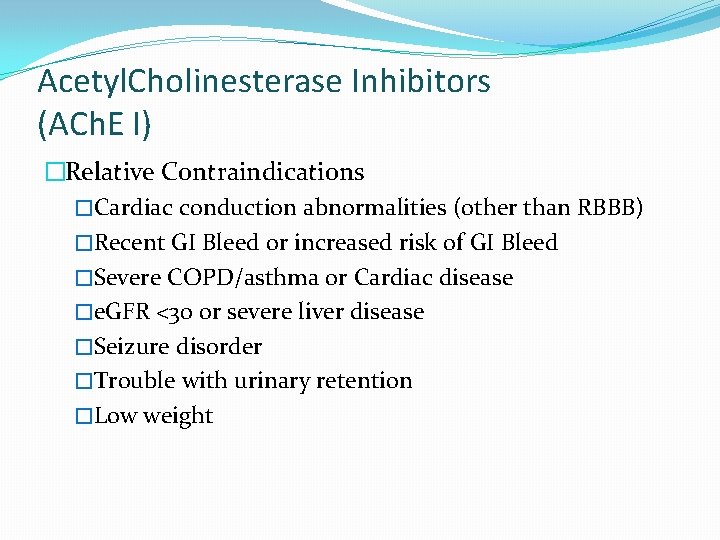
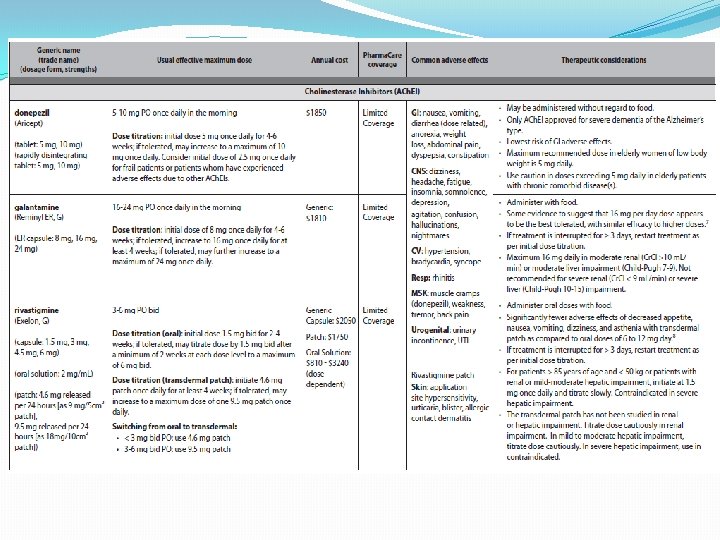
Acetyl. Cholinesterase Inhibitors (ACh. E I) �Donepezil (Aricept) – mild-severe dementia �Rivastigmine (Exelon), Galantamine (Reminyl) �Mild-moderate dementia �Non-curative, symptomatic treatment �Modest ability to stabilize and slow progression of dementia (AD, Va. D, LBD, PD) �No benefit in MCI �Side-effects: primarily GI, dizziness, nightmares �Side-effects often resolve with use
Acetyl. Cholinesterase Inhibitors (ACh. E I) �Relative Contraindications �Cardiac conduction abnormalities (other than RBBB) �Recent GI Bleed or increased risk of GI Bleed �Severe COPD/asthma or Cardiac disease �e. GFR <30 or severe liver disease �Seizure disorder �Trouble with urinary retention �Low weight
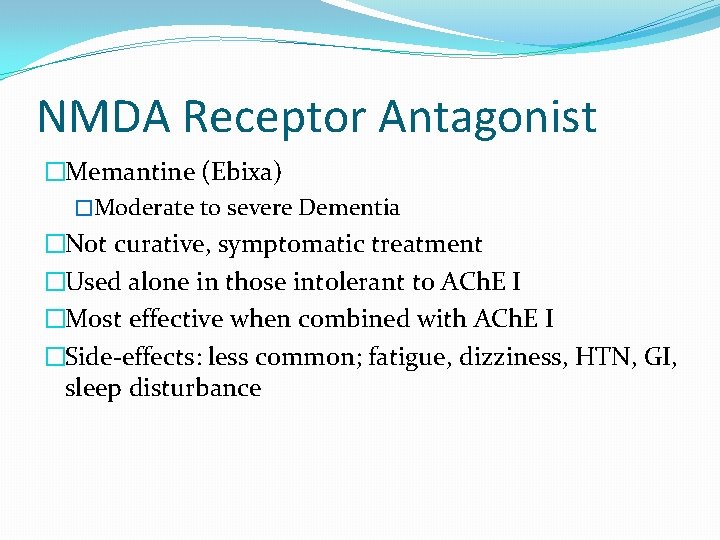
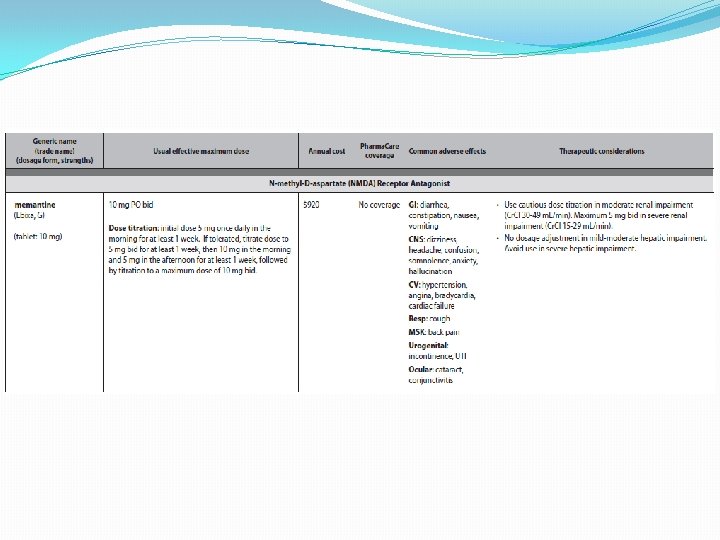
NMDA Receptor Antagonist �Memantine (Ebixa) �Moderate to severe Dementia �Not curative, symptomatic treatment �Used alone in those intolerant to ACh. E I �Most effective when combined with ACh. E I �Side-effects: less common; fatigue, dizziness, HTN, GI, sleep disturbance
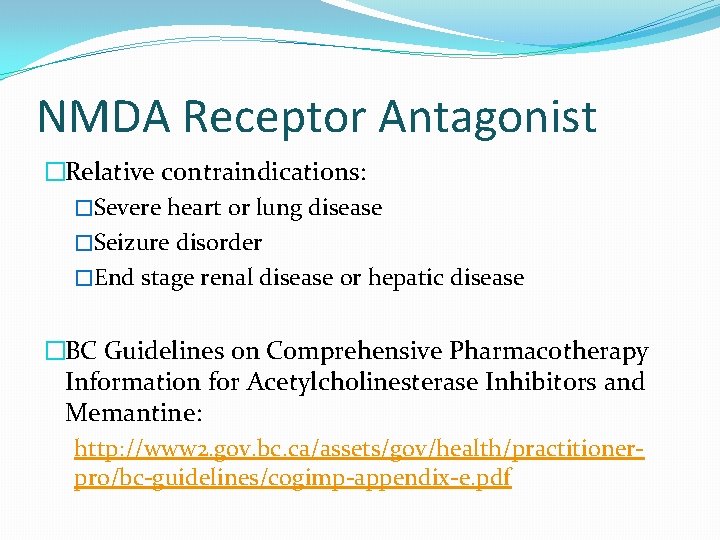
NMDA Receptor Antagonist �Relative contraindications: �Severe heart or lung disease �Seizure disorder �End stage renal disease or hepatic disease �BC Guidelines on Comprehensive Pharmacotherapy Information for Acetylcholinesterase Inhibitors and Memantine: http: //www 2. gov. bc. ca/assets/gov/health/practitionerpro/bc-guidelines/cogimp-appendix-e. pdf
Dementia Referrals �Alzheimer’s Society; First Link �Home Health / Allied Health �Personal Care help �Respite, Adult Day programs �Caregiver support �Home evaluation for safety �Transition to alternate living situations �Specialist (Geriatrics, Neurology, Psychiatry) �Diagnostic uncertainty �Rapid decline �Young age �Management issues
Reasons to refer to Geriatric Medicine (Specialized Seniors Clinics) �Memory /Cognitive Changes �Behavioural changes �Falls �Changes in function (ADL/IADL) �Complex Medical issues �Frailty or “Failure to Thrive” �Polypharmacy �Other issues: incontinence, bone health, Parkinsons…