
Who Cares About the Weather Mark Heuer Meteorologist

Who Cares About the Weather? Mark Heuer Meteorologist / Vice President of Product Development - Day. Weather, Inc. Cheyenne, Wyoming
What will be covered? 1. 2. 3. 4. 5. 6. 7. 8. 9. 10. Earth’s Circulations and the Jet Stream Atmospheric Pressure Systems Understanding Frontal Systems and Cloud Formations Thunderstorms and Supercell Thunderstorms Doppler Radar Lightning Wyoming Wind Snow Storms & Arctic Air Masses Precipitation Type Weather Models
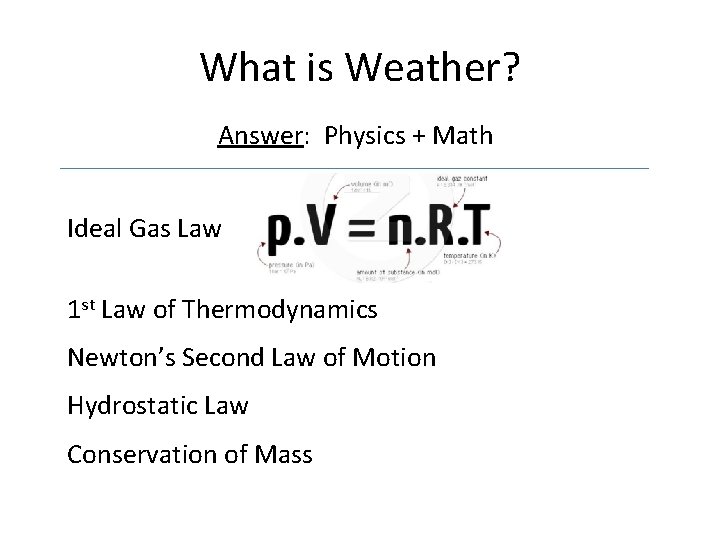
What is Weather? Answer: Physics + Math Ideal Gas Law 1 st Law of Thermodynamics Newton’s Second Law of Motion Hydrostatic Law Conservation of Mass
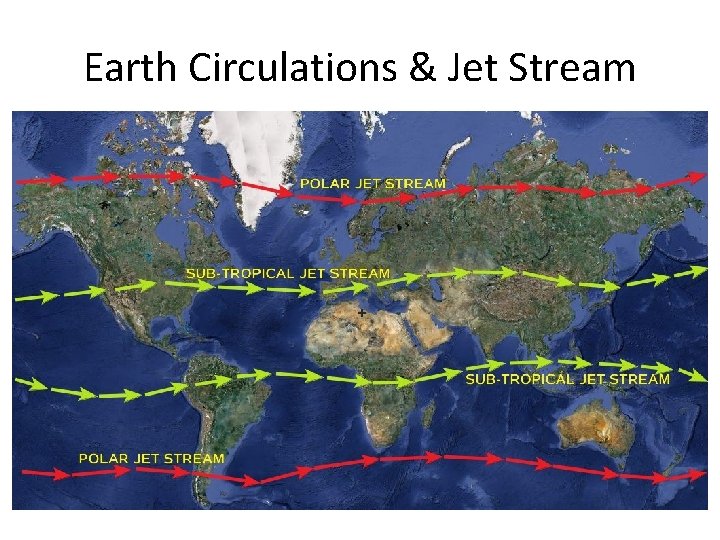
Earth Circulations & Jet Stream
The Jet Stream Over Wyoming • Summer Season – Polar jet stream stays to the north – Subtropical jet stream is more active and closer to Wyoming. • Winter Season – Polar jet stream more active over Wyoming – Subtropical jet stream stays to the south • Sometimes responsible for high wind events
Atmospheric Pressure Systems
Atmospheric Pressure Systems

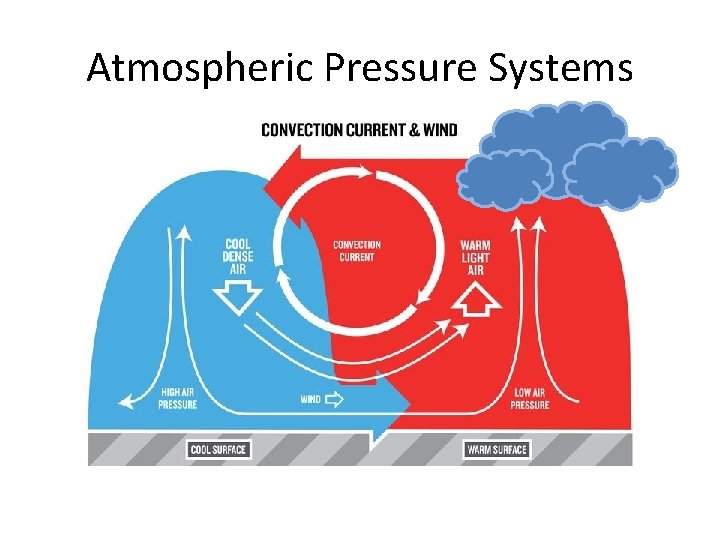
Atmospheric Pressure Systems stable pressure system unstable pressure system
Atmospheric Pressure Systems • Not all high/low pressure systems are alike – Depends on their structure and origination – Cold core and warm core systems • Example: – High pressure in summer (warm, carries moisture) – High pressure in winter (cold, dry)

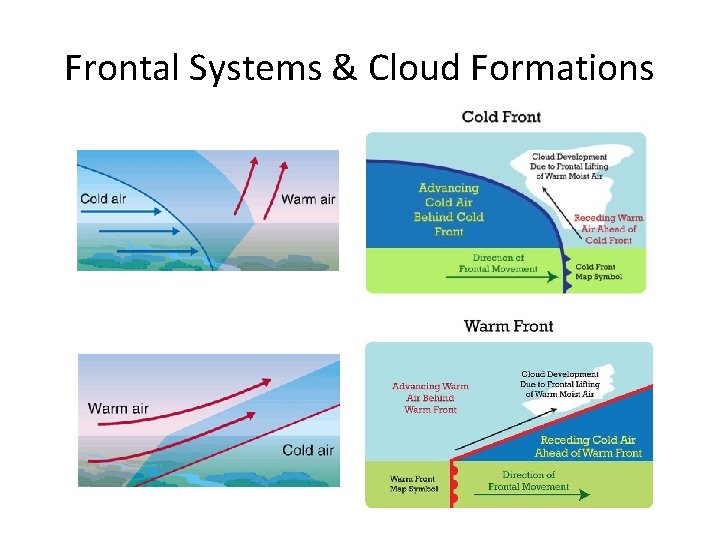
Frontal Systems & Cloud Formations
Frontal Systems & Cloud Formations
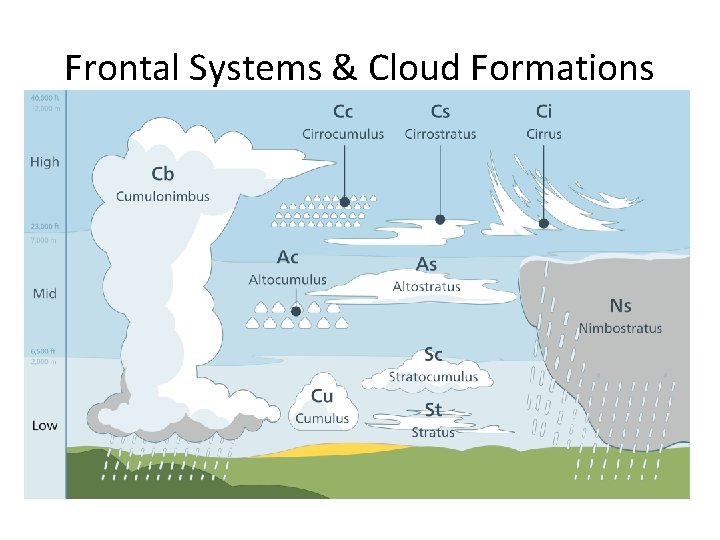
Frontal Systems & Cloud Formations
Thunderstorms & Supercell Thunderstorms
Wyoming Thunderstorms • Two Types – Non-severe thunderstorms – Supercell or severe thunderstorms • Distinguishing Factors – Size of hail – Wind gusts – Cloud rotation or tornados
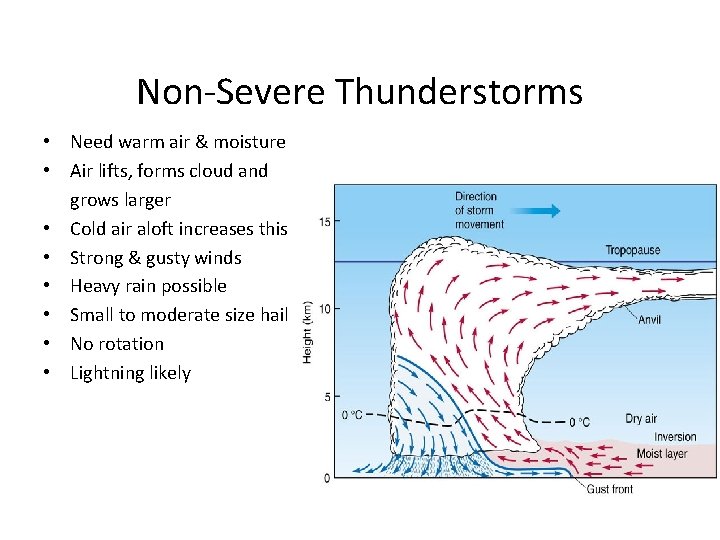
Non-Severe Thunderstorms • Need warm air & moisture • Air lifts, forms cloud and grows larger • Cold air aloft increases this • Strong & gusty winds • Heavy rain possible • Small to moderate size hail • No rotation • Lightning likely
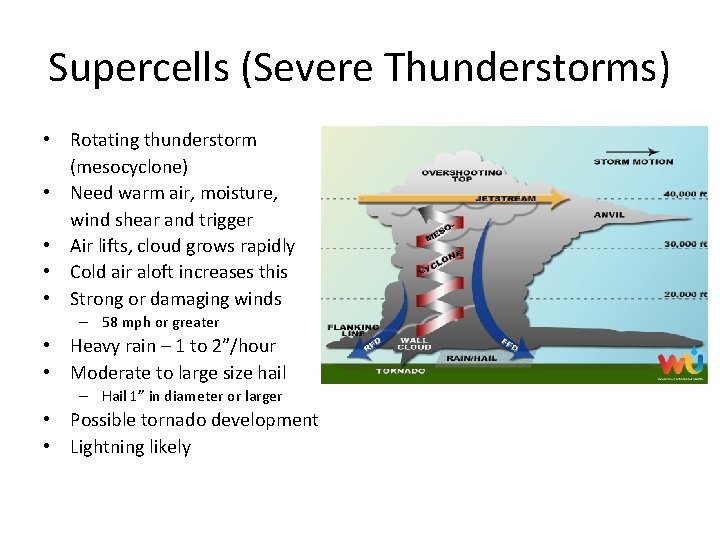
Supercells (Severe Thunderstorms) • Rotating thunderstorm (mesocyclone) • Need warm air, moisture, wind shear and trigger • Air lifts, cloud grows rapidly • Cold air aloft increases this • Strong or damaging winds – 58 mph or greater • Heavy rain – 1 to 2”/hour • Moderate to large size hail – Hail 1” in diameter or larger • Possible tornado development • Lightning likely
Tornados in Sinclair/Rawlins, WY since 1950 • 11 tornados in Sinclair/Rawlins since 1950 – 1 in 1960, 1964 and 1995 – 2 in 1979 – 3 in 1982 and 1997 • Strongest tornado an F 1(73 -112 mph) in 1964 – F 0(<73 mph), F 1(73 -112 mph), F 2(113 -157 mph), F 3(158 -206 mph), F 4(207 -260 mph), F 5(216318 mph) • Wyoming averages 10. 9 tornados per year • Colorado averages 49. 5 tornados per year
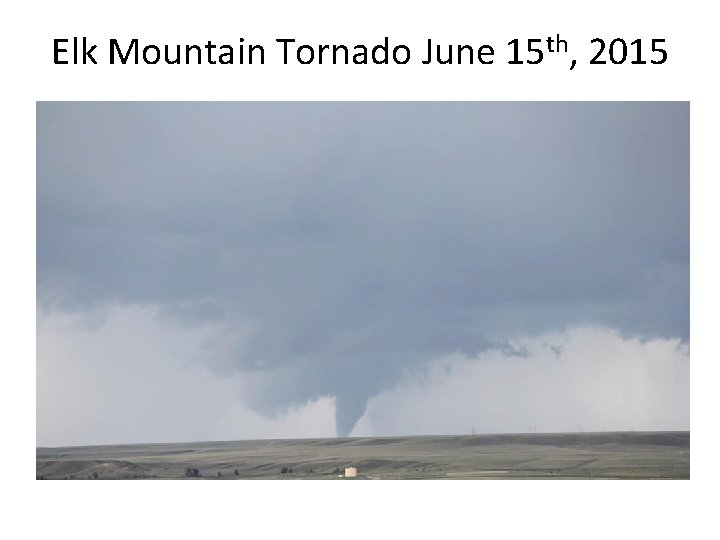
Elk Mountain Tornado June 15 th, 2015
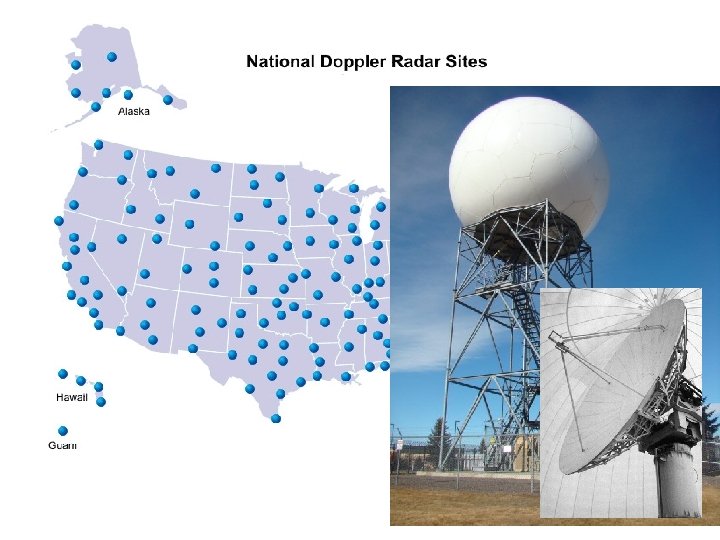
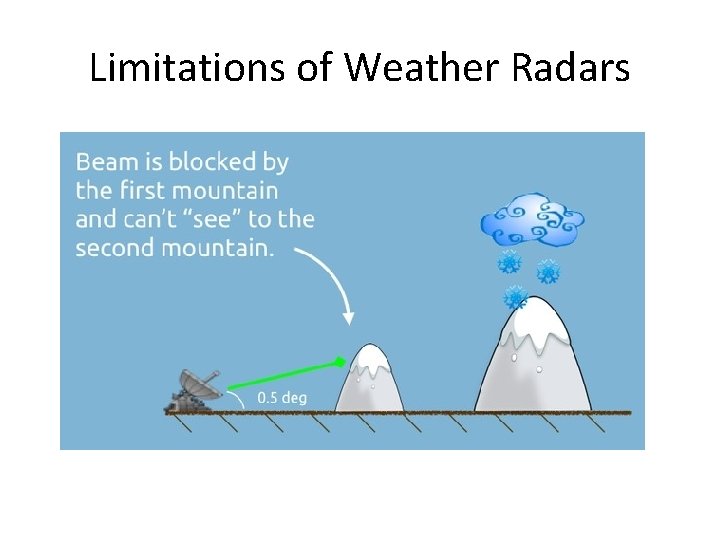
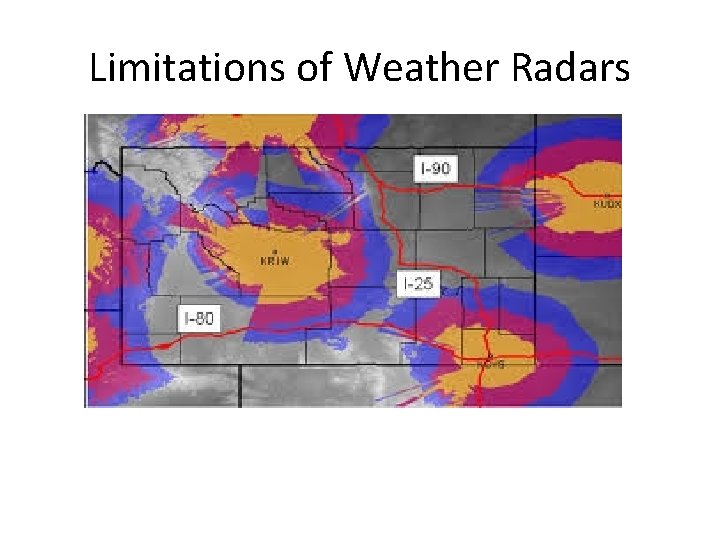
Doppler Radar • WSR-88 D – Weather Surveillance Radar – 1988 Doppler – Radio Wave Pulses • Pulses look for targets (particles in the atmosphere) • Several sweeps at different angles – Doppler Shift • Similar to sound waves • Detects the motion toward and away from the radar • Allow us to “see motion” in the atmosphere
Limitations of Weather Radars
Limitations of Weather Radars
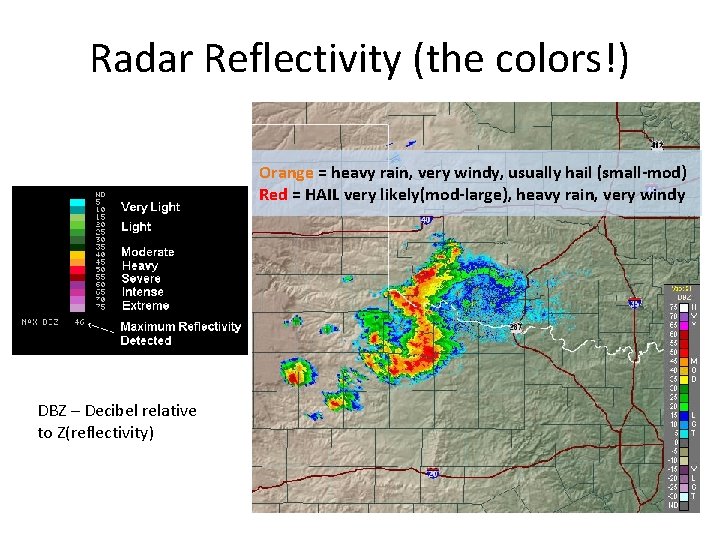
Radar Reflectivity (the colors!) Orange = heavy rain, very windy, usually hail (small-mod) Red = HAIL very likely(mod-large), heavy rain, very windy DBZ – Decibel relative to Z(reflectivity)
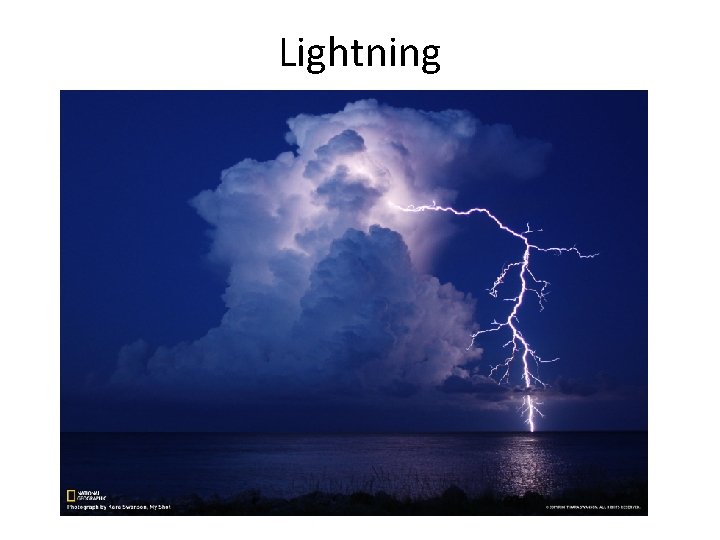
Lightning
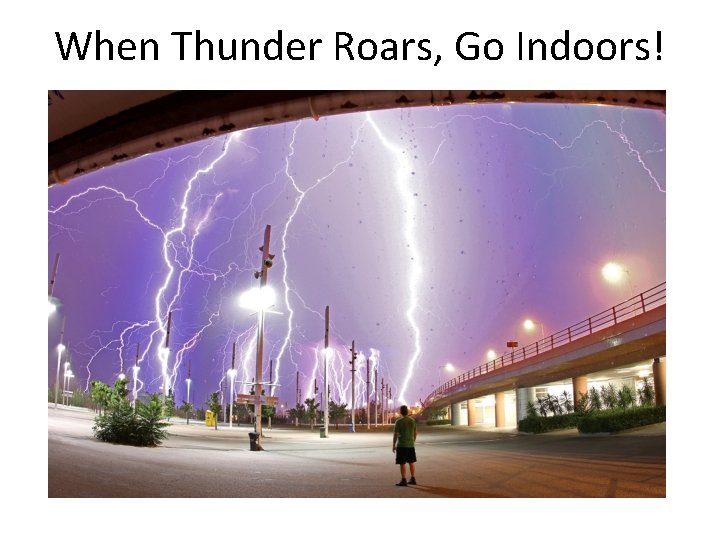
When Thunder Roars, Go Indoors!
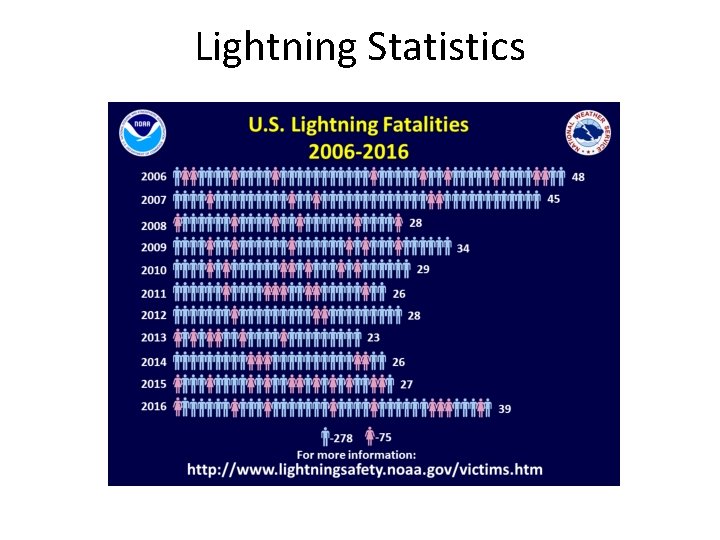
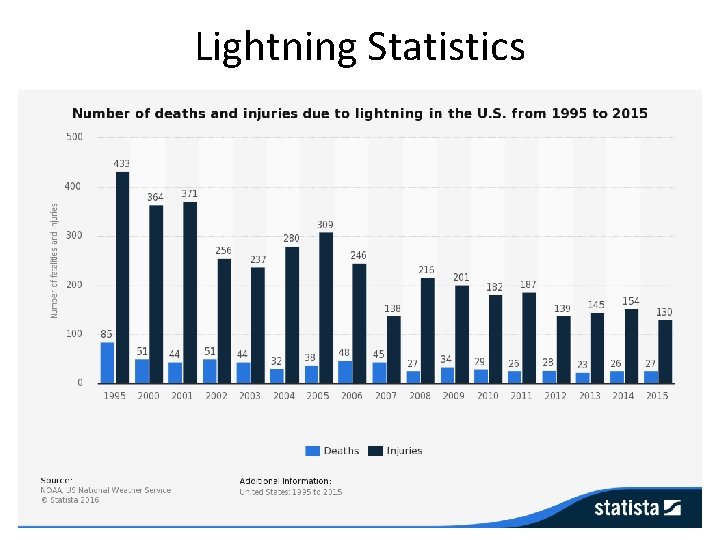
Lightning Statistics • World wide lightning strikes 100 times per second! • About 25 million cloud-to-ground lightning strikes in the US every year. • Wyoming averages about 276, 355 lightning strikes per year. 2016 had 223, 458 strikes! • About 10% of people struck by lightning are killed.
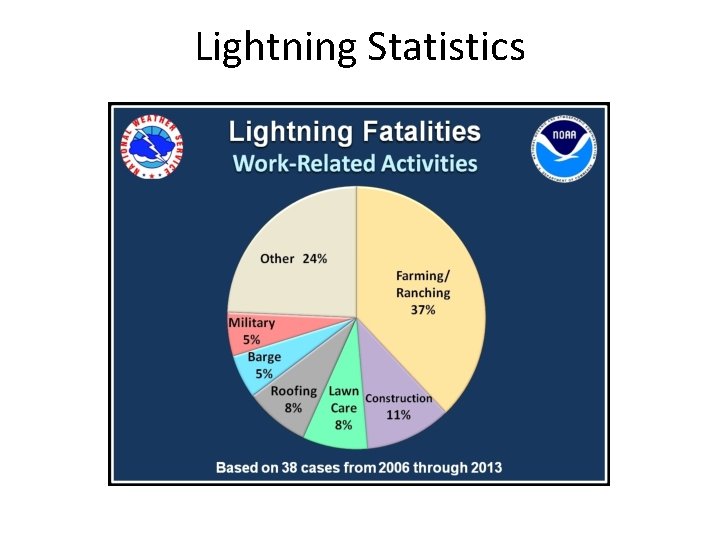
Lightning Statistics • Lightning is responsible for more deaths and injuries across Wyoming each year than from any other thunderstorm phenomena. From 1959 to 2016, lightning has been attributed to 30 fatalities and over 200 injuries across Wyoming. • Wyoming was 1 st in number of lightning deaths & injuries per capita (1959 to 2012). • Since 1995, all of the lightning fatalities in Wyoming have occurred in the mountains.
Lightning Statistics
Lightning Statistics
Lightning Statistics
Five Ways Lightning Strikes People • Direct Strike: A person struck directly by lightning becomes a part of the main lightning discharge channel. Most often, direct strikes occur to victims who are in open areas. Direct strikes are not as common as the other ways people are struck by lightning, but they are potentially the most deadly. In most direct strikes, a portion of the current moves along and just over the skin surface (called flashover) and a portion of the current moves through the body-usually through the cardiovascular and/or nervous systems • Side Flash: A side flash (also called a side splash) occurs when lightning strikes a taller object near the victim and a portion of the current jumps from taller object to the victim. In essence, the person acts as a “short circuit” for some of energy in the lightning discharge. Side flashes generally occur when the victim is within a foot or two of the object that is struck. Most often, side flash victims have taken shelter under a tree to avoid rain or hail.
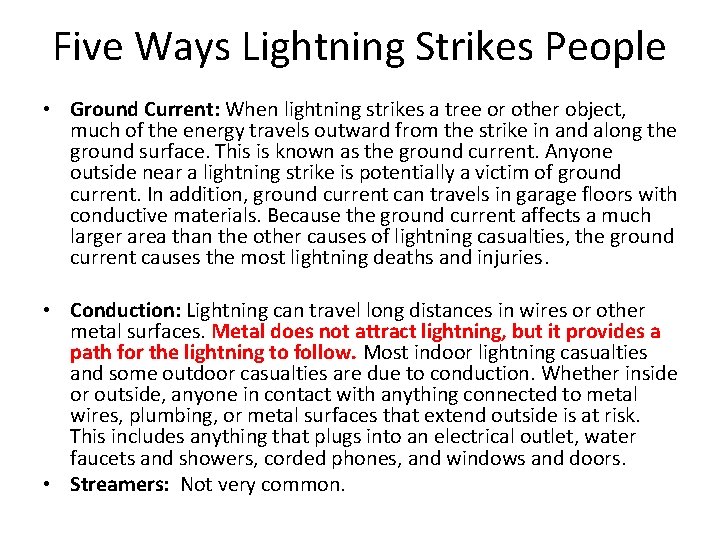
Five Ways Lightning Strikes People • Ground Current: When lightning strikes a tree or other object, much of the energy travels outward from the strike in and along the ground surface. This is known as the ground current. Anyone outside near a lightning strike is potentially a victim of ground current. In addition, ground current can travels in garage floors with conductive materials. Because the ground current affects a much larger area than the other causes of lightning casualties, the ground current causes the most lightning deaths and injuries. • Conduction: Lightning can travel long distances in wires or other metal surfaces. Metal does not attract lightning, but it provides a path for the lightning to follow. Most indoor lightning casualties and some outdoor casualties are due to conduction. Whether inside or outside, anyone in contact with anything connected to metal wires, plumbing, or metal surfaces that extend outside is at risk. This includes anything that plugs into an electrical outlet, water faucets and showers, corded phones, and windows and doors. • Streamers: Not very common.
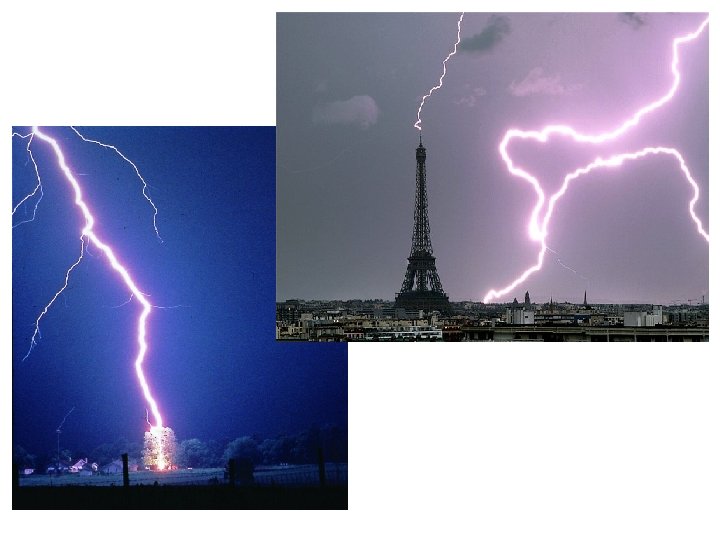
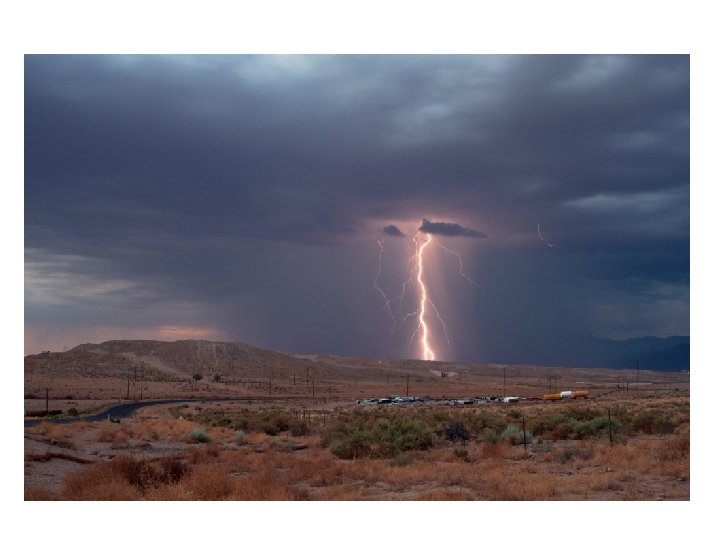
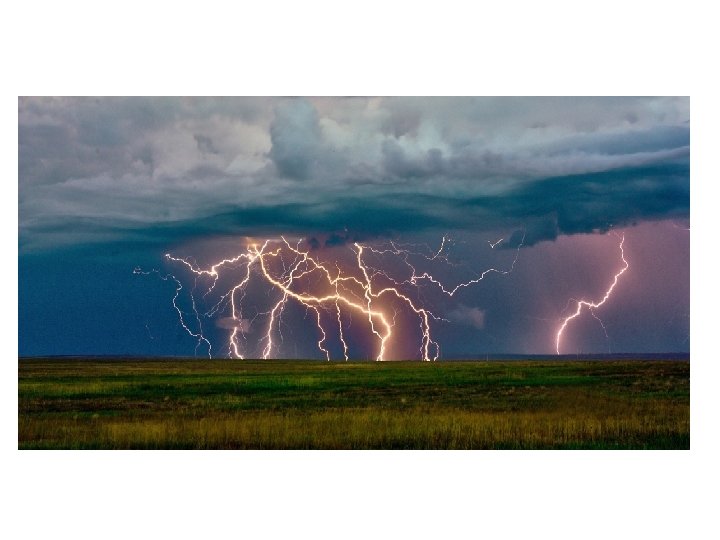
Lightning Myths and Facts • Myth: If you're caught outside during a thunderstorm, you should crouch down to reduce your risk of being struck. Fact: Crouching doesn't make you any safer outdoors. Run to a substantial building or hard topped vehicle. If you are too far to run to one of these options, you have no good alternative. You are NOT safe anywhere outdoors. See our safety page for tips that may slightly reduce your risk. • Myth: Lightning never strikes the same place twice. Fact: Lightning often strikes the same place repeatedly, especially if it's a tall, pointy, isolated object. The Empire State Building is hit an average of 23 times a year • Myth: If it’s not raining or there aren’t clouds overhead, you’re safe from lightning. Fact: Lightning often strikes more than three miles from the center of the thunderstorm, far outside the rain or thunderstorm cloud. “Bolts from the blue” can strike 10 -15 miles from the thunderstorm.
Lightning Myths and Facts • Myth: Rubber tires on a car protect you from lightning by insulating you from the ground. Fact: Most cars are safe from lightning, but it is the metal roof and metal sides that protect you, NOT the rubber tires. Remember, convertibles, motorcycles, bicycles, open-shelled outdoor recreational vehicles and cars with fiberglass shells offer no protection from lightning. When lightning strikes a vehicle, it goes through the metal frame into the ground. Don't lean on doors during a thunderstorm. • Myth: If outside in a thunderstorm, you should seek shelter under a tree to stay dry. Fact: Being underneath a tree is the second leading cause of lightning casualties. Better to get wet than fried!
Lightning Myths and Facts • Myth: Structures with metal, or metal on the body (jewelry, cell phones, Mp 3 players, watches, etc), attract lightning. Fact: Height, pointy shape, and isolation are the dominant factors controlling where a lightning bolt will strike. The presence of metal makes absolutely no difference on where lightning strikes. Mountains are made of stone but get struck by lightning many times a year. When lightning threatens, take proper protective action immediately by seeking a safe shelter “ don’t waste time removing metal. While metal does not attract lightning, it does conduct it so stay away from metal fences, railing, bleachers, etc. • Myth: If trapped outside and lightning is about to strike, I should lie flat on the ground. Fact: Lying flat increases your chance of being affected by potentially deadly ground current. If you are caught outside in a thunderstorm, you keep moving toward a safe shelter.
Safety Information • If Thunder Roars Go Indoors!: If you can hear thunder, go inside. • Safe Places: Fully enclosed large building provide good lightning protection. Vehicles with a solid metal top and sides give good protection. • Stay off and away from anything tall or high, including rooftops, scaffolding, utility poles and ladders.
Safety Information • Stay off and away from large equipment such as bulldozers, cranes, backhoes, track loaders and tractors. • Do not touch materials or surfaces that can conduct electricity, including metal scaffolding, metal equipment, utility lines, water pipes and plumbing. • Leave areas with explosives or munitions.
Safety Information • Outdoors: Stop all outdoor activities immediately. Avoid elevated places and open spaces. Stay away from water and tall isolated objects. Do NOT go under trees! Allow time to reach safety. Don't seek refuge in open structures. If in the water or out in a boat, return to shore and seek shelter immediately. • First Aid: Call 911. All lightning deaths are from cardiac/respiratory arrest. Use an AED, CPR or rescue breathing.
High Winds in Wyoming
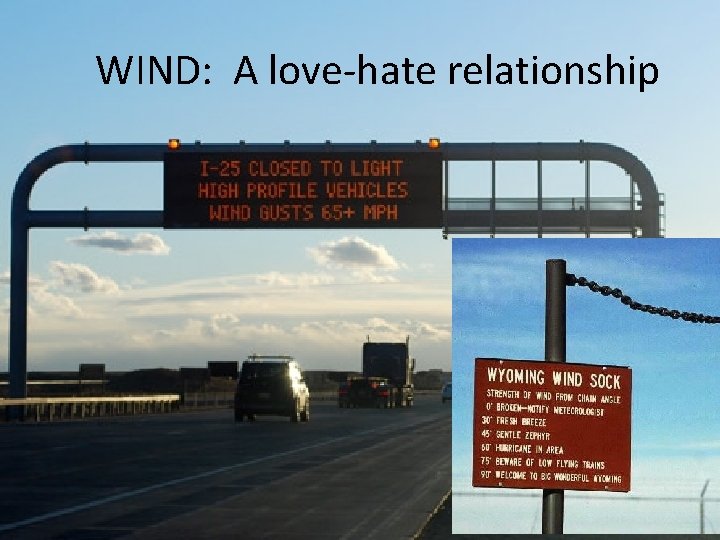
WIND: A love-hate relationship
Wyoming Wind • Strongest Winds: October – March • Reason: – Strong jet stream winds mix to surface – Cold front moving through (pressure gradient) – Wyoming in-between high and low pressure – Chinook winds – Gap winds (Bernoulli Effect) – Strong gusts from thunderstorms
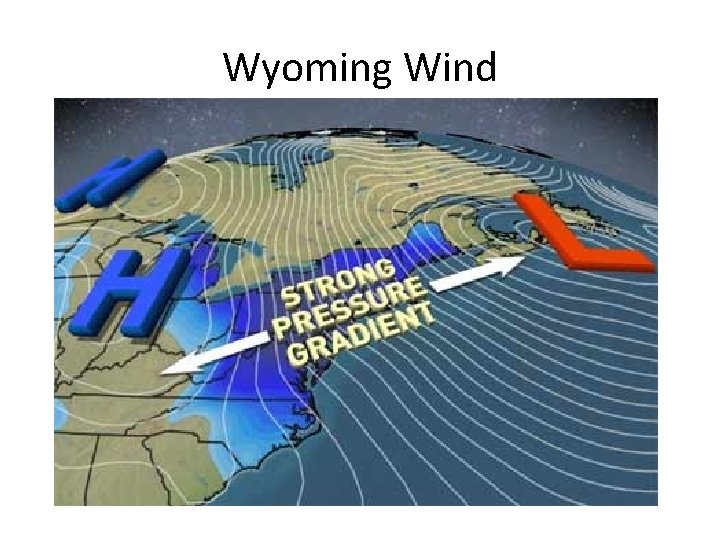
Wyoming Wind
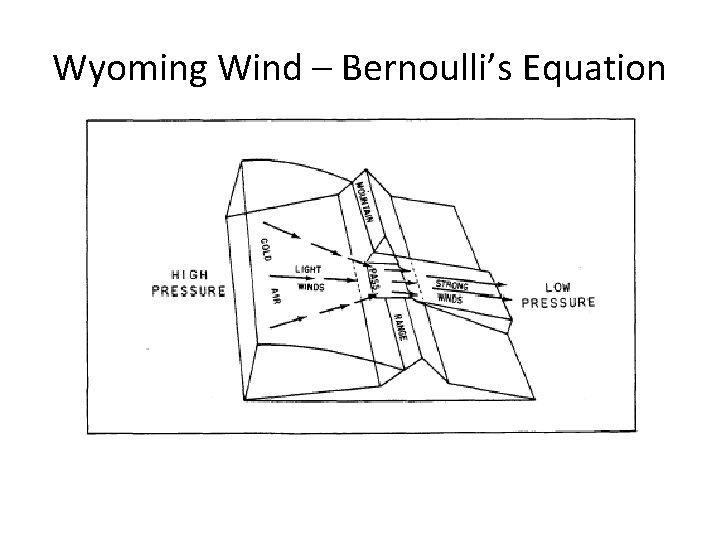
Wyoming Wind – Bernoulli’s Equation
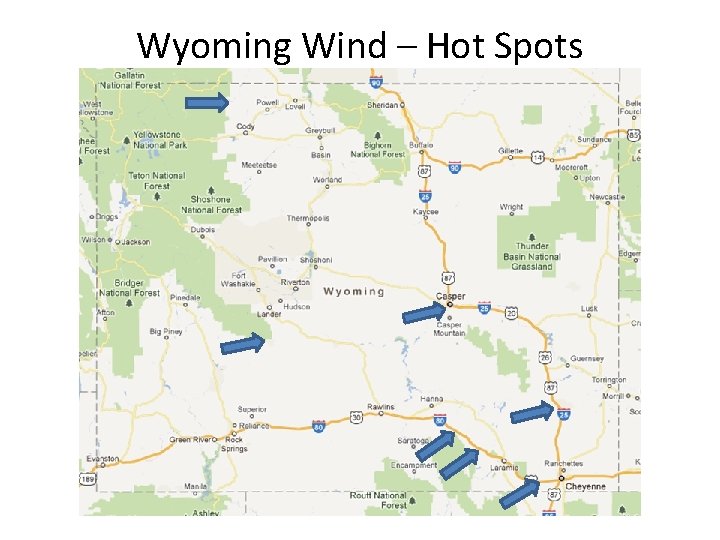
Wyoming Wind – Hot Spots
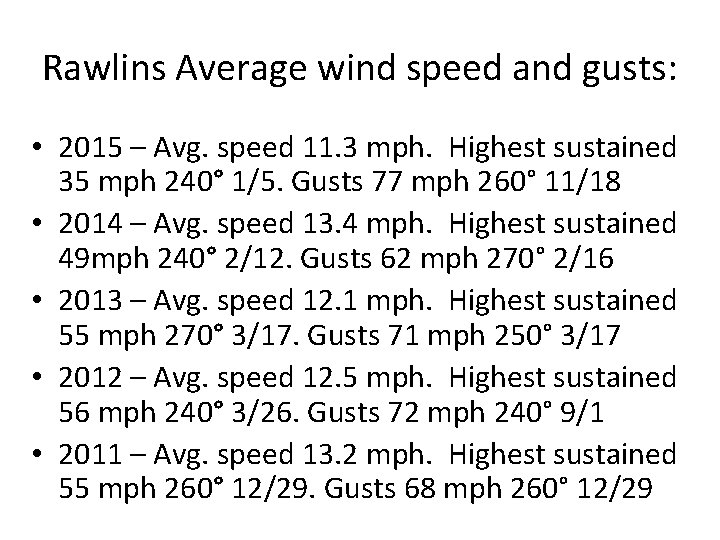
Rawlins Average wind speed and gusts: • 2015 – Avg. speed 11. 3 mph. Highest sustained 35 mph 240° 1/5. Gusts 77 mph 260° 11/18 • 2014 – Avg. speed 13. 4 mph. Highest sustained 49 mph 240° 2/12. Gusts 62 mph 270° 2/16 • 2013 – Avg. speed 12. 1 mph. Highest sustained 55 mph 270° 3/17. Gusts 71 mph 250° 3/17 • 2012 – Avg. speed 12. 5 mph. Highest sustained 56 mph 240° 3/26. Gusts 72 mph 240° 9/1 • 2011 – Avg. speed 13. 2 mph. Highest sustained 55 mph 260° 12/29. Gusts 68 mph 260° 12/29
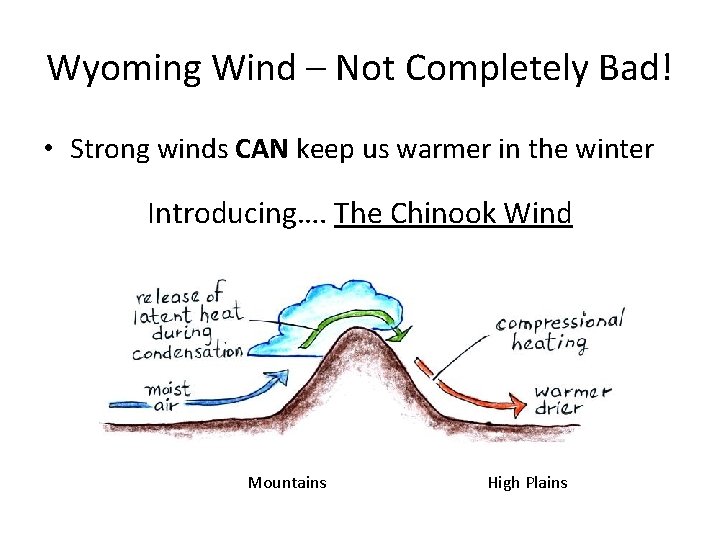
Wyoming Wind – Not Completely Bad! • Strong winds CAN keep us warmer in the winter Introducing…. The Chinook Wind Mountains High Plains
Snow Storms & Arctic Air Masses
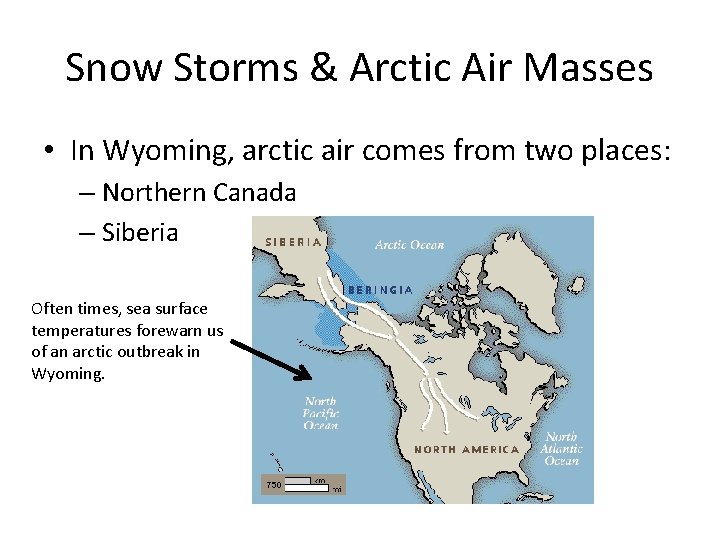
Snow Storms & Arctic Air Masses • In Wyoming, arctic air comes from two places: – Northern Canada – Siberia Often times, sea surface temperatures forewarn us of an arctic outbreak in Wyoming.
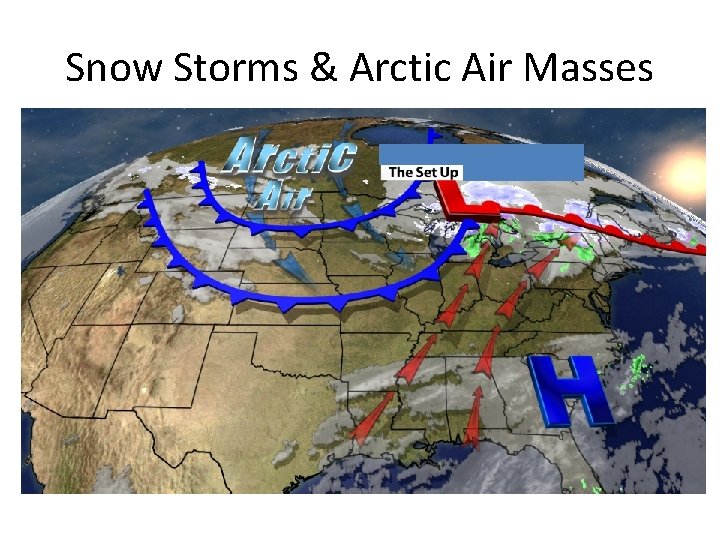
Snow Storms & Arctic Air Masses
Rawlins Temperature Statistics • 2015 – Highest max 93°, lowest min -21° • 2014 – Highest max 96°, lowest min -27° • 2013 – Highest max 94°, lowest min -24° • 2012 – Highest max 97°, lowest min -7° • 2011 – Highest max 93°, lowest min -36°R Highest max on record 98° set last in 2000. Lowest min on record -36° set last in 2011. Coldest month – Jan avg. high 30. 9 °, avg. low 12. 7 ° Warmest month – July avg. high 83. 7°, avg. low 51. 4°
Precipitation Types
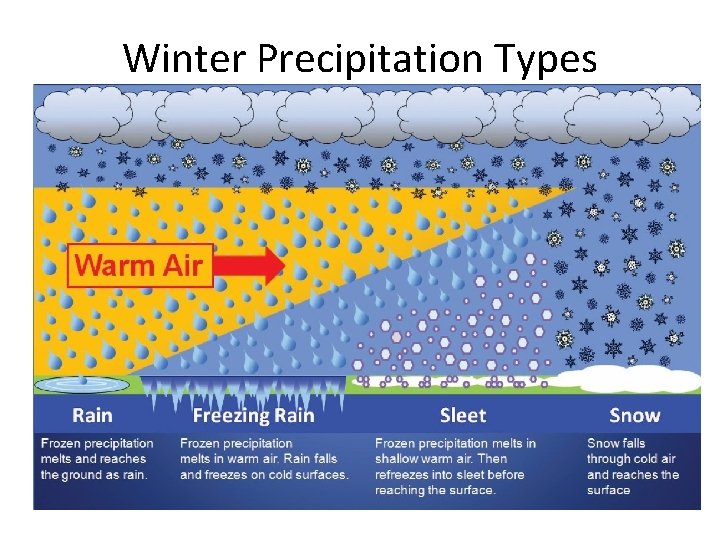
Winter Precipitation Types
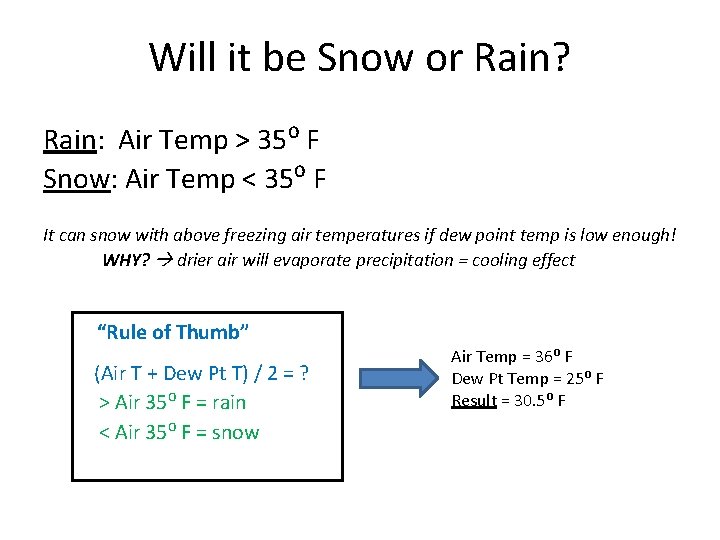
Will it be Snow or Rain? Rain: Air Temp > 35⁰ F Snow: Air Temp < 35⁰ F It can snow with above freezing air temperatures if dew point temp is low enough! WHY? drier air will evaporate precipitation = cooling effect “Rule of Thumb” (Air T + Dew Pt T) / 2 = ? > Air 35⁰ F = rain < Air 35⁰ F = snow Air Temp = 36⁰ F Dew Pt Temp = 25⁰ F Result = 30. 5⁰ F
Why & where models struggle. • • Topography is very difficult for models to handle! Placement and track of weather systems over time Timing of weather system Typically struggle as the start of season-changes (winter/spring) A weather model is only as good as the data given to it.
- Slides: 57