Clinical Efficacy of Clopidogrel in CVA ACS PAD






- Slides: 31
Clinical Efficacy of Clopidogrel in CVA, ACS, PAD
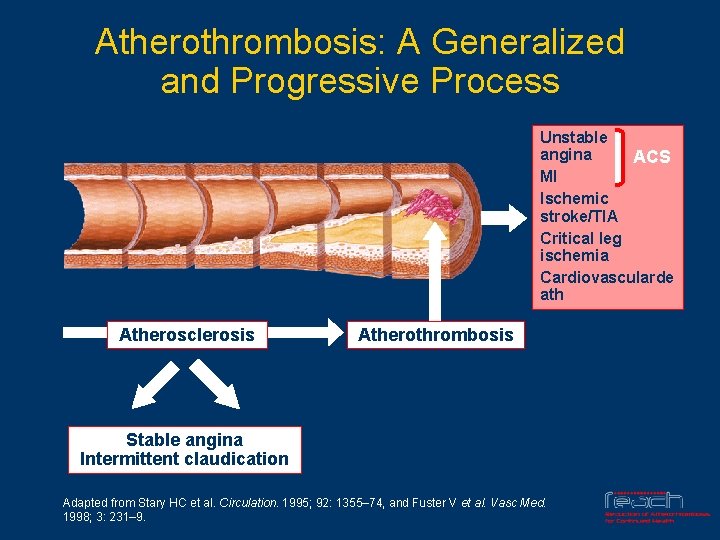
Atherothrombosis: A Generalized and Progressive Process Unstable angina ACS MI Ischemic stroke/TIA Critical leg ischemia Cardiovascularde ath Atherosclerosis Atherothrombosis Stable angina Intermittent claudication Adapted from Stary HC et al. Circulation. 1995; 92: 1355– 74, and Fuster V et al. Vasc Med. 1998; 3: 231– 9.
Synergistic Mode of Action with Clopidogrel and ASA 1 CLOPIDOGREL C ADP GPllb/llla Activation (Fibrinogen receptor) ASA COX TXA 2 COX (cyclo-oxygenase) ADP (adenosine diphosphate) TXA 2 (thromboxane A 2) 1. Schafer AI. Am J Med 1996; 101: 199– 209. Collagen thrombin TXA 2
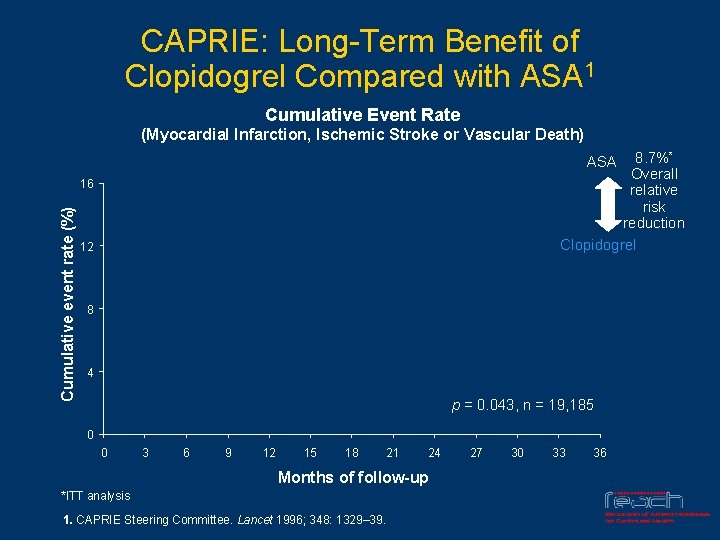
CAPRIE: Long-Term Benefit of Clopidogrel Compared with ASA 1 Cumulative Event Rate (Myocardial Infarction, Ischemic Stroke or Vascular Death) ASA Cumulative event rate (%) 16 8. 7%* Overall relative risk reduction Clopidogrel 12 8 4 p = 0. 043, n = 19, 185 0 0 3 6 9 12 15 18 21 24 Months of follow-up *ITT analysis 1. CAPRIE Steering Committee. Lancet 1996; 348: 1329– 39. 27 30 33 36
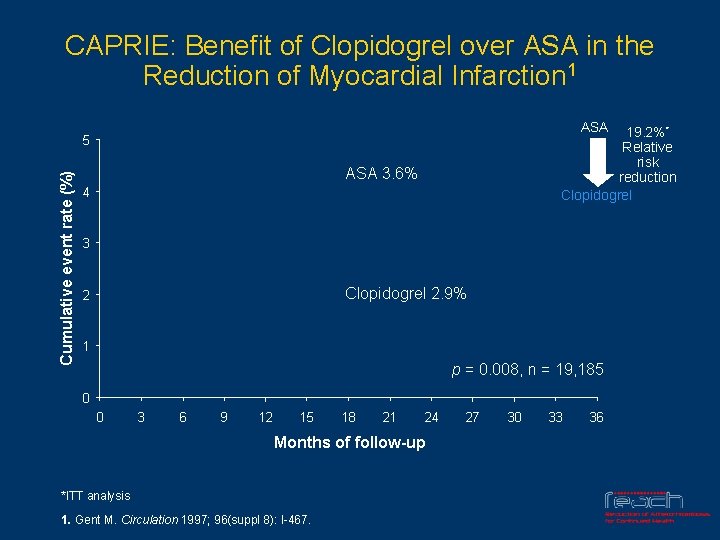
CAPRIE: Benefit of Clopidogrel over ASA in the Reduction of Myocardial Infarction 1 ASA 19. 2%* Relative risk reduction Clopidogrel Cumulative event rate (%) 5 ASA 3. 6% 4 3 Clopidogrel 2. 9% 2 1 p = 0. 008, n = 19, 185 0 0 3 6 9 12 15 18 21 24 Months of follow-up *ITT analysis 1. Gent M. Circulation 1997; 96(suppl 8): I-467. 27 30 33 36
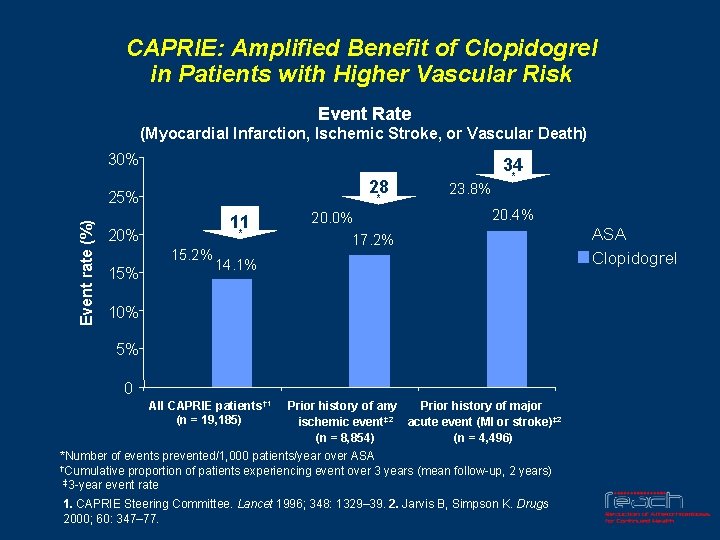
CAPRIE: Amplified Benefit of Clopidogrel in Patients with Higher Vascular Risk Event Rate (Myocardial Infarction, Ischemic Stroke, or Vascular Death) 30% 34 28 Event rate (%) 25% * 11 20% * 15. 2% 15% 20. 0% 17. 2% 23. 8% * 20. 4% 14. 1% 10% 5% 0 All CAPRIE patients† 1 (n = 19, 185) Prior history of any Prior history of major ‡ 2 ischemic event acute event (MI or stroke)‡ 2 (n = 8, 854) (n = 4, 496) *Number of events prevented/1, 000 patients/year over ASA †Cumulative proportion of patients experiencing event over 3 years (mean follow-up, 2 years) ‡ 3 -year event rate 1. CAPRIE Steering Committee. Lancet 1996; 348: 1329– 39. 2. Jarvis B, Simpson K. Drugs 2000; 60: 347– 77. ASA Clopidogrel
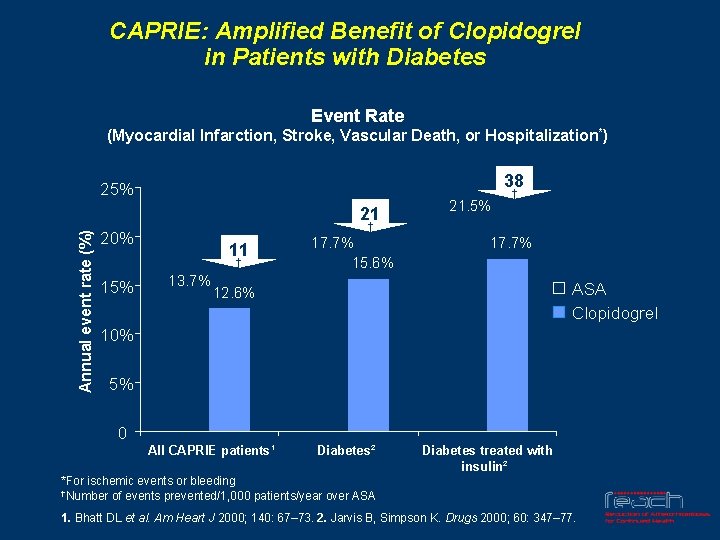
CAPRIE: Amplified Benefit of Clopidogrel in Patients with Diabetes Event Rate (Myocardial Infarction, Stroke, Vascular Death, or Hospitalization *) 38 25% Annual event rate (%) 21 † † 20% 11 † 15% 21. 5% 13. 7% 17. 7% 15. 6% 17. 7% ASA Clopidogrel 12. 6% 10% 5% 0 All CAPRIE patients¹ Diabetes² Diabetes treated with insulin² *For ischemic events or bleeding †Number of events prevented/1, 000 patients/year over ASA 1. Bhatt DL et al. Am Heart J 2000; 140: 67– 73. 2. Jarvis B, Simpson K. Drugs 2000; 60: 347– 77.
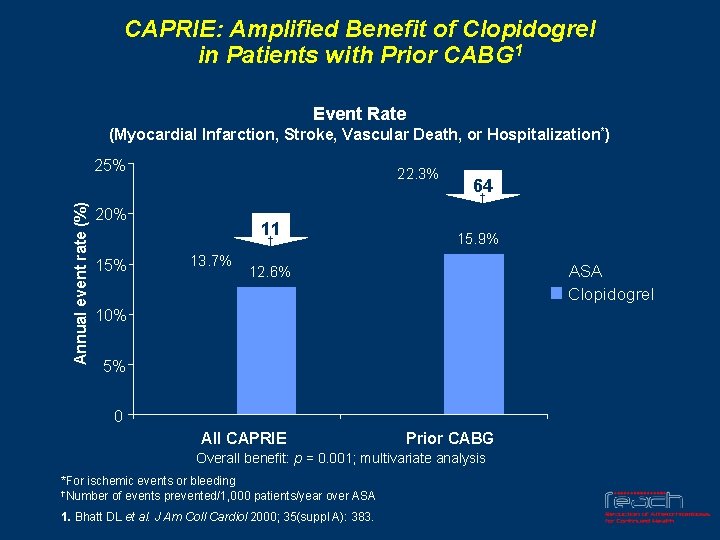
CAPRIE: Amplified Benefit of Clopidogrel in Patients with Prior CABG 1 Event Rate (Myocardial Infarction, Stroke, Vascular Death, or Hospitalization *) Annual event rate (%) 25% 22. 3% 64 † 20% 11 † 15% 13. 7% 15. 9% ASA Clopidogrel 12. 6% 10% 5% 0 All CAPRIE Prior CABG Overall benefit: p = 0. 001; multivariate analysis *For ischemic events or bleeding †Number of events prevented/1, 000 patients/year over ASA 1. Bhatt DL et al. J Am Coll Cardiol 2000; 35(suppl A): 383.
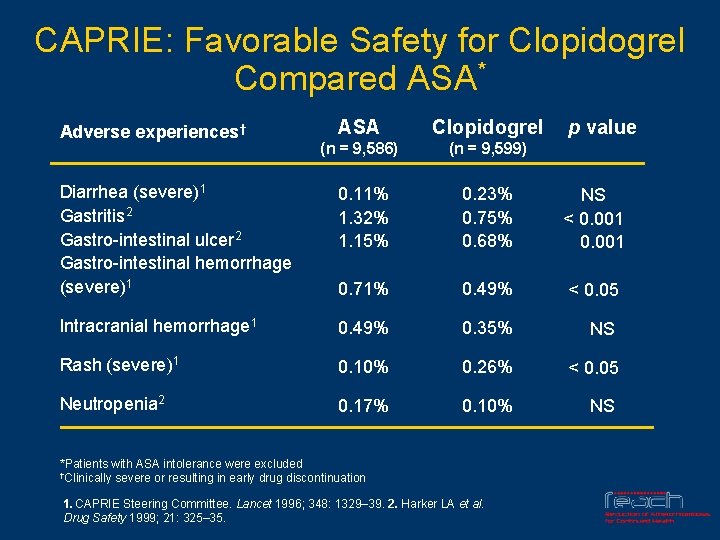
CAPRIE: Favorable Safety for Clopidogrel Compared ASA* ASA Clopidogrel (n = 9, 586) (n = 9, 599) Diarrhea (severe)1 Gastritis 2 Gastro-intestinal ulcer 2 Gastro-intestinal hemorrhage (severe)1 0. 11% 1. 32% 1. 15% 0. 23% 0. 75% 0. 68% NS < 0. 001 0. 71% 0. 49% < 0. 05 Intracranial hemorrhage 1 0. 49% 0. 35% NS Rash (severe)1 0. 10% 0. 26% < 0. 05 Neutropenia 2 0. 17% 0. 10% NS Adverse experiences† *Patients with ASA intolerance were excluded †Clinically severe or resulting in early drug discontinuation 1. CAPRIE Steering Committee. Lancet 1996; 348: 1329– 39. 2. Harker LA et al. Drug Safety 1999; 21: 325– 35. p value
C 30 lop do 0 m id se g og lo re ad l in g CURE: Design 1 n = 12, 562 28 countries R Double-blind treatment up to 12 months ASA 75– 325 mg o. d. or 12 m fin o al nth vis it it vis 9 m on th on 6 m 1. The CURE Study Investigators. Eur Heart J 2000; 21: 2033– 41. th vis it th on 3 m on th vis it Placebo Pl ac eb o lo Day Di sc adin 1 ha g d rg e v ose isi t (unstable angina or non-Q-wave myocardial infarction) 75 mg o. d. (n = 6, 259) ASA 75– 325 mg o. d. 1 m Patients with acute coronary syndrome Clopidogrel 1 tab o. d. (n = 6, 303) R = Randomization
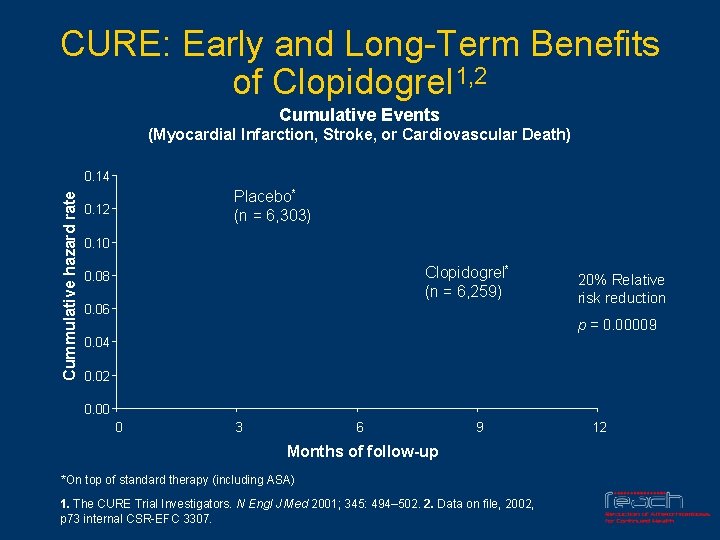
CURE: Early and Long-Term Benefits of Clopidogrel 1, 2 Cumulative Events (Myocardial Infarction, Stroke, or Cardiovascular Death) Cummulative hazard rate 0. 14 Placebo* (n = 6, 303) 0. 12 0. 10 Clopidogrel* (n = 6, 259) 0. 08 0. 06 20% Relative risk reduction p = 0. 00009 0. 04 0. 02 0. 00 0 3 6 9 Months of follow-up *On top of standard therapy (including ASA) 1. The CURE Trial Investigators. N Engl J Med 2001; 345: 494– 502. 2. Data on file, 2002, p 73 internal CSR-EFC 3307. 12
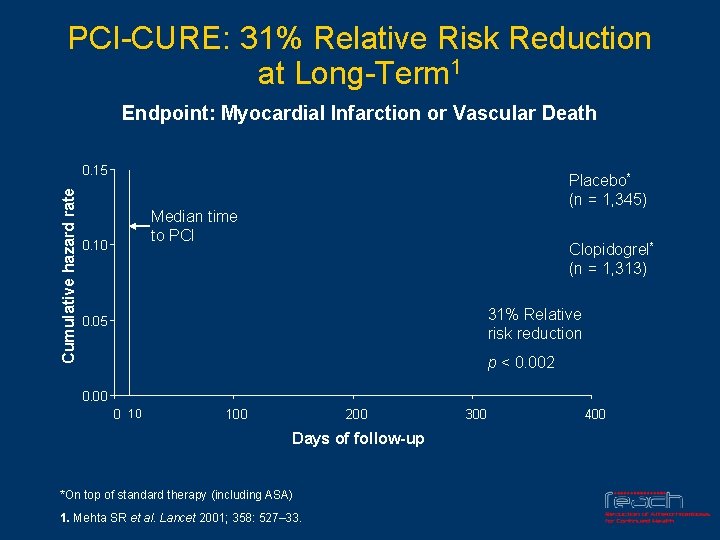
PCI-CURE: 31% Relative Risk Reduction at Long-Term 1 Endpoint: Myocardial Infarction or Vascular Death Cumulative hazard rate 0. 15 Placebo* (n = 1, 345) Median time to PCI 0. 10 Clopidogrel* (n = 1, 313) 31% Relative risk reduction 0. 05 p < 0. 002 0. 00 0 10 100 200 Days of follow-up *On top of standard therapy (including ASA) 1. Mehta SR et al. Lancet 2001; 358: 527– 33. 300 400
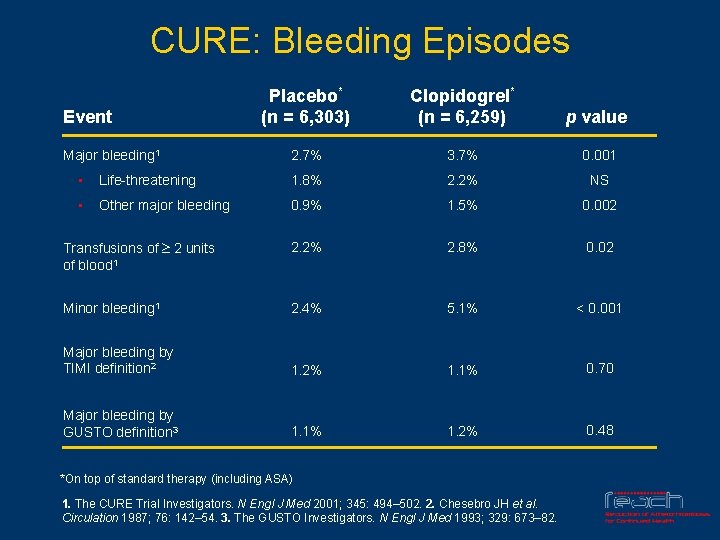
CURE: Bleeding Episodes Event Major bleeding 1 Placebo* (n = 6, 303) Clopidogrel* (n = 6, 259) p value 2. 7% 3. 7% 0. 001 • Life-threatening 1. 8% 2. 2% NS • Other major bleeding 0. 9% 1. 5% 0. 002 Transfusions of 2 units of blood 1 2. 2% 2. 8% 0. 02 Minor bleeding 1 2. 4% 5. 1% < 0. 001 Major bleeding by TIMI definition 2 1. 2% 1. 1% 0. 70 Major bleeding by GUSTO definition 3 1. 1% 1. 2% 0. 48 *On top of standard therapy (including ASA) 1. The CURE Trial Investigators. N Engl J Med 2001; 345: 494– 502. 2. Chesebro JH et al. Circulation 1987; 76: 142– 54. 3. The GUSTO Investigators. N Engl J Med 1993; 329: 673– 82.
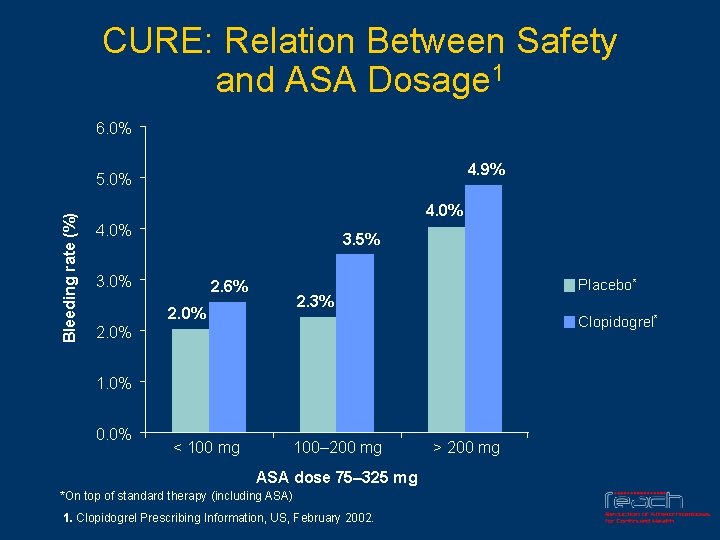
CURE: Relation Between Safety and ASA Dosage 1 6. 0% 4. 9% Bleeding rate (%) 5. 0% 4. 0% 3. 5% 3. 0% 2. 6% Placebo* 2. 3% 2. 0% Clopidogrel* 2. 0% 1. 0% 0. 0% < 100 mg 100– 200 mg ASA dose 75– 325 mg *On top of standard therapy (including ASA) 1. Clopidogrel Prescribing Information, US, February 2002. > 200 mg
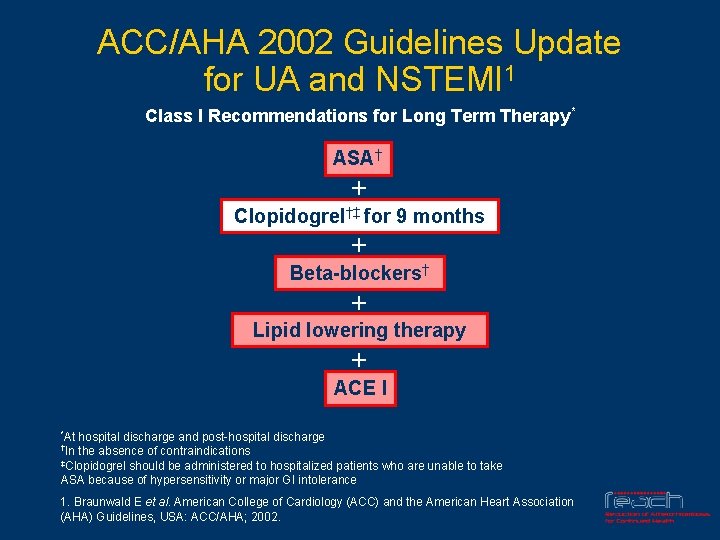
ACC/AHA 2002 Guidelines Update for UA and NSTEMI 1 Class I Recommendations for Long Term Therapy* ASA† + Clopidogrel†‡ for 9 months + Beta-blockers† + Lipid lowering therapy + ACE I *At hospital discharge and post-hospital discharge In the absence of contraindications ‡Clopidogrel should be administered to hospitalized patients who are unable to take ASA because of hypersensitivity or major GI intolerance † 1. Braunwald E et al. American College of Cardiology (ACC) and the American Heart Association (AHA) Guidelines, USA: ACC/AHA; 2002.
From CAPRIE to CURE – Conclusions • In CAPRIE, clopidogrel was more effective than ASA in reducing the combined risk of myocardial infarction, ischemic stroke, or vascular death 1 • Synergistic effects of clopidogrel and ASA have been demonstrated in ex vivo platelet studies and animal models 2– 5 • Clopidogrel on top of standard therapy (including ASA) demonstrates an early effect (within hours) and sustained long-term benefit throughout the entire 12 month study period in the CURE study: 6 – a 20% relative risk reduction in ischemic events with long-term use (up to 12 months) (p = 0. 00009)7 – the Kaplan-Meier curves began to diverge within hours and continued to diverge over the 12 -month period 1. CAPRIE Steering Committee. Lancet 1996; 348: 1329– 39. 2. Cadroy Y et al. Circulation 2000; 101: 2823– 8. 3. Herbert JM et al. Thromb Haemost 1998; 80: 512– 8. 4. Harker LA et al. Circulation 1998; 98: 2461– 9. 5. Makkar RR et al. Eur Heart J 1998; 19: 1538– 46. 6. The CURE Trial Investigators. N Engl J Med 2001; 345: 494– 502. 7. Data on file, 2002, p 73 internal CSR-EFC 3307.
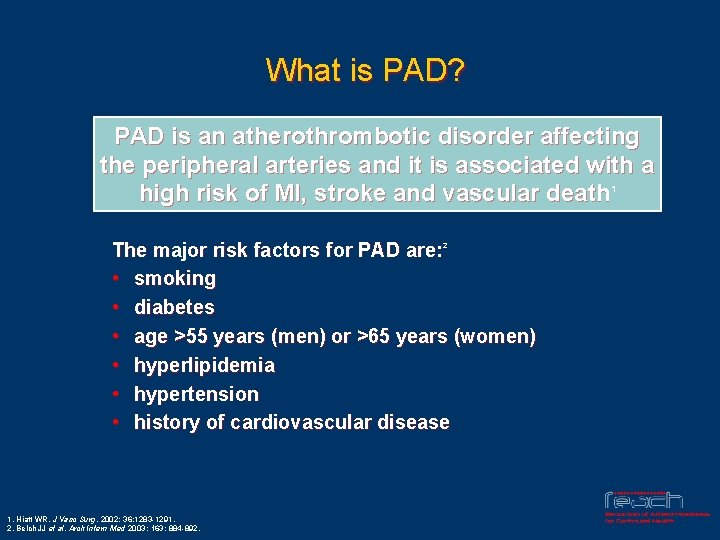
What is PAD? PAD is an atherothrombotic disorder affecting the peripheral arteries and it is associated with a high risk of MI, stroke and vascular death 1 The major risk factors for PAD are: • smoking • diabetes • age >55 years (men) or >65 years (women) • hyperlipidemia • hypertension • history of cardiovascular disease 2 1. Hiatt WR. J Vasc Surg. 2002; 36: 1283 -1291. 2. Belch JJ et al. Arch Intern Med 2003; 163: 884 -892.
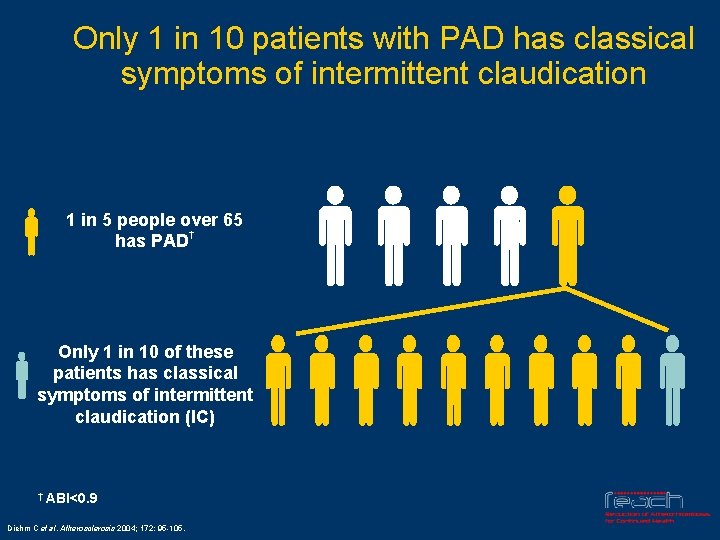
Only 1 in 10 patients with PAD has classical symptoms of intermittent claudication 1 in 5 people over 65 † has PAD Only 1 in 10 of these patients has classical symptoms of intermittent claudication (IC) † ABI<0. 9 Diehm C et al. Atherosclerosis 2004; 172; 95 -105.
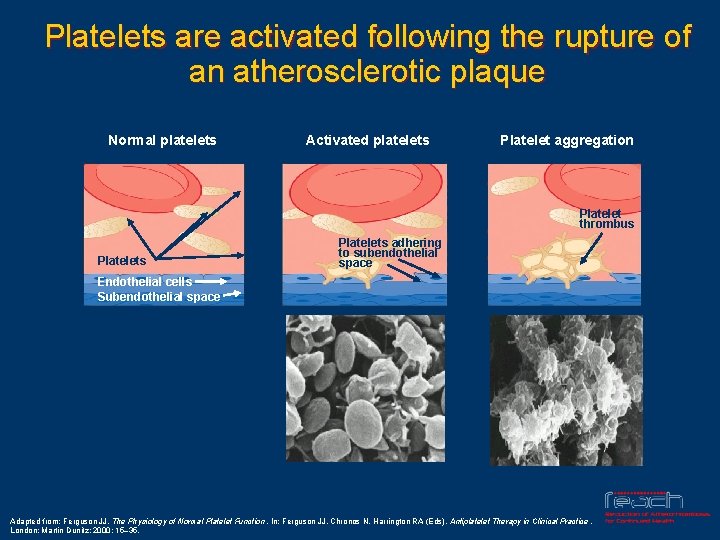
Platelets are activated following the rupture of an atherosclerotic plaque Normal platelets Activated platelets Platelet aggregation Platelet thrombus Platelets adhering to subendothelial space Endothelial cells Subendothelial space Adapted from: Ferguson JJ. The Physiology of Normal Platelet Function. In: Ferguson JJ. Chronos N, Harrington RA (Eds). Antiplatelet Therapy in Clinical Practice. London: Martin Dunitz; 2000: 15– 35.
Prevalence of PAD increases with age San Diego Study (PAD by noninvasive tests)2 Patients with PAD (%) Rotterdam Study (ABI Test <0. 9)1 Figure adapted from Creager M, ed. Management of Peripheral Arterial Disease. Medical, Surgical and Interventional Aspects. 2000. 1 Meijer WT et al. Arterioscler Thromb Vasc Biol 1998; 18: 185 -192. 2. Criqui MH et al. Circulation 1985; 71: 510 -515.
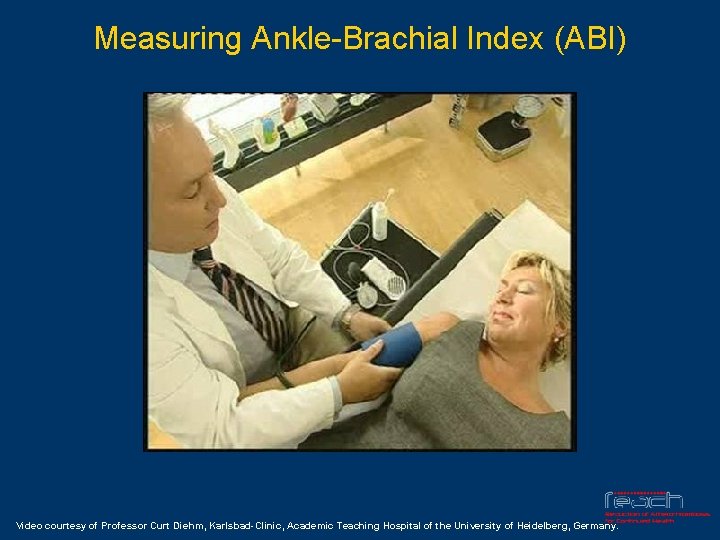
Measuring Ankle-Brachial Index (ABI) Video courtesy of Professor Curt Diehm, Karlsbad-Clinic, Academic Teaching Hospital of the University of Heidelberg, Germany.
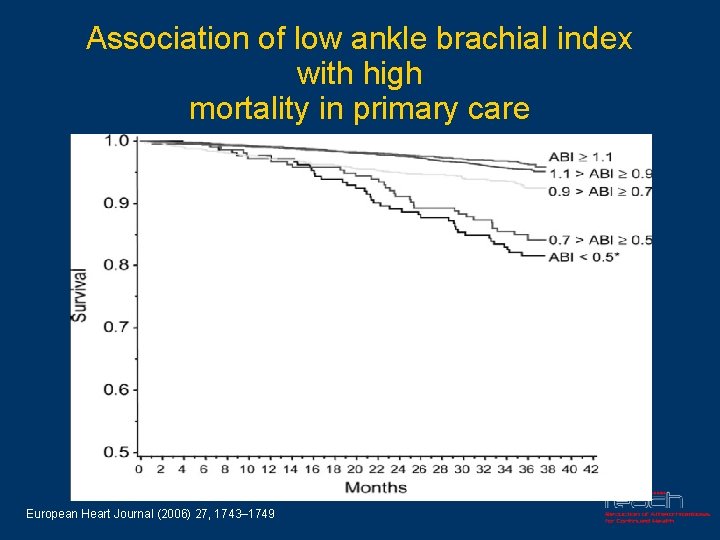
Association of low ankle brachial index with high mortality in primary care European Heart Journal (2006) 27, 1743– 1749
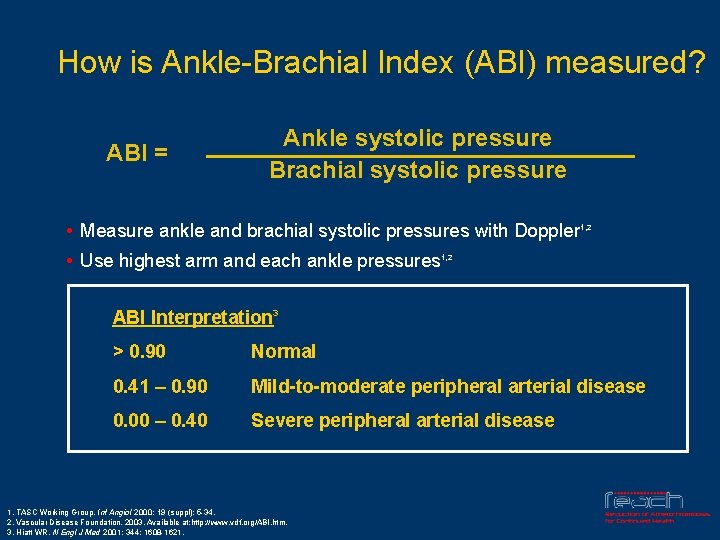
How is Ankle-Brachial Index (ABI) measured? ABI = Ankle systolic pressure Brachial systolic pressure • Measure ankle and brachial systolic pressures with Doppler 1, 2 • Use highest arm and each ankle pressures 1, 2 ABI Interpretation 3 > 0. 90 Normal 0. 41 – 0. 90 Mild-to-moderate peripheral arterial disease 0. 00 – 0. 40 Severe peripheral arterial disease 1. TASC Working Group. Int Angiol 2000; 19 (suppl): 5 -34. 2. Vascular Disease Foundation, 2003. Available at: http: //www. vdf. org/ABI. htm. 3. Hiatt WR. N Engl J Med 2001; 344: 1608 -1621.
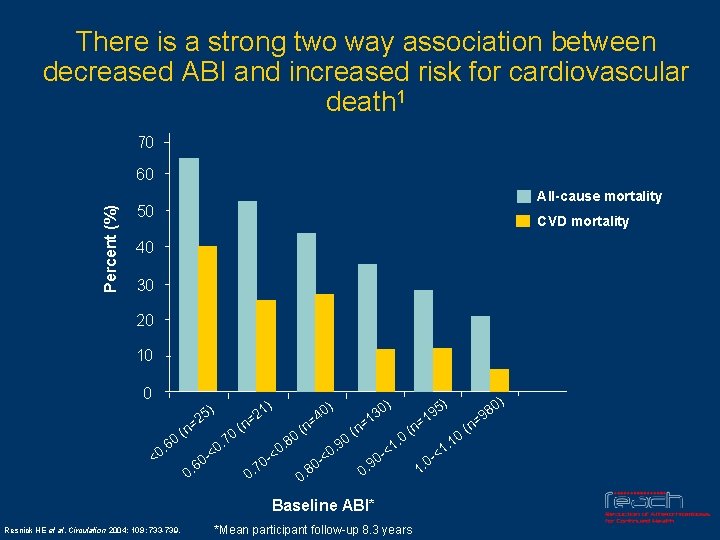
There is a strong two way association between decreased ABI and increased risk for cardiovascular death 1 70 Percent (%) 60 All-cause mortality 50 CVD mortality 40 30 20 10 0 60 . <0 ) ) 25 = (n . <0 60 0. 70 21 = (n 0. 80 7 0. < 0 - ) 40 = (n 8 0. < 0 - 0. 90 0 13 ) = (n 0 1. Baseline ABI* Resnick HE et al. Circulation 2004; 109: 733 -739. *Mean participant follow-up 8. 3 years <1 01. ) ) ( < 90. 0 5 19 = n 0. 1 ( 80 9 n=
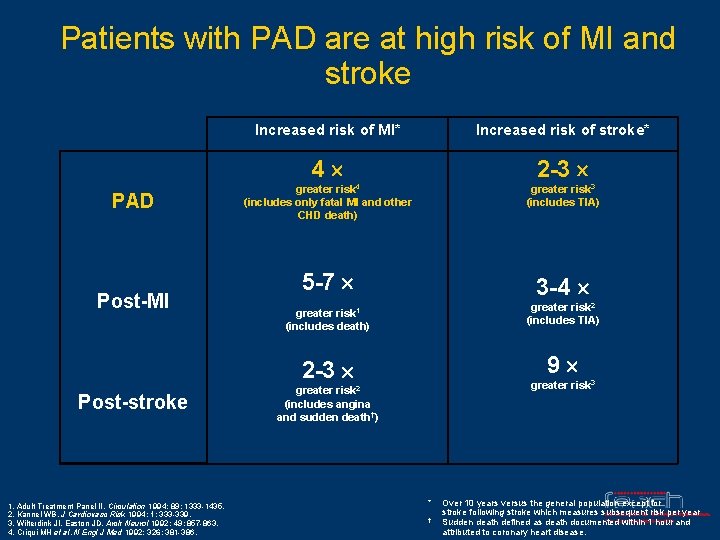
Patients with PAD are at high risk of MI and stroke PAD Post-MI Increased risk of MI* Increased risk of stroke* 4 2 -3 risk 4 greater (includes only fatal MI and other CHD death) greater risk 3 (includes TIA) 5 -7 3 - 4 greater risk 2 (includes TIA) greater risk 1 (includes death) 9 2 -3 Post-stroke 1. Adult Treatment Panel II. Circulation 1994; 89: 1333 -1435. 2. Kannel WB. J Cardiovasc Risk 1994; 1: 333 -339. 3. Wilterdink JI, Easton JD. Arch Neurol 1992; 49: 857 -863. 4. Criqui MH et al. N Engl J Med 1992; 326: 381 -386. greater risk 3 greater risk 2 (includes angina and sudden death†) * † Over 10 years versus the general population except for stroke following stroke which measures subsequent risk per year Sudden death defined as death documented within 1 hour and attributed to coronary heart disease.
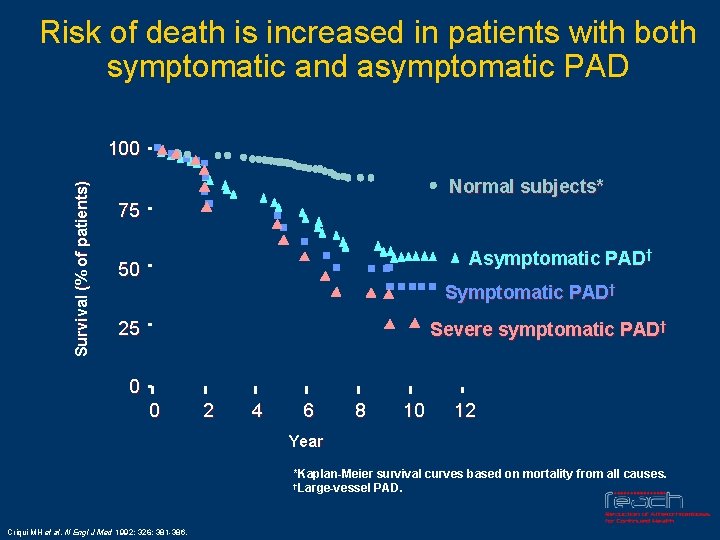
Risk of death is increased in patients with both symptomatic and asymptomatic PAD Survival (% of patients) 100 Normal subjects* 75 Asymptomatic PAD† 50 Symptomatic PAD† 25 Severe symptomatic PAD† 0 0 2 4 6 8 10 12 Year *Kaplan-Meier survival curves based on mortality from all causes. †Large-vessel PAD. Criqui MH et al. N Engl J Med 1992; 326: 381 -386.
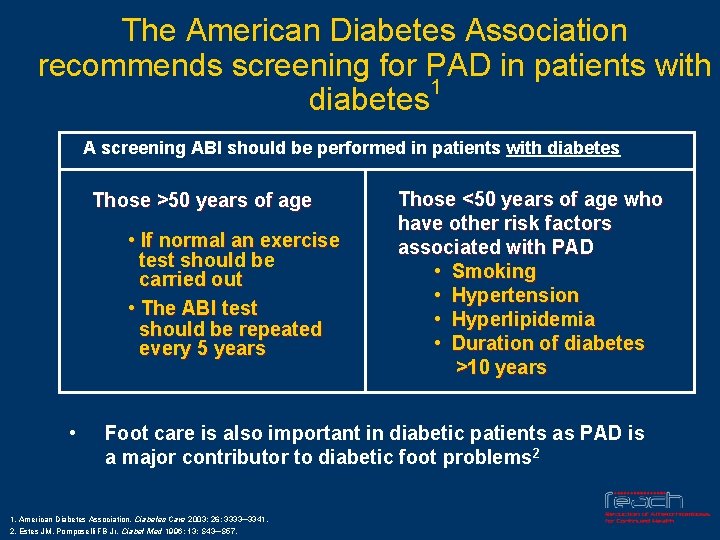
The American Diabetes Association recommends screening for PAD in patients with 1 diabetes A screening ABI should be performed in patients with diabetes Those >50 years of age • If normal an exercise test should be carried out • The ABI test should be repeated every 5 years • Those <50 years of age who have other risk factors associated with PAD • Smoking • Hypertension • Hyperlipidemia • Duration of diabetes >10 years Foot care is also important in diabetic patients as PAD is a major contributor to diabetic foot problems 2 1. American Diabetes Association. Diabetes Care 2003; 26: 3333 – 3341. 2. Estes JM, Pomposelli FB Jr. Diabet Med 1996: 13: S 43–S 57.
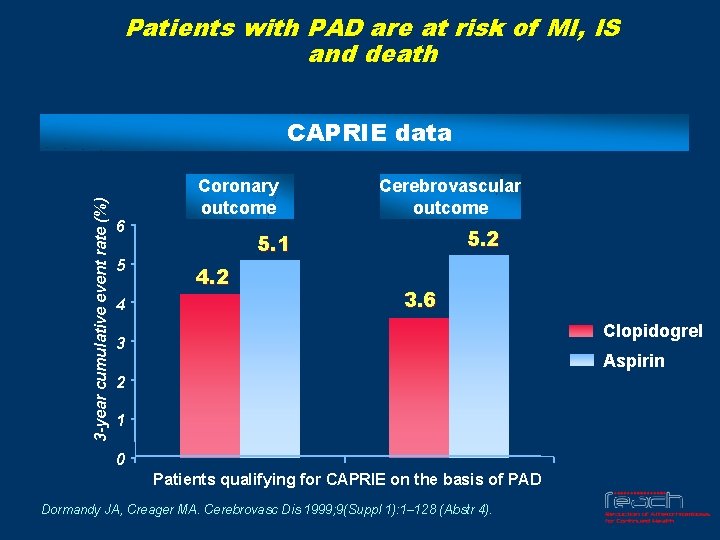
Patients with PAD are at risk of MI, IS and death 3 -year cumulative event rate (%) CAPRIE data Coronary outcome 6 5 4 Cerebrovascular outcome 5. 2 5. 1 4. 2 3. 6 Clopidogrel 3 Aspirin 2 1 0 Patients qualifying for CAPRIE on the basis of PAD Dormandy JA, Creager MA. Cerebrovasc Dis 1999; 9(Suppl 1): 1– 128 (Abstr 4).
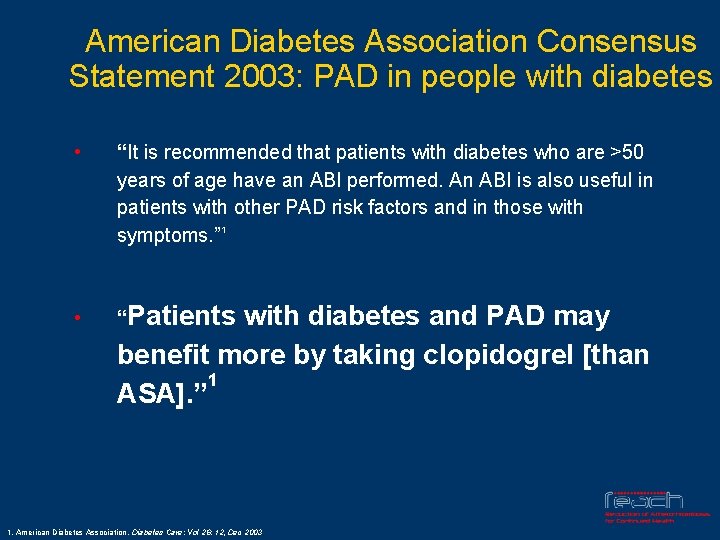
American Diabetes Association Consensus Statement 2003: PAD in people with diabetes • “It is recommended that patients with diabetes who are >50 years of age have an ABI performed. An ABI is also useful in patients with other PAD risk factors and in those with symptoms. ” 1 • “Patients with diabetes and PAD may benefit more by taking clopidogrel [than 1 ASA]. ” 1. American Diabetes Association. Diabetes Care: Vol 26: 12, Dec 2003
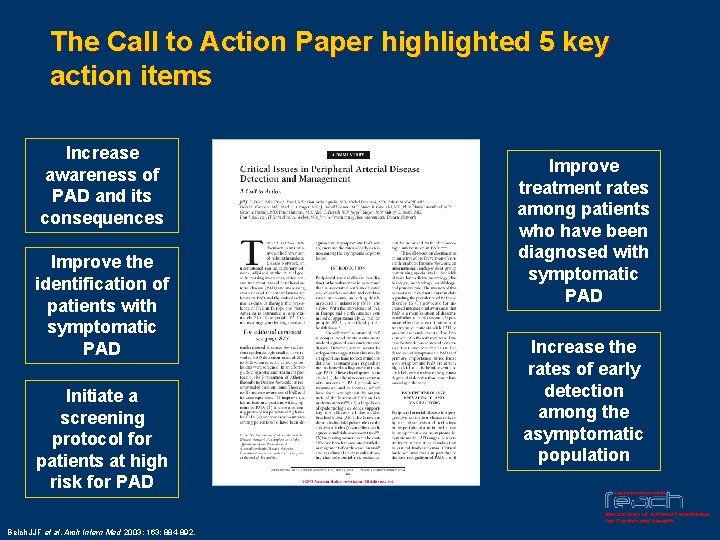
The Call to Action Paper highlighted 5 key action items Increase awareness of PAD and its consequences Improve the identification of patients with symptomatic PAD Initiate a screening protocol for patients at high risk for PAD Belch JJF et al. Arch Intern Med 2003; 163: 884 -892. Call to action Paper 60% Improve treatment rates among patients who have been diagnosed with symptomatic PAD Increase the rates of early detection among the asymptomatic population