
Acute Coronary Syndrome In Hospital Antiplatelet Management Disclosures


- Slides: 37
Acute Coronary Syndrome: In Hospital Antiplatelet Management
Disclosures
Learning Objectives At the completion of this program participants will be better able to: • Apply the Canadian Cardiovascular Society antiplatelet guideline recommendations to hospitalized patients with acute coronary syndrome • Recognize how patient characteristics impact the choice of antiplatelet therapy • Recognize how the approach to revascularization impacts the choice of antiplatelet therapy
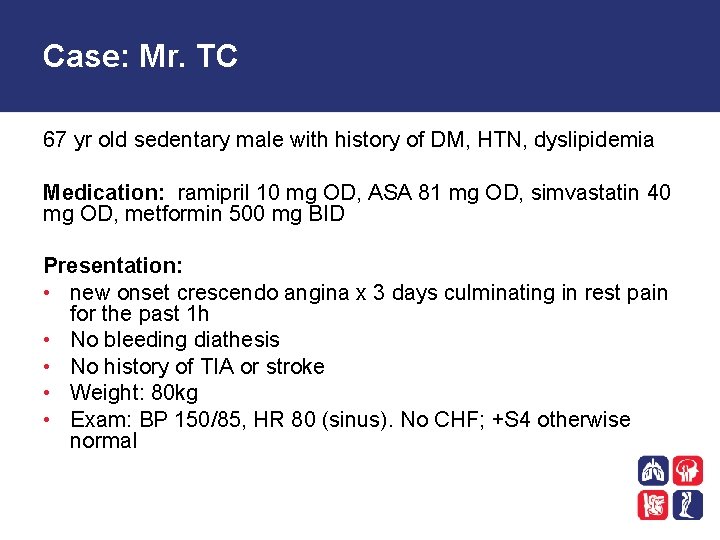
Case: Mr. TC 67 yr old sedentary male with history of DM, HTN, dyslipidemia Medication: ramipril 10 mg OD, ASA 81 mg OD, simvastatin 40 mg OD, metformin 500 mg BID Presentation: • new onset crescendo angina x 3 days culminating in rest pain for the past 1 h • No bleeding diathesis • No history of TIA or stroke • Weight: 80 kg • Exam: BP 150/85, HR 80 (sinus). No CHF; +S 4 otherwise normal
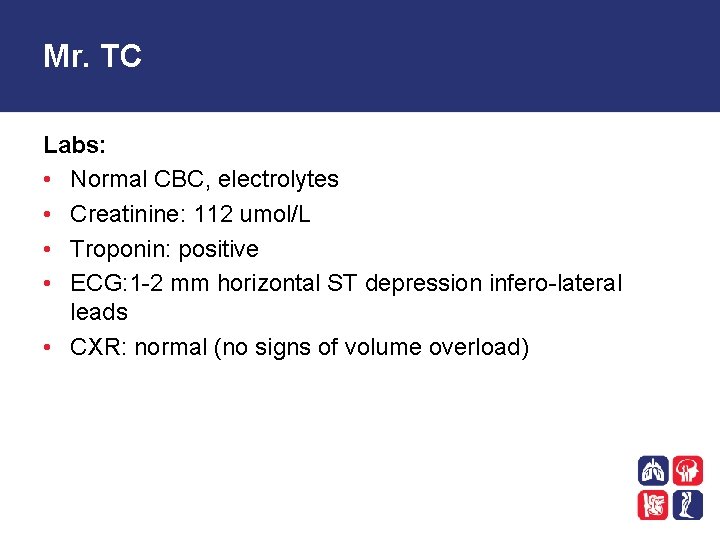
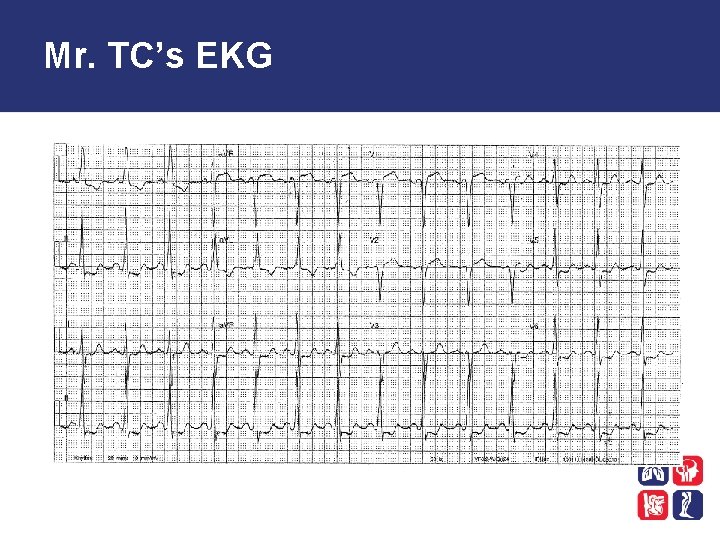
Mr. TC Labs: • Normal CBC, electrolytes • Creatinine: 112 umol/L • Troponin: positive • ECG: 1 -2 mm horizontal ST depression infero-lateral leads • CXR: normal (no signs of volume overload)
Mr. TC’s EKG
Mr. TC Diagnosis: NSTEACS What is the CCS guideline recommended initial antiplatelet treatment?
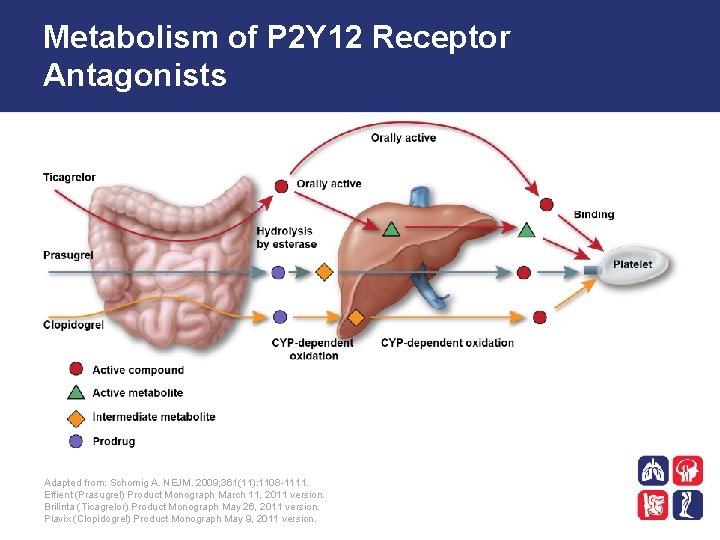
Metabolism of P 2 Y 12 Receptor Antagonists Adapted from: Schomig A. NEJM. 2009; 361(11): 1108 -1111. Effient (Prasugrel) Product Monograph March 11, 2011 version. Brilinta (Ticagrelor) Product Monograph May 26, 2011 version. Plavix (Clopidogrel) Product Monograph May 9, 2011 version.
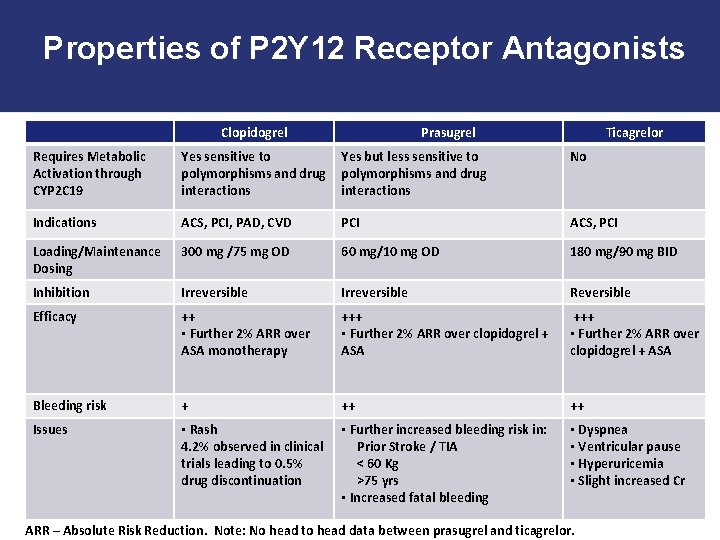
Properties of P 2 Y 12 Receptor Antagonists Clopidogrel Prasugrel Ticagrelor Requires Metabolic Activation through CYP 2 C 19 Yes sensitive to polymorphisms and drug interactions Yes but less sensitive to polymorphisms and drug interactions No Indications ACS, PCI, PAD, CVD PCI ACS, PCI Loading/Maintenance Dosing 300 mg /75 mg OD 60 mg/10 mg OD 180 mg/90 mg BID Inhibition Irreversible Reversible Efficacy ++ • Further 2% ARR over ASA monotherapy +++ • Further 2% ARR over clopidogrel + ASA Bleeding risk + ++ ++ Issues • Rash 4. 2% observed in clinical trials leading to 0. 5% drug discontinuation • Further increased bleeding risk in: Prior Stroke / TIA < 60 Kg >75 yrs • Increased fatal bleeding • Dyspnea • Ventricular pause • Hyperuricemia • Slight increased Cr ARR – Absolute Risk Reduction. Note: No head to head data between prasugrel and ticagrelor.
CURE: Clopidogrel + ASA vs ASA (2001) Study design: • Patients with NSTEACS with ECG changes or positive cardiac biomarkers • All patients received standard therapy, including ASA • Randomized to clopidogrel 300 mg load followed by 75 mg daily or placebo • n=12, 562 Yusuf S, et al. N Engl J Med. 2001; 345(7): 494 -502.
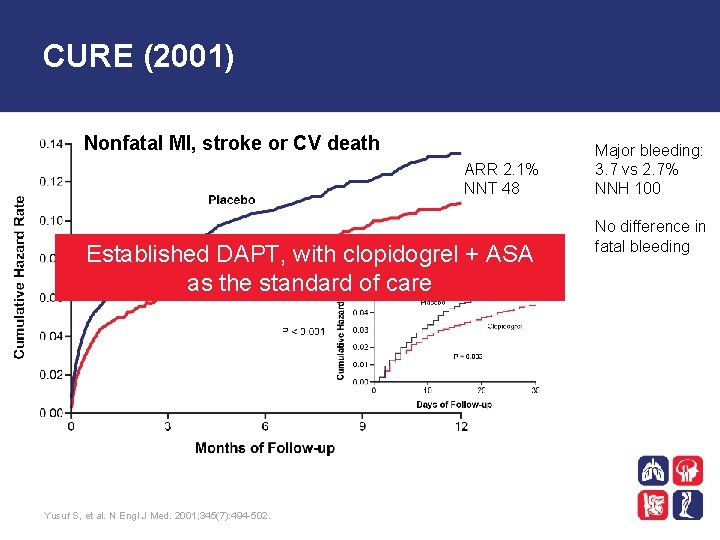
CURE (2001) Nonfatal MI, stroke or CV death ARR 2. 1% NNT 48 Established DAPT, with clopidogrel + ASA as the standard of care Yusuf S, et al. N Engl J Med. 2001; 345(7): 494 -502. Major bleeding: 3. 7 vs 2. 7% NNH 100 No difference in fatal bleeding
TRITON: Prasugrel vs. Clopidogrel (2007) Study design: • Patients with ACS with planned PCI • Coronary anatomy defined prior to P 2 Y 12 antagonist administration • All patients received standard therapy, including ASA • Randomized to prasugrel 60 mg load followed by 10 mg daily or clopidogrel 300 mg load followed by 75 mg daily • n=13, 608 Wiviott SD, et al. N Engl J Med. 2007; 357(20): 2001 -2015.
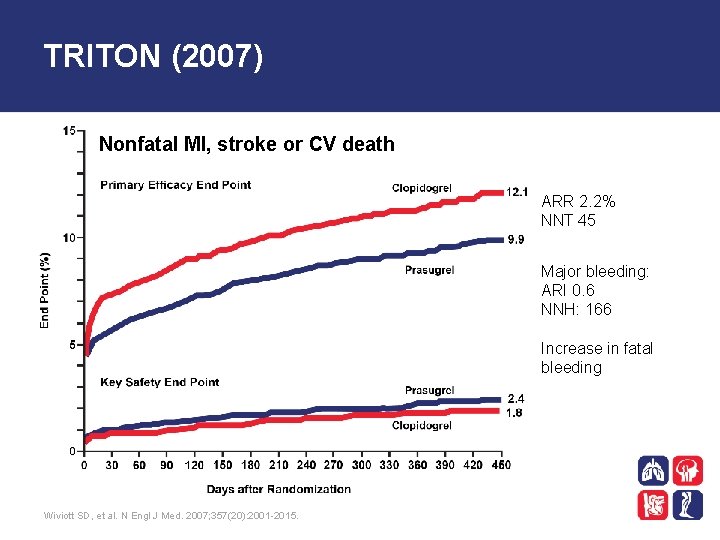
TRITON (2007) Nonfatal MI, stroke or CV death ARR 2. 2% NNT 45 Major bleeding: ARI 0. 6 NNH: 166 Increase in fatal bleeding Wiviott SD, et al. N Engl J Med. 2007; 357(20): 2001 -2015.
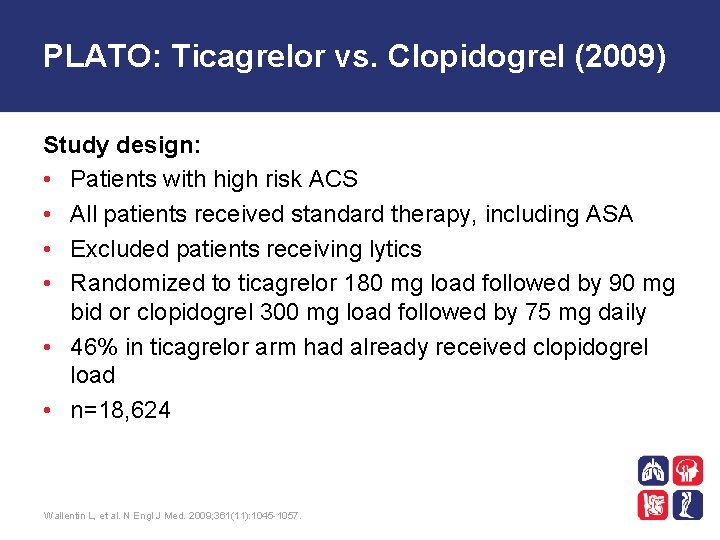
PLATO: Ticagrelor vs. Clopidogrel (2009) Study design: • Patients with high risk ACS • All patients received standard therapy, including ASA • Excluded patients receiving lytics • Randomized to ticagrelor 180 mg load followed by 90 mg bid or clopidogrel 300 mg load followed by 75 mg daily • 46% in ticagrelor arm had already received clopidogrel load • n=18, 624 Wallentin L, et al. N Engl J Med. 2009; 361(11): 1045 -1057.
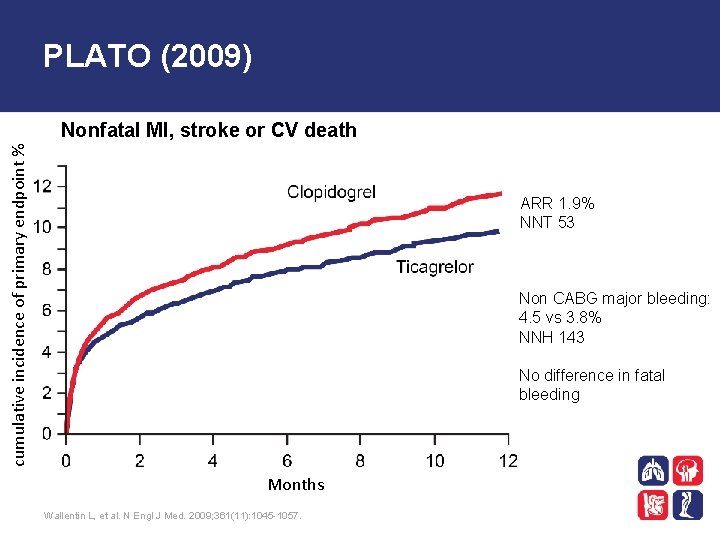
PLATO (2009) cumulative incidence of primary endpoint % Nonfatal MI, stroke or CV death ARR 1. 9% NNT 53 Non CABG major bleeding: 4. 5 vs 3. 8% NNH 143 No difference in fatal bleeding Months Wallentin L, et al. N Engl J Med. 2009; 361(11): 1045 -1057.
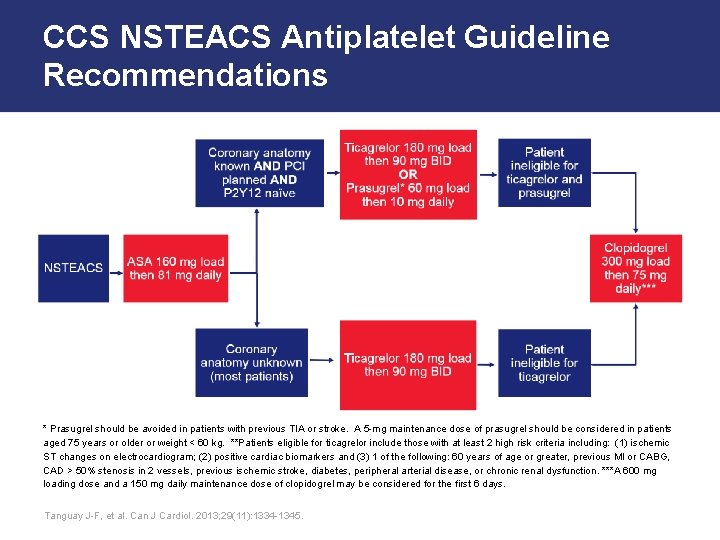
CCS NSTEACS Antiplatelet Guideline Recommendations * Prasugrel should be avoided in patients with previous TIA or stroke. A 5 -mg maintenance dose of prasugrel should be considered in patients aged 75 years or older or weight < 60 kg. **Patients eligible for ticagrelor include those with at least 2 high risk criteria including: (1) ischemic ST changes on electrocardiogram; (2) positive cardiac biomarkers and (3) 1 of the following: 60 years of age or greater, previous MI or CABG, CAD > 50% stenosis in 2 vessels, previous ischemic stroke, diabetes, peripheral arterial disease, or chronic renal dysfunction. ***A 600 mg loading dose and a 150 mg daily maintenance dose of clopidogrel may be considered for the first 6 days. Tanguay J-F, et al. Can J Cardiol. 2013; 29(11): 1334 -1345.
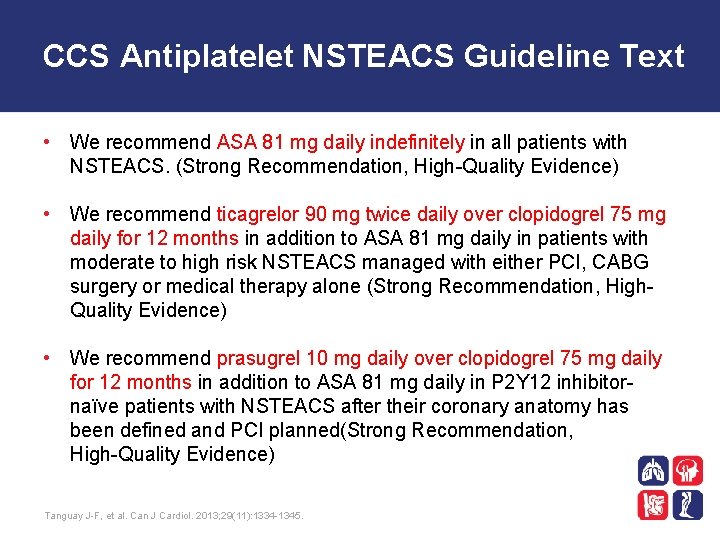
CCS Antiplatelet NSTEACS Guideline Text • We recommend ASA 81 mg daily indefinitely in all patients with NSTEACS. (Strong Recommendation, High-Quality Evidence) • We recommend ticagrelor 90 mg twice daily over clopidogrel 75 mg daily for 12 months in addition to ASA 81 mg daily in patients with moderate to high risk NSTEACS managed with either PCI, CABG surgery or medical therapy alone (Strong Recommendation, High. Quality Evidence) • We recommend prasugrel 10 mg daily over clopidogrel 75 mg daily for 12 months in addition to ASA 81 mg daily in P 2 Y 12 inhibitornaïve patients with NSTEACS after their coronary anatomy has been defined and PCI planned(Strong Recommendation, High-Quality Evidence) Tanguay J-F, et al. Can J Cardiol. 2013; 29(11): 1334 -1345.
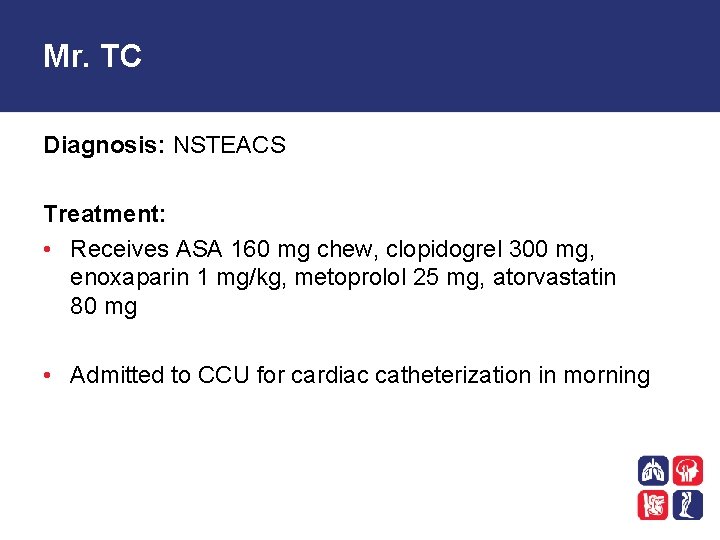
Mr. TC Diagnosis: NSTEACS Treatment: • Receives ASA 160 mg chew, clopidogrel 300 mg, enoxaparin 1 mg/kg, metoprolol 25 mg, atorvastatin 80 mg • Admitted to CCU for cardiac catheterization in morning
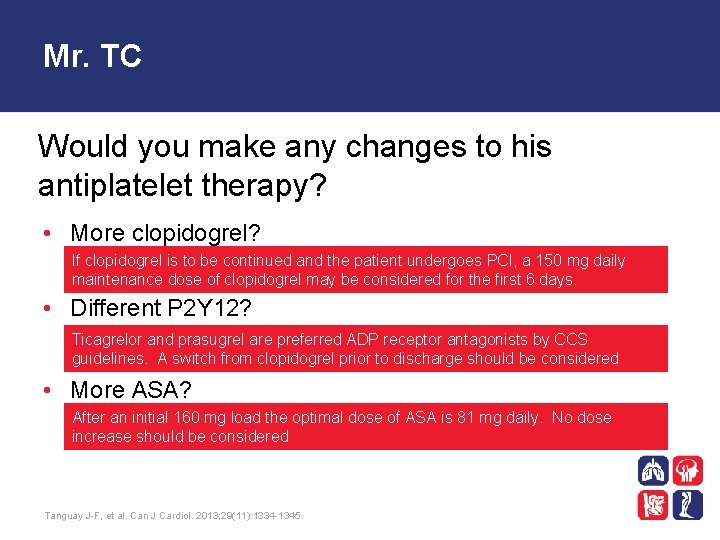
Mr. TC Would you make any changes to his antiplatelet therapy? • More clopidogrel? If clopidogrel is to be continued and the patient undergoes PCI, a 150 mg daily maintenance dose of clopidogrel may be considered for the first 6 days. • Different P 2 Y 12? Ticagrelor and prasugrel are preferred ADP receptor antagonists by CCS guidelines. A switch from clopidogrel prior to discharge should be considered • More ASA? After an initial 160 mg load the optimal dose of ASA is 81 mg daily. No dose increase should be considered Tanguay J-F, et al. Can J Cardiol. 2013; 29(11): 1334 -1345.
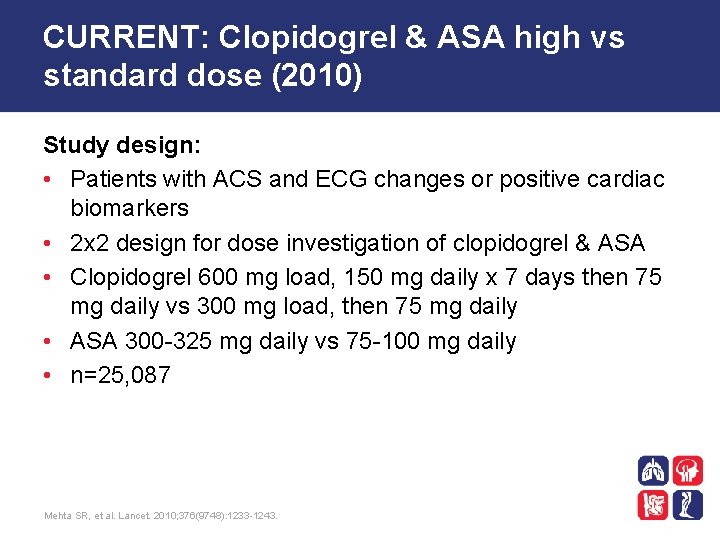
CURRENT: Clopidogrel & ASA high vs standard dose (2010) Study design: • Patients with ACS and ECG changes or positive cardiac biomarkers • 2 x 2 design for dose investigation of clopidogrel & ASA • Clopidogrel 600 mg load, 150 mg daily x 7 days then 75 mg daily vs 300 mg load, then 75 mg daily • ASA 300 -325 mg daily vs 75 -100 mg daily • n=25, 087 Mehta SR, et al. Lancet. 2010; 376(9748): 1233 -1243.
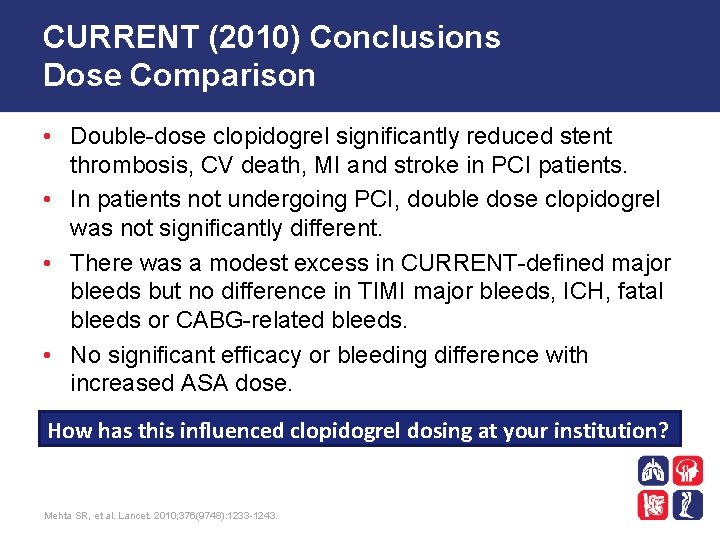
CURRENT (2010) Conclusions Dose Comparison • Double-dose clopidogrel significantly reduced stent thrombosis, CV death, MI and stroke in PCI patients. • In patients not undergoing PCI, double dose clopidogrel was not significantly different. • There was a modest excess in CURRENT-defined major bleeds but no difference in TIMI major bleeds, ICH, fatal bleeds or CABG-related bleeds. • No significant efficacy or bleeding difference with increased ASA dose. How has this influenced clopidogrel dosing at your institution? Mehta SR, et al. Lancet. 2010; 376(9748): 1233 -1243.
P 2 Y 12 Switching Regimens • The only evidence to support switching P 2 Y 12 receptor antagonists is from the PLATO trial • In the PLATO trial 46% of ticagrelor subjects received clopidogrel, mainly at loading dose. They were subsequently randomized and received a loading dose of ticagrelor 180 mg within 24 hours of onset of chest pain regardless of the timing and dose of clopidogel Based on that evidence, if a switch from clopidogrel to ticagrelor is planned we suggest: Acute Phase (within 24 hours of onset of chest pain): administer loading dose of 180 mg (unless active bleeding) regardless of clopidogrel timing/dose
P 2 Y 12 Switching Regimens • No evidence exists to guide loading dose when switching between P 2 Y 12 inhibitors beyond 24 hours after onset of chest pain • If a switch is necessary the following are reasonable strategies, but are not evidence based § Within 24 hours of onset of chest pain administer loading dose § Beyond 24 hours of onset of chest pain the use of a loading dose should be determined by the ischemic and bleeding risk
Mr. TC • What if he had a STEMI? § …and primary PCI? § …and thrombolysis? • What if he has coronary anatomy requiring CABG?
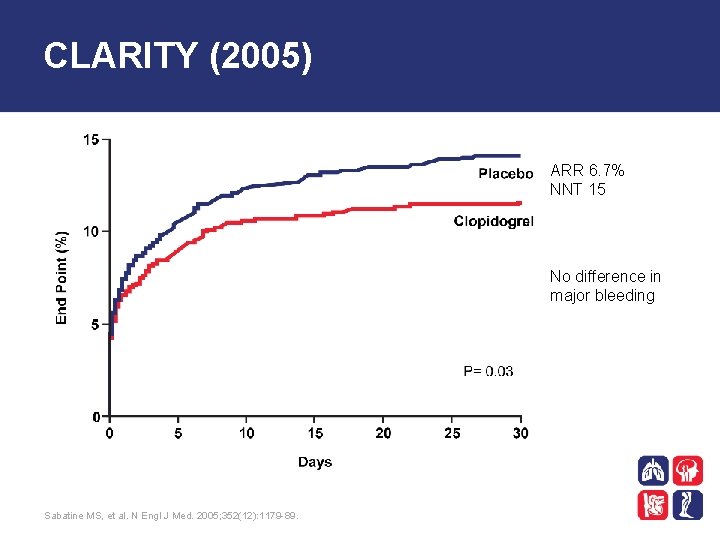
CLARITY: Clopidogrel vs placebo in STEMI (2005) Study design: • Patients with STEMI • All thrombolysed, 57% received secondary PCI • All patients received standard therapy, including ASA • Randomized to clopidogrel 300 mg load followed by 75 mg daily or placebo • n=3491 Sabatine MS, et al. N Engl J Med. 2005; 352(12): 1179 -89.
CLARITY (2005) ARR 6. 7% NNT 15 No difference in major bleeding Sabatine MS, et al. N Engl J Med. 2005; 352(12): 1179 -89.
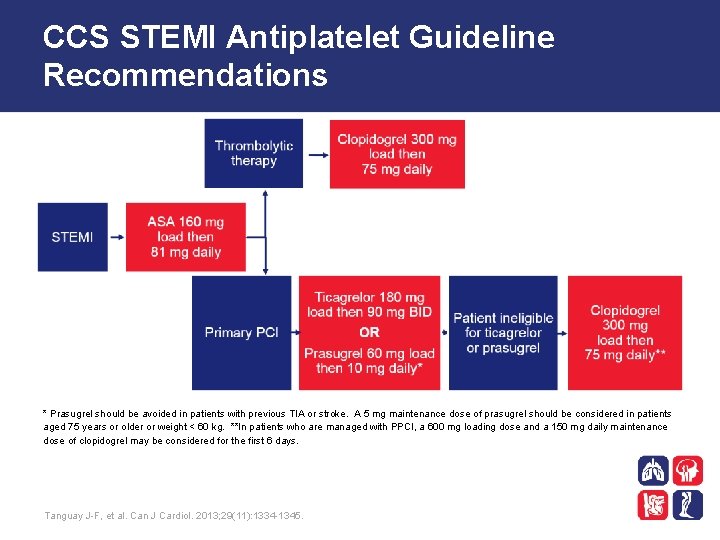
CCS STEMI Antiplatelet Guideline Recommendations * Prasugrel should be avoided in patients with previous TIA or stroke. A 5 mg maintenance dose of prasugrel should be considered in patients aged 75 years or older or weight < 60 kg. **In patients who are managed with PPCI, a 600 mg loading dose and a 150 mg daily maintenance dose of clopidogrel may be considered for the first 6 days. Tanguay J-F, et al. Can J Cardiol. 2013; 29(11): 1334 -1345.
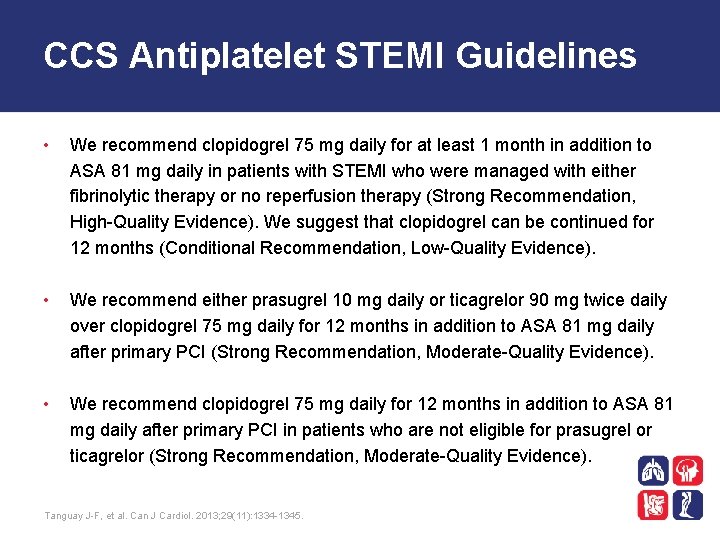
CCS Antiplatelet STEMI Guidelines • We recommend clopidogrel 75 mg daily for at least 1 month in addition to ASA 81 mg daily in patients with STEMI who were managed with either fibrinolytic therapy or no reperfusion therapy (Strong Recommendation, High-Quality Evidence). We suggest that clopidogrel can be continued for 12 months (Conditional Recommendation, Low-Quality Evidence). • We recommend either prasugrel 10 mg daily or ticagrelor 90 mg twice daily over clopidogrel 75 mg daily for 12 months in addition to ASA 81 mg daily after primary PCI (Strong Recommendation, Moderate-Quality Evidence). • We recommend clopidogrel 75 mg daily for 12 months in addition to ASA 81 mg daily after primary PCI in patients who are not eligible for prasugrel or ticagrelor (Strong Recommendation, Moderate-Quality Evidence). Tanguay J-F, et al. Can J Cardiol. 2013; 29(11): 1334 -1345.
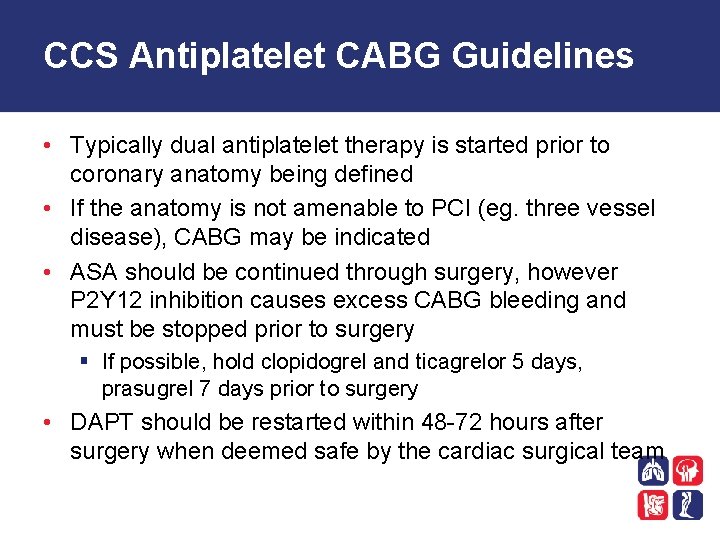
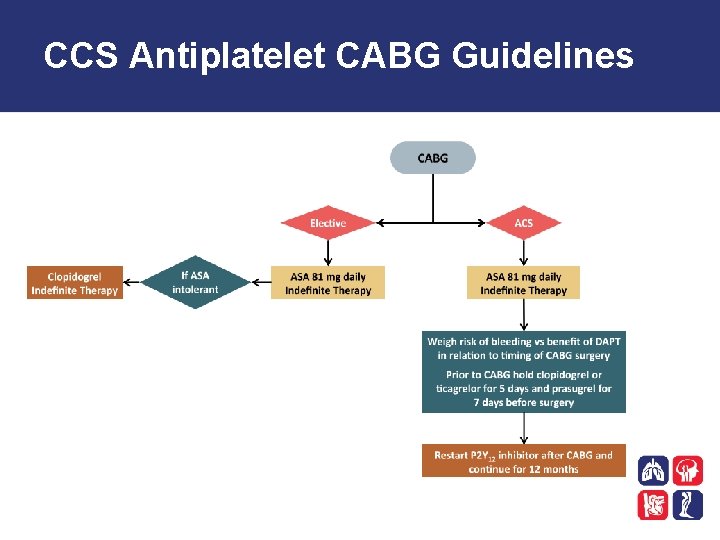
CCS Antiplatelet CABG Guidelines • Typically dual antiplatelet therapy is started prior to coronary anatomy being defined • If the anatomy is not amenable to PCI (eg. three vessel disease), CABG may be indicated • ASA should be continued through surgery, however P 2 Y 12 inhibition causes excess CABG bleeding and must be stopped prior to surgery § If possible, hold clopidogrel and ticagrelor 5 days, prasugrel 7 days prior to surgery • DAPT should be restarted within 48 -72 hours after surgery when deemed safe by the cardiac surgical team
CCS Antiplatelet CABG Guidelines
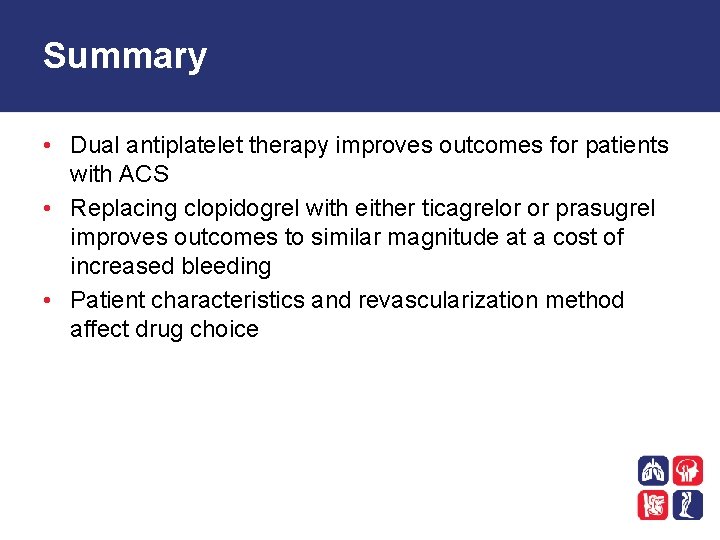
Summary • Dual antiplatelet therapy improves outcomes for patients with ACS • Replacing clopidogrel with either ticagrelor or prasugrel improves outcomes to similar magnitude at a cost of increased bleeding • Patient characteristics and revascularization method affect drug choice
Supplementary material
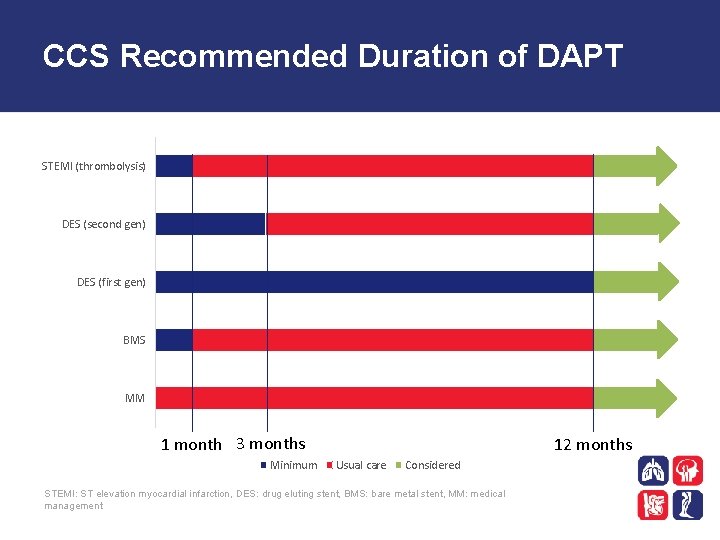
CCS Recommended Duration of DAPT STEMI (thrombolysis) DES (second gen) DES (first gen) BMS MM 0%1 month 10% 20% 3 months Minimum 40% Usual care 50% 60% 70% Considered STEMI: ST elevation myocardial infarction, DES: drug eluting stent, BMS: bare metal stent, MM: medical management 80% 90% 12 months 100%
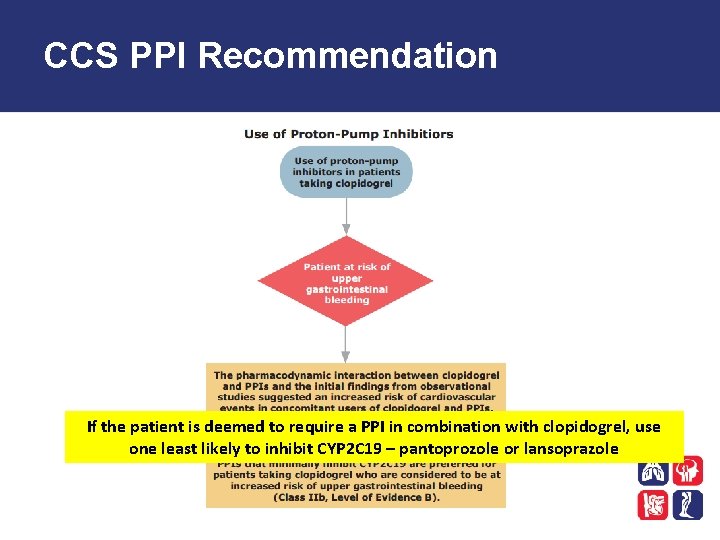
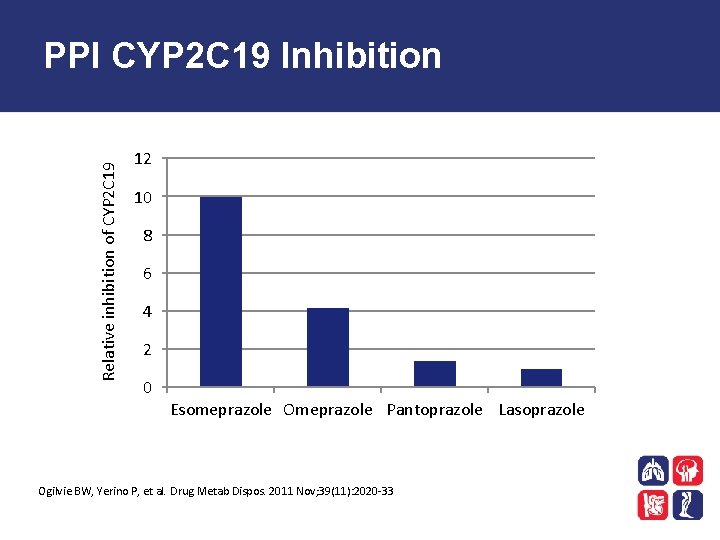
CCS PPI Recommendation If the patient is deemed to require a PPI in combination with clopidogrel, use one least likely to inhibit CYP 2 C 19 – pantoprozole or lansoprazole
Relative inhibition of CYP 2 C 19 PPI CYP 2 C 19 Inhibition 12 10 8 6 4 2 0 Esomeprazole Omeprazole Pantoprazole Lasoprazole Ogilvie BW, Yerino P, et al. Drug Metab Dispos. 2011 Nov; 39(11): 2020 -33
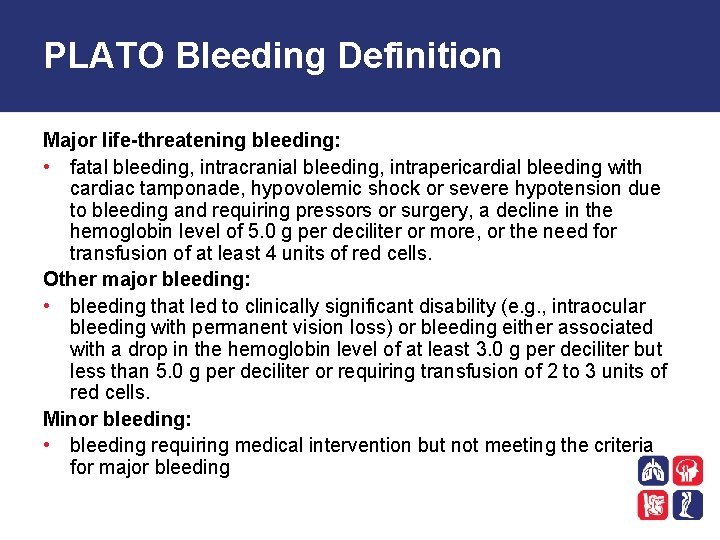
PLATO Bleeding Definition Major life-threatening bleeding: • fatal bleeding, intracranial bleeding, intrapericardial bleeding with cardiac tamponade, hypovolemic shock or severe hypotension due to bleeding and requiring pressors or surgery, a decline in the hemoglobin level of 5. 0 g per deciliter or more, or the need for transfusion of at least 4 units of red cells. Other major bleeding: • bleeding that led to clinically significant disability (e. g. , intraocular bleeding with permanent vision loss) or bleeding either associated with a drop in the hemoglobin level of at least 3. 0 g per deciliter but less than 5. 0 g per deciliter or requiring transfusion of 2 to 3 units of red cells. Minor bleeding: • bleeding requiring medical intervention but not meeting the criteria for major bleeding
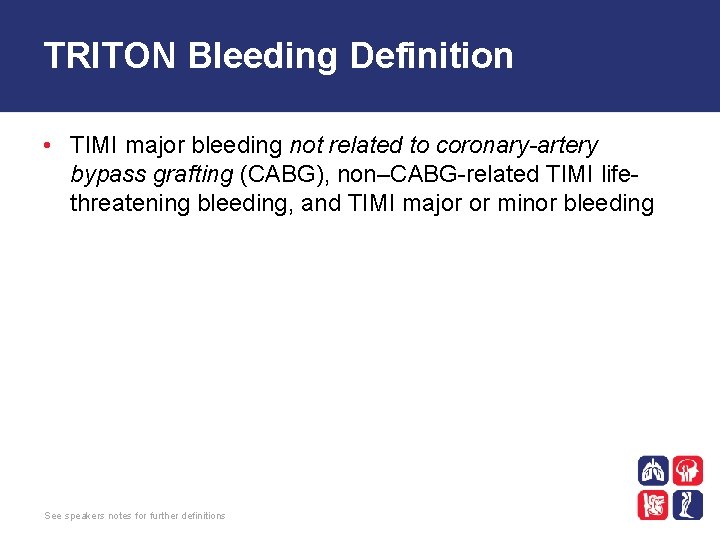
TRITON Bleeding Definition • TIMI major bleeding not related to coronary-artery bypass grafting (CABG), non–CABG-related TIMI lifethreatening bleeding, and TIMI major or minor bleeding See speakers notes for further definitions