CLA 320 Golden Age of Rome Women and










- Slides: 26
CLA 320: Golden Age of Rome Women and War Dr. Maria S. Marsilio, Saint Joseph’s University
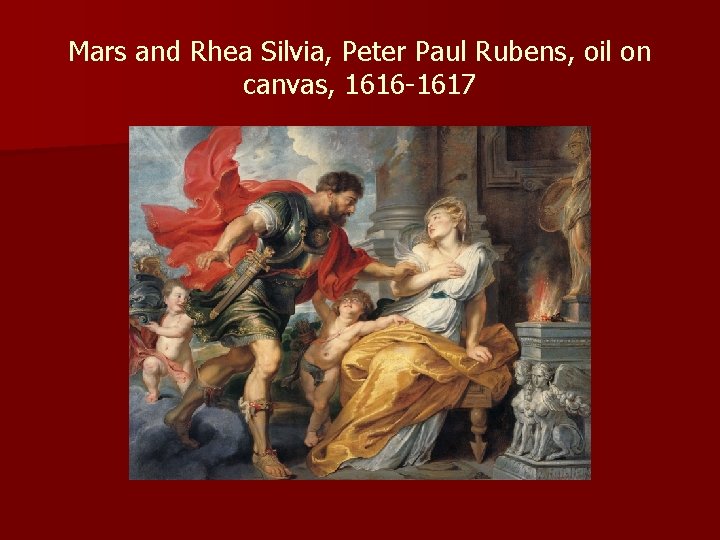
Mars and Rhea Silvia, Peter Paul Rubens, oil on canvas, 1616 -1617
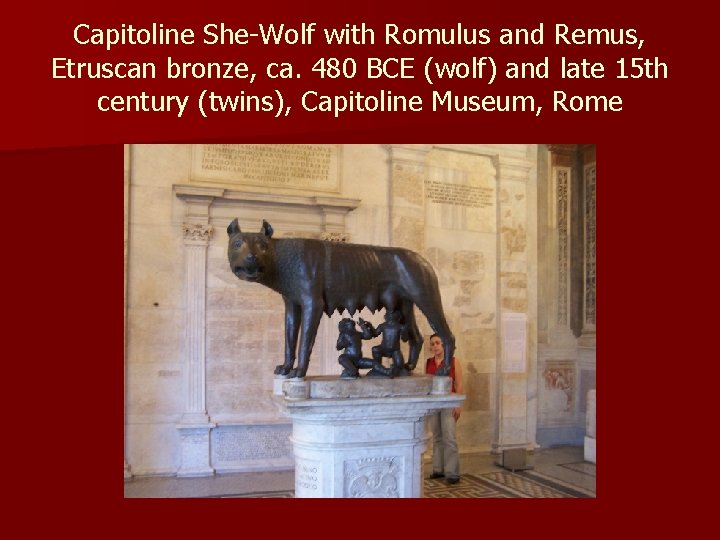
Capitoline She-Wolf with Romulus and Remus, Etruscan bronze, ca. 480 BCE (wolf) and late 15 th Etruscan bronze, ca. 480 BCE century (twins), Capitoline Museum, Rome
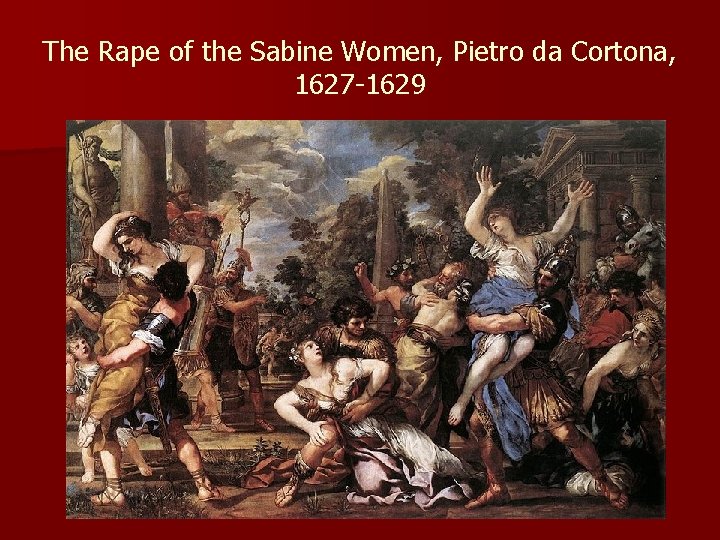
The Rape of the Sabine Women, Pietro da Cortona, 1627 -1629
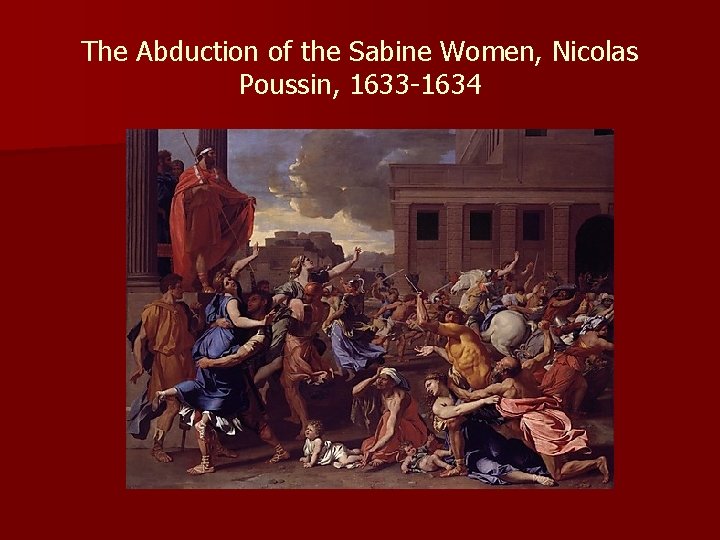
The Abduction of the Sabine Women, Nicolas Poussin, 1633 -1634
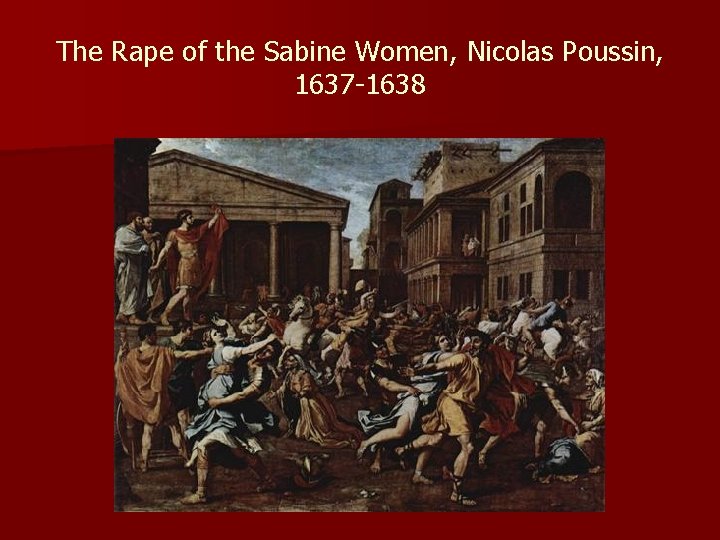
The Rape of the Sabine Women, Nicolas Poussin, 1637 -1638
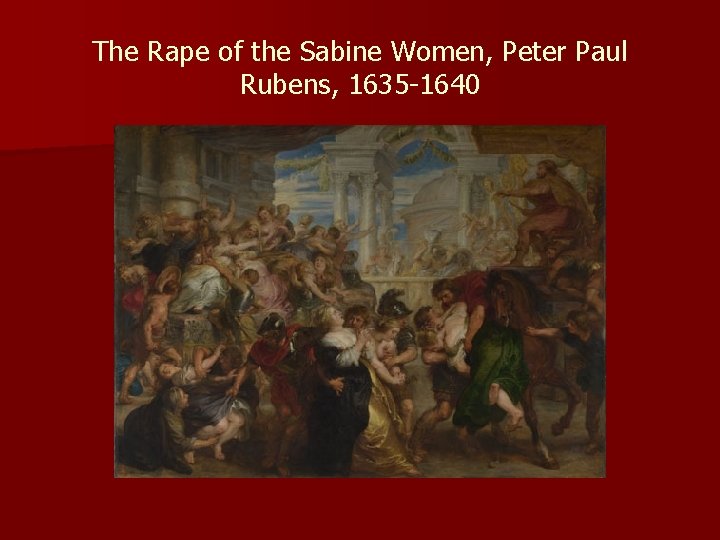
The Rape of the Sabine Women, Peter Paul Rubens, 1635 -1640
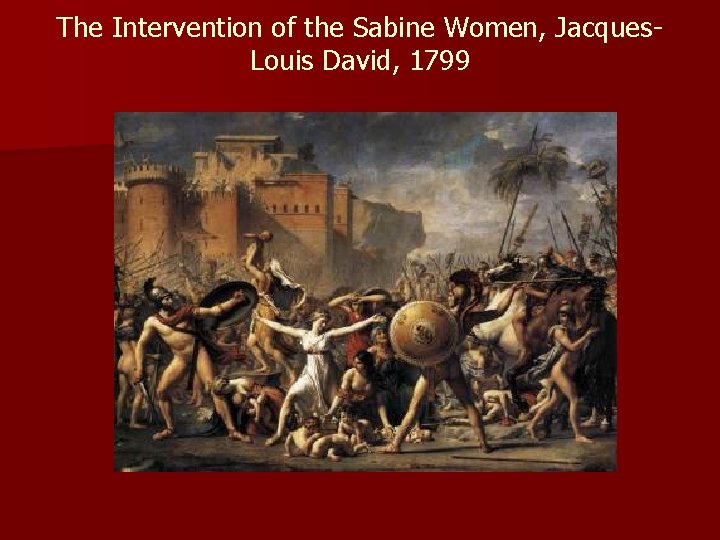
The Intervention of the Sabine Women, Jacques. Louis David, 1799
The Rape of the Sabine Women, Pablo Picasso, 1962
Rape of the Sabine Women, Giambologna, 1583
Rape of the Sabine Women, Giambologna, 1583
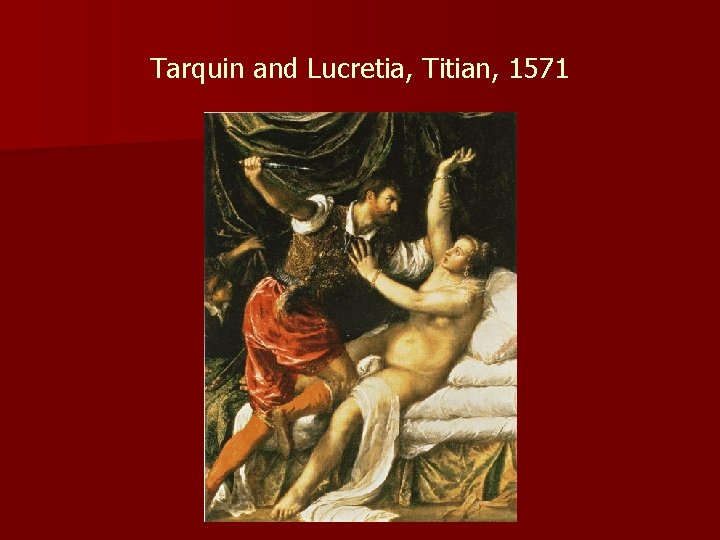
Tarquin and Lucretia, Titian, 1571
Veturia and Volumnia appeal to Coriolanus, Andrea Casali, 1720 -1784
Battle of Zama, Roman Scipio defeats Hannibal and Carthage, Giulio Romano, 1521
Impact of War on Roman Society § The impact of war was felt strongly in all areas of Roman society in all periods. There were enormous changes in Roman society in the aftermath of the success of the Punic Wars between Rome and Carthage (Rome defeated Carthage in 202 BCE). The absence from domestic life of Roman males on active military service left women in greater authority in the household, and the widowing of many upper-class Roman women during the Punic Wars also put great amounts of wealth in their hands to use at their discretion.
Women and Wealth n This happened despite the laws restricting this: the lex Voconia of 169 BCE forbade those belonging to the top property class to designate women as heirs (there were, however, many means of benefiting women if the testators wished it); the lex Oppia was passed in the 2 nd Punic War (215 BCE) to restrict women's display of wealth but later rescinded in 195 BCE.
Growing Economic Power of Roman Women n The woman’s dowry was a highly important signifier of a woman’s growing power and status. The establishment of an actio rei uxoriae in 230 BCE for the return of a dowry to a woman after she was divorced or widowed suggests that divorce and the departure of the widow from her marital home had already become more common than in early Rome. Certainly in the late Republic, we see upper class women highly prominent for their wealth. By the mid-Republic, elite women could make wills and apparently bequeathed their wealth freely; it was expected that they would pass their property on to their biological children rather than to their relatives on their father's side (i. e. , cognate over agnatic inheritance).
Growing Economic Power of Women n The dowry was a safeguard for a woman and her family against a husband's mistreatment. As well, it was an important economic tool, whereby the woman/wife had an important power in retaining her wealth and even using it under her own conditions and authority (as Cicero's wife Terentia, who in weathering the storm of Cicero's exile was using part of her dowry to support her family in spite of Cicero's own pleas to her to rely on their friends and allies for financial assistance). Upper-class Roman women, in the aftermath of decades of foreign and civil wars, were granted elevated financial status and power that their counterparts in classical Athenian society never had.
Working Women: Freeborn, Slave, and Freedwomen n Aristocratic women could distinguish powerful families in times of war, and they could step out into public life to speak for the interests of themselves and their families. However, this newfound financial status and new freedoms were only accorded to women of aristocratic birth, while the poor lower classes of women endured more poignant losses of their male relatives in times of war (prolonged absences or deaths) and suffered financial hardships in the aftermath of Roman military operations. Mothers had to assume a more prominent authority in the household (feed, clothe, care for their children’s health daily) when the fathers were no longer there. As well, mothers may have had to plant and harvest their land until their children were mature enough to help. Mothers may have had help from family and friends, but it is clear that they themselves endured the greatest burden of maintaining their households.
Slaves n In particular, the impact of war on slave men and women was significant. Slave women who lived in the country probably endured the harshest conditions. The slave who lived in the city inhabited small quarters and depended upon the whims of his/her master to earn freedom. A male or female slave might hope for freedom, but if the female slave had children by her slave partner, either he or she would have to pay for their freedom. Slaves and their children were the property of their owners and were expected to do as they commanded. Female slaves could be punished or sold for offending their mistresses or by failing to please their masters. Masters could sell or send away any of their slaves, even members of a slave family separately. The death of master or mistress could bring happy freedom to their slaves, or it could brutally send them away from the home they knew.
Freedmen and Freedwomen Slaves became freedmen and freedwomen by being granted manumission (freedom) by their owner, or they could buy their freedom if they were able to raise sufficient money. Formal manumission before a magistrate granted both freedom and Roman citizenship, when the master released the slave. Although they gained citizenship, freedmen were not eligible for political office. Any children subsequently born to them became free citizens and males were eligible for political office. n Ann R. Raia and Judith L. Sebesta, Companion to the Worlds of n Roman Women (Women and Work): http: //www 2. cnr. edu/home/sas/araia/work. html
Female Warriors, Mythological Amazons n The Amazons are viewed in Freudian psychology as revealing unresolved sexual conflict for Athenian males, and were used by the Athenians as a propaganda tool for the justified conquest of civilization over barbarism. Their myths told by Greek authors center on ideas of democracy and subjugation of women, for the Amazons invert the traditionally accepted roles of male and female and must, therefore, be viewed as dangerous enemies of civilized Greece.
Female Warriors, Mythological Penthesilea, Amazon queen and daughter of Ares, murdered by Achilles, Attic black-figure amphora, circa 6 th century BCE
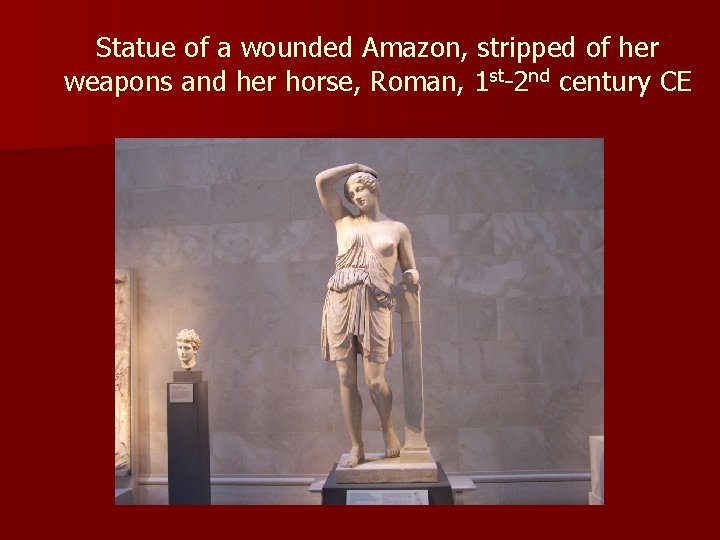
Statue of a wounded Amazon, stripped of her weapons and her horse, Roman, 1 st-2 nd century CE
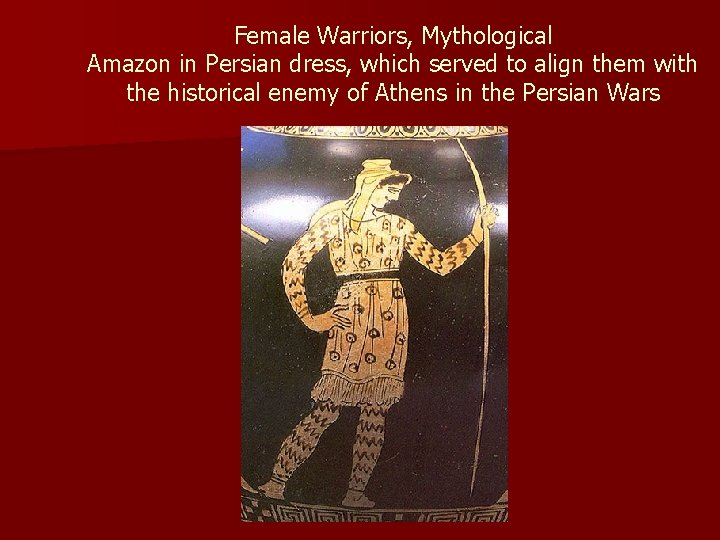
Female Warriors, Mythological Amazon in Persian dress, which served to align them with the historical enemy of Athens in the Persian Wars
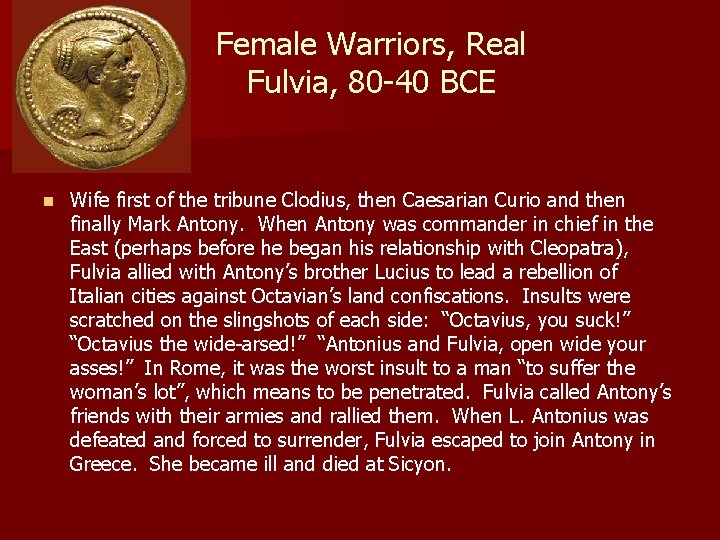
Female Warriors, Real Fulvia, 80 -40 BCE n Wife first of the tribune Clodius, then Caesarian Curio and then finally Mark Antony. When Antony was commander in chief in the East (perhaps before he began his relationship with Cleopatra), Fulvia allied with Antony’s brother Lucius to lead a rebellion of Italian cities against Octavian’s land confiscations. Insults were scratched on the slingshots of each side: “Octavius, you suck!” “Octavius the wide-arsed!” “Antonius and Fulvia, open wide your asses!” In Rome, it was the worst insult to a man “to suffer the woman’s lot”, which means to be penetrated. Fulvia called Antony’s friends with their armies and rallied them. When L. Antonius was defeated and forced to surrender, Fulvia escaped to join Antony in Greece. She became ill and died at Sicyon.