Cirrhosis of the Liver Kelsey Conrad Annelise Chmelik
- Slides: 23
Cirrhosis of the Liver Kelsey Conrad Annelise Chmelik September 24, 2013
the Liver • Largest organ in the body • Extremely complex organ • Filters harmful substances from the blood • Makes substances that digests food • Plays an important role in nutrient metabolism
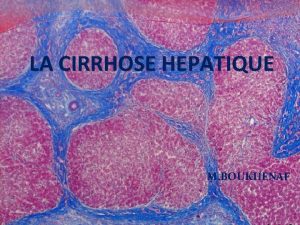
Cirrhosis of the Liver • Healthy tissue in the liver is replaced by scar tissue • Blocks the flow of blood through the organ • Results in the loss of liver function • Most common causes • Chronic HCV • Alcoholism • Genetic factors can increase susceptibility
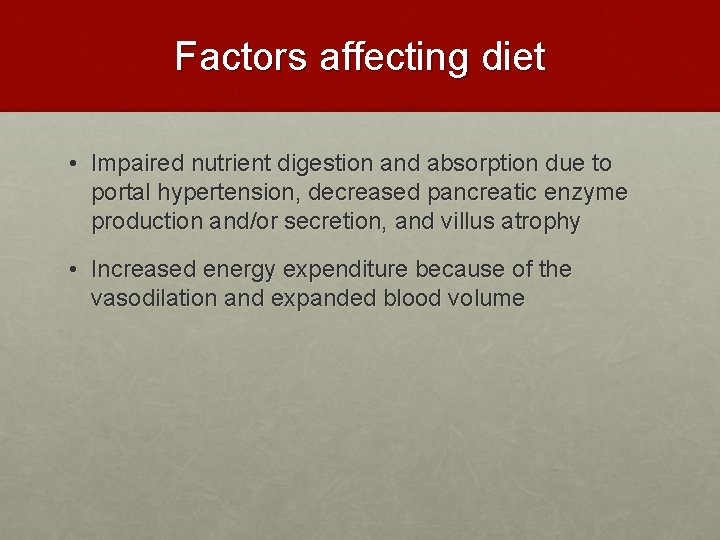
Cirrhosis of the Liver • Enlarged liver resulting from fat accumulation and necrosis of the liver cells • Symptoms • Fatigue, weakness, nausea, poor appetite, and malaise. • Jaundice, dark urine, light stools, steatorrhea, itching, abdominal pain, and bloating. • Protein-energy malnutrition • Inability to consume adequate amounts of food • Impaired nutrient absorption and digestion • Vasodilation and expanded blood volume
Cirrhosis of the Liver • Vitamin and mineral deficiencies • Related to decreased hematocrit and hemoglobin values • Hypoglycemia • • Liver is the key to glucose homeostasis Altered liver function limits the ability to maintain normal glucose homeostasis • Disrupts hepatic glucose output • Can affect nutritional status
Cirrhosis of the Liver • Bruising and bleeding • Related to decreased vitamin K absorption and ability to synthesize protein clotting factors. • Complications • Portal hypertension, hepatic encephalopathy, ascites, hepatorenal syndrome, and esophageal varices • Treatment • • • Abstention from alcohol Treatment of the complications Nutrition therapy
Cirrhosis of the Liver • MELD Score • Prognosis Model for End-stage Liver Disease • Clinical tool used to determine prognosis in patients with cirrhosis. • Based on three blood tests • • • INR – International normalized ratio Bilirubin Creatinine • Estimates an individual’s 90 -day mortality rate
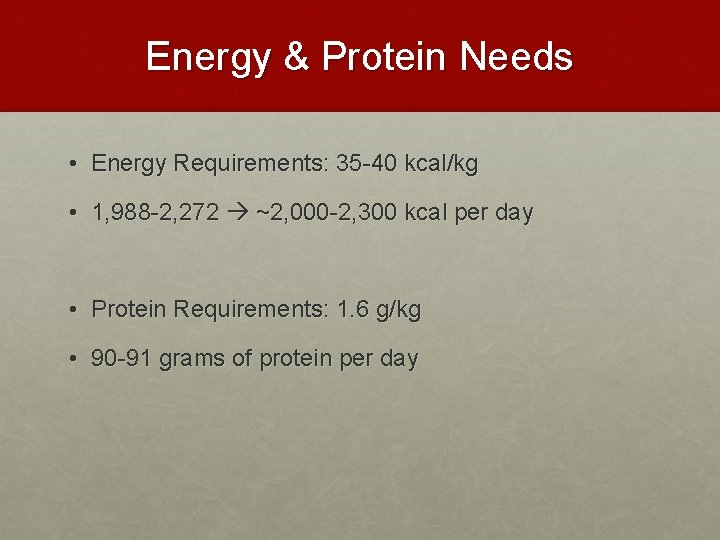
Cirrhosis of the Liver • Nutrition Therapy • Calorie recommendations – 35 to 40 kcal/kg per day • Protein intake – Up to 1. 6 g/kg per day • Vegetable and dairy sources recommended for patients with mild encephalopathy • • • 30% or less of total calories from fat Carbohydrate consumed throughout the day Restrict sodium Consider enteral and parenteral support Mechanically soft diet for patients with esophageal varices
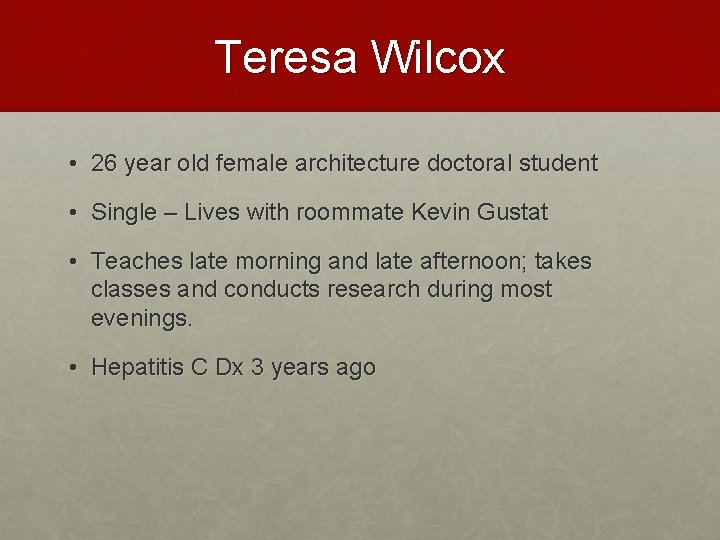
Teresa Wilcox • 26 year old female architecture doctoral student • Single – Lives with roommate Kevin Gustat • Teaches late morning and late afternoon; takes classes and conducts research during most evenings. • Hepatitis C Dx 3 years ago
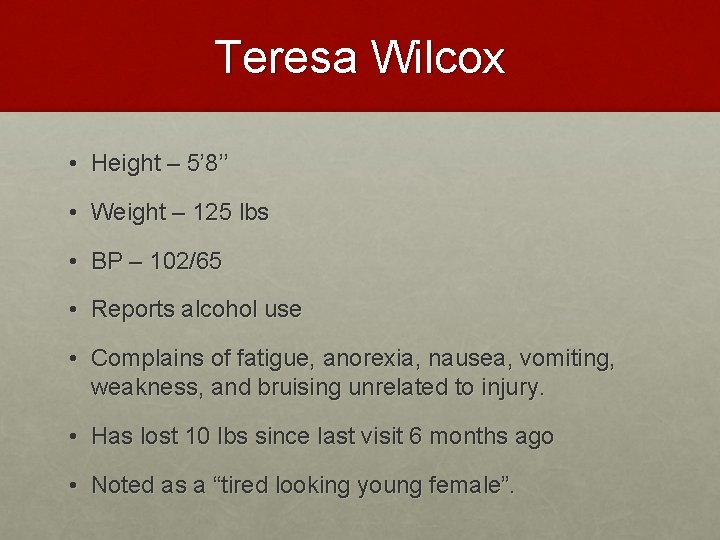
Teresa Wilcox • Height – 5’ 8’’ • Weight – 125 lbs • BP – 102/65 • Reports alcohol use • Complains of fatigue, anorexia, nausea, vomiting, weakness, and bruising unrelated to injury. • Has lost 10 lbs since last visit 6 months ago • Noted as a “tired looking young female”.
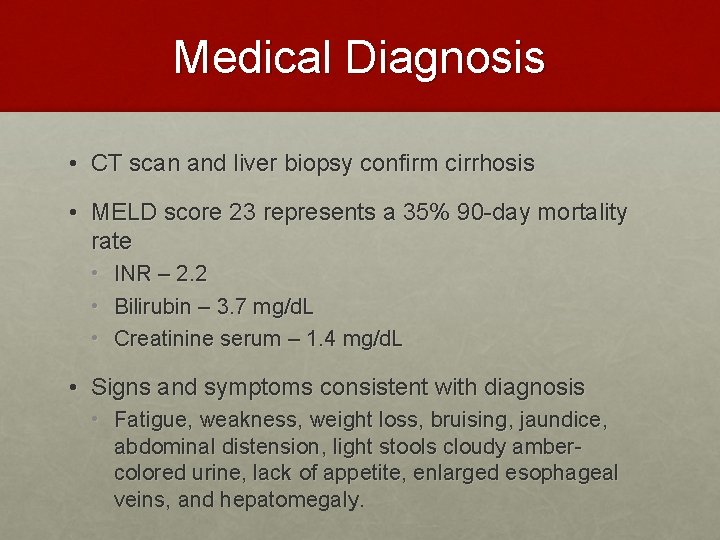
Medical Diagnosis • CT scan and liver biopsy confirm cirrhosis • MELD score 23 represents a 35% 90 -day mortality rate • INR – 2. 2 • Bilirubin – 3. 7 mg/d. L • Creatinine serum – 1. 4 mg/d. L • Signs and symptoms consistent with diagnosis • Fatigue, weakness, weight loss, bruising, jaundice, abdominal distension, light stools cloudy ambercolored urine, lack of appetite, enlarged esophageal veins, and hepatomegaly.
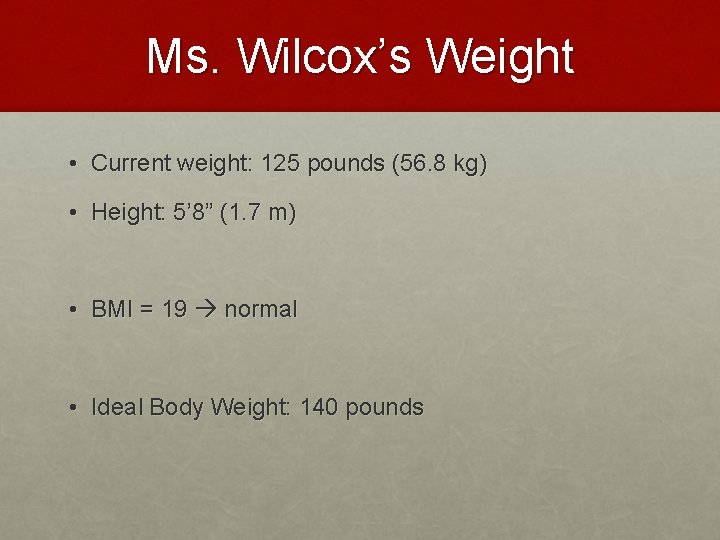
Ms. Wilcox’s Weight • Current weight: 125 pounds (56. 8 kg) • Height: 5’ 8” (1. 7 m) • BMI = 19 normal • Ideal Body Weight: 140 pounds
Energy & Protein Needs • Energy Requirements: 35 -40 kcal/kg • 1, 988 -2, 272 ~2, 000 -2, 300 kcal per day • Protein Requirements: 1. 6 g/kg • 90 -91 grams of protein per day
Factors affecting diet • Impaired nutrient digestion and absorption due to portal hypertension, decreased pancreatic enzyme production and/or secretion, and villus atrophy • Increased energy expenditure because of the vasodilation and expanded blood volume
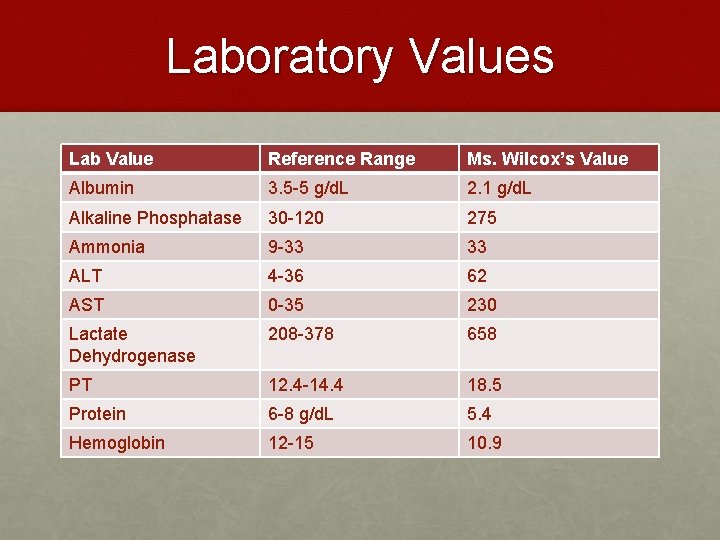
Laboratory Values Lab Value Reference Range Ms. Wilcox’s Value Albumin 3. 5 -5 g/d. L 2. 1 g/d. L Alkaline Phosphatase 30 -120 275 Ammonia 9 -33 33 ALT 4 -36 62 AST 0 -35 230 Lactate Dehydrogenase 208 -378 658 PT 12. 4 -14. 4 18. 5 Protein 6 -8 g/d. L 5. 4 Hemoglobin 12 -15 10. 9
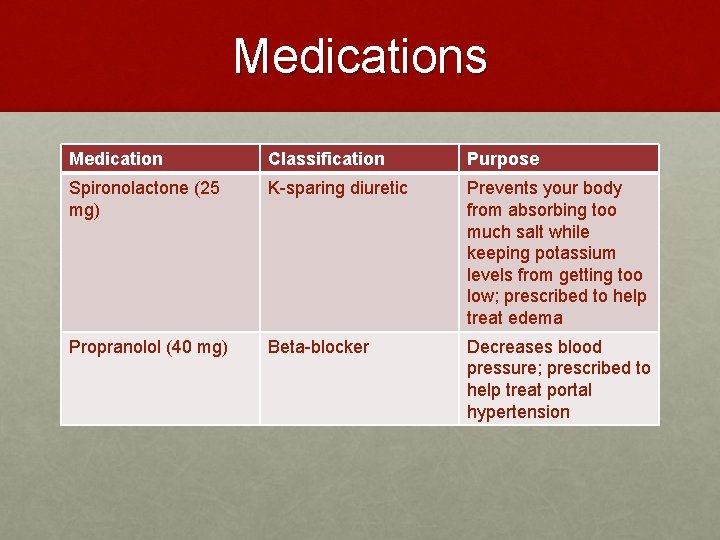
Medications Medication Classification Purpose Spironolactone (25 mg) K-sparing diuretic Prevents your body from absorbing too much salt while keeping potassium levels from getting too low; prescribed to help treat edema Propranolol (40 mg) Beta-blocker Decreases blood pressure; prescribed to help treat portal hypertension
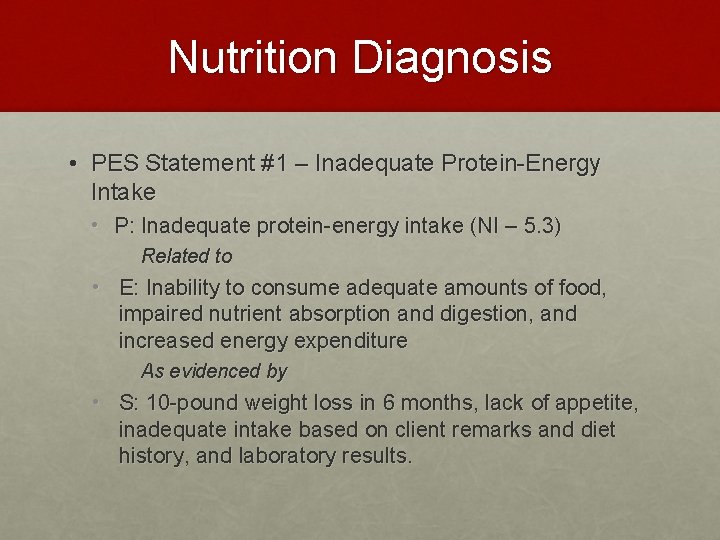
Nutrition Diagnosis • PES Statement #1 – Inadequate Protein-Energy Intake • P: Inadequate protein-energy intake (NI – 5. 3) Related to • E: Inability to consume adequate amounts of food, impaired nutrient absorption and digestion, and increased energy expenditure As evidenced by • S: 10 -pound weight loss in 6 months, lack of appetite, inadequate intake based on client remarks and diet history, and laboratory results.
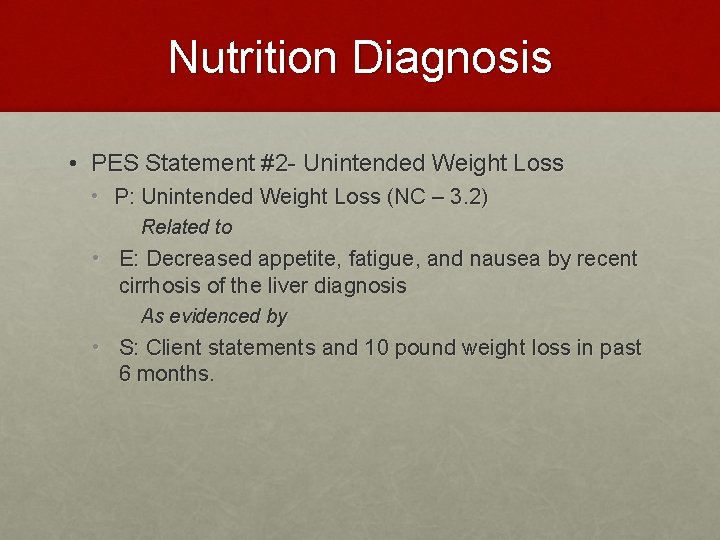
Nutrition Diagnosis • PES Statement #2 - Unintended Weight Loss • P: Unintended Weight Loss (NC – 3. 2) Related to • E: Decreased appetite, fatigue, and nausea by recent cirrhosis of the liver diagnosis As evidenced by • S: Client statements and 10 pound weight loss in past 6 months.
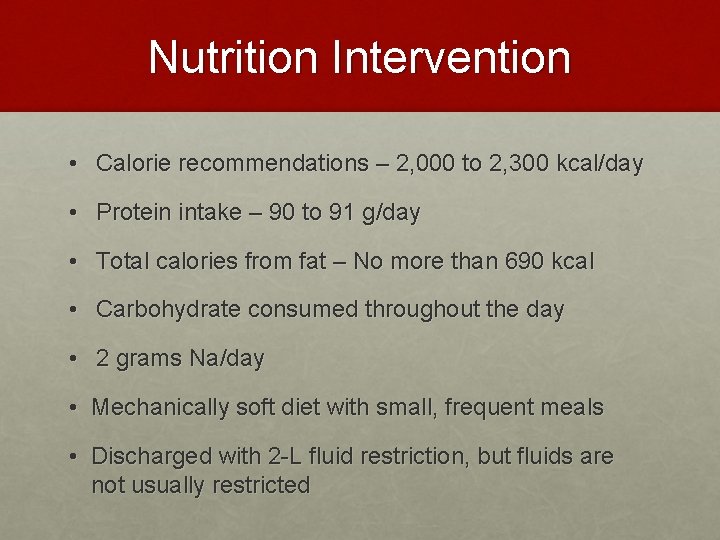
Nutrition Intervention • Calorie recommendations – 2, 000 to 2, 300 kcal/day • Protein intake – 90 to 91 g/day • Total calories from fat – No more than 690 kcal • Carbohydrate consumed throughout the day • 2 grams Na/day • Mechanically soft diet with small, frequent meals • Discharged with 2 -L fluid restriction, but fluids are not usually restricted
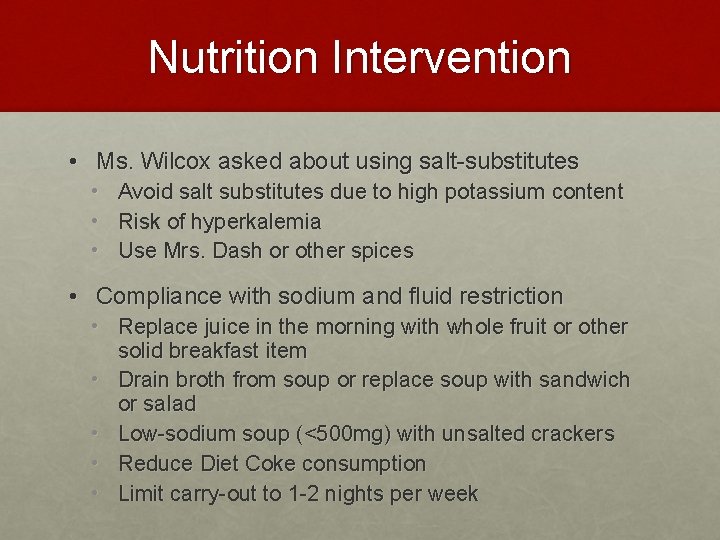
Nutrition Intervention • Ms. Wilcox asked about using salt-substitutes • Avoid salt substitutes due to high potassium content • Risk of hyperkalemia • Use Mrs. Dash or other spices • Compliance with sodium and fluid restriction • Replace juice in the morning with whole fruit or other solid breakfast item • Drain broth from soup or replace soup with sandwich or salad • Low-sodium soup (<500 mg) with unsalted crackers • Reduce Diet Coke consumption • Limit carry-out to 1 -2 nights per week
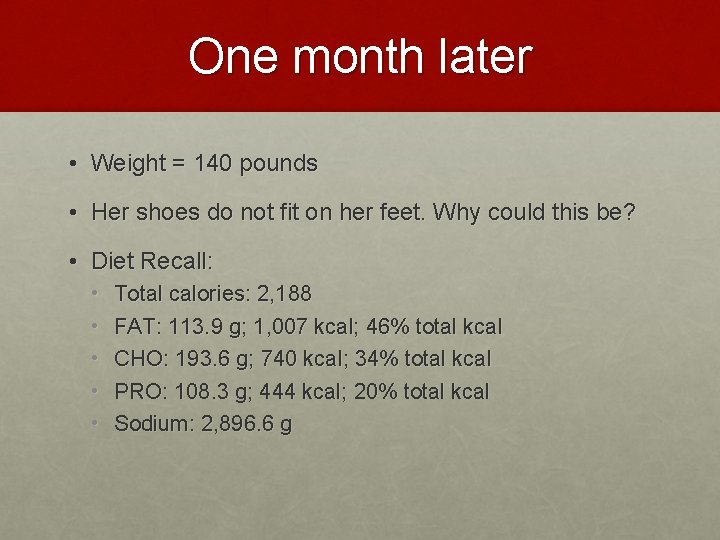
One month later • Weight = 140 pounds • Her shoes do not fit on her feet. Why could this be? • Diet Recall: • • • Total calories: 2, 188 FAT: 113. 9 g; 1, 007 kcal; 46% total kcal CHO: 193. 6 g; 740 kcal; 34% total kcal PRO: 108. 3 g; 444 kcal; 20% total kcal Sodium: 2, 896. 6 g
Resources • Akry, R. A. (1989). Hypoglycemia associated with liver disease and ethanol [Abstract]. Endocrinol Metabolic Clinic North America, 18(1), 75 -90. • Fowler, C. (2009). Critical nursing challenge: patients with end-stage liver disease. Retrieved from https: //webded. uta. edu/wconnect/ace/static/onlinecne/CEMay 09. pdf • Hepatorenal syndrome. (2012). U. S. National Library of Medicine. Retrieved from http: //www. ncbi. nlm. nih. gov/pubmedhealth/PMH 0001519/#adam_000489. disease. causes • "International Dietetics and Nutritional Terminology (IDNT) Reference Manual: Standard Language for the Nutrition Care Process. " International Dietetics and Nutritional Terminology (IDNT) Reference Manual: Standard Language for the Nutrition Care Process. Academy of Nutrition and Dietetics, n. d. Web. 20 Sept. 2013. • Liver cirrhosis: A toolkit for patients. (2011). Informally published manuscript, University of Michigan Health System. Retrieved from http: //www. med. umich. edu/hepatology/images/Cirrhosis%20 Patient%20 To olkit. v 2. pdf
Resources • Longstreth, G. F. (2011). Hepatic encephalopathy. Medline. Plus. Retrieved from http: //www. nlm. nih. gov/medlineplus/ency/article/000302. htm • Mayo Clinic (2013). MELD Score and 90 -Day Mortality Rate for Alcoholic Hepatitis. Retrieved from http: //www. mayoclinic. org/meld/mayomodel 7. html • Nemls, M. , Sucher, K. P. , Lacey, K. , & Roth, S. L. (2011). Diseases of the Liver, Gallbladder, and Exocrine Pancreas. In Y. Cossio (Ed. ), Nutrition Therapy & Pathophysiology (pp. 437 -470). Belmont, CA: Wadsworth. • Web. MD. (2013). What is portal hypertension? Digestive Disorders Health Center. Retrieved from http: //www. webmd. com/digestivedisorders/digestive-diseases-portal • Yeung, E. , & Wong, F. S. (2002). The management of cirrhotic ascites. Medscape General Medicine, 4(4), Retrieved from http: //www. medscape. com/viewarticle/442364_3