Spectroscopic Characterization of Isomerization Transition States Joshua H

- Slides: 14
Spectroscopic Characterization of Isomerization Transition States Joshua H. Baraban, P. Bryan Changala, Georg Ch. Mellau, John F. Stanton, Anthony J. Merer, and Robert W. Field
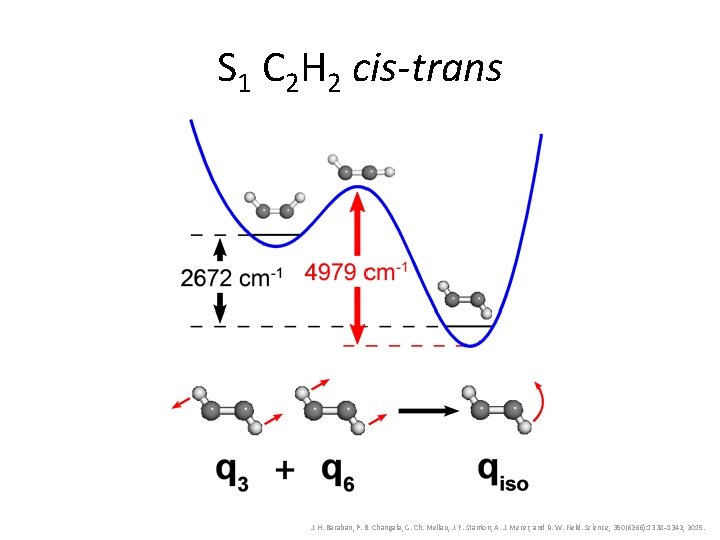
S 1 C 2 H 2 cis-trans J. H. Baraban, P. B. Changala, G. Ch. Mellau, J. F. Stanton, A. J. Merer, and R. W. Field. Science, 350(6266): 1338– 1342, 2015.
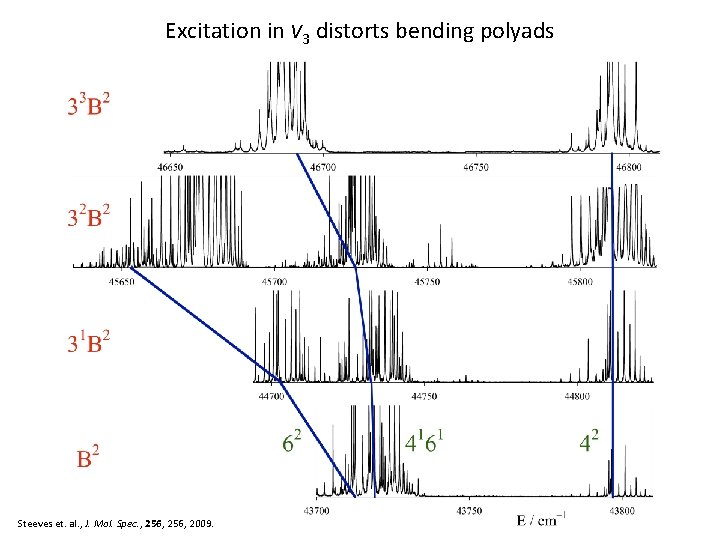
Excitation in v 3 distorts bending polyads Steeves et. al. , J. Mol. Spec. , 256, 2009.
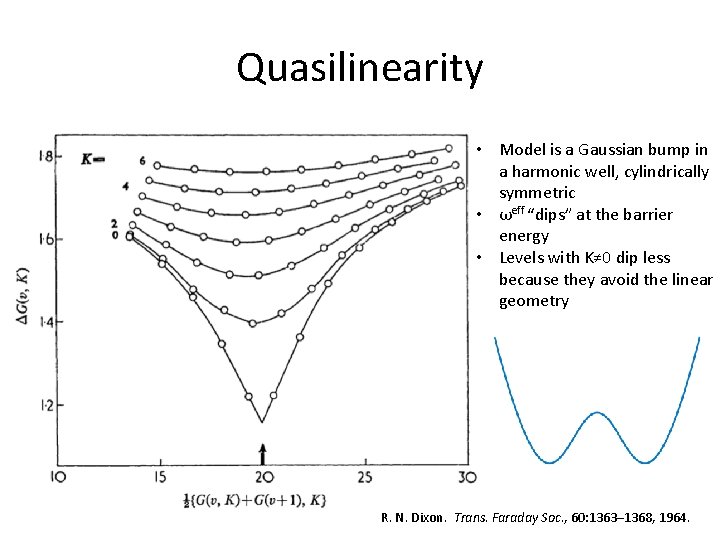
Quasilinearity • Model is a Gaussian bump in a harmonic well, cylindrically symmetric • ωeff “dips” at the barrier energy • Levels with K≠ 0 dip less because they avoid the linear geometry R. N. Dixon. Trans. Faraday Soc. , 60: 1363– 1368, 1964.
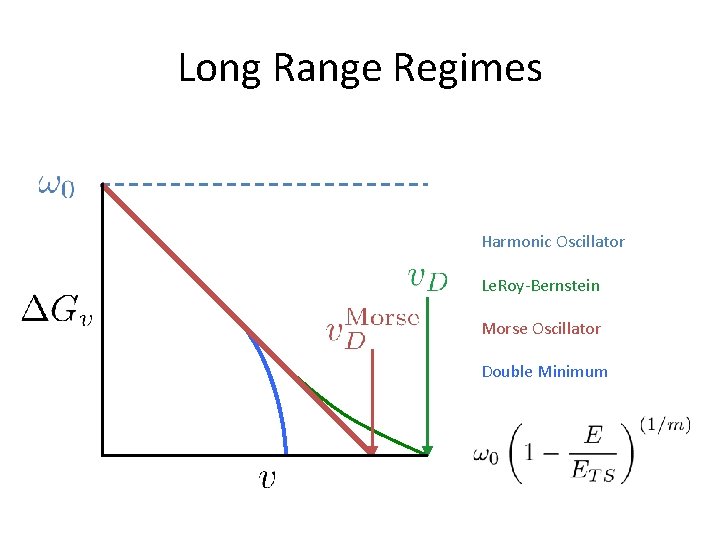
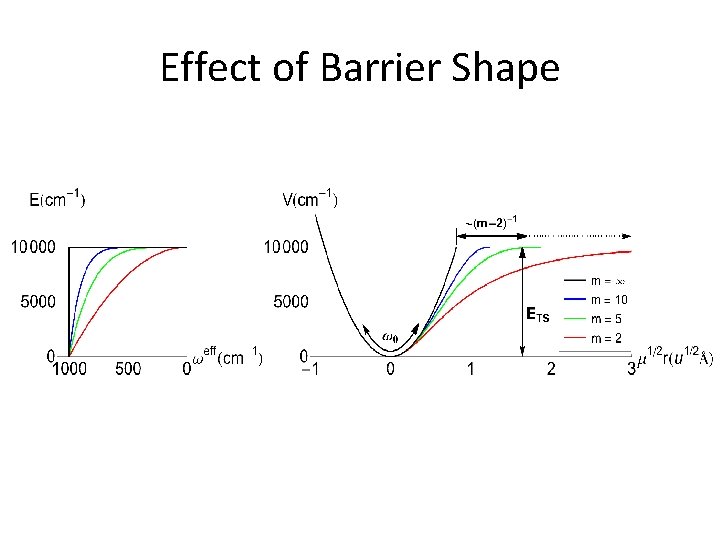
Long Range Regimes Harmonic Oscillator Le. Roy-Bernstein Morse Oscillator Double Minimum
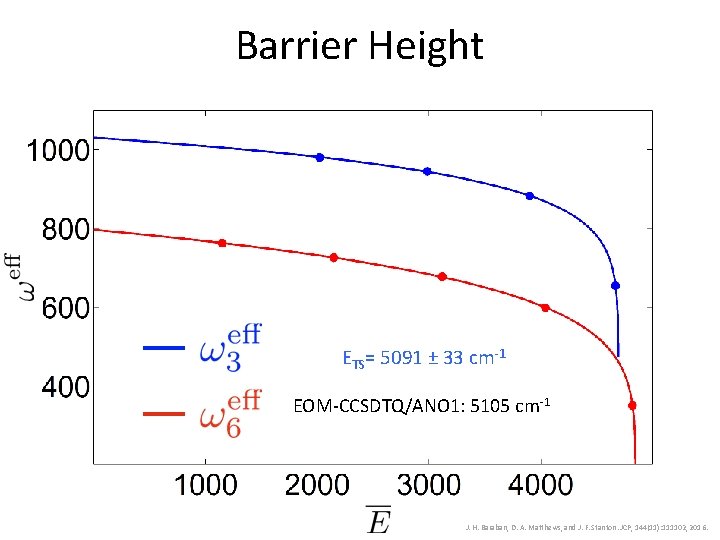
Barrier Height ETS= 5091 ± 33 cm-1 EOM-CCSDTQ/ANO 1: 5105 cm-1 J. H. Baraban, D. A. Matthews, and J. F. Stanton. JCP, 144(11): 111102, 2016.
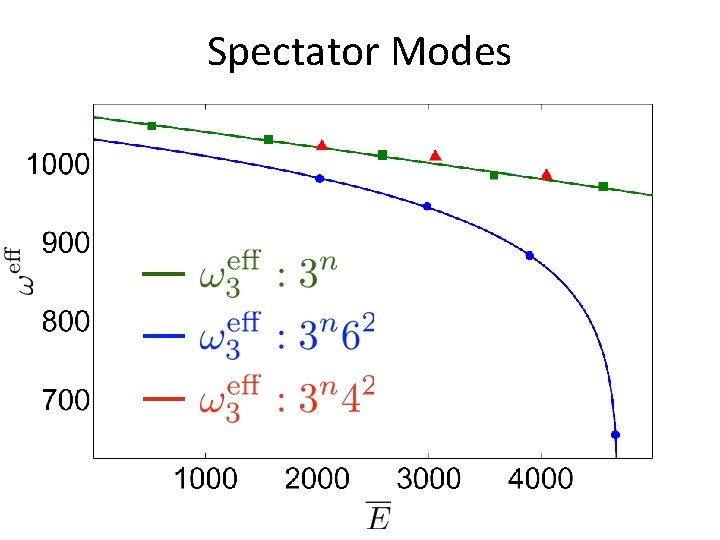
Spectator Modes
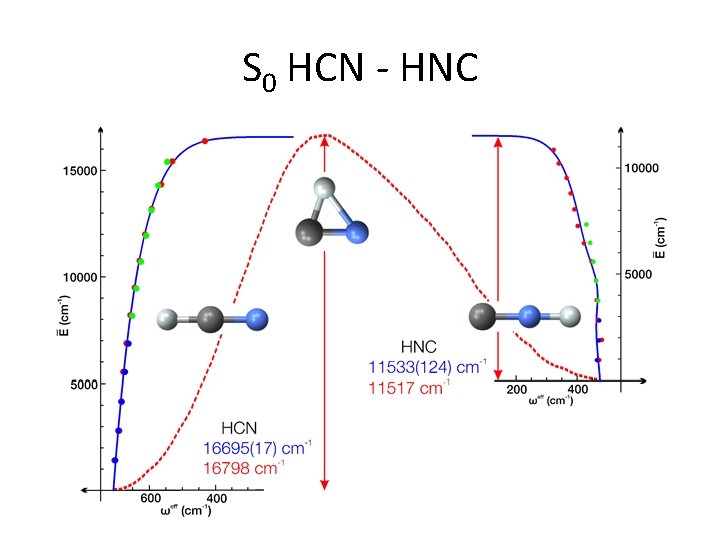
S 0 HCN - HNC
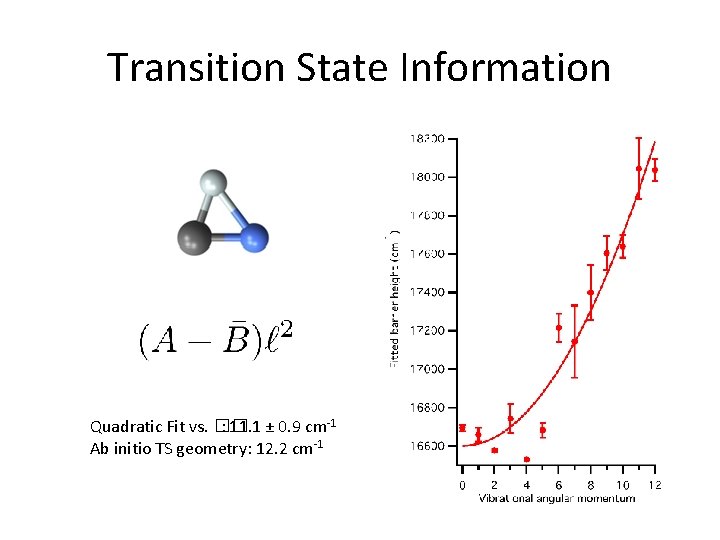
Transition State Information Quadratic Fit vs. �� : 11. 1 ± 0. 9 cm-1 Ab initio TS geometry: 12. 2 cm-1
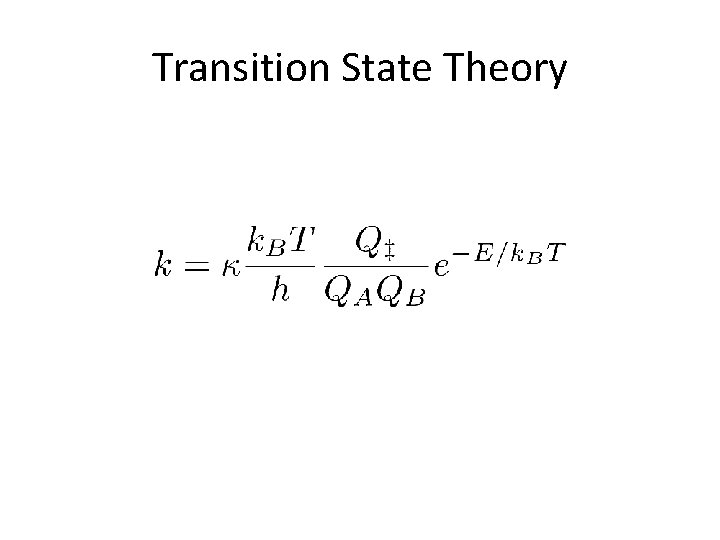
Transition State Theory
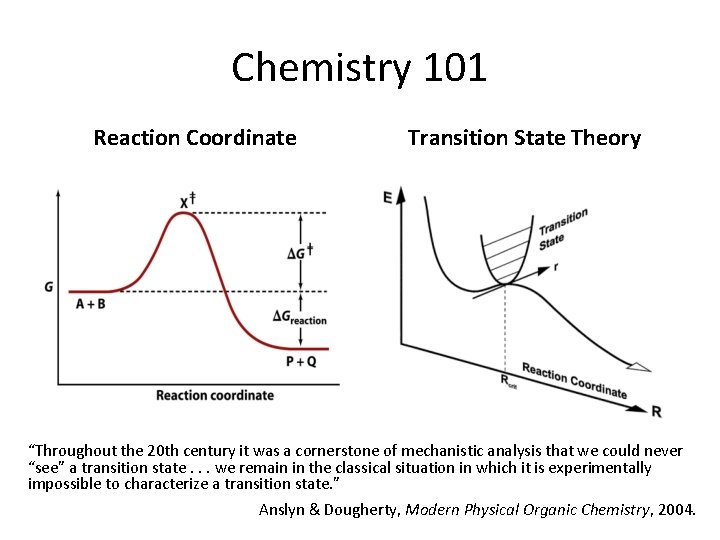
Chemistry 101 Reaction Coordinate Transition State Theory “Throughout the 20 th century it was a cornerstone of mechanistic analysis that we could never “see” a transition state. . . we remain in the classical situation in which it is experimentally impossible to characterize a transition state. ” Anslyn & Dougherty, Modern Physical Organic Chemistry, 2004.
Acknowledgements Field Group Members: Bob Field Bryan Changala Annelise Beck Julia Berk Dr. Adam Steeves Dr. Hans Bechtel Tony Colombo Barratt Park Rachel Shaver David Grimes Yan Zhou Dr. Kirill Kuyanov Dr. Steve Coy Prof. Wilton Virgo Dr. Kyle Bittinger Monika Ciuba Dr. Vladimir Petrovic Jun Jiang Peter Richter Collaborators: Dr. G. Ch. Mellau Prof. J. F. Stanton Prof. A. J. Merer Dr. J. T. Hougen Prof. A. G. Suits Dr. D. A. Matthews Funding DOE NSF GRFP Humboldt Foundation
Effect of Barrier Shape