
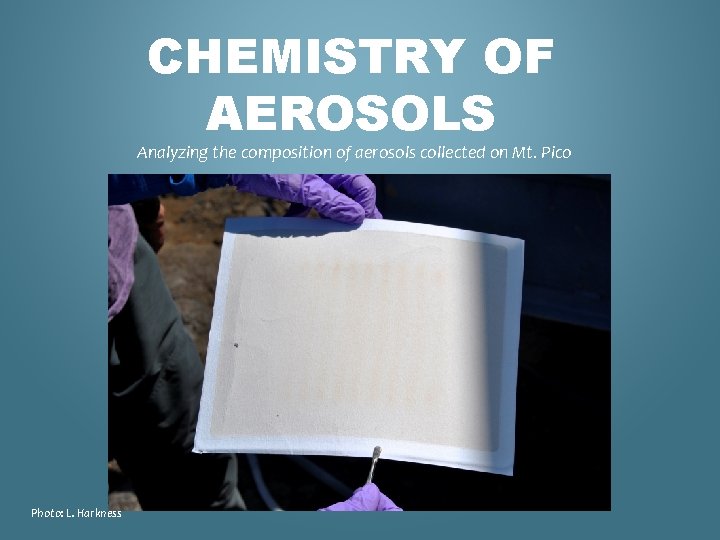
CHEMISTRY OF AEROSOLS Analyzing the composition of aerosols


- Slides: 11
CHEMISTRY OF AEROSOLS Analyzing the composition of aerosols collected on Mt. Pico Photo: L. Harkness
VIDEO NOTES: • Describe how the high volume sampler works. • Write observations of the filters.
VIDEO: COLLECTING AEROSOLS WITH THE SAMPLERS Click here for the video!! Video: L. Harkness
VIDEO NOTES: • Describe how instruments and filters are prepared. • How does the OC/EC work? • What do the colored lines on the screen represent?
VIDEO: ANALYZING FILTER SAMPLES FOR CARBON Click here for the video!! Video: L. Harkness
TODAY’S TASKS: • Analyze graphs of OC data from various dates • Research the weather that day and previous 5 days • From which land mass could the aerosols have come from? • Research any possible events that would cause high levels of organic aerosols around that date.
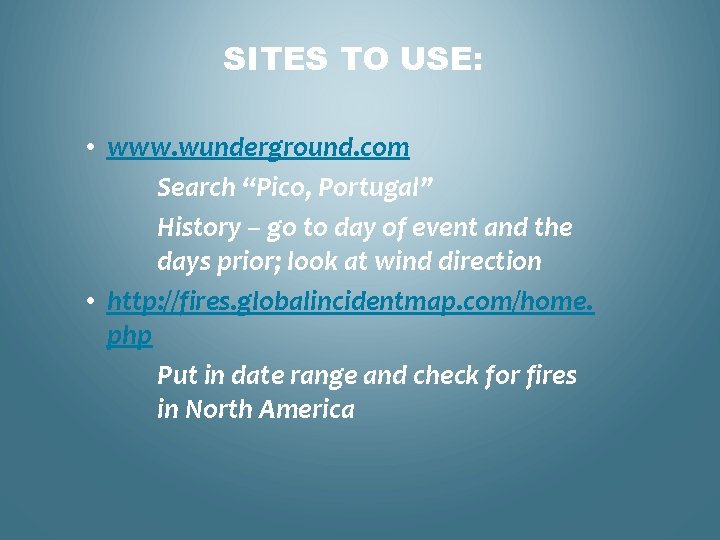
SITES TO USE: • www. wunderground. com Search “Pico, Portugal” History – go to day of event and the days prior; look at wind direction • http: //fires. globalincidentmap. com/home. php Put in date range and check for fires in North America
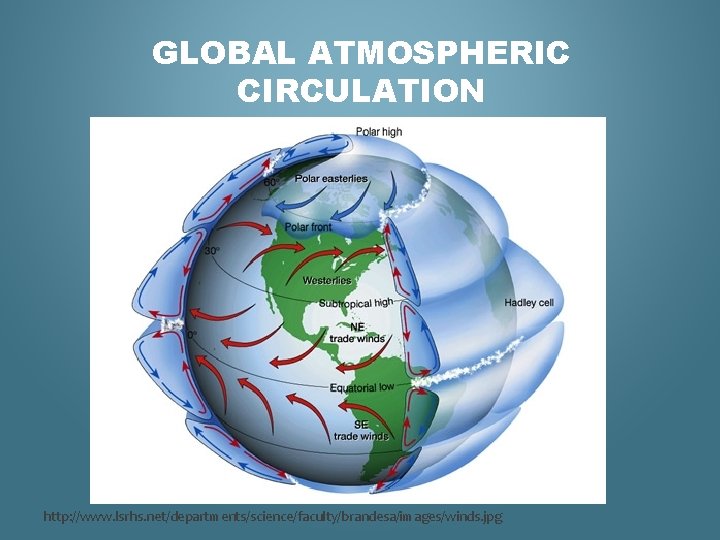
GLOBAL ATMOSPHERIC CIRCULATION http: //www. lsrhs. net/departments/science/faculty/brandesa/images/winds. jpg
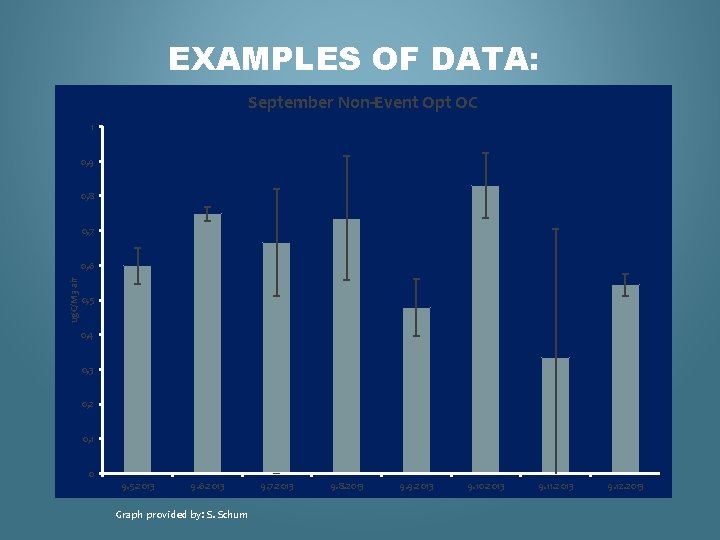
EXAMPLES OF DATA: September Non-Event Opt OC 1 0, 9 0, 8 0, 7 ug. C/M 3 air 0, 6 0, 5 0, 4 0, 3 0, 2 0, 1 0 9. 5. 2013 9. 6. 2013 Graph provided by: S. Schum 9. 7. 2013 9. 8. 2013 9. 9. 2013 9. 10. 2013 9. 11. 2013 9. 12. 2013
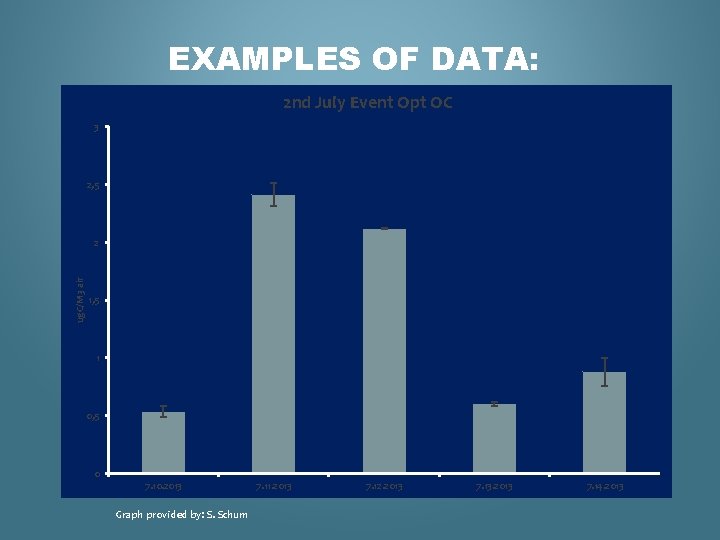
EXAMPLES OF DATA: 2 nd July Event Opt OC 3 2, 5 ug. C/M 3 air 2 1, 5 1 0, 5 0 7. 10. 2013 Graph provided by: S. Schum 7. 11. 2013 7. 12. 2013 7. 13. 2013 7. 14. 2013
EXAMPLES OF DATA: • The difference between an event and a non-event is the amount of carbon in micrograms per cubic meter • OC (organic carbon): soot, carbon from life sources (decomposition, trees – oils, burning, marine organisms) • EC (elemental carbon): similar to graphite