Characteristics of life 9 FRED H GARC F
- Slides: 48
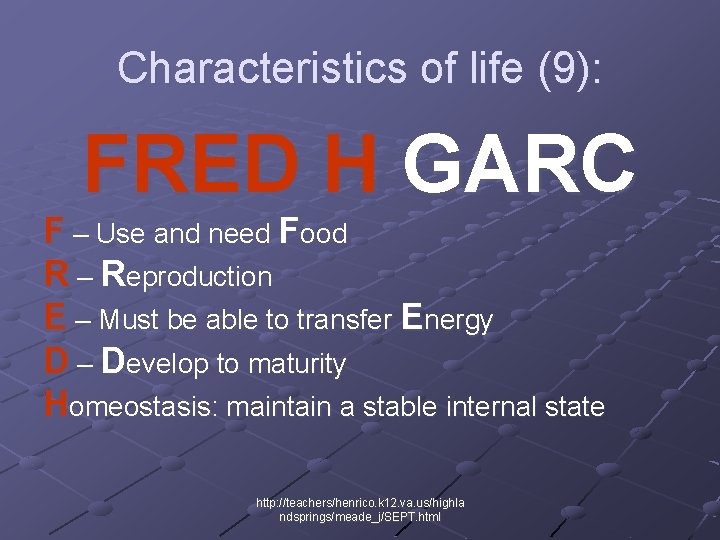
Characteristics of life (9): FRED H GARC F – Use and need Food R – Reproduction E – Must be able to transfer Energy D – Develop to maturity Homeostasis: maintain a stable internal state http: //teachers/henrico. k 12. va. us/highla ndsprings/meade_j/SEPT. html
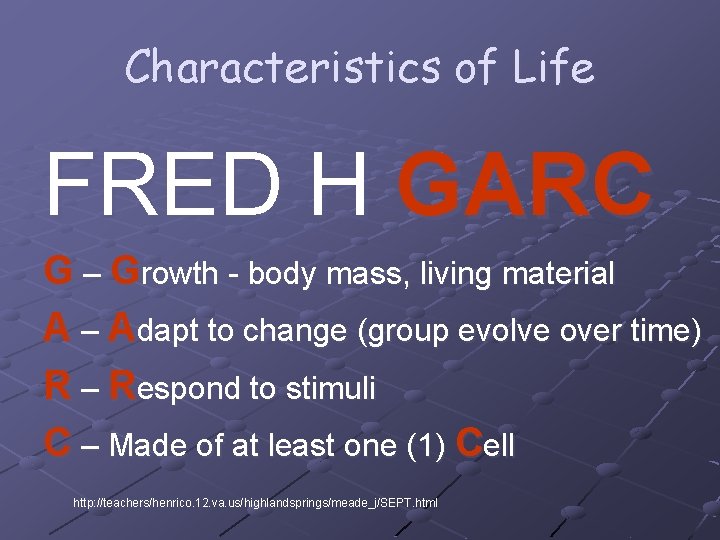
Characteristics of Life FRED H GARC G – Growth - body mass, living material A – Adapt to change (group evolve over time) R – Respond to stimuli C – Made of at least one (1) Cell http: //teachers/henrico. 12. va. us/highlandsprings/meade_j/SEPT. html
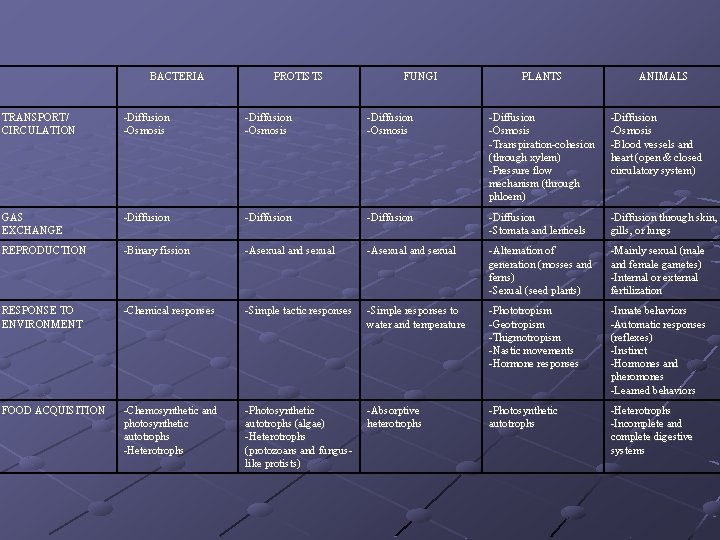
BACTERIA PROTISTS FUNGI PLANTS ANIMALS TRANSPORT/ CIRCULATION -Diffusion -Osmosis -Transpiration-cohesion (through xylem) -Pressure flow mechanism (through phloem) -Diffusion -Osmosis -Blood vessels and heart (open & closed circulatory system) GAS EXCHANGE -Diffusion -Stomata and lenticels -Diffusion through skin, gills, or lungs REPRODUCTION -Binary fission -Asexual and sexual -Alternation of generation (mosses and ferns) -Sexual (seed plants) -Mainly sexual (male and female gametes) -Internal or external fertilization RESPONSE TO ENVIRONMENT -Chemical responses -Simple tactic responses -Simple responses to water and temperature -Phototropism -Geotropism -Thigmotropism -Nastic movements -Hormone responses -Innate behaviors -Automatic responses (reflexes) -Instinct -Hormones and pheromones -Learned behaviors FOOD ACQUISITION -Chemosynthetic and photosynthetic autotrophs -Heterotrophs -Photosynthetic autotrophs (algae) -Heterotrophs (protozoans and funguslike protists) -Absorptive heterotrophs -Photosynthetic autotrophs -Heterotrophs -Incomplete and complete digestive systems
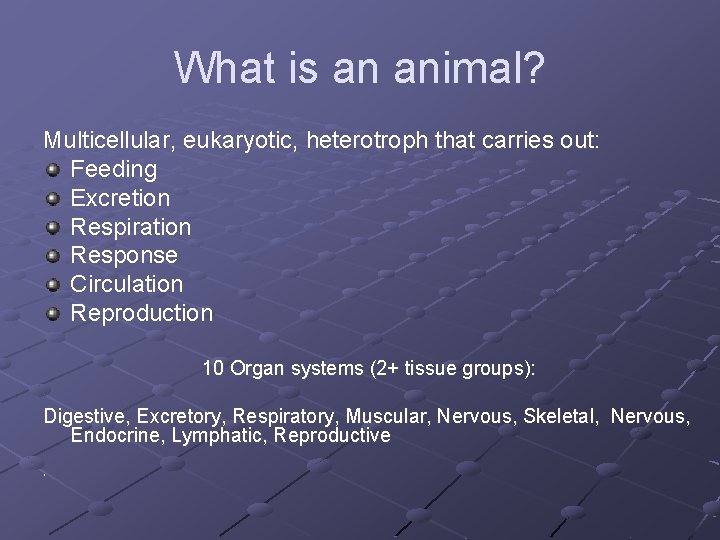
What is an animal? Multicellular, eukaryotic, heterotroph that carries out: Feeding Excretion Respiration Response Circulation Reproduction 10 Organ systems (2+ tissue groups): Digestive, Excretory, Respiratory, Muscular, Nervous, Skeletal, Nervous, Endocrine, Lymphatic, Reproductive ,
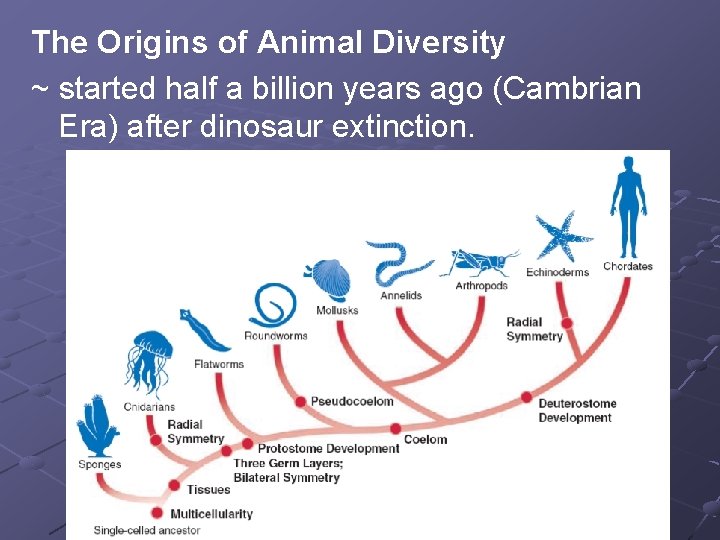
The Origins of Animal Diversity ~ started half a billion years ago (Cambrian Era) after dinosaur extinction.
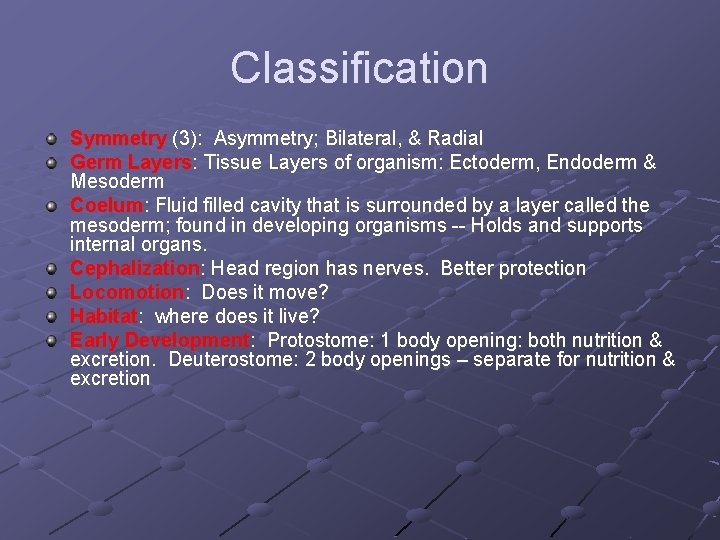
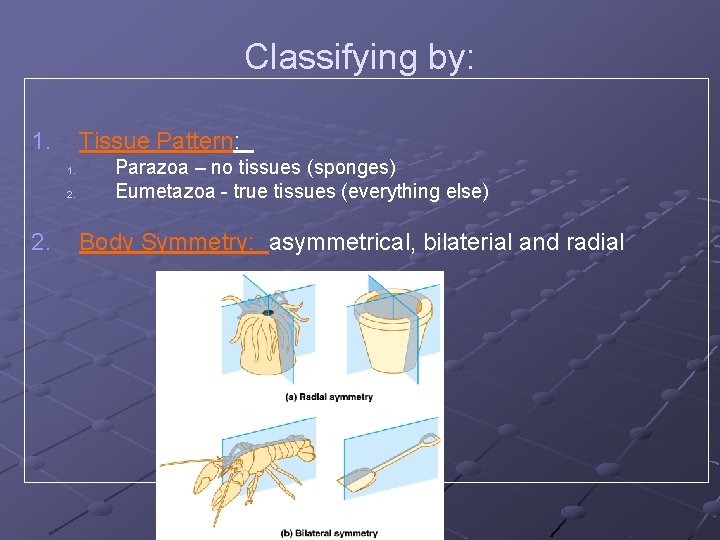
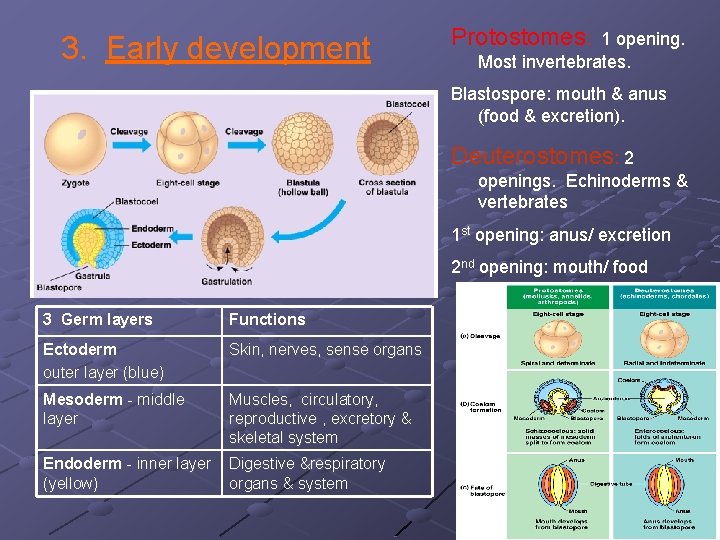
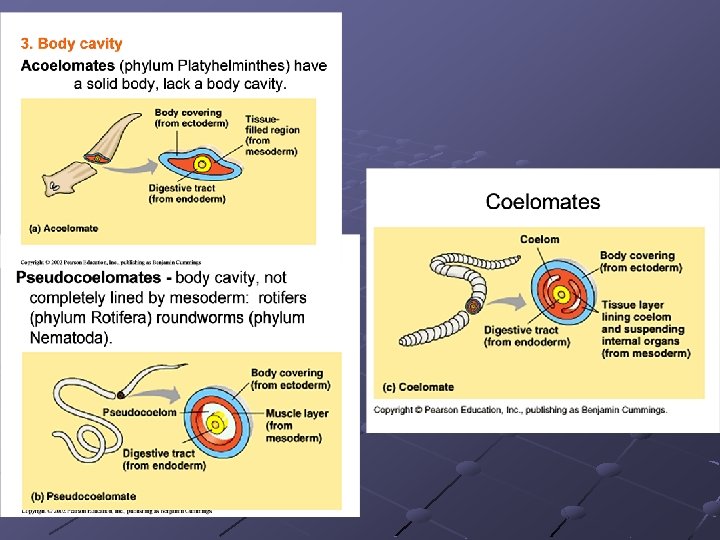
Classification Symmetry (3): Asymmetry; Bilateral, & Radial Germ Layers: Tissue Layers of organism: Ectoderm, Endoderm & Mesoderm Coelum: Fluid filled cavity that is surrounded by a layer called the mesoderm; found in developing organisms -- Holds and supports internal organs. Cephalization: Head region has nerves. Better protection Locomotion: Does it move? Habitat: where does it live? Early Development: Protostome: 1 body opening: both nutrition & excretion. Deuterostome: 2 body openings – separate for nutrition & excretion
Classifying by: 1. Tissue Pattern: 1. 2. Parazoa – no tissues (sponges) Eumetazoa - true tissues (everything else) Body Symmetry: asymmetrical, bilaterial and radial
3. Early development Protostomes: 1 opening. Most invertebrates. Blastospore: mouth & anus (food & excretion). Deuterostomes: 2 openings. Echinoderms & vertebrates 1 st opening: anus/ excretion 2 nd opening: mouth/ food 3 Germ layers Functions Ectoderm outer layer (blue) Skin, nerves, sense organs Mesoderm - middle layer Muscles, circulatory, reproductive , excretory & skeletal system Endoderm - inner layer Digestive &respiratory (yellow) organs & system
Invertebrates No backbone, protostomes (exc. Echinodems) 95% of all species. Simpler animals: sponges, cnidarians, flatworms, roundworms, annelids (segmented worms), mollusks, arthropods, & echinoderms
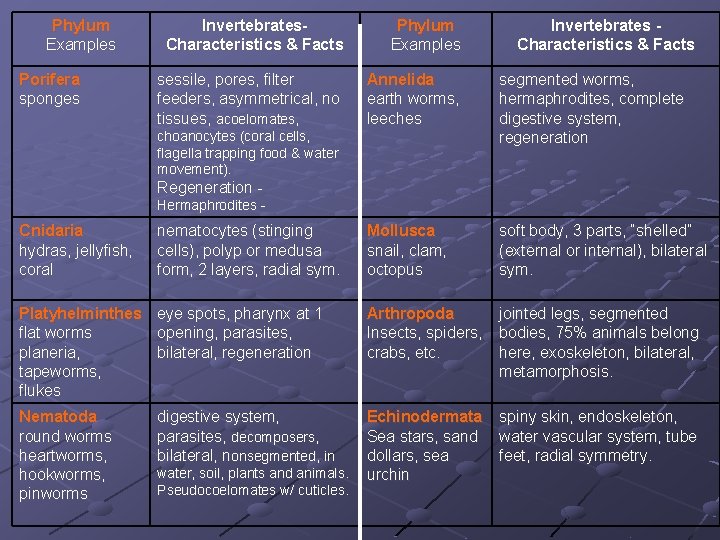
Phylum Examples Porifera sponges Invertebrates. Characteristics & Facts Phylum Examples sessile, pores, filter feeders, asymmetrical, no tissues, acoelomates, Annelida earth worms, leeches segmented worms, hermaphrodites, complete digestive system, regeneration Mollusca snail, clam, octopus soft body, 3 parts, “shelled” (external or internal), bilateral sym. choanocytes (coral cells, flagella trapping food & water movement). Invertebrates Characteristics & Facts Regeneration - Hermaphrodites - Cnidaria hydras, jellyfish, coral nematocytes (stinging cells), polyp or medusa form, 2 layers, radial sym. Platyhelminthes eye spots, pharynx at 1 flat worms opening, parasites, planeria, bilateral, regeneration tapeworms, flukes Nematoda round worms heartworms, hookworms, pinworms digestive system, parasites, decomposers, bilateral, nonsegmented, in Arthropoda jointed legs, segmented Insects, spiders, bodies, 75% animals belong crabs, etc. here, exoskeleton, bilateral, metamorphosis. Echinodermata Sea stars, sand dollars, sea water, soil, plants and animals. urchin Pseudocoelomates w/ cuticles. spiny skin, endoskeleton, water vascular system, tube feet, radial symmetry.
Phylum Arthropoda (Insects, spiders, crabs, etc. ) 1 million arthropod species identified (75% of all known organisms). 1018 individuals. Most successful animal phylum based on diversity, distribution, and sheer numbers.
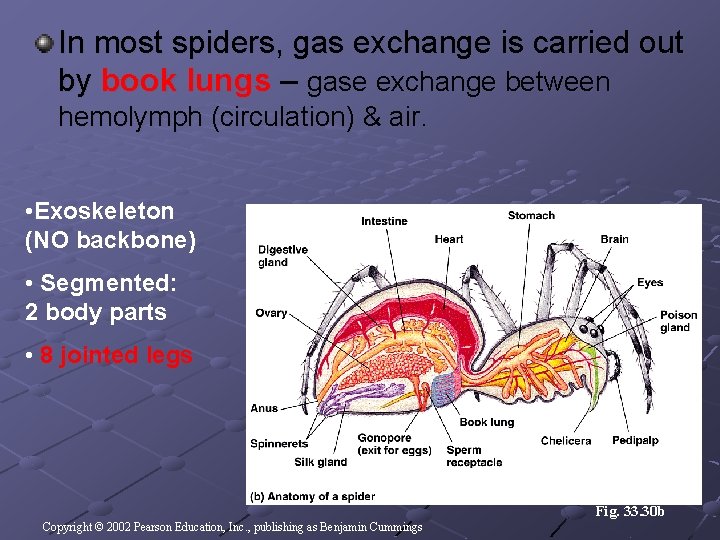
In most spiders, gas exchange is carried out by book lungs – gase exchange between hemolymph (circulation) & air. • Exoskeleton (NO backbone) • Segmented: 2 body parts • 8 jointed legs Fig. 33. 30 b Copyright © 2002 Pearson Education, Inc. , publishing as Benjamin Cummings
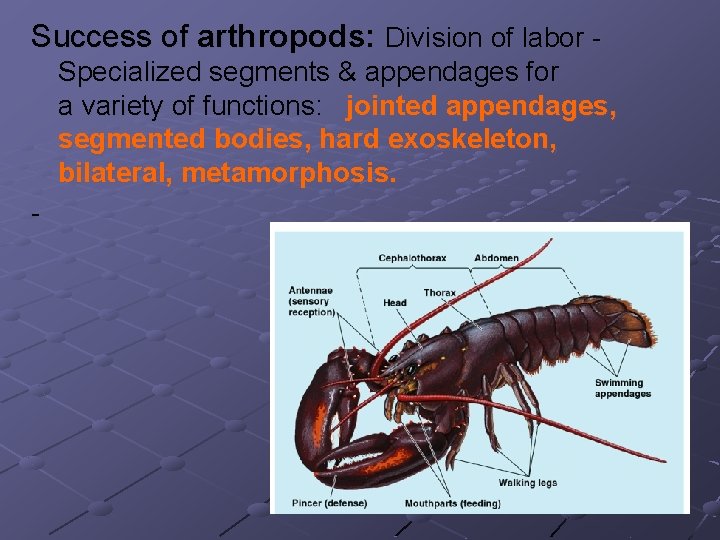
Success of arthropods: Division of labor - Specialized segments & appendages for a variety of functions: jointed appendages, segmented bodies, hard exoskeleton, bilateral, metamorphosis. -
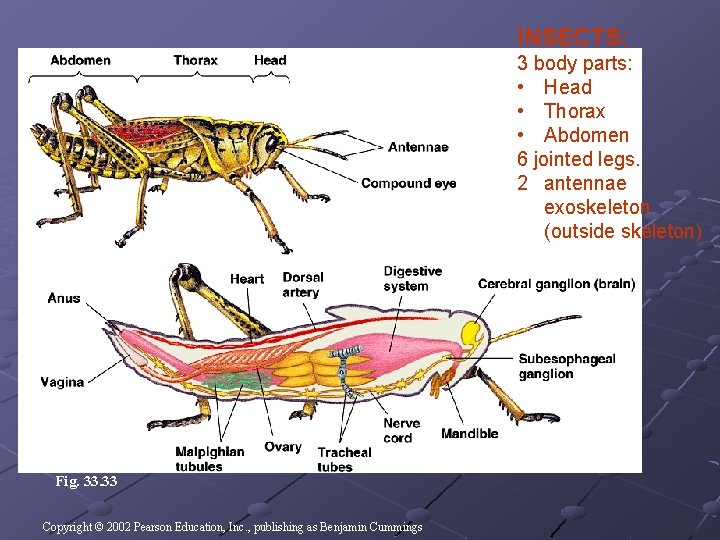
INSECTS: 3 body parts: • Head • Thorax • Abdomen 6 jointed legs. 2 antennae exoskeleton (outside skeleton) Fig. 33 Copyright © 2002 Pearson Education, Inc. , publishing as Benjamin Cummings
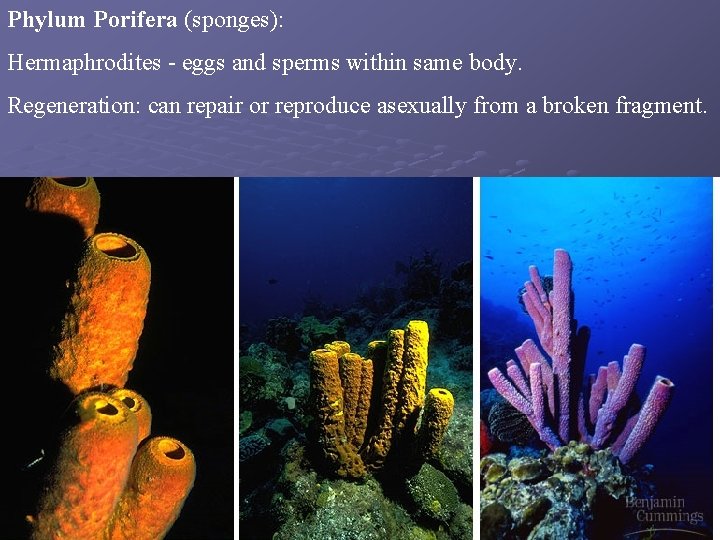
Phylum Porifera (sponges): Hermaphrodites - eggs and sperms within same body. Regeneration: can repair or reproduce asexually from a broken fragment.
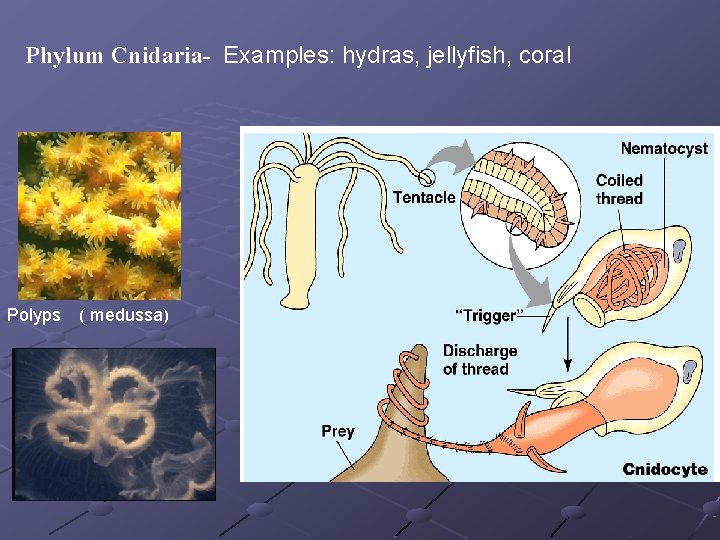
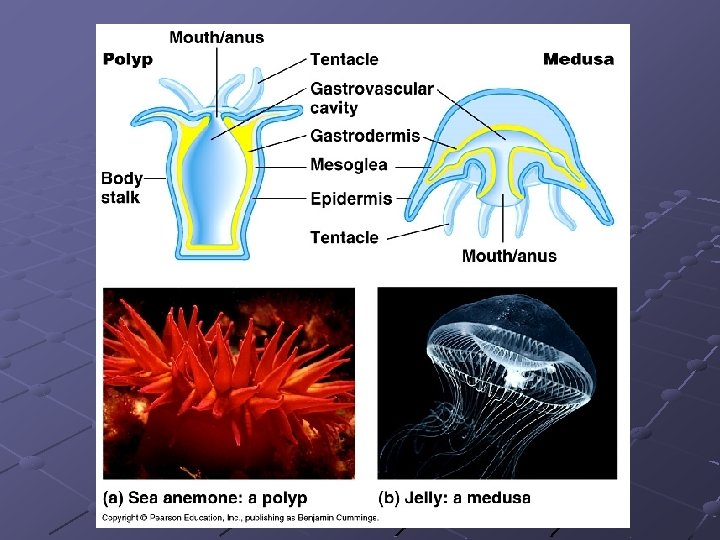
Phylum Cnidaria- Examples: hydras, jellyfish, coral Polyps ( medussa)
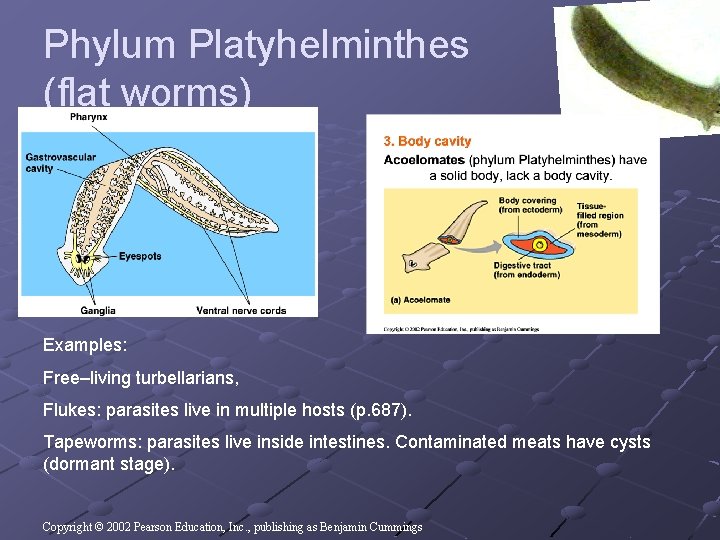
Phylum Platyhelminthes (flat worms) Examples: Free–living turbellarians, Flukes: parasites live in multiple hosts (p. 687). Tapeworms: parasites live inside intestines. Contaminated meats have cysts (dormant stage). Copyright © 2002 Pearson Education, Inc. , publishing as Benjamin Cummings
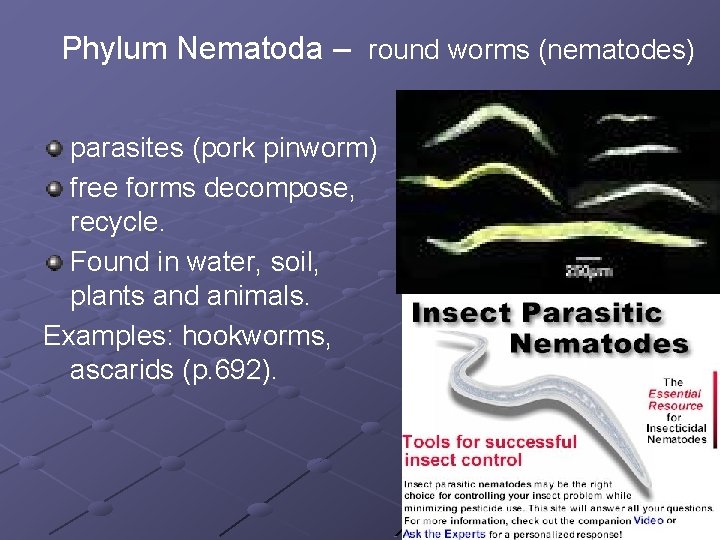
Phylum Nematoda – round worms (nematodes) parasites (pork pinworm) free forms decompose, recycle. Found in water, soil, plants and animals. Examples: hookworms, ascarids (p. 692).
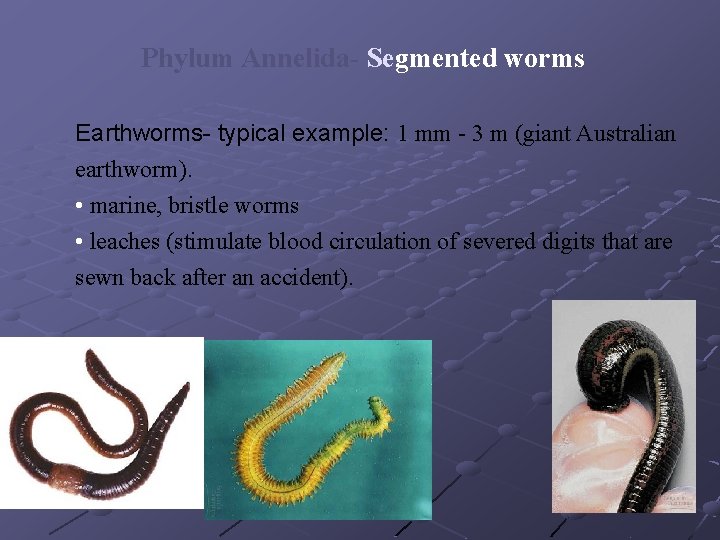
Phylum Annelida- Segmented worms Earthworms- typical example: 1 mm - 3 m (giant Australian earthworm). • marine, bristle worms • leaches (stimulate blood circulation of severed digits that are sewn back after an accident).
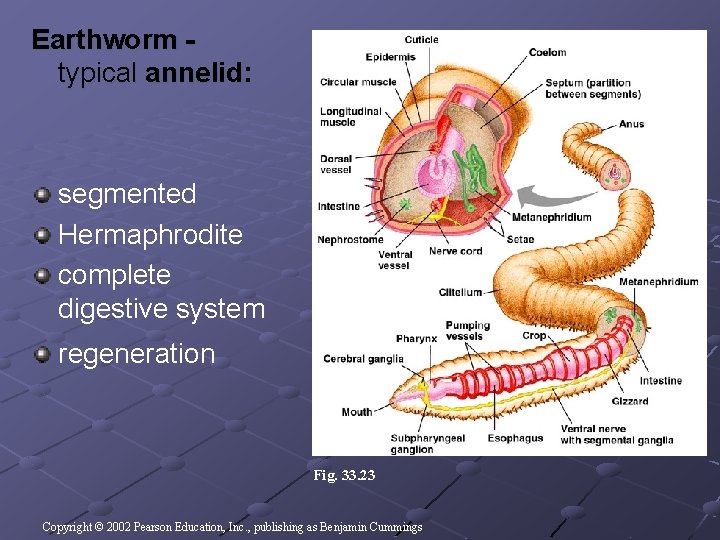
Earthworm - typical annelid: segmented Hermaphrodite complete digestive system regeneration Fig. 33. 23 Copyright © 2002 Pearson Education, Inc. , publishing as Benjamin Cummings
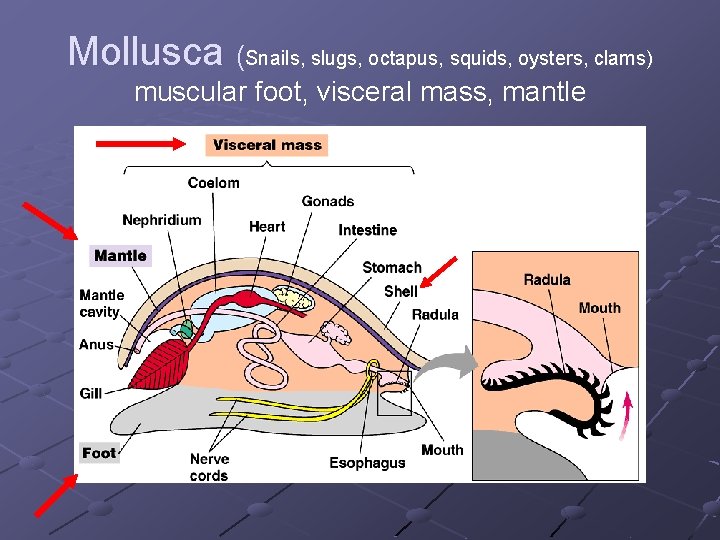
Mollusca (Snails, slugs, octapus, squids, oysters, clams) muscular foot, visceral mass, mantle
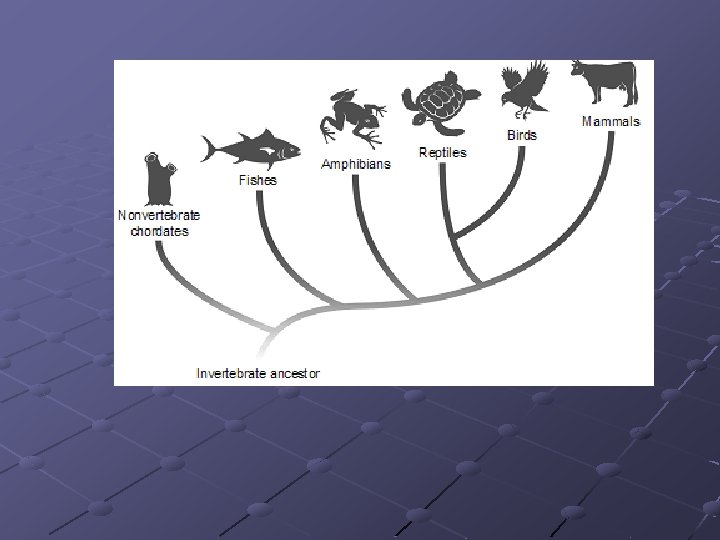
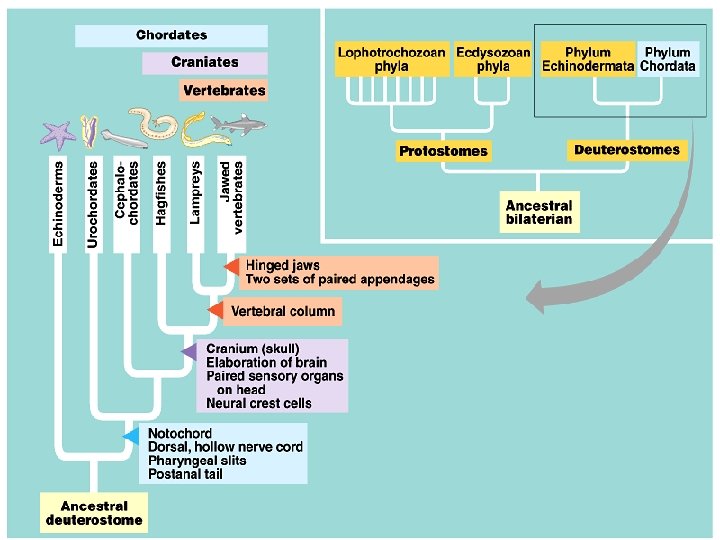
Deutorostomes Echinodermata (star fishes) Chordates: most are vertebrates, except tunicates & lancelets evolutionary clues of vertebrates. Vertebrates: mammals, birds, lizards, snakes, turtles, amphibians, fishes, primates, humans
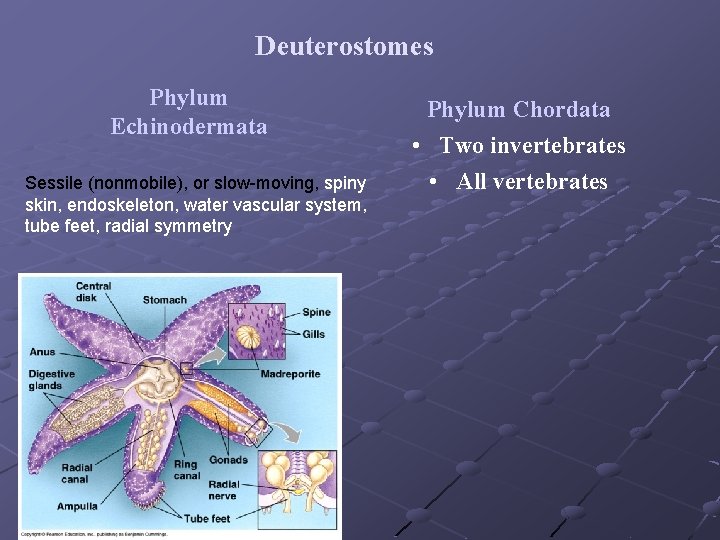
Deuterostomes Phylum Echinodermata Sessile (nonmobile), or slow-moving, spiny skin, endoskeleton, water vascular system, tube feet, radial symmetry Phylum Chordata • Two invertebrates • All vertebrates
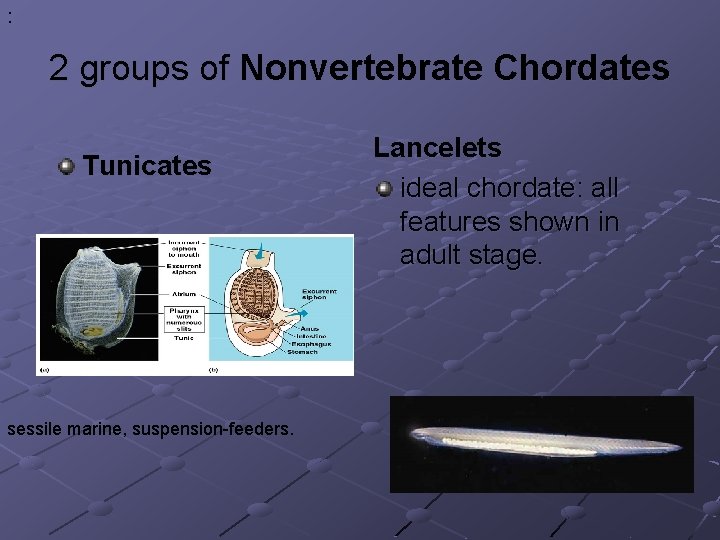
: 2 groups of Nonvertebrate Chordates Tunicates sessile marine, suspension-feeders. Lancelets ideal chordate: all features shown in adult stage.
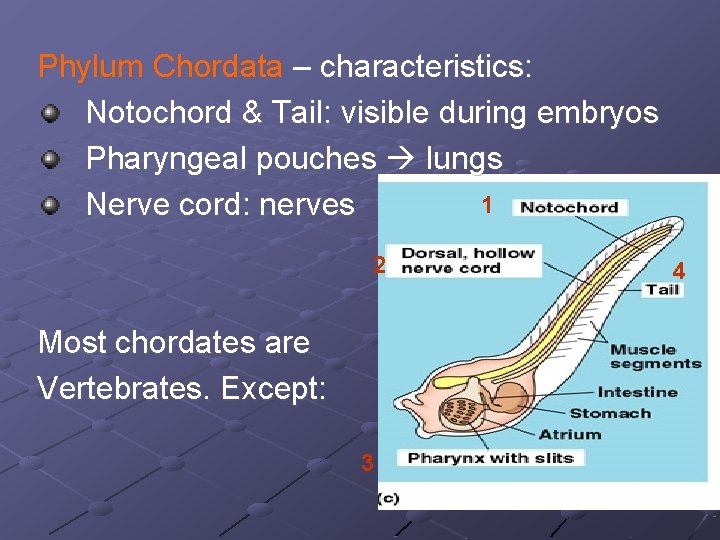
Phylum Chordata – characteristics: Notochord & Tail: visible during embryos Pharyngeal pouches lungs 1 Nerve cord: nerves 2 Most chordates are Vertebrates. Except: 3 4
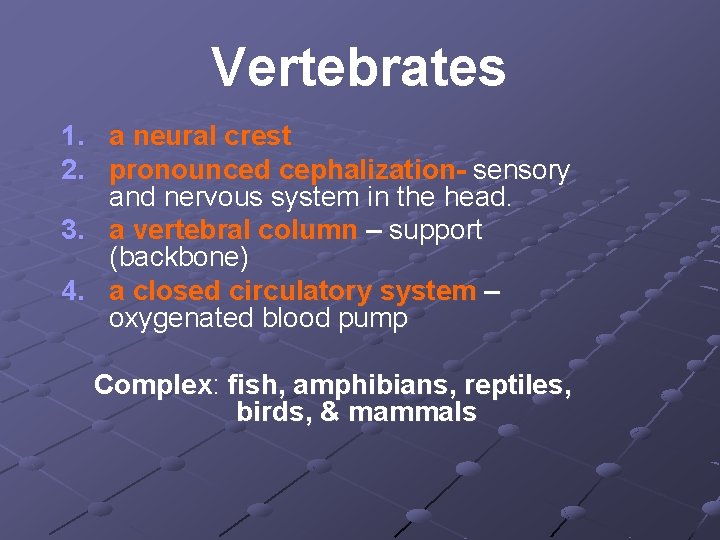
Vertebrates 1. a neural crest 2. pronounced cephalization- sensory and nervous system in the head. 3. a vertebral column – support (backbone) 4. a closed circulatory system – oxygenated blood pump Complex: fish, amphibians, reptiles, birds, & mammals
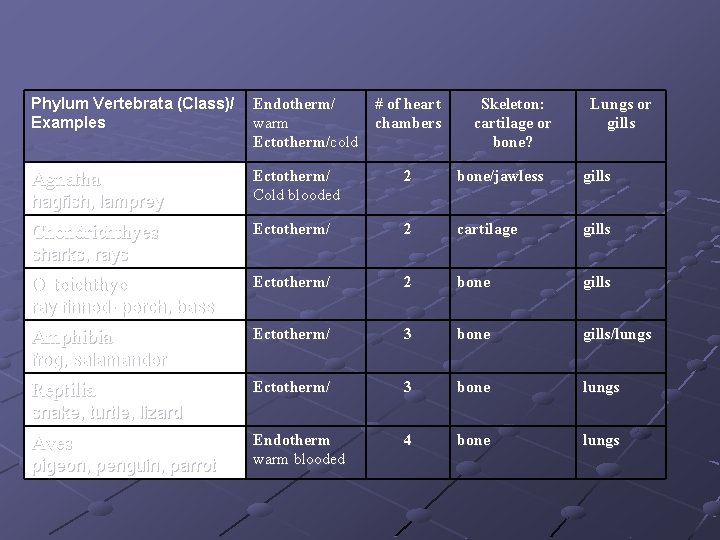
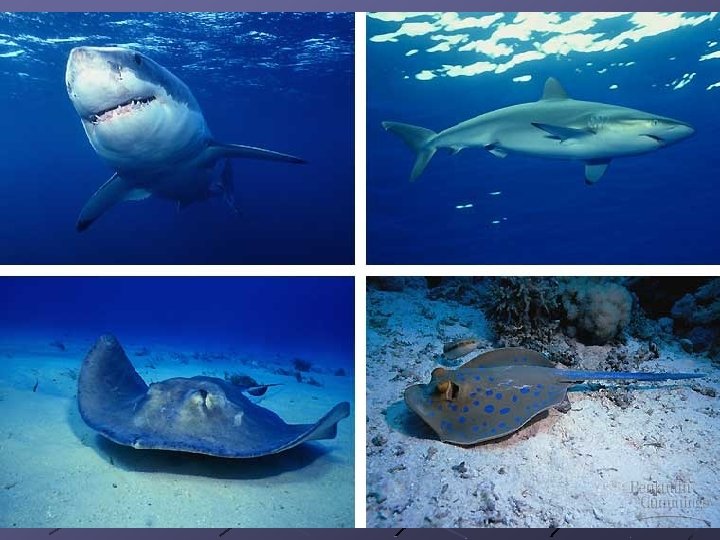
Phylum Vertebrata (Class)/ Examples Endotherm/ warm Ectotherm/cold Agnatha 2 bone/jawless gills hagfish, lamprey Ectotherm/ Cold blooded Chondrichthyes Ectotherm/ 2 cartilage gills Ectotherm/ 2 bone gills Ectotherm/ 3 bone gills/lungs Ectotherm/ 3 bone lungs Endotherm warm blooded 4 bone lungs # of heart chambers Skeleton: cartilage or bone? Lungs or gills sharks, rays Osteichthyes ray finned- perch, bass Amphibia frog, salamander Reptilia snake, turtle, lizard Aves pigeon, penguin, parrot
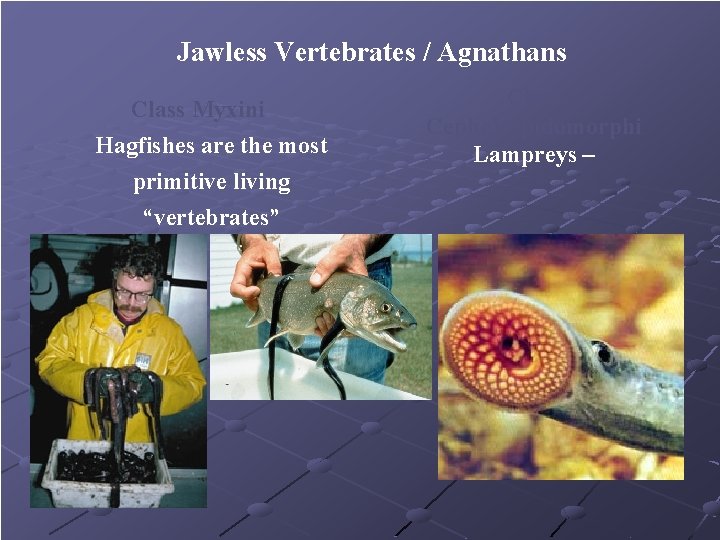
Jawless Vertebrates / Agnathans Class Myxini Hagfishes are the most primitive living “vertebrates” Class Cephalaspidomorphi Lampreys –
Both hagfishes & lampreys: No jaws, no paired appendages. brain and cranium evolved first, followed by the vertebral column. jaws, ossified skeleton, and paired appendages evolved later.
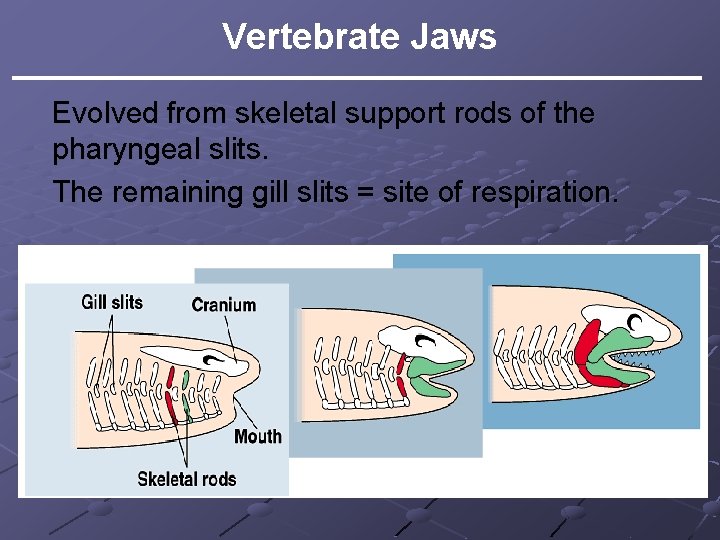
Vertebrate Jaws Evolved from skeletal support rods of the pharyngeal slits. The remaining gill slits = site of respiration.
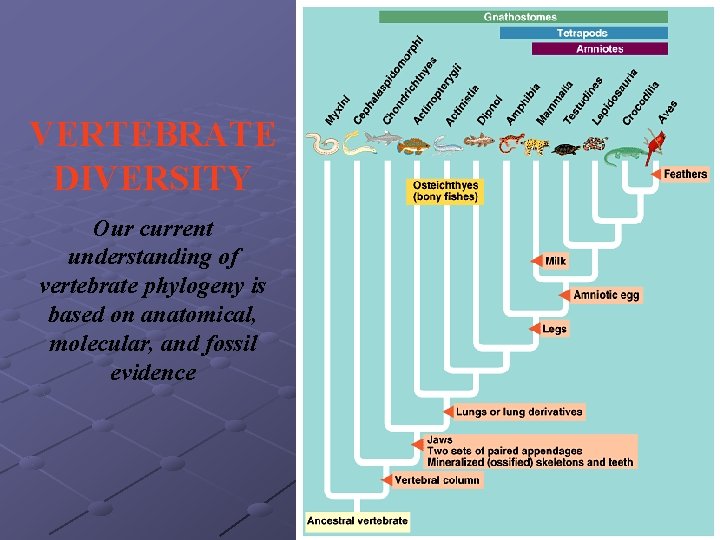
VERTEBRATE DIVERSITY Our current understanding of vertebrate phylogeny is based on anatomical, molecular, and fossil evidence Fig. 34. 7
Osteichthyes bony fishes, lobed finned fishes, lunged fishes probably evolved in freshwater, then move the seas. Skin - thin, flattened bony scales can detect water disturbances through a row of tiny pits along either side of the body. Swim bladder- buoyancy bass, trout, perch, tuna and herring
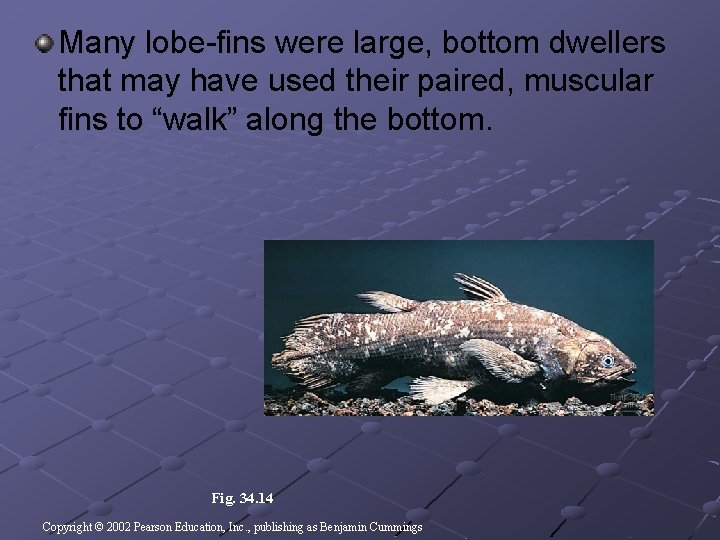
Many lobe-fins were large, bottom dwellers that may have used their paired, muscular fins to “walk” along the bottom. Fig. 34. 14 Copyright © 2002 Pearson Education, Inc. , publishing as Benjamin Cummings
lungfishes (class Dipnoi): n Live in stagnant ponds and swamps. n gulp air into lungs- oxygen for metabolism. n Gills - main organs for gas exchange in Australian lungfishes. n When ponds are dried, some lungfishes can burrow into the mud and stay dormant. Gave rise to amphibians and tetrapods. Copyright © 2002 Pearson Education, Inc. , publishing as Benjamin Cummings
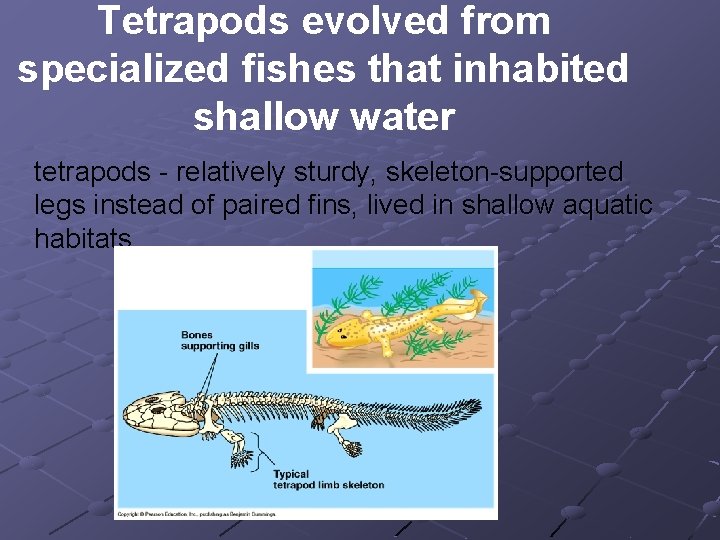
Tetrapods evolved from specialized fishes that inhabited shallow water tetrapods - relatively sturdy, skeleton-supported legs instead of paired fins, lived in shallow aquatic habitats.
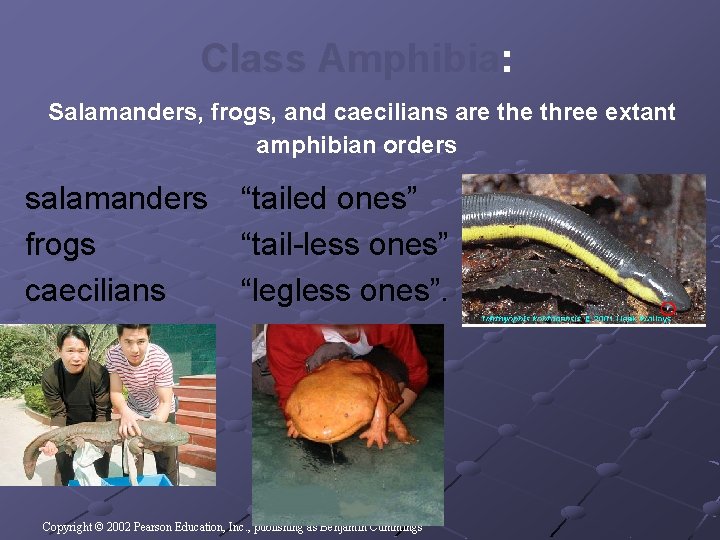
Class Amphibia: Salamanders, frogs, and caecilians are three extant amphibian orders salamanders frogs caecilians “tailed ones” “tail-less ones” “legless ones”. Copyright © 2002 Pearson Education, Inc. , publishing as Benjamin Cummings
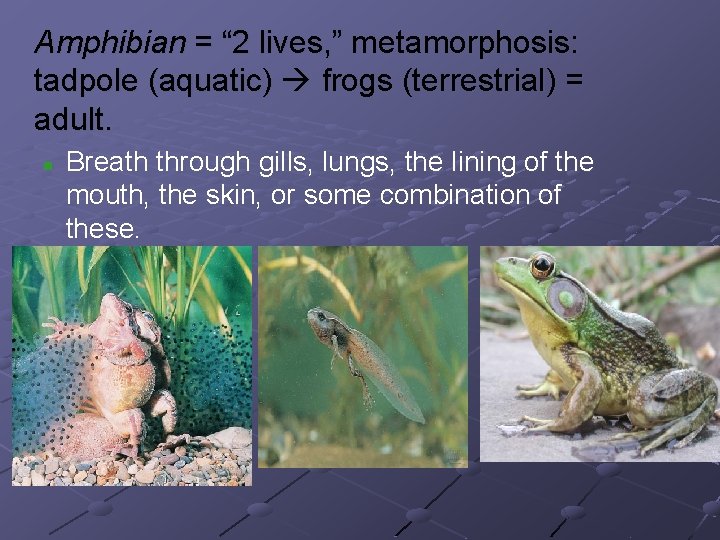
Amphibian = “ 2 lives, ” metamorphosis: tadpole (aquatic) frogs (terrestrial) = adult. n Breath through gills, lungs, the lining of the mouth, the skin, or some combination of these.
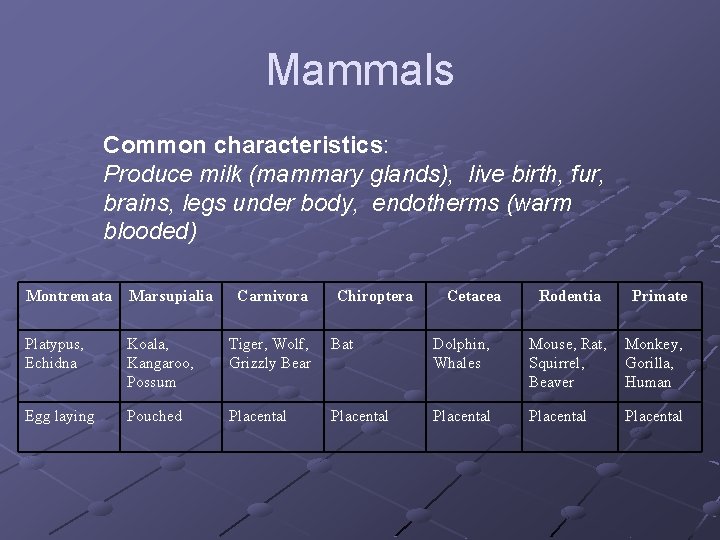
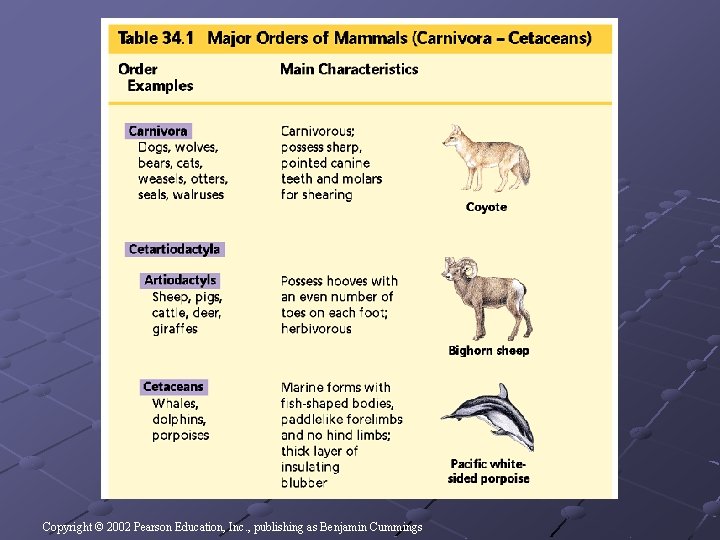
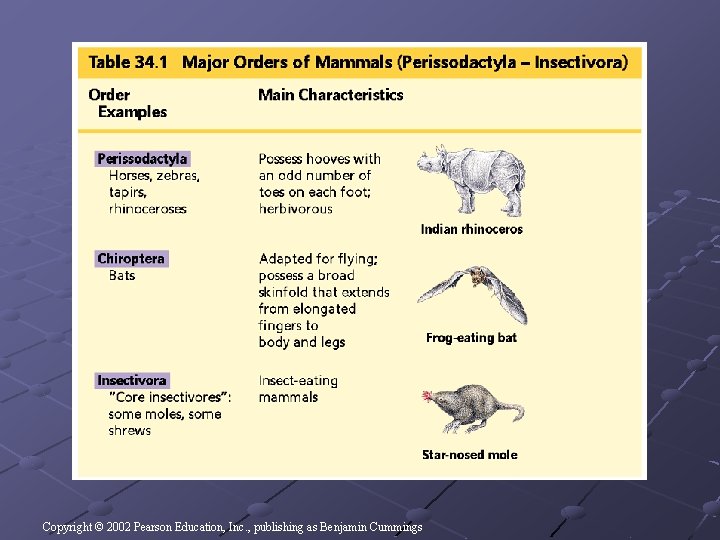
Mammals Common characteristics: Produce milk (mammary glands), live birth, fur, brains, legs under body, endotherms (warm blooded) Montremata Marsupialia Carnivora Chiroptera Cetacea Rodentia Primate Platypus, Echidna Koala, Kangaroo, Possum Tiger, Wolf, Grizzly Bear Bat Dolphin, Whales Mouse, Rat, Squirrel, Beaver Monkey, Gorilla, Human Egg laying Pouched Placental Placental
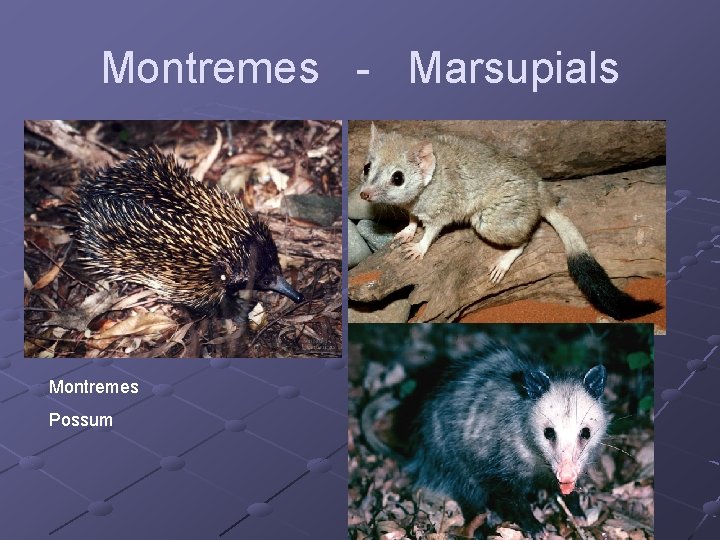
Montremes - Marsupials Montremes Possum
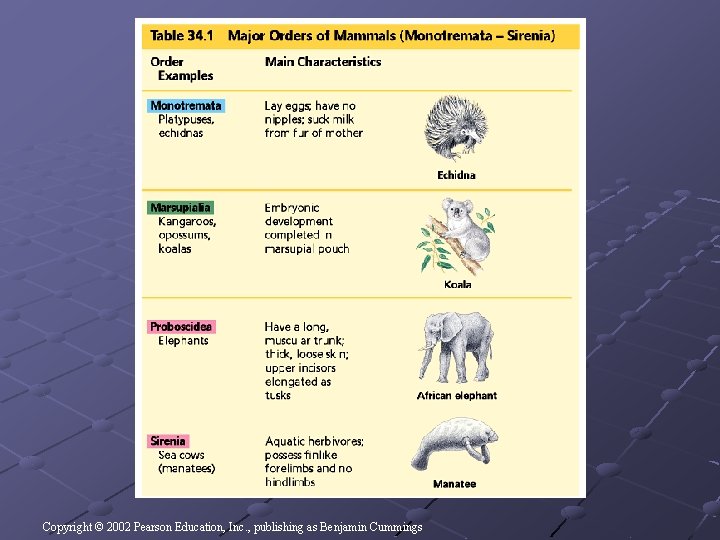
Copyright © 2002 Pearson Education, Inc. , publishing as Benjamin Cummings
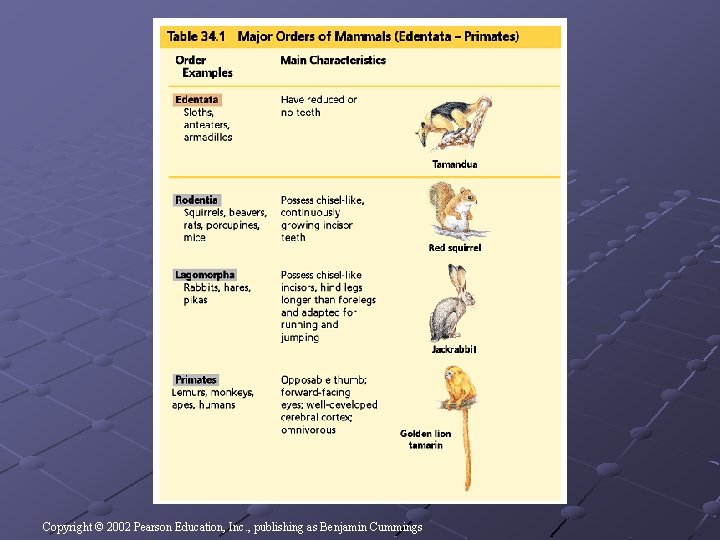
Copyright © 2002 Pearson Education, Inc. , publishing as Benjamin Cummings
Copyright © 2002 Pearson Education, Inc. , publishing as Benjamin Cummings
Copyright © 2002 Pearson Education, Inc. , publishing as Benjamin Cummings