Characteristics of High Performing Schools International Schools in


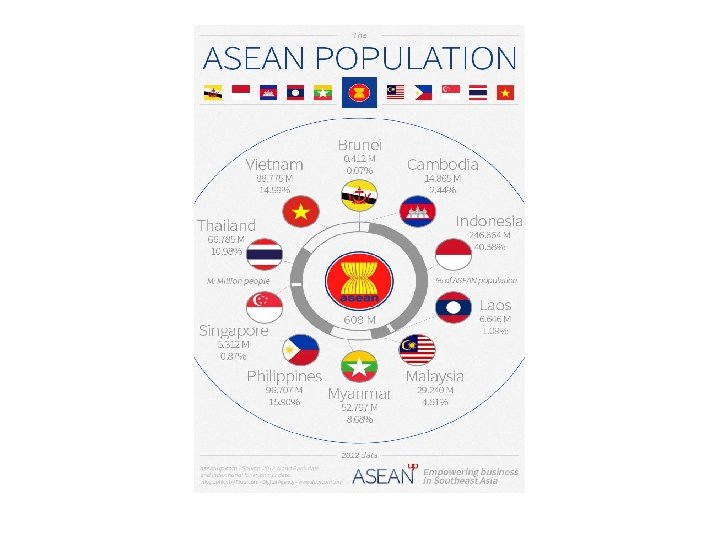


- Slides: 51
Characteristics of High Performing Schools International Schools in Asia Mark Disney Kolej Tuanku Ja’afar, Malaysia
The Business of Education CONTENT • Market Opportunities & Challenges • 9 Habits of Highly Effective Schools
The Business of Education Is Education really a Business?
The Business of Education
The Business of Education
The Business of Education
The Business of Education
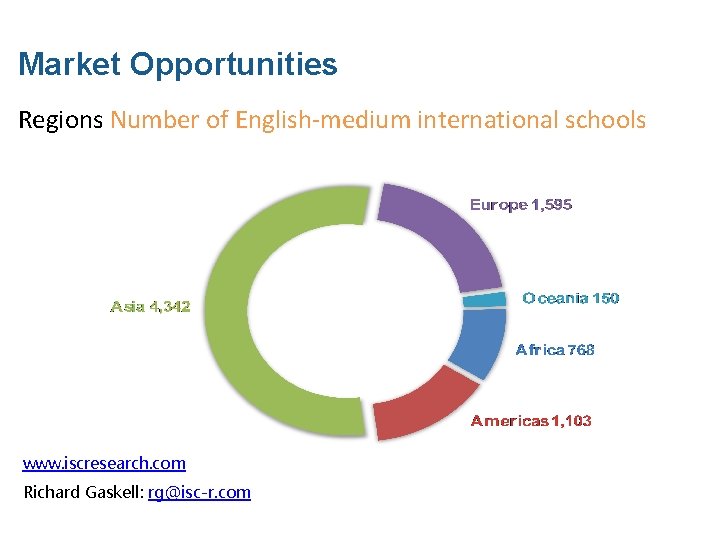
Market Opportunities Regions Number of English medium international schools www. iscresearch. com Richard Gaskell: rg@isc-r. com
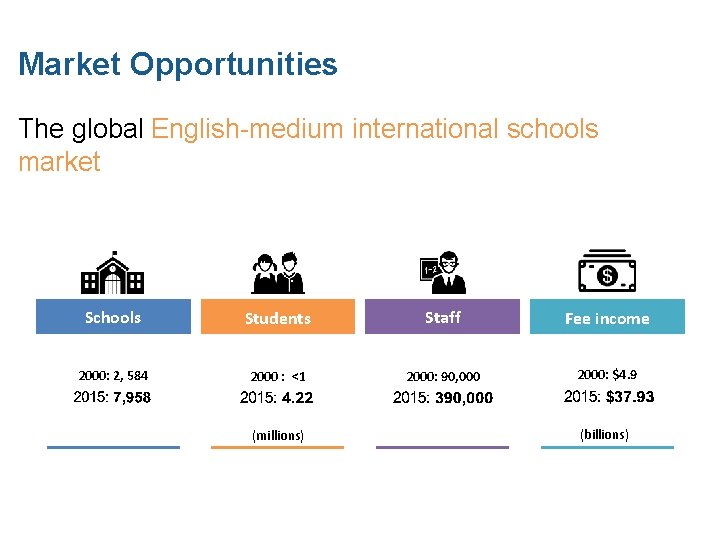
Market Opportunities The global English-medium international schools market Schools Students Staff Fee income 2000: 2, 584 2000 : <1 2000: 90, 000 2000: $4. 9 (millions) (billions)
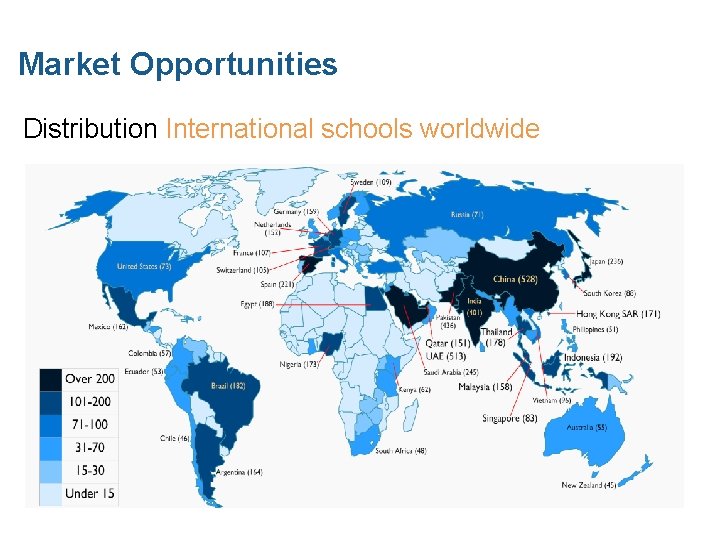
Market Opportunities Distribution International schools worldwide
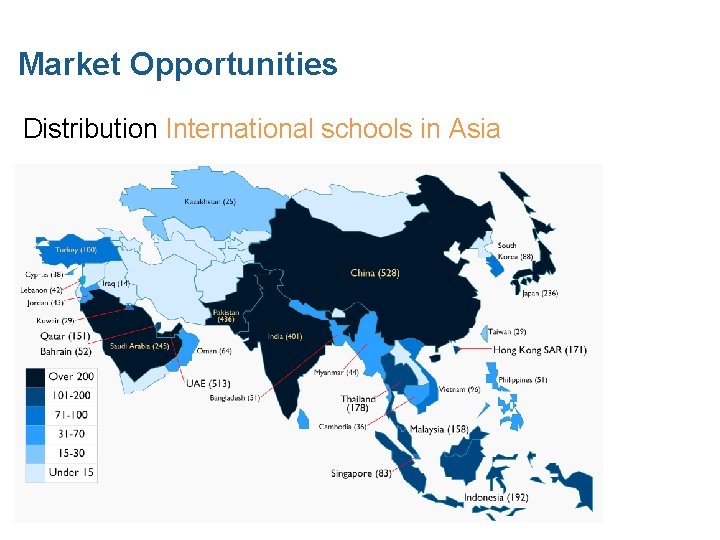
Market Opportunities Distribution International schools in Asia
Curriculum International schools offering key curricula
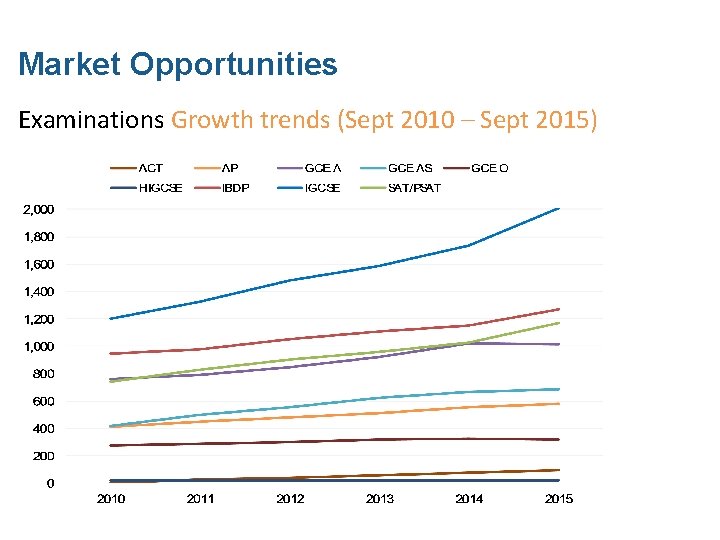
Market Opportunities Examinations Growth trends (Sept 2010 – Sept 2015)
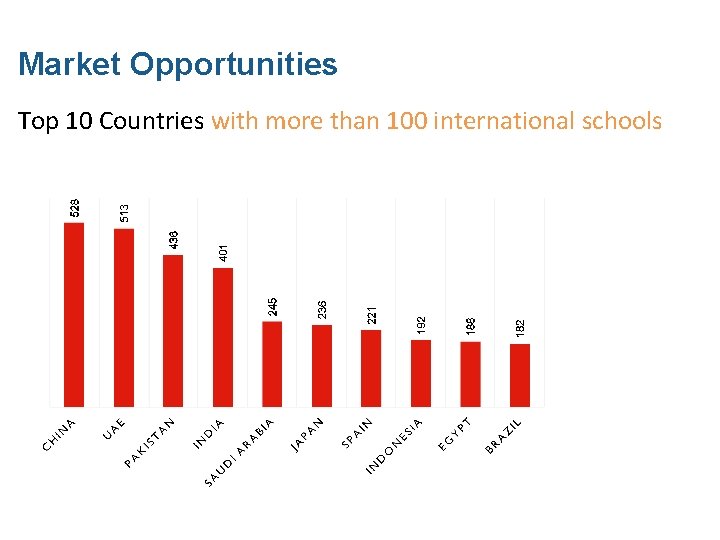
Market Opportunities Top 10 Countries with more than 100 international schools
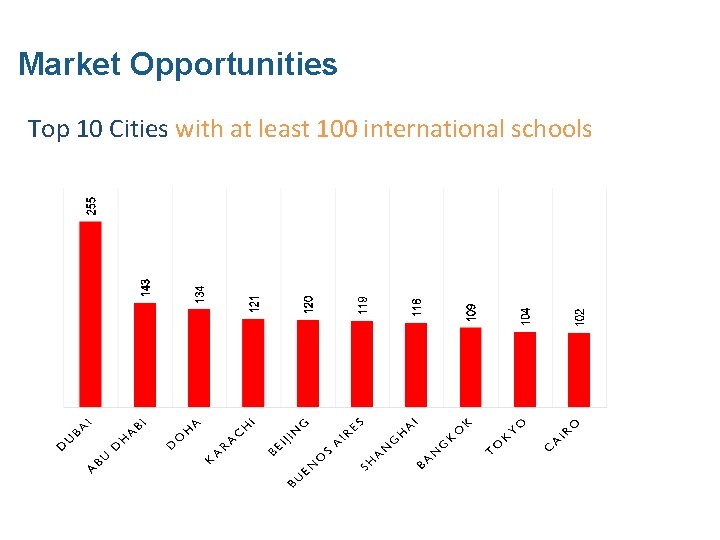
Market Opportunities Top 10 Cities with at least 100 international schools
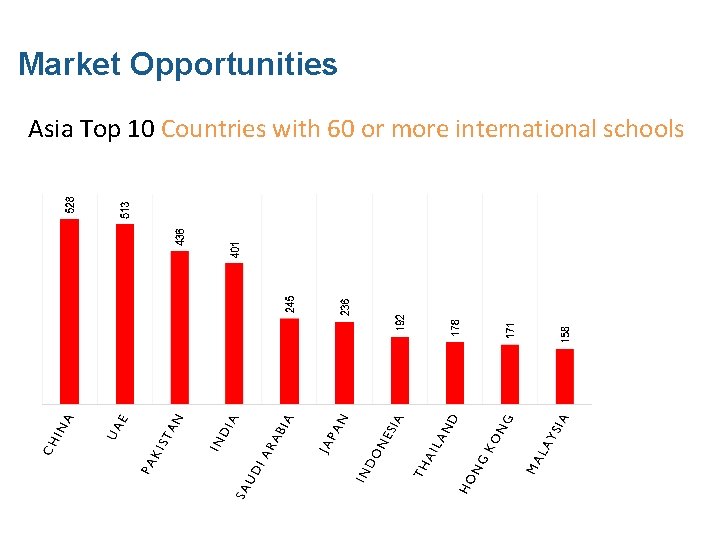
Market Opportunities Asia Top 10 Countries with 60 or more international schools
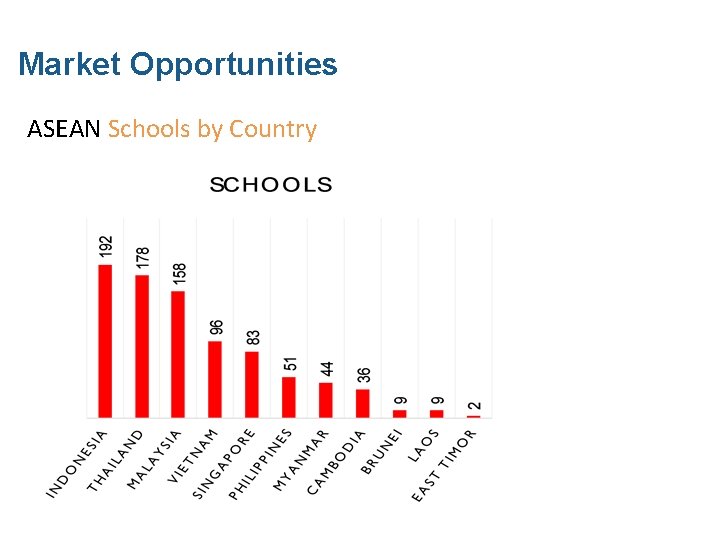
Market Opportunities ASEAN Schools by Country
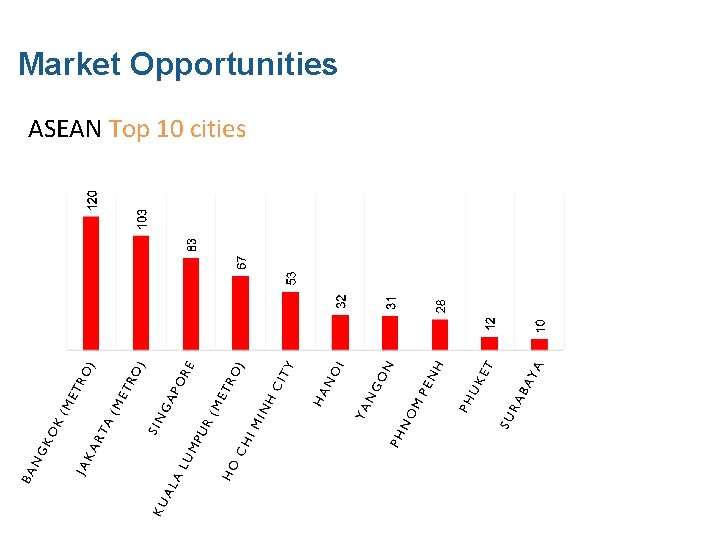
Market Opportunities ASEAN Top 10 cities
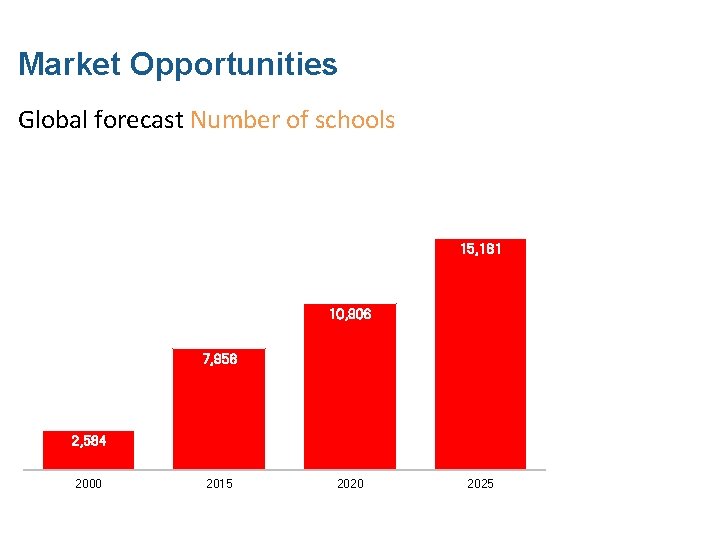
Market Opportunities Global forecast Number of schools 15, 181 10, 906 7, 958 2, 584 2000 2015 2020 2025
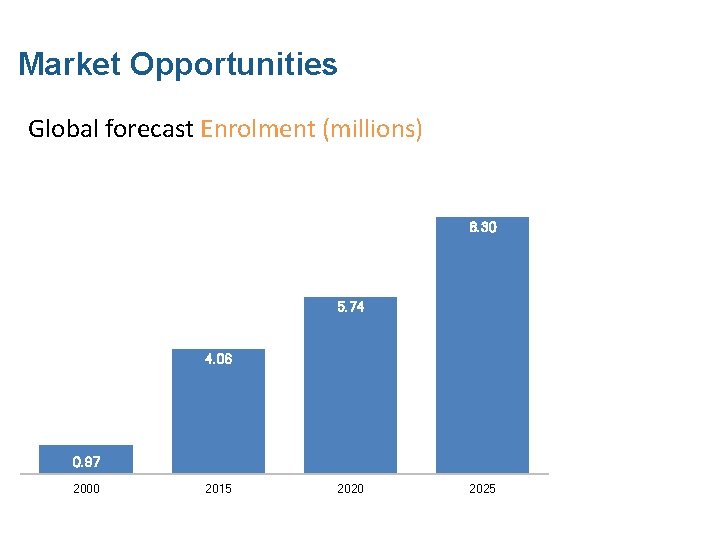
Market Opportunities Global forecast Enrolment (millions) 8. 30 5. 74 4. 06 0. 97 2000 2015 2020 2025
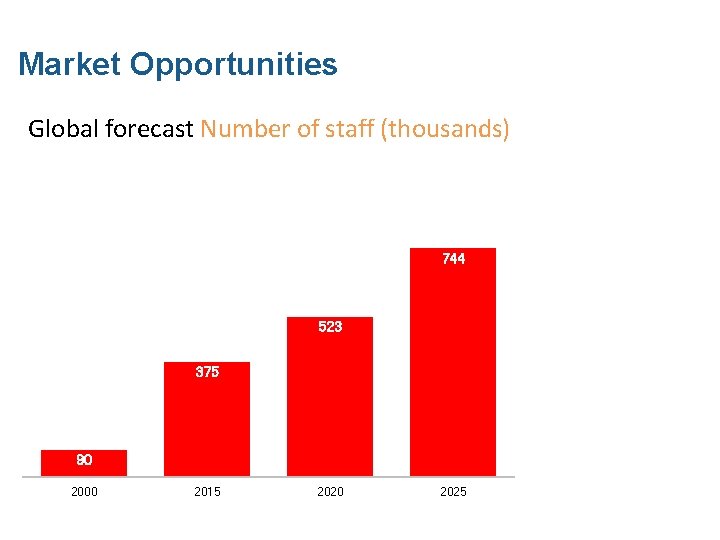
Market Opportunities Global forecast Number of staff (thousands) 744 523 375 90 2000 2015 2020 2025
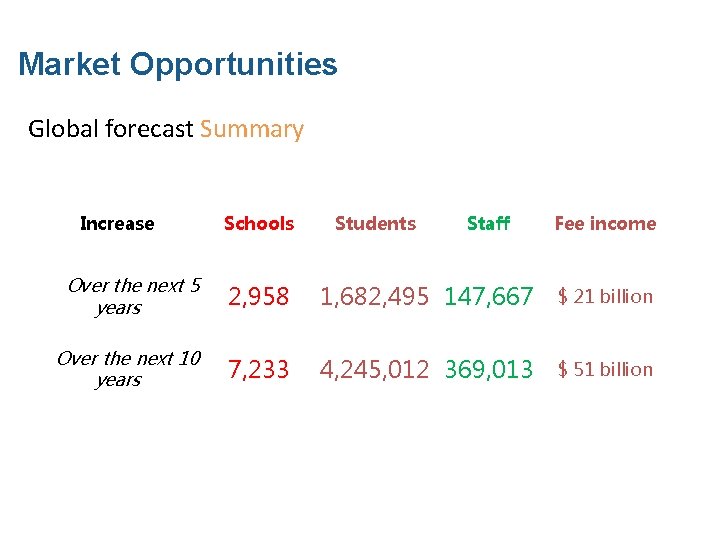
Market Opportunities Global forecast Summary Increase Schools Students Staff Fee income Over the next 5 years 2, 958 1, 682, 495 147, 667 $ 21 billion Over the next 10 years 7, 233 4, 245, 012 369, 013 $ 51 billion
Market Opportunities So what does this all mean for you and your school? COMPETITION MANPOWER POSITIONING
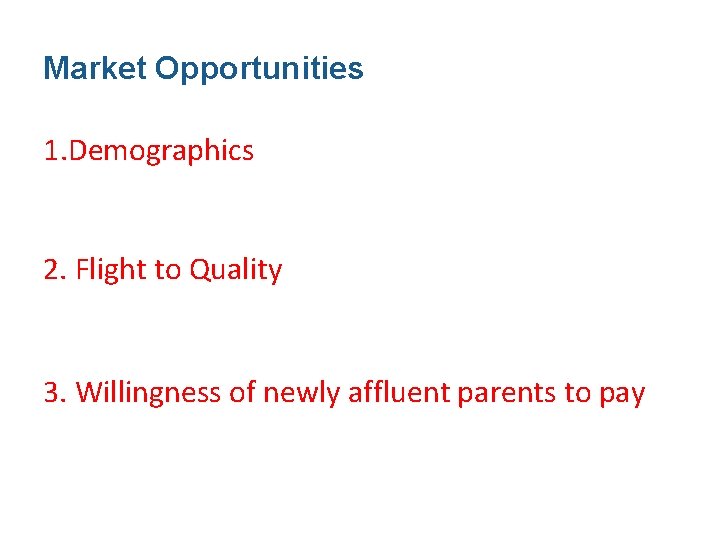
Market Opportunities 1. Demographics 2. Flight to Quality 3. Willingness of newly affluent parents to pay
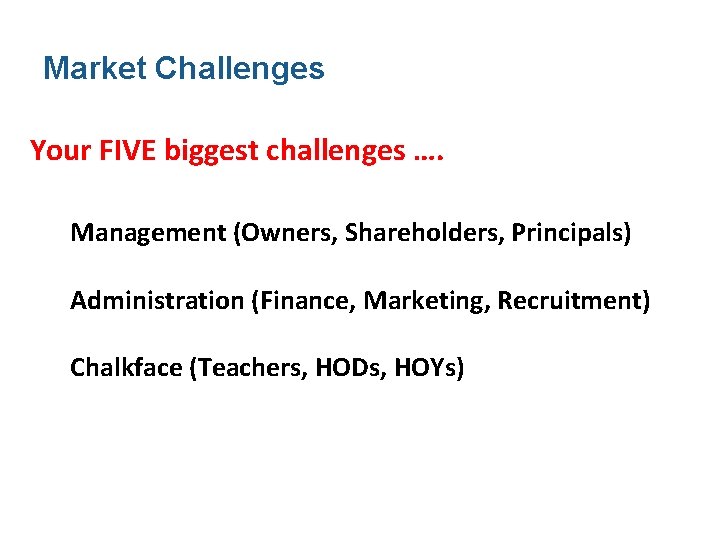
Market Challenges Your FIVE biggest challenges …. Management (Owners, Shareholders, Principals) Administration (Finance, Marketing, Recruitment) Chalkface (Teachers, HODs, HOYs)
Market Challenges • Keeping parents happy • Keeping teachers happy • Keeping shareholders happy • Keeping students happy
Market Challenges Shortage of Qualified Teachers Regulations, Licences, Access to Land Lack of Scale and Professional Management Financing & Ownership Issues Scarcity of Public Information
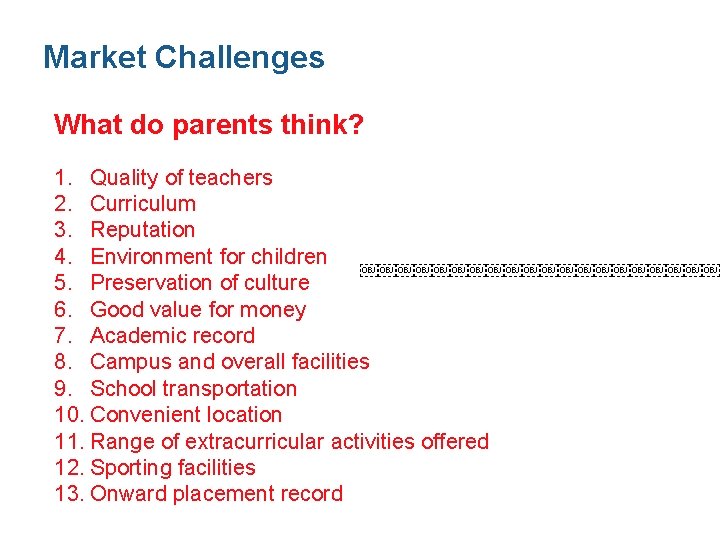
Market Challenges What do parents think? 1. Quality of teachers 2. Curriculum 3. Reputation 4. Environment for children  5. Preservation of culture 6. Good value for money 7. Academic record 8. Campus and overall facilities 9. School transportation 10. Convenient location 11. Range of extracurricular activities offered 12. Sporting facilities 13. Onward placement record
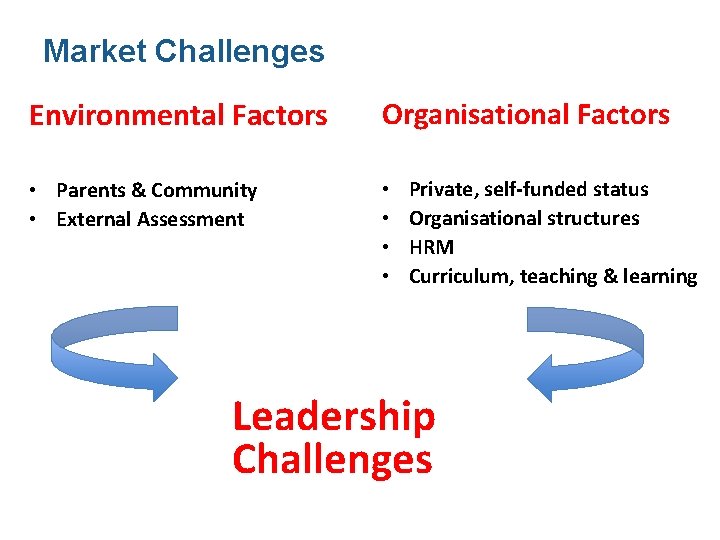
Market Challenges Environmental Factors Organisational Factors • Parents & Community • External Assessment • • Private, self-funded status Organisational structures HRM Curriculum, teaching & learning Leadership Challenges
Market Challenges Leadership Challenges • • High but diverse parental expectations; High rate of staff turnover and student mobility; Politics surrounding the position of the school head; Unclear roles or inappropriate involvement of owners and Board members; Conflicting pressures from compliance with host country education laws and the educational goals of international education; Cultural diversity of staff, students and board members; Conflicts between local and global curriculum standards and expectations; Competitive pressures for student intake
Market Challenges School Development or Improvement Plan? The SIP should follow a 3/4 year cycle: • Y 1 - detailed priorities, targets and strategies • Y 2/3/4 - high level priorities, targets, measurements, feedback cycle The SIP should be a rolling 3 year plan and run across all school functions
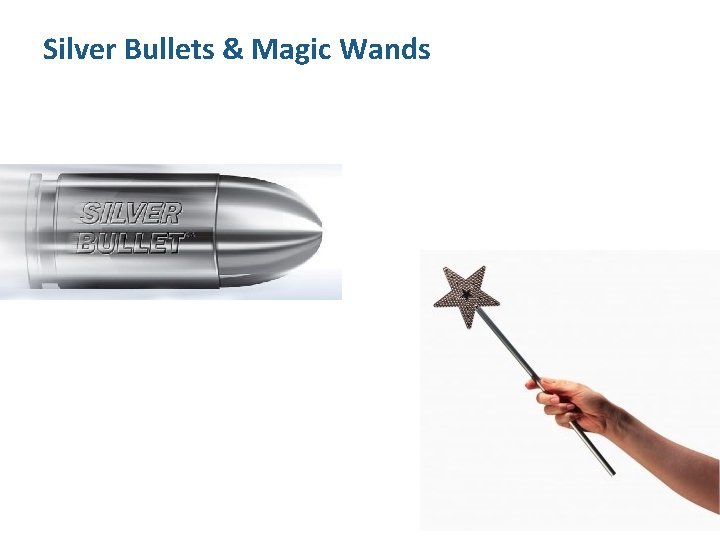
Silver Bullets & Magic Wands
9 Characteristics of High Performing Schools High Performance is a VERB not an Adjective or Noun
9 Characteristics of High Performing Schools www. k 12. wa. us/research/default. aspx 1. A clear and shared focus
9 Characteristics of High Performing Schools 2. High standards and expectations for all students
9 Characteristics of High Performing Schools 3. Effective school leadership
9 Characteristics of High Performing Schools 4. High levels of collaboration and communication
9 Characteristics of High Performing Schools 5. Curriculum, instruction and assessments aligned with required standards
9 Characteristics of High Performing Schools 6. Frequent monitoring of learning and teaching
9 Characteristics of High Performing Schools 7. Focused professional development
9 Characteristics of High Performing Schools 8. A supportive learning environment
9 Characteristics of High Performing Schools 9. High levels of family and community involvement
The End Thanks for your Attention
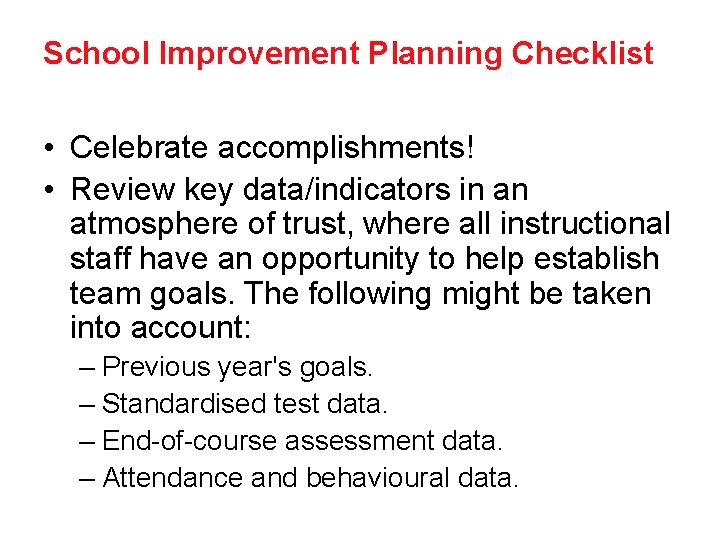
School Improvement Planning Checklist • Celebrate accomplishments! • Review key data/indicators in an atmosphere of trust, where all instructional staff have an opportunity to help establish team goals. The following might be taken into account: – Previous year's goals. – Standardised test data. – End-of-course assessment data. – Attendance and behavioural data.
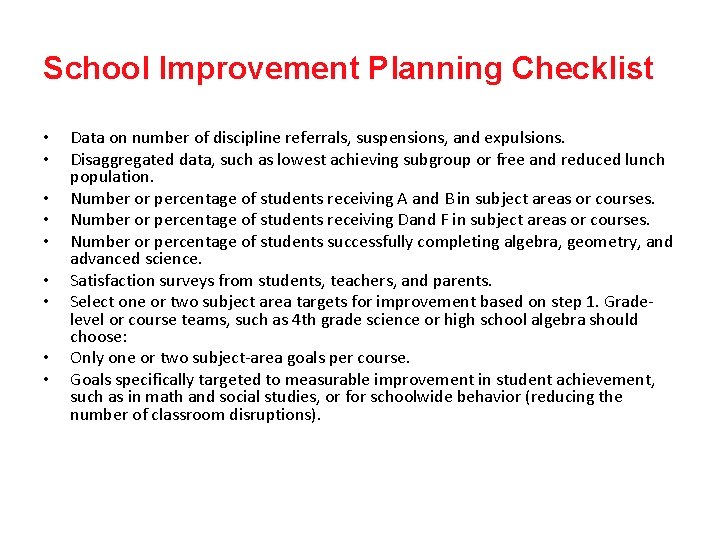
School Improvement Planning Checklist • • • Data on number of discipline referrals, suspensions, and expulsions. Disaggregated data, such as lowest achieving subgroup or free and reduced lunch population. Number or percentage of students receiving A and B in subject areas or courses. Number or percentage of students receiving Dand F in subject areas or courses. Number or percentage of students successfully completing algebra, geometry, and advanced science. Satisfaction surveys from students, teachers, and parents. Select one or two subject area targets for improvement based on step 1. Grade level or course teams, such as 4 th grade science or high school algebra should choose: Only one or two subject area goals per course. Goals specifically targeted to measurable improvement in student achievement, such as in math and social studies, or for schoolwide behavior (reducing the number of classroom disruptions).
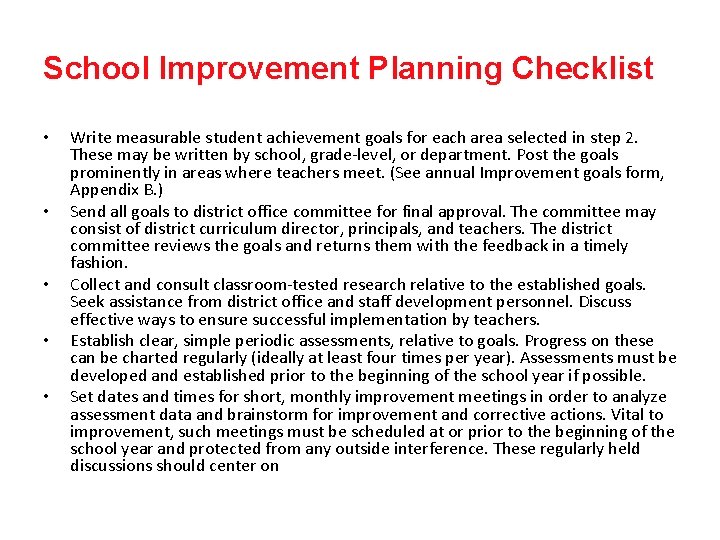
School Improvement Planning Checklist • • • Write measurable student achievement goals for each area selected in step 2. These may be written by school, grade level, or department. Post the goals prominently in areas where teachers meet. (See annual Improvement goals form, Appendix B. ) Send all goals to district office committee for final approval. The committee may consist of district curriculum director, principals, and teachers. The district committee reviews the goals and returns them with the feedback in a timely fashion. Collect and consult classroom tested research relative to the established goals. Seek assistance from district office and staff development personnel. Discuss effective ways to ensure successful implementation by teachers. Establish clear, simple periodic assessments, relative to goals. Progress on these can be charted regularly (ideally at least four times per year). Assessments must be developed and established prior to the beginning of the school year if possible. Set dates and times for short, monthly improvement meetings in order to analyze assessment data and brainstorm for improvement and corrective actions. Vital to improvement, such meetings must be scheduled at or prior to the beginning of the school year and protected from any outside interference. These regularly held discussions should center on
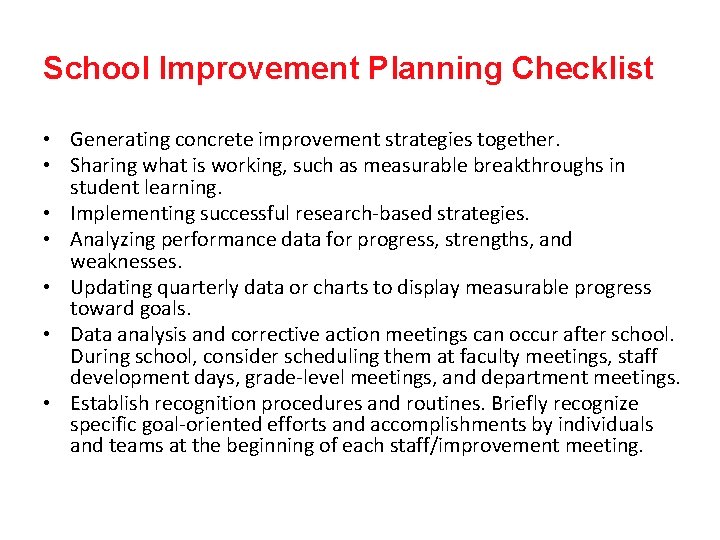
School Improvement Planning Checklist • Generating concrete improvement strategies together. • Sharing what is working, such as measurable breakthroughs in student learning. • Implementing successful research based strategies. • Analyzing performance data for progress, strengths, and weaknesses. • Updating quarterly data or charts to display measurable progress toward goals. • Data analysis and corrective action meetings can occur after school. During school, consider scheduling them at faculty meetings, staff development days, grade level meetings, and department meetings. • Establish recognition procedures and routines. Briefly recognize specific goal oriented efforts and accomplishments by individuals and teams at the beginning of each staff/improvement meeting.
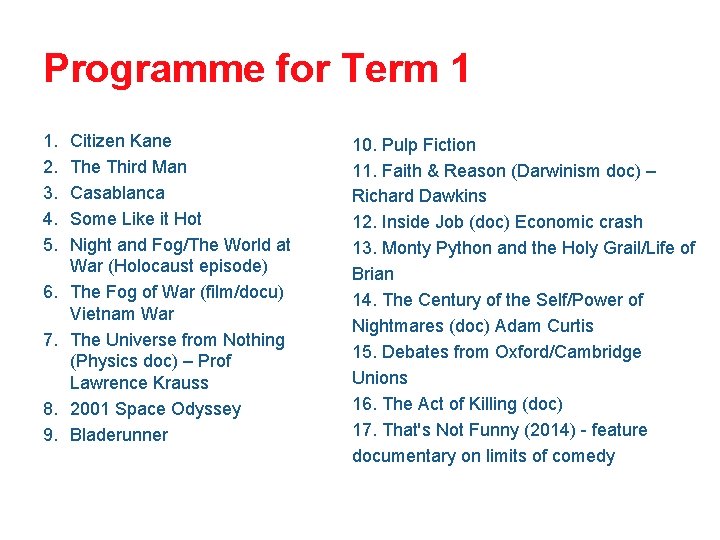
Programme for Term 1 1. 2. 3. 4. 5. 6. 7. 8. 9. Citizen Kane Third Man Casablanca Some Like it Hot Night and Fog/The World at War (Holocaust episode) The Fog of War (film/docu) Vietnam War The Universe from Nothing (Physics doc) – Prof Lawrence Krauss 2001 Space Odyssey Bladerunner 10. Pulp Fiction 11. Faith & Reason (Darwinism doc) – Richard Dawkins 12. Inside Job (doc) Economic crash 13. Monty Python and the Holy Grail/Life of Brian 14. The Century of the Self/Power of Nightmares (doc) Adam Curtis 15. Debates from Oxford/Cambridge Unions 16. The Act of Killing (doc) 17. That's Not Funny (2014) - feature documentary on limits of comedy
Level Information System (ALIS) Year 11 Information System (YELLIS) Mid. YIS Project www. midyisproject. org Yellis Project www. yellisproject. org Alis Project www. alisproject. org CEM Centre www. cemcentre. org Guidance from Of. STED on self evaluation process www. ofsted. gov. uk/schools/sef. cfm#schools • Link to self evaluation process for secondary schools – forms. ofsted. gov. uk/edc 2003/sefsec. pdf • • •