Chapter Eleven Pricing Strategies Copyright 2009 Pearson Education
- Slides: 43
Chapter Eleven Pricing Strategies Copyright © 2009 Pearson Education, Inc. Publishing as Prentice Hall Chapter 11 - slide
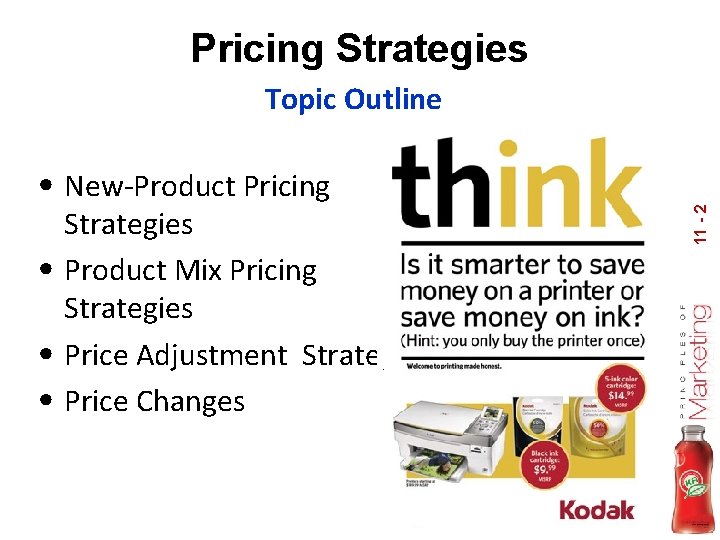
Pricing Strategies • New-Product Pricing Strategies • Product Mix Pricing Strategies • Price Adjustment Strategies • Price Changes 11 - 2 Topic Outline
New-Product Pricing Strategies through its life cycle. v The introductory stage is especially challenging. v Two broad strategies can be considered in the introductory stage: § Market-Skimming Pricing § Market-Penetration Pricing 11 - 3 • Pricing strategies change as a product passes
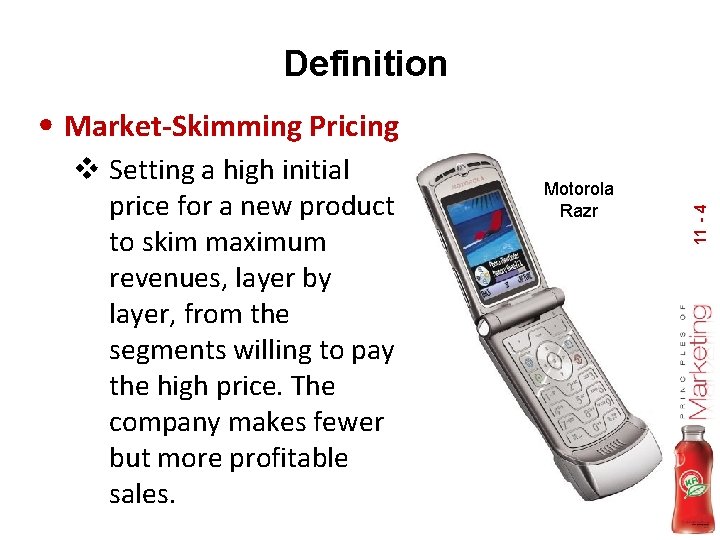
Definition v Setting a high initial price for a new product to skim maximum revenues, layer by layer, from the segments willing to pay the high price. The company makes fewer but more profitable sales. Motorola Razr 11 - 4 • Market-Skimming Pricing
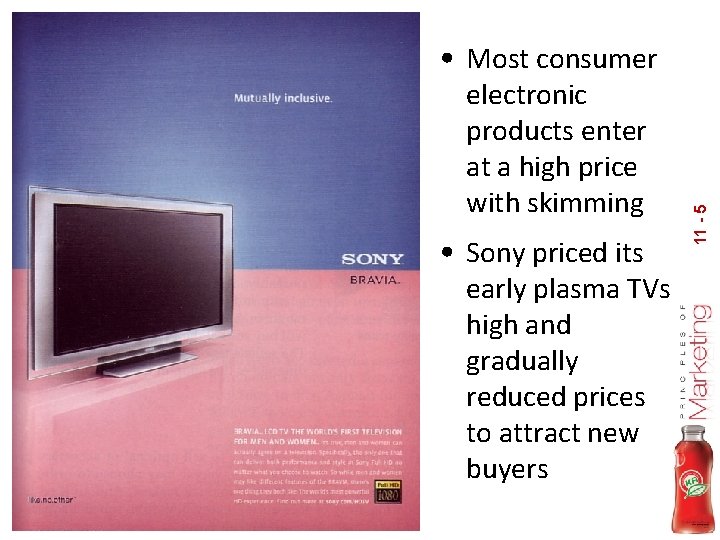
electronic products enter at a high price with skimming • Sony priced its early plasma TVs high and gradually reduced prices to attract new buyers 11 - 5 • Most consumer
New-Product Pricing Strategies • Market-skimming pricing makes sense v Product quality and image must support the high price v Enough buyers must want the product at that price v Costs of producing the product in small volume should not cancel the advantage of higher prices v Competitors should not be able to enter the market easily and undercut the high price 11 - 6 under certain conditions:
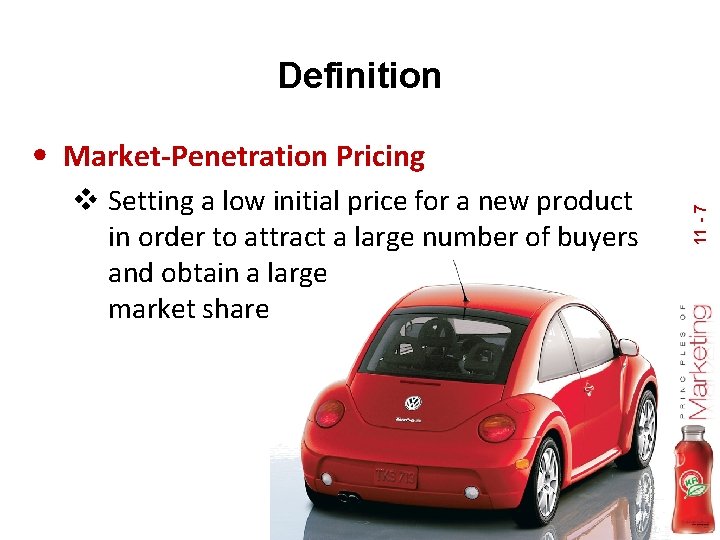
Definition v Setting a low initial price for a new product in order to attract a large number of buyers and obtain a large market share 11 - 7 • Market-Penetration Pricing
New-Product Pricing Strategies under certain conditions: v Market must be highly price-sensitive so that low price produces more market growth v Production & distribution costs must fall as volume increases v The low price must help keep out competition 11 - 8 • Market-penetration pricing makes sense
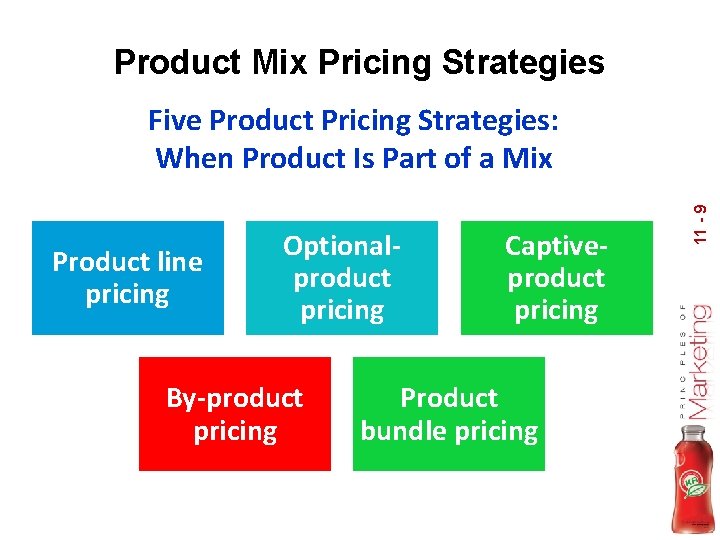
Product Mix Pricing Strategies Product line pricing Optionalproduct pricing By-product pricing Captiveproduct pricing Product bundle pricing 11 - 9 Five Product Pricing Strategies: When Product Is Part of a Mix
Product Mix Pricing Strategies between various products in a product line based on cost differences between the products, customer evaluations of different features, and competitors’ prices 11 - 10 • Product line pricing: Setting the price steps
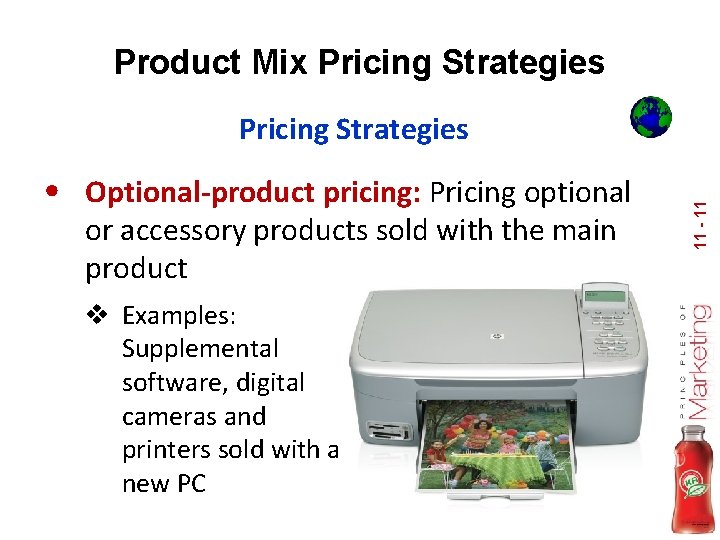
Product Mix Pricing Strategies • Optional-product pricing: Pricing optional or accessory products sold with the main product v Examples: Supplemental software, digital cameras and printers sold with a new PC 11 - 11 Pricing Strategies
Product Mix Pricing Strategies Pricing products that must be used with the main product v Examples: Razor blades and video games v Main product often offered at low price with high markup on supplies 11 - 12 • Captive-product pricing:
Product Mix Pricing Strategies For Services is called two-part pricing v Fixed fee plus a variable usage rate v Example: Telephone company charging a monthly rate plus a usage rate 11 - 13 • Captive-Product Pricing
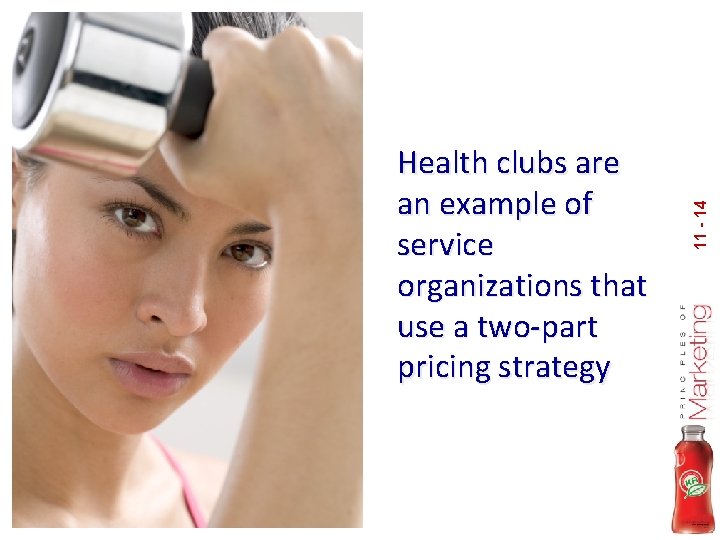
11 - 14 Health clubs are an example of service organizations that use a two-part pricing strategy
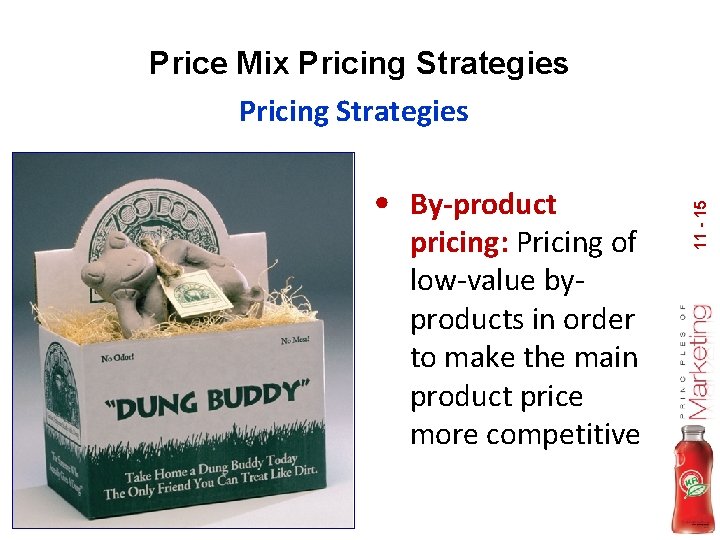
• By-product pricing: Pricing of low-value byproducts in order to make the main product price more competitive 11 - 15 Price Mix Pricing Strategies
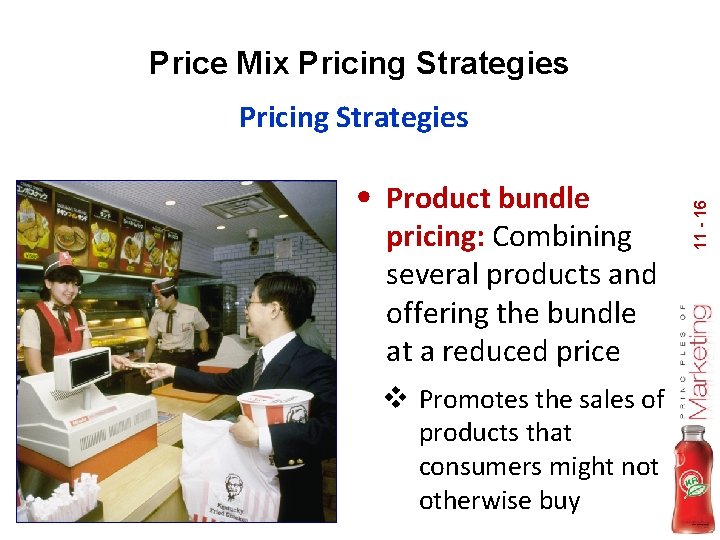
Price Mix Pricing Strategies • Product bundle pricing: Combining several products and offering the bundle at a reduced price v Promotes the sales of products that consumers might not otherwise buy 11 - 16 Pricing Strategies
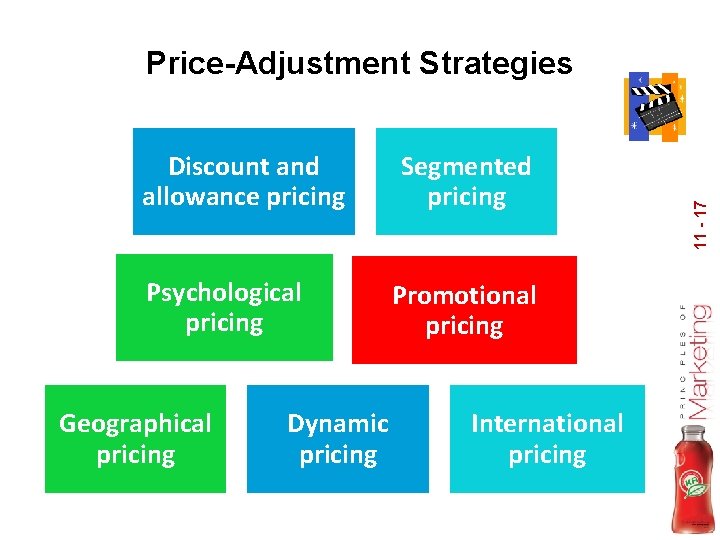
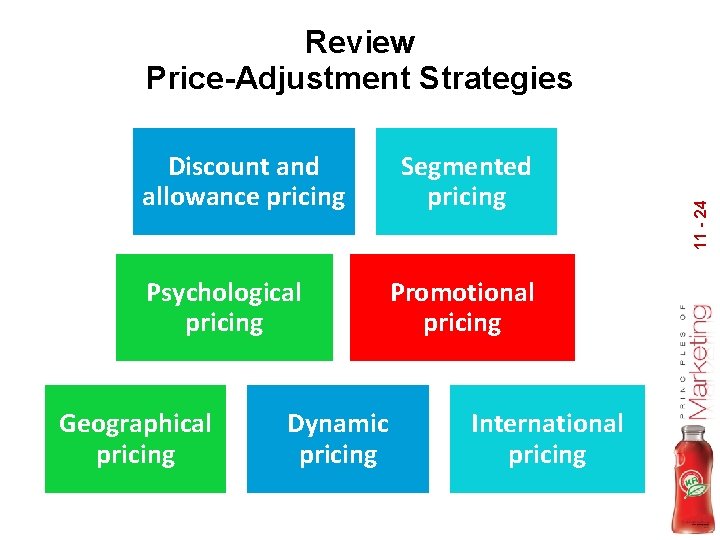
Discount and allowance pricing Psychological pricing Geographical pricing Dynamic pricing Segmented pricing Promotional pricing International pricing 11 - 17 Price-Adjustment Strategies
Price-Adjustment Strategies Pricing Strategies prices to reward customer responses such as paying early or promoting the product: v Discounts § Cash § Quantity § Functional (Trade) § Seasonal v Allowances § Trade-In § Promotional 11 - 18 • Discount and allowance pricing reduces
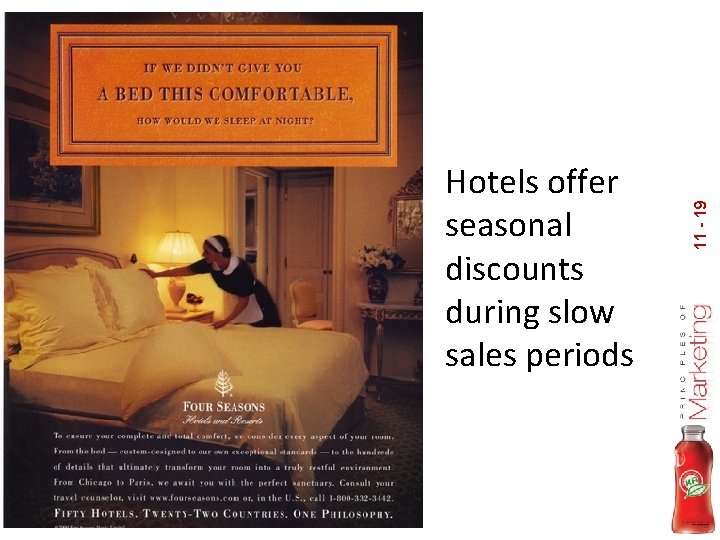
11 - 19 Hotels offer seasonal discounts during slow sales periods
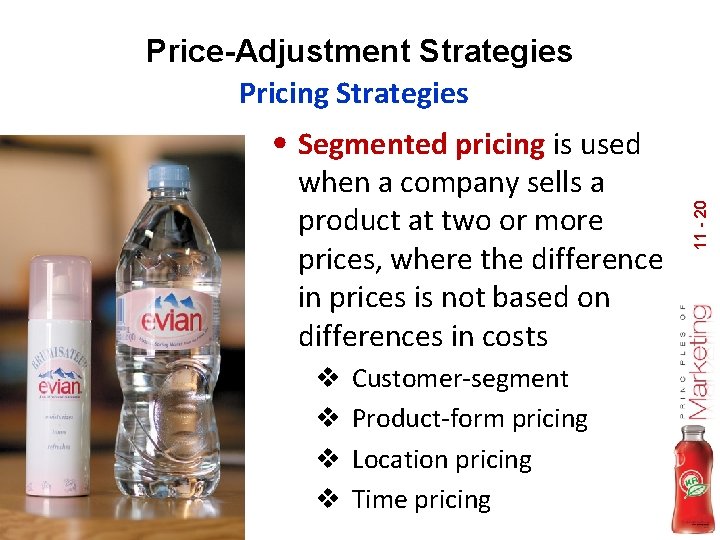
Price-Adjustment Strategies Pricing Strategies when a company sells a product at two or more prices, where the difference in prices is not based on differences in costs v v Customer-segment Product-form pricing Location pricing Time pricing 11 - 20 • Segmented pricing is used
Price-Adjustment Strategies Pricing Strategies – Segmented Pricing customers pay different prices for the same product or service v Product form segment pricing is when different versions of the product are priced differently but not according to differences in cost v Location pricing is when the product sold in different geographic areas is priced differently even though the cost is the same 11 - 21 v Customer segment pricing is when different
Price-Adjustment Strategies Pricing Strategies yield management. For it to be effective: v Market must be segmentable v Segments must show different degrees of demand v Extra costs of segmenting cannot exceed the extra revenue obtained v Pricing must be legal v Segmented pricing must reflect real differences in customers’ perceived value 11 - 22 • Segmented pricing is also called revenue or
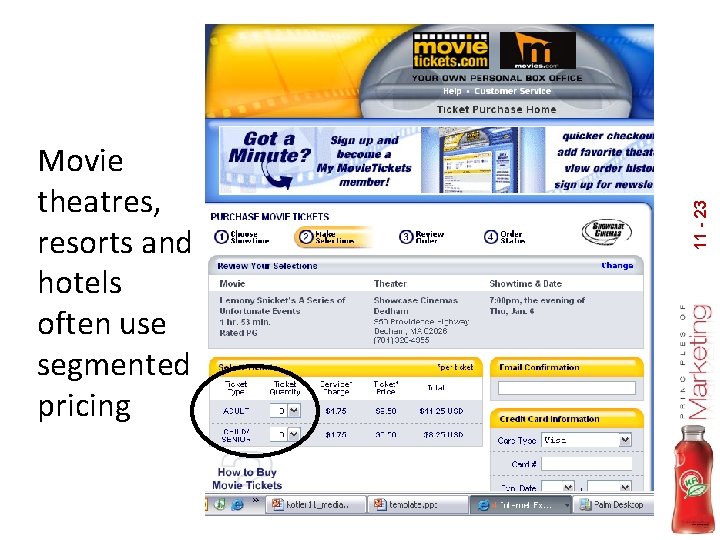
11 - 23 Movie theatres, resorts and hotels often use segmented pricing
Discount and allowance pricing Psychological pricing Geographical pricing Dynamic pricing Segmented pricing Promotional pricing International pricing 11 - 24 Review Price-Adjustment Strategies
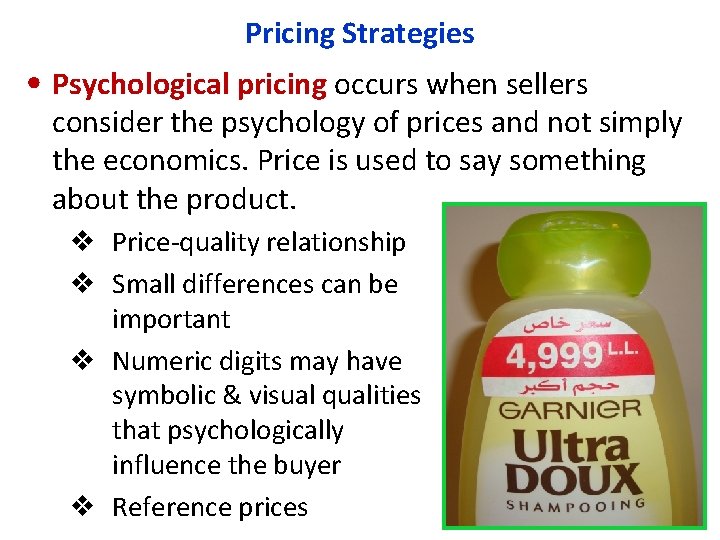
Pricing Strategies consider the psychology of prices and not simply the economics. Price is used to say something about the product. v Price-quality relationship v Small differences can be important v Numeric digits may have symbolic & visual qualities that psychologically influence the buyer v Reference prices 11 - 25 • Psychological pricing occurs when sellers
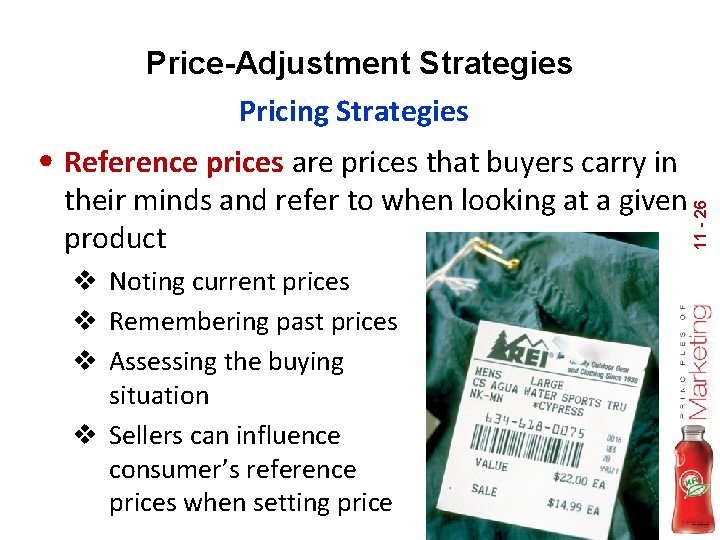
Price-Adjustment Strategies Pricing Strategies their minds and refer to when looking at a given product v Noting current prices v Remembering past prices v Assessing the buying situation v Sellers can influence consumer’s reference prices when setting price 11 - 26 • Reference prices are prices that buyers carry in
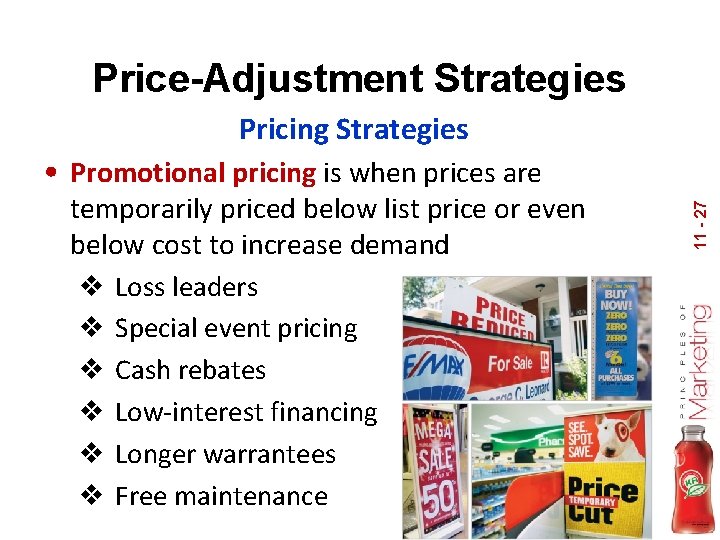
Price-Adjustment Strategies Pricing Strategies temporarily priced below list price or even below cost to increase demand v Loss leaders v Special event pricing v Cash rebates v Low-interest financing v Longer warrantees v Free maintenance 11 - 27 • Promotional pricing is when prices are
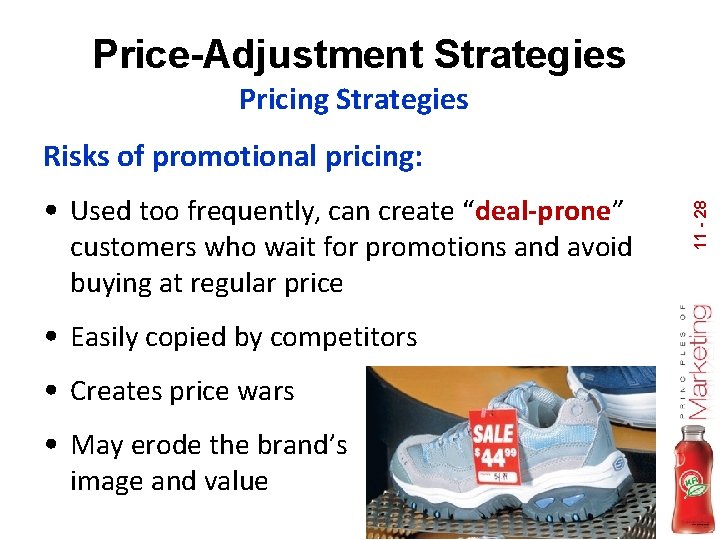
Price-Adjustment Strategies Pricing Strategies • Used too frequently, can create “deal-prone” customers who wait for promotions and avoid buying at regular price • Easily copied by competitors • Creates price wars • May erode the brand’s image and value 11 - 28 Risks of promotional pricing:
Price-Adjustment Strategies Pricing Strategies in different parts of the country or the world v FOB-origin pricing v Uniformed-delivered pricing v Zone pricing v Basing-point pricing v Freight-absorption pricing 11 - 29 • Geographical pricing is used for customers
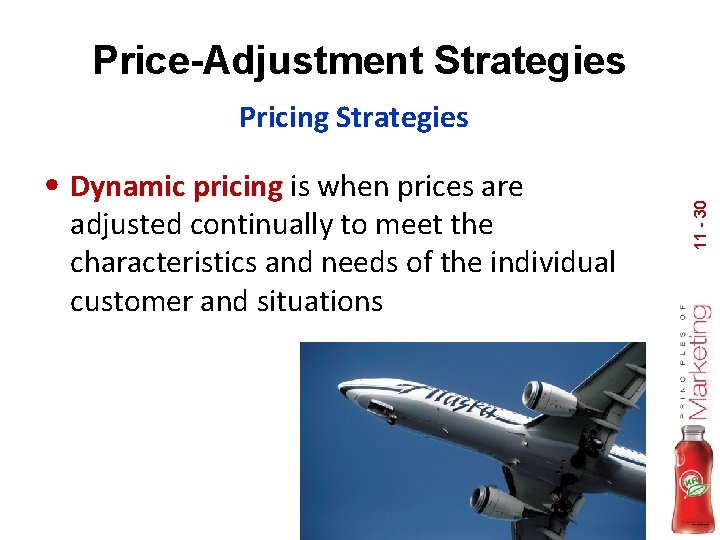
Price-Adjustment Strategies • Dynamic pricing is when prices are adjusted continually to meet the characteristics and needs of the individual customer and situations 11 - 30 Pricing Strategies
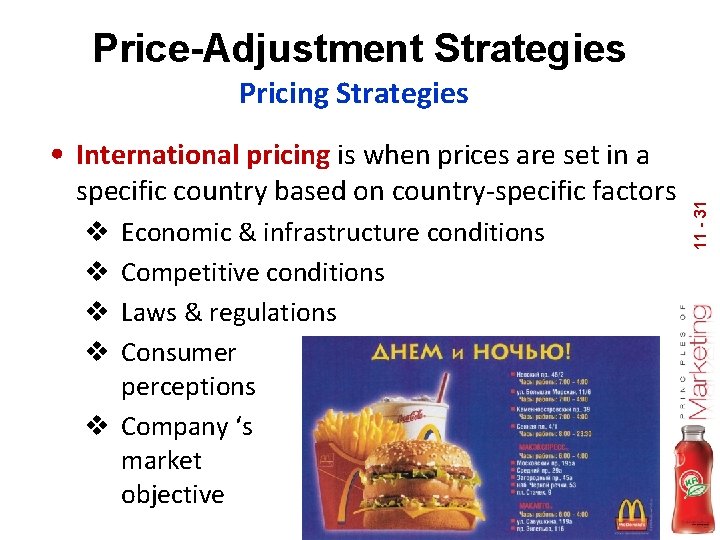
Price-Adjustment Strategies Pricing Strategies specific country based on country-specific factors Economic & infrastructure conditions Competitive conditions Laws & regulations Consumer perceptions v Company ‘s market objective v v 11 - 31 • International pricing is when prices are set in a
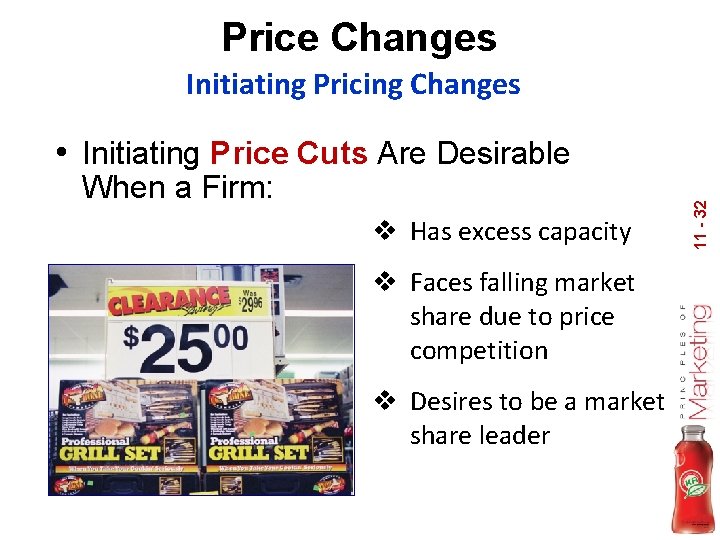
Price Changes Initiating Pricing Changes When a Firm: v Has excess capacity v Faces falling market share due to price competition v Desires to be a market share leader 11 - 32 • Initiating Price Cuts Are Desirable
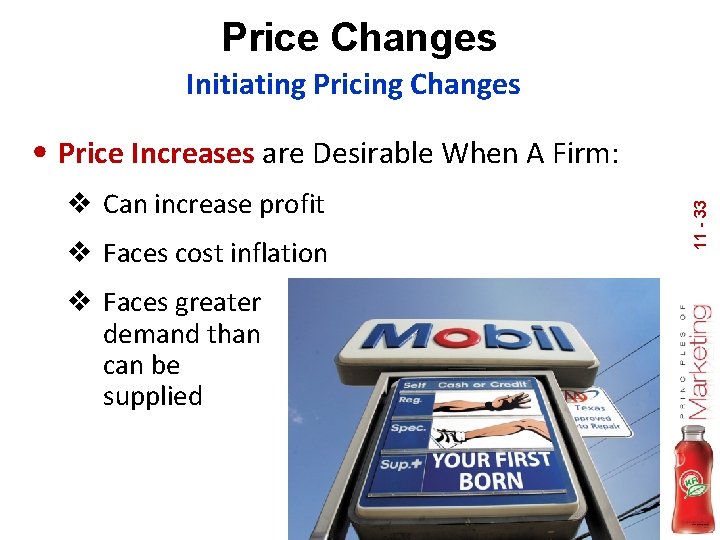
Price Changes Initiating Pricing Changes v Can increase profit v Faces cost inflation v Faces greater demand than can be supplied 11 - 33 • Price Increases are Desirable When A Firm:
Price Changes Initiating Pricing Changes v Eliminating discounts v Adding higher-priced units to the product line • Alternatives to Increasing Price v Reducing product size v Using less expensive materials v Unbundling the product 11 - 34 • Methods of Increasing Price
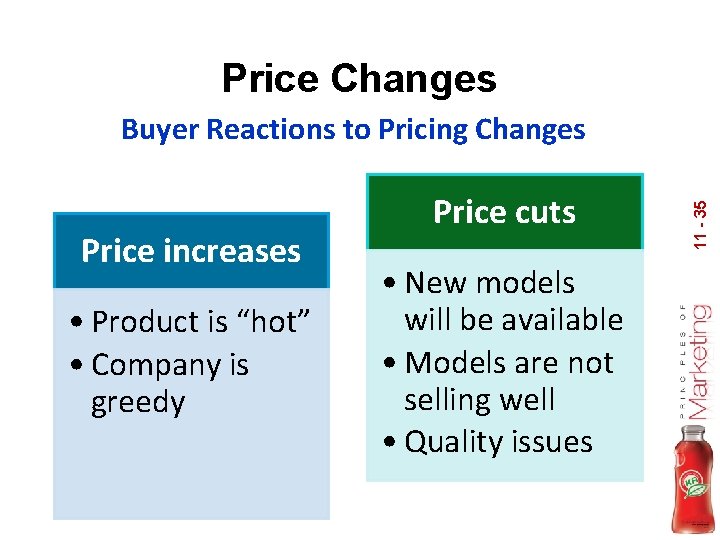
Price Changes Price increases • Product is “hot” • Company is greedy Price cuts • New models will be available • Models are not selling well • Quality issues 11 - 35 Buyer Reactions to Pricing Changes
Price Changes • Competitors are more likely to react to price changes under certain conditions. v Number of firms is small v Product is uniform v Buyers are well informed 11 - 36 Competitor Reactions to Pricing Changes
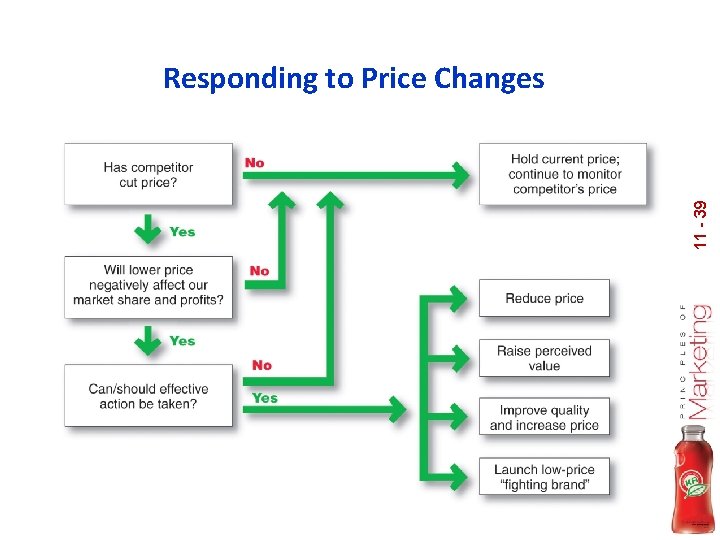
Price Changes Questions v Why did the competitor change the price? v Is the price cut permanent or temporary? v What is the effect on market share and profits? v Will other competitors respond? 11 - 37 Responding to Price Changes
Price Changes Solutions v Reduce price to match competition v Maintain price but raise the perceived value through communications v Improve quality and increase price v Launch a lower-price “fighting” brand 11 - 38 Responding to Price Changes
11 - 39 Responding to Price Changes
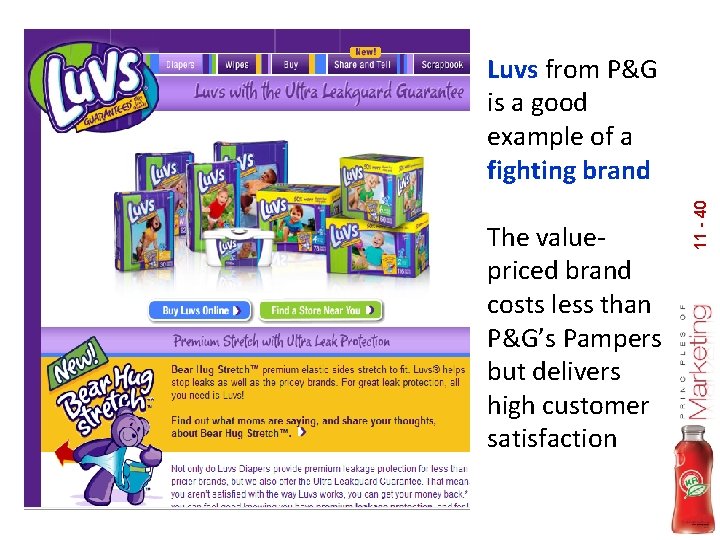
The valuepriced brand costs less than P&G’s Pampers but delivers high customer satisfaction 11 - 40 Luvs from P&G is a good example of a fighting brand
Public Policy and Pricing • Price fixing: Sellers must set prices without talking to competitors • Predatory pricing: Selling below cost with the intention of punishing a competitor or gaining higher long-term profits by putting competitors out of business 11 - 41 Pricing Within Channel Levels
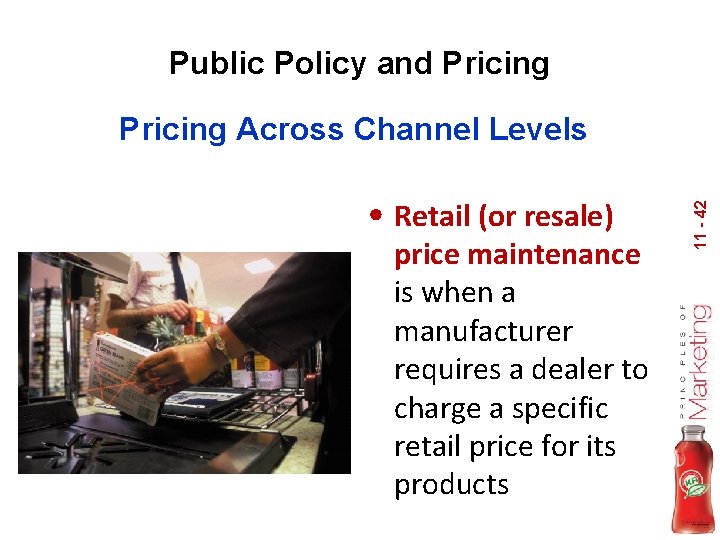
Public Policy and Pricing • Retail (or resale) price maintenance is when a manufacturer requires a dealer to charge a specific retail price for its products 11 - 42 Pricing Across Channel Levels
Public Policy and Pricing Across Channel Levels prices or price savings that mislead consumers or are not actually available to consumers v Scanner fraud: Failure of the seller to enter current or sale prices into the computer system v Price confusion: Results when firms employ pricing methods that make it difficult for consumers to understand what price they are really paying 11 - 43 • Deceptive pricing occurs when a seller states