Chapter 2 Essentials of Management Information Systems 6



- Slides: 52
Chapter 2 Essentials of Management Information Systems, 6 e Chapter 2 Information Systems in the Enterprise 2. 1 © 2005 by Prentice Hall
Management Challenges 1. Integration: Different systems serve a variety of functions, connecting organizational levels difficult and costly 2. Enlarging scope of management thinking: Huge system investments, long development time must be guided by common objectives 2. 2
Major Types of Systems in Organizations Types of information systems Figure 2 -1 2. 3
Major Types of Systems in Organizations Different Kinds of Systems Three Main Categories of Information Systems 1. Operational-level systems 2. Management-level systems 3. Strategic-level systems 2. 4
Major Types of Systems in Organizations Four Major Types of Systems 1. Transaction Processing Systems (TPS) 2. Management Information Systems (MIS) 3. Decision-Support Systems (DSS) 4. Executive-Support Systems (ESS) 2. 5
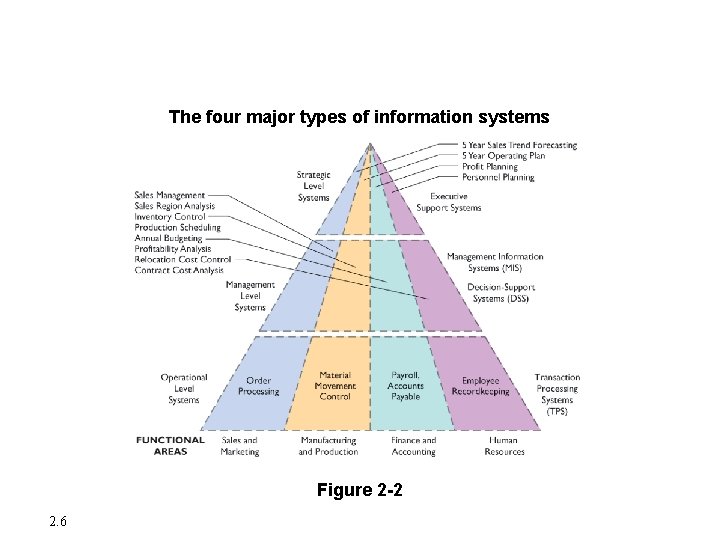
Major Types of Systems in Organizations The four major types of information systems Figure 2 -2 2. 6
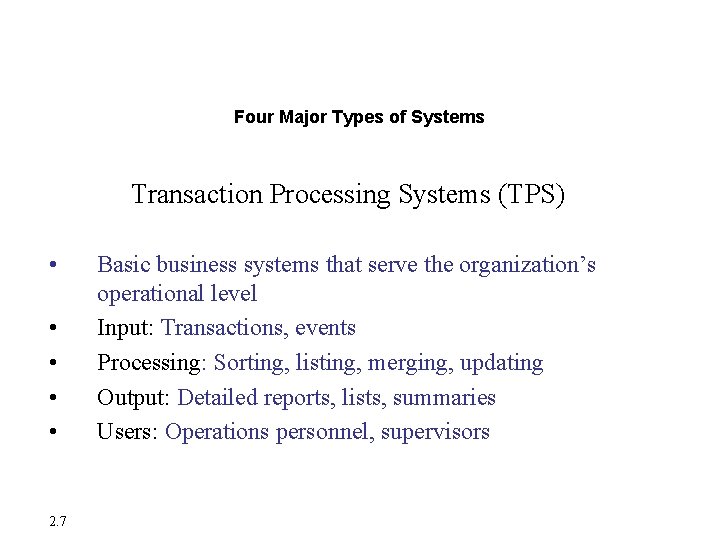
Major Types of Systems in Organizations Four Major Types of Systems Transaction Processing Systems (TPS) • • • 2. 7 Basic business systems that serve the organization’s operational level Input: Transactions, events Processing: Sorting, listing, merging, updating Output: Detailed reports, lists, summaries Users: Operations personnel, supervisors
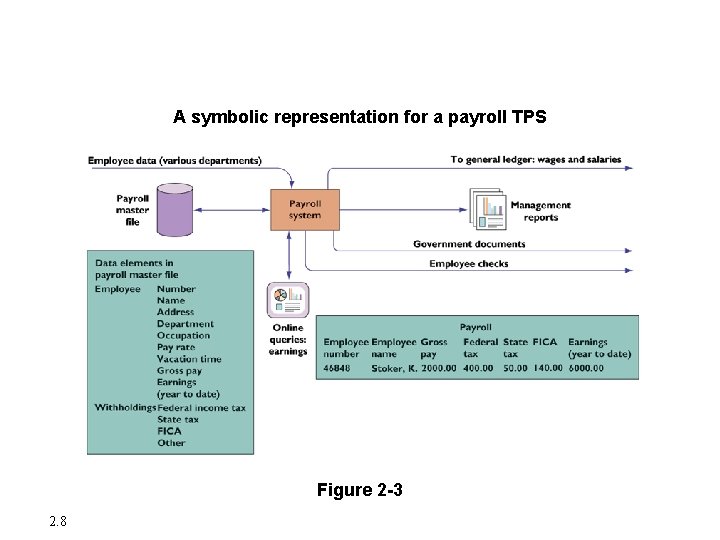
Major Types of Systems in Organizations A symbolic representation for a payroll TPS Figure 2 -3 2. 8
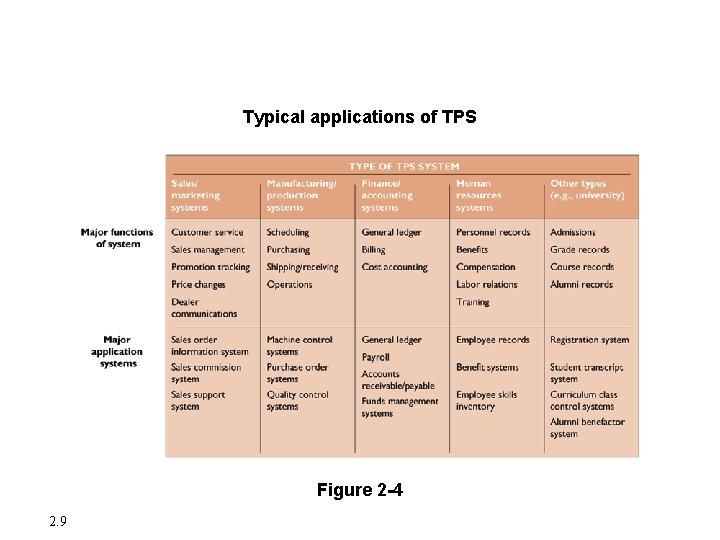
Major Types of Systems in Organizations Typical applications of TPS Figure 2 -4 2. 9
Major Types of Systems in Organizations Four Major Types of Systems Management Information Systems (MIS) • • • 2. 10 Serve management level; provide reports and access to company data Input: Summary transaction data, high-volume data, simple models Processing: Routine reports, simple models, low-level analysis Output: Summary and exception reports Users: Middle managers
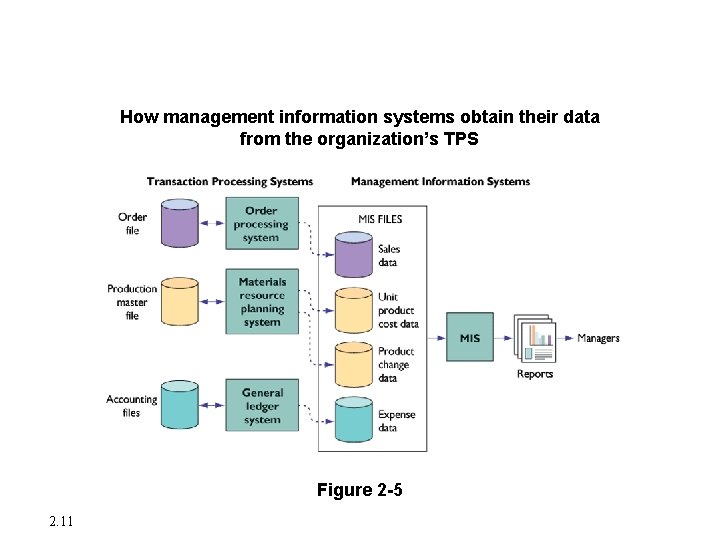
Major Types of Systems in Organizations How management information systems obtain their data from the organization’s TPS Figure 2 -5 2. 11
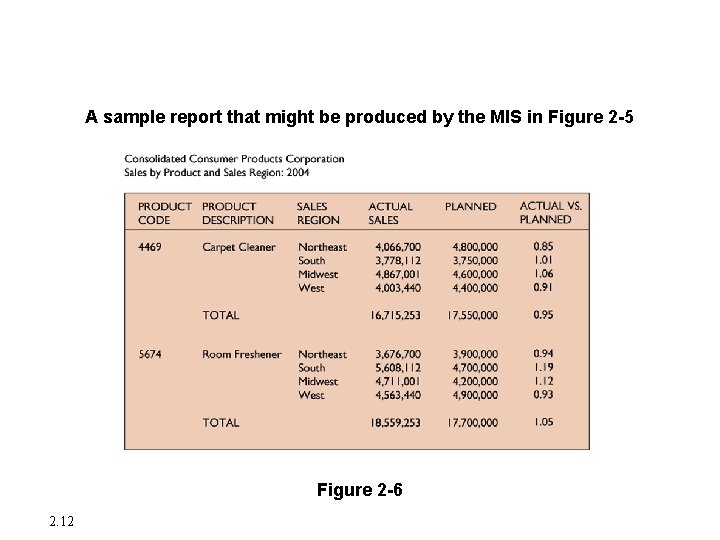
Major Types of Systems in Organizations A sample report that might be produced by the MIS in Figure 2 -5 Figure 2 -6 2. 12
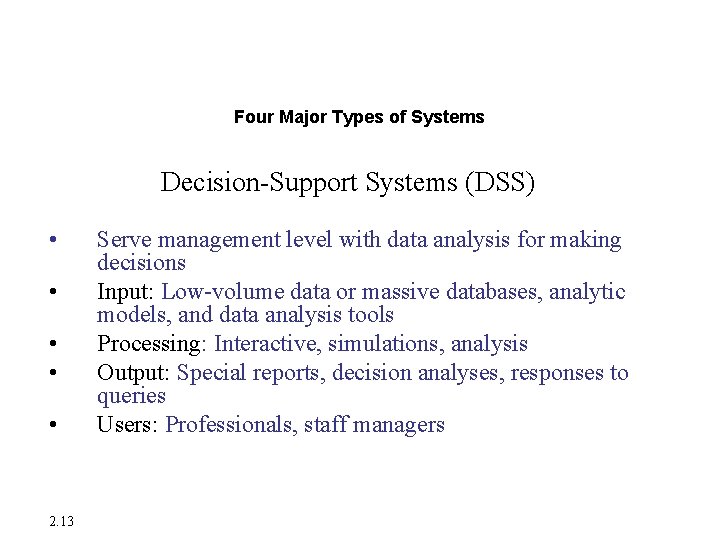
Major Types of Systems in Organizations Four Major Types of Systems Decision-Support Systems (DSS) • • • 2. 13 Serve management level with data analysis for making decisions Input: Low-volume data or massive databases, analytic models, and data analysis tools Processing: Interactive, simulations, analysis Output: Special reports, decision analyses, responses to queries Users: Professionals, staff managers
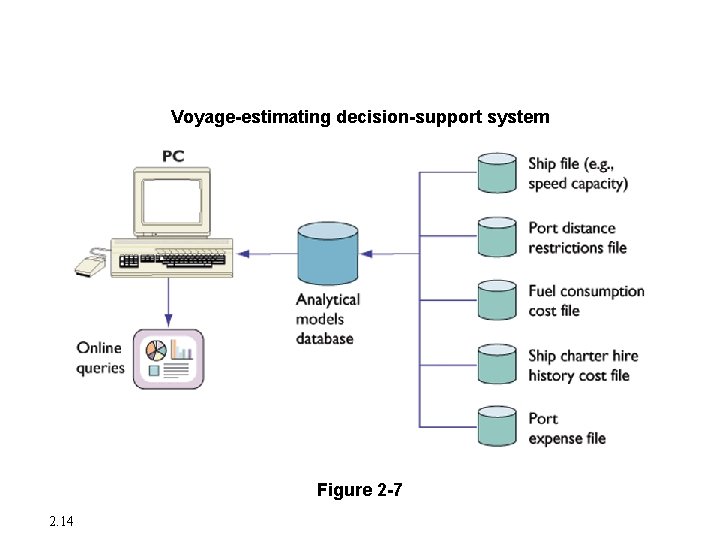
Major Types of Systems in Organizations Voyage-estimating decision-support system Figure 2 -7 2. 14
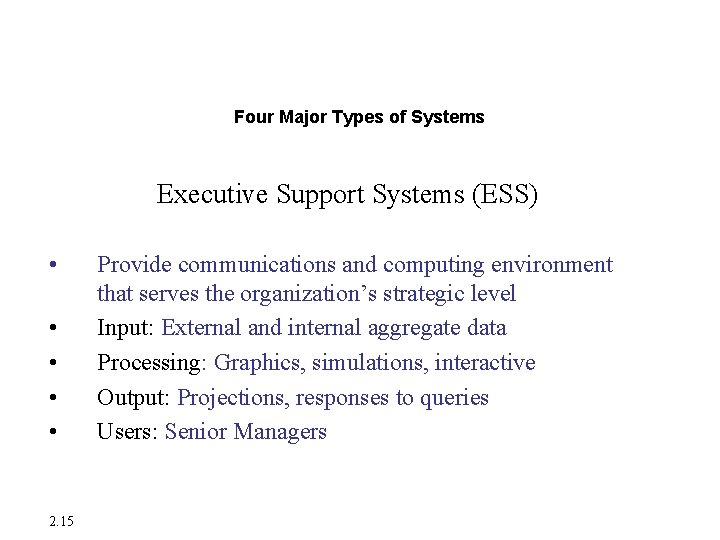
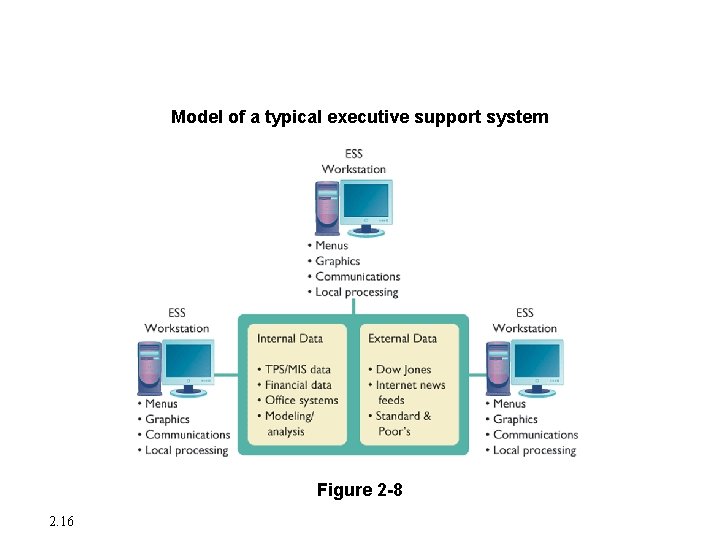
Major Types of Systems in Organizations Four Major Types of Systems Executive Support Systems (ESS) • • • 2. 15 Provide communications and computing environment that serves the organization’s strategic level Input: External and internal aggregate data Processing: Graphics, simulations, interactive Output: Projections, responses to queries Users: Senior Managers
Major Types of Systems in Organizations Model of a typical executive support system Figure 2 -8 2. 16
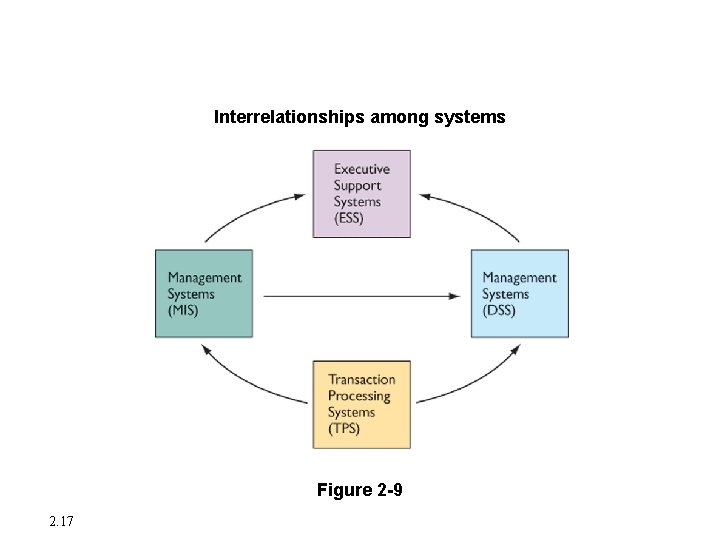
Major Types of Systems in Organizations Interrelationships among systems Figure 2 -9 2. 17
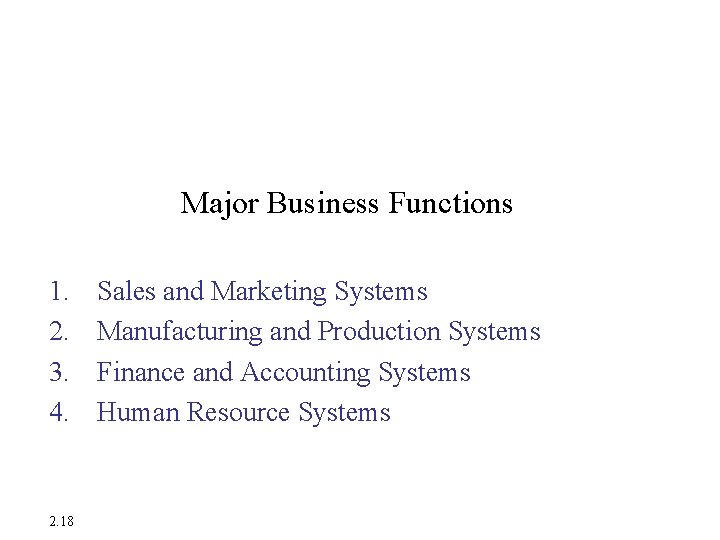
Systems from a Functional Perspective Major Business Functions 1. 2. 3. 4. 2. 18 Sales and Marketing Systems Manufacturing and Production Systems Finance and Accounting Systems Human Resource Systems
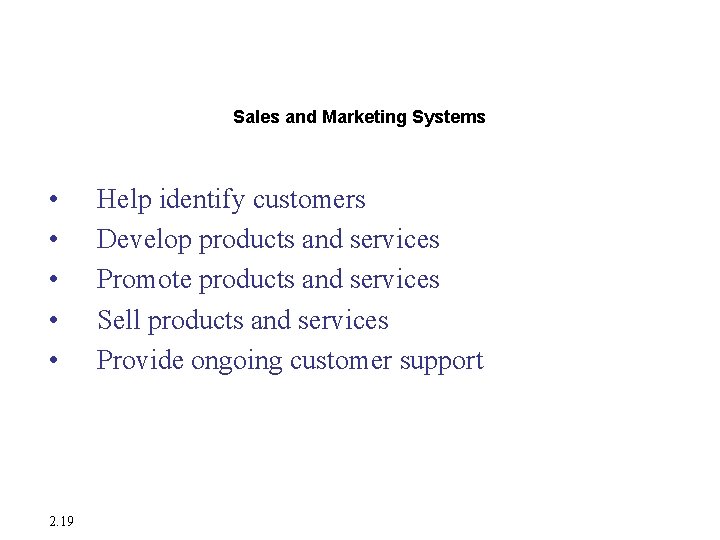
Systems from a Functional Perspective Sales and Marketing Systems • • • 2. 19 Help identify customers Develop products and services Promote products and services Sell products and services Provide ongoing customer support
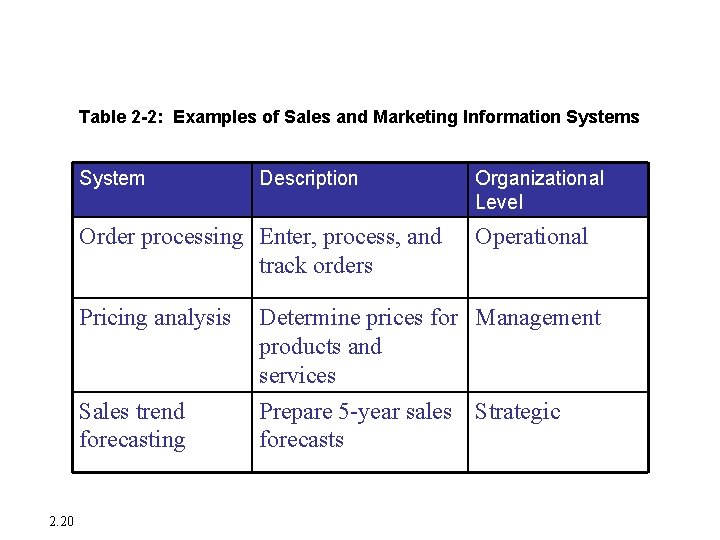
Systems from a Functional Perspective Table 2 -2: Examples of Sales and Marketing Information Systems System Description Order processing Enter, process, and track orders 2. 20 Organizational Level Operational Pricing analysis Determine prices for Management products and services Sales trend forecasting Prepare 5 -year sales Strategic forecasts
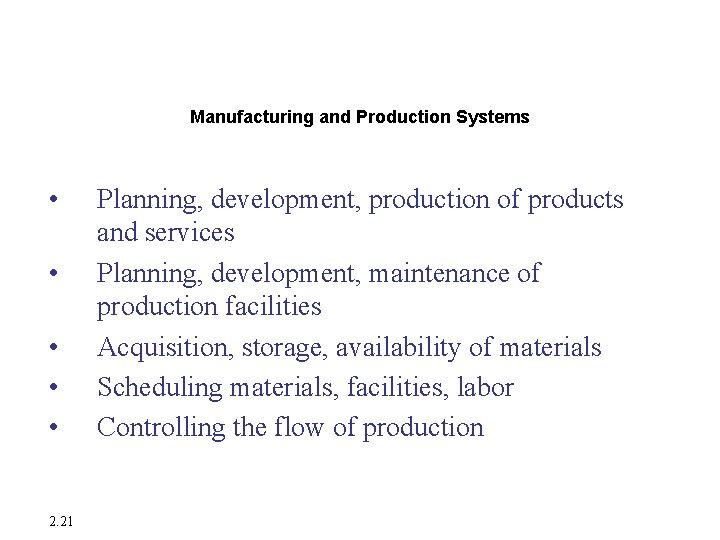
Systems from a Functional Perspective Manufacturing and Production Systems • • • 2. 21 Planning, development, production of products and services Planning, development, maintenance of production facilities Acquisition, storage, availability of materials Scheduling materials, facilities, labor Controlling the flow of production
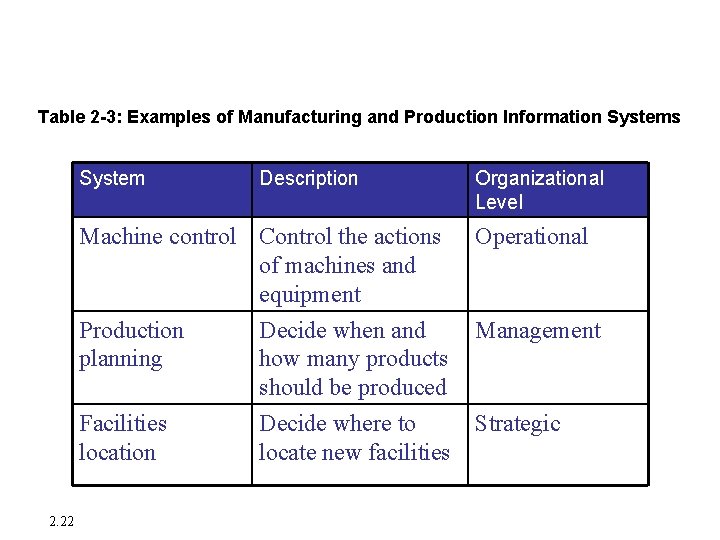
Systems from a Functional Perspective Table 2 -3: Examples of Manufacturing and Production Information Systems System 2. 22 Description Organizational Level Machine control Control the actions of machines and equipment Operational Production planning Decide when and how many products should be produced Management Facilities location Decide where to locate new facilities Strategic
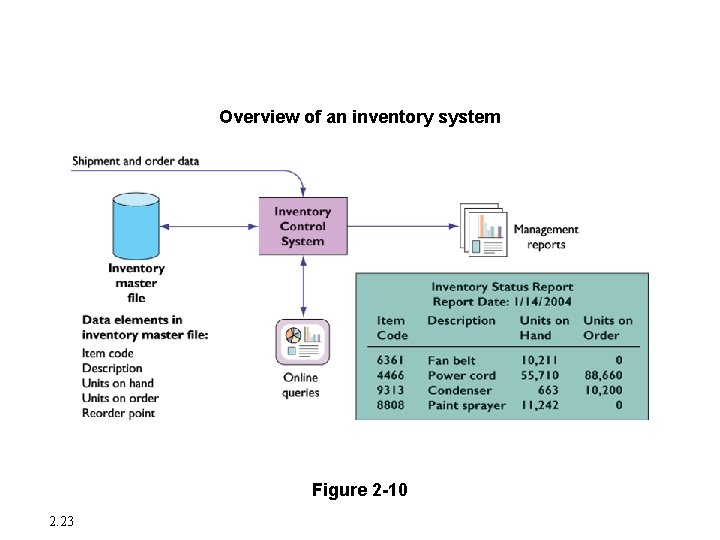
Systems from a Functional Perspective Overview of an inventory system Figure 2 -10 2. 23
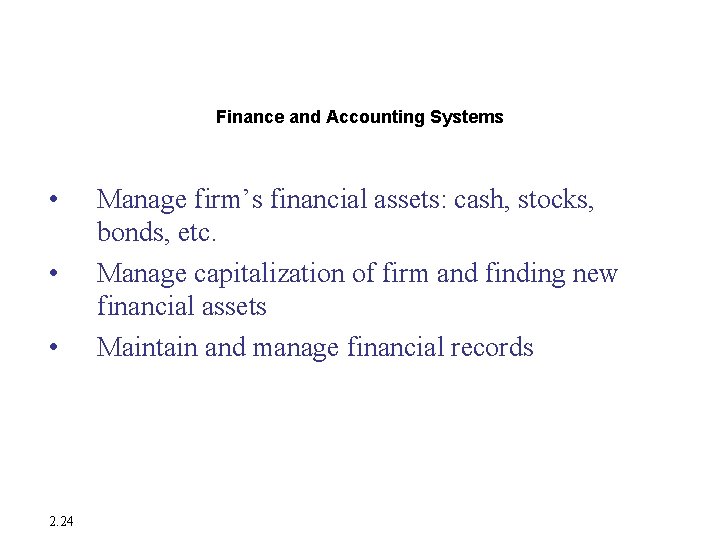
Systems from a Functional Perspective Finance and Accounting Systems • • • 2. 24 Manage firm’s financial assets: cash, stocks, bonds, etc. Manage capitalization of firm and finding new financial assets Maintain and manage financial records
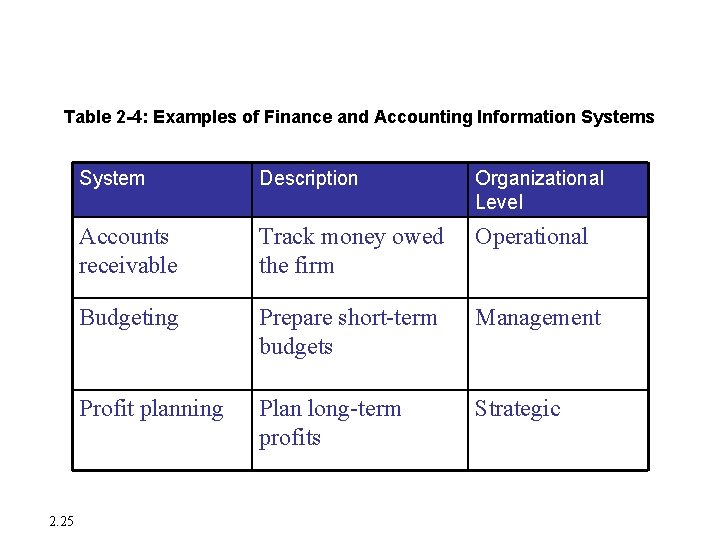
Systems from a Functional Perspective Table 2 -4: Examples of Finance and Accounting Information Systems 2. 25 System Description Organizational Level Accounts receivable Track money owed the firm Operational Budgeting Prepare short-term budgets Management Profit planning Plan long-term profits Strategic
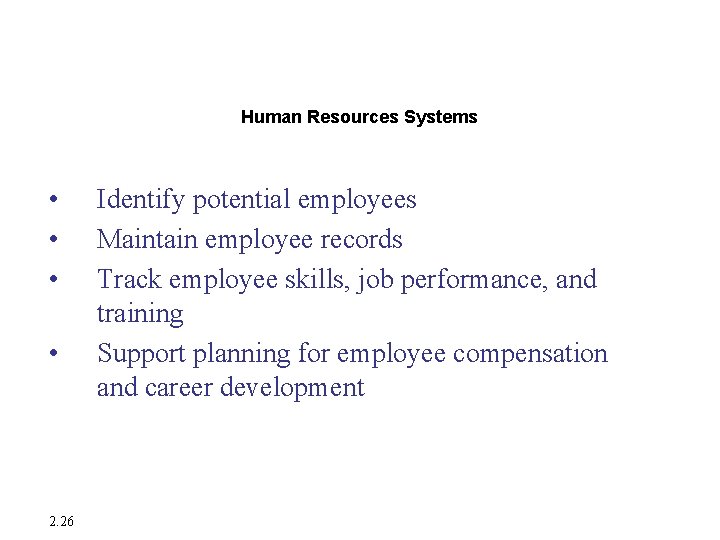
Systems from a Functional Perspective Human Resources Systems • • 2. 26 Identify potential employees Maintain employee records Track employee skills, job performance, and training Support planning for employee compensation and career development
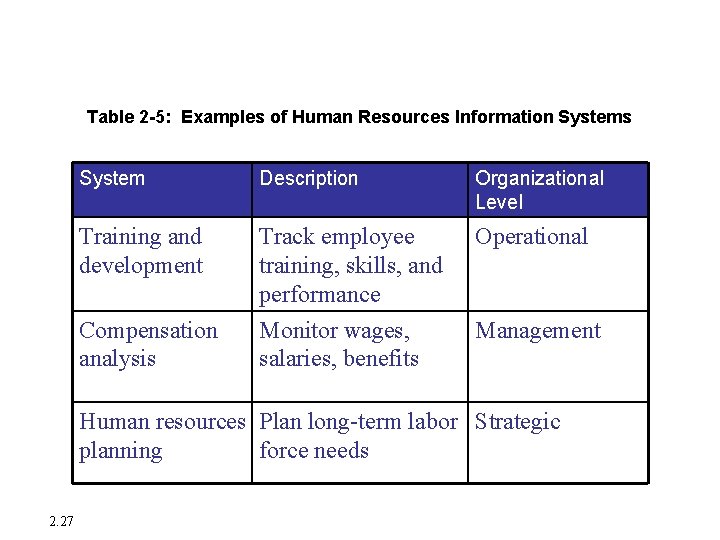
Systems from a Functional Perspective Table 2 -5: Examples of Human Resources Information Systems System Description Organizational Level Training and development Track employee training, skills, and performance Operational Compensation analysis Monitor wages, salaries, benefits Management Human resources Plan long-term labor Strategic planning force needs 2. 27
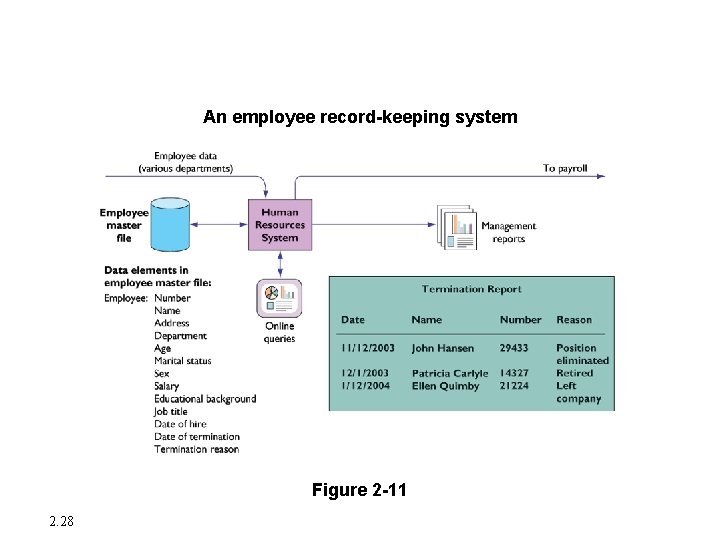
Systems from a Functional Perspective An employee record-keeping system Figure 2 -11 2. 28
Enterprise Applications Business Processes and Information Systems Business Processes • • • 2. 29 Manner in which work is organized, coordinated, and focused Concrete workflows of material, information, and knowledge Unique ways to coordinate work, information, and knowledge
Enterprise Applications Business Processes and Information Systems Examples of Functional Business Processes • • 2. 30 Manufacturing and production: Assembling product, checking quality, producing bills of materials Sales and marketing: Identifying customers, creating customer awareness, selling
Enterprise Applications Business Processes and Information Systems Examples of Functional Business Processes • • 2. 31 Finance and accounting: Paying creditors, creating financial statements, managing cash accounts Human Resources: Hiring employees, evaluating performance, enrolling employees in benefits plans
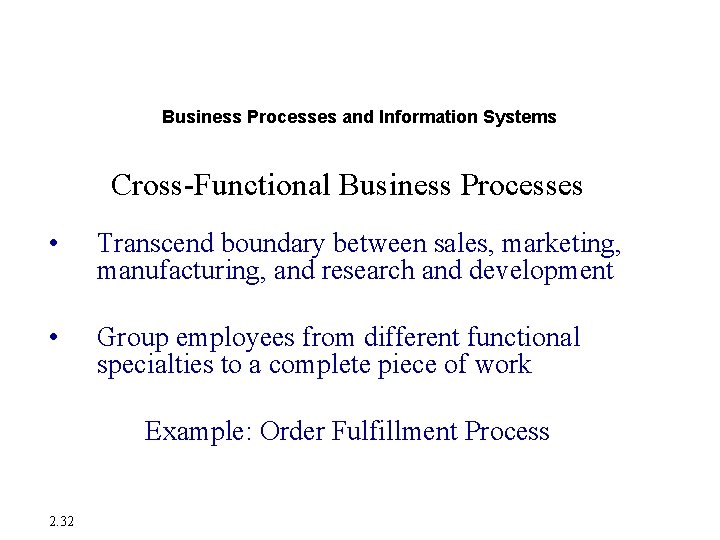
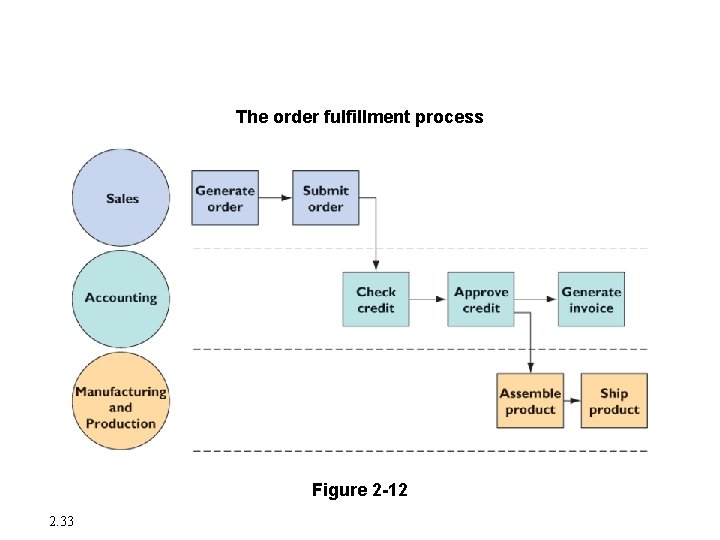
Enterprise Applications Business Processes and Information Systems Cross-Functional Business Processes • Transcend boundary between sales, marketing, manufacturing, and research and development • Group employees from different functional specialties to a complete piece of work Example: Order Fulfillment Process 2. 32
Enterprise Applications The order fulfillment process Figure 2 -12 2. 33
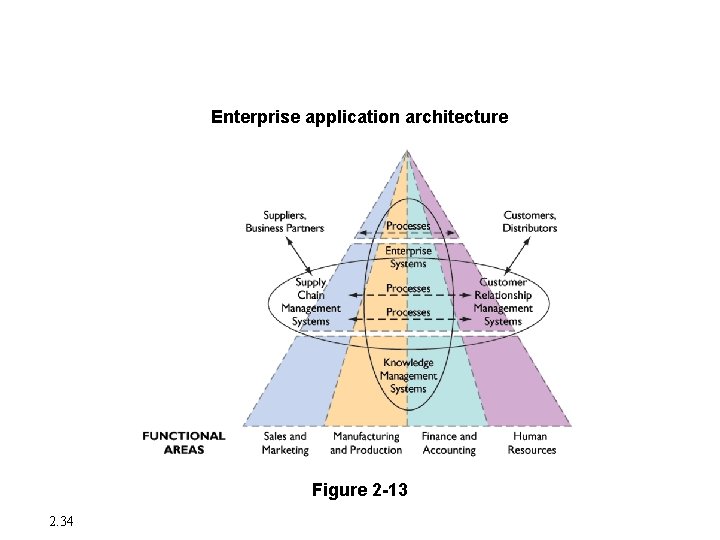
Enterprise Applications Enterprise application architecture Figure 2 -13 2. 34
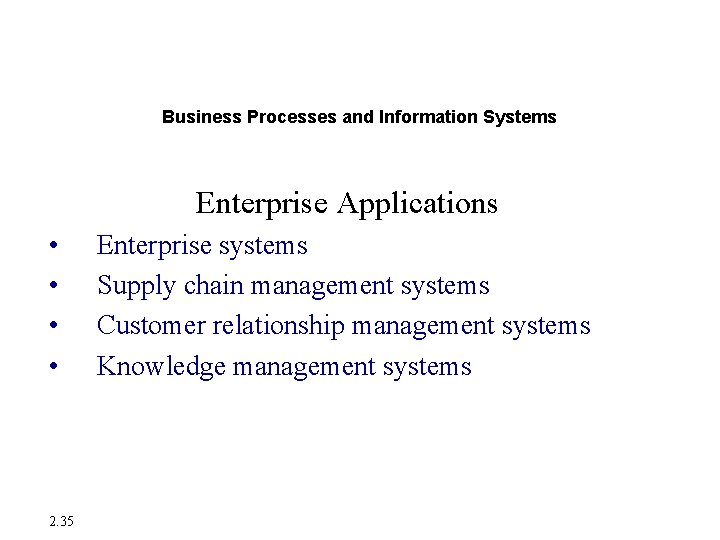
Enterprise Applications Business Processes and Information Systems Enterprise Applications • • 2. 35 Enterprise systems Supply chain management systems Customer relationship management systems Knowledge management systems
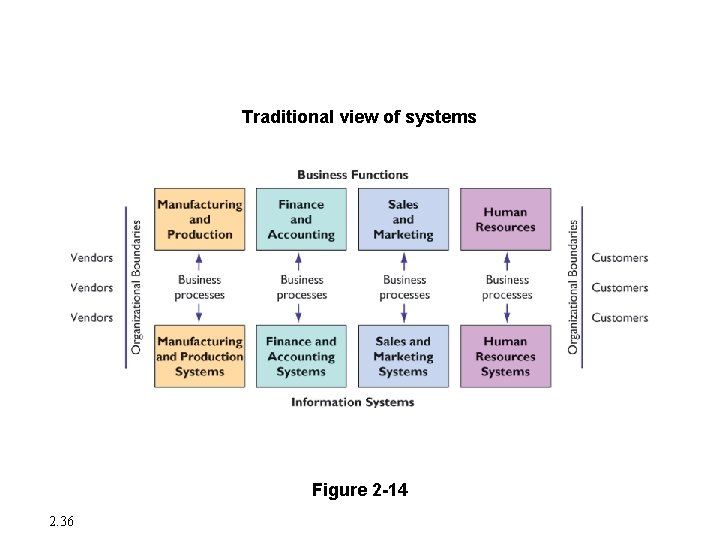
Enterprise Applications Traditional view of systems Figure 2 -14 2. 36
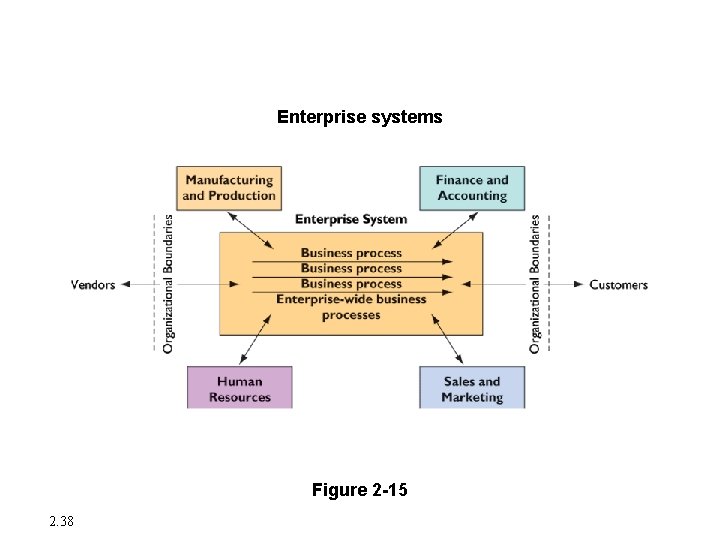
Enterprise Applications Enterprise Systems • • • 2. 37 Enterprise resource planning (ERP) Provides single information system for organization-wide coordination and integration of key business processes Models and automates many business processes
Enterprise Applications Enterprise systems Figure 2 -15 2. 38
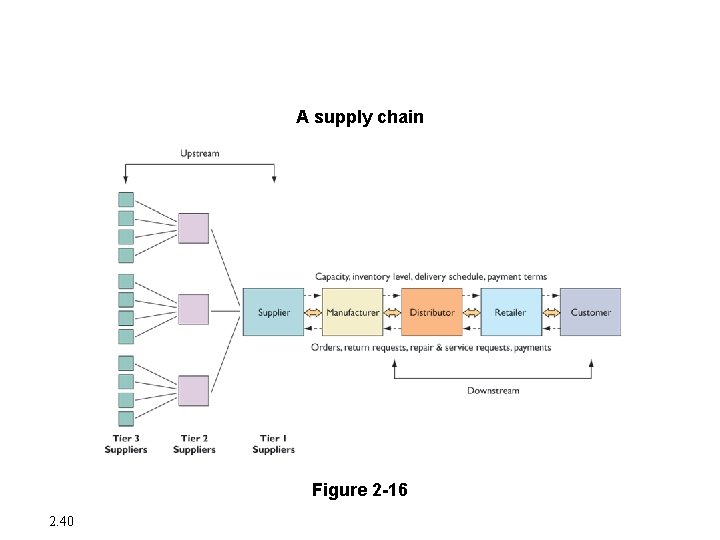
Enterprise Applications Supply Chain Management and Collaborative Commerce • Supply Chain Management Systems (SCM): Automate flow of information between firm and suppliers to optimize production and delivery • Supply Chain Management: Close linkage of activities involved in buying, making, moving a product • Supply Chain: Network of organizations and business processes for production and distribution of products 2. 39
Enterprise Applications A supply chain Figure 2 -16 2. 40
Enterprise Applications Supply Chain Management and Collaborative Commerce • • Information Systems Can Help Supply Chain Participants: Decide when and what to produce, store, and move Rapidly communicate orders Track status of orders Check and monitor inventory Reduce inventory, transportation, warehousing costs Track shipments Plan production based on actual customer demand Rapidly communicate changes in product design 2. 41
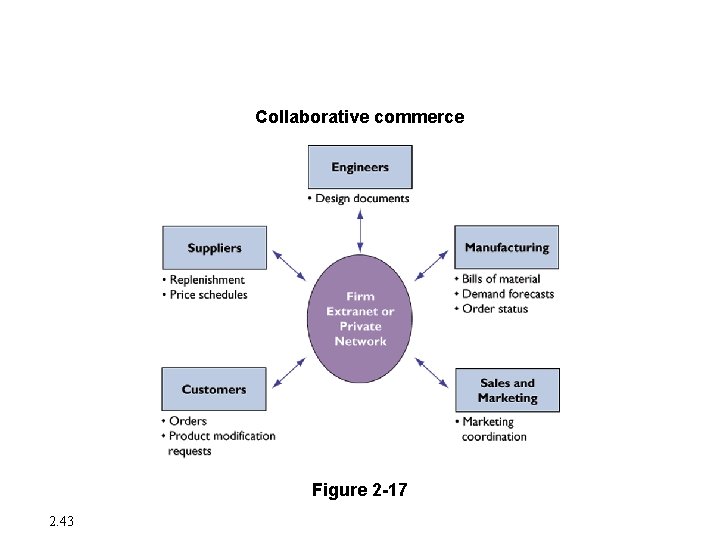
Enterprise Applications Supply Chain Management and Collaborative Commerce • Uses digital technologies to enable multiple organizations to collaboratively design, develop, build, move, and manage products • Increases efficiencies in reducing product design life cycles, minimizing excess inventory, forecasting demand, and keeping partners and customers informed 2. 42
Enterprise Applications Collaborative commerce Figure 2 -17 2. 43
Enterprise Applications Supply Chain Management and Collaborative Commerce • • 2. 44 Collaborative planning, forecasting, and replenishment (CPFR) Collaboration between partners to formulate demand forecasts, develop production plans, coordinate shipping, warehousing, stocking Private industrial networks Web-enabled networks for coordinating transorganizational business processes
Enterprise Applications Supply Chain Management and Collaborative Commerce How Businesses Engage in Collaborative Commerce • • • 2. 45 Product design and development Service and support Supply chain coordination Logistics Sales support and training Channel management
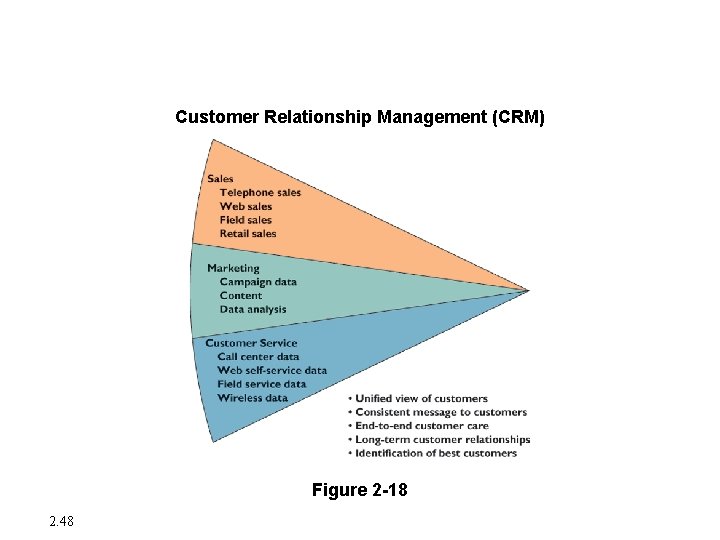
Enterprise Applications Customer Relationship Management (CRM) • Manages ways used to deal with existing and potential customers • Both a business and technology discipline • Uses information systems to coordinate all customer interaction processes in sales, marketing, and service. 2. 46
Enterprise Applications Customer Relationship Management (CRM) Customer Relationship Management Systems • • 2. 47 Track all customer interactions Analyze data to optimize revenue, profitability, customer satisfaction, customer retention
Enterprise Applications Customer Relationship Management (CRM) Figure 2 -18 2. 48
Enterprise Applications Knowledge Management Systems in the Enterprise Knowledge Management Systems (KMS) • Collect relevant knowledge and experience in firm to support business processes and management decisions • Manage and distribute documents and other digital knowledge objects 2. 49
Enterprise Applications Knowledge Management Systems in the Enterprise • • 2. 50 Role of Knowledge Management Systems Acquire knowledge Store knowledge Distribute knowledge Apply knowledge
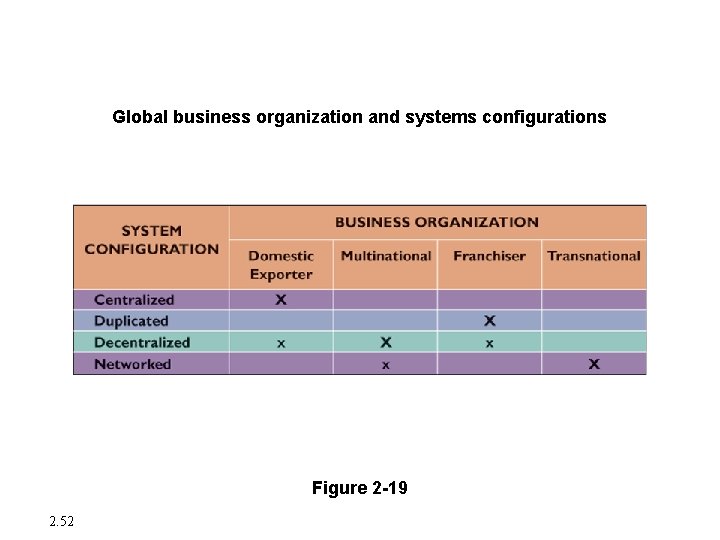
International Information Systems Forms of Global Business Organization • • 2. 51 Four Main Ways of Organizing Businesses Internationally Domestic exporter Multinational Franchiser Transnational
International Information Systems Global business organization and systems configurations Figure 2 -19 2. 52