Chapter 10 Motivating and Satisfying Employees and Teams


- Slides: 54
Chapter 10 Motivating and Satisfying Employees and Teams
Learning Objectives 1. Explain what motivation is. 2. Understand some major historical perspectives on motivation. 3. Describe three contemporary views of motivation: equity theory, expectancy theory, and goal-setting theory. 4. Explain several techniques for increasing employee motivation. 5. Understand the types, development, and uses of teams. Copyright © Cengage Learning. All rights reserved. Chapter 10 | Slide 2
Motivation …the individual internal process that energizes, directs, and sustains behavior; the personal ‘force’ that causes you or me to behave in a particular way. Copyright © Cengage Learning. All rights reserved. Chapter 10 | Slide 3
Morale …an employee’s feelings about his or her job and superiors and about the firm itself. Copyright © Cengage Learning. All rights reserved. Chapter 10 | Slide 4
Scientific Management …the application of scientific principles to management of work and workers. Copyright © Cengage Learning. All rights reserved. Chapter 10 | Slide 5
Frederick W. Taylor § “Soldiering”: productivity levels § Job broken into tasks § Management should determine • Best way to perform tasks • Job output to expect § Management should also • Choose the best person • Train the best person • Cooperate with workers Copyright © Cengage Learning. All rights reserved. Chapter 10 | Slide 6
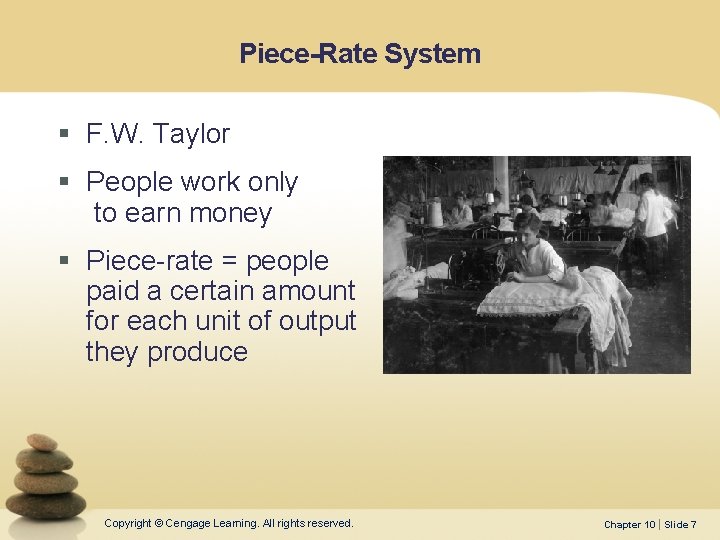
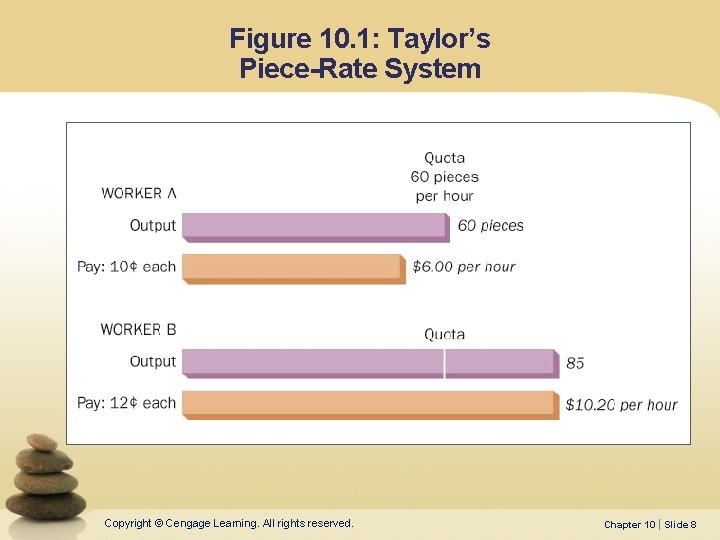
Piece-Rate System § F. W. Taylor § People work only to earn money § Piece-rate = people paid a certain amount for each unit of output they produce Copyright © Cengage Learning. All rights reserved. Chapter 10 | Slide 7
Figure 10. 1: Taylor’s Piece-Rate System Copyright © Cengage Learning. All rights reserved. Chapter 10 | Slide 8
Hawthorne Studies § Western Electric: 1927, 1932 § Determine effects of work environment on productivity § Experiments • Varied light level • Pressure to produce higher output § Human factors § Beginning of Human Relations movement Copyright © Cengage Learning. All rights reserved. Chapter 10 | Slide 9
Figure 10. 2: Maslow’s Hierarchy of Needs Copyright © Cengage Learning. All rights reserved. Chapter 10 | Slide 10
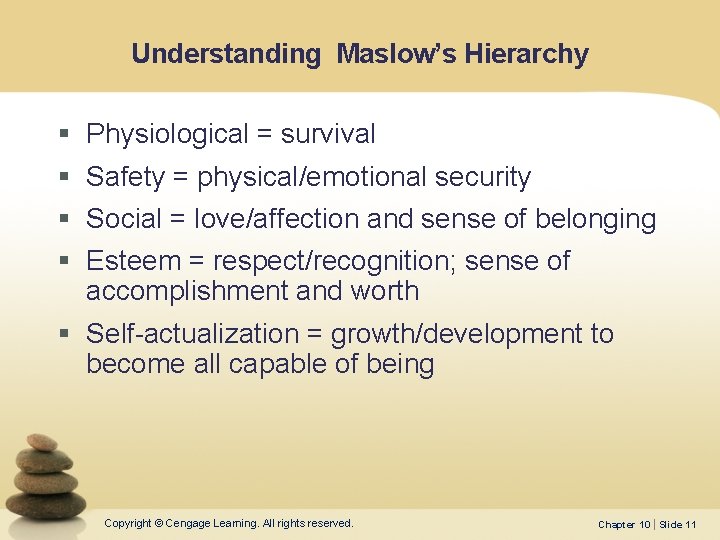
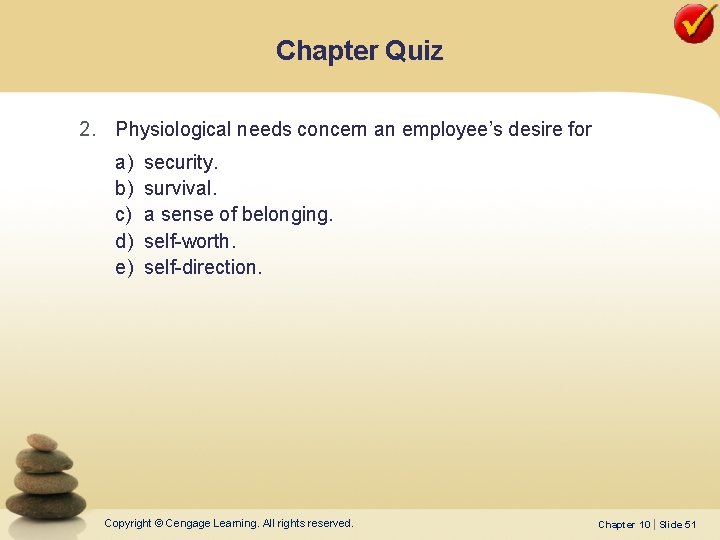
Understanding Maslow’s Hierarchy § § Physiological = survival Safety = physical/emotional security Social = love/affection and sense of belonging Esteem = respect/recognition; sense of accomplishment and worth § Self-actualization = growth/development to become all capable of being Copyright © Cengage Learning. All rights reserved. Chapter 10 | Slide 11
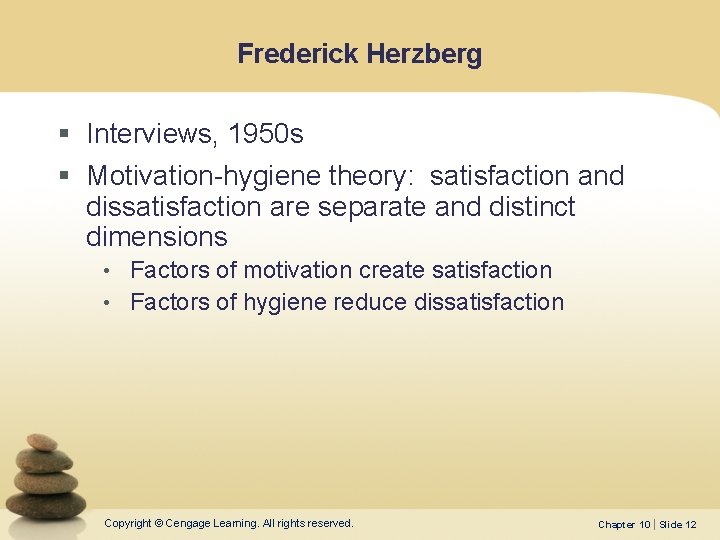
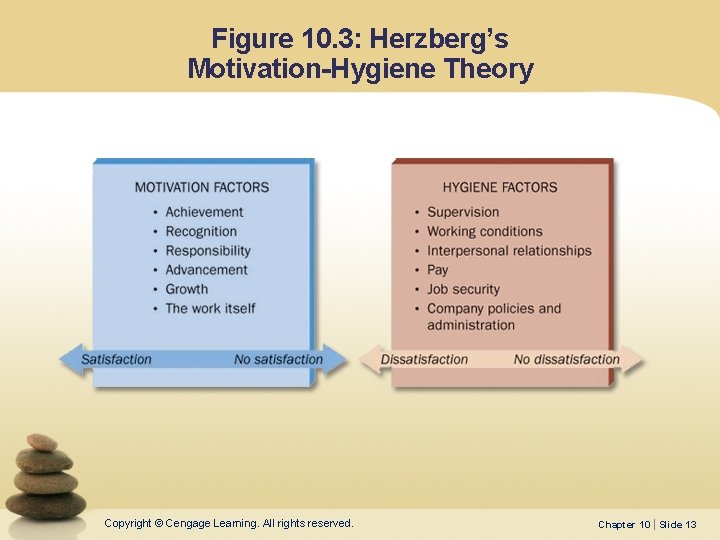
Frederick Herzberg § Interviews, 1950 s § Motivation-hygiene theory: satisfaction and dissatisfaction are separate and distinct dimensions • Factors of motivation create satisfaction • Factors of hygiene reduce dissatisfaction Copyright © Cengage Learning. All rights reserved. Chapter 10 | Slide 12
Figure 10. 3: Herzberg’s Motivation-Hygiene Theory Copyright © Cengage Learning. All rights reserved. Chapter 10 | Slide 13
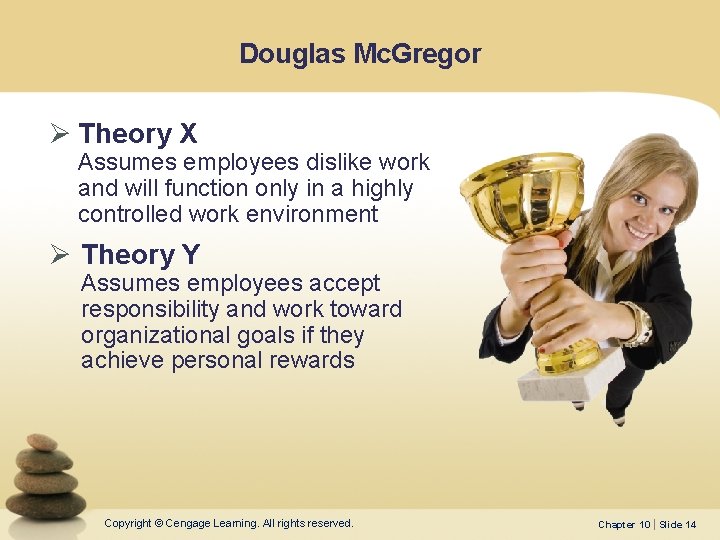
Douglas Mc. Gregor Ø Theory X Assumes employees dislike work and will function only in a highly controlled work environment Ø Theory Y Assumes employees accept responsibility and work toward organizational goals if they achieve personal rewards Copyright © Cengage Learning. All rights reserved. Chapter 10 | Slide 14
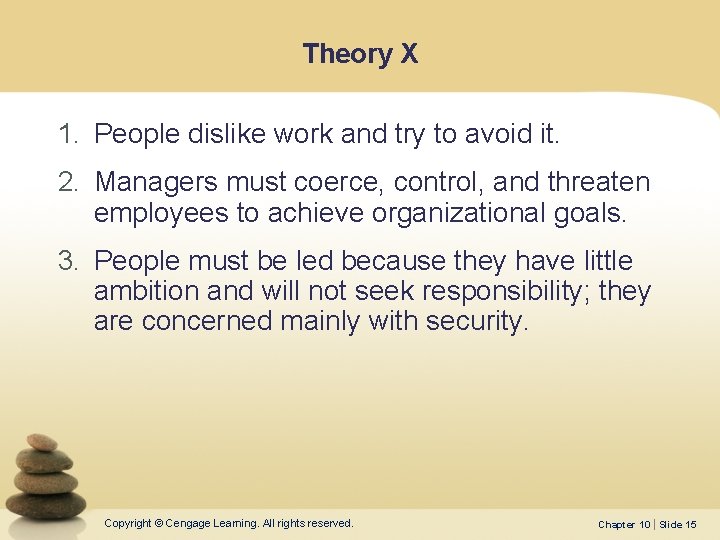
Theory X 1. People dislike work and try to avoid it. 2. Managers must coerce, control, and threaten employees to achieve organizational goals. 3. People must be led because they have little ambition and will not seek responsibility; they are concerned mainly with security. Copyright © Cengage Learning. All rights reserved. Chapter 10 | Slide 15
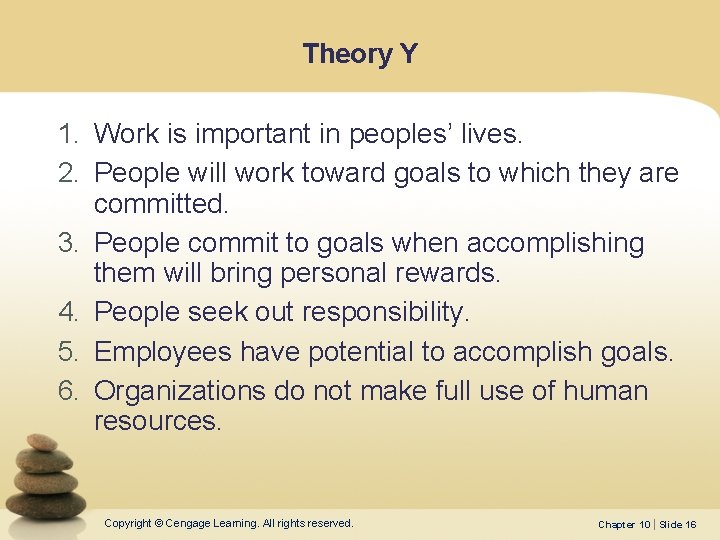
Theory Y 1. Work is important in peoples’ lives. 2. People will work toward goals to which they are committed. 3. People commit to goals when accomplishing them will bring personal rewards. 4. People seek out responsibility. 5. Employees have potential to accomplish goals. 6. Organizations do not make full use of human resources. Copyright © Cengage Learning. All rights reserved. Chapter 10 | Slide 16
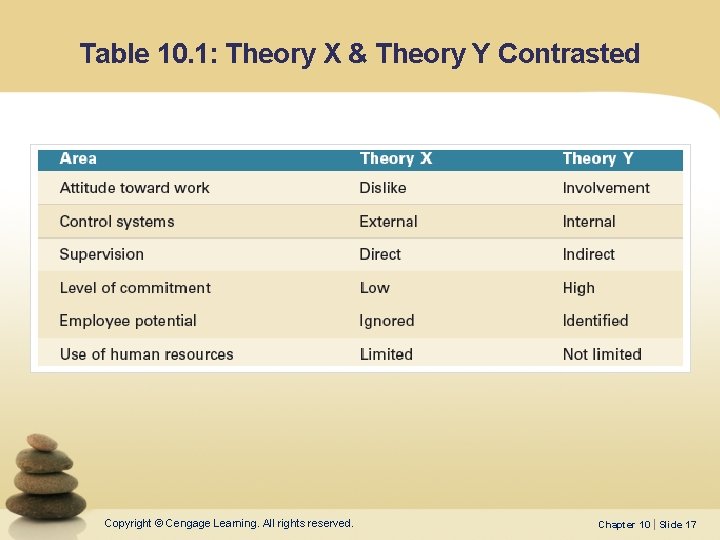
Table 10. 1: Theory X & Theory Y Contrasted Copyright © Cengage Learning. All rights reserved. Chapter 10 | Slide 17
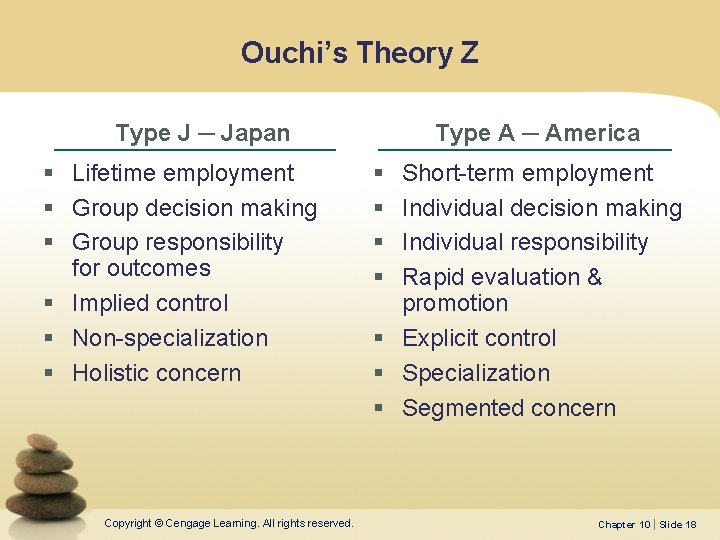
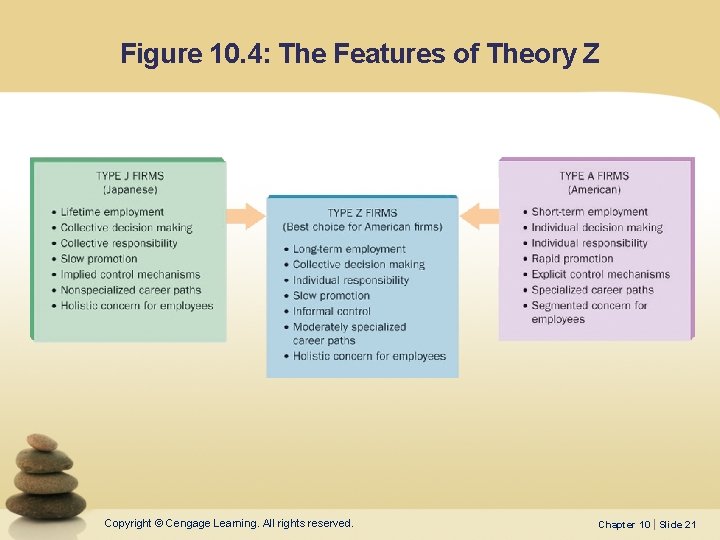
Ouchi’s Theory Z Type J ─ Japan § Lifetime employment § Group decision making § Group responsibility for outcomes § Implied control § Non-specialization § Holistic concern Copyright © Cengage Learning. All rights reserved. Type A ─ America § § Short-term employment Individual decision making Individual responsibility Rapid evaluation & promotion § Explicit control § Specialization § Segmented concern Chapter 10 | Slide 18
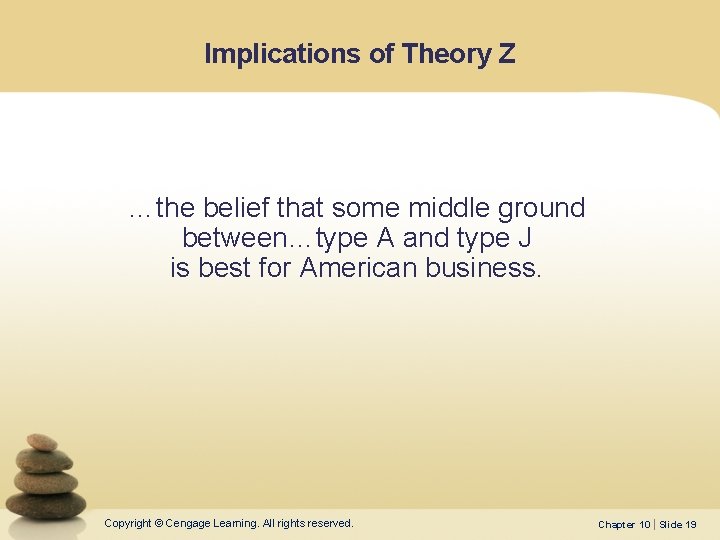
Implications of Theory Z …the belief that some middle ground between…type A and type J is best for American business. Copyright © Cengage Learning. All rights reserved. Chapter 10 | Slide 19
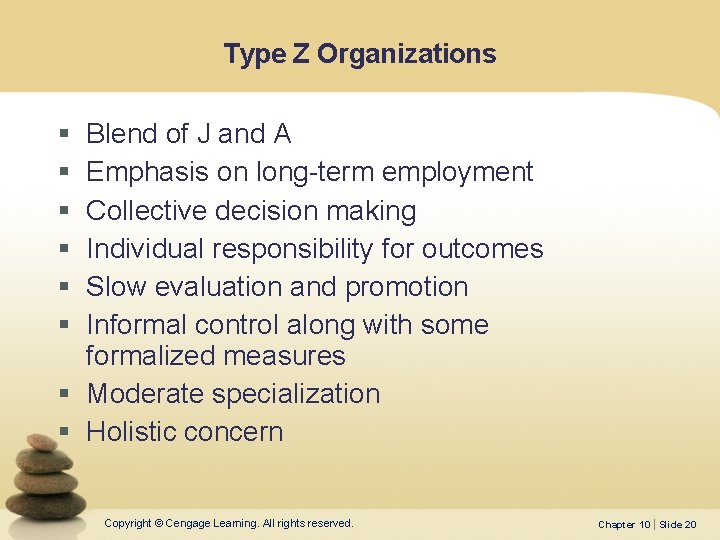
Type Z Organizations § § § Blend of J and A Emphasis on long-term employment Collective decision making Individual responsibility for outcomes Slow evaluation and promotion Informal control along with some formalized measures § Moderate specialization § Holistic concern Copyright © Cengage Learning. All rights reserved. Chapter 10 | Slide 20
Figure 10. 4: The Features of Theory Z Copyright © Cengage Learning. All rights reserved. Chapter 10 | Slide 21
Reinforcement Theory …based on premise that behavior that is rewarded is likely to be repeated, whereas behavior that is punished is less likely to recur. Copyright © Cengage Learning. All rights reserved. Chapter 10 | Slide 22
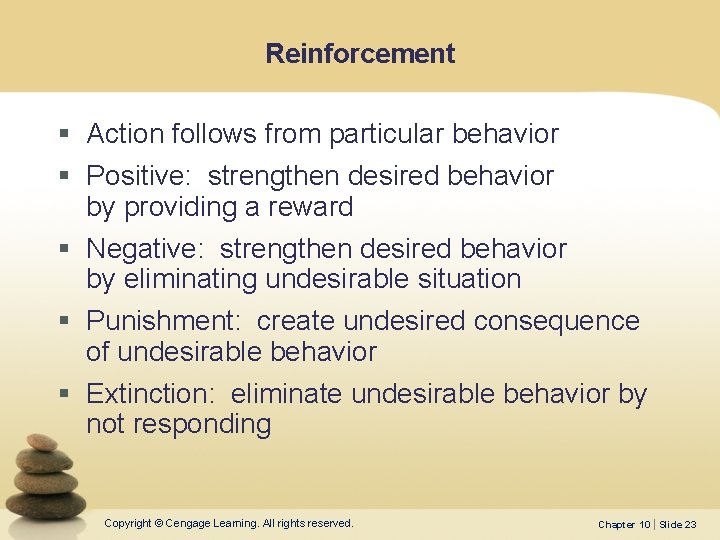
Reinforcement § Action follows from particular behavior § Positive: strengthen desired behavior by providing a reward § Negative: strengthen desired behavior by eliminating undesirable situation § Punishment: create undesired consequence of undesirable behavior § Extinction: eliminate undesirable behavior by not responding Copyright © Cengage Learning. All rights reserved. Chapter 10 | Slide 23
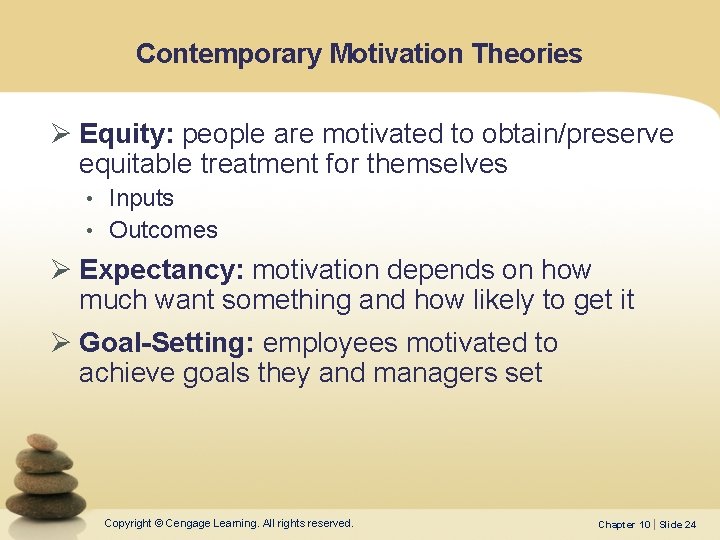
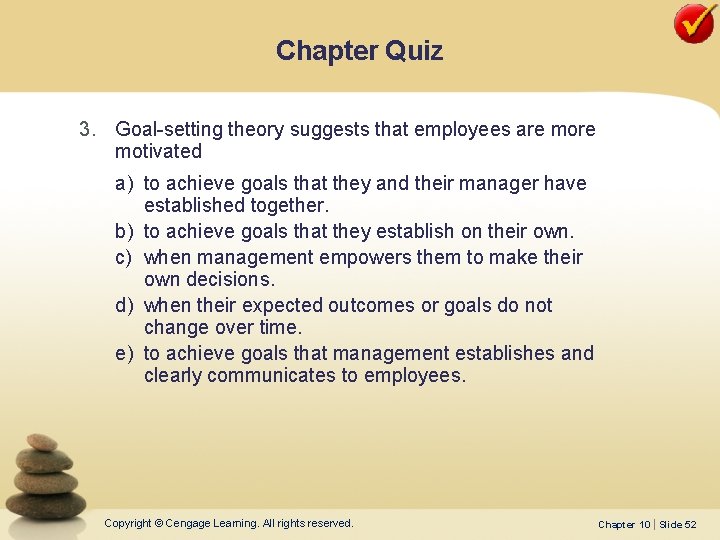
Contemporary Motivation Theories Ø Equity: people are motivated to obtain/preserve equitable treatment for themselves • Inputs • Outcomes Ø Expectancy: motivation depends on how much want something and how likely to get it Ø Goal-Setting: employees motivated to achieve goals they and managers set Copyright © Cengage Learning. All rights reserved. Chapter 10 | Slide 24
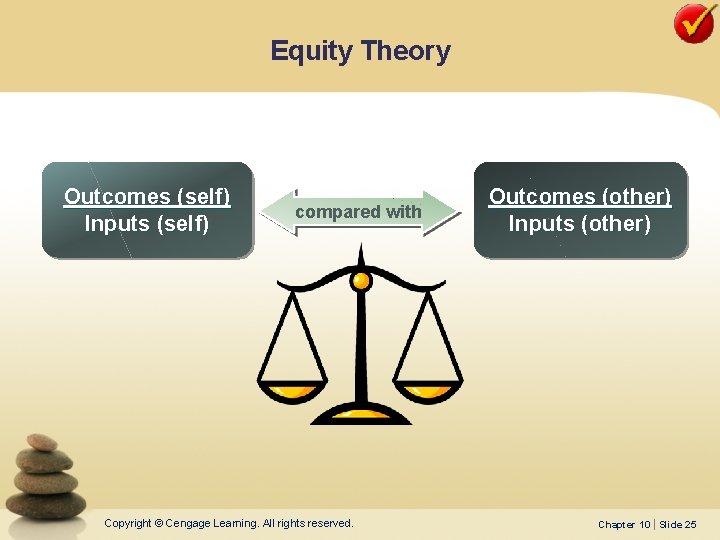
Equity Theory Outcomes (self) Inputs (self) compared with Copyright © Cengage Learning. All rights reserved. Outcomes (other) Inputs (other) Chapter 10 | Slide 25
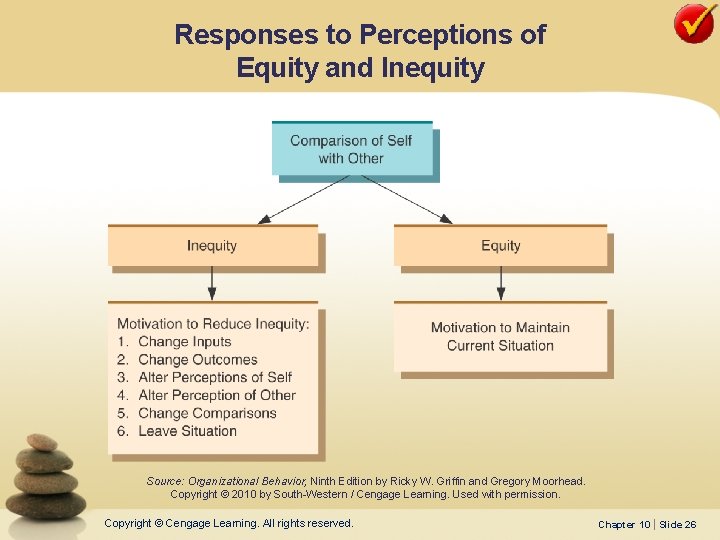
Responses to Perceptions of Equity and Inequity Source: Organizational Behavior, Ninth Edition by Ricky W. Griffin and Gregory Moorhead. Copyright © 2010 by South-Western / Cengage Learning. Used with permission. Copyright © Cengage Learning. All rights reserved. Chapter 10 | Slide 26
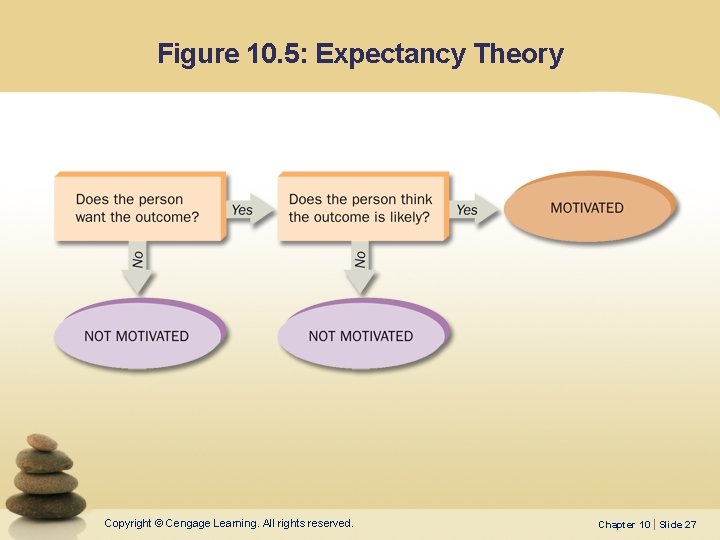
Figure 10. 5: Expectancy Theory Copyright © Cengage Learning. All rights reserved. Chapter 10 | Slide 27
Management by Objectives (MBO) …managers and employees collaborate in setting goals. Copyright © Cengage Learning. All rights reserved. Chapter 10 | Slide 28
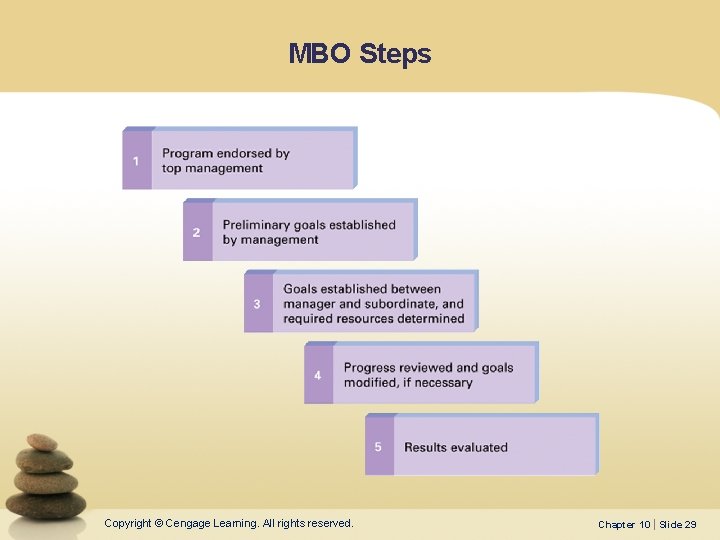
MBO Steps Copyright © Cengage Learning. All rights reserved. Chapter 10 | Slide 29
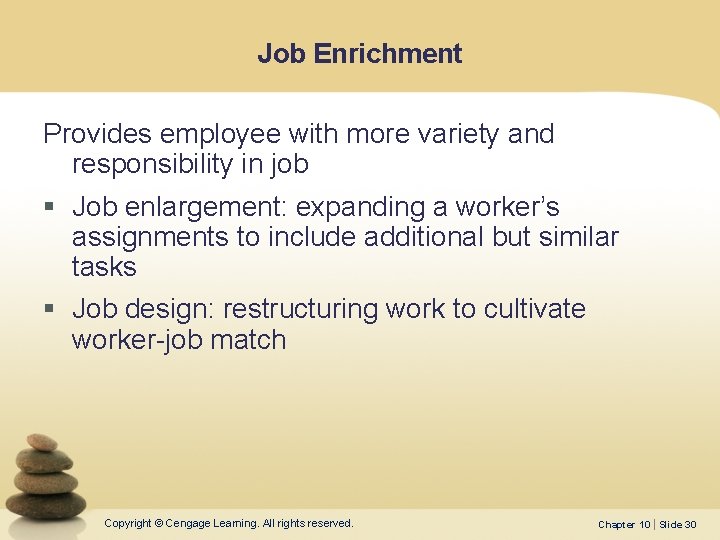
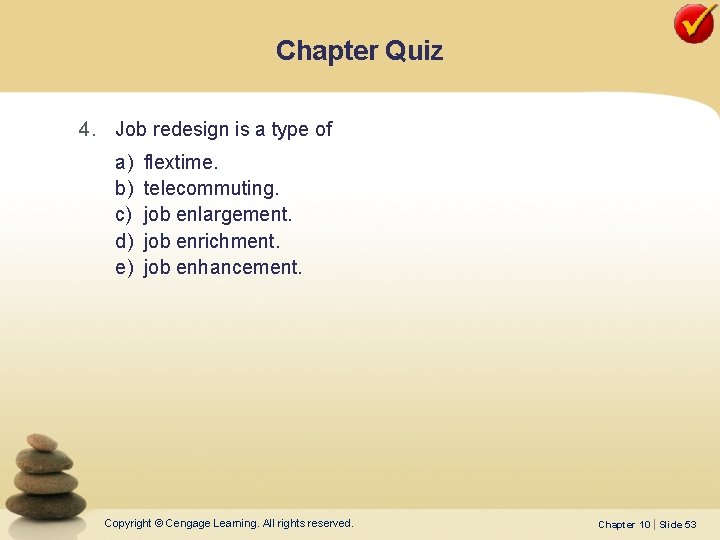
Job Enrichment Provides employee with more variety and responsibility in job § Job enlargement: expanding a worker’s assignments to include additional but similar tasks § Job design: restructuring work to cultivate worker-job match Copyright © Cengage Learning. All rights reserved. Chapter 10 | Slide 30
Behavior Modification …systematic program of reinforcement to encourage desirable behavior… involves rewards…and punishments… Copyright © Cengage Learning. All rights reserved. Chapter 10 | Slide 31
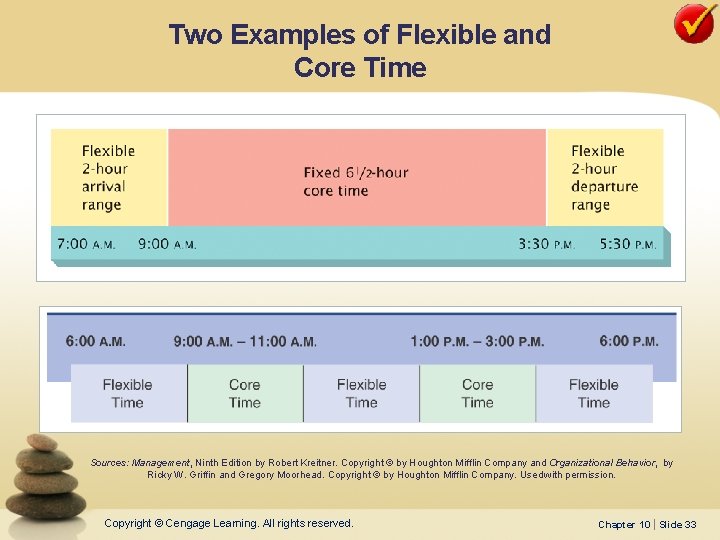
Flextime …a system in which employees set their own work hours within employer-determined limits. Copyright © Cengage Learning. All rights reserved. Chapter 10 | Slide 32
Two Examples of Flexible and Core Time Sources: Management, Ninth Edition by Robert Kreitner. Copyright © by Houghton Mifflin Company and Organizational Behavior, by Ricky W. Griffin and Gregory Moorhead. Copyright © by Houghton Mifflin Company. Used with permission. Copyright © Cengage Learning. All rights reserved. Chapter 10 | Slide 33
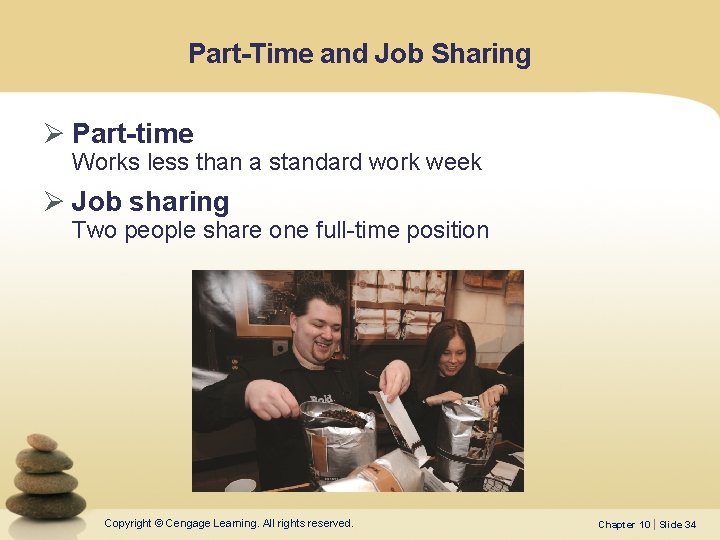
Part-Time and Job Sharing Ø Part-time Works less than a standard work week Ø Job sharing Two people share one full-time position Copyright © Cengage Learning. All rights reserved. Chapter 10 | Slide 34
Telecommuting …working at home all the time or a portion of the work week. Copyright © Cengage Learning. All rights reserved. Chapter 10 | Slide 35
Employee Empowerment …making employees more involved in their jobs by increasing their participation in decision making. Copyright © Cengage Learning. All rights reserved. Chapter 10 | Slide 36
Employee Ownership …a situation in which employees own the company they work for by virtue of being stockholders. Copyright © Cengage Learning. All rights reserved. Chapter 10 | Slide 37
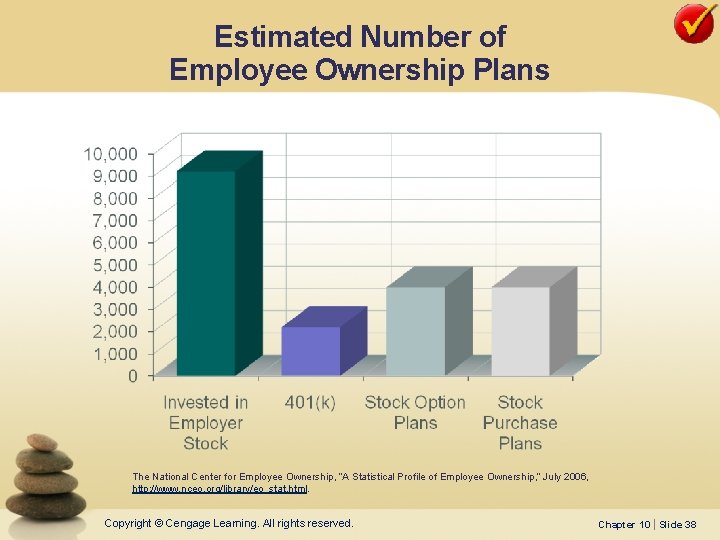
Estimated Number of Employee Ownership Plans The National Center for Employee Ownership, “A Statistical Profile of Employee Ownership, ” July 2006, http: //www. nceo. org/library/eo_stat. html. Copyright © Cengage Learning. All rights reserved. Chapter 10 | Slide 38
Team …a group of workers functioning together as a unit to complete a common goal or purpose. Copyright © Cengage Learning. All rights reserved. Chapter 10 | Slide 39
Types of Teams Ø Problem-Solving Knowledgeable employees brought together to tackle a specific problem Ø Virtuoso Exceptionally skilled and talented individuals brought together to produce significant change Ø Self-Managed Group of employees with authority/skills to manage selves Copyright © Cengage Learning. All rights reserved. Chapter 10 | Slide 40
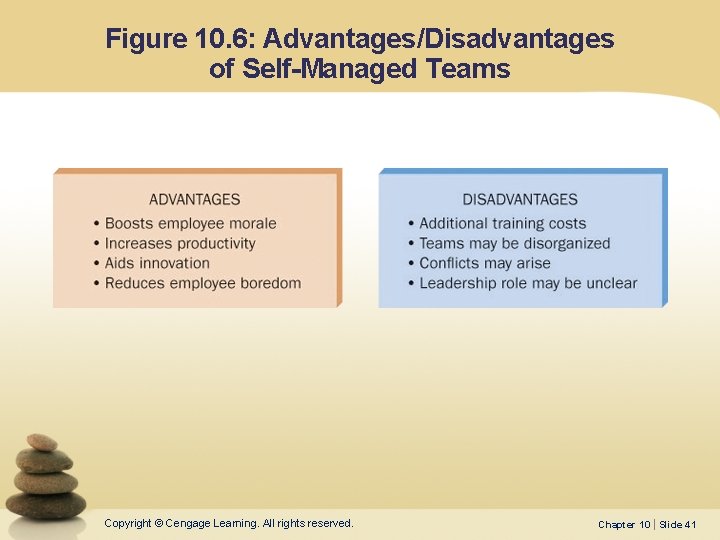
Figure 10. 6: Advantages/Disadvantages of Self-Managed Teams Copyright © Cengage Learning. All rights reserved. Chapter 10 | Slide 41
Types of Teams § Cross-functional Individuals with varying specialties, expertise, skills brought together to achieve a common task § Virtual Members geographically dispersed but communicate electronically Copyright © Cengage Learning. All rights reserved. Chapter 10 | Slide 42
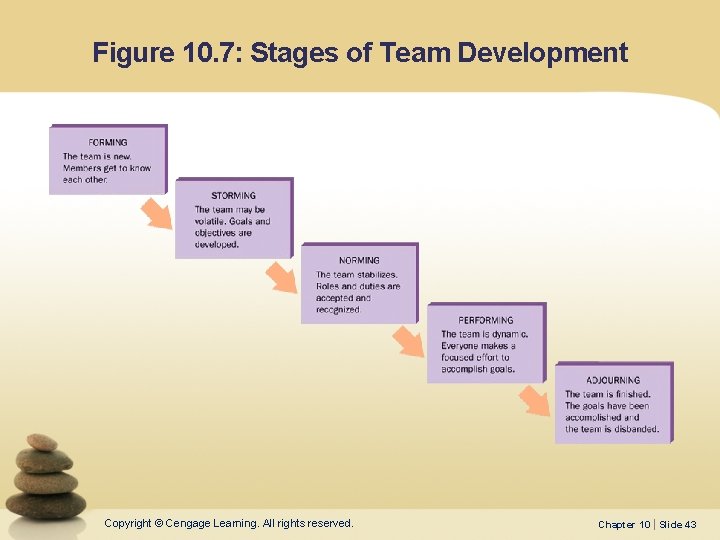
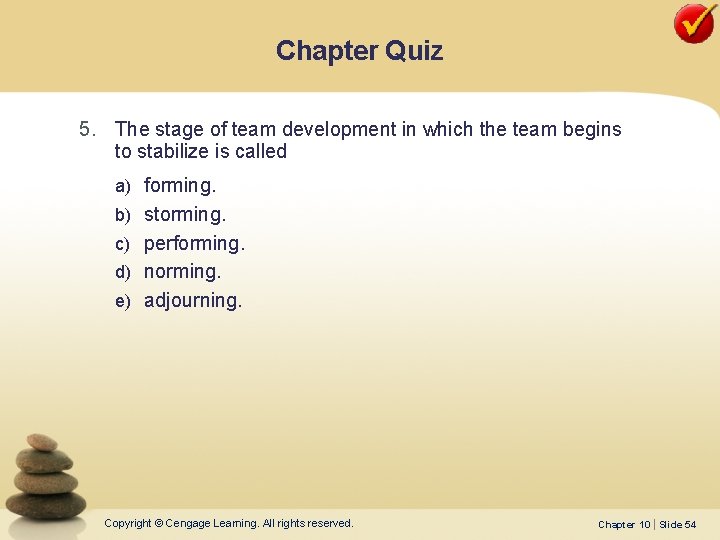
Figure 10. 7: Stages of Team Development Copyright © Cengage Learning. All rights reserved. Chapter 10 | Slide 43
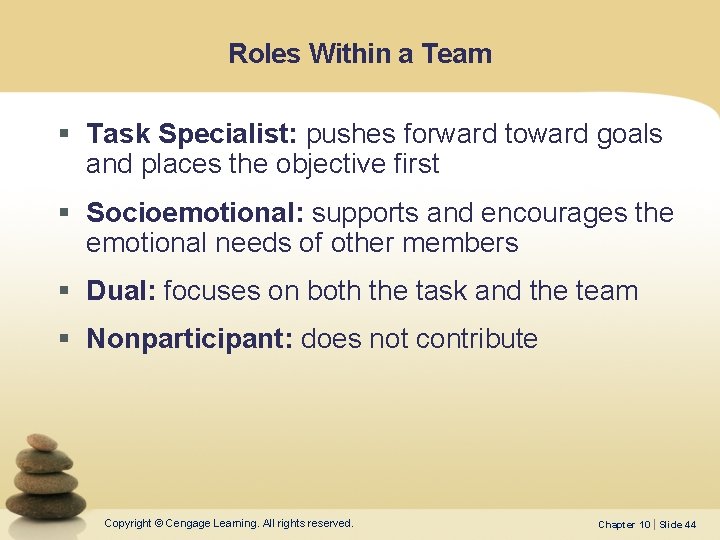
Roles Within a Team § Task Specialist: pushes forward toward goals and places the objective first § Socioemotional: supports and encourages the emotional needs of other members § Dual: focuses on both the task and the team § Nonparticipant: does not contribute Copyright © Cengage Learning. All rights reserved. Chapter 10 | Slide 44
Team Cohesiveness …members get along and are able to accomplish their tasks effectively. Copyright © Cengage Learning. All rights reserved. Chapter 10 | Slide 45
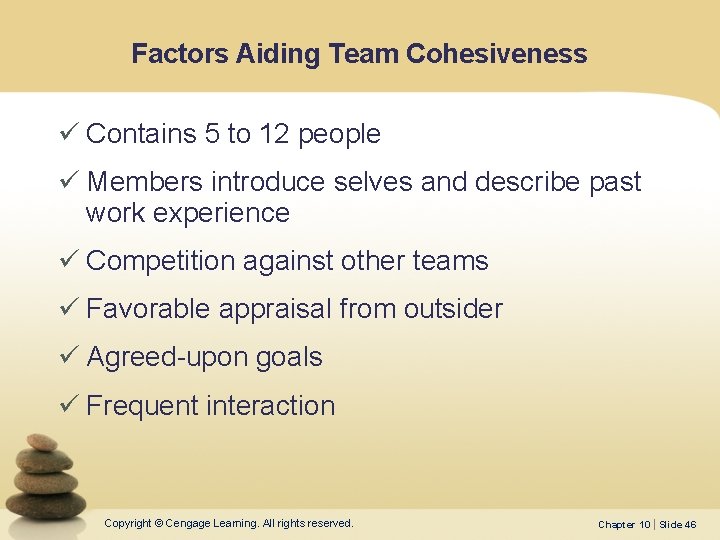
Factors Aiding Team Cohesiveness ü Contains 5 to 12 people ü Members introduce selves and describe past work experience ü Competition against other teams ü Favorable appraisal from outsider ü Agreed-upon goals ü Frequent interaction Copyright © Cengage Learning. All rights reserved. Chapter 10 | Slide 46
Resolving Team Conflict § Disagreeing members analyze situation more closely § Conflict = respectful and professional § Hostile = seek compromise § Don’t try to avoid/ignore conflicts Copyright © Cengage Learning. All rights reserved. Chapter 10 | Slide 47
Team Benefits ü Reduced turnover ü Reduced costs ü Increased production ü Increased quality ü Increased customer service ü Higher job satisfaction ü Harmonious work environment Copyright © Cengage Learning. All rights reserved. Chapter 10 | Slide 48
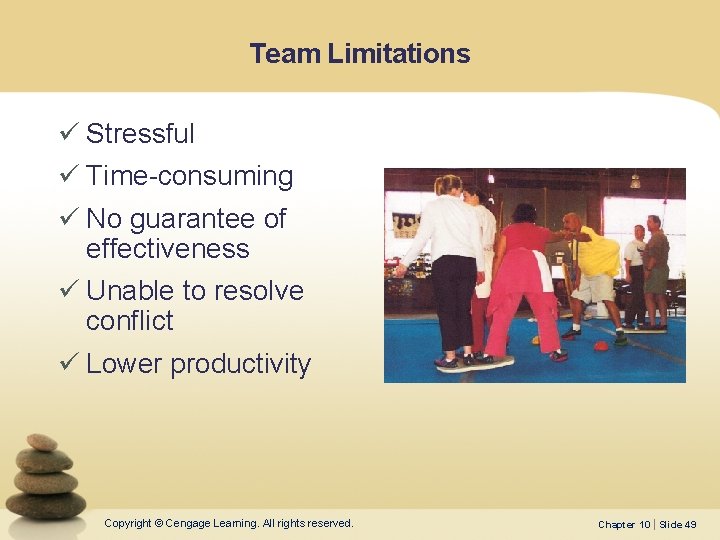
Team Limitations ü Stressful ü Time-consuming ü No guarantee of effectiveness ü Unable to resolve conflict ü Lower productivity Copyright © Cengage Learning. All rights reserved. Chapter 10 | Slide 49
Chapter Quiz 1. The main idea conveyed in Frederick Taylor’s findings was that a) most people are motivated only by money. b) people are motivated for a variety of reasons other than pay. c) people do not expect to get paid much for their work. d) employees’ biggest fear is that of losing their jobs. e) people expect to get paid much more than they are currently getting. Copyright © Cengage Learning. All rights reserved. Chapter 10 | Slide 50
Chapter Quiz 2. Physiological needs concern an employee’s desire for a) b) c) d) e) security. survival. a sense of belonging. self-worth. self-direction. Copyright © Cengage Learning. All rights reserved. Chapter 10 | Slide 51
Chapter Quiz 3. Goal-setting theory suggests that employees are motivated a) to achieve goals that they and their manager have established together. b) to achieve goals that they establish on their own. c) when management empowers them to make their own decisions. d) when their expected outcomes or goals do not change over time. e) to achieve goals that management establishes and clearly communicates to employees. Copyright © Cengage Learning. All rights reserved. Chapter 10 | Slide 52
Chapter Quiz 4. Job redesign is a type of a) b) c) d) e) flextime. telecommuting. job enlargement. job enrichment. job enhancement. Copyright © Cengage Learning. All rights reserved. Chapter 10 | Slide 53
Chapter Quiz 5. The stage of team development in which the team begins to stabilize is called a) forming. b) storming. c) performing. d) norming. e) adjourning. Copyright © Cengage Learning. All rights reserved. Chapter 10 | Slide 54