Ch 34 Camelot to Watergate 1960 1975 American
- Slides: 30
Ch. 34: Camelot to Watergate 1960 - 1975 American History (CHA 3 U 1)
Introduction l The 1960 s began with such promise with the election of the youthful and charismatic JFK and ended in turmoil and disgrace with Nixon and Watergate
Sec. 1: Kennedy’s New Frontier The Election of 1960 – Dem. Kennedy vs. Rep. Nixon l The Impact of Television – Kennedy better looking on TV l The Issue Of Religion – Kennedy became first and only Catholic to ever become President, but narrowly
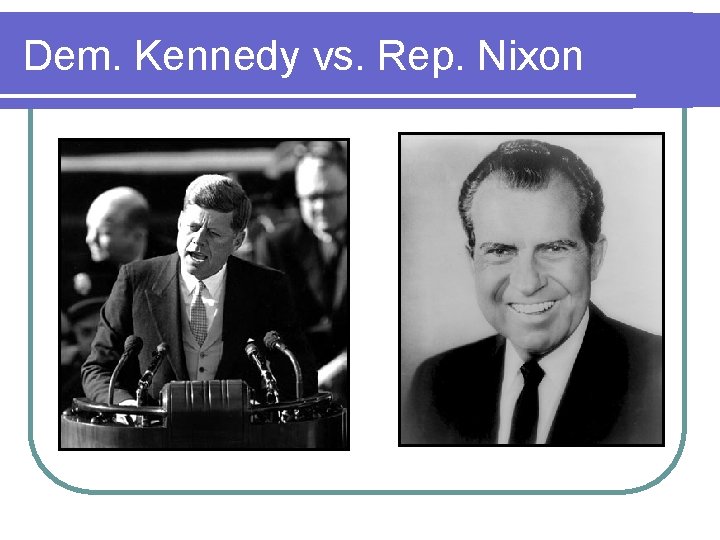
Dem. Kennedy vs. Rep. Nixon
Sec. 1: Kennedy’s New Frontier The New Frontier – torch passed to a new generation born in the 20 th C - “ask not what your country can do for you: Ask what you can do for your country” - Kennedy popular all over the world
Sec. 1: Kennedy’s New Frontier Kennedy’s Economic Program – tax cuts and increased business efficiency l Promoting Economic Growth –business / unions hold down prices / wages l Conflicts With Steel Companies – lower wages but higher prices forced Kennedy to threaten buying foreign steel and investigating price-fixing
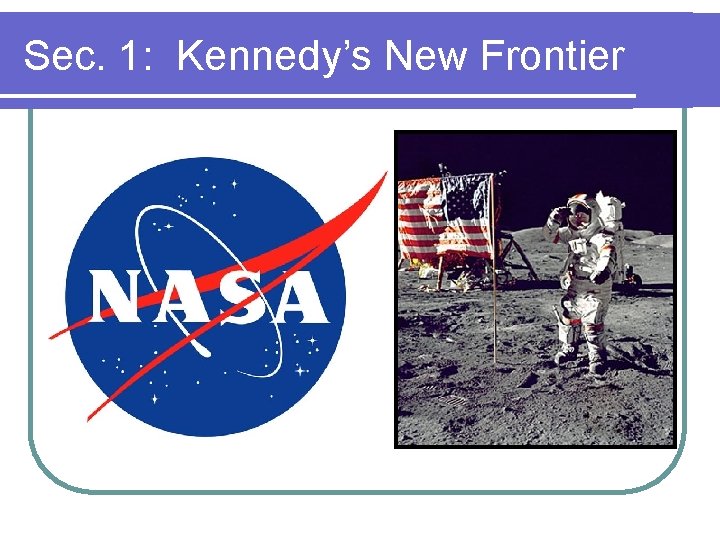
Sec. 1: Kennedy’s New Frontier l Legislative Victories – NASA (National Aeronautics & Space Administration), federal aid to public schools, urban renewal l Conflict With Congress – Southern Democrats opposed Kennedy’s plans to help the poor and elderly (e. g. medicare)
Sec. 1: Kennedy’s New Frontier
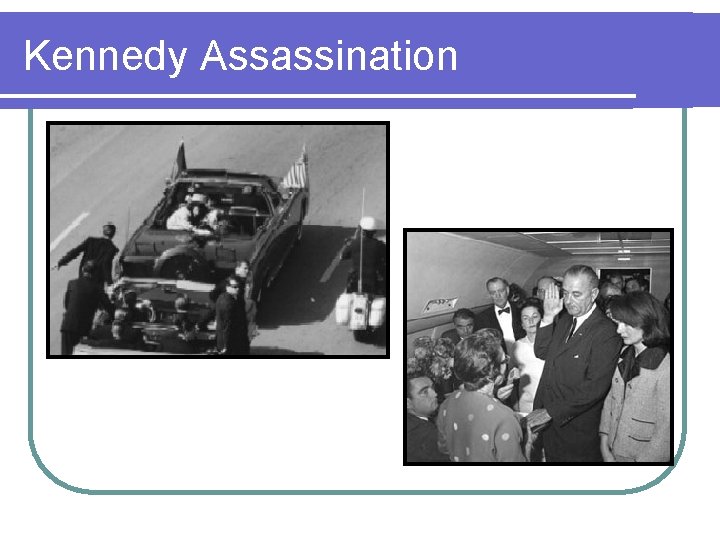
Sec. 1: Kennedy’s New Frontier Tragedy in Dallas – Kennedy shot Nov. 22 ’ 63 while trying to win over S. Dem. l The Warren Commission – Lee Harvey Oswald found to be the lone assassin l Johnson Takes Over - VP is able to get much of Kennedy’s New Frontier programs passed out of memory for Kennedy
Kennedy Assassination
Sec. 2: The Great Society The Election of 1964 – Dem. LBJ vs. Rep. Goldwater easily won by LBJ - LBJ offered “the Great Society” where Kennedy’s program of helping the poor was expanded upon to include discrimination, pollution & social ills - Goldwater would allow military to use nuclear weapons
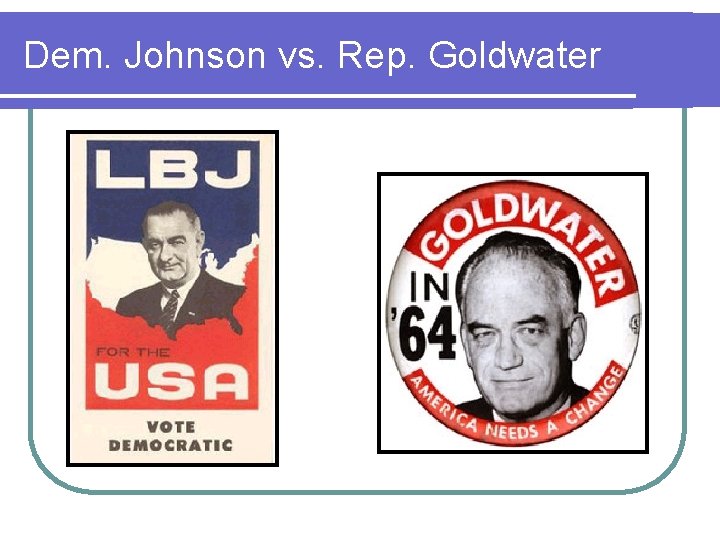
Dem. Johnson vs. Rep. Goldwater
Sec. 2: The Great Society War On Poverty l The Other America – 25% of Americans were poor (Michael Harrington) slums of inner cities, rural Deep South, elderly l Johnson Declares War – war on poverty Office of Economic Opportunity (OEO) billion $ budget disease, illiteracy, unemployment l Medicare – hospital care age > 65
Sec. 2: The Great Society Immigration Reform – 157, 000 immigrants per yr 83, 000 Great Britain / Ireland vs. 100 India based on quotas - Immigration Act 1965 – favoured those with special skills Asia & Latin American immigrants increased sharply
Sec. 2: The Great Society Rising Costs End Great Society - $54 billion in 1964 to $98 billion by 1968 l Guns and Butter – Vietnam War costing $20 billion /yr & rising social costs led to $28 billion federal gov’t deficit l End of an Era – Congress would not raise taxes unless social costs reduced l Growing Concern for the Environment – R. Carson’s “Silent Spring” new laws
Sec. 3: An Imperial Presidency Nixon’s Political Career - first President to be elected (1968) after losing first time (1960) - Changed image from being ruthless to being broad-minded and calm
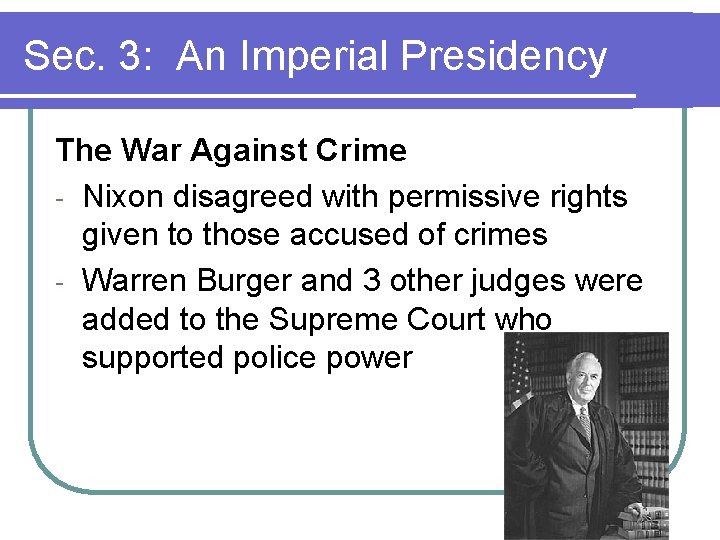
Sec. 3: An Imperial Presidency The War Against Crime - Nixon disagreed with permissive rights given to those accused of crimes - Warren Burger and 3 other judges were added to the Supreme Court who supported police power
Sec. 3: An Imperial Presidency Nixon’s Economic Policies l Stagflation – rising unemployment & inflation unsuccessfully dealt with l A Balance of Payments Deficit – USA automobiles worldwide 76% (1950) – 31% (1970) $22 billion trade deficit l The New Federalism – less spending by federal gov’t more by state & local gov’t
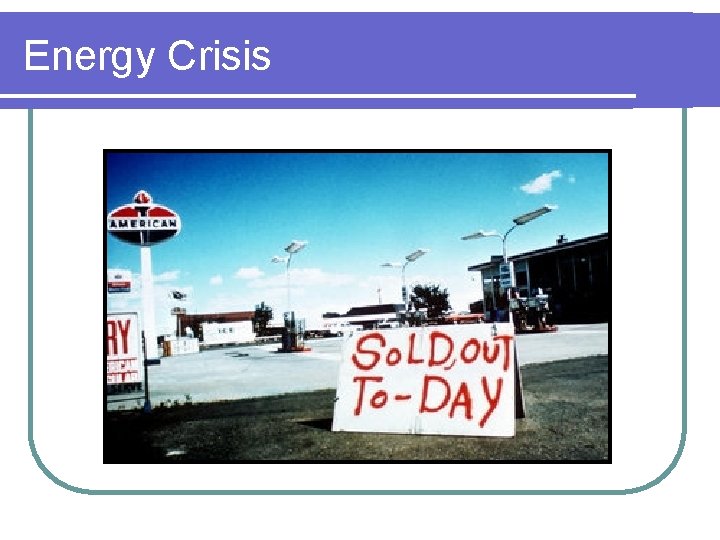
Sec. 3: An Imperial Presidency The Energy Crisis - Fall of 1973 Arab nations (OPEC) placed embargo on oil shipments to USA because of support for Israel - Price of gas, heating oil etc. increased 400% and often shortages - USA had 6% of world pop. used 33% of world’s energy conservation began
Energy Crisis
Sec. 4: The Watergate Scandal A Crisis in the Presidency – Nixon wins a massive landslide in 1972 by withdrawing from Vietnam, visiting China & Russia and supporting law and order l CREEP – Committee to Reelect the President raises illegal money that is used to pay for dirty tricks in election l The Watergate Break-in bugged offices of the Democrats in Watergate B.
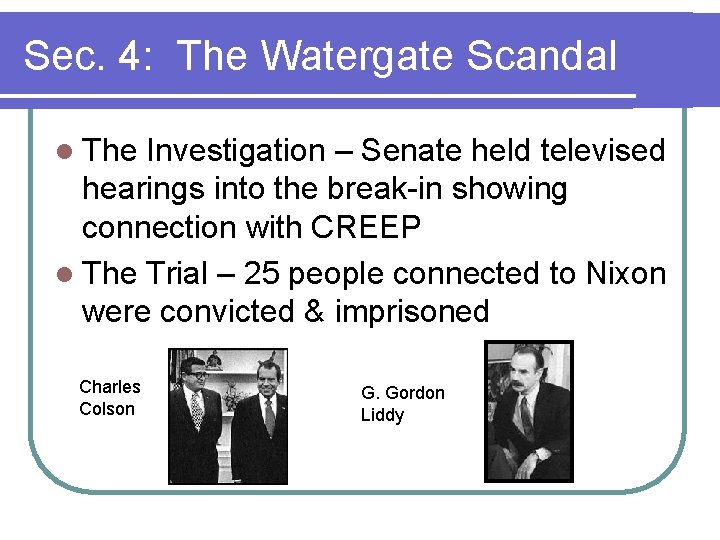
Sec. 4: The Watergate Scandal l The Investigation – Senate held televised hearings into the break-in showing connection with CREEP l The Trial – 25 people connected to Nixon were convicted & imprisoned Charles Colson G. Gordon Liddy
Sec. 4: The Watergate Scandal The President Answers – refuses to hand over White House audio tapes l The Saturday Night Massacre – Nixon dismisses special prosecutor (Cox) demanding the tapes l Agnew Resigns – Vice President took bribes Gerald Ford new VP
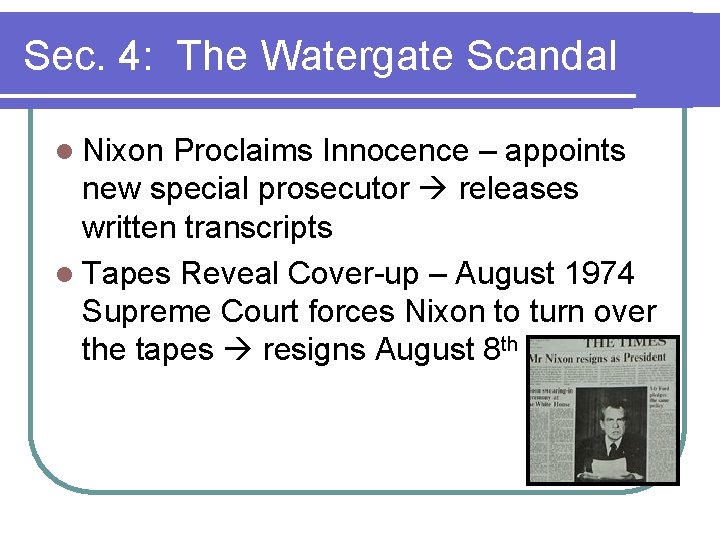
Sec. 4: The Watergate Scandal l Nixon Proclaims Innocence – appoints new special prosecutor releases written transcripts l Tapes Reveal Cover-up – August 1974 Supreme Court forces Nixon to turn over the tapes resigns August 8 th
Sec. 4: The Watergate Scandal Ford Becomes President – good, honest man, but pardons Nixon to avoid trial l Congress Reasserts Its Authority – Democratic Congress at odds with Ford l Congress Attacks Executive Privilege – War Powers Act requires President to report to Congress 48 hrs after sending troops into action and potentially withdraw troops within 60 days
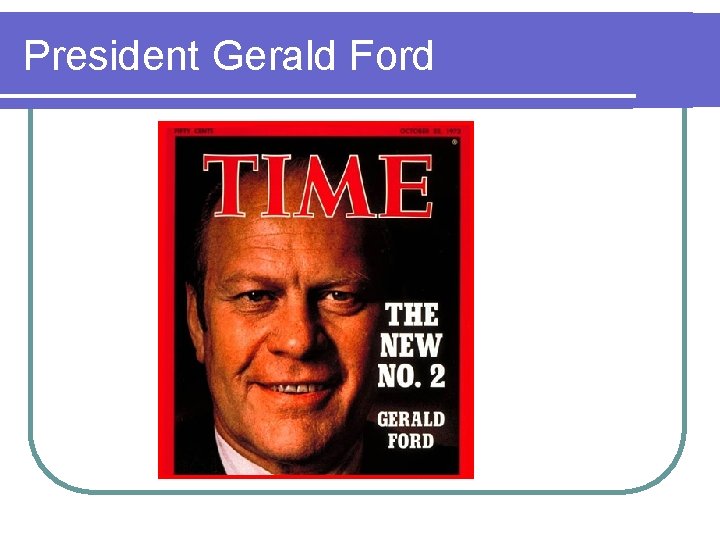
President Gerald Ford
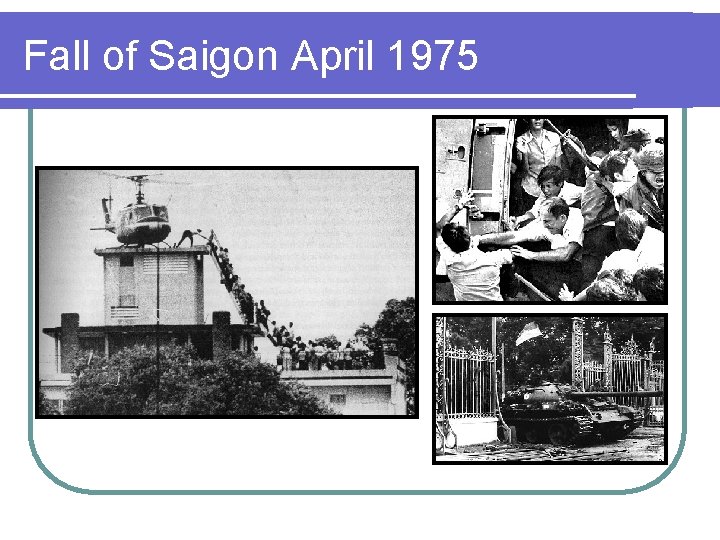
Sec. 4: The Watergate Scandal l Quarrels Over the Economy – Ford wanted to decrease gov’t social programs & deregulate businesses while Congress wanted job creation l Ford’s Foreign Policy – Helsinki Accords recognized the borders of Eastern Europe and human rights - Ford not allowed to aid S. Vietnam & Camodia Communist take over 1975
Fall of Saigon April 1975
Sec. 4: The Watergate Scandal The Bicentennial – USA turned 200 years old on July 4, 1976 with big celebrations - despite problems still a great nation that put a man on the moon and stopped imperial presidency
Conclusion l The dream that became a nightmare for America would not really end until the 1980 s when President Ronald Reagan would instill an optimism in America not seen for 20 years l The wounds caused by the deaths of President Kennedy, Martin Luther King, Bobby Kennedy and thousands of soldiers would finally start to heal