
REGENTS EXAMINATION IN U S HISTORY AND GOVERNMENT








- Slides: 81
REGENTS EXAMINATION IN U. S. HISTORY AND GOVERNMENT REVIEW To Pass this exam!!! Eliseo Lugo III
PREPARING FOR THE EXAM Attend Find Do a review session a study partner not “over-study” or cram Eat a healthy meal before the exam Be prepared Stay for the full three hours
ON THE DAY OF THE EXAM 1. 2. 3. 4. 5. 6. Arrive on time Dress comfortably Listen to all instructions Read directions carefully Be an active test-taker Don’t leave blanks
Exam Structure Part I – 50 Multiple choice questions. Part II – One thematic essay question. Part IIIA – Document based question. Part IIIB – One essay based on the documents.
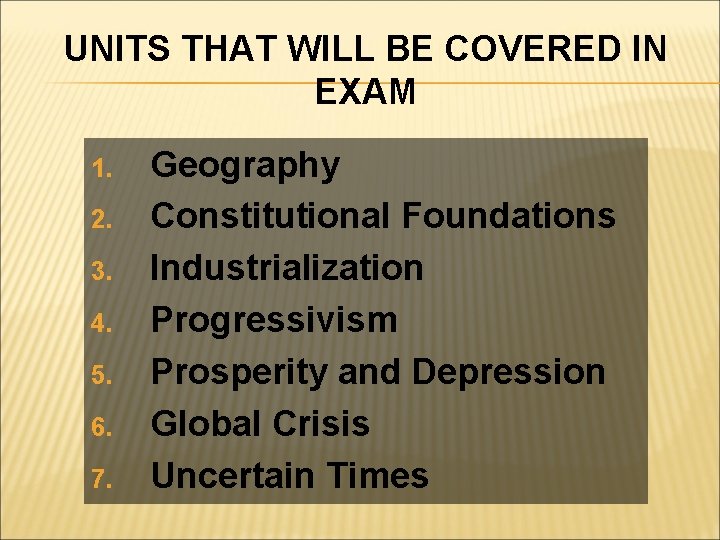
UNITS THAT WILL BE COVERED IN EXAM 1. 2. 3. 4. 5. 6. 7. Geography Constitutional Foundations Industrialization Progressivism Prosperity and Depression Global Crisis Uncertain Times
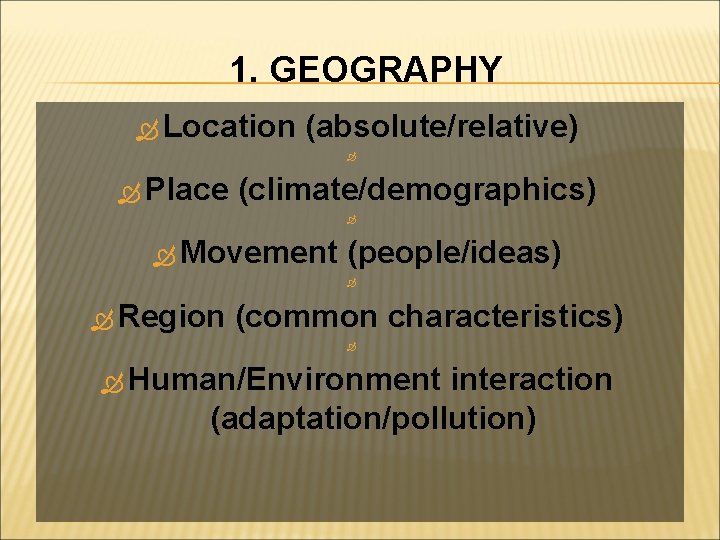
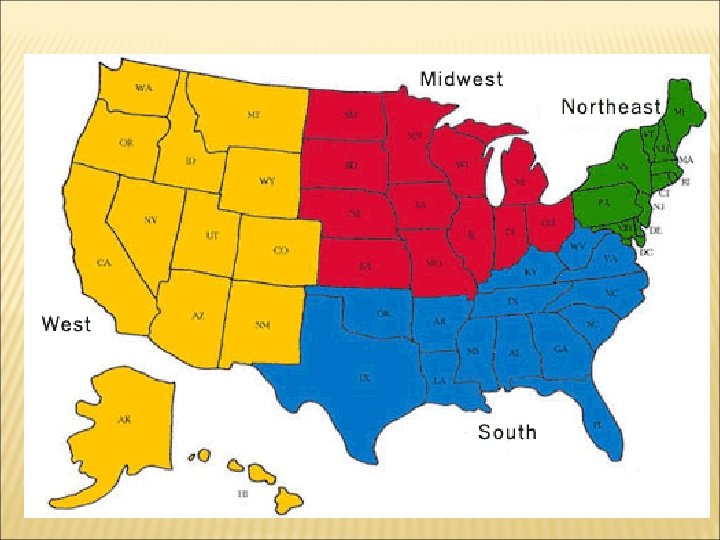
1. GEOGRAPHY Location (absolute/relative) Place (climate/demographics) Movement (people/ideas) Region (common characteristics) Human/Environment interaction (adaptation/pollution)
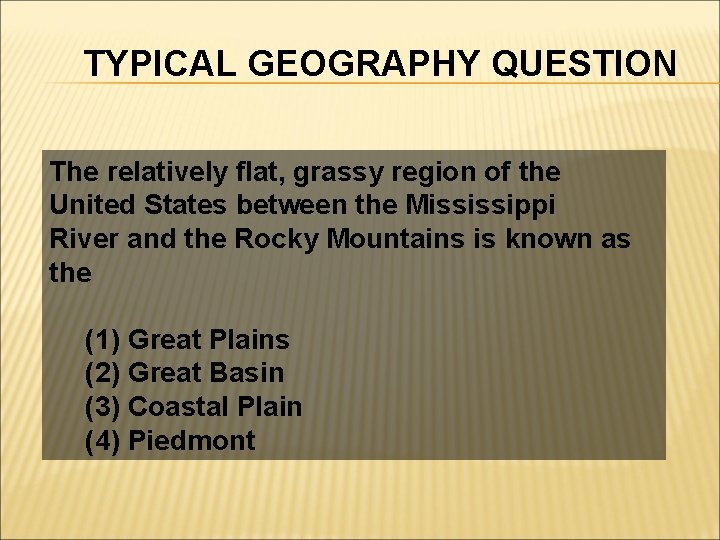
TYPICAL GEOGRAPHY QUESTION The relatively flat, grassy region of the United States between the Mississippi River and the Rocky Mountains is known as the (1) Great Plains (2) Great Basin (3) Coastal Plain (4) Piedmont
2. – THE CONSTITUTION Influences Structure (ideas, experiences) (functions of government) Principles (basic ideals) Application (how it’s used) Federalism (national v. state)
INFLUENCES Ancient Greece & Rome (democracy and republicanism) The Enlightenment (natural rights) English The Documents (individual rights) Colonial experience (self-government)
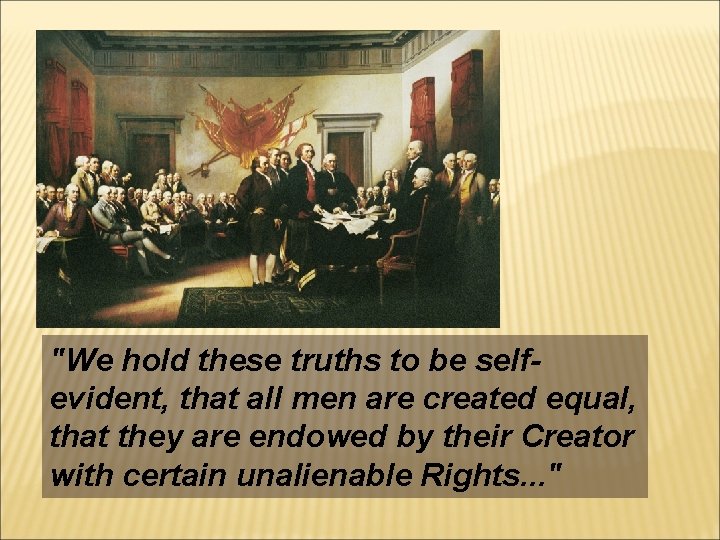
"We hold these truths to be selfevident, that all men are created equal, that they are endowed by their Creator with certain unalienable Rights. . . "
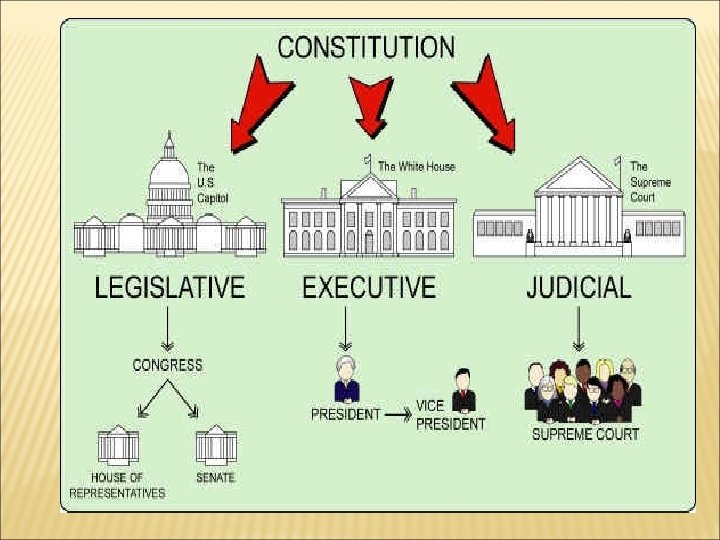
STRUCTURE Article I – Describes the legislative branch and what they do (make laws) Article II – Describes the executive branch and what the president does (executes/enforces laws) Article III – Describes the judicial branch and what they do (judge/interpret laws)
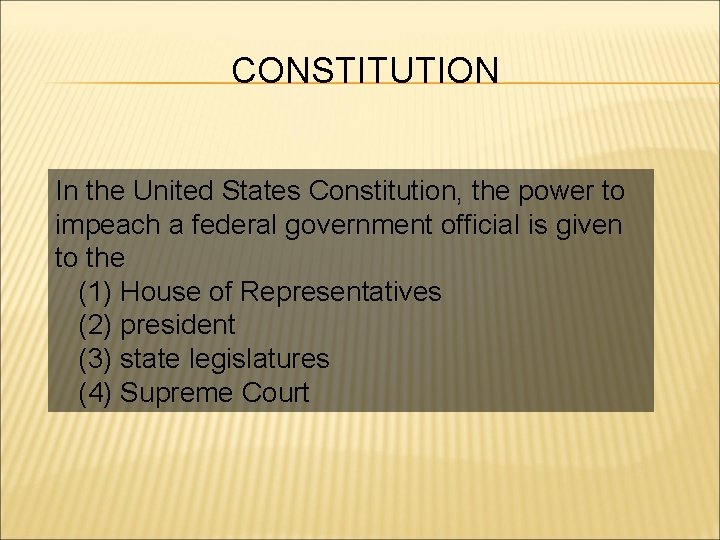
CONSTITUTION In the United States Constitution, the power to impeach a federal government official is given to the (1) House of Representatives (2) president (3) state legislatures (4) Supreme Court
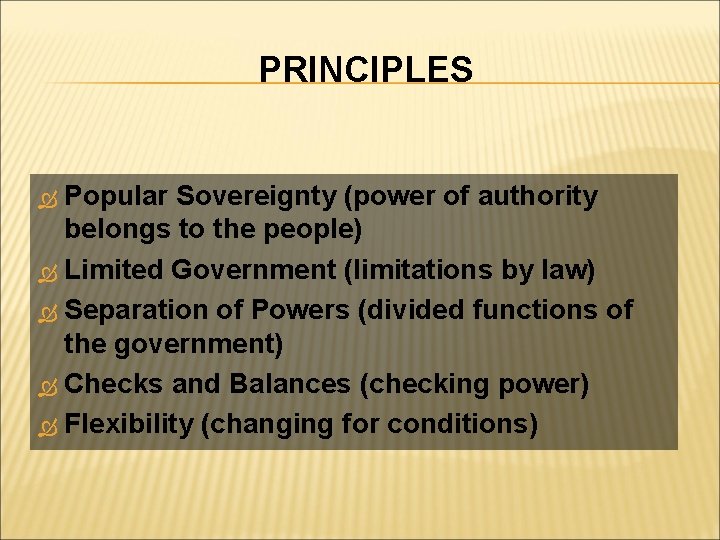
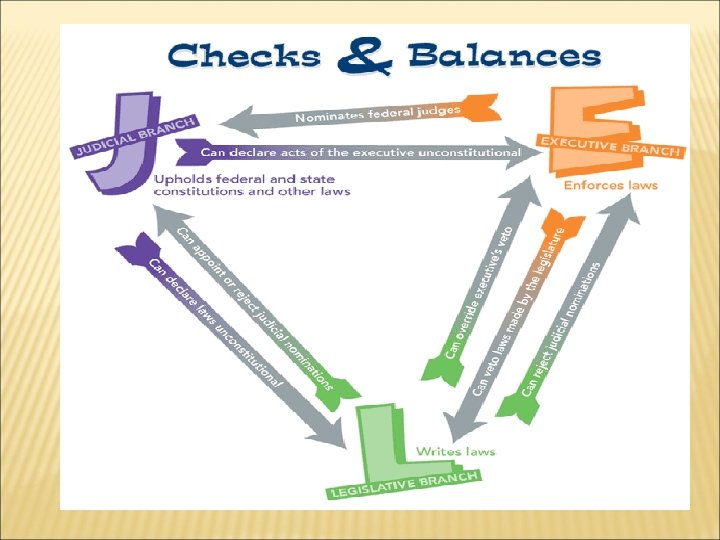
PRINCIPLES Popular Sovereignty (power of authority belongs to the people) Limited Government (limitations by law) Separation of Powers (divided functions of the government) Checks and Balances (checking power) Flexibility (changing for conditions)
APPLICATION How has the constitution been used throughout history? - Congressional action (laws) - Presidential actions (decisions, ideas) - Judicial interpretations (court cases)
Marbury v. Madison (1803) "It is emphatically the province and duty of the judicial department to say what the law is. Those who apply the rule to particular cases, must of necessity expound and interpret that rule. If two laws conflict with each other, the courts must decide on the operation of each. " — Chief Justice John Marshall
FEDERALISM Federalism is the idea that the National and State governments divide the power rule between themselves. • Delegated powers = spelled out for each • Implied powers = not stated in writing • Denied powers = things that cannot be done • Concurrent powers = something both can do • Reserved powers = Not delegated to the national government or denied to states
ELASTIC CLAUSE “The Congress shall have Power - To make all Laws which shall be necessary and proper for carrying into Execution the foregoing Powers, and all other Powers vested by this Constitution in the Government of the United States, or in any Department or Officer thereof. ”
FEDERALISM A constitutional power specifically delegated to the federal government is the power to (1) regulate marriage and divorce (2) establish education standards (3) declare war (4) issue driver’s licenses
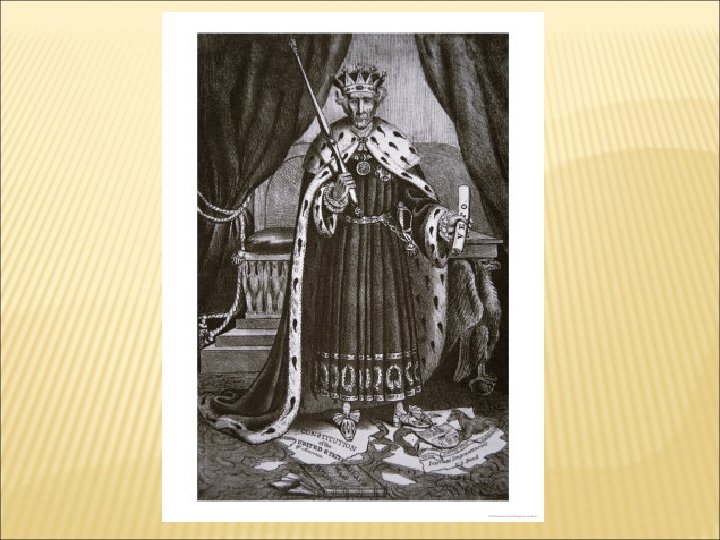
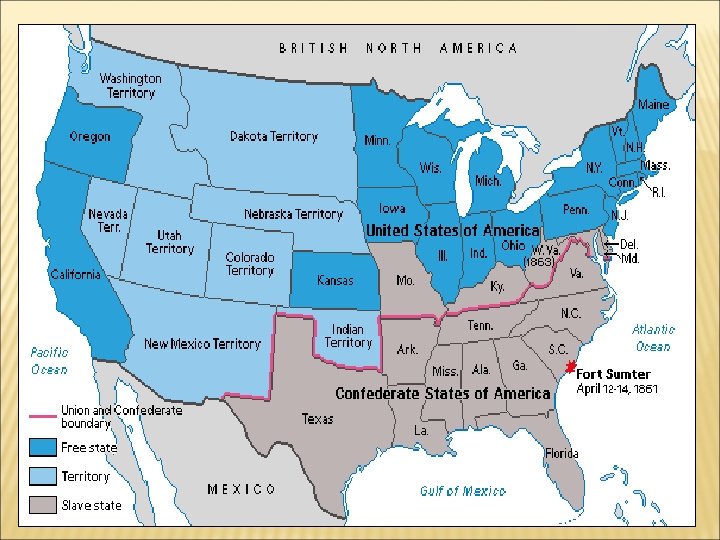
TESTING THE CONSTITUTION Nationalism Sectionalism The Age of Jackson Ante-Bellum reform Territorial Expansion The American Civil War
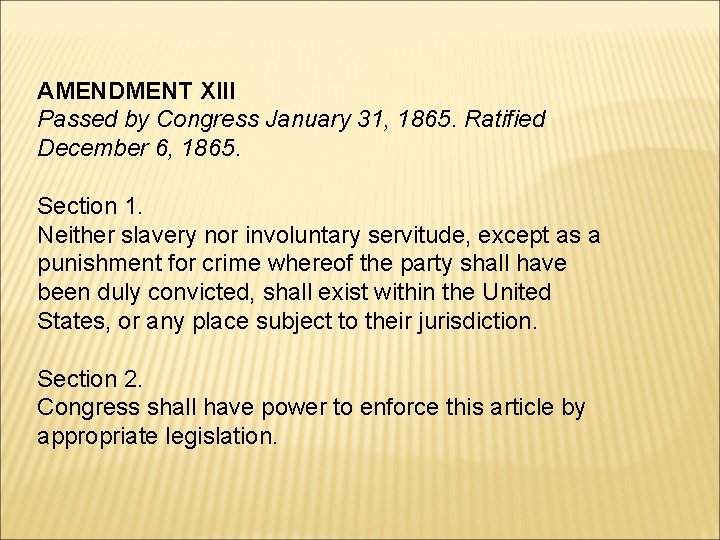
AMENDMENT XIII Passed by Congress January 31, 1865. Ratified December 6, 1865. Section 1. Neither slavery nor involuntary servitude, except as a punishment for crime whereof the party shall have been duly convicted, shall exist within the United States, or any place subject to their jurisdiction. Section 2. Congress shall have power to enforce this article by appropriate legislation.
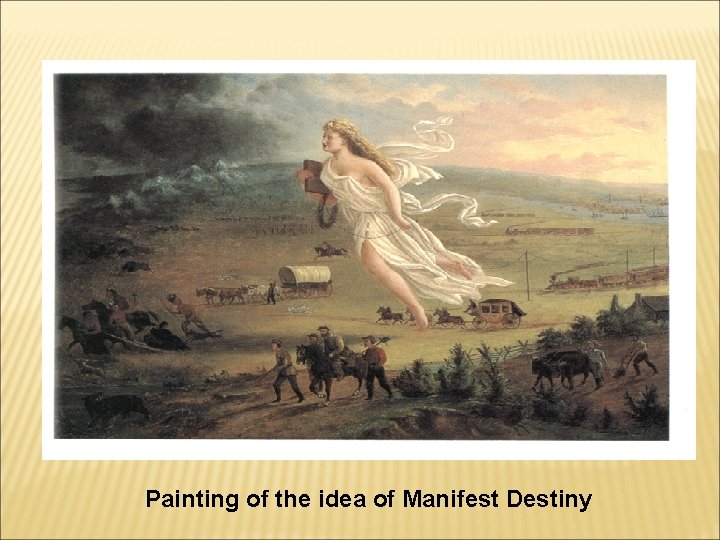
Painting of the idea of Manifest Destiny
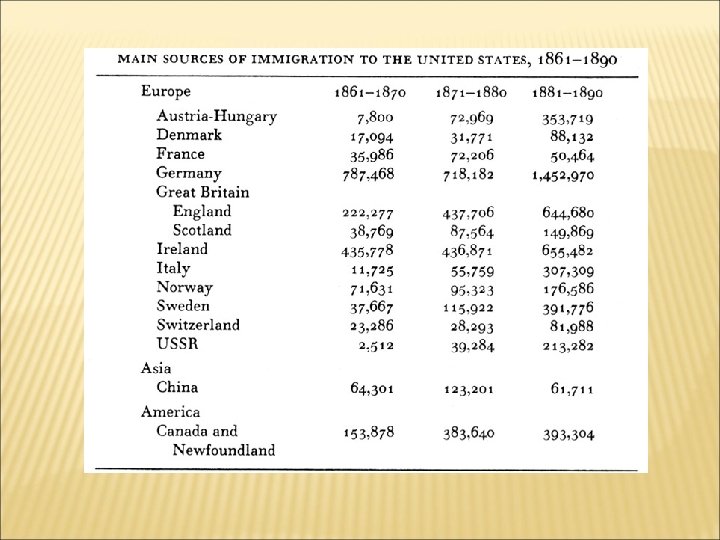
INDUSTRIALIZATION TOPICS The Reconstructed Nation Rise of American Business, Industry and Labor American Society & Industrialization American People and Places
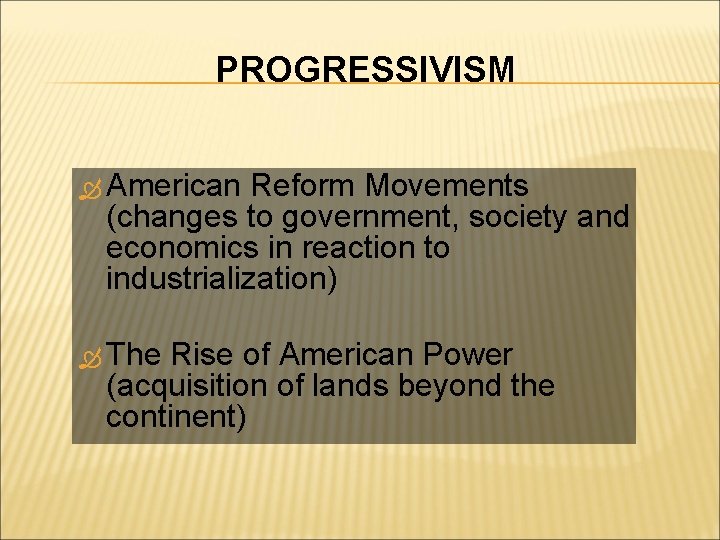
PROGRESSIVISM American Reform Movements (changes to government, society and economics in reaction to industrialization) The Rise of American Power (acquisition of lands beyond the continent)
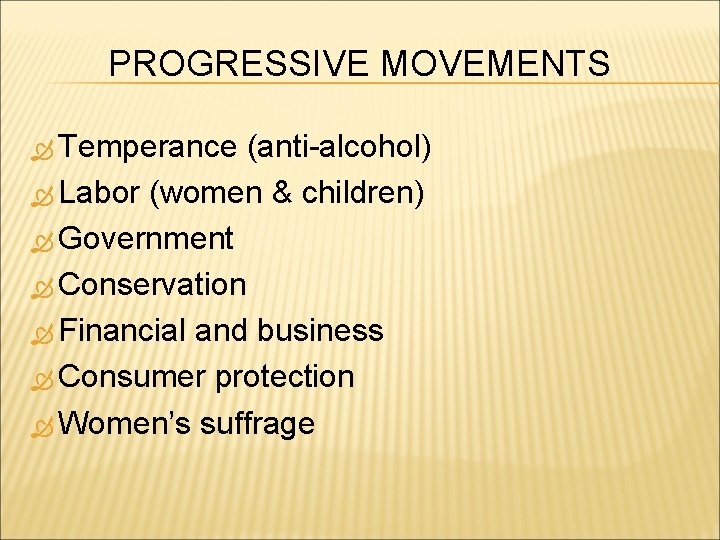
PROGRESSIVE MOVEMENTS Temperance (anti-alcohol) Labor (women & children) Government Conservation Financial and business Consumer protection Women’s suffrage
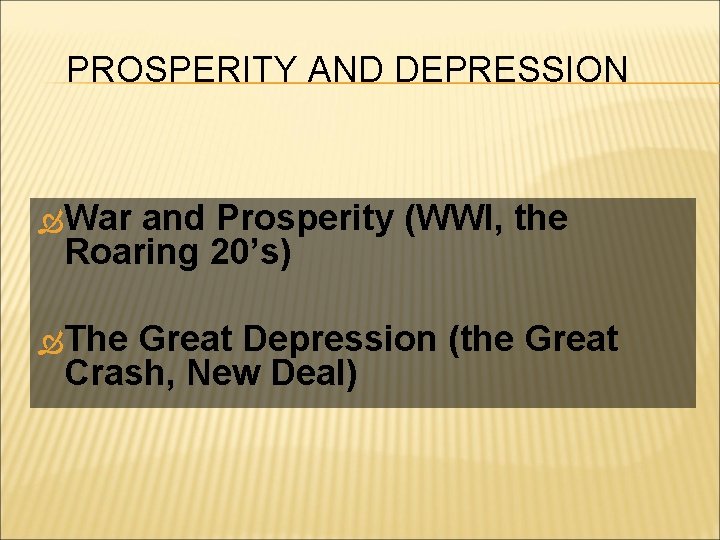
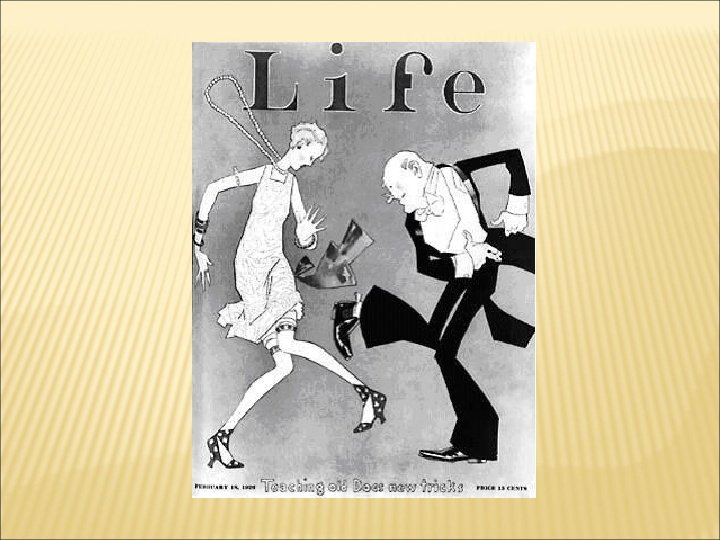
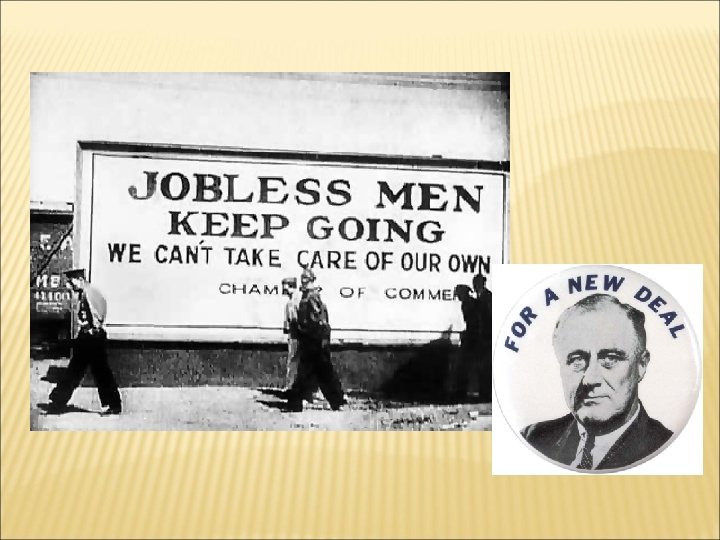
PROSPERITY AND DEPRESSION War and Prosperity (WWI, the Roaring 20’s) The Great Depression (the Great Crash, New Deal)
WILSON’S 14 POINTS 1) no more secret treaties 2) countries must seek to reduce their weapons and their armed forces 3) national self-determination should allow people of the same nationality to govern themselves and one nationality should not have the power to govern another 4) all countries should belong to the League of Nations.
PROSPERITY & DEPRESSION QUESTION What was one factor that led to the Great Depression? (1) government limitations on the amount of money in circulation (2) high wages paid by employers (3) increases in the tax rate for corporations (4) excessive speculation in the stock market
PROSPERITY & DEPRESSION QUESTION Much of the domestic legislation of the New Deal period was based on the idea that the federal government should (1) favor big business over labor and farming (2) assume some responsibility for the welfare of people (3) own and operate the major industries of the country (4) require local communities to be responsible for social welfare programs
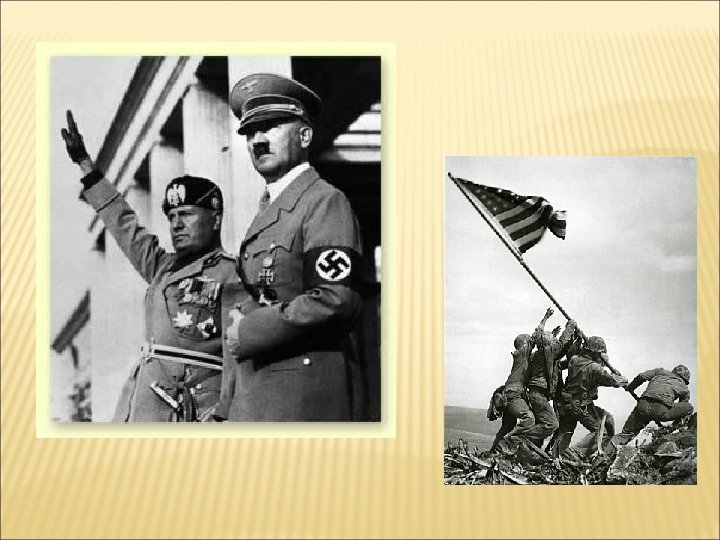
THE U. S. IN GLOBAL CRISIS Peace in Peril (The inter-war period, 1930 -1945, World War II) Peace with Problems (The Cold War, 1945 -1960)
GLOBAL CRISIS QUESTION “Arms Sales to Warring Nations Banned” “Americans Forbidden to Travel on Ships of Warring Nations” “Loans to Nations at War Forbidden” “War Materials Sold Only on Cash-and-Carry Basis” These headlines from the 1930 s reflect the efforts of the United States to (1) maintain freedom of the seas (2) send military supplies to the League of Nations (3) limit the spread of international communism (4) avoid participation in European wars
GLOBAL CRISIS QUESTION Before entering World War II, the United States acted as the “arsenal of democracy” by (1) creating a weapons stockpile for use after the war (2) financing overseas radio broadcasts in support of democracy (3) providing workers for overseas factories (4) supplying war materials to the Allies
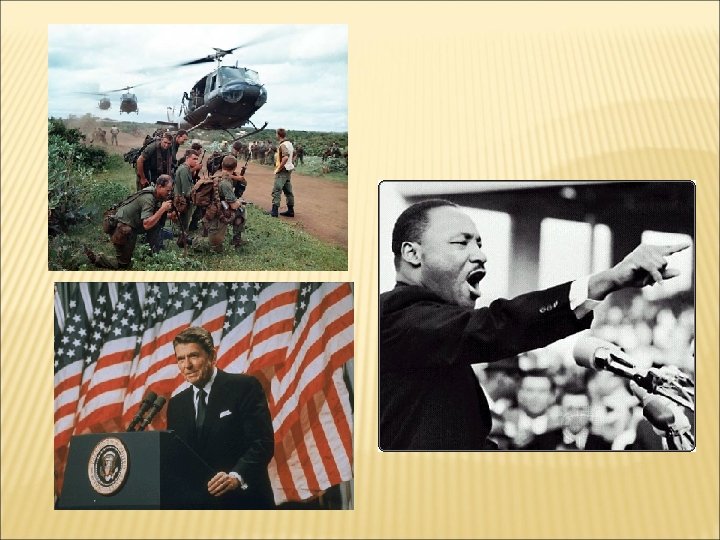
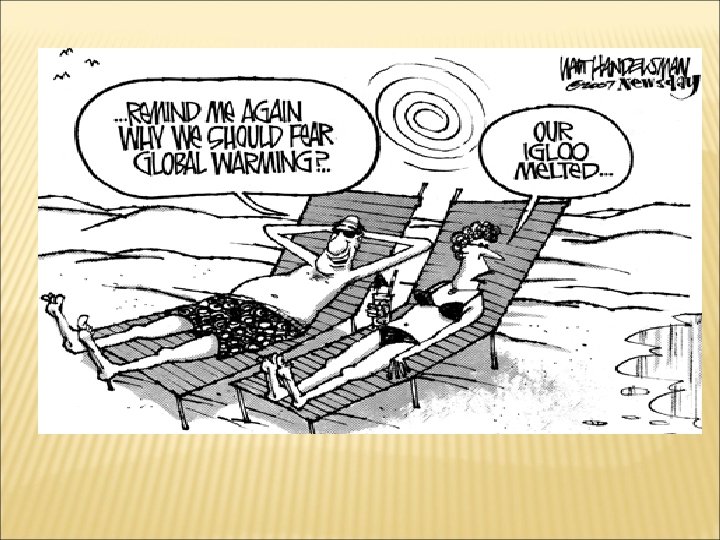
UNCERTAIN TIMES TOPICS Containment (The Cold War, 1945 -1960) Decade of Change (1960’s, Civil Rights) Limits of Power (Viet Nam, 1970’s, Watergate) Trend towards Conservatism (the 1980’s) The 21 st Century (War in Iraq, Afghanistan) The Post-Industrial Society (Global Warming, terrorism, financial crisis)
MULTIPLE CHOICE STRATEGIES Reading of Question and options at least twice each Process of Elimination (POE) Key Words or Phrases Word Association-Examples: (Policy of Containment = Cold War) (Emancipation=Slavery and Civil War)
READING OF QUESTION AND OPTIONS AT LEAST TWICE EACH Slowly read the entire question and all four options once. Follow up that by rereading the question and then utilizing the other three strategies to select the best possible answer of the four options given. By rereading each question at least twice you are giving yourself an opportunity to focus in on what the question is asking and selecting the best answer.
PROCESS OF ELIMINATION (P. O. E. ) Delegates to the Constitutional Convention of 1787 adopted the Great Compromise to settle differences over 1. slavery 2. representation in Congress 3. interstate trade 4. taxation
DATA BASED QUESTIONS Some questions are based on reading passages, cartoons, charts, quotes and other pieces of “data”. These questions often require an ability to recognize opinions expressed in the data. Sometimes the source of the data may help you understand the context of what’s being asked. Read the actual question first to look for clues as to what the answer might be.
Data based question “. . . That to secure these rights, governments are instituted among men, deriving their just powers from the consent of the governed, . . . ” — Declaration of Independence Which provision of the original United States Constitution was most influenced by this ideal? (1) enabling the president to select a cabinet (2) providing for direct election of the House of Representatives (3) allowing the Senate to try articles of impeachment (4) authorizing the Supreme Court to rule on disputes between states
RECALL QUESTIONS Some questions require you to know specific information about people, events, topics, concepts and vocabulary. Look for contextual clues in the question itself. Often, a time period, historical/ political concept or event contained within the question will help you find the answer.
RECALL QUESTION In the late 19 th century, critics of big business claimed that monopolies most harmed the economy by (1) limiting competition (2) decreasing the urban growth rate (3) preventing technological innovation (4) failing to keep pace with European industries
CAUSE AND EFFECT QUESTIONS Some questions test your understanding of cause and effect. A cause is an event or action that usually results in another event or action. Often by understanding the cause, a likely reaction or effect will become obvious.
CAUSE & EFFECT QUESTION Henry Ford’s use of the assembly line in the production of automobiles led directly to (1) a decrease in the number of automobiles available (2) a decrease in the cost of automobiles (3) an increase in the unemployment rate (4) an increase in the time needed to produce a single automobile
TIME REFERENCE QUESTIONS § § These types of questions make reference to a particular time period. You probably won’t have to identify specific dates but knowledge of general time periods and time sequences in order of events are necessary to properly answer these questions.
TIME REFERENCE QUESTION Which series of events leading to World War II is in the correct chronological order? (1) Neutrality Acts → Japanese attack on Pearl Harbor → Lend-Lease Act → United States declaration of war on Japan (2) Lend-Lease Act → Neutrality Acts → United States declaration of war on Japan → Japanese attack on Pearl Harbor (3) United States declaration of war on Japan → Japanese attack on Pearl Harbor →Lend-Lease Act → Neutrality Acts (4) Neutrality Acts → Lend-Lease Act → Japanese attack on Pearl Harbor → United States declaration of war on Japan
GENERALIZATIONS Some questions require you to draw a conclusion about a particular event, time period or body of information. Look for key words in these questions such as, primary, one, two reasons etc. . . You need to be able recall basic events, concepts or individuals in such a question.
GENERALIZATION QUESTION What was a primary goal of Franklin D. Roosevelt, Winston Churchill, and Joseph Stalin when they met at the Yalta Conference in 1945? (1) setting up postwar aid for Great Britain (2) sharing the development of atomic weapons (3) protecting the colonial empires of the warring nations (4) settling major wartime issues of the Allied Powers
FACT AND OPINION These types of questions ask you to find a statement that is clearly fact or opinion. Signal words for these questions such as most, greatest, chief, main etc… Often process of elimination or ranking the answers works best with these questions.
FACT & OPINION QUESTION A major purpose of President Woodrow Wilson’s Fourteen Points (1918) was to (1) ask Congress to enter World War I (2) set goals for achieving peace after World War I (3) provide an aid program for rebuilding war-torn nations (4) retaliate for the sinking of the Lusitania
THE THEMATIC ESSAY Part II of the exam requires you to write a thematic essay. This is an essay written completely from your knowledge of Social Studies. You will not have a choice of a question but you will be provided with suggested examples to work from.
The 2 required essays are chosen from themes in U. S. History • At least one essay must have a government theme. Some possible topics are: • 1. Laws and social change • 2. Roles of the Supreme Court • 3. Checks and Balances • 4. Citizenship • 5. Equal Rights
OTHER POSSIBLE THEMES 1. Geographic Factors 2. Intellectual Life and Reform 3. Technology 4. Twentieth Century Problems 5. Tradition Versus Change 6. Economic Policies and Systems 7. Environmental Issues 8. Factors of Production and Growth 9. Foreign Policies
OTHER POSSIBLE THEMES 10. Human Rights 11. Migration and Immigration 12. Individuals and Groups 13. Minorities 14. Diversity and Intolerance 15. Territorial Expansion
SAMPLE THEMATIC ESSAY QUESTION. Theme: Change — War United States participation in wars has resulted in political, social, and economic changes for various groups of Americans. These changes have had varying impacts on American society both during and after each war. Task: Identify two different groups of Americans that were affected by United States participation in a war and for each • Describe a social, political, or economic change the group experienced because of the war • Discuss the extent to which that change affected American society
SUGGESTIONS You may use any appropriate group from your study of United States history. Some suggestions you might wish to consider include enslaved persons during the Civil War, Native American Indians during the Indian Wars, women during World War I or World War II, Japanese Americans during World War II, and American college students or army draftees during the Vietnam War. You are not limited to these suggestions.
THEMATIC SUGGESTIONS Outline your answer Restate the question or task as a thesis by including specific references to what you plan to write about in the essay. If you are stuck, review the multiple choice section for possible information. There be a question that addressed the topic.
GUIDELINES Develop all aspects of the task. Support theme with relevant facts, examples and details. Use a logical and clear plan of organization including an introduction, body paragraphs and a conclusion. Do not just re-phrase theme but illustrate your ability to analyze ideas.
DOCUMENT BASED QUESTIONS There is one document based question on the exam. Part A of the DBQ will require you to answer scaffolding questions based on the Documents. Part B requires you to analyze the documents and write an essay that includes your knowledge of social studies.
GUIDELINES Read the historical context carefully (be careful not to re-state it word for word). Read and understand the task. Do not leave any blanks on the scaffolding and answer with complete sentences. Keep track of the main ideas and outline or block your essay (follow the requirements of the task).
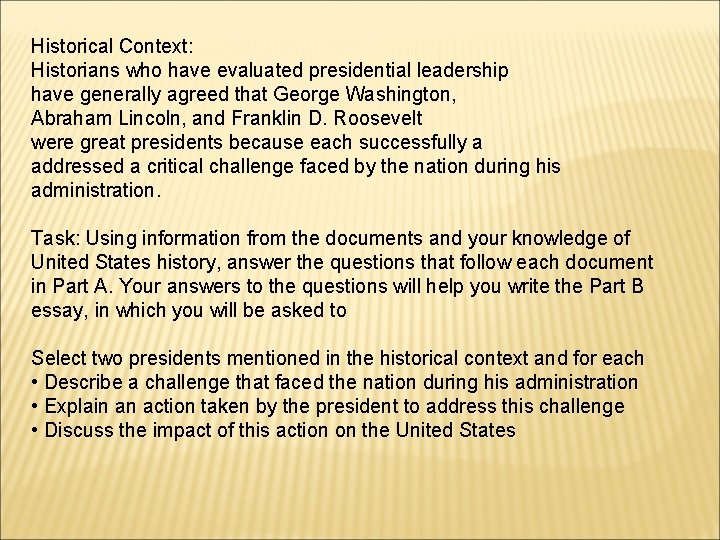
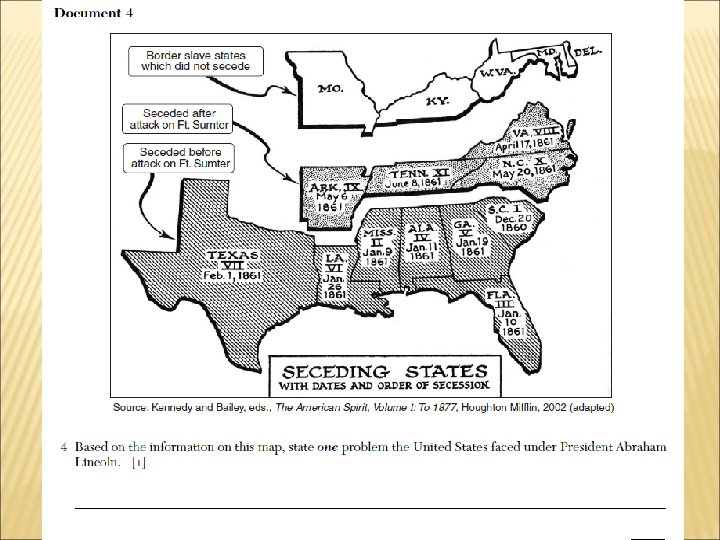
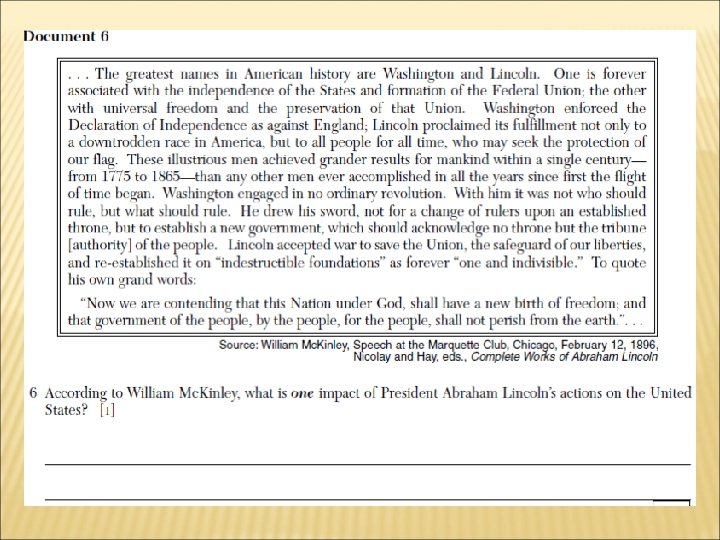
Historical Context: Historians who have evaluated presidential leadership have generally agreed that George Washington, Abraham Lincoln, and Franklin D. Roosevelt were great presidents because each successfully a addressed a critical challenge faced by the nation during his administration. Task: Using information from the documents and your knowledge of United States history, answer the questions that follow each document in Part A. Your answers to the questions will help you write the Part B essay, in which you will be asked to Select two presidents mentioned in the historical context and for each • Describe a challenge that faced the nation during his administration • Explain an action taken by the president to address this challenge • Discuss the impact of this action on the United States
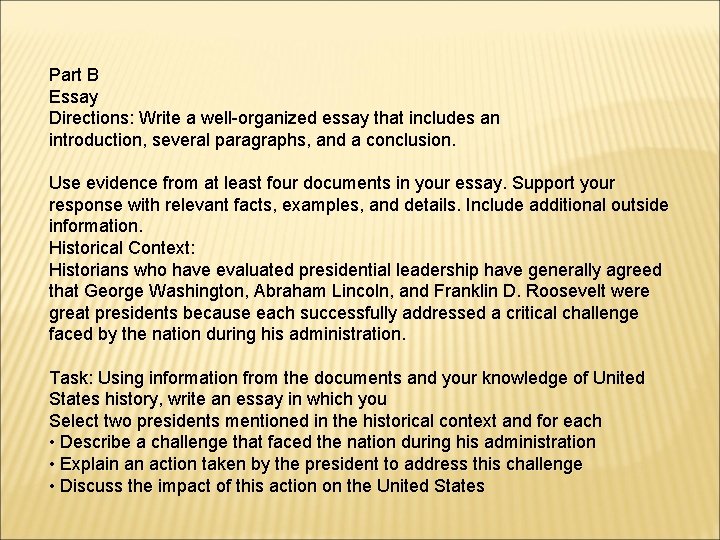
Part B Essay Directions: Write a well-organized essay that includes an introduction, several paragraphs, and a conclusion. Use evidence from at least four documents in your essay. Support your response with relevant facts, examples, and details. Include additional outside information. Historical Context: Historians who have evaluated presidential leadership have generally agreed that George Washington, Abraham Lincoln, and Franklin D. Roosevelt were great presidents because each successfully addressed a critical challenge faced by the nation during his administration. Task: Using information from the documents and your knowledge of United States history, write an essay in which you Select two presidents mentioned in the historical context and for each • Describe a challenge that faced the nation during his administration • Explain an action taken by the president to address this challenge • Discuss the impact of this action on the United States