Asset Management for Airfield Lighting Timothy Parsons P




- Slides: 40
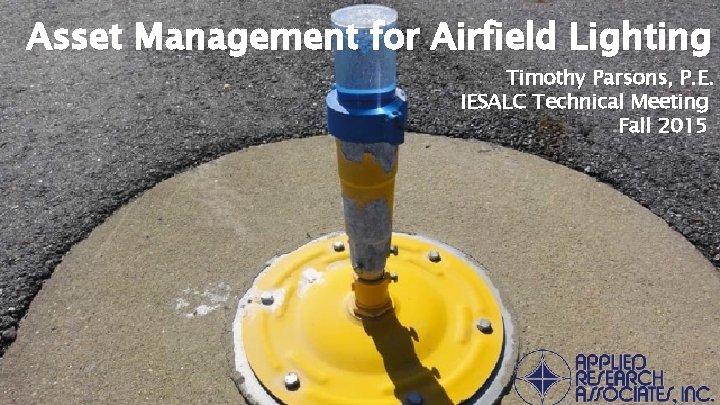
Asset Management for Airfield Lighting Timothy Parsons, P. E. IESALC Technical Meeting Fall 2015
Asset Management for Airfield Lighting � Driver � Implementation � Lessons Learned
Asset Management? �A system for monitoring and maintaining things of value � GASB-34 and local directives require it ◦ See the cost of providing services to its citizenry ◦ Understand the extent to which the government has invested in capital assets � USAF Asset Management Program and Comprehensive Asset Management Plan � Increasingly used to justify funding requests
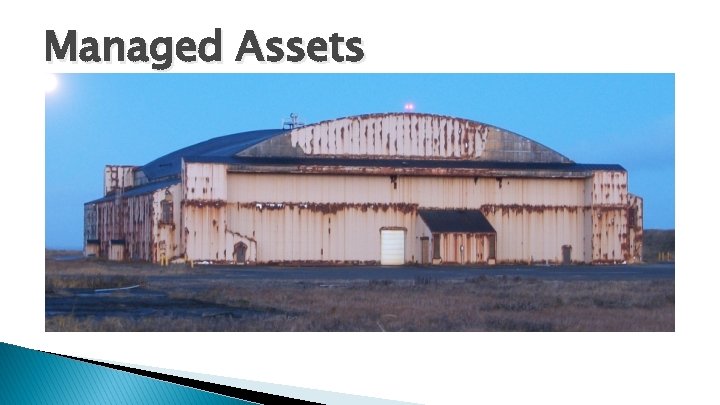
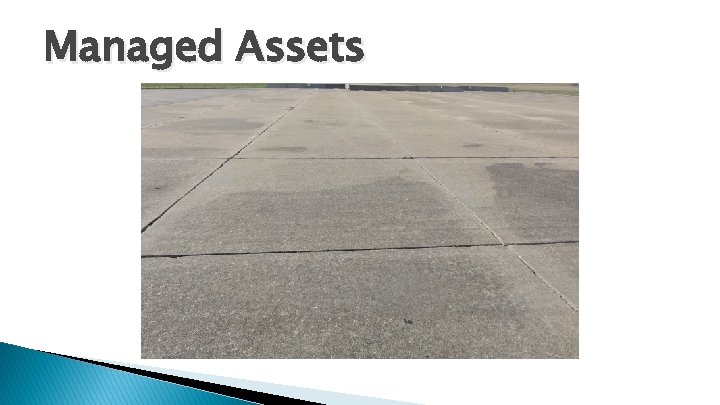
Managed Assets
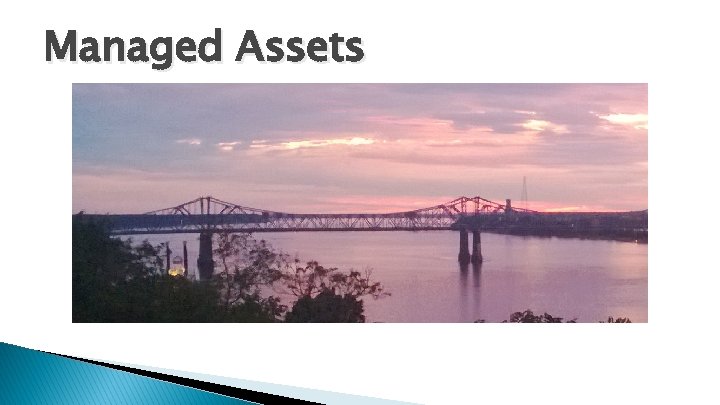
Managed Assets
Managed Assets
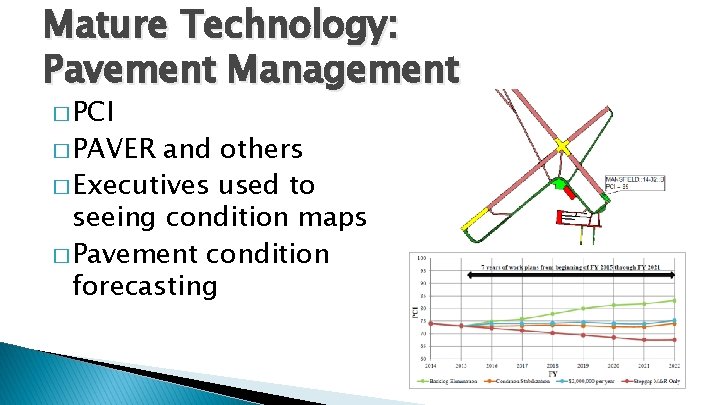
Mature Technology: Pavement Management � PCI � PAVER and others � Executives used to seeing condition maps � Pavement condition forecasting
Demonstration Project � On-site for PCI inspection � Inventory and visual condition of assets ◦ Lighted signs ◦ Regulators � Evaluation compliance with criteria � Estimated maintenance needs
Gather Data Type Number Condition
Records Research � What kind of assets? � How many? � Age and condition?
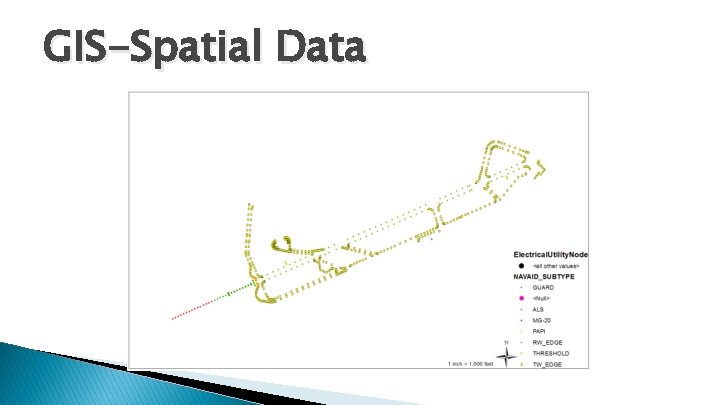
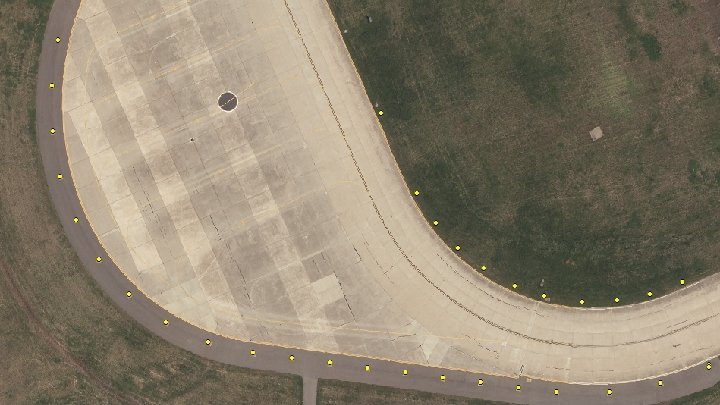
GIS-Spatial Data
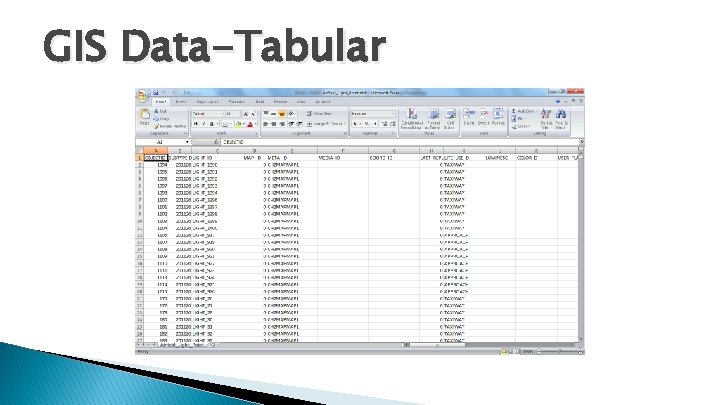
GIS Data-Tabular
Aerial Photography
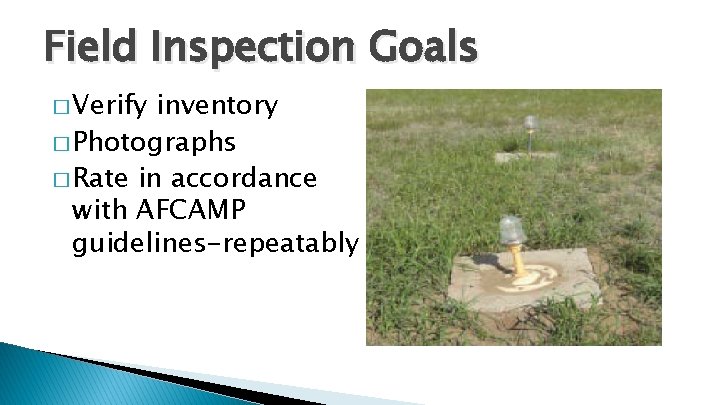
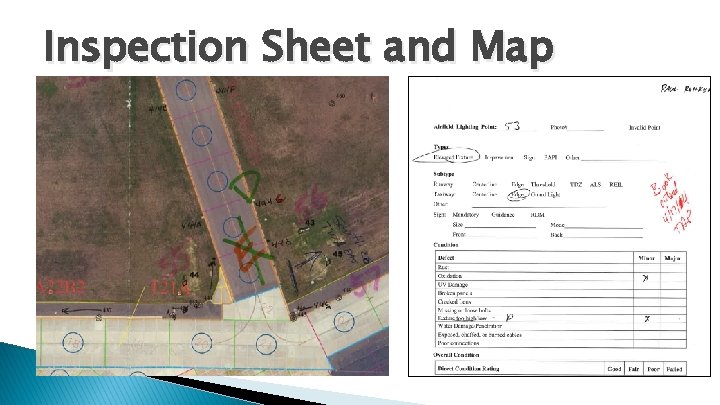
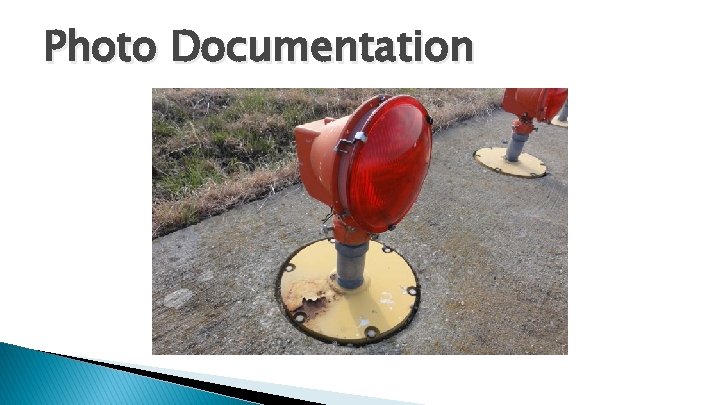
Field Inspection Goals � Verify inventory � Photographs � Rate in accordance with AFCAMP guidelines-repeatably
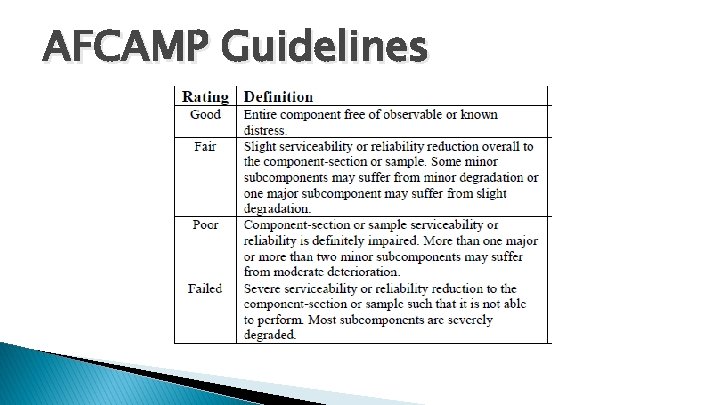
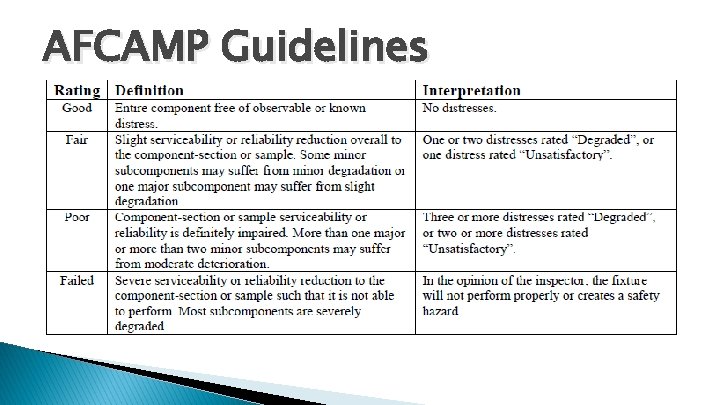
AFCAMP Guidelines
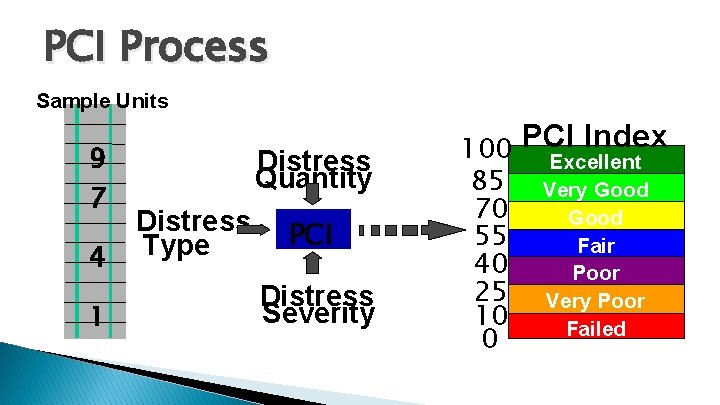
PCI Process Sample Units 9 7 4 1 Distress Quantity Distress Type PCI Distress Severity Index 100 PCI Excellent 85 Very Good 70 Good 55 Fair 40 Poor 25 Very Poor 10 Failed 0
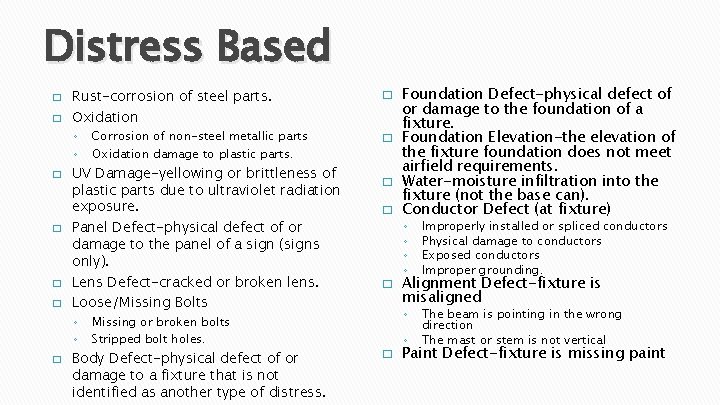
Distress Based � � Rust-corrosion of steel parts. Oxidation ◦ ◦ � � UV Damage-yellowing or brittleness of plastic parts due to ultraviolet radiation exposure. Panel Defect-physical defect of or damage to the panel of a sign (signs only). Lens Defect-cracked or broken lens. Loose/Missing Bolts ◦ ◦ � Corrosion of non-steel metallic parts Oxidation damage to plastic parts. Missing or broken bolts Stripped bolt holes. Body Defect-physical defect of or damage to a fixture that is not identified as another type of distress. � � � Foundation Defect-physical defect of or damage to the foundation of a fixture. Foundation Elevation-the elevation of the fixture foundation does not meet airfield requirements. Water-moisture infiltration into the fixture (not the base can). Conductor Defect (at fixture) ◦ ◦ Improperly installed or spliced conductors Physical damage to conductors Exposed conductors Improper grounding. ◦ The beam is pointing in the wrong direction The mast or stem is not vertical Alignment Defect-fixture is misaligned ◦ � Paint Defect-fixture is missing paint
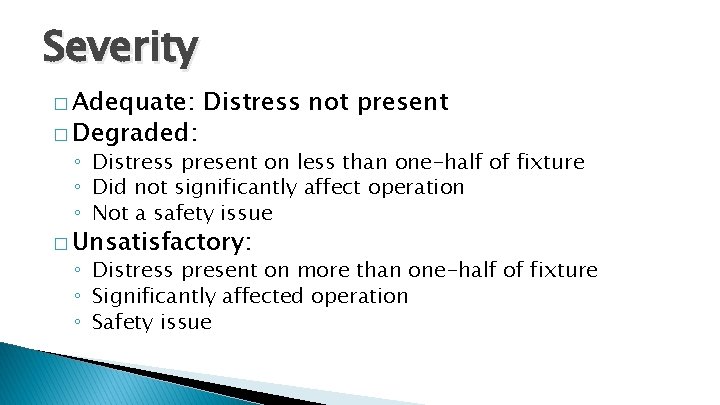
Severity � Adequate: � Degraded: Distress not present ◦ Distress present on less than one-half of fixture ◦ Did not significantly affect operation ◦ Not a safety issue � Unsatisfactory: ◦ Distress present on more than one-half of fixture ◦ Significantly affected operation ◦ Safety issue
AFCAMP Guidelines
Inspection Sheet and Map
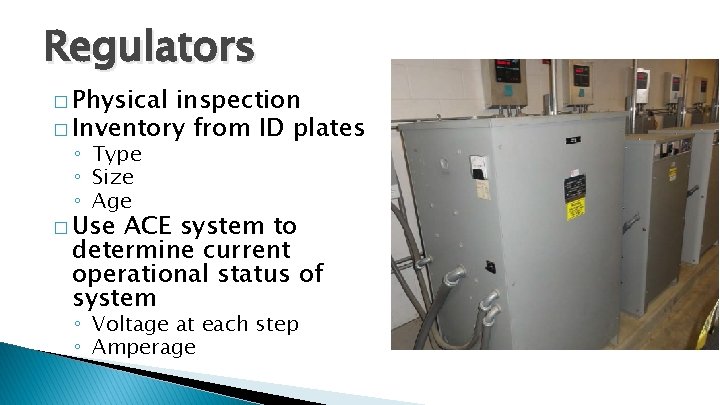
Regulators � Physical inspection � Inventory from ID plates ◦ Type ◦ Size ◦ Age � Use ACE system to determine current operational status of system ◦ Voltage at each step ◦ Amperage
Field Inspection � Electrical inspector stayed close to pavement team � Spent one day in vault � Tower turned lights on/off to collect power consumption readings at regulators � No significant additional impact to installation
Analysis
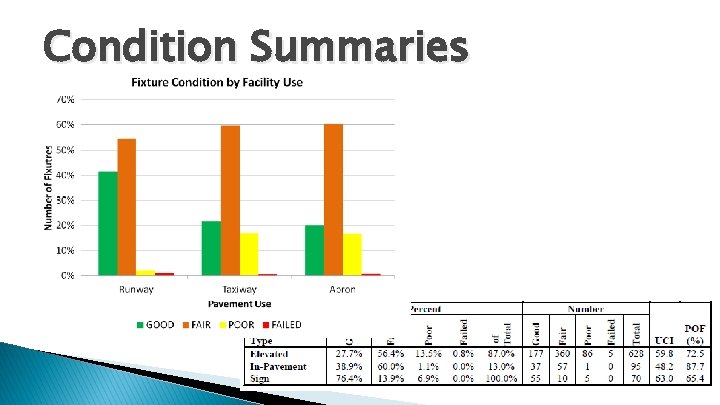
Reporting Requirements � AMP/CAMP input calculations ◦ Utility Condition Index ◦ Probability of Failure � Power consumption � Compliance with criteria � Required M&R ◦ Activities ◦ Costs
AMP/CAMP � Standardized calculation � Implemented as an Excel spreadsheet ◦ UCI assigns points based on rating of Good/Fair/Poor and age ◦ POF based on UCI calculation
Power Consumption � Inexact-used Volts*Amps � Estimated theoretical power consumption ◦ ◦ ◦ 0. 68 Ohm/1, 000 ft of cable 12 W LED TW edge lights 105 W RW edge lights 200 W approach lights 3 -lamp 153 W threshold lights 9 -lamp signs � Compare to measured consumption
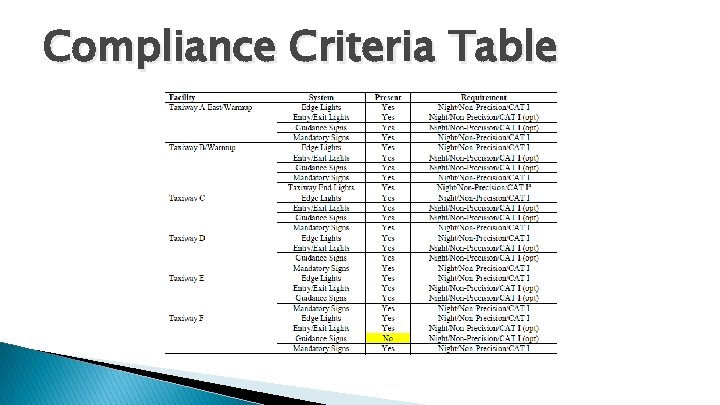
Compliance with Criteria � UFC 3 -535 -01 (military airfield) � System requirements � Component location � GIS techniques
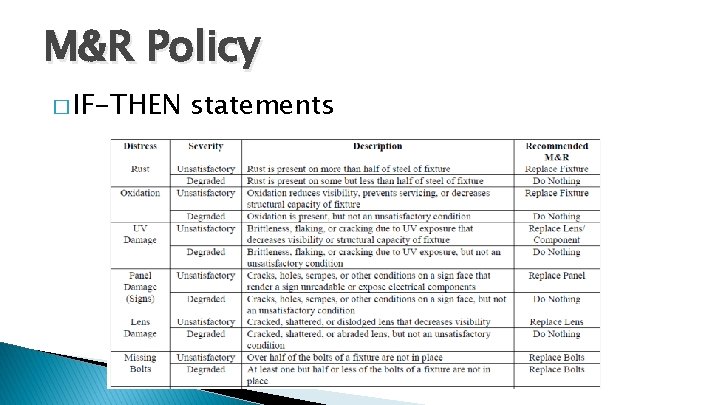
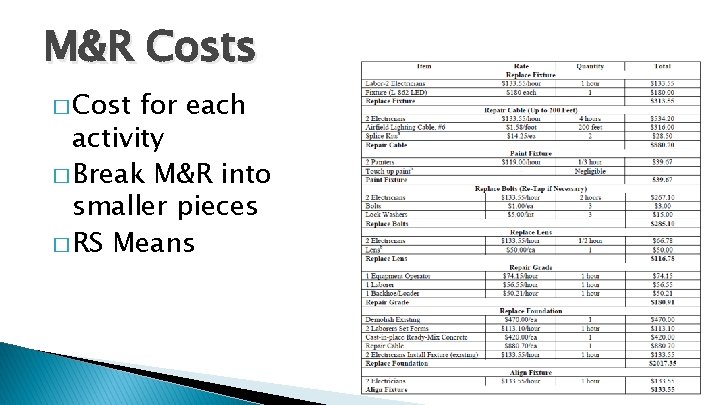
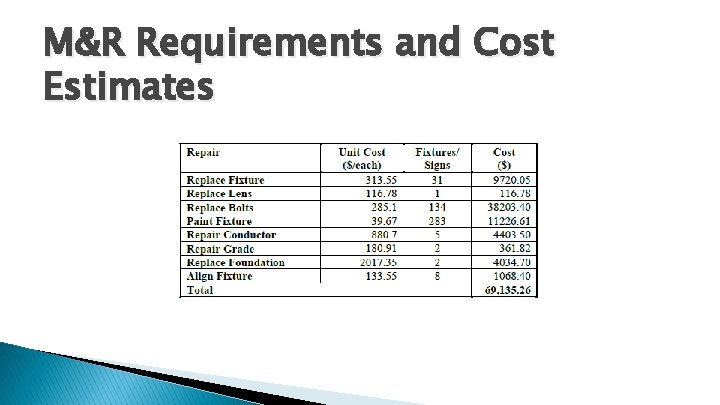
Maintenance Requirements � Borrow concepts from pavement management ◦ M&R policy ◦ M&R cost � No basis for condition forecasting � “Consequence” analysis
M&R Policy � IF-THEN statements
M&R Costs � Cost for each activity � Break M&R into smaller pieces � RS Means
Report Products
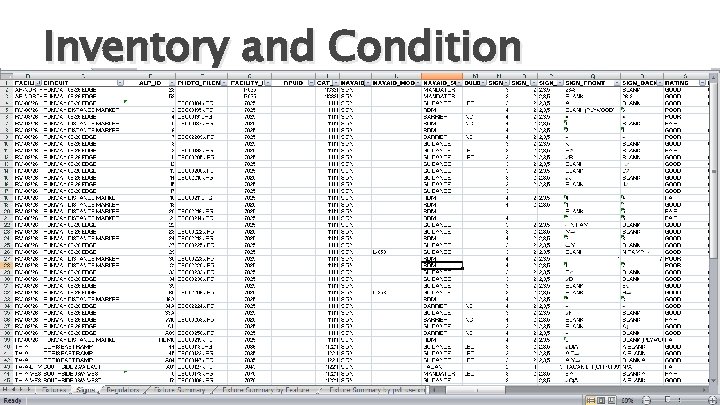
Inventory and Condition
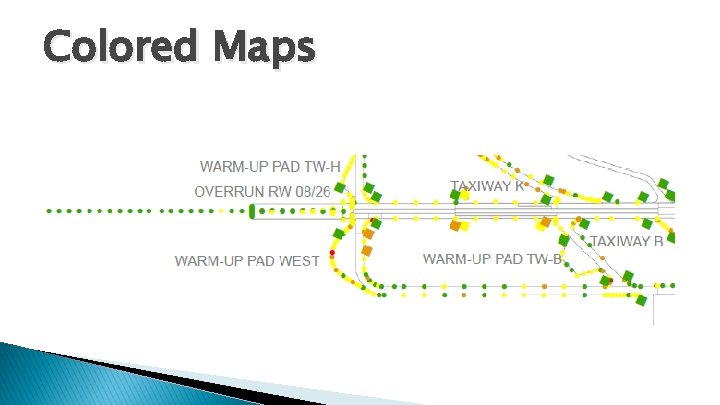
Colored Maps
Condition Summaries
Photo Documentation
M&R Requirements and Cost Estimates
Compliance Criteria Table
Deliverables � GIS data set � Project report � Provides facility engineer with data to justify funding requests
Lessons Learned � Basic approach appears sound � Subject Matter Expert input required ◦ Distress and severity definitions require refinement ◦ Load/consumption calculations ◦ Identify other indicators of condition � Inspection speed comparable to pavement inspection � Minimal additional impact to facility
Questions?