
From Parsons True Reasoning to Models and Applications


- Slides: 24
From Parsons’ “True Reasoning” to Models and Applications in Career Decision Making Itamar Gati The Hebrew University of Jerusalem Presented at the Symposium (Paul Gore Chair) Spotlight on Science: Contributions from Vocational Psychology
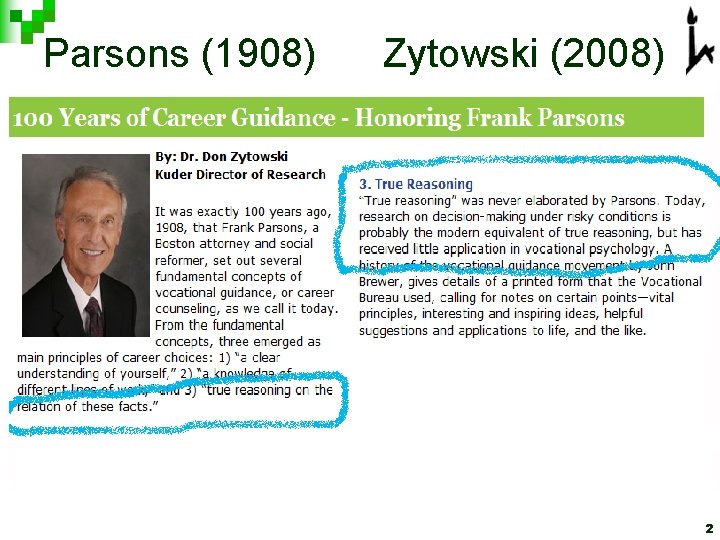
Parsons (1908) Zytowski (2008) 2
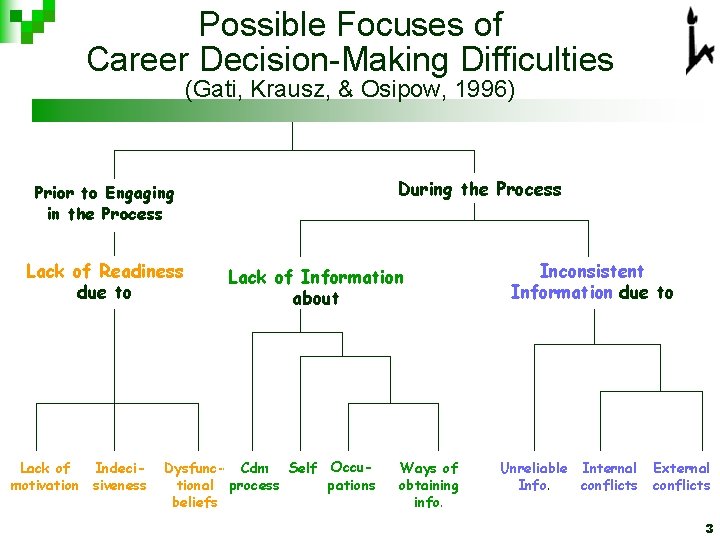
Possible Focuses of Career Decision-Making Difficulties (Gati, Krausz, & Osipow, 1996) During the Process Prior to Engaging in the Process Lack of Readiness due to Lack of Indecimotivation siveness Lack of Information about Dysfunc- Cdm Self Occutional process pations beliefs Ways of obtaining info. Inconsistent Information due to Unreliable Internal Info. conflicts External conflicts 3
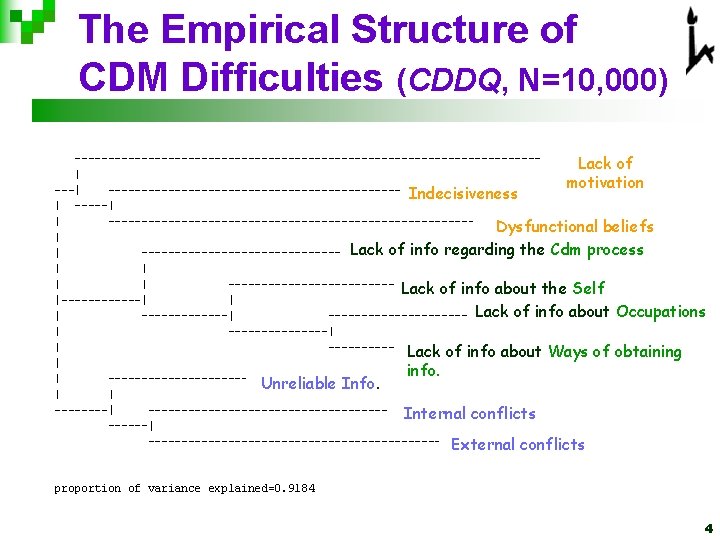
The Empirical Structure of CDM Difficulties (CDDQ, N=10, 000) Indecisiveness Lack of motivation Dysfunctional beliefs Lack of info regarding the Cdm process Lack of info about the Self Lack of info about Occupations Unreliable Info. Lack of info about Ways of obtaining info. Internal conflicts External conflicts 4
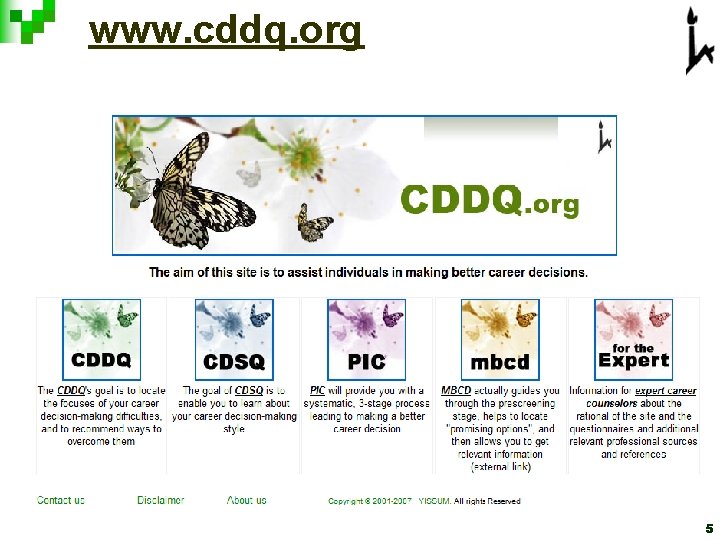
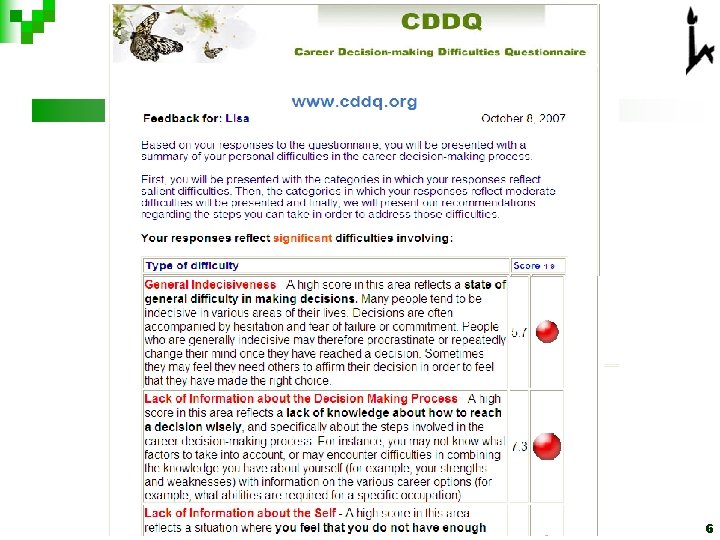
www. cddq. org 5
6
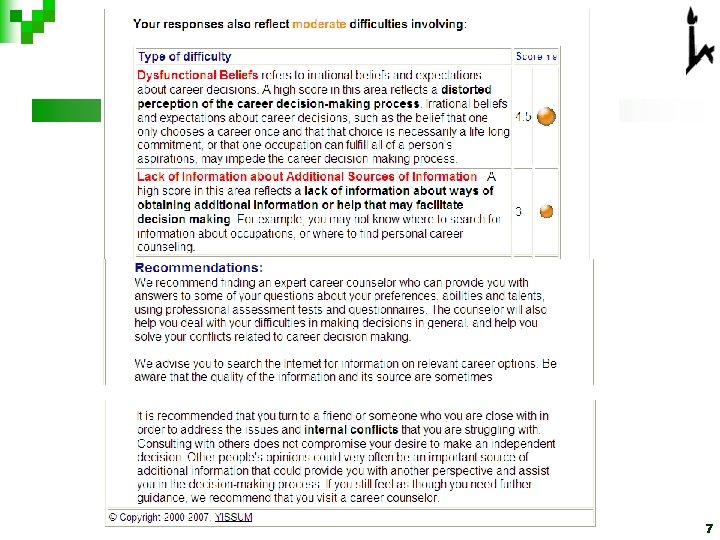
7
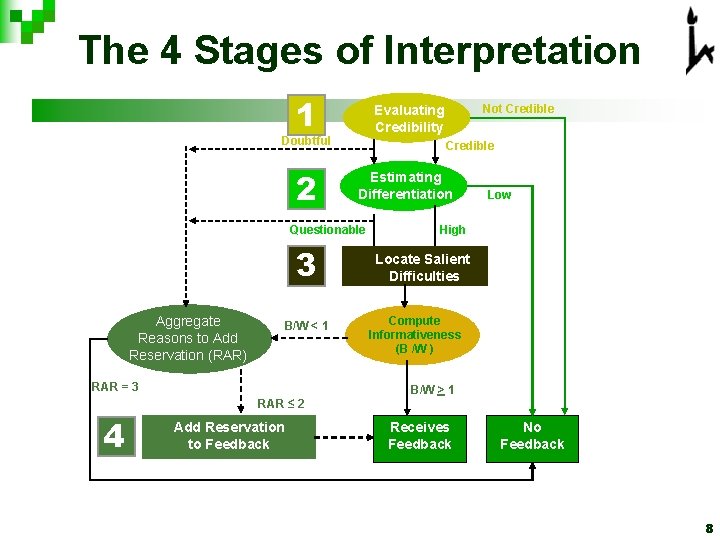
The 4 Stages of Interpretation 1 Doubtful 2 Credible Estimating Differentiation Questionable 3 Aggregate Reasons to Add Reservation (RAR) B/W < 1 RAR = 3 RAR ≤ 2 4 Add Reservation to Feedback Not Credible Evaluating Credibility Low High Locate Salient Difficulties Compute Informativeness (B /W ) B/W > 1 Receives Feedback No Feedback 8
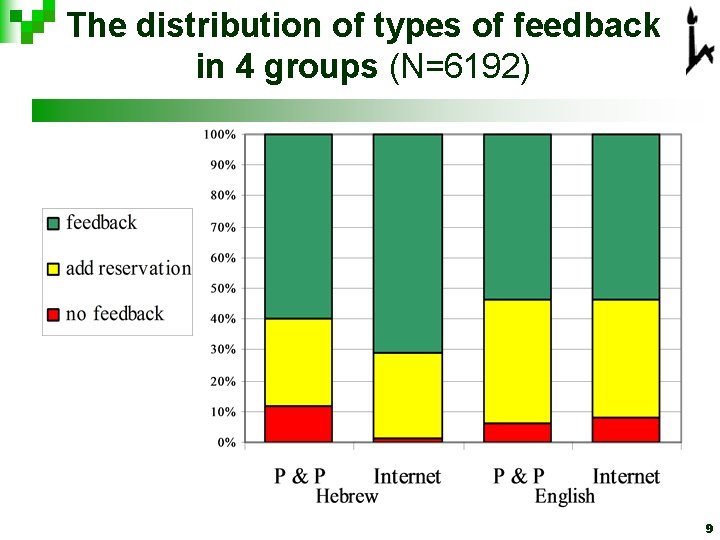
The distribution of types of feedback in 4 groups (N=6192) 9
Conclusions n The incorporation of an intermediate level of discrimination increases the usefulness of the feedback and decreases the chances and implications of potential errors n Adding reservations when appropriate is essential for providing a meaningful feedback and decreasing the chances of misleading conclusions 10
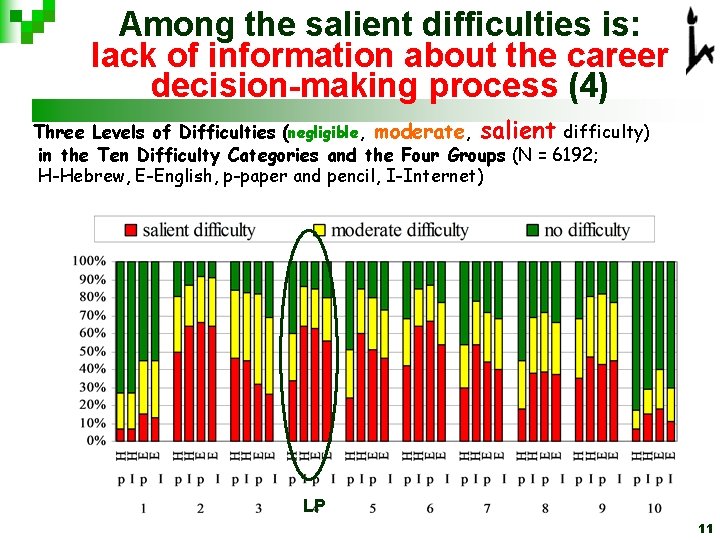
Among the salient difficulties is: lack of information about the career decision-making process (4) Three Levels of Difficulties (negligible, moderate, salient difficulty) in the Ten Difficulty Categories and the Four Groups (N = 6192; H-Hebrew, E-English, p-paper and pencil, I-Internet) LP 11
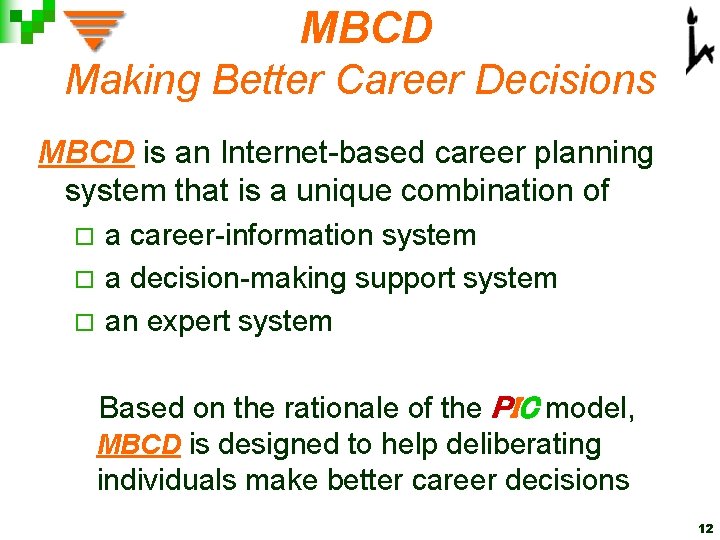
MBCD Making Better Career Decisions MBCD is an Internet-based career planning system that is a unique combination of ¨ a career-information system ¨ a decision-making support system ¨ an expert system Based on the rationale of the PIC model, MBCD is designed to help deliberating individuals make better career decisions 12
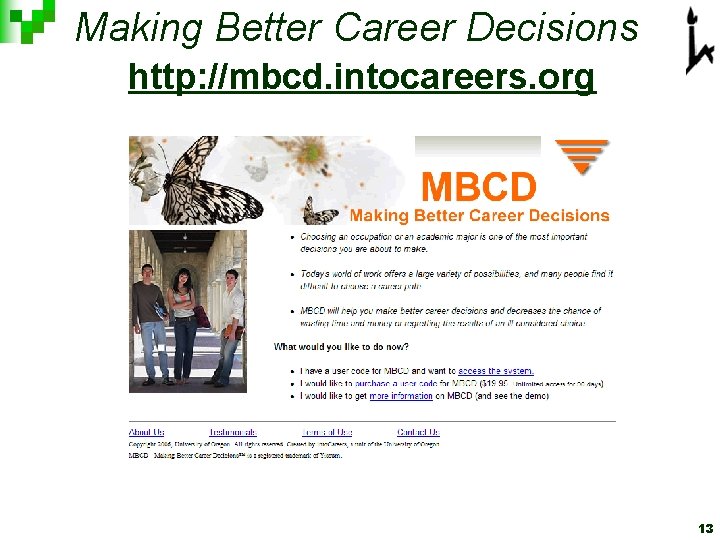
Making Better Career Decisions http: //mbcd. intocareers. org 13
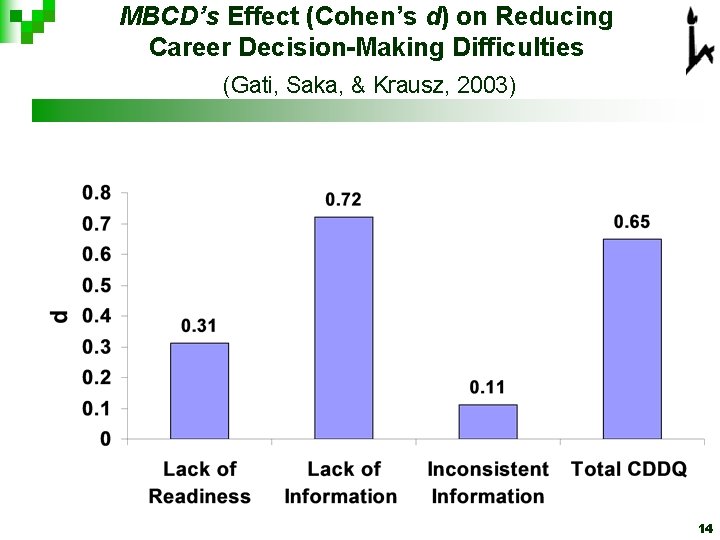
MBCD’s Effect (Cohen’s d) on Reducing Career Decision-Making Difficulties (Gati, Saka, & Krausz, 2003) 14
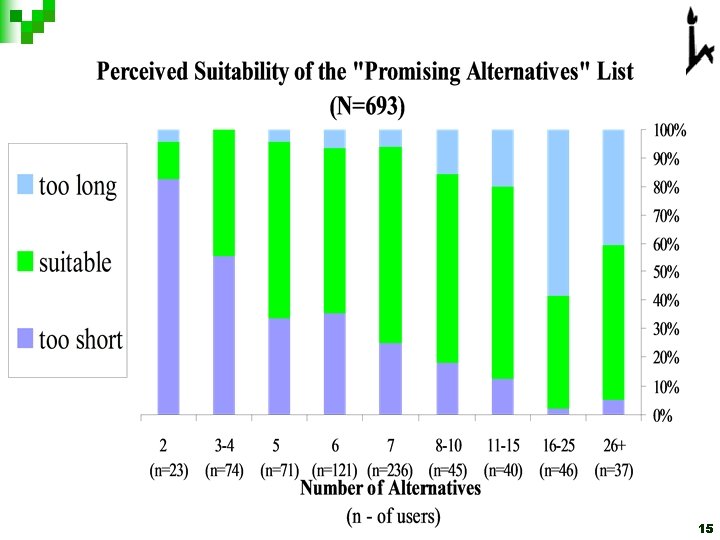
15
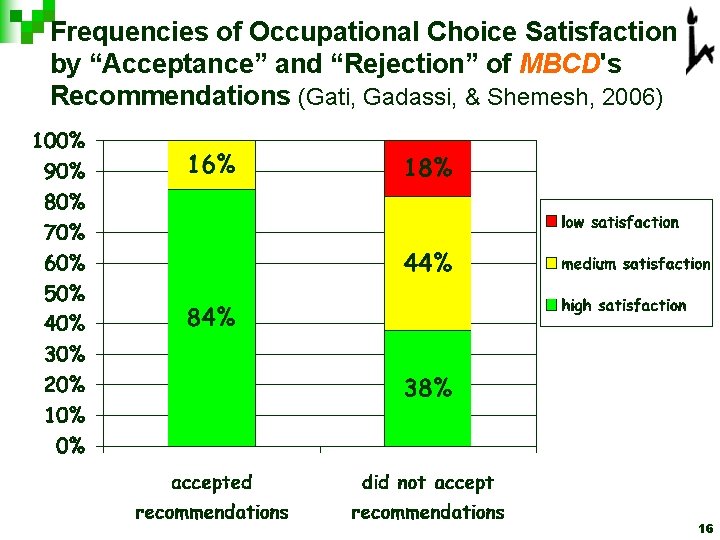
Frequencies of Occupational Choice Satisfaction by “Acceptance” and “Rejection” of MBCD's Recommendations (Gati, Gadassi, & Shemesh, 2006) 16
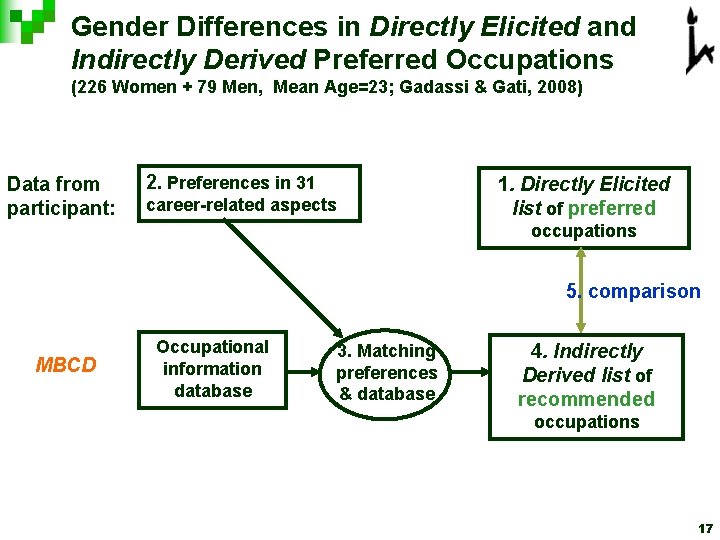
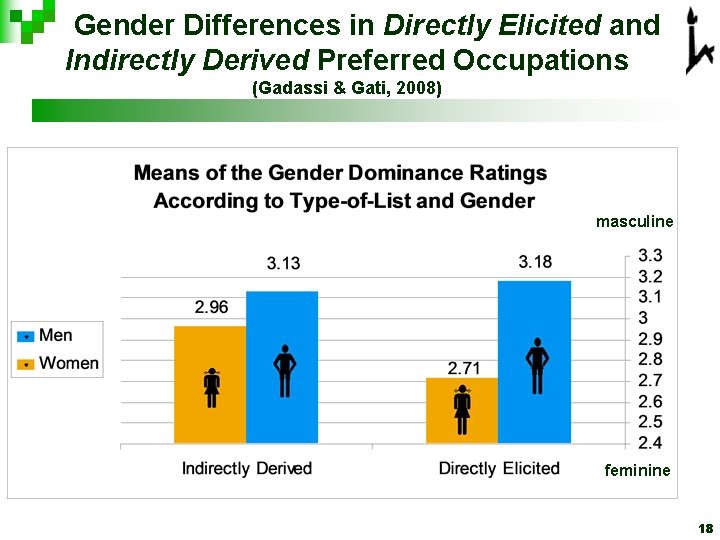
Gender Differences in Directly Elicited and Indirectly Derived Preferred Occupations (226 Women + 79 Men, Mean Age=23; Gadassi & Gati, 2008) Data from participant: 2. Preferences in 31 career-related aspects 1. Directly Elicited list of preferred occupations 5. comparison MBCD Occupational information database 3. Matching preferences & database 4. Indirectly Derived list of recommended occupations 17
Gender Differences in Directly Elicited and Indirectly Derived Preferred Occupations (Gadassi & Gati, 2008) masculine feminine 18
www. cddq. org itamar. gati@huji. ac. il 19
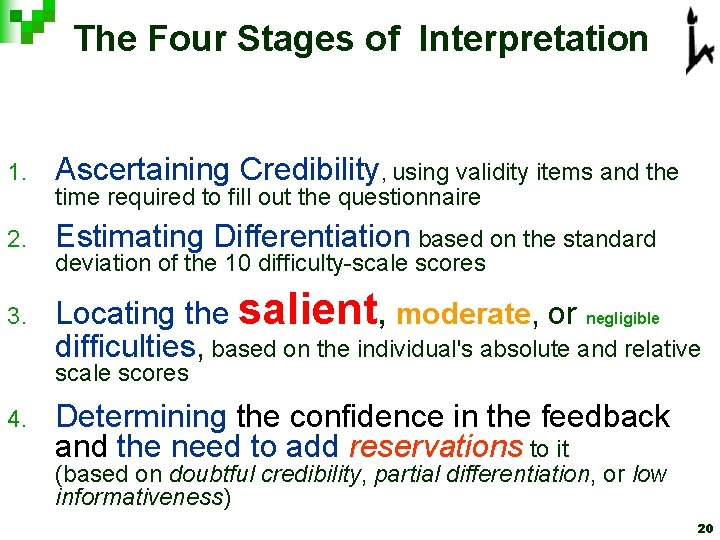
The Four Stages of Interpretation 1. Ascertaining Credibility, using validity items and the 2. Estimating Differentiation based on the standard 3. Locating the salient, moderate, or negligible difficulties, based on the individual's absolute and relative time required to fill out the questionnaire deviation of the 10 difficulty-scale scores 4. Determining the confidence in the feedback and the need to add reservations to it (based on doubtful credibility, partial differentiation, or low informativeness) 20
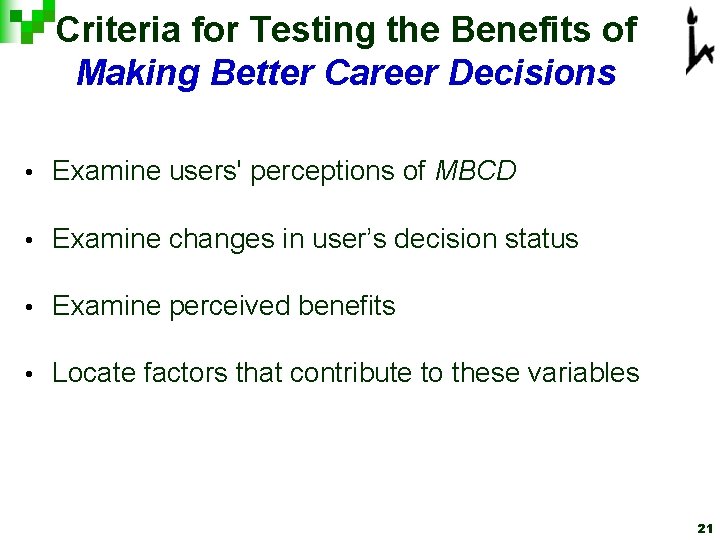
Criteria for Testing the Benefits of Making Better Career Decisions • Examine users' perceptions of MBCD • Examine changes in user’s decision status • Examine perceived benefits • Locate factors that contribute to these variables 21
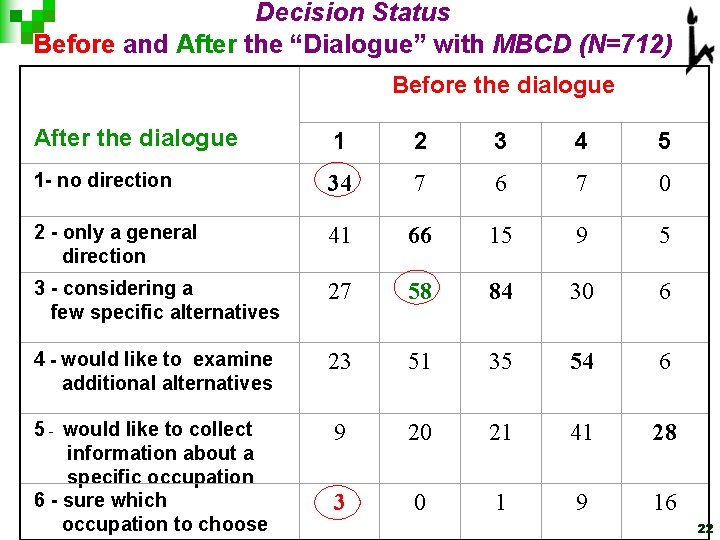
Decision Status Before and After the “Dialogue” with MBCD (N=712) Before the dialogue After the dialogue 1 2 3 4 5 1 - no direction 34 7 6 7 0 2 - only a general direction 41 3 - considering a few specific alternatives 27 66 15 9 5 58 84 30 6 4 - would like to examine additional alternatives 23 51 35 54 6 5 - would like to collect information about a specific occupation 6 - sure which occupation to choose 9 20 21 41 28 3 0 1 9 16 22
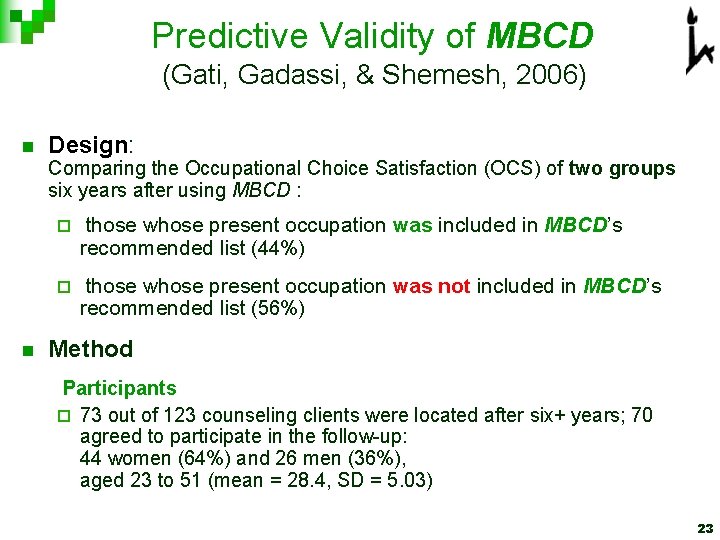
Predictive Validity of MBCD (Gati, Gadassi, & Shemesh, 2006) n Design: Comparing the Occupational Choice Satisfaction (OCS) of two groups six years after using MBCD : n ¨ those whose present occupation was included in MBCD’s recommended list (44%) ¨ those whose present occupation was not included in MBCD’s recommended list (56%) Method Participants ¨ 73 out of 123 counseling clients were located after six+ years; 70 agreed to participate in the follow-up: 44 women (64%) and 26 men (36%), aged 23 to 51 (mean = 28. 4, SD = 5. 03) 23
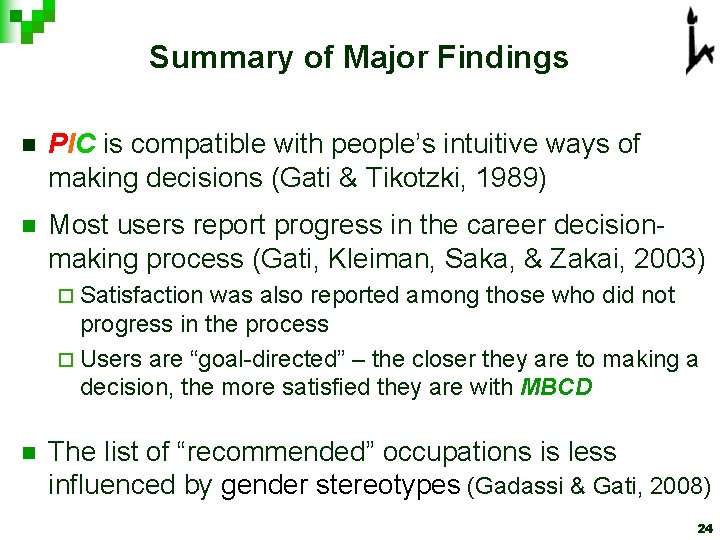
Summary of Major Findings n PIC is compatible with people’s intuitive ways of making decisions (Gati & Tikotzki, 1989) n Most users report progress in the career decisionmaking process (Gati, Kleiman, Saka, & Zakai, 2003) ¨ Satisfaction was also reported among those who did not progress in the process ¨ Users are “goal-directed” – the closer they are to making a decision, the more satisfied they are with MBCD n The list of “recommended” occupations is less influenced by gender stereotypes (Gadassi & Gati, 2008) 24