Aspen Tutorial Terry A Ring Ch EN 4253
- Slides: 28
Aspen Tutorial Terry A. Ring Ch. EN 4253
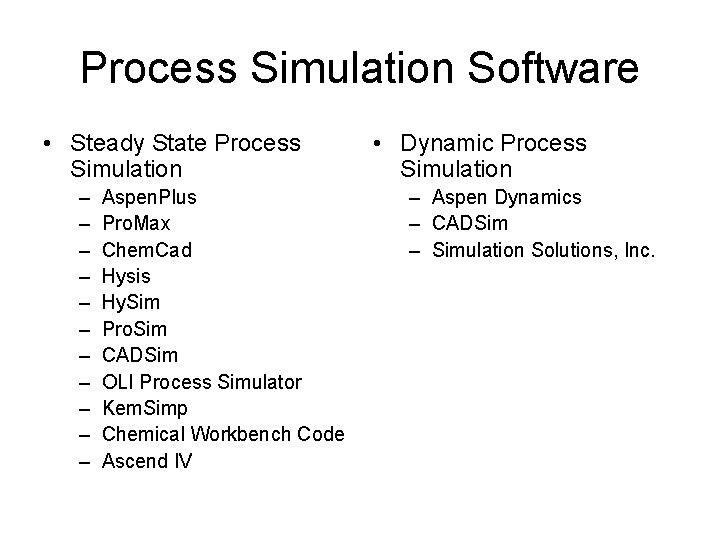
Process Simulation Software • Steady State Process Simulation – – – Aspen. Plus Pro. Max Chem. Cad Hysis Hy. Sim Pro. Sim CADSim OLI Process Simulator Kem. Simp Chemical Workbench Code Ascend IV • Dynamic Process Simulation – Aspen Dynamics – CADSim – Simulation Solutions, Inc.
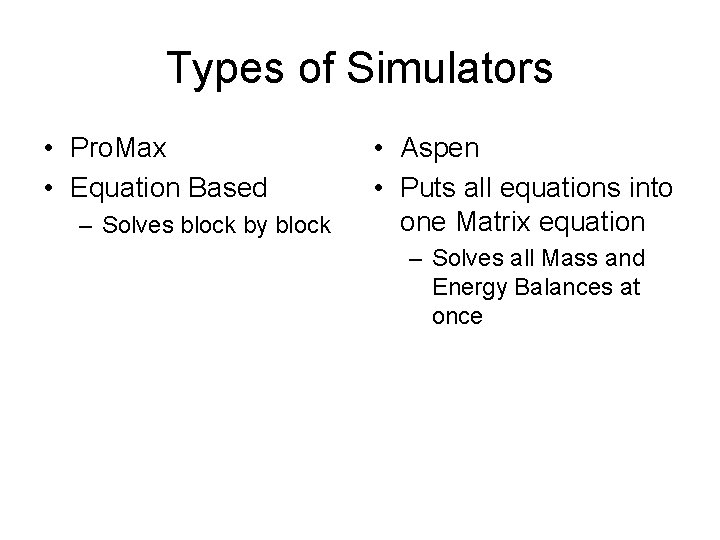
Types of Simulators • Pro. Max • Equation Based – Solves block by block • Aspen • Puts all equations into one Matrix equation – Solves all Mass and Energy Balances at once
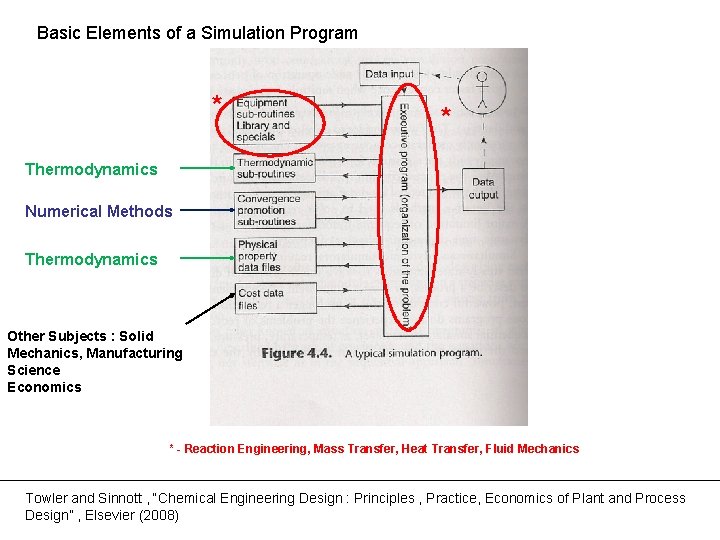
Basic Elements of a Simulation Program * * Thermodynamics Numerical Methods Thermodynamics Other Subjects : Solid Mechanics, Manufacturing Science Economics * - Reaction Engineering, Mass Transfer, Heat Transfer, Fluid Mechanics Towler and Sinnott , “Chemical Engineering Design : Principles , Practice, Economics of Plant and Process Design” , Elsevier (2008)
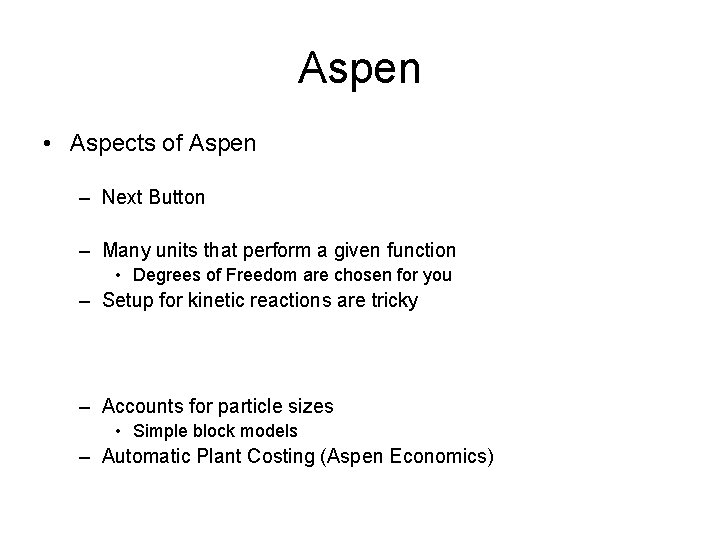
Aspen • Aspects of Aspen – Next Button – Many units that perform a given function • Degrees of Freedom are chosen for you – Setup for kinetic reactions are tricky – Accounts for particle sizes • Simple block models – Automatic Plant Costing (Aspen Economics)
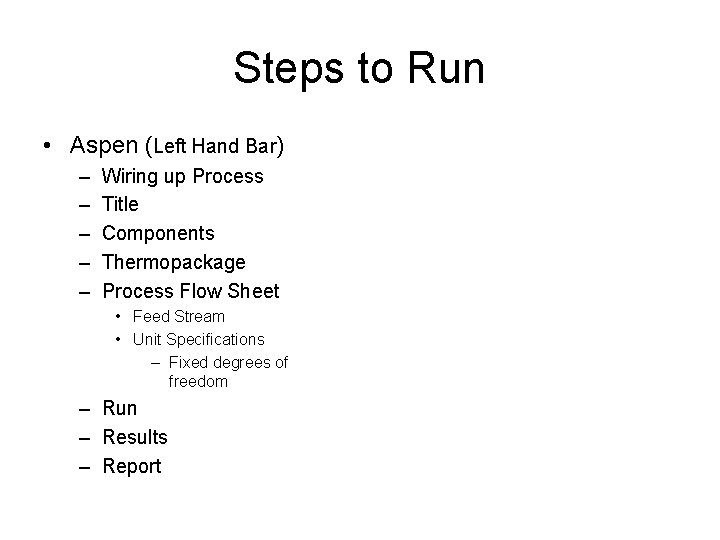
Steps to Run • Aspen (Left Hand Bar) – – – Wiring up Process Title Components Thermopackage Process Flow Sheet • Feed Stream • Unit Specifications – Fixed degrees of freedom – Run – Results – Report
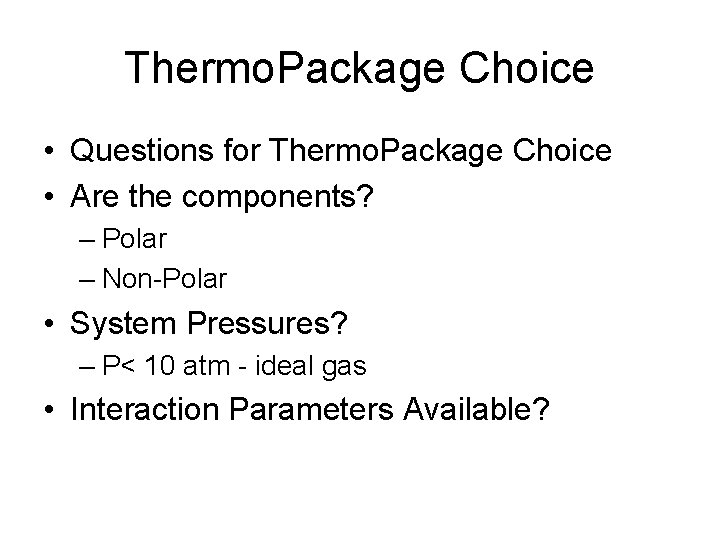
Thermo. Package Choice • Questions for Thermo. Package Choice • Are the components? – Polar – Non-Polar • System Pressures? – P< 10 atm - ideal gas • Interaction Parameters Available?
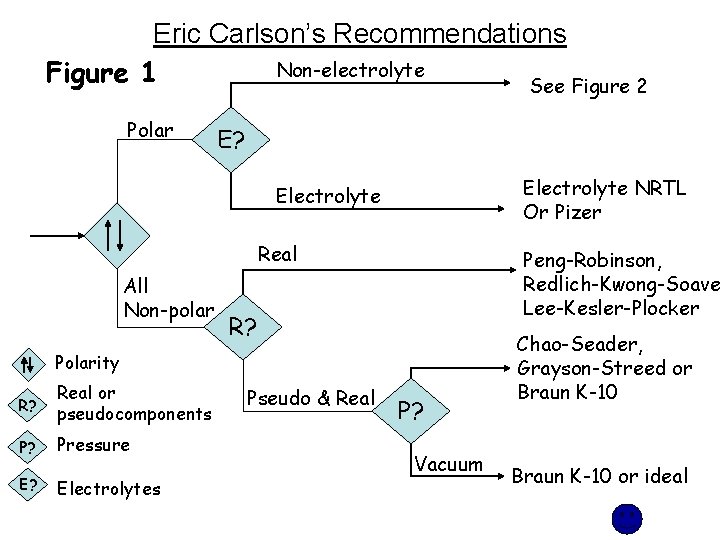
Eric Carlson’s Recommendations Non-electrolyte Figure 1 See Figure 2 Polar E? Electrolyte NRTL Or Pizer Electrolyte Real All Non-polar Peng-Robinson, Redlich-Kwong-Soave Lee-Kesler-Plocker R? Polarity R? Real or pseudocomponents P? Pressure E? Electrolytes Pseudo & Real P? Vacuum Chao-Seader, Grayson-Streed or Braun K-10 or ideal
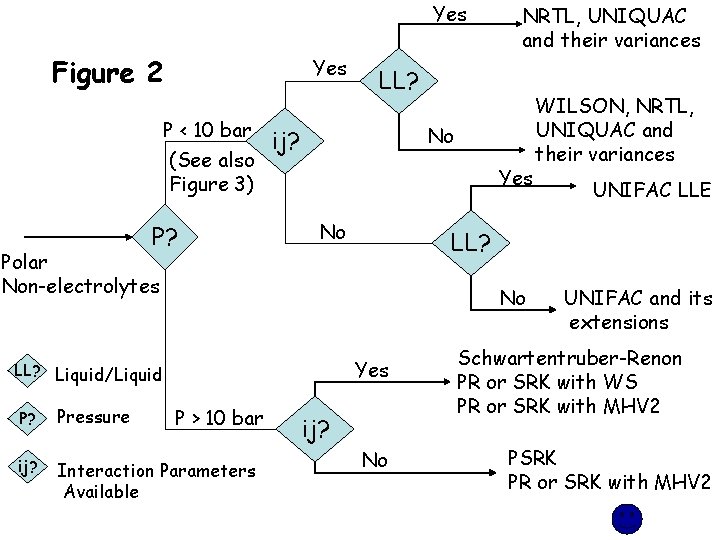
Yes Figure 2 Yes P < 10 bar (See also Figure 3) P? NRTL, UNIQUAC and their variances LL? No ij? Yes No No Yes P > 10 bar P? Pressure ij? Interaction Parameters Available UNIFAC LLE LL? Polar Non-electrolytes LL? Liquid/Liquid WILSON, NRTL, UNIQUAC and their variances ij? No UNIFAC and its extensions Schwartentruber-Renon PR or SRK with WS PR or SRK with MHV 2 PSRK PR or SRK with MHV 2
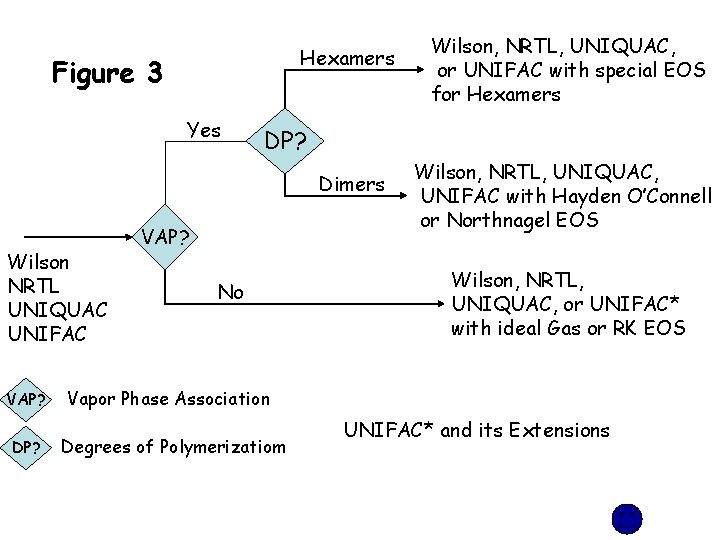
Hexamers Figure 3 Yes DP? Dimers Wilson NRTL UNIQUAC UNIFAC VAP? DP? Wilson, NRTL, UNIQUAC, or UNIFAC with special EOS for Hexamers VAP? No Wilson, NRTL, UNIQUAC, UNIFAC with Hayden O’Connell or Northnagel EOS Wilson, NRTL, UNIQUAC, or UNIFAC* with ideal Gas or RK EOS Vapor Phase Association Degrees of Polymerizatiom UNIFAC* and its Extensions
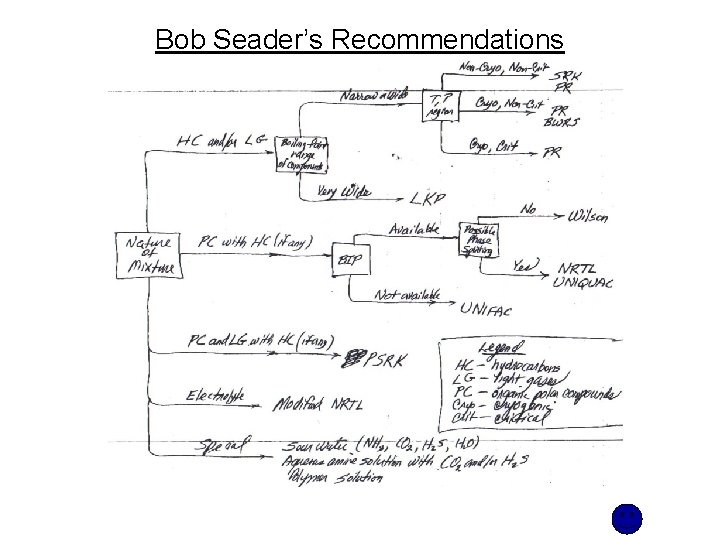
Bob Seader’s Recommendations
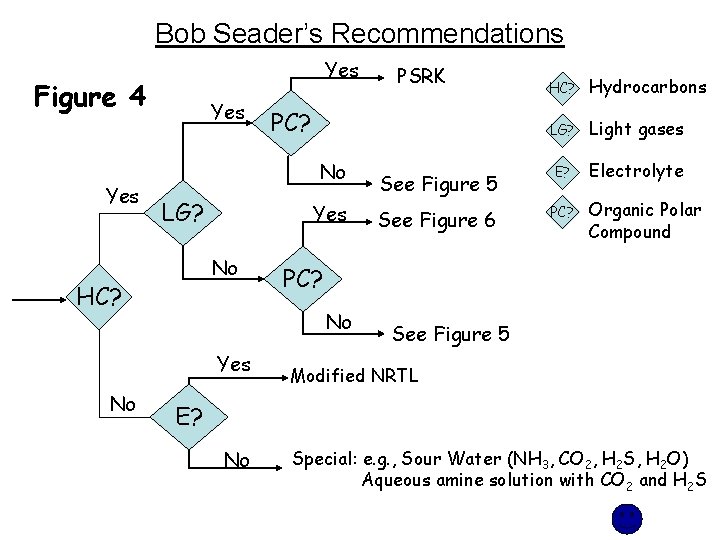
Bob Seader’s Recommendations Yes Figure 4 Yes Yes No HC? No Hydrocarbons LG? Light gases See Figure 5 E? Electrolyte See Figure 6 PC? Organic Polar Compound PC? No Yes HC? PC? No LG? PSRK See Figure 5 Modified NRTL E? No Special: e. g. , Sour Water (NH 3, CO 2, H 2 S, H 2 O) Aqueous amine solution with CO 2 and H 2 S
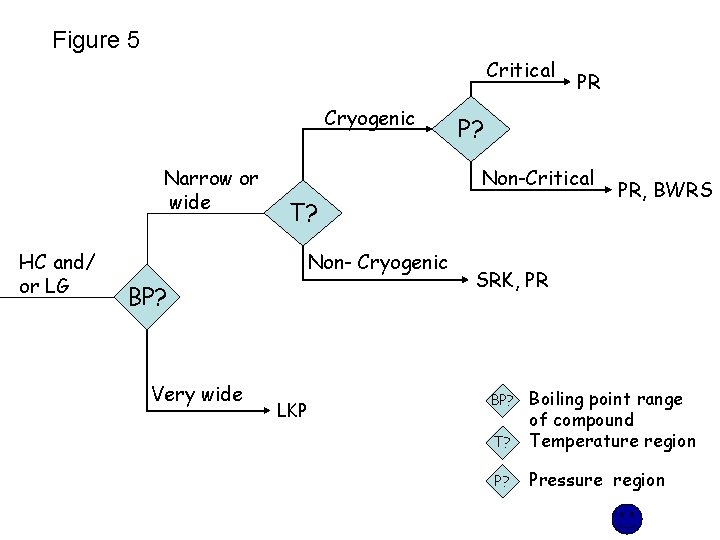
Figure 5 Critical Cryogenic Narrow or wide HC and/ or LG P? Non-Critical T? Non- Cryogenic BP? Very wide PR LKP PR, BWRS SRK, PR T? Boiling point range of compound Temperature region P? Pressure region BP?
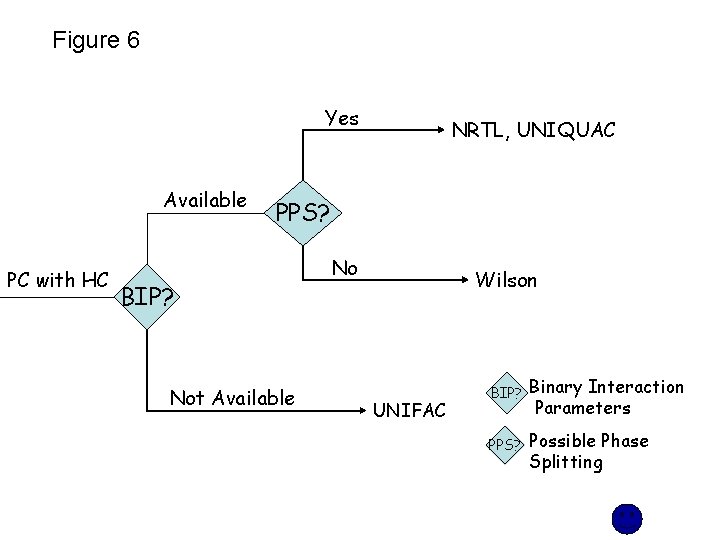
Figure 6 Yes Available PC with HC NRTL, UNIQUAC PPS? BIP? Not Available No Wilson UNIFAC BIP? Binary Interaction Parameters PPS? Possible Phase Splitting
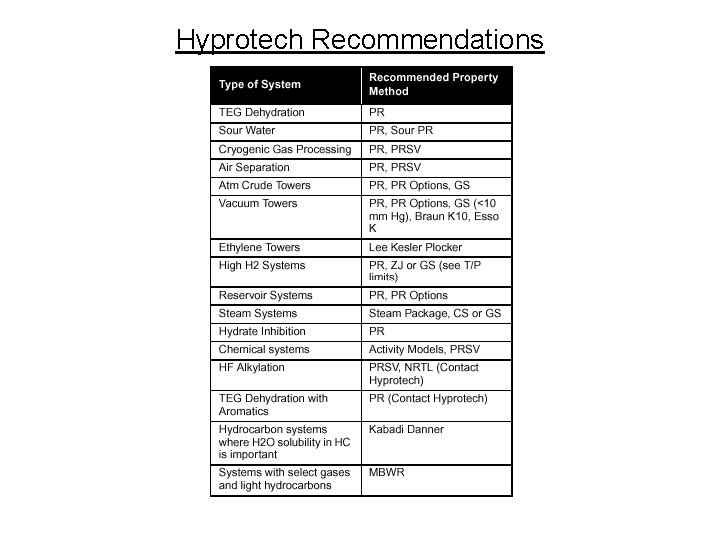
Hyprotech Recommendations
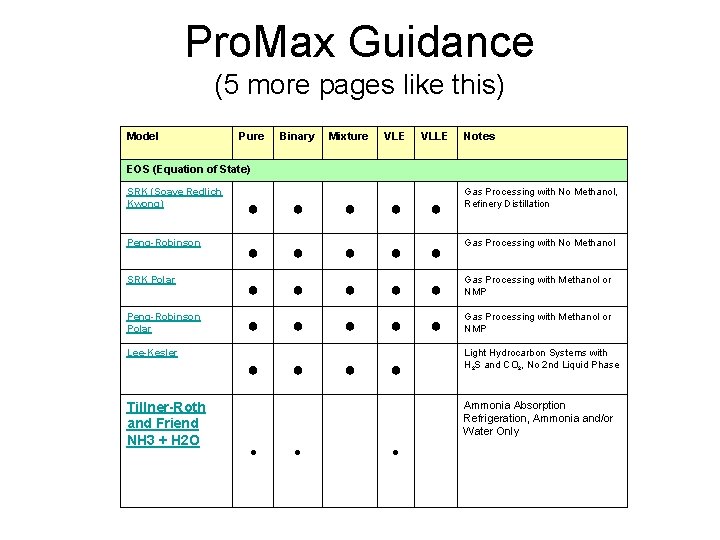
Pro. Max Guidance (5 more pages like this) Model Pure Binary Mixture VLE VLLE Notes EOS (Equation of State) SRK (Soave Redlich Kwong) Gas Processing with No Methanol, Refinery Distillation ● ● ● Peng-Robinson ● ● ● Gas Processing with No Methanol SRK Polar ● ● ● Gas Processing with Methanol or NMP Peng-Robinson Polar Lee-Kesler Tillner-Roth and Friend NH 3 + H 2 O ● ● ● ● Light Hydrocarbon Systems with H 2 S and CO 2, No 2 nd Liquid Phase Ammonia Absorption Refrigeration, Ammonia and/or Water Only ● ● ●
Problem-1 • Problem 5. 12 • Alternatives in preparing a feed. A process under design requires that 100 lbmol/hr of toluene at 70 F and 20 psia be brought to 450 F and 75 psia. • Flow sheets using Peng-Robinson – Boil-Superheat-Compress – Pump to 75 psi-Boil-Superheat – Which process uses the most energy?
Design Spec – What Then How (Wt. H) • What do I want to specify? • What do I want to vary to control it?
Which System has the most Energy? • Moving from To, Po to Tf, Pf – STATE PROPERTY • Enthalpy change is the same if the end points are the same. • Why is Boil then Compress not suggested? Heuristic 43
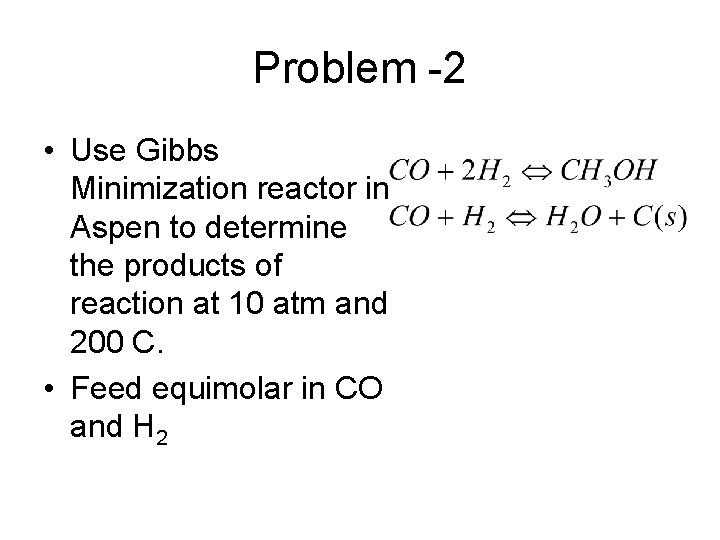
Problem -2 • Use Gibbs Minimization reactor in Aspen to determine the products of reaction at 10 atm and 200 C. • Feed equimolar in CO and H 2
Sensitivity Analysis • Produces Table of Results using a Do Loop to vary one (or more variables) • What Then How
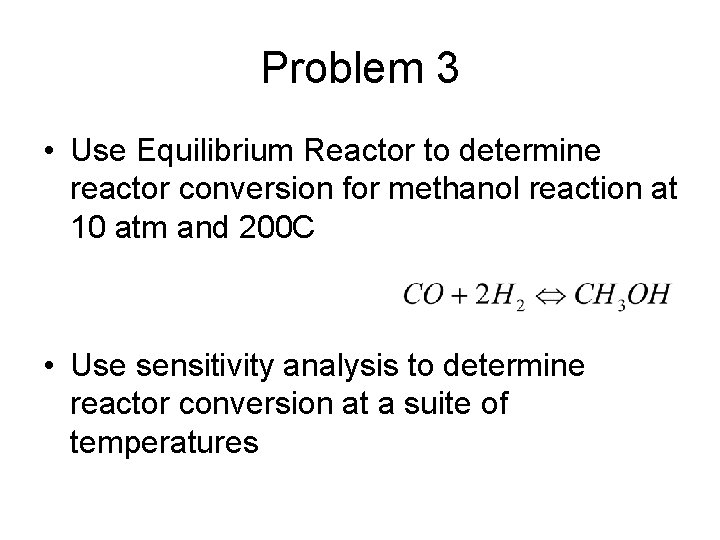
Problem 3 • Use Equilibrium Reactor to determine reactor conversion for methanol reaction at 10 atm and 200 C • Use sensitivity analysis to determine reactor conversion at a suite of temperatures
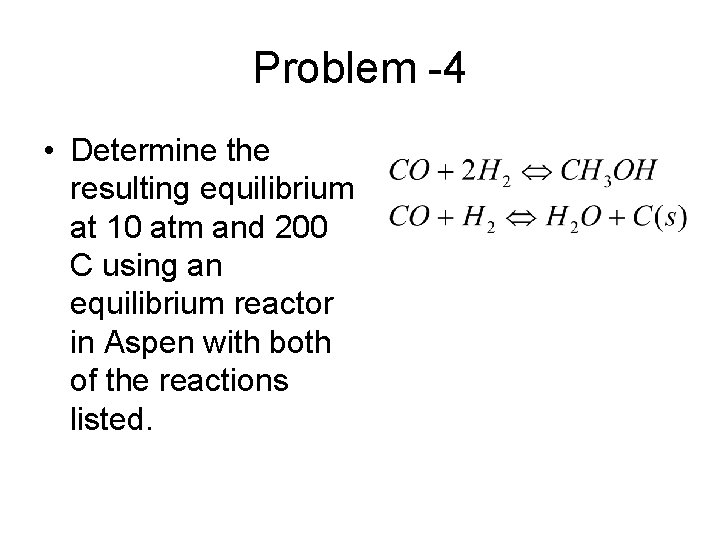
Problem -4 • Determine the resulting equilibrium at 10 atm and 200 C using an equilibrium reactor in Aspen with both of the reactions listed.
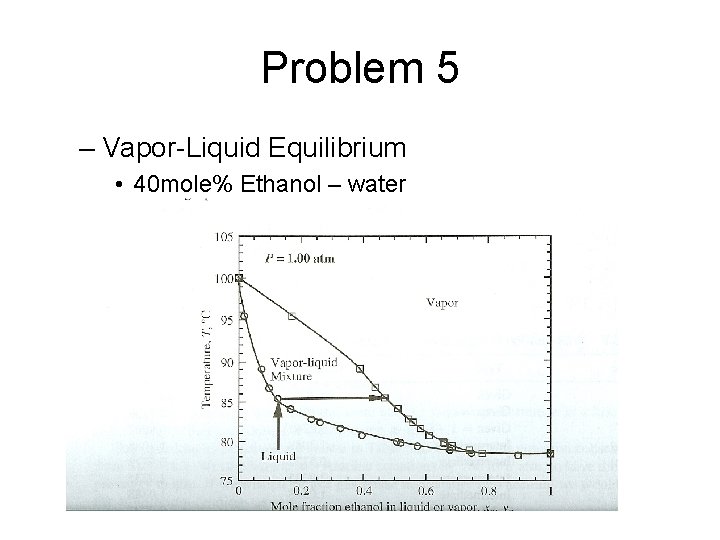
Problem 5 – Vapor-Liquid Equilibrium • 40 mole% Ethanol – water
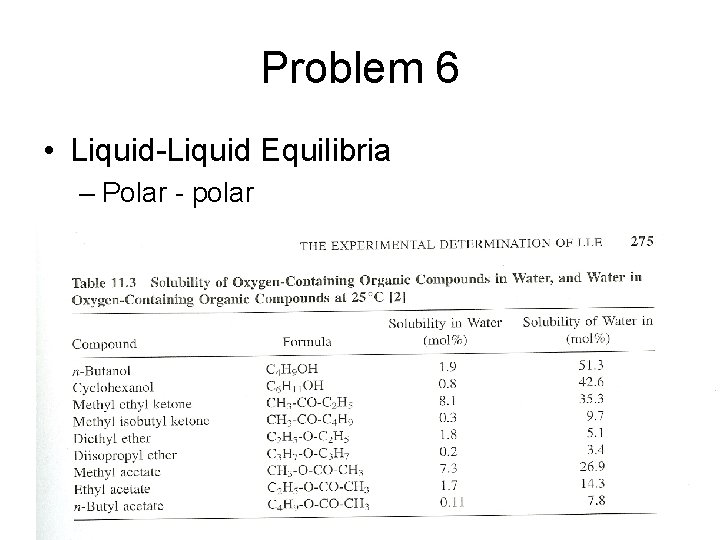
Problem 6 • Liquid-Liquid Equilibria – Polar - polar
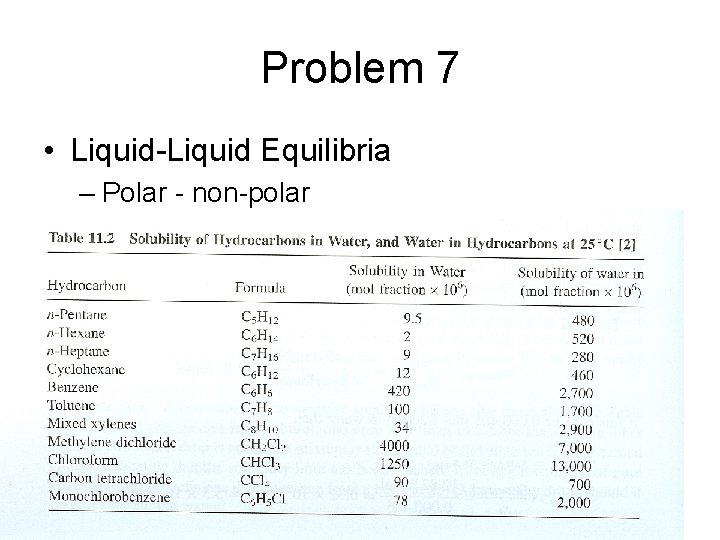
Problem 7 • Liquid-Liquid Equilibria – Polar - non-polar
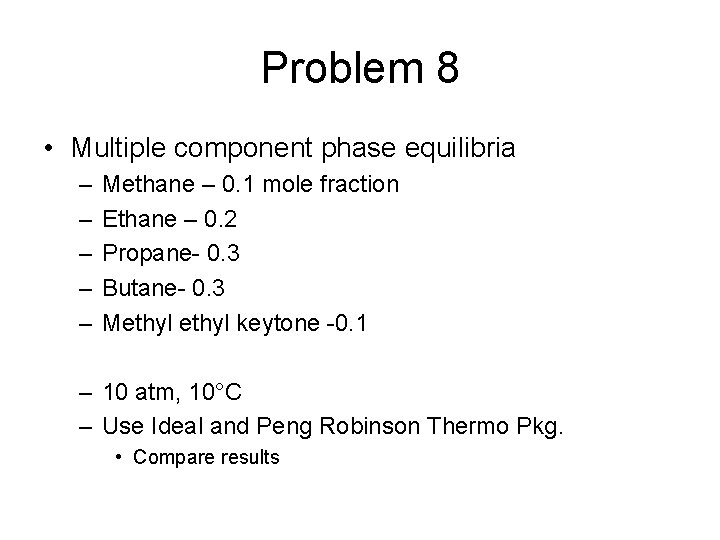
Problem 8 • Multiple component phase equilibria – – – Methane – 0. 1 mole fraction Ethane – 0. 2 Propane- 0. 3 Butane- 0. 3 Methyl keytone -0. 1 – 10 atm, 10°C – Use Ideal and Peng Robinson Thermo Pkg. • Compare results
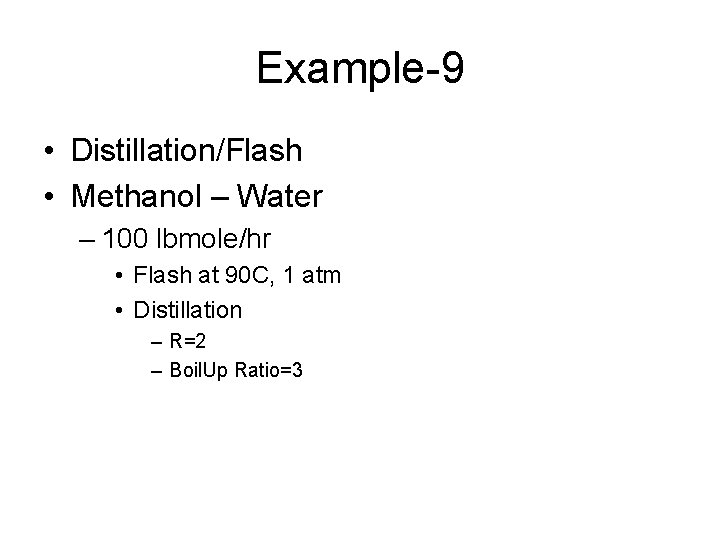
Example-9 • Distillation/Flash • Methanol – Water – 100 lbmole/hr • Flash at 90 C, 1 atm • Distillation – R=2 – Boil. Up Ratio=3