ARA PACIS AUGUSTAE Historical Relief and Roman Mythmaking
- Slides: 24
ARA PACIS AUGUSTAE Historical Relief and Roman Mythmaking
Facts about the ARA PACIS • Altar of Augustan Peace • Located in the Campus Martius, Rome • Decreed by the Senate to celebrate Augustus’ return from Spain and Gaul • Foundation stone laid on 4 th July 13 BCE • Dedicated by the Senate in honor of Augustus’ creation of the Pax Romana in 30 January 9 BCE (Livia’s birthday) • Part of a complete architectural program with the Mausoleum of Augustus, his ustrinum, an obelisk that acted as the central arm of a sundial • One of the great Roman historical reliefs; others include Trajan’s column, arch of Septimius Severus in Leptis Magna.
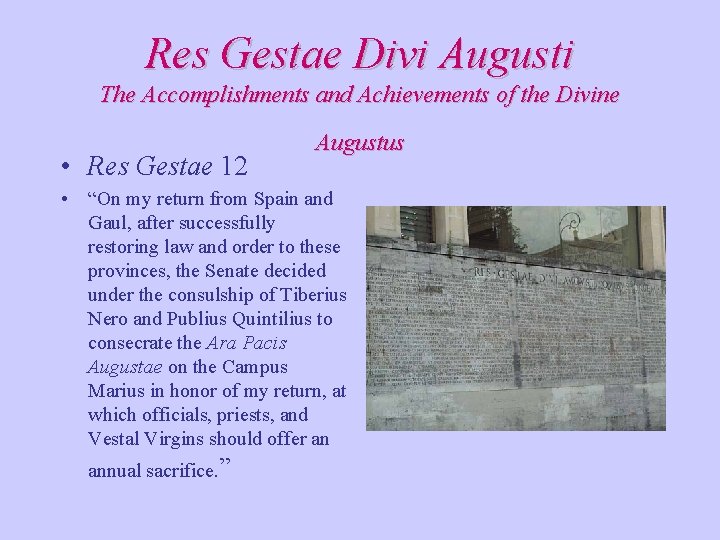
Res Gestae Divi Augusti The Accomplishments and Achievements of the Divine • Res Gestae 12 Augustus • “On my return from Spain and Gaul, after successfully restoring law and order to these provinces, the Senate decided under the consulship of Tiberius Nero and Publius Quintilius to consecrate the Ara Pacis Augustae on the Campus Marius in honor of my return, at which officials, priests, and Vestal Virgins should offer an annual sacrifice. ”
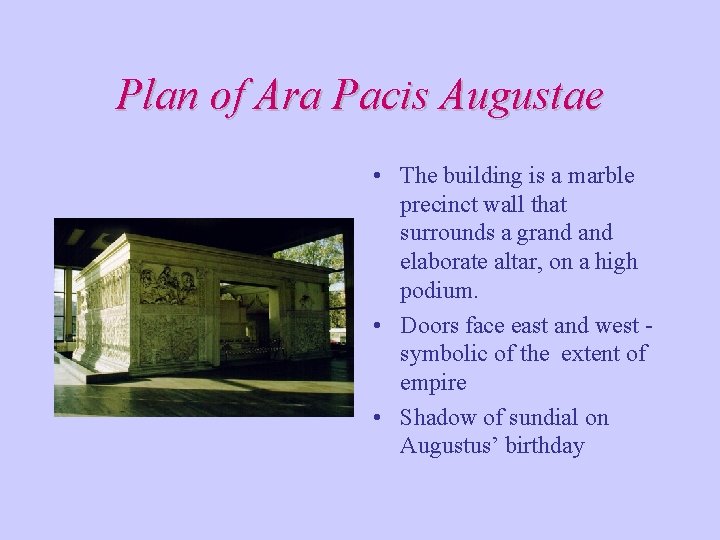
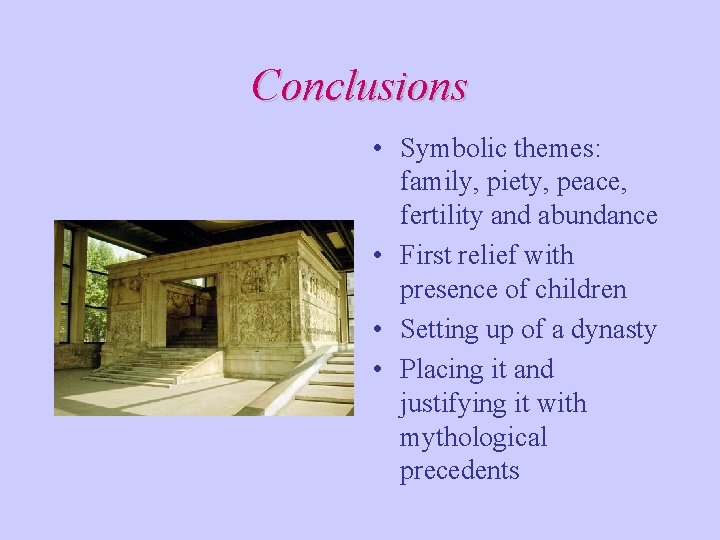
Plan of Ara Pacis Augustae • The building is a marble precinct wall that surrounds a grand elaborate altar, on a high podium. • Doors face east and west symbolic of the extent of empire • Shadow of sundial on Augustus’ birthday
Decorative Scheme I • Mythology • East side – Pax (Venus or Tellus) – Roma – Sun rises on new Roman Empire • West side – Aeneas – Romulus and Remus – Sun sets on legendary herofounders • History • North side – senators – priests – piety • South side – imperial family – Augustus, Agrippa – family
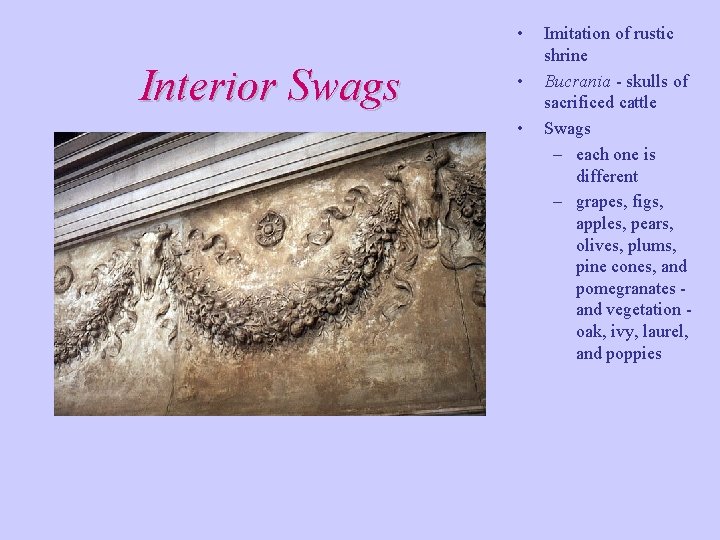
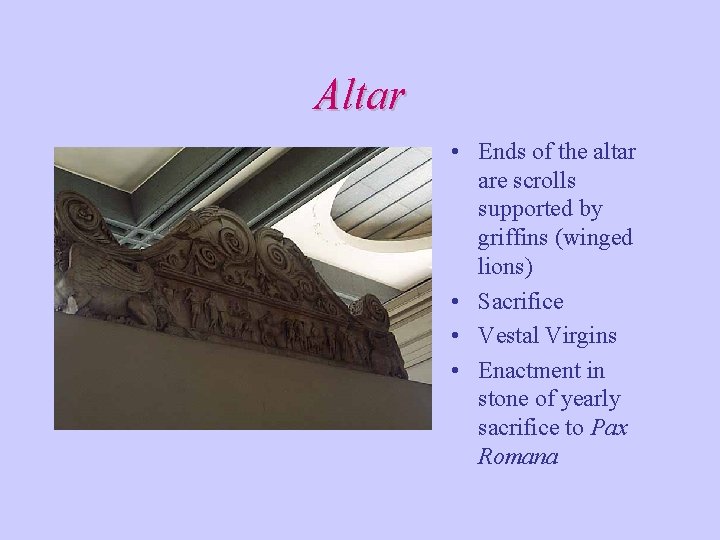
Decorative Scheme II • Exterior lower half • exuberant floral motif • combination of extraordinary flowers and fruits • vegetation climbing the walls • Apollo symbolism • Interior relief – garlands of an abundance of fruits, leaves, and flowers – bucrania of sacrificed cows – imitation of rustic shrine • Altar – Sacrifice – Vestal virgins
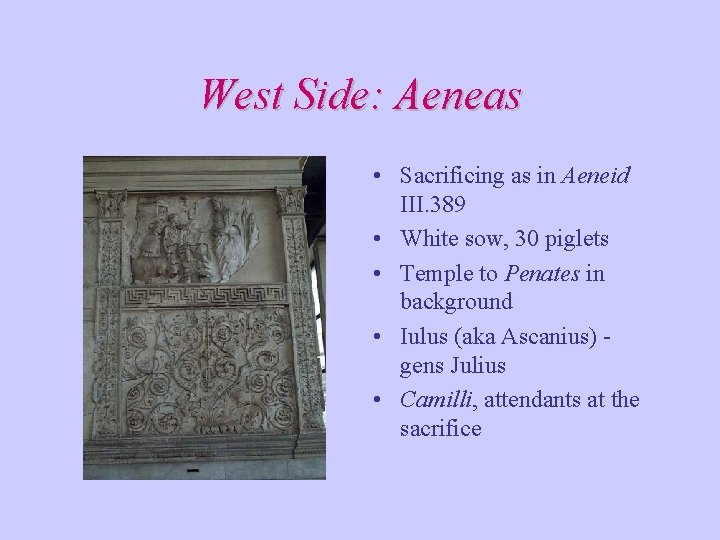
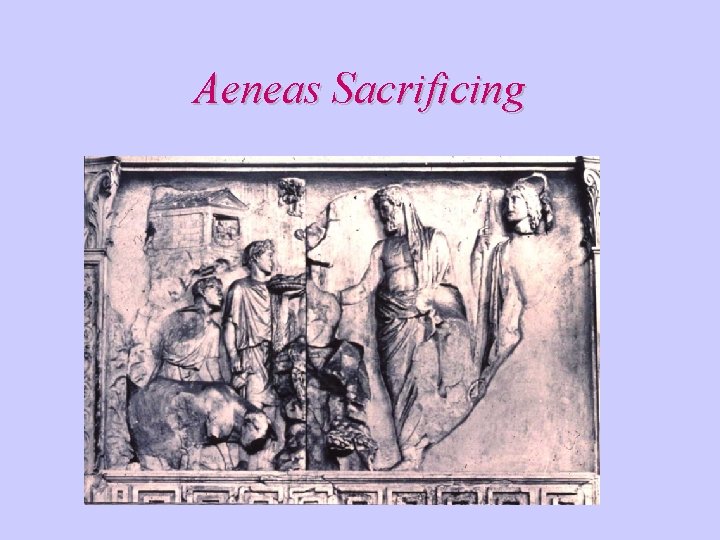
West Side: Aeneas • Sacrificing as in Aeneid III. 389 • White sow, 30 piglets • Temple to Penates in background • Iulus (aka Ascanius) gens Julius • Camilli, attendants at the sacrifice
Aeneas Sacrificing
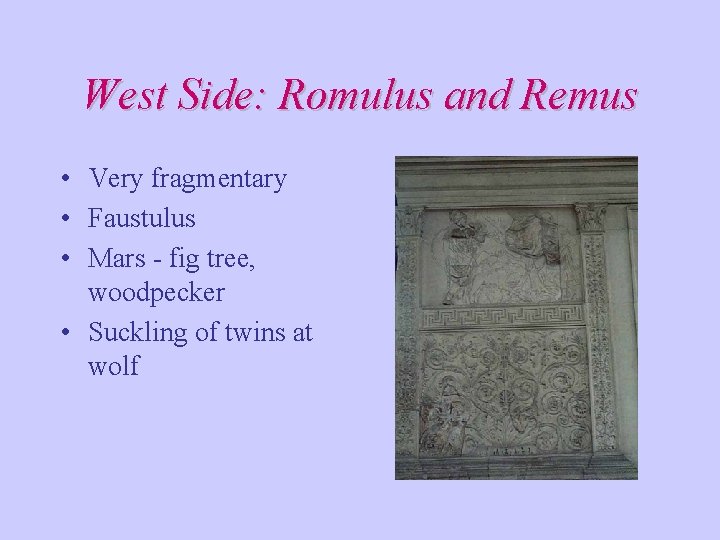
West Side: Romulus and Remus • Very fragmentary • Faustulus • Mars - fig tree, woodpecker • Suckling of twins at wolf
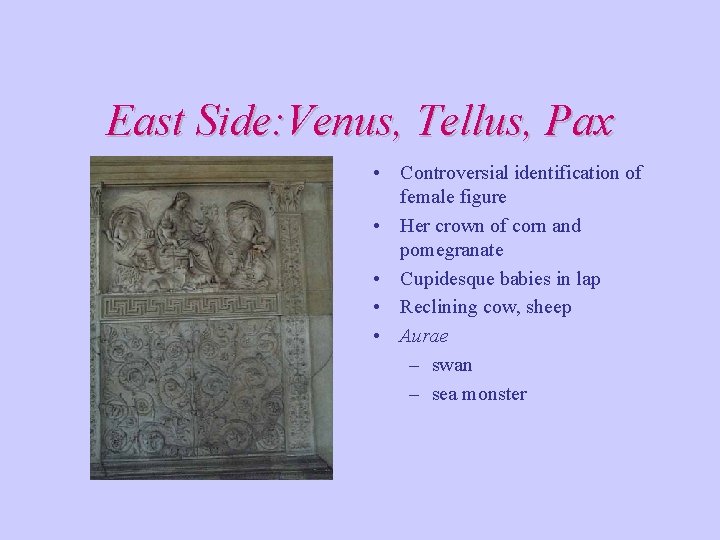
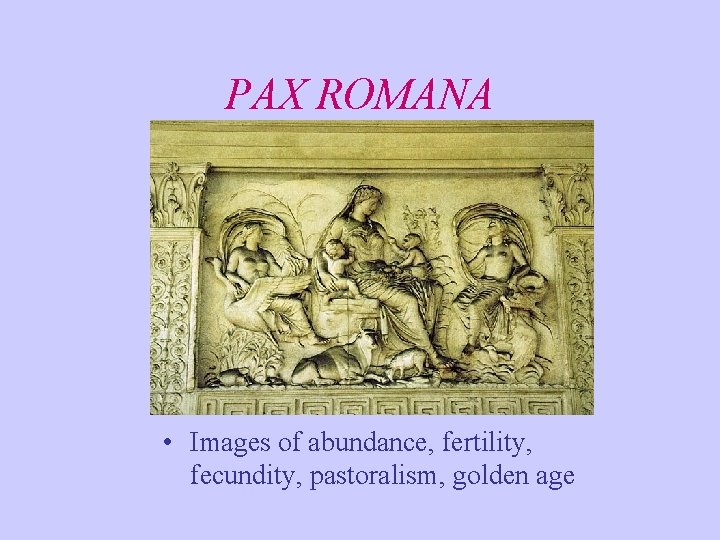
East Side: Venus, Tellus, Pax • Controversial identification of female figure • Her crown of corn and pomegranate • Cupidesque babies in lap • Reclining cow, sheep • Aurae – swan – sea monster
PAX ROMANA • Images of abundance, fertility, fecundity, pastoralism, golden age
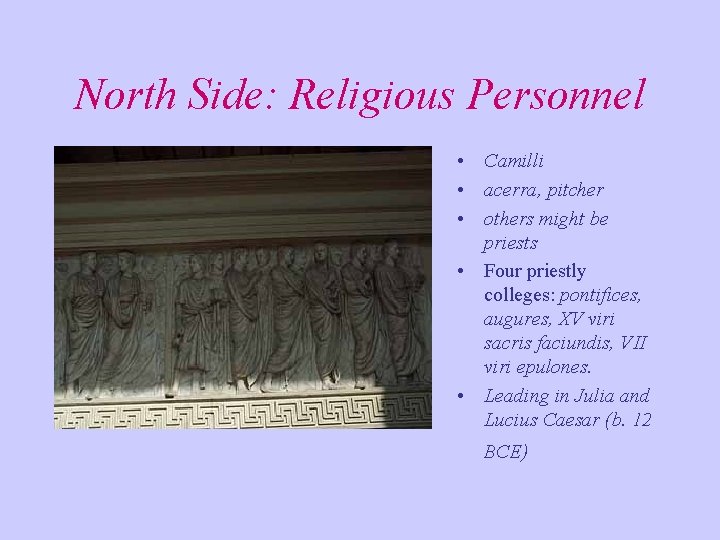
North Side: Religious Personnel • Camilli • acerra, pitcher • others might be priests • Four priestly colleges: pontifices, augures, XV viri sacris faciundis, VII viri epulones. • Leading in Julia and Lucius Caesar (b. 12 BCE)
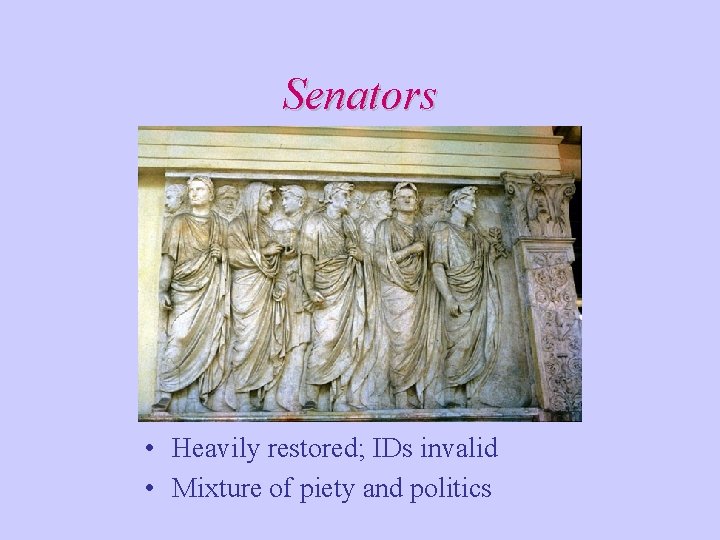
Senators • Heavily restored; IDs invalid • Mixture of piety and politics
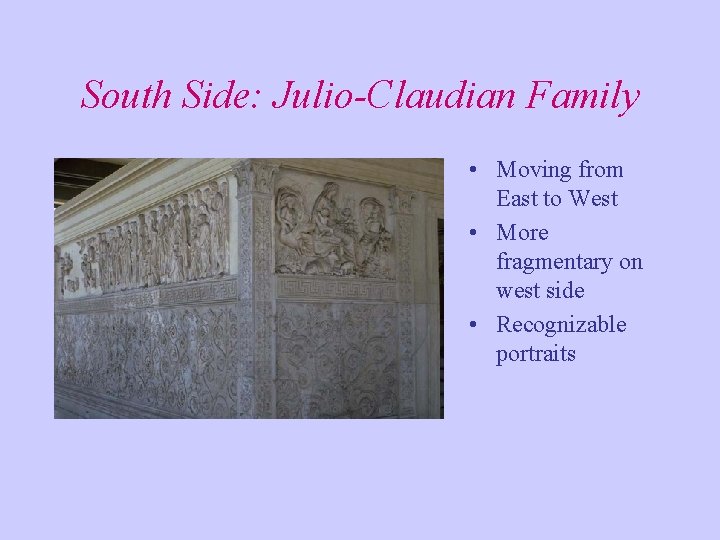
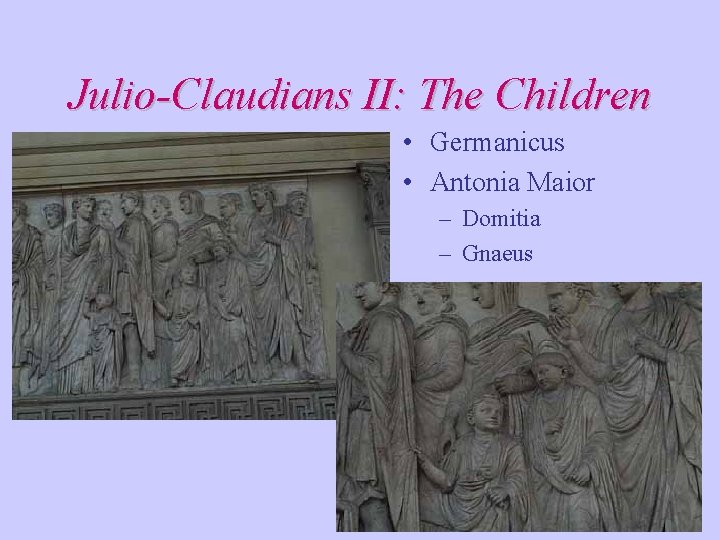
South Side: Julio-Claudian Family • Moving from East to West • More fragmentary on west side • Recognizable portraits
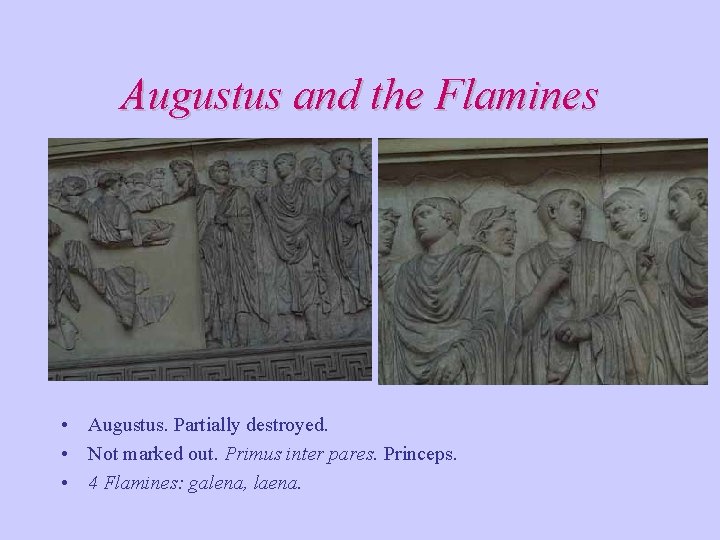
Augustus and the Flamines • Augustus. Partially destroyed. • Not marked out. Primus inter pares. Princeps. • 4 Flamines: galena, laena.
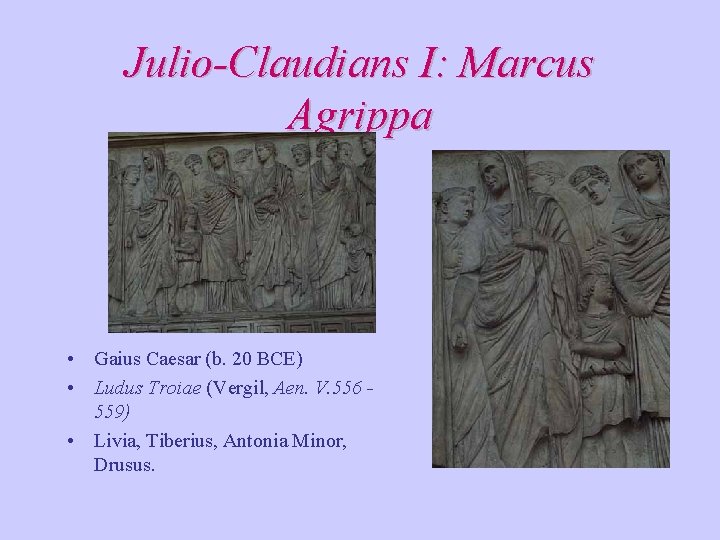
Julio-Claudians I: Marcus Agrippa • Gaius Caesar (b. 20 BCE) • Ludus Troiae (Vergil, Aen. V. 556 559) • Livia, Tiberius, Antonia Minor, Drusus.
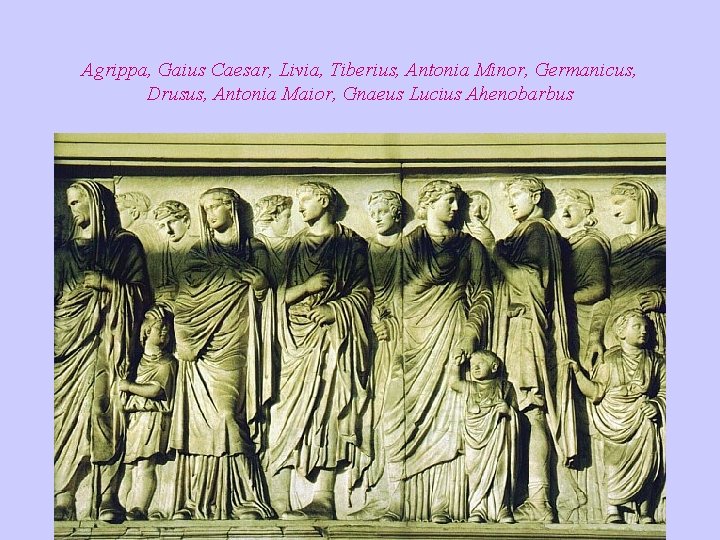
Agrippa, Gaius Caesar, Livia, Tiberius, Antonia Minor, Germanicus, Drusus, Antonia Maior, Gnaeus Lucius Ahenobarbus
Julio-Claudians II: The Children • Germanicus • Antonia Maior – Domitia – Gnaeus
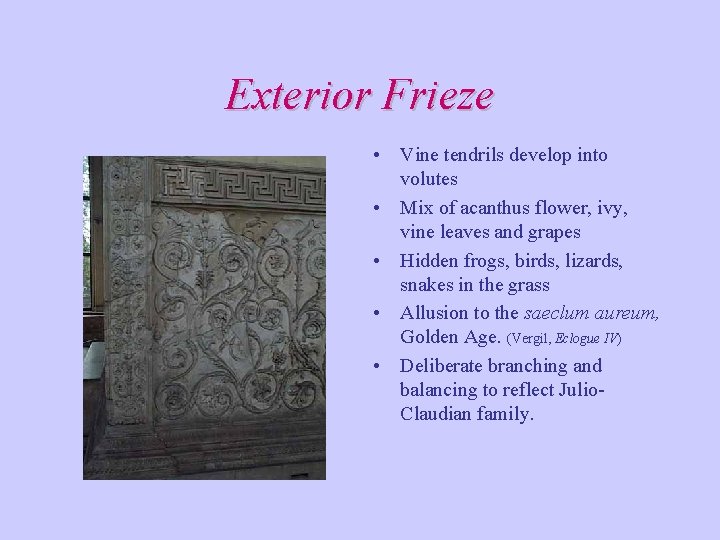
Exterior Frieze • Vine tendrils develop into volutes • Mix of acanthus flower, ivy, vine leaves and grapes • Hidden frogs, birds, lizards, snakes in the grass • Allusion to the saeclum aureum, Golden Age. (Vergil, Eclogue IV) • Deliberate branching and balancing to reflect Julio. Claudian family.
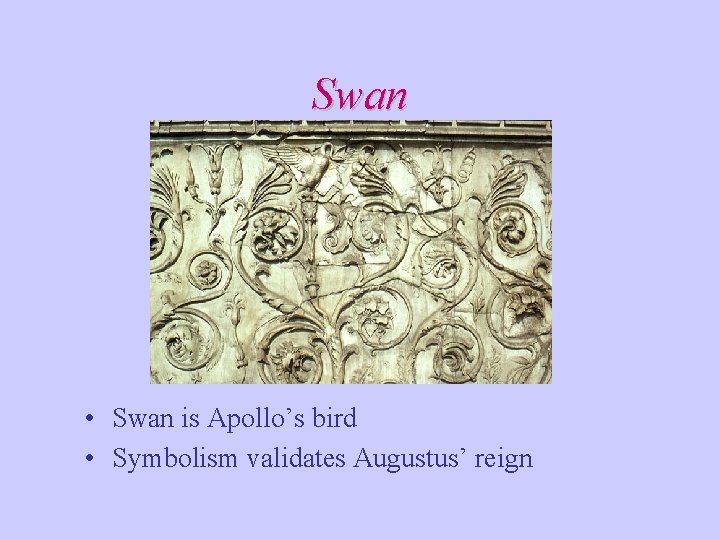
Swan • Swan is Apollo’s bird • Symbolism validates Augustus’ reign
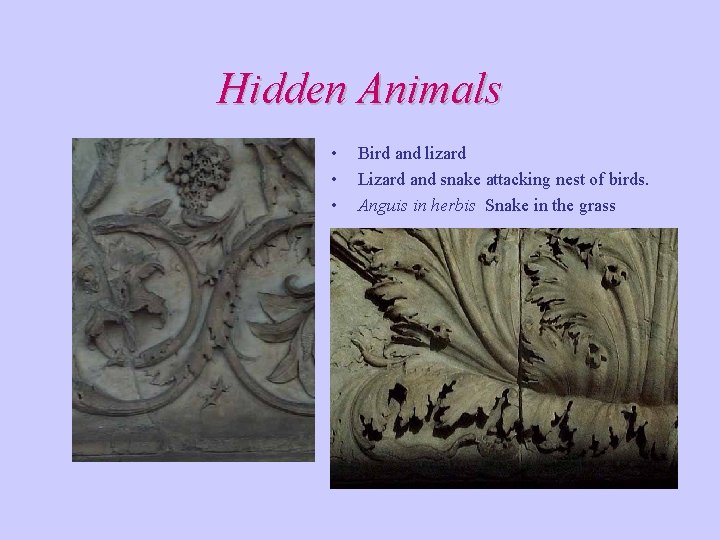
Hidden Animals • • • Bird and lizard Lizard and snake attacking nest of birds. Anguis in herbis Snake in the grass
• Interior Swags • • Imitation of rustic shrine Bucrania - skulls of sacrificed cattle Swags – each one is different – grapes, figs, apples, pears, olives, plums, pine cones, and pomegranates and vegetation oak, ivy, laurel, and poppies
Altar • Ends of the altar are scrolls supported by griffins (winged lions) • Sacrifice • Vestal Virgins • Enactment in stone of yearly sacrifice to Pax Romana
Conclusions • Symbolic themes: family, piety, peace, fertility and abundance • First relief with presence of children • Setting up of a dynasty • Placing it and justifying it with mythological precedents