Apollo God of Music Medicine and Prophecy Iconography









- Slides: 71
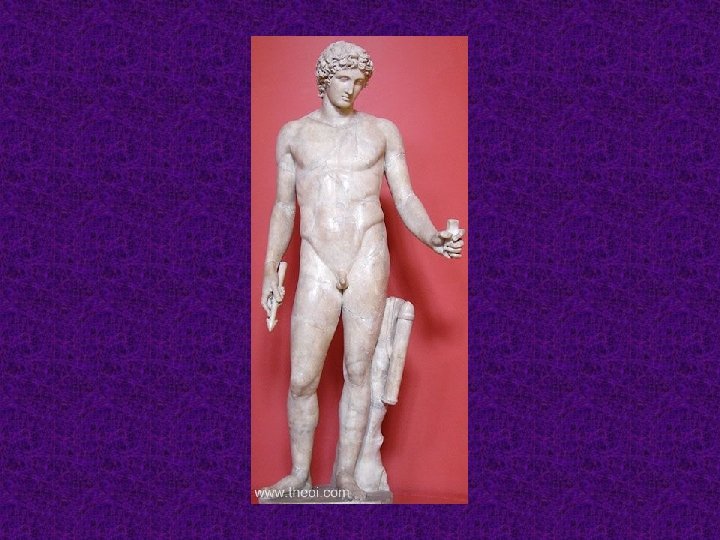
Apollo God of Music, Medicine and Prophecy
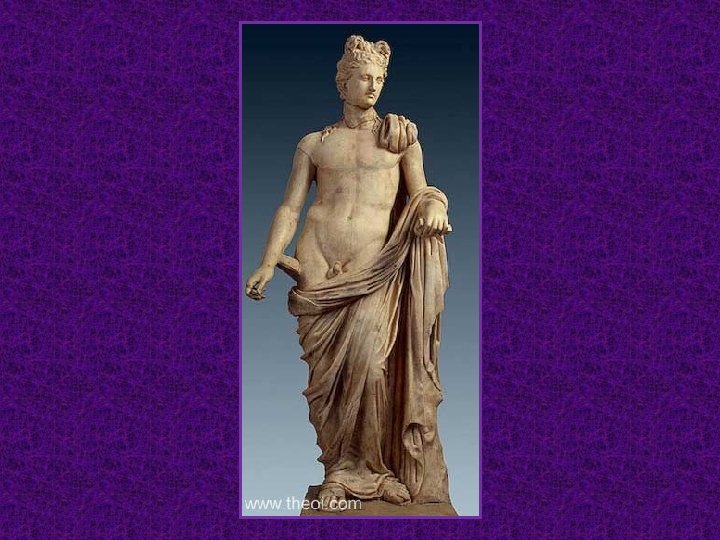
Iconography
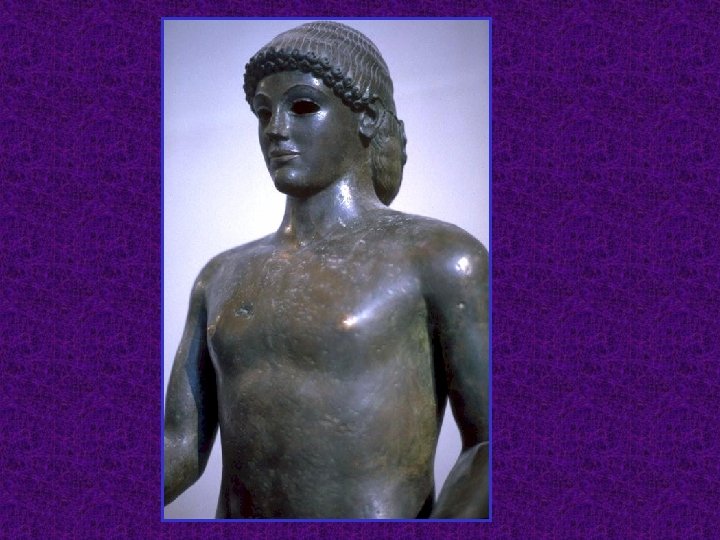
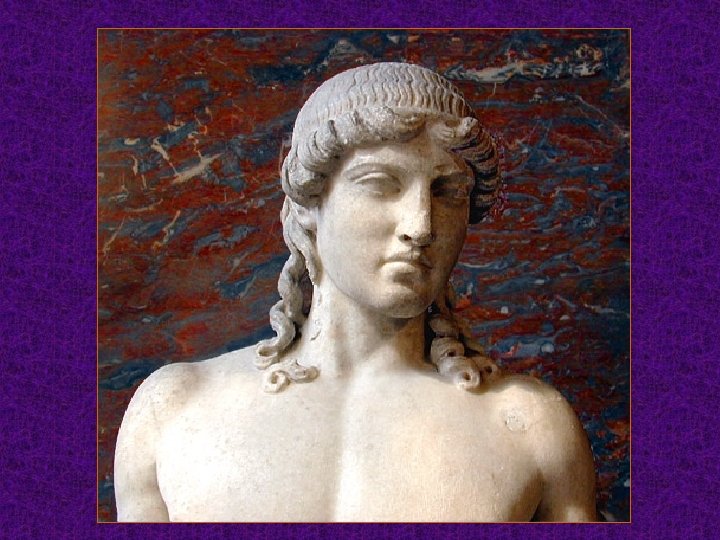
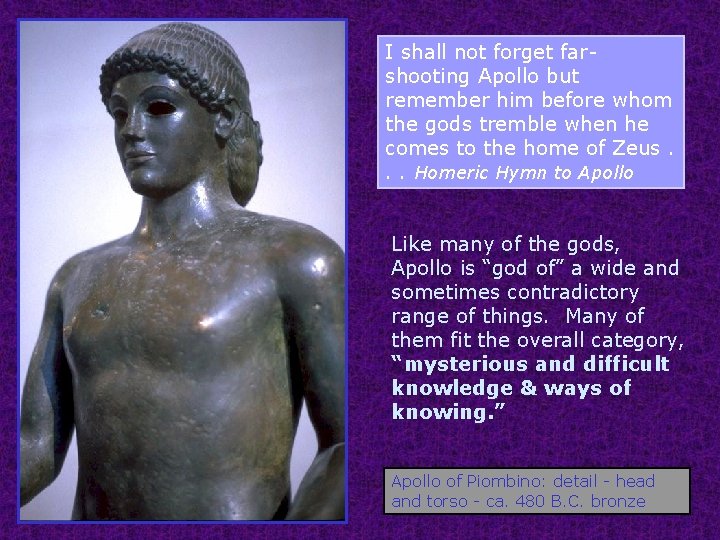
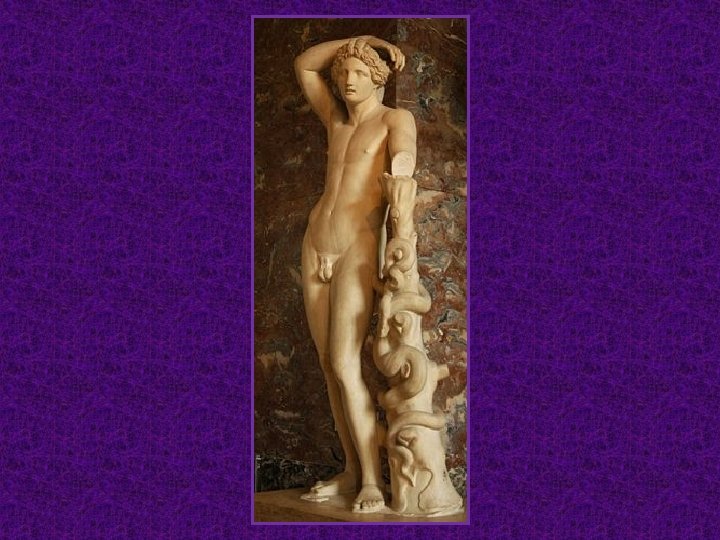
I shall not forget farshooting Apollo but remember him before whom the gods tremble when he comes to the home of Zeus. . . Homeric Hymn to Apollo Like many of the gods, Apollo is “god of” a wide and sometimes contradictory range of things. Many of them fit the overall category, “mysterious and difficult knowledge & ways of knowing. ” Apollo of Piombino: detail - head and torso - ca. 480 B. C. bronze
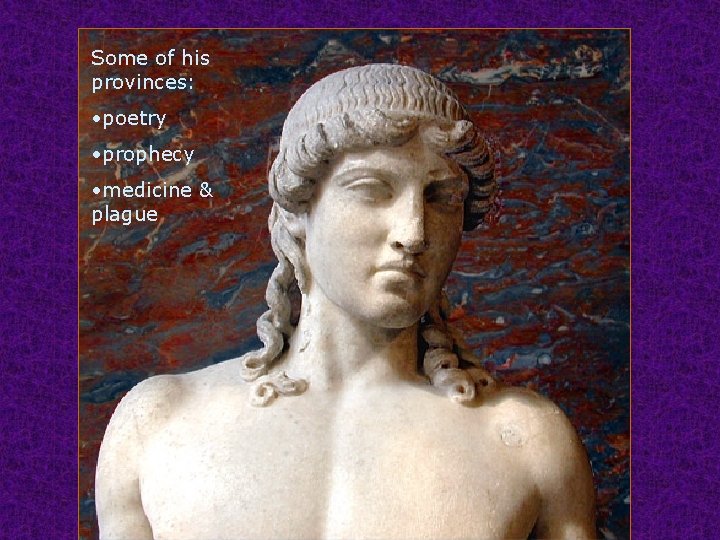
Some of his provinces: • poetry • prophecy • medicine & plague
Delphi
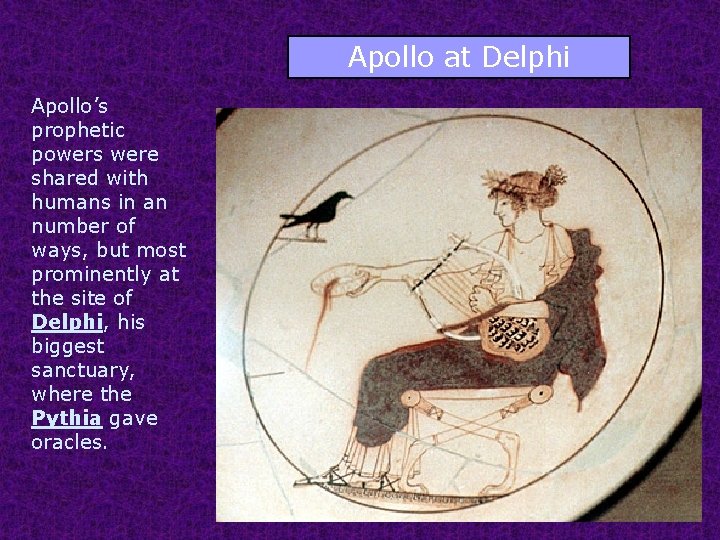
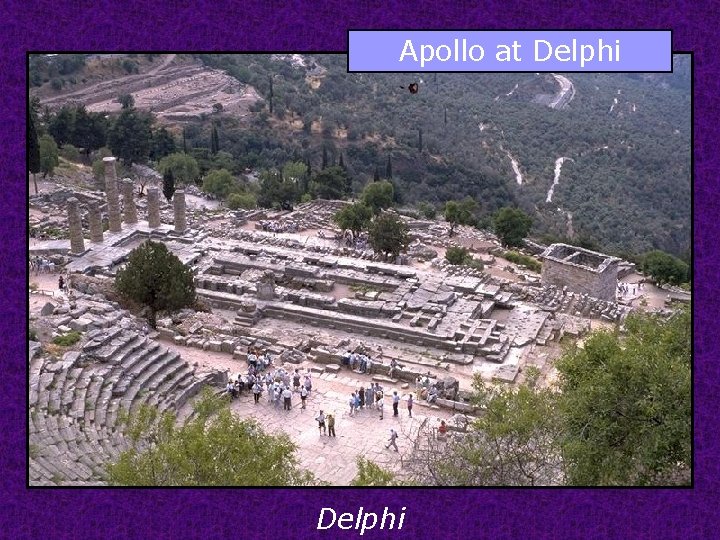
Apollo at Delphi Apollo’s prophetic powers were shared with humans in an number of ways, but most prominently at the site of Delphi, his biggest sanctuary, where the Pythia gave oracles.
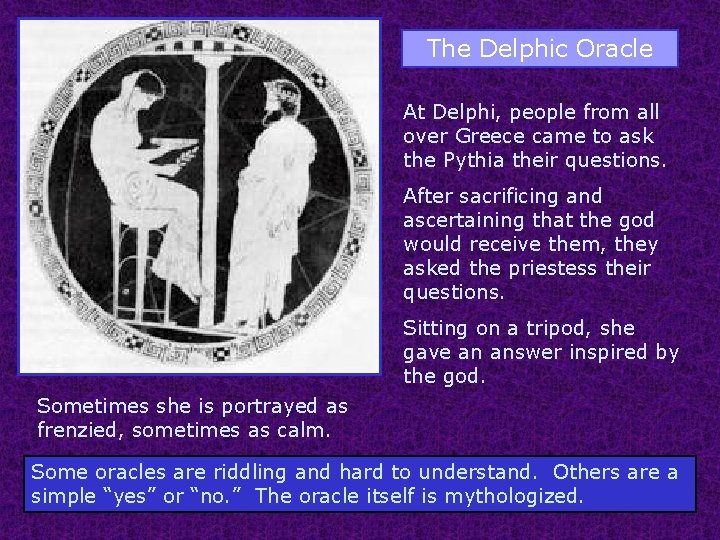
The Delphic Oracle At Delphi, people from all over Greece came to ask the Pythia their questions. After sacrificing and ascertaining that the god would receive them, they asked the priestess their questions. Sitting on a tripod, she gave an answer inspired by the god. Sometimes she is portrayed as frenzied, sometimes as calm. Some oracles are riddling and hard to understand. Others are a simple “yes” or “no. ” The oracle itself is mythologized.
Apollo at Delphi
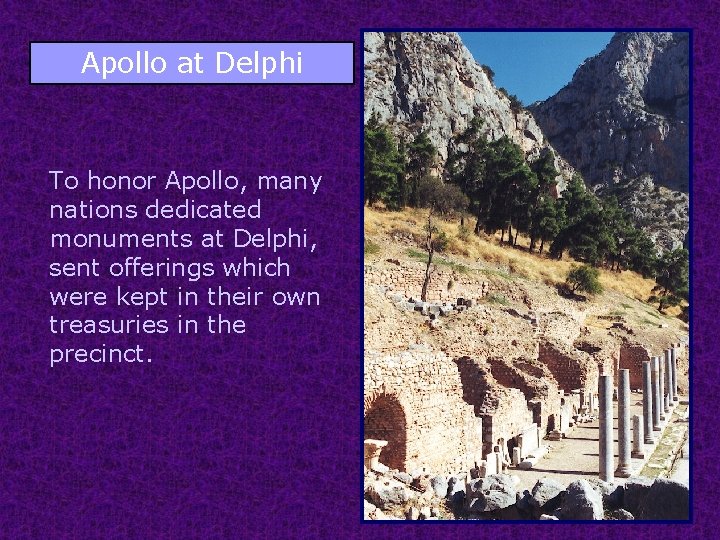
Apollo at Delphi To honor Apollo, many nations dedicated monuments at Delphi, sent offerings which were kept in their own treasuries in the precinct.
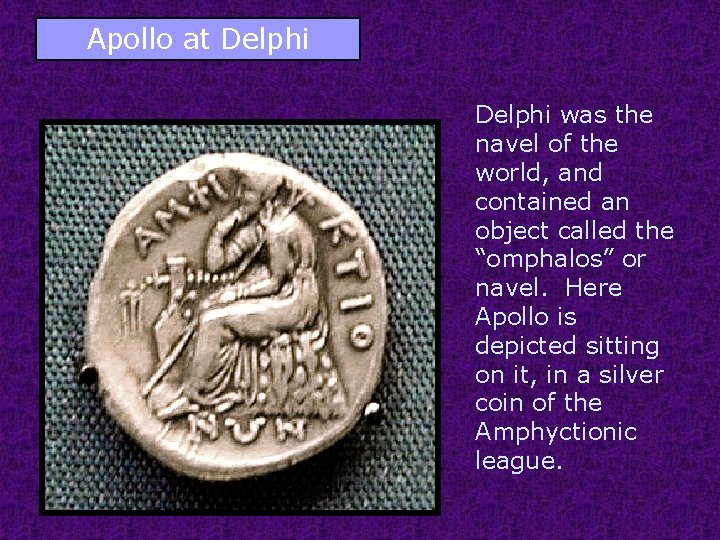
Apollo at Delphi was the navel of the world, and contained an object called the “omphalos” or navel. Here Apollo is depicted sitting on it, in a silver coin of the Amphyctionic league.
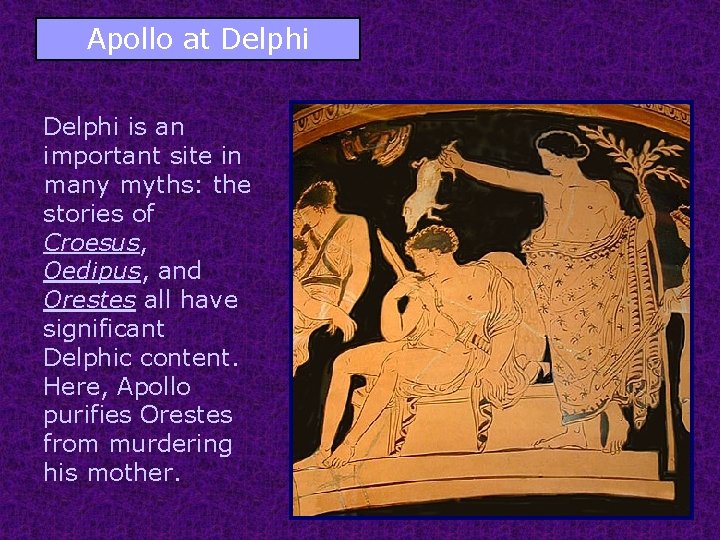
Apollo at Delphi is an important site in many myths: the stories of Croesus, Oedipus, and Orestes all have significant Delphic content. Here, Apollo purifies Orestes from murdering his mother.
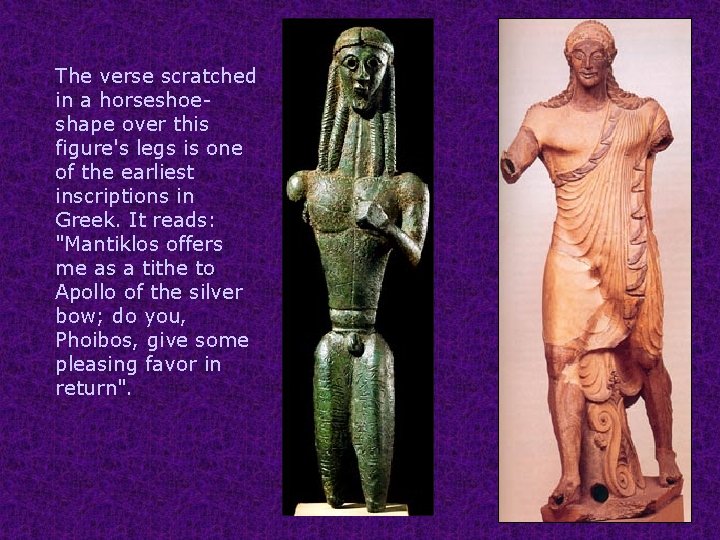
The verse scratched in a horseshoeshape over this figure's legs is one of the earliest inscriptions in Greek. It reads: "Mantiklos offers me as a tithe to Apollo of the silver bow; do you, Phoibos, give some pleasing favor in return".
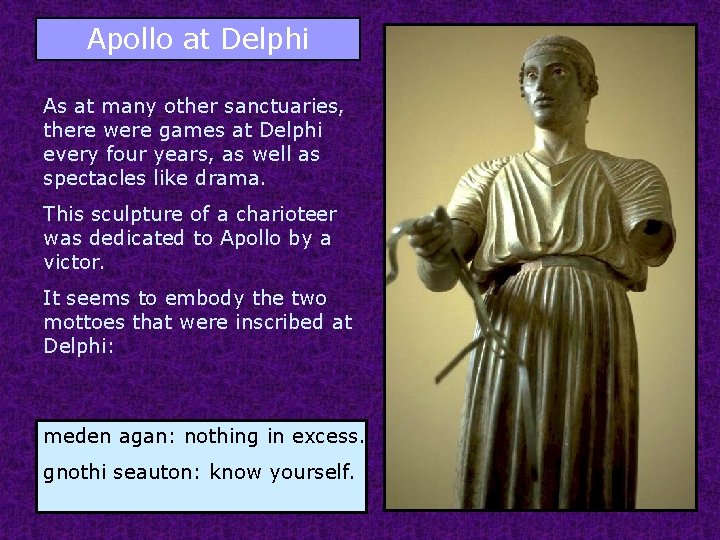
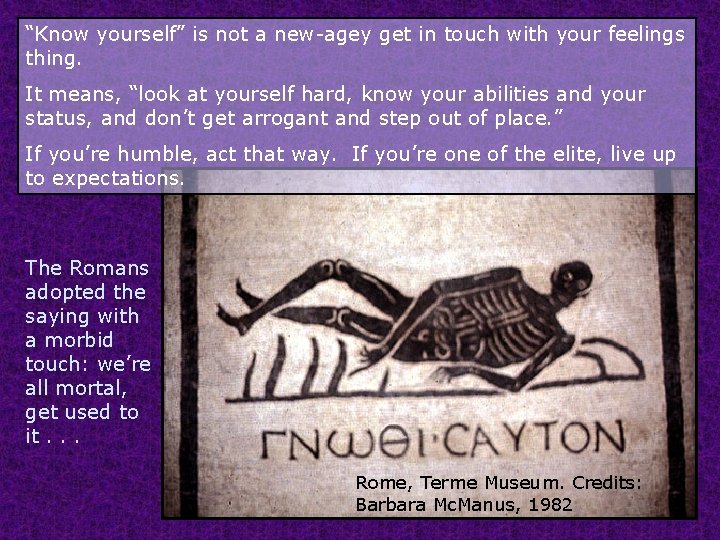
Apollo at Delphi As at many other sanctuaries, there were games at Delphi every four years, as well as spectacles like drama. This sculpture of a charioteer was dedicated to Apollo by a victor. It seems to embody the two mottoes that were inscribed at Delphi: meden agan: nothing in excess. gnothi seauton: know yourself.
“Know yourself” is not a new-agey get in touch with your feelings thing. It means, “look at yourself hard, know your abilities and your status, and don’t get arrogant and step out of place. ” If you’re humble, act that way. If you’re one of the elite, live up to expectations. The Romans adopted the saying with a morbid touch: we’re all mortal, get used to it. . . Rome, Terme Museum. Credits: Barbara Mc. Manus, 1982
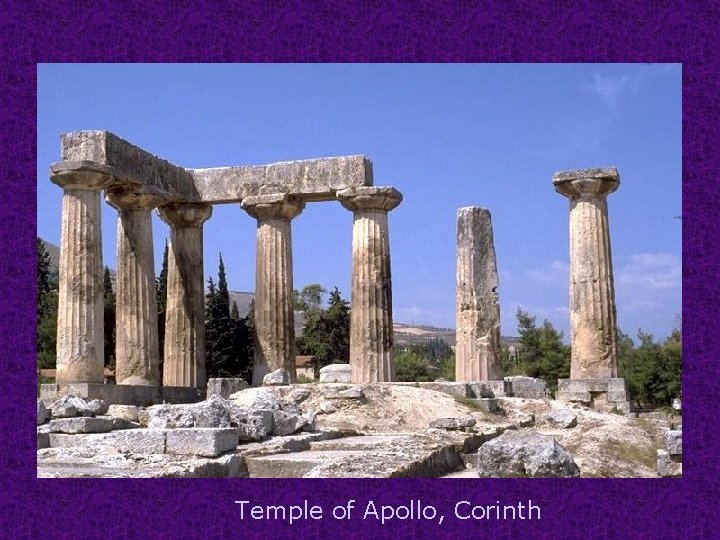
Temple of Apollo, Corinth
Medicine and Plague
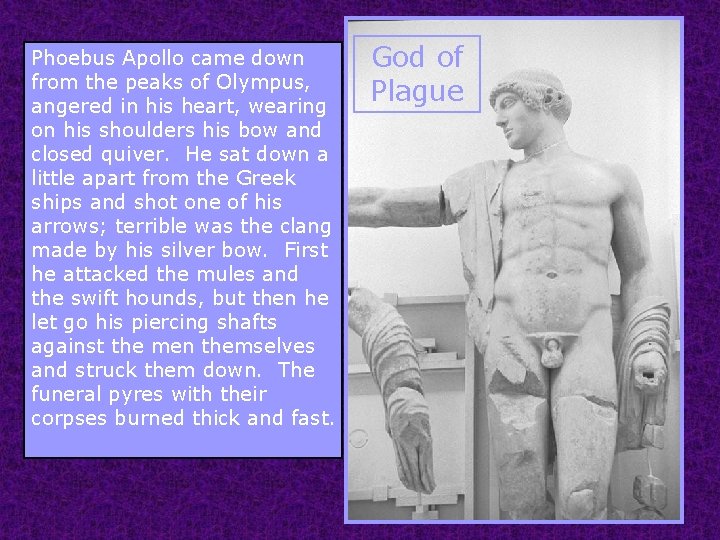
Phoebus Apollo came down from the peaks of Olympus, angered in his heart, wearing on his shoulders his bow and closed quiver. He sat down a little apart from the Greek ships and shot one of his arrows; terrible was the clang made by his silver bow. First he attacked the mules and the swift hounds, but then he let go his piercing shafts against the men themselves and struck them down. The funeral pyres with their corpses burned thick and fast. God of Plague
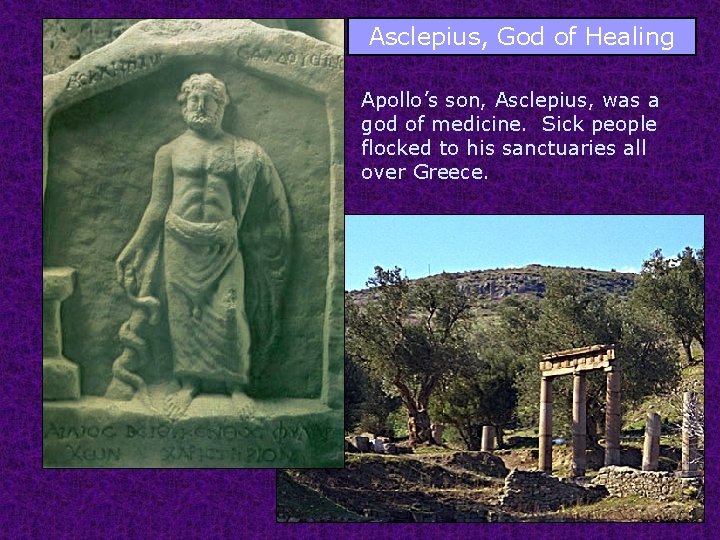
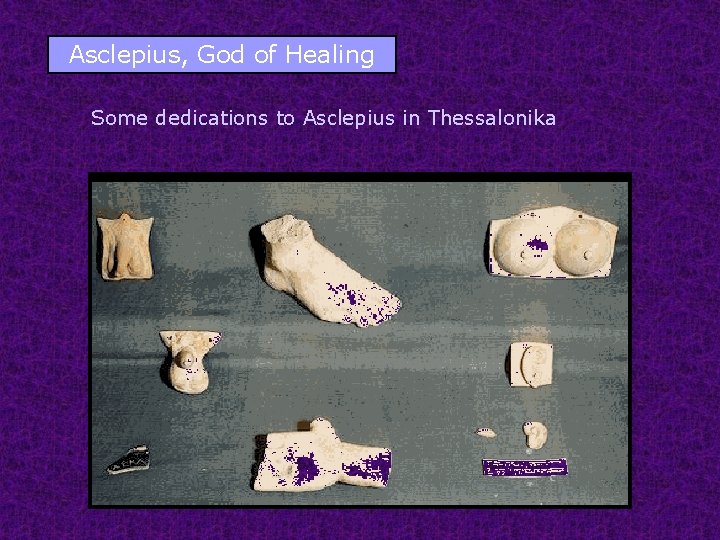
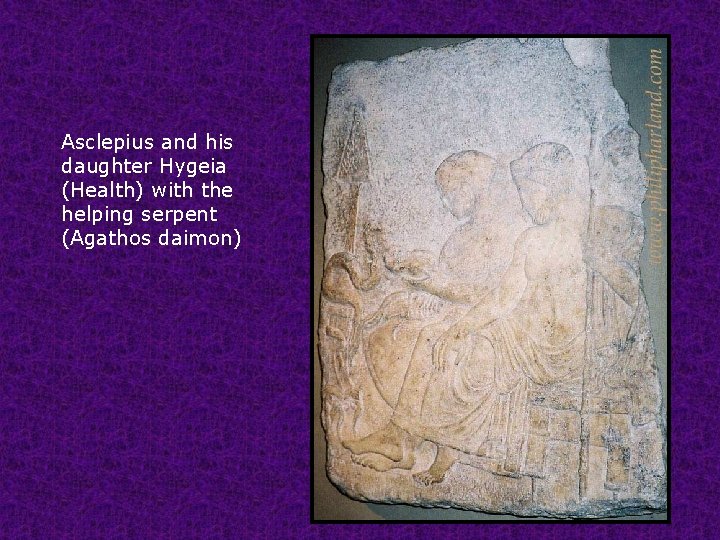
Asclepius, God of Healing Apollo’s son, Asclepius, was a god of medicine. Sick people flocked to his sanctuaries all over Greece.
Asclepius, God of Healing Some dedications to Asclepius in Thessalonika
Asclepius and his daughter Hygeia (Health) with the helping serpent (Agathos daimon)
Music and Poetry
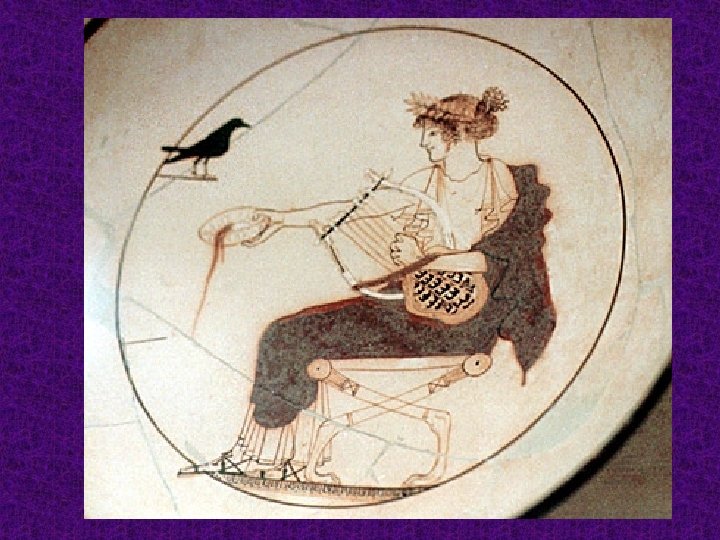
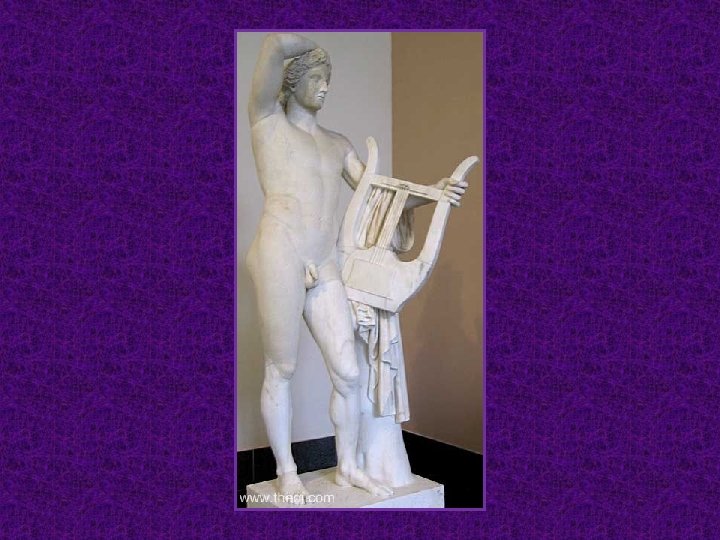
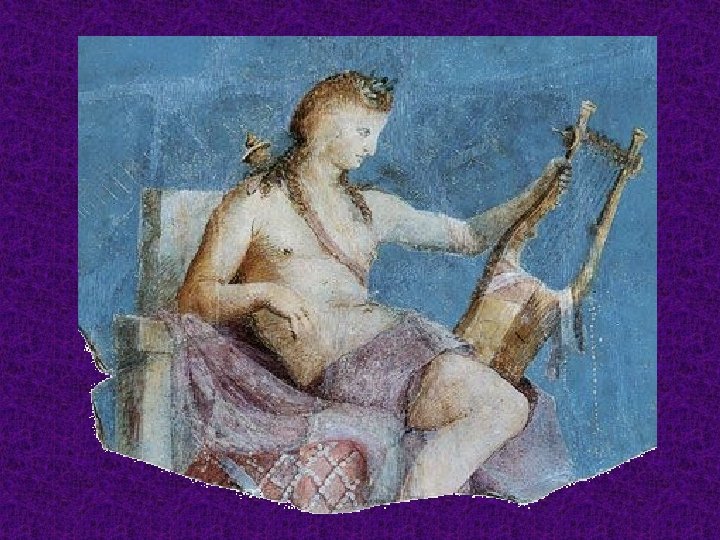
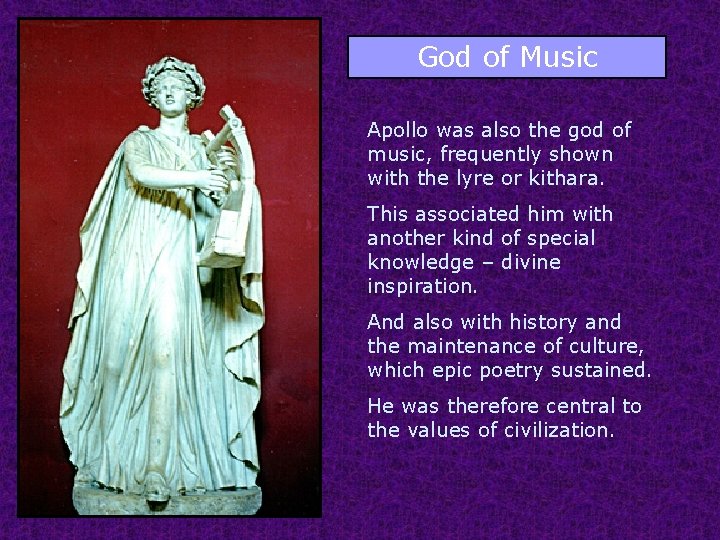
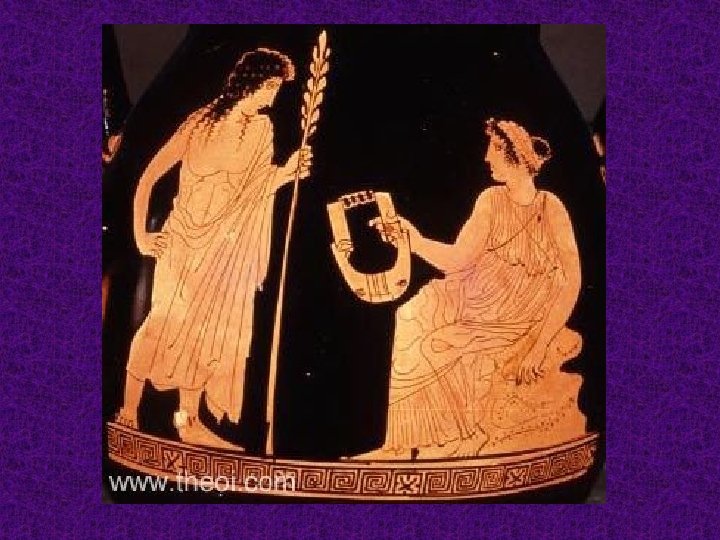
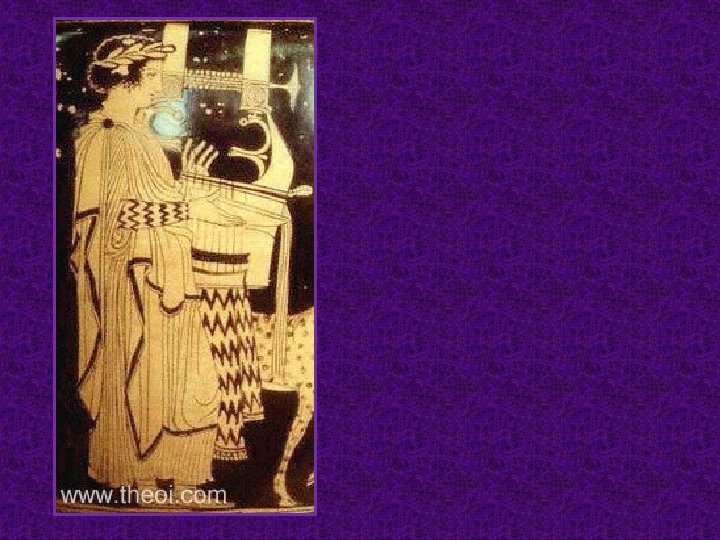
God of Music Apollo was also the god of music, frequently shown with the lyre or kithara. This associated him with another kind of special knowledge – divine inspiration. And also with history and the maintenance of culture, which epic poetry sustained. He was therefore central to the values of civilization.
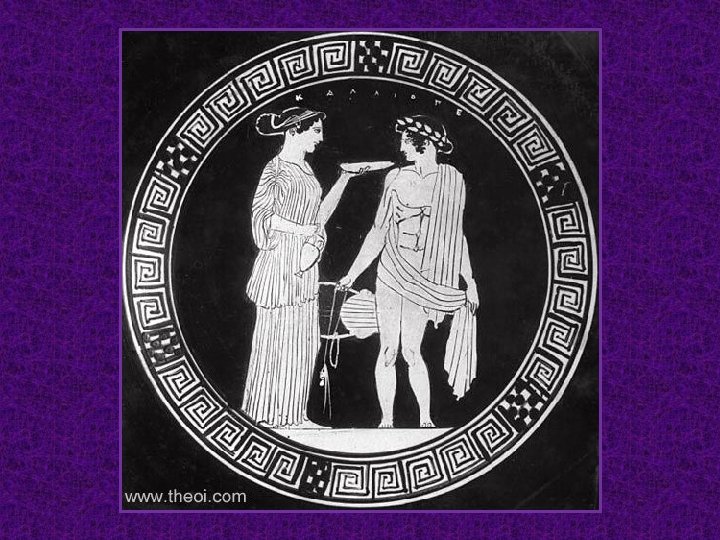
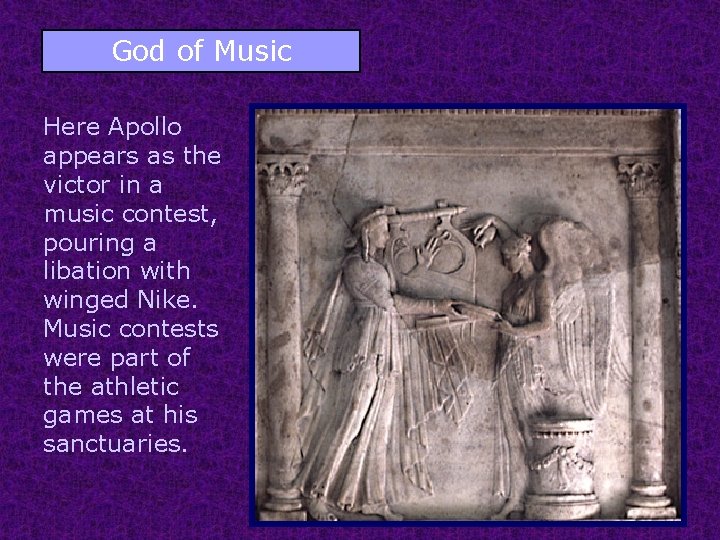
God of Music Here Apollo appears as the victor in a music contest, pouring a libation with winged Nike. Music contests were part of the athletic games at his sanctuaries.
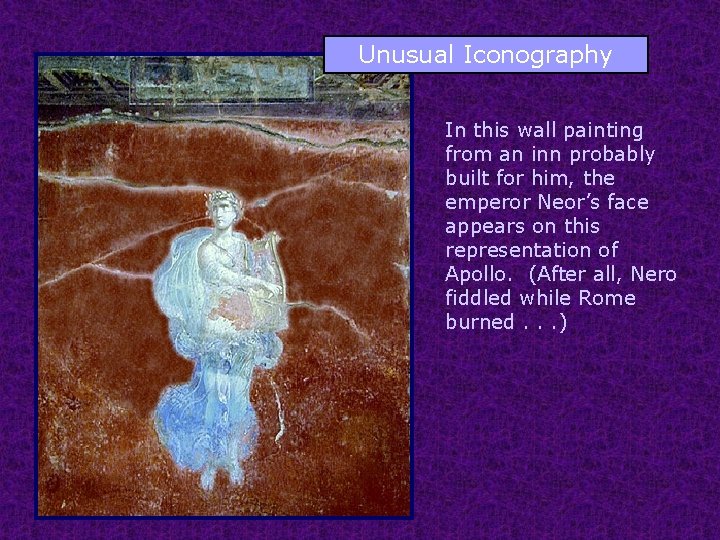
Unusual Iconography In this wall painting from an inn probably built for him, the emperor Neor’s face appears on this representation of Apollo. (After all, Nero fiddled while Rome burned. . . )
Loves
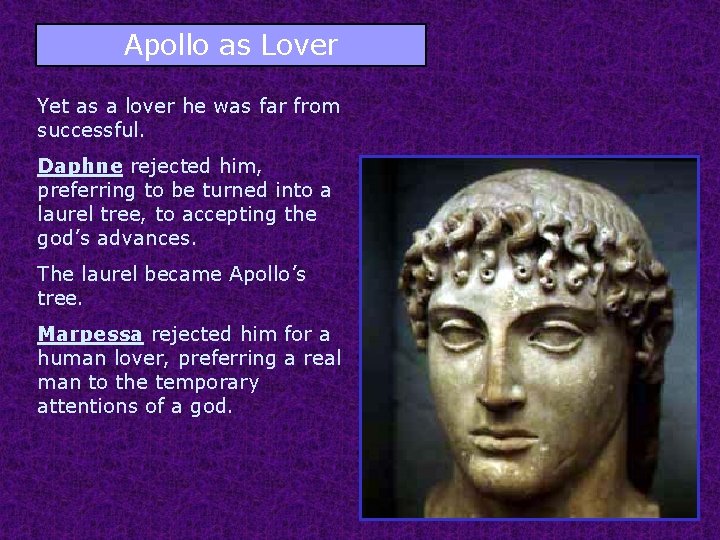
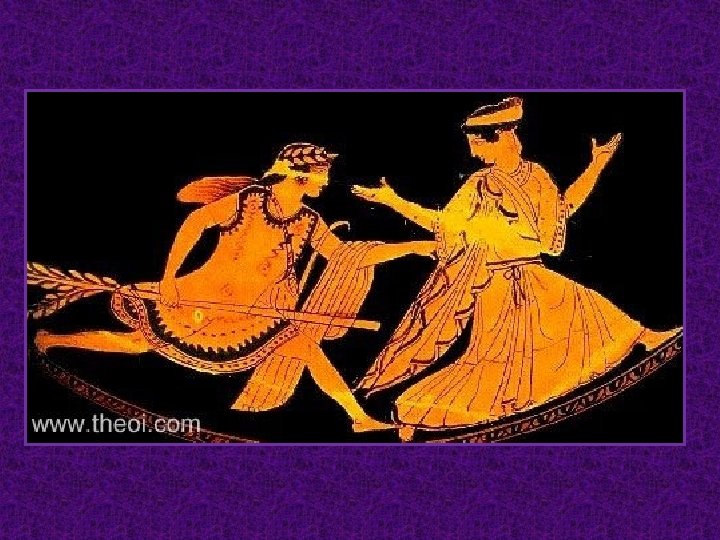
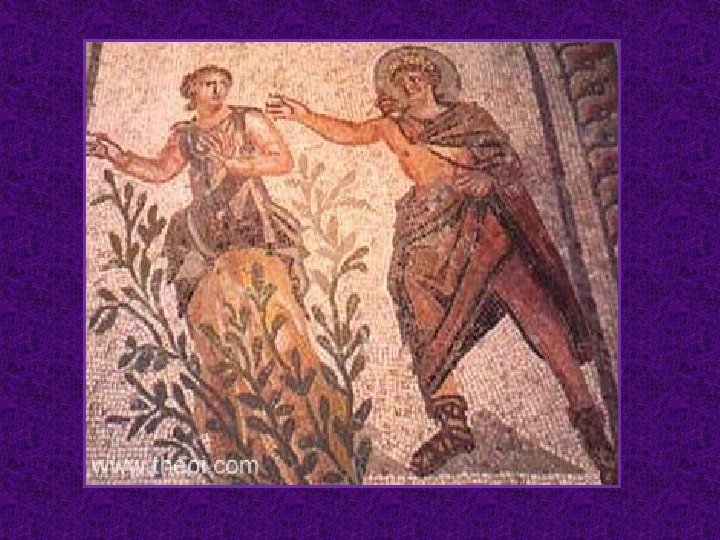
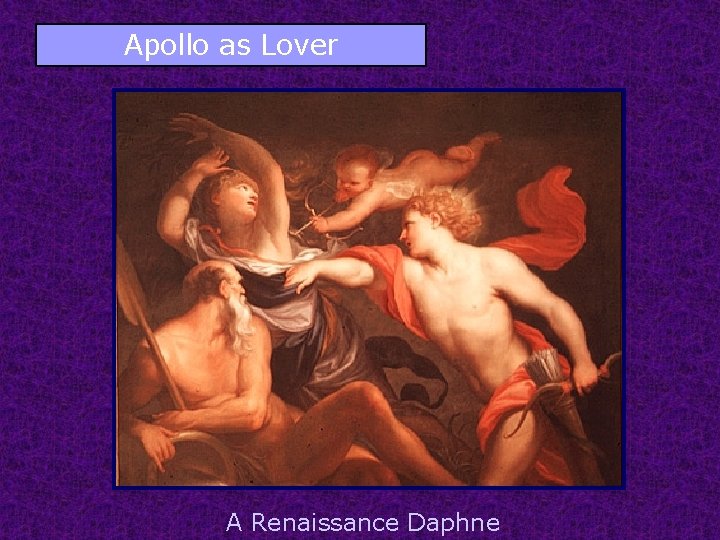
Apollo as Lover Yet as a lover he was far from successful. Daphne rejected him, preferring to be turned into a laurel tree, to accepting the god’s advances. The laurel became Apollo’s tree. Marpessa rejected him for a human lover, preferring a real man to the temporary attentions of a god.
Apollo as Lover A Renaissance Daphne
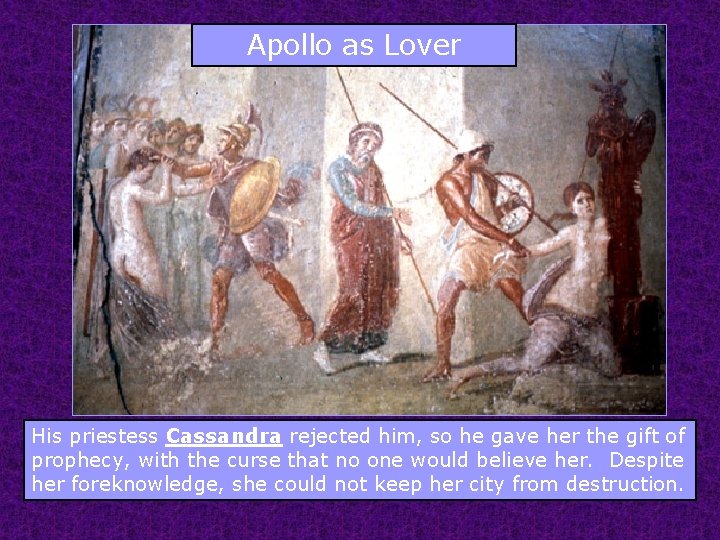
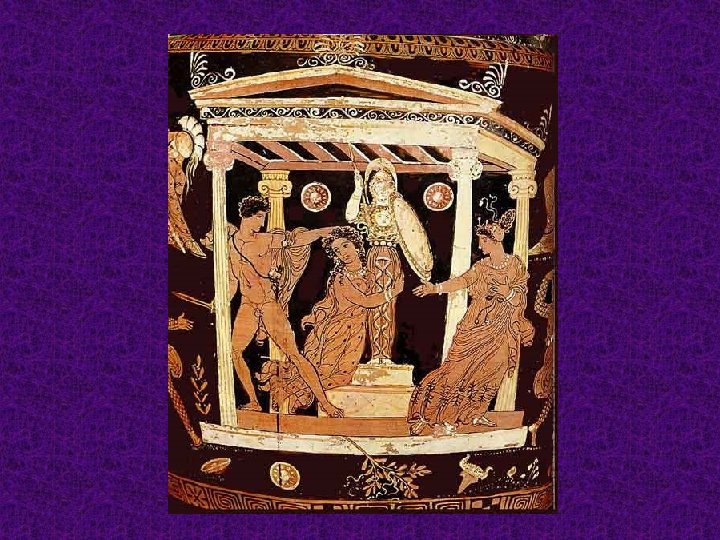
Apollo as Lover His priestess Cassandra rejected him, so he gave her the gift of prophecy, with the curse that no one would believe her. Despite her foreknowledge, she could not keep her city from destruction.
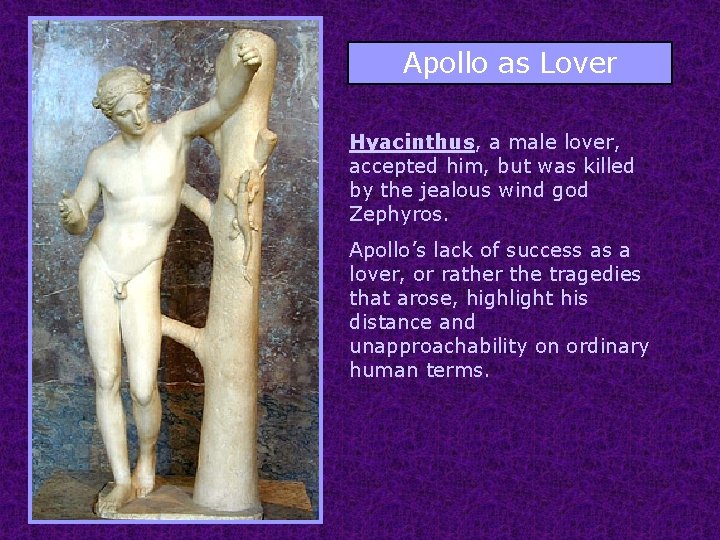
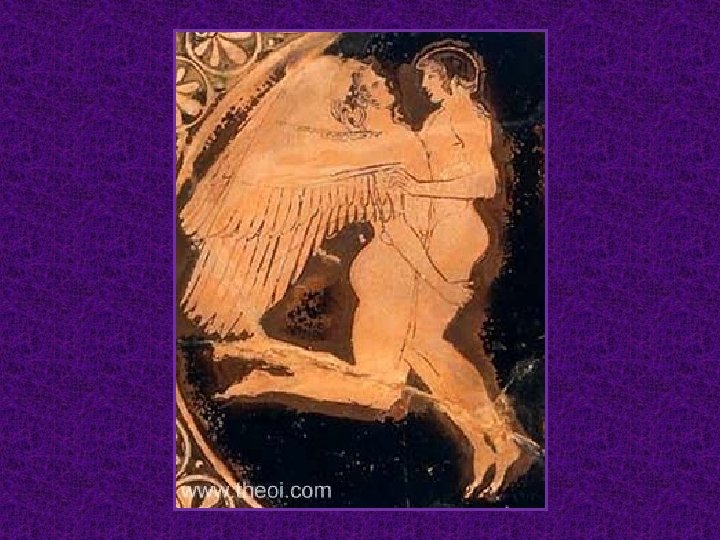
Apollo as Lover Hyacinthus, a male lover, accepted him, but was killed by the jealous wind god Zephyros. Apollo’s lack of success as a lover, or rather the tragedies that arose, highlight his distance and unapproachability on ordinary human terms.
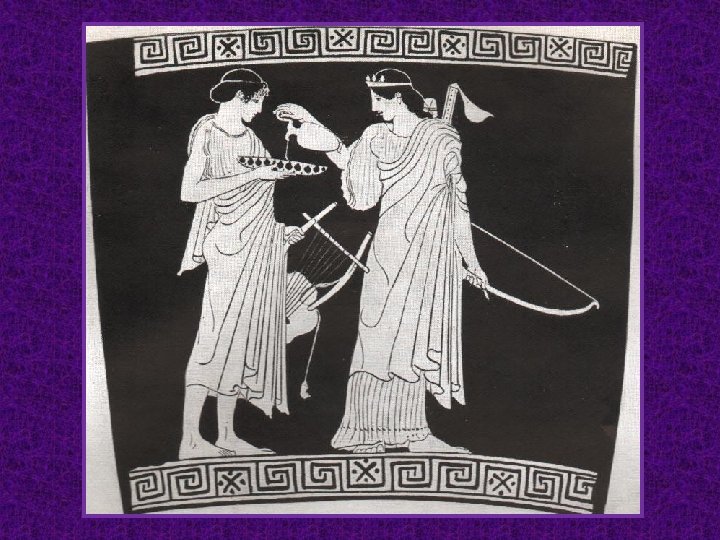
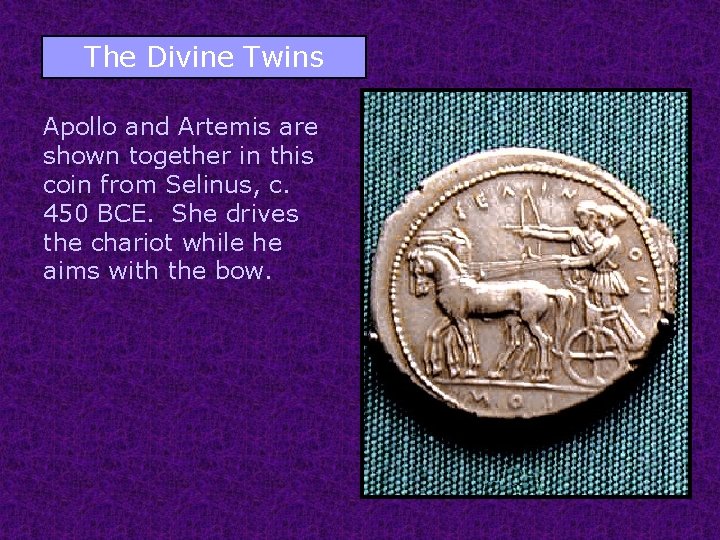
The Divine Twins Apollo and Artemis are shown together in this coin from Selinus, c. 450 BCE. She drives the chariot while he aims with the bow.
Merciless
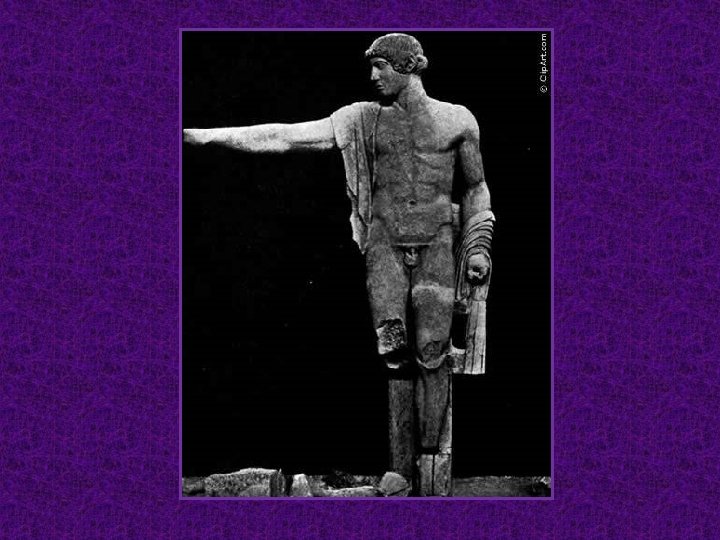
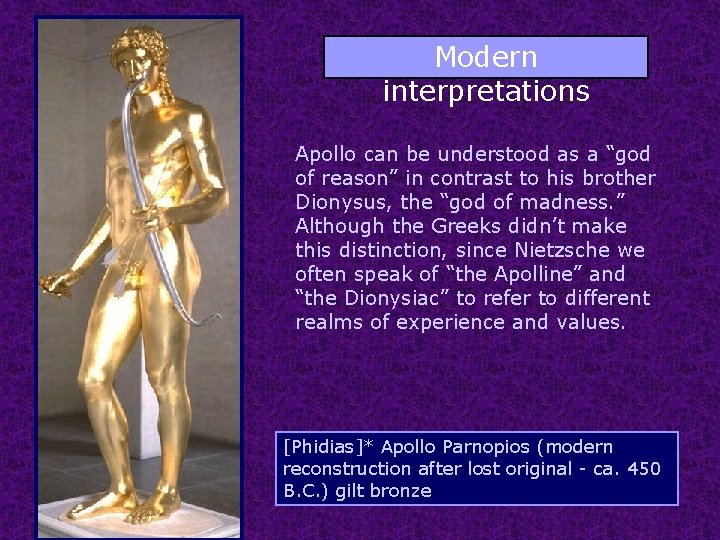
Modern interpretations Apollo can be understood as a “god of reason” in contrast to his brother Dionysus, the “god of madness. ” Although the Greeks didn’t make this distinction, since Nietzsche we often speak of “the Apolline” and “the Dionysiac” to refer to different realms of experience and values. [Phidias]* Apollo Parnopios (modern reconstruction after lost original - ca. 450 B. C. ) gilt bronze
finis
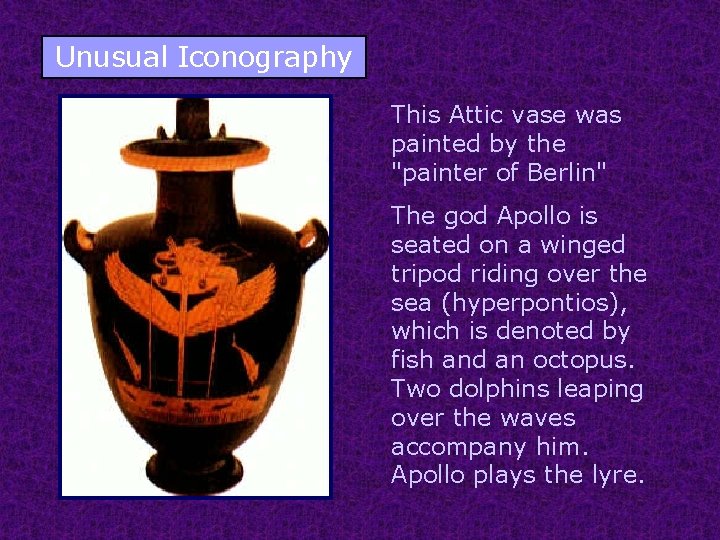
Unusual Iconography This Attic vase was painted by the "painter of Berlin" The god Apollo is seated on a winged tripod riding over the sea (hyperpontios), which is denoted by fish and an octopus. Two dolphins leaping over the waves accompany him. Apollo plays the lyre.