An Introduction to Large Heat Pumps Dave Pearson



- Slides: 31
An Introduction to Large Heat Pumps Dave Pearson Star Renewable Energy
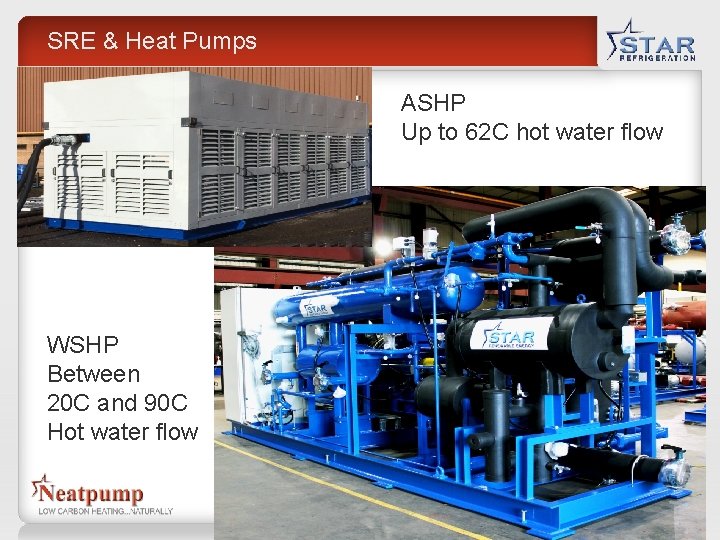
SRE & Heat Pumps ASHP Up to 62 C hot water flow WSHP Between 20 C and 90 C Hot water flow
Big Heatpumps @ Drammen GWh
The Basics – WSHP
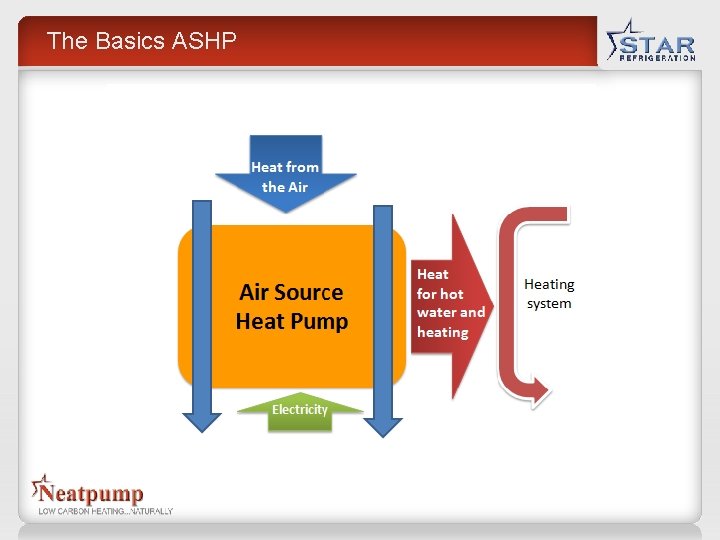
The Basics ASHP
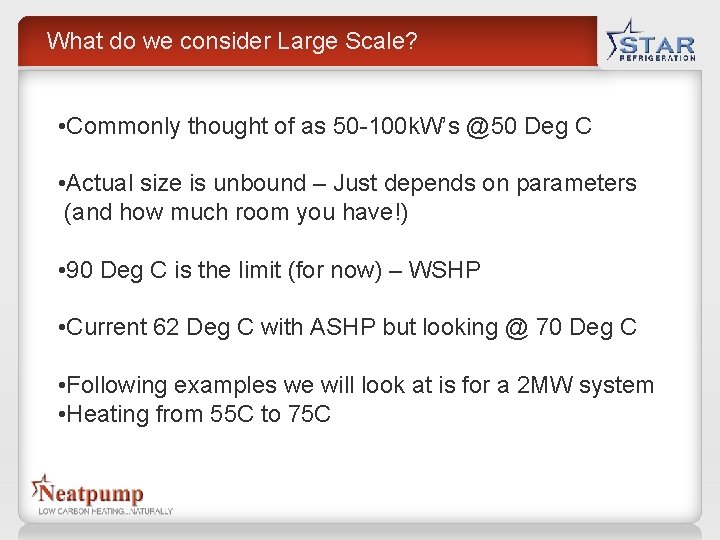
What do we consider Large Scale? • Commonly thought of as 50 -100 k. W’s @50 Deg C • Actual size is unbound – Just depends on parameters (and how much room you have!) • 90 Deg C is the limit (for now) – WSHP • Current 62 Deg C with ASHP but looking @ 70 Deg C • Following examples we will look at is for a 2 MW system • Heating from 55 C to 75 C
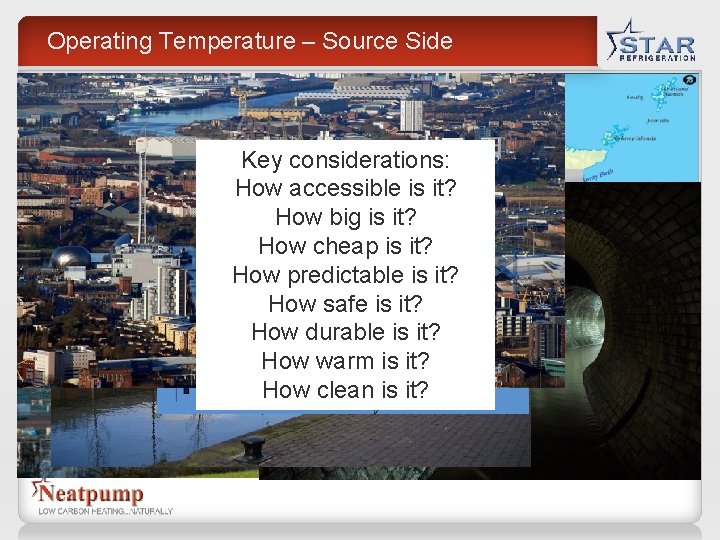
Operating Temperature – Source Side Key considerations: How accessible is it? How big is it? How cheap is it? How predictable is it? How safe is it? How durable is it? How warm is it? How clean is it?
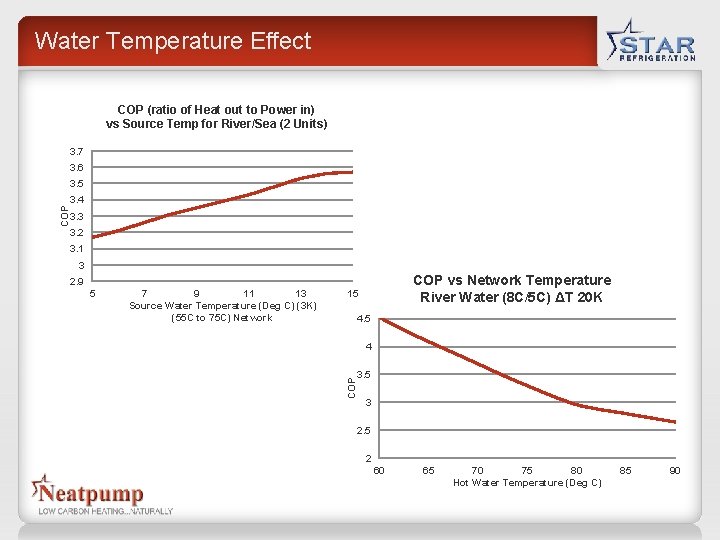
Water Temperature Effect COP (ratio of Heat out to Power in) vs Source Temp for River/Sea (2 Units) 3. 7 3. 6 3. 4 3. 3 3. 2 3. 1 3 COP vs Network Temperature River Water (8 C/5 C) ΔT 20 K 2. 9 5 7 9 11 13 Source Water Temperature (Deg C) (3 K) (55 C to 75 C) Network 15 4. 5 4 COP 3. 5 3 2. 5 2 60 65 70 75 80 Hot Water Temperature (Deg C) 85 90
Cost of Heat Cost of heat if COP (ratio of Heat out to Power in) vs Source Temp for River/Sea (2 Units) Electricity 10 p = 3. 0 p/k. Wh Electricity 7 p = 2. 1 p/k. Wh 3. 7 3. 6 And RHI is 8. 7 p ~ 2. 6 p So minus 6. 6 p/k. Wh at best 3. 4 3. 3 3. 2 3. 1 3 COP vs Network Temperature River Water (8 C/5 C) ΔT 20 K 2. 9 5 7 9 11 13 Source Water Temperature (Deg C) (3 K) (55 C to 75 C) Network 15 4. 5 4 COP 3. 5 3 2. 5 2 60 65 70 75 80 Hot Water Temperature (Deg C) 85 90
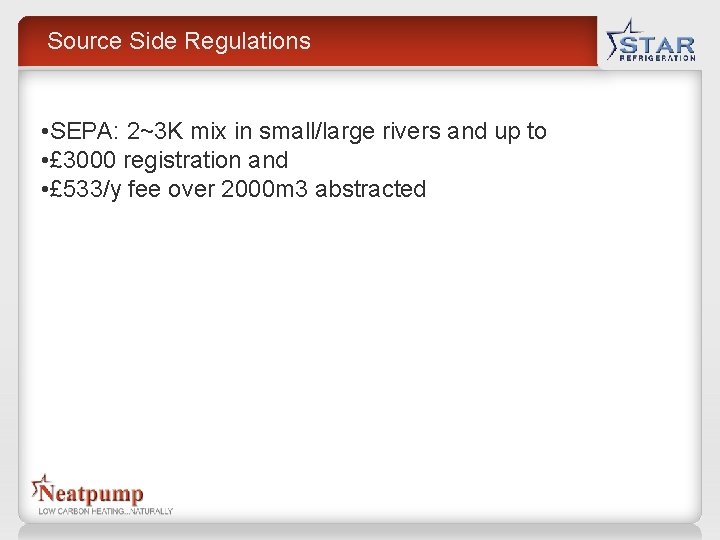
Source Side Regulations • SEPA: 2~3 K mix in small/large rivers and up to • £ 3000 registration and • £ 533/y fee over 2000 m 3 abstracted
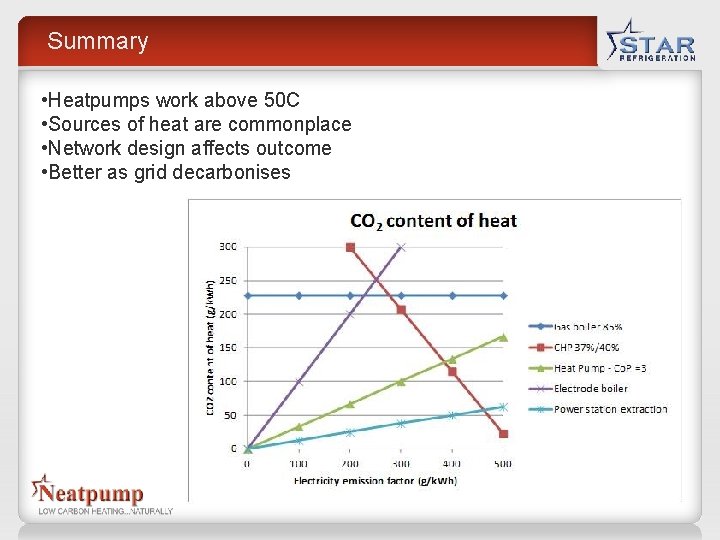
Summary • Heatpumps work above 50 C • Sources of heat are commonplace • Network design affects outcome • Better as grid decarbonises
Large Scale Water Source Heat Pumps and Efficiency Influencers Nicky Cowan Star Renewable Energy
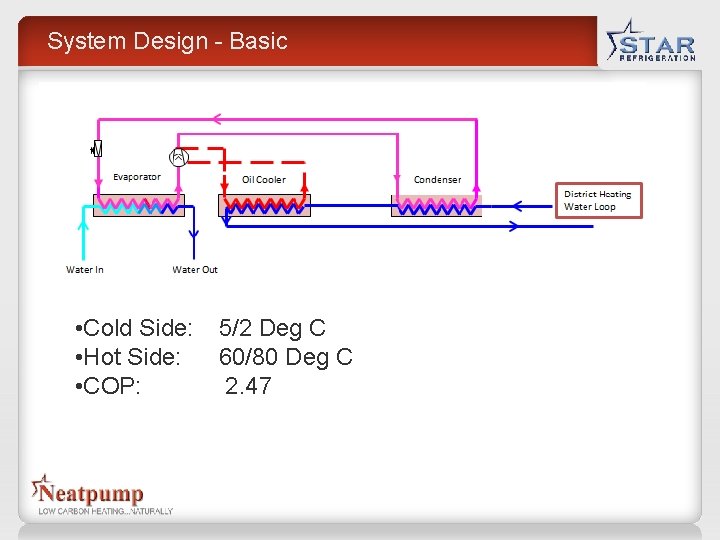
System Design - Basic • Cold Side: • Hot Side: • COP: 5/2 Deg C 60/80 Deg C 2. 47
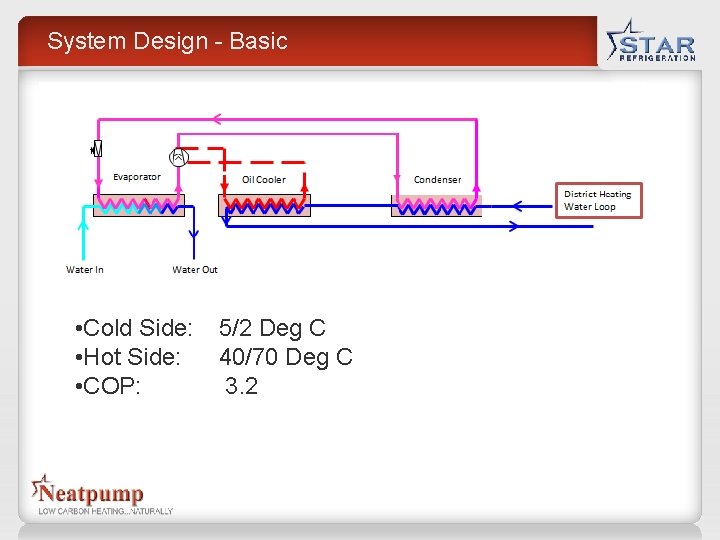
System Design - Basic • Cold Side: • Hot Side: • COP: 5/2 Deg C 40/70 Deg C 3. 2
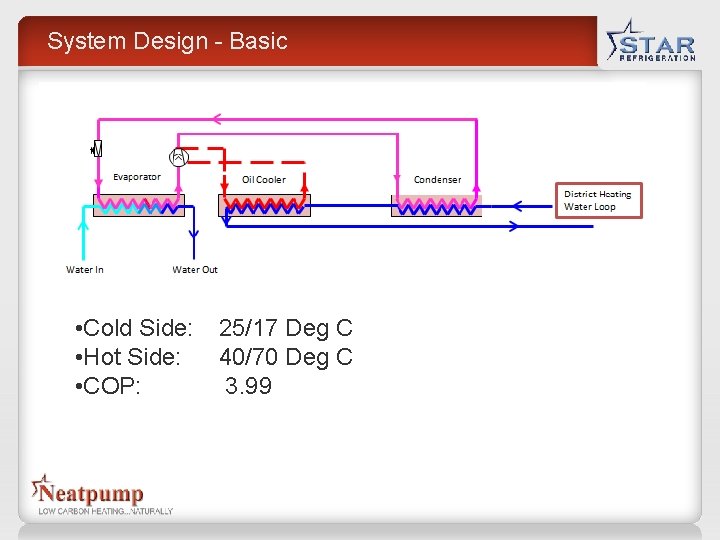
System Design - Basic • Cold Side: • Hot Side: • COP: 25/17 Deg C 40/70 Deg C 3. 99
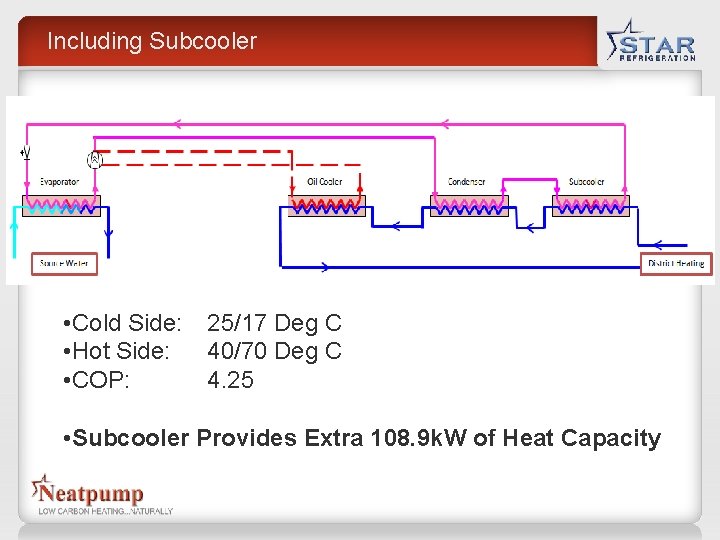
Including Subcooler • Cold Side: • Hot Side: • COP: 25/17 Deg C 40/70 Deg C 4. 25 • Subcooler Provides Extra 108. 9 k. W of Heat Capacity
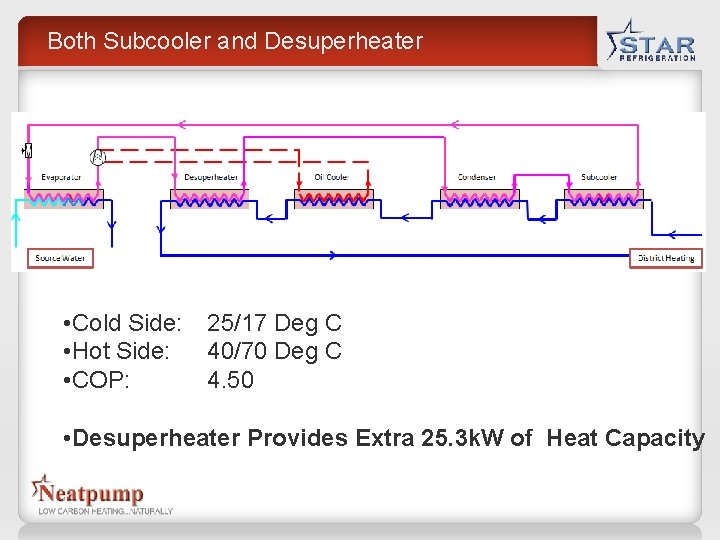
Both Subcooler and Desuperheater • Cold Side: • Hot Side: • COP: 25/17 Deg C 40/70 Deg C 4. 50 • Desuperheater Provides Extra 25. 3 k. W of Heat Capacity
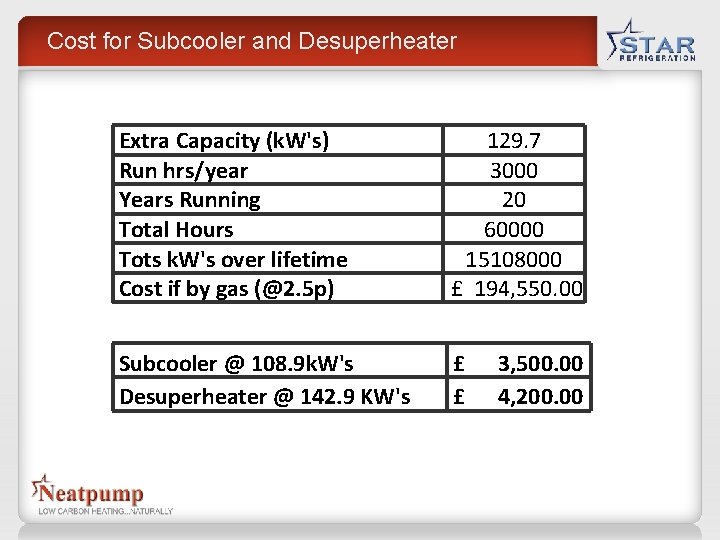
Cost for Subcooler and Desuperheater Extra Capacity (k. W's) Run hrs/year Years Running Total Hours Tots k. W's over lifetime Cost if by gas (@2. 5 p) 129. 7 3000 20 60000 15108000 £ 194, 550. 00 Subcooler @ 108. 9 k. W's Desuperheater @ 142. 9 KW's £ £ 3, 500. 00 4, 200. 00
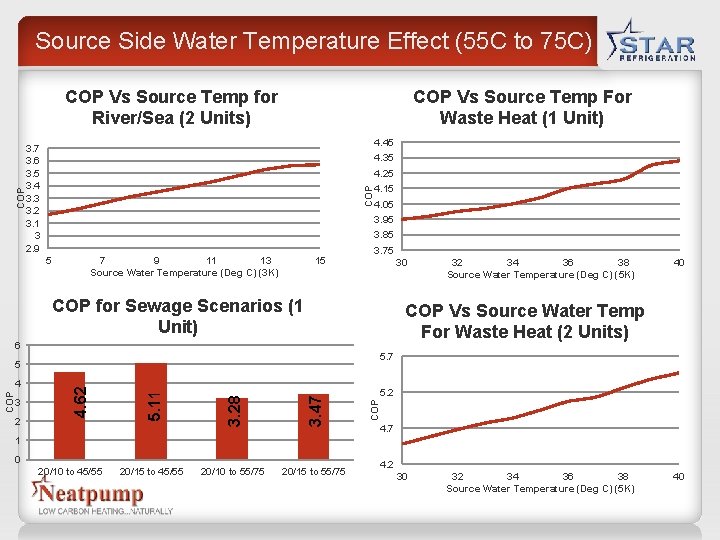
Source Side Water Temperature Effect (55 C to 75 C) COP Vs Source Temp For Waste Heat (1 Unit) 4. 45 3. 7 3. 6 3. 5 3. 4 3. 3 3. 2 3. 1 3 2. 9 4. 35 4. 25 COP COP Vs Source Temp for River/Sea (2 Units) 4. 15 4. 05 3. 95 3. 85 5 7 9 11 13 Source Water Temperature (Deg C) (3 K) 15 3. 75 30 COP for Sewage Scenarios (1 Unit) 5. 7 3. 47 20/10 to 55/75 20/15 to 55/75 5. 2 COP 3. 28 COP 5. 11 2 4. 62 5 3 40 COP Vs Source Water Temp For Waste Heat (2 Units) 6 4 32 34 36 38 Source Water Temperature (Deg C) (5 K) 4. 7 1 0 20/10 to 45/55 20/15 to 45/55 4. 2 30 32 34 36 38 Source Water Temperature (Deg C) (5 K) 40
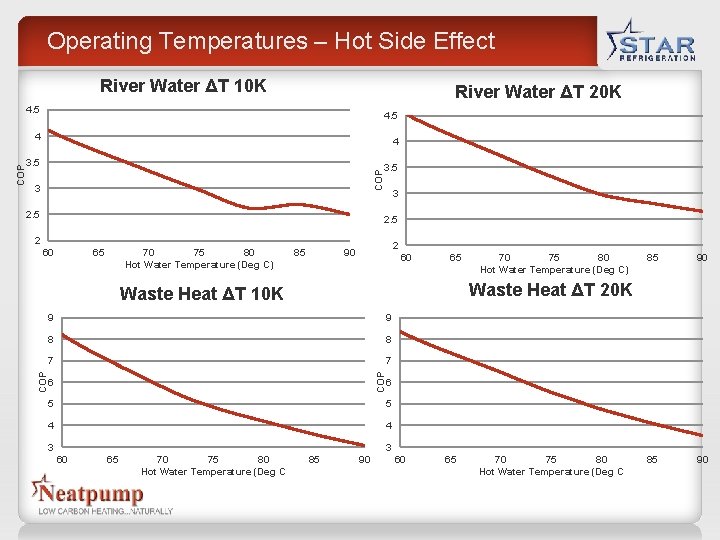
Operating Temperatures – Hot Side Effect River Water ΔT 10 K River Water ΔT 20 K 4. 5 4 COP 3. 5 3 2. 5 2 60 65 70 75 80 Hot Water Temperature (Deg C) 85 2 90 60 65 70 75 80 Hot Water Temperature (Deg C) 85 90 Waste Heat ΔT 20 K Waste Heat ΔT 10 K 9 9 8 8 7 7 COP COP 4 6 6 5 5 4 4 3 3 60 65 70 75 80 Hot Water Temperature (Deg C 85 90 60 65 70 75 80 Hot Water Temperature (Deg C
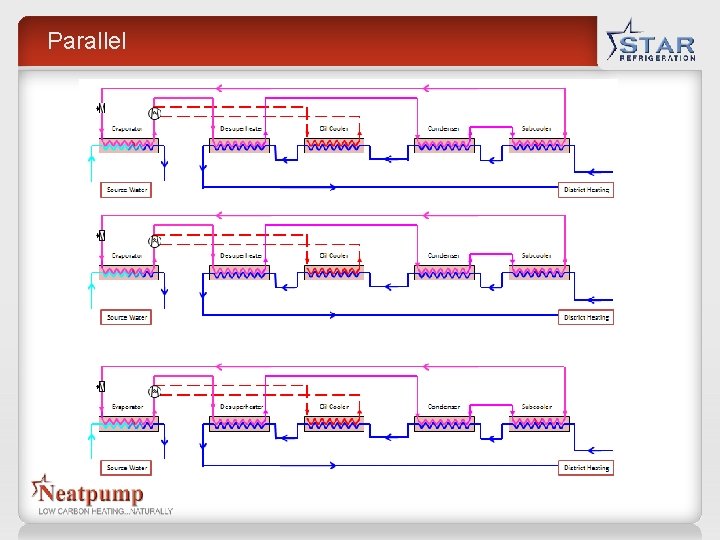
Parallel
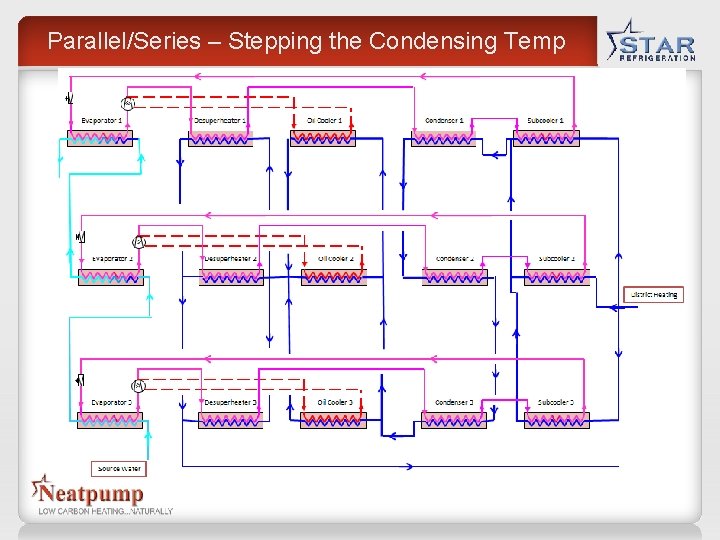
Parallel/Series – Stepping the Condensing Temp
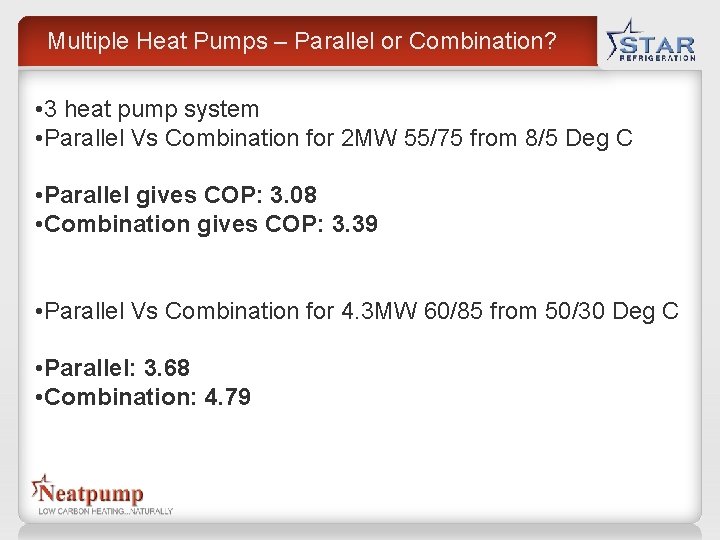
Multiple Heat Pumps – Parallel or Combination? • 3 heat pump system • Parallel Vs Combination for 2 MW 55/75 from 8/5 Deg C • Parallel gives COP: 3. 08 • Combination gives COP: 3. 39 • Parallel Vs Combination for 4. 3 MW 60/85 from 50/30 Deg C • Parallel: 3. 68 • Combination: 4. 79
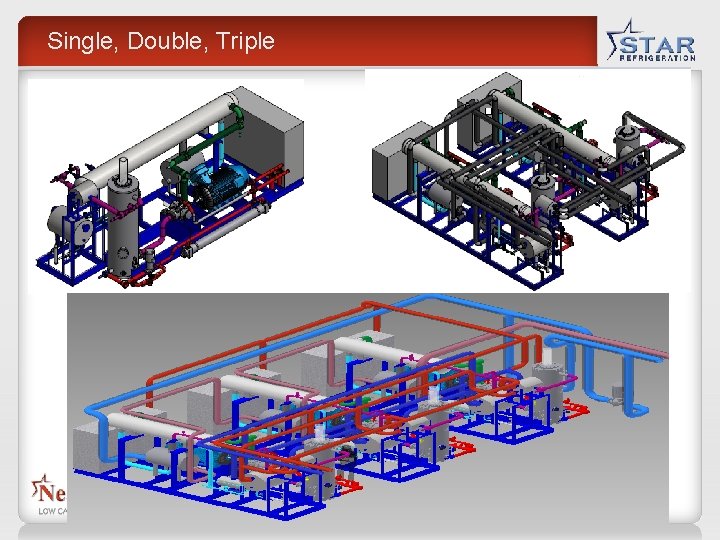
Single, Double, Triple
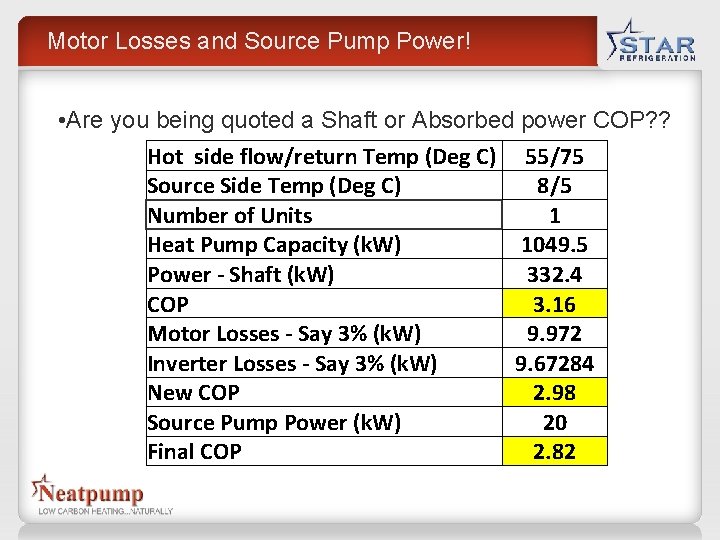
Motor Losses and Source Pump Power! • Are you being quoted a Shaft or Absorbed power COP? ? Hot side flow/return Temp (Deg C) 55/75 Source Side Temp (Deg C) 8/5 Number of Units 1 Heat Pump Capacity (k. W) 1049. 5 Power - Shaft (k. W) 332. 4 COP 3. 16 Motor Losses - Say 3% (k. W) 9. 972 Inverter Losses - Say 3% (k. W) 9. 67284 New COP 2. 98 Source Pump Power (k. W) 20 Final COP 2. 82
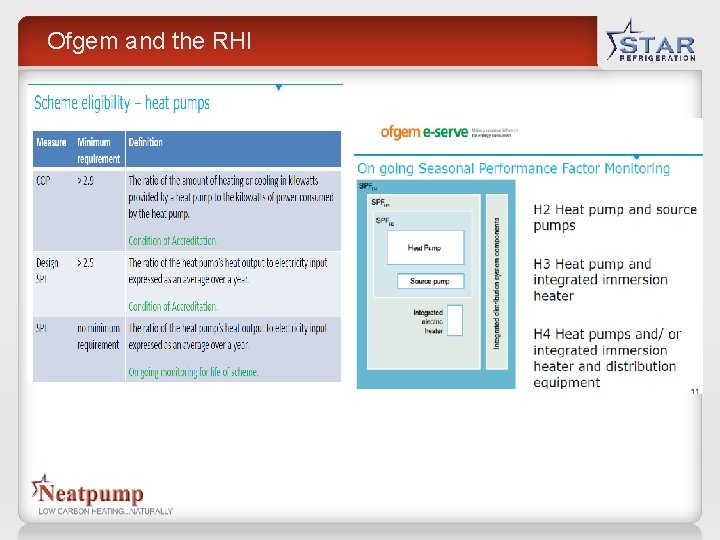
Ofgem and the RHI
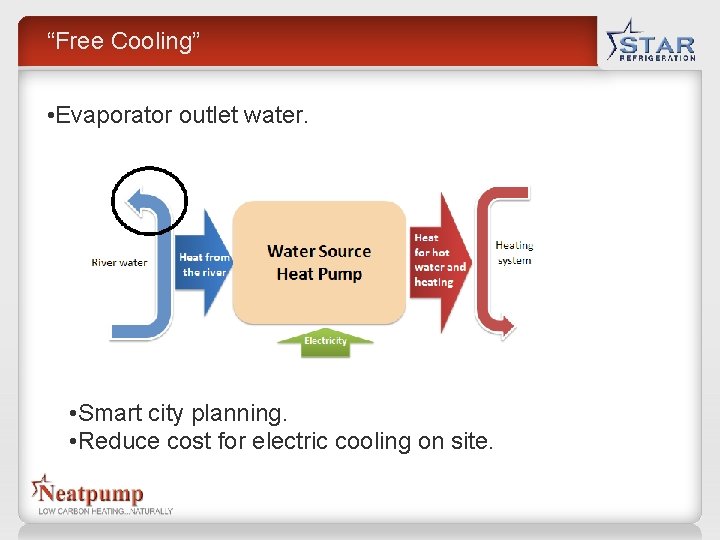
“Free Cooling” • Evaporator outlet water. • Smart city planning. • Reduce cost for electric cooling on site.
Why Should We Care? ? ? ? ? • Larger central energy plants = lower cost (£/k. W) • RHI • Carbon reductions (Carbon targets)
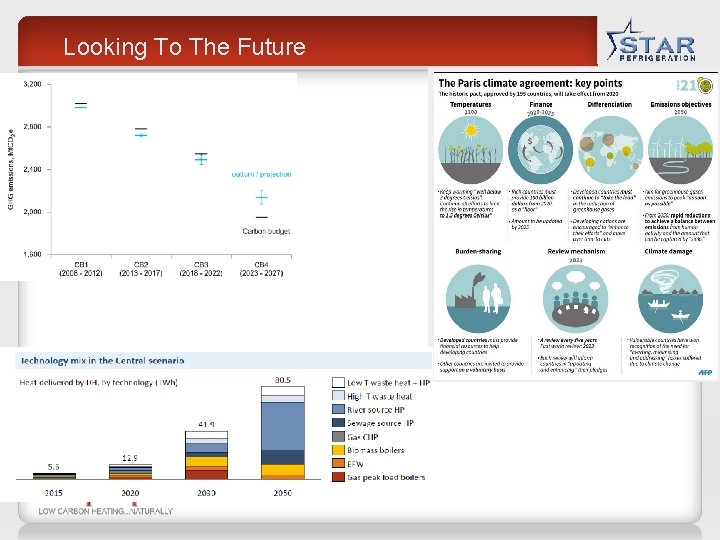
Looking To The Future
The choice? Listen to “Policy Needs” and act for the future Or wait till the now. . . . Carrot is a just a faded memory!