
Booster Pump Design for Transporting Slurry from SY102
Booster Pump Design for Transporting Slurry from SY-102 to Waste Treatment Plant (WTP) DOE-ORP Sponsored Project Sadiq Al Hajji Matt Borup Blake Bryson Vasiliy Kravstov
Overview • Problem Definition • Objectives • Work Process • Conclusion • Recommendations 2
Background • A project was designed and constructed starting in 1993 to replace six existing plugged and failed transfer lines. The replacement transfer system would transport tank waste between the West Area and the East Area. This design included one transfer line with the ability to transfer solids by the inclusion of booster pumps. • This booster pump system failed, and needed to be reevaluated. 3
Problem • Designing a booster pump that is adequate for the current and future waste constituents in the SY Tank Farms. If needed, include additional capacity or pumping stations. • Also, considerations of design life would have to be determined based on erosion considerations and pipe pressures would have to be evaluated to ensure the design loads are not violated. 4
Objectives • Assess the costs, pros, cons, and optimal number of additional pumping stations (if necessary). • Assess erosion/corrosion and its effect on pumping station component operable life. • Assess pumping station component wear based on likely pipe pressures during operation. • Assess system configuration to retrofit as necessary to improve operations and or reduce cost. 5
Approach • Define the scope of the project • Calculate the required work for pumping slurry • Choose a pump type • Select materials of construction based on slurry properties • Perform economic analysis on the selected design • Evaluate societal aspects • Propose final selection and recommendations 6
Work Process – Critical Characteristics and Specifications • Critical velocity (solids) • Flow rate • Type of pump • Material of construction • Approximate maintenance costs • Installation • Replacement/backup pumps • Yearly operating costs 7
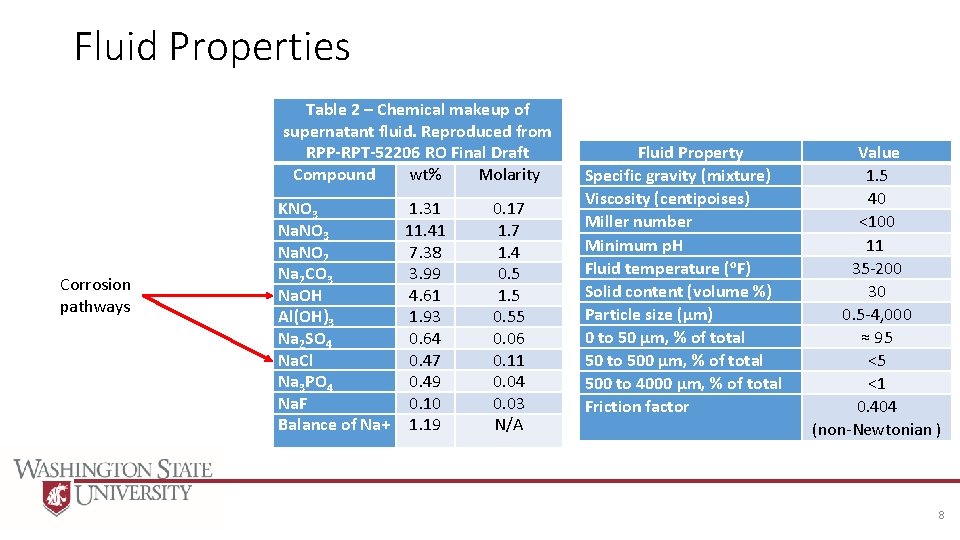
Fluid Properties Table 2 – Chemical makeup of supernatant fluid. Reproduced from RPP-RPT-52206 RO Final Draft Compound wt% Molarity Corrosion pathways KNO 3 1. 31 Na. NO 3 11. 41 Na. NO 2 7. 38 Na 2 CO 3 3. 99 Na. OH 4. 61 Al(OH)3 1. 93 Na 2 SO 4 0. 64 Na. Cl 0. 47 Na 3 PO 4 0. 49 Na. F 0. 10 Balance of Na+ 1. 19 0. 17 1. 4 0. 5 1. 5 0. 55 0. 06 0. 11 0. 04 0. 03 N/A Fluid Property Specific gravity (mixture) Viscosity (centipoises) Miller number Minimum p. H Fluid temperature (o. F) Solid content (volume %) Particle size (μm) 0 to 50 μm, % of total 50 to 500 μm, % of total 500 to 4000 μm, % of total Friction factor Value 1. 5 40 <100 11 35 -200 30 0. 5 -4, 000 ≈ 95 <5 <1 0. 404 (non-Newtonian ) 8
Corrosion Mechanisms • Stress Corrosion Cracking (SCC) • Chloride SCC • Caustic SCC 9
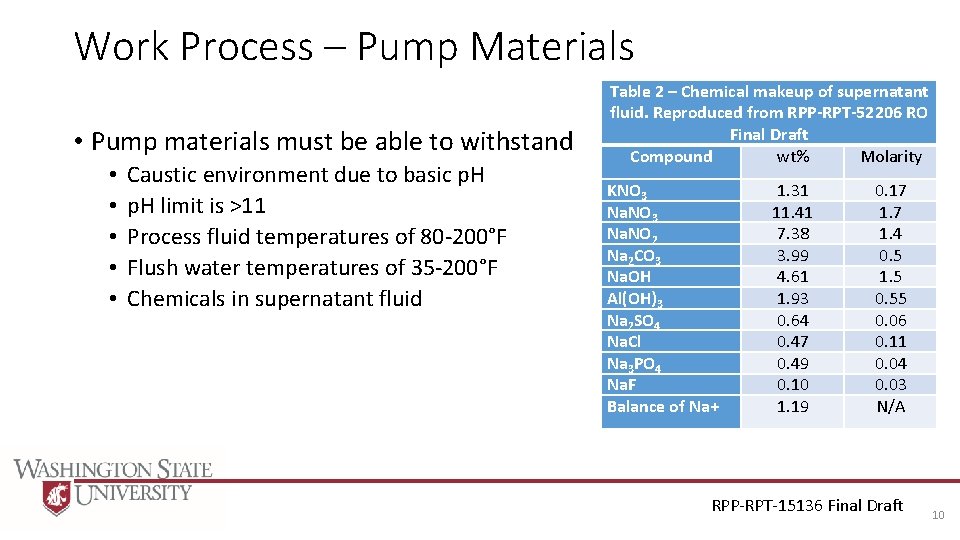
Work Process – Pump Materials • Pump materials must be able to withstand • • • Caustic environment due to basic p. H limit is >11 Process fluid temperatures of 80 -200°F Flush water temperatures of 35 -200°F Chemicals in supernatant fluid Table 2 – Chemical makeup of supernatant fluid. Reproduced from RPP-RPT-52206 RO Final Draft Compound wt% Molarity KNO 3 Na. NO 2 Na 2 CO 3 Na. OH Al(OH)3 Na 2 SO 4 Na. Cl Na 3 PO 4 Na. F Balance of Na+ 1. 31 11. 41 7. 38 3. 99 4. 61 1. 93 0. 64 0. 47 0. 49 0. 10 1. 19 0. 17 1. 4 0. 5 1. 5 0. 55 0. 06 0. 11 0. 04 0. 03 N/A RPP-RPT-15136 Final Draft 10
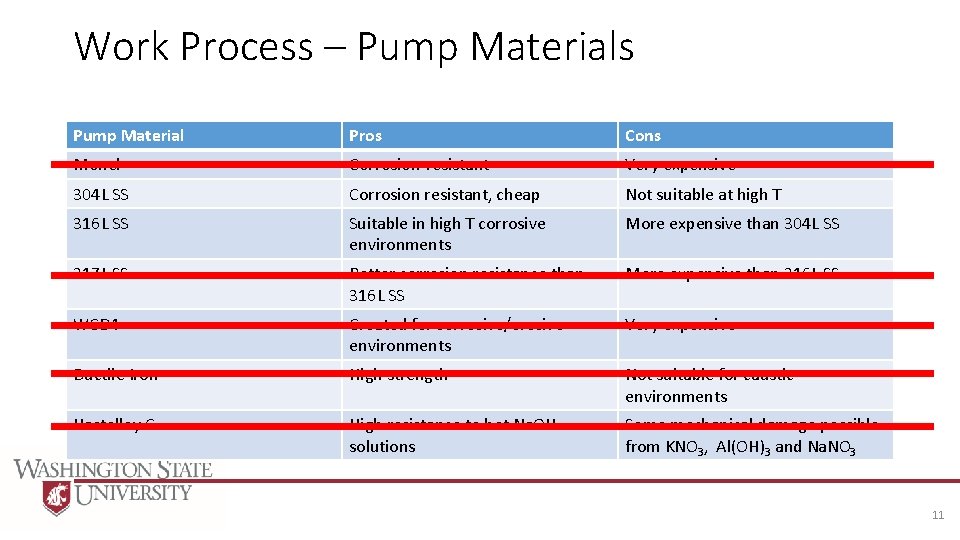
Work Process – Pump Materials Pump Material Pros Cons Monel Corrosion-resistant Very expensive 304 L SS Corrosion resistant, cheap Not suitable at high T 316 L SS Suitable in high T corrosive environments More expensive than 304 L SS 317 L SS Better corrosion resistance than 316 L SS More expensive than 316 L SS WCD 4 Created for corrosive/erosive environments Very expensive Ductile Iron High strength Not suitable for caustic environments Hastelloy C High resistance to hot Na. OH solutions Some mechanical damage possible from KNO 3, Al(OH)3 and Na. NO 3 11
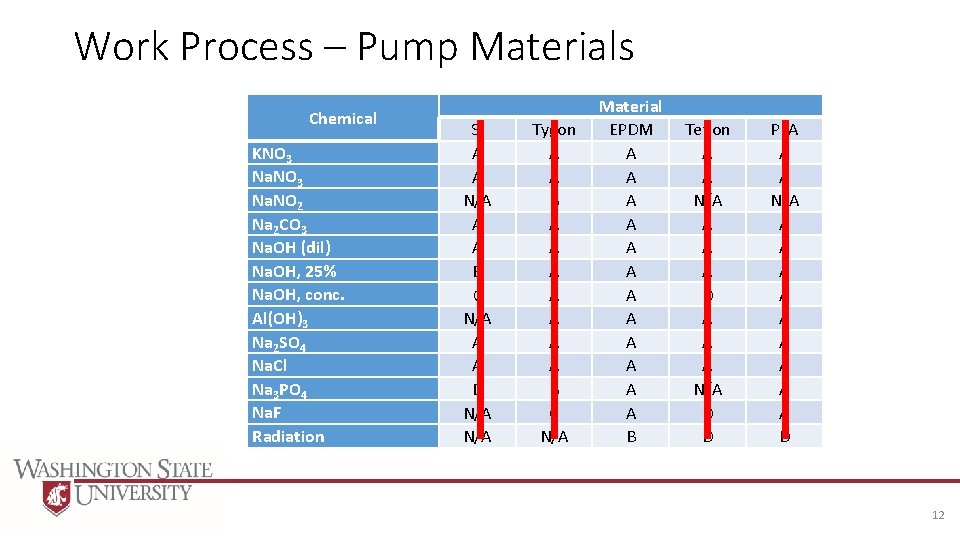
Work Process – Pump Materials Chemical KNO 3 Na. NO 2 Na 2 CO 3 Na. OH (dil) Na. OH, 25% Na. OH, conc. Al(OH)3 Na 2 SO 4 Na. Cl Na 3 PO 4 Na. F Radiation Si A A N/A A A B C N/A A A D N/A Tygon A A B A A A A B C N/A Material EPDM A A A B Teflon A A N/A A D A A A N/A D D PFA A A N/A A A A A D 12
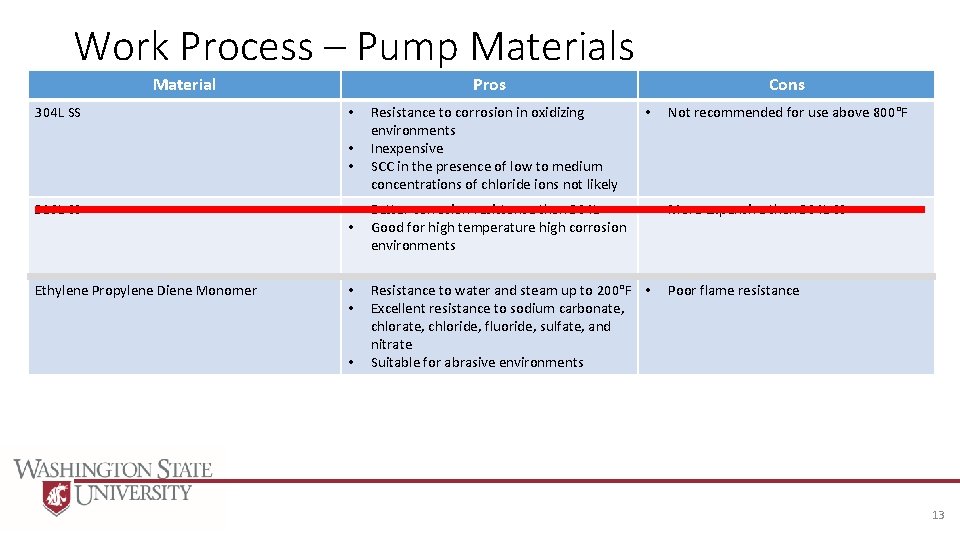
Work Process – Pump Materials Material 304 L SS Pros • • • Cons Resistance to corrosion in oxidizing environments Inexpensive SCC in the presence of low to medium concentrations of chloride ions not likely • Not recommended for use above 800°F • More expensive than 304 L SS 316 L SS • • Better corrosion resistance than 304 L Good for high temperature high corrosion environments Ethylene Propylene Diene Monomer • • Resistance to water and steam up to 200°F • Excellent resistance to sodium carbonate, chlorate, chloride, fluoride, sulfate, and nitrate Suitable for abrasive environments • Poor flame resistance 13

Work Process – Pump Calculations • 140 GPM maximum flow rate • 55 GPM nominal flow rate specifications provided from DOE-ORP • 3 -inch nominal diameter pipe specifications provided from Ch. E 451 Team 12 • Pump work: 14

Work Process – Pump Calculations • Fluid characteristics are interdependent, so certain parameters needed to be solidified: Solids % Density Viscosity Fluid Property Solids volume percent Density Viscosity Reynold’s number Fanning friction factor Darcy friction factor Reynold’s Number Fanning/Darcy friction factor Value 20% 1250 kg/m 3 10 c. P 18, 000 0. 007 0. 027 15

Work Process – Pump Calculations • The solids content is specified at 20 vol%, which corresponds to the following parameters (RPP-15136): • Velocity of 6 ft/s • Density of 1250 kg/m 3 • Viscosity of 10 c. P • The relative elevation at points A and B are calculated via the plot plans (H-2 -822201). • The efficiency of the pump is assumed to be 70%. • Assumed a 50% margin of error. 16

Work Process – Pump Calculations Requirement Variable Power Supplied to Pump Value 137 k. W (185 hp) Total Head H 1, 944 ft Friction Loss hf 1, 053 psi • Parameters to keep in mind: • Minimum pressure of 400 psig • Maximum pressure of 1, 490 psig • Critical velocity for slurry of 6. 0 ft/s 17
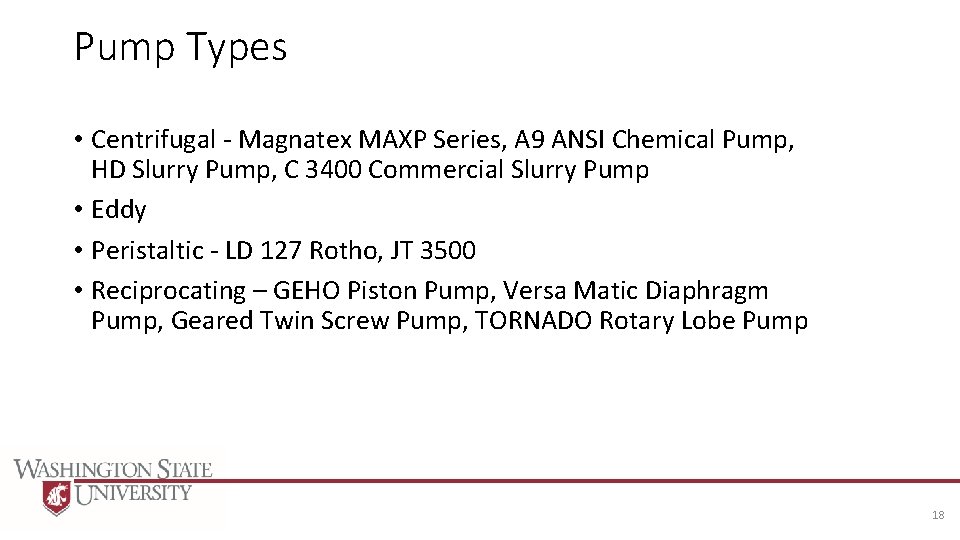
Pump Types • Centrifugal - Magnatex MAXP Series, A 9 ANSI Chemical Pump, HD Slurry Pump, C 3400 Commercial Slurry Pump • Eddy • Peristaltic - LD 127 Rotho, JT 3500 • Reciprocating – GEHO Piston Pump, Versa Matic Diaphragm Pump, Geared Twin Screw Pump, TORNADO Rotary Lobe Pump 18
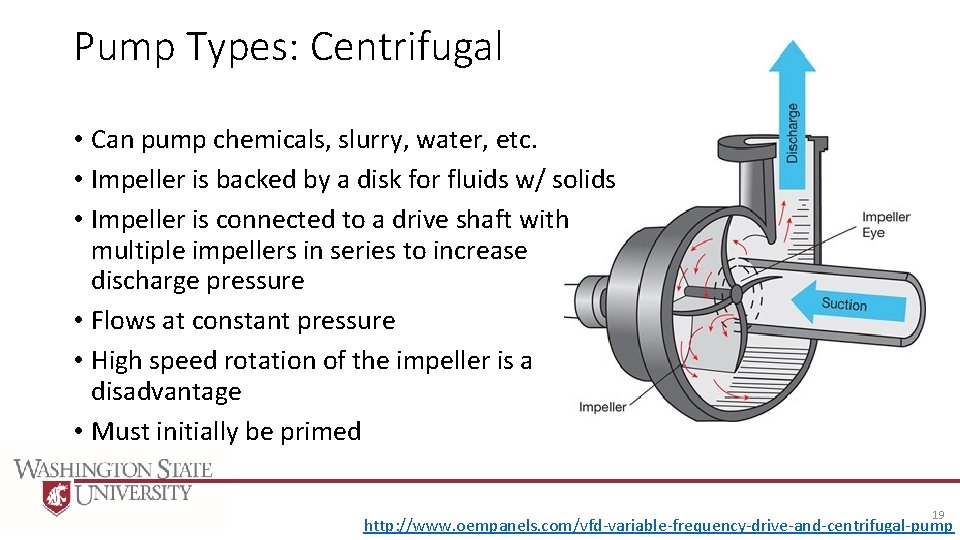
Pump Types: Centrifugal • Can pump chemicals, slurry, water, etc. • Impeller is backed by a disk for fluids w/ solids • Impeller is connected to a drive shaft with multiple impellers in series to increase discharge pressure • Flows at constant pressure • High speed rotation of the impeller is a disadvantage • Must initially be primed 19 http: //www. oempanels. com/vfd-variable-frequency-drive-and-centrifugal-pump
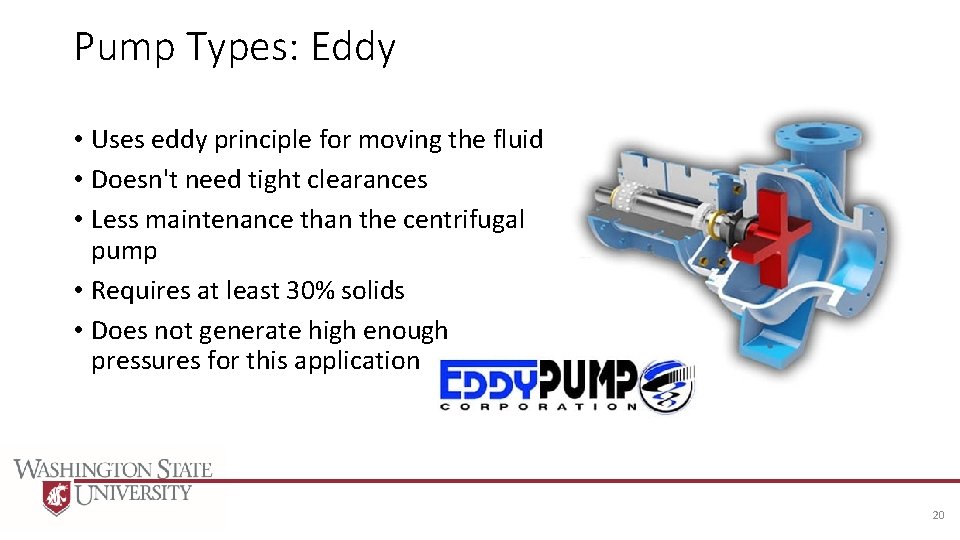
Pump Types: Eddy • Uses eddy principle for moving the fluid • Doesn't need tight clearances • Less maintenance than the centrifugal pump • Requires at least 30% solids • Does not generate high enough pressures for this application 20
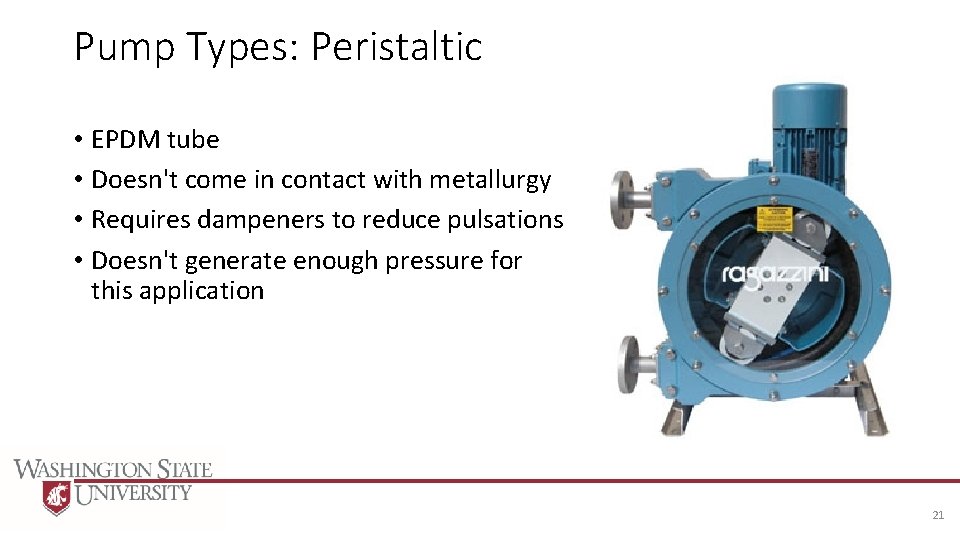
Pump Types: Peristaltic • EPDM tube • Doesn't come in contact with metallurgy • Requires dampeners to reduce pulsations • Doesn't generate enough pressure for this application 21
Pump Types: Positive Displacement • Piston Pump • Diaphragm Pump • Geared Twin Screw Pump • Lobe Pump 22
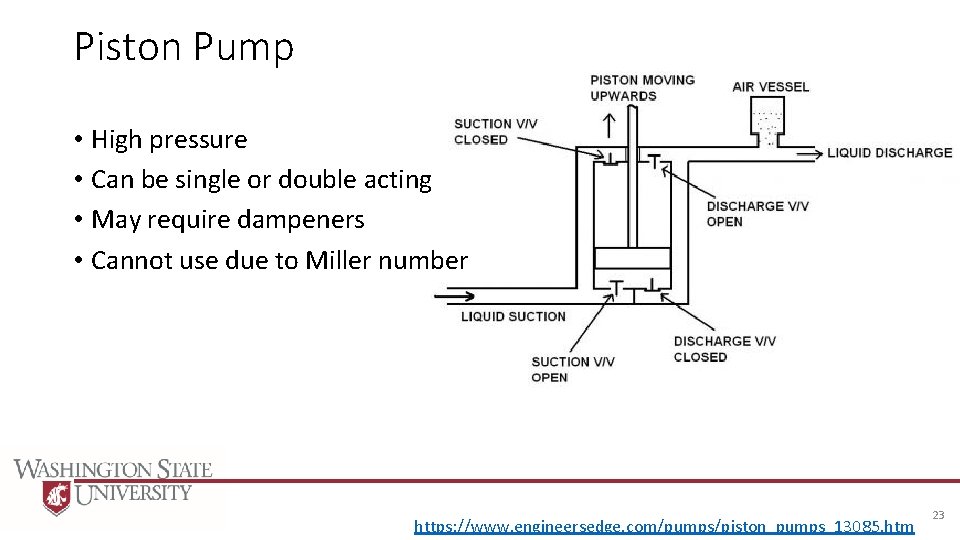
Piston Pump • High pressure • Can be single or double acting • May require dampeners • Cannot use due to Miller number https: //www. engineersedge. com/pumps/piston_pumps_13085. htm 23
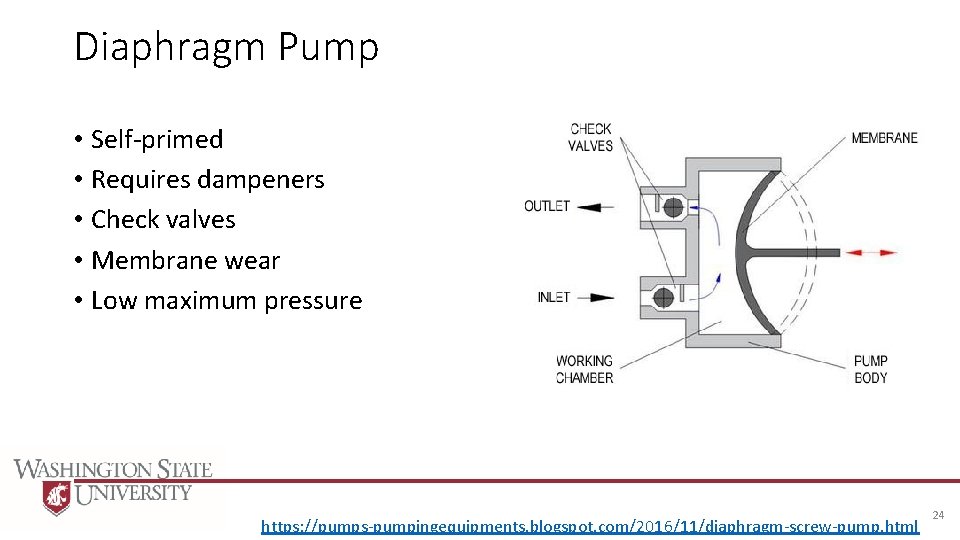
Diaphragm Pump • Self-primed • Requires dampeners • Check valves • Membrane wear • Low maximum pressure https: //pumps-pumpingequipments. blogspot. com/2016/11/diaphragm-screw-pump. html 24
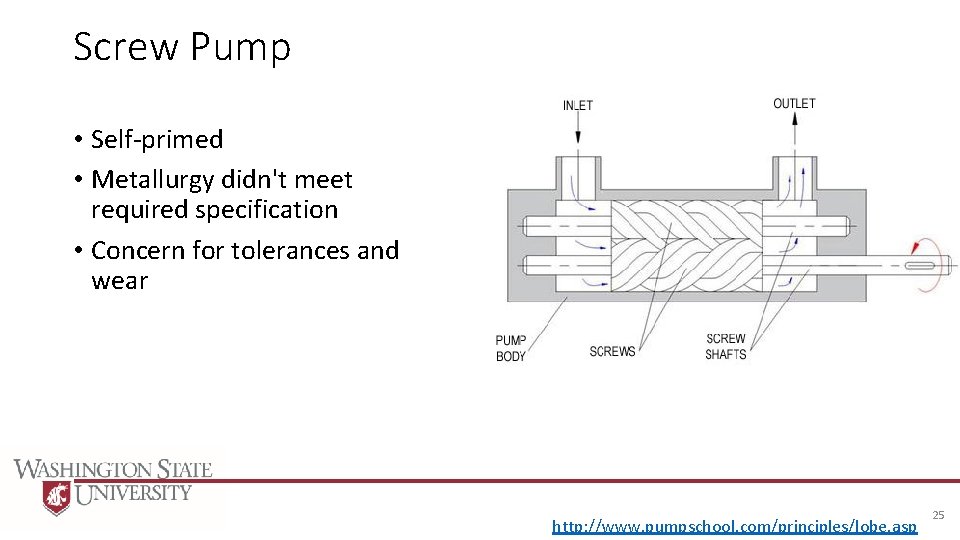
Screw Pump • Self-primed • Metallurgy didn't meet required specification • Concern for tolerances and wear http: //www. pumpschool. com/principles/lobe. asp 25
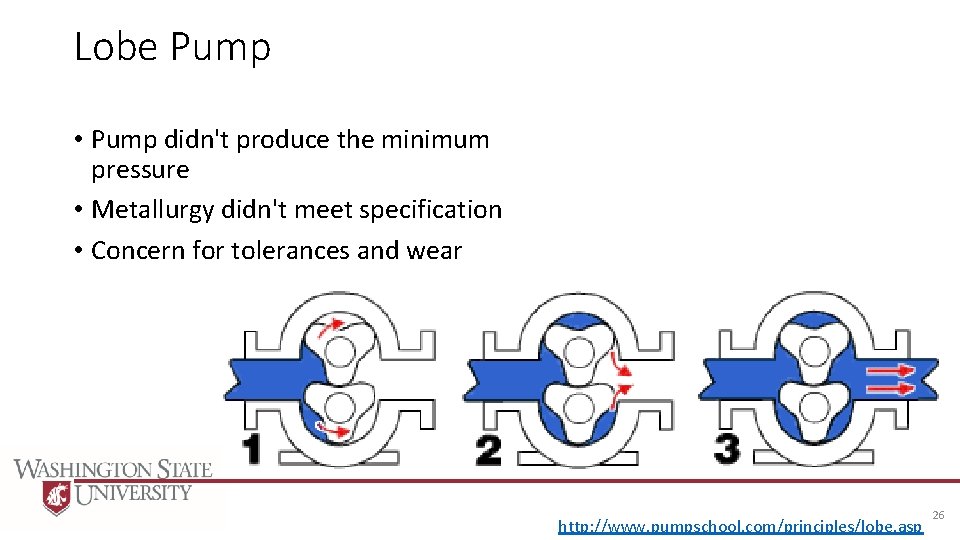
Lobe Pump • Pump didn't produce the minimum pressure • Metallurgy didn't meet specification • Concern for tolerances and wear http: //www. pumpschool. com/principles/lobe. asp 26
Economic analysis • Based on a correlation from Analysis, Synthesis and Design of Chemical Process book. • Parameters in the calculation: (pump type, material of construction, discharge pressure, shaft power, CEPCI) • All costs considering a back up pump • Utility cost based on (133 transfers for 30 years, hours of operation) • Chemical Engineering Plant Cost Index (CEPCI) is 601. 3 for 2018. 27
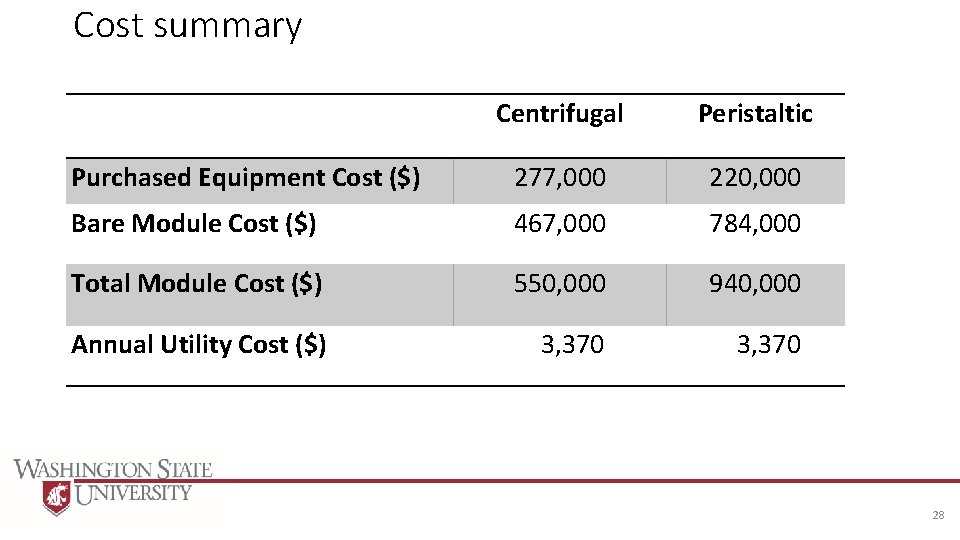
Cost summary Centrifugal Peristaltic Purchased Equipment Cost ($) 277, 000 220, 000 Bare Module Cost ($) 467, 000 784, 000 Total Module Cost ($) 550, 000 940, 000 Annual Utility Cost ($) 3, 370 28
Regulatory Compliance & Societal Considerations • The Resource Conservation and Recovery Act (RCRA) • The Comprehensive Environmental Response, Compensation and Liability Act (CERCLA) • The Tri-Party Agreement between the U. S. Department of Energy, the U. S. Environmental Protection Agency, and the State of Washington Department of Ecology • The public review process for Hanford projects. • Political positions that could alter the funding allotted Hanford. • Future funding allocations from the Federal budget. 29
Conclusion • Minimum work required by the pump is 137 k. W (185 hp). • Based on this requirement, a 200 hp centrifugal pump is chosen. • The pump will be 304 L stainless steel, with EPDM soft goods. • The Total Module Cost of the pump is $ 550, 000 30
Recommendations • In order to ensure and maintain 20 vol% solids in the system, jumpers could be utilized to provide critical velocity prior to slurry addition. • A back up unit could be installed in parallel, to prevent downtime. 31
References • 241 -SY TANK FARMS WASTE TRANSFER SYSTEM FITNESS-FOR-SERVICE REQUIREMENTS AND RECOMMENDATIONS, REV. 0; RPP -RPT-52206 • PREOPERATIONAL TEST REPORT, CROSS-SITE TRANSFER SYSTEM INTEGRATED TEST (POTR-007); HNF-2504 • SYSTEM DESIGN DESCRIPTION FOR THE REPLACEMENT CROSS-SITE TRANSFER SYSTEM BETWEEN 200 WEST AND 200 EAST TANK FARMS, REV 4; RPP-15136 • CIVIL SITE PLAN, REV 2 (1997); H-2 -822201 • THE AUDIOPEDIA. WHAT IS MONEL? WHAT DOES MONEL MEAN? MONEL MEANING, DEFINITION &EXPLANATION. (https: //www. youtube. com/watch? v=my. Hm-cd. Lf 5 g) 32
Questions? 33
- Slides: 33