Accomplishments of the Progressives the Local State and

- Slides: 37
Accomplishments of the Progressives @ the Local, State and Federal Levels
1900 to 1917 “Progressives were reformers who attempted to solve problems caused by industry, growth of cities and laissez faire. ”
Populists vs Progressives §Populists---rural §Progressives---cities §Populists were poor and uneducated §Progressives were middle-class and educated. §Populists were too radical §Progressives stayed political mainstream. §Populists failed §Progressives succeeded
Progressives were v White Protestants v. Middle class and native born. v. College Educated Professionals v. Social workers v. Scholars v. Politicians v. Preachers v. Teachers v. Writers
Areas to Reform Social Justice Political Democracy Economic Equality Conservation
Social Justice Improve working conditions in industry, regulate unfair business practices, eliminate child labor, help immigrants and the poor
MUCKRAKERS • Muckrakers were journalists and photographers who exposed the abuses of wealth and power. • They felt it was their job to write and expose corruption in industry, cities and government. Progressives exposed corruption but offered no solutions.
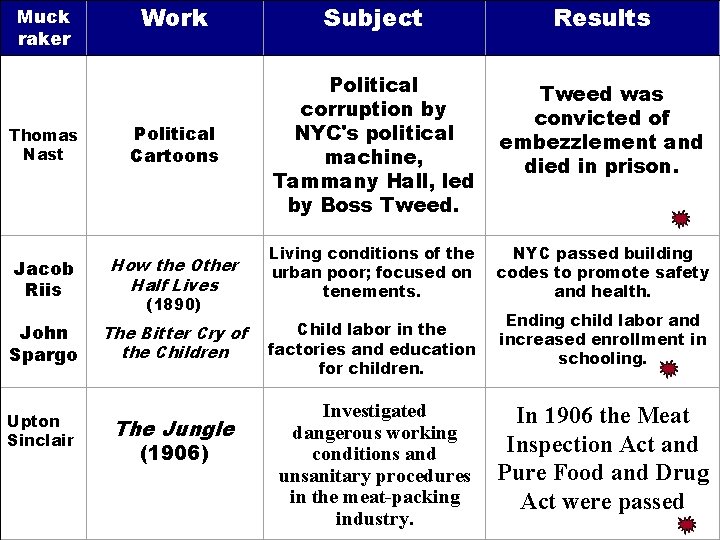
Work Subject Results Thomas Nast Political Cartoons Political corruption by NYC's political machine, Tammany Hall, led by Boss Tweed was convicted of embezzlement and died in prison. Jacob Riis How the Other Half Lives Living conditions of the urban poor; focused on tenements. John Spargo The Bitter Cry of the Children Child labor in the factories and education for children. Muck raker Upton Sinclair (1890) The Jungle (1906) Investigated dangerous working conditions and unsanitary procedures in the meat-packing industry. NYC passed building codes to promote safety and health. Ending child labor and increased enrollment in schooling. In 1906 the Meat Inspection Act and Pure Food and Drug Act were passed
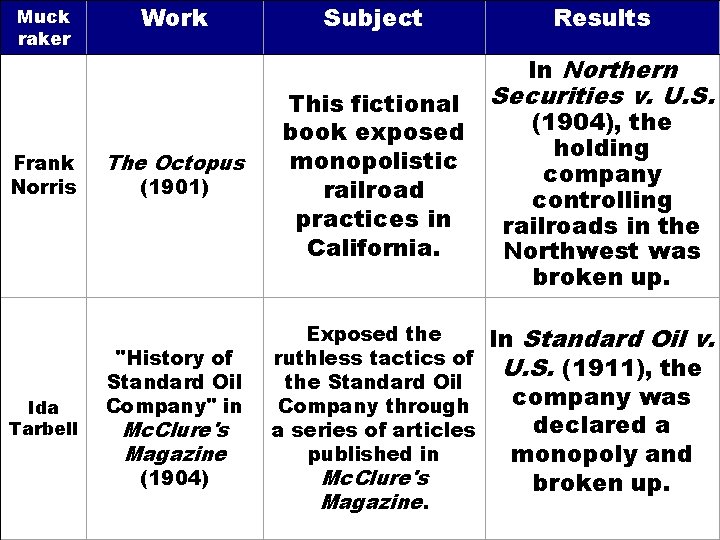
Muck raker Frank Norris Ida Tarbell Work The Octopus (1901) "History of Standard Oil Company" in Mc. Clure's Magazine (1904) Subject Results In Northern This fictional book exposed monopolistic railroad practices in California. Securities v. U. S. Exposed the ruthless tactics of the Standard Oil Company through a series of articles published in In Standard Oil v. U. S. (1911), the company was declared a monopoly and broken up. Mc. Clure's Magazine. (1904), the holding company controlling railroads in the Northwest was broken up.
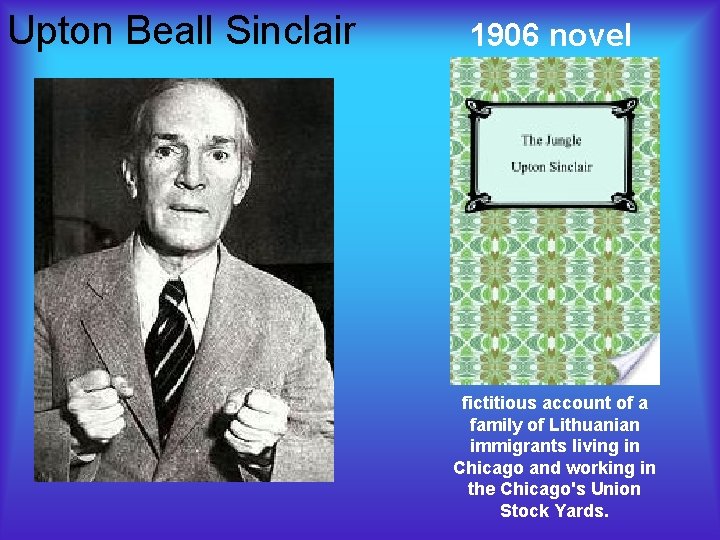
Upton Beall Sinclair 1906 novel fictitious account of a family of Lithuanian immigrants living in Chicago and working in the Chicago's Union Stock Yards.
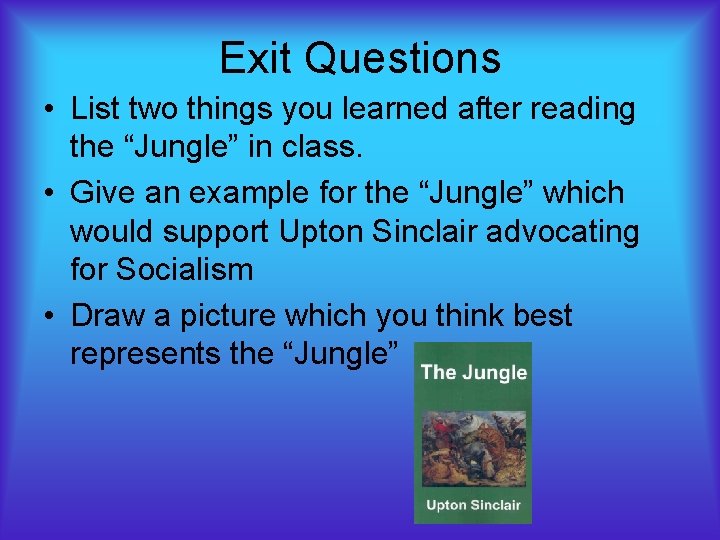
Exit Questions • List two things you learned after reading the “Jungle” in class. • Give an example for the “Jungle” which would support Upton Sinclair advocating for Socialism • Draw a picture which you think best represents the “Jungle”
Political Democracy Give the government back to the people, get more people voting and end corruption with political machines.
I. Local Level • Commission System • City manager plan
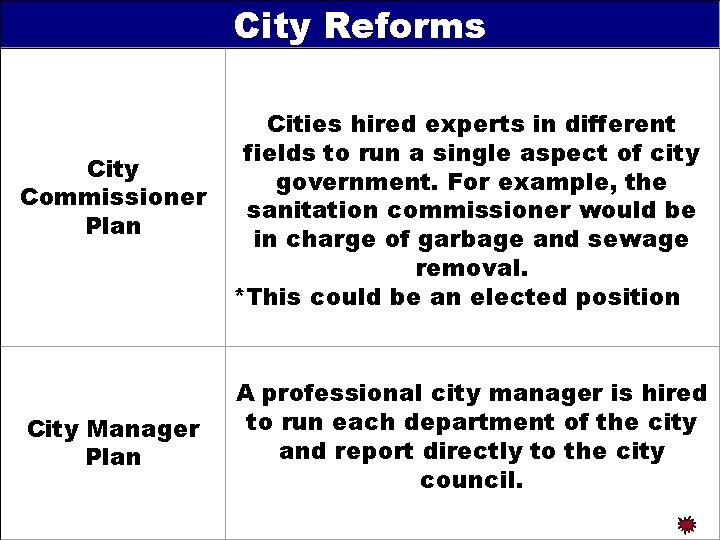
City Reforms City Commissioner Plan City Manager Plan Cities hired experts in different fields to run a single aspect of city government. For example, the sanitation commissioner would be in charge of garbage and sewage removal. *This could be an elected position A professional city manager is hired to run each department of the city and report directly to the city council.
II. State Level • Direct primary • Initiative • Referendum • Recall • Secret ballot
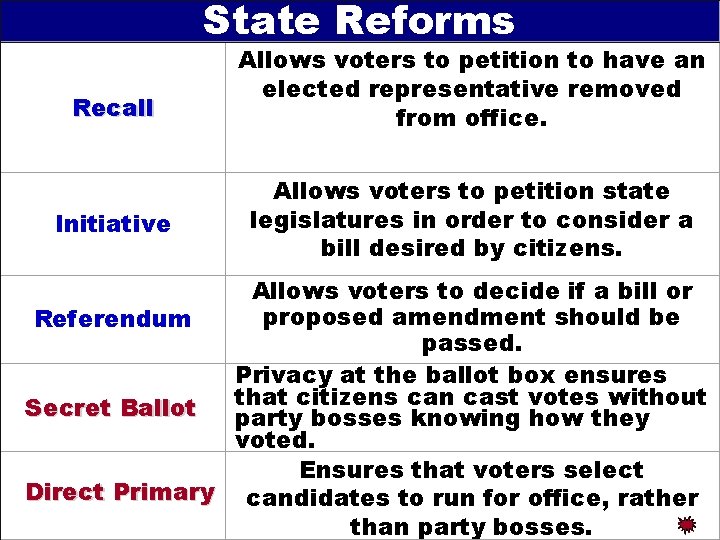
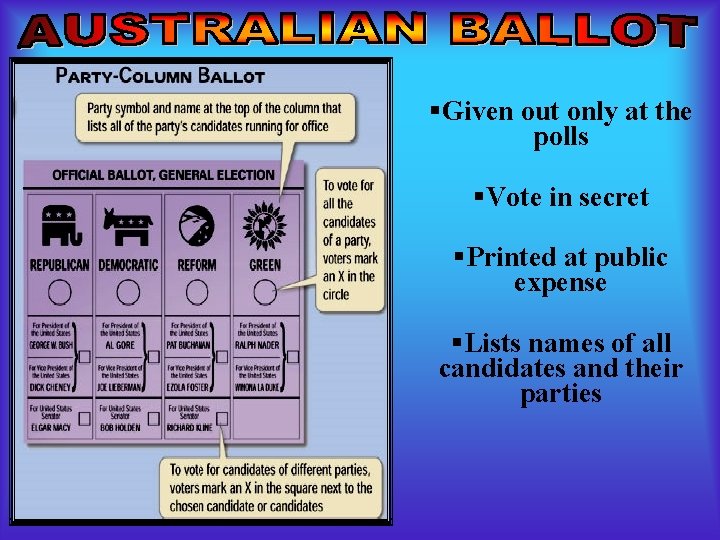
State Reforms Recall Initiative Allows voters to petition to have an elected representative removed from office. Allows voters to petition state legislatures in order to consider a bill desired by citizens. Allows voters to decide if a bill or proposed amendment should be Referendum passed. Privacy at the ballot box ensures that citizens can cast votes without Secret Ballot party bosses knowing how they voted. Ensures that voters select Direct Primary candidates to run for office, rather than party bosses.
§Given out only at the polls §Vote in secret §Printed at public expense §Lists names of all candidates and their parties
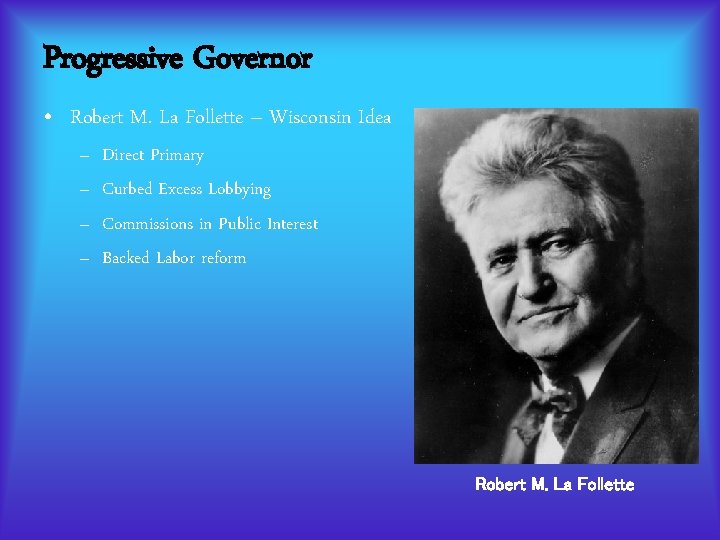
Progressive Governor • Robert M. La Follette – Wisconsin Idea – – Direct Primary Curbed Excess Lobbying Commissions in Public Interest Backed Labor reform Robert M. La Follette
III. Federal Level • Pure Food and Drug Act • Meat Inspection Act • Interstate Commerce Commission
Amendments • 16 – Federal Income Tax • 17 – Direct Election of Senators • 18 - Prohibition • 19 - Women the right to vote
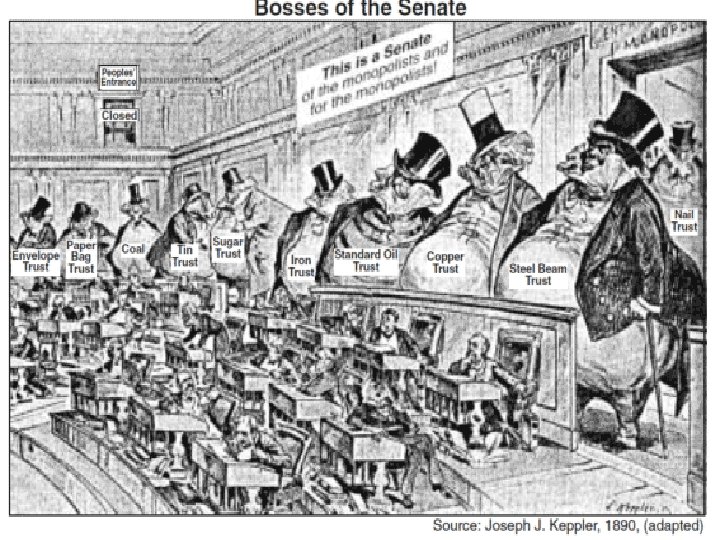
Economic Justice • Fairness and opportunity in the work world, regulate unfair trusts and bring about changes in labor. • Demonstrate to the common people that U. S. Government is in charge and not the industrialists.
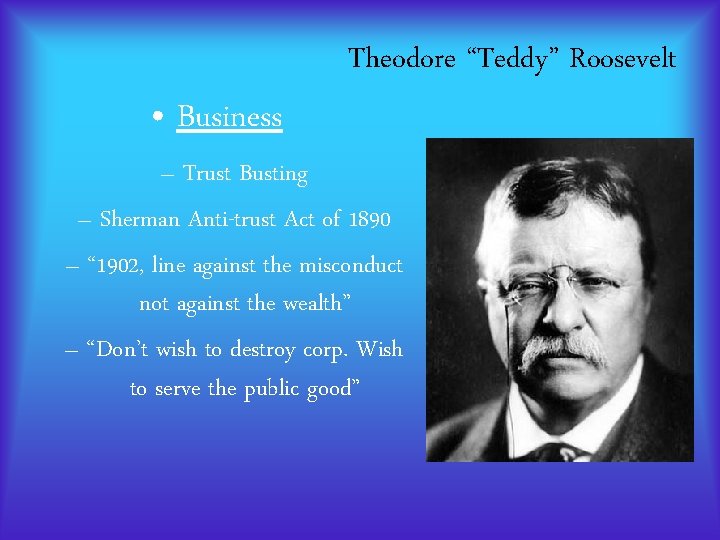
Theodore “Teddy” Roosevelt • Business – Trust Busting – Sherman Anti-trust Act of 1890 – “ 1902, line against the misconduct not against the wealth” – “Don’t wish to destroy corp. Wish to serve the public good”
Trust Busting • Elkins Act (1903). ended the common practice of the railroads granting rebates to their most valued customers. Trusts paid significantly less for rail service than farmers and other small operators. The law required that rates be published and that violations of the law would find both the railroad and the shipper liable for prosecution. • Hepburn Act (1906). The Hepburn Act strengthened existing • railroad regulations in the following ways: – Increased the size of the Interstate Commerce Commission from five to seven members – Gave the ICC the power to establish maximum rates – Restricted the use of free passes – Brought other common carriers (businesses that transport goods or information for a fee), such as terminals, storage facilities, pipelines, ferries and others, under ICC jurisdiction – Required the adoption of uniform accounting practices for all carriers – In appeals situations, placed the burden of proof on the shipper, not the ICC; this was a major change from the previous practice in which the railroads had blunted regulations by lengthy appeals.
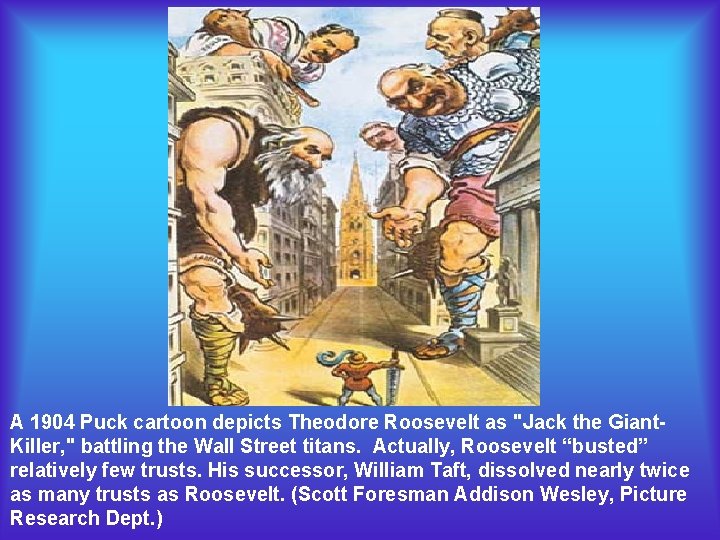
A 1904 Puck cartoon depicts Theodore Roosevelt as "Jack the Giant. Killer, " battling the Wall Street titans. Actually, Roosevelt “busted” relatively few trusts. His successor, William Taft, dissolved nearly twice as many trusts as Roosevelt. (Scott Foresman Addison Wesley, Picture Research Dept. )
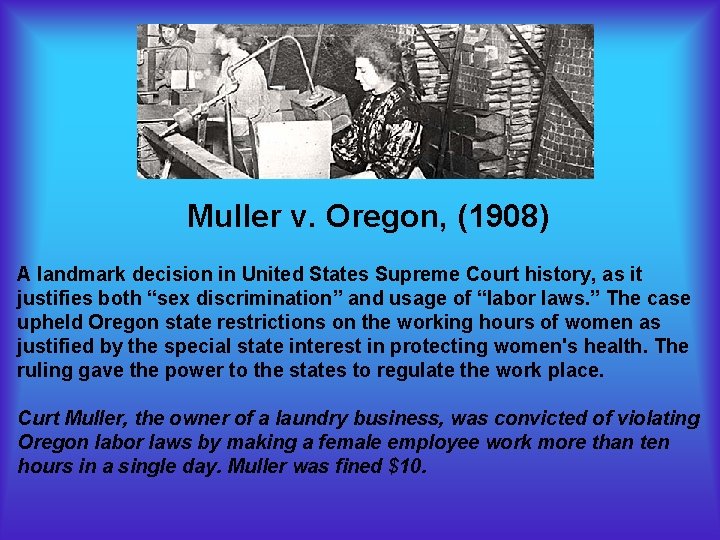
Muller v. Oregon, (1908) A landmark decision in United States Supreme Court history, as it justifies both “sex discrimination” and usage of “labor laws. ” The case upheld Oregon state restrictions on the working hours of women as justified by the special state interest in protecting women's health. The ruling gave the power to the states to regulate the work place. Curt Muller, the owner of a laundry business, was convicted of violating Oregon labor laws by making a female employee work more than ten hours in a single day. Muller was fined $10.
CONSERVATION Preserve natural resources and the environment
Square deal “No more, No less” • Arbitration (UMW) • Conservation • Reclamation • National Park Service
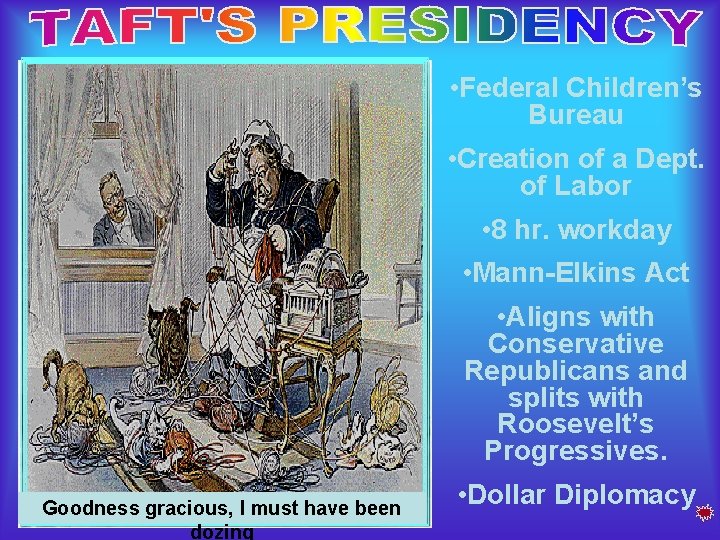
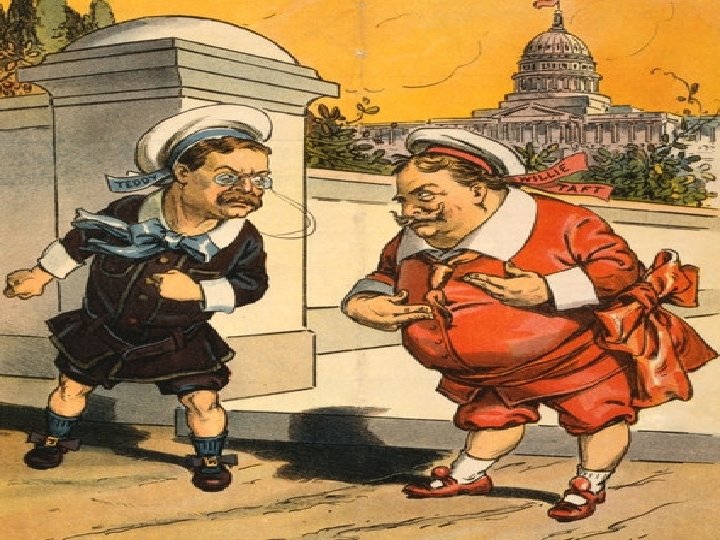
• Federal Children’s Bureau • Creation of a Dept. of Labor • 8 hr. workday • Mann-Elkins Act • Aligns with Conservative Republicans and splits with Roosevelt’s Progressives. Goodness gracious, I must have been dozing • Dollar Diplomacy
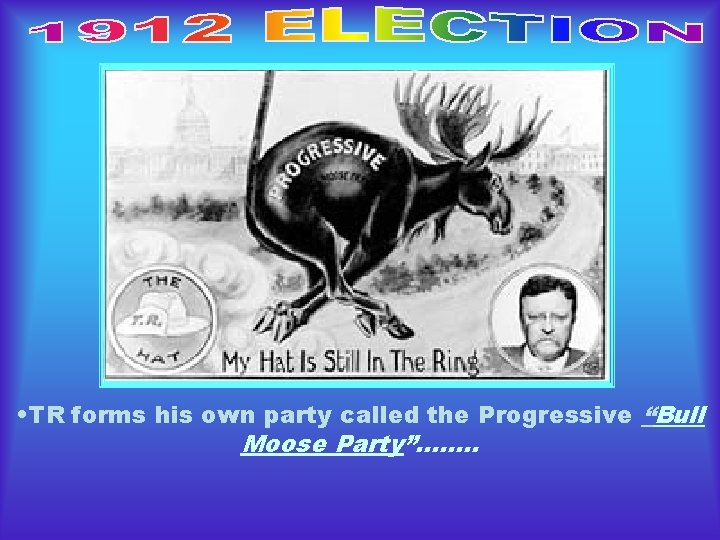
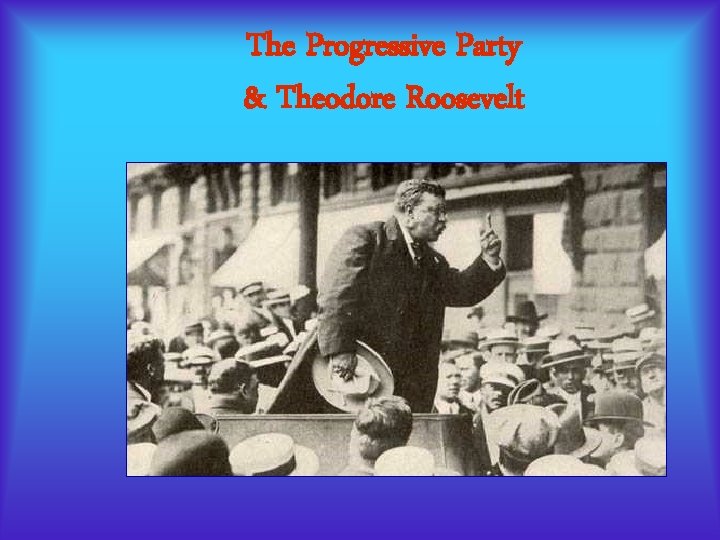
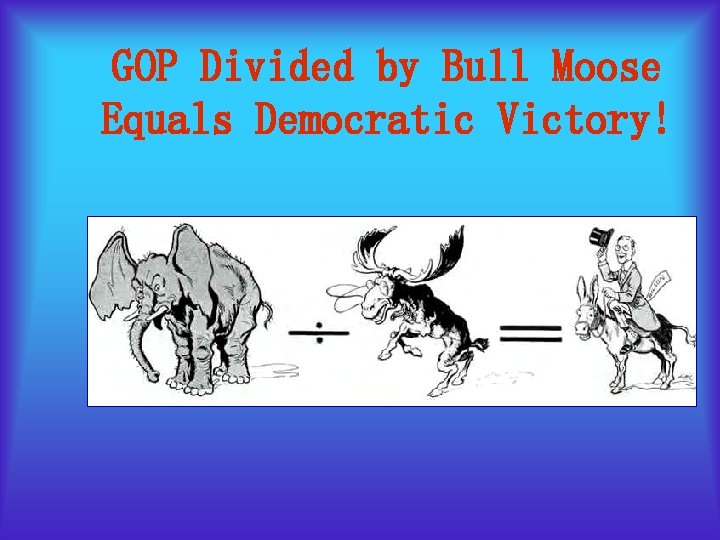
• TR forms his own party called the Progressive “Bull Moose Party”……. .
The Progressive Party & Theodore Roosevelt
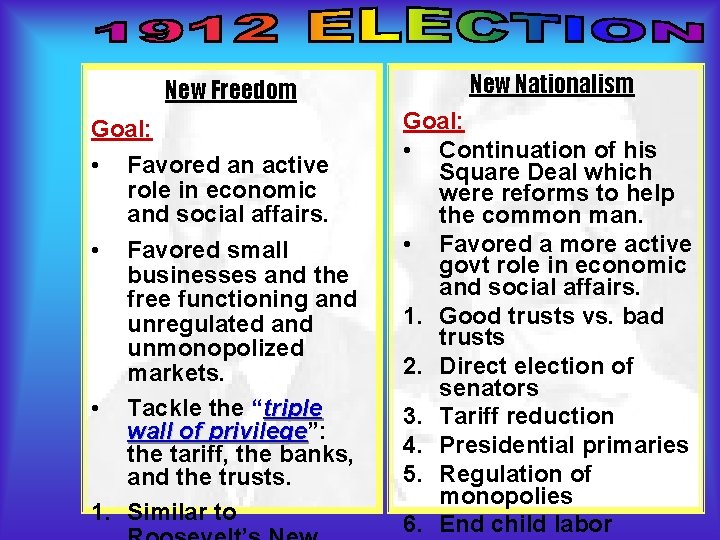
New Freedom Goal: • • Favored an active role in economic and social affairs. Favored small businesses and the free functioning and unregulated and unmonopolized markets. • Tackle the “triple wall of privilege”: privilege the tariff, the banks, and the trusts. 1. Similar to New Nationalism Goal: • Continuation of his Square Deal which were reforms to help the common man. • Favored a more active govt role in economic and social affairs. 1. Good trusts vs. bad trusts 2. Direct election of senators 3. Tariff reduction 4. Presidential primaries 5. Regulation of monopolies 6. End child labor
GOP Divided by Bull Moose Equals Democratic Victory!
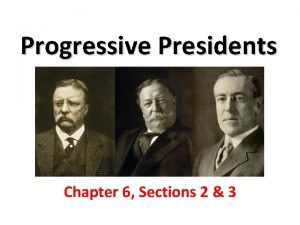
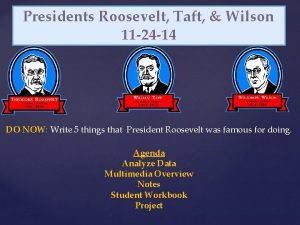
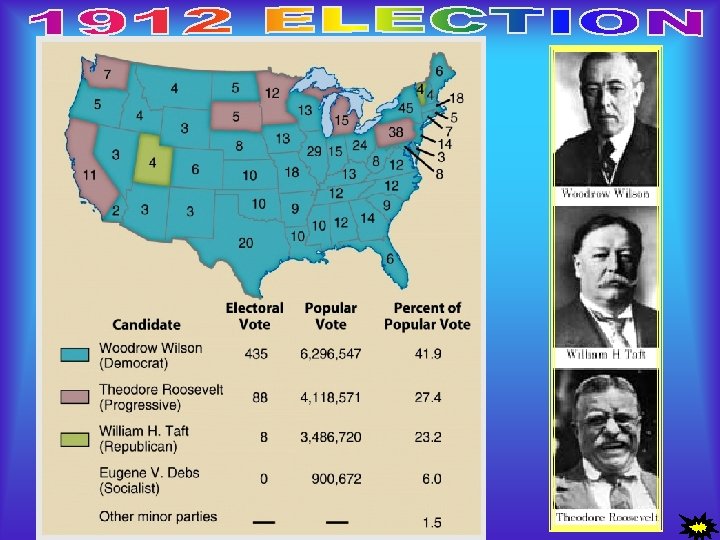
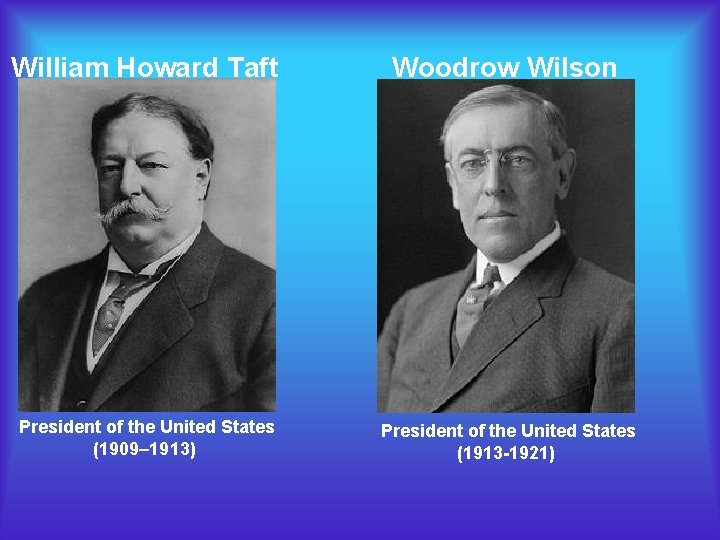
William Howard Taft Woodrow Wilson President of the United States (1909– 1913) President of the United States (1913 -1921)