ACC and GPS summary Christian Siemes QWG and

- Slides: 24
ACC and GPS summary Christian Siemes, QWG and Cal/Val team Copenhagen, Denmark 18/06/2014 ESA UNCLASSIFIED – For Official Use
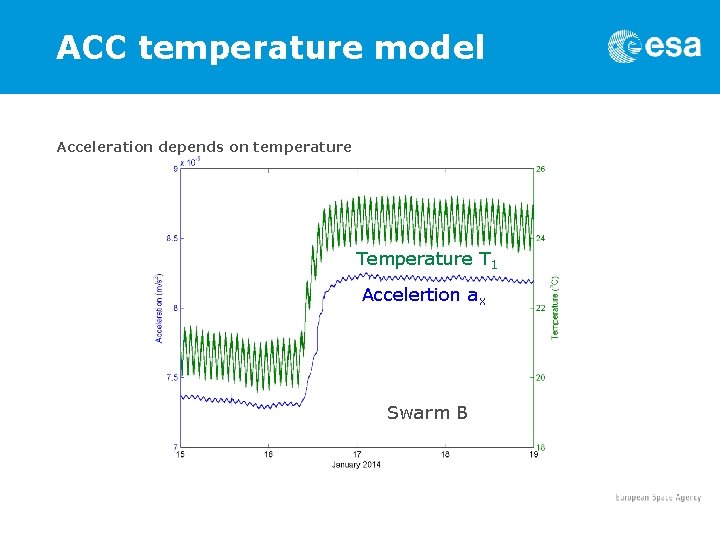
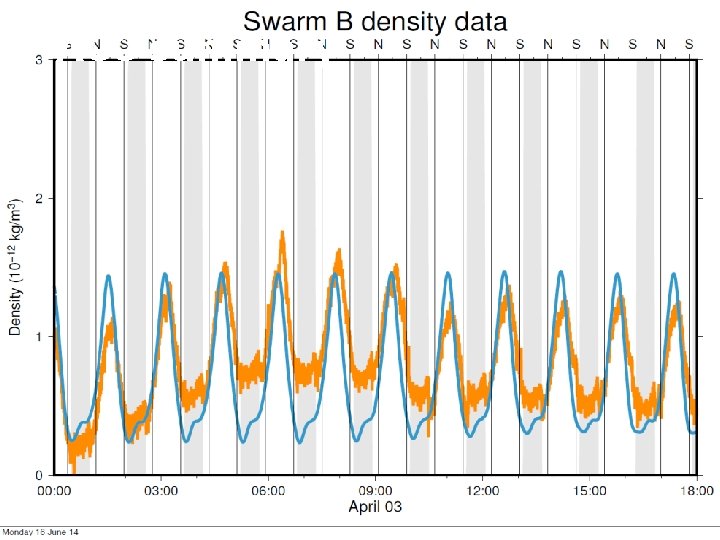
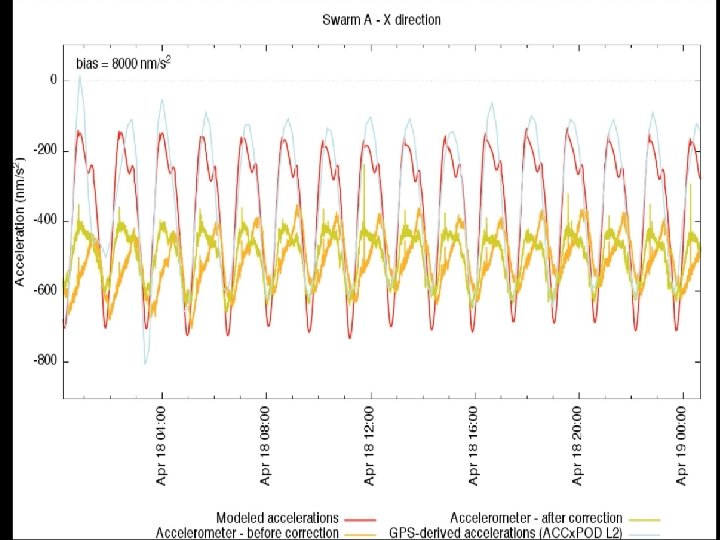
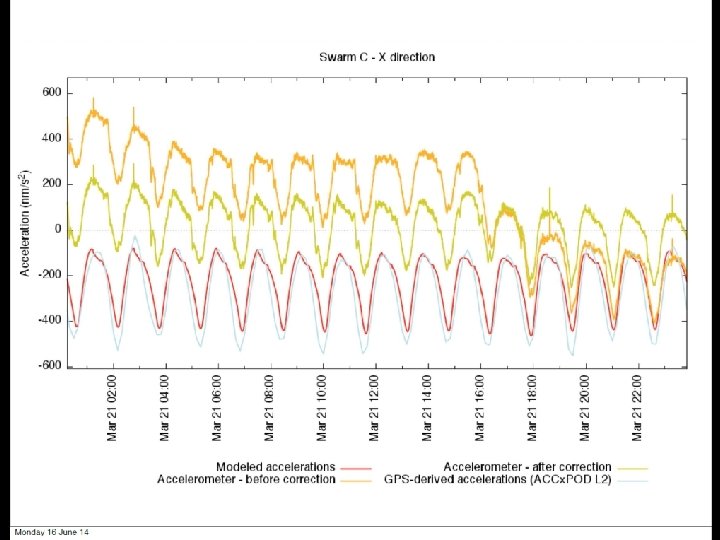
ACC temperature model Acceleration depends on temperature T 1 Accelertion ax Swarm B
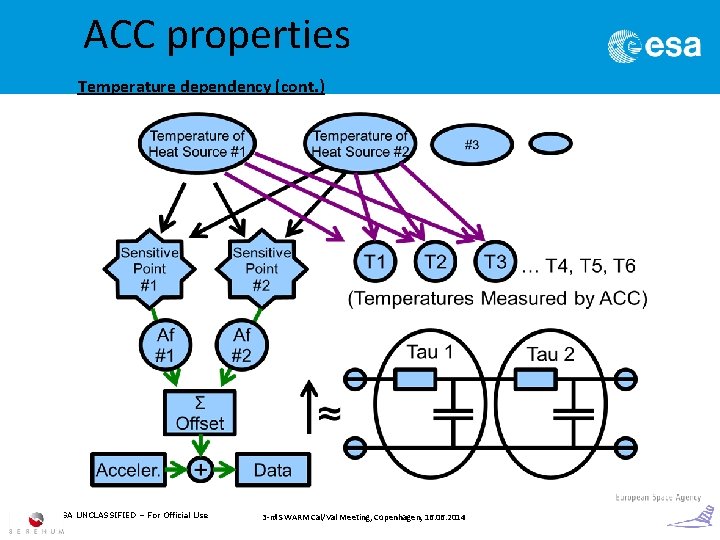
ACC properties Temperature dependency (cont. ) ESA UNCLASSIFIED – For Official Use 3 -rd SWARM Cal/Val Meeting, Copenhagen, 16. 06. 2014
ACC summary
ACC summary
ACC summary
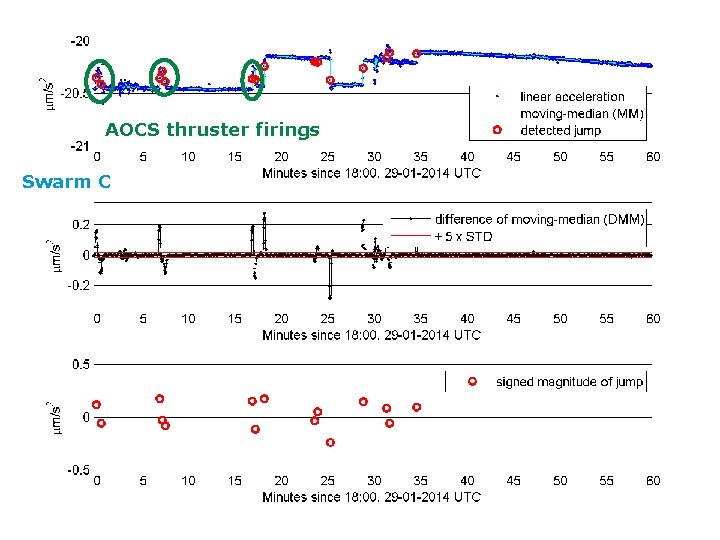
Steps AOCS thruster firings Swarm C
ACC summary
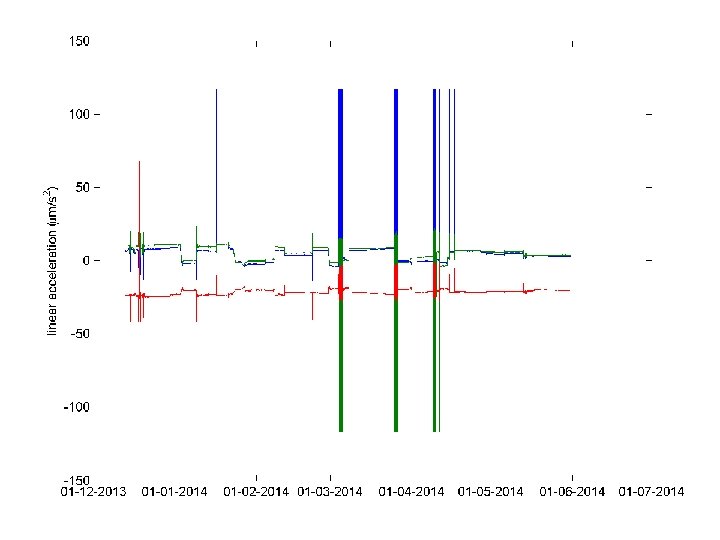
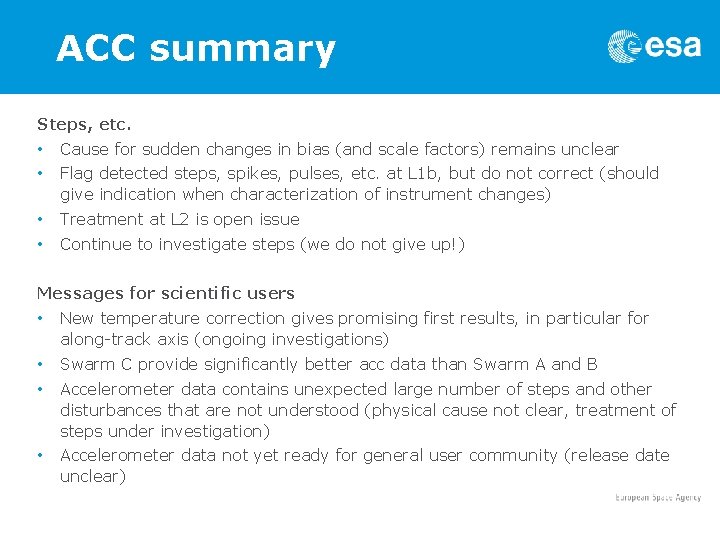
ACC summary Steps, etc. • Cause for sudden changes in bias (and scale factors) remains unclear • Flag detected steps, spikes, pulses, etc. at L 1 b, but do not correct (should give indication when characterization of instrument changes) • Treatment at L 2 is open issue • Continue to investigate steps (we do not give up!) Messages for scientific users • New temperature correction gives promising first results, in particular for along-track axis (ongoing investigations) • Swarm C provide significantly better acc data than Swarm A and B • Accelerometer data contains unexpected large number of steps and other disturbances that are not understood (physical cause not clear, treatment of steps under investigation) • Accelerometer data not yet ready for general user community (release date unclear)
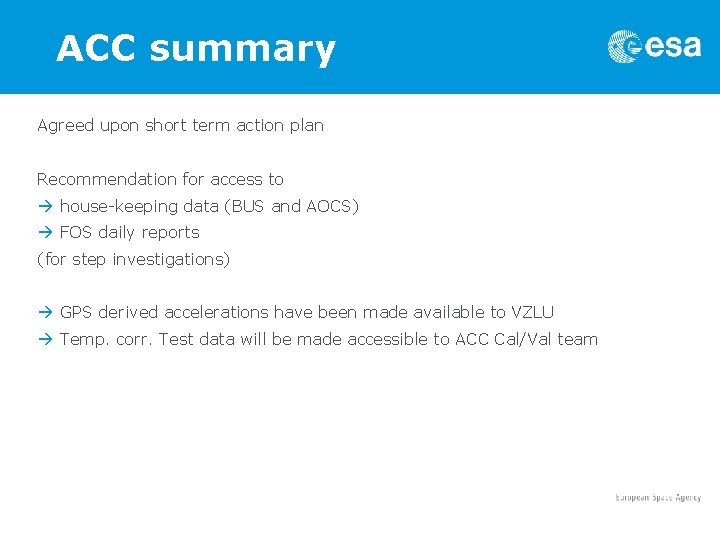
ACC summary Agreed upon short term action plan Recommendation for access to à house-keeping data (BUS and AOCS) à FOS daily reports (for step investigations) à GPS derived accelerations have been made available to VZLU à Temp. corr. Test data will be made accessible to ACC Cal/Val team
GPS summary
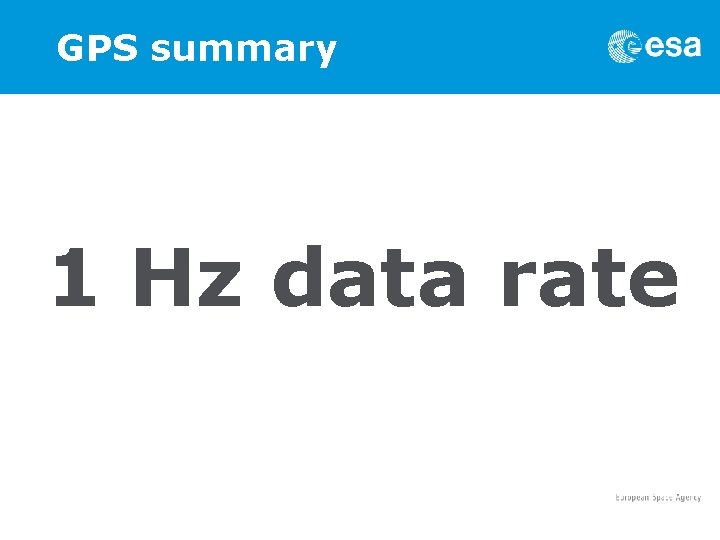
GPS summary 1 Hz data rate
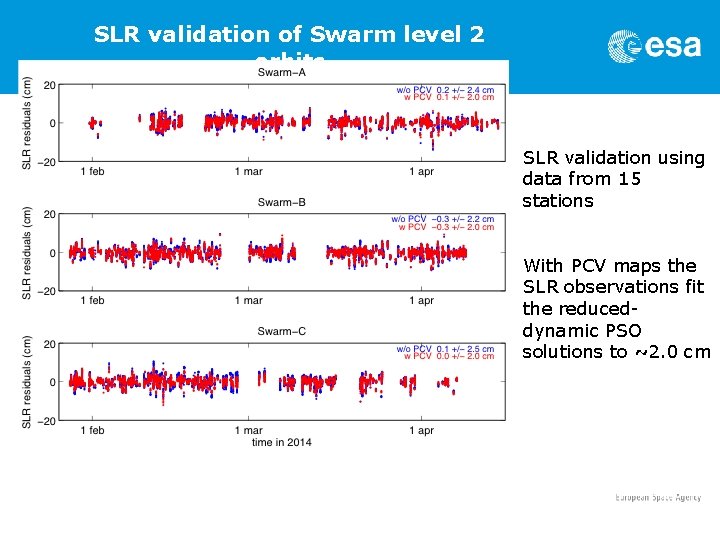
SLR validation of Swarm level 2 orbits SLR validation using data from 15 stations With PCV maps the SLR observations fit the reduceddynamic PSO solutions to ~2. 0 cm
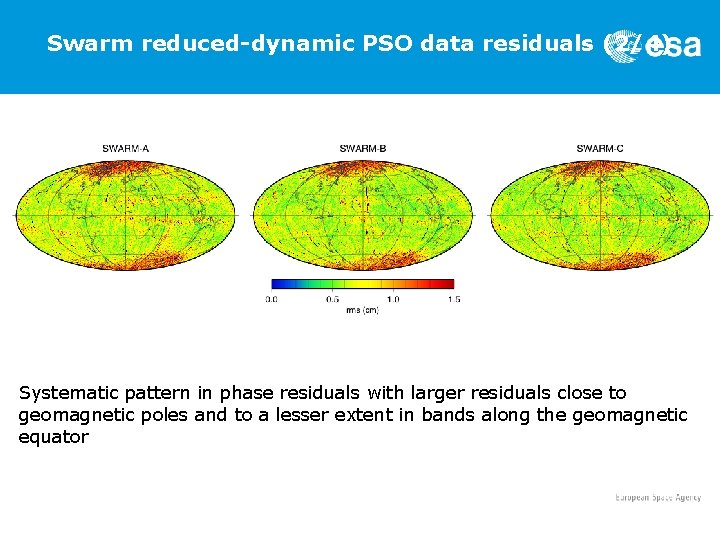
Swarm reduced-dynamic PSO data residuals (2/4) Systematic pattern in phase residuals with larger residuals close to geomagnetic poles and to a lesser extent in bands along the geomagnetic equator
First two months gravity field solutions
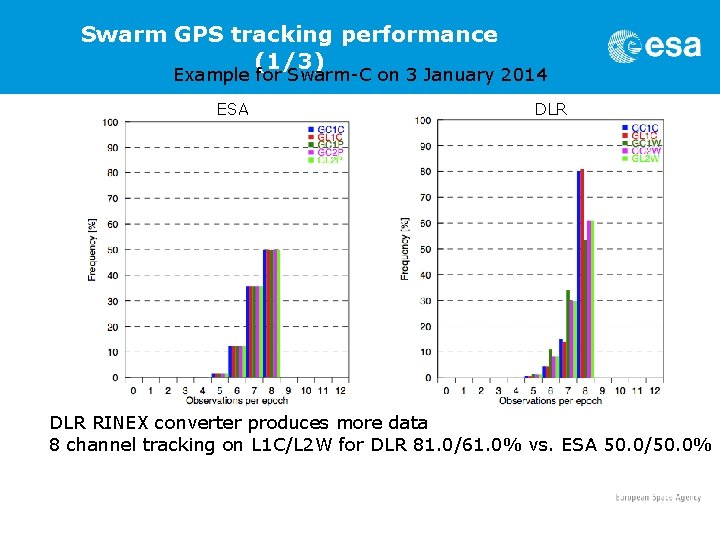
GPSR summary Recommendations • • Old recommendation enforced • • 1 Hz data from Feb 2014: Provide RINEX files to QWG Orbit computation with DLR files to check the impact of the additional observations (action on TUD) Clarify with RUAG the characteristic of the phase observation related to ambiguities (full and/or half cycle) • • If full/half cycle ambiguities are confirmed, then for all 3 S/C one day of data with both GPSR switched on would be needed for testing purposes (preferably 1 Hz data rate) Clarify with RUAG: • • The reason for the low percentage of C 1 P observations (P 1 obsevations) Was the sensitivity to ionospheric scintilations expected before launch? Can RUAG improve the situation? Observation: DLR RINEX converter produces more data and produces time tags that are very close to integer seconds and do not display large drifts
Swarm GPS tracking performance (1/3) Example for Swarm-C on 3 January 2014 ESA DLR RINEX converter produces more data 8 channel tracking on L 1 C/L 2 W for DLR 81. 0/61. 0% vs. ESA 50. 0/50. 0%
ACC summary
ACC summary
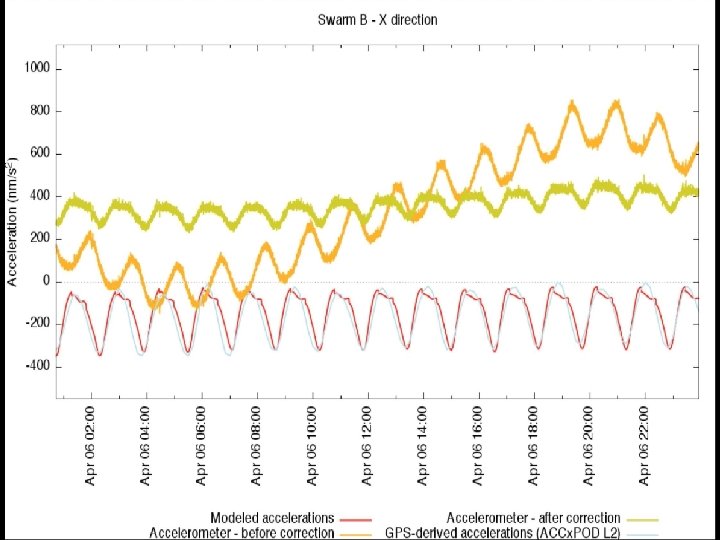
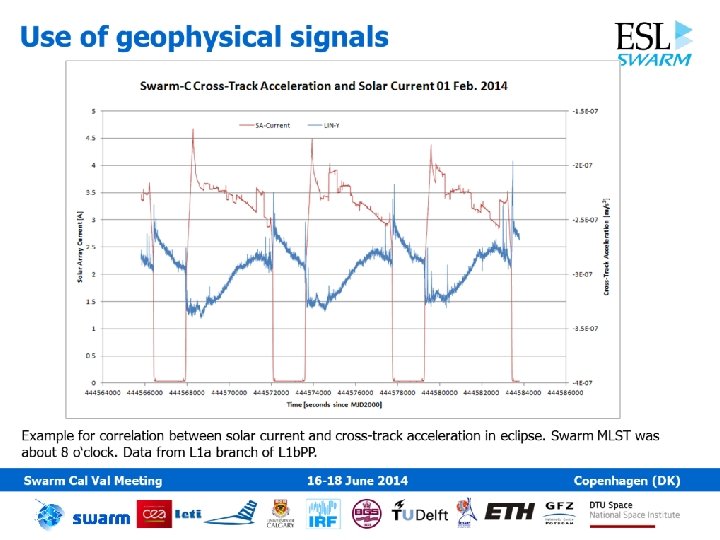
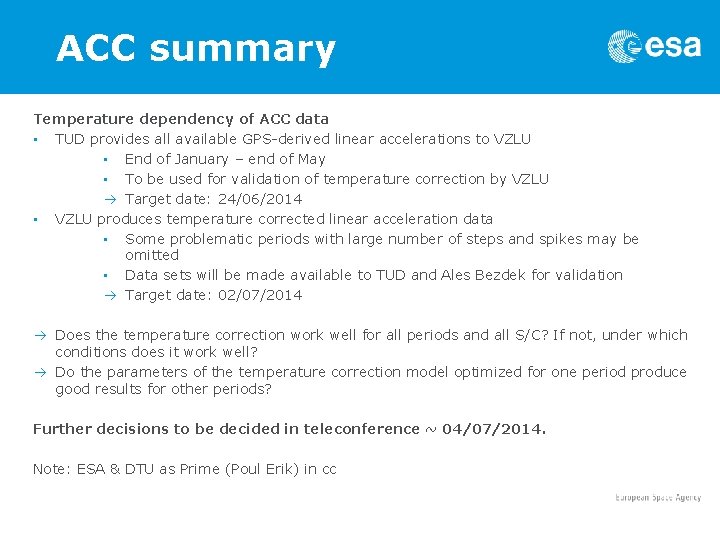
ACC summary Temperature dependency of ACC data • TUD provides all available GPS-derived linear accelerations to VZLU • End of January – end of May • To be used for validation of temperature correction by VZLU à Target date: 24/06/2014 • VZLU produces temperature corrected linear acceleration data • Some problematic periods with large number of steps and spikes may be omitted • Data sets will be made available to TUD and Ales Bezdek for validation à Target date: 02/07/2014 à Does the temperature correction work well for all periods and all S/C? If not, under which conditions does it work well? à Do the parameters of the temperature correction model optimized for one period produce good results for other periods? Further decisions to be decided in teleconference ~ 04/07/2014. Note: ESA & DTU as Prime (Poul Erik) in cc
ACC summary Temperature dependency of ACC data (continued) • TUM provides STR-derived angular accelerations to VZLU à End of January – end of May, all S/C ? à Target date: 04/07/2014 ? • VZLU cross-checks model for temperature correction using STR-derived angular accelerations (note: priority remains on linear accelerations) à Target date: 01/08/2014 ? • Continue to improve temperature correction • Treatment of steps, etc. in L 2 depends on temperature correction in L 1 b