
3 3 DERIVATIVES OF TRIGONOMETRIC FUNCTIONS DERIVATIVES OF
- Slides: 16
3. 3 DERIVATIVES OF TRIGONOMETRIC FUNCTIONS DERIVATIVES OF SIN X, COS X, TAN X, CSC X, SEC X, AND COT X. REVIEW NOTATION AND MEMORIZE
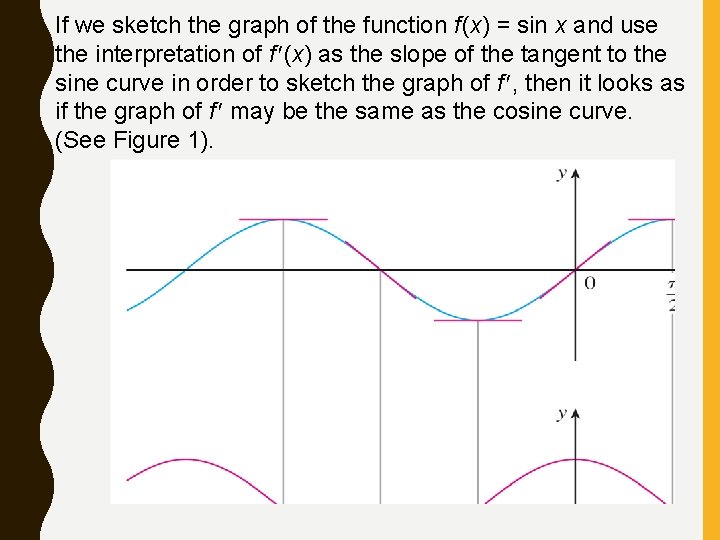
If we sketch the graph of the function f (x) = sin x and use the interpretation of f (x) as the slope of the tangent to the sine curve in order to sketch the graph of f , then it looks as if the graph of f may be the same as the cosine curve. (See Figure 1).
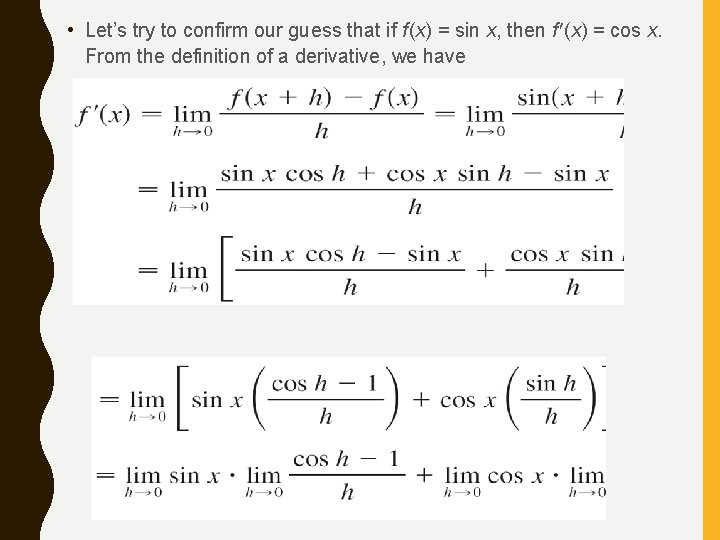
• Let’s try to confirm our guess that if f (x) = sin x, then f (x) = cos x. From the definition of a derivative, we have
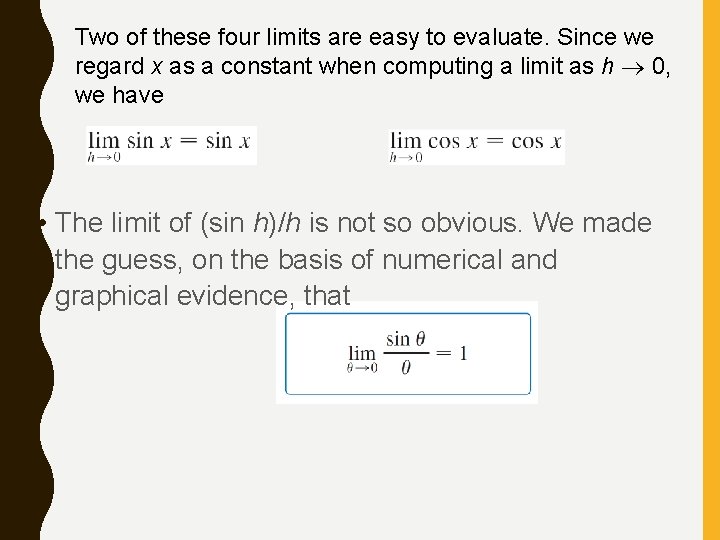
Two of these four limits are easy to evaluate. Since we regard x as a constant when computing a limit as h 0, we have • The limit of (sin h)/h is not so obvious. We made the guess, on the basis of numerical and graphical evidence, that
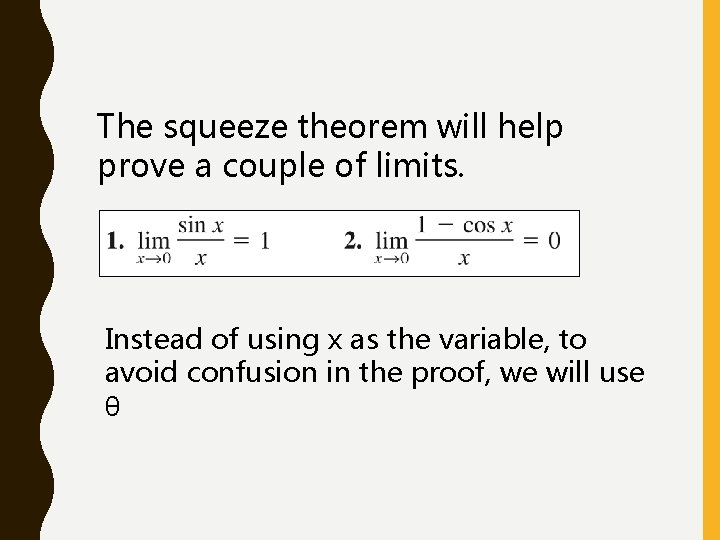
The squeeze theorem will help prove a couple of limits. Instead of using x as the variable, to avoid confusion in the proof, we will use θ
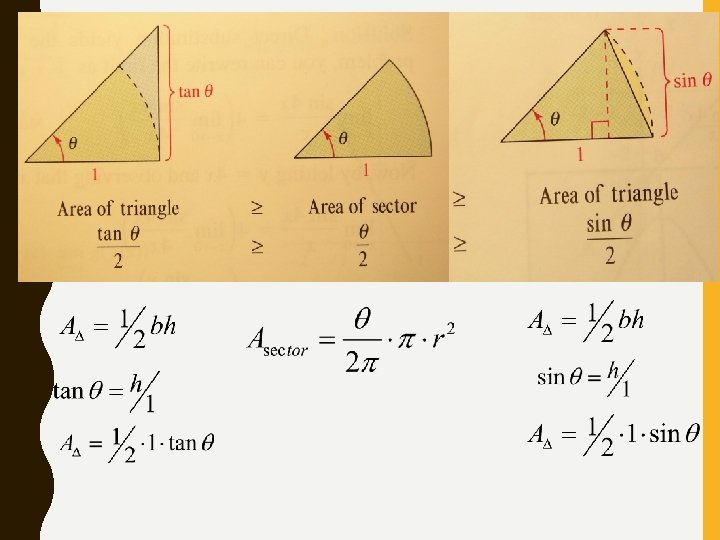
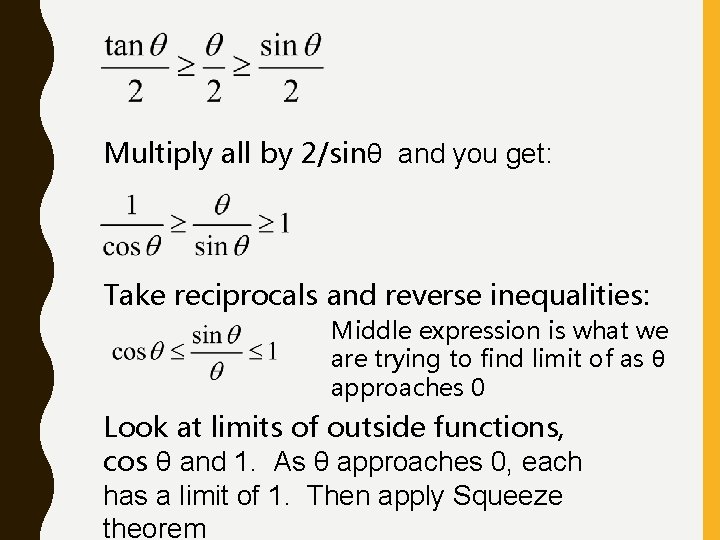
Multiply all by 2/sinθ and you get: Take reciprocals and reverse inequalities: Middle expression is what we are trying to find limit of as θ approaches 0 Look at limits of outside functions, cos θ and 1. As θ approaches 0, each has a limit of 1. Then apply Squeeze theorem
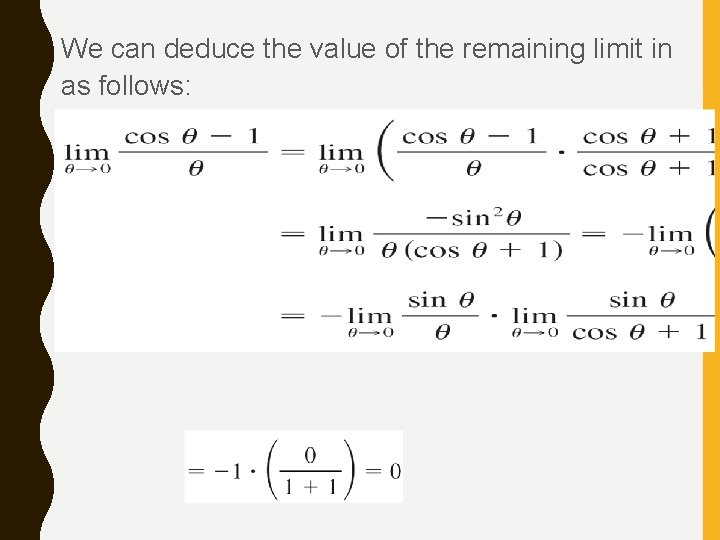
We can deduce the value of the remaining limit in as follows:
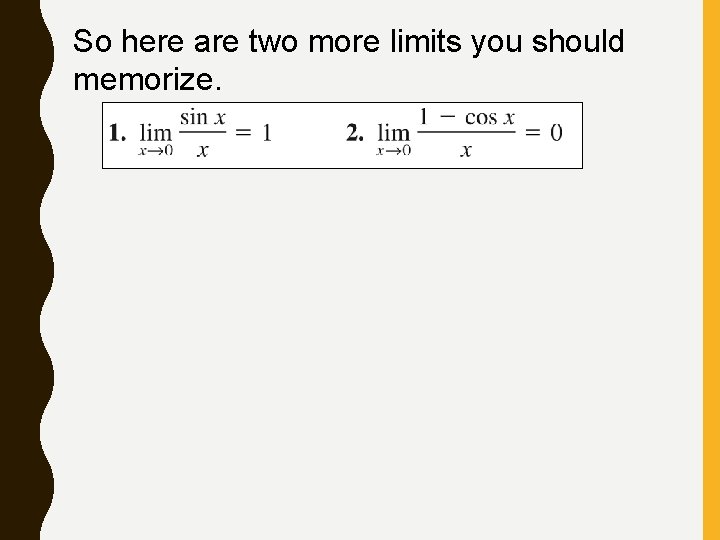
So here are two more limits you should memorize.
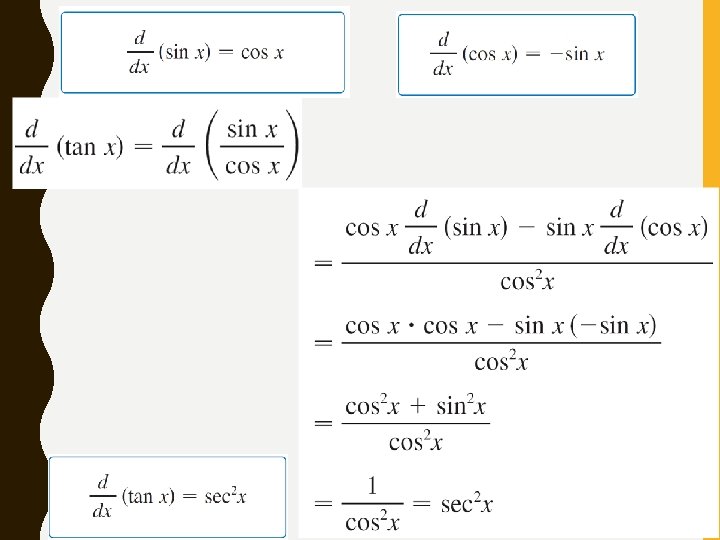
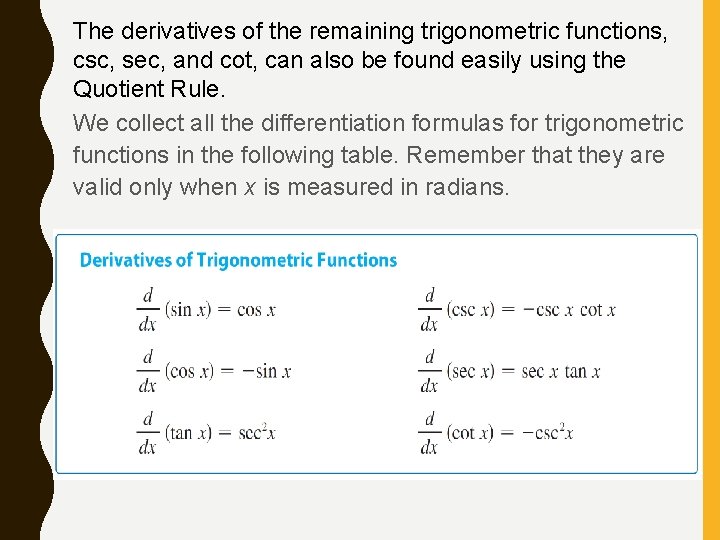
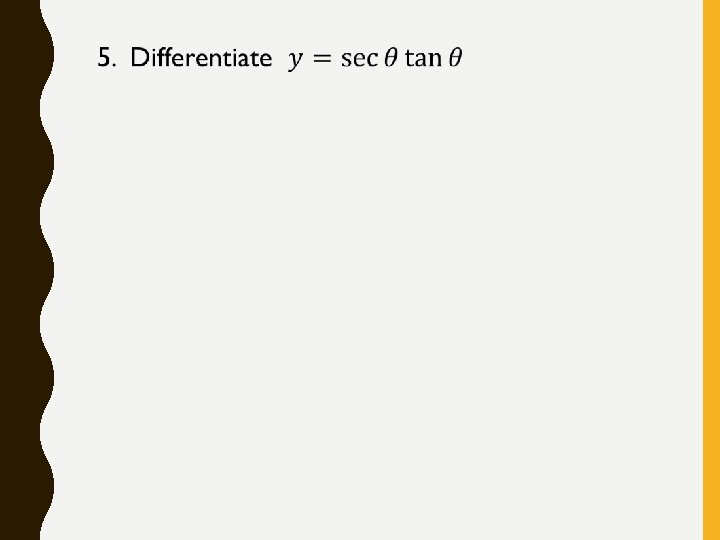
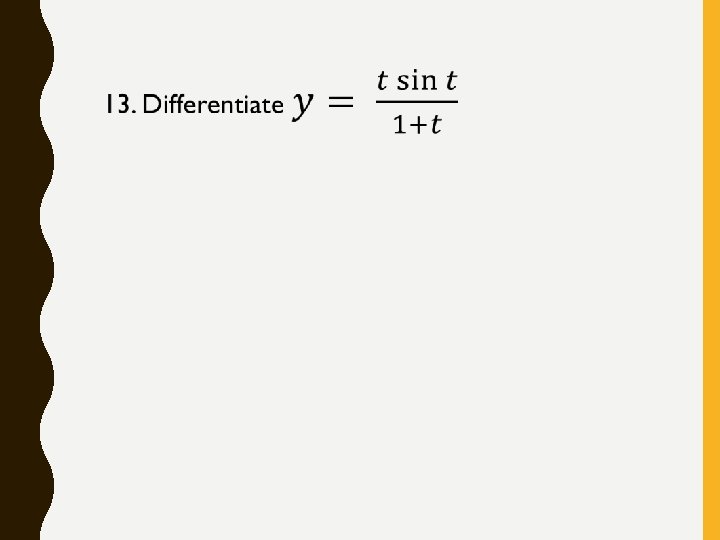
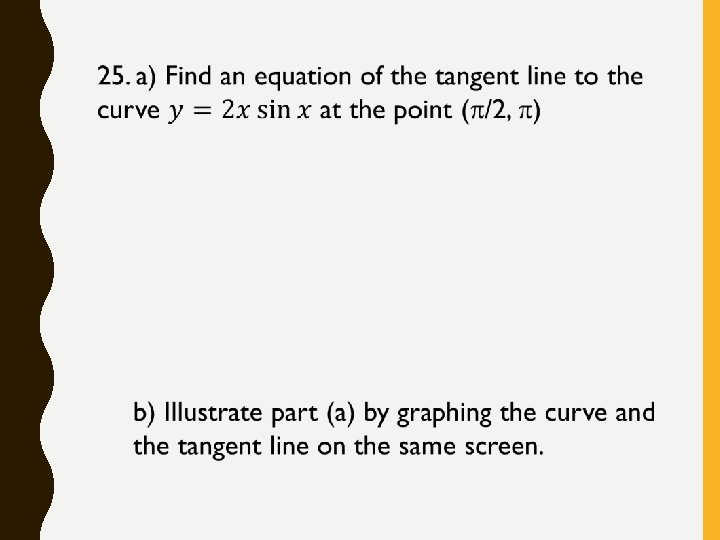
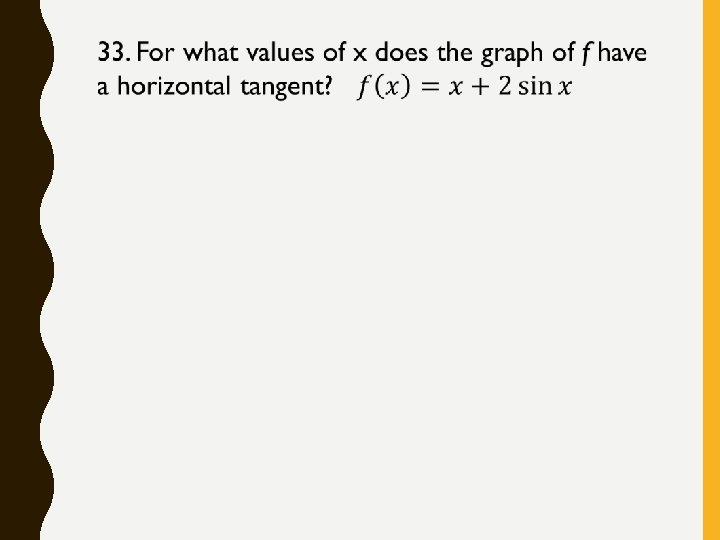
The derivatives of the remaining trigonometric functions, csc, sec, and cot, can also be found easily using the Quotient Rule. We collect all the differentiation formulas for trigonometric functions in the following table. Remember that they are valid only when x is measured in radians.