1 Diaphragm Meters n Principles of Operation 1


- Slides: 26
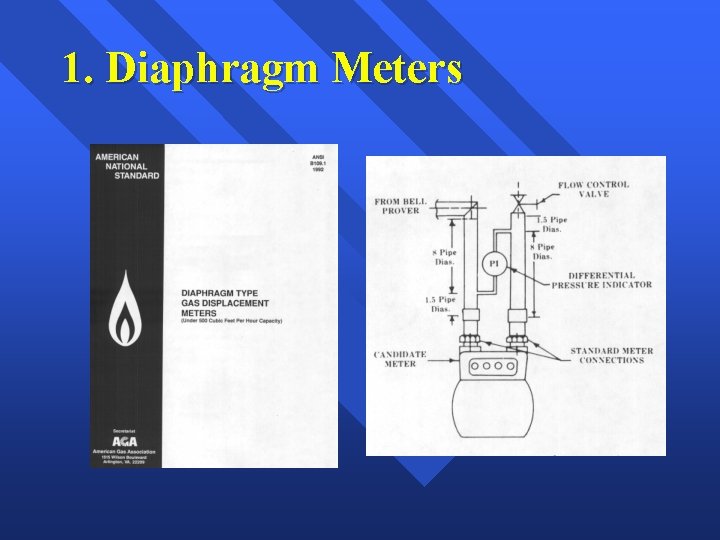
1. Diaphragm Meters n Principles of Operation
1. Diaphragm Meters
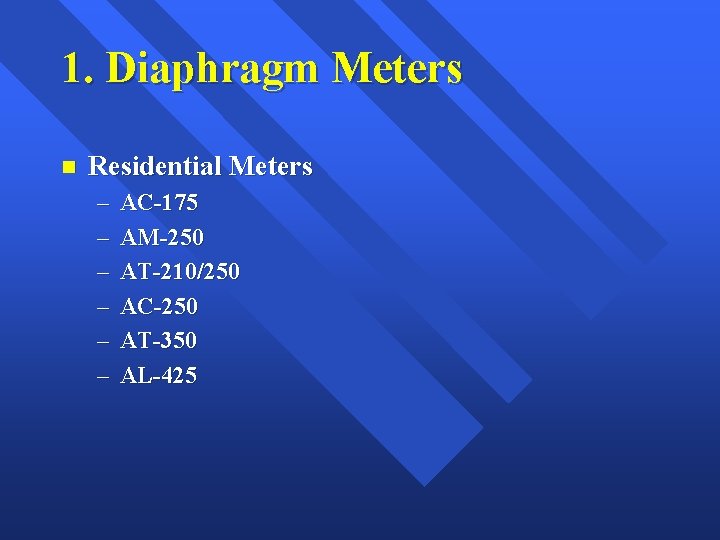
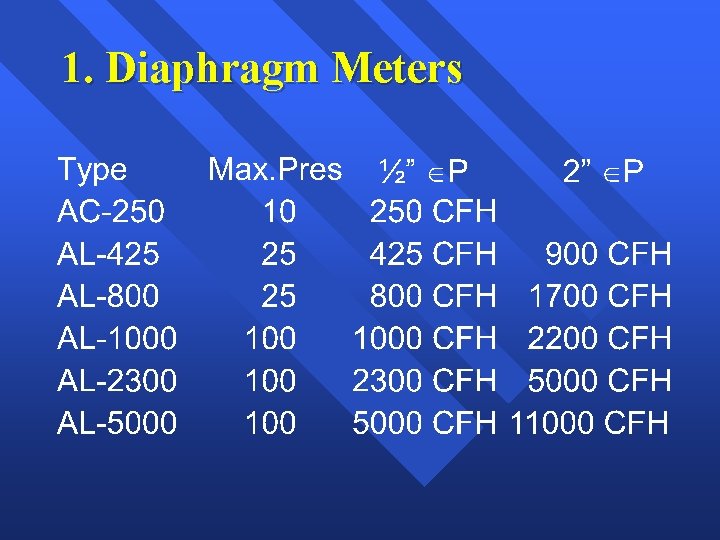
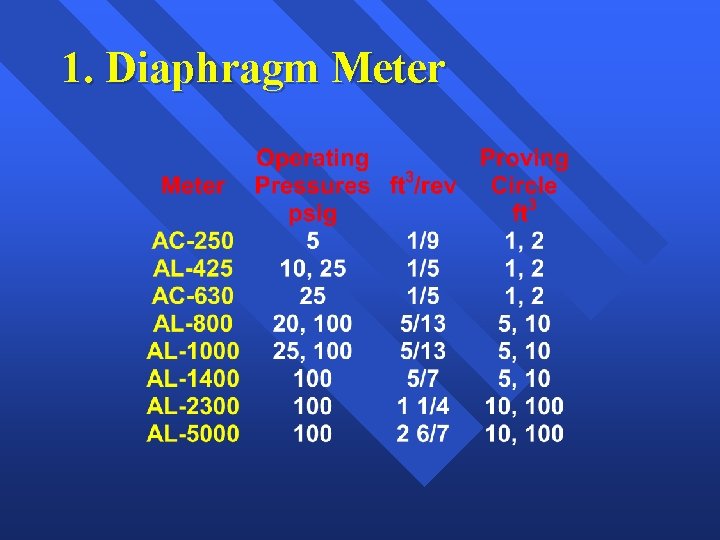
1. Diaphragm Meters n Residential Meters – – – AC-175 AM-250 AT-210/250 AC-250 AT-350 AL-425
1. Diaphragm Meters
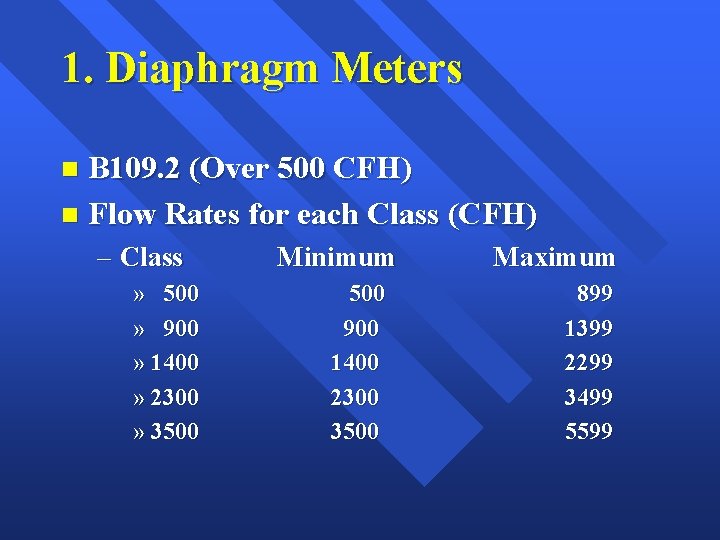
1. Diaphragm Meters B 109. 2 (Over 500 CFH) n Flow Rates for each Class (CFH) n – Class » 500 » 900 » 1400 » 2300 » 3500 Minimum 500 900 1400 2300 3500 Maximum 899 1399 2299 3499 5599
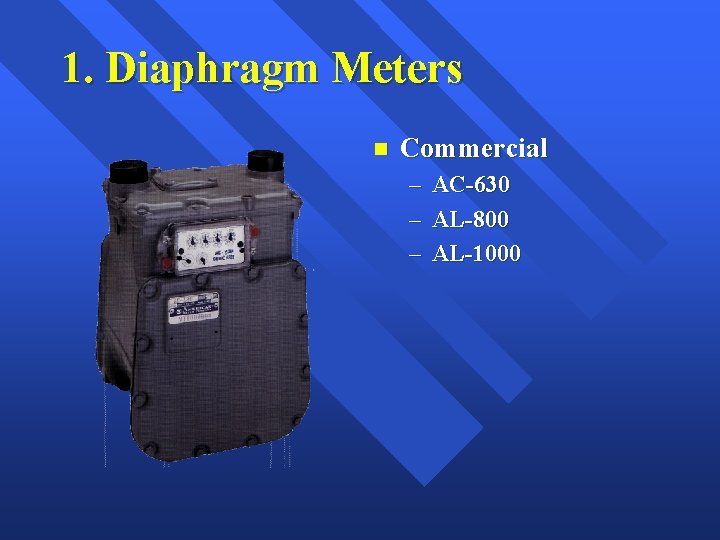
1. Diaphragm Meters n Commercial – AC-630 – AL-800 – AL-1000
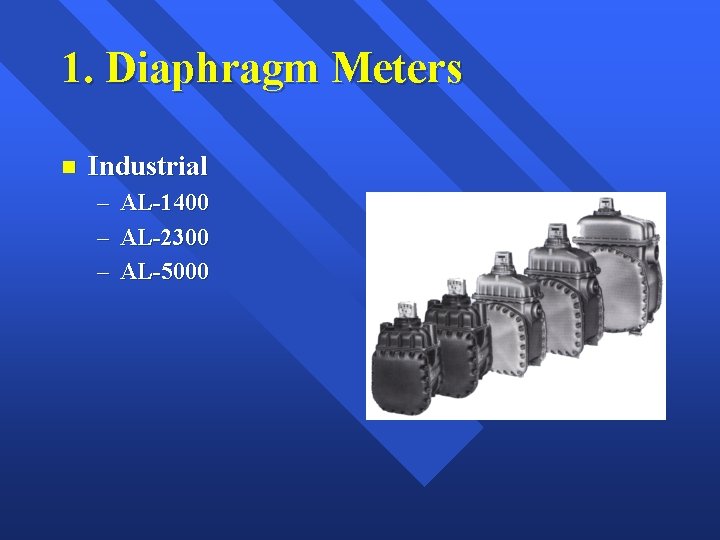
1. Diaphragm Meters n Industrial – – – AL-1400 AL-2300 AL-5000
1. Diaphragm Meters
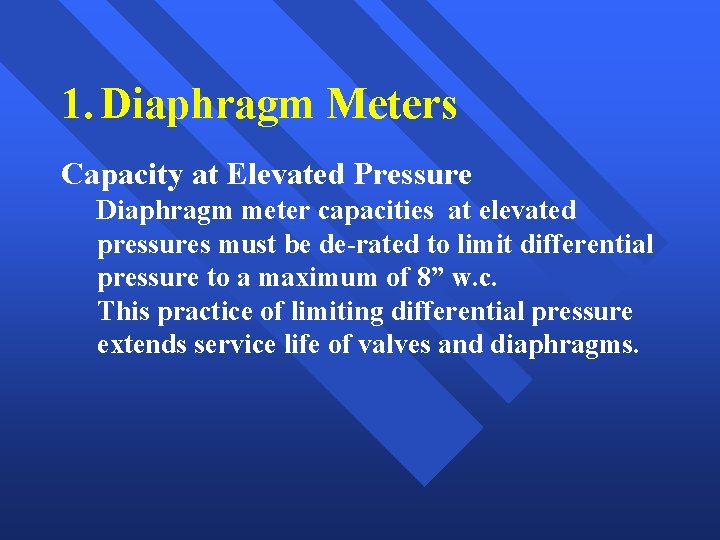
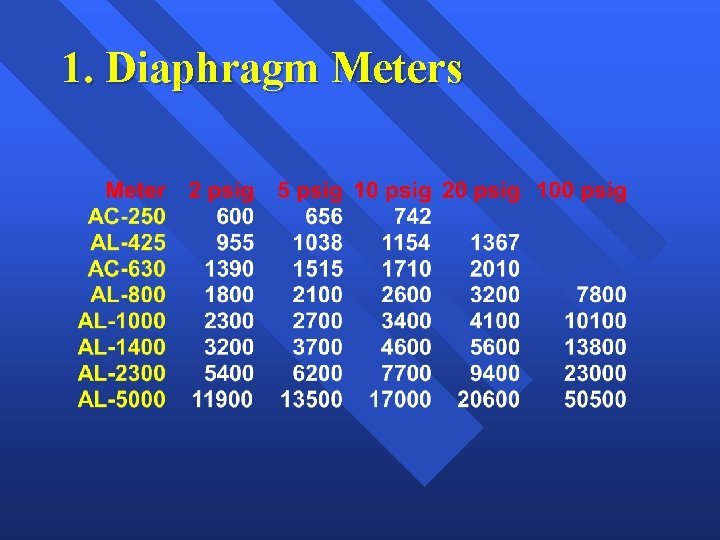
1. Diaphragm Meters Capacity at Elevated Pressure Diaphragm meter capacities at elevated pressures must be de-rated to limit differential pressure to a maximum of 8” w. c. This practice of limiting differential pressure extends service life of valves and diaphragms.
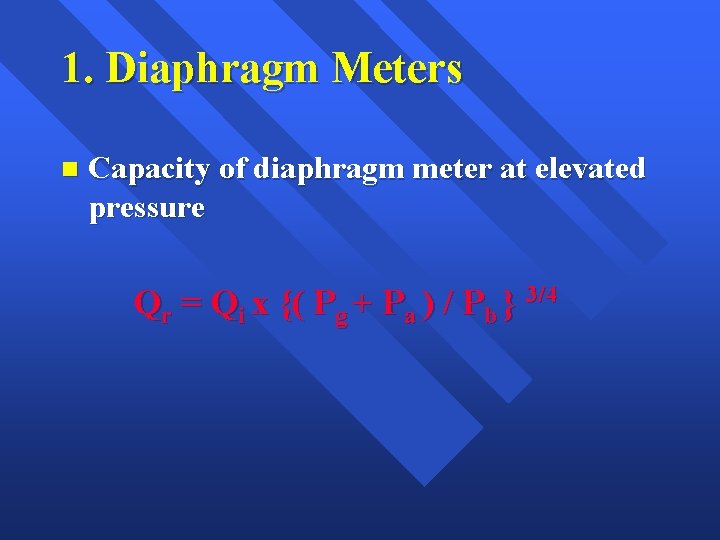
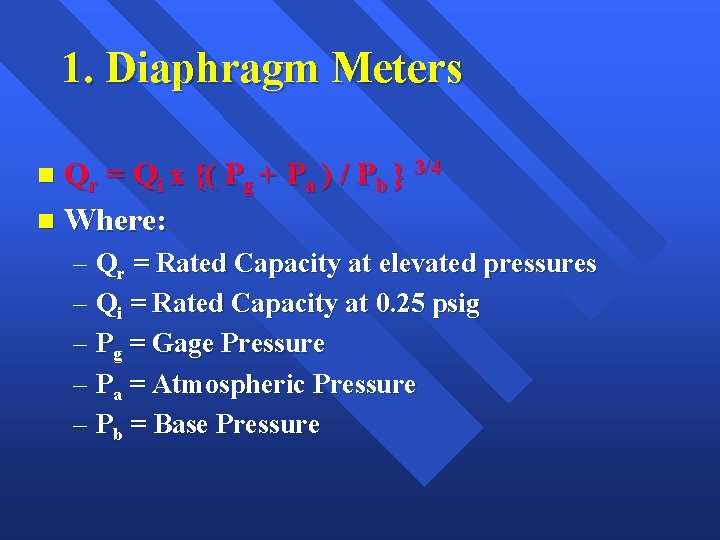
1. Diaphragm Meters n Capacity of diaphragm meter at elevated pressure Qr = Qi x {( Pg + Pa ) / Pb } 3/4
1. Diaphragm Meters Qr = Qi x {( Pg + Pa ) / Pb } 3/4 n Where: n – Qr = Rated Capacity at elevated pressures – Qi = Rated Capacity at 0. 25 psig – Pg = Gage Pressure – Pa = Atmospheric Pressure – Pb = Base Pressure
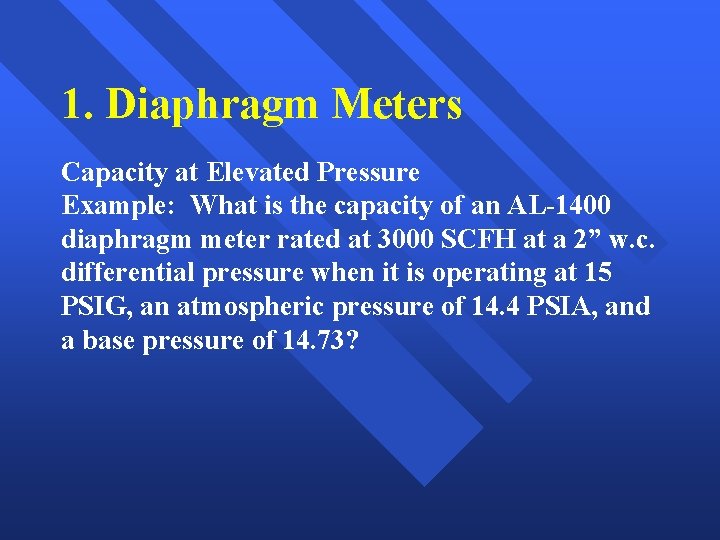
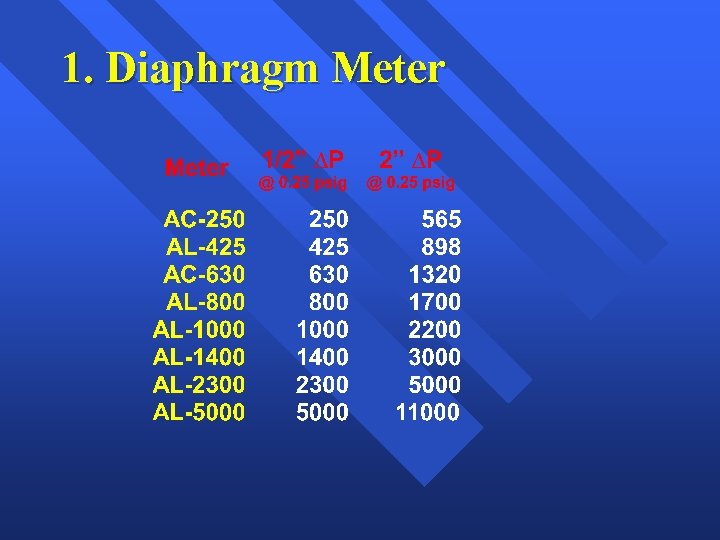
1. Diaphragm Meters Capacity at Elevated Pressure Example: What is the capacity of an AL-1400 diaphragm meter rated at 3000 SCFH at a 2” w. c. differential pressure when it is operating at 15 PSIG, an atmospheric pressure of 14. 4 PSIA, and a base pressure of 14. 73?
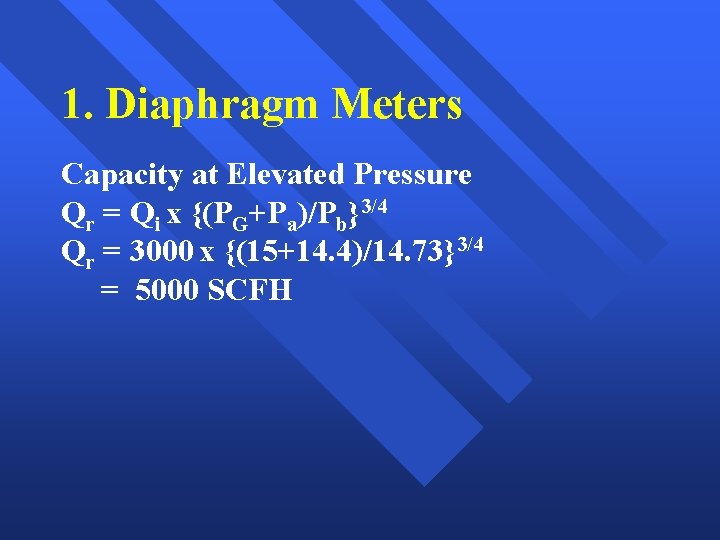
1. Diaphragm Meters Capacity at Elevated Pressure Qr = Qi x {(PG+Pa)/Pb}3/4 Qr = 3000 x {(15+14. 4)/14. 73}3/4 = 5000 SCFH
1. Diaphragm Meters
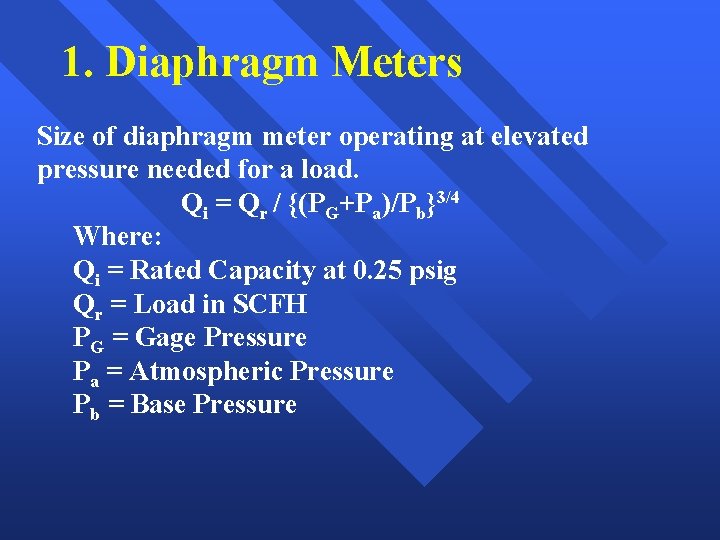
1. Diaphragm Meters Size of diaphragm meter operating at elevated pressure needed for a load. Qi = Qr / {(PG+Pa)/Pb}3/4 Where: Qi = Rated Capacity at 0. 25 psig Qr = Load in SCFH PG = Gage Pressure Pa = Atmospheric Pressure Pb = Base Pressure
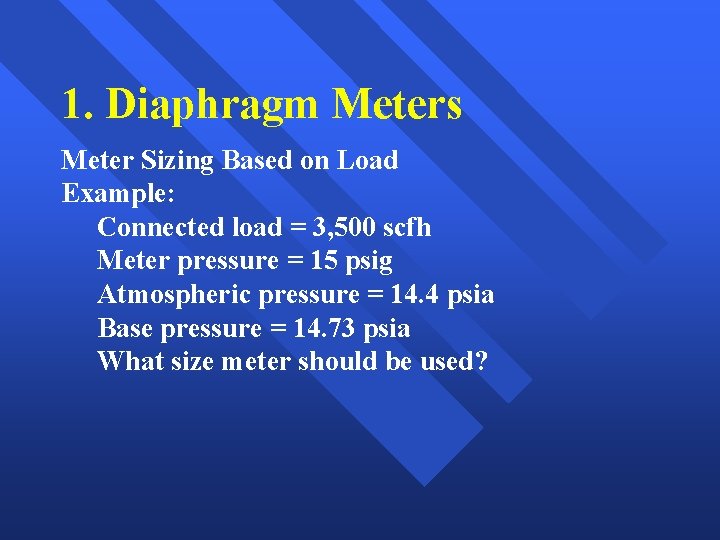
1. Diaphragm Meters Meter Sizing Based on Load Example: Connected load = 3, 500 scfh Meter pressure = 15 psig Atmospheric pressure = 14. 4 psia Base pressure = 14. 73 psia What size meter should be used?
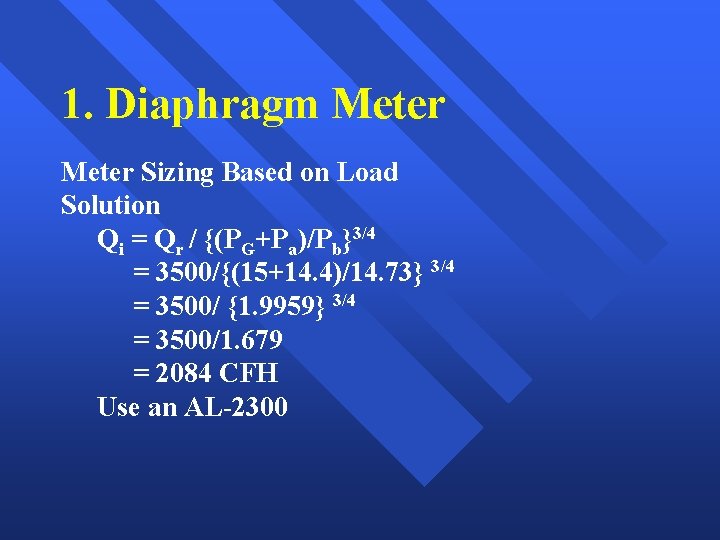
1. Diaphragm Meter Sizing Based on Load Solution Qi = Qr / {(PG+Pa)/Pb}3/4 = 3500/{(15+14. 4)/14. 73} 3/4 = 3500/ {1. 9959} 3/4 = 3500/1. 679 = 2084 CFH Use an AL-2300
1. Diaphragm Meter
1. Diaphragm Meter
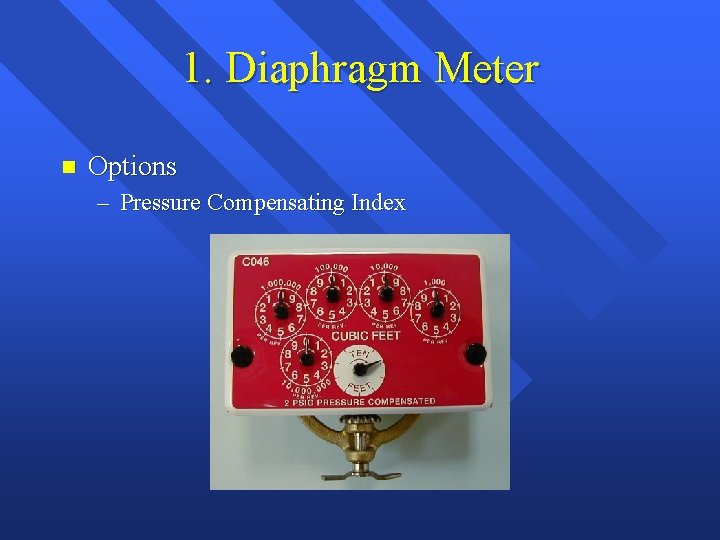
1. Diaphragm Meter n Options – Pressure Compensating Index
1. Diaphragm Meter n Options – Temperature Compensation
1. Diaphragm Meter n Options – AMR (Automatic Meter Reading) Compatible
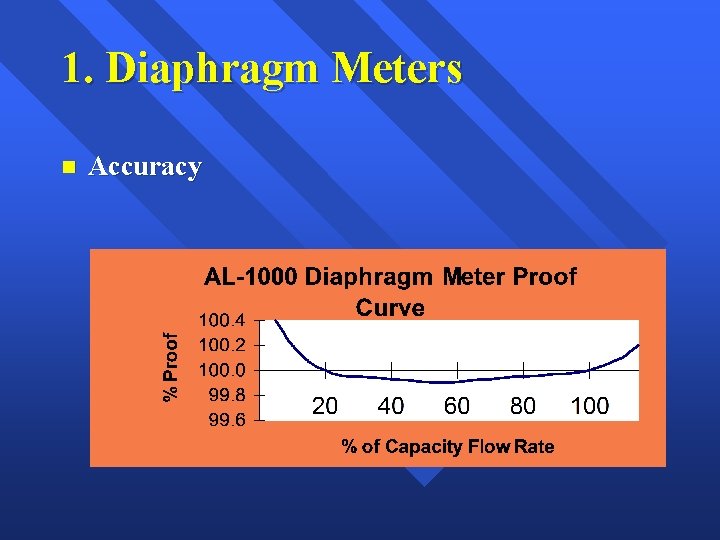
1. Diaphragm Meters n Accuracy
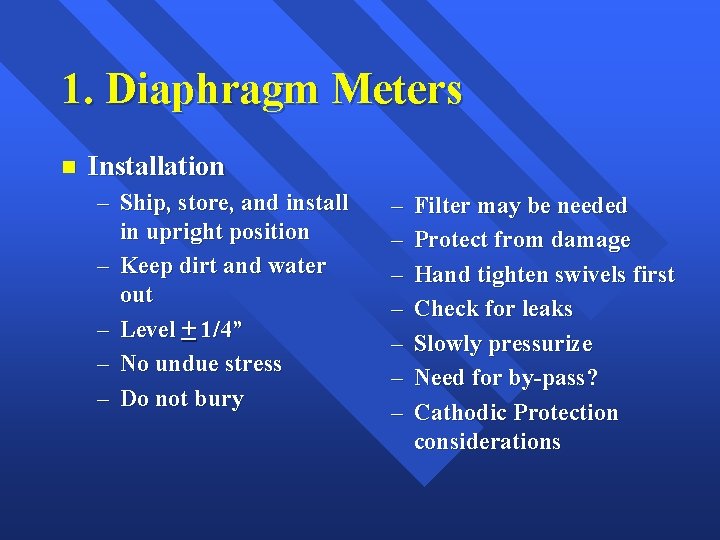
1. Diaphragm Meters n Installation – Ship, store, and install in upright position – Keep dirt and water out – Level + 1/4” – No undue stress – Do not bury – – – – Filter may be needed Protect from damage Hand tighten swivels first Check for leaks Slowly pressurize Need for by-pass? Cathodic Protection considerations
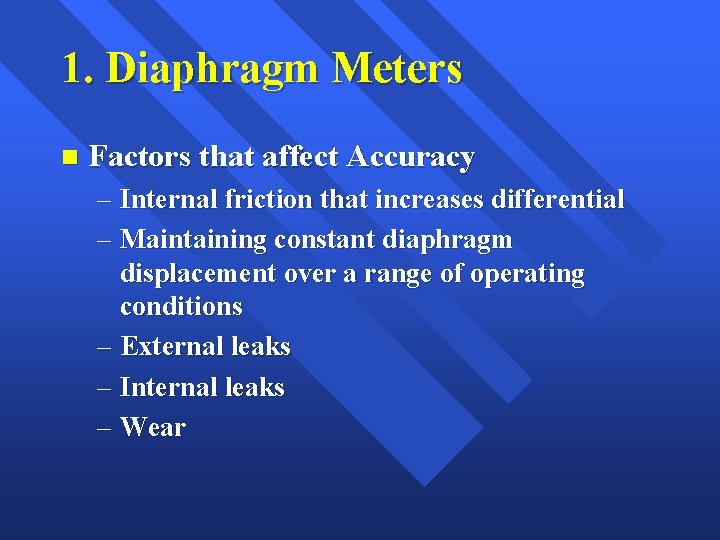
1. Diaphragm Meters n Factors that affect Accuracy – Internal friction that increases differential – Maintaining constant diaphragm displacement over a range of operating conditions – External leaks – Internal leaks – Wear