Working with Cinematic Techniques English I Pre AP
- Slides: 23
Working with Cinematic Techniques English I Pre. AP Modified SB 2. 15
Film Analysis § Much like how a writer uses stylistic devices to achieve specific effects in their writing, directors use cinematic techniques in their films for specific purposes. § In order to analyze a film through critical viewing like you do a text in critical reading, you must understand the tools that filmmakers use to create their visual masterpieces.
SHOTS and FRAMING, CAMERA ANGLES and CAMERA MOVEMENTS § All compare to how a writer uses POINT OF VIEW § Shot: a single piece of film uninterrupted by cuts § Of course, different shot types, angles and movements achieve different effects
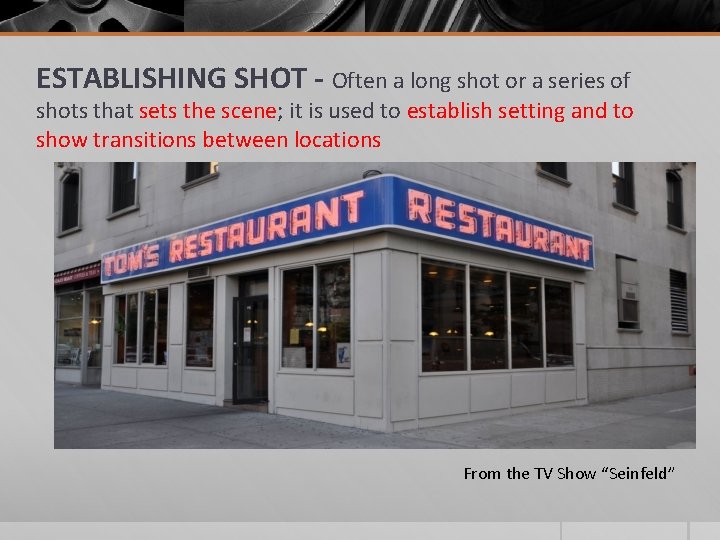
ESTABLISHING SHOT - Often a long shot or a series of shots that sets the scene; it is used to establish setting and to show transitions between locations From the TV Show “Seinfeld”
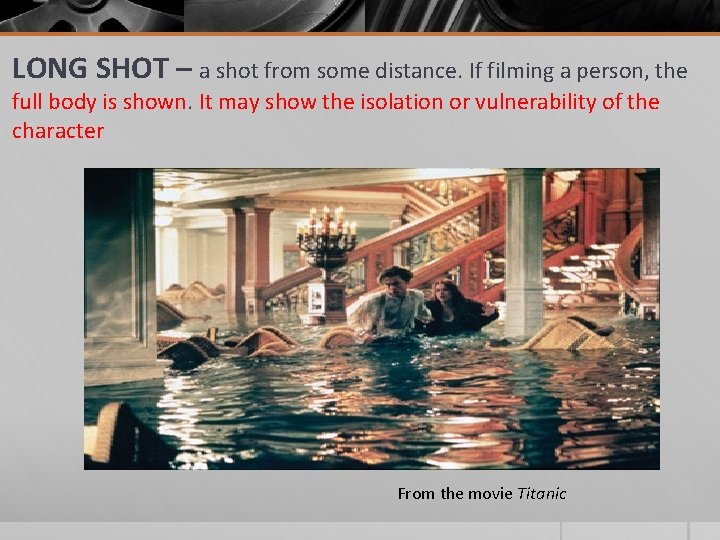
LONG SHOT – a shot from some distance. If filming a person, the full body is shown. It may show the isolation or vulnerability of the character From the movie Titanic
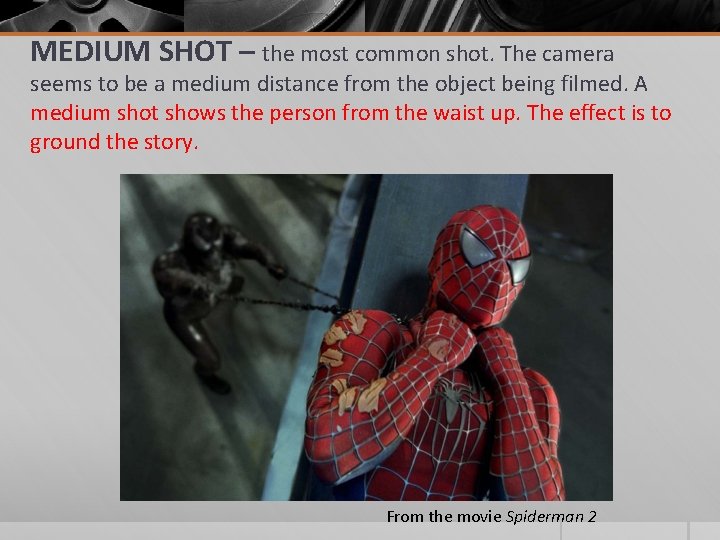
MEDIUM SHOT – the most common shot. The camera seems to be a medium distance from the object being filmed. A medium shot shows the person from the waist up. The effect is to ground the story. From the movie Spiderman 2
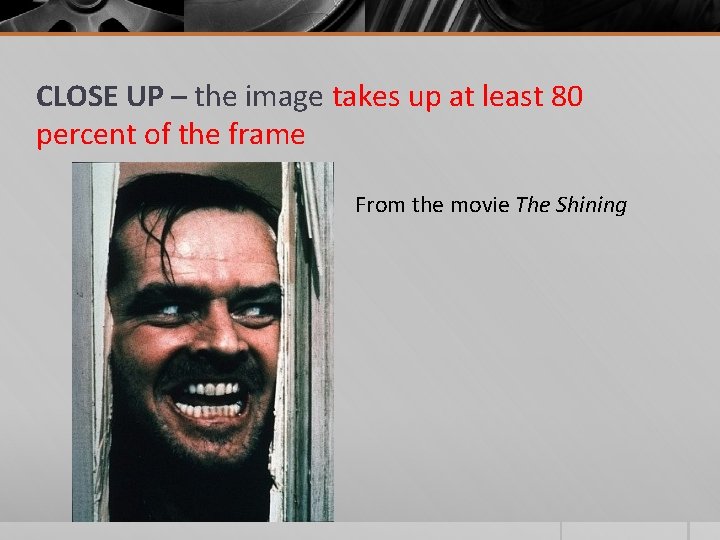
CLOSE UP – the image takes up at least 80 percent of the frame From the movie The Shining
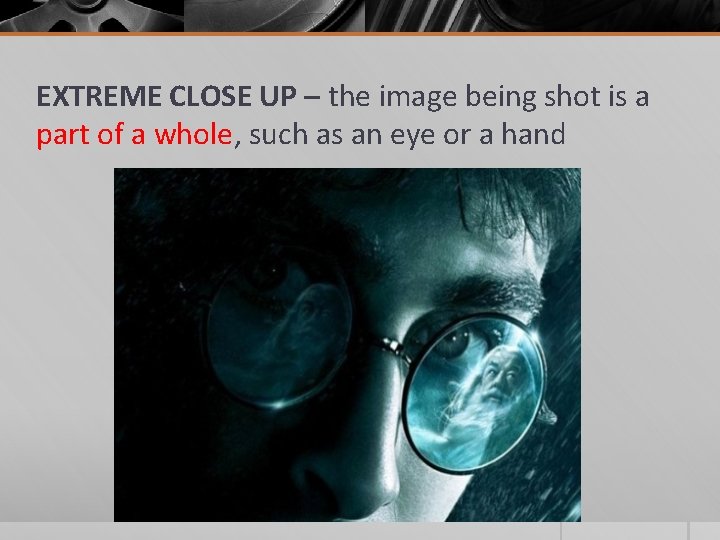
EXTREME CLOSE UP – the image being shot is a part of a whole, such as an eye or a hand
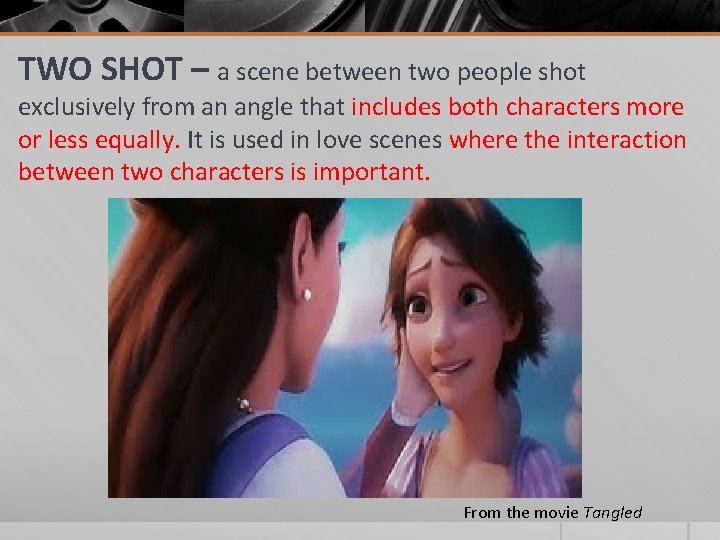
TWO SHOT – a scene between two people shot exclusively from an angle that includes both characters more or less equally. It is used in love scenes where the interaction between two characters is important. From the movie Tangled
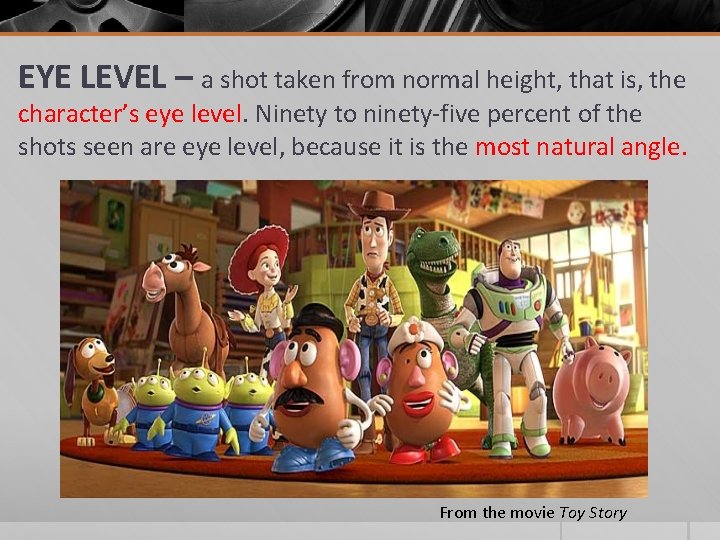
EYE LEVEL – a shot taken from normal height, that is, the character’s eye level. Ninety to ninety-five percent of the shots seen are eye level, because it is the most natural angle. From the movie Toy Story
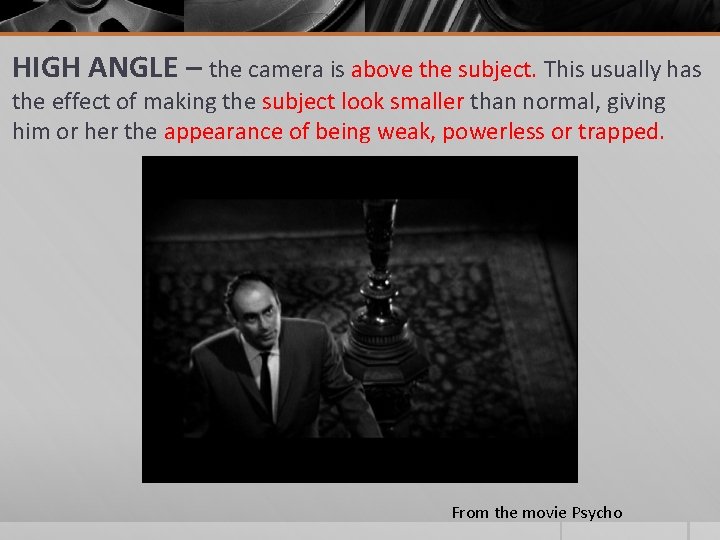
HIGH ANGLE – the camera is above the subject. This usually has the effect of making the subject look smaller than normal, giving him or her the appearance of being weak, powerless or trapped. From the movie Psycho
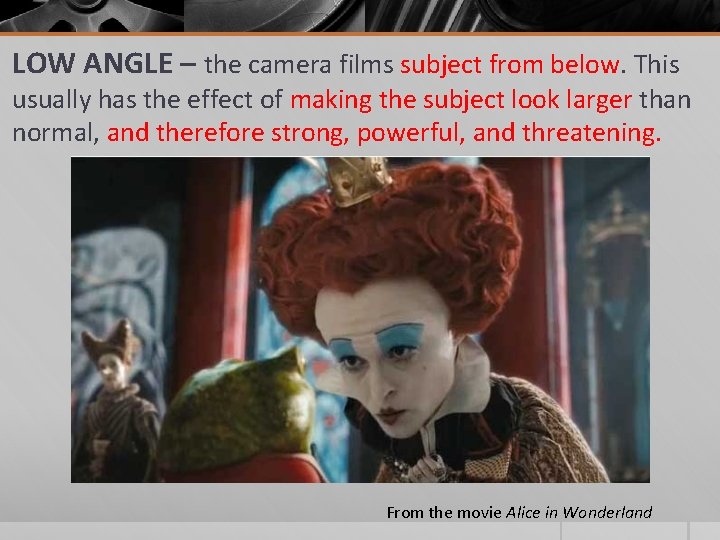
LOW ANGLE – the camera films subject from below. This usually has the effect of making the subject look larger than normal, and therefore strong, powerful, and threatening. From the movie Alice in Wonderland
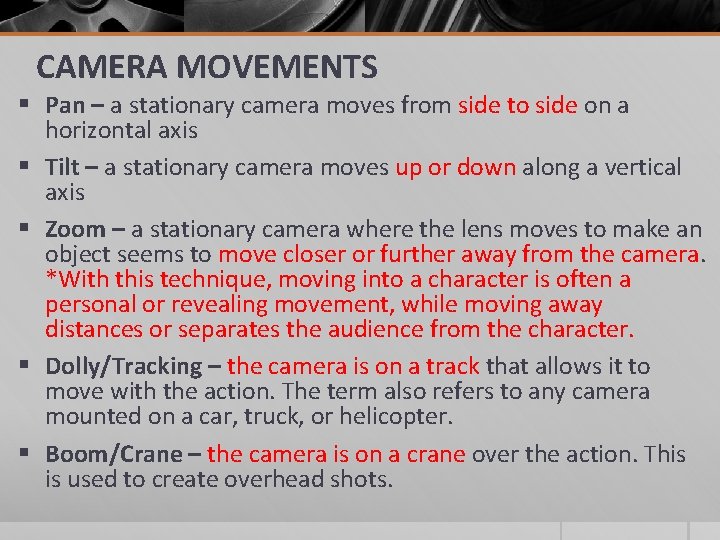
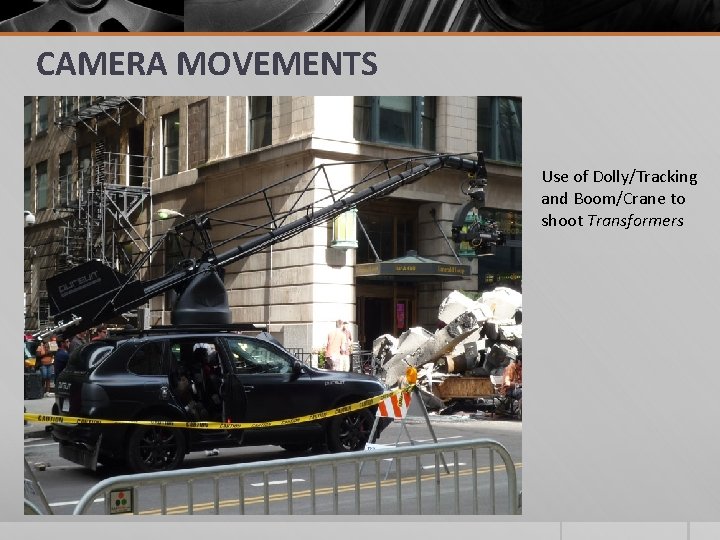
CAMERA MOVEMENTS § Pan – a stationary camera moves from side to side on a horizontal axis § Tilt – a stationary camera moves up or down along a vertical axis § Zoom – a stationary camera where the lens moves to make an object seems to move closer or further away from the camera. *With this technique, moving into a character is often a personal or revealing movement, while moving away distances or separates the audience from the character. § Dolly/Tracking – the camera is on a track that allows it to move with the action. The term also refers to any camera mounted on a car, truck, or helicopter. § Boom/Crane – the camera is on a crane over the action. This is used to create overhead shots.
CAMERA MOVEMENTS Use of Dolly/Tracking and Boom/Crane to shoot Transformers
LIGHTING § Compares to how a writer establishes tone and mood in their work § Lighting creates significant emotional responses from the audience based on what people associate with light and darkness § Lighting effects clarity, realism and emotion
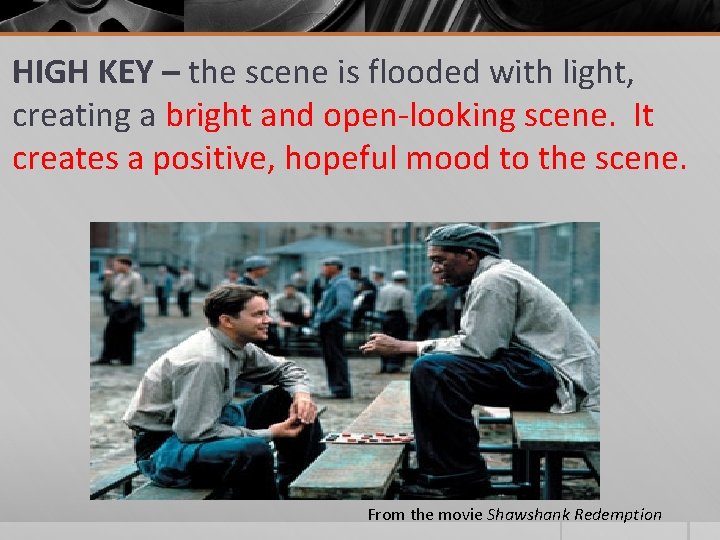
HIGH KEY – the scene is flooded with light, creating a bright and open-looking scene. It creates a positive, hopeful mood to the scene. From the movie Shawshank Redemption
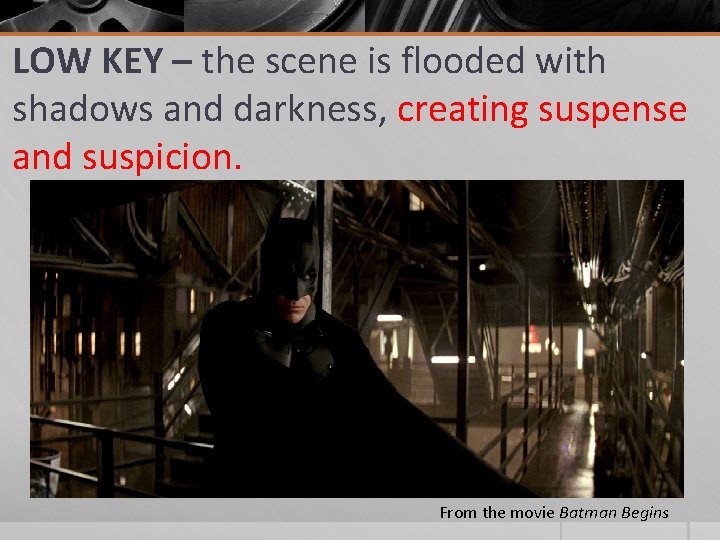
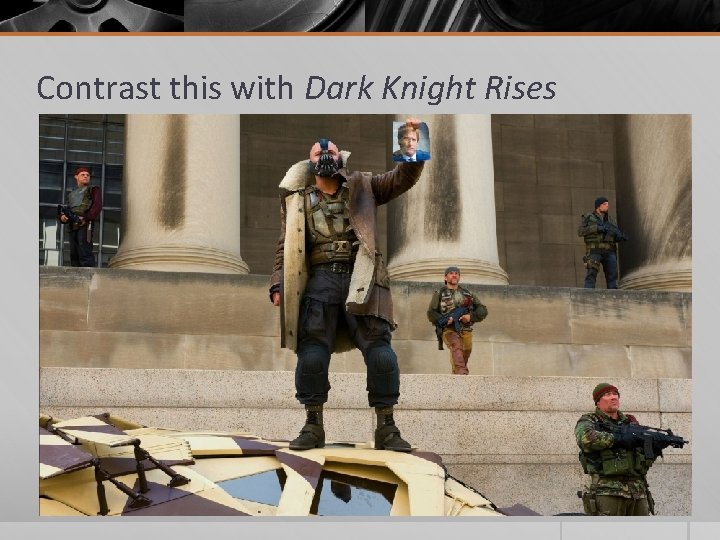
LOW KEY – the scene is flooded with shadows and darkness, creating suspense and suspicion. From the movie Batman Begins
Contrast this with Dark Knight Rises
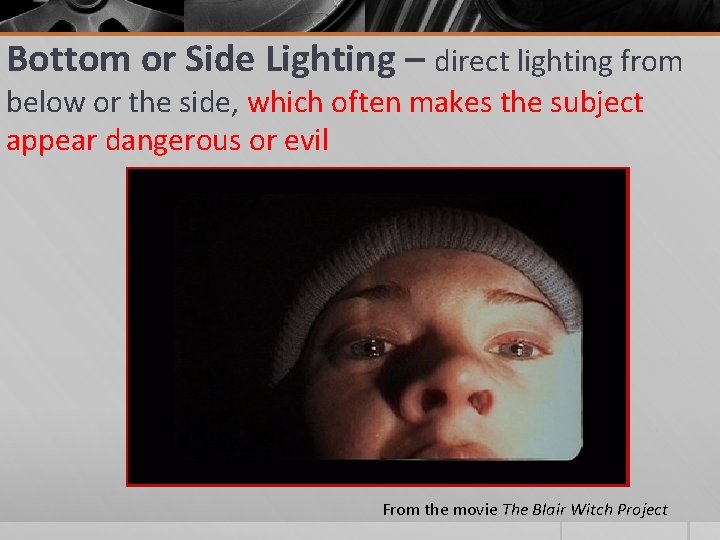
Bottom or Side Lighting – direct lighting from below or the side, which often makes the subject appear dangerous or evil From the movie The Blair Witch Project
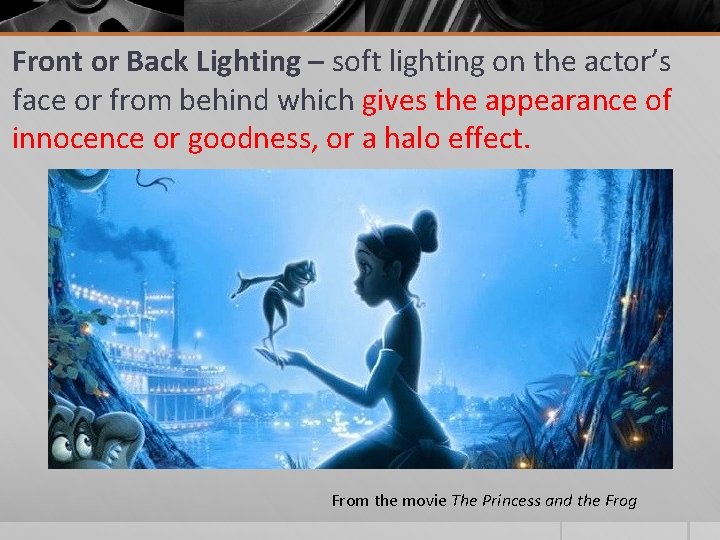
Front or Back Lighting – soft lighting on the actor’s face or from behind which gives the appearance of innocence or goodness, or a halo effect. From the movie The Princess and the Frog
Editing Techniques § Compares to how a writer uses syntax § Cut – two pieces of film are spliced together to “cut” to another image § Fade – can be to or from black and white; implies the passing of time or the end of a scene § Fade-In – darkness to brightness § Fade-Out – image gradually gets darker § Dissolve – a kind of fade in which one image is gradually replaced by another § Wipe – a new image wipes off the previous image (quicker than a dissolve) § Flashback – cut or dissolve to action that happened in the past § Shot-Reverse-Shot – a shot of one subject, then another, then back to the first; often used for conversation or reaction shots § Cross-Cutting – cut into action that is happening simultaneously; creates tension or suspense and creates a connection between scenes § Eye-Line Match – cut to an object, then to a person; can reveal a character’s thoughts
Sound § Compares to how a writer establishes tone and mood in their work § Diegetic – sound that can logically be heard by the characters in the film (dialogue, background noise, sound of things in the scene) § Non-Diegetic – sound that cannot be heard by the characters but is designed for the audience reaction only (ominous music or sounds)
Apply It! § Note examples from the commercials of SHOTS and FRAMING, CAMERA ANGLES, CAMERA MOVEMENTS, LIGHTING, EDITING and MUSIC/SOUND.