Whats New in Epilepsy Therapy Research Evan Fertig

- Slides: 49
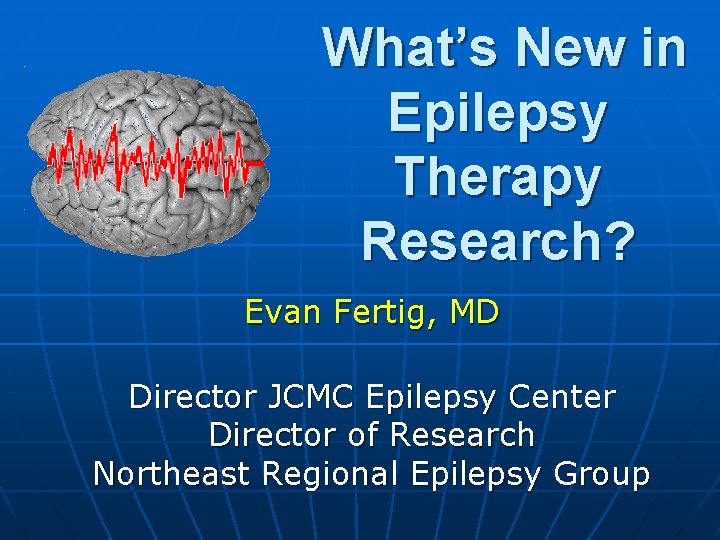
What’s New in Epilepsy Therapy Research? Evan Fertig, MD Director JCMC Epilepsy Center Director of Research Northeast Regional Epilepsy Group
Outline n Why is Epilepsy Research Important? n What is a Clinical Trial? n n Epilepsy Medications under Study at NEREG New Surgical Approaches for Epilepsy
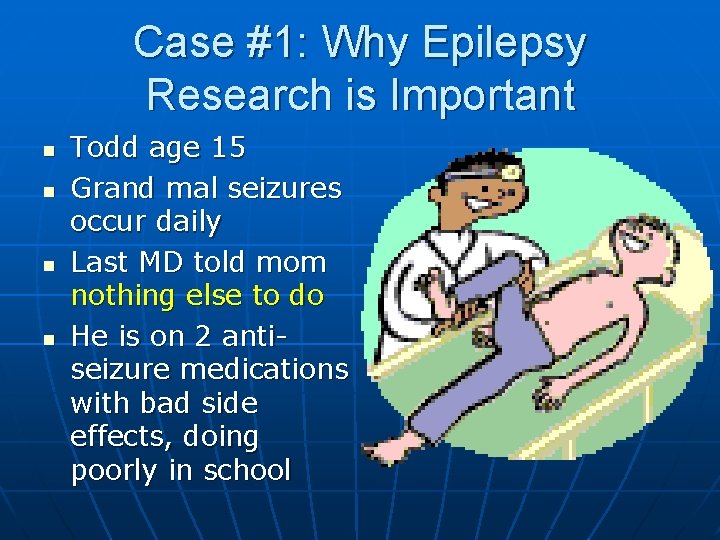
Case #1: Why Epilepsy Research is Important n n Todd age 15 Grand mal seizures occur daily Last MD told mom nothing else to do He is on 2 antiseizure medications with bad side effects, doing poorly in school
More about Todd… n n n One of his medication is carbamazepine which is a sodium channel blocker Video-EEG: Seizures coming from multiple areas of his brain MRI Brain: Normal
We learn that… n n n Seizures began 6 months with fever Seizures occur more in the summer or with vigorous exercise (gym) New genetic blood test sent: sodium channel mutation!
What’s Todd’s Diagnosis? n n n Dravet Syndrome Caused by a genetic problem with a brain protein (sodium channel). This was not understood before! Symptoms: Bad febrile seizures, then multiple sz types, worsens with sodium channel blockers
And so what happened? n n n Carbamazepine is stopped (the sodium channel blocker), Atkins Diet (like the ketogenic diet) started. Seizure free for 2 years No side effects, doing very well in school
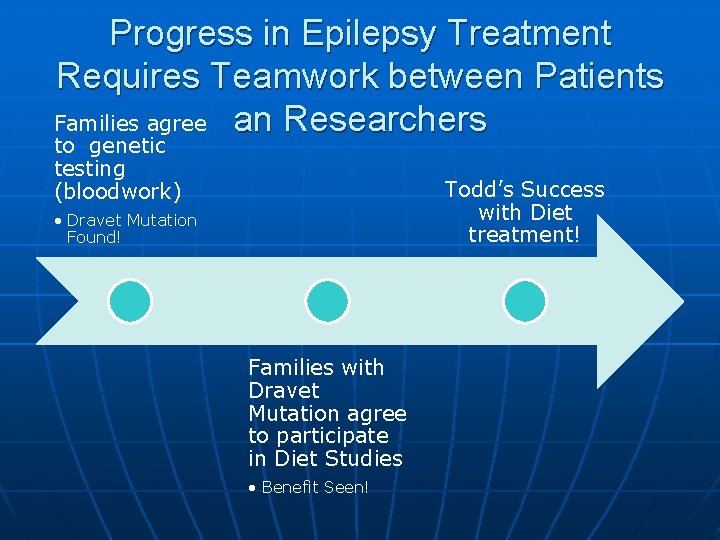
Progress in Epilepsy Treatment Requires Teamwork between Patients Families agree an Researchers to genetic testing (bloodwork) Todd’s Success with Diet treatment! • Dravet Mutation Found! Families with Dravet Mutation agree to participate in Diet Studies • Benefit Seen!
Key Points n n n The better we understand the causes of epilepsy… The better our treatments will be! Clinical Research is the key but can’t happen without teamwork between patients, families, and MD’s
What is Epilepsy? n n A disorder of spontaneously occurring unprovoked seizures (more than 2) Seizures are electrical storms of brain cells that can cause many different symptoms
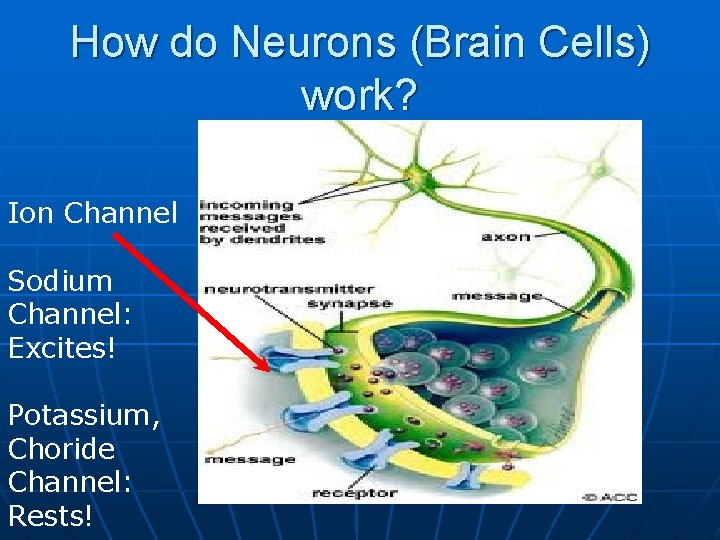
How do Neurons (Brain Cells) work? Ion Channel Sodium Channel: Excites! Potassium, Choride Channel: Rests!
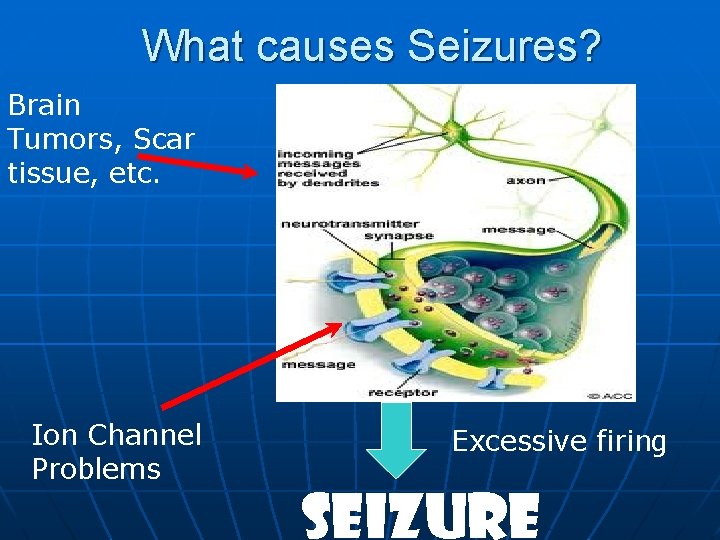
What causes Seizures? Brain Tumors, Scar tissue, etc. Ion Channel Problems Excessive firing SEIZURE
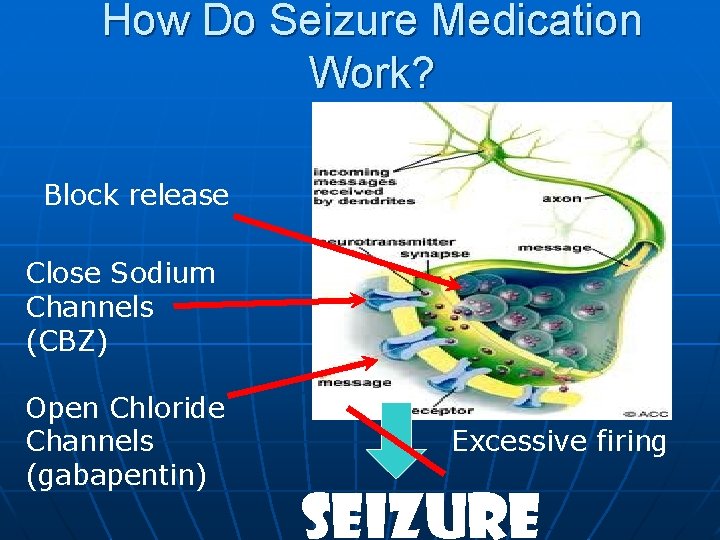
How Do Seizure Medication Work? Block release Close Sodium Channels (CBZ) Open Chloride Channels (gabapentin) Excessive firing SEIZURE
What are the Limits of Medical Therapy? n Trial and Error n Brain Side Effects n Body Side Effects
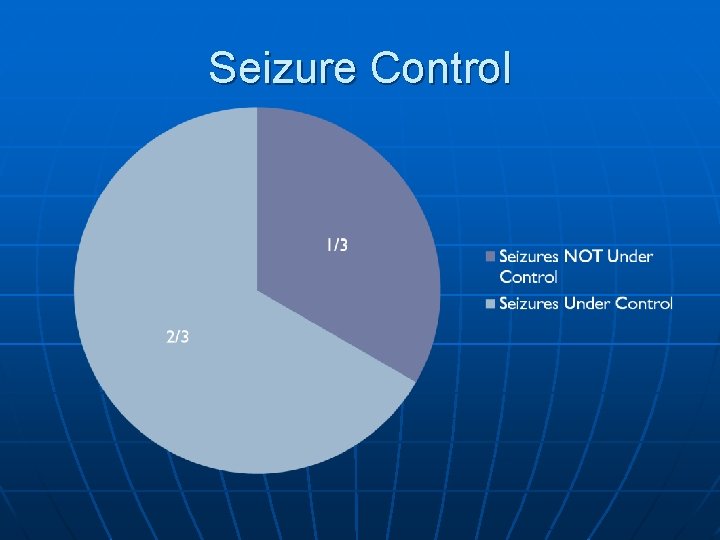
Seizure Control
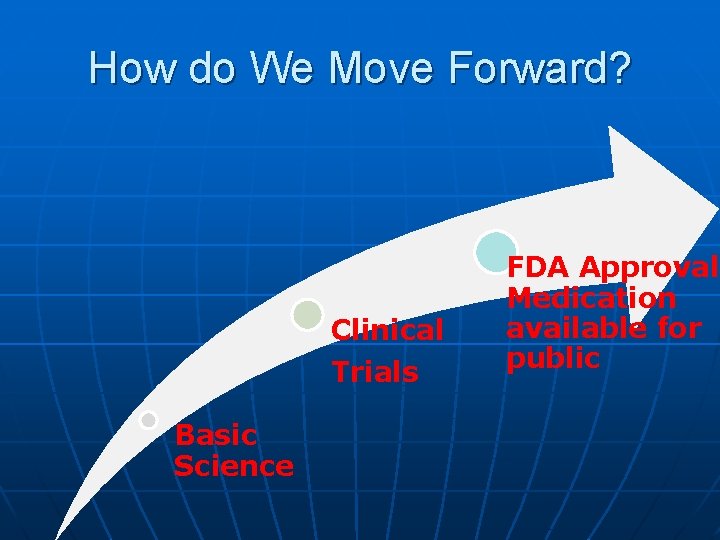
How do We Move Forward? Clinical Trials Basic Science FDA Approval. Medication available for public
Clinical Trials n n What is a clinical trial? Key terms (from Epilepsy Study Consortium) • Randomization and Control • Blinding • Placebo
What Should I Know? • Previous safety record of study medication or device • Chance of getting it vs. placebo? • How long? What to expect at each visit? • Access to study agent after the trial?
What Are Some Promising New Medical Treatments under study at NEREG? n Everyday Treatment • Ganaxolone • Lacosamide (Vimpat) • Pregabalin (Lyrica) • YKB n Emergency Treatment • Intranasal Midazolam
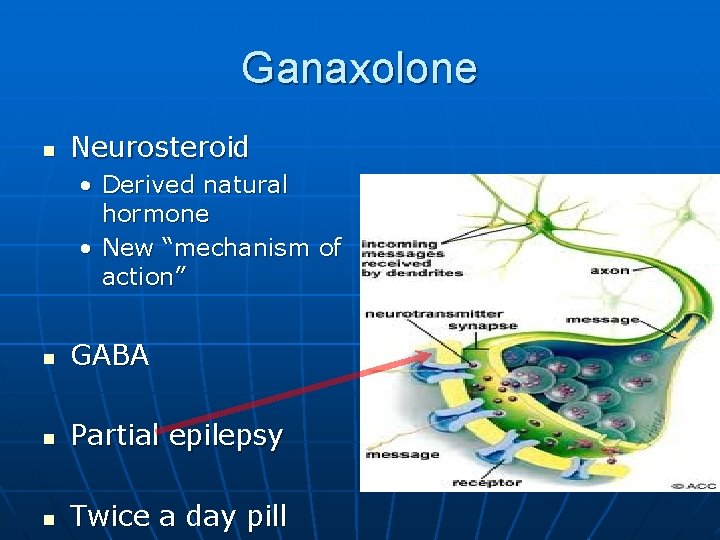
Ganaxolone n Neurosteroid • Derived natural hormone • New “mechanism of action” n GABA n Partial epilepsy n Twice a day pill
Ganaxolone (study 600) n Effective • 20% reduction of seizure frequency on medication • 25% of subjects were >50% responders n Side Effects • Safe in Animal Models • Safe in nearly 1000 patients to date • Dizziness and sleepiness are rare side effects
Ganaxolone vs. Placebo in the Adjunctive Treatment of Subjects with Partial Onset Seizures (POS) Objective • How safe and effective is Ganaxolone in adults with POS with poorly controlled seizures? Requirement • Age > 18, 3 AED, 3 or more sz per month Study Procedure • Visits to Hackensack office. All medication, visits are provided for free + stipend
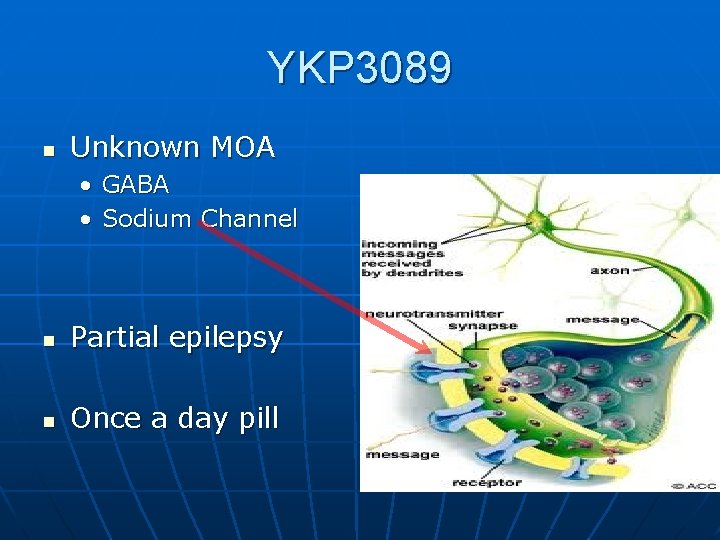
YKP 3089 n Unknown MOA • GABA • Sodium Channel n Partial epilepsy n Once a day pill
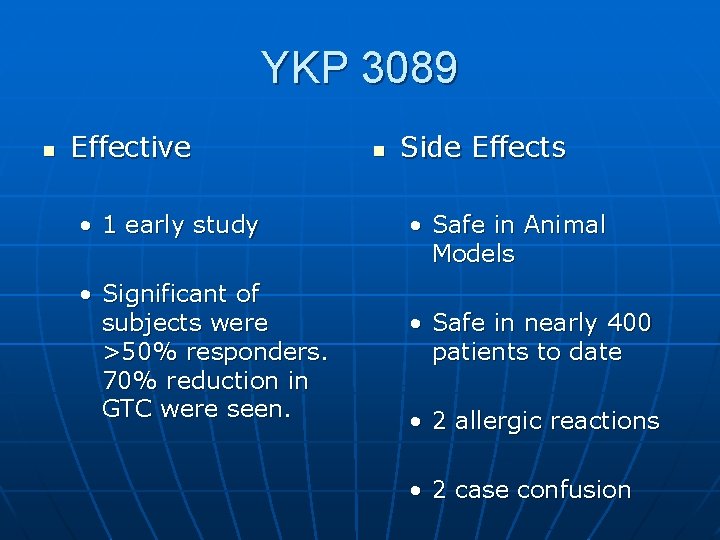
YKP 3089 n Effective • 1 early study • Significant of subjects were >50% responders. 70% reduction in GTC were seen. n Side Effects • Safe in Animal Models • Safe in nearly 400 patients to date • 2 allergic reactions • 2 case confusion
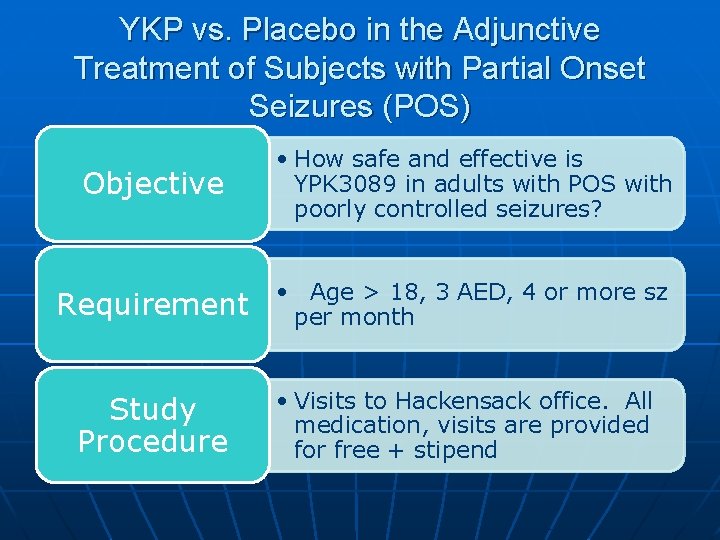
YKP vs. Placebo in the Adjunctive Treatment of Subjects with Partial Onset Seizures (POS) Objective • How safe and effective is YPK 3089 in adults with POS with poorly controlled seizures? Requirement • Age > 18, 3 AED, 4 or more sz per month Study Procedure • Visits to Hackensack office. All medication, visits are provided for free + stipend
Lacosamide (Vimpat) Studies n n n Why are we studying this medication when it is already available? Learn how to use it better Learn if it can be used safely in populations not included in original research
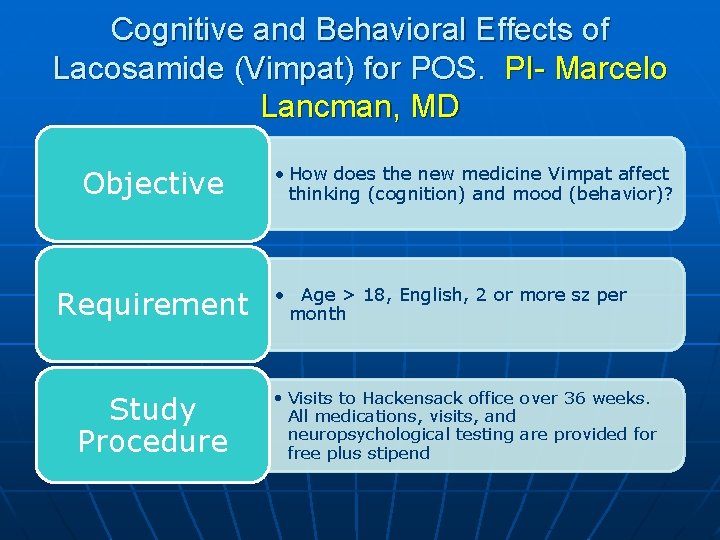
Cognitive and Behavioral Effects of Lacosamide (Vimpat) for POS. PI- Marcelo Lancman, MD Objective Requirement Study Procedure • How does the new medicine Vimpat affect thinking (cognition) and mood (behavior)? • Age > 18, English, 2 or more sz per month • Visits to Hackensack office over 36 weeks. All medications, visits, and neuropsychological testing are provided for free plus stipend
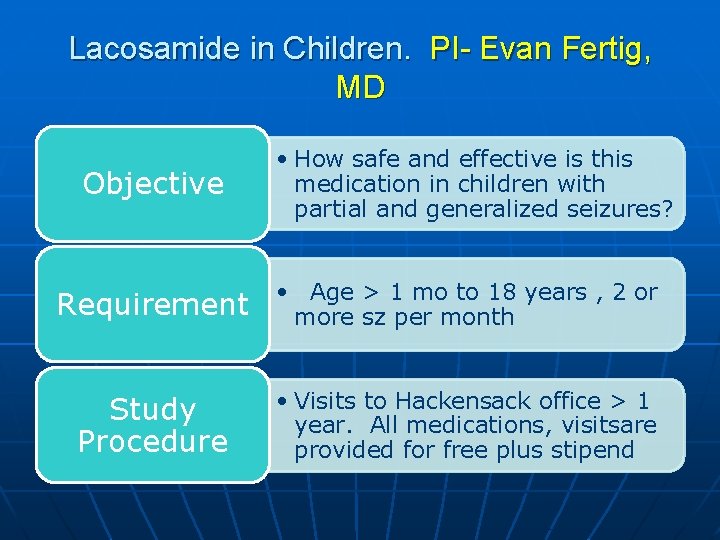
Lacosamide in Children. PI- Evan Fertig, MD Objective • How safe and effective is this medication in children with partial and generalized seizures? Requirement • Age > 1 mo to 18 years , 2 or more sz per month Study Procedure • Visits to Hackensack office > 1 year. All medications, visitsare provided for free plus stipend
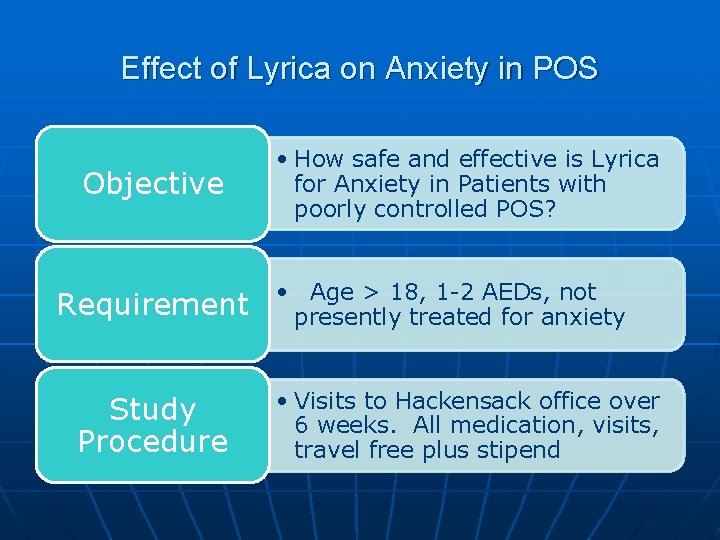
Effect of Lyrica on Anxiety in POS Objective Requirement Study Procedure • How safe and effective is Lyrica for Anxiety in Patients with poorly controlled POS? • Age > 18, 1 -2 AEDs, not presently treated for anxiety • Visits to Hackensack office over 6 weeks. All medication, visits, travel free plus stipend
n Completed Studies n New medications
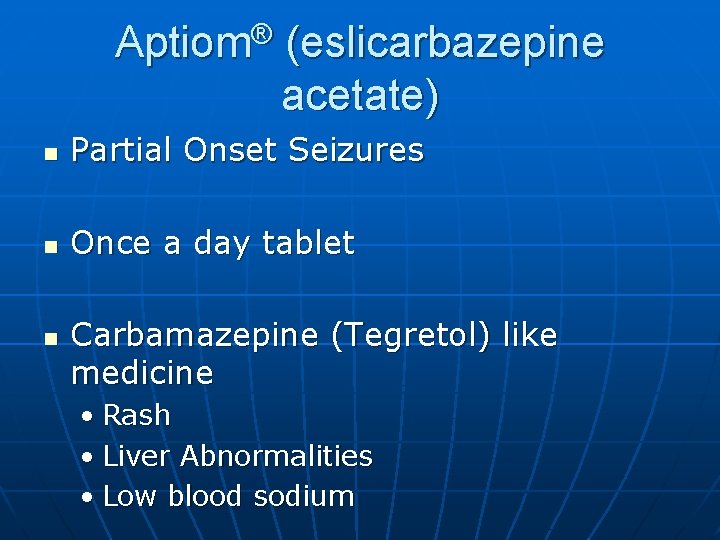
® Aptiom (eslicarbazepine acetate) n Partial Onset Seizures n Once a day tablet n Carbamazepine (Tegretol) like medicine • Rash • Liver Abnormalities • Low blood sodium
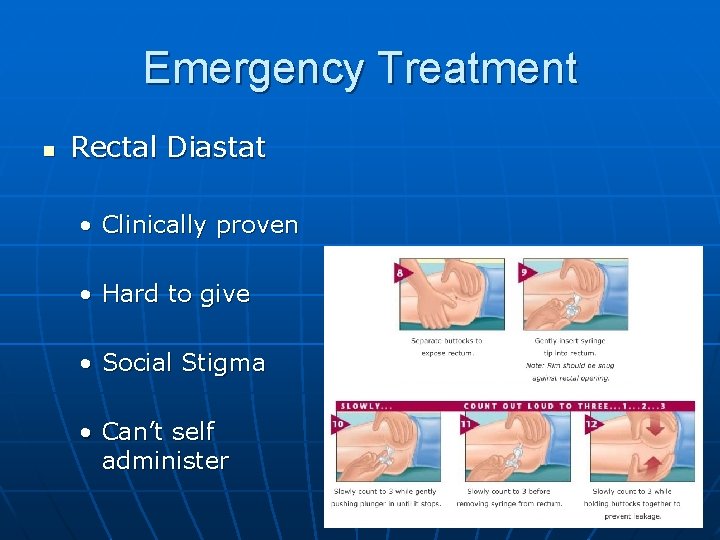
Emergency Treatment n Rectal Diastat • Clinically proven • Hard to give • Social Stigma • Can’t self administer
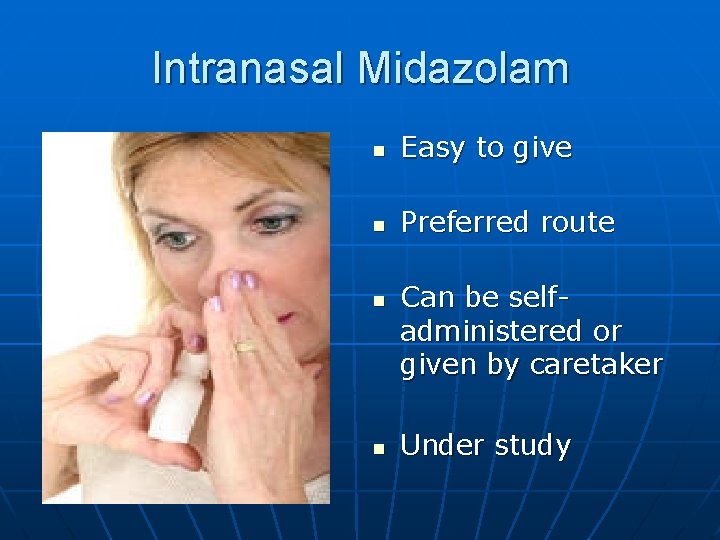
Intranasal Midazolam n Easy to give n Preferred route n n Can be selfadministered or given by caretaker Under study
Intranasal Midazolam (IM) Objective • How safe and effective IM for Seizure Clusters? Requirement • Age 14 -22, Seizure Clusters Study Procedure • One visit to Hackensack Hospital for test dose then follow up visits. Travel and meds are free
What are the Limits of Surgical Therapy? What’s on the Horizon?
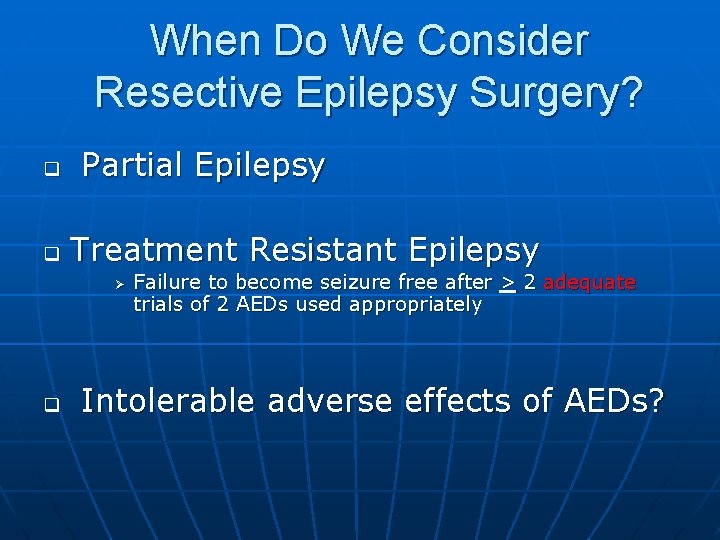
When Do We Consider Resective Epilepsy Surgery? q q Partial Epilepsy Treatment Resistant Epilepsy Ø q Failure to become seizure free after > 2 adequate trials of 2 AEDs used appropriately Intolerable adverse effects of AEDs?
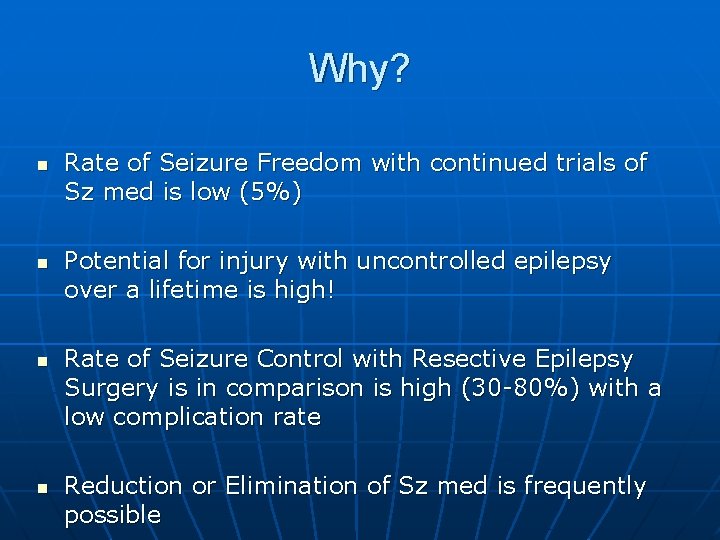
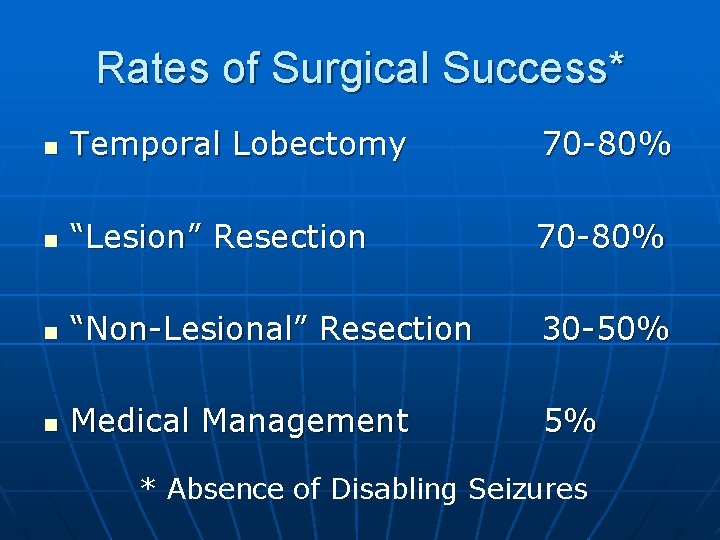
Why? n n Rate of Seizure Freedom with continued trials of Sz med is low (5%) Potential for injury with uncontrolled epilepsy over a lifetime is high! Rate of Seizure Control with Resective Epilepsy Surgery is in comparison is high (30 -80%) with a low complication rate Reduction or Elimination of Sz med is frequently possible
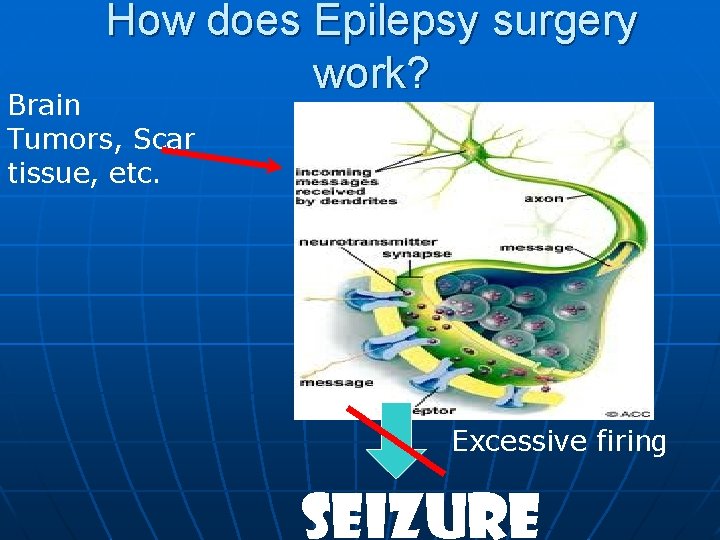
How does Epilepsy surgery work? Brain Tumors, Scar tissue, etc. Excessive firing SEIZURE
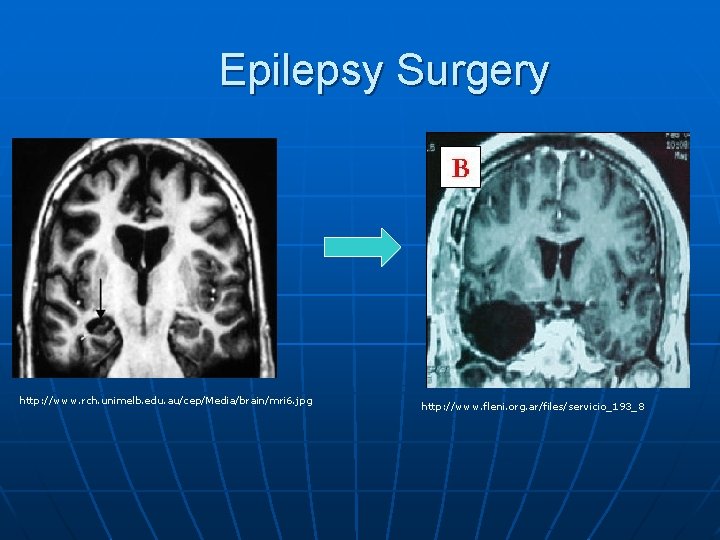
Epilepsy Surgery http: //www. rch. unimelb. edu. au/cep/Media/brain/mri 6. jpg http: //www. fleni. org. ar/files/servicio_193_8
Rates of Surgical Success* n Temporal Lobectomy 70 -80% n “Lesion” Resection 70 -80% n “Non-Lesional” Resection 30 -50% n Medical Management 5% * Absence of Disabling Seizures
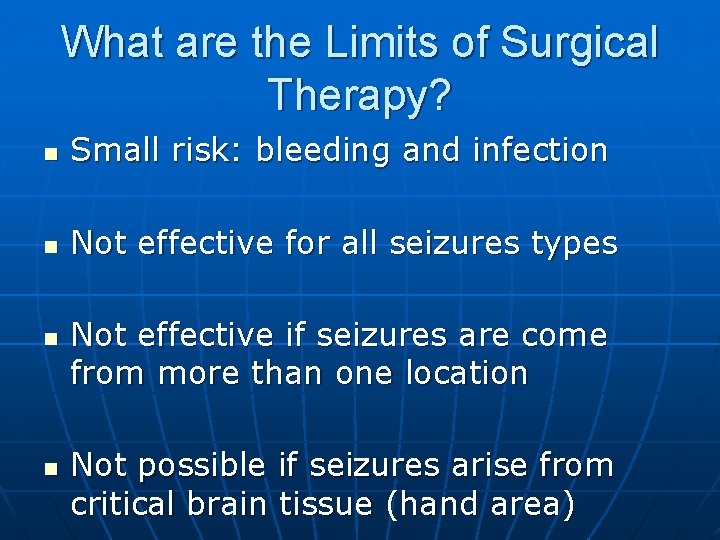
What are the Limits of Surgical Therapy? n Small risk: bleeding and infection n Not effective for all seizures types n n Not effective if seizures are come from more than one location Not possible if seizures arise from critical brain tissue (hand area)
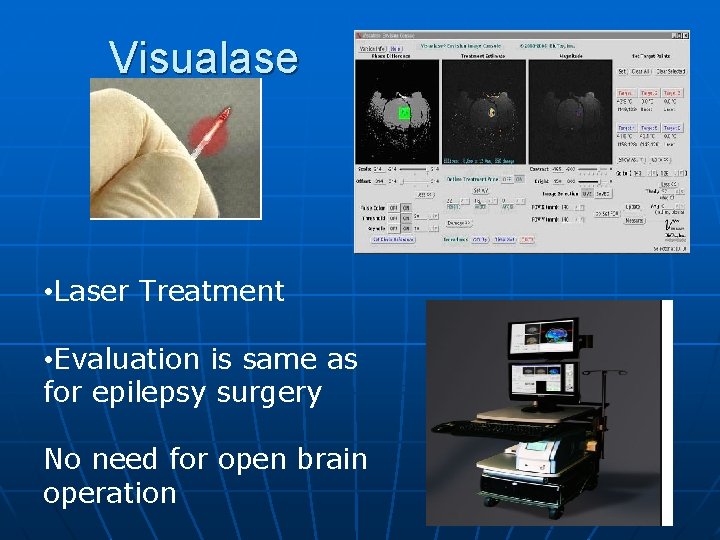
Visualase • Laser Treatment • Evaluation is same as for epilepsy surgery No need for open brain operation
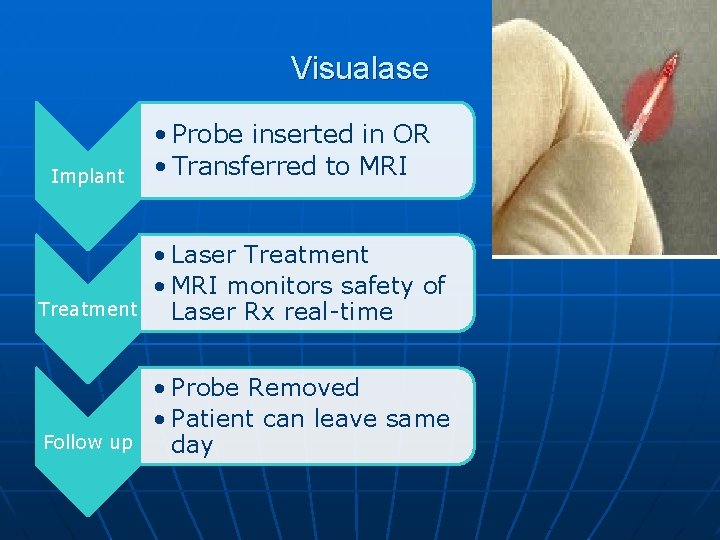
Visualase Implant • Probe inserted in OR • Transferred to MRI Treatment • Laser Treatment • MRI monitors safety of Laser Rx real-time Follow up • Probe Removed • Patient can leave same day
Neuromodulatory Treatments n n Device implanted to alter instead of destroy brain tissue Range of treatment possible: Electrical, Cooling, local medications • Limit body/brain side effects n Improve brain function?
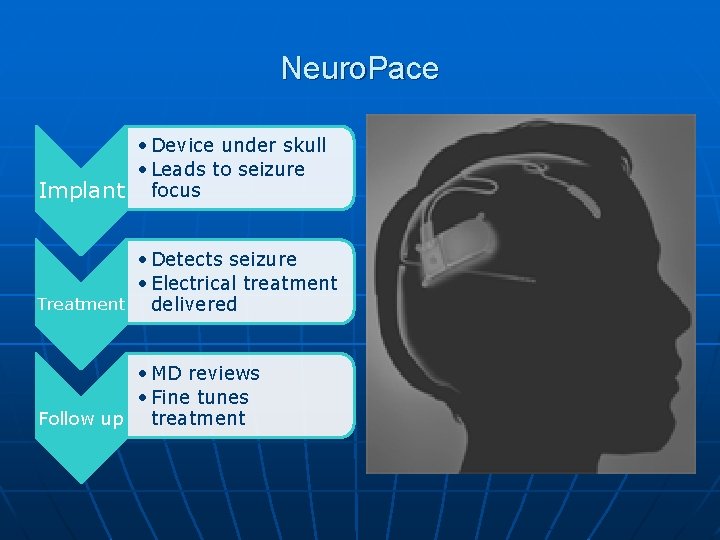
Neuro. Pace • Device under skull • Leads to seizure Implant focus • Detects seizure • Electrical treatment Treatment delivered • MD reviews • Fine tunes Follow up treatment
What will Epilepsy Care Look Like in Future? n n n Personalized Medical Choices based on genetics Truly Anti-epileptic therapy Treatment directed right at the seizure focus
Conclusion n In most cases, seizures can be well controlled with medications with minimal side effects The correct diagnosis to guide treatment is essential Epilepsy is more than just seizures, and the treatment may require a team approach
Conclusion n Some cases are more difficult to control, and treatment with diet therapy or surgery may be used, or clinical trials may be an option
Please Contact Us for More Information! n n Director of Research Evan Fertig, MD Clinical Research Coordinator Munazza Malik, MD (201) 343 -6676 munazza. malik@gmail. com