Weathering http soest hawaii educoastscggmain html Chemical Weathering
- Slides: 39
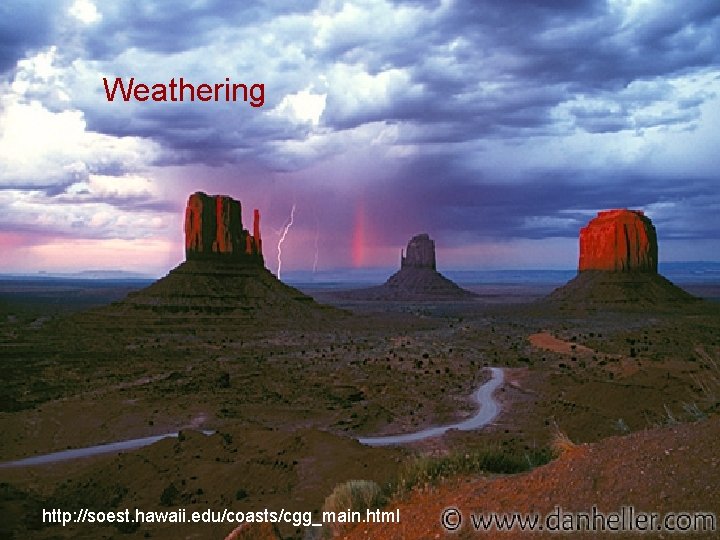
Weathering http: //soest. hawaii. edu/coasts/cgg_main. html
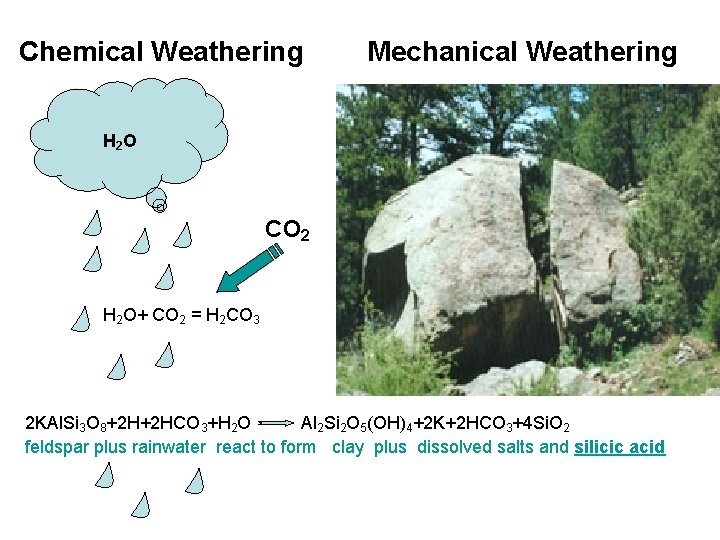
Chemical Weathering Mechanical Weathering H 2 O CO 2 H 2 O+ CO 2 = H 2 CO 3 2 KAl. Si 3 O 8+2 H+2 HCO 3+H 2 O Al 2 Si 2 O 5(OH)4+2 K+2 HCO 3+4 Si. O 2 feldspar plus rainwater react to form clay plus dissolved salts and silicic acid
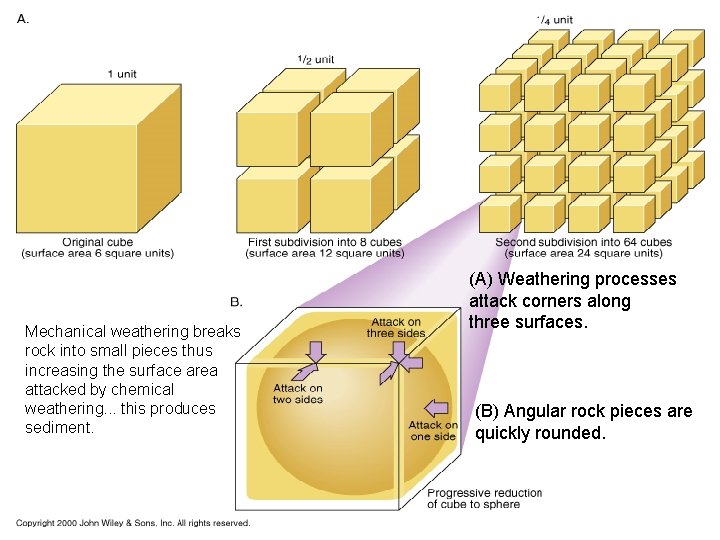
Mechanical weathering breaks rock into small pieces thus increasing the surface area attacked by chemical weathering. . . this produces sediment. (A) Weathering processes attack corners along three surfaces. (B) Angular rock pieces are quickly rounded.
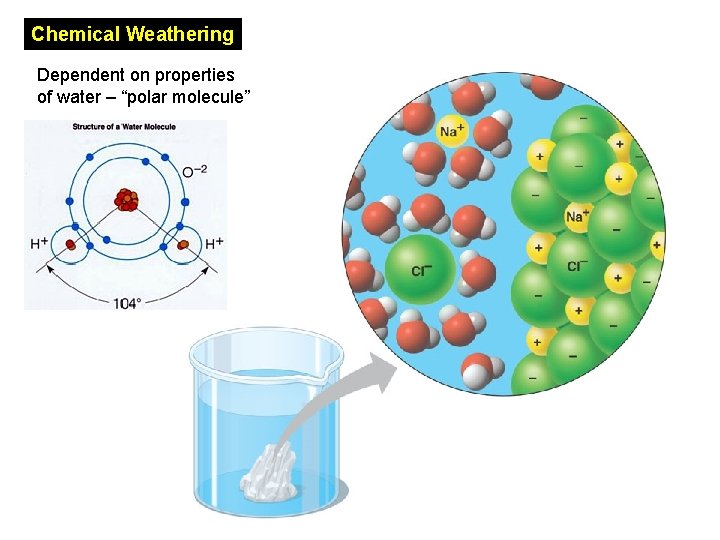
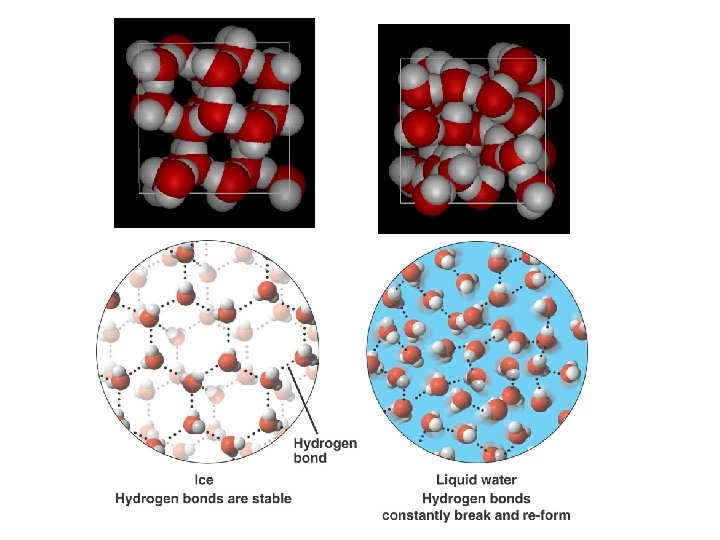
Chemical Weathering Dependent on properties of water – “polar molecule”
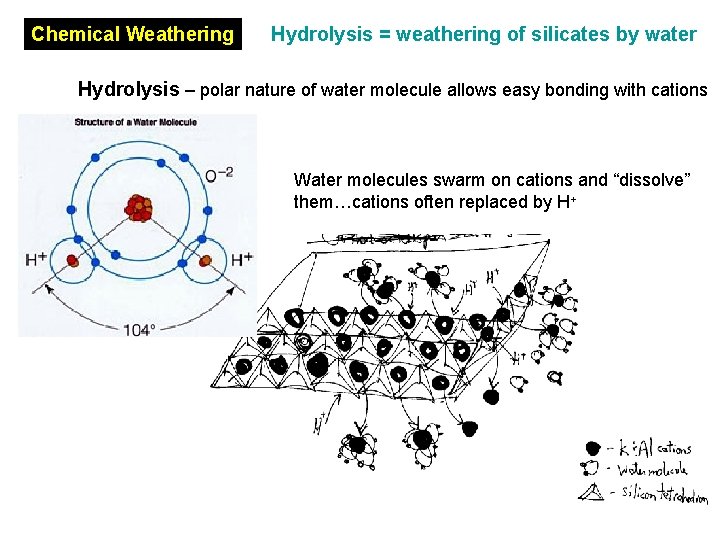
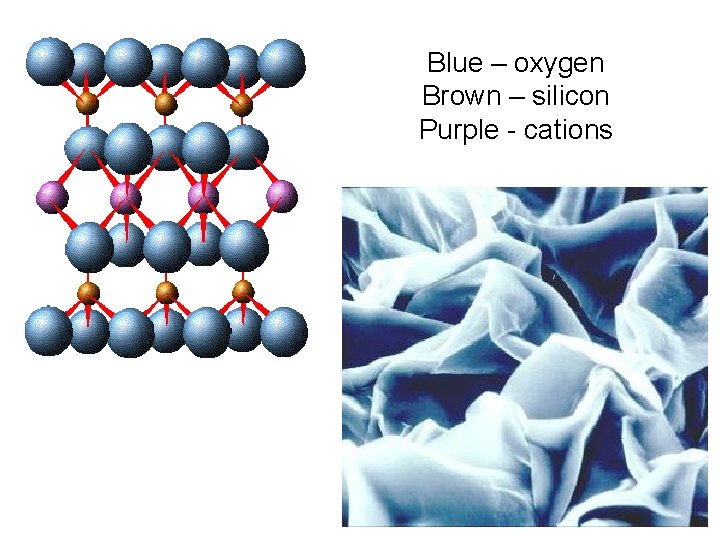
Chemical Weathering Hydrolysis = weathering of silicates by water Hydrolysis – polar nature of water molecule allows easy bonding with cations Water molecules swarm on cations and “dissolve” them…cations often replaced by H+
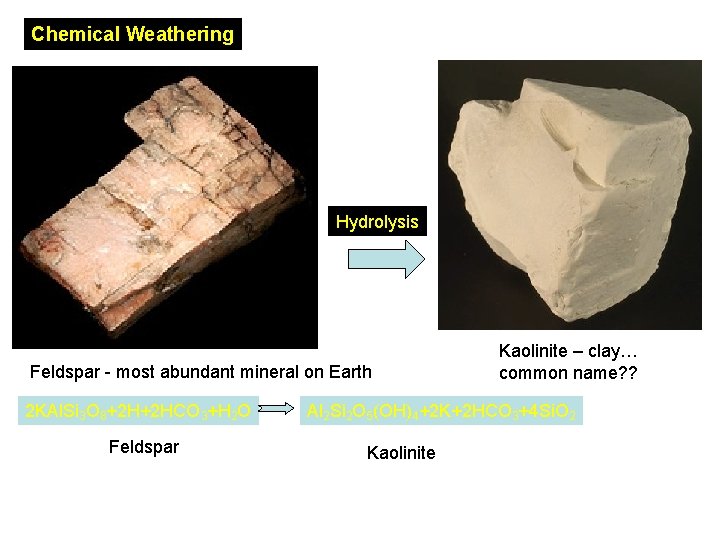
Chemical Weathering Hydrolysis Feldspar - most abundant mineral on Earth 2 KAl. Si 3 O 8+2 H+2 HCO 3+H 2 O Feldspar Kaolinite – clay… common name? ? Al 2 Si 2 O 5(OH)4+2 K+2 HCO 3+4 Si. O 2 Kaolinite
• a. b. Blue – oxygen Brown – silicon Purple - cations
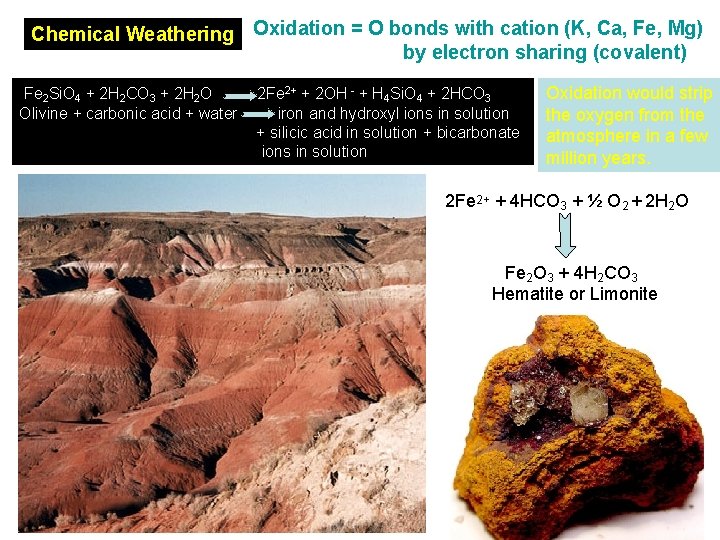
Chemical Weathering Oxidation = O bonds with cation (K, Ca, Fe, Mg) by electron sharing (covalent) Fe 2 Si. O 4 + 2 H 2 CO 3 + 2 H 2 O 2 Fe 2+ + 2 OH - + H 4 Si. O 4 + 2 HCO 3 Olivine + carbonic acid + water iron and hydroxyl ions in solution + silicic acid in solution + bicarbonate ions in solution Oxidation would strip the oxygen from the atmosphere in a few million years. 2 Fe 2+ + 4 HCO 3 + ½ O 2 + 2 H 2 O Fe 2 O 3 + 4 H 2 CO 3 Hematite or Limonite
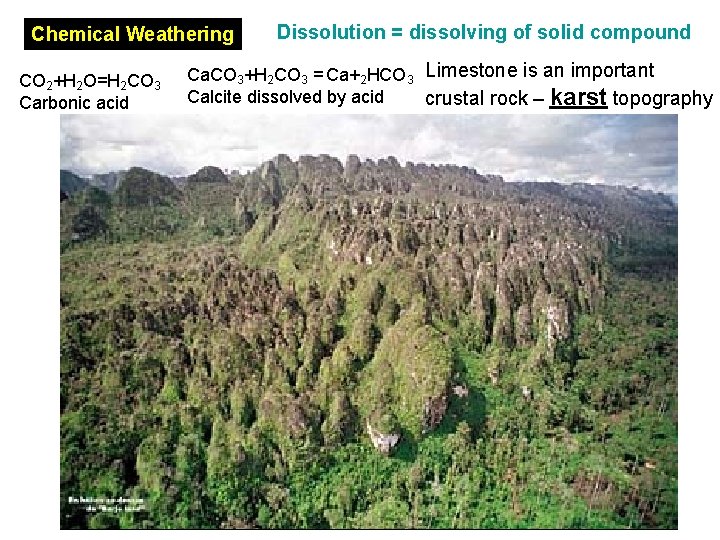
Chemical Weathering CO 2+H 2 O=H 2 CO 3 Carbonic acid Dissolution = dissolving of solid compound Ca. CO 3+H 2 CO 3 = Ca+2 HCO 3 Limestone is an important Calcite dissolved by acid crustal rock – karst topography
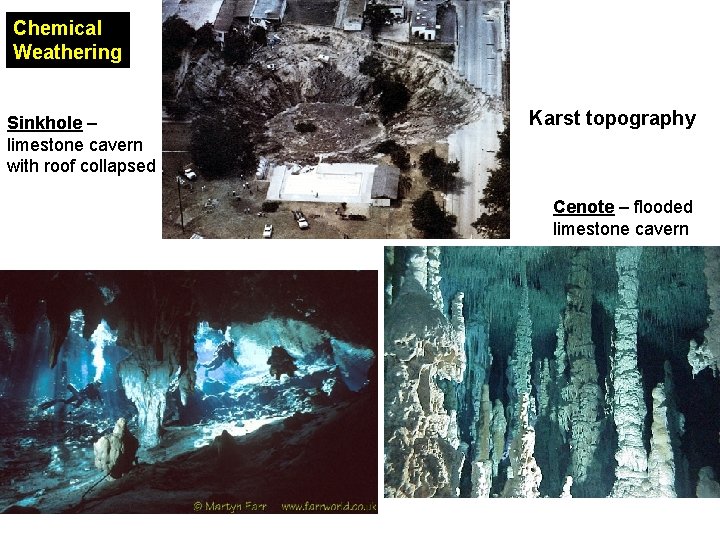
Chemical Weathering Sinkhole – limestone cavern with roof collapsed Karst topography Cenote – flooded limestone cavern
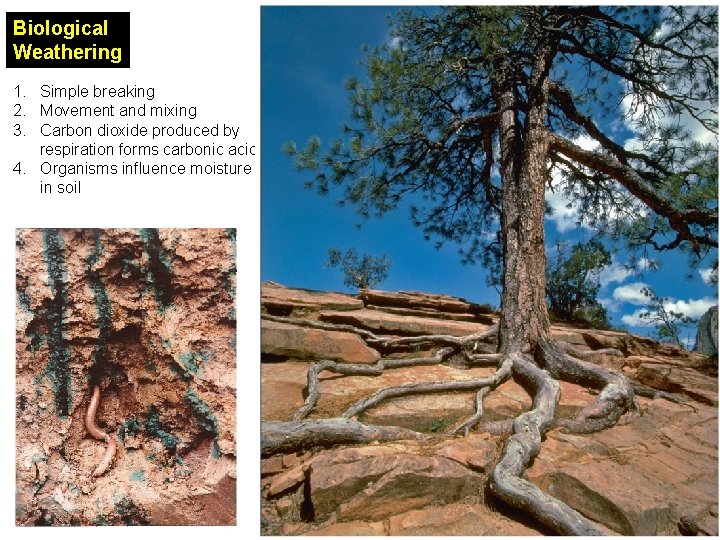
Biological Weathering 1. Simple breaking 2. Movement and mixing 3. Carbon dioxide produced by respiration forms carbonic acid 4. Organisms influence moisture in soil
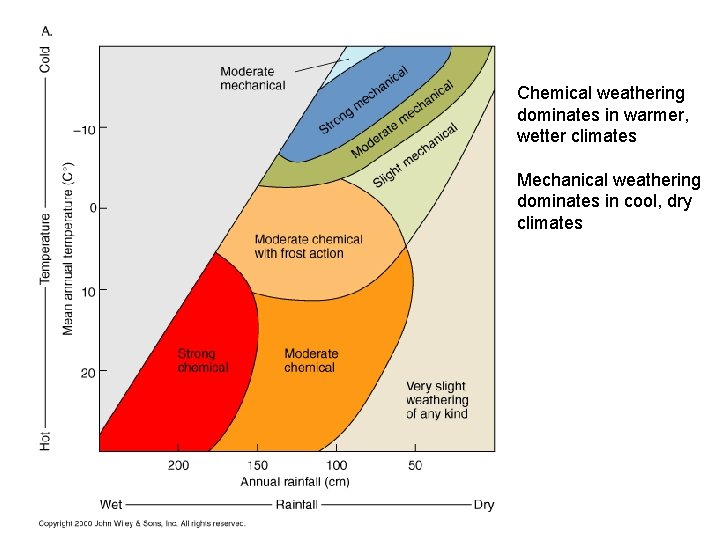
Chemical weathering dominates in warmer, wetter climates Mechanical weathering dominates in cool, dry climates
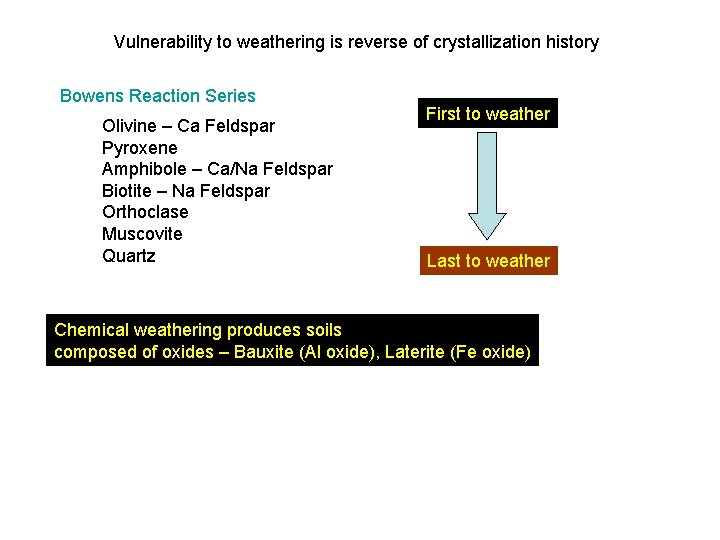
Vulnerability to weathering is reverse of crystallization history Bowens Reaction Series Olivine – Ca Feldspar Pyroxene Amphibole – Ca/Na Feldspar Biotite – Na Feldspar Orthoclase Muscovite Quartz First to weather Last to weather Chemical weathering produces soils composed of oxides – Bauxite (Al oxide), Laterite (Fe oxide)
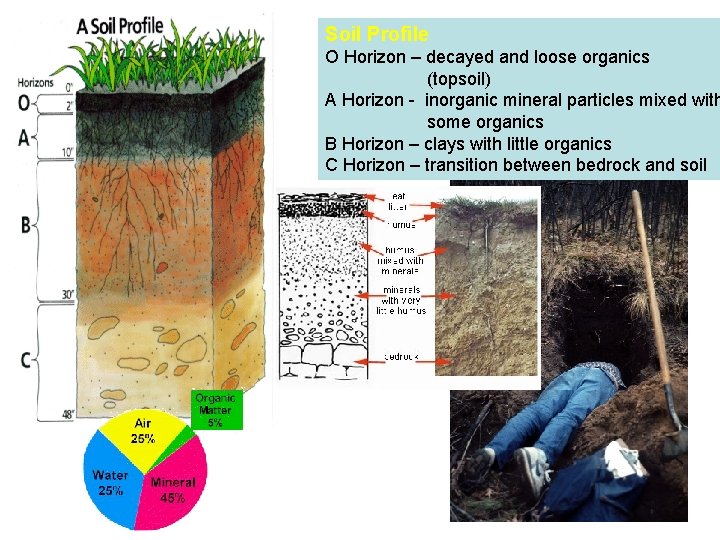
Soil Profile O Horizon – decayed and loose organics (topsoil) A Horizon - inorganic mineral particles mixed with some organics B Horizon – clays with little organics C Horizon – transition between bedrock and soil
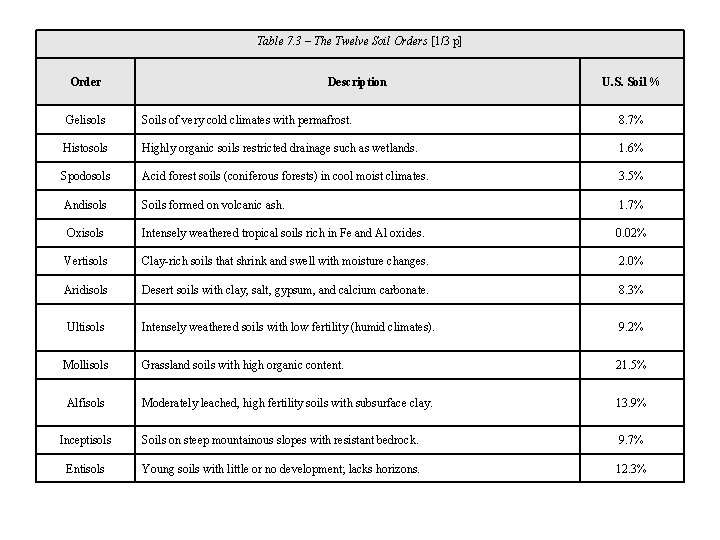
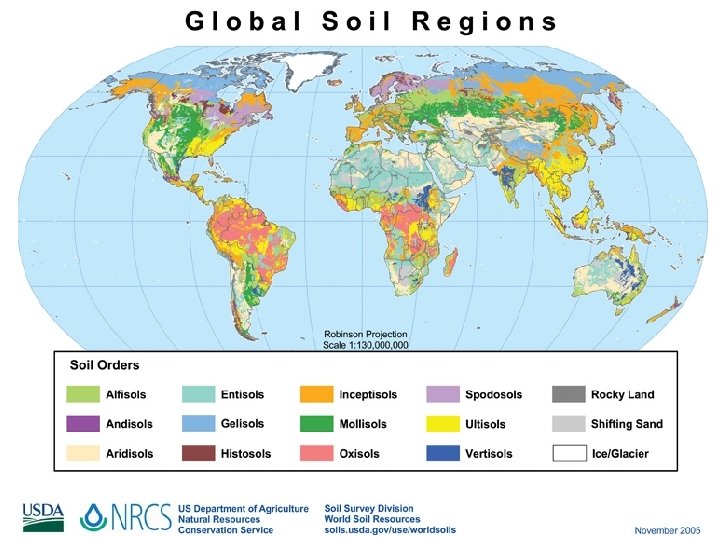
Table 7. 3 – The Twelve Soil Orders [1/3 p] Order Description U. S. Soil % Gelisols Soils of very cold climates with permafrost. 8. 7% Histosols Highly organic soils restricted drainage such as wetlands. 1. 6% Spodosols Acid forest soils (coniferous forests) in cool moist climates. 3. 5% Andisols Soils formed on volcanic ash. 1. 7% Oxisols Intensely weathered tropical soils rich in Fe and Al oxides. 0. 02% Vertisols Clay-rich soils that shrink and swell with moisture changes. 2. 0% Aridisols Desert soils with clay, salt, gypsum, and calcium carbonate. 8. 3% Ultisols Intensely weathered soils with low fertility (humid climates). 9. 2% Grassland soils with high organic content. 21. 5% Moderately leached, high fertility soils with subsurface clay. 13. 9% Inceptisols Soils on steep mountainous slopes with resistant bedrock. 9. 7% Entisols Young soils with little or no development; lacks horizons. 12. 3% Mollisols Alfisols
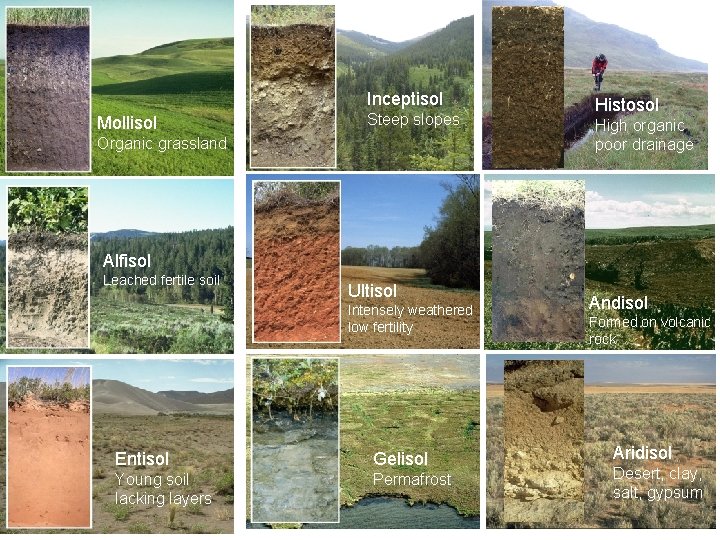
Inceptisol Mollisol Steep slopes Organic grassland Histosol High organic poor drainage Alfisol Leached fertile soil Ultisol Intensely weathered low fertility Entisol Gelisol Young soil lacking layers Permafrost Andisol Formed on volcanic rock Aridisol Desert, clay, salt, gypsum
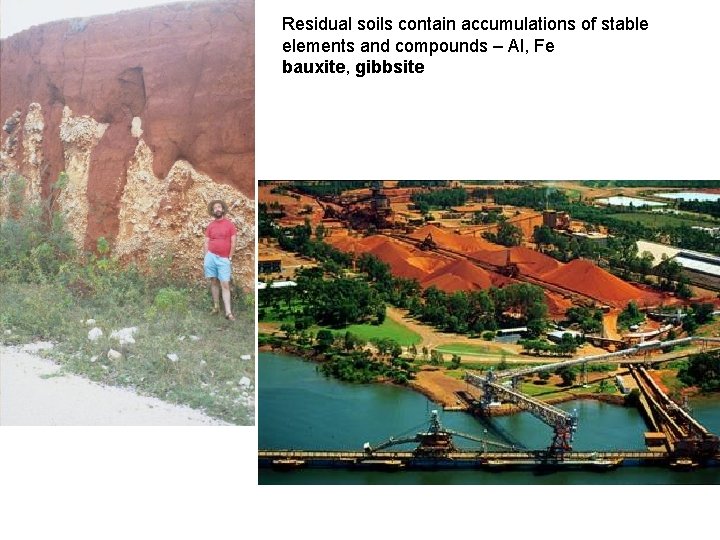
Residual soils contain accumulations of stable elements and compounds – Al, Fe bauxite, gibbsite
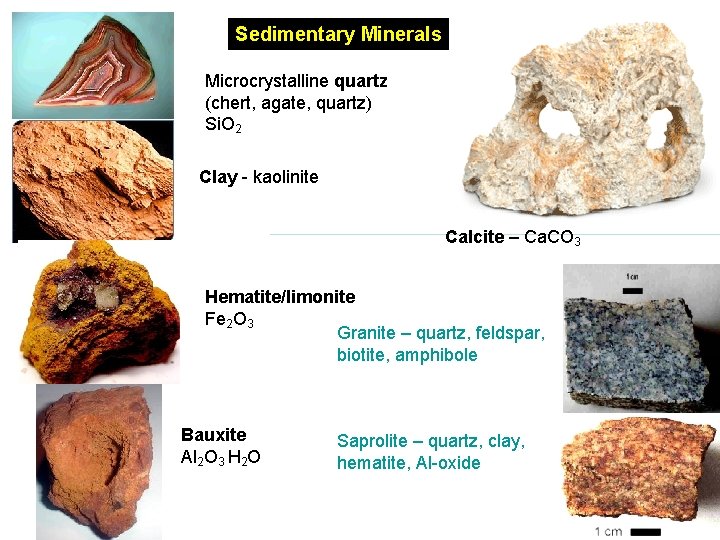
Sedimentary Minerals Microcrystalline quartz (chert, agate, quartz) Si. O 2 Clay - kaolinite Calcite – Ca. CO 3 Hematite/limonite Fe 2 O 3 Granite – quartz, feldspar, biotite, amphibole Bauxite Al 2 O 3 H 2 O Saprolite – quartz, clay, hematite, Al-oxide
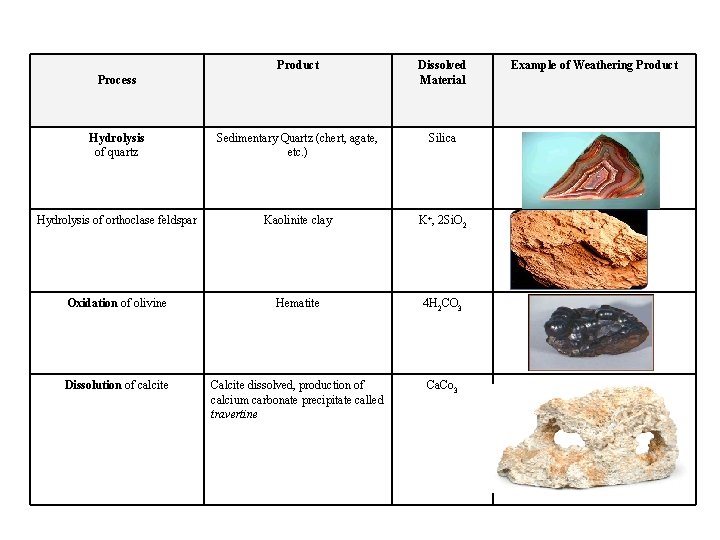
Product Dissolved Material Hydrolysis of quartz Sedimentary Quartz (chert, agate, etc. ) Silica Hydrolysis of orthoclase feldspar Kaolinite clay K+, 2 Si. O 2 Oxidation of olivine Hematite 4 H 2 CO 3 Dissolution of calcite Calcite dissolved, production of calcium carbonate precipitate called travertine Ca. Co 3 Process Example of Weathering Product
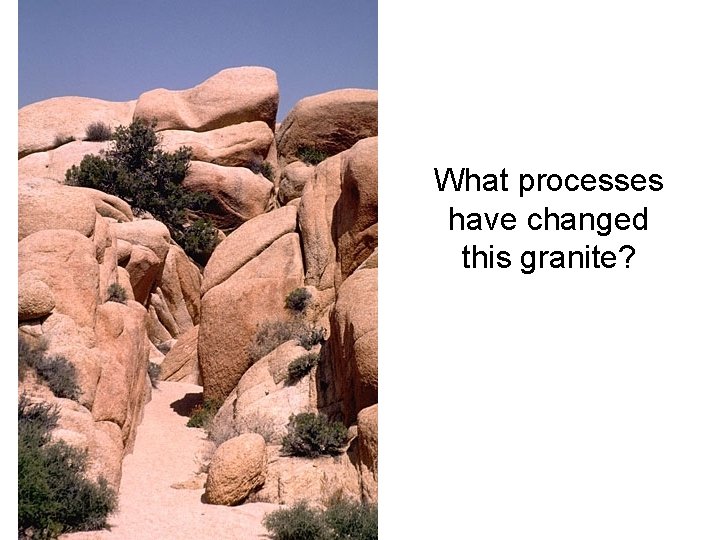
What processes have changed this granite?
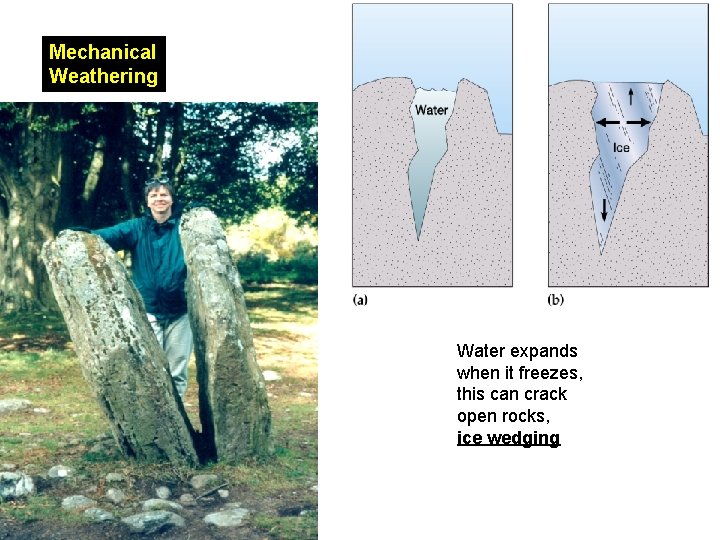
Mechanical Weathering Water expands when it freezes, this can crack open rocks, ice wedging
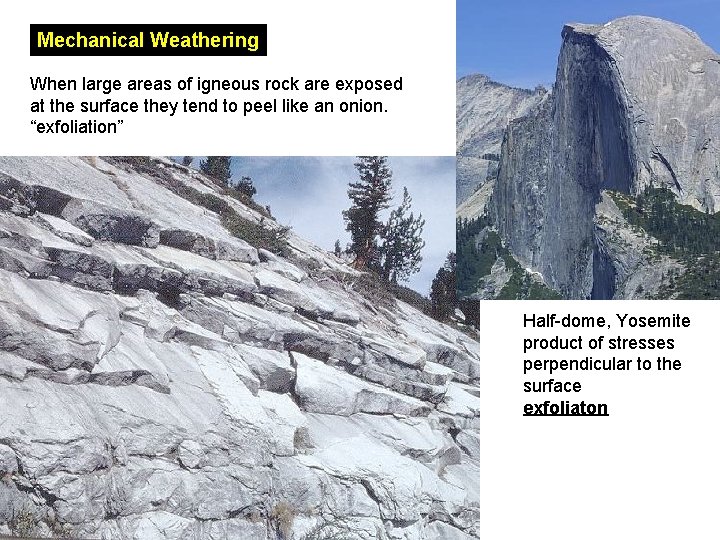
Mechanical Weathering When large areas of igneous rock are exposed at the surface they tend to peel like an onion. “exfoliation” Half-dome, Yosemite product of stresses perpendicular to the surface exfoliaton
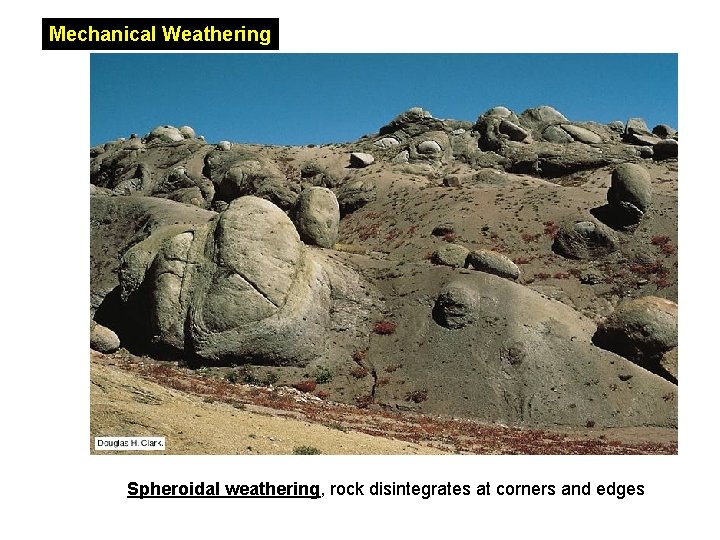
Mechanical Weathering Spheroidal weathering, rock disintegrates at corners and edges
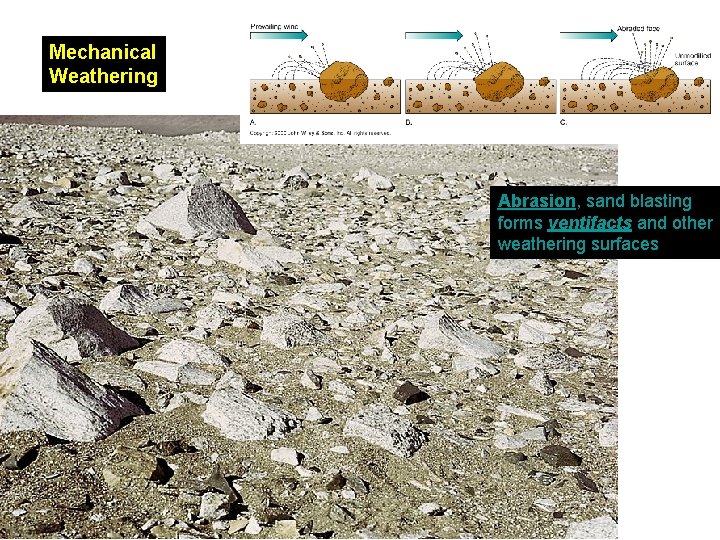
Mechanical Weathering Abrasion, sand blasting forms ventifacts and other weathering surfaces
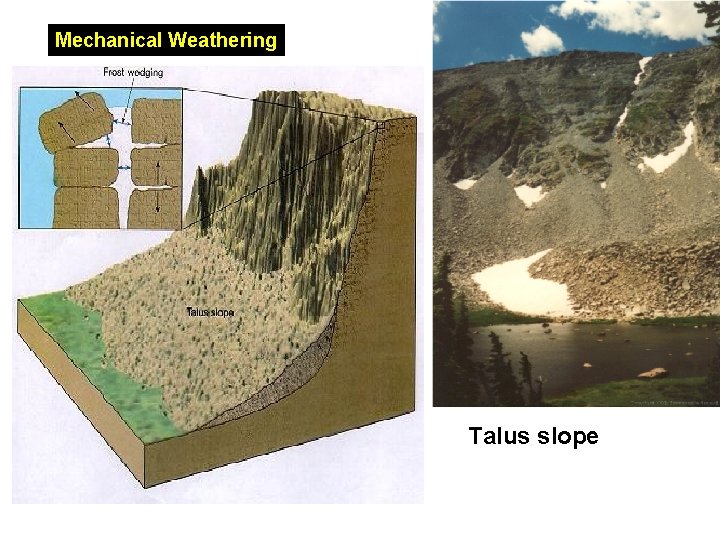
Mechanical Weathering Talus slope
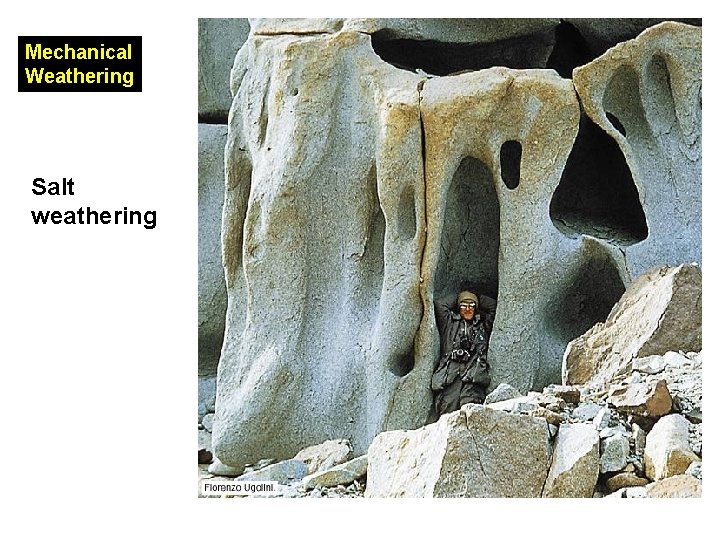
Mechanical Weathering Salt weathering
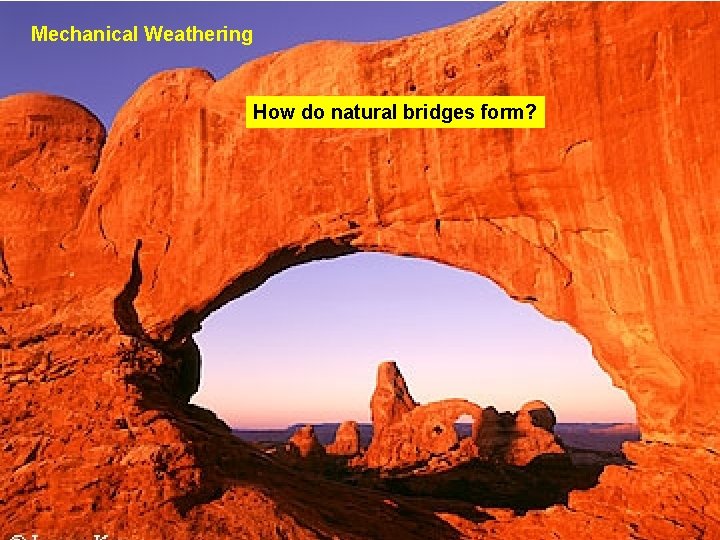
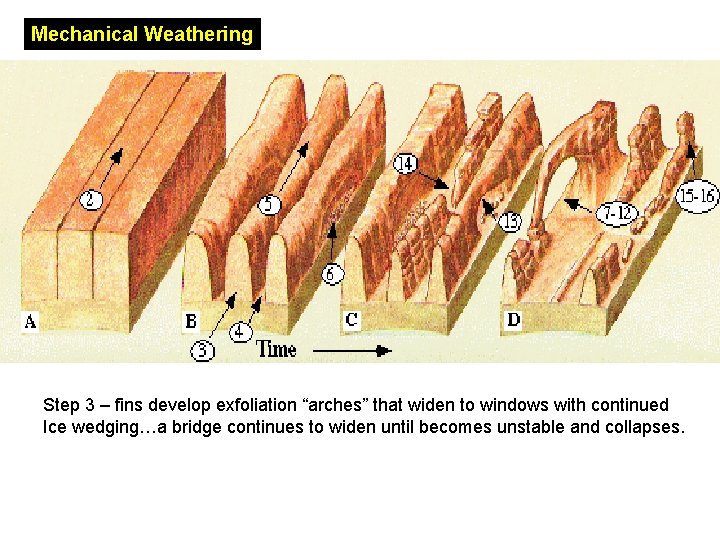
Mechanical Weathering How do natural bridges form?
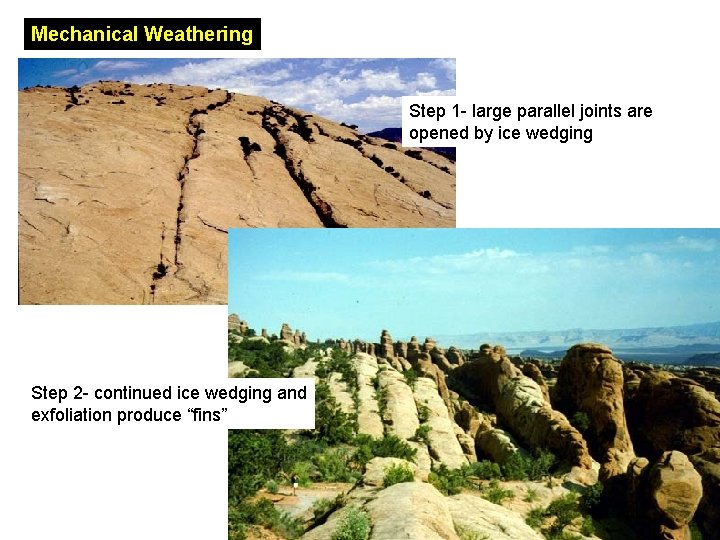
Mechanical Weathering Step 1 - large parallel joints are opened by ice wedging Step 2 - continued ice wedging and exfoliation produce “fins”
Mechanical Weathering Step 3 – fins develop exfoliation “arches” that widen to windows with continued Ice wedging…a bridge continues to widen until becomes unstable and collapses.
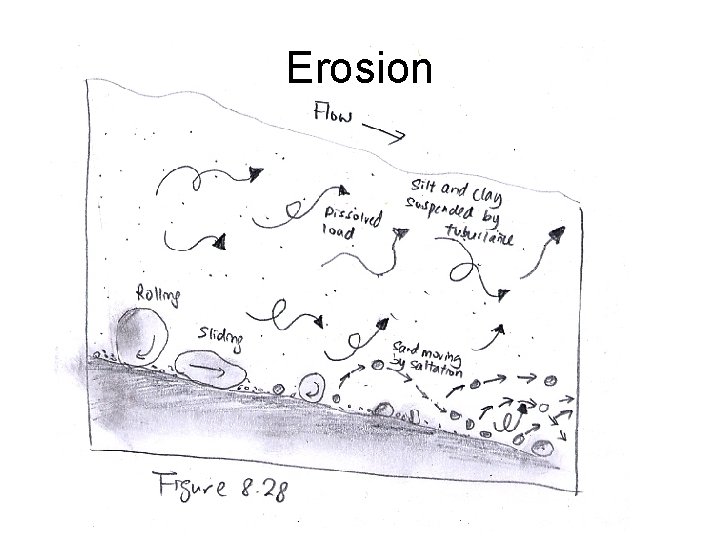
Erosion
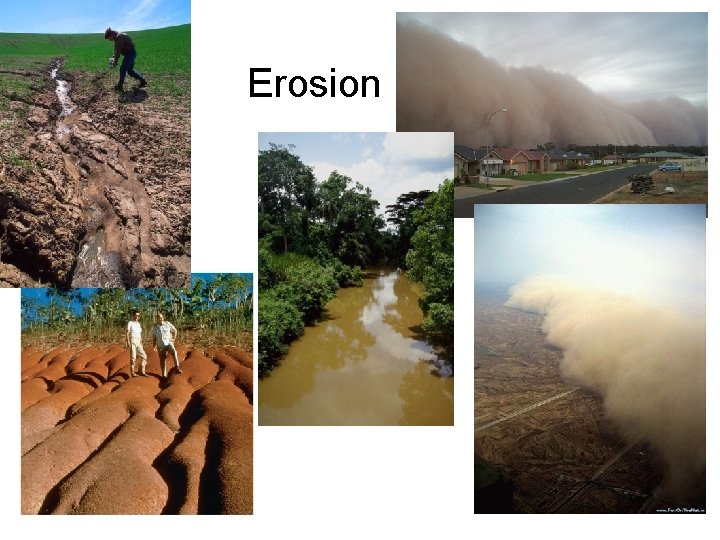
Erosion
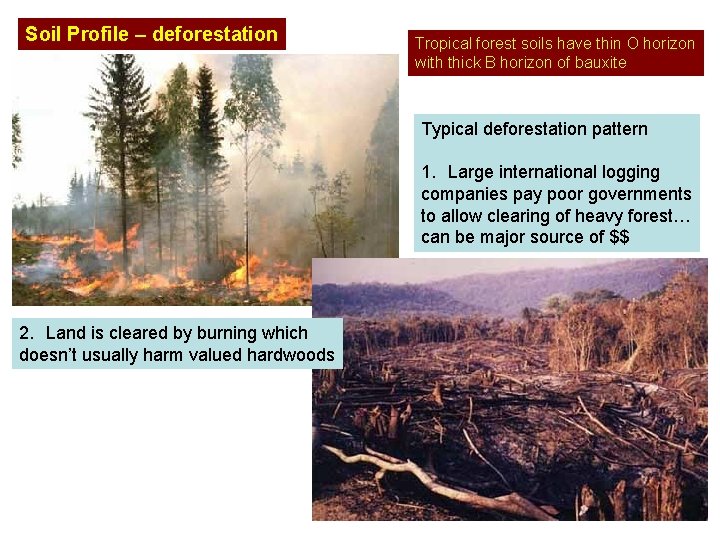
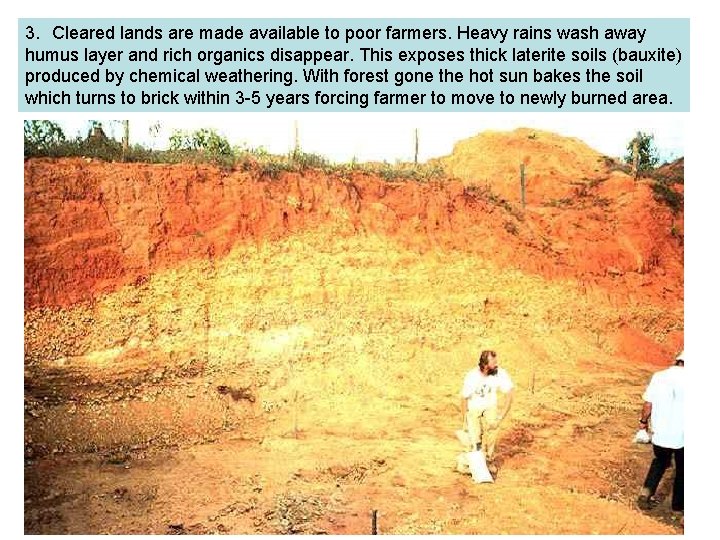
Soil Profile – deforestation Tropical forest soils have thin O horizon with thick B horizon of bauxite Typical deforestation pattern 1. Large international logging companies pay poor governments to allow clearing of heavy forest… can be major source of $$ 2. Land is cleared by burning which doesn’t usually harm valued hardwoods
3. Cleared lands are made available to poor farmers. Heavy rains wash away humus layer and rich organics disappear. This exposes thick laterite soils (bauxite) produced by chemical weathering. With forest gone the hot sun bakes the soil which turns to brick within 3 -5 years forcing farmer to move to newly burned area.
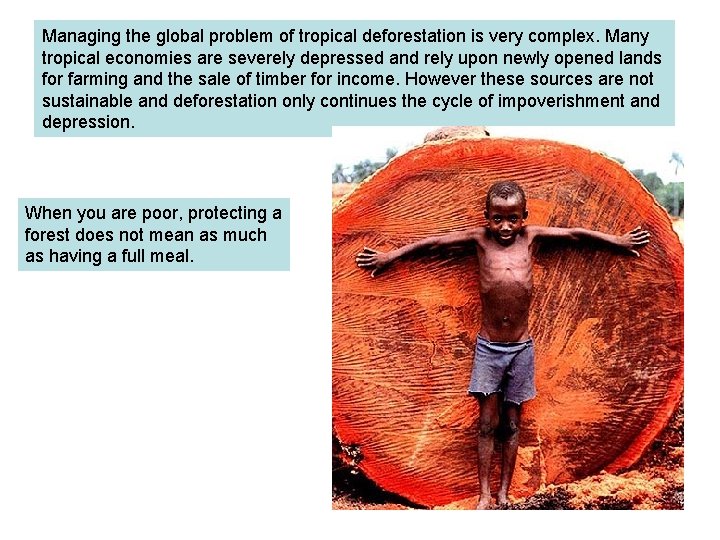
Managing the global problem of tropical deforestation is very complex. Many tropical economies are severely depressed and rely upon newly opened lands for farming and the sale of timber for income. However these sources are not sustainable and deforestation only continues the cycle of impoverishment and depression. When you are poor, protecting a forest does not mean as much as having a full meal.
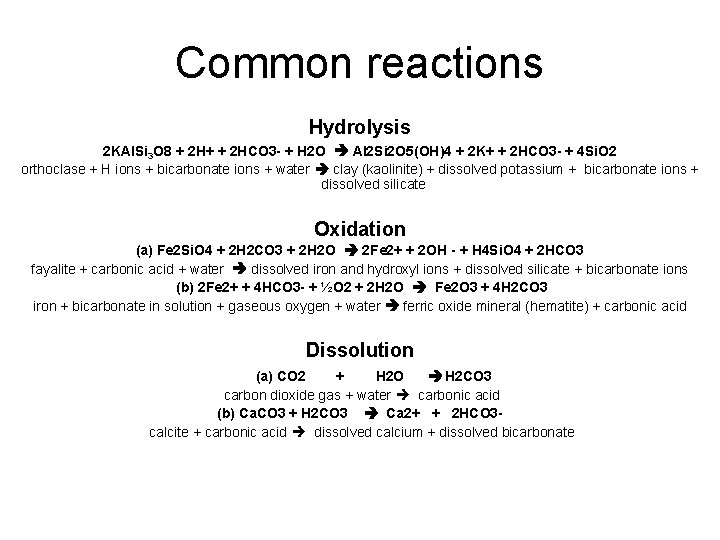
Common reactions Hydrolysis 2 KAl. Si 3 O 8 + 2 H+ + 2 HCO 3 - + H 2 O Al 2 Si 2 O 5(OH)4 + 2 K+ + 2 HCO 3 - + 4 Si. O 2 orthoclase + H ions + bicarbonate ions + water clay (kaolinite) + dissolved potassium + bicarbonate ions + dissolved silicate Oxidation (a) Fe 2 Si. O 4 + 2 H 2 CO 3 + 2 H 2 O 2 Fe 2+ + 2 OH - + H 4 Si. O 4 + 2 HCO 3 fayalite + carbonic acid + water dissolved iron and hydroxyl ions + dissolved silicate + bicarbonate ions (b) 2 Fe 2+ + 4 HCO 3 - + ½O 2 + 2 H 2 O Fe 2 O 3 + 4 H 2 CO 3 iron + bicarbonate in solution + gaseous oxygen + water ferric oxide mineral (hematite) + carbonic acid Dissolution (a) CO 2 + H 2 O H 2 CO 3 carbon dioxide gas + water carbonic acid (b) Ca. CO 3 + H 2 CO 3 Ca 2+ + 2 HCO 3 calcite + carbonic acid dissolved calcium + dissolved bicarbonate