Waves A Electromagnetic Energy 1 Energy a Def


- Slides: 42
Waves
A. Electromagnetic Energy 1. Energy a. Def. ability to do work b. everything radiates electromagnetic energy B. Properties of electromagnetic energy 1. Electromagnetic energy a. Def. – is the energy that has properties of a transverse wave
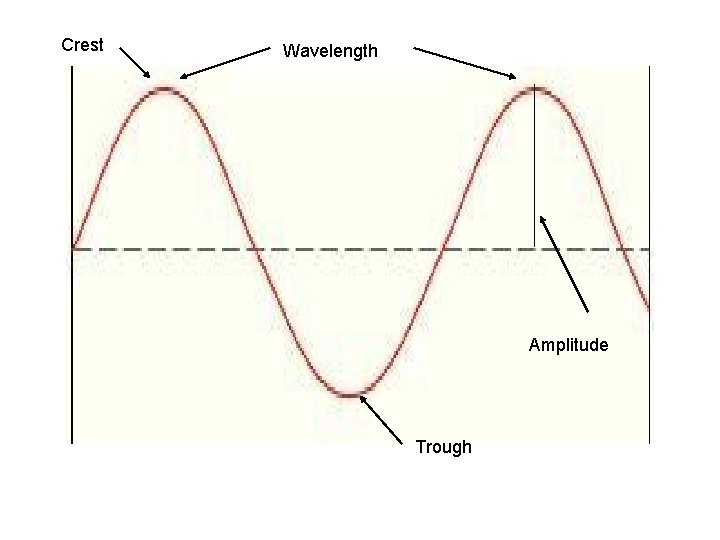
Crest Wavelength Amplitude Trough
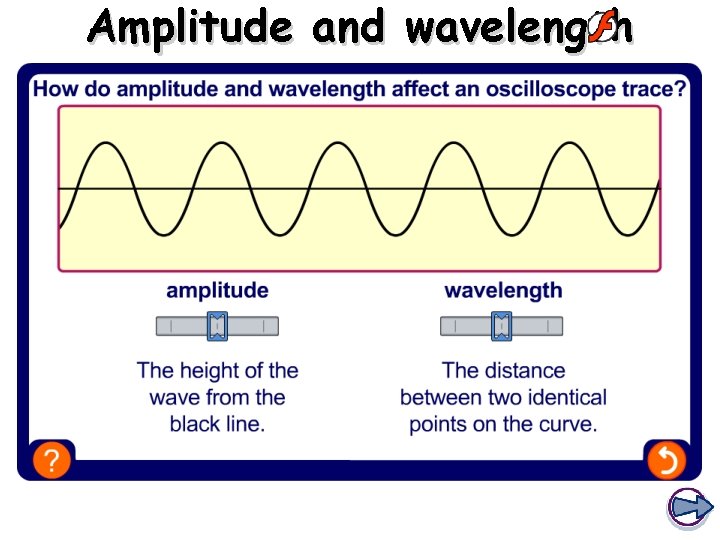
2. Characteristics of a wave a) Crest top of a wave b) Trough bottom of a wave c) Amplitude the height of a wave from center to crest d) Wavelength distance between two different crests e) Frequency amount of waves that pass a given point in a certain amount of time
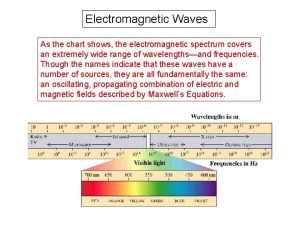
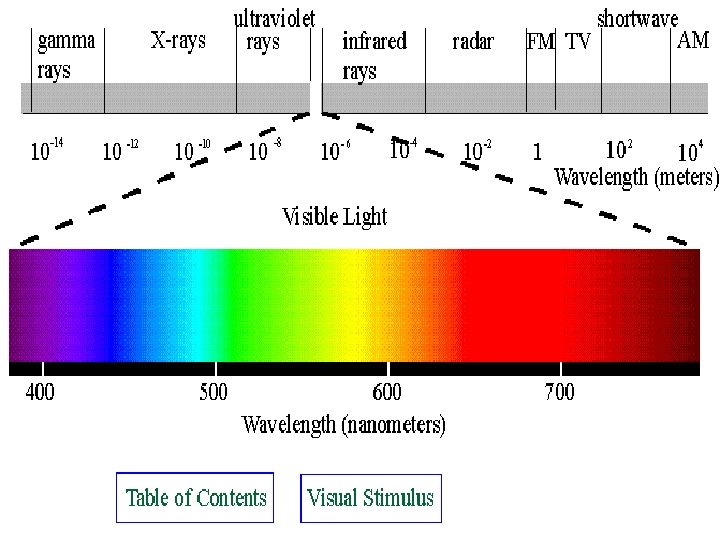
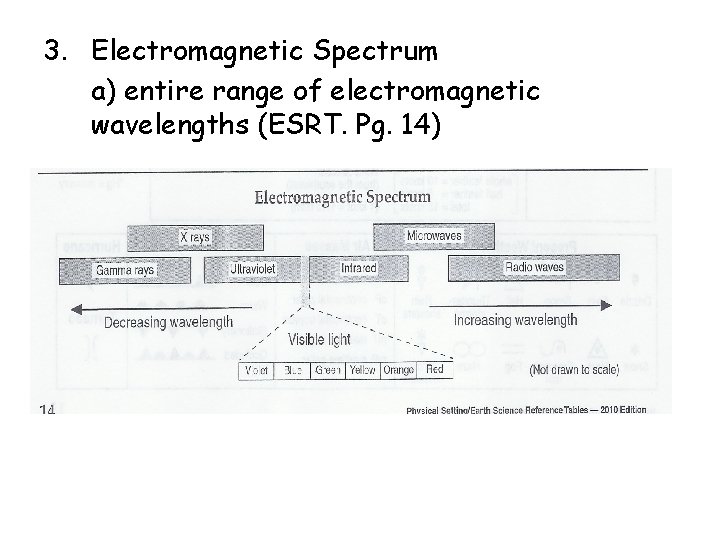
3. Electromagnetic Spectrum a) entire range of electromagnetic wavelengths (ESRT. Pg. 14)
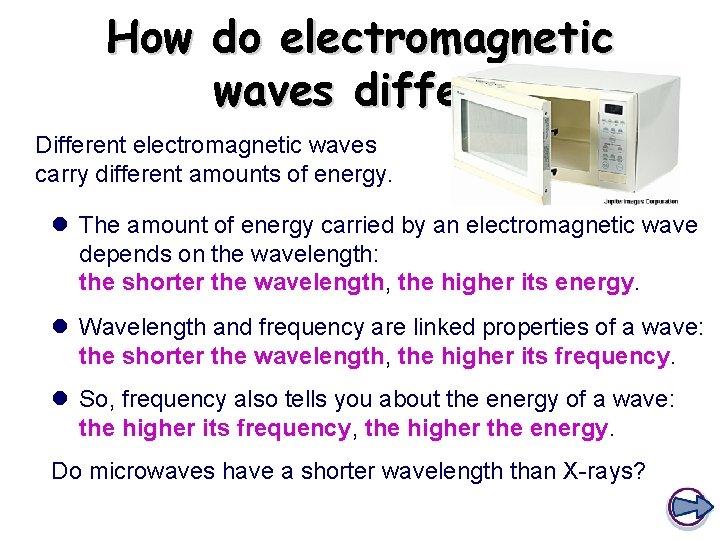
How do electromagnetic waves differ? Different electromagnetic waves carry different amounts of energy. l The amount of energy carried by an electromagnetic wave depends on the wavelength: the shorter the wavelength, the higher its energy. l Wavelength and frequency are linked properties of a wave: the shorter the wavelength, the higher its frequency. l So, frequency also tells you about the energy of a wave: the higher its frequency, the higher the energy. Do microwaves have a shorter wavelength than X-rays?
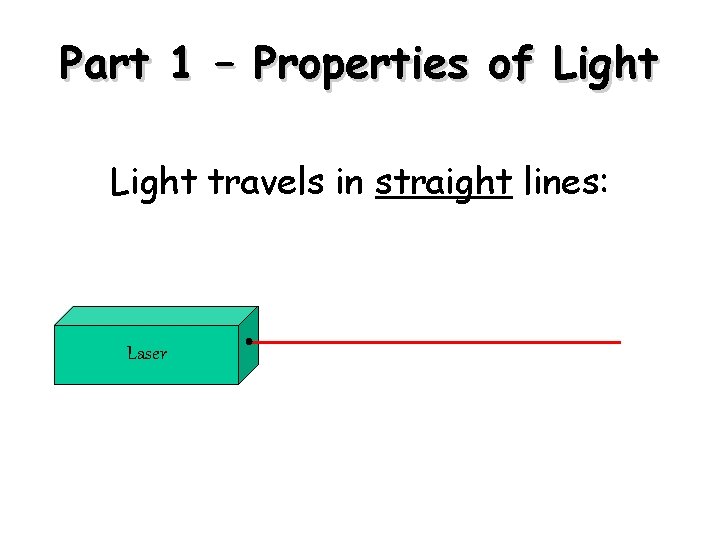
Part 1 – Properties of Light travels in straight lines: Laser
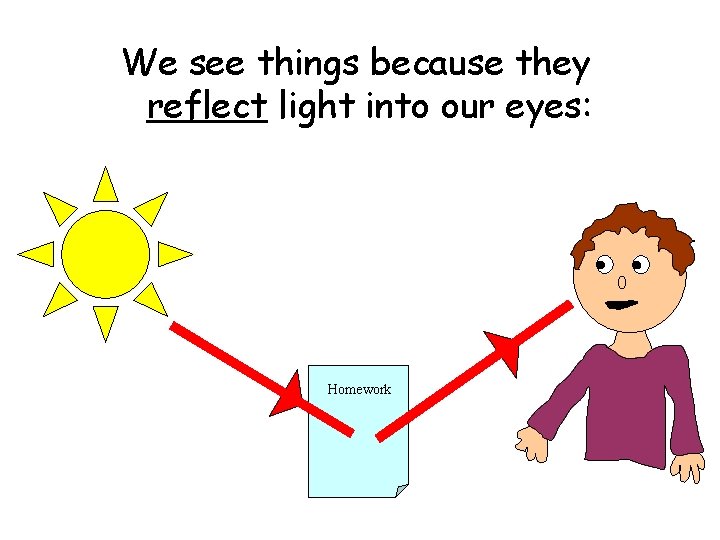
Properties of Light summary 1) Light travels in straight lines 2) Light travels much faster than sound 3) We see things because they reflect light into our eyes
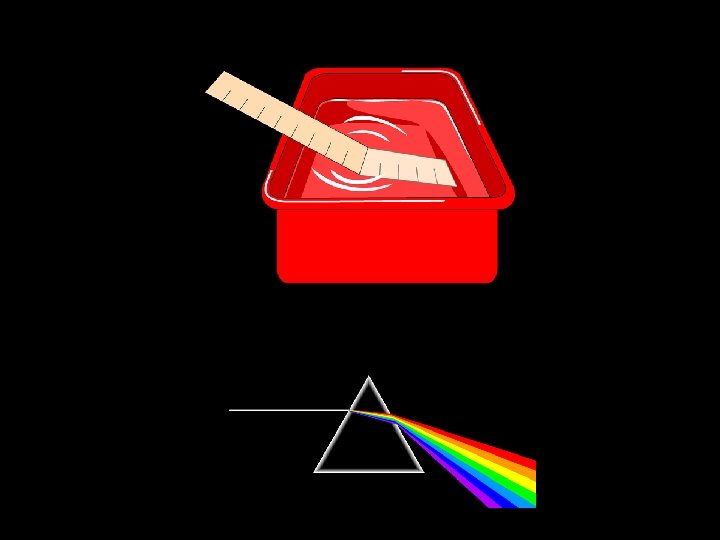
C. Matter and electromagnetic energy 1. Five ways light can act a) Reflect – bounce b) Refract – bend c) Absorb – take in d) Transmit – give off e) Scatter – spread out
We see things because they reflect light into our eyes: Homework
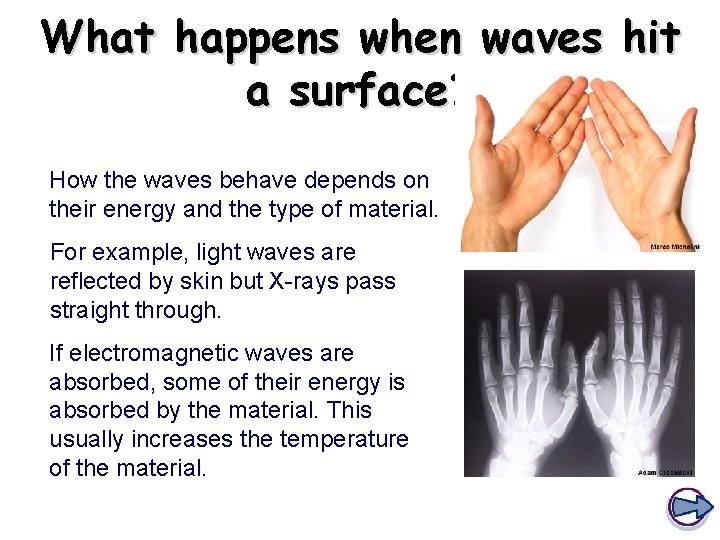
What happens when waves hit a surface? How the waves behave depends on their energy and the type of material. For example, light waves are reflected by skin but X-rays pass straight through. If electromagnetic waves are absorbed, some of their energy is absorbed by the material. This usually increases the temperature of the material.
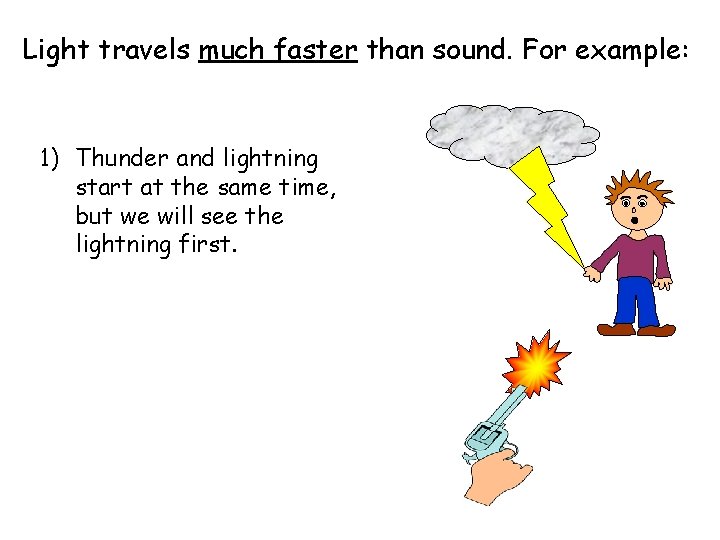
Light travels much faster than sound. For example: 1) Thunder and lightning start at the same time, but we will see the lightning first.
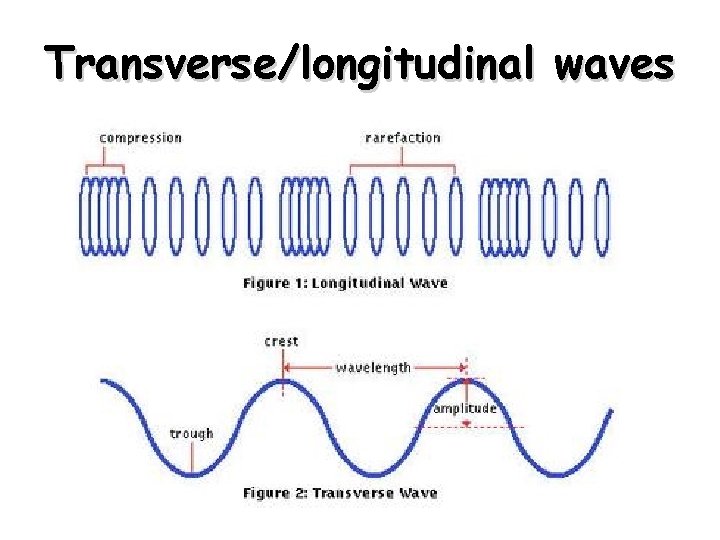
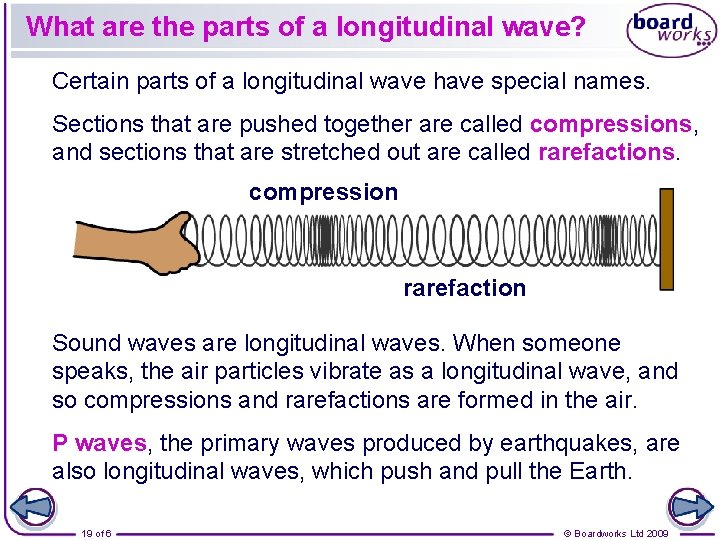
Types of Mechanical Waves • The types based on the way the wave moves. • Transverse – Medium moves at right angles to the direction of wave movement – Top = crest; Bottom = trough; middle = rest position – Ex: Rope Wave • Longitudinal – Medium and wave move in same direction. – Area close together = compression; Area spread out = rarefaction – Ex: Springs
Transverse/longitudinal waves
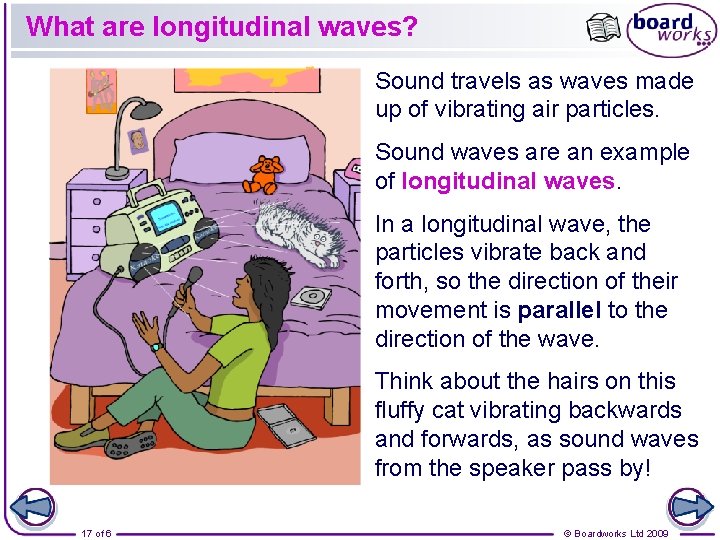
What are longitudinal waves? PAT ARTWORK PC 14_2 Sound travels as waves made up of vibrating air particles. Sound waves are an example of longitudinal waves. In a longitudinal wave, the particles vibrate back and forth, so the direction of their movement is parallel to the direction of the wave. Think about the hairs on this fluffy cat vibrating backwards and forwards, as sound waves from the speaker pass by! 17 of 6 © Boardworks Ltd 2009
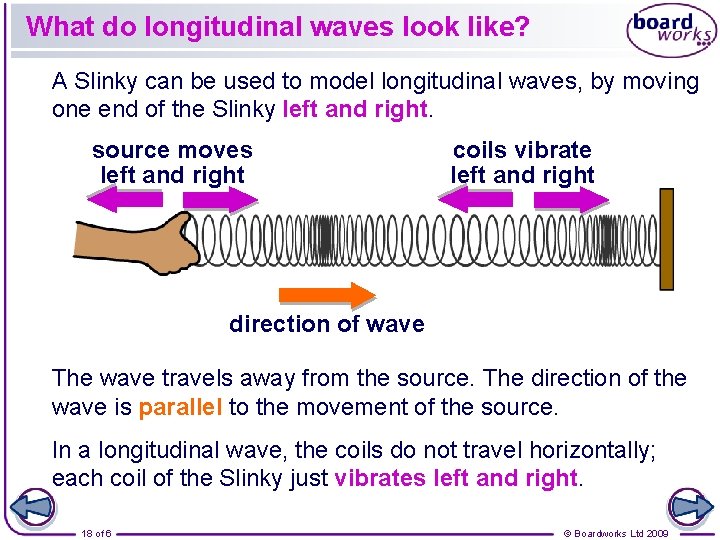
What do longitudinal waves look like? A Slinky can be used to model longitudinal waves, by moving one end of the Slinky left and right. source moves left and right coils vibrate left and right direction of wave The wave travels away from the source. The direction of the wave is parallel to the movement of the source. In a longitudinal wave, the coils do not travel horizontally; each coil of the Slinky just vibrates left and right. 18 of 6 © Boardworks Ltd 2009
What are the parts of a longitudinal wave? Certain parts of a longitudinal wave have special names. Sections that are pushed together are called compressions, and sections that are stretched out are called rarefactions. compression rarefaction Sound waves are longitudinal waves. When someone speaks, the air particles vibrate as a longitudinal wave, and so compressions and rarefactions are formed in the air. P waves, the primary waves produced by earthquakes, are also longitudinal waves, which push and pull the Earth. 19 of 6 © Boardworks Ltd 2009
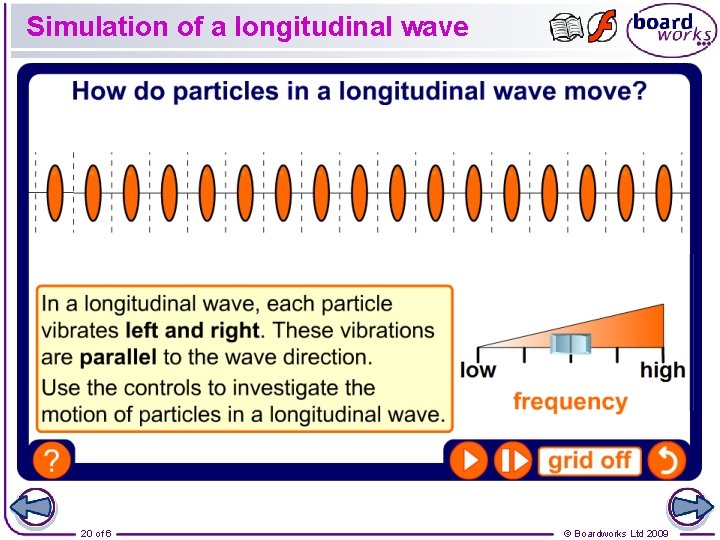
Simulation of a longitudinal wave 20 of 6 © Boardworks Ltd 2009
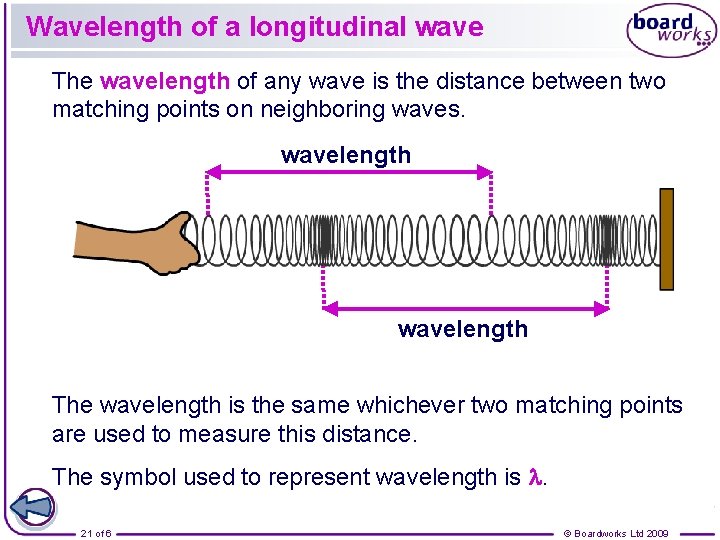
Wavelength of a longitudinal wave The wavelength of any wave is the distance between two matching points on neighboring waves. wavelength The wavelength is the same whichever two matching points are used to measure this distance. The symbol used to represent wavelength is . 21 of 6 © Boardworks Ltd 2009
Wave Animation https: //youtu. be/Rbuhdo 0 A ZDU
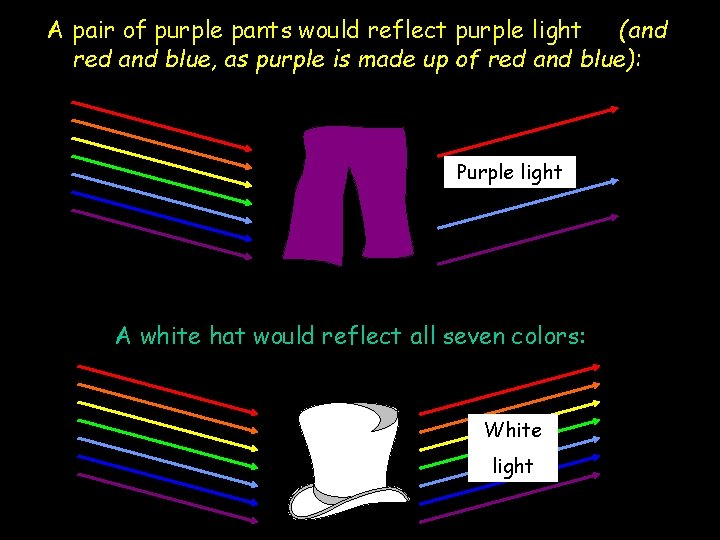
Color • Color you see is the wavelength of color the object reflects. • Primary Colors – Three colors used to make every other color. – Red, Green, Blue • Secondary Colors – Two primary colors mixed in equal amount. • White light (all colors mixed)
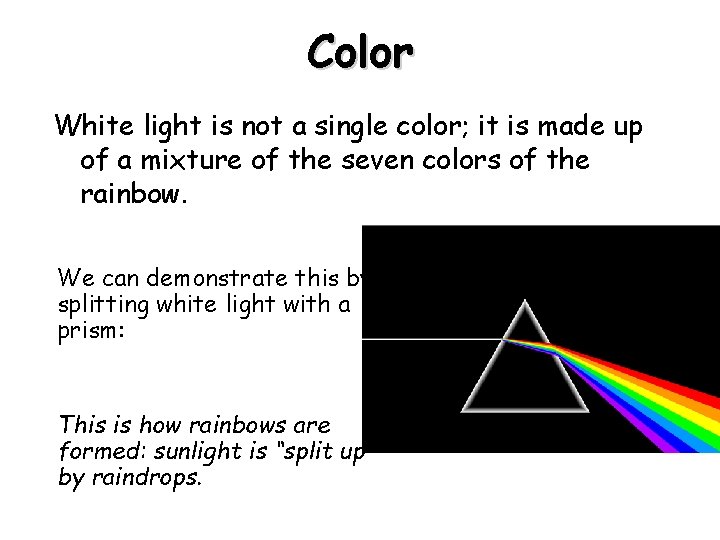
Color White light is not a single color; it is made up of a mixture of the seven colors of the rainbow. We can demonstrate this by splitting white light with a prism: This is how rainbows are formed: sunlight is “split up” by raindrops.
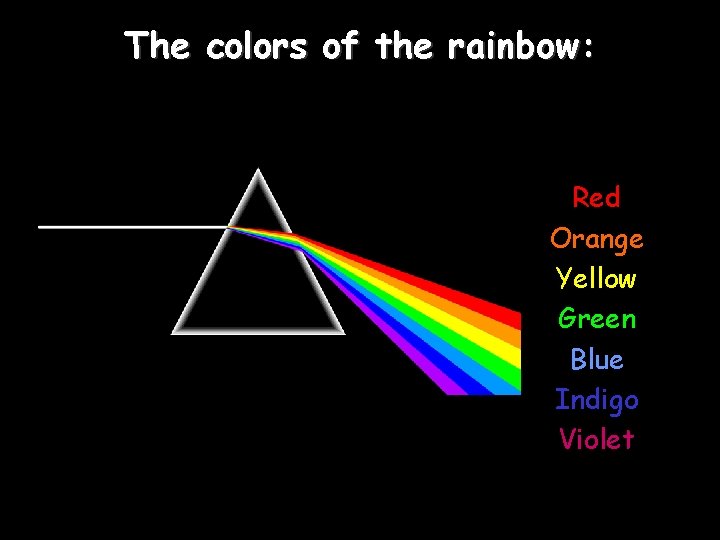
The colors of the rainbow: Red Orange Yellow Green Blue Indigo Violet
A pair of purple pants would reflect purple light (and red and blue, as purple is made up of red and blue): Purple light A white hat would reflect all seven colors: White light
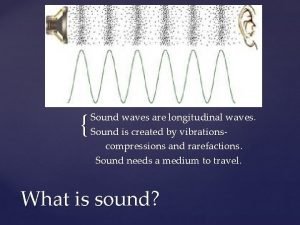
Sound • Begins with a vibration • Travels longitudinally through a medium (solid, liquid or gas) • Humans make sound by vibrating vocal cords found in the larynx. • Due to diffraction sound can bend around corners.
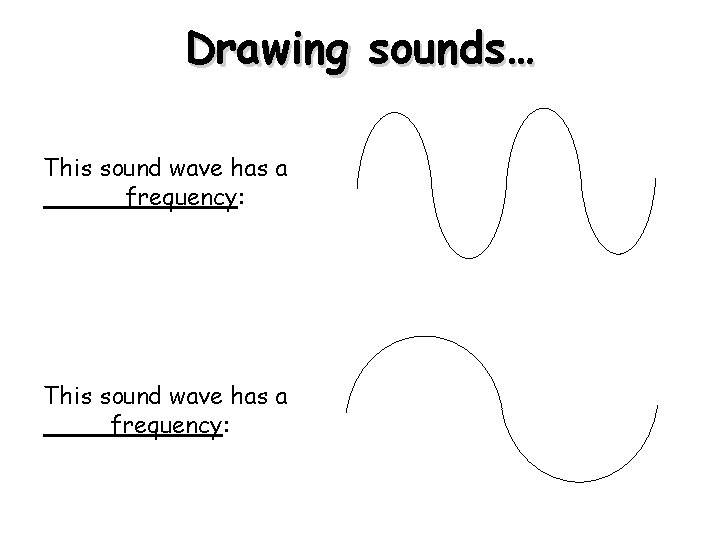
Drawing sounds… This sound wave has a _____ frequency: This sound wave has a ___ _frequency:
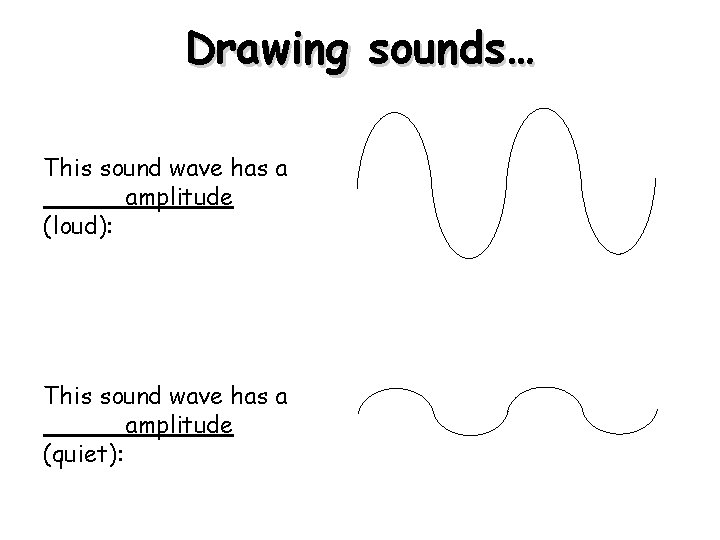
Drawing sounds… This sound wave has a _____ amplitude (loud): This sound wave has a _____ amplitude (quiet):
Resonance • Most objects naturally vibrate. • When a wave passes through a material at the same frequency as the natural vibration. • Can cause the natural object to start vibrating more strongly.
You Tube video http: //www. youtube. com/watch? v=IZD 8 ff. Pw XRo&feature=rec-LGOUT-real_rn-HM https: //www. youtube. com/watch? v=ur. YWa. Hf el 6 g
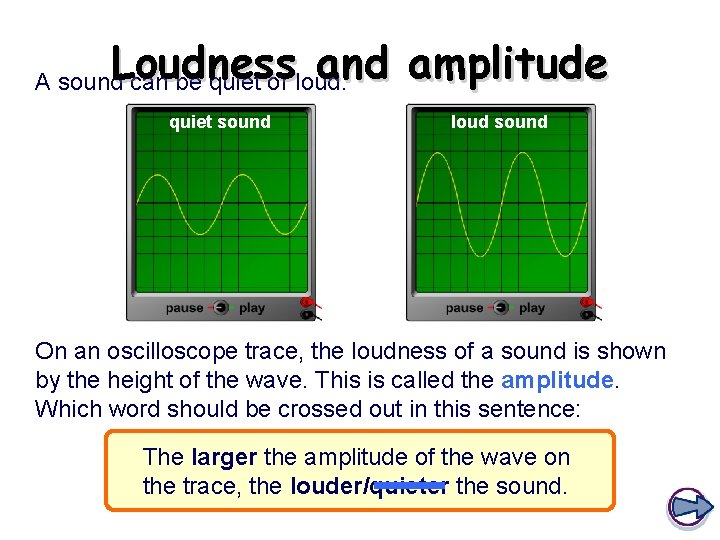
Loudness and amplitude A sound can be quiet or loud. quiet sound loud sound On an oscilloscope trace, the loudness of a sound is shown by the height of the wave. This is called the amplitude. Which word should be crossed out in this sentence: The larger the amplitude of the wave on the trace, the louder/quieter the sound.
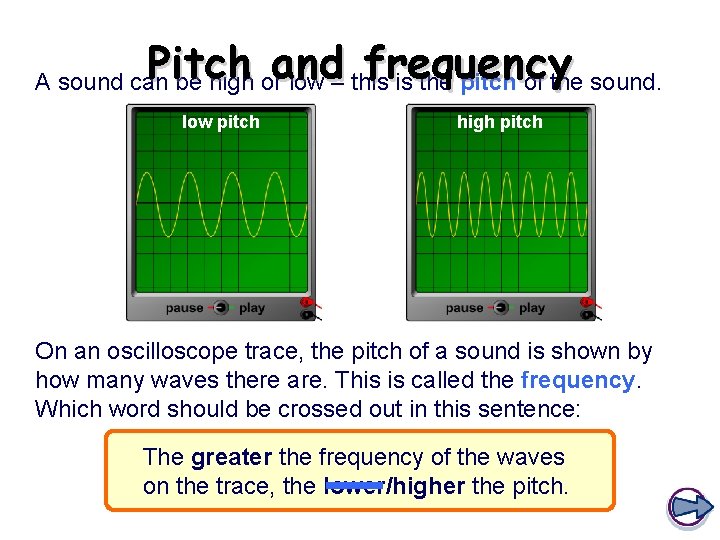
Pitch and frequency A sound can be high or low – this is the pitch of the sound. low pitch high pitch On an oscilloscope trace, the pitch of a sound is shown by how many waves there are. This is called the frequency. Which word should be crossed out in this sentence: The greater the frequency of the waves on the trace, the lower/higher the pitch.
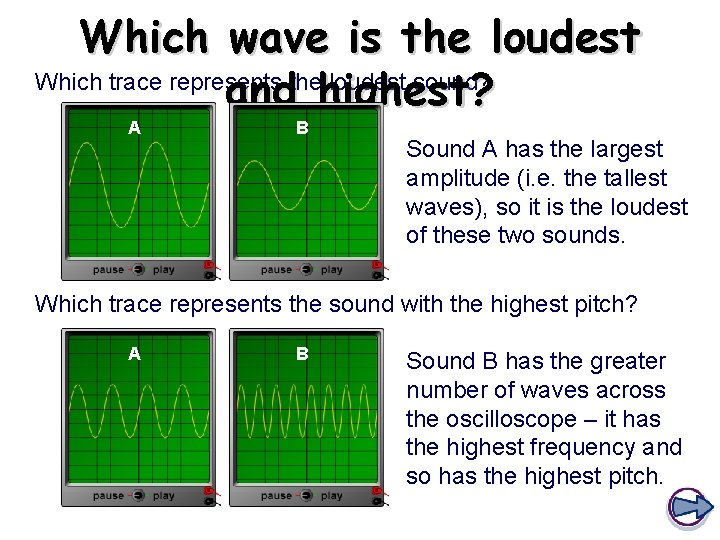
Which wave is the loudest Which trace represents the loudest sound? and highest? A B Sound A has the largest amplitude (i. e. the tallest waves), so it is the loudest of these two sounds. Which trace represents the sound with the highest pitch? A B Sound B has the greater number of waves across the oscilloscope – it has the highest frequency and so has the highest pitch.
Amplitude and wavelength
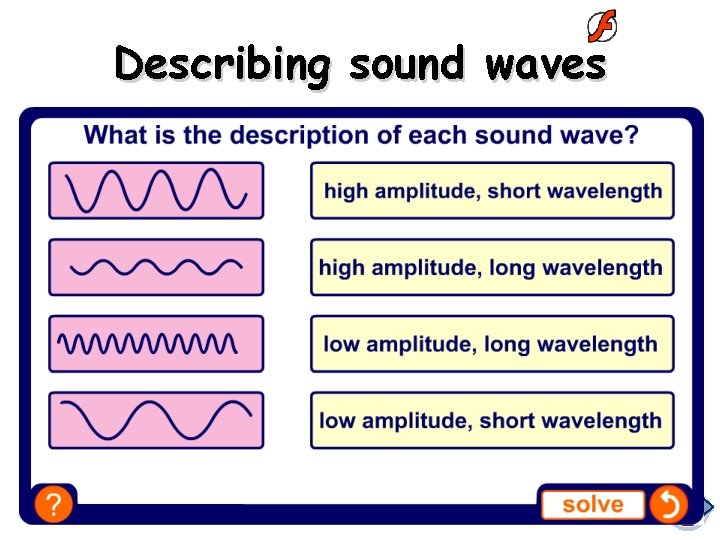
Describing sound waves
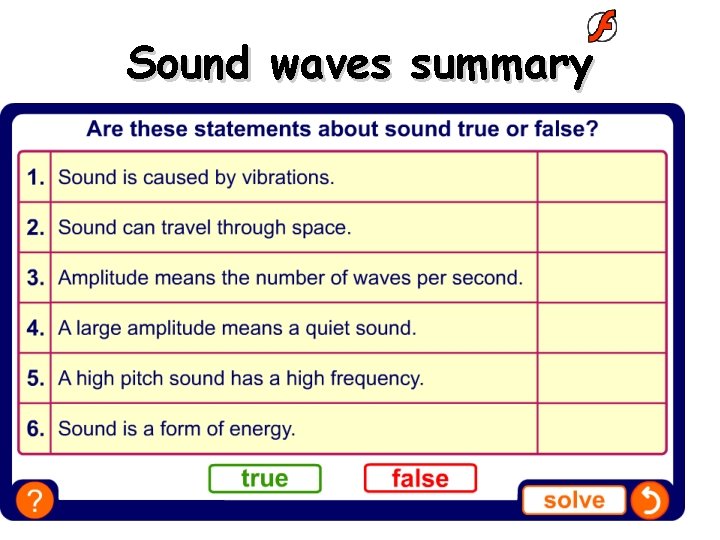
Sound waves summary
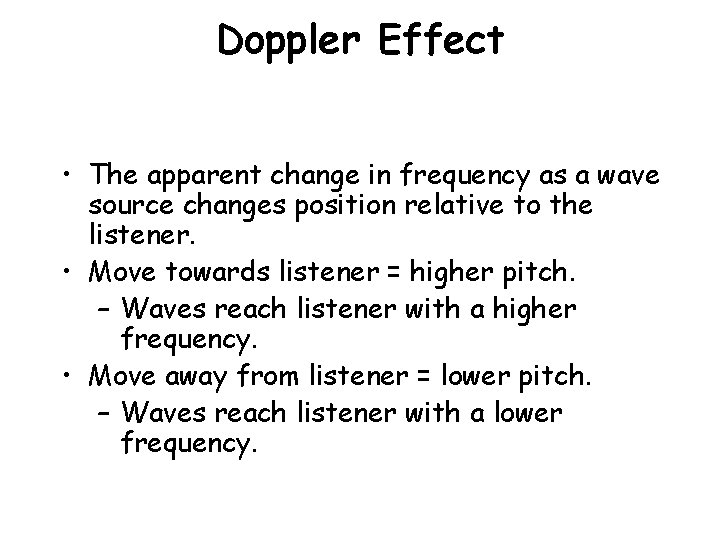
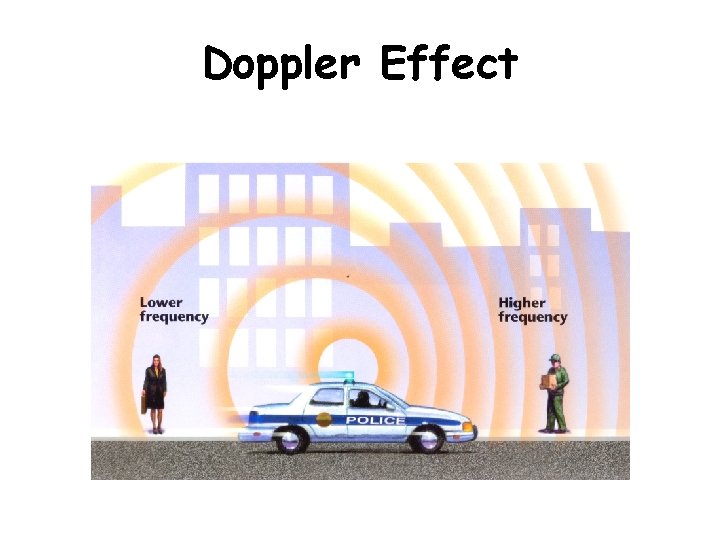
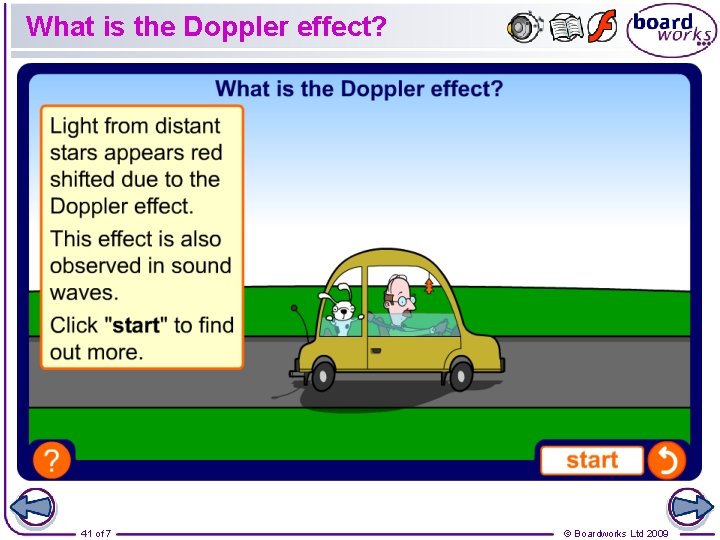
Doppler Effect • The apparent change in frequency as a wave source changes position relative to the listener. • Move towards listener = higher pitch. – Waves reach listener with a higher frequency. • Move away from listener = lower pitch. – Waves reach listener with a lower frequency.
Doppler Effect
Doppler Effect
What is the Doppler effect? 41 of 7 © Boardworks Ltd 2009
Doppler Videos https: //www. youtube. com /watch? v=z 0 Eaoilzg. GE https: //www. youtube. com /watch? v=h 4 On. BYrb. Cj. Y