warm up FACTOR THE FOLLOWING SPECIAL CASES X
- Slides: 27
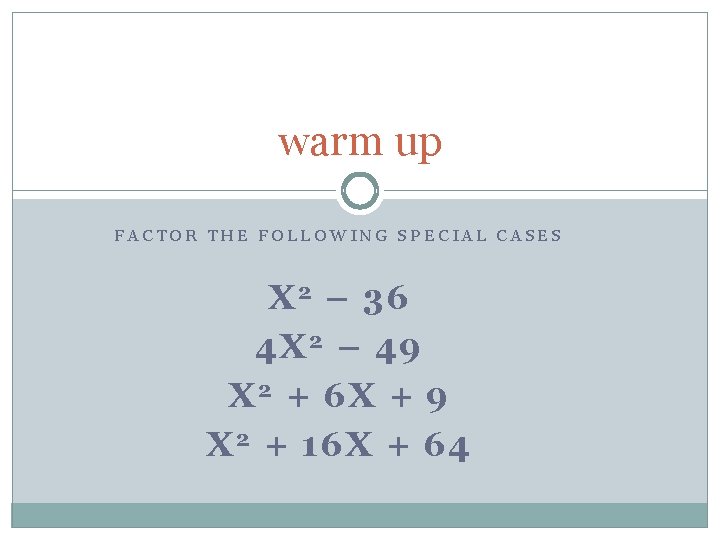
warm up FACTOR THE FOLLOWING SPECIAL CASES X 2 – 36 4 X 2 – 49 X 2 + 6 X + 9 X 2 + 16 X + 64
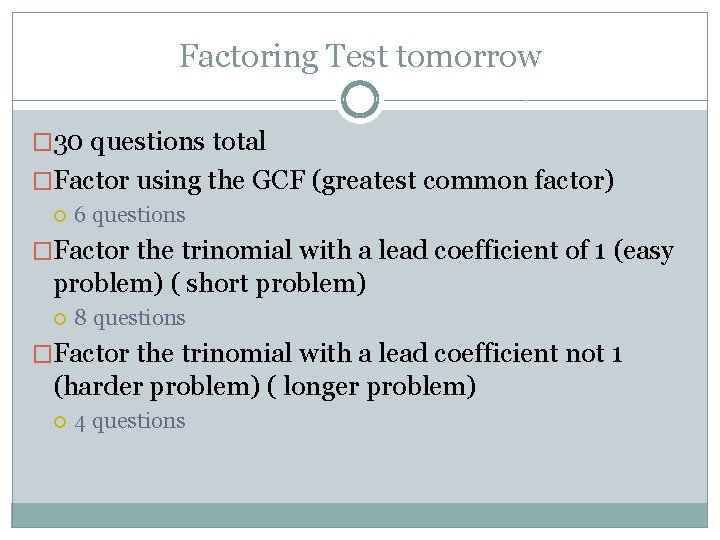
Factoring Test tomorrow � 30 questions total �Factor using the GCF (greatest common factor) 6 questions �Factor the trinomial with a lead coefficient of 1 (easy problem) ( short problem) 8 questions �Factor the trinomial with a lead coefficient not 1 (harder problem) ( longer problem) 4 questions
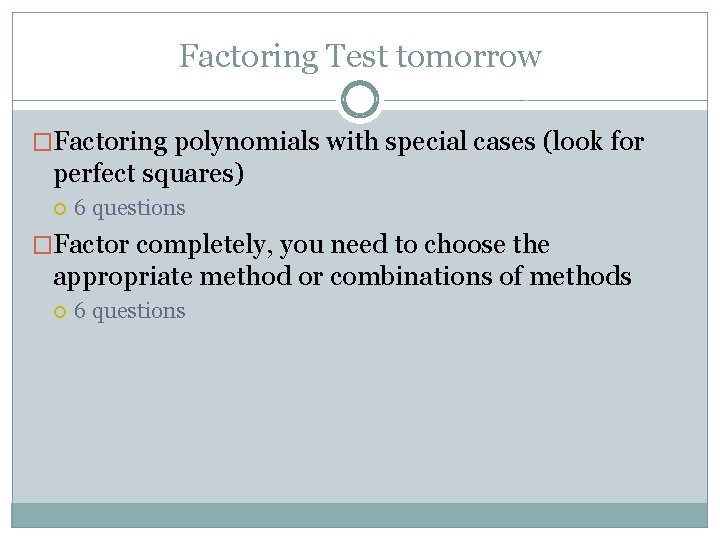
Factoring Test tomorrow �Factoring polynomials with special cases (look for perfect squares) 6 questions �Factor completely, you need to choose the appropriate method or combinations of methods 6 questions
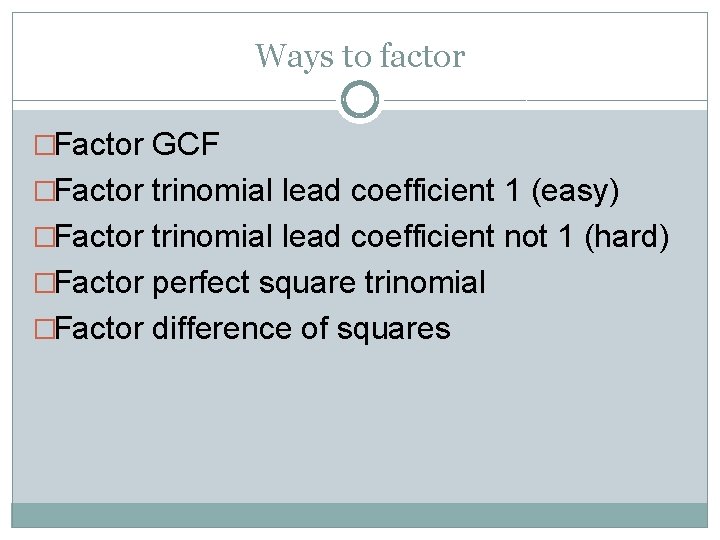
Ways to factor �Factor GCF �Factor trinomial lead coefficient 1 (easy) �Factor trinomial lead coefficient not 1 (hard) �Factor perfect square trinomial �Factor difference of squares
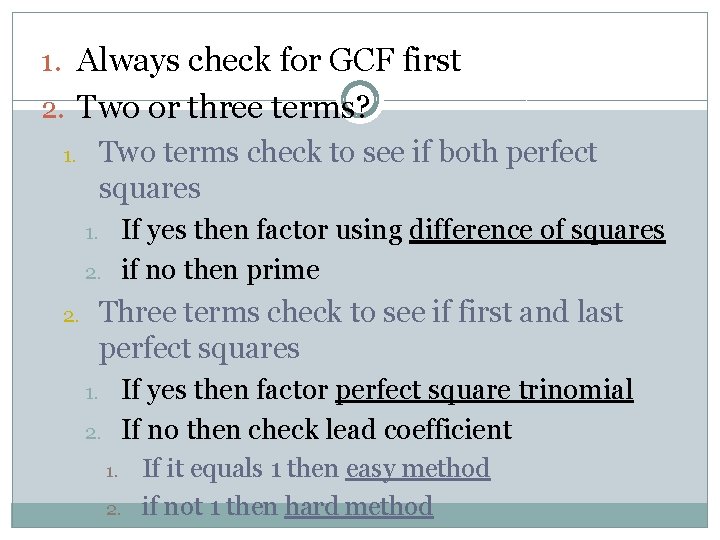
1. Always check for GCF first 2. Two or three terms? 1. Two terms check to see if both perfect squares If yes then factor using difference of squares if no then prime 1. 2. 2. Three terms check to see if first and last perfect squares If yes then factor perfect square trinomial If no then check lead coefficient 1. 2. 1. 2. If it equals 1 then easy method if not 1 then hard method
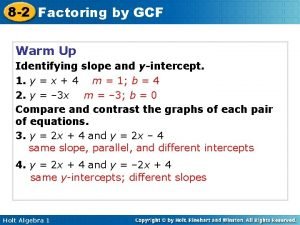
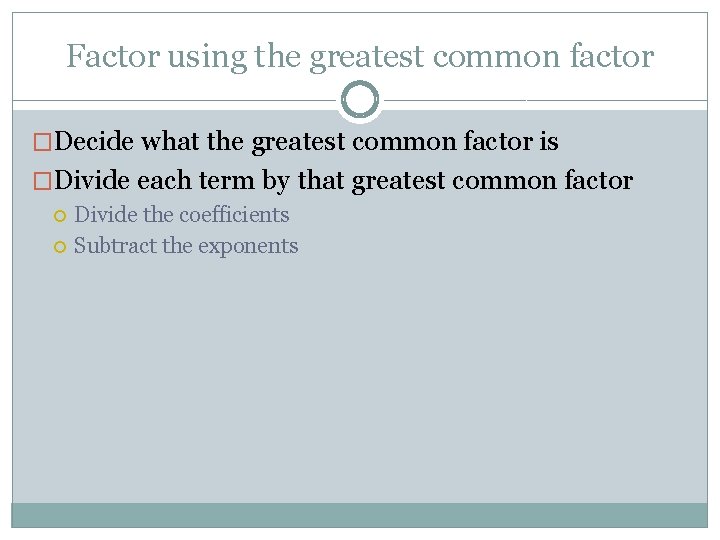
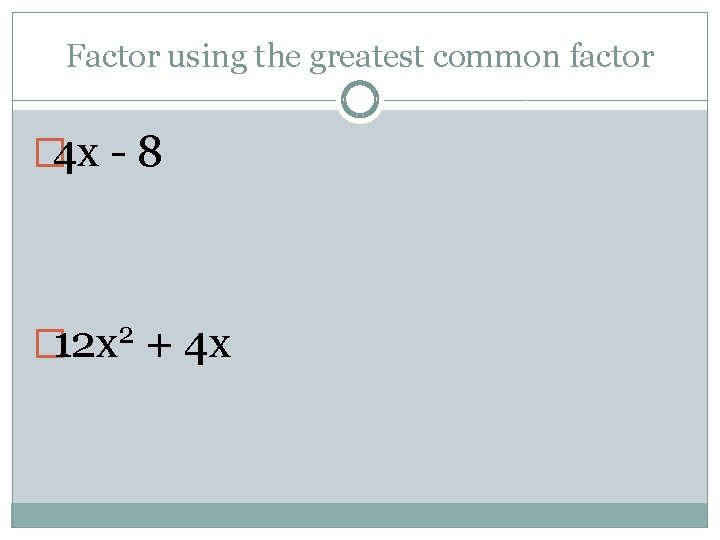
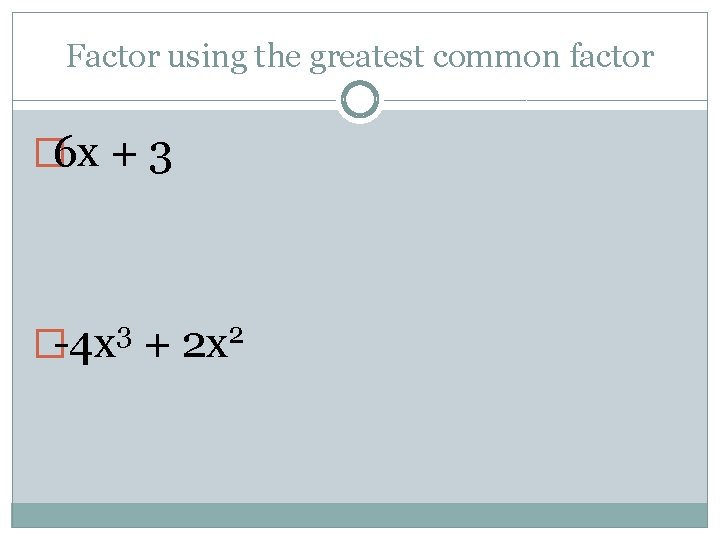
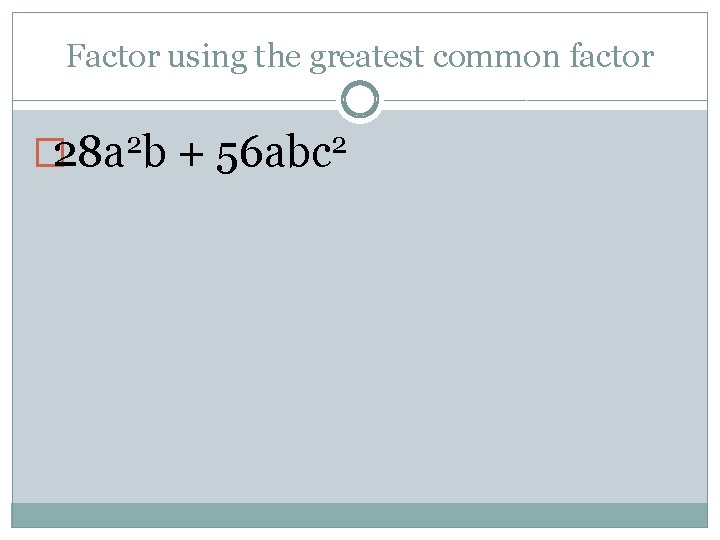
Factor using the greatest common factor �Decide what the greatest common factor is �Divide each term by that greatest common factor Divide the coefficients Subtract the exponents
Factor using the greatest common factor � 4 x - 8 2 � 12 x + 4 x
Factor using the greatest common factor � 6 x + 3 3 �-4 x + 2 2 x
Factor using the greatest common factor � 28 a 2 b + 56 abc 2
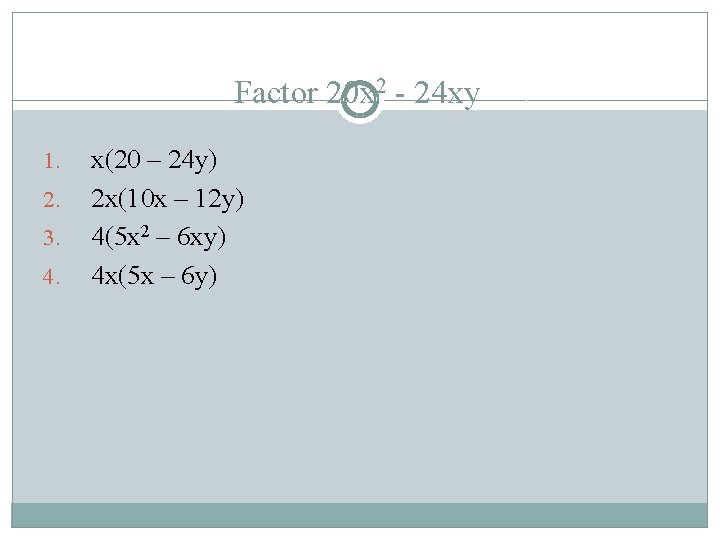
Factor 20 x 2 - 24 xy 1. 2. 3. 4. x(20 – 24 y) 2 x(10 x – 12 y) 4(5 x 2 – 6 xy) 4 x(5 x – 6 y)
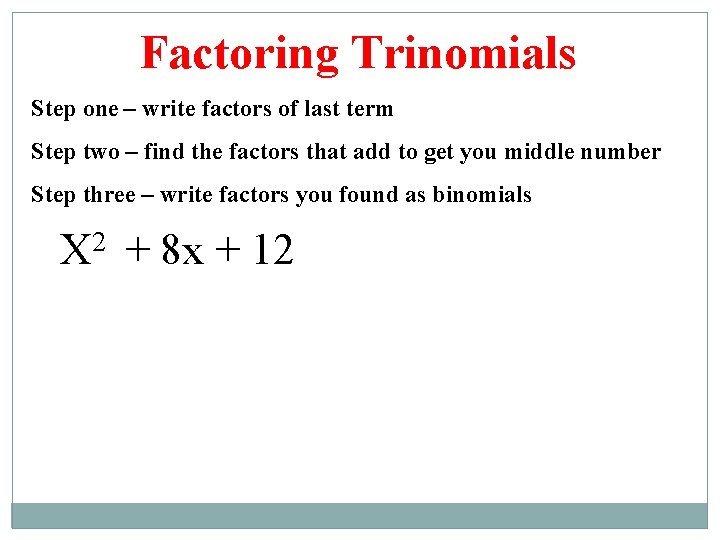
Factoring Trinomials Step one – write factors of last term Step two – find the factors that add to get you middle number Step three – write factors you found as binomials 2 X + 8 x + 12
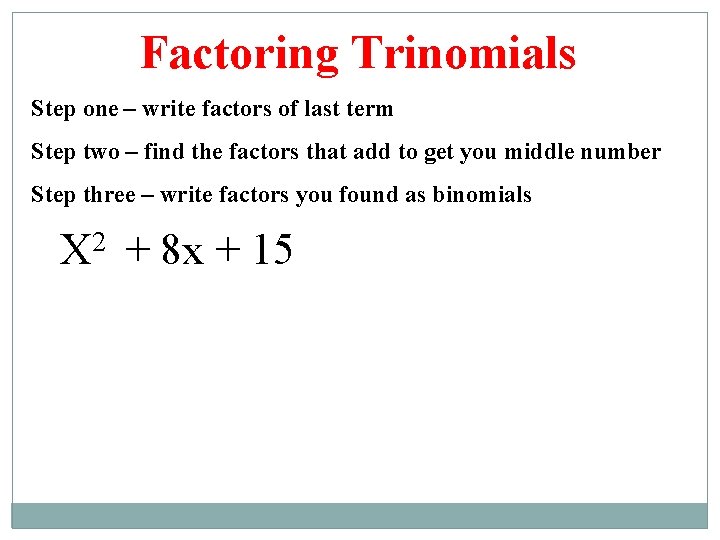
Factoring Trinomials Step one – write factors of last term Step two – find the factors that add to get you middle number Step three – write factors you found as binomials 2 X + 8 x + 15
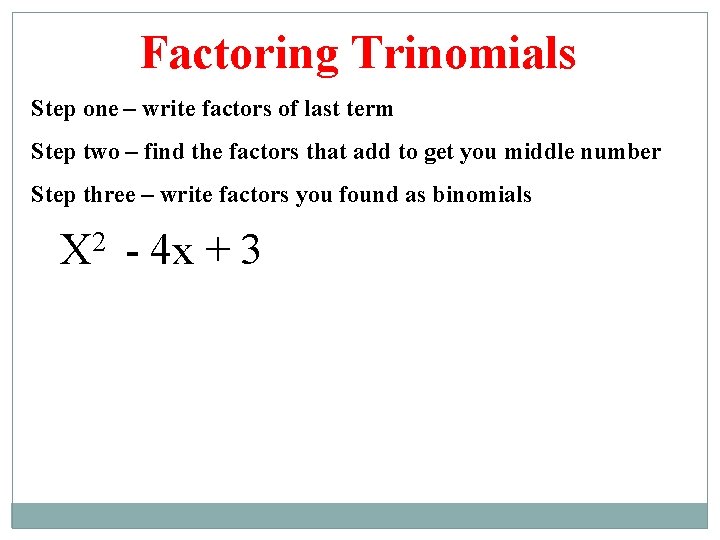
Factoring Trinomials Step one – write factors of last term Step two – find the factors that add to get you middle number Step three – write factors you found as binomials 2 X - 4 x + 3
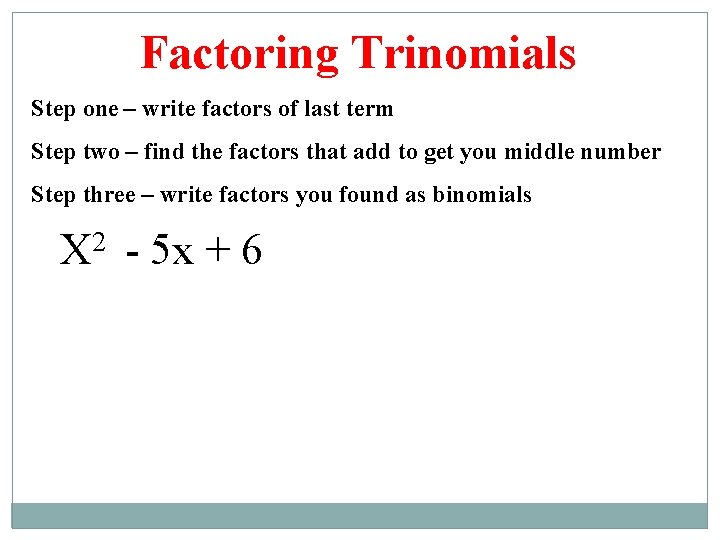
Factoring Trinomials Step one – write factors of last term Step two – find the factors that add to get you middle number Step three – write factors you found as binomials 2 X - 5 x + 6
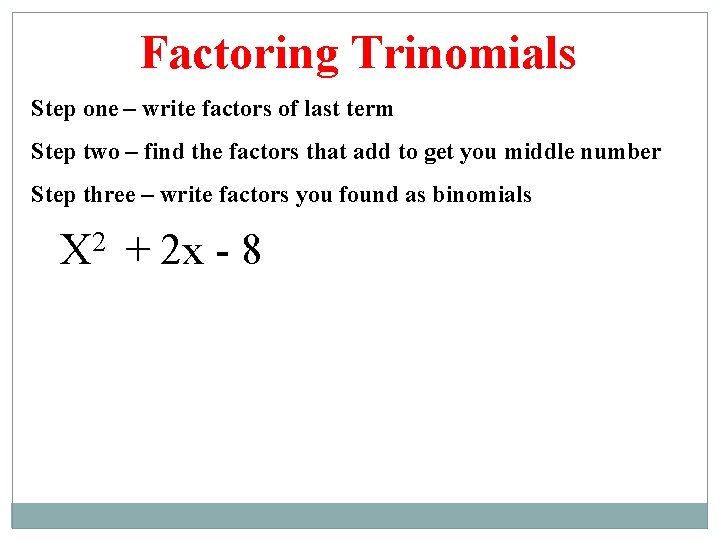
Factoring Trinomials Step one – write factors of last term Step two – find the factors that add to get you middle number Step three – write factors you found as binomials 2 X + 2 x - 8
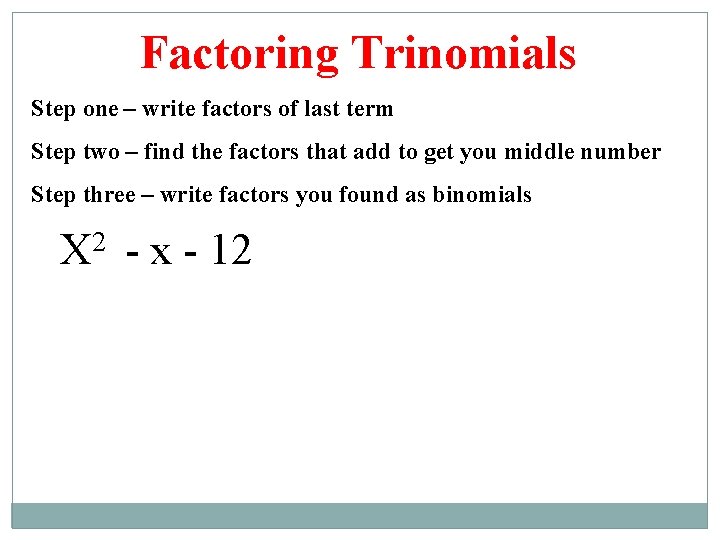
Factoring Trinomials Step one – write factors of last term Step two – find the factors that add to get you middle number Step three – write factors you found as binomials 2 X - x - 12
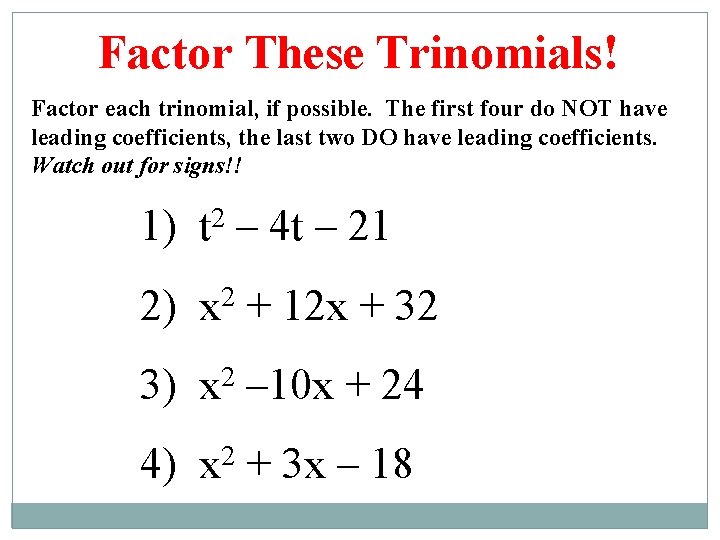
Factor These Trinomials! Factor each trinomial, if possible. The first four do NOT have leading coefficients, the last two DO have leading coefficients. Watch out for signs!! 1) 2 t – 4 t – 21 2) x 2 + 12 x + 32 3) x 2 – 10 x + 24 4) x 2 + 3 x – 18
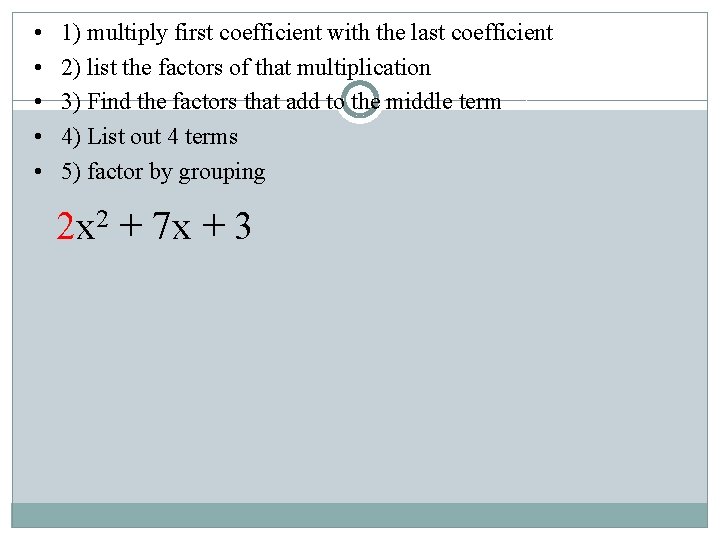
• • • 1) multiply first coefficient with the last coefficient 2) list the factors of that multiplication 3) Find the factors that add to the middle term 4) List out 4 terms 5) factor by grouping 2 x 2 + 7 x + 3
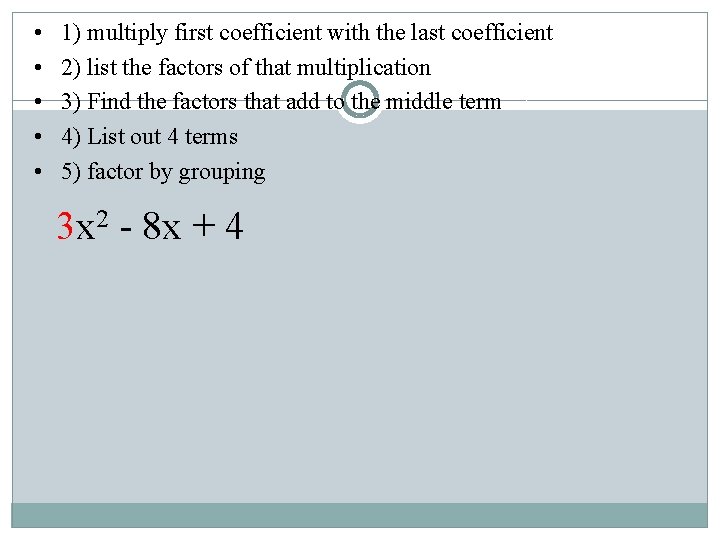
• • • 1) multiply first coefficient with the last coefficient 2) list the factors of that multiplication 3) Find the factors that add to the middle term 4) List out 4 terms 5) factor by grouping 3 x 2 - 8 x + 4
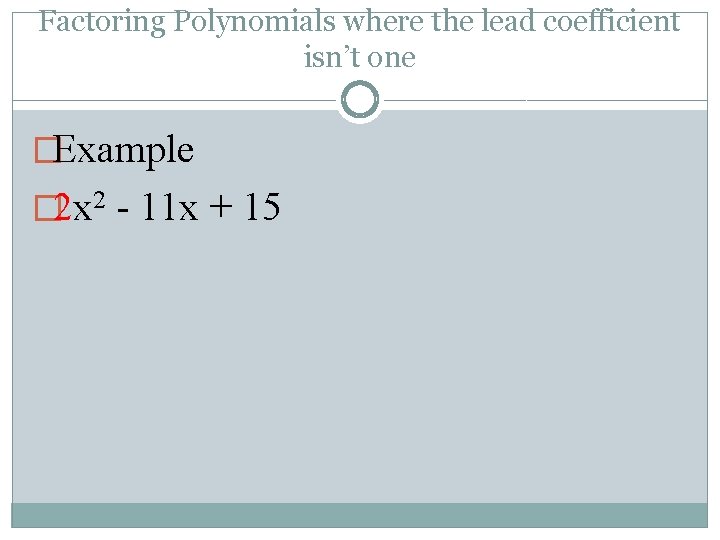
Factoring Polynomials where the lead coefficient isn’t one �Example � 2 x 2 - 11 x + 15
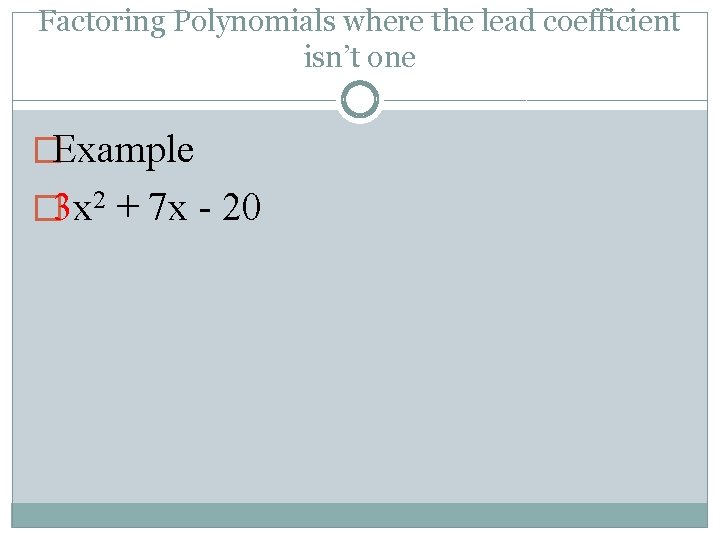
Factoring Polynomials where the lead coefficient isn’t one �Example � 3 x 2 + 7 x - 20
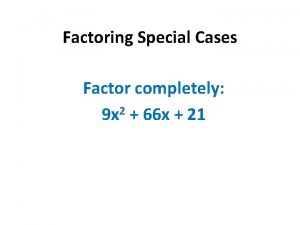
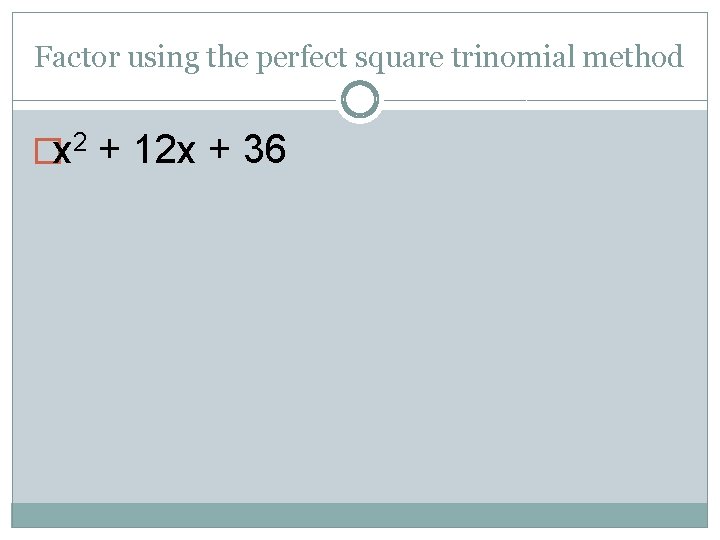
Factor using the perfect square trinomial method �x 2 + 12 x + 36
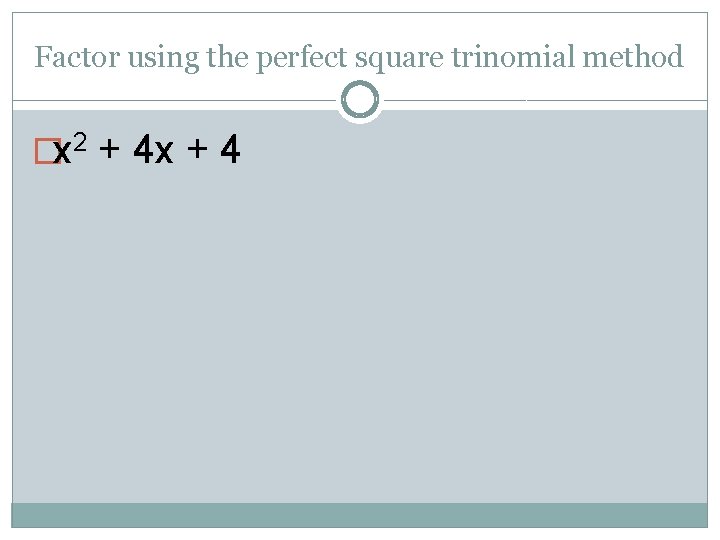
Factor using the perfect square trinomial method �x 2 + 4 x + 4
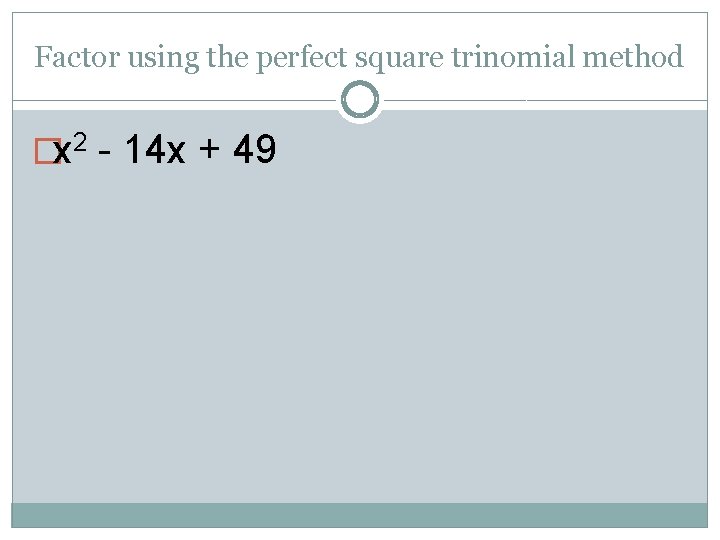
Factor using the perfect square trinomial method �x 2 - 14 x + 49
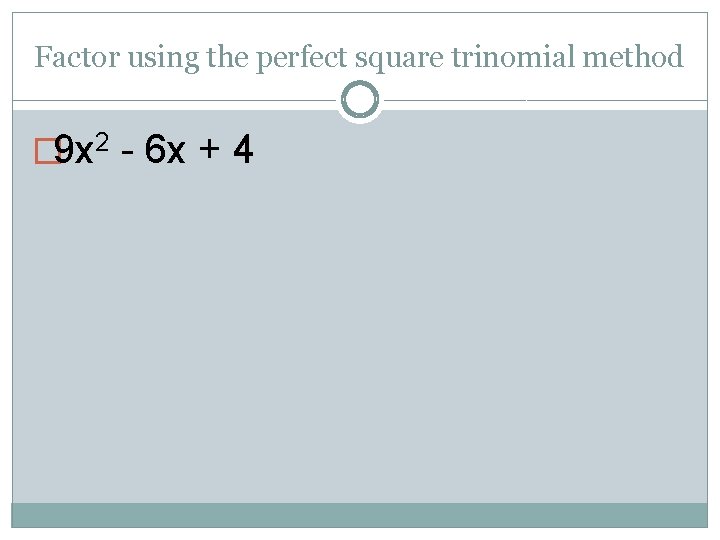
Factor using the perfect square trinomial method � 9 x 2 - 6 x + 4
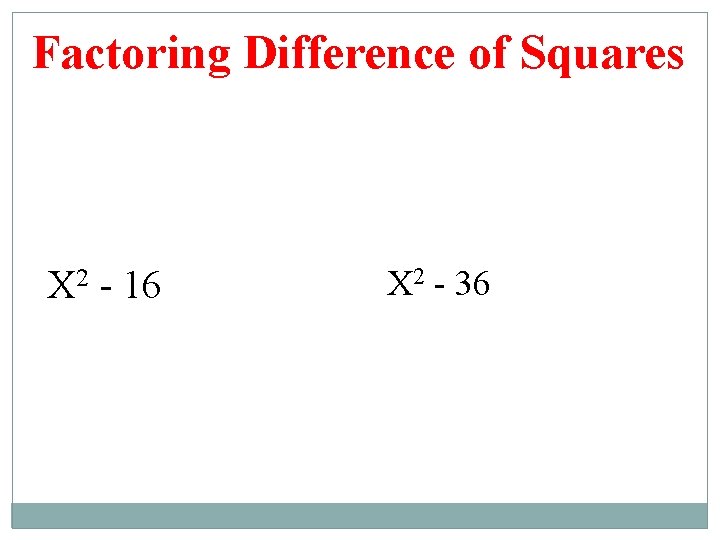
Factoring Difference of Squares X 2 - 16 X 2 - 36
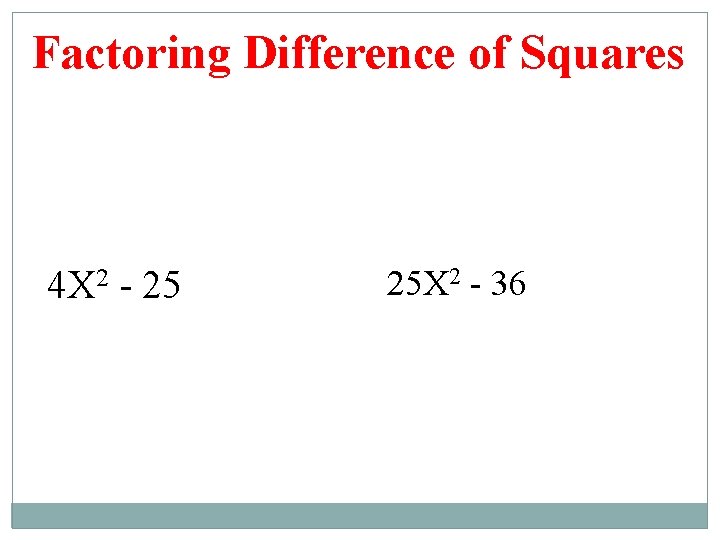
Factoring Difference of Squares 4 X 2 - 25 25 X 2 - 36