UNUSA Training Course on Satellite Aided Search and
- Slides: 31
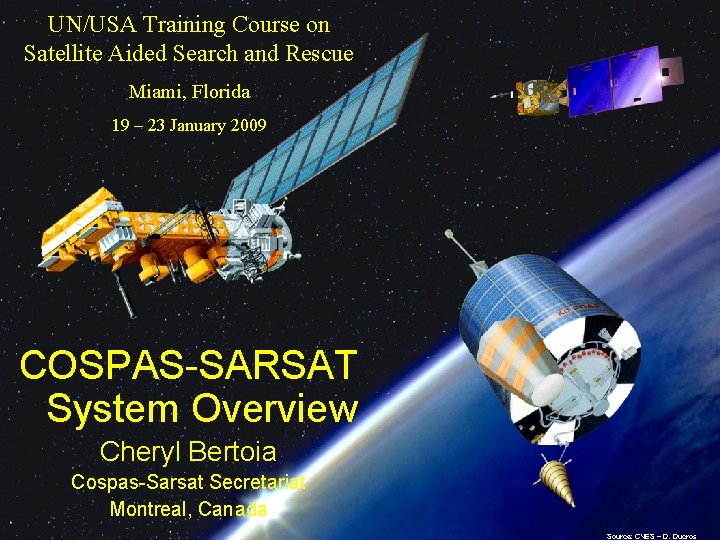
UN/USA Training Course on Satellite Aided Search and Rescue Miami, Florida 19 – 23 January 2009 COSPAS-SARSAT System Overview Cheryl Bertoia Cospas-Sarsat Secretariat Montreal, Canada 19 -23 January 2009 UN/USA Training Course: Satellite Aided SAR Source: CNES – D. Ducros 1
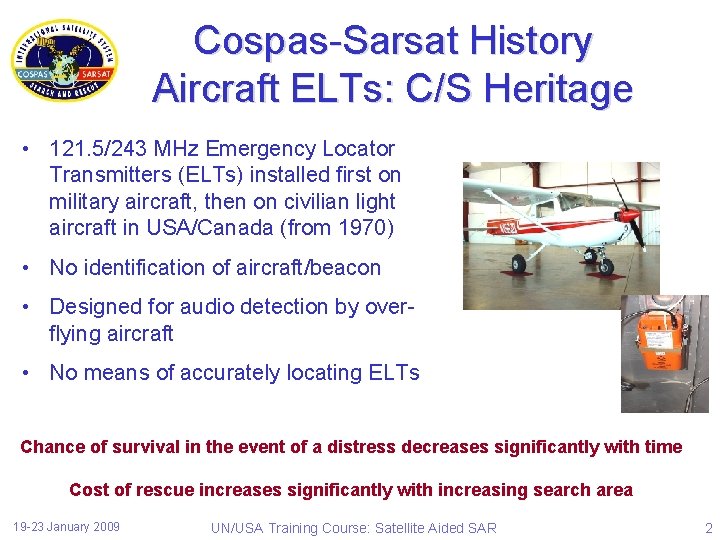
Cospas-Sarsat History Aircraft ELTs: C/S Heritage • 121. 5/243 MHz Emergency Locator Transmitters (ELTs) installed first on military aircraft, then on civilian light aircraft in USA/Canada (from 1970) • No identification of aircraft/beacon • Designed for audio detection by overflying aircraft • No means of accurately locating ELTs Chance of survival in the event of a distress decreases significantly with time Cost of rescue increases significantly with increasing search area 19 -23 January 2009 UN/USA Training Course: Satellite Aided SAR 2
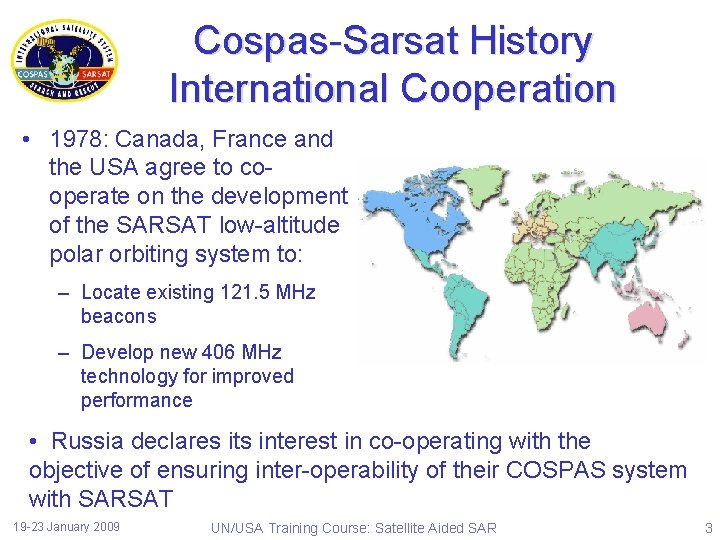
Cospas-Sarsat History International Cooperation • 1978: Canada, France and the USA agree to cooperate on the development of the SARSAT low-altitude polar orbiting system to: – Locate existing 121. 5 MHz beacons – Develop new 406 MHz technology for improved performance • Russia declares its interest in co-operating with the objective of ensuring inter-operability of their COSPAS system with SARSAT 19 -23 January 2009 UN/USA Training Course: Satellite Aided SAR 3
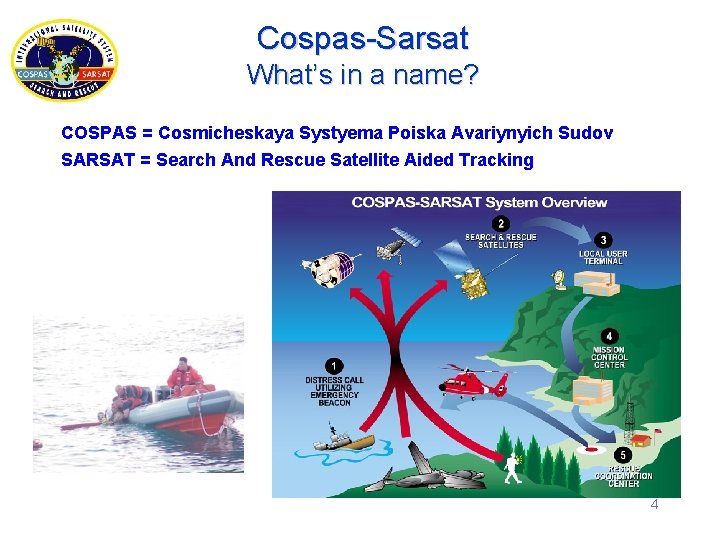
Cospas-Sarsat What’s in a name? COSPAS = Cosmicheskaya Systyema Poiska Avariynyich Sudov SARSAT = Search And Rescue Satellite Aided Tracking 4
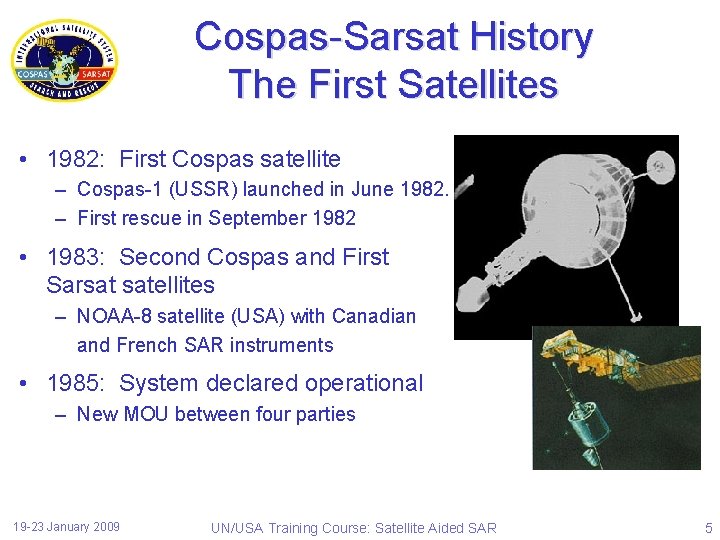
Cospas-Sarsat History The First Satellites • 1982: First Cospas satellite – Cospas-1 (USSR) launched in June 1982. – First rescue in September 1982 • 1983: Second Cospas and First Sarsat satellites – NOAA-8 satellite (USA) with Canadian and French SAR instruments • 1985: System declared operational – New MOU between four parties 19 -23 January 2009 UN/USA Training Course: Satellite Aided SAR 5
International Organization • Initially developed under interagency Memorandum of Understanding signed in 1979 (USSR, USA, Canada, France) • System declared operational in 1985 • 406 MHz beacons accepted by IMO for GMDSS in 1988 • International Cospas-Sarsat Programme Agreement (ICSPA) signed on July 1, 1988 among the governments of Canada, France, the former U. S. S. R and the United States • ICSPA ensures continuity of the space system and availability to all States on a non-discriminatory basis 19 -23 January 2009 UN/USA Training Course: Satellite Aided SAR 6
International Cospas-Sarsat Programme C/S provides distress alert and location information to Rescue Coordination Centres (RCCs) for aviation, maritime and land users in distress Services are provided world-wide and free of charge for the user in distress Alerts are provided using satellite systems to relay and process the transmissions of distress radio-beacons operating on 121. 5 or 406 MHz 19 -23 January 2009 UN/USA Training Course: Satellite Aided SAR 7
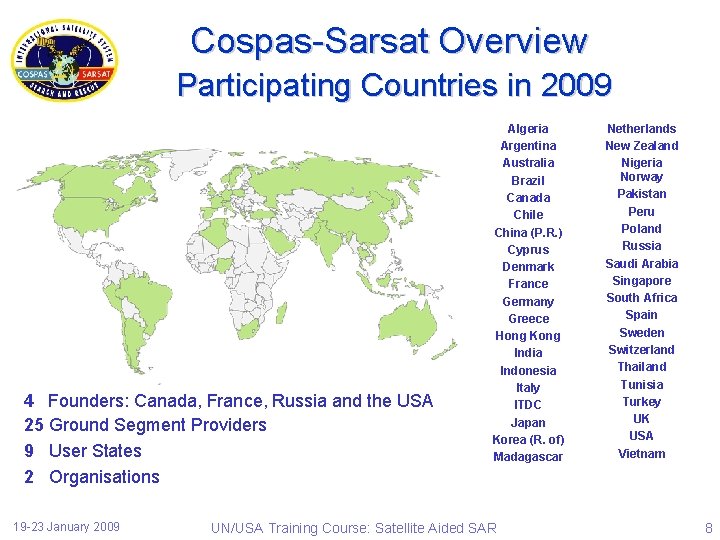
Cospas-Sarsat Overview Participating Countries in 2009 4 Founders: Canada, France, Russia and the USA 25 Ground Segment Providers 9 User States 2 Organisations Algeria Argentina Australia Brazil Canada Chile China (P. R. ) Cyprus Denmark France Germany Greece Hong Kong India Indonesia Italy ITDC Japan Korea (R. of) Madagascar Netherlands New Zealand Nigeria Norway Pakistan Peru Poland Russia Saudi Arabia Singapore South Africa Spain Sweden Switzerland Thailand Tunisia Turkey UK USA Vietnam 19 -23 January 2009 UN/USA Training Course: Satellite Aided SAR 8
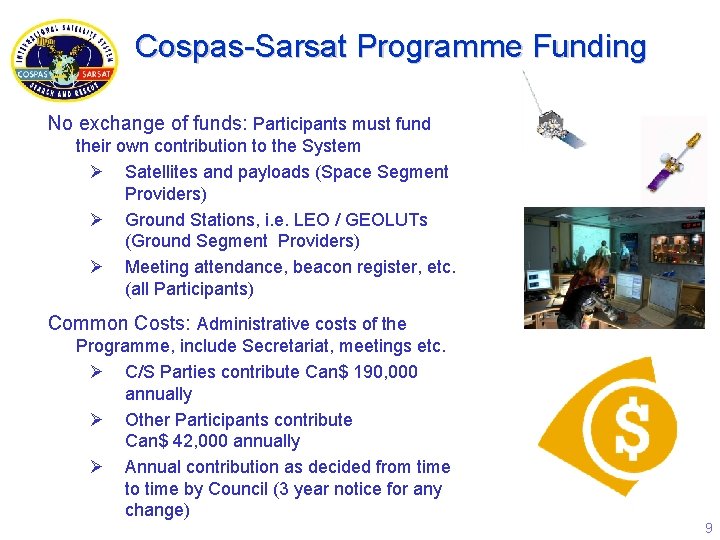
Cospas-Sarsat Programme Funding No exchange of funds: Participants must fund their own contribution to the System Ø Satellites and payloads (Space Segment Providers) Ø Ground Stations, i. e. LEO / GEOLUTs (Ground Segment Providers) Ø Meeting attendance, beacon register, etc. (all Participants) Common Costs: Administrative costs of the Programme, include Secretariat, meetings etc. Ø C/S Parties contribute Can$ 190, 000 annually Ø Other Participants contribute Can$ 42, 000 annually Ø Annual contribution as decided from time to time by Council (3 year notice for any change) 9
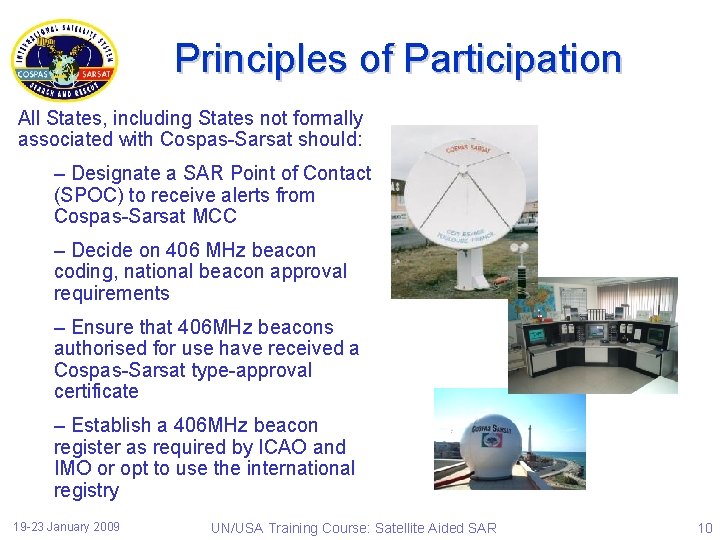
Principles of Participation All States, including States not formally associated with Cospas-Sarsat should: – Designate a SAR Point of Contact (SPOC) to receive alerts from Cospas-Sarsat MCC – Decide on 406 MHz beacon coding, national beacon approval requirements – Ensure that 406 MHz beacons authorised for use have received a Cospas-Sarsat type-approval certificate – Establish a 406 MHz beacon register as required by ICAO and IMO or opt to use the international registry 19 -23 January 2009 UN/USA Training Course: Satellite Aided SAR 10
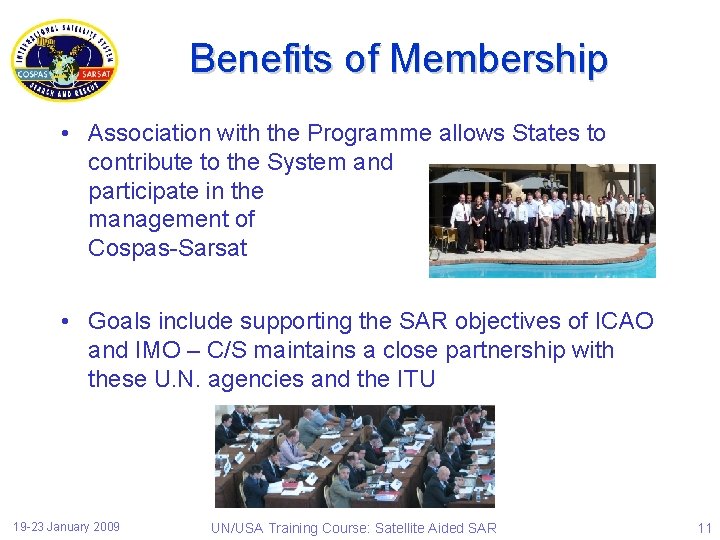
Benefits of Membership • Association with the Programme allows States to contribute to the System and participate in the management of Cospas-Sarsat • Goals include supporting the SAR objectives of ICAO and IMO – C/S maintains a close partnership with these U. N. agencies and the ITU 19 -23 January 2009 UN/USA Training Course: Satellite Aided SAR 11
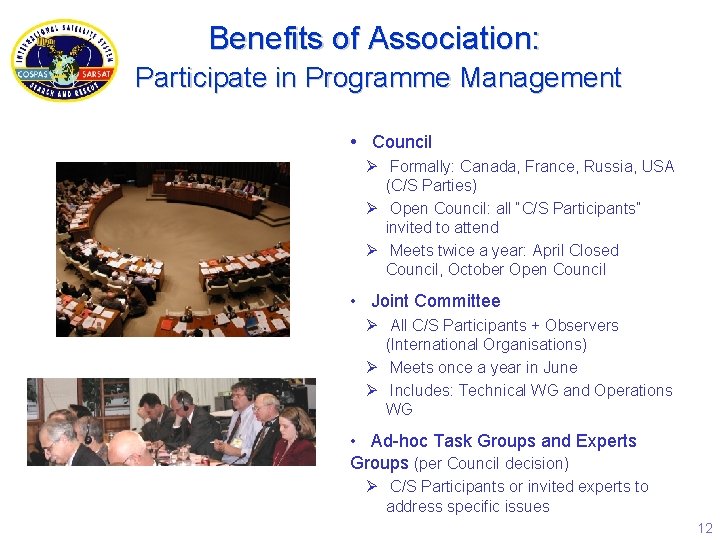
Benefits of Association: Participate in Programme Management • Council Ø Formally: Canada, France, Russia, USA (C/S Parties) Ø Open Council: all “C/S Participants” invited to attend Ø Meets twice a year: April Closed Council, October Open Council • Joint Committee Ø All C/S Participants + Observers (International Organisations) Ø Meets once a year in June Ø Includes: Technical WG and Operations WG • Ad-hoc Task Groups and Experts Groups (per Council decision) Ø C/S Participants or invited experts to address specific issues 12
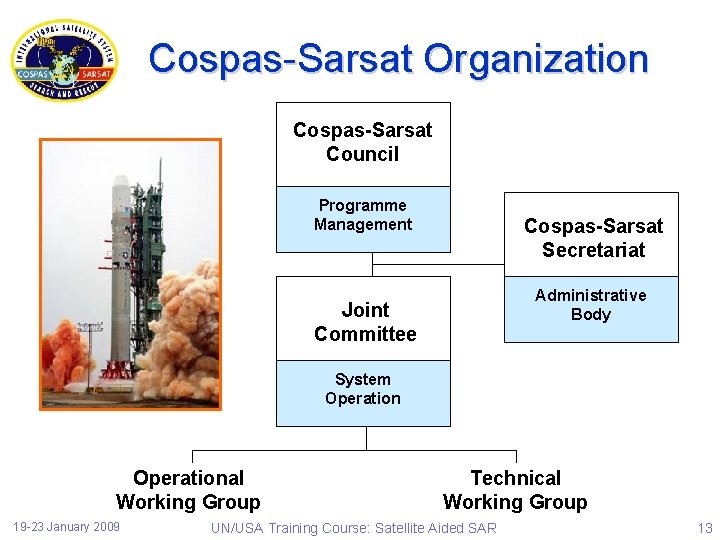
Cospas-Sarsat Organization Cospas-Sarsat Council Programme Management Cospas-Sarsat Secretariat Administrative Body Joint Committee System Operational Working Group 19 -23 January 2009 Technical Working Group UN/USA Training Course: Satellite Aided SAR 13
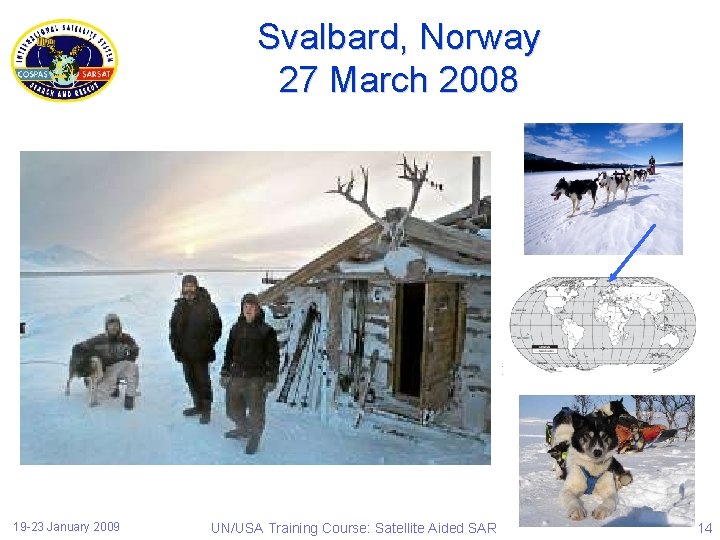
Svalbard, Norway 27 March 2008 19 -23 January 2009 UN/USA Training Course: Satellite Aided SAR 14
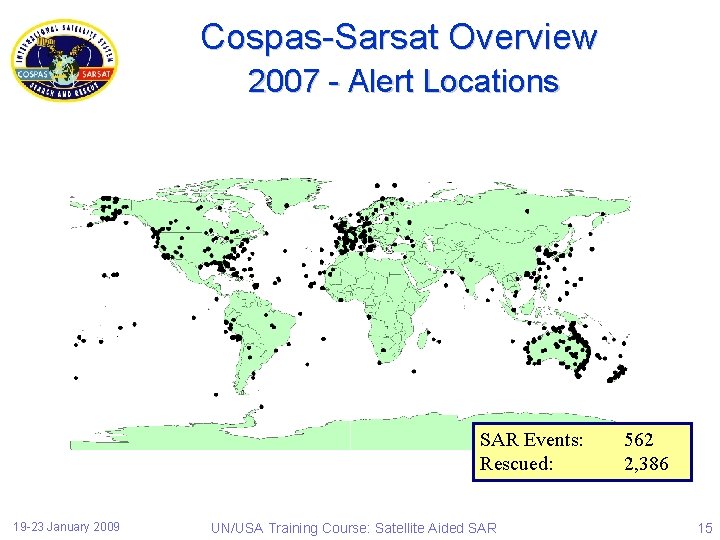
Cospas-Sarsat Overview 2007 - Alert Locations SAR Events: Rescued: 19 -23 January 2009 UN/USA Training Course: Satellite Aided SAR 562 2, 386 15
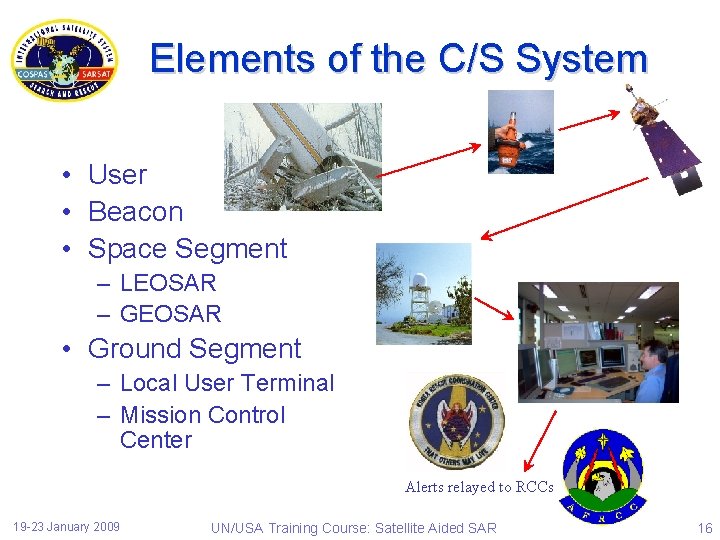
Elements of the C/S System • User • Beacon • Space Segment – LEOSAR – GEOSAR • Ground Segment – Local User Terminal – Mission Control Center Alerts relayed to RCCs 19 -23 January 2009 UN/USA Training Course: Satellite Aided SAR 16
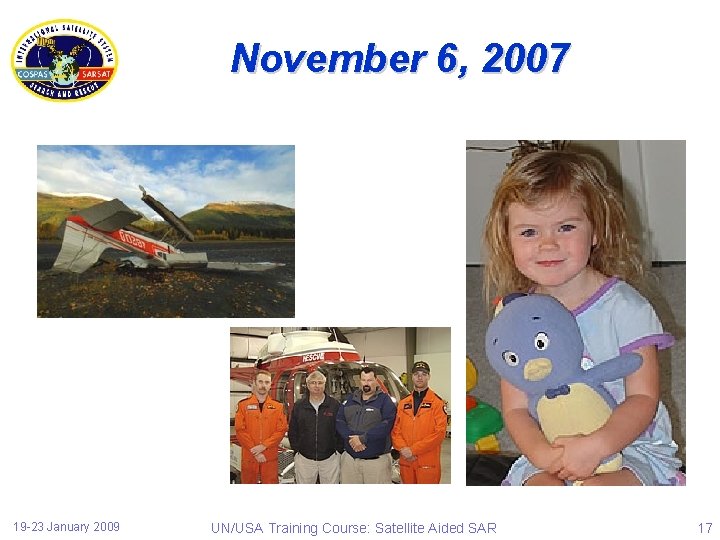
November 6, 2007 19 -23 January 2009 UN/USA Training Course: Satellite Aided SAR 17
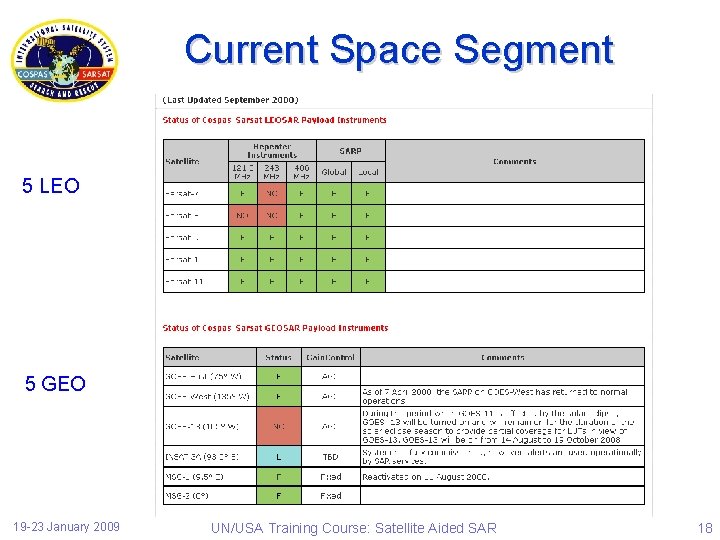
Current Space Segment 5 LEO 5 GEO 19 -23 January 2009 UN/USA Training Course: Satellite Aided SAR 18
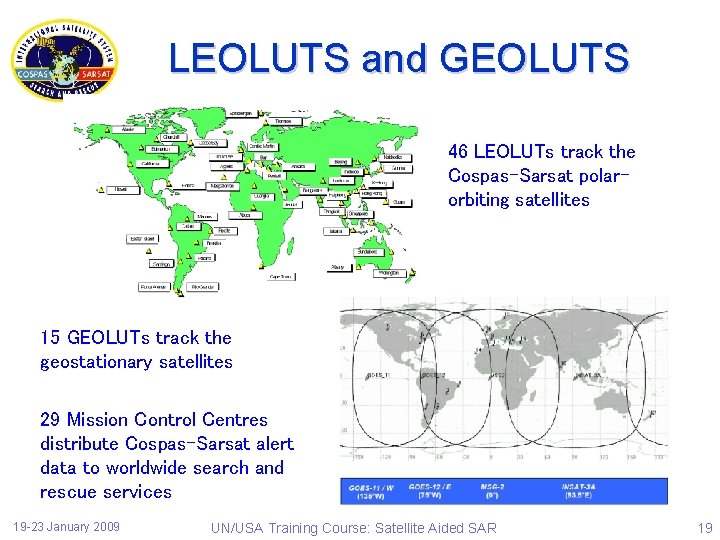
LEOLUTS and GEOLUTS 46 LEOLUTs track the Cospas-Sarsat polarorbiting satellites 15 GEOLUTs track the geostationary satellites 29 Mission Control Centres distribute Cospas-Sarsat alert data to worldwide search and rescue services 19 -23 January 2009 UN/USA Training Course: Satellite Aided SAR 19
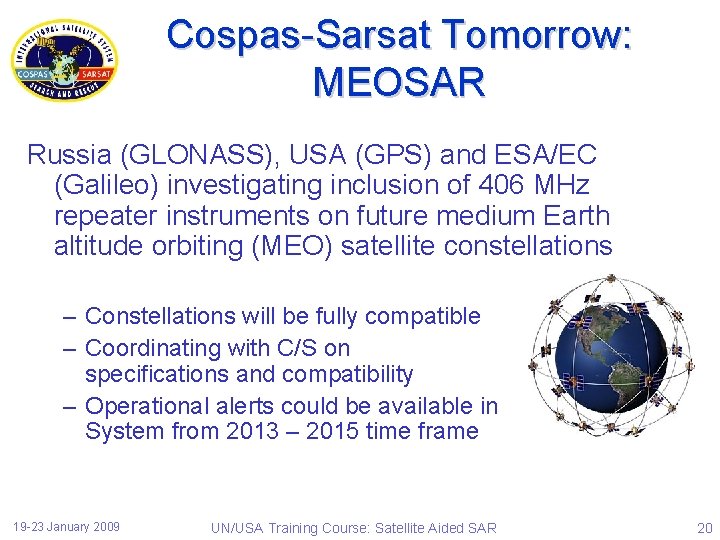
Cospas-Sarsat Tomorrow: MEOSAR Russia (GLONASS), USA (GPS) and ESA/EC (Galileo) investigating inclusion of 406 MHz repeater instruments on future medium Earth altitude orbiting (MEO) satellite constellations – Constellations will be fully compatible – Coordinating with C/S on specifications and compatibility – Operational alerts could be available in System from 2013 – 2015 time frame 19 -23 January 2009 UN/USA Training Course: Satellite Aided SAR 20
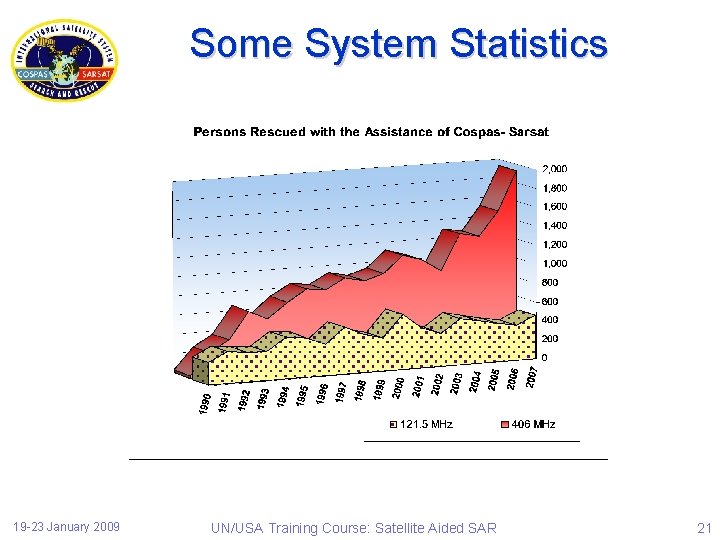
Some System Statistics 19 -23 January 2009 UN/USA Training Course: Satellite Aided SAR 21
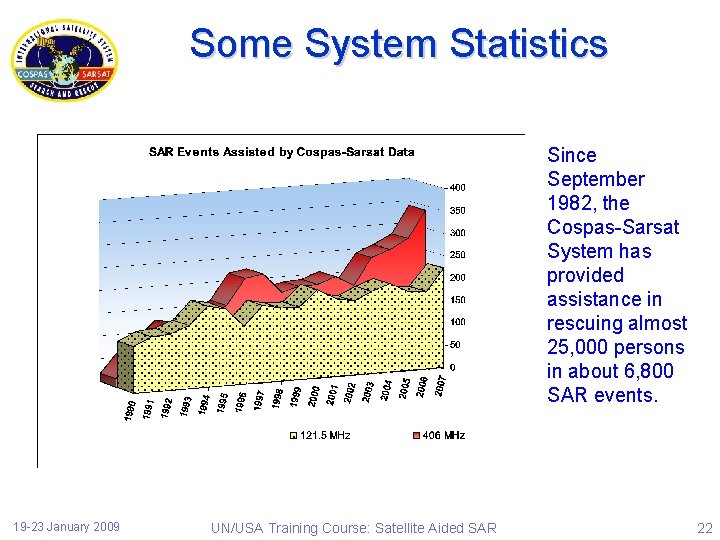
Some System Statistics Since September 1982, the Cospas-Sarsat System has provided assistance in rescuing almost 25, 000 persons in about 6, 800 SAR events. 19 -23 January 2009 UN/USA Training Course: Satellite Aided SAR 22
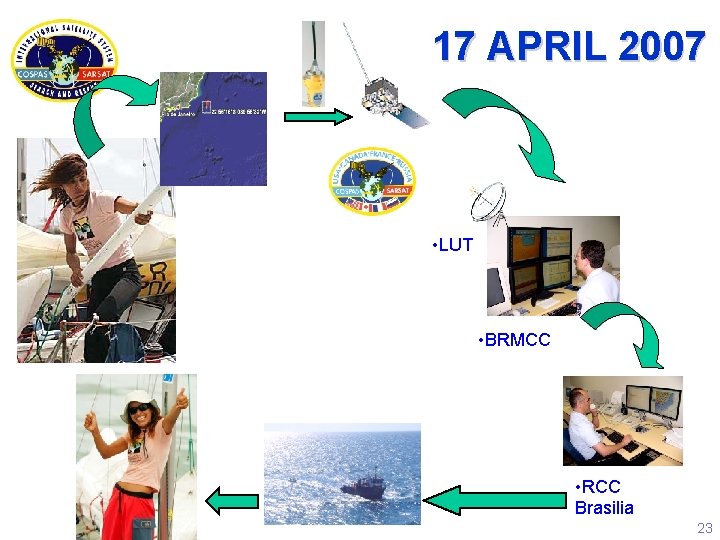
17 APRIL 2007 • LUT • BRMCC • RCC Brasilia 23
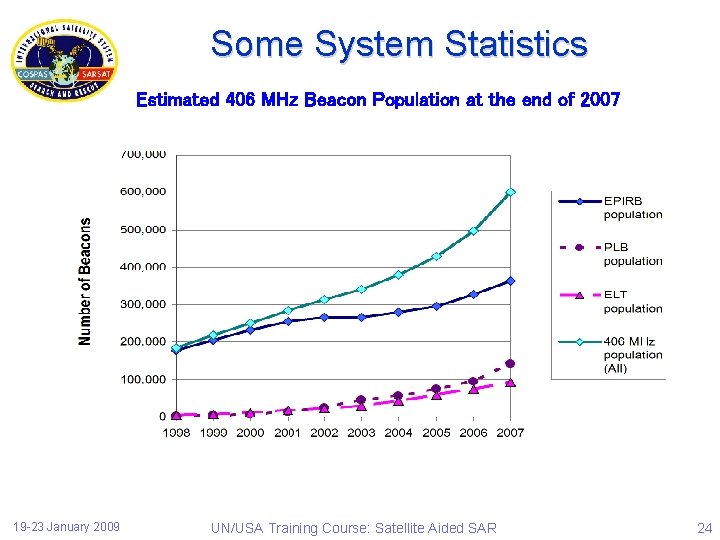
Some System Statistics Estimated 406 MHz Beacon Population at the end of 2007 19 -23 January 2009 UN/USA Training Course: Satellite Aided SAR 24
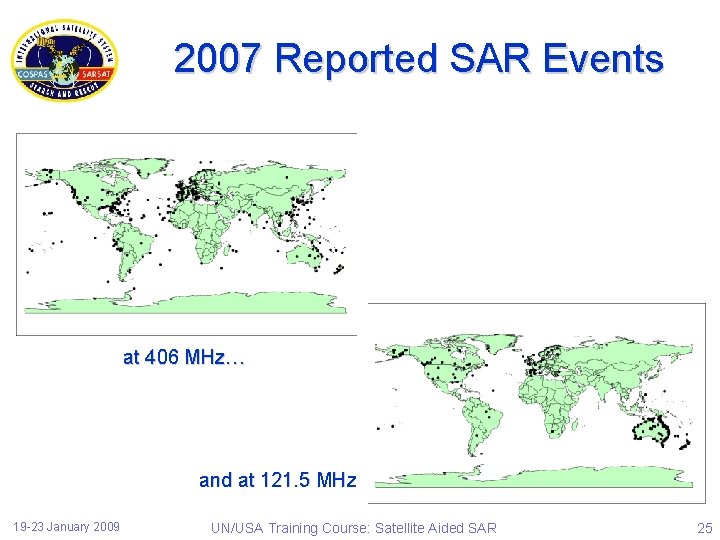
2007 Reported SAR Events at 406 MHz… and at 121. 5 MHz 19 -23 January 2009 UN/USA Training Course: Satellite Aided SAR 25
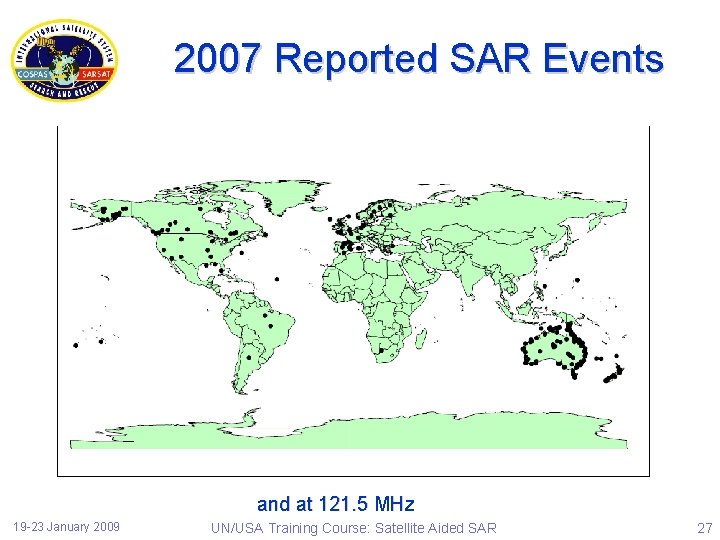
2007 Reported SAR Events and at 121. 5 MHz 19 -23 January 2009 UN/USA Training Course: Satellite Aided SAR 27
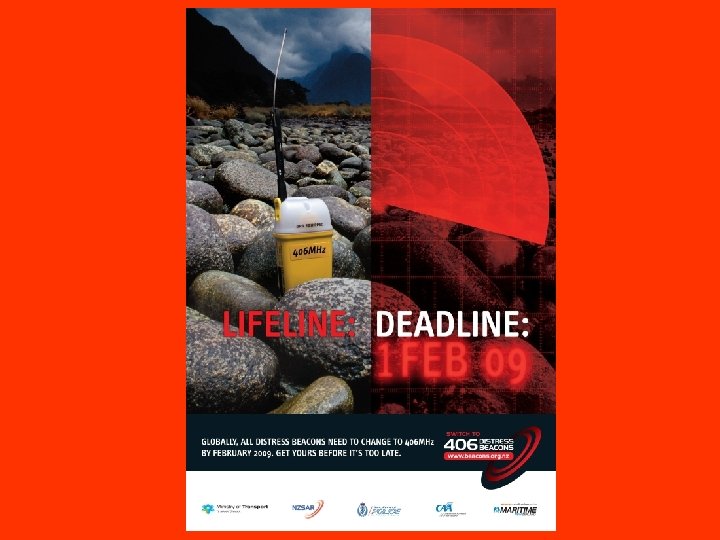
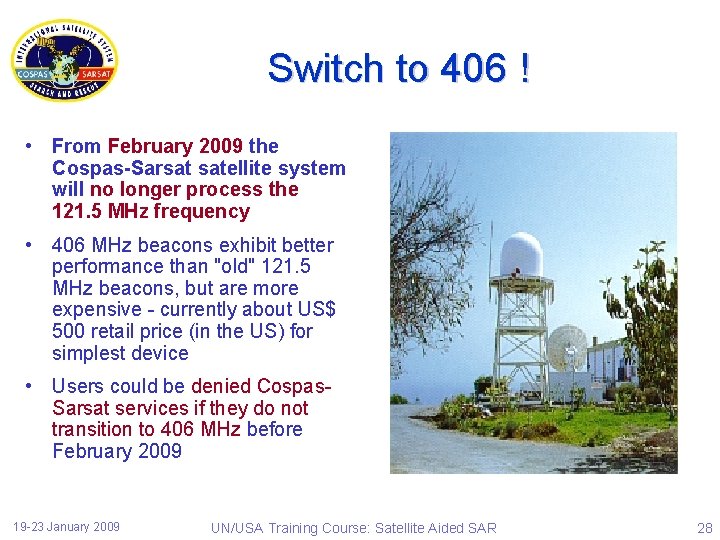
Switch to 406 ! • From February 2009 the Cospas-Sarsat satellite system will no longer process the 121. 5 MHz frequency • 406 MHz beacons exhibit better performance than "old" 121. 5 MHz beacons, but are more expensive - currently about US$ 500 retail price (in the US) for simplest device • Users could be denied Cospas. Sarsat services if they do not transition to 406 MHz before February 2009 19 -23 January 2009 UN/USA Training Course: Satellite Aided SAR 28
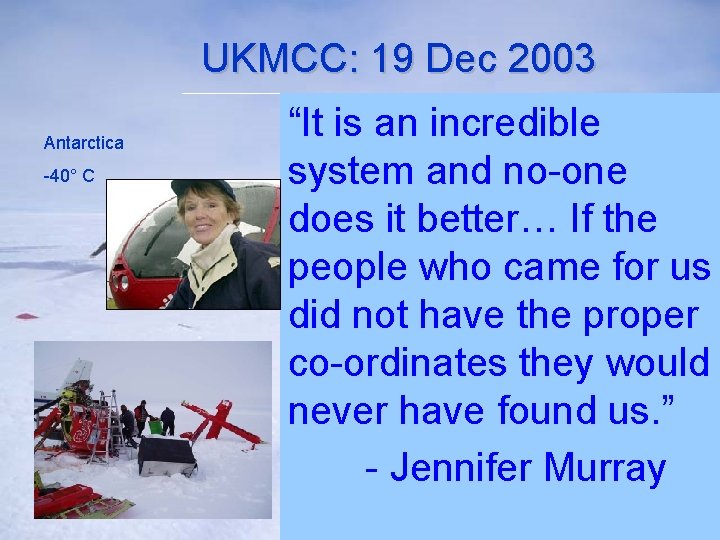
UKMCC: 19 Dec 2003 Antarctica -40° C 19 -23 January 2009 “It is an incredible system and no-one does it better… If the people who came for us did not have the proper co-ordinates they would never have found us. ” - Jennifer Murray UN/USA Training Course: Satellite Aided SAR 29
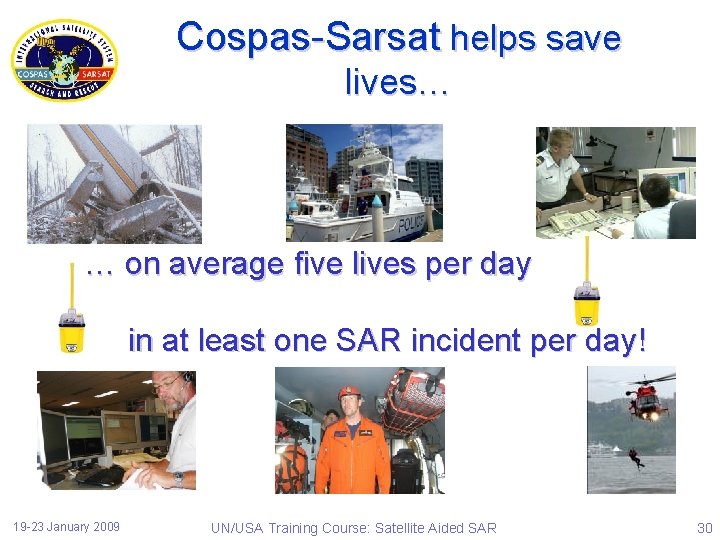
Cospas-Sarsat helps save lives… … on average five lives per day in at least one SAR incident per day! 19 -23 January 2009 UN/USA Training Course: Satellite Aided SAR 30
For More Info… International Cospas-Sarsat Programme 700 de la Gauchetière Ouest Suite 2450 Montréal, Québec H 3 B 5 M 2 CANADA Phone: +1 514 954 6658 Fax: +1 514 954 6750 Email: mail@cospas-sarsat. int Visit Our Website! www. cospas-sarsat. org 19 -23 January 2009 UN/USA Training Course: Satellite Aided SAR 31