Unit IX Alteration in Musculoskeletal Function NSG 203
- Slides: 32
Unit IX: Alteration in Musculoskeletal Function NSG 203 – Spring 20145
Arthritis • What is the most common type of arthritis? • Compare and contrast the 4 types of arthritis
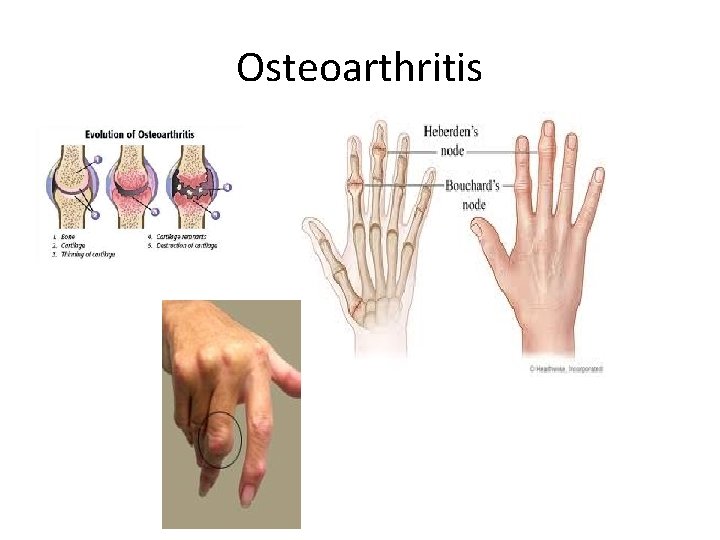
Osteoarthritis
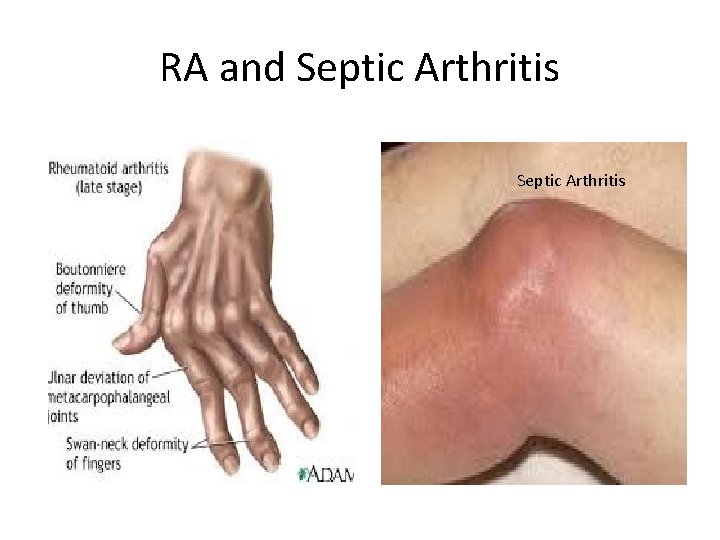
RA and Septic Arthritis
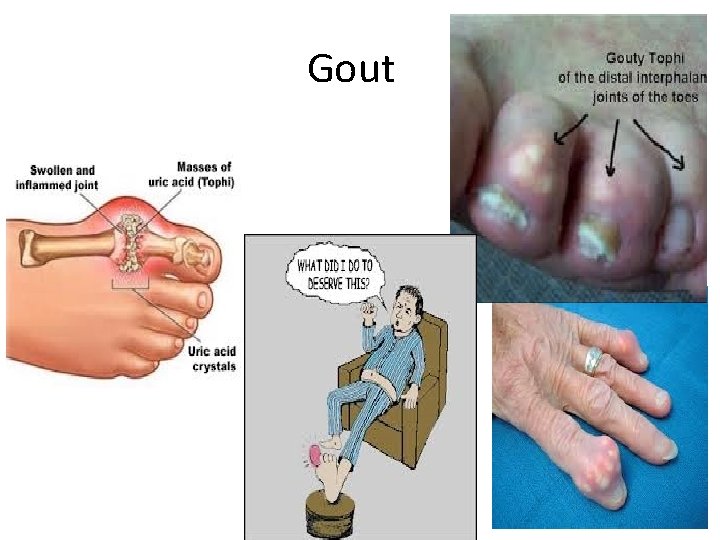
Gout
Gout • • Nursing management Pharmaceutical management Diet management Patient teaching
Osteomyelitis • Infection of the bone • Occurs because of – Extension of soft tissue infection – Direct bone contamination – Bloodborne spread from another site of infection • This typically occurs in an area of bone that has been traumatized or has lowered resistance. • Causative organisms – Methicillin-resistant Staphylococcus aureus – Other: Proteus and Pseudomonas spp. , Escherichia coli
Nursing Process: The Care of the Patient With Osteomyelitis— Assessment • Risk factors • Signs and symptoms of infection localized pain, edema, erythema, fever, drainage • Note: With chronic osteomyelitis, fever may be low grade and occur in the afternoon or evening • Signs and symptoms of adverse reactions and complications of antibiotic therapy, including signs and symptoms of superinfections • Ability to adhere to prescribed therapeutic regimen— antibiotic therapy
Nursing Process: The Care of the Patient With Osteomyelitis— Diagnoses • Acute pain • Impaired physical mobility • Risk for extension of infection: bone abscess formation • Deficient knowledge
Nursing Process: The Care of the Patient With Osteomyelitis—Planning • Prevention of osteomyelitis is the goal. • Major goals may include relief of pain, improved physical mobility within therapeutic limitations, control and eradication of infection, and knowledge of therapeutic regimen.
Nursing Process: The Care of the Patient With Osteomyelitis— Interventions • Reliving pain – Immobilization – Elevation – Handle with great care and gentleness – Administer prescribed analgesics • Improving physical mobility – Activity is restricted – Gentle ROM to joints above and below the affected part – Participation in ADLs within limitations
Nursing Process: The Care of the Patient With Osteomyelitis— Interventions Prophylactic antibiotics Encourage adequate hydration, vitamins, and protein Administer and monitor antibiotic therapy Patient and family education – Long-term antibiotic therapy and management of home IV administration – Mobility limitations – Safety and prevention of injury – Postoperative and follow-up care • Referral for home health care • •
Bone Tumors • Primary tumors – Benign tumors are more common, generally are slow growing, and present few symptoms – Malignant • Prognosis depends on the type and whether the tumor has metastasized • Osteogenic sarcoma is the most common, and most often fatal, primary malignant bone tumor • Metastatic bone tumors – More common than primary tumors
Nursing Process: The Care of the Patient With a Bone Tumor— Assessment Onset and course of symptoms Knowledge of disease and treatment Pain Patient coping Family support and coping Physical examination of area, including neurovascular status and ROM • Mobility and ADL abilities • • •
Nursing Process: The Care of the Patient With a Bone Tumor— Postoperative Assessment • Postoperative assessment as for a patient who has had orthopedic surgery • Monitor VS, LOC, neurovascular status, pain • Signs and symptoms of complications • Monitor laboratory results: WBC and serum calcium level • Signs and symptoms of hypercalcemia
• • • Nursing Process: The Care of the Patient With a Bone Tumor— Diagnoses Deficient knowledge Acute and chronic pain Risk for injury Ineffective coping Risk for situational low self-esteem
Collaborative Problems and Potential Complications • • Delayed wound healing Nutritional deficiency Infection Hypercalcemia
Nursing Process: The Care of the Patient With a Bone Tumor—Planning • Major goals include knowledge of disease process and treatment regimen, control of pain, absence of pathologic fractures, effective coping patterns, improved self-esteem, and absence of complications.
Nursing Process: The Care of the Patient With a Bone Tumor— Interventions • Care is similar to that of patients who have undergone orthopedic surgery. • Patient and family education regarding diagnosis, disease process, and treatment. • Prevention of pathologic fractures – Support affected extremities at all times and handle gently – External supports or fixation devices may be required – Restrict weight bearing and activity as prescribed – Use of assistive devices
Nursing Process: The Care of the Patient Undergoing Orthopedic Surgery—Interventions • Promoting proper nutrition – Administer antiemetics as prescribed – Relaxation techniques – Oral care – Nutritional supplements • Provide adequate hydration • Use strict aseptic technique
Rehabilitation of Patients With Amputation • Amputation may be congenital or traumatic or caused by conditions such as progressive peripheral vascular disease, infection, or malignant tumor. • Amputation is used to relieve symptoms, improve function, and save the person's life. • The health care team needs to communicate a positive attitude to facilitate acceptance and participation in rehabilitation.
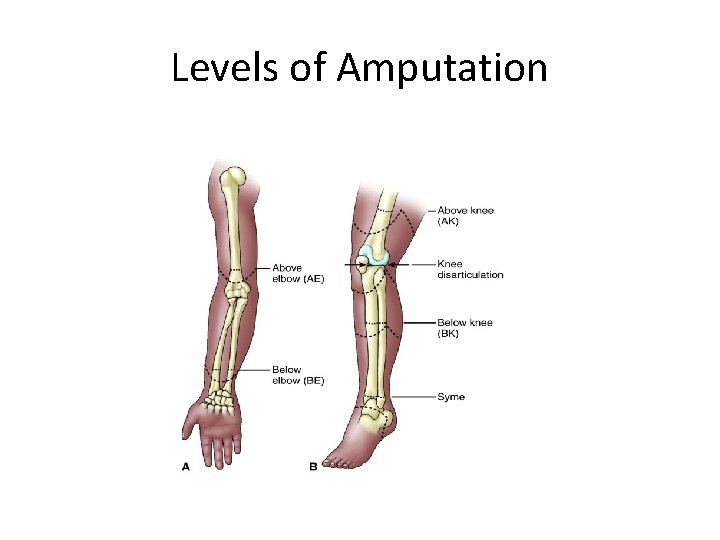
Levels of Amputation
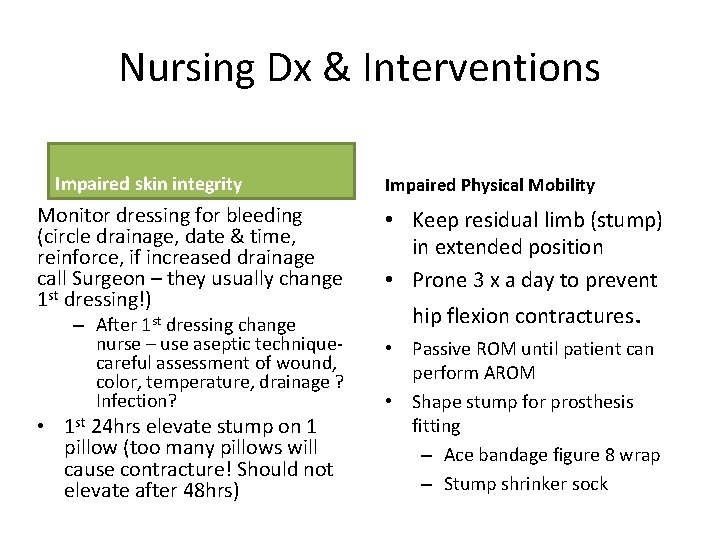
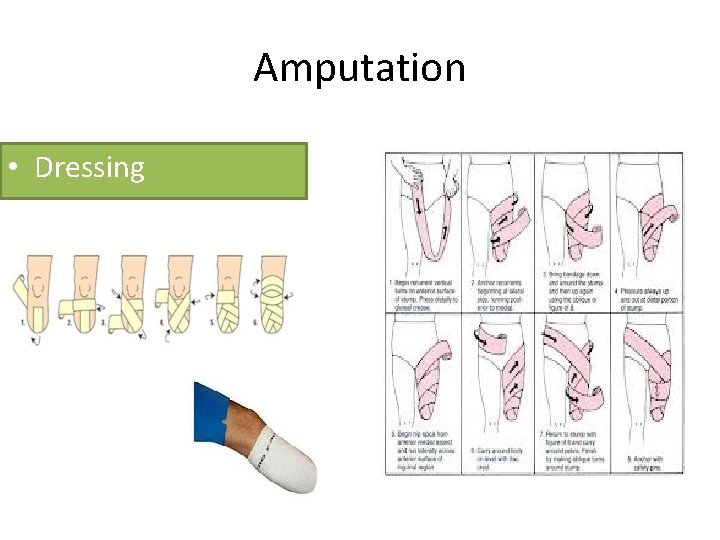
Nursing Dx & Interventions Impaired skin integrity Monitor dressing for bleeding (circle drainage, date & time, reinforce, if increased drainage call Surgeon – they usually change 1 st dressing!) – After 1 st dressing change nurse – use aseptic techniquecareful assessment of wound, color, temperature, drainage ? Infection? • 1 st 24 hrs elevate stump on 1 pillow (too many pillows will cause contracture! Should not elevate after 48 hrs) Impaired Physical Mobility • Keep residual limb (stump) in extended position • Prone 3 x a day to prevent hip flexion contractures. • Passive ROM until patient can perform AROM • Shape stump for prosthesis fitting – Ace bandage figure 8 wrap – Stump shrinker sock
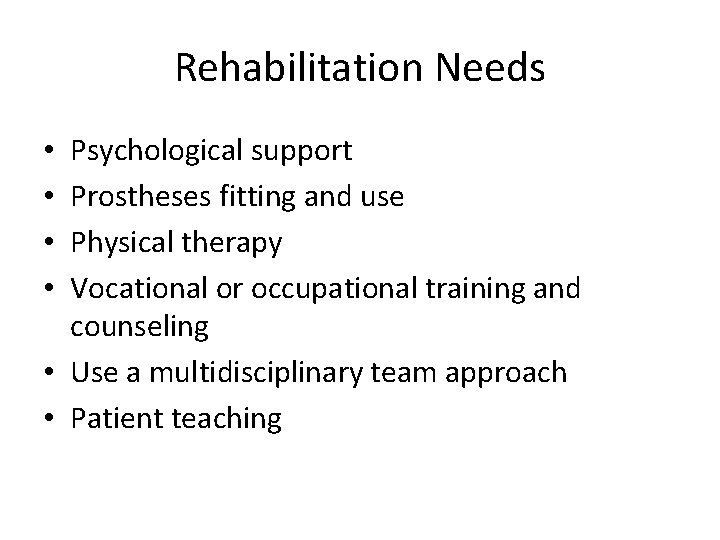
Rehabilitation Needs Psychological support Prostheses fitting and use Physical therapy Vocational or occupational training and counseling • Use a multidisciplinary team approach • Patient teaching • •
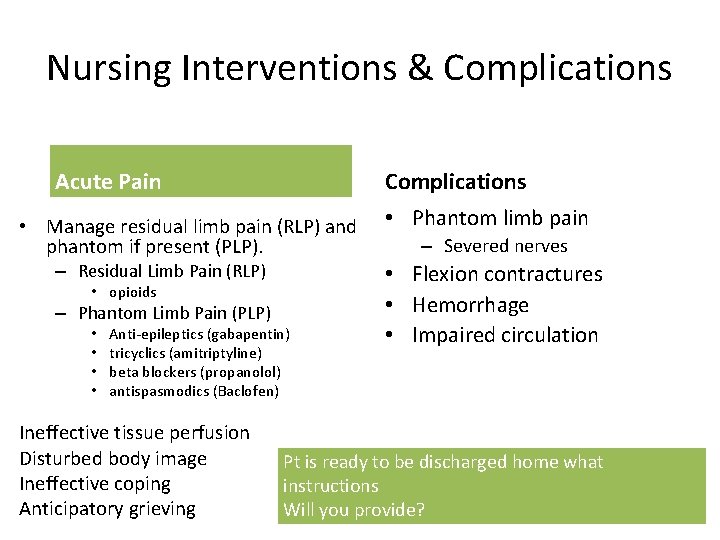
Nursing Interventions & Complications Acute Pain • Manage residual limb pain (RLP) and phantom if present (PLP). – Residual Limb Pain (RLP) • opioids – Phantom Limb Pain (PLP) • • Anti-epileptics (gabapentin) tricyclics (amitriptyline) beta blockers (propanolol) antispasmodics (Baclofen) Ineffective tissue perfusion Disturbed body image Ineffective coping Anticipatory grieving Complications • Phantom limb pain – Severed nerves • Flexion contractures • Hemorrhage • Impaired circulation Pt is ready to be discharged home what instructions Will you provide?
Nursing Process: The Care of the Patient With an Amputation— Assessment • Neurovascular status and function of affected extremity or residual limb and of unaffected extremity • Signs and symptoms of infection • Nutritional status • Concurrent health problems • Psychological status and coping
Nursing Process: The Care of the Patient With an Amputation—Planning • Major goals may include relief of pain, absence of altered sensory perceptions, wound healing, acceptance of altered body image, resolution of grieving processes, restoration of physical mobility, and absence of complications.
Nursing Process: The Care of the Patient With an Amputation— Interventions • Relief of pain – Administer analgesic or other medications as prescribed – Changing position – Alternative methods of pain relief: distraction, TENS unit • Promoting wound healing – Handle limb gently – Residual limb shaping
Resolving Grief and Enhancing Body Image • Encourage communication and expression of feelings • Create an accepting, supportive atmosphere • Provide support and listen • Encourage patient to look at, feel, and care for the residual limb • Help patient set realistic goals • Help patient resume self-care and independence • Referral to counselors and support groups
Achieving Physical Mobility • Proper positioning of limb; avoid abduction, external rotation and flexion • Turn frequently; prone positioning if possible • Use of assistive devices • ROM exercises • Muscle strengthening exercises • “Preprosthetic care”; proper bandaging, massage, and “toughening” of the residual limb
Amputation • Dressing
Educating About Self-Care • Encourage active participation in care • Continue support in rehabilitation facility or at home • Focus on safety and mobility