UNIT 6 PART 2 HUMAN ECOLOGY 1 Human



- Slides: 38
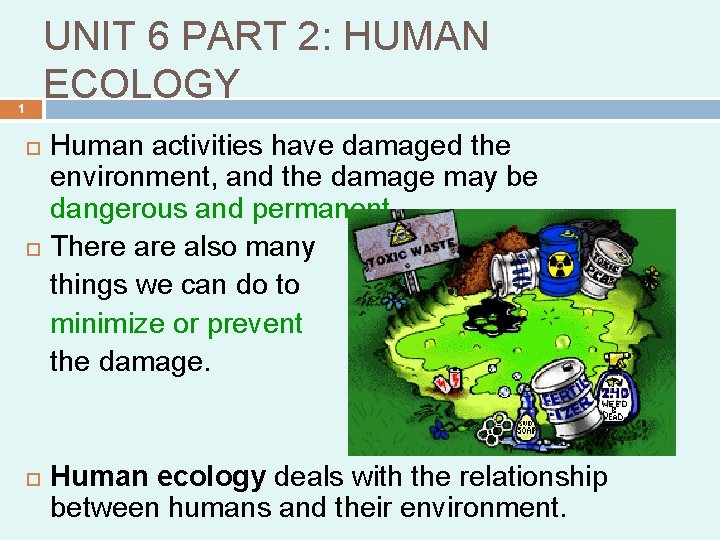
UNIT 6 PART 2: HUMAN ECOLOGY 1 Human activities have damaged the environment, and the damage may be dangerous and permanent. There also many things we can do to minimize or prevent the damage. Human ecology deals with the relationship between humans and their environment.
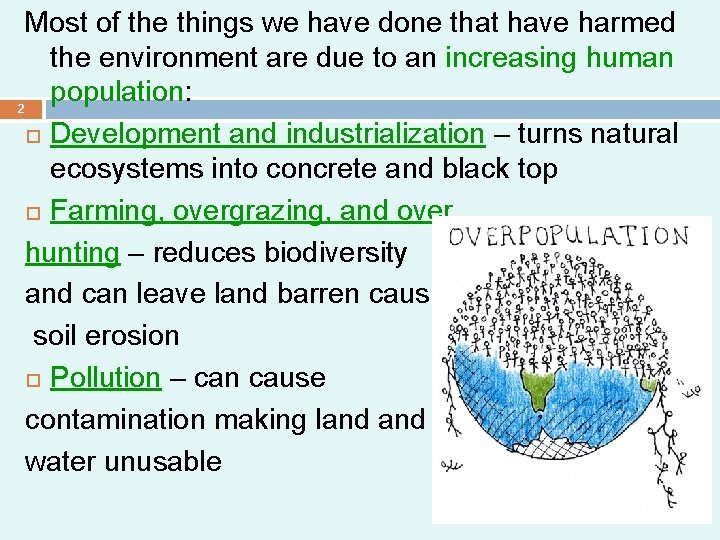
Most of the things we have done that have harmed the environment are due to an increasing human population: 2 Development and industrialization – turns natural ecosystems into concrete and black top Farming, overgrazing, and over hunting – reduces biodiversity and can leave land barren causing soil erosion Pollution – can cause contamination making land water unusable
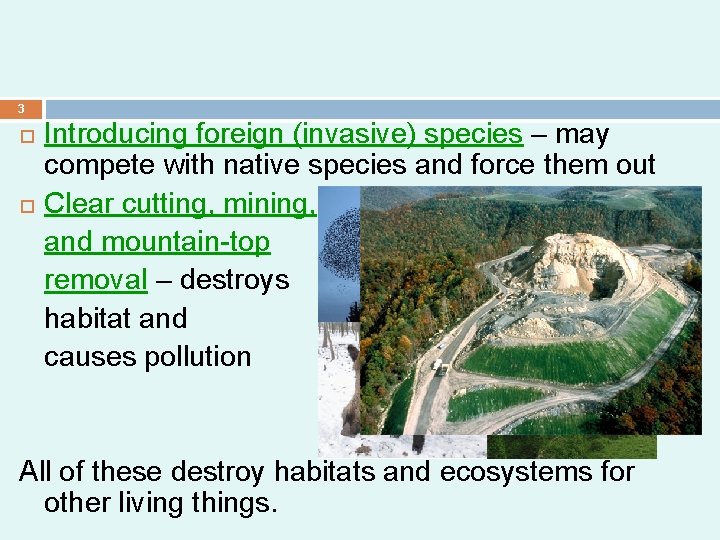
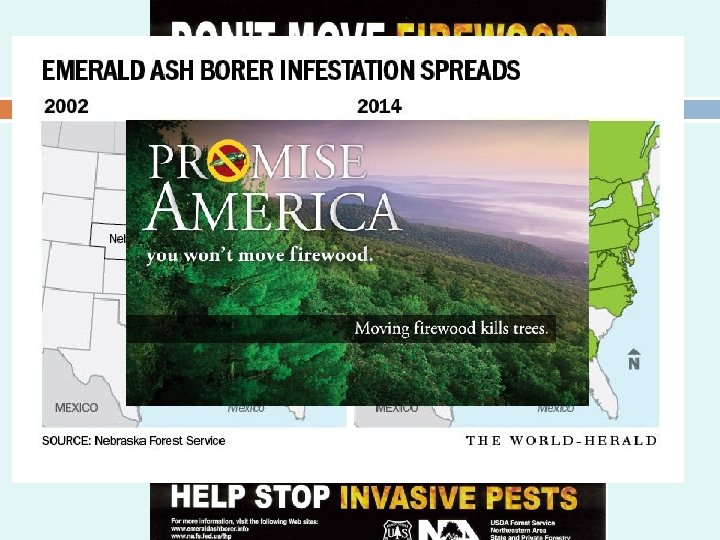
3 Introducing foreign (invasive) species – may compete with native species and force them out Clear cutting, mining, and mountain-top removal – destroys habitat and causes pollution All of these destroy habitats and ecosystems for other living things.
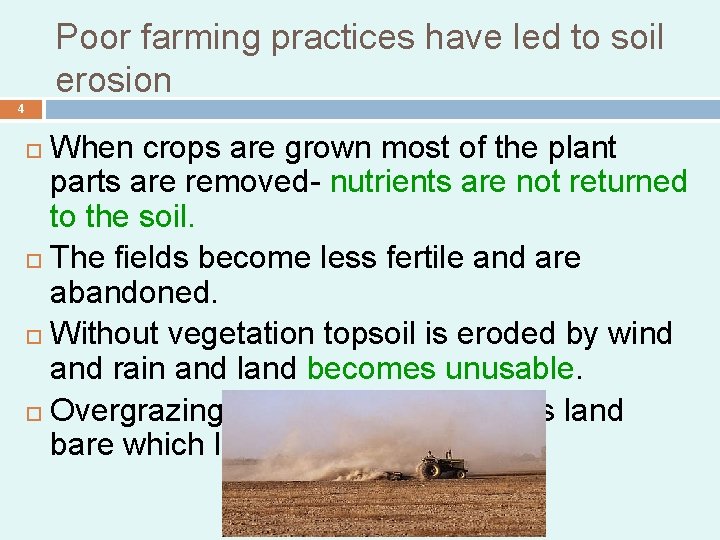
Poor farming practices have led to soil erosion 4 When crops are grown most of the plant parts are removed- nutrients are not returned to the soil. The fields become less fertile and are abandoned. Without vegetation topsoil is eroded by wind and rain and land becomes unusable. Overgrazing by animals also leaves land bare which leads to erosion.
Ways to Prevent Soil Erosion 5 Cover crops - plant crops that cover a whole field such as clover, alfalfa, oats and wheat. Strip cropping – row plants and cover plants Terracing or contour farming Windbreaks – rows of trees Crop rotation Fertilizers Dams
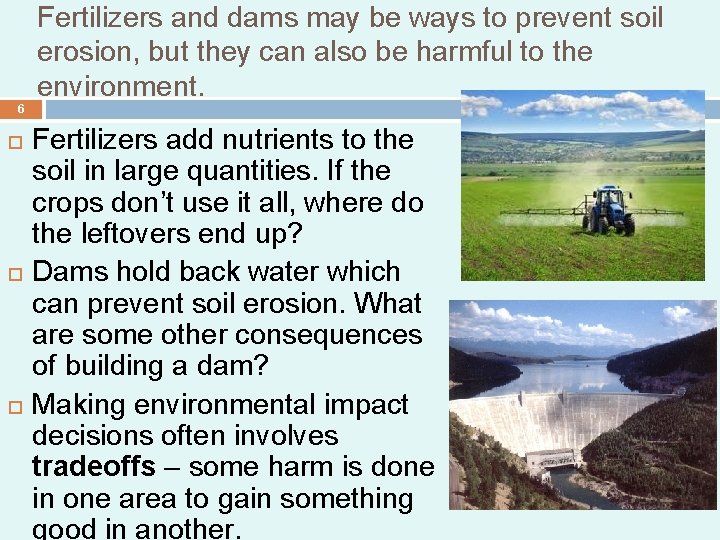
Fertilizers and dams may be ways to prevent soil erosion, but they can also be harmful to the environment. 6 Fertilizers add nutrients to the soil in large quantities. If the crops don’t use it all, where do the leftovers end up? Dams hold back water which can prevent soil erosion. What are some other consequences of building a dam? Making environmental impact decisions often involves tradeoffs – some harm is done in one area to gain something good in another.
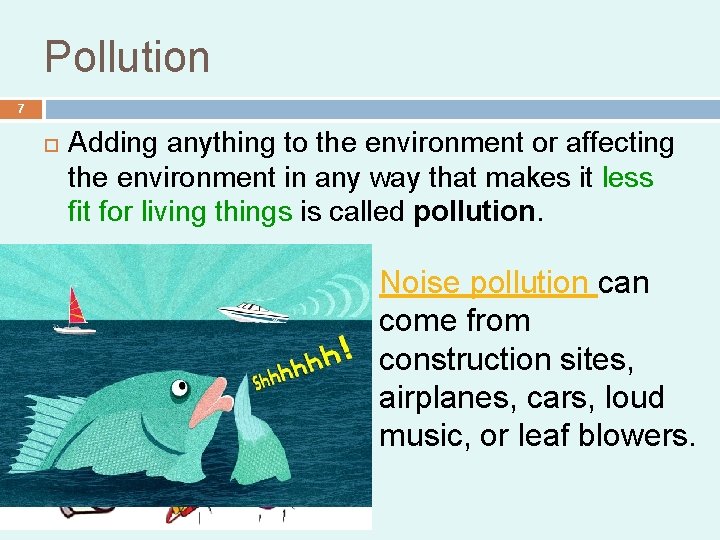
Pollution 7 Adding anything to the environment or affecting the environment in any way that makes it less fit for living things is called pollution. Noise pollution can come from construction sites, airplanes, cars, loud music, or leaf blowers.
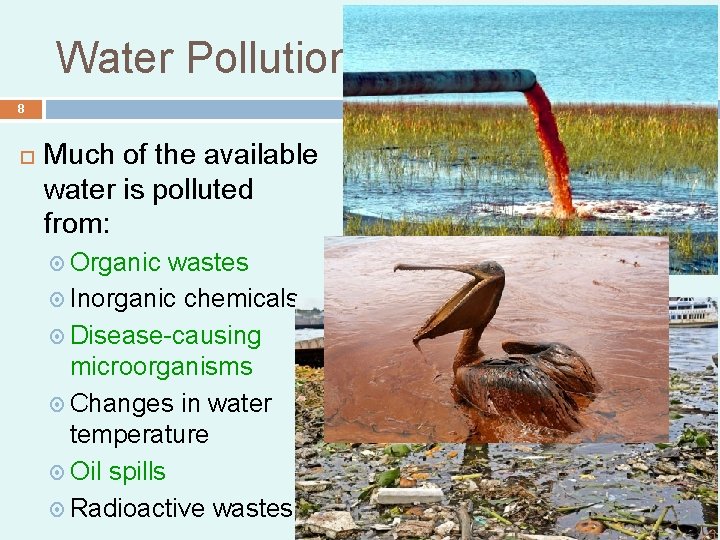
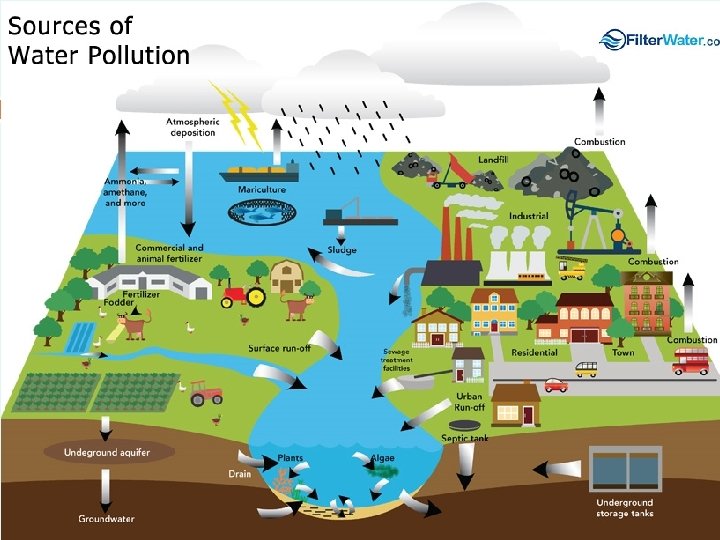
Water Pollution 8 Much of the available water is polluted from: Organic wastes Inorganic chemicals Disease-causing microorganisms Changes in water temperature Oil spills Radioactive wastes
9
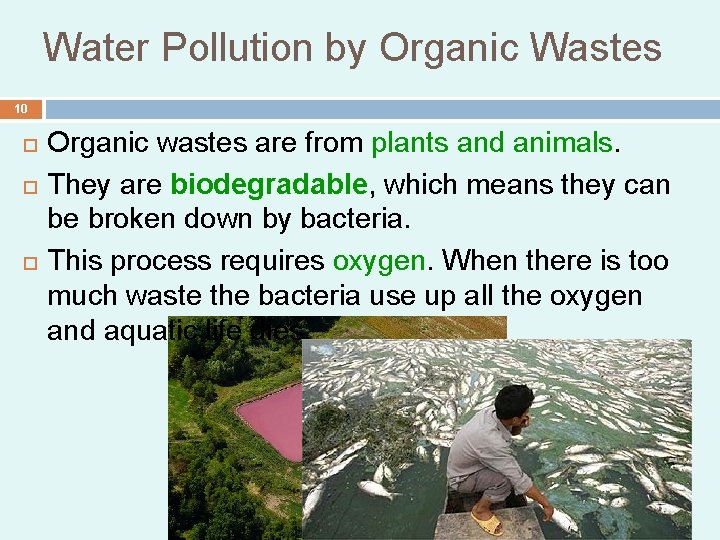
Water Pollution by Organic Wastes 10 Organic wastes are from plants and animals. They are biodegradable, which means they can be broken down by bacteria. This process requires oxygen. When there is too much waste the bacteria use up all the oxygen and aquatic life dies.
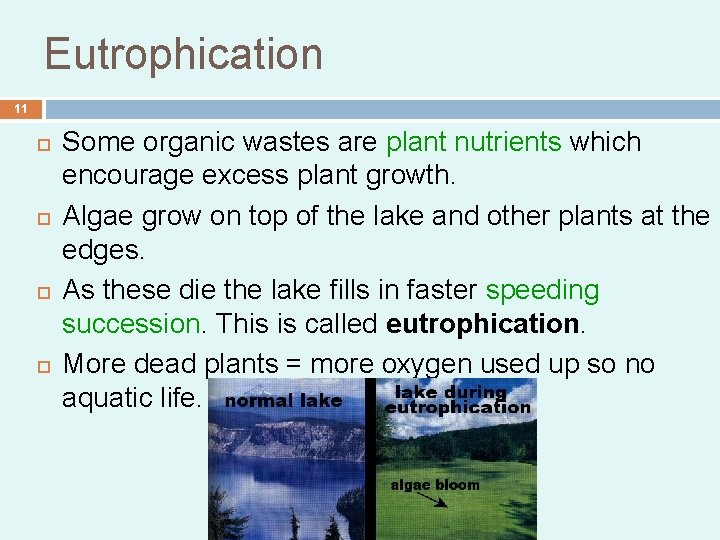
Eutrophication 11 Some organic wastes are plant nutrients which encourage excess plant growth. Algae grow on top of the lake and other plants at the edges. As these die the lake fills in faster speeding succession. This is called eutrophication. More dead plants = more oxygen used up so no aquatic life.
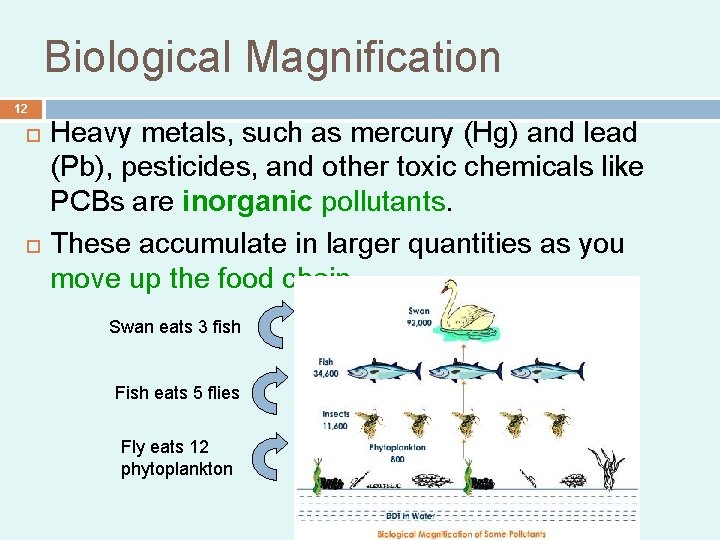
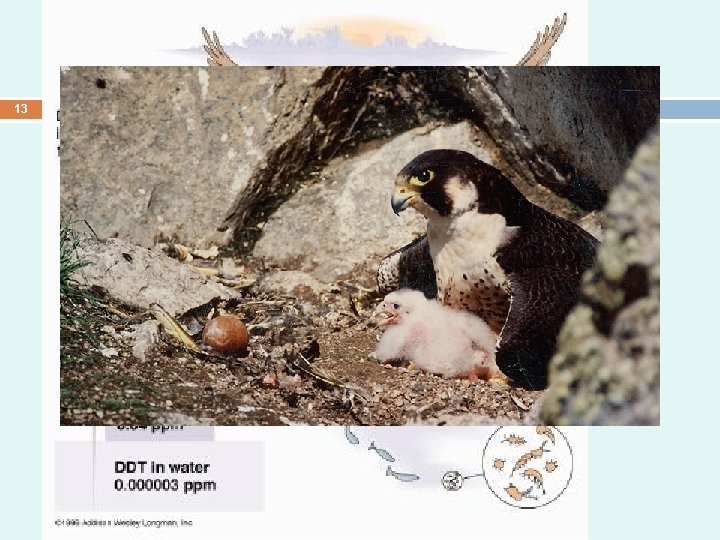
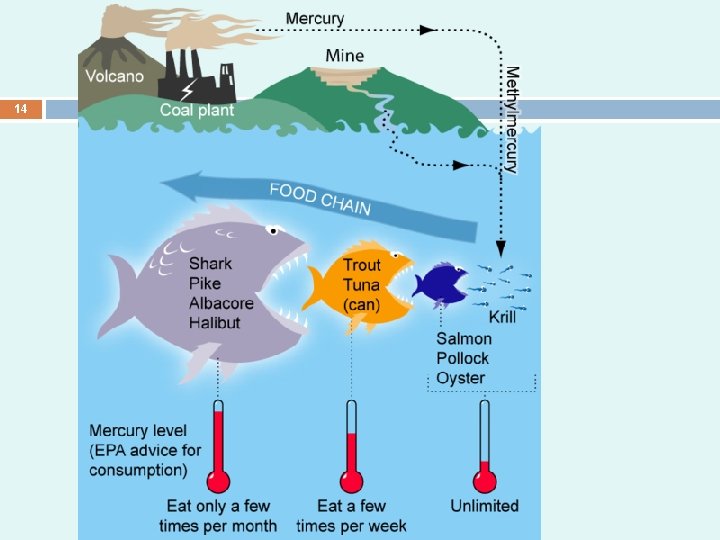
Biological Magnification 12 Heavy metals, such as mercury (Hg) and lead (Pb), pesticides, and other toxic chemicals like PCBs are inorganic pollutants. These accumulate in larger quantities as you move up the food chain. Swan eats 3 fish Fish eats 5 flies Fly eats 12 phytoplankton
13
14
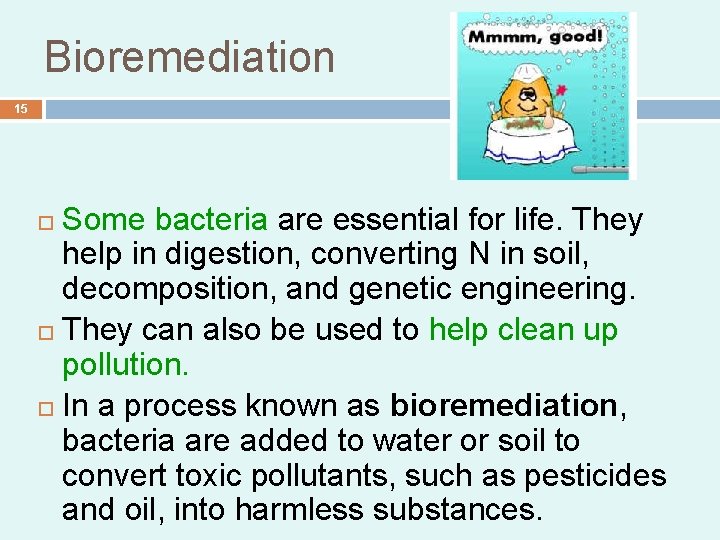
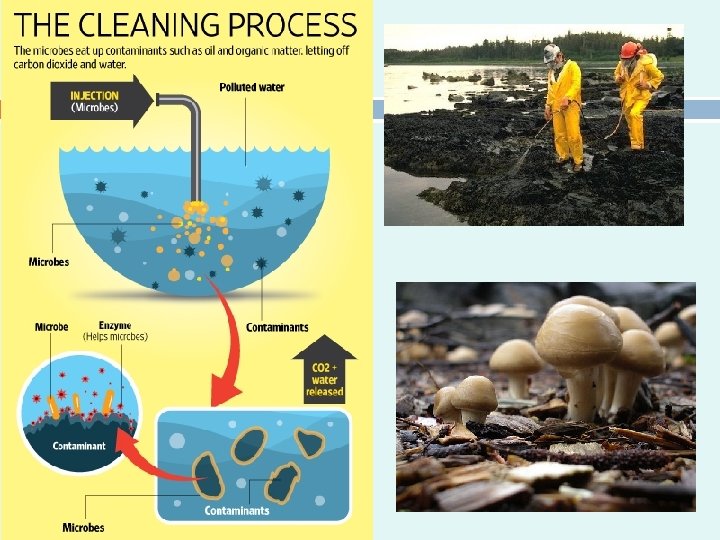
Bioremediation 15 Some bacteria are essential for life. They help in digestion, converting N in soil, decomposition, and genetic engineering. They can also be used to help clean up pollution. In a process known as bioremediation, bacteria are added to water or soil to convert toxic pollutants, such as pesticides and oil, into harmless substances.
16
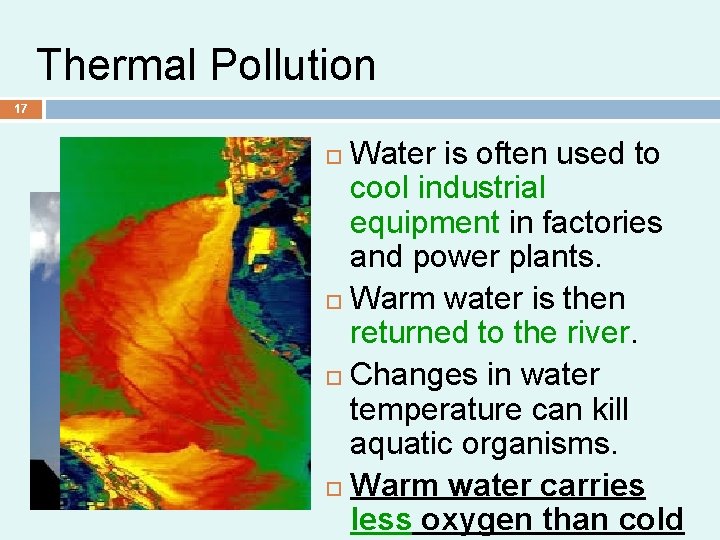
Thermal Pollution 17 Water is often used to cool industrial equipment in factories and power plants. Warm water is then returned to the river. Changes in water temperature can kill aquatic organisms. Warm water carries less oxygen than cold
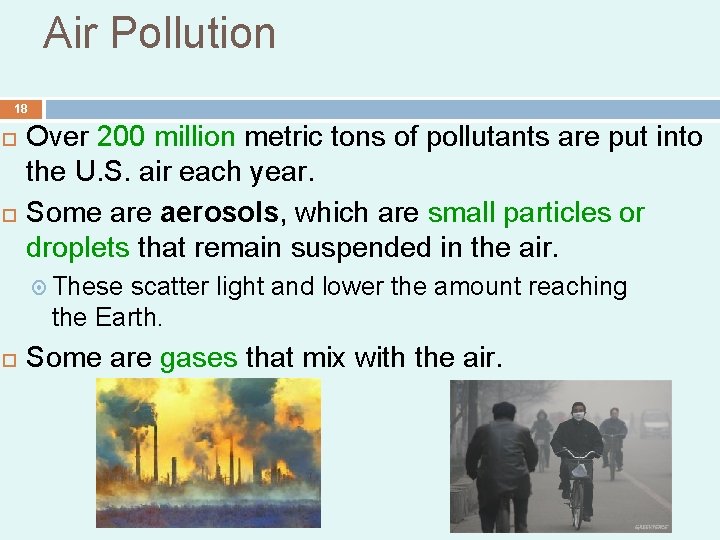
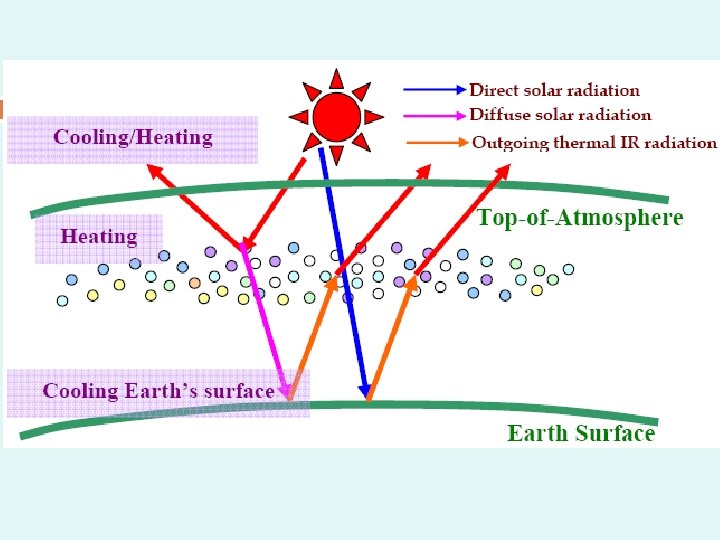
Air Pollution 18 Over 200 million metric tons of pollutants are put into the U. S. air each year. Some are aerosols, which are small particles or droplets that remain suspended in the air. These scatter light and lower the amount reaching the Earth. Some are gases that mix with the air.
19
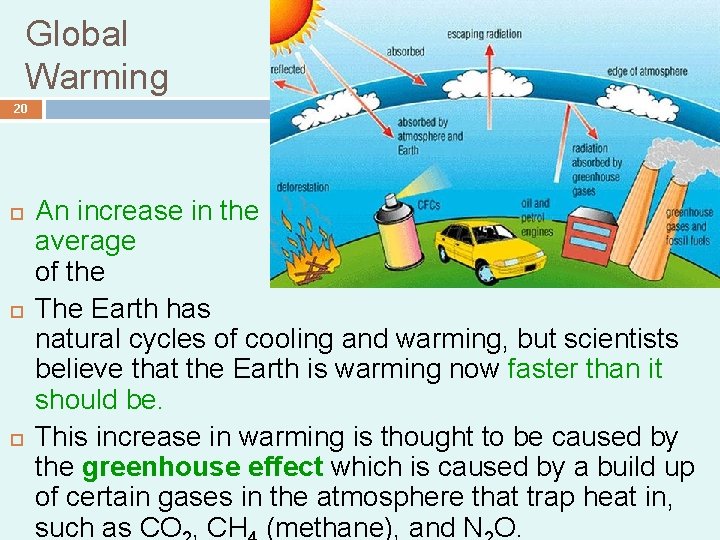
Global Warming 20 An increase in the average temperature of the Earth’s surface. The Earth has natural cycles of cooling and warming, but scientists believe that the Earth is warming now faster than it should be. This increase in warming is thought to be caused by the greenhouse effect which is caused by a build up of certain gases in the atmosphere that trap heat in, such as CO , CH (methane), and N O.
Acid Rain 21 Burning fossil fuels such as oil, coal, and gas produce sulfur dioxide (SO 2) and nitrogen oxides (NO and NO 2) They combine with water in the atmosphere to produce sulfuric and nitric acid which can kill plants and animals. Acid rain has a p. H of 5. 0 or
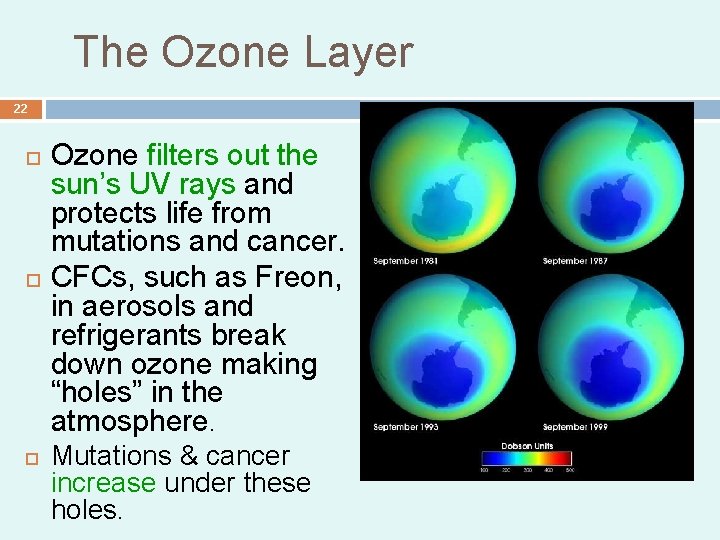
The Ozone Layer 22 Ozone filters out the sun’s UV rays and protects life from mutations and cancer. CFCs, such as Freon, in aerosols and refrigerants break down ozone making “holes” in the atmosphere. Mutations & cancer increase under these holes.
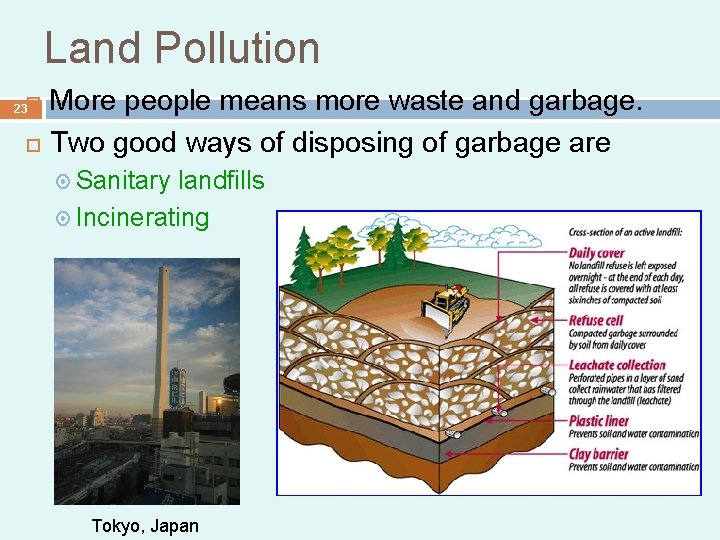
Land Pollution 23 More people means more waste and garbage. Two good ways of disposing of garbage are Sanitary landfills Incinerating Tokyo, Japan
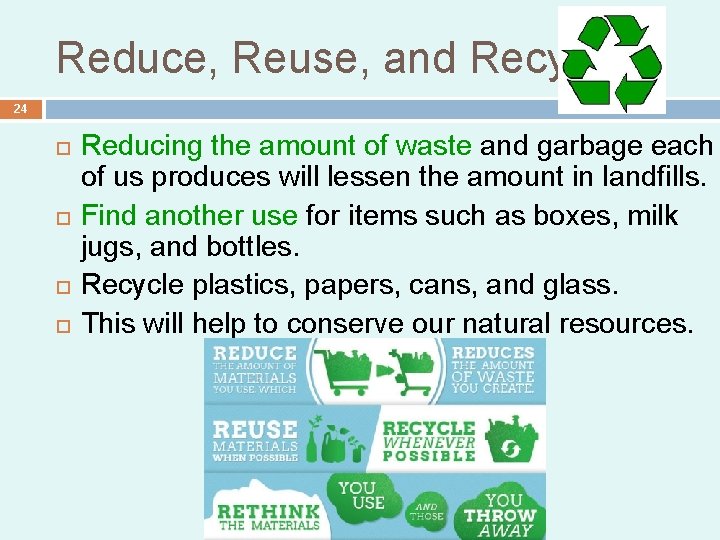
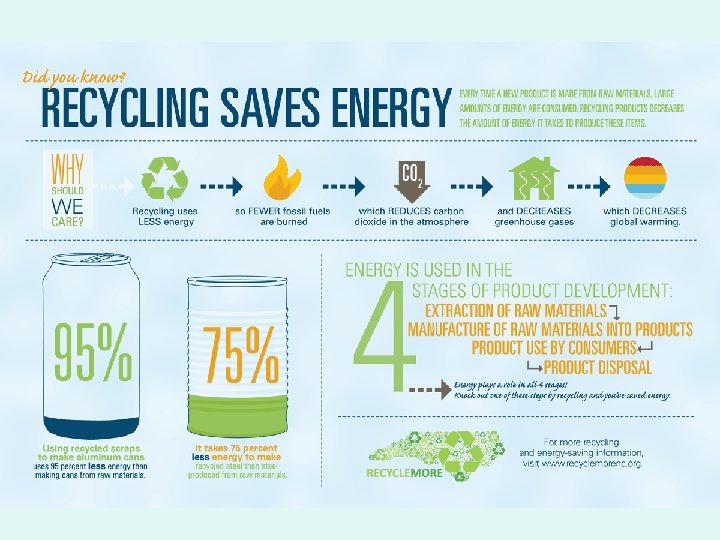
Reduce, Reuse, and Recycle 24 Reducing the amount of waste and garbage each of us produces will lessen the amount in landfills. Find another use for items such as boxes, milk jugs, and bottles. Recycle plastics, papers, cans, and glass. This will help to conserve our natural resources.
25
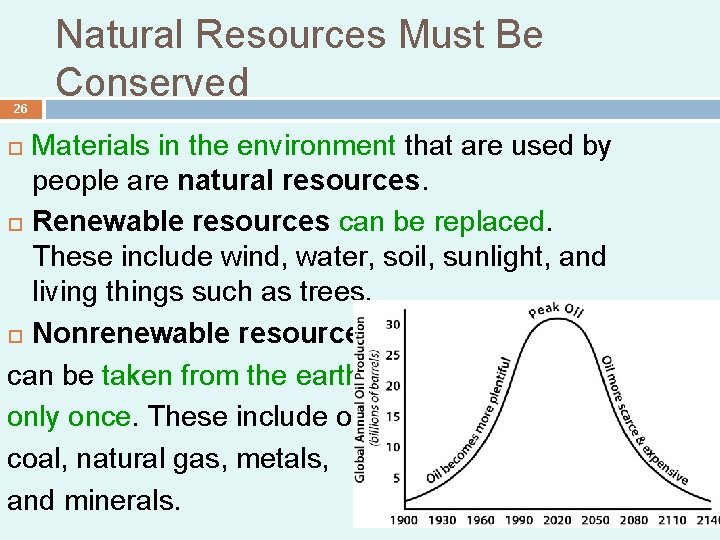
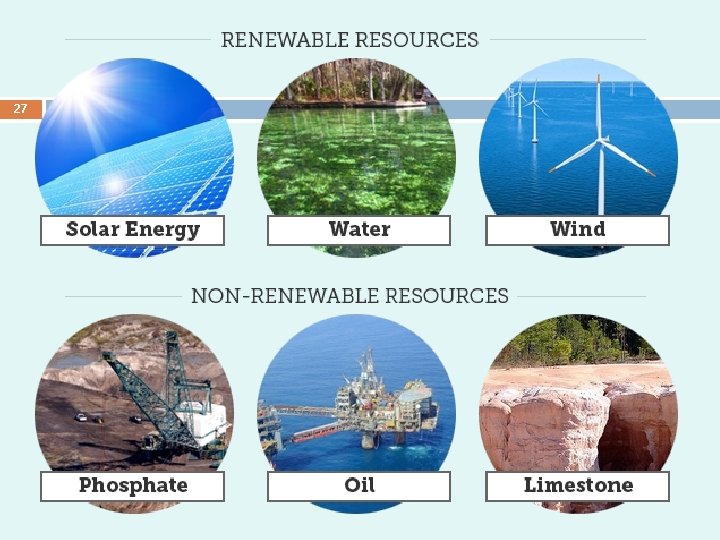
26 Natural Resources Must Be Conserved Materials in the environment that are used by people are natural resources. Renewable resources can be replaced. These include wind, water, soil, sunlight, and living things such as trees. Nonrenewable resources can be taken from the earth only once. These include oil, coal, natural gas, metals, and minerals.
27
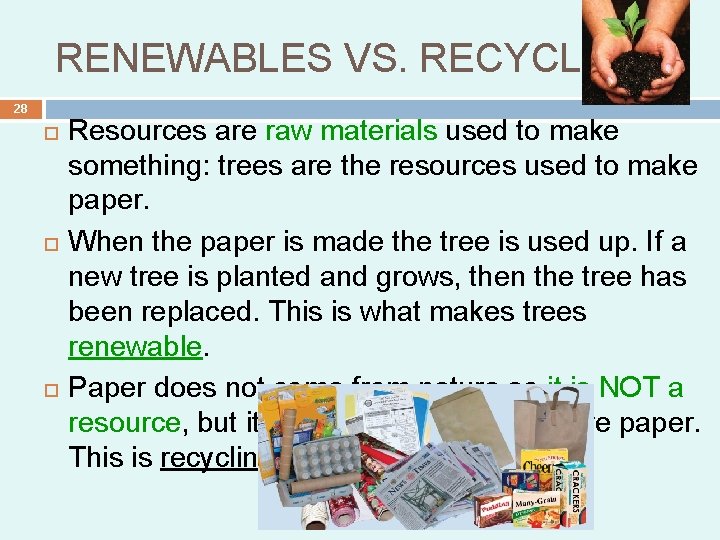
RENEWABLES VS. RECYCLING 28 Resources are raw materials used to make something: trees are the resources used to make paper. When the paper is made the tree is used up. If a new tree is planted and grows, then the tree has been replaced. This is what makes trees renewable. Paper does not come from nature so it is NOT a resource, but it can be used to make more paper. This is recycling.
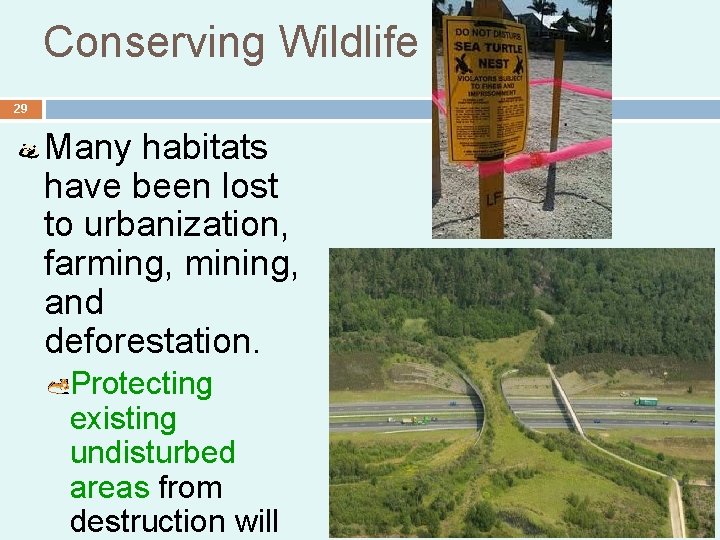
Conserving Wildlife 29 Many habitats have been lost to urbanization, farming, mining, and deforestation. Protecting existing undisturbed areas from destruction will
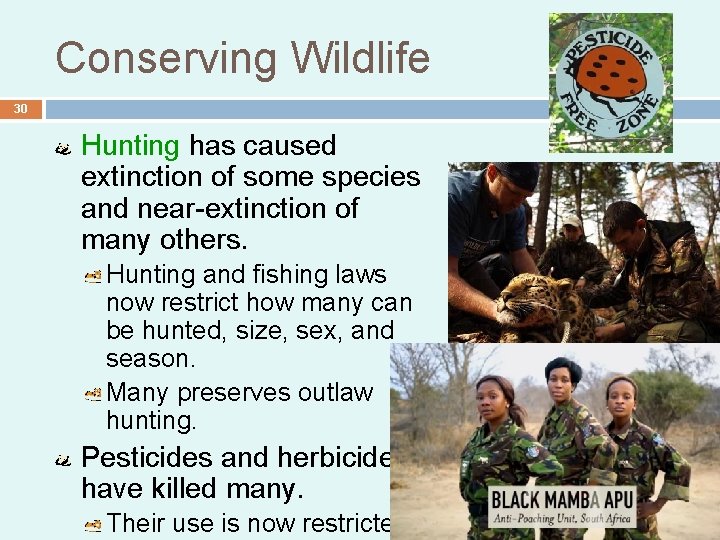
Conserving Wildlife 30 Hunting has caused extinction of some species and near-extinction of many others. Hunting and fishing laws now restrict how many can be hunted, size, sex, and season. Many preserves outlaw hunting. Pesticides and herbicides have killed many. Their use is now restricted.
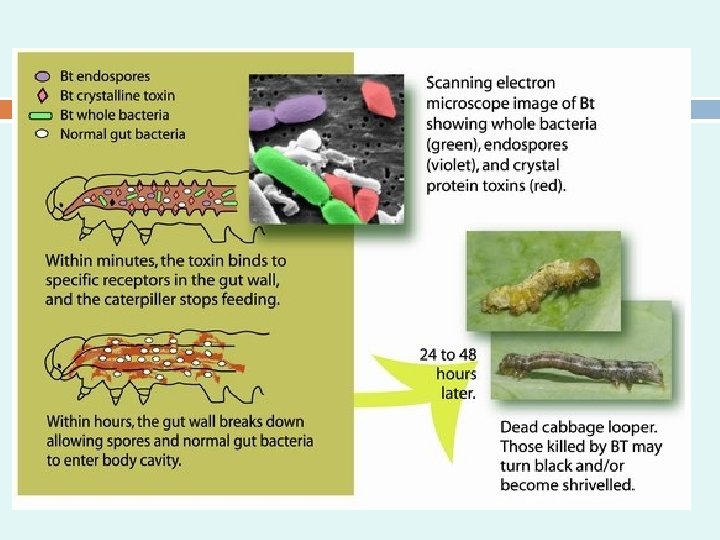
Controlling Pests Biologically 31 Introduction of a natural enemy of the pest Ladybugs to control aphids Loosestrife eating beetles for purple loosestrife Bacteria and viruses that attack insect pests Crop rotation removes a favored food source of a pest thus reducing their numbers
32
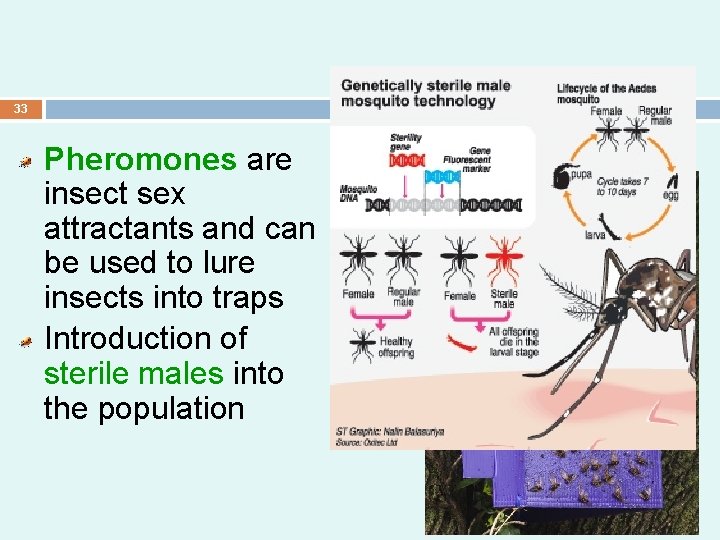
33 Pheromones are insect sex attractants and can be used to lure insects into traps Introduction of sterile males into the population
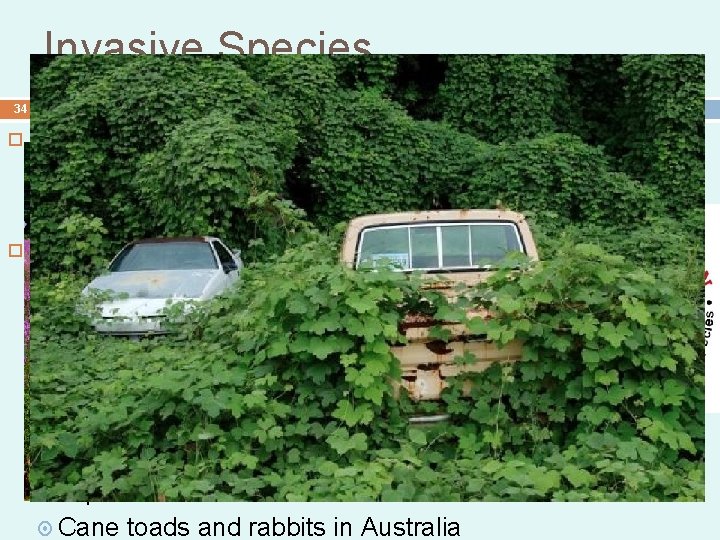
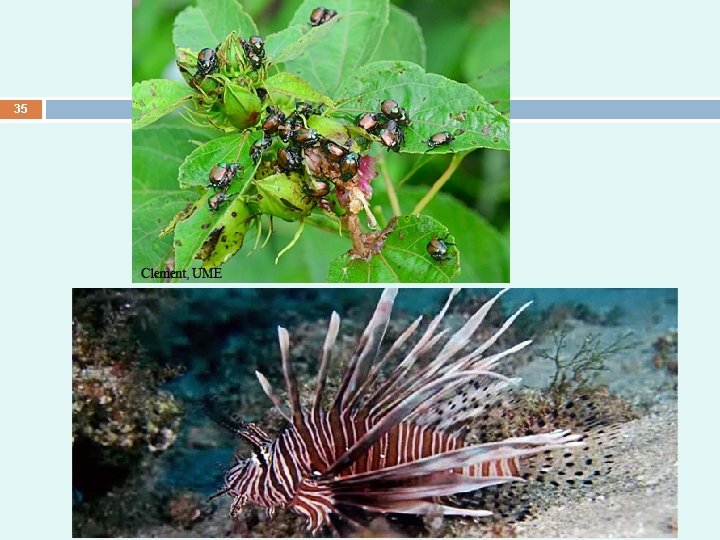
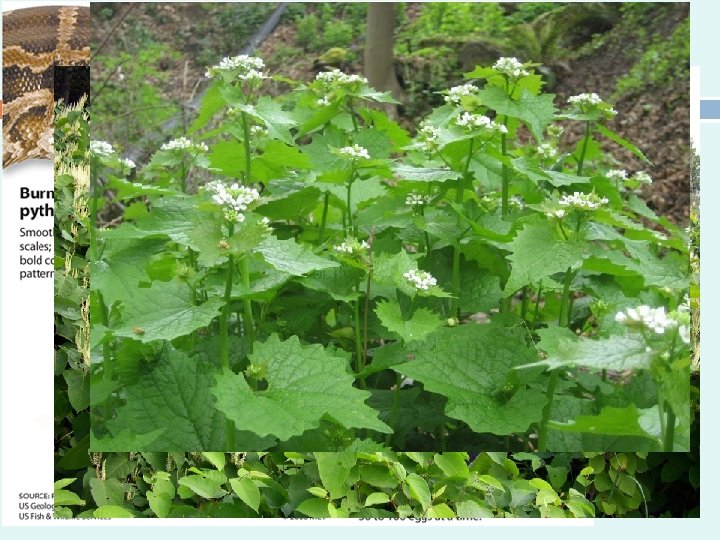
Invasive Species 34 When using biological controls, one must be certain of the effects before introduction. Species in their natural habitats have enemies that prey upon them. A species introduced into a different habitat may have no natural predators and breed out of control. These are invasive species. Purple loosestrife, Zebra mussels, Japanese beetles in USA Cane toads and rabbits in Australia
35
36
37
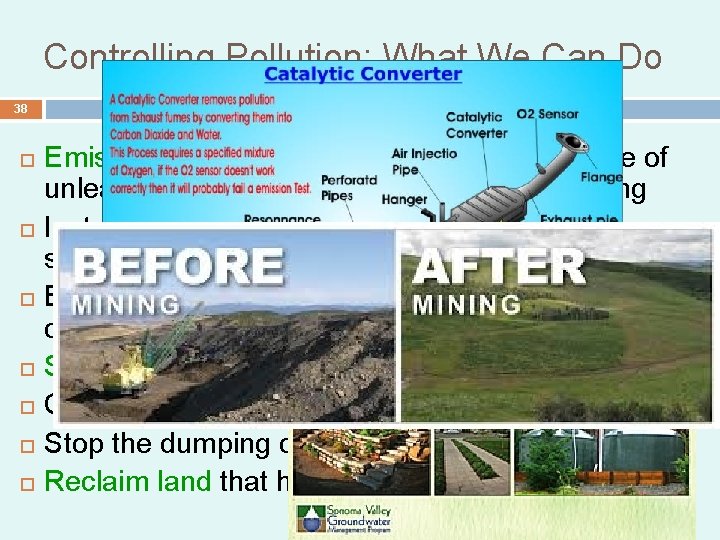
Controlling Pollution: What We Can Do 38 Emission controls on automobiles and the use of unleaded gasoline – helps fight global warming Install filters and scrubbers on industrial smokestacks – reduces acid rain Ban the use of aerosols and CFCs – protects the ozone layer Sewage treatment plants – returns water Control and contain runoff from parking lots Stop the dumping of wastes into waterways Reclaim land that has been strip-mined