Unit 2 IP addressing Contd Delivery and routing

- Slides: 29
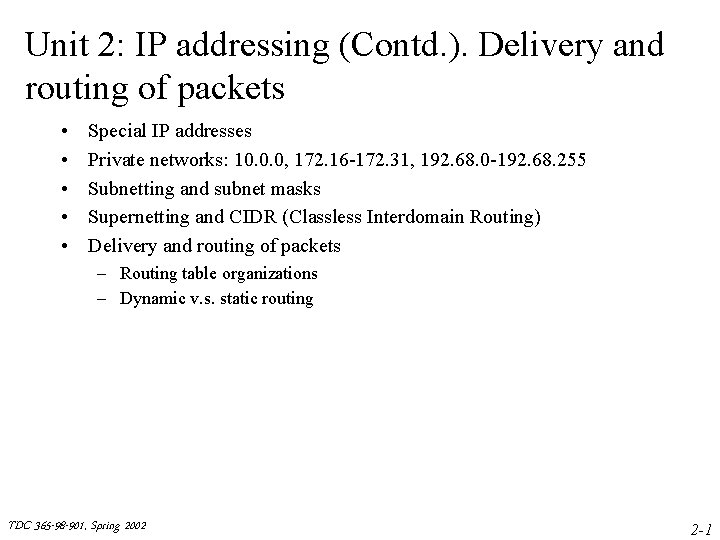
Unit 2: IP addressing (Contd. ). Delivery and routing of packets • • • Special IP addresses Private networks: 10. 0. 0, 172. 16 -172. 31, 192. 68. 0 -192. 68. 255 Subnetting and subnet masks Supernetting and CIDR (Classless Interdomain Routing) Delivery and routing of packets – Routing table organizations – Dynamic v. s. static routing TDC 365 -98 -901, Spring 2002 2 -1
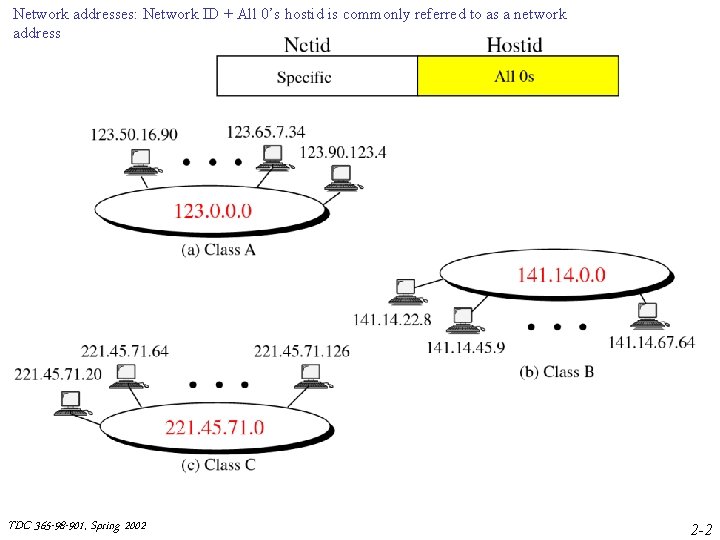
Network addresses: Network ID + All 0’s hostid is commonly referred to as a network address TDC 365 -98 -901, Spring 2002 2 -2
Direct broadcast address TDC 365 -98 -901, Spring 2002 2 -3
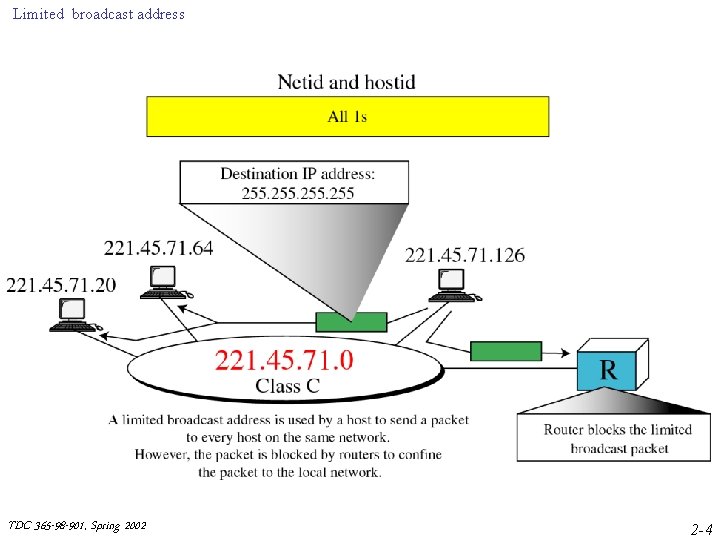
Limited broadcast address TDC 365 -98 -901, Spring 2002 2 -4
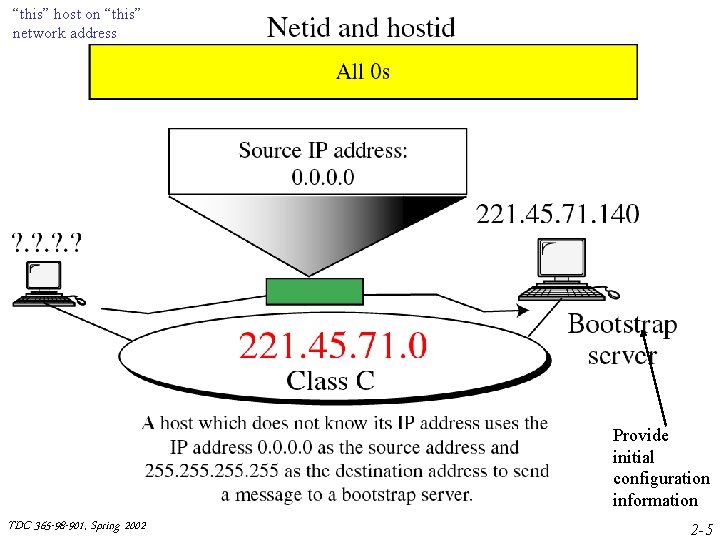
“this” host on “this” network address Provide initial configuration information TDC 365 -98 -901, Spring 2002 2 -5
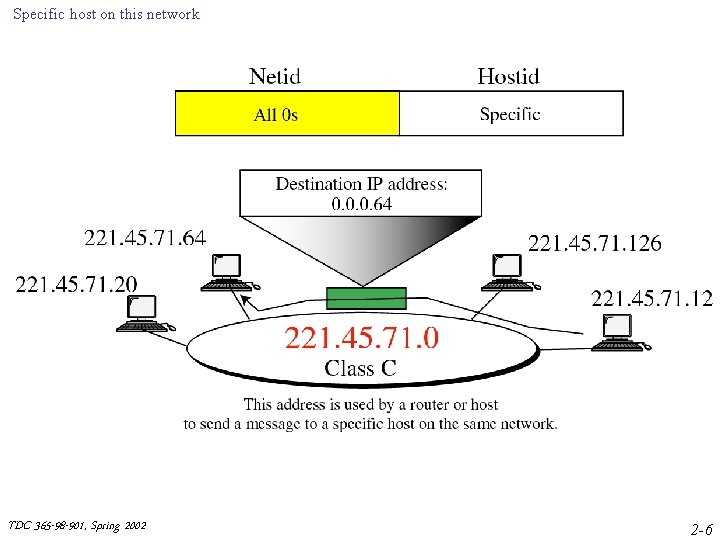
Specific host on this network TDC 365 -98 -901, Spring 2002 2 -6
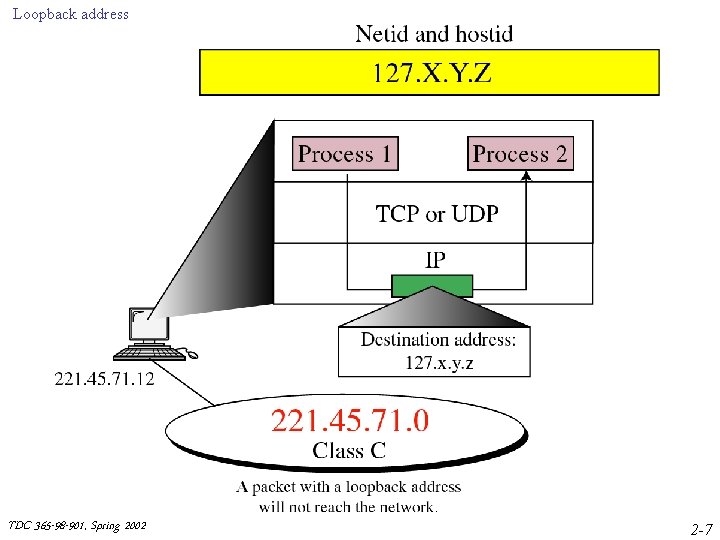
Loopback address TDC 365 -98 -901, Spring 2002 2 -7
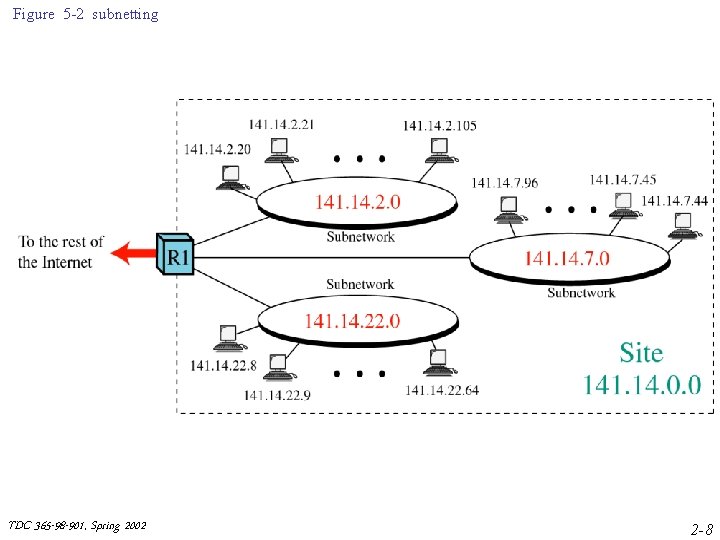
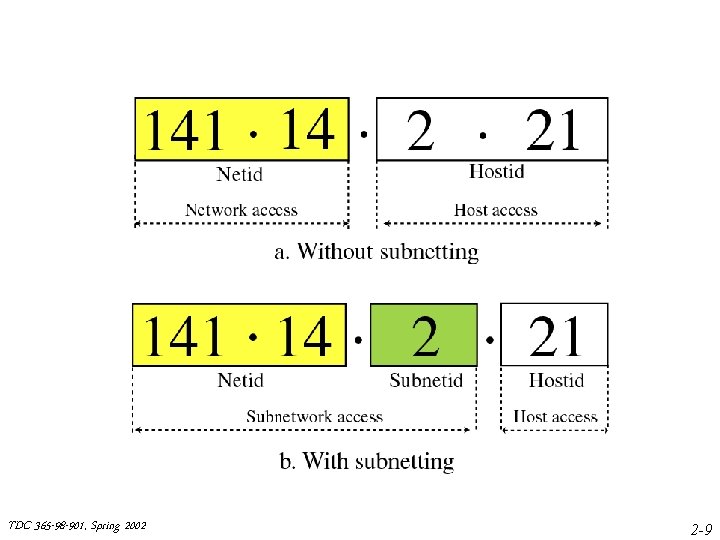
Figure 5 -2 subnetting TDC 365 -98 -901, Spring 2002 2 -8
TDC 365 -98 -901, Spring 2002 2 -9
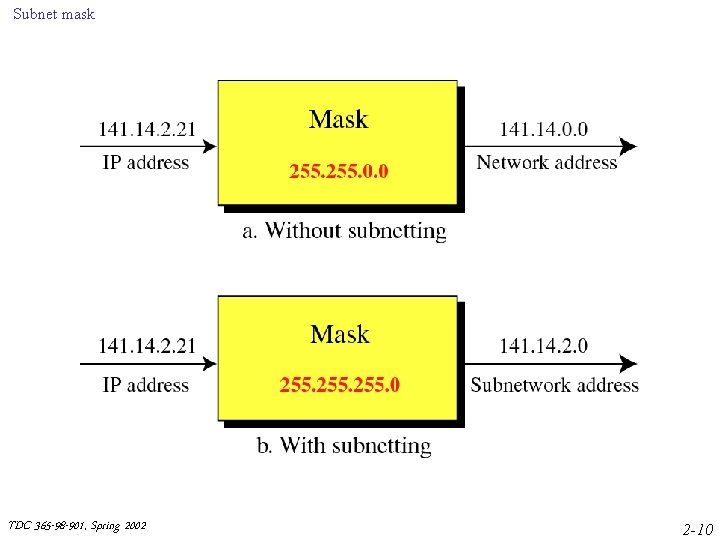
Subnet mask TDC 365 -98 -901, Spring 2002 2 -10
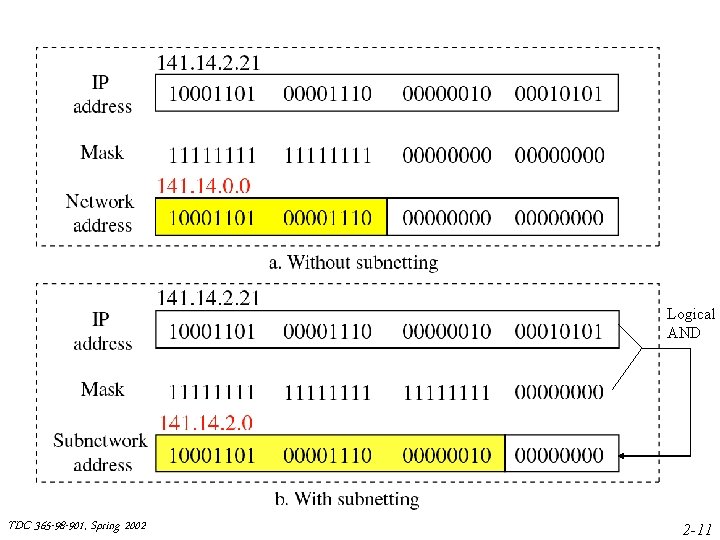
Logical AND TDC 365 -98 -901, Spring 2002 2 -11
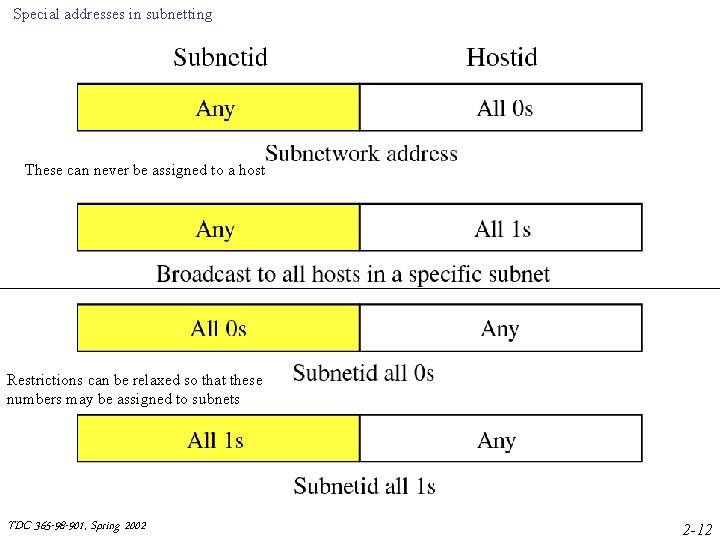
Special addresses in subnetting These can never be assigned to a host Restrictions can be relaxed so that these numbers may be assigned to subnets TDC 365 -98 -901, Spring 2002 2 -12
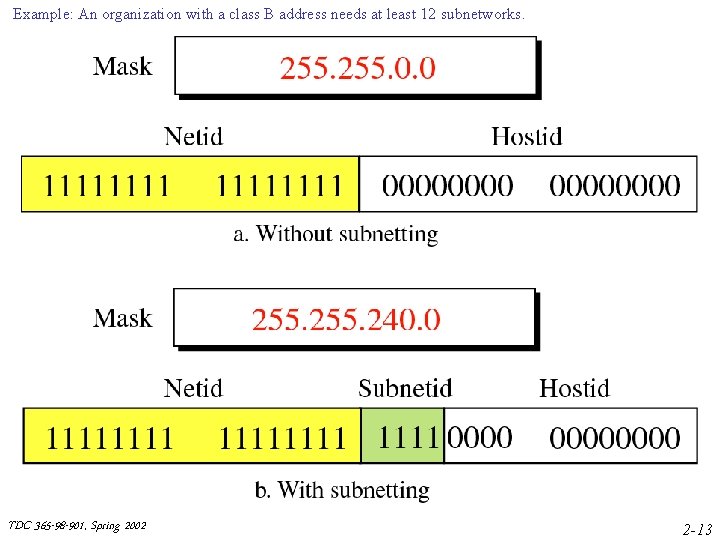
Example: An organization with a class B address needs at least 12 subnetworks. TDC 365 -98 -901, Spring 2002 2 -13
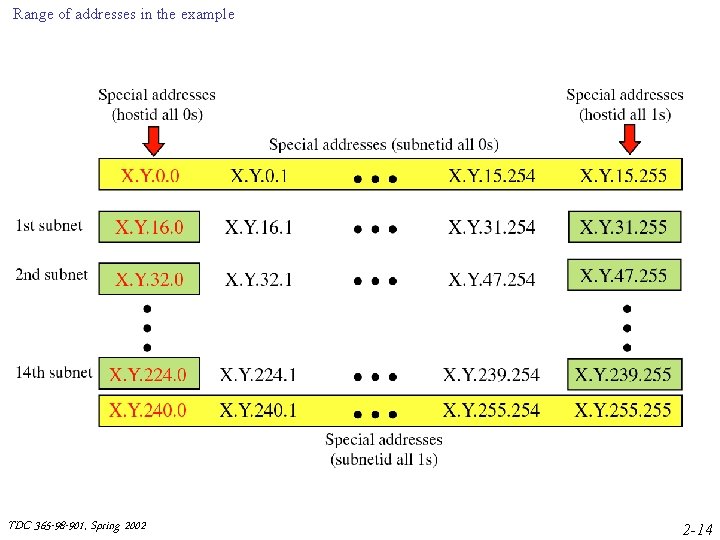
Range of addresses in the example TDC 365 -98 -901, Spring 2002 2 -14
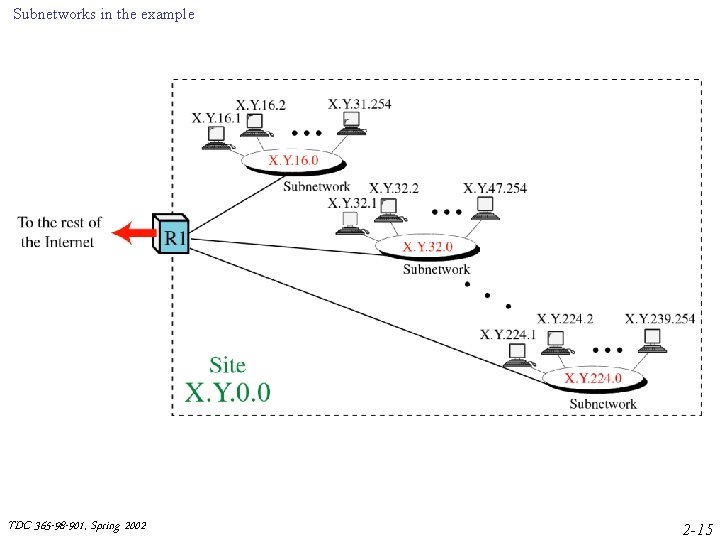
Subnetworks in the example TDC 365 -98 -901, Spring 2002 2 -15
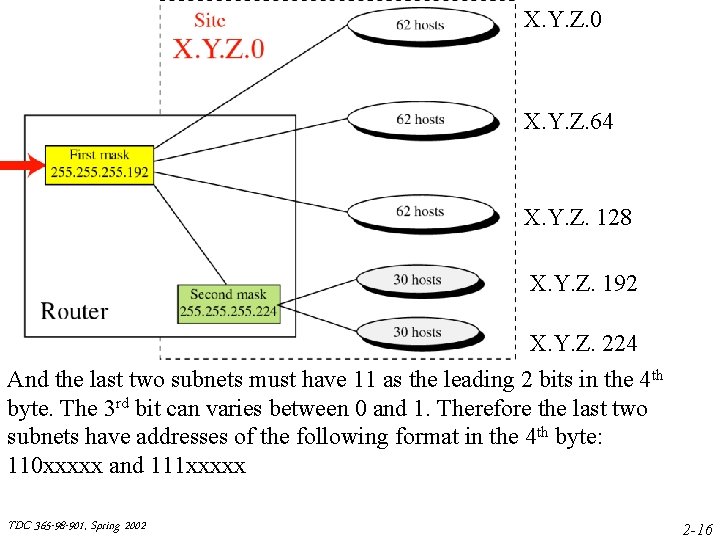
0000 = 0 X. Y. Z. 0 01000000 = 64 X. Y. Z. 64 10000000 = 128 X. Y. Z. 192 11000000 = 192 11100000 =224 X. Y. Z. 224 th And the last two subnets must have 11 as the leading 2 bits in the 4 255. 192 = 11111111 11000000 so So the last byte can be 00 xxxxxx, 01 xxxxxx, 10 xxxxxx, 11 xxxxxx. rd bit can varies between 0 and 1. Therefore the last two byte. The 3 the first mask uses the first 2 bits of the 4 th byte as the subnet ID 3 of these can be chosen to label the first 3 subnets. Let say we pick th byte: subnets have addresses of the following format in the 4 the first 3 255. 224 = 11111111 11100000 so 110 xxxxx and 111 xxxxx the second mask uses the first 3 bits of the 4 th byte as the subnet ID TDC 365 -98 -901, Spring 2002 2 -16
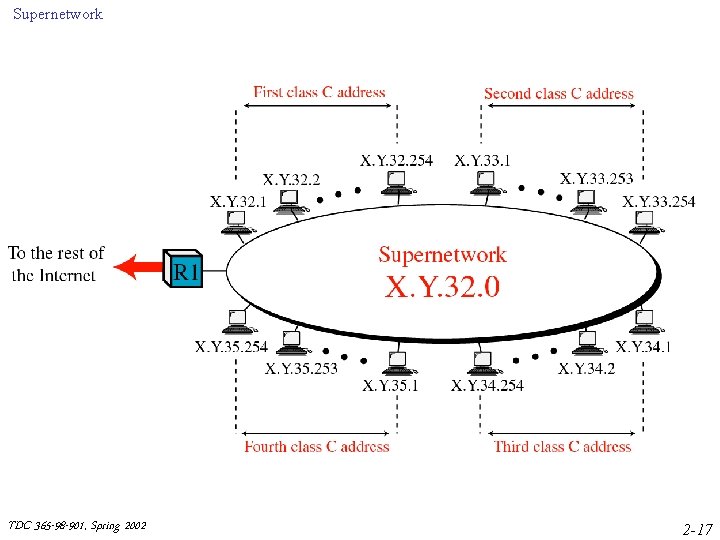
Supernetwork TDC 365 -98 -901, Spring 2002 2 -17
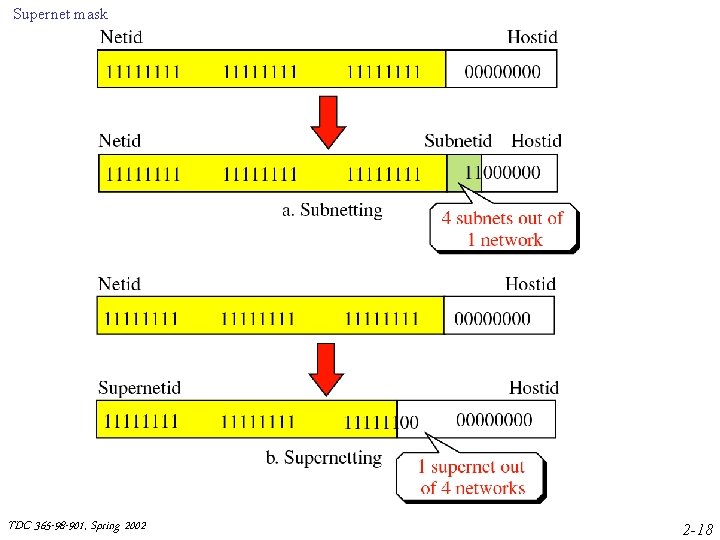
Supernet mask TDC 365 -98 -901, Spring 2002 2 -18
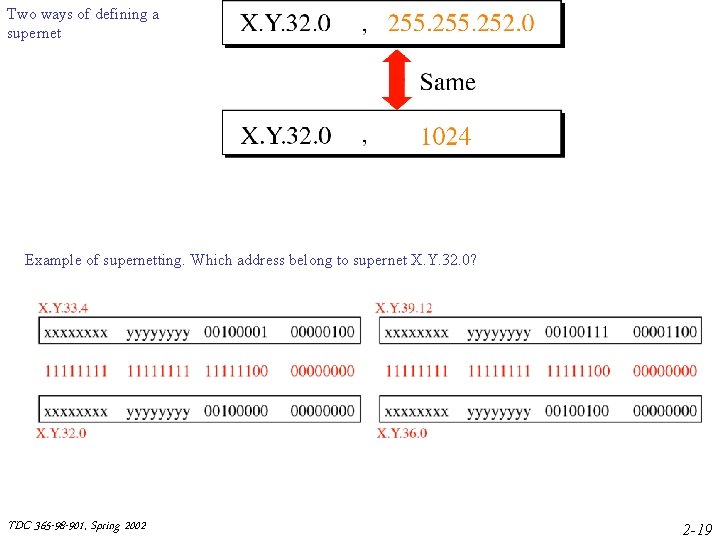
Two ways of defining a supernet Example of supernetting. Which address belong to supernet X. Y. 32. 0? TDC 365 -98 -901, Spring 2002 2 -19
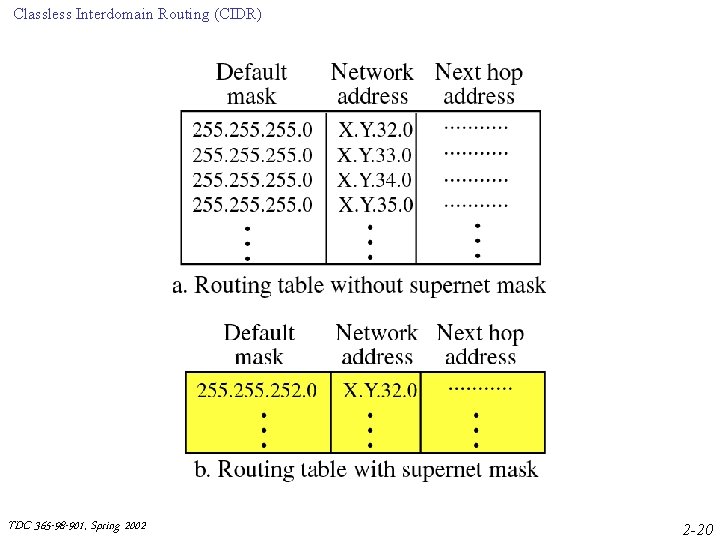
Classless Interdomain Routing (CIDR) TDC 365 -98 -901, Spring 2002 2 -20
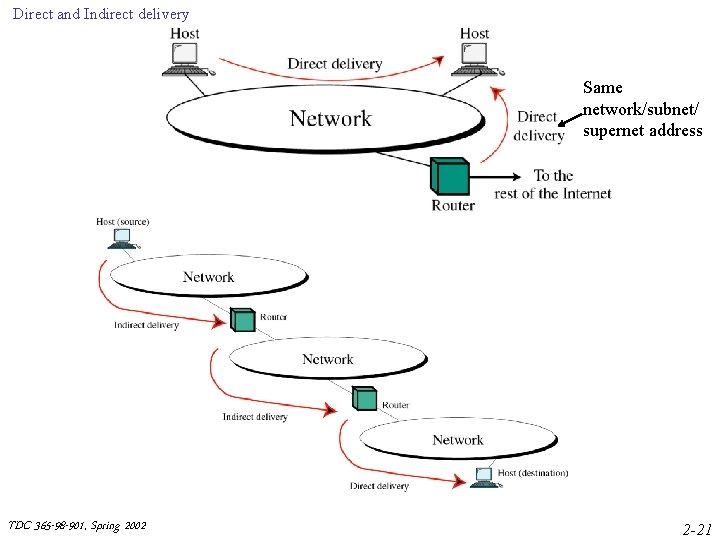
Direct and Indirect delivery Same network/subnet/ supernet address TDC 365 -98 -901, Spring 2002 2 -21
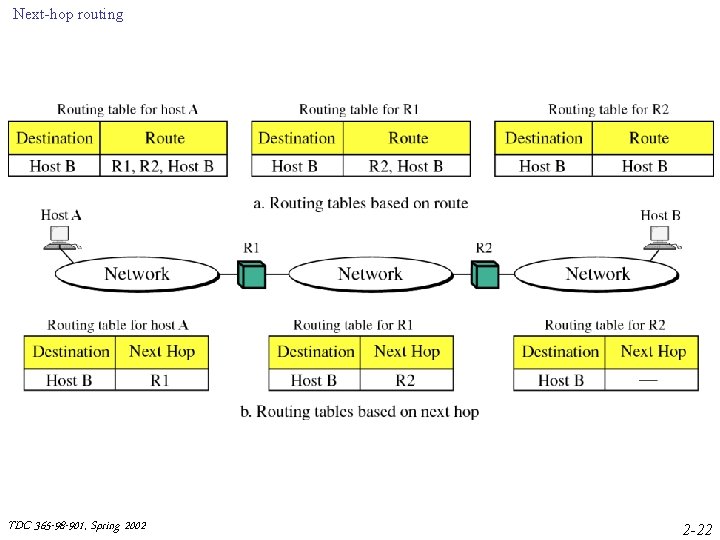
Next-hop routing TDC 365 -98 -901, Spring 2002 2 -22
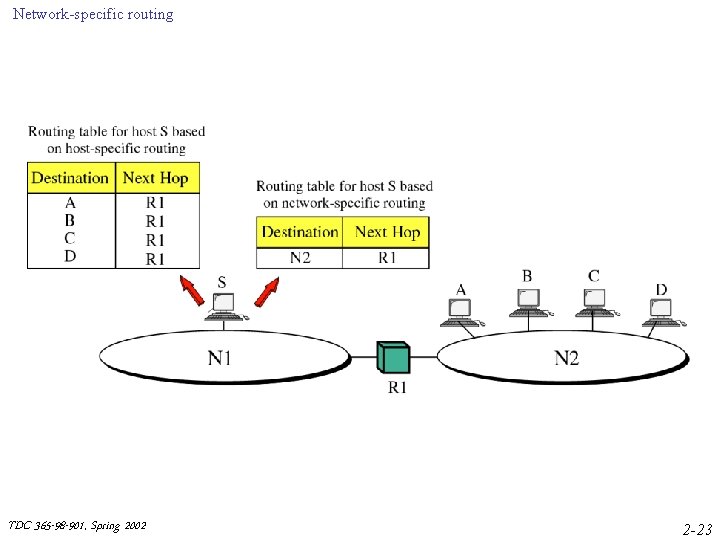
Network-specific routing TDC 365 -98 -901, Spring 2002 2 -23
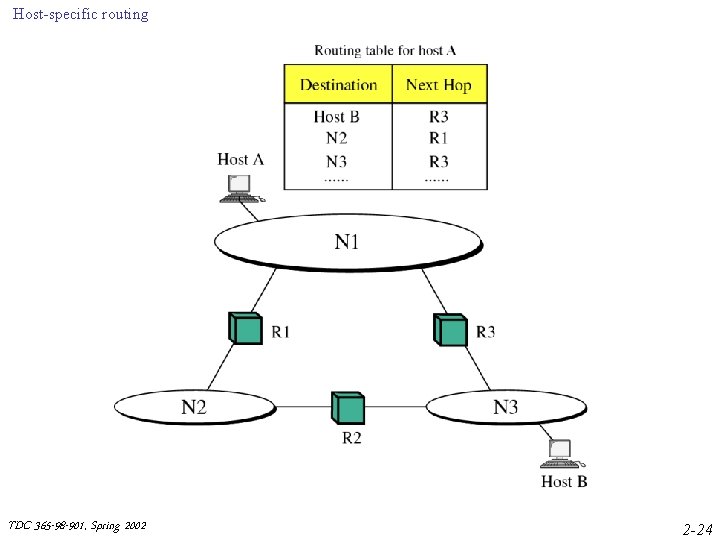
Host-specific routing TDC 365 -98 -901, Spring 2002 2 -24
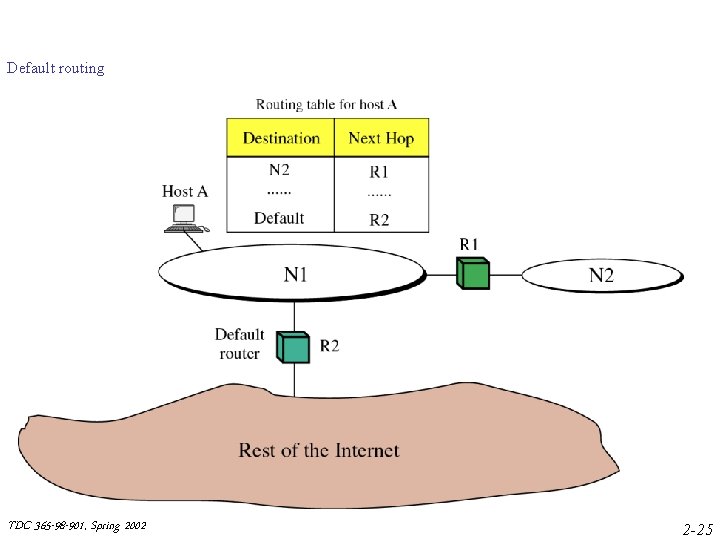
Default routing TDC 365 -98 -901, Spring 2002 2 -25
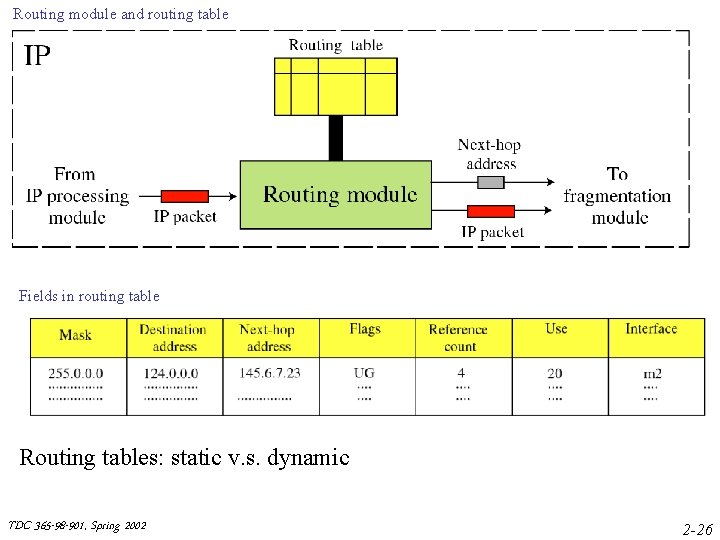
Routing module and routing table Fields in routing table Routing tables: static v. s. dynamic TDC 365 -98 -901, Spring 2002 2 -26
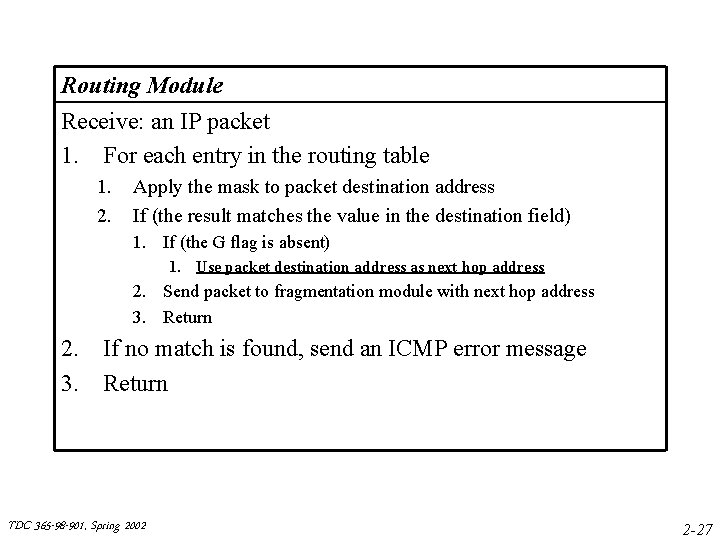
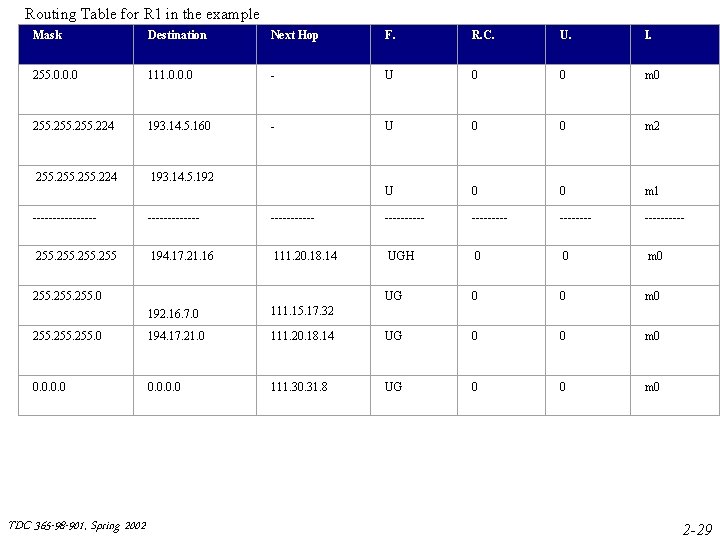
Routing Module Receive: an IP packet 1. For each entry in the routing table 1. 2. Apply the mask to packet destination address If (the result matches the value in the destination field) 1. If (the G flag is absent) 1. Use packet destination address as next hop address 2. Send packet to fragmentation module with next hop address 3. Return 2. If no match is found, send an ICMP error message 3. Return TDC 365 -98 -901, Spring 2002 2 -27
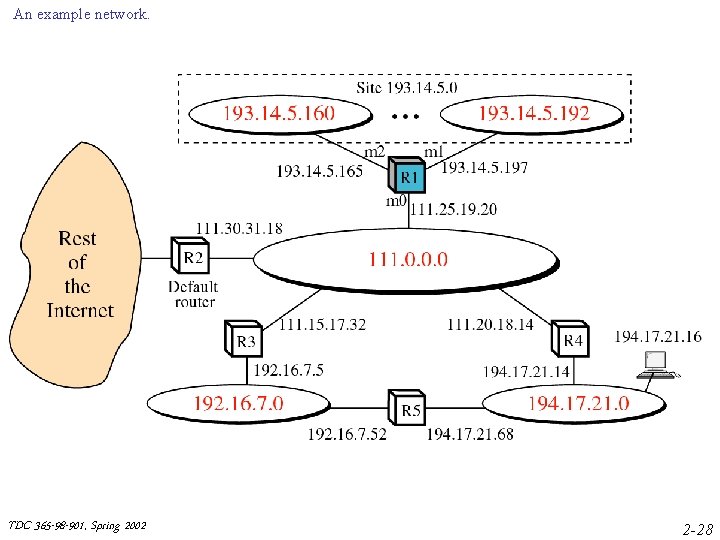
An example network. TDC 365 -98 -901, Spring 2002 2 -28
Routing Table for R 1 in the example Mask Destination Next Hop F. R. C. U. I. 255. 0. 0. 0 111. 0. 0. 0 - U 0 0 m 0 255. 224 193. 14. 5. 160 - U 0 0 m 2 255. 224 193. 14. 5. 192 U 0 0 m 1 -------- ---------- ---------- 255 194. 17. 21. 16 111. 20. 18. 14 UGH 0 0 m 0 UG 0 0 m 0 192. 16. 7. 0 111. 15. 17. 32 255. 0 194. 17. 21. 0 111. 20. 18. 14 UG 0 0 m 0 0. 0 111. 30. 31. 8 UG 0 0 m 0 255. 0 TDC 365 -98 -901, Spring 2002 2 -29