Unit 10 Chapter 34 Protection Support and Locomotion




- Slides: 18
Unit 10 Chapter 34 Protection, Support, and Locomotion
Skin: the Body’s Protection l Integumentary System l l Contains skin and its related parts—hair, nails & glands Functions: l l Regulates body temperature Receives stimuli from environment Produces vitamin D Protection of underlying tissues
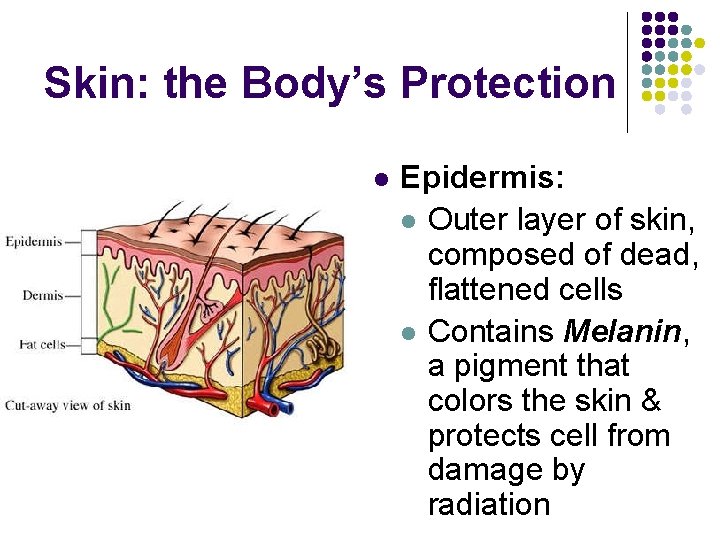
Skin: the Body’s Protection l Epidermis: l Outer layer of skin, composed of dead, flattened cells l Contains Melanin, a pigment that colors the skin & protects cell from damage by radiation
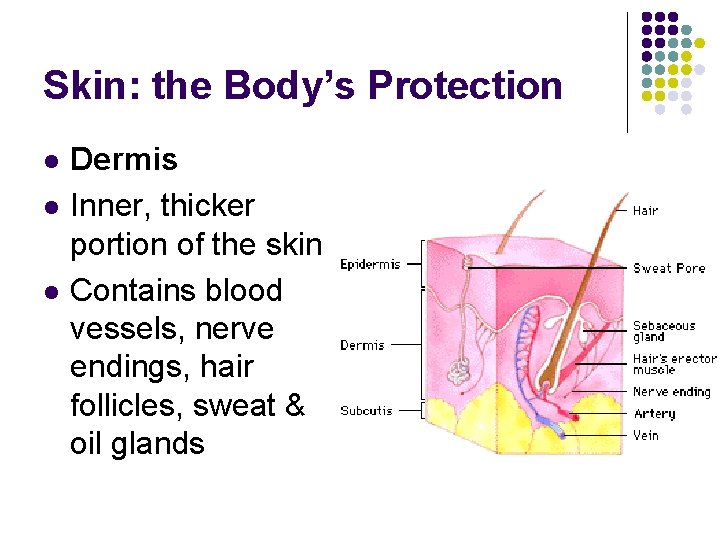
Skin: the Body’s Protection l l l Dermis Inner, thicker portion of the skin Contains blood vessels, nerve endings, hair follicles, sweat & oil glands
Skin: the Body’s Protection l Hypodermis (subcutaneous layer) l Below the dermis Contains primarily of fat for cushioning & insulation l
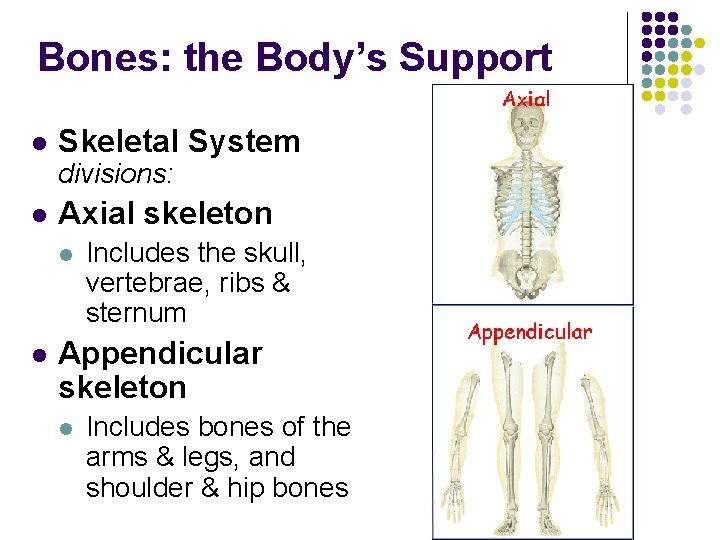
Bones: the Body’s Support l Skeletal System divisions: l Axial skeleton l l Includes the skull, vertebrae, ribs & sternum Appendicular skeleton l Includes bones of the arms & legs, and shoulder & hip bones
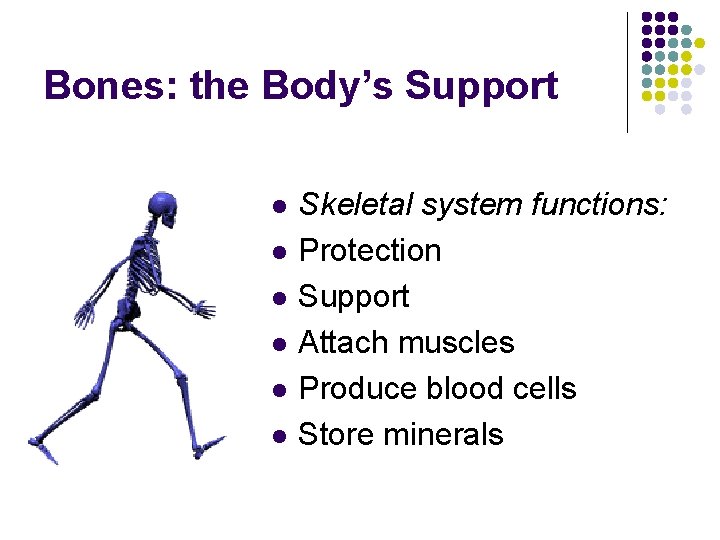
Bones: the Body’s Support l l l Skeletal system functions: Protection Support Attach muscles Produce blood cells Store minerals
Bones: the Body’s Support l Joints l Where two bones meet l Facilitates the movement of bones in relation to one another
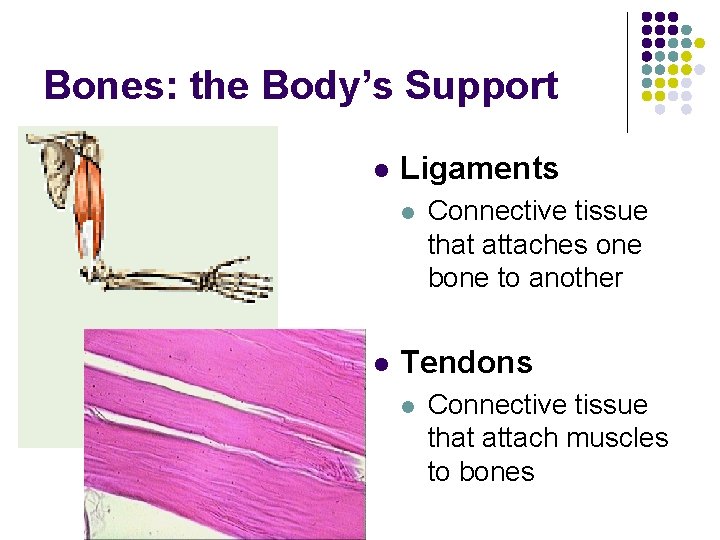
Bones: the Body’s Support l Ligaments l l Connective tissue that attaches one bone to another Tendons l Connective tissue that attach muscles to bones
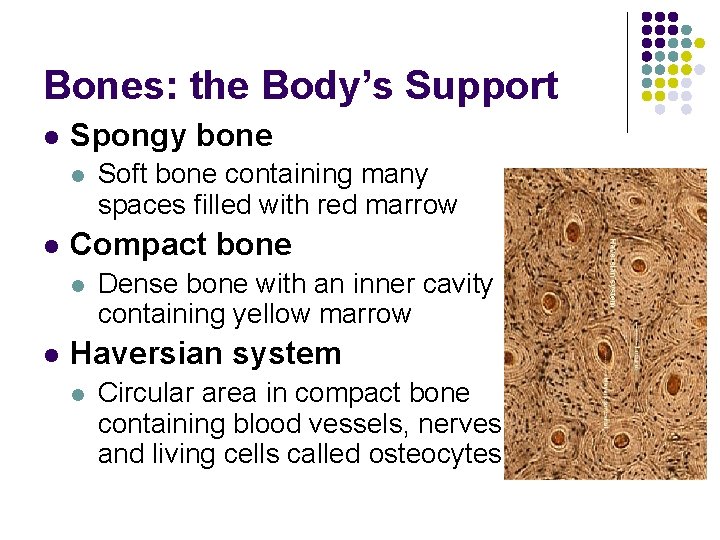
Bones: the Body’s Support l Spongy bone l l Compact bone l l Soft bone containing many spaces filled with red marrow Dense bone with an inner cavity containing yellow marrow Haversian system l Circular area in compact bone containing blood vessels, nerves, and living cells called osteocytes
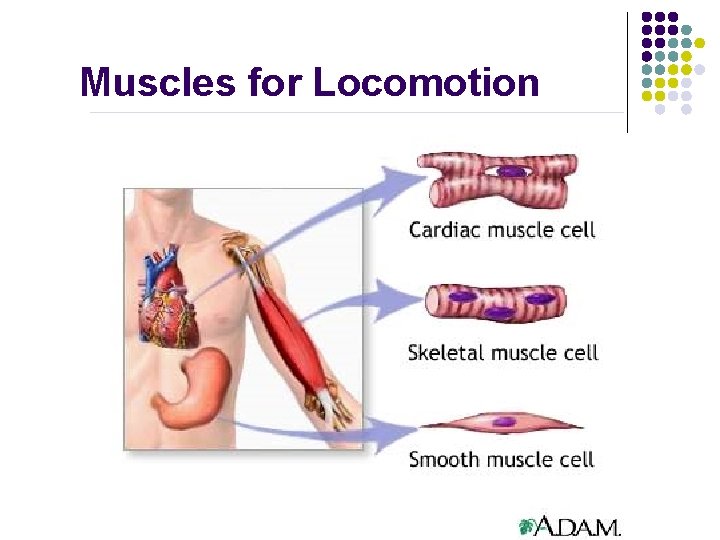
Muscles for Locomotion
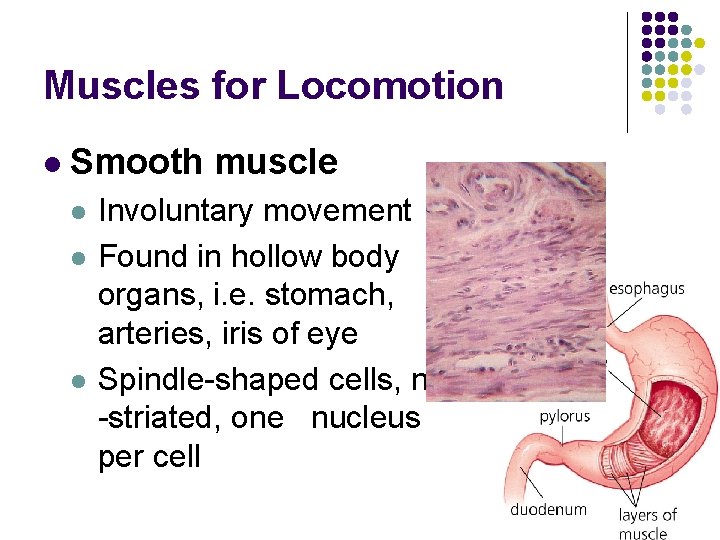
Muscles for Locomotion l Smooth muscle l l l Involuntary movement Found in hollow body organs, i. e. stomach, arteries, iris of eye Spindle-shaped cells, non -striated, one nucleus per cell
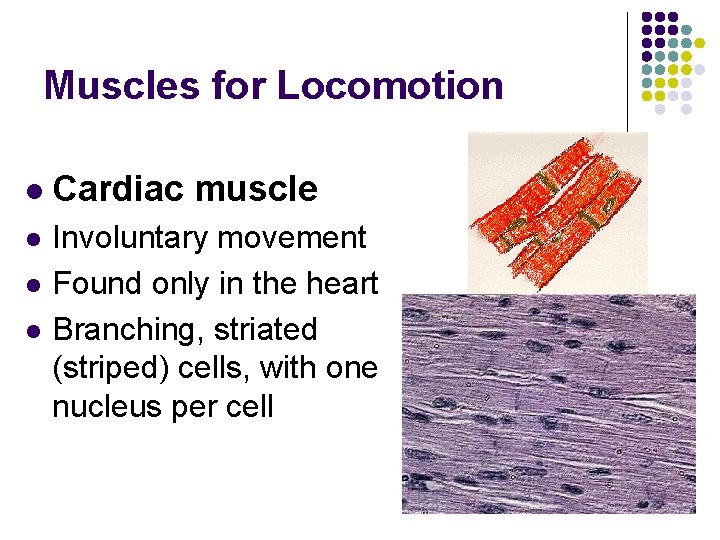
Muscles for Locomotion l Cardiac muscle l Involuntary movement Found only in the heart Branching, striated (striped) cells, with one nucleus per cell l l
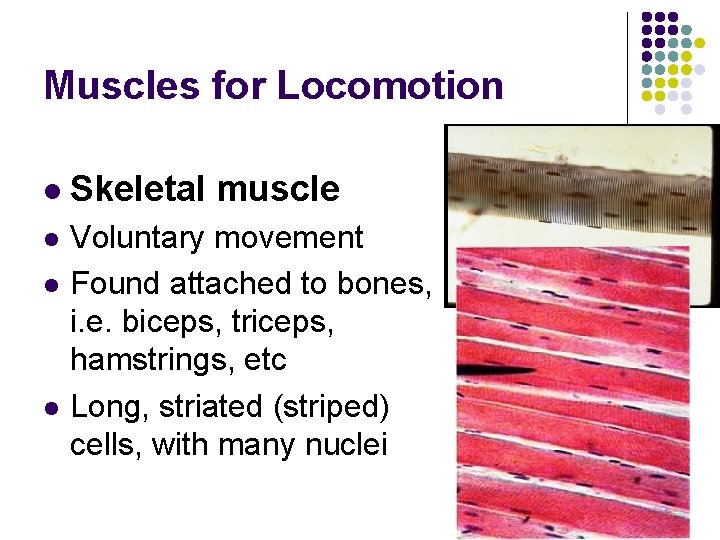
Muscles for Locomotion l Skeletal muscle l Voluntary movement Found attached to bones, i. e. biceps, triceps, hamstrings, etc Long, striated (striped) cells, with many nuclei l l
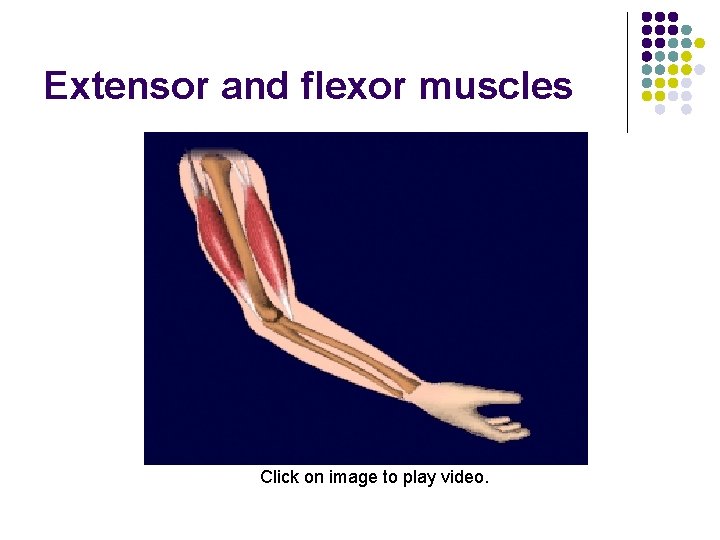
Extensor and flexor muscles Click on image to play video.
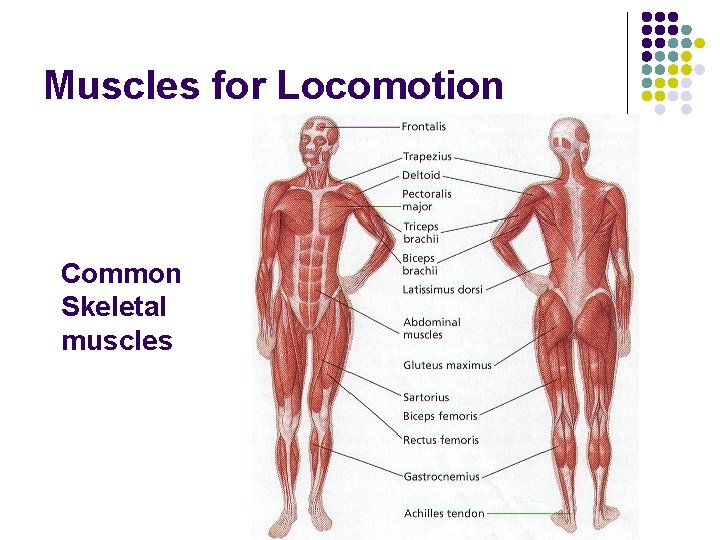
Muscles for Locomotion Common Skeletal muscles
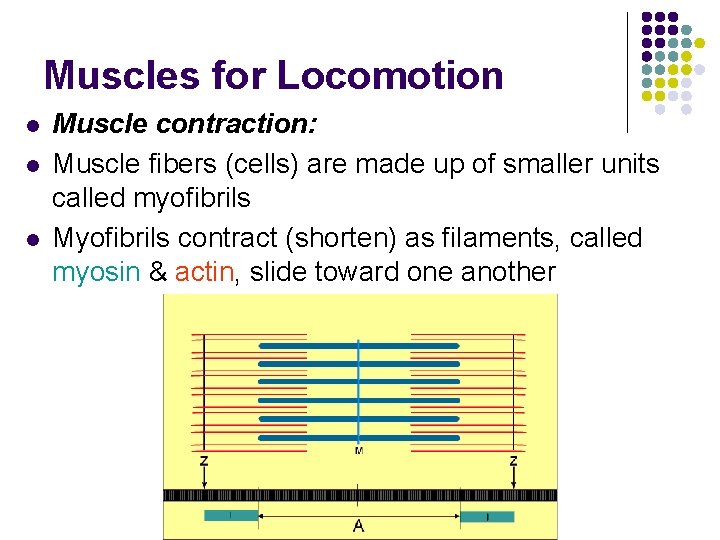
Muscles for Locomotion l l l Muscle contraction: Muscle fibers (cells) are made up of smaller units called myofibrils Myofibrils contract (shorten) as filaments, called myosin & actin, slide toward one another
Sliding filament model