Transportation z Mode Selection z Route Selection y
- Slides: 52
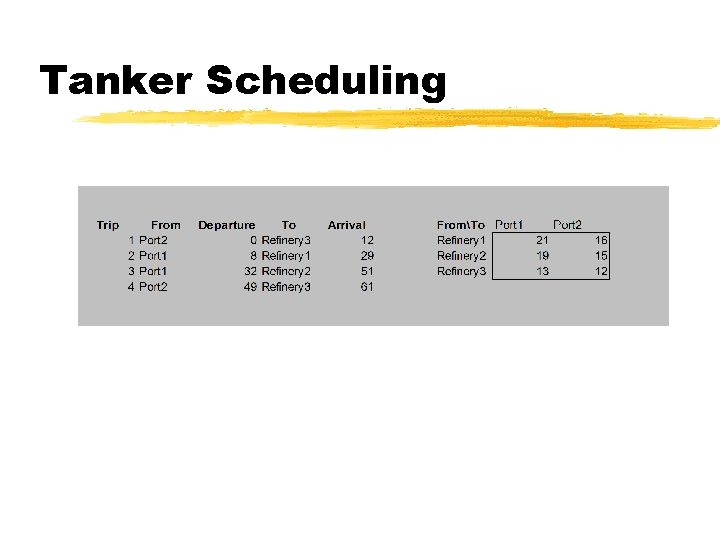
Transportation z Mode Selection z Route Selection y y y y Shortest Path Minimum Spanning Tree Transportation Assignment TSP Route Sequencing Tanker Scheduling
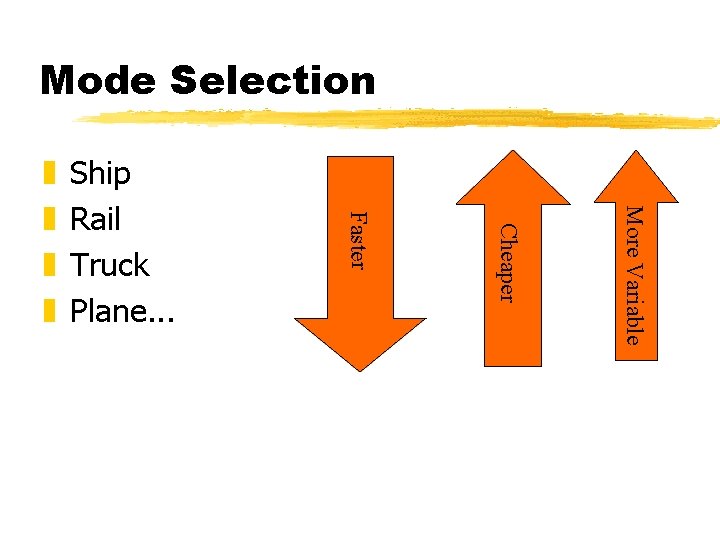
Mode Selection More Variable Cheaper Ship Rail Truck Plane. . . Faster z z
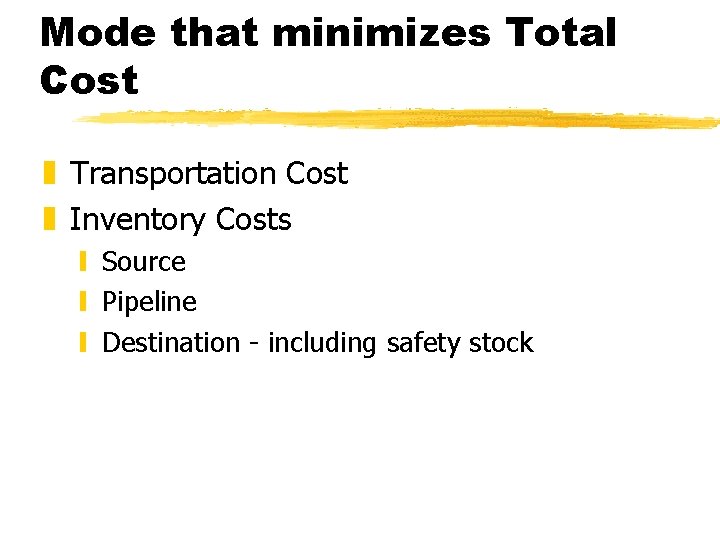
Mode that minimizes Total Cost z Transportation Cost z Inventory Costs y Source y Pipeline y Destination - including safety stock
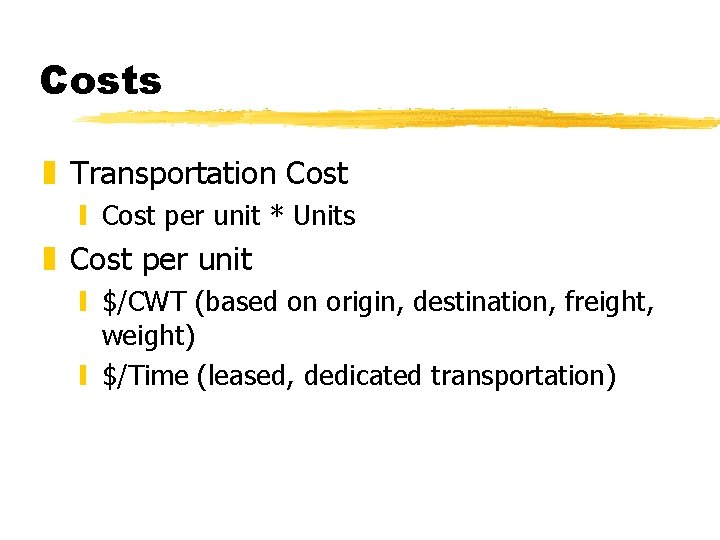
Costs z Transportation Cost y Cost per unit * Units z Cost per unit y $/CWT (based on origin, destination, freight, weight) y $/Time (leased, dedicated transportation)
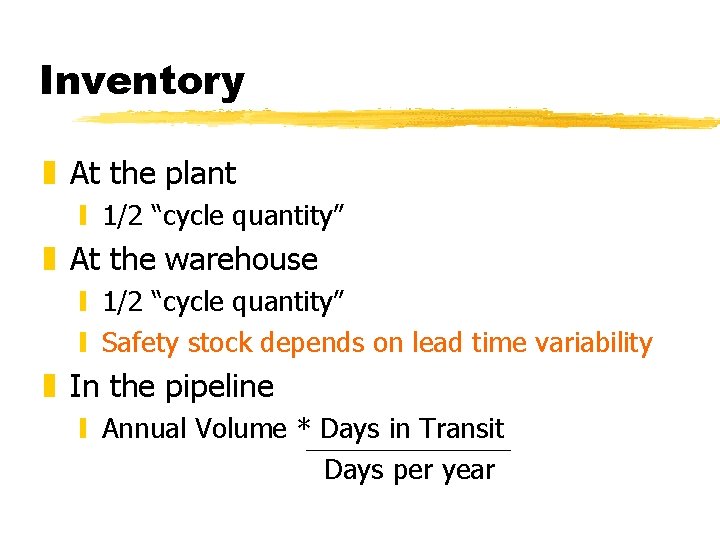
Inventory z At the plant y 1/2 “cycle quantity” z At the warehouse y 1/2 “cycle quantity” y Safety stock depends on lead time variability z In the pipeline y Annual Volume * Days in Transit Days per year
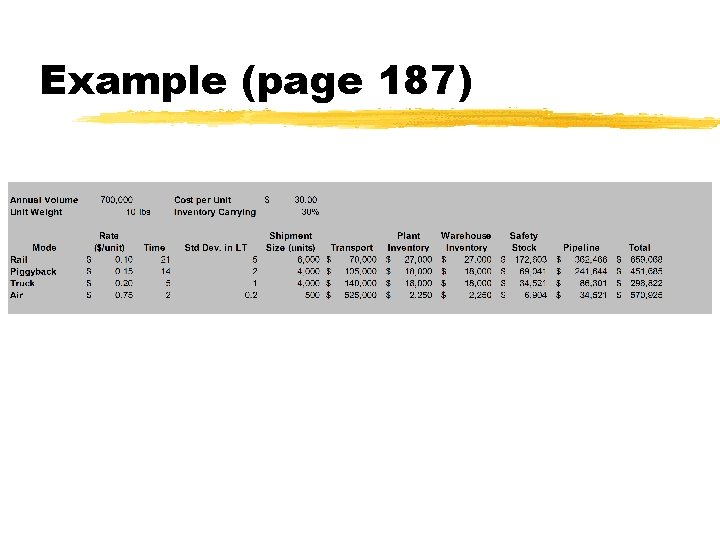
Example (page 187)
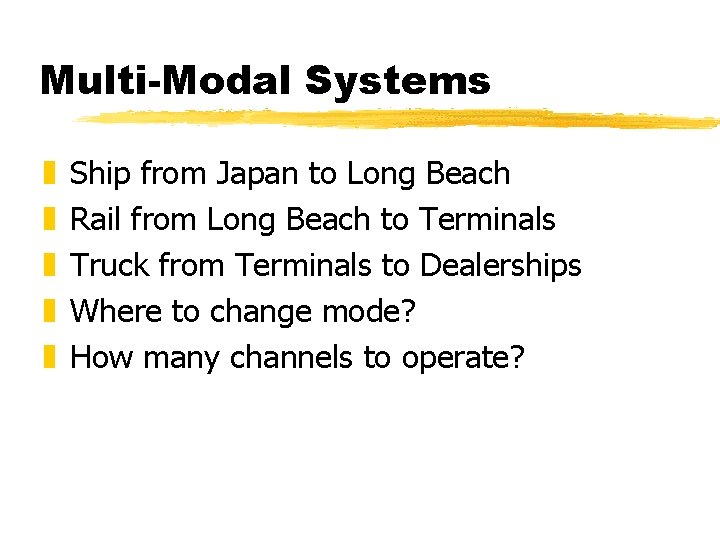
Multi-Modal Systems z z z Ship from Japan to Long Beach Rail from Long Beach to Terminals Truck from Terminals to Dealerships Where to change mode? How many channels to operate?
Route Selection z Getting From A to B z Underlying Network y Roads y Airports y Telecommunication links z Costs of using each link z Find the cheapest (shortest) path
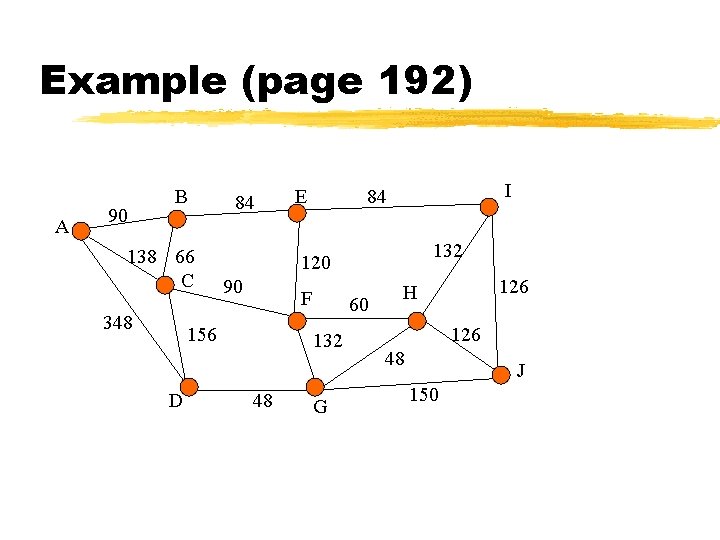
Example (page 192) A 90 B 138 66 C 348 84 I 84 132 120 90 F 156 D E 60 132 48 G 126 H 126 48 J 150
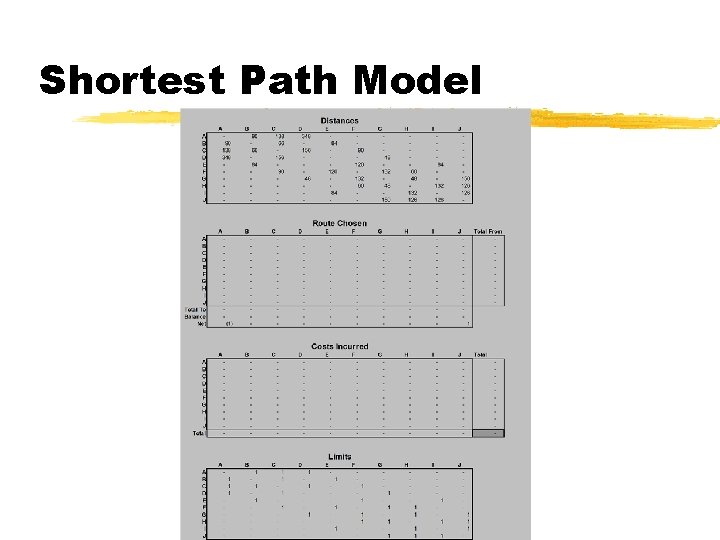
Shortest Path Model
Applicability z z Single Origin Single Destination No requirement to visit intermediate nodes No “negative cycles”
Tree of Shortest Paths z Find shortest paths from Origin to each node z Send n-1 units from origin z Get 1 unit to each destination
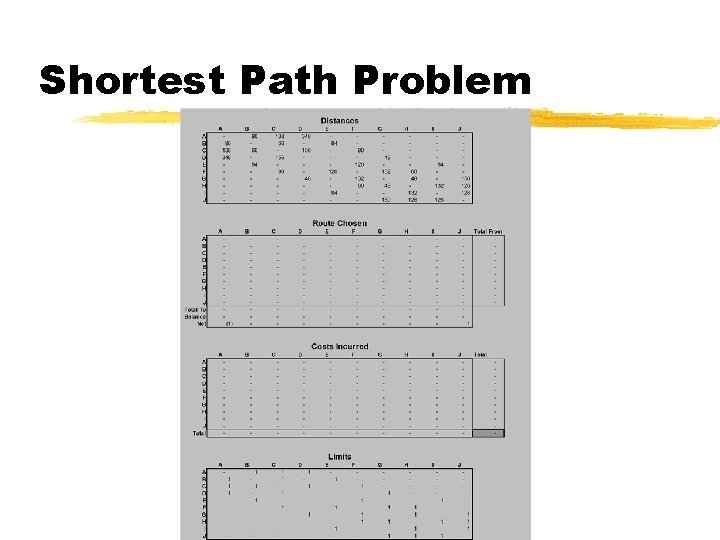
Shortest Path Problem
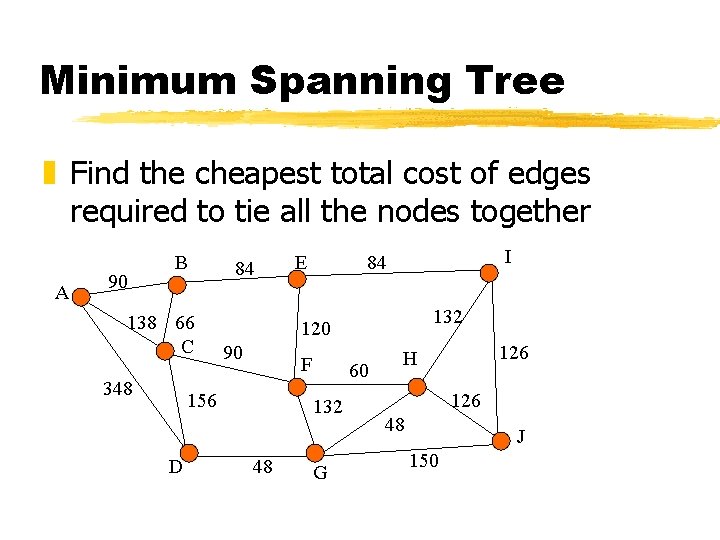
Minimum Spanning Tree z Find the cheapest total cost of edges required to tie all the nodes together A 90 B 138 66 C 348 84 I 84 132 120 90 F 156 D E 60 132 48 G 126 H 126 48 J 150
Greedy Algorithm z Consider links from cheapest to most expensive z Add a link if it does not create a cycle with already chosen links z Reject the link if it creates a cycle.
What’s the difference z Shortest Path Problem y Rider’s version y Consider the number of riders who will use it z Spanning Tree Problem y Builder’s version y Consider only the cost of construction
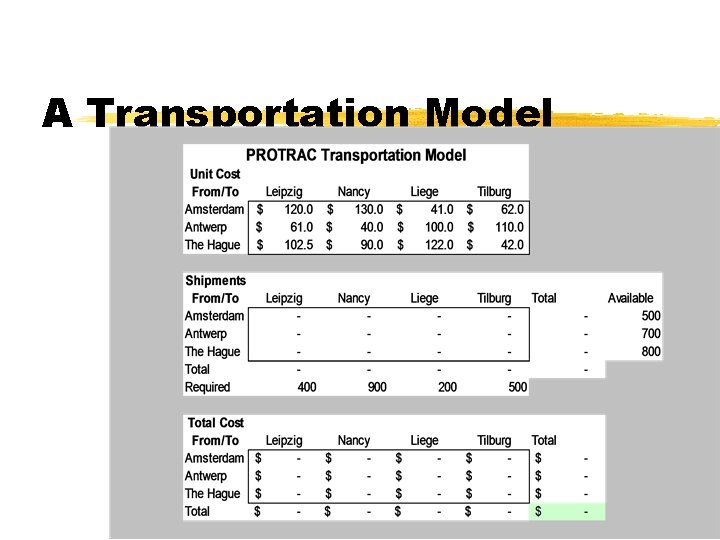
Transportation Problem z z z Sources with limited supply Destinations with requirements Cost proportional to volume Multiple sourcing allowed Example: Regal Company (Tools)
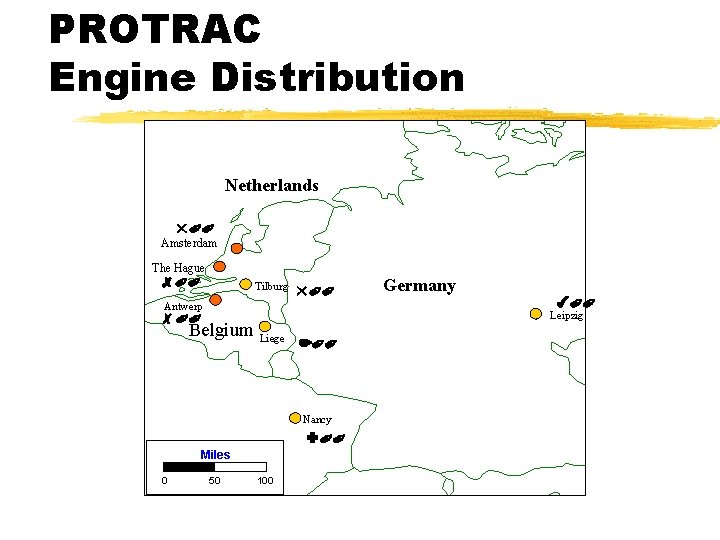
PROTRAC Engine Distribution Netherlands 500 Amsterdam The Hague * * 800 * Antwerp * 700 Belgium 500 800 Tilburg 500 700 * Liege 200 * 200 Nancy 900 Miles 0 50 100 Germany 400 * Leipzig 400
Transportation Costs Unit transportation costs from h Minimize the transportation costs involved in moving the engines from the harbors to the plants
A Transportation Model
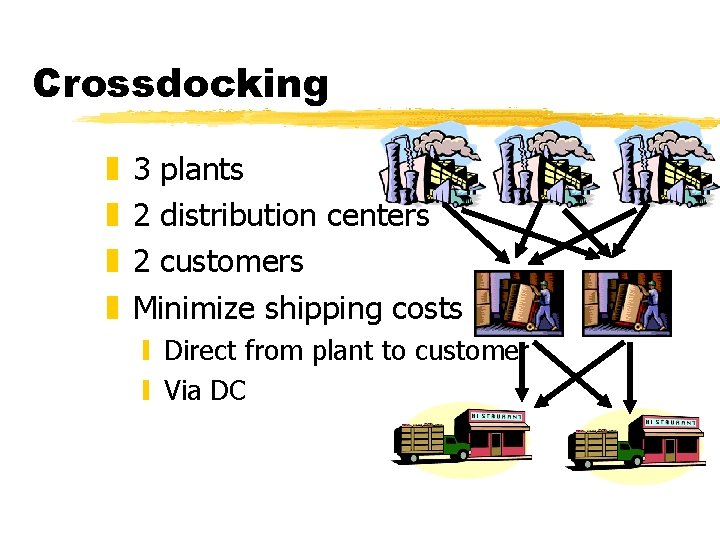
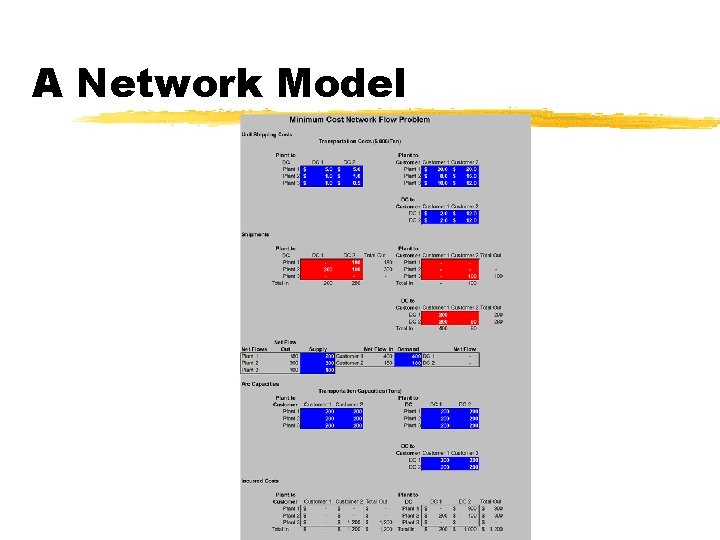
Crossdocking z z 3 plants 2 distribution centers 2 customers Minimize shipping costs y Direct from plant to customer y Via DC
A Network Model
Good News z z Lots of applications Simple Model Optimal Solutions Quickly Integral Data, Integral Answers
Bad News z What’s Missing? y y Single Homogenous Product Linear Costs No conversions or losses. . .
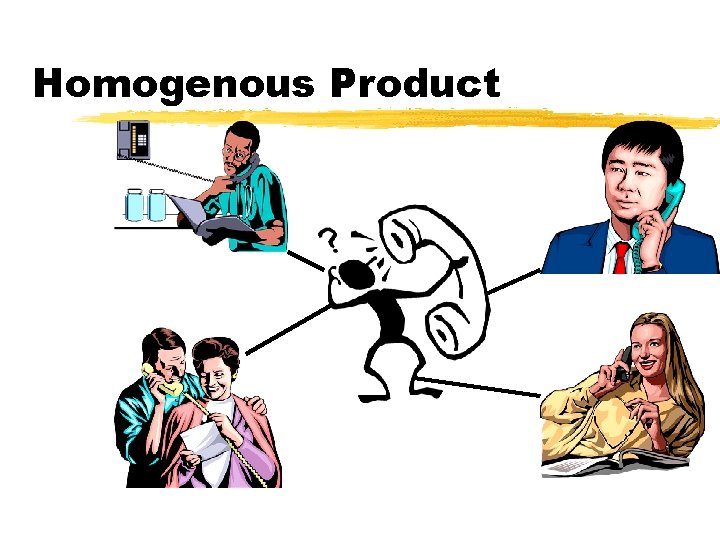
Homogenous Product
Linear Costs z No Fixed Charges z No Volume Discounts z No Economies of Scale
Integer Models z z Can model nearly everything Sometimes very difficult to solve Foundation in Linear Models Expand from there
The Rules z Exactly like Linear Models except z Some decision variables restricted to y Binary - 0 or 1, Yes or No, True or False y Integers
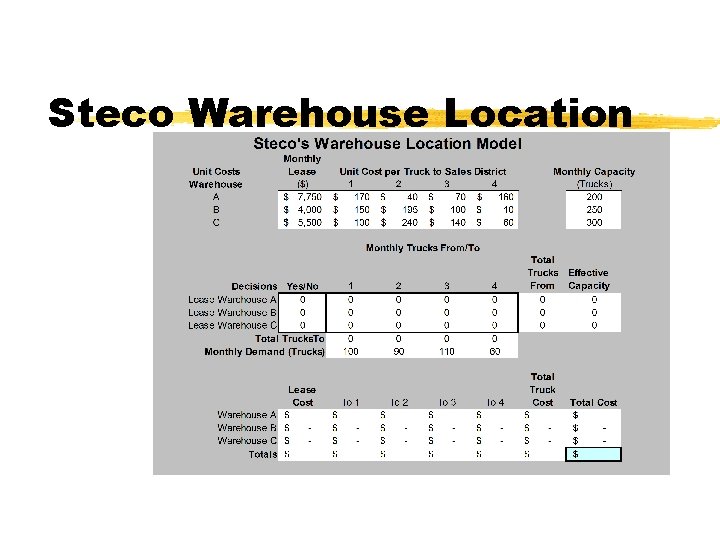
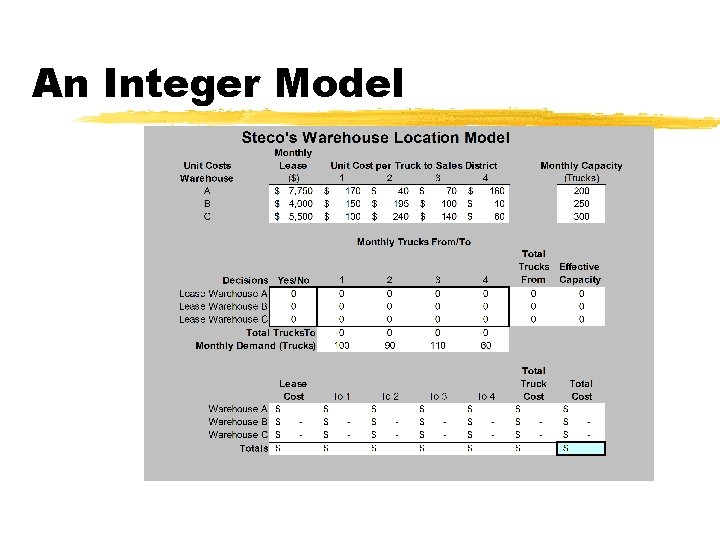
Steco Warehouse Location
A Linear Model z Ignore leasing for now -- all warehouses are open z Objective: Minimize Total Cost z Decision Variables: y Number of trucks from each warehouse to each customer each month z Constraints y Enough trucks to each customer y Not too many trucks from each
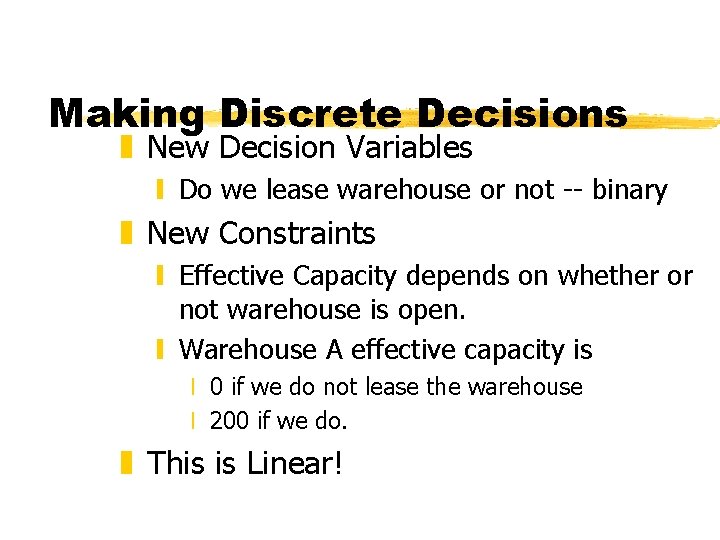
Making Discrete Decisions z New Decision Variables y Do we lease warehouse or not -- binary z New Constraints y Effective Capacity depends on whether or not warehouse is open. y Warehouse A effective capacity is x 0 if we do not lease the warehouse x 200 if we do. z This is Linear!
An Integer Model
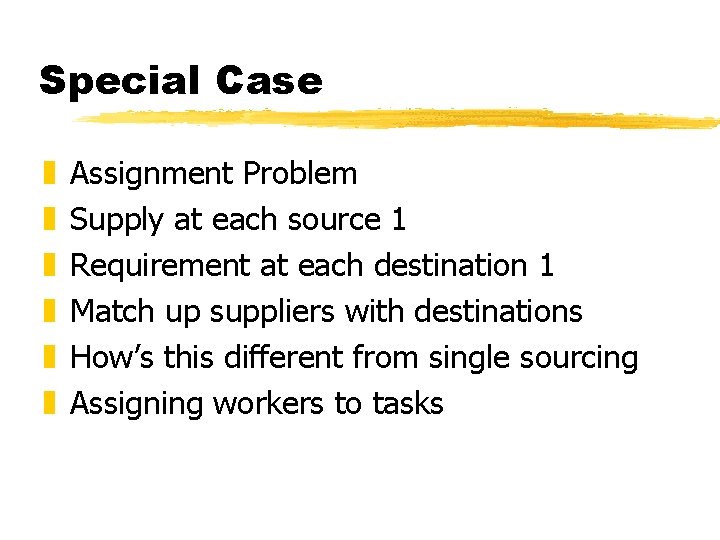
Special Case z z z Assignment Problem Supply at each source 1 Requirement at each destination 1 Match up suppliers with destinations How’s this different from single sourcing Assigning workers to tasks
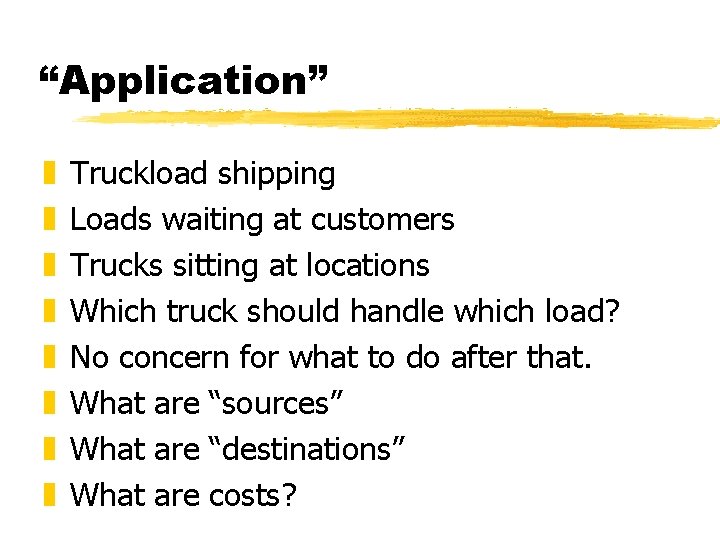
“Application” z z z z Truckload shipping Loads waiting at customers Trucks sitting at locations Which truck should handle which load? No concern for what to do after that. What are “sources” What are “destinations” What are costs?
Traveling Salesman Problem z z Vehicle at depot Customers to be served (visited) Vehicle must visit all and return to depot Minimize travel cost
Example z z Full Service Business Driver at Service Center Assigned vending machines to visit What order should he visit to minimize the time to complete the work and get back to the depot?
Extensions z If the “customers” involve transportation y Customers = truck load shipments z If more than one “salesman” involved y Construct routes for the 7 drivers at the North Metro Service center z If the vehicle has capacity y LTL deliveries z If we intersperse pickups and deliveries z If there are time windows on service
Basic TSP z Data issues y Estimate distance by location y Calculate point to point distances y Calculate point to point costs
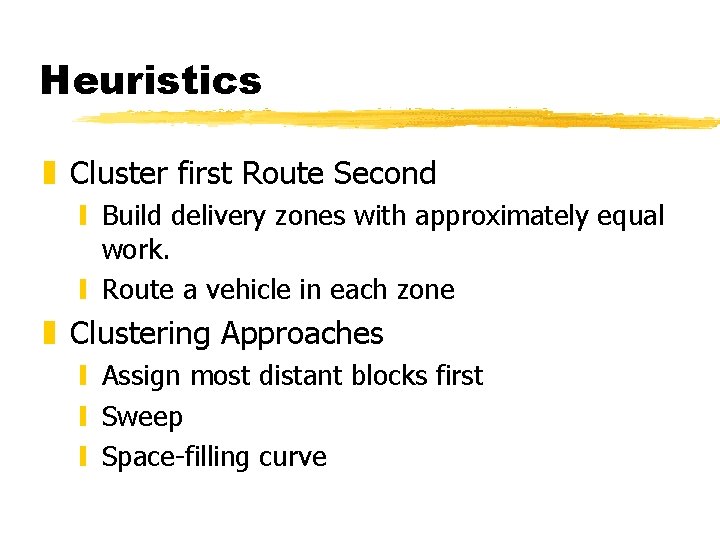
Heuristics z Cluster first Route Second y Build delivery zones with approximately equal work. y Route a vehicle in each zone z Clustering Approaches y Assign most distant blocks first y Sweep y Space-filling curve
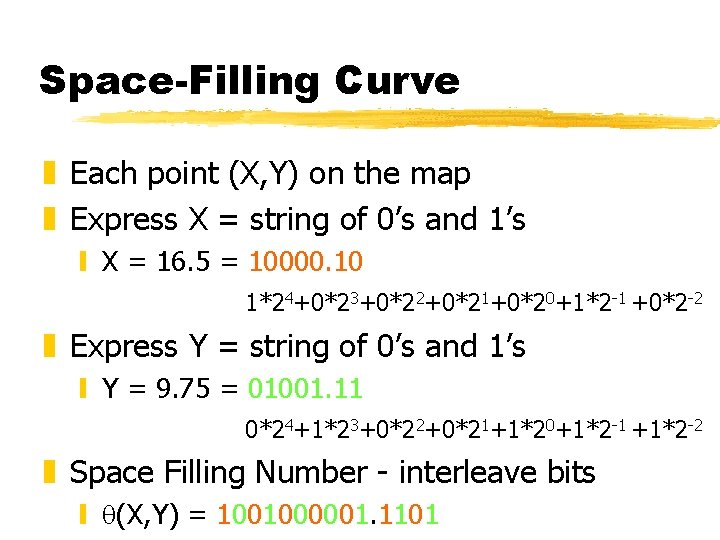
Space-Filling Curve z Each point (X, Y) on the map z Express X = string of 0’s and 1’s y X = 16. 5 = 10000. 10 1*24+0*23+0*22+0*21+0*20+1*2 -1 +0*2 -2 z Express Y = string of 0’s and 1’s y Y = 9. 75 = 01001. 11 0*24+1*23+0*22+0*21+1*20+1*2 -1 +1*2 -2 z Space Filling Number - interleave bits y (X, Y) = 1001000001. 1101
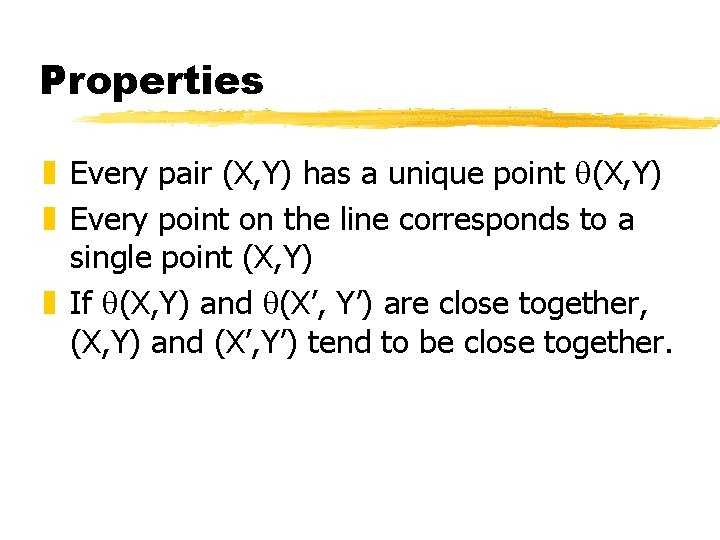
Properties z Every pair (X, Y) has a unique point (X, Y) z Every point on the line corresponds to a single point (X, Y) z If (X, Y) and (X’, Y’) are close together, (X, Y) and (X’, Y’) tend to be close together.
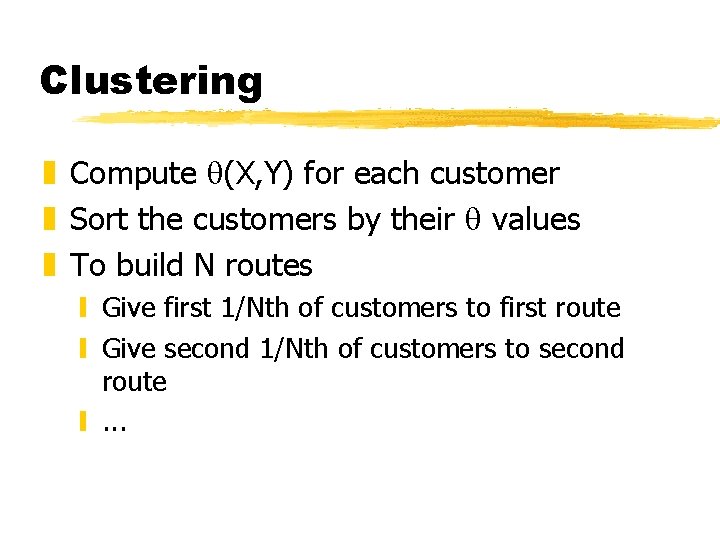
Clustering z Compute (X, Y) for each customer z Sort the customers by their values z To build N routes y Give first 1/Nth of customers to first route y Give second 1/Nth of customers to second route y. . .
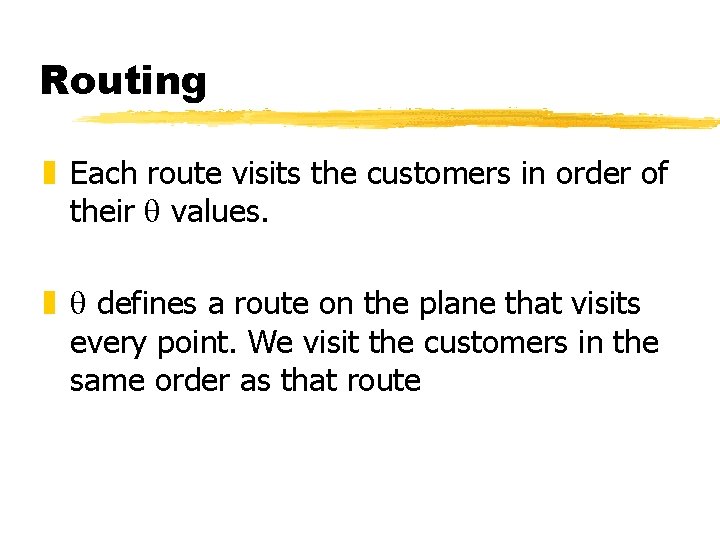
Routing z Each route visits the customers in order of their values. z defines a route on the plane that visits every point. We visit the customers in the same order as that route
Route First z Build a single large route z Assign each vehicle a segment of the route
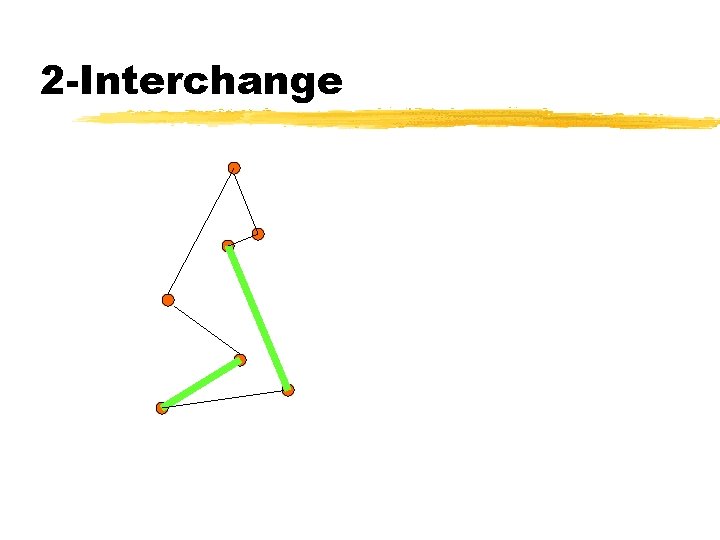
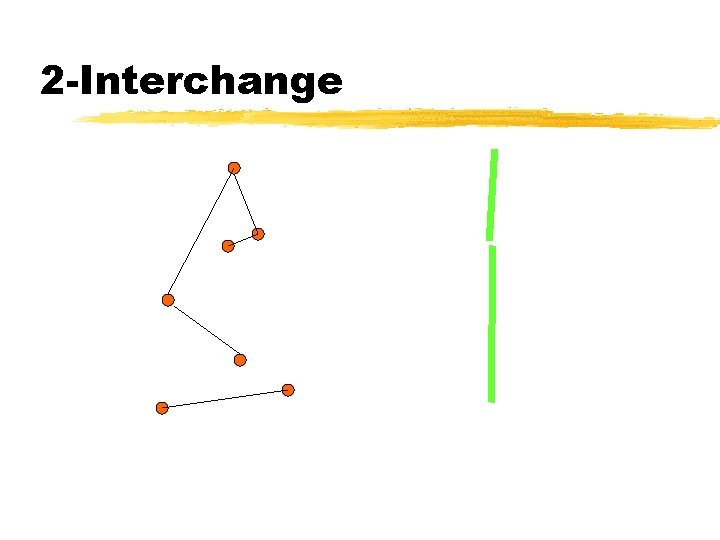
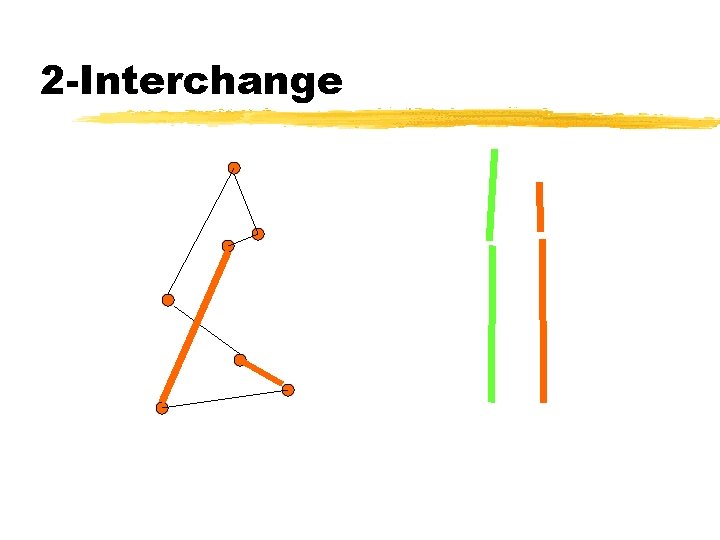
Routing Heuristics z z z Space-Filling Curve Clarke-Wright Savings Nearest Neighbor Nearest Insertion Farthest Insertion 2 -interchange
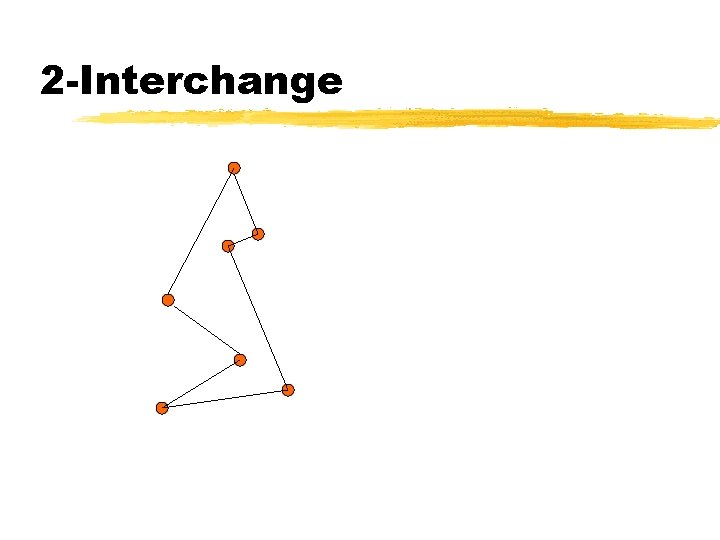
2 -Interchange
2 -Interchange
2 -Interchange
2 -Interchange
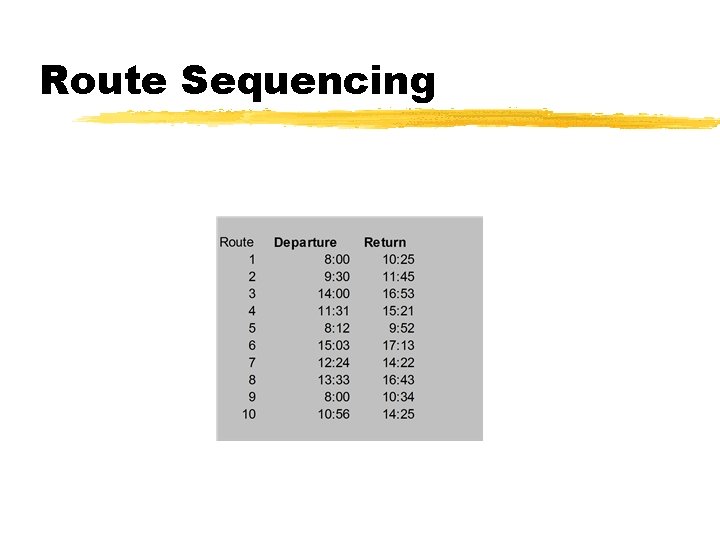
Route Sequencing
Tanker Scheduling
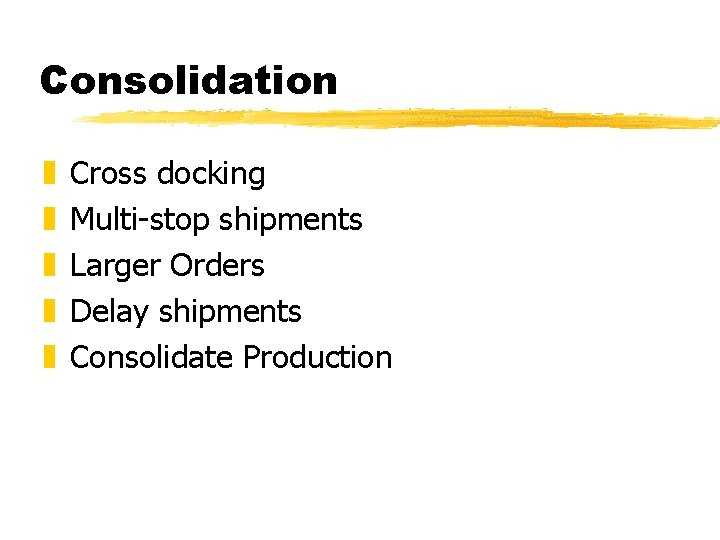
Consolidation z z z Cross docking Multi-stop shipments Larger Orders Delay shipments Consolidate Production