Tomas Kohout Antti Nsil Tuomas Tikka Mikael Granvik
- Slides: 21
Tomas Kohout, Antti Näsilä, Tuomas Tikka, Mikael Granvik, Antti Kestilä, Antti Penttilä, Janne Kuhno, Karri Muinonen, Kai Viherkanto, Esa Kallio • VTT Technical Research Centre of Finland • Aalto University, Espoo, Finland • Department of Physics, University of Helsinki, Finland • Reaktor Space Lab Ltd • Institute of Geology, The Czech Academy of Sciences, Prague, Czech Republic
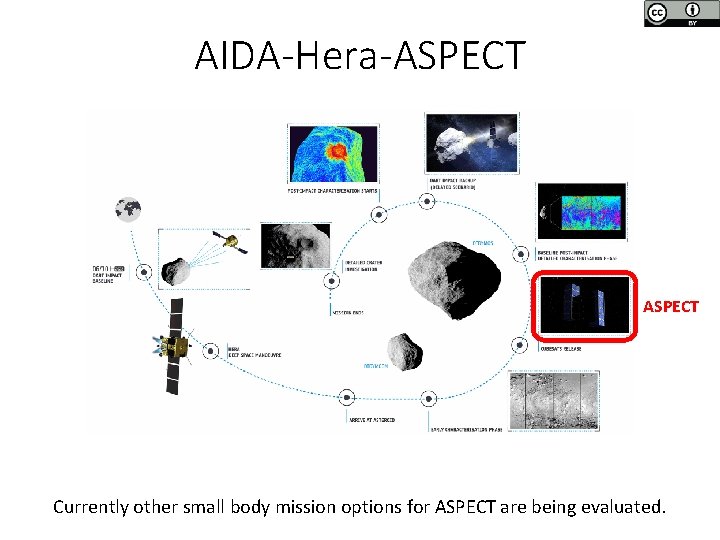
AIDA-Hera-ASPECT Currently other small body mission options for ASPECT are being evaluated.
Technology
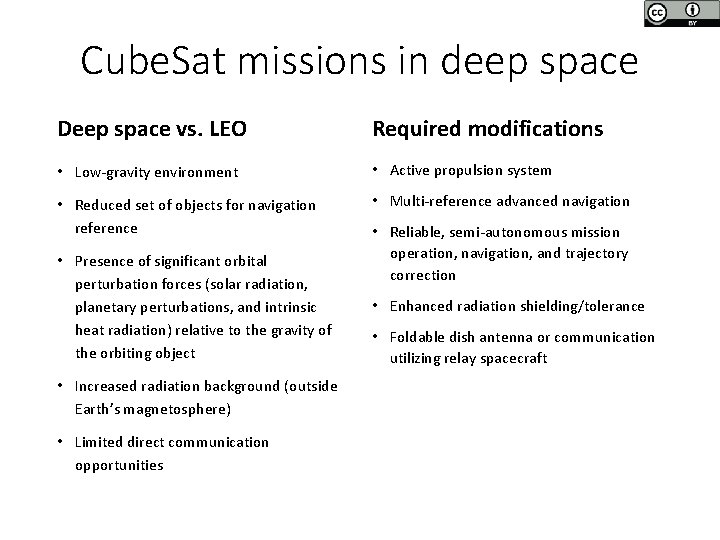
Cube. Sat missions in deep space Deep space vs. LEO Required modifications • Low-gravity environment • Active propulsion system • Reduced set of objects for navigation reference • Multi-reference advanced navigation • Presence of significant orbital perturbation forces (solar radiation, planetary perturbations, and intrinsic heat radiation) relative to the gravity of the orbiting object • Increased radiation background (outside Earth’s magnetosphere) • Limited direct communication opportunities • Reliable, semi-autonomous mission operation, navigation, and trajectory correction • Enhanced radiation shielding/tolerance • Foldable dish antenna or communication utilizing relay spacecraft
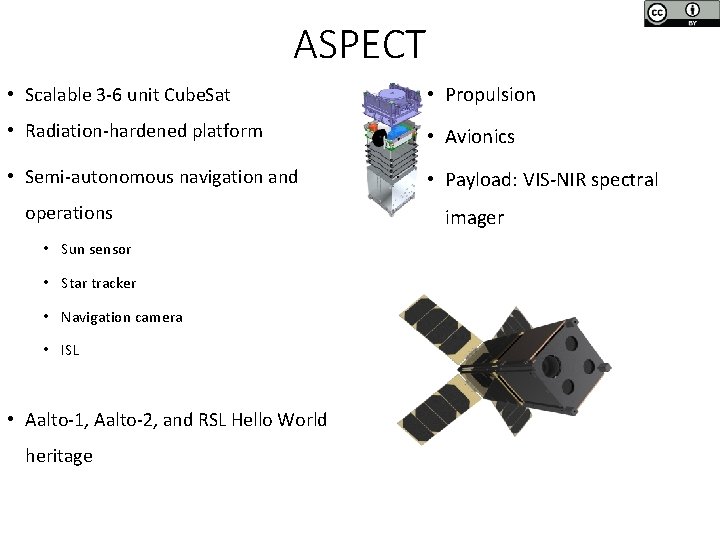
ASPECT • Scalable 3 -6 unit Cube. Sat • Propulsion • Radiation-hardened platform • Avionics • Semi-autonomous navigation and • Payload: VIS-NIR spectral operations • Sun sensor • Star tracker • Navigation camera • ISL • Aalto-1, Aalto-2, and RSL Hello World heritage imager
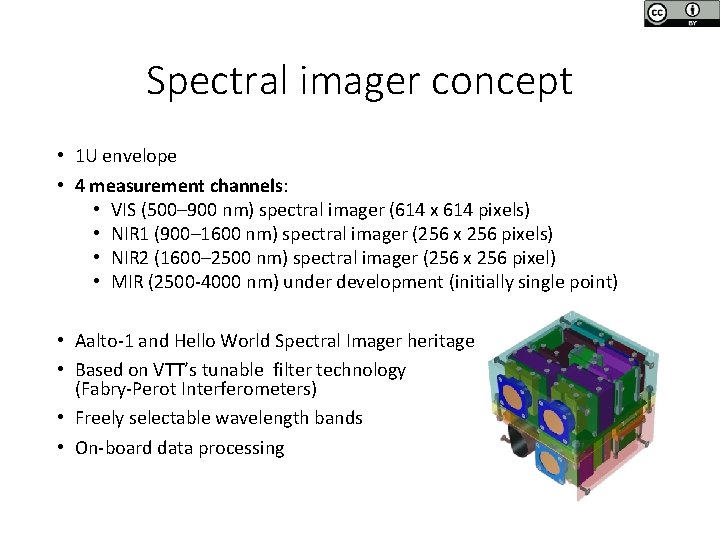
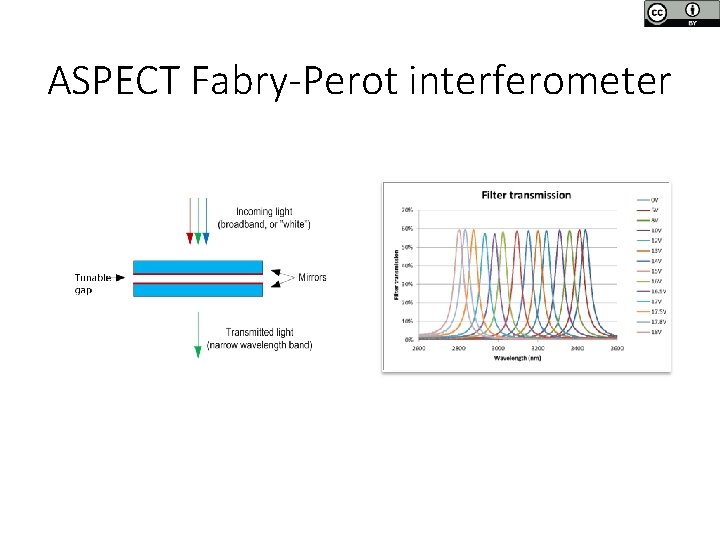
Spectral imager concept • 1 U envelope • 4 measurement channels: • VIS (500– 900 nm) spectral imager (614 x 614 pixels) • NIR 1 (900– 1600 nm) spectral imager (256 x 256 pixels) • NIR 2 (1600– 2500 nm) spectral imager (256 x 256 pixel) • MIR (2500 -4000 nm) under development (initially single point) • Aalto-1 and Hello World Spectral Imager heritage • Based on VTT’s tunable filter technology (Fabry-Perot Interferometers) • Freely selectable wavelength bands • On-board data processing
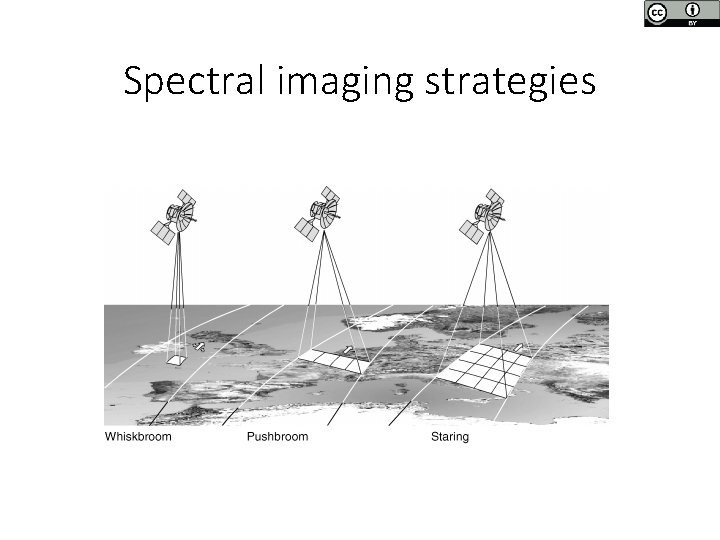
Spectral imaging strategies
ASPECT Fabry-Perot interferometer
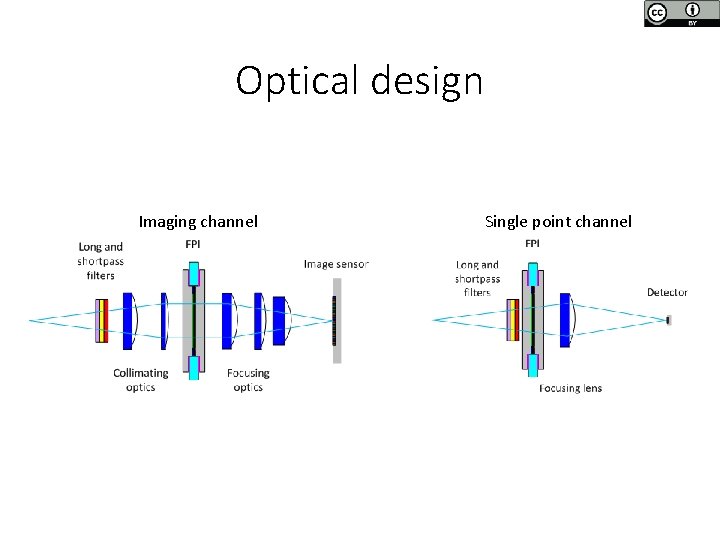
Optical design Imaging channel Single point channel
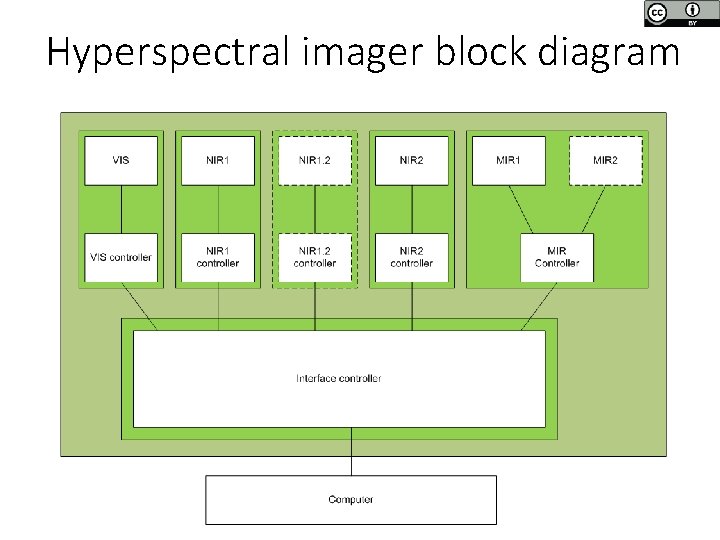
Hyperspectral imager block diagram
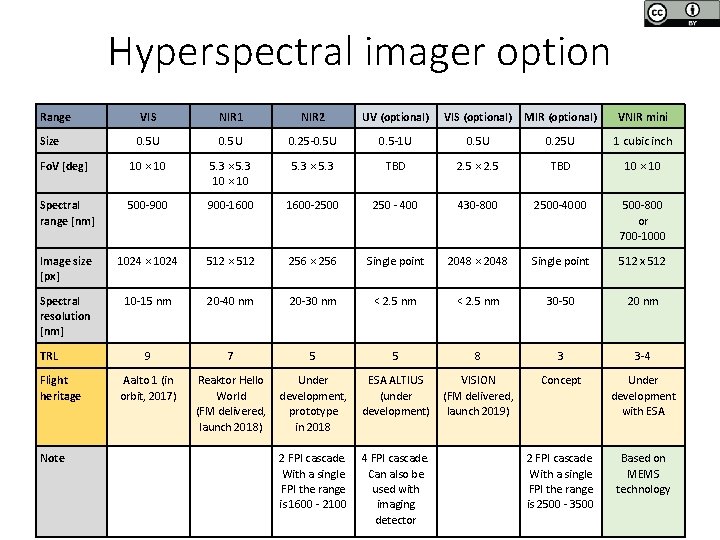
Hyperspectral imager option Range VIS NIR 1 NIR 2 UV (optional) VIS (optional) MIR (optional) VNIR mini Size 0. 5 U 0. 25 -0. 5 U 0. 5 -1 U 0. 5 U 0. 25 U 1 cubic inch Fo. V [deg] 10 × 10 5. 3 × 5. 3 10 × 10 5. 3 × 5. 3 TBD 2. 5 × 2. 5 TBD 10 × 10 Spectral range [nm] 500 -900 900 -1600 -2500 250 - 400 430 -800 2500 -4000 500 -800 or 700 -1000 Image size [px] 1024 × 1024 512 × 512 256 × 256 Single point 2048 × 2048 Single point 512 x 512 Spectral resolution [nm] 10 -15 nm 20 -40 nm 20 -30 nm < 2. 5 nm 30 -50 20 nm 9 7 5 5 8 3 3 -4 VISION (FM delivered, launch 2019) Concept Under development with ESA 2 FPI cascade. With a single FPI the range is 2500 - 3500 Based on MEMS technology TRL Flight heritage Note Aalto 1 (in orbit, 2017) Reaktor Hello Under ESA ALTIUS World development, (under (FM delivered, prototype development) launch 2018) in 2018 2 FPI cascade. 4 FPI cascade. With a single Can also be FPI the range used with is 1600 - 2100 imaging detector
Science
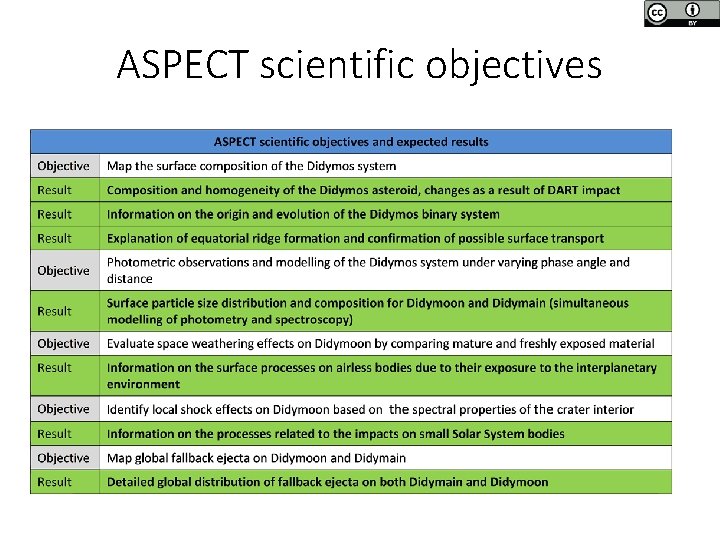
ASPECT scientific objectives
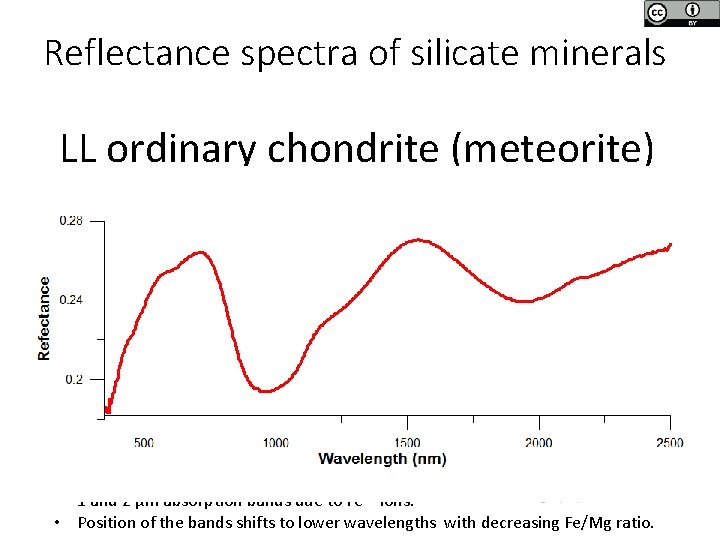
Reflectance spectra of silicate minerals LL ordinary chondrite (meteorite) Olivine Orthopyroxene • 1 and 2 µm absorption bands due to Fe 2+ ions. • Position of the bands shifts to lower wavelengths with decreasing Fe/Mg ratio.
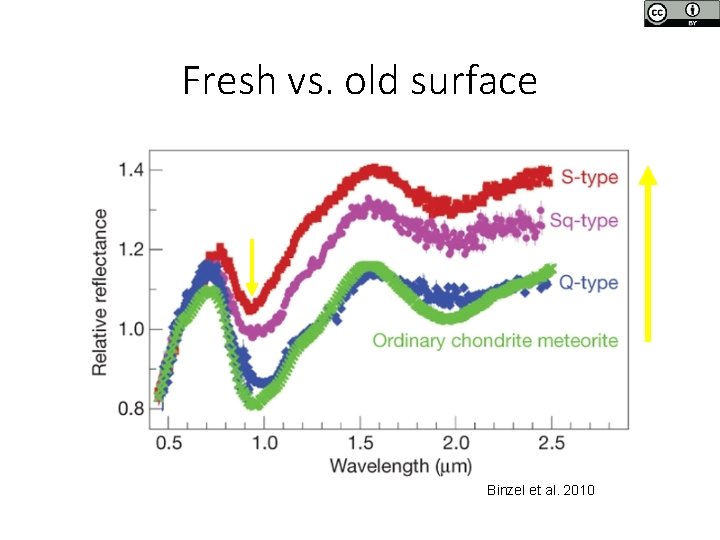
Fresh vs. old surface Binzel et al. 2010
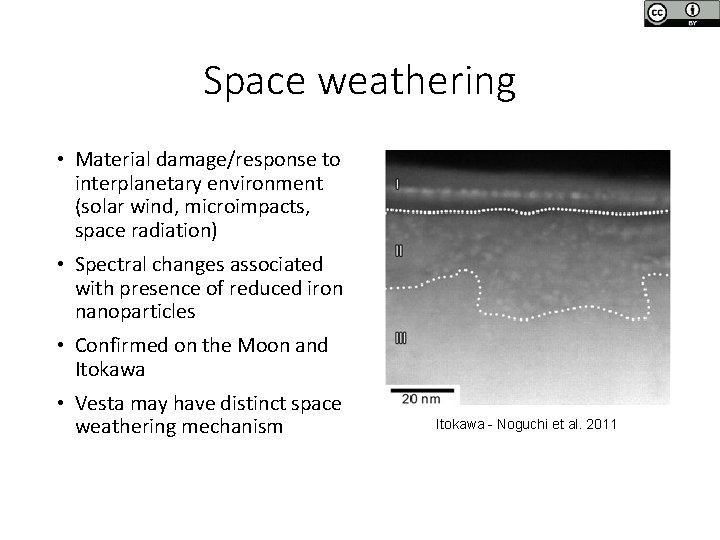
Space weathering • Material damage/response to interplanetary environment (solar wind, microimpacts, space radiation) • Spectral changes associated with presence of reduced iron nanoparticles • Confirmed on the Moon and Itokawa • Vesta may have distinct space weathering mechanism Itokawa - Noguchi et al. 2011
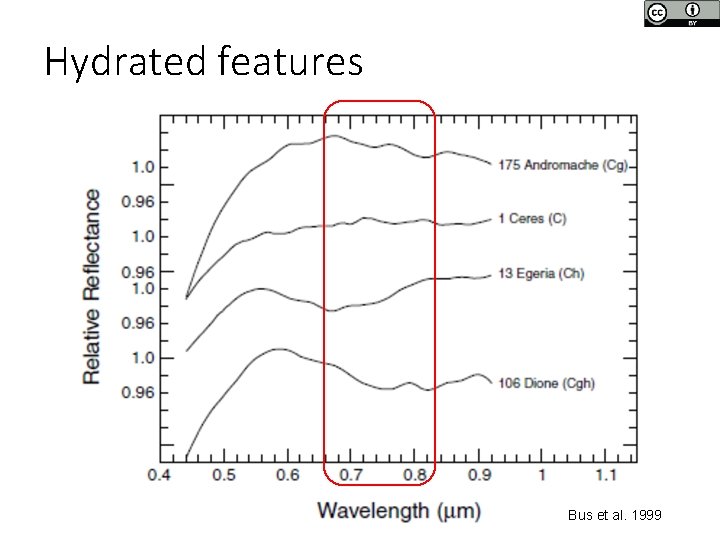
Hydrated features Bus et al. 1999
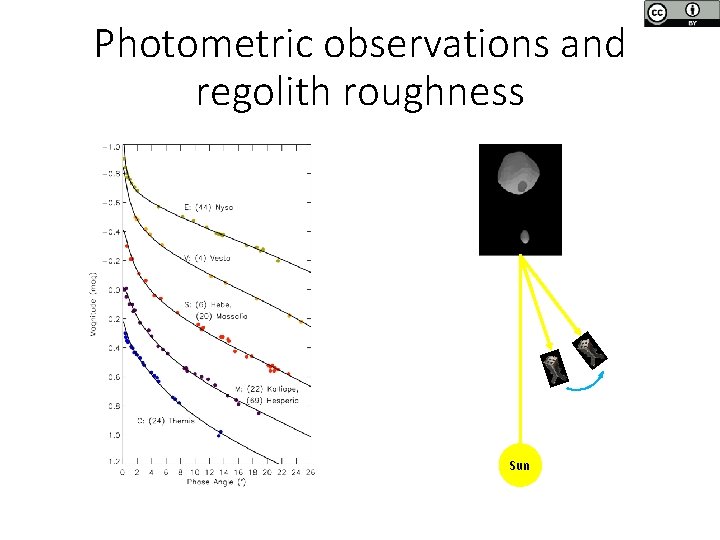
Photometric observations and regolith roughness Sun
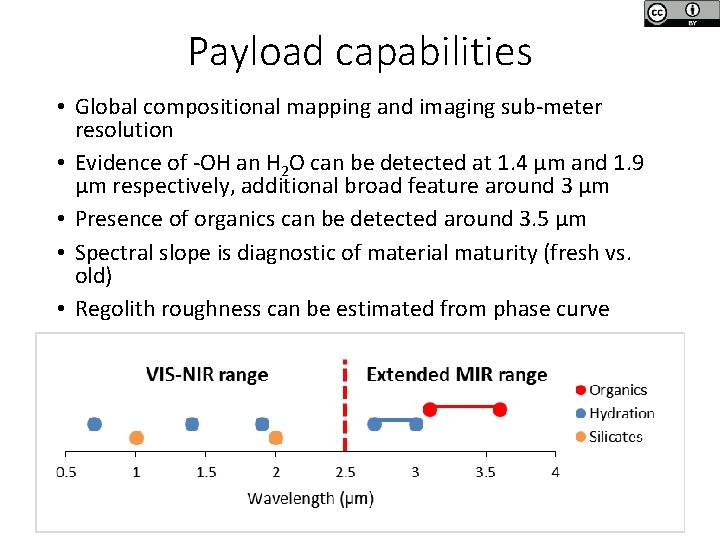
Payload capabilities • Global compositional mapping and imaging sub-meter resolution • Evidence of -OH an H 2 O can be detected at 1. 4 µm and 1. 9 µm respectively, additional broad feature around 3 µm • Presence of organics can be detected around 3. 5 µm • Spectral slope is diagnostic of material maturity (fresh vs. old) • Regolith roughness can be estimated from phase curve
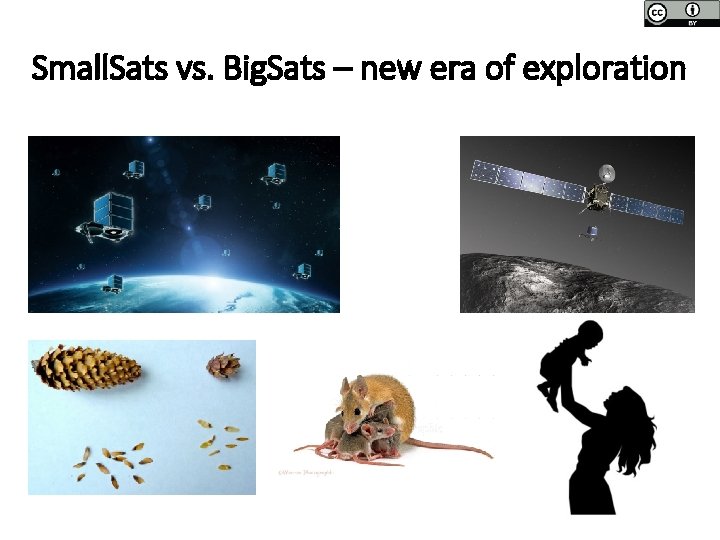
Small. Sats vs. Big. Sats – new era of exploration
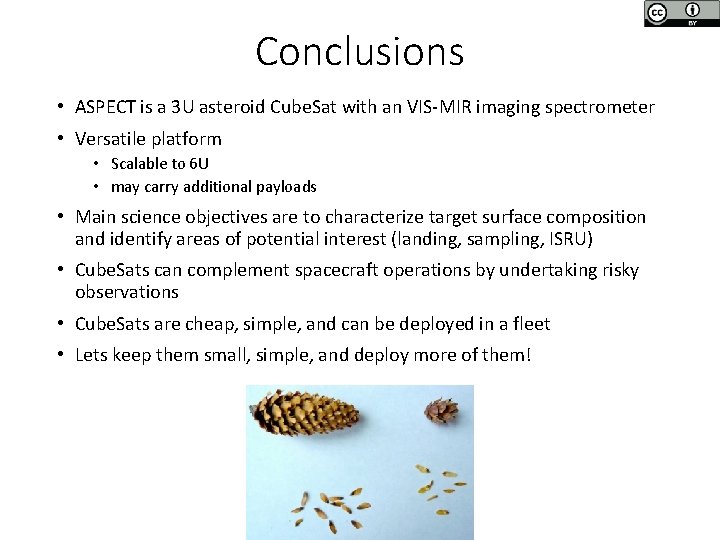
Conclusions • ASPECT is a 3 U asteroid Cube. Sat with an VIS-MIR imaging spectrometer • Versatile platform • Scalable to 6 U • may carry additional payloads • Main science objectives are to characterize target surface composition and identify areas of potential interest (landing, sampling, ISRU) • Cube. Sats can complement spacecraft operations by undertaking risky observations • Cube. Sats are cheap, simple, and can be deployed in a fleet • Lets keep them small, simple, and deploy more of them!